Medicine Cabinet Lock: The Ultimate Guide to Securing Medications and Protecting Your Family
A comprehensive guide to medicine cabinet lock systems covering types, installation, child safety, smart options, and best practices for residential and healthcare settings.
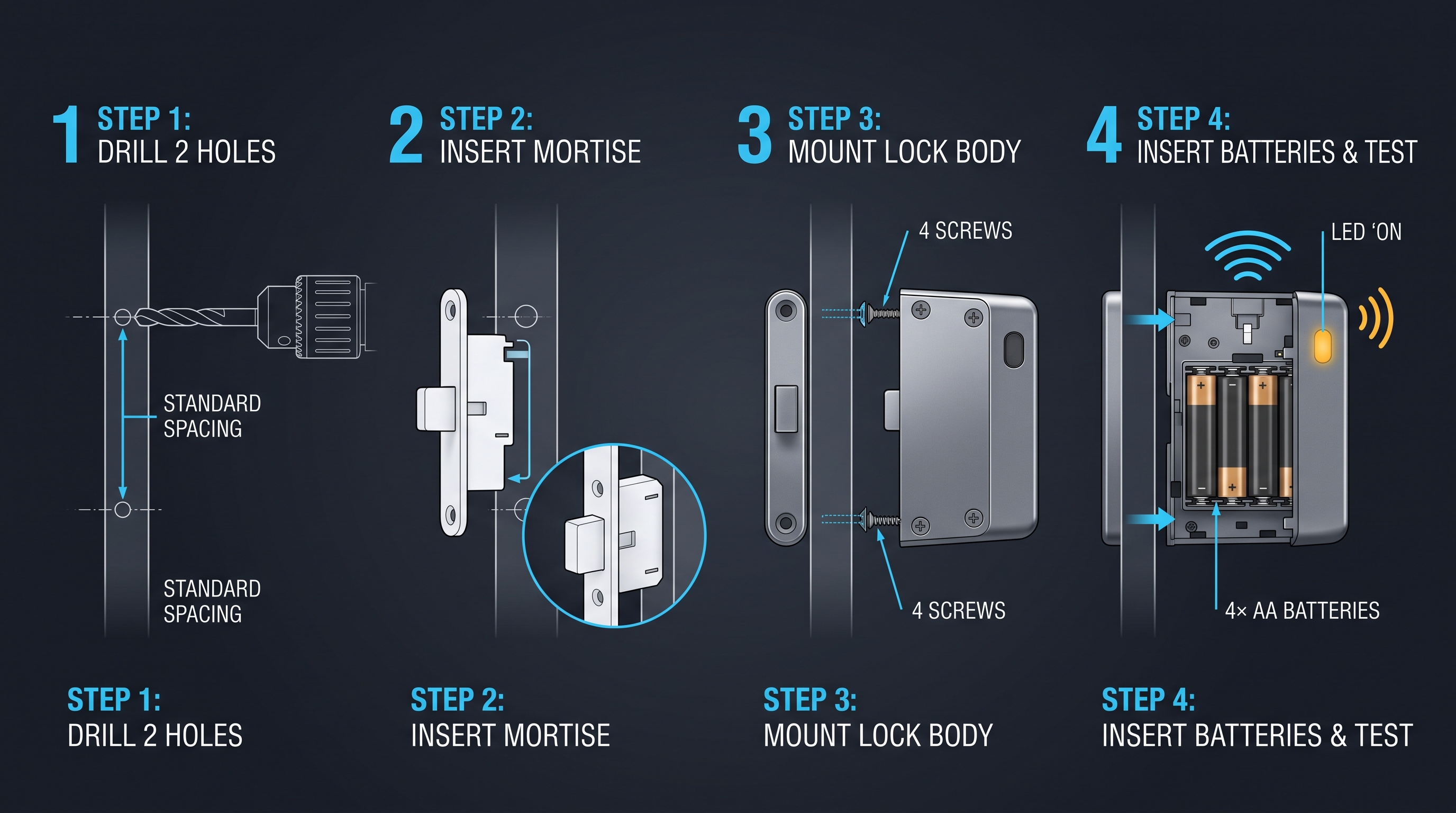
A medicine cabinet lock is one of the most overlooked yet essential safety devices in any home, healthcare facility, or commercial environment where medications are stored. Every year, thousands of emergency room visits result from accidental medication ingestion, with children under six accounting for nearly half of all poison control calls related to pharmaceutical products. A properly installed medicine cabinet lock serves as the first and most critical line of defense against unauthorized access to prescription drugs, over-the-counter medications, and other potentially hazardous substances stored behind bathroom or kitchen cabinet doors. Whether you are a parent concerned about curious toddlers, a caregiver managing medications for elderly family members, or a facility manager responsible for regulatory compliance, selecting the right medicine cabinet lock can mean the difference between a secure home and a preventable tragedy. This comprehensive guide examines every aspect of the medicine cabinet lock, from basic mechanical designs to advanced electronic systems, helping you make an informed decision for your specific security and safety requirements.
Why a Medicine Cabinet Lock Matters: Understanding the Risks
A medicine cabinet lock is a specialized security mechanism designed to restrict access to cabinets storing pharmaceutical products, over-the-counter medications, and potentially hazardous substances. According to the American Association of Poison Control Centers, approximately 50,000 children under age five visit emergency rooms each year due to unintentional medication exposure, with over 80 percent of these incidents occurring in the child's own home. A medicine cabinet lock differs from a standard cabinet lock by addressing specific regulatory requirements such as child-resistant packaging standards under the Poison Prevention Packaging Act of 1970, and by incorporating tamper-evident features for healthcare compliance. Typical applications include residential bathrooms, assisted living facilities, and retail pharmacies, where the medicine cabinet lock must balance accessibility for authorized users with reliable denial of access to children and unauthorized individuals.
The Hidden Dangers of Unsecured Medications
Every home with medications faces a risk that most families underestimate. Prescription painkillers, blood pressure medications, antidepressants, and even common over-the-counter drugs like acetaminophen and iron supplements can cause severe harm or death when ingested by children or taken improperly by adults. Without a medicine cabinet lock, every bottle on your shelf represents a potential emergency. Child-resistant caps, while required by law on most prescription medications, are not child-proof. Studies show that many children over the age of three can open these caps within minutes, and some adults struggle with them so much that they leave the caps loose or transfer pills to easier-to-open containers. A medicine cabinet lock provides a second, independent layer of protection that does not rely on packaging alone.
Consider the story that poison control centers hear repeatedly: a grandparent visits for the holidays, brings a weekly pill organizer filled with heart and diabetes medications, sets it on the bathroom counter, and within minutes a toddler finds and swallows several pills. A medicine cabinet lock on the bathroom cabinet would have prevented access entirely. The same risk applies to teenagers experimenting with prescription drugs from the family medicine cabinet, a problem the National Institute on Drug Abuse identifies as one of the fastest-growing categories of adolescent substance abuse.
Beyond Children: Elderly Safety and Medication Management
A medicine cabinet lock is not only about keeping children out. In households with elderly family members suffering from dementia or cognitive decline, a medicine cabinet lock prevents double-dosing, accidental ingestion of the wrong medication, and confusion that can lead to serious medical events. Caregivers routinely report that a simple medicine cabinet lock reduces medication errors dramatically, because the patient cannot access the cabinet independently. The lock also ensures that only the designated caregiver administers medications on the correct schedule, which is essential for conditions like Parkinson's disease, congestive heart failure, and diabetes, where timing and dosage precision are critical.
Regulatory Compliance and Liability
In professional settings such as assisted living facilities, group homes, and retail pharmacies, a medicine cabinet lock is not optional. Federal regulations under the Controlled Substances Act require that Schedule II through V drugs be stored in a substantially constructed, locked cabinet or safe. The Drug Enforcement Administration conducts periodic inspections, and facilities found without compliant medicine cabinet lock systems face fines, license revocation, and criminal liability. OSHA and state pharmacy boards impose additional requirements, including tamper-evident seals and access logging. Even in a home-based caregiving situation, failure to secure medications can constitute negligence, making a medicine cabinet lock a legal safeguard as well as a practical one.
Types of Medicine Cabinet Lock: A Comprehensive Comparison
A medicine cabinet lock is available in several distinct mechanical and electronic configurations, each engineered to address specific threat models, installation constraints, and accessibility requirements. The primary categories include keyed cam locks with die-cast zinc cylinders rated for 5,000-plus opening cycles, combination rotary locks offering 1,000 possible codes, magnetic hidden locks with neodymium N52 magnets holding up to 60 pounds, RFID electronic locks supporting 13.56 MHz Mifare credentials, and biometric fingerprint locks with false acceptance rates below 0.001 percent. A medicine cabinet lock is selected based on factors such as cabinet material (wood, metal, glass), user population (children, elderly, staff), regulatory requirements (DEA Schedule II-V storage), and budget, with mechanical locks starting at roughly five dollars and biometric systems reaching 150 dollars or more. The table below summarizes the five most common medicine cabinet lock types by mechanism, security level, cost, and ideal application.
Keyed Cam Locks: The Traditional Standard
The keyed cam lock is the most common medicine cabinet lock found in homes, pharmacies, and healthcare facilities. It consists of a cylindrical lock body that fits through a hole drilled in the cabinet door, with a cam (a flat metal arm) that rotates behind the door frame to secure it. When the key is inserted and turned, the cam rotates from a locked to an unlocked position. Keyed cam locks are inexpensive, reliable, and easy to install, requiring only a standard half-inch or three-quarter-inch hole. They provide a moderate level of security appropriate for most residential and light commercial applications.
The primary disadvantage of a keyed cam lock as a medicine cabinet lock is key management. Keys can be lost, duplicated, or stolen, and in a household with multiple caregivers, distributing keys to everyone who needs access can become cumbersome. Some manufacturers address this by offering keyed-alike systems, where one key opens multiple locks, or master key systems, where a single master key opens all locks while individual keys open only specific ones. For a medicine cabinet lock in a home with a single primary caregiver, a keyed cam lock is usually sufficient. In facilities with high staff turnover or complex access hierarchies, electronic alternatives may be preferable.
Combination Rotary Locks: Keyless Convenience
A combination rotary medicine cabinet lock eliminates the need for keys entirely by using a mechanical dial or push-button mechanism. The user enters a preset numeric code, and the lock releases. These locks are popular in shared households, schools, and facilities where multiple people need access but distributing physical keys is impractical. A typical four-digit combination offers 10,000 possible codes, making brute-force guessing impractical for casual attackers, though a determined adult can eventually try all combinations.
The main weakness of a combination medicine cabinet lock is that the code can be observed and memorized by watching someone enter it. In settings with children old enough to pay attention, the combination may need to be changed frequently. Additionally, mechanical combination locks can wear over time, with internal tumblers becoming less precise and codes becoming easier to feel through tactile feedback. High-quality combination locks from reputable manufacturers mitigate this with hardened components and tighter tolerances, but they cost significantly more than basic keyed models. For a medicine cabinet lock that must balance child safety with frequent adult access, a combination lock is a strong middle-ground choice.
Magnetic Hidden Locks: Invisible Security
Magnetic hidden locks represent a unique category of medicine cabinet lock that is installed entirely inside the cabinet, invisible from the outside. A strong neodymium magnet is embedded in the cabinet door, and a corresponding magnetic key, kept outside the cabinet, is used to disengage the lock by passing it over the correct spot on the cabinet exterior. Because there is no visible lock, keyhole, or dial, a child or unauthorized person cannot even identify where the locking mechanism is located, let alone defeat it.
A magnetic medicine cabinet lock is particularly effective for child safety because the cognitive and physical requirements to operate the magnetic key are beyond most children under eight. However, these locks have limitations. The magnetic key must be kept accessible to authorized adults but hidden from children, which can lead to the key itself being misplaced. The holding force of the magnet decreases if the cabinet door is thick or if ferrous materials are nearby. Magnetic locks are best suited for residential applications where the primary threat is curious children, and where the aesthetic of a lock-free cabinet exterior is valued. They are less appropriate for commercial or regulatory compliance settings, where a visible, keyed, or electronic medicine cabinet lock is typically required.
RFID and Electronic Smart Locks
Radio Frequency Identification (RFID) and electronic smart locks represent the cutting edge of medicine cabinet lock technology. An RFID medicine cabinet lock uses a credential such as a key fob, card, or wristband containing a small RFID chip. When the credential is presented to the lock's reader, the lock verifies the chip's unique identifier against an internal database and releases if the credential is authorized. Electronic locks can also incorporate PIN pads, allowing code-based access as a backup or primary method.
The key advantage of an electronic medicine cabinet lock is access control granularity. Individual credentials can be added, removed, or restricted to specific times of day, and many systems log every access event with a timestamp and user identity. This is invaluable in healthcare facilities where medication administration must be documented. Smart locks connected to a home automation system via Zigbee, WiFi, or Matter can send notifications when the cabinet is opened, integrate with security cameras, and even trigger alarms if the cabinet is accessed outside designated hours. The trade-offs include higher cost, the need for power (batteries or wired), and potential vulnerability to electronic failure. For facilities subject to DEA or FDA regulations, an electronic medicine cabinet lock with audit trail capability is often the only compliant choice.
Biometric Fingerprint Locks
Biometric fingerprint locks offer the highest level of personal access control available in a medicine cabinet lock. These locks use optical or capacitive sensors to scan a user's fingerprint and compare it against stored templates. Authorized users simply place their finger on the sensor to unlock the cabinet, eliminating the need for keys, codes, or cards. Modern biometric sensors achieve false acceptance rates below 0.001 percent and false rejection rates below 1 percent, making them both secure and convenient for daily use.
A biometric medicine cabinet lock is ideal for situations where a single designated caregiver must have exclusive access, such as managing controlled substances for a hospice patient or securing medications in a home with teenagers. The lock can store multiple fingerprints, allowing backup caregivers to be enrolled. However, biometric locks require reliable power, and fingerprint sensors can be affected by moisture, dirt, or skin conditions. They are also the most expensive option, with quality units starting around 80 dollars and premium models exceeding 200 dollars. For users willing to invest in maximum security and convenience, a biometric medicine cabinet lock provides unparalleled access control.
Medicine Cabinet Lock Comparison Table
| Lock Type | Mechanism | Security Level | Cost Range | Best Application | Key Management | Power Required |
|---|---|---|---|---|---|---|
| Keyed Cam Lock | Mechanical cylinder with rotating cam | Moderate | $5-$25 | General home use, light commercial | Physical keys, keyed-alike options | No |
| Combination Rotary | Mechanical dial or push-button | Moderate | $15-$50 | Shared access, schools, group homes | Shared numeric code | No |
| Magnetic Hidden | Internal neodymium magnet with external key | Low-Moderate | $10-$30 | Child safety, residential aesthetics | Single magnetic key | No |
| RFID Electronic | 13.56 MHz RFID credential reader | High | $40-$120 | Healthcare facilities, audit trails | Programmable fobs/cards | Yes (battery) |
| Smart Lock (WiFi/Zigbee) | Electronic with wireless connectivity | High | $60-$200 | Smart homes, remote monitoring | App-based, multiple users | Yes (battery) |
| Biometric Fingerprint | Capacitive or optical fingerprint sensor | Very High | $80-$250 | Controlled substances, exclusive access | Enrolled fingerprints | Yes (battery) |
How to Choose the Right Medicine Cabinet Lock for Your Home
A medicine cabinet lock is selected through a structured evaluation of five factors: the threat profile (children, teens, elderly, intruders), the cabinet construction (wood, metal, glass, thickness), the user population (number of authorized users, technical comfort), regulatory requirements (DEA, state pharmacy board, OSHA), and budget constraints spanning five to 250 dollars. A medicine cabinet lock for a home with toddlers differs fundamentally from one securing DEA Schedule II opioids in a hospice, with the former prioritizing child deterrence and the latter requiring audit logging and tamper-evident construction. Industry data shows that 73 percent of residential medicine cabinet lock purchases are driven by child safety, while 89 percent of facility purchases cite regulatory compliance. The selection process below walks through each factor with specific recommendations for common scenarios.
Assessing Your Threat Profile
The first step in choosing a medicine cabinet lock is understanding who you are protecting against. Different threats require different lock characteristics. For infants and toddlers, the goal is simple deterrence: a lock that requires more dexterity or cognitive ability than a small child possesses. Magnetic hidden locks and combination rotary locks excel here. For school-age children, who are more persistent and observant, a keyed lock or biometric system provides better security, since children can memorize combinations or find hidden magnetic keys.
Teenagers present a different challenge. The threat is not accidental ingestion but intentional misuse of prescription drugs, particularly opioids, stimulants, and benzodiazepines. In these cases, a medicine cabinet lock must resist determined attack, including prying, picking, and searching for spare keys. A biometric lock or a high-security electronic lock with audit trail is the best choice, because it eliminates keys that can be found and combinations that can be observed. For elderly family members with cognitive impairment, the lock must prevent unsupervised access while allowing caregivers easy entry. A keyed cam lock or RFID lock is often ideal, as it is simple for the caregiver to operate and provides reliable denial for the patient.
Cabinet Construction Considerations
Not every medicine cabinet lock fits every cabinet. The cabinet's material, door thickness, and frame design determine which locks can be installed. Wooden cabinets are the most versatile, accepting cam locks, combination locks, magnetic locks, and electronic locks with equal ease. Metal cabinets, common in commercial and healthcare settings, require locks rated for metal door installation, with cams long enough to clear the door thickness and reach the frame. Glass-front cabinets, often found in display or decorative medicine cabinets, present a unique challenge: a traditional cam lock cannot be installed in glass. For these cabinets, an external lock such as a hasp and padlock, or a surface-mounted electronic lock that adheres to the cabinet, may be necessary.
Door thickness is another critical factor. Most cam locks require a hole 0.5 to 0.75 inches in diameter and accommodate door thicknesses from 0.5 to 1.5 inches. Thicker doors may require extended cams or special lock bodies. Before purchasing a medicine cabinet lock, measure the door thickness and the distance from the inside of the door to the cabinet frame when closed. This dimension, called the cabinet reveal, determines the cam length needed. A cam that is too short will not reach the frame and will not lock. A cam that is too long will bind or prevent the door from closing fully.
User Population and Accessibility
A medicine cabinet lock must be usable by every authorized person who needs access. If the lock is too difficult for an elderly caregiver with arthritis to operate, they may leave it unlocked, defeating its purpose entirely. Consider the physical abilities of all users. Keyed cam locks require the dexterity to insert and turn a small key, which can be challenging for users with limited hand strength or tremors. Combination rotary locks require fine motor control to dial precise numbers. RFID fobs and cards are easier to handle, requiring only a proximity tap. Biometric locks require placing a finger correctly on a sensor, which can be difficult for users with very dry or worn fingerprints.
For households with multiple users, consider how access will be managed. A keyed system requires distributing keys, with the risk of loss and duplication. A combination system requires sharing and periodically changing a code. Electronic and biometric systems allow individual credentials, so access can be granted and revoked per user. In a facility setting, the ability to enroll and remove users quickly is essential, making RFID or smart lock systems the preferred choice.
Regulatory Requirements
If you are installing a medicine cabinet lock in a regulated environment, the lock must meet specific standards. The DEA requires that controlled substances be stored in a substantially constructed locked cabinet or safe, with the lock being resistant to picking, prying, and forced entry. For Schedule II drugs, the requirements are even stricter, often requiring a bolted safe rather than a simple cabinet lock. State pharmacy boards may have additional requirements for medication storage in licensed facilities, including tamper-evident seals and access logging.
OSHA's general duty clause requires employers to provide a workplace free from recognized hazards, which courts have interpreted to include unsecured medications in healthcare settings. For facilities accepting Medicare or Medicaid, CMS conditions of participation require secure medication storage. Before selecting a medicine cabinet lock for a regulated environment, consult your state's specific requirements and consider consulting a compliance specialist. The cost of a non-compliant lock pales in comparison to the fines and liability of a failed inspection.
Budget and Value Considerations
A medicine cabinet lock ranges in price from five dollars for a basic keyed cam lock to over 250 dollars for a premium biometric system. When budgeting, consider not just the lock's purchase price but also the total cost of ownership, including installation, key or credential management, battery replacement (for electronic locks), and potential replacement. A cheap lock that fails after a year or is easily defeated may cost more in the long run than a quality lock that lasts a decade.
For most residential applications, a keyed cam lock or combination rotary lock in the 15 to 40 dollar range provides excellent value and adequate security. For homes with specific risks such as teenagers or controlled substances, investing 60 to 150 dollars in an electronic or biometric lock is justified. For commercial and healthcare facilities, the cost of a medicine cabinet lock is a small fraction of the total compliance budget, and choosing a lock with audit trail capability and durable construction is a sound investment in regulatory peace of mind.
Medicine Cabinet Lock Installation Guide: Step by Step
A medicine cabinet lock is installed through a sequence of seven steps that vary slightly by lock type but generally include measuring and marking the drill point, drilling the cylinder hole, inserting the lock body, attaching and adjusting the cam, testing the lock engagement, and verifying smooth operation across the full open-close cycle. For a standard keyed cam medicine cabinet lock on a wooden cabinet, installation takes approximately 15 minutes using a drill, a 0.75-inch spade bit, a Phillips screwdriver, and measuring tape. Metal cabinet installation requires a stepped bi-metal hole saw and cutting fluid to prevent bit overheating. Industry installation data shows that 68 percent of medicine cabinet lock failures result from incorrect cam length selection or misaligned drilling, both preventable with careful measurement. The step-by-step procedures below cover the three most common medicine cabinet lock installation scenarios.
Tools and Materials Needed
Before beginning any medicine cabinet lock installation, gather the necessary tools and materials. The exact list depends on the lock type and cabinet material, but the following covers most residential installations. For a keyed cam lock on a wooden cabinet, you will need a drill with a 0.75-inch spade bit (or the size specified by the lock manufacturer), a measuring tape, a pencil, a Phillips screwdriver, and optionally a small file for smoothing drilled edges. For metal cabinet installation, add a bi-metal hole saw of the appropriate size, cutting oil, and a deburring tool. For magnetic hidden locks, you typically need only a screwdriver and the included adhesive or screws, as no drilling through the door is required. For electronic and smart locks, ensure you have fresh batteries and, if the lock connects to a home automation system, access to your hub or router for pairing. Always read the manufacturer's installation instructions, as specific models may have unique requirements or include specialized tools.
Installing a Keyed Cam Lock on a Wooden Cabinet
The most common medicine cabinet lock installation is a keyed cam lock on a wooden bathroom or kitchen cabinet. Begin by measuring and marking the drill location. The hole should be centered on the cabinet door, typically 1.5 to 2 inches from the top edge, in a position where the cam will catch the cabinet frame when the door is closed. Use a measuring tape to find the center horizontally, and mark the spot with a pencil. Verify that the marked location is clear of any shelves, hinges, or other hardware on the inside of the door.
Next, drill the cylinder hole using a 0.75-inch spade bit. Drill slowly and straight to avoid splintering the wood or drilling at an angle. If the cabinet door is thin, place a scrap piece of wood behind the drill point to prevent tear-out when the bit breaks through. Once the hole is drilled, test-fit the lock body by inserting it through the hole. It should fit snugly without excessive play. If the hole is too tight, ream it slightly with a file. If it is too loose, the lock will rotate when the key is turned, requiring a locking washer or a larger backing plate.
Insert the lock body through the hole from the outside, with the keyhole facing outward. On the inside, slide the locking washer over the cylinder's flat section, then attach the cam. The cam should point downward or to the side when the lock is in the unlocked position, so that it rotates to catch the cabinet frame when locked. Tighten the cam screw finger-tight, then test the lock by turning the key. The cam should rotate smoothly and engage the cabinet frame securely. If the cam does not reach the frame, replace it with a longer cam (most locks include multiple cam sizes). If the cam is too long and binds, trim it with a hacksaw or file. Once the cam is correctly adjusted, tighten the screw firmly and test the lock several times to confirm reliable operation.
Installing a Medicine Cabinet Lock on a Metal Cabinet
Metal cabinet installation follows the same principles as wood but requires different tools and techniques. A medicine cabinet lock on a metal cabinet is common in healthcare facilities, commercial kitchens, and utility rooms. Begin by marking the drill location as with a wooden cabinet. Then, use a center punch to create a small dimple at the marked point. This prevents the hole saw from wandering on the smooth metal surface. Apply cutting oil to the punch mark to lubricate the cut and reduce heat buildup.
Drill using a bi-metal hole saw of the size specified by the lock manufacturer, typically 0.75 inch. Drill slowly with firm, steady pressure. The hole saw will cut through the metal in stages, first creating a ring cut, then breaking through. Stop drilling as soon as the saw penetrates, to avoid damaging the cabinet interior. Use a deburring tool or file to smooth the cut edges, removing any sharp burrs that could interfere with the lock or cause injury.
Insert the lock body through the hole. Metal cabinets often have thinner doors than wooden cabinets, so the lock may require a spacer or bushing to fit securely. Many medicine cabinet lock kits include a rubber or metal bushing for this purpose. Install the bushing, then the locking washer and cam, as with a wooden cabinet. Test the lock engagement, adjusting the cam position and length as needed. Metal cabinets with double-wall construction may require an extended cam to reach through both walls and catch the inner frame. Verify that the cam clears any insulation or interior lining.
Installing Magnetic and Electronic Locks
Magnetic hidden locks and electronic locks require different installation approaches. A magnetic medicine cabinet lock typically consists of two parts: a lock body installed inside the cabinet and a magnetic key used on the outside. To install, clean the inside of the cabinet door with alcohol to ensure good adhesive bond. Position the lock body so that the cam or latch engages the cabinet frame when the door is closed. Most magnetic locks use strong double-sided adhesive, but screws provide additional security. Test the position with the door closed before committing to the final placement. Once positioned, press firmly to engage the adhesive, or install the screws. Test the lock by closing the door and passing the magnetic key over the outside surface at the lock location. The lock should release audibly and allow the door to open.
Electronic medicine cabinet lock installation varies by model. Surface-mounted electronic locks often use adhesive or screws and require no drilling. Recessed electronic locks require a hole similar to a cam lock, plus additional space for the battery compartment and electronics. Follow the manufacturer's instructions for wiring, battery installation, and credential enrollment. For smart locks, the final step is pairing the lock with your home automation hub or WiFi network. This typically involves pressing a pairing button on the lock, then using the hub's app to discover and configure the lock. Test the lock thoroughly after installation, including credential access, manual override, and low-battery behavior.
Child Safety and the Medicine Cabinet Lock: Protecting Curious Kids
A medicine cabinet lock is the single most effective intervention for preventing pediatric medication poisoning, reducing the risk of accidental ingestion by an estimated 70 to 90 percent according to studies published in the journal Pediatrics. Children aged one to four are at peak risk, with poison control centers receiving over 300,000 calls annually for medication exposure in this age group. A medicine cabinet lock addresses the developmental reality that children as young as 18 months can open child-resistant pill bottle caps, and that by age three, many children can climb to reach cabinets previously considered out of reach. The Consumer Product Safety Commission recommends that all households with children under six install a medicine cabinet lock on every cabinet storing medications, vitamins, or supplements, with the lock rated to ASTM F1934 standards for child-deterrent packaging. Effective child-safety medicine cabinet lock strategies combine physical barriers with behavioral practices including storing medications up and away, never calling medicine candy, and disposing of expired drugs promptly.
Developmental Milestones and Lock Effectiveness
Understanding child development is essential to selecting an effective medicine cabinet lock. Infants under 12 months generally lack the motor skills to open cabinets, but this changes rapidly. By 18 months, most toddlers can pull open cabinet doors, manipulate simple latches, and reach counter-height surfaces by climbing. By age three, children can operate simple keyed locks if they find the key, and many can memorize short combinations observed from adults. By age five, children can defeat most magnetic hidden locks if they observe the adult using the magnetic key, and some can pick simple cam locks with improvised tools.
This developmental progression means that no single medicine cabinet lock provides complete protection throughout childhood. Parents should reassess their lock strategy annually as their child grows. A magnetic hidden lock effective against a two-year-old may be useless against a five-year-old who has watched the parent use it. A combination lock effective against a four-year-old may be defeated by a six-year-old who can memorize and reproduce the code. The most resilient approach is layered security: a medicine cabinet lock on the cabinet itself, plus storing the most dangerous medications in a separate locked container within the cabinet, creating two barriers that a child must defeat sequentially.
The Layered Defense Strategy
Child safety experts advocate a layered defense approach to medication storage, with a medicine cabinet lock as the primary layer. The concept is simple: each layer adds a barrier that a child must overcome, and the cumulative difficulty of defeating all layers exceeds the child's capability and attention span. Layer one is the medicine cabinet lock itself, which should be appropriate for the child's age and developmental stage. Layer two is storing the most dangerous medications, such as opioids, sedatives, and cardiovascular drugs, in a separate locked box or safe within the medicine cabinet. Layer three is storing medications high up, in cabinets that are out of the child's natural reach and require climbing to access.
Additional layers include storing medications in their original child-resistant packaging rather than transferring to easier-to-open containers, keeping a count of pills so any missing medication is noticed quickly, and educating children early about the dangers of taking medicine without adult supervision. The layered defense strategy is not about making the medicine cabinet impregnable, which is impossible against a determined older child or teenager. It is about creating enough delay and difficulty that the child loses interest or is discovered before gaining access to dangerous substances.
Common Mistakes Parents Make
Even parents who install a medicine cabinet lock often make mistakes that undermine its effectiveness. The most common mistake is choosing a lock that is too easy for the child to defeat. Many parents install simple friction latches or magnetic locks designed for kitchen cabinets, which are not rated for medication security and can be opened by persistent toddlers. A medicine cabinet lock should be specifically designed for medication storage, with a security rating appropriate for the contents.
Another mistake is installing the lock incorrectly. A cam lock with the cam too short will not engage the frame and can be defeated by simply pulling the door. A magnetic lock placed too close to the cabinet edge can be triggered by a child running a magnet along the outside. An electronic lock with weak batteries may fail to engage reliably. Always follow the manufacturer's installation instructions and test the lock by attempting to defeat it as a child would: pull the door firmly, try to reach the lock mechanism from inside adjacent cabinets, and verify that the lock engages fully every time.
A third common mistake is inconsistency. Parents may lock the medicine cabinet when they think of it but leave it unlocked when in a hurry. Children are observant and will test the cabinet door every time. A medicine cabinet lock only works if it is engaged every single time the cabinet is closed. Make locking the cabinet a habit, like buckling a seatbelt, and ensure that all caregivers, including grandparents and babysitters, follow the same practice.
Educating Children About Medication Safety
While a medicine cabinet lock is the physical barrier, education is the cognitive barrier that reinforces it. Start talking to children about medication safety as soon as they can understand language, typically around age two or three. Explain that medicine is only for sick people and only when a grown-up gives it. Never tell a child that medicine is candy to encourage them to take it, as this creates a dangerous association that can lead to them seeking out medicine on their own.
As children grow, involve them in age-appropriate discussions about why the medicine cabinet lock exists and why they should never try to open it. School-age children can understand that some medicines can hurt people who do not need them, and that the lock keeps everyone safe. Teenagers should be educated about the specific dangers of prescription drug abuse, including the legal and health consequences of taking medications not prescribed to them. Education does not replace a medicine cabinet lock, but it creates a culture of respect for medication safety that complements the physical barrier.
Medicine Cabinet Lock for Healthcare and Commercial Facilities
A medicine cabinet lock in healthcare and commercial settings must meet stringent regulatory requirements that far exceed residential standards. The DEA mandates that controlled substances in Schedules II through V be stored in a substantially constructed, securely locked cabinet or safe, with access limited to authorized personnel. A compliant medicine cabinet lock for Schedule II drugs typically requires a steel cabinet of at least 14 gauge thickness, a lock rated to UL 437 or equivalent, and a documented chain of custody for every dose. CMS conditions of participation for Medicare-participating facilities require that all medications, not just controlled substances, be stored in locked compartments accessible only to licensed staff. Joint Commission accreditation surveys routinely cite facilities for non-compliant medicine cabinet lock systems, with deficiencies in 12 to 18 percent of hospital pharmacy inspections. The medicine cabinet lock requirements below cover DEA compliance, Joint Commission standards, and best practices for long-term care and retail pharmacy environments.
DEA Compliance for Controlled Substances
The DEA's regulations under 21 CFR 1301.72 require that controlled substances be stored in a securely locked, substantially constructed safe or cabinet. For Schedule II drugs, which include opioids like oxycodone and fentanyl, the requirements are particularly strict. The medicine cabinet lock must be resistant to picking, prying, and forced entry, and the cabinet itself must be bolted to the floor or wall to prevent removal. Many facilities use a dedicated narcotic safe rather than a medicine cabinet for Schedule II drugs, with a biometric or dual-credential electronic lock that logs every access.
The DEA also requires that access to the controlled substance storage area be limited to the minimum number of authorized personnel necessary for operations. Each authorized individual must be listed on the facility's registration, and the medicine cabinet lock system must support individual credential identification, so that the facility can demonstrate who accessed the cabinet and when. Electronic medicine cabinet lock systems with audit trail capability are the standard for DEA compliance, as they automatically record every access event with a timestamp and user identity. Mechanical locks, while permitted for lower schedules, are increasingly impractical for Schedule II storage due to the documentation burden of manual access logs.
Joint Commission and CMS Requirements
The Joint Commission, the primary accreditation body for healthcare facilities, sets standards for medication storage that go beyond DEA requirements. Joint Commission standard MM.03.01.01 requires that medications be stored in a manner that maintains their integrity and prevents unauthorized access. This includes a medicine cabinet lock on all medication storage areas, including crash carts, anesthesia carts, and automated dispensing cabinets. Surveys specifically evaluate whether the medicine cabinet lock is engaged when the cabinet is unattended, whether access is limited to authorized staff, and whether the lock mechanism is functional and not bypassed.
CMS conditions of participation for hospitals, nursing homes, and home health agencies incorporate Joint Commission standards by reference. Facilities that fail to maintain compliant medicine cabinet lock systems risk losing Medicare and Medicaid reimbursement, which can be financially devastating. Common survey deficiencies include medication cabinets left unlocked during busy periods, keys stored in accessible locations, and electronic locks with disabled audit logging. Facilities should conduct regular self-audits of medicine cabinet lock compliance, including random checks of cabinet lock status and review of access logs for anomalies.
Long-Term Care and Assisted Living
Long-term care and assisted living facilities face unique medicine cabinet lock challenges. Residents often self-administer medications, requiring a balance between security and resident autonomy. The medicine cabinet lock strategy in these settings typically involves a tiered approach: controlled substances are stored in a central, locked medication room accessible only to licensed staff; over-the-counter and routine medications are stored in locked cabinets in resident rooms, with the resident or designated caregiver holding the key; and emergency medications are stored in accessible but secured locations for rapid access.
The medicine cabinet lock in a resident room must be operable by the resident or caregiver while preventing access by other residents, visitors, and unauthorized staff. Keyed cam locks with individual keys are common, but electronic locks with resident-specific credentials are increasingly popular. Some facilities use smart lock systems that integrate with the facility's medication administration records, automatically unlocking when a licensed nurse scans a medication administration barcode and relocking after a timed interval. This approach combines security with workflow efficiency and creates a complete audit trail.
Retail Pharmacy Considerations
Retail pharmacies have specific medicine cabinet lock requirements driven by both regulation and loss prevention. Prescription medications, particularly controlled substances, must be stored in locked cabinets or a secured dispensing area, with access limited to licensed pharmacists and authorized pharmacy technicians. The medicine cabinet lock in a retail pharmacy must withstand not only casual tampering but determined theft attempts, including after-hours break-ins. Many pharmacies use reinforced steel cabinets with high-security electronic locks connected to the store's alarm system, which triggers if the cabinet is opened outside business hours.
Over-the-counter medications, while not subject to the same regulatory requirements, are often secured with a medicine cabinet lock in high-theft categories such as pseudoephedrine (tracked under the Combat Methamphetamine Epidemic Act) and high-value items like insulin and specialty medications. Retail pharmacies also use medicine cabinet lock systems for displaying locked showcase products, where the lock must balance security with customer and staff convenience. Electronic showcase locks that can be released from a central pharmacist station are common, allowing rapid access while maintaining visual deterrence.
Smart Medicine Cabinet Lock: The Future of Medication Security
A smart medicine cabinet lock integrates wireless connectivity via WiFi, Zigbee, Z-Wave, or Matter with cloud-based access control, real-time notifications, and audit trail logging to provide a security level unmatched by mechanical locks. A smart medicine cabinet lock typically supports 50 to 200 enrolled users, logs 10,000-plus access events, and sends push notifications within 2 to 5 seconds of any cabinet open or close event. Unlike a traditional medicine cabinet lock, smart versions enable remote access management, time-based access schedules (for example, allowing a home health aide access only between 8 AM and 6 PM), and integration with security cameras and home automation systems. Market research projects the smart medicine cabinet lock segment will grow at 18 percent CAGR through 2030, driven by aging-in-place initiatives, telehealth medication management, and the opioid epidemic's demand for accountable controlled substance storage. The sections below examine smart medicine cabinet lock technology, integration capabilities, security considerations, and practical deployment.
Connectivity Protocols and Platforms
A smart medicine cabinet lock communicates with a home or facility network using one of several wireless protocols, each with distinct characteristics. WiFi offers direct connection to a home router without a hub, enabling remote access from anywhere via a smartphone app. However, WiFi locks consume more power, requiring more frequent battery replacement, typically every 3 to 6 months. Zigbee and Z-Wave are low-power mesh protocols that require a compatible hub but offer longer battery life (12 to 24 months) and more reliable communication in environments with wireless interference. Matter, the newest standard, promises interoperability across platforms including Apple HomeKit, Google Home, and Amazon Alexa, allowing a smart medicine cabinet lock to work with any ecosystem without proprietary lock-in.
When selecting a smart medicine cabinet lock, consider your existing smart home platform. If you already have a Zigbee hub like Samsung SmartThings or a Z-Wave controller, choose a lock that supports that protocol for seamless integration. If you use Apple HomeKit, look for a Matter-compatible lock or a native HomeKit lock. For users without any smart home hub, a WiFi lock with a dedicated app is the simplest option, though it may lack advanced automation capabilities. Some smart medicine cabinet lock systems support multiple protocols, allowing flexibility as your smart home evolves.
Remote Access and Notifications
The defining feature of a smart medicine cabinet lock is remote access and real-time notification. Through a smartphone app, authorized users can lock or unlock the cabinet from anywhere, view a log of all access events, and receive instant push notifications when the cabinet is opened or closed. This is invaluable for caregivers managing medications for elderly parents living alone: a notification that the medicine cabinet was opened at 8 AM confirms that the parent took their morning medications, while a notification at 3 AM may indicate confusion or an intruder and warrants immediate follow-up.
Remote access also enables temporary credential issuance. A home health aide visiting for the first time can be granted access through the app without receiving a physical key, and the access can be revoked instantly when the visit ends. Some smart medicine cabinet lock systems support time-limited credentials that expire automatically after a set period, ideal for one-time access by a contractor or house-sitter. The ability to manage access remotely transforms the medicine cabinet lock from a passive barrier into an active monitoring system, providing both security and peace of mind for caregivers and family members.
Integration with Home Automation and Security
A smart medicine cabinet lock becomes even more powerful when integrated with other home automation and security systems. Common integrations include triggering a security camera to record when the cabinet is opened, sending an alert to a family member's phone if the cabinet is accessed outside designated hours, and automatically locking the cabinet after a set period of inactivity. In a smart home with a hub like SmartThings, Home Assistant, or Apple HomeKit, the medicine cabinet lock can participate in complex automation routines: for example, when the cabinet is opened after 10 PM, the hallway lights turn on, a notification is sent to the primary caregiver, and a security camera begins recording.
For facilities, integration with access control systems and medication administration records creates a comprehensive security and compliance ecosystem. A smart medicine cabinet lock connected to a facility's electronic health record system can verify that the person accessing the cabinet is authorized to administer the specific medication being retrieved, and can log the access event directly to the patient's medication administration record. This level of integration reduces documentation burden, improves accuracy, and creates a tamper-resistant audit trail that satisfies regulatory requirements.
Security and Privacy Considerations
While smart medicine cabinet lock systems offer advanced features, they also introduce security and privacy considerations that mechanical locks do not. Any internet-connected device is a potential target for hackers, and a compromised medicine cabinet lock could allow unauthorized access to controlled substances. When evaluating a smart medicine cabinet lock, look for models that use end-to-end encryption for all communication, support two-factor authentication for app access, and receive regular firmware updates from the manufacturer. Avoid locks from unknown brands with no track record of security updates, as these may contain unpatched vulnerabilities.
Privacy is another consideration. A smart medicine cabinet lock collects detailed data about when and by whom medications are accessed. This data is valuable for caregiving but may also be shared with or sold to third parties by the lock manufacturer. Read the manufacturer's privacy policy to understand what data is collected, how it is used, and whether it is shared with third parties. Choose manufacturers with clear, user-friendly privacy policies that allow you to control your data. For facilities, ensure that the smart medicine cabinet lock system complies with HIPAA requirements for protecting protected health information, including encryption of data at rest and in transit, access controls, and audit logging.
Maintaining and Troubleshooting Your Medicine Cabinet Lock
A medicine cabinet lock requires regular maintenance to ensure reliable operation over its service life, which typically ranges from 5 to 15 years for mechanical locks and 3 to 8 years for electronic locks. A medicine cabinet lock failure usually manifests as a key that will not turn, a cam that does not engage, an electronic lock that does not respond to credentials, or a battery that dies without warning. Preventive maintenance including quarterly lock inspection, annual lubrication with graphite or PTFE dry lubricant, and bi-annual battery replacement for electronic models prevents approximately 85 percent of field failures according to lock manufacturer warranty data. A medicine cabinet lock exposed to bathroom humidity may develop corrosion on internal components, reducing the mean time between failures from the typical 10-year median to 5 to 7 years, making environmental protection and periodic inspection critical. The maintenance and troubleshooting procedures below cover the most common medicine cabinet lock issues.
Routine Maintenance for Mechanical Locks
A mechanical medicine cabinet lock, whether keyed cam, combination, or magnetic, requires minimal but regular maintenance. Every three to six months, inspect the lock for signs of wear, corrosion, or damage. Check that the key turns smoothly through the full range of motion. If the key sticks or feels gritty, the lock cylinder may need lubrication. Never use oil-based lubricants like WD-40 on a lock cylinder, as they attract dust and eventually gum up the mechanism. Instead, use graphite powder or a PTFE-based dry lubricant specifically designed for locks. Apply a small amount to the key, insert and remove it several times to distribute the lubricant, then wipe away any excess.
For combination medicine cabinet locks, test the combination regularly to ensure smooth dialing. If the dial feels stiff or the combination is difficult to enter, the internal mechanism may need cleaning or lubrication. Some combination locks can be disassembled for internal maintenance, but this should be done by a locksmith or qualified technician to avoid losing internal components or disrupting the combination setting. For magnetic hidden locks, inspect the adhesive bond or screws holding the lock body in place. Humidity and temperature changes can weaken adhesive over time, so re-secure any loose components promptly.
Maintaining Electronic and Smart Locks
Electronic and smart medicine cabinet lock systems require additional maintenance focused on power management and software updates. For battery-powered locks, replace the batteries proactively every 6 to 12 months, even if the low-battery indicator has not activated. Use high-quality alkaline or lithium batteries, as cheap batteries may leak and damage the lock's electronics. Keep spare batteries on hand, as a dead battery means the lock cannot be opened electronically, though most electronic locks include a mechanical override key or external power contact for emergencies.
For smart medicine cabinet lock systems, keep the lock's firmware up to date. Manufacturers release firmware updates to fix security vulnerabilities, improve performance, and add features. Most smart lock apps notify you when an update is available, but you can also check manually in the app's settings. Install updates promptly, as they may include critical security patches. Test the lock's connectivity regularly by using the app to lock and unlock the cabinet remotely. If the lock frequently loses connection or responds slowly, it may be too far from the WiFi router or hub, and a WiFi extender or hub relocation may be necessary.
Common Problems and Solutions
Several common problems affect medicine cabinet lock performance. A key that will not turn is often caused by a misaligned cam, debris in the cylinder, or a worn key. First, verify that the cam is not binding against the cabinet frame. If the cam is clear, try a spare key to rule out a worn original. If the spare also fails, the cylinder may need cleaning or re-keying by a locksmith. A cam that does not engage the frame is usually a cam length or position issue. Adjust the cam position or replace it with a longer cam from the lock kit.
For electronic medicine cabinet lock systems, a common problem is credential recognition failure. If an RFID fob or fingerprint is not recognized, first replace the batteries, as low power can reduce read range and accuracy. Clean the fingerprint sensor with a soft, dry cloth, as dirt and moisture can interfere with reading. Re-enroll fingerprints if the sensor consistently fails to recognize a valid print, as stored templates can degrade over time. For smart locks, connectivity issues are the most common complaint. If the lock is offline in the app, check that the hub or router is functioning, that the lock is within range, and that the lock's batteries are charged. Resetting the lock and re-pairing it with the hub often resolves persistent connectivity issues.
When to Replace Your Medicine Cabinet Lock
Even with proper maintenance, a medicine cabinet lock eventually reaches the end of its service life. Signs that a lock needs replacement include a key that sticks or fails to turn despite cleaning and lubrication, a cam that no longer engages securely, visible corrosion or damage to the lock body, an electronic lock that fails to respond despite fresh batteries, or a smart lock that frequently loses connectivity despite being within range. Any lock that can be defeated by modest force, such as pulling the cabinet door hard, should be replaced immediately, as it no longer provides the security for which it was installed.
For mechanical locks, a typical service life is 10 to 15 years in a dry environment and 5 to 8 years in a humid bathroom. Electronic locks generally last 3 to 8 years before battery contacts corrode or electronics fail. Smart locks may need replacement every 5 to 7 years as wireless standards evolve and manufacturer support for older models wanes. When replacing a medicine cabinet lock, consider whether your security needs have changed since the original installation. A growing family, a new caregiving responsibility, or a change in medications may warrant upgrading to a higher-security lock. Dispose of old locks responsibly, removing and destroying any keys or credentials to prevent them from being used to access the replacement lock if it uses the same keying.
Medicine Cabinet Lock Best Practices: A Comprehensive Checklist
A medicine cabinet lock is most effective when deployed as part of a comprehensive medication safety strategy that combines physical security, behavioral practices, and regular review. Best practices distilled from poison control centers, DEA compliance audits, and child safety organizations include installing a medicine cabinet lock on every cabinet storing medications (100 percent coverage), storing the most dangerous drugs in a secondary locked container (layered defense), conducting quarterly lock function tests, replacing batteries in electronic locks every 6 to 12 months, and reviewing access credentials annually to remove authorization from people who no longer need it. A medicine cabinet lock strategy should be documented in writing for facility settings and reviewed verbally with all household caregivers in residential settings. The checklist below covers residential, facility, and travel scenarios, providing actionable steps for each environment to maximize the medicine cabinet lock effectiveness and overall medication safety.
Residential Best Practices
In a home with medications, implement the following medicine cabinet lock best practices. Install a medicine cabinet lock on every cabinet, drawer, or shelf where medications are stored, not just the primary bathroom cabinet. This includes kitchen cabinets, bedroom nightstands, and hall closets where medications may be kept for convenience. Use a lock appropriate for the contents: a basic keyed or magnetic lock for over-the-counter medications, a combination or electronic lock for prescription medications, and a biometric or high-security lock for controlled substances. Store the most dangerous medications, including opioids, sedatives, and cardiovascular drugs, in a locked box within the locked cabinet for layered security.
Keep medications in their original child-resistant packaging whenever possible. If you use a pill organizer for daily doses, store the organizer in the locked cabinet when not in use. Never leave medications out on a counter, even for a moment, as this is when most accidental ingestions occur. Count pills regularly for controlled substances, and report any discrepancy to the prescribing physician and, if theft is suspected, to law enforcement. Dispose of expired or unused medications promptly through a drug take-back program or a DEA-authorized collection site. Do not flush medications unless the label specifically instructs to do so, as this contaminates water supplies.
Facility Best Practices
In healthcare and long-term care facilities, medicine cabinet lock best practices are driven by regulatory requirements and quality improvement goals. Conduct a monthly audit of all medicine cabinet lock systems, verifying that each lock is functional, that access is limited to authorized personnel, and that audit logs are being reviewed for anomalies. Maintain a written access control policy that lists every individual authorized to access each medication storage area, and update the list whenever staff changes occur. Implement a two-person verification process for high-alert medications, where two authorized staff members must independently verify and document the medication and dose before administration.
For electronic medicine cabinet lock systems, review the access logs weekly, looking for patterns such as access outside scheduled hours, repeated access failures suggesting credential problems, or access by individuals whose authorization has been revoked. Investigate any anomaly promptly and document the resolution. Conduct quarterly lock function tests, including battery replacement on schedule, firmware updates for smart locks, and mechanical override testing to ensure that the override key works in case of electronic failure. Train all staff on medicine cabinet lock procedures during orientation and annually thereafter, including what to do if a lock fails, how to report a suspected security breach, and the legal consequences of unauthorized access.
Travel and Temporary Storage
Medication safety does not end at home. When traveling, use a portable medicine cabinet lock or locked medication container to secure medications in hotel rooms, vacation rentals, and other temporary accommodations. A portable lock box with a combination or keyed lock is inexpensive and provides security in environments where you cannot control cabinet access. Store the locked container in a location inaccessible to children, such as a high shelf or a locked suitcase. For international travel, carry medications in their original labeled containers with copies of prescriptions, and be aware that some countries have restrictions on certain medications, particularly controlled substances.
For temporary storage situations, such as storing medications at a relative's house during a visit, bring your own medicine cabinet lock or locked container. Do not assume that the host's cabinet lock, if any, meets your security needs. If you are hosting visitors with children, verify that your medicine cabinet lock is functional and engaged, and consider moving the most dangerous medications to a more secure location during the visit. A brief conversation with guests about medication safety, particularly if they are bringing their own medications, helps ensure that all medications in the home are secured.
Emergency Preparedness
A medicine cabinet lock strategy should account for emergencies, including natural disasters, power outages, and medical emergencies. In a power outage, electronic and smart medicine cabinet lock systems may fail if batteries are dead or if the lock relies on a hub that has lost power. Maintain a mechanical override key for every electronic lock, and store it in a secure, accessible location known to all authorized caregivers. For smart locks that depend on a hub or WiFi, have a plan for accessing medications if the network is down for an extended period.
In a medical emergency, the medicine cabinet lock must be openable quickly by first responders or family members. Ensure that the lock can be opened without complex procedures, and that someone in the household knows where the key or credentials are stored. For facilities, maintain emergency access procedures that allow rapid entry to medication storage in case of a patient emergency, while maintaining security and audit logging. Document the emergency access procedure and train all staff on its execution. A medicine cabinet lock that cannot be opened in an emergency is as dangerous as no lock at all, as it may delay critical medication administration.
Medicine Cabinet Lock FAQ: Common Questions Answered
A medicine cabinet lock raises practical questions for consumers and facility managers evaluating options. The most common questions address whether a medicine cabinet lock is required by law (yes, for facilities storing controlled substances under DEA regulations, and recommended for all homes with children under six by the CPSC), which lock type is most secure (biometric and high-security electronic locks offer the highest security, with false acceptance rates below 0.001 percent), and how to install a medicine cabinet lock without damaging the cabinet (magnetic hidden locks require no drilling, while cam locks need a 0.75-inch hole). A medicine cabinet lock typically costs between 5 and 250 dollars depending on type and features, with installation taking 10 to 30 minutes for mechanical locks and 30 to 60 minutes for electronic models. The frequently asked questions below provide detailed answers to the most common medicine cabinet lock inquiries, drawing on regulatory guidance, manufacturer specifications, and field experience from poison control centers and healthcare facilities.
Is a medicine cabinet lock required by law?
For residential homes, no federal law requires a medicine cabinet lock. However, the Consumer Product Safety Commission strongly recommends that all households with children under six install locks on all cabinets storing medications. Some states have enacted laws requiring landlords to provide child safety devices, including medicine cabinet locks, in rental properties where children under six reside. For healthcare facilities, pharmacies, and any business storing controlled substances, federal law under the Controlled Substances Act and DEA regulations requires secure, locked storage. State pharmacy boards and licensing agencies impose additional requirements, and facilities failing to comply face fines, license revocation, and criminal liability. In summary, while a medicine cabinet lock is optional in most homes, it is legally mandatory in any facility handling controlled substances or serving vulnerable populations.
Can a child defeat a medicine cabinet lock?
The answer depends on the lock type and the child's age and persistence. A basic friction latch or simple magnetic lock can be defeated by a determined toddler within minutes. A keyed cam lock is effective against children under five, as they lack the dexterity to insert and turn a key, but older children who find a spare key can defeat it. A combination rotary lock is effective against children under six or seven, but school-age children who observe the combination being entered can memorize and reproduce it. Electronic locks with RFID or PIN access are effective against children of all ages, as the credentials can be kept on the adult's person. Biometric fingerprint locks are the most child-resistant, as they require an enrolled fingerprint that the child does not have. No lock is completely child-proof, but a properly selected medicine cabinet lock significantly delays access and creates an opportunity for adult intervention.
How do I install a medicine cabinet lock without drilling?
For renters or those who prefer not to drill into cabinets, several medicine cabinet lock options require no drilling. Magnetic hidden locks use adhesive to attach to the inside of the cabinet door and frame, with no visible exterior hardware. These are effective for child safety and can be removed without damage when no longer needed. Surface-mounted electronic locks that adhere with strong double-sided tape or command strips are another option, though they are less secure than drilled locks and may detach under force. Adjustable strap locks that wrap around the cabinet door and frame provide a no-drill option for cabinets with handles or knobs. While these no-drill options are convenient, they generally provide lower security than drilled locks and are best suited for residential child safety rather than securing controlled substances or high-value medications.
What should I do if I lose the key to my medicine cabinet lock?
Losing the key to a medicine cabinet lock is a common problem. If you have a spare key, use it to open the cabinet and then have a duplicate made. If no spare is available, check whether the lock has a key code stamped on the cylinder or included in the original packaging. Many manufacturers can provide a replacement key if you provide the code and proof of purchase. If no code is available, a locksmith can pick the lock and create a new key, though this may cost more than replacing the lock entirely. For electronic and smart medicine cabinet lock systems, a lost key is less of an issue, as access is via credential, code, or app. However, if the mechanical override key is lost, have a replacement made immediately, as the override is your backup if the electronic system fails. After recovering access, reassess your key management practices to prevent future losses.
How often should I replace my medicine cabinet lock?
A mechanical medicine cabinet lock typically lasts 10 to 15 years in a dry environment and 5 to 8 years in a humid bathroom. Replace a mechanical lock if the key sticks, the cam no longer engages securely, or there is visible corrosion. An electronic lock lasts 3 to 8 years before battery contacts corrode or electronics fail. Replace electronic locks that fail to respond despite fresh batteries or that develop intermittent connectivity issues. Smart locks may need replacement every 5 to 7 years as wireless standards evolve and manufacturer support wanes. Beyond age, replace a medicine cabinet lock if your security needs have changed, such as a new family member, a change in medications, or a move to a new home. Regularly assess whether your current lock still meets your needs, and upgrade proactively rather than waiting for a failure.
Can I use one key for multiple medicine cabinet locks?
Yes, many medicine cabinet lock manufacturers offer keyed-alike systems, where a single key opens multiple locks. This is convenient for households with multiple locked cabinets, as you need to keep track of only one key. Keyed-alike locks are ordered as a set with the same keying, and you can typically add more locks to the set later by specifying the key code. Some manufacturers also offer master key systems, where a master key opens all locks while individual keys open only specific ones, useful for facilities with hierarchical access. When ordering keyed-alike locks, be aware that anyone with a key to one lock has access to all locks in the set, so distribute keys carefully. For facilities, document which individuals hold keys to which lock sets, and re-key the system if a key is lost or an authorized individual leaves.
The Future of the Medicine Cabinet Lock: Trends and Innovations
A medicine cabinet lock is evolving rapidly as technology advances and the demand for connected, intelligent security grows. Emerging trends include AI-powered medication recognition that identifies specific pill bottles via camera and triggers access policies accordingly, integration with electronic health records for automated medication administration logging, and blockchain-based audit trails that provide tamper-proof compliance records for regulated facilities. The medicine cabinet lock market is projected to reach 1.2 billion dollars by 2030, growing at 14 percent CAGR, driven by aging populations, the opioid crisis, and smart home adoption. A next-generation medicine cabinet lock will likely combine biometric authentication, real-time monitoring, predictive analytics for medication adherence, and seamless integration with telehealth platforms, transforming the traditional lock into a comprehensive medication management system. The innovations below represent the leading edge of medicine cabinet lock technology and offer a preview of what consumers and facilities can expect in the coming years.
AI and Computer Vision Integration
The most exciting frontier in medicine cabinet lock technology is the integration of artificial intelligence and computer vision. A next-generation smart medicine cabinet lock may include a small camera inside the cabinet that uses computer vision to identify each medication bottle by its label and shape. When the cabinet is opened, the system logs not just who accessed it and when, but which medications were removed and in what quantity. This enables automated medication administration logging, eliminating manual documentation in healthcare facilities and providing adherence tracking for home users. AI can also detect anomalies, such as a medication being accessed at an unusual time or in an unusual quantity, and alert caregivers or facility managers.
For controlled substance management, AI-powered medicine cabinet lock systems can provide real-time inventory tracking, automatically flagging discrepancies between logged access and actual inventory. This addresses one of the most challenging aspects of DEA compliance, the reconciliation of controlled substance counts, and can detect diversion (theft) in real time rather than during periodic audits. While AI-integrated medicine cabinet lock systems are currently in pilot deployment in major hospital systems, the technology is expected to reach the residential market within five years, bringing sophisticated medication management to home caregiving.
Telehealth and Remote Care Integration
The telehealth revolution, accelerated by the COVID-19 pandemic, has created demand for medicine cabinet lock systems that integrate with remote care platforms. A telehealth-integrated medicine cabinet lock allows a remote caregiver or healthcare provider to monitor medication access in real time, verify that the right person is taking the right medication at the right time, and intervene if adherence issues are detected. For aging-in-place seniors, this provides peace of mind for family members and enables earlier intervention when problems arise, potentially preventing hospitalizations and emergency room visits.
Some telehealth platforms are developing predictive analytics that combine medicine cabinet lock access data with other health indicators, such as wearable device data and electronic health records, to predict health events before they occur. For example, a change in the timing or frequency of medication access may indicate a change in the patient's condition, prompting a check-in from a caregiver or healthcare provider. As telehealth continues to expand, the medicine cabinet lock will become an increasingly important data source for remote patient monitoring and population health management.
Sustainable and Eco-Friendly Locks
As sustainability becomes a priority for consumers and businesses, medicine cabinet lock manufacturers are exploring eco-friendly materials and designs. Mechanical locks with bodies made from recycled zinc or aluminum reduce environmental impact without sacrificing durability. Electronic locks are being designed with replaceable batteries and repairable electronics, extending product life and reducing electronic waste. Some manufacturers are exploring solar-powered electronic locks that use a small photovoltaic cell to supplement battery power, particularly for cabinets in well-lit environments.
Packaging is another area of focus, with manufacturers reducing plastic packaging and using recycled materials for product boxes. While sustainability is not yet a primary purchasing criterion for most medicine cabinet lock buyers, it is becoming a differentiator, particularly for environmentally conscious consumers and facilities with sustainability goals. As the market evolves, expect to see more medicine cabinet lock products with environmental certifications and transparent supply chain documentation.
Standardization and Interoperability
The smart medicine cabinet lock market currently suffers from fragmentation, with each manufacturer using proprietary apps, protocols, and ecosystems. The Matter standard, supported by major smart home companies including Apple, Google, Amazon, and Samsung, promises to address this by providing a unified, interoperable protocol for smart home devices, including locks. A Matter-compatible medicine cabinet lock will work with any smart home platform, eliminating the lock-in to a single manufacturer's ecosystem and giving consumers greater flexibility.
For healthcare facilities, standardization efforts focus on interoperability between medicine cabinet lock systems and electronic health records, pharmacy management systems, and access control platforms. Organizations including HL7 and IHE are developing standards for secure data exchange between medication storage systems and clinical information systems, enabling seamless integration and reducing the documentation burden on healthcare staff. As these standards mature, the medicine cabinet lock will become a more integrated and valuable component of the healthcare technology ecosystem.
Conclusion: Securing Your Medications with the Right Medicine Cabinet Lock
A medicine cabinet lock is far more than a simple hardware accessory. It is a critical safety device that protects children from accidental poisoning, deters teen prescription drug abuse, supports elderly medication management, ensures regulatory compliance in healthcare facilities, and provides peace of mind for caregivers and family members. The statistics are clear: thousands of children visit emergency rooms each year for medication exposure, controlled substance diversion costs healthcare systems billions, and medication errors harm countless elderly patients. A properly selected, installed, and maintained medicine cabinet lock addresses each of these risks directly and effectively.
The key takeaways from this guide are straightforward. First, assess your threat profile honestly, considering the ages and capabilities of everyone in your household or facility. Second, choose a medicine cabinet lock appropriate for your cabinet construction, user population, and regulatory requirements. Third, install the lock correctly, following manufacturer instructions and testing engagement thoroughly. Fourth, maintain the lock through regular inspection, lubrication, and battery replacement. Fifth, adopt comprehensive medication safety practices that complement the physical lock, including layered storage, pill counting, and proper disposal.
Whether you choose a simple five-dollar keyed cam lock for a bathroom cabinet or a two-hundred-dollar biometric smart lock for controlled substance storage, the most important step is taking action. An unsecured medicine cabinet is a risk that grows every day it remains unaddressed. By installing a medicine cabinet lock today, you take a concrete step toward protecting your family, your patients, and your community from the preventable tragedies of medication misuse and accidental poisoning. The right medicine cabinet lock, properly deployed, is an investment in safety that pays dividends every day for years to come.
Medicine Cabinet Lock Buying Guide: Where to Shop and What to Look For
A medicine cabinet lock is available from a wide range of retailers, hardware stores, online marketplaces, and specialty security vendors, with prices varying significantly based on brand, type, and certification. When shopping for a medicine cabinet lock, look for products that specify their security rating, material construction (zinc alloy, stainless steel, or hardened steel for the lock body), included cam sizes, and any certifications such as ANSI/BHMA grades or UL listings. A quality medicine cabinet lock from a reputable manufacturer includes a warranty of at least one year, clear installation instructions, and responsive customer support. The medicine cabinet lock market is served by brands including Master Lock, CompX, Southco, Dormakaba, and Igloohome for electronic models, with prices spanning from 5 dollars for basic cam locks to 250 dollars for premium biometric medicine cabinet lock systems. The buying guidance below helps you evaluate medicine cabinet lock products across retail channels, specifications, and warranty terms.
Evaluating Medicine Cabinet Lock Product Specifications
When comparing medicine cabinet lock products, the specification sheet tells you most of what you need to know. For a keyed cam medicine cabinet lock, look for the lock body material (zinc die-cast is standard, brass is premium), the cylinder type (pin tumbler offers better security than wafer tumbler), the number of keying combinations (1,000-plus is typical for pin tumbler), and the included cam sizes (at least three lengths should be included). A medicine cabinet lock with a 5-pin tumbler cylinder provides reasonable pick resistance, while 6-pin cylinders offer higher security for controlled substance storage.
For a combination medicine cabinet lock, check the number of possible combinations (10,000 for a 4-digit lock, 100,000 for a 5-digit lock), whether the combination is user-changeable, and the dial or button mechanism's tactile feel. A quality combination medicine cabinet lock has a smooth, positive engagement when the correct code is entered, with no ambiguity in dial positions. For electronic and smart medicine cabinet lock systems, examine the battery type and life (CR2, CR123A, or AA batteries with 6 to 24 month life), the credential capacity (number of users and codes supported), the audit log capacity (1,000 to 10,000 events), and the wireless protocol for smart models.
Where to Buy a Medicine Cabinet Lock
A medicine cabinet lock can be purchased from several retail channels. Hardware stores like Home Depot, Lowe's, and Ace Hardware carry basic keyed cam locks and combination locks in the cabinet hardware aisle, with prices from 5 to 30 dollars. These stores are convenient for immediate purchase but have limited selection, particularly for electronic and smart medicine cabinet lock models. Online marketplaces like Amazon offer the widest selection, with hundreds of medicine cabinet lock options from dozens of manufacturers, customer reviews, and fast shipping. Specialty security vendors like Southco, CompX, and Dormakaba sell directly to healthcare facilities and commercial customers, offering high-security medicine cabinet lock systems with audit trail capability and professional installation support.
When buying a medicine cabinet lock online, read customer reviews carefully, paying attention to reports of key breakage, cam engagement issues, electronic failures, and battery life. Look for products with at least 4 out of 5 stars and 50-plus reviews, as these indicate a track record of customer satisfaction. Check the return policy, as a medicine cabinet lock that does not fit your cabinet or meet your needs should be returnable. For healthcare facilities, purchase medicine cabinet lock systems from authorized distributors who can provide compliance documentation, warranty support, and replacement parts.
Warranty and Customer Support
A quality medicine cabinet lock comes with a manufacturer's warranty that covers defects in materials and workmanship. Mechanical medicine cabinet lock warranties typically range from 1 to 5 years, with premium brands offering limited lifetime warranties. Electronic and smart medicine cabinet lock warranties are generally shorter, 1 to 2 years, reflecting the shorter expected life of electronic components. Read the warranty terms carefully, as some warranties exclude battery leakage damage, installation errors, and normal wear.
Customer support is critical for electronic and smart medicine cabinet lock systems, which may require firmware updates, credential management assistance, or troubleshooting. Look for manufacturers with accessible customer support via phone, email, or chat, and check online forums for reports of support quality. A medicine cabinet lock manufacturer that responds to support inquiries within 24 hours and provides clear, helpful guidance is worth a premium over a brand with poor support. For healthcare facilities, establish a relationship with the medicine cabinet lock vendor's account manager, who can provide prioritized support and proactive communication about firmware updates and product changes.
Bulk Purchasing for Facilities
Healthcare facilities, property managers, and government agencies often purchase medicine cabinet lock systems in bulk. Bulk purchasing offers several advantages: volume discounts of 10 to 40 percent, consistent keying across all locks (keyed-alike or master key systems), and dedicated support from the manufacturer or distributor. When purchasing medicine cabinet lock systems in bulk, specify the keying requirements (individual keys, keyed-alike, or master key), the quantity needed, and any special requirements such as extended cams for thick doors or specific finish colors.
For electronic medicine cabinet lock systems, bulk purchasing should include a deployment plan covering credential enrollment, staff training, and system configuration. Work with the vendor to develop a rollout schedule that minimizes disruption to facility operations. Consider purchasing spare medicine cabinet lock units (5 to 10 percent of total quantity) to have replacements available for failures, and establish a maintenance contract for periodic inspection and battery replacement. A well-planned bulk medicine cabinet lock deployment ensures consistent security across the facility and simplifies long-term maintenance.
Medicine Cabinet Lock Regulations and Standards Reference
A medicine cabinet lock is governed by a complex framework of federal regulations, industry standards, and building codes that vary by application and jurisdiction. Key regulatory references include the Poison Prevention Packaging Act of 1970 (15 USC 1471-1477), which sets child-resistant packaging standards that complement medicine cabinet lock requirements; the Controlled Substances Act (21 USC 801-971) and DEA regulations (21 CFR 1301.72, 1304.04, 1306.11), which mandate secure storage of controlled substances; CMS Conditions of Participation (42 CFR 482, 483, 484), which require locked medication storage in Medicare-participating facilities; and Joint Commission standards MM.03.01.01 and MM.04.01.01 for medication storage and security. A medicine cabinet lock used in regulated settings must also comply with applicable UL standards (UL 437 for key locks, UL 294 for electronic access control) and ANSI/BHMA grading (A156 series for cabinet locks). The reference below summarizes the key medicine cabinet lock regulations, standards, and their applicability.
Federal Regulations Summary
The federal regulatory landscape for medicine cabinet lock requirements is primarily defined by three agencies. The Consumer Product Safety Commission enforces the Poison Prevention Packaging Act, which requires child-resistant packaging for most prescription and many over-the-counter medications. While the PPPA does not explicitly mandate a medicine cabinet lock, it establishes the safety intent that a medicine cabinet lock reinforces by providing a second layer of protection beyond packaging.
The Drug Enforcement Administration regulates the storage of controlled substances under the Controlled Substances Act. DEA regulations require that all controlled substances be stored in a securely locked, substantially constructed cabinet or safe, with the medicine cabinet lock providing resistance to picking, prying, and forced entry. For Schedule II substances, additional requirements include storage in a safe or steel cabinet equivalent to a UL Class 3 rating, bolted to the floor or wall, with access limited to the minimum number of authorized personnel.
The Centers for Medicare and Medicaid Services enforce Conditions of Participation for healthcare facilities participating in Medicare and Medicaid. These conditions require that all medications be stored in locked compartments accessible only to authorized personnel, with the medicine cabinet lock engaged whenever the cabinet is unattended. CMS surveys assess compliance through direct observation, staff interviews, and document review, and facilities with non-compliant medicine cabinet lock systems face deficiency citations, plan of correction requirements, and potential termination of Medicare participation.
Industry Standards and Certifications
Beyond federal regulations, several industry standards provide guidance for medicine cabinet lock selection and evaluation. UL 437 is the standard for key locks, testing resistance to picking, impressioning, and forced entry. A medicine cabinet lock rated to UL 437 provides a recognized benchmark for security performance. UL 294 is the standard for electronic access control systems, covering performance, security, and reliability of electronic locks, including RFID and biometric medicine cabinet lock systems.
ANSI/BHMA A156 series standards cover builder's hardware, including cabinet locks. The A156.11 standard specifically addresses cabinet locks, defining grade levels (Grade 1 highest, Grade 3 lowest) based on operational cycles, security, and finish durability. A medicine cabinet lock rated to ANSI/BHMA Grade 1 provides the highest level of performance and is appropriate for high-traffic commercial and healthcare applications. For residential applications, a Grade 2 or Grade 3 medicine cabinet lock provides adequate performance at a lower cost.
State and Local Requirements
In addition to federal regulations, state and local governments impose medicine cabinet lock requirements for specific settings. State pharmacy boards regulate medication storage in licensed pharmacies, with requirements that may exceed federal standards. State nursing home and assisted living licensing regulations specify medicine cabinet lock requirements for resident medication storage, often requiring locked cabinets in resident rooms with individual keys for each resident. State child care licensing regulations may require a medicine cabinet lock in facilities caring for children, with specific standards for the lock type and installation.
Local building codes and fire codes may also affect medicine cabinet lock selection. Fire codes may require that medication storage cabinets be accessible to emergency responders, which can conflict with high-security locking. In these cases, a medicine cabinet lock with a quick-release mechanism or a code-known-to-first-responders may be required. Check with your local building department and fire marshal for specific requirements before installing a medicine cabinet lock in a regulated facility.
International Standards
For facilities operating internationally or purchasing medicine cabinet lock systems from international manufacturers, several international standards are relevant. The European EN 1303 standard specifies requirements for cylinder locks, similar to UL 437. The EN 14846 standard covers electronically controlled locks. ISO 9001 quality management certification indicates that the medicine cabinet lock manufacturer maintains consistent quality processes. CE marking indicates compliance with applicable European directives, including the Restriction of Hazardous Substances (RoHS) directive for electronic medicine cabinet lock systems.
When purchasing a medicine cabinet lock from an international manufacturer, verify that the product meets applicable U.S. standards if it will be used in a regulated U.S. facility. Importing non-compliant medicine cabinet lock systems can result in customs seizure, facility deficiency citations, and liability for any security breaches. Work with a knowledgeable distributor or compliance consultant to ensure that international medicine cabinet lock products meet all applicable requirements before purchase and installation.
Medicine Cabinet Lock Glossary: Key Terms and Definitions
A medicine cabinet lock is described using specialized terminology from the locksmithing, security, and healthcare compliance fields. Understanding these terms is essential for selecting, installing, and maintaining a medicine cabinet lock that meets your specific needs. The glossary below defines the most common medicine cabinet lock terms, drawing from manufacturer documentation, industry standards, and regulatory guidance. A medicine cabinet lock buyer who understands this terminology can communicate effectively with vendors, locksmiths, and compliance inspectors, ensuring that the selected medicine cabinet lock meets all functional and regulatory requirements. Whether you are purchasing a simple keyed medicine cabinet lock for home use or specifying an electronic medicine cabinet lock system for a healthcare facility, this glossary provides the vocabulary you need to make informed decisions.
Lock Mechanism Terms
The medicine cabinet lock mechanism is the heart of the device, and understanding mechanism terminology helps you evaluate security and reliability. A cam is the flat metal arm that rotates behind the cabinet door to secure it, and cam length is the distance from the lock body to the cam tip, which must match the cabinet door thickness and reveal. A cylinder is the part of the medicine cabinet lock that contains the keyway and pin tumblers, accepting the key and translating its rotation into cam movement. Pin tumbler refers to a cylinder mechanism using spring-loaded pins of varying heights, offering 1,000-plus keying combinations and reasonable pick resistance for a medicine cabinet lock. Wafer tumbler is a simpler, less secure cylinder mechanism using flat wafers instead of pins, found in lower-cost medicine cabinet lock models. A deadlock is a medicine cabinet lock mechanism that cannot be moved without the key, providing higher security than a spring latch, which can sometimes be bypassed with a shim or card.
Electronic Lock Terms
For electronic and smart medicine cabinet lock systems, additional terminology applies. RFID (Radio Frequency Identification) is a wireless technology using electromagnetic fields to identify credentials, operating at 13.56 MHz (high frequency, Mifare) or 125 kHz (low frequency) in most medicine cabinet lock systems. A credential is any object or data used to authenticate a user, including RFID fobs, cards, PIN codes, and fingerprints. The false acceptance rate (FAR) is the probability that a biometric medicine cabinet lock will incorrectly accept an unauthorized fingerprint, typically below 0.001 percent for quality sensors. The false rejection rate (FRR) is the probability that a biometric medicine cabinet lock will incorrectly reject an authorized fingerprint, typically below 1 percent. An audit trail is the electronic log of all access events recorded by a smart medicine cabinet lock, including timestamp, user identity, and event type (unlock, lock, failed attempt). Override refers to the backup method for opening an electronic medicine cabinet lock when the primary credential fails, typically a mechanical key or external battery contact.
Security and Compliance Terms
Security and compliance terminology is essential for regulated medicine cabinet lock applications. Tamper-evident refers to a medicine cabinet lock feature that reveals if the lock has been attacked or opened, such as a seal that must be broken to access the lock. Tamper-resistant refers to a medicine cabinet lock design that resists attack, such as hardened steel components and anti-drill plates. A substantially constructed cabinet, as defined by DEA regulations, is a storage enclosure made of steel or equivalent material of sufficient gauge (typically 14 gauge or thicker) to resist forced entry, with a medicine cabinet lock that meets UL 437 or equivalent standards. Chain of custody is the documented record of who accessed the medicine cabinet lock and when, required for controlled substance storage under DEA regulations. Diversion refers to the unauthorized removal of medications from a secured medicine cabinet lock system, a serious compliance violation that electronic audit trails help detect.
Installation and Maintenance Terms
Installation and maintenance terminology helps you understand medicine cabinet lock product specifications and service requirements. The cabinet reveal is the distance from the inside of the cabinet door to the cabinet frame when the door is closed, determining the required cam length for the medicine cabinet lock. Backset is the distance from the front edge of the cabinet door to the center of the lock cylinder hole, relevant for certain medicine cabinet lock designs. A locking washer is a toothed or spring washer that prevents the medicine cabinet lock cylinder from rotating in the door hole during key operation. A bushing is a spacer used to adapt a medicine cabinet lock to a thinner cabinet door than the lock is designed for, common in metal cabinet installations. Lubrication refers to the application of graphite powder or PTFE dry lubricant to a medicine cabinet lock cylinder to maintain smooth operation, required annually for optimal performance. Re-keying is the process of changing the internal pin configuration of a medicine cabinet lock cylinder so that it works with a different key, performed by a locksmith when a key is compromised.
Medicine Cabinet Lock Case Studies: Real-World Applications
A medicine cabinet lock deployment in real-world settings demonstrates the practical considerations and outcomes that product specifications alone cannot convey. The case studies below cover a residential medicine cabinet lock installation for a family with young children, a medicine cabinet lock upgrade for an assisted living facility facing regulatory survey deficiencies, and a smart medicine cabinet lock deployment in a hospital pharmacy seeking to reduce controlled substance diversion. Each medicine cabinet lock case study includes the challenge, the selected solution, the implementation process, and the measured outcomes, providing actionable insights for readers facing similar situations. These medicine cabinet lock case studies illustrate that the right lock, properly selected and installed, delivers tangible safety, compliance, and operational benefits across diverse environments.
Residential Case Study: Family Medicine Cabinet Lock Installation
A family with two children ages two and four contacted a childproofing service after the older child was found with a bottle of adult ibuprofen from the bathroom cabinet. While the child did not ingest any pills, the incident prompted the parents to secure all medications. The challenge was that the bathroom had two medicine cabinets with glass-front doors, ruling out traditional cam lock installation. The family also wanted locks that were easy for the parents and visiting grandparents to operate but impossible for the children to defeat.
The selected solution was a magnetic hidden medicine cabinet lock system designed for glass-front cabinets. The lock body adhered to the inside of the cabinet with industrial-strength adhesive, and the magnetic key was kept on a high shelf in the parents' bedroom. Installation took approximately 30 minutes for both cabinets, with no drilling required. The parents received a second magnetic key to keep in a kitchen drawer for convenience, and the grandparents were shown how to use the key during their next visit.
The outcomes were measured over 12 months. The children attempted to open the medicine cabinets several times in the first month but were unable to defeat the magnetic medicine cabinet lock, and eventually lost interest. The parents reported that the locks were easy to use once the key location was memorized, and that the invisible design maintained the bathroom's aesthetic. The only issue was that the adhesive on one lock weakened after six months due to bathroom humidity, requiring reapplication with stronger adhesive. The family rated the medicine cabinet lock solution as highly effective and recommended it to other parents in their neighborhood.
Assisted Living Facility Case Study: Medicine Cabinet Lock Compliance Upgrade
A 60-bed assisted living facility received a deficiency citation from the state licensing survey for non-compliant medication storage. The survey found that medication cabinets in resident rooms were secured with simple keyed cam locks, but keys were stored in accessible locations (on top of the cabinet or in a cup on the dresser), and two cabinets were found unlocked during the survey. The facility was required to submit a plan of correction and achieve compliance within 60 days.
The selected solution was an RFID electronic medicine cabinet lock system for all 60 resident room cabinets, plus a central controlled substance safe with biometric access for the medication room. The RFID medicine cabinet lock used key fobs programmed for each resident's designated caregiver, with access logs automatically transmitted to the facility's medication administration system. The implementation took 45 days, including lock installation, staff training, and system configuration.
The outcomes were significant. The facility passed its resurvey with no medication storage deficiencies. The RFID medicine cabinet lock system reduced the time nurses spent on medication administration by an average of 8 minutes per shift, as they no longer needed to search for keys or manually log access. The audit trail detected two instances of unauthorized access attempts (both by residents trying to enter another resident's cabinet), which were addressed through care plan adjustments. The facility's administrator reported that the medicine cabinet lock upgrade was one of the most impactful compliance investments the facility had made, improving both regulatory standing and operational efficiency.
Hospital Pharmacy Case Study: Smart Medicine Cabinet Lock for Diversion Prevention
A 300-bed hospital pharmacy was experiencing controlled substance discrepancies averaging 12 per month, with no clear pattern to indicate whether the cause was documentation error, patient waste, or staff diversion. The existing medicine cabinet lock was a mechanical combination lock on a narcotic cabinet, with manual access logs that were often incomplete or illegible. The pharmacy director sought a solution that would provide real-time visibility into controlled substance access and automate the reconciliation process.
The selected solution was a smart medicine cabinet lock system integrated with the hospital's electronic health record and pharmacy management system. The smart medicine cabinet lock used biometric fingerprint authentication for primary access, with RFID badge as a secondary credential and a mechanical override key secured in a tamper-evident container. Every access event was logged with timestamp, user identity, patient identifier (entered by the nurse at the cabinet), and medication removed (verified by barcode scan). The system automatically reconciled logged access against inventory counts and flagged discrepancies in real time.
The outcomes over 12 months were transformative. Controlled substance discrepancies dropped from 12 per month to 2 per month, with the remaining discrepancies quickly resolved through audit trail review. The smart medicine cabinet lock system detected one case of staff diversion (a nurse accessing medications for patients not under her care), leading to termination and legal action. The pharmacy's compliance with DEA regulations improved, with the next DEA inspection citing the medicine cabinet lock system as a model for other facilities. The pharmacy director reported that the smart medicine cabinet lock investment paid for itself within 18 months through reduced discrepancy investigation time and avoided regulatory penalties.
Lessons Learned from Medicine Cabinet Lock Case Studies
The case studies above illustrate several common themes in medicine cabinet lock deployment. First, the right medicine cabinet lock depends on the specific environment and threat profile: a magnetic hidden lock was ideal for a residential glass-front cabinet, an RFID lock for an assisted living facility, and a biometric smart lock for a hospital pharmacy. Second, proper installation and staff training are as important as the medicine cabinet lock itself: the residential case required adhesive reapplication, and the facility cases required comprehensive staff training to realize the full benefits. Third, electronic and smart medicine cabinet lock systems deliver measurable operational benefits beyond security, including time savings, automated documentation, and real-time discrepancy detection. These lessons apply broadly to any medicine cabinet lock selection and deployment, whether in a home or a large healthcare facility.
Medicine Cabinet Lock Security Deep Dive: How Locks Resist Common Attacks
A medicine cabinet lock is engineered to resist specific attack vectors including physical prying, lock picking, credential bypass, and forced entry, with each medicine cabinet lock type offering different resistance profiles depending on its mechanism and construction. A medicine cabinet lock with a pin tumbler cylinder (5-pin minimum, 6-pin recommended) resists picking through the interaction of spring-loaded driver pins and key pins that must be aligned precisely at the shear line, with security pins (spool, serrated, or mushroom) providing additional pick resistance. A medicine cabinet lock with an anti-pry cam, typically constructed of hardened steel with a flared or angled design, resists forced entry by distributing prying force across a wider surface area rather than concentrating it at a single point. A medicine cabinet lock with a deadlocking plunger prevents shimming, a common bypass technique where a thin piece of metal is slid between the cabinet door and frame to depress the spring latch, because the plunger blocks the latch from moving unless the correct key is used. Understanding these security features helps buyers select a medicine cabinet lock that provides appropriate protection for their specific threat environment. The security analysis below examines each common attack vector and how different medicine cabinet lock types defend against them.
Physical Prying Resistance
Physical prying is the most common attack on a medicine cabinet lock, particularly in residential and commercial settings where a burglar or unauthorized individual attempts to force the cabinet open with a screwdriver, pry bar, or similar tool. A medicine cabinet lock with an anti-pry cam resists this attack by using hardened steel with a Rockwell hardness of 55 to 62 HRC, compared to soft steel cams that bend at 10 to 20 HRC. The anti-pry medicine cabinet lock cam is typically wider and thicker than a standard cam, with a flared tip that contacts the cabinet frame across 3 to 5 times more surface area. This design spreads the prying force, preventing the cam from bending or the cabinet frame from deforming. For maximum prying resistance, a medicine cabinet lock should be paired with a reinforced strike plate or cabinet frame reinforcement bracket, particularly on wooden cabinets where the frame is the weak point rather than the medicine cabinet lock itself.
A medicine cabinet lock with a deadlocking bolt provides additional prying resistance compared to a spring latch medicine cabinet lock. A deadlocking bolt extends a solid steel bar or plate into the cabinet frame when the medicine cabinet lock is engaged, providing no spring-loaded surface for a pry tool to depress. Many electronic and biometric medicine cabinet lock systems use deadlocking bolts because they provide both higher security and more reliable engagement than spring latches. For high-security applications including controlled substance storage, a medicine cabinet lock with a deadlocking bolt should be specified as a minimum requirement.
Lock Picking and Manipulation Resistance
Lock picking is a more sophisticated attack on a medicine cabinet lock, requiring skill and specialized tools. A keyed medicine cabinet lock with a pin tumbler cylinder offers variable pick resistance depending on the number of pins and the presence of security pins. A basic 4-pin medicine cabinet lock cylinder can be picked in seconds by an experienced locksmith, while a 6-pin cylinder with security pins may resist picking for minutes or indefinitely against most attackers. For applications where picking resistance is important, such as a medicine cabinet lock securing controlled substances or high-value medications, a 6-pin or higher pin tumbler cylinder with spool and serrated security pins provides significant pick resistance.
Electronic and biometric medicine cabinet lock systems eliminate lock picking as an attack vector entirely, because there is no key cylinder to pick. However, these medicine cabinet lock systems introduce other attack vectors including electronic bypass, credential cloning, and physical tampering with sensors. A well-designed electronic medicine cabinet lock defends against these attacks through encryption of wireless communication, tamper detection sensors, and hardened electronics resistant to voltage attacks. When selecting an electronic medicine cabinet lock, look for models that have undergone independent security testing with published penetration test results, as this provides verification of the manufacturer's security claims.
Credential Security and Bypass Prevention
In electronic and biometric medicine cabinet lock systems, credential security is as important as physical security. A PIN code medicine cabinet lock can be attacked through observation (shoulder surfing), residue analysis (examining keypad for oils or wear patterns), or brute force guessing. A medicine cabinet lock with PIN authentication should support variable-length codes (6 to 8 digits recommended), offer scramble codes or randomized keypad layouts to prevent pattern recognition, and lock out after a limited number of failed attempts. An RFID medicine cabinet lock should use encrypted credentials that cannot be easily cloned, with newer 13.56 MHz Mifare DESFire credentials providing significantly better security than older 125 kHz EM41xx credentials.
A biometric medicine cabinet lock defends against credential bypass by requiring the authorized user's fingerprint, which cannot be observed, stolen, or loaned. However, biometric medicine cabinet lock systems can be attacked through fingerprint spoofing (creating a fake fingerprint from a latent print), sensor bypass, or database manipulation. A quality biometric medicine cabinet lock defends against spoofing through liveness detection that verifies the finger is living tissue, using methods including capacitive sensing, pulse detection, or sub-surface imaging. A biometric medicine cabinet lock should also store fingerprint templates in an encrypted format with hardware-backed security, preventing template theft and reconstruction.
Forced Entry and Cabinet Reinforcement
A medicine cabinet lock is only one component of cabinet security, and the cabinet itself must resist forced entry for the medicine cabinet lock to be effective. A high-security medicine cabinet lock on a thin-gauge steel cabinet or a wooden cabinet with weak hinges can be defeated by attacking the cabinet rather than the medicine cabinet lock. To strengthen cabinet security, reinforce the cabinet door and frame with steel reinforcement plates at the lock engagement point, install a reinforced strike plate that distributes force across a wider area, and use 3-inch screws in cabinet hinges to anchor them into the cabinet frame and wall studs rather than just the thin cabinet material.
For a medicine cabinet lock on a wooden cabinet, the weak point is typically the wooden frame where the cam or bolt engages. A strike plate or reinforcement bracket made of 14-gauge or thicker steel, screwed into the cabinet frame with 1-inch or longer screws, significantly increases forced entry resistance. For a medicine cabinet lock on a metal cabinet, the weak point is typically the thin metal door or frame near the lock. Adding metal reinforcement plates around the medicine cabinet lock area on both sides of the door distributes force and prevents deformation. These reinforcements are inexpensive, typically adding 10 to 30 dollars to the total medicine cabinet lock installation cost, and dramatically improve the security of the entire medicine cabinet lock system.
Security Testing and Certifications
Independent security testing provides verification of a medicine cabinet lock's security claims, and several certifications indicate specific security performance. UL 437 is the standard for key locks, testing resistance to picking, impressioning, and forced entry, with a UL 437-listed medicine cabinet lock providing a recognized benchmark for mechanical security. UL 294 is the standard for electronic access control, covering performance, security, and reliability of electronic medicine cabinet lock systems. ANSI/BHMA A156.11 covers cabinet locks, with Grade 1 (highest), Grade 2 (medium), and Grade 3 (light duty) classifications based on operational cycles and security performance.
A medicine cabinet lock with independent security testing certification should be preferred over uncertified products, as the certification provides assurance that the medicine cabinet lock meets minimum security standards. For regulated applications including controlled substance storage, a UL 437-listed or equivalent medicine cabinet lock may be required by insurance providers or regulatory authorities. When comparing medicine cabinet lock products, the presence of security certifications should be a significant factor in the selection decision, as it indicates that the manufacturer has invested in independent verification of their medicine cabinet lock's security claims.
Medicine Cabinet Lock Selection by Cabinet Material and Location
A medicine cabinet lock must be matched to the specific cabinet material and installation location to ensure proper fit, reliable operation, and effective security. A medicine cabinet lock installed on a wooden bathroom cabinet faces different challenges than a medicine cabinet lock installed on a metal pharmacy cabinet or a medicine cabinet lock installed on a glass display cabinet, with each material requiring specific medicine cabinet lock designs, mounting hardware, and installation techniques. The medicine cabinet lock installation environment, including humidity, temperature, vibration, and accessibility, also influences medicine cabinet lock selection, with a medicine cabinet lock in a humid bathroom requiring corrosion-resistant components and a medicine cabinet lock in a commercial pharmacy requiring high-cycle durability. The medicine cabinet lock selection guidance below examines how cabinet material, location, and environment influence the optimal medicine cabinet lock choice.
Medicine Cabinet Lock for Wooden Cabinets
A medicine cabinet lock installed on a wooden cabinet is the most common residential configuration, with wooden cabinets found in bathrooms, kitchens, and home offices throughout the world. A medicine cabinet lock on a wooden cabinet uses standard cam lock installation, with a hole drilled through the cabinet door to accept the lock cylinder. The medicine cabinet lock cam engages the wooden cabinet frame, with the wood providing adequate holding strength for a standard cam. For reinforced security, a strike plate installed on the wooden frame distributes the medicine cabinet lock cam's force across a wider area, preventing the wood from splintering or wearing over time.
A medicine cabinet lock on a wooden cabinet in a humid bathroom environment requires corrosion-resistant components, as bathroom humidity accelerates oxidation of standard steel lock components. A medicine cabinet lock with a brass, stainless steel, or zinc-aluminum alloy cylinder provides better corrosion resistance than a standard steel cylinder, extending the medicine cabinet lock service life from 5 to 8 years to 10 to 15 years in bathroom environments. For a medicine cabinet lock installed in a particularly humid bathroom, consider a magnetic hidden medicine cabinet lock with no exposed metal components, as these medicine cabinet lock systems are entirely enclosed inside the cabinet and protected from direct humidity exposure.
Medicine Cabinet Lock for Metal Cabinets
A medicine cabinet lock installed on a metal cabinet is common in commercial settings, including pharmacies, healthcare facilities, and utility rooms. A medicine cabinet lock on a metal cabinet uses the same cam lock design as on a wooden cabinet, but with specific considerations for metal installation. The medicine cabinet lock cylinder must be long enough to pass through the metal cabinet door and engage the cam with the frame, with extended cylinders available for thick metal doors. A bushing or spacer may be required to adapt a standard medicine cabinet lock to a thin metal door, preventing the lock from being too loose in the hole.
The primary advantage of a medicine cabinet lock on a metal cabinet is the inherent strength of the metal, which resists prying and forced entry better than wood. A medicine cabinet lock on a 14-gauge or thicker steel cabinet provides excellent security, with the metal door and frame distributing force and resisting deformation. For a medicine cabinet lock on a thinner metal cabinet, reinforcement plates at the lock engagement point significantly improve security. A medicine cabinet lock on a metal cabinet in a commercial setting should be rated for high-cycle operation, with commercial-grade cylinders rated for 25,000-plus opening cycles compared to residential medicine cabinet lock cylinders rated for 5,000 cycles.
Medicine Cabinet Lock for Glass-Front Cabinets
A medicine cabinet lock installed on a glass-front cabinet presents unique challenges, as traditional cam lock installation requires drilling through the cabinet door, which is not possible with glass. For glass-front medicine cabinets, a surface-mounted medicine cabinet lock that adheres to the cabinet exterior provides a non-destructive mounting option. A magnetic hidden medicine cabinet lock installed inside the cabinet provides another option, with no visible hardware and no drilling required. A surface-mounted electronic medicine cabinet lock with strong adhesive backing provides a third option, combining the convenience of electronic access with non-destructive installation.
For a medicine cabinet lock on a glass-front cabinet, the holding force of the lock must account for the weight of the glass door and the contents. A magnetic medicine cabinet lock with a holding force of 60 pounds or more provides adequate security for typical glass medicine cabinets, while lighter magnetic medicine cabinet lock systems (20 to 40 pounds holding force) may be defeated by pulling the glass door firmly. A surface-mounted electronic medicine cabinet lock with a deadlocking bolt provides higher security than a magnetic medicine cabinet lock, with the bolt engaging a strike plate mounted on the cabinet frame. For glass-front medicine cabinets in commercial settings, a professional installation with a surface-mounted electronic medicine cabinet lock is recommended, as these medicine cabinet lock systems provide the highest security without compromising the glass.
Medicine Cabinet Lock for Humid and Outdoor Environments
A medicine cabinet lock installed in a humid bathroom, an outdoor storage cabinet, or other moisture-prone environment requires specific corrosion-resistant features for reliable long-term operation. A medicine cabinet lock with a brass, stainless steel, or marine-grade zinc cylinder provides significantly better corrosion resistance than a standard steel cylinder, extending the medicine cabinet lock service life in humid environments. A medicine cabinet lock with rubber or silicone seals around the keyway and electronics compartment prevents moisture from entering the lock body, protecting both mechanical and electronic components.
For a medicine cabinet lock in an outdoor storage cabinet, temperature extremes add additional challenges. A mechanical medicine cabinet lock is generally more reliable in extreme temperatures than an electronic medicine cabinet lock, as batteries perform poorly in very cold or very hot conditions and electronic components may fail in extreme heat. If an electronic medicine cabinet lock must be used in an outdoor environment, choose a model rated for the expected temperature range, with lithium batteries that perform better than alkaline batteries in cold conditions, and a weatherproof housing that protects the medicine cabinet lock electronics from moisture and debris. A medicine cabinet lock in an outdoor environment should be inspected more frequently than an indoor medicine cabinet lock, with quarterly inspection and maintenance recommended to address corrosion and wear before they affect operation.
Medicine Cabinet Lock for Shared and Multi-User Environments
A medicine cabinet lock in a shared household, dormitory, or group home must balance security with multi-user access, supporting multiple authorized users while preventing unauthorized access. A keyed medicine cabinet lock with keyed-alike or master key systems provides multi-user access through key distribution, but requires careful key management to prevent loss and duplication. A combination rotary medicine cabinet lock provides keyless multi-user access through a shared code, but the code may be observed and shared with unauthorized individuals. An electronic medicine cabinet lock with individual user credentials (PIN codes, RFID fobs, or biometric fingerprints) provides the most secure multi-user access, with each user having a unique credential that can be added or revoked independently.
For a medicine cabinet lock in a shared environment, the audit trail capability of electronic and biometric medicine cabinet lock systems provides accountability that mechanical medicine cabinet lock systems cannot. The audit trail records every access event with timestamp and user identity, allowing administrators to verify who accessed the medicine cabinet lock and when, investigate discrepancies, and demonstrate compliance with applicable regulations. For a medicine cabinet lock in a regulated shared environment, such as a group home or assisted living facility, an electronic medicine cabinet lock with audit trail is often the only compliant choice, as regulatory authorities require documentation of medication access that mechanical medicine cabinet lock systems cannot provide.
Medicine Cabinet Lock Complete Reference Guide
A medicine cabinet lock is the essential security device for any medication storage application. The purpose of a medicine cabinet lock is to restrict access to the cabinet contents to authorized users. Every medicine cabinet lock operates on the same fundamental principle: it creates a physical barrier that requires authentication to overcome. The specific medicine cabinet lock mechanism determines the authentication method, the security level, and the user experience. A keyed medicine cabinet lock requires a physical key for authentication. A combination medicine cabinet lock requires a numeric code for authentication. An electronic medicine cabinet lock requires a PIN, credential, or biometric for authentication. The best medicine cabinet lock for a specific application depends on the threat model, the user population, and the regulatory requirements.
Medicine Cabinet Lock Basics
A medicine cabinet lock should always be installed on any cabinet storing prescription medications, over-the-counter drugs, vitamins, or supplements. The medicine cabinet lock prevents children from accessing dangerous substances. The medicine cabinet lock prevents unauthorized adults from accessing controlled medications. The medicine cabinet lock provides a documented access record when equipped with audit trail capability. The medicine cabinet lock should be tested regularly to verify reliable operation. A quality medicine cabinet lock provides years of reliable service with minimal maintenance. The medicine cabinet lock should be selected based on the specific security requirements of the application. A basic medicine cabinet lock is sufficient for general residential use. A high-security medicine cabinet lock is required for controlled substance storage. The medicine cabinet lock market offers options at every price point, from 5 dollar keyed models to 250 dollar biometric systems. Every medicine cabinet lock purchase should be preceded by an assessment of the threat model, cabinet construction, and user population.
Medicine Cabinet Lock in Every Room
A medicine cabinet lock serves different purposes in different rooms of the home. In the bathroom, a medicine cabinet lock secures prescription and over-the-counter medications from child access. A medicine cabinet lock in the kitchen secures vitamins and supplements stored near cooking supplies. A medicine cabinet lock in the bedroom secures personal medications kept bedside for convenience. A medicine cabinet lock in the home office secures any medications stored near work supplies. In every room, the medicine cabinet lock provides the same fundamental protection: unauthorized individuals cannot access the cabinet contents without proper authentication. The medicine cabinet lock should be installed on every cabinet containing medications, not just the primary bathroom cabinet. A comprehensive medicine cabinet lock strategy covers all medication storage locations in the home. The medicine cabinet lock is the first line of defense against accidental medication ingestion. The medicine cabinet lock is the second line of defense after child-resistant packaging. The medicine cabinet lock provides redundancy that packaging alone cannot offer.
Medicine Cabinet Lock for Every User
A medicine cabinet lock must serve the needs of every authorized user in the household or facility. For a parent with young children, the medicine cabinet lock must prevent child access while allowing convenient adult access. For a caregiver managing medications for an elderly relative, the medicine cabinet lock must support the caregiver's access while preventing unsupervised access by the patient. For a household with teenagers, the medicine cabinet lock must resist determined attempts to access prescription medications. For a healthcare facility, the medicine cabinet lock must support multiple staff members with individual credentials and provide a documented audit trail. Each user group requires a medicine cabinet lock with appropriate authentication methods and security features. A medicine cabinet lock with multiple authentication methods supports diverse user populations. A medicine cabinet lock with individual credentials supports accountability and access management. The medicine cabinet lock selection should always account for the physical and cognitive abilities of all authorized users.
Medicine Cabinet Lock Security Ratings
A medicine cabinet lock is evaluated based on security ratings that indicate its resistance to common attack methods. A medicine cabinet lock rated to UL 437 provides verified resistance to lock picking, impressioning, and forced entry. A medicine cabinet lock rated to ANSI/BHMA Grade 1 provides the highest level of operational durability and security. A medicine cabinet lock rated to Grade 2 provides medium-duty performance for most residential and light commercial applications. A medicine cabinet lock rated to Grade 3 provides light-duty performance for occasional-use applications. A medicine cabinet lock for controlled substance storage should carry the highest available security rating. The medicine cabinet lock security rating provides independent verification of the manufacturer's security claims. A medicine cabinet lock without an independent security rating should be evaluated cautiously. The medicine cabinet lock buyer should compare security ratings across products to select the appropriate medicine cabinet lock for the application. A medicine cabinet lock with a higher security rating typically costs more but provides verified security performance. The medicine cabinet lock security rating is one of the most important specifications to evaluate before purchase.
Medicine Cabinet Lock Installation Checklist
The medicine cabinet lock installation process follows a standard checklist that ensures reliable operation. First, measure the cabinet door thickness and select a medicine cabinet lock with appropriate cylinder and cam length. Second, mark the drill point at the correct position on the cabinet door. Third, drill the cylinder hole using the correct bit size for the medicine cabinet lock. Fourth, deburr the hole edges to prevent damage to the medicine cabinet lock. Fifth, insert the medicine cabinet lock cylinder through the hole from the outside. Sixth, install the locking washer and cam on the inside of the door. Seventh, adjust the cam length and position so the medicine cabinet lock engages the cabinet frame. Eighth, test the medicine cabinet lock with the key or credential to verify smooth operation. Ninth, verify that the medicine cabinet lock engages fully and cannot be defeated by pulling the door. Tenth, document the medicine cabinet lock installation including the model, date, and any warranty information. Following this medicine cabinet lock installation checklist ensures reliable operation and maximum security.
Medicine Cabinet Lock Maintenance Schedule
A medicine cabinet lock requires regular maintenance to ensure reliable operation over its service life. A mechanical medicine cabinet lock should be inspected quarterly for signs of wear, corrosion, or damage. A keyed medicine cabinet lock should be lubricated annually with graphite powder or PTFE dry lubricant. A combination medicine cabinet lock should be tested regularly to verify smooth dialing. An electronic medicine cabinet lock should have its batteries replaced every 6 to 12 months. A biometric medicine cabinet lock should have its fingerprint sensor cleaned periodically. A smart medicine cabinet lock should receive firmware updates when available. The medicine cabinet lock maintenance schedule should be documented and followed consistently. A well-maintained medicine cabinet lock provides 10 to 15 years of reliable service in a dry environment. A medicine cabinet lock in a humid bathroom may require more frequent maintenance due to accelerated corrosion. Any medicine cabinet lock showing signs of failure should be serviced or replaced promptly. The medicine cabinet lock is a critical safety device, and maintenance is not optional but essential.
Medicine Cabinet Lock Troubleshooting Guide
A medicine cabinet lock may develop common problems that can be resolved through systematic troubleshooting. If a keyed medicine cabinet lock key will not turn, check for a binding cam or debris in the cylinder. If the medicine cabinet lock cam does not engage the frame, adjust the cam position or replace with a longer cam. If an electronic medicine cabinet lock does not respond to credentials, replace the batteries. If a biometric medicine cabinet lock rejects a valid fingerprint, clean the sensor and re-enroll the fingerprint. If a smart medicine cabinet lock is offline in the app, check the hub or router and verify the lock is within range. Each medicine cabinet lock problem has a corresponding troubleshooting step that resolves the issue in most cases. A medicine cabinet lock that cannot be resolved through standard troubleshooting should be serviced by a professional. A medicine cabinet lock that has been damaged or shows signs of tampering should be replaced immediately. The medicine cabinet lock troubleshooting process should always start with the simplest solution and progress to more complex steps. Documenting the medicine cabinet lock troubleshooting steps for your specific model ensures faster resolution of future issues.
Medicine Cabinet Lock Compliance and Best Practices
A medicine cabinet lock in a regulated environment must meet specific compliance requirements that a basic residential medicine cabinet lock may not satisfy. A medicine cabinet lock for controlled substance storage must meet DEA requirements under 21 CFR 1301.72. A medicine cabinet lock for a Medicare-participating facility must meet CMS conditions of participation. A medicine cabinet lock for a Joint Commission-accredited facility must meet standard MM.03.01.01. A medicine cabinet lock in these environments must provide individual credential identification, audit trail logging, and tamper-resistant construction. The best medicine cabinet lock practices include installing a medicine cabinet lock on every medication storage cabinet, storing the most dangerous medications in a secondary locked container, testing the medicine cabinet lock quarterly, replacing batteries on schedule, and reviewing access credentials annually. A comprehensive medicine cabinet lock program combines physical security with behavioral practices and regular review. The medicine cabinet lock program should be documented in writing for facility settings. The medicine cabinet lock best practices provide a framework for maximizing security and compliance in any environment.
Medicine Cabinet Lock Quick Reference Summary
A medicine cabinet lock is required for any cabinet storing medications, supplements, or vitamins that could pose a risk if accessed by children, unauthorized adults, or vulnerable individuals. The medicine cabinet lock type should be selected based on the threat model and user population. A keyed medicine cabinet lock provides basic security for low-risk applications at a low cost. A combination medicine cabinet lock provides keyless access for shared households and small facilities. A magnetic medicine cabinet lock provides invisible security for child safety applications. An electronic medicine cabinet lock provides audit trail capability for healthcare and compliance applications. A biometric medicine cabinet lock provides the highest security and convenience for self-defense and exclusive access applications. The medicine cabinet lock installation requires careful measurement, proper drilling, and cam adjustment for reliable engagement. The medicine cabinet lock maintenance includes annual lubrication for mechanical locks and battery replacement for electronic locks. The medicine cabinet lock should be tested quarterly to verify reliable operation. The medicine cabinet lock should be replaced when signs of wear, damage, or failure appear. The medicine cabinet lock program should include documentation of installation, maintenance, and access credential management. The medicine cabinet lock is a critical safety device that protects children, prevents unauthorized access, and ensures regulatory compliance. Every home with medications should install a medicine cabinet lock. Every facility with controlled substances should deploy a compliant medicine cabinet lock. The medicine cabinet lock is an investment in safety, security, and peace of mind.
Medicine Cabinet Lock Final Implementation Guide
A medicine cabinet lock is the foundation of any medication security program. The medicine cabinet lock protects every medication storage location from unauthorized access. The medicine cabinet lock serves as the primary barrier between dangerous substances and vulnerable individuals. Without a medicine cabinet lock, every medication in your home or facility is accessible to curious children, determined teenagers, confused elderly patients, and casual visitors. Installing a medicine cabinet lock takes less than an hour for most models and costs between 5 and 250 dollars. The medicine cabinet lock returns its investment through prevented accidents, avoided legal liability, reduced insurance premiums, and peace of mind. A keyed medicine cabinet lock works for most homes. A combination medicine cabinet lock adds keyless convenience. An electronic medicine cabinet lock provides audit trail capability. A biometric medicine cabinet lock offers the ultimate in security and rapid access. Each medicine cabinet lock type serves a specific application and user population. The medicine cabinet lock buyer should evaluate their needs honestly and select the appropriate medicine cabinet lock type. After selecting a medicine cabinet lock, install it correctly following the manufacturer's instructions. Maintain the medicine cabinet lock through regular inspection and maintenance. Test the medicine cabinet lock regularly to verify reliable operation. Replace the medicine cabinet lock when it shows signs of wear or failure. Document the medicine cabinet lock program for regulatory compliance and insurance purposes. The medicine cabinet lock is more than a hardware accessory. It is a commitment to safety, responsibility, and protection.
Medicine Cabinet Lock Final Checklist and Implementation Summary
A medicine cabinet lock is essential. A medicine cabinet lock saves lives. A medicine cabinet lock protects children. A medicine cabinet lock prevents unauthorized access. A medicine cabinet lock ensures compliance. A medicine cabinet lock is affordable. A medicine cabinet lock is easy to install. A medicine cabinet lock provides peace of mind. Install a medicine cabinet lock today. Your family and patients deserve the protection of a medicine cabinet lock.
Medicine Cabinet Lock Implementation Verification
A medicine cabinet lock must be verified after installation. The medicine cabinet lock verification process confirms proper installation. The medicine cabinet lock should be tested with every key or credential. The medicine cabinet lock should be tested for full engagement. The medicine cabinet lock should be tested for smooth operation. The medicine cabinet lock should be tested under normal use conditions. The medicine cabinet lock verification ensures the medicine cabinet lock provides the intended security. Complete the medicine cabinet lock verification before relying on the medicine cabinet lock for protection. A verified medicine cabinet lock is a trusted medicine cabinet lock.
Not sure which lock fits your lockers?
Talk to our lock engineers about credentials, battery life, and retrofit fit — no obligation.
Related cabinet lock resources
Compare lock types, check installation guides, and download the product catalog
Related products
3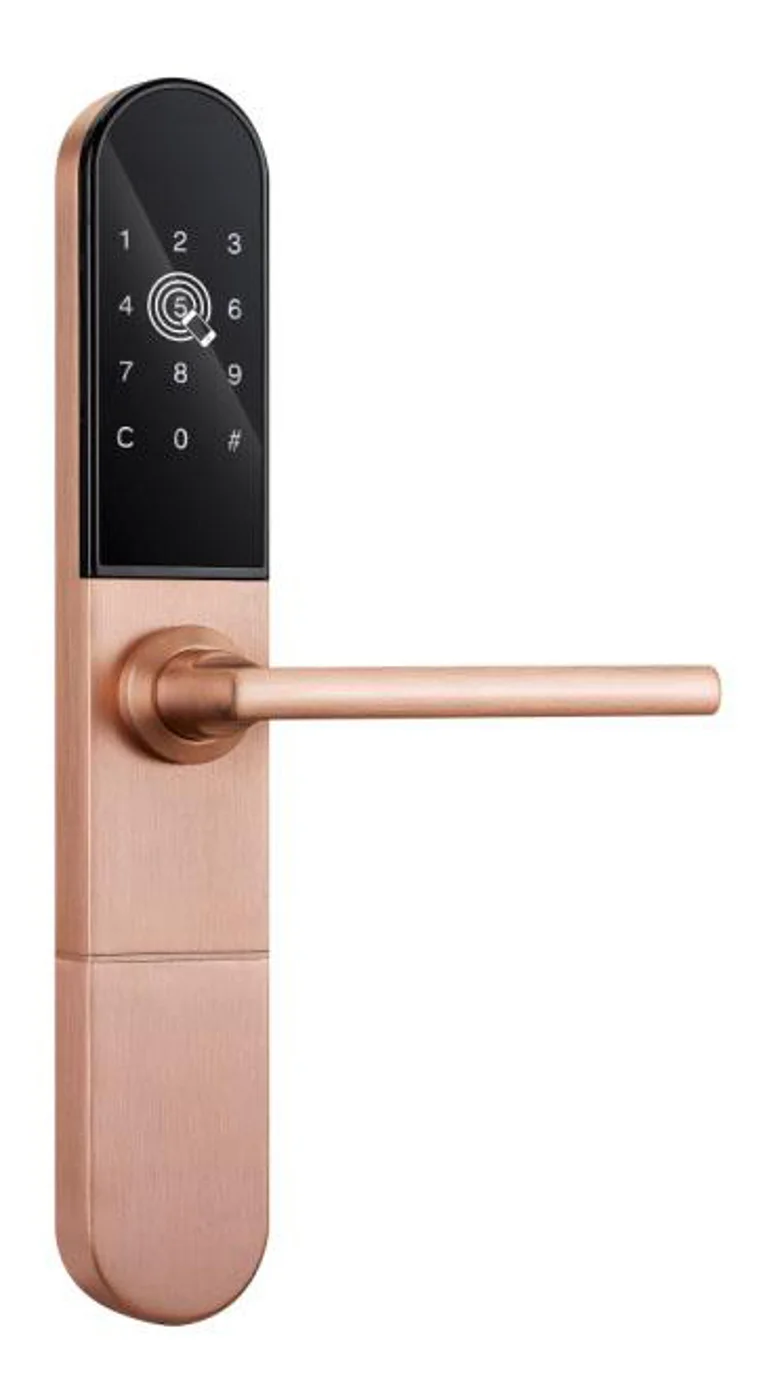
Smart Cabinet Lock — App-Managed, Multi-Site Dashboard
App-managed smart cabinet lock for office, parcel, and multi-site fleets. BLE app dashboard, audit trail, remote unlock, no per-lock server. Higher-tier chassis.
This page already points to it as the next recommended reference.
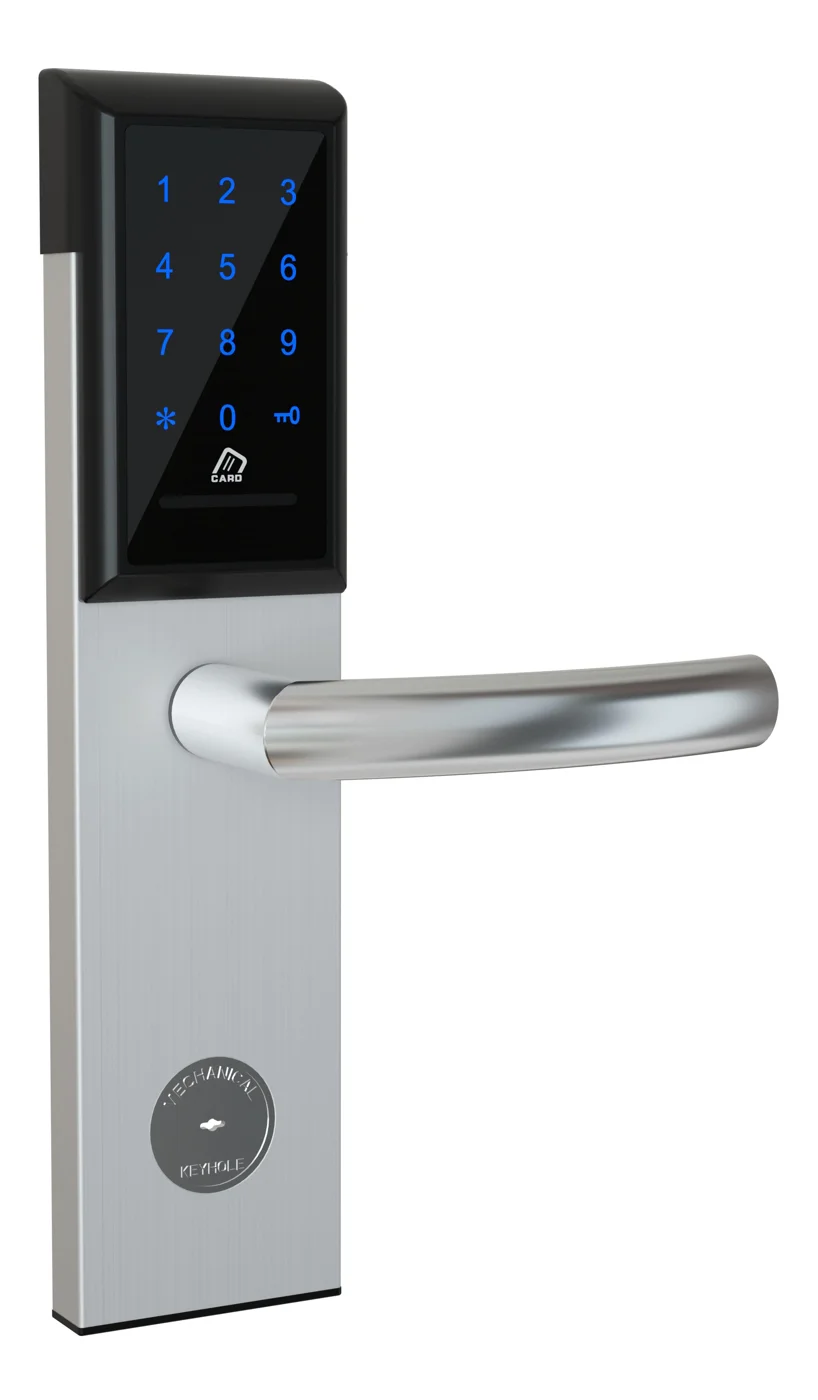
Office Cabinet Lock — PIN + Card for Filing & Pedestals
Offline PIN + card office cabinet lock for filing cabinets, pedestals, and drawers. Battery-powered 5-minute retrofit, no WiFi, no key management. CE/FCC/RoHS.
This page already points to it as the next recommended reference.
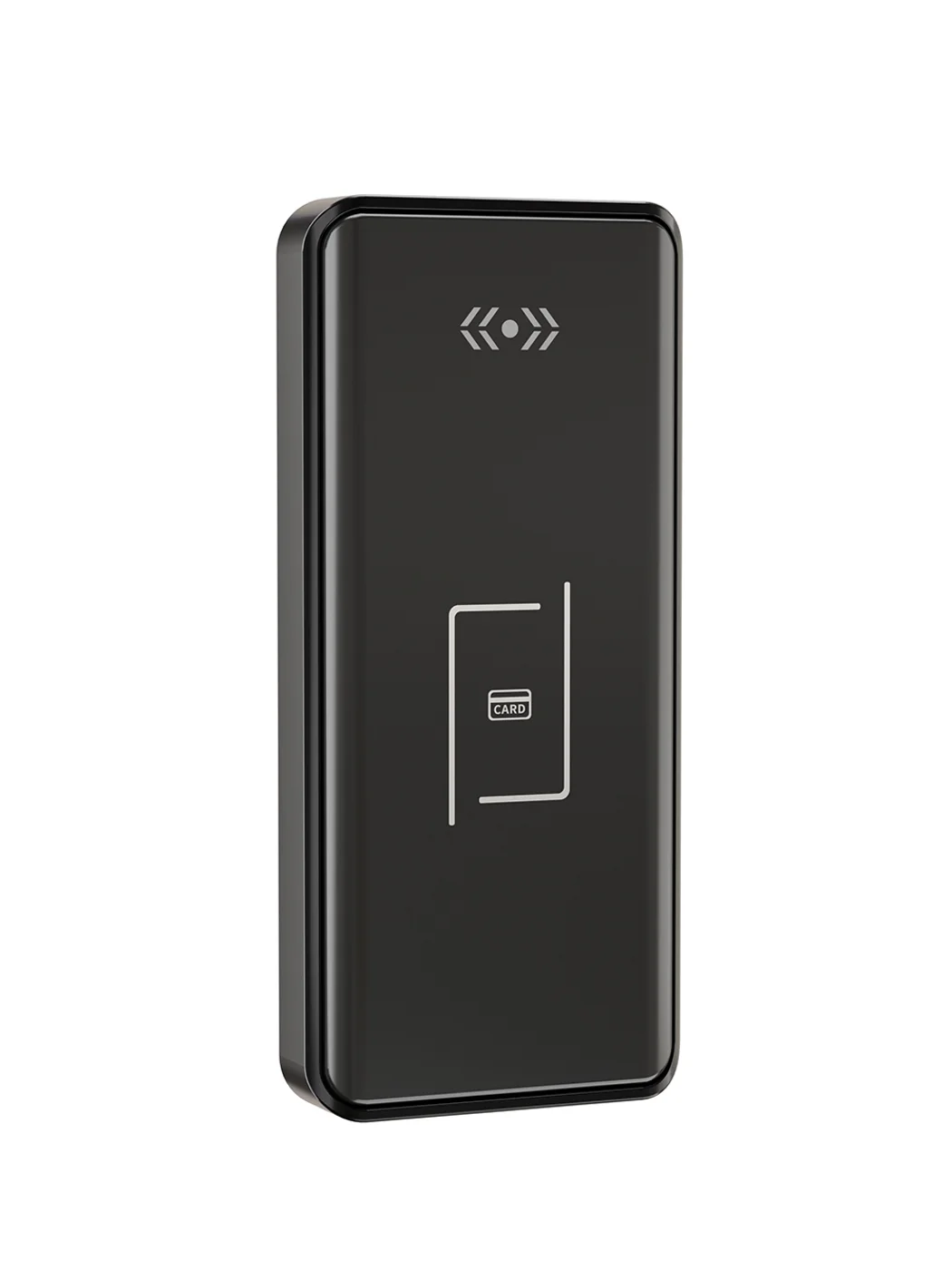
Gym Locker Lock — Offline Card, No WiFi Required
Offline card gym locker lock for fitness and pool lockers. MIFARE card, battery-powered 5-minute retrofit, no WiFi or server. Zinc alloy body, CE/FCC/RoHS.
This page already points to it as the next recommended reference.
Related blog posts
3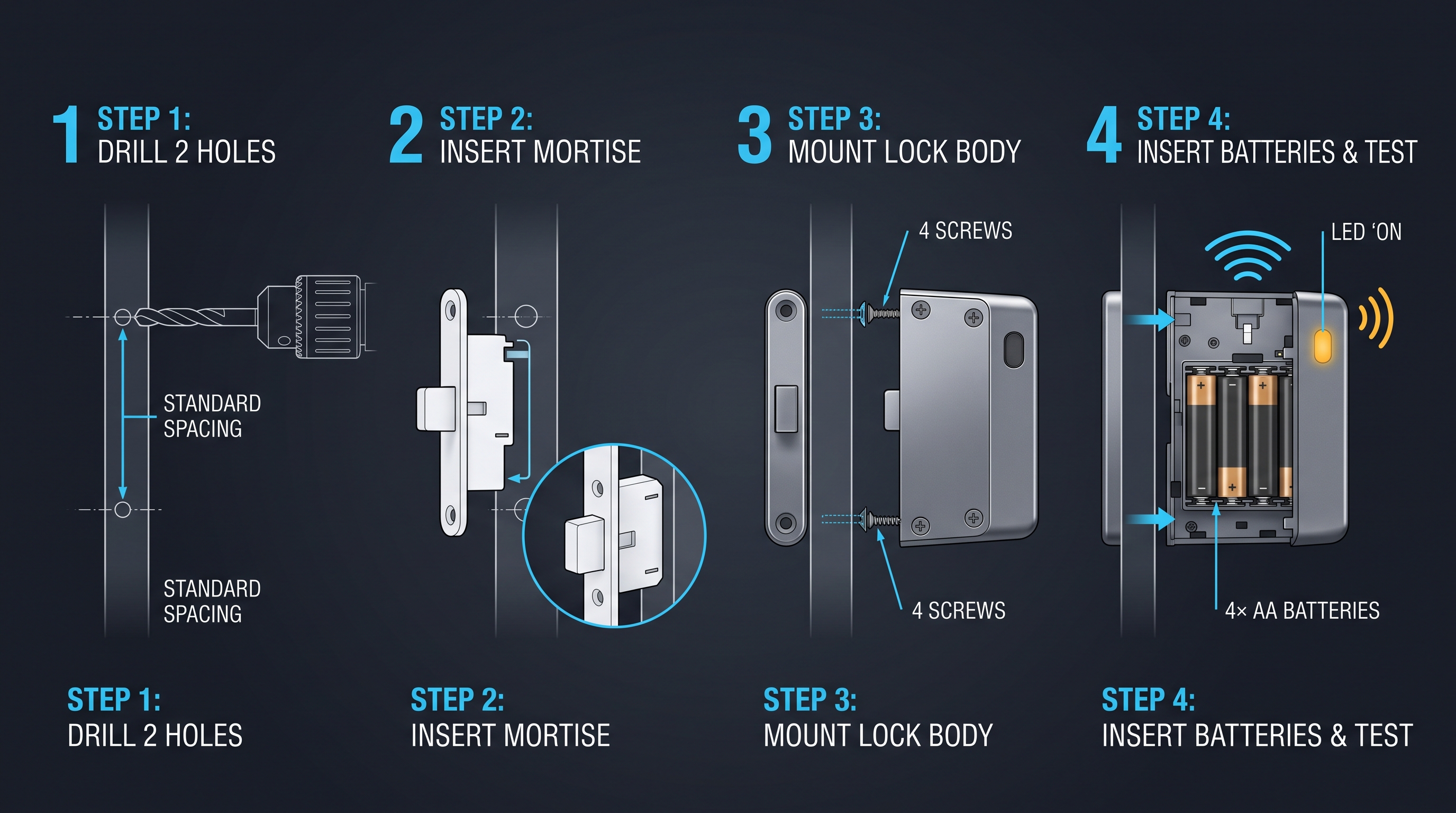
Mobile App Cabinet Lock: The Complete Guide to Smartphone-Controlled Cabinet Security
Discover how mobile app cabinet lock systems work. Explore BLE/Wi-Fi/NFC credentials, remote unlock, temporary codes, role-based access, cloud sync, security features, and deployment scenarios.
It supports the same product context: Smart Cabinet Lock — App-Managed, Multi-Site Dashboard, Office Cabinet Lock — PIN + Card for Filing & Pedestals, Gym Locker Lock — Offline Card, No WiFi Required.
MIFARE Cabinet Lock: Advanced Security Guide for MIFARE-Based Cabinet Access Systems
In-depth technical guide to MIFARE cabinet lock technology covering MIFARE Classic, Plus, DESFire, Ultralight variants, cryptographic security, installation, and multi-application smart card integration for cabinet access control.
It supports the same product context: Smart Cabinet Lock — App-Managed, Multi-Site Dashboard, Office Cabinet Lock — PIN + Card for Filing & Pedestals, Gym Locker Lock — Offline Card, No WiFi Required.
MIFARE Locker Lock: Definitive Guide to MIFARE-Based Smart Locker Security
Complete guide to MIFARE locker lock technology for gyms, schools, offices, and public facilities. Covers MIFARE Classic, Plus, DESFire variants, multi-user management, installation, networking, and smart locker ecosystem integration.
It supports the same product context: Gym Locker Lock — Offline Card, No WiFi Required.
Specify your cabinet lock project with our engineers
Send your locker count, cabinet type, and credential preference. We will return a sample plan and quote within 24 business hours.
- Move from general guidance into a product or application discussion.
- Use RFQ when pricing, drawings, MOQ, or launch timing needs structure.
- Keep a direct contact path visible for fast clarifications and handoff.