MIFARE Cabinet Lock: Advanced Security Guide for MIFARE-Based Cabinet Access Systems
In-depth technical guide to MIFARE cabinet lock technology covering MIFARE Classic, Plus, DESFire, Ultralight variants, cryptographic security, installation, and multi-application smart card integration for cabinet access control.
Understanding MIFARE Cabinet Lock Technology Fundamentals
A MIFARE cabinet lock is an electronic locking device that uses NXP Semiconductors' MIFARE contactless smart card technology as its primary authentication and access control mechanism. The MIFARE platform is the most widely deployed contactless smart card technology globally, with billions of cards and readers in use across access control, public transportation, payment, and identity applications. When this technology is embedded into a MIFARE cabinet lock, it brings the same security, convenience, and interoperability that organizations rely on for building access to the cabinet and locker level.
The MIFARE cabinet lock category spans a range of products from simple standalone locks reading MIFARE Classic card serial numbers to sophisticated networked devices performing mutual authentication with MIFARE DESFire EV3 credentials using AES-128 encryption. This breadth makes the MIFARE cabinet lock suitable for applications ranging from basic office supply cabinet security to high-security pharmaceutical storage where regulatory compliance demands documented, cryptographically protected access control. Understanding the differences between MIFARE variants is essential when selecting a MIFARE cabinet lock, as the security properties and feature sets vary dramatically across the product family.
The operational principle of a MIFARE cabinet lock begins with the reader generating a 13.56 MHz radio frequency field. When a MIFARE card, fob, wristband, or NFC-enabled smartphone enters this field, the card's antenna harvests energy from the field to power its integrated circuit. The MIFARE cabinet lock reader and the card then engage in a communication protocol defined by the ISO 14443 standard, which governs proximity contactless smart cards. Depending on the MIFARE variant and the MIFARE cabinet lock security configuration, this communication may involve simple serial number reading, sector-based authentication, or full cryptographic mutual authentication before the MIFARE cabinet lock grants access.
The ecosystem advantage of a MIFARE cabinet lock is substantial for organizations already invested in the MIFARE platform. Employees who carry MIFARE-based building access cards can use those same cards to access MIFARE cabinet lock secured storage, creating a seamless single-credential experience. The existing card issuance and management infrastructure, card programming equipment, and administrator expertise all transfer directly to the MIFARE cabinet lock deployment. This ecosystem compatibility is a major factor driving adoption of MIFARE cabinet lock technology in enterprise, healthcare, education, and government environments.
This comprehensive guide provides a detailed technical and practical examination of MIFARE cabinet lock technology. From the cryptographic foundations of the MIFARE platform through installation best practices to enterprise integration architectures, every aspect of selecting, deploying, and managing a MIFARE cabinet lock system is covered. Whether you are evaluating your first MIFARE cabinet lock or planning a large-scale deployment across multiple facilities, this resource provides the depth of information needed for informed decision-making.
MIFARE Technology Variants in Cabinet Lock Applications
The MIFARE product family includes several distinct technology variants, each with different capabilities, security properties, and suitability for MIFARE cabinet lock applications. Understanding these variants is essential because a MIFARE cabinet lock that supports one variant may or may not support others. The choice of MIFARE variant directly impacts the security level of the MIFARE cabinet lock deployment and determines compatibility with existing card populations.
MIFARE Classic is the original and most widely deployed MIFARE variant, with billions of cards in circulation. A MIFARE cabinet lock that reads MIFARE Classic can access the card's unique identifier or serial number, and with appropriate key knowledge, can read from and write to the card's sixteen sectors of data storage. Each sector in MIFARE Classic is protected by two 48-bit keys, and access to sector data requires knowledge of the relevant key. However, the proprietary CRYPTO1 encryption algorithm used by MIFARE Classic was compromised through cryptographic research published in 2008, and practical attacks against MIFARE Classic security have been demonstrated. A MIFARE cabinet lock relying solely on MIFARE Classic for security-sensitive applications should be carefully evaluated against the threat model—for general office use, MIFARE Classic may be adequate; for pharmaceutical storage or classified documents, stronger variants are recommended.
MIFARE Plus provides a migration path from MIFARE Classic to stronger security. MIFARE Plus cards can operate in a backward-compatible mode that emulates MIFARE Classic behavior, allowing existing MIFARE cabinet lock installations to continue functioning while the credential population is upgraded. When switched to its higher security level, MIFARE Plus uses AES-128 encryption for authentication and data protection, addressing the cryptographic weaknesses of MIFARE Classic. A MIFARE cabinet lock that supports MIFARE Plus can be deployed initially with Classic compatibility and later upgraded to AES security through a card-level configuration change, without replacing the MIFARE cabinet lock hardware.
MIFARE DESFire is the high-security variant in the MIFARE family and the recommended choice for MIFARE cabinet lock deployments requiring strong cryptographic protection. MIFARE DESFire EV3, the current generation, supports AES-128 encryption, mutual authentication between card and reader, and a flexible file system rather than the fixed sector structure of MIFARE Classic. A MIFARE cabinet lock with DESFire support can establish an encrypted communication channel with the card, preventing eavesdropping on card-reader communications. The mutual authentication ensures that the card verifies the MIFARE cabinet lock reader's authenticity before revealing its data, protecting against rogue readers that might attempt to skim card information. For government, defense, healthcare, and financial services MIFARE cabinet lock applications, DESFire is the appropriate technology choice.
MIFARE Ultralight is a low-cost variant designed for single-application or limited-use cards such as event tickets and transit single-ride passes. MIFARE Ultralight C adds 3DES authentication, providing a basic security layer, but the platform is not designed for the multi-application use typical of access control. A MIFARE cabinet lock might support MIFARE Ultralight reading for compatibility with visitor or temporary cards, but Ultralight is not the recommended primary technology for MIFARE cabinet lock access control due to its limited security and storage capabilities.
MIFARE DESFire EV3, the latest generation as of 2026, introduces several security enhancements relevant to MIFARE cabinet lock applications. These include improved side-channel attack resistance, support for longer key lengths, enhanced random number generation, and Transaction MAC for authenticated data operations. A MIFARE cabinet lock supporting EV3 can leverage these improvements for the highest level of card-reader security currently available in the MIFARE ecosystem. When specifying a MIFARE cabinet lock for new deployments, EV3 compatibility ensures access to the most current security capabilities.
Cryptographic Security of a MIFARE Cabinet Lock
The security of a MIFARE cabinet lock deployment rests on the cryptographic properties of the MIFARE platform and the implementation choices made by the lock manufacturer and the deploying organization. A thorough understanding of these security properties enables informed selection of MIFARE cabinet lock products and appropriate configuration for the threat environment.
Mutual authentication is the cornerstone of MIFARE cabinet lock security in DESFire-based deployments. In a mutual authentication exchange, the MIFARE cabinet lock reader proves its authenticity to the card at the same time the card proves its authenticity to the reader. This protects against rogue readers that might attempt to skim card data—a card will not reveal its protected data to a reader that cannot demonstrate knowledge of the appropriate cryptographic key. Mutual authentication in a MIFARE cabinet lock also protects against man-in-the-middle attacks where an attacker positions a device between the card and reader to intercept or modify communications.
The key management architecture of a MIFARE cabinet lock deployment determines how cryptographic keys are generated, distributed, stored, and rotated. In simple deployments, a MIFARE cabinet lock may use diversified keys derived from the card serial number and a master key. More sophisticated deployments use a centralized key management system where the MIFARE cabinet lock obtains session keys from a secure server for each transaction. The security of the master key or key derivation process is critical—compromise of the master key compromises every card and every MIFARE cabinet lock in the deployment. Hardware security modules or secure elements should be used to protect master keys from extraction.
The communication channel between the MIFARE cabinet lock reader and the card is protected by encryption in DESFire and MIFARE Plus security-level deployments. The encrypted channel prevents passive eavesdropping on the radio frequency communication, which could otherwise reveal card data or authentication exchanges. The encryption also prevents replay attacks, where an attacker records a legitimate authentication exchange and replays it later to gain unauthorized access. A MIFARE cabinet lock should use fresh random challenges for each authentication session to ensure that recorded exchanges cannot be reused.
The attack surface of a MIFARE cabinet lock extends beyond the card-reader interface. The lock's internal firmware, its communication interfaces with management systems, its physical construction, and its power management all present potential attack vectors. A well-designed MIFARE cabinet lock applies defense-in-depth principles, ensuring that compromise of one security layer does not compromise the entire system. Firmware should be signed to prevent installation of unauthorized code. Management interfaces should use encrypted protocols. The physical enclosure should resist tampering, and sensitive components should be protected against probing.
Security certifications provide independent validation of a MIFARE cabinet lock product's security claims. Common Criteria certification evaluates the security of the product against a defined protection profile. FIPS 140 validation applies to cryptographic modules and may be relevant for MIFARE cabinet lock products using hardware security modules. Industry-specific certifications, such as those for healthcare or government applications, may apply depending on the deployment context. When security is a primary requirement, selecting a MIFARE cabinet lock with relevant third-party security certifications provides assurance beyond manufacturer claims.
Selecting a MIFARE Cabinet Lock: Critical Specifications
The MIFARE variant support of a MIFARE cabinet lock is the most important specification to verify. A MIFARE cabinet lock might support only MIFARE Classic CSN or card serial number reading, which provides minimal security since the serial number is transmitted in plain text. Other MIFARE cabinet lock models support full sector authentication with MIFARE Classic, providing access to sector data with CRYPTO1 protection. Premium MIFARE cabinet lock products support DESFire AES authentication and encrypted data exchange. The specification should clearly state which MIFARE variants are supported and at what security level—CSN only, sector authentication, or full cryptographic authentication.
Multi-technology support in a MIFARE cabinet lock extends compatibility beyond the MIFARE ecosystem. Many organizations have mixed credential populations that include legacy 125 kHz proximity cards alongside MIFARE smart cards. A multi-technology MIFARE cabinet lock can read both, providing flexibility during credential migration and accommodating visitors or contractors who carry different card types. Some MIFARE cabinet lock models also support NFC mobile credentials from smartphones, enabling a card-free access experience for users who prefer their phone over a physical card.
The user capacity of a MIFARE cabinet lock varies by model and operating mode. In standalone mode, where the MIFARE cabinet lock stores authorized card identifiers locally, capacity typically ranges from a few hundred to several thousand cards. In networked mode, where the MIFARE cabinet lock queries a central controller for each access decision, capacity is effectively unlimited. The choice between standalone and networked operation affects not only capacity but also the ability to instantly revoke lost cards, update access privileges, and collect audit data. A MIFARE cabinet lock that supports both modes provides deployment flexibility.
Audit trail capabilities in a MIFARE cabinet lock provide a record of access events for security monitoring and compliance. Standalone MIFARE cabinet lock models store audit events in onboard memory, with capacities ranging from several hundred to several thousand events. The audit data includes timestamps, card identifiers, and whether each access attempt was granted or denied. Networked MIFARE cabinet lock models transmit audit events in real-time to a central server, providing immediate visibility and eliminating the risk of data loss if a MIFARE cabinet lock is damaged. The audit trail of a MIFARE cabinet lock should include sufficient detail to support security investigations and regulatory compliance requirements.
The physical durability of a MIFARE cabinet lock is characterized by several specifications. The IP rating indicates dust and water resistance. The operating temperature range defines the environmental conditions the MIFARE cabinet lock can tolerate. The cycle rating indicates how many lock-unlock cycles the mechanism is rated for before failure. The impact rating or IK rating indicates resistance to physical impact. A MIFARE cabinet lock intended for high-traffic, public, or outdoor environments should have specifications appropriate to the expected conditions.
Power specifications for a MIFARE cabinet lock include the battery type and quantity, estimated battery life under typical usage, low-battery warning mechanism, and whether an external power or emergency power input is provided. Battery life for a MIFARE cabinet lock typically ranges from one to three years depending on usage frequency and features. The MIFARE cabinet lock should provide clear low-battery indication with sufficient advance warning. An emergency power input, typically a micro-USB or USB-C port, allows temporary power to be applied if batteries are completely depleted, enabling access without resorting to destructive entry methods.
Installing and Programming a MIFARE Cabinet Lock
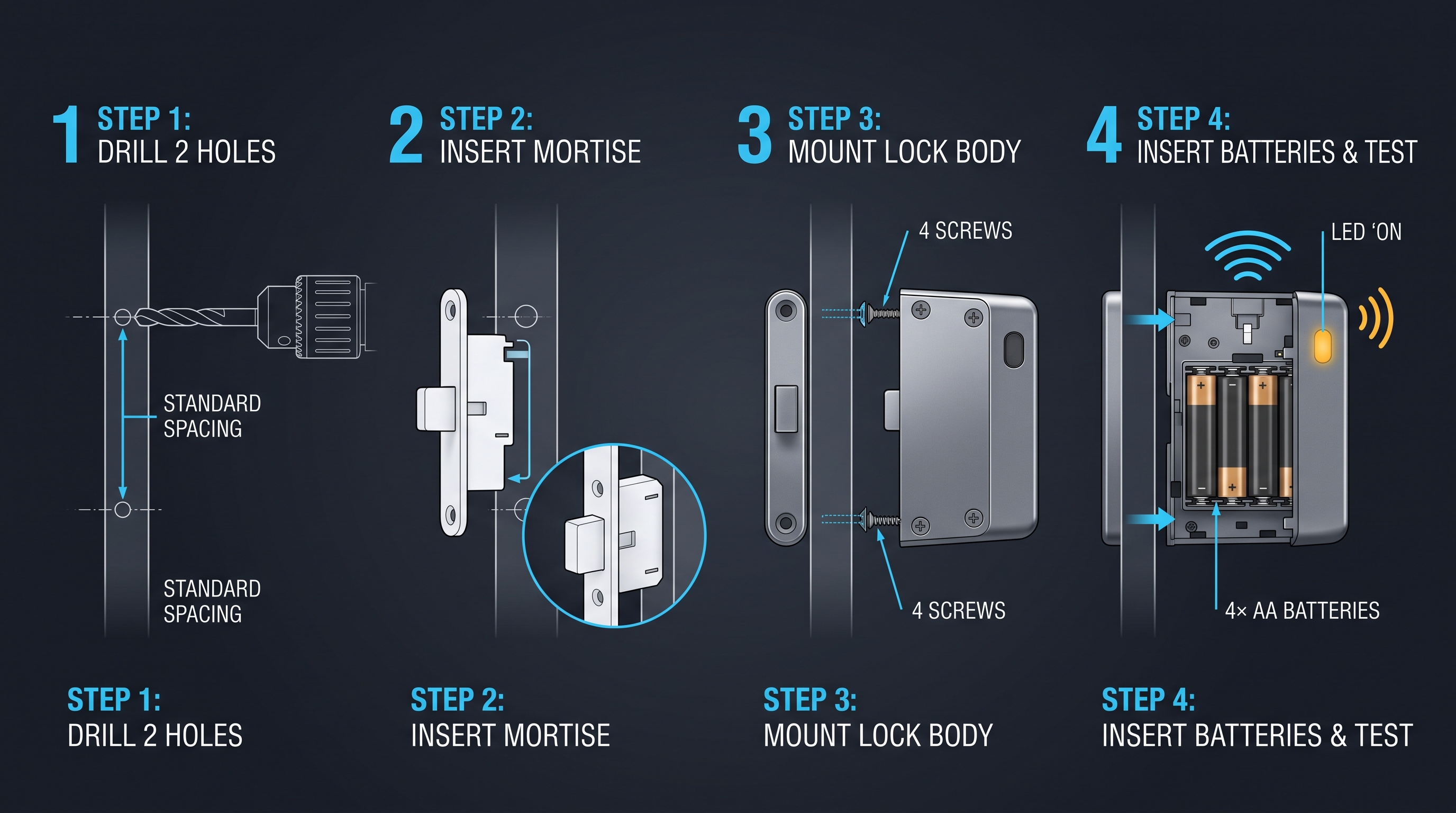
Pre-installation assessment for a MIFARE cabinet lock involves verifying physical compatibility with the target cabinet. Cabinet door thickness, available mounting area, and clearance behind the mounting surface must accommodate the MIFARE cabinet lock dimensions. The mounting surface must be capable of supporting the lock body securely. For retrofit installations where a MIFARE cabinet lock replaces an existing mechanical lock, verify that the MIFARE cabinet lock is compatible with the existing mounting hole dimensions or that the cabinet material can be modified to accommodate new mounting holes without compromising structural integrity.
The physical mounting procedure for a MIFARE cabinet lock typically involves drilling or verifying the main mounting hole, which is often 16 to 22 millimeters in diameter, plus any secondary holes for mounting screws or anti-rotation pins. The MIFARE cabinet lock manufacturer provides a drilling template that should be followed precisely. Use the appropriate drill bit for the cabinet material—wood bits for wooden cabinets, high-speed steel or cobalt bits for metal cabinets, and carbide-tipped bits for particularly hard materials. Deburr holes after drilling to ensure the MIFARE cabinet lock body seats flush against the mounting surface.
Securing the MIFARE cabinet lock body properly is critical for both security and reliable operation. The lock body should be tightened firmly but not excessively—over-tightening can distort the housing and cause mechanism binding. Some MIFARE cabinet lock models include a threaded collar or nut on the interior side of the mounting surface. Apply thread-locking compound to prevent loosening over time from vibration and repeated door or drawer operation. A MIFARE cabinet lock that becomes loose can misalign with the strike plate, causing intermittent locking failures or making the cabinet vulnerable to forced entry.
Card enrollment for a MIFARE cabinet lock depends on the operating mode and management architecture. In standalone mode, enrollment is performed at the MIFARE cabinet lock itself, typically using a programming card or administrator code to enter enrollment mode, then presenting each user card for registration. The MIFARE cabinet lock reads and stores either the card serial number or data from a specified sector or file, depending on configuration. In networked mode, enrollment is performed through the management software, and the MIFARE cabinet lock receives the authorized card list from the central controller.
Sector and key configuration for a MIFARE cabinet lock that reads beyond the card serial number requires careful planning. The MIFARE cabinet lock must be configured with the sector number or file ID to read, the key or keys required to access that data, and the data format expected. These parameters must be consistent with the card programming used across the organization. Misconfigured MIFARE cabinet lock settings will result in authorized cards being rejected, creating user frustration and support burden. Document the sector and key configuration and maintain it consistently across the MIFARE cabinet lock deployment.
Testing a newly installed MIFARE cabinet lock should be thorough. Test with multiple authorized cards of each supported MIFARE variant. Test that unauthorized cards are properly rejected. Test the read range and positioning to ensure consistent card detection. Test battery removal and replacement to verify that configuration and card data are preserved. Test the mechanical override if provided. Test any alarm or tamper features. For networked MIFARE cabinet lock models, test communication with the management system and verify that access events appear in the audit log. All testing should be performed with the cabinet open to prevent lockout.
Integrating a MIFARE Cabinet Lock With Enterprise Systems
The integration of a MIFARE cabinet lock with enterprise access control systems leverages the same MIFARE infrastructure used for door access. Since both the door readers and the MIFARE cabinet lock use the same card technology, the same cards, and the same card programming, cabinet access becomes a natural extension of the building access system. This integration creates a seamless user experience where the card that opens the building door also opens the user's assigned cabinets, and it provides administrators with a single platform for managing all physical access.
Wiegand interface integration connects a MIFARE cabinet lock to standard access control panels. The MIFARE cabinet lock acts as a card reader, presenting card data to the panel over the Wiegand interface. The panel makes the access decision based on its card database and sends a signal back to the MIFARE cabinet lock to activate the unlocking mechanism. This architecture centralizes access decisions in the panel, ensuring that card privileges are consistent and that card revocation takes effect immediately across all connected MIFARE cabinet lock units.
OSDP or Open Supervised Device Protocol is the modern alternative to Wiegand for MIFARE cabinet lock integration. OSDP provides bidirectional encrypted communication, enabling the access control panel to not only receive card data from the MIFARE cabinet lock but also to monitor lock status, detect tampering, and remotely configure lock parameters. OSDP supports longer cable runs than Wiegand and uses standard RS-485 wiring. When integrating a MIFARE cabinet lock with new or upgraded access control infrastructure, OSDP should be specified over Wiegand for its security and feature advantages.
Wireless integration options for a MIFARE cabinet lock include Wi-Fi, Bluetooth Low Energy, Z-Wave, Zigbee, and proprietary wireless protocols. Wireless connectivity eliminates the need for dedicated access control wiring to each MIFARE cabinet lock, dramatically reducing installation cost and disruption, particularly in retrofit scenarios. Wireless MIFARE cabinet lock models are battery-powered, and battery management becomes an ongoing operational consideration. The wireless connection must be secured with encryption and mutual authentication to prevent eavesdropping and unauthorized commands.
API and software integration extends MIFARE cabinet lock management beyond traditional access control platforms. A MIFARE cabinet lock system with REST APIs can integrate with identity management systems, HR platforms, inventory management systems, and custom applications. This enables automated workflows such as granting cabinet access when a new employee is onboarded in the HR system, revoking access when employment is terminated, and logging cabinet access events in the organization's security information and event management platform. The API integration transforms the MIFARE cabinet lock from an isolated security device into a connected component of the organizational technology ecosystem.
Management software for a MIFARE cabinet lock system provides the interface for card enrollment, access privilege management, schedule configuration, audit log review, and system health monitoring. The software should support role-based access control so that different administrators have appropriate levels of system access. It should provide bulk operations for managing large MIFARE cabinet lock deployments efficiently. Reporting should include standard compliance reports and custom report generation. The management software's quality significantly impacts the operational burden and security posture of the MIFARE cabinet lock deployment.
MIFARE Cabinet Lock Applications Across Sectors
Healthcare applications for a MIFARE cabinet lock include medication storage cabinets, controlled substance vaults, patient record storage, medical device and supply cabinets, and laboratory sample storage. The MIFARE cabinet lock in healthcare must support the staff ID badges used by clinical personnel, which are typically MIFARE-based in modern installations. Audit trail capability is critical for regulatory compliance with controlled substance tracking and patient data privacy requirements. The MIFARE cabinet lock must operate reliably in the demanding healthcare environment, which includes exposure to cleaning chemicals, frequent use by multiple staff members, and the need for rapid access in emergency situations.
Higher education institutions deploy MIFARE cabinet lock technology in research laboratories for chemical and biological material storage, in IT departments for equipment and server cabinet security, in libraries for rare book and special collection storage, and in administrative offices for confidential record security. Many universities have standardized on MIFARE-based campus cards that combine building access, library services, dining, and payment functions. A MIFARE cabinet lock that works with the existing campus card ecosystem extends the value of that infrastructure investment while providing appropriate security for high-value or regulated contents.
Corporate environments benefit from MIFARE cabinet lock deployment for securing file cabinets containing personnel records, financial documents, legal contracts, and intellectual property. The integration of a MIFARE cabinet lock with the corporate access control system, which is typically MIFARE-based in modern installations, means that cabinet access is managed through the same platform as door access. When an employee's building access is revoked upon separation from the company, their MIFARE cabinet lock access is automatically revoked as well, closing a common security gap.
Hospitality properties use MIFARE cabinet lock technology for in-room safes, minibar cabinets, housekeeping supply storage, and staff lockers. A MIFARE cabinet lock on a guest room safe can be programmed to accept the guest's MIFARE-based room key card, providing the convenience of a single card for room and safe access. The MIFARE cabinet lock is automatically reprogrammed for each new guest through integration with the property management system. For back-of-house applications, a MIFARE cabinet lock on housekeeping supply cabinets and staff lockers ensures that only authorized personnel access supplies and personal storage.
Government and defense applications for a MIFARE cabinet lock require compliance with stringent security standards. Classified document storage requires MIFARE cabinet lock systems that support government-issued credentials and provide the multi-factor authentication and audit trail capabilities necessary for classified material accountability. A MIFARE cabinet lock in these environments typically uses MIFARE DESFire technology for its strong cryptographic properties and must undergo extensive testing and certification before deployment.
MIFARE Cabinet Lock Versus Alternative Access Technologies
Comparing a MIFARE cabinet lock against low-frequency proximity card alternatives highlights the security advantages of the MIFARE platform. Low-frequency 125 kHz proximity cards transmit a fixed, unencrypted identifier that can be captured and cloned with inexpensive, widely available hardware. A MIFARE cabinet lock using DESFire with AES encryption provides resistance to cloning, eavesdropping, and replay attacks that low-frequency systems cannot match. For organizations currently using low-frequency proximity cards, upgrading to a MIFARE cabinet lock deployment is an opportunity to significantly improve the security posture of cabinet-level access control.
A MIFARE cabinet lock compared against keypad-based electronic locks offers different trade-offs in convenience and cost. A keypad lock requires no cards, fobs, or other credentials—users simply memorize a code. This eliminates per-user credential costs and the administrative burden of card issuance and management. However, codes can be shared, observed, or guessed. A MIFARE cabinet lock provides stronger individual accountability because cards are less likely to be shared than codes, and the audit trail identifies the specific card used for each access. The choice between a MIFARE cabinet lock and a keypad often depends on whether users already carry MIFARE cards for other purposes.
Biometric cabinet locks using fingerprint, facial recognition, or other biometric modalities are an alternative to MIFARE cabinet lock authentication. Biometrics eliminate the credential entirely, removing the risk of lost or stolen cards and providing high assurance of user identity. However, biometric readers are typically more expensive than MIFARE cabinet lock readers, may have environmental and usability limitations, and raise privacy considerations. Many high-security deployments combine biometrics with MIFARE cabinet lock technology for multi-factor authentication—something the user has, the MIFARE card, plus something the user is, the biometric.
Mechanical key locks remain the baseline comparison for a MIFARE cabinet lock. Mechanical locks are inexpensive, require no power, and can last for decades. Against these advantages, a MIFARE cabinet lock offers electronic credential management that eliminates key duplication and rekeying costs, audit trail capabilities that mechanical locks cannot provide, and integration with electronic access control systems. The total cost of ownership analysis for a MIFARE cabinet lock deployment should account for the eliminated costs of key management, rekeying, and the administrative time spent on key-related issues.
Designing a MIFARE Cabinet Lock Deployment
A successful MIFARE cabinet lock deployment begins with a comprehensive site survey. Document every cabinet, drawer, and locker that will receive a MIFARE cabinet lock. For each, record the cabinet material and thickness, the available mounting surface dimensions, the clearance behind the mounting surface, the environmental conditions, and any special requirements such as cleanability for healthcare environments or outdoor exposure for external storage. This survey data drives MIFARE cabinet lock model selection and identifies any cabinets that require special mounting hardware, reinforcement, or alternative locking approaches.
The network and power infrastructure plan for a MIFARE cabinet lock deployment addresses how each lock will be powered and, for networked models, how it will communicate. Battery-powered MIFARE cabinet lock models simplify installation by eliminating wiring but require a battery management plan including scheduled replacement and spare battery inventory. Wired MIFARE cabinet lock models provide continuous power and network connectivity but require cable routing that may be challenging in existing facilities. A hybrid approach may be appropriate, with networked MIFARE cabinet lock units in easily cabled locations and battery-powered standalone MIFARE cabinet lock units in locations where wiring is impractical.
The card configuration plan defines how MIFARE cards will be programmed for use with the MIFARE cabinet lock system. This includes selecting the MIFARE variant to use, defining the sector or file structure for cabinet access data, establishing the key management scheme, and determining whether cabinet access data will coexist with other applications on the card. The card configuration must be compatible with existing card programming if the MIFARE cabinet lock is being added to an existing MIFARE deployment. Card programming equipment and software must be available to encode the cabinet access application onto new and existing cards.
The access policy framework for a MIFARE cabinet lock deployment defines who can access which cabinets and under what conditions. Access policies should be based on roles and responsibilities rather than individual names to simplify administration. Define access groups that correspond to organizational functions—for example, all nursing staff in a particular unit may have access to supply cabinets in that unit, while only charge nurses and pharmacy staff have access to medication cabinets. Access policies should include time restrictions where appropriate, such as limiting laboratory chemical storage access to business hours. Document access policies clearly and review them periodically with stakeholders.
User training is critical for MIFARE cabinet lock adoption and correct usage. Users need to understand how to present their card for reliable reading, what the MIFARE cabinet lock LED and audible indicators mean, how to report a lost or stolen card, and the importance of not sharing cards or propping cabinets open. Training should be provided as part of new employee onboarding and should be refreshed periodically. Management should lead by example in using the MIFARE cabinet lock correctly, as user behavior is strongly influenced by observed management practices.
Maintaining and Evolving a MIFARE Cabinet Lock System
Preventive maintenance for a MIFARE cabinet lock deployment includes scheduled battery replacement for battery-powered models, physical inspection of lock mounting and alignment, cleaning of reader surfaces, and verification of correct lock operation. Maintenance frequency depends on usage intensity and environmental conditions, but annual inspection is a reasonable minimum for most MIFARE cabinet lock deployments. Document maintenance activities and maintain a log of any issues identified and resolved.
Firmware management for a MIFARE cabinet lock system should be a planned, documented process. Subscribe to manufacturer security advisories and firmware release notifications. Evaluate each firmware update for relevance and urgency—security patches should be applied promptly, while feature updates may be scheduled at convenience. Test firmware updates on a non-critical MIFARE cabinet lock before deploying broadly. Maintain records of firmware versions across the MIFARE cabinet lock deployment to support troubleshooting and compliance requirements.
User lifecycle management maintains the accuracy and security of the MIFARE cabinet lock access database. Integrate with HR systems where possible to automate access provisioning when employees are hired or change roles, and access revocation when employees depart. For MIFARE cabinet lock systems without HR integration, establish administrative procedures for timely access updates. Conduct periodic access reviews where managers verify that their team members' MIFARE cabinet lock access remains appropriate for their current responsibilities.
Audit log management for a MIFARE cabinet lock deployment serves both security monitoring and compliance purposes. Establish a schedule for audit log review—daily for high-security applications, weekly or monthly for general office security. Look for unusual access patterns such as access at atypical times, repeated denied access attempts, or access frequency that does not align with normal patterns. Retain audit records according to the organization's data retention policy and any applicable regulatory requirements. Protect audit data from unauthorized access and tampering.
Technology evolution planning for a MIFARE cabinet lock deployment anticipates future changes in the credential ecosystem. The MIFARE platform continues to evolve, with new variants and security features being introduced. A MIFARE cabinet lock deployment should have a roadmap for adopting new MIFARE generations as they mature. Similarly, the growing adoption of mobile credentials via NFC may present opportunities to reduce or eliminate physical card issuance. Planning for these evolutions during the initial MIFARE cabinet lock deployment—for example, by selecting models that support both current and emerging technologies—reduces the cost and disruption of future upgrades.
This advanced security guide to MIFARE cabinet lock technology was last updated on August 3, 2026. The MIFARE trademark and technology are owned by NXP Semiconductors. Product specifications, MIFARE variant availability, and security properties are subject to change. Always consult current NXP documentation and MIFARE cabinet lock manufacturer specifications. For assistance selecting and deploying a MIFARE cabinet lock system for your organization, contact the CabinetLock Security Team or consult with a qualified physical security and access control professional.
Resources and Further Reading
- NXP MIFARE Product Family Documentation: www.nxp.com/mifare
- ISO/IEC 14443: Identification Cards — Contactless Integrated Circuit Cards — Proximity Cards
- NXP Application Note AN10741: MIFARE DESFire EV3 Features and Hints
- SIA OSDP Standard: Open Supervised Device Protocol Technical Specification
- NIST SP 800-116 Rev 1: Guidelines for the Use of PIV Credentials in Facility Access
Not sure which lock fits your lockers?
Talk to our lock engineers about credentials, battery life, and retrofit fit — no obligation.
Related cabinet lock resources
Compare lock types, check installation guides, and download the product catalog
Related products
3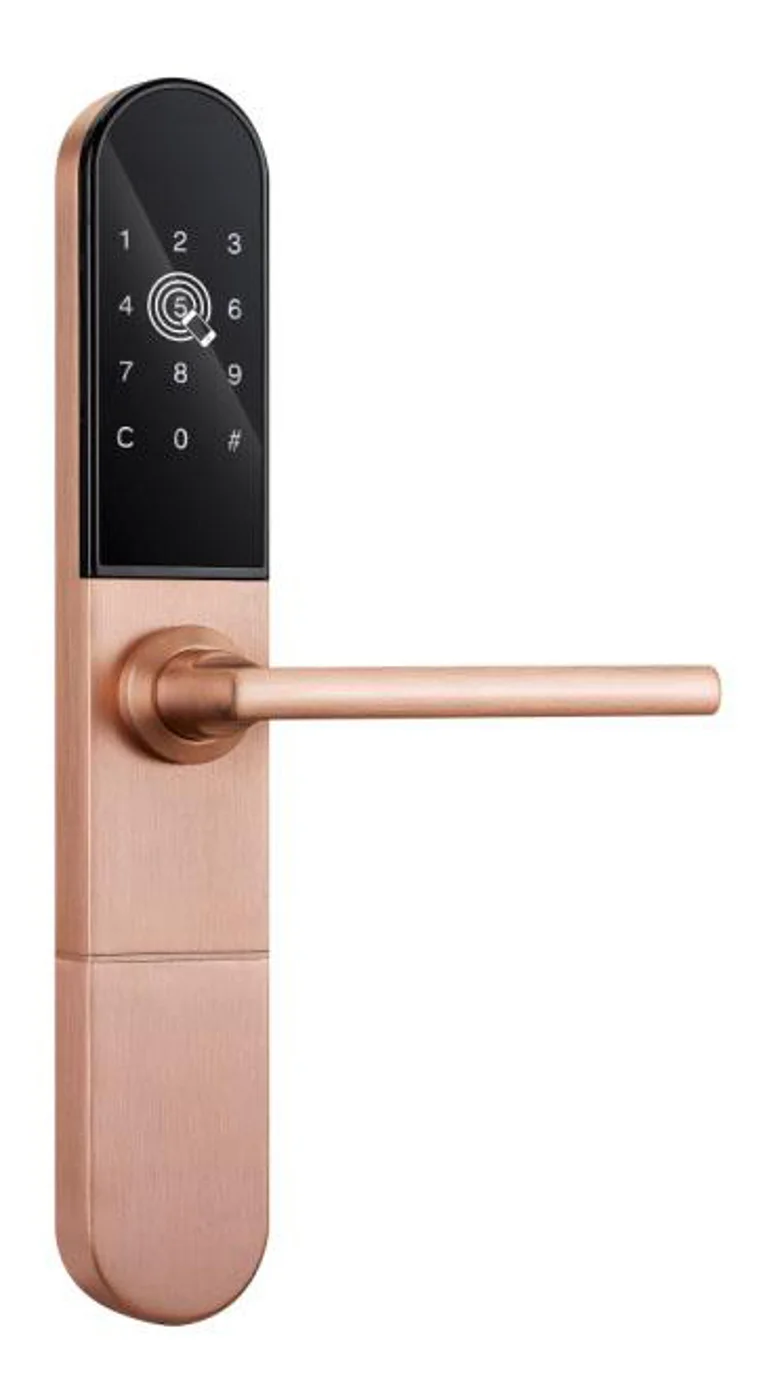
Smart Cabinet Lock — App-Managed, Multi-Site Dashboard
App-managed smart cabinet lock for office, parcel, and multi-site fleets. BLE app dashboard, audit trail, remote unlock, no per-lock server. Higher-tier chassis.
This page already points to it as the next recommended reference.
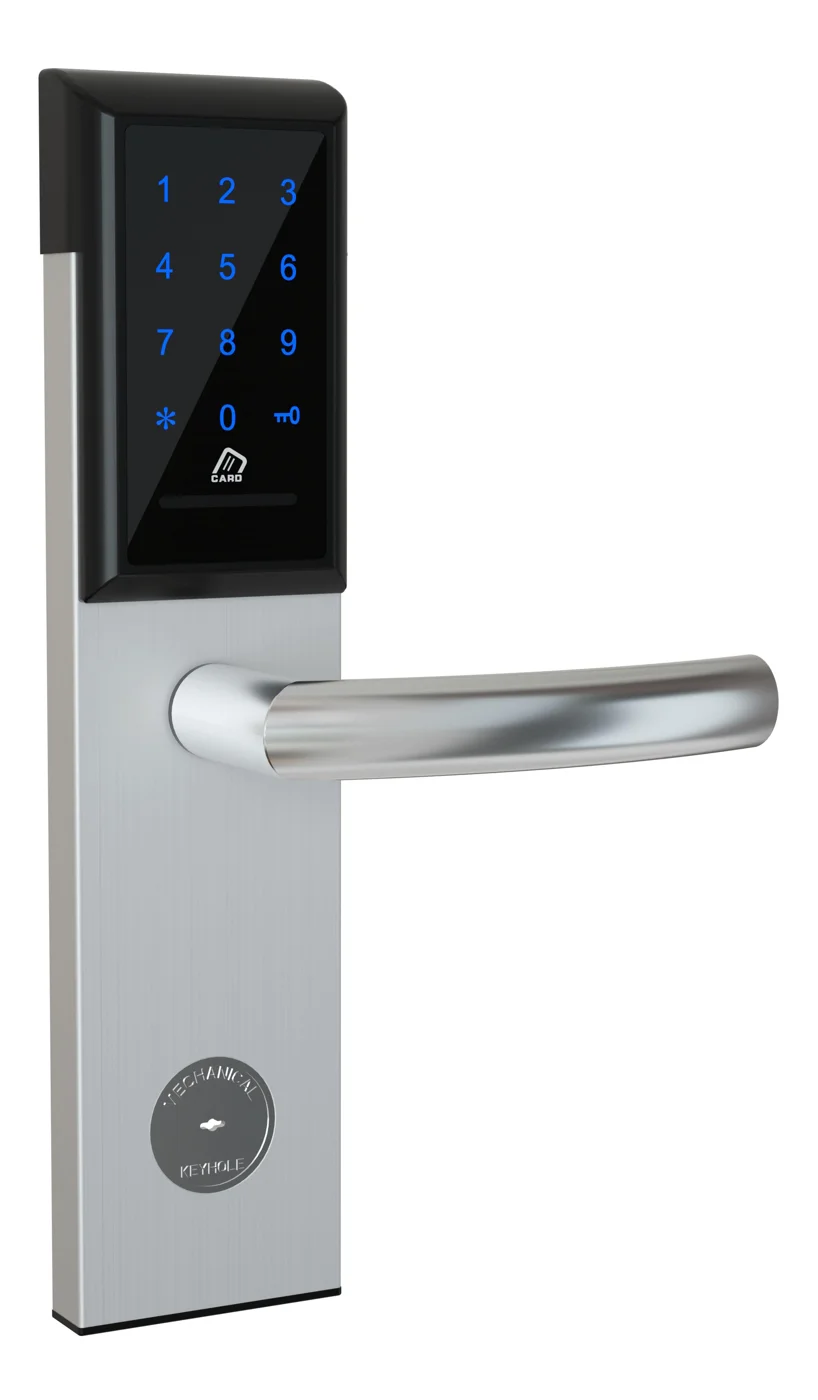
Office Cabinet Lock — PIN + Card for Filing & Pedestals
Offline PIN + card office cabinet lock for filing cabinets, pedestals, and drawers. Battery-powered 5-minute retrofit, no WiFi, no key management. CE/FCC/RoHS.
This page already points to it as the next recommended reference.
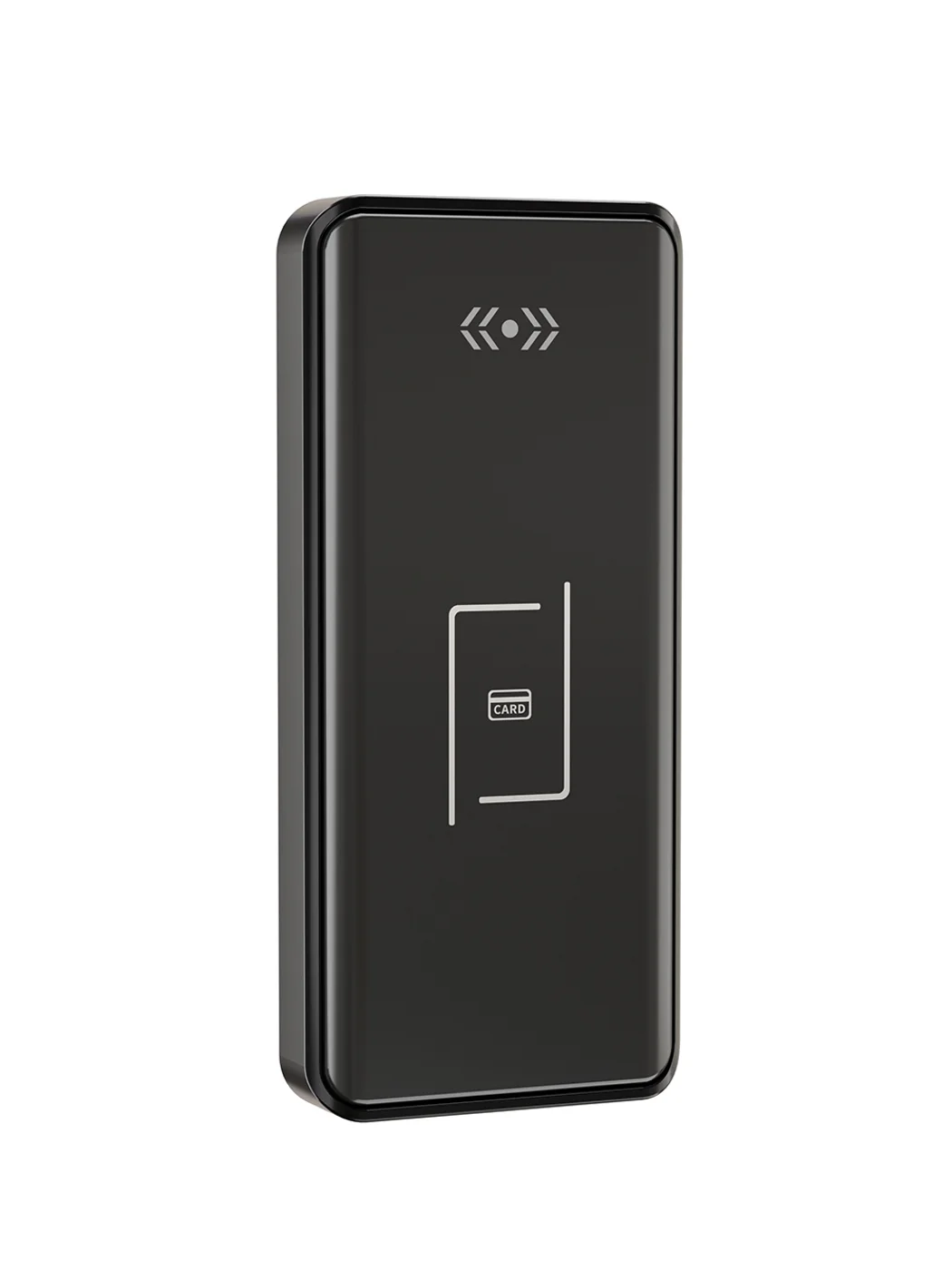
Gym Locker Lock — Offline Card, No WiFi Required
Offline card gym locker lock for fitness and pool lockers. MIFARE card, battery-powered 5-minute retrofit, no WiFi or server. Zinc alloy body, CE/FCC/RoHS.
This page already points to it as the next recommended reference.
Related blog posts
3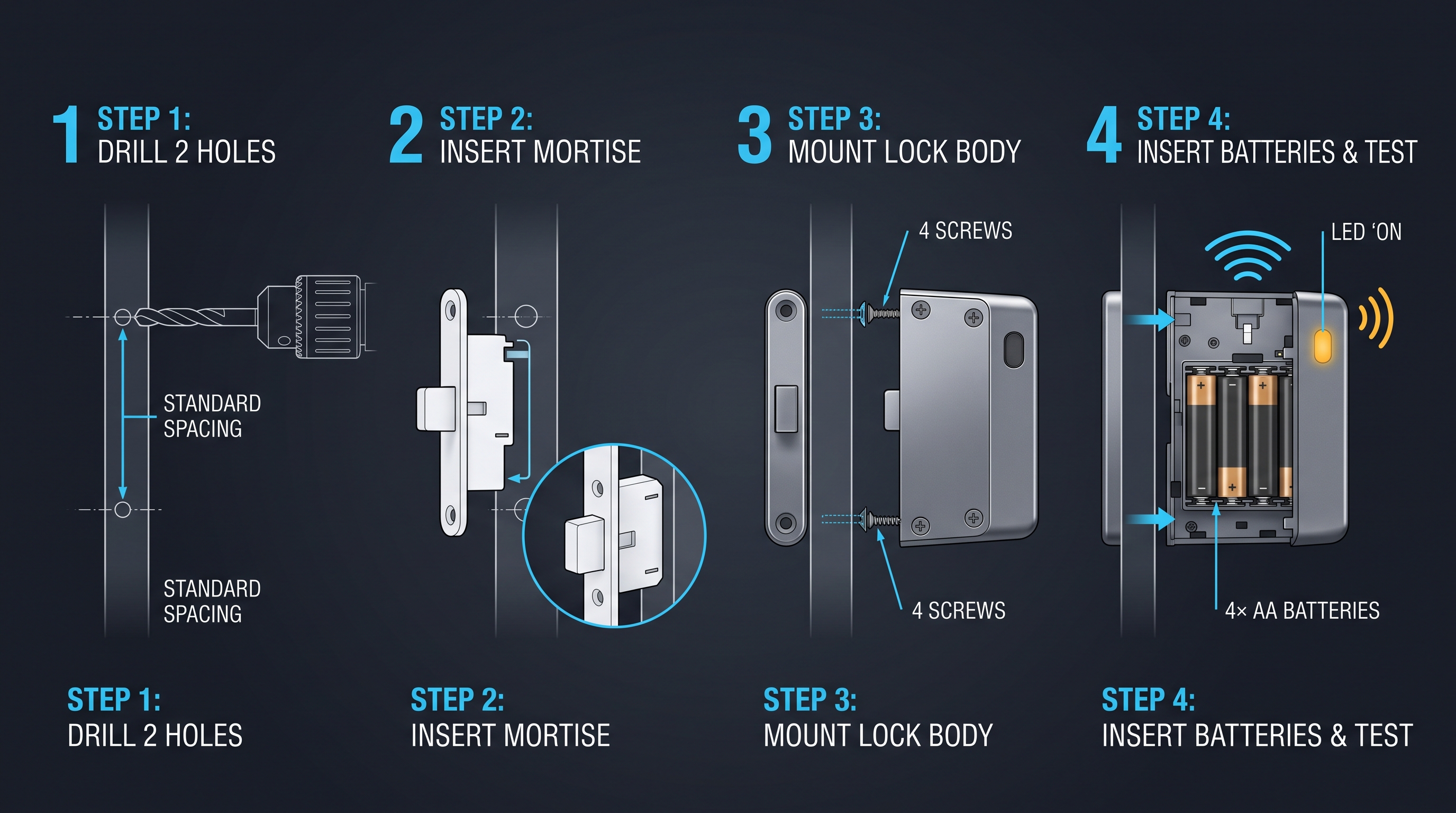
Mobile App Cabinet Lock: The Complete Guide to Smartphone-Controlled Cabinet Security
Discover how mobile app cabinet lock systems work. Explore BLE/Wi-Fi/NFC credentials, remote unlock, temporary codes, role-based access, cloud sync, security features, and deployment scenarios.
It supports the same product context: Smart Cabinet Lock — App-Managed, Multi-Site Dashboard, Office Cabinet Lock — PIN + Card for Filing & Pedestals, Gym Locker Lock — Offline Card, No WiFi Required.
MIFARE Locker Lock: Definitive Guide to MIFARE-Based Smart Locker Security
Complete guide to MIFARE locker lock technology for gyms, schools, offices, and public facilities. Covers MIFARE Classic, Plus, DESFire variants, multi-user management, installation, networking, and smart locker ecosystem integration.
It supports the same product context: Gym Locker Lock — Offline Card, No WiFi Required.
Medicine Cabinet Lock: The Ultimate Guide to Securing Medications and Protecting Your Family
A comprehensive guide to medicine cabinet lock systems covering types, installation, child safety, smart options, and best practices for residential and healthcare settings.
It supports the same product context: Smart Cabinet Lock — App-Managed, Multi-Site Dashboard, Office Cabinet Lock — PIN + Card for Filing & Pedestals, Gym Locker Lock — Offline Card, No WiFi Required.
Specify your cabinet lock project with our engineers
Send your locker count, cabinet type, and credential preference. We will return a sample plan and quote within 24 business hours.
- Move from general guidance into a product or application discussion.
- Use RFQ when pricing, drawings, MOQ, or launch timing needs structure.
- Keep a direct contact path visible for fast clarifications and handoff.