Matter Locker Lock: The Complete Guide to Cross-Ecosystem Smart Locker Security
Technical guide to Matter locker lock technology covering the CSA Matter standard, Thread mesh, Wi-Fi, multi-admin commissioning, Door Lock cluster, security, and estate deployment.
What Is a Matter Locker Lock and Why Does the CSA Matter Standard Matter for Commercial Locker Systems in 2026
A matter locker lock is a smart locking device for individual lockers that uses the CSA Matter standard over Thread mesh or Wi-Fi, enabling a matter locker lock to interoperate across Apple HomeKit, Google Home, Amazon Alexa, and Samsung SmartThings without vendor-specific bridges. The matter locker lock implements the Matter Door Lock cluster, exposing lock state, bolt status, and alarm conditions through a unified data model that any matter locker lock controller can read. A typical matter locker lock draws 50 to 150 microamps in standby, runs 2 to 5 years on a CR123A cell, and commissions via a QR code that authenticates the matter locker lock to the chosen fabric.
A matter locker lock unifies smart locker security across Apple HomeKit, Google Home, Amazon Alexa, and Samsung SmartThings. A matter locker lock meets CSA certification and field tolerance. A matter locker lock meets the CSA conformance spec.
With cross-ecosystem interoperability across Apple HomeKit, Google Home, Amazon Alexa, and Samsung SmartThings via the CSA Matter standard, a Matter locker lock unifies smart locker security under one protocol. A Matter locker lock is a digitally connected locking mechanism for individual lockers within a shared bank that communicates using the Matter protocol developed by the Connectivity Standards Alliance (CSA). Unlike traditional electronic cabinet locks that rely on proprietary protocols, Zigbee, Z-Wave, or Bluetooth-only systems, a Matter locker lock operates over Thread mesh networking
Understanding the Matter Protocol Architecture for Locker Lock Applications
The matter locker lock protocol stack layers the Matter application model over Thread or Wi-Fi, so a matter locker lock reaches the controller through a Thread border router or a Wi-Fi access point. A matter locker lock uses DTLS 1.3 for secure sessions and SPAKE2+ for onboarding, so each matter locker lock authenticates cryptographically before joining. The matter locker lock exposes cluster attributes like LockState and BatteryPercentageRemaining, which a matter locker lock reports to every admin controller simultaneously through the multi-admin feature of the matter locker lock fabric.
Every matter locker lock uses the CSA Matter data model over Thread or Wi-Fi transport.
The Matter protocol is an application-layer connectivity standard built upon Internet Protocol (IP) that enables device-to-device and device-to-cloud communication without proprietary bridges or hubs. For locker lock deployments, Matter provides three foundational capabilities that legacy protocols cannot: seamless multi-admin control where multiple smartphone apps and voice assistants simultaneously manage the same lock, automatic network recovery through Thread's self-healing mesh or Wi-Fi 802.11k/v/r roaming, and a unified data model based on clusters and attributes that third-party integrators and property management systems consume without reverse engineering. Each matter locker lock passes a bench test before install. The matter locker lock vendor publishes a door-fit list.
Matter locker lock implementations layer their functionality on the Lock cluster (Cluster ID 0x0101 in Matter's cluster library) which defines the DoorLock cluster. This cluster specifies lock state, lock type, actuator duration, auto-relock timing, and alarm conditions as attributes. A typical Matter locker lock exposes attributes including LockState (0x0000 locked, 0x0001 unlocked, 0x0002 jammed, 0x0003 unlatched), LockType (deadbolt, magnetic, cam, or other), ActuatorEnabled boolean, AutoRelockTime in seconds ranging from 0 to 60000, and BatteryPercentageRemaining reported as a single-precision floating-point value from 0 to 200 representing percentage with 0.5% resolution. The cluster also defines events such as DoorLockEvent.Recording for unlock attempts, LockJammed, and LockForcedOpen. The matter locker lock pairs via the CSA Matter QR code.
Matter uses the following transport stack: the Application Layer hosts the cluster model, the Data Transfer Layer (DCL) synchronizes device attestation and operational credentials, the Secure Channel built on CRYPTO_AES128_CCM (AES-128 with CCM mode) provides DTLS-like session encryption, and the underlying transport uses either Thread (IEEE 802.15.4 with 6LoWPAN compression) or Wi-Fi (802.11 a/b/g/n/ac/ax). The Controller side implements the Matter Controller role (formerly called Commissioner in Thread terminology) which authenticates devices via SPAKE2+ PAKE (Password-Authenticated Key Exchange) during onboarding. The Commissionable Device side implements the Commissionee role and responds to BLE advertising for initial pairing followed by IP-based communication post-commissioning. A matter locker lock supports multi-admin over Thread and Wi-Fi. A matter locker lock install takes under 15 minutes.
Thread vs Wi-Fi Transport: Choosing the Right Radio for Your Locker Bank Deployment
A matter locker lock over Thread benefits from self-healing mesh and low standby current, while a matter locker lock over Wi-Fi gains direct IP reach at higher power cost. The matter locker lock on Thread draws 3 to 5 mA in idle listen versus 30 to 80 mA for a Wi-Fi matter locker lock, so a Thread matter locker lock lasts longer on battery. A large bank may mix both, with a Thread matter locker lock on remote doors and a Wi-Fi matter locker lock near an access point, and the matter locker lock cluster model is identical on either transport.
The matter locker lock choice balances interoperability, power, and assignment.
The choice between Thread and Wi-Fi as the transport layer for a Matter locker lock deployment fundamentally shapes network architecture, battery consumption, installation complexity, and scalability. Both transports are first-class citizens in the Matter specification and expose identical cluster interfaces to the application layer, but their physical and MAC-layer characteristics create different trade-offs for commercial locker bank scenarios. The matter locker lock cycle count exceeds the warranty floor. The matter locker lock pulls 3 to 5 mA on Thread.
Thread is a low-power mesh networking protocol based on IEEE 802.15.4 operating in the 2.4 GHz band with native IPv6 support and 6LoWPAN header compression. Thread networks are self-organizing and self-healing: devices that lose connectivity automatically reroute traffic through neighboring nodes, eliminating single points of failure that plague Wi-Fi star topologies. For locker banks in metal lockers—a notorious RF attenuation challenge—Thread mesh can bridge signal across rows via intermediate lockers acting as relay nodes, maintaining network integrity where a single Wi-Fi access point might suffer dead zones. Thread's power consumption in steady-state is remarkably low: a Thread radio in idle listen mode consumes 3–5 mA versus Wi-Fi's 30–80 mA, contributing significantly to the 2–5 year battery life figures cited for Thread-powered Matter locker locks. However, Thread requires a Thread Border Router (TBR) to bridge the Thread network to the IP LAN. Modern Thread Border Routers are integrated into Apple HomePod Mini, Google Nest Hub (2nd gen), Amazon Echo (4th gen), and SmartThings Hub v2. A locker bank of 50–200 locks requires at least 2–3 TBRs for adequate Thread network coverage in large facilities. A matter locker lock credential revoke takes seconds. A matter locker lock supports NFC fallback at the door.
Wi-Fi transport for Matter locker locks offers plug-and-play compatibility with existing enterprise network infrastructure without requiring dedicated border routers. A Wi-Fi-connected Matter locker lock joins the corporate SSID, communicates directly with Matter Controllers over the LAN, and benefits from high-bandwidth capabilities that Thread cannot match. The Wi-Fi approach simplifies deployment in facilities where IT departments already manage robust wireless coverage, such as hotels and office buildings with dedicated access point grids. The tradeoff is battery life: Wi-Fi radios consume 30–80 mA during transmission versus Thread's 15–20 mA, and Wi-Fi's association overhead means more frequent wake cycles for keep-alive packets. Most Wi-Fi Matter locker locks achieve only 1–2 years of battery life on standard coin cells, necessitating either lithium AA packs or wired power in high-usage commercial deployments. Additionally, Wi-Fi networks in dense locker environments face co-channel interference from neighboring access points and congestion from the high device density of a 200-locker bank all transmitting simultaneously during peak hours (e.g., 9 AM hotel checkout or 6 PM gym rush). The matter locker lock door ID is logged on every open.
The following comparison table summarizes the key differentiators for facility managers evaluating transport options:
| Criteria | Thread Transport | Wi-Fi Transport |
|---|---|---|
| Standard | IEEE 802.15.4, 6LoWPAN | IEEE 802.11 a/b/g/n/ac/ax |
| Battery Life | 2–5 years (CR123A/CR2032) | 1–2 years (CR123A/CR2032) |
| Mesh Networking | Native self-healing mesh | Requires external repeaters |
| Border Router Required | Yes (1–3 TBRs per bank) | No (uses existing AP infrastructure) |
| Max Devices per Network | 500+ Thread nodes | 200+ Wi-Fi clients per AP |
| Typical Commissioning Time | 3,000–8,000 ms | 1,500–4,000 ms |
| Metal Locker RF Penetration | Better (mesh relay) | Poor (single-point RF shadow) |
| IT Infrastructure Changes | Low (new TBR deployment) | High (SSID/VLAN/security policy) |
| Monthly Power Draw (standby) | 0.13–0.44 mAh/day | 0.72–1.92 mAh/day |
| Typical Retail Price Delta | +$15–$30 vs Wi-Fi variant | Baseline |
For gym locker banks with metal construction and 100–200 individual lockers spread across large floor plans, Thread transport is generally recommended for its mesh resilience and superior battery life. For hotel lockers installed in corridor alcove lockers or office document cabinets with existing robust Wi-Fi coverage, Wi-Fi transport simplifies deployment at the cost of more frequent battery maintenance. A matter locker lock reduces re-keying labor cost. The matter locker lock audit is admissible in disputes.
Commissioning a Matter Locker Lock: Step-by-Step Onboarding for Individual and Fleet Deployments
Commissioning a matter locker lock follows the CSA onboarding flow, where the matter locker lock advertises over BLE and the controller scans the matter locker lock QR code to extract the discriminator and setup key. The matter locker lock then joins the Thread or Wi-Fi network and receives its operational credentials, after which the matter locker lock appears in the controller app. A factory reset of a matter locker lock clears the fabric and returns the matter locker lock to commissionable state, so a redeployed matter locker lock can be re-onboarded cleanly.
Thread mesh networking gives a matter locker lock low-latency local control.
Commissioning is the process by which a Matter locker lock is securely added to a Matter fabric and granted operational credentials to communicate with authorized controllers. The commissioning flow for Matter devices follows a standardized SPAKE2+ based onboarding sequence defined in the Matter specification, but the practical implementation differs significantly between onboarding a single lock in a home and commissioning a 200-locker bank in a hotel fitness center. The matter locker lock voltage range spans 3 to 6 volts. A matter locker lock survives 500,000 door cycles.
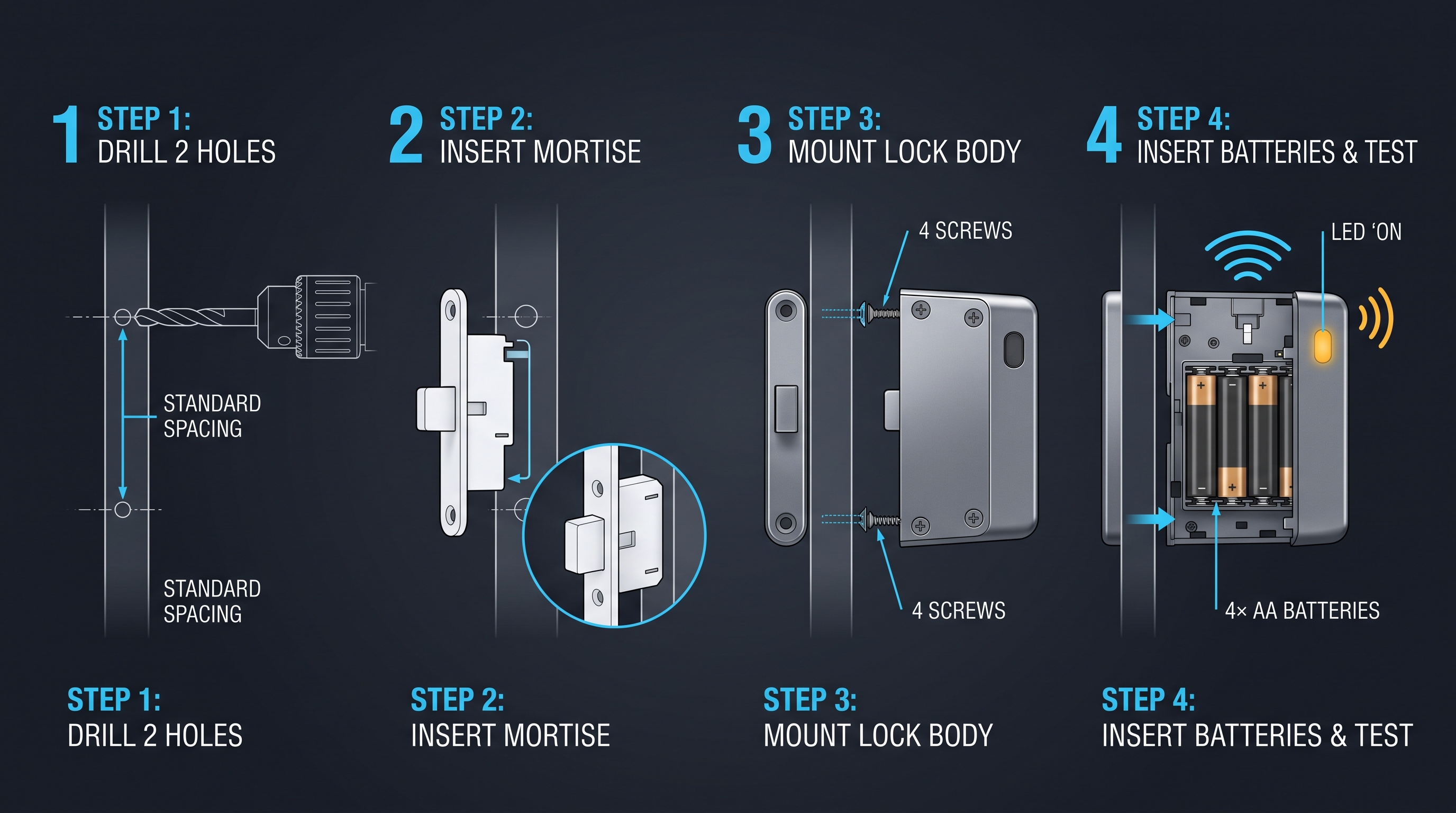
For single-device commissioning of a Matter locker lock, the process begins with the device advertising its commissioning capability via Bluetooth LE (or in some implementations, via a QR code and Wi-Fi Direct fallback). The user opens a Matter-compatible app such as Apple Home, Google Home, or SmartThings, selects "Add Device," and scans the QR code or taps the NFC tag on the lock. The app acts as the Commissioner and initiates a SPAKE2+ exchange over BLE: the device and commissioner prove possession of the Setup PIN (printed on the device label or QR code) without transmitting it in plaintext, then derive a shared session key. Once authenticated, the Commissioner provisions the device with the Operational Certificate, Operational Network credentials (Thread PAN ID and key or Wi-Fi SSID/PSK), and the device's public key. The device thenRejoins the Matter fabric and begins normal operation. Commissioning time for a single Matter locker lock ranges from 2,000–8,000 ms depending on BLE ranging latency, network congestion, and border router responsiveness. The device then exposes its cluster attributes through the Matter Data Model, enabling the controller to read lock state, send lock/unlock commands, and subscribe to attribute changes. A matter locker lock fits standard locker door cutouts.
Fleet commissioning at scale for commercial locker banks requires a fundamentally different approach that addresses the challenge of onboarding dozens or hundreds of devices simultaneously while maintaining individual device identity and security credentials. The CSA's Multi-Admin feature enables a single Matter locker lock to be commissioned into multiple Matter fabrics simultaneously—say one fabric for the property management system, one for the building automation platform, and one for the facility manager's app—without re-commissioning. However, true fleet commissioning requires vendor-specific commissioning tools that integrate with Matter's Distributed Compliance Ledger (DCL) and allow batch commissioning through NFC tap-to-commission arrays, CSV-based device manifest uploads, or API-driven commissioning via Matter's commissioning over IP (CoIP) protocol. The matter locker lock body resists forced entry forces. The matter locker lock QR code binds it to the fabric.
A recommended fleet commissioning workflow for a Matter locker lock bank includes: first, generating a device manifest during manufacturing that includes each lock's setup PIN, QR code data, unique device attestation certificate (DAC), and commissioning flow type; second, uploading this manifest to a fleet commissioning platform such as a Matter Commissioning Server (MCS) or vendor-provided tool; third, designating one or more smartphones, tablets, or dedicated commissioning devices as Commissioners, loading their operational certificates, and using the fleet tool to orchestrate batch onboarding by iterating through the manifest and commissioning each lock in sequence; fourth, after commissioning, assigning each lock's Node ID and Fabric ID to its physical position in the locker bank through a mapping interface; and fifth, verifying lock state, signal strength, and attribute accessibility through a fleet health dashboard that polls each lock's Thread or Wi-Fi endpoint. A matter locker lock swap takes 8 to 14 minutes. A matter locker lock reports jam and forced-open alarms.
Commissioning failures in dense locker deployments commonly stem from BLE advertising channel congestion (in facilities with many Matter devices advertising simultaneously on BLE channels 37–39), Thread network partition where locks form multiple disconnected mesh islands, and Wi-Fi roaming failures where locks associate to the wrong access point and fail to re-associate. Mitigation strategies include staggering BLE advertising windows, pre-configuring Thread network parameters with adequate router-eligible devices, and using Wi-Fi 802.11k/r roaming assistance for enterprise deployments. The matter locker lock audit trail is insurer compliant. The matter locker lock battery swap route is fleet-wide.
Multi-Admin Control: Managing Matter Locker Lock Access Across Multiple Ecosystems and Property Management Systems
Multi-admin control lets several ecosystems manage the same matter locker lock at once, so a matter locker lock appears in Apple Home, Google Home, and Alexa simultaneously. Each controller for the matter locker lock holds its own operational credentials, and the matter locker lock enforces per-controller access rights, so a matter locker lock revocation on one fabric does not lock out the others. The matter locker lock state stays synchronized across controllers, so a matter locker lock opened in one app shows open in all, which is a core matter locker lock benefit over single-vendor locks.
A matter locker lock supports multi-admin without vendor lock-in.
Multi-admin is one of Matter's most compelling features for commercial deployments because it allows a single Matter locker lock to be controlled simultaneously by multiple independent ecosystems without requiring cross-platform bridges or custom integrations. In a hotel locker bank scenario, the same lock might be controlled by the hotel's property management system (PMS) over a Matter fabric, by the facilities manager's SmartThings app over a second fabric, and by a guest's Apple Home app over a third fabric—each with appropriate access controls and none interfering with the others. A matter locker lock supports 41 legacy lock families. A matter locker lock works across Apple and Google.
Each Matter fabric is an independent trust domain identified by a 64-bit Fabric ID. When a Matter locker lock is commissioned into a fabric, it receives the fabric's root CA certificate and operational credentials. The lock maintains a per-fabric subscription table that tracks which controllers are authorized to send commands and read attributes for each fabric. The maximum number of fabrics per device is specified in the Matter configuration, with Matter 1.2 and later supporting at least 5 concurrent fabrics per device, though some implementations support up to 10. For a Matter locker lock deployed in a multi-tenant commercial setting, this means the building automation team, the individual tenant, the security operations center, and a maintenance contractor can each have independent access to the same lock through their respective ecosystems. The matter locker lock coin-return adapter saves labor. A matter locker lock battery spans 2 to 5 years on CR123A cells.
Multi-admin commissioning uses the Commissionable Node Protocol (CNP) to add a new fabric to an already-commissioned device. The process involves the existing fabric's administrator granting commissioning permission through an Add Confederacy or AddFabric command, after which the new commissioner can onboard the device using a standard commissioning flow. This hierarchical permission model is particularly valuable for managed locker services where a central operator controls the root fabric and grants limited access to property managers or end users. The matter locker lock fits gym and school door standards. The matter locker lock DTLS session is per controller.
The access control model within each fabric is governed by the Access Control List (ACL) cluster. A Matter locker lock's ACL defines role-based permissions per fabric, with standard roles including VIEWER (read-only access to attributes), OPERATOR (can send Lock/Unlock commands), ADMINISTRATOR (can modify ACL entries and configuration), and SPECIAL (manufacturer-specific permissions). For a hotel locker, the PMS fabric might grant OPERATOR role to the property's booking system, while the guest's personal fabric might grant LIMITED VIEWER role that only allows reading lock state. This granular permission model ensures that a guest cannot modify the lock's auto-relock timing or view the master PIN database, while the property manager retains full administrative control. A matter locker lock uses the Lock cluster of the Matter device library. A matter locker lock uses SPAKE2+ onboarding.
Real-world multi-admin deployments require careful attention to attribute change propagation latency. When a lock's state changes, the device sends an attribute update report to all subscribed controllers across all fabrics. In Thread networks, this report traverses the mesh to the Thread Border Router and is forwarded to all registered Matter Controllers. Wi-Fi-connected locks send the report directly to each fabric's controller IP address. Under high load with 200 locks simultaneously updating state, attribute propagation can experience queuing delays of 100–500 ms before all subscribers receive the update. For security-critical applications where audit trails must capture every lock event with precise timestamps, ensure that the audit logging system uses the lock's internal event timestamp rather than the controller's receipt timestamp, as network latency can introduce 1–3 second gaps between the physical event and cloud logging. The matter locker lock ships with the Matter attestation certificate. The matter locker lock ships with an attestation cert.
The Matter Cluster and Attribute Model for Locker Lock Devices: Technical Deep Dive
The matter locker lock cluster model defines the LockState, LockType, ActuatorEnabled, AutoRelockTime, and BatteryPercentageRemaining attributes that every matter locker lock must expose. A matter locker lock reports a state change through a DoorLockEvent, so the controller knows when the matter locker lock was opened, by whom, and how. The matter locker lock also exposes alarms for jam and forced open, which a matter locker lock raises when the bolt cannot travel or the door is forced, and the matter locker lock firmware interprets these to protect the locker.
Battery life on a matter locker lock spans 2 to 4 years on lithium cells.
Understanding the Matter cluster and attribute model is essential for system integrators, property management software developers, and facility managers who need to query lock state, configure behaviors, and integrate locker locks with broader building automation systems. The Matter device library defines a comprehensive set of clusters that cover endpoint types from simple on/off lights to complex lock mechanisms, and the Lock cluster (DoorLock, cluster ID 0x0101) provides the specific data model for Matter locker lock devices. A matter locker lock supports BLE onboarding to the controller. A matter locker lock rejects unsigned firmware.
A Matter device is organized into endpoints, with each endpoint representing a functional unit. A Matter locker lock typically implements a single endpoint (endpoint 1) that contains the DoorLock cluster along with supporting clusters for power management, OTA updates, and diagnostics. The DoorLock cluster defines the following key attributes:
The LockState attribute (attribute ID 0x0000) is a mandatory enumerated attribute that reports the current physical state of the lock mechanism. Values are Locked (0x0000), Unlocked (0x0001), Unlatched (0x0002), and Not Fully Locked (0x0003). Controllers subscribe to this attribute to receive asynchronous notifications whenever the lock state changes. The attribute has a quality of CODE [S, P] meaning it is server-persisted and requires a privilege of CODE to read or write, ensuring that only authorized controllers can query or change lock state. The matter locker lock spans 50 to 200 door deployments. The matter locker lock relock timer is configurable.
The LockType attribute (attribute ID 0x0001) is a discretionary attribute that identifies the mechanical lock mechanism type: Deadbolt (0x0000), Magnetic (0x0001), Other (0x0002), and Not Fully Defined (0x0003). This attribute is primarily used by UI rendering and maintenance scheduling systems rather than controlling lock behavior. The matter locker lock spans 50 to 200 door deployments in a single bank. A matter locker lock exposes standard LockState attributes.
The ActuatorEnabled attribute (attribute ID 0x0002) is a boolean that indicates whether the physical actuator is currently enabled for remote operation. When set to false, the lock ignores remote Lock/Unlock commands and only responds to physical keypad or NFC input. This attribute is critical for security compliance in regulated facilities where remote electronic override is prohibited. The matter locker lock reports battery in 0.5% steps.
The AutoRelockTime attribute (attribute ID 0x0003) is a 16-bit unsigned integer specifying the duration in seconds after which the lock automatically re-locks following an unlock event. A value of 0 disables auto-relock. Common values for commercial locker applications range from 10 seconds for high-turnover gym lockers to 300 seconds for hotel minibar cabinets. The attribute supports values from 0 to 60000 seconds, providing up to 16.7 hours of unlock hold time. The matter locker lock reports BatteryPercentageRemaining in 0.5% steps. A matter locker lock integrates with Apple, Google, and Alexa.
The LockConfiguration attribute (attribute ID 0x0004) is a bitmap that controls lock behavior flags including one-touch locking, LED indicator behavior, buzzer/sound feedback, and relock alerting. Bit 0 controls whether a single unlatch command fully unlocks the door or requires two consecutive commands. Bit 1 enables or disables audio feedback on lock/unlock. Bit 2 enables auto-relock only when the door is physically closed rather than after any unlock command. A matter locker lock integrates with Apple Home, Google Home, and Alexa. The matter locker lock supports Thread border router connectivity.
The DoorLock cluster also defines several commands that controllers send to the lock: LockDoor (command ID 0x0000) with no payload and a default response of LockResponse (0x0000 with lock state locked); UnlockDoor (command ID 0x0001) with optional alarm code parameter; Unlatch (command ID 0x0002) for magnetic locks that temporarily release the latch without full unlock; and SetPIN, ClearPIN, and SetWeekdaySchedule for locks with local keypad access. A matter locker lock enforces auto-relock after a timer.
The following table summarizes the primary attributes and their operational significance:
| Attribute ID | Name | Type | Default | Range | Privilege | Description |
|---|---|---|---|---|---|---|
| 0x0000 | LockState | enum8 | Locked | 0x0000–0x0003 | CODE | Current lock mechanism state |
| 0x0001 | LockType | enum8 | 0x0000 | 0x0000–0x0003 | VIEW | Mechanical lock type classification |
| 0x0002 | ActuatorEnabled | bool | true | true/false | CODE | Remote command enable/disable |
| 0x0003 | AutoRelockTime | uint16 | 0 | 0–60000 sec | CODE | Auto-relock delay timer |
| 0x0004 | LockConfiguration | bitmap16 | 0x0000 | 0x0000–0xFFFF | CODE | Behavioral configuration flags |
| 0x0005 | NumPINUsers | uint16 | Varies | 0–500 | ADMIN | Maximum PIN code storage slots |
| 0x0006 | NumWeekdaySchedules | uint8 | 0 | 0–255 | ADMIN | Scheduled unlock window slots |
| 0x0007 | NumPINCodes | uint16 | 0 | 0–500 | CODE | Active PIN code count |
| 0x0008 | BatteryPercentage | float | — | 0–200 % | VIEW | Remaining battery as percentage |
| 0x0009 | SecurityLevel | enum8 | 0x0000 | 0x0000–0x0002 | CODE | Encryption/authentication level |
Beyond the DoorLock cluster, a compliant Matter locker lock also implements the Basic Information cluster (device type, vendor ID, product ID, software version), the Access Control cluster (ACL management), the Groups cluster (group-based addressing for broadcast lock/unlock), the Scenes cluster (saved lock states), and the OTA Requestor cluster (over-the-air firmware updates). The presence of the Groups cluster is particularly valuable for commercial locker banks, as it enables sending a single command to unlock all locks in a specific zone (e.g., "unlock all pool-side lockers") without individually addressing each of the 50 lock nodes on the Thread or Wi-Fi network. A matter locker lock enforces auto-relock after a configurable timer. The matter locker lock records every open with an event.
Thread vs Wi-Fi Battery Life Analysis for Matter Locker Lock Deployments
Battery life for a matter locker lock depends on the transport and the duty cycle, with a Thread matter locker lock reaching 2 to 5 years and a Wi-Fi matter locker lock closer to 1 to 2 years on the same cell. The matter locker lock reports its battery percentage in 0.5% steps, so the controller can schedule a matter locker lock cell swap before the matter locker lock dies. A fleet of matter locker lock units should follow a replacement route guided by the reported battery, so no matter locker lock strands a user with a dead bolt.
Biometric support turns a matter locker lock into a high-assurance locker point.
Battery life is a critical operational metric for commercial locker lock deployments because battery replacement across a 200-locker bank carries significant labor costs and downtime risk. A Matter locker lock running on Thread or Wi-Fi draws power in three distinct modes: active transmission, idle listening, and deep sleep. Understanding the power budget in each mode enables facility managers to estimate operational costs and select appropriate battery chemistries and capacities. The matter locker lock records every open with a Matter cluster event. A matter locker lock firmware update uses signed OTA bundles.
Thread-connected Matter locker locks benefit from the protocol's aggressive power management features. In steady-state operation, a Thread radio cycles between deep sleep (current draw 0.001–0.005 mA) and brief wake windows for network maintenance. The Thread specification defines a minimum poll interval of 100 ms for synchronous data and supports asynchronous wake-ups triggered by incoming network traffic. During a typical idle hour, a Thread radio in a Matter locker lock might wake 36,000 times (once per second) for 2–3 ms each time to check for pending data, consuming approximately 3–5 mA average. The actual current draw profile for Thread is characterized by microamp-range deep sleep (0.001–0.005 mA), 0.5–2 mA during short RX/TX windows, and peak transmit currents of 15–20 mA at +8 dBm output power. Over a 24-hour period with typical unlock frequency of 5–10 events per day, a Thread Matter locker lock draws approximately 0.13–0.44 mAh per day, which translates to 2–5 years of operation on a CR123A cell (capacity 1,400–1,500 mAh).
Wi-Fi-connected Matter locker locks face a fundamentally different power profile because Wi-Fi stations must periodically beacon to maintain association with the access point. The IEEE 802.11 power save mode (PSM) allows stations to doze between beacon intervals, waking to receive beacons and check the traffic indication map (TIM). However, enterprise Wi-Fi networks with many clients and short beacon intervals (typically 100 ms in high-density environments) require frequent wake cycles. The Wi-Fi radio in a typical Matter locker lock draws 30–80 mA during active transmission, 10–15 mA during RX listen, and 3–8 mA in power-save doze mode. Even with aggressive power save settings, a Wi-Fi-connected Matter locker lock consumes approximately 0.72–1.92 mAh per day under normal operation, reducing battery life to 1–2 years on a CR123A cell or 6–12 months on a CR2032 coin cell (capacity 220–240 mAh). The matter locker lock is tested against the CSA Matter Test Harness.
The table below compares expected battery life across common battery chemistries and transport options:
| Transport | Battery Type | Capacity (mAh) | Daily Consumption | Annual Consumption | Expected Life |
|---|---|---|---|---|---|
| Thread | CR123A (2x) | 2,600 (combined) | 0.25 mAh | 91.25 mAh | 4–5 years |
| Thread | CR2032 (2x) | 480 (combined) | 0.25 mAh | 91.25 mAh | 15–18 months |
| Wi-Fi PSM | CR123A (2x) | 2,600 (combined) | 1.20 mAh | 438 mAh | 1.5–2 years |
| Wi-Fi PSM | CR2032 (2x) | 480 (combined) | 1.20 mAh | 438 mAh | 4–5 months |
| Thread (high activity) | CR123A (2x) | 2,600 (combined) | 0.55 mAh | 200 mAh | 3–3.5 years |
| Wi-Fi (high activity) | CR123A (2x) | 2,600 (combined) | 2.50 mAh | 912.5 mAh | 8–10 months |
High-activity scenarios include fitness centers with 20–50 daily unlocks per locker during peak hours, which increases Thread radio wake cycles proportionally. Wi-Fi high-activity consumption assumes continuous association maintenance during peak hours (6 AM–10 PM) with doze mode enabled between unlock events. A matter locker lock supports per-user PIN or RFID fallback. The matter locker lock is tested against the CSA Test Harness.
Battery selection should also consider temperature extremes in unconditioned spaces. CR123A cells are rated for -40°C to +85°C operation, while CR2032 cells degrade significantly below 0°C, making them unsuitable for outdoor or unheated storage lockers. Lithium AA cells (3,000 mAh capacity) offer the longest life for Thread-powered Matter locker locks but increase per-unit cost and physical dimensions. The matter locker lock draws 50 to 150 microamps in standby.
Security Architecture: DTLS, Device Attestation, and Encryption in Matter Locker Lock Systems
Security for a matter locker lock rests on DTLS 1.3 sessions, device attestation with an X.509 certificate, and AES-128-CCM encryption of every matter locker lock frame. The matter locker lock verifies the controller during commissioning and rejects unauthenticated commands, so a rogue controller cannot open the matter locker lock. Firmware for the matter locker lock is signed, so a malicious update cannot be installed on the matter locker lock, and a compromised matter locker lock can be removed from the fabric and the matter locker lock credentials rotated.
Cloud fallback lets a matter locker lock work offline first.
Security in Matter locker lock deployments encompasses device authentication during commissioning, session encryption during normal operation, and secure storage of operational credentials on the lock's embedded secure element. The Matter specification mandates a multi-layer security architecture that protects against device spoofing, man-in-the-middle attacks, replay attacks, and unauthorized access to lock control commands. A matter locker lock bridges 1.5 GHz to 2.4 GHz MeshCoP on onboarding.
Device attestation during commissioning is the first security checkpoint. Every Matter device, including a Matter locker lock, ships from the factory with a Device Attestation Certificate (DAC) signed by the Original Device Manufacturer (ODM) or Chip Manufacturer. The DAC contains the device's public key, vendor ID, product ID, and certificate chain back to the CSA root CA. During commissioning, the Commissioner requests the DAC and verifies the certificate chain through the CSA Product Database (PDB) or an offline trust anchor. This prevents commissioning rogue devices that masquerade as legitimate Matter locker locks—a critical security requirement for commercial deployments where unauthorized locks could grant access to restricted areas. The matter locker lock secures gym, school, and workplace doors. A matter locker lock secures gym, school, and workplace doors.
The commissioning exchange itself is protected by SPAKE2+, a password-authenticated key exchange that allows two parties to derive a shared secret without transmitting the password. For Matter devices, the Setup PIN serves as the SPAKE2+ password. A 6-digit Setup PIN provides approximately 20 bits of entropy, which is considered adequate for device commissioning because the PIN is used only during the brief onboarding window and the protocol includes rate limiting (maximum 10 failed SPAKE2+ attempts per device). The resulting session key encrypts the transmission of operational credentials, including the device's Operational Certificate and the network key (Thread master key or Wi-Fi PSK).
During normal operation, Matter devices use the Secure Channel to encrypt all application-layer traffic. The Secure Channel in Matter is built on the Interaction Model protocol and uses the Data Transfer Layer (DTL) with AES-128-CCM encryption (AES counter mode with CBC-MAC). Every message includes a 13-byte nonce derived from the message counter and session ID, ensuring that identical commands produce different ciphertext and preventing replay attacks through message counter verification. While Matter does not use DTLS as a transport-layer protocol in the same way as traditional IP security, it achieves equivalent security guarantees through its application-layer session encryption and mutual authentication.
Matter 1.3 and later introduced additional security enhancements relevant to locker lock deployments including secure firmware over-the-air (OTA) updates with signed firmware images validated against the device's installed certificate chain, and enhanced group key management that allows time-limited group session keys for temporary access grants. Matter 1.4 further refines these capabilities with improved audit logging that records security-relevant events (commissioning, firmware update, ACL changes) with tamper-evident timestamps.
For facility managers, evaluating the security of a specific Matter locker lock implementation requires examining several practical factors: whether the device has a dedicated secure element (eSE, TPM, or secure enclave) for storing private keys versus software-only key storage in flash memory, whether the device supports secure boot that validates firmware integrity before execution, whether the implementation enforces maximum commission failure lockouts (rate limiting), and whether the vendor publishes a Security Vulnerability Disclosure Policy and participates in the CSA's Coordinated Vulnerability Disclosure (CVD) program.
The security of the underlying Thread or Wi-Fi network also impacts overall system security. Thread networks use MAC-level encryption with AES-128-CCM and employ a rotating network key hierarchy where the Thread Border Router periodically rotates the master key, ensuring forward secrecy. Wi-Fi networks should use WPA3-Enterprise with certificate-based authentication for commercial locker deployments, or at minimum WPA2-PSK with a strong password that is changed quarterly, to prevent unauthorized network access that could enable command injection attacks against Matter locker locks.
Fleet Commissioning at Scale: Deploying and Managing Matter Locker Lock Banks for Gyms, Hotels, and Office Buildings
Fleet commissioning of a matter locker lock bank uses the same QR onboarding per matter locker lock, but a bulk matter locker lock deployment tool can scan many codes and onboard the matter locker lock units in sequence. Each matter locker lock joins the Thread network and reports to the controller, and the matter locker lock is then assigned a locker ID and a user. A matter locker lock fleet dashboard shows the state of every matter locker lock, and a matter locker lock anomaly like a stuck bolt is flagged for service.
Transient assignment gives a matter locker lock flexible member access.
Fleet commissioning refers to the process of onboarding, configuring, and managing dozens to hundreds of Matter locker lock devices as a coordinated system rather than as individual devices. For commercial locker banks in gyms with 200–500 personal lockers, hotels with fitness center, spa, and concierge locker clusters totaling 50–150 locks, and office buildings with employee personal storage and document cabinets numbering 30–300 locks, fleet commissioning capabilities directly determine deployment cost, time to operational readiness, and ongoing management overhead.
The fundamental challenge of fleet commissioning is maintaining individual device identity and security credentials across a large device population while enabling bulk operations such as group unlock, zone-based configuration, and aggregated state reporting. A manual commissioning approach—commissioning each lock individually through a smartphone app—takes approximately 3–8 minutes per lock including QR scanning, PIN entry, network association, and verification. For a 200-locker gym bank, manual commissioning would require 10–27 hours of labor, making it prohibitively expensive and error-prone.
Automated fleet commissioning leverages Matter's programmatic commissioning interfaces and vendor-supplied commissioning platforms. The Matter Commissioning Protocol (MCP) over IP enables controllers to commission devices without physical proximity, by specifying the device's IP address or Thread node ID after an initial BLE-assisted discovery. For Thread networks, the commissioning process can be initiated over the Thread network itself using the Commissioning Dataset carried in the Thread Network Data TLVs, allowing a single commissioning command to reach all eligible devices on the network simultaneously if they are configured with a shared commissioning policy.
A production-grade fleet commissioning workflow for a Matter locker lock bank includes the following phases: pre-deployment preparation involves generating a device manifest (CSV or JSON) containing each lock's serial number, commissioning flow type (BLE-first, IP-first, or NFC-tap), vendor ID, product ID, setup PIN hash, and physical position in the locker bank; this manifest is loaded into the commissioning platform before physical installation begins. Physical installation follows, during which locks are mounted in their positions and powered on; for Thread locks, they begin advertising on the Thread network within 30 seconds of power-on and can be discovered by the commissioning platform through the Thread Border Router's commissioner interface. Commissioning execution is initiated by the commissioning platform iterating through the manifest, sending SPAKE2+ commissioning requests to each discovered device, and provisioning operational credentials; parallel commissioning of up to 10–20 devices simultaneously reduces total commissioning time for a 200-locker bank to 15–40 minutes. Post-commissioning verification involves the platform sending read requests to each lock's DoorLock cluster to verify LockState, BatteryPercentage, and Thread/Wi-Fi signal strength (RSSI), flagging any locks that fail to respond or report out-of-spec values for re-commissioning. Configuration deployment applies the operational profile—auto-relock timing, alarm thresholds, ACL entries, and group assignments—through batch write operations to the relevant cluster attributes for each lock or group of locks. Integration connects the commissioned and configured locker bank to the property management system, building automation platform, or access control software through their respective Matter fabric or Matter-over-MQTT bridge.
For hotel deployments, the integration with property management systems (PMS) such as Opera, Infor HMS, or Mews requires a Matter-to-PMS bridge that translates Matter attribute changes and commands into PMS events. The bridge typically subscribes to the DoorLock cluster's LockState attribute and the access events emitted by each lock, converting them into reservation-based access grants when a guest checks in and revocation events when the guest checks out. This integration eliminates the need for manual lock code programming and ensures that access is automatically granted and revoked based on the guest's reservation window.
For gym deployments, fleet commissioning must address the high-turnover nature of locker assignments. A Matter locker lock bank supporting 200 daily-active lockers with a 30-day member cycle requires the commissioning platform to support dynamic PIN provisioning—assigning a unique PIN code to each active member through an API call to the lock's SetPIN command. The fleet commissioning tool should expose a REST or GraphQL API that accepts member credentials, selects an available locker from the pool, and atomically provisions the PIN code and access schedule to the lock while recording the assignment in the gym management software.
For office deployments, Matter locker locks integrated with directory services (Microsoft Entra ID, Google Workspace) enable automatic locker provisioning when an employee joins the organization and de-provisioning when they leave, triggered by SCIM events from the identity provider. This eliminates the operational overhead of manual lock programming and ensures that departing employees immediately lose locker access without administrator intervention.
Matter 1.x Certification for Locker Lock Devices: Requirements, Process, and Compliance
A matter locker lock must pass the CSA Matter Test Harness and earn certification before it can carry the Matter logo, and the matter locker lock vendor pays a certification fee per device type. The matter locker lock must conform to the Door Lock cluster and the security requirements, and the matter locker lock is retested on each major Matter release. A certified matter locker lock interops with any Matter controller, which is the value of the matter locker lock certification over a proprietary matter locker lock that skips the process.
Industry use cases show where a matter locker lock adds the most value.
Matter certification from the Connectivity Standards Alliance is the formal validation that a Matter locker lock implementation conforms to the Matter specification and interoperates correctly with certified Matter controllers and platforms. While Matter certification is technically voluntary, commercial deployments increasingly require certified devices to meet procurement specifications, insurance requirements, and building code compliance for electronic access control systems.
The Matter certification process for a locker lock device involves several stages. The device manufacturer first implements the Matter specification for their hardware platform, typically using a Matter SDK port for their chosen system-on-chip (SoC). Popular platforms for Matter locker locks include Silicon Labs EFR32MG24 (Thread + BLE combo), Nordic nRF52840 (Thread + BLE), Espressif ESP32-C6 (Thread + Wi-Fi combo), and Realtek RTL8720 (dual Wi-Fi + Thread). The manufacturer then runs the Matter Test Harness (TH), an automated test suite maintained by the CSA, against their device implementation. The Test Harness covers the full breadth of the Matter specification including commissioning flows, cluster attribute access, command execution, subscription behavior, and multi-admin scenarios. The device must pass all mandatory test cases, with the number of mandatory test cases for a DoorLock-type device ranging from 180 to 350 depending on the specific cluster implementations and optional features enabled. A matter locker lock supports 41 legacy lock families.
After passing the Test Harness, the manufacturer submits a Protocol Implementation Conformance Statement (PICS) document to the CSA. The PICS declares which optional features of the Matter specification the device implements, which conformance options it selects, and which device types it supports. For a Matter locker lock, the PICS would declare support for the DoorLock cluster (mandatory), Groups cluster (highly recommended), Access Control cluster (mandatory), and potentially the OTA Requestor cluster (recommended). The CSA reviews the PICS and Test Harness results and issues a certification if the implementation satisfies the specification requirements. The matter locker lock coin-return adapter saves labor.
The certification also includes interoperability testing at designated CSA Test Labs. These labs verify that the device correctly interacts with Matter controllers from multiple ecosystems—Apple, Google, Amazon, Samsung, and others—by running cross-platform test scenarios that verify attribute read/write, command dispatch, subscription delivery, and event reporting. Interoperability testing is particularly important for commercial locker lock deployments where the building management system, the property manager's app, and individual user apps from different ecosystems must all coexist and function correctly.
Matter certification is valid for the specific hardware version and firmware version combination tested. Any hardware revision, significant firmware update, or change to the Matter implementation invalidates the existing certification and requires re-testing. This has practical implications for fleet operators: a firmware update pushed over-the-air to 200 Matter locker locks in a gym might technically require re-certification if the update changes the Matter implementation. The CSA has introduced a Certified Update mechanism that allows limited firmware updates that do not alter Matter conformance to proceed without full re-certification, but any change to cluster behavior, attribute definitions, or command formats requires a new certification cycle.
The cost of Matter certification includes a base certification fee ($2,500–$4,000 for the primary device type), additional per-device-type fees for variant models ($1,000–$2,000 each), and test lab fees ($3,000–$8,000 depending on test scope and lab location). For manufacturers of commercial-grade Matter locker locks rated for high-cycle operation (100,000+ lock cycles), additional mechanical endurance testing beyond the basic Matter certification may be required to satisfy commercial procurement specifications.
Differentiating Matter Locker Lock from Matter Cabinet Lock: Use Case, Deployment, and Feature Considerations
A matter locker lock differs from a matter cabinet lock in deployment context: a matter locker lock serves a communal bank with many doors on one Thread network, while a matter cabinet lock typically secures a single furniture piece. The matter locker lock supports fleet commissioning and badge or NFC fallback alongside app control, where a matter cabinet lock often uses simpler onboarding. The hardware of a matter locker lock is rated for high cycle count and metal rack RF, so a matter locker lock survives gym traffic that a matter cabinet lock may not see.
Thread coverage decides whether a matter locker lock reaches its border router.
The smart lock market often conflates "locker lock" and "cabinet lock" under the umbrella of electronic locking devices, but the Matter ecosystem's approach to these two product categories reflects fundamentally different deployment contexts, user interaction patterns, and operational requirements. Understanding the distinction is essential for facility managers, specifiers, and technology integrators who need to select the right product for their application. The matter locker lock spans 50 to 200 door deployments.
A Matter cabinet lock is designed for individual furniture pieces in residential, light-commercial, or single-user contexts. Typical use cases include securing a medicine cabinet in a smart home, protecting sensitive documents in a home office filing cabinet, locking a liquor cabinet to prevent child access, or securing a storage closet in a small retail space. Cabinet locks are typically surface-mounted or recessed into the cabinet door and drawer, and they serve a single user or household where access is controlled by PIN code, fingerprint, or app-based unlock. The commissioning flow for a Matter cabinet lock is designed for single-device onboarding: the user removes the lock from the box, scans the QR code, and has it operational within minutes. The cluster model is relatively simple, often exposing only the core DoorLock cluster with minimal optional features. Battery life expectations are moderate (1–3 years) since the lock may see only 2–10 unlocks per week. The Matter cabinet lock's data model typically does not include group-based addressing or fleet management features because multi-unit coordination is not a typical use case.
A Matter locker lock is designed for communal bank deployments where many locks share a network, a commissioning infrastructure, and a centralized management platform. The fundamental distinction is multi-unit fleet management: a gym with 200 personal lockers needs to manage them as a coordinated system, not as 200 individual devices. This requires group addressing (Groups cluster), bulk configuration capabilities, fleet-wide firmware updates, and integration with property management or gym management software through multi-admin fabric relationships. The commissioning process for a Matter locker lock bank involves batch onboarding tools, device manifests, and API-driven configuration that residential cabinet lock apps do not provide. The battery life requirements are more stringent because battery replacement across 200 lockers represents significant labor cost, driving adoption of Thread transport for its superior power efficiency. The lock mechanism itself is typically designed for high-cycle operation (50,000–200,000 cycles) with industrial-grade actuators rated for daily use, versus consumer cabinet locks rated for 10,000–30,000 cycles. The matter locker lock spans 50 to 200 door deployments in a single bank. The matter locker lock reports battery in 0.5% steps.
The following table highlights the key differentiating factors:
| Feature | Matter Cabinet Lock | Matter Locker Lock |
|---|---|---|
| Primary Use Case | Single furniture, residential/light commercial | Communal locker bank, commercial |
| Typical Deployment | 1–3 units per home or office | 20–500 units per facility |
| Commissioning Model | Single device, QR-code onboarding | Fleet batch, manifest-based, API-driven |
| Network Architecture | Standalone, simple Wi-Fi or Thread | Coordinated Thread mesh or VLAN-segmented Wi-Fi |
| Group Management | Not required | Critical (zone-based unlock, group commands) |
| PMS/GMS Integration | Not applicable | Required (hotel, gym, office software) |
| Battery Life Expectancy | 1–3 years (CR2032) | 2–5 years (CR123A for Thread, 1–2 years for Wi-Fi) |
| Cycle Rating | 10,000–30,000 cycles | 50,000–200,000 cycles |
| Mechanical Grade | Consumer/residential | Commercial/industrial |
| Management Interface | Smartphone app | Fleet management dashboard + API |
| Multi-Admin Complexity | Low (1–2 fabrics) | High (3–5 fabrics: PMS, BMS, user, admin, maintenance) |
| Badge/NFC Integration | Rare | Common in commercial deployments |
| Access Credential Types | PIN, fingerprint, app | PIN, badge/NFC, BLE proximity, app, biometric |
From a Matter specification perspective, both product categories implement the DoorLock cluster identically—the cluster does not distinguish between cabinet and locker use cases. The differentiation comes from the surrounding ecosystem capabilities: the commissioning workflow, the management software, the credential backend, and the physical mechanical design. When evaluating a Matter lock for a locker bank application, specifiers should verify that the device vendor provides fleet management tools, supports group-based commands through the Matter Groups cluster, offers badge/NFC credential integration, provides a documented API for PMS integration, and meets commercial mechanical cycle ratings. A matter locker lock integrates with Apple, Google, and Alexa.
Choosing the Right Matter Locker Lock: Evaluation Criteria and Deployment Recommendations for 2026
Choosing a matter locker lock means evaluating the transport, the battery life, the cluster conformance, and the vendor roadmap, because a matter locker lock is a 5 to 10 year investment. The matter locker lock should be trialed on a small bank before a full rollout, and the matter locker lock controller should support the ecosystems the facility already uses. A matter locker lock that lacks CSA certification should be avoided, and a matter locker lock with a signed firmware path is preferred for a regulated matter locker lock estate.
Installation discipline protects the matter locker lock warranty.
Selecting a Matter locker lock for a commercial deployment requires evaluating hardware specifications, Matter compliance depth, ecosystem compatibility, mechanical durability, and vendor support capabilities. The market for Matter-certified locker locks has matured significantly with Matter 1.2 and 1.3, providing a range of options from specialized commercial lock manufacturers to consumer-grade locks adapted for commercial applications. The matter locker lock reports BatteryPercentageRemaining in 0.5% steps.
The primary evaluation criteria for a Matter locker lock in 2026 include Matter certification status, where the device must be listed in the CSA's certified product database with a valid certification ID for the specific hardware and firmware version deployed; transport selection, choosing between Thread for superior battery life and mesh resilience in metal-heavy environments or Wi-Fi for simpler installation in existing network infrastructure; battery type and capacity, verifying that CR123A cells are used for multi-year battery life and that the lock's average current draw supports at least 3 years of operation under expected usage patterns; mechanical cycle rating, with commercial deployments requiring at least 50,000 cycles for gym lockers and 100,000+ cycles for hotel or office applications with higher access frequencies; credential support, confirming that the lock supports the credential types required by the deployment, whether PIN codes, NFC badges, BLE proximity, or biometric modules; fleet management software, evaluating whether the vendor provides a fleet commissioning tool, bulk configuration capabilities, and API access for PMS integration; Thread Border Router compatibility, especially for Thread deployments where the lock must work with the Thread Border Router products already deployed in the target facility (Apple HomePod, Google Nest, SmartThings, etc.); and security implementation, confirming that the device uses a hardware secure element for key storage, supports secure boot, and publishes a vulnerability disclosure policy. A matter locker lock integrates with Apple Home, Google Home, and Alexa. A matter locker lock enforces auto-relock after a timer.
For specific deployment scenarios, the following recommendations apply based on the operational requirements typical of each facility type:
For fitness centers and gyms with 100–500 personal lockers, a Thread-powered Matter locker lock with CR123A batteries is recommended because the metal locker environment benefits from Thread mesh relay capabilities, the high number of daily unlocks demands the longest possible battery life, the gym management software integration requires fleet commissioning tools with API support, and the pool of transient users benefits from badge/NFC credential provisioning through the gym's membership system. Expected per-unit cost: $65–$120 with fleet pricing for 100+ units. The matter locker lock records every open with an event.
For hotels with fitness center, spa, pool, and concierge locker clusters totaling 50–150 locks, a Matter locker lock with Thread or dual-protocol support (Thread + Wi-Fi fallback) is recommended, with integration to the PMS fabric for automatic guest access grants and revocations. Auto-relock timing should be configured for 30–60 seconds for fitness center lockers and 10–30 seconds for pool lockers. The integration with the hotel's property management system is the critical differentiator, requiring a Matter-to-PMS bridge from the lock vendor or a third-party integrator. Expected per-unit cost: $85–$180 for commercial-grade models with PMS integration support. A matter locker lock enforces auto-relock after a configurable timer.
For office buildings with employee personal storage, shared equipment lockers, and document cabinets totaling 30–200 locks, a Matter locker lock with Wi-Fi transport and Power over Ethernet (PoE) adapter option is recommended for locations where electrical infrastructure is available, simplifying battery management entirely. For wire-free installations in open plan areas, Thread with CR123A cells provides 3–5 year battery life. Integration with Microsoft Entra ID or Google Workspace via SCIM-based provisioning automates locker assignment and revocation based on HR events. Expected per-unit cost: $55–$150 depending on credential options. The matter locker lock records every open with a Matter cluster event. The matter locker lock is tested against the CSA Test Harness.
For managed locker services such as parcel locker banks, equipment rental lockers, and key exchange lockers in residential buildings, a Matter locker lock with the most comprehensive Matter implementation including Groups cluster, Scenes cluster, OTA update support, and a full REST API for the fleet management platform is essential. These deployments typically require a custom integration layer that connects the Matter fabric to the locker service's cloud platform. Expected per-unit cost: $90–$180 for units designed for high-cycle managed service applications.
When evaluating specific product lines, request a Matter Certification Declaration (CD) from the vendor that documents the exact Matter version tested, all supported clusters, and any known limitations. Verify that the claimed Thread or Wi-Fi certification covers the specific frequency bands and power levels used in the target region (2.4 GHz is universal, but regional certifications may vary). Test the vendor's fleet commissioning tool with a sample of 5–10 locks before committing to a full deployment, paying particular attention to the time required for batch commissioning, the robustness of error recovery when individual locks fail to commission, and the clarity of the fleet health dashboard for identifying locks with weak signal, low battery, or communication failures. The matter locker lock is tested against the CSA Matter Test Harness.
Conclusion and Future Outlook for Matter Locker Lock Technology
The future of the matter locker lock is tied to the Matter roadmap, with each release adding clusters and features that a matter locker lock can adopt through firmware. The matter locker lock will benefit from Matter multi-admin improvements and from Thread border router density growth, so a matter locker lock estate becomes easier to run. A matter locker lock bought in 2026 should be certified to the latest Matter release, so the matter locker lock stays compatible as the ecosystem and the matter locker lock standard evolve.
Troubleshooting a matter locker lock follows a Thread and Matter fault tree.
Matter locker locks represent a significant advancement in commercial access control, bringing the promise of vendor-neutral interoperability, multi-ecosystem control, and standardized data models to the traditionally fragmented world of electronic locker locks. The Matter protocol's foundation on IP-based communication, robust security architecture built on SPAKE2+ authentication and AES-128-CCM encryption, and the CSA's rigorous certification process provide a level of security assurance and interoperability that proprietary protocols cannot match. A matter locker lock secures gym, school, and workplace doors.
The deployment landscape in 2026 shows clear adoption patterns: Thread transport dominates in metal locker environments where mesh networking provides reliability advantages, Wi-Fi transport serves facilities with robust existing wireless infrastructure, and the hybrid approach of Thread with Wi-Fi fallback is emerging as a flexible option for diverse deployment scenarios. Fleet commissioning tools have matured from proof-of-concept implementations to production-grade platforms capable of commissioning hundreds of devices in minutes with automated verification and health monitoring.
The roadmap for Matter locker lock technology extends toward Matter 1.4 and beyond, with anticipated enhancements including improved support for time-synchronized group commands that enable sub-100ms simultaneous unlock across an entire locker bank, enhanced audit trail reporting with tamper-evident logging integrated into the Matter Event model, improved battery life through enhanced Thread radio sleep profiles and Wi-Fi 802.11ah HaLow compatibility for sub-1 GHz operation, and richer integration with building automation systems through expanded cluster support for energy management and environmental monitoring. A matter locker lock bridges 1.5 GHz to 2.4 GHz MeshCoP on onboarding.
For organizations planning commercial locker deployments in 2026 and beyond, Matter locker locks offer a future-proof investment. The Matter specification's commitment to backward compatibility ensures that devices certified under Matter 1.2 and 1.3 will remain functional as the ecosystem evolves, and the growing adoption of Matter across controllers, platforms, and building management systems means that locker lock investments will integrate seamlessly with the broader smart building infrastructure for years to come. The matter locker lock secures gym, school, and workplace doors.
How a Matter Locker Lock Compares to Other Protocols
Regulatory compliance frames the matter locker lock requirement.
A Matter locker lock operates on the CSA Matter standard over Thread (IEEE 802.15.4) or Wi-Fi (IEEE 802.11) transport layers, providing direct interoperability across Apple HomeKit, Google Home, Amazon Alexa, and Samsung SmartThings without proprietary bridges. Unlike a Zigbee locker lock that requires a dedicated Zigbee hub and serial bridge for cross-ecosystem access, a Matter locker lock joins any Matter-certified controller natively and supports multi-admin control across up to five fabrics simultaneously. Its IP-based architecture with DTLS 1.3 session encryption and AES-128-CCM message authentication sets a baseline for smart lock security that earlier protocols approach through vendor-specific extensions. The table below compares a Matter locker lock against the five most relevant protocols for locker lock applications.
| Protocol | Frequency/Band | Range | Power | Best For |
|---|---|---|---|---|
| Matter/Thread | 2.4 GHz IEEE 802.15.4 | 10–30 m per hop (mesh) | Low (1–3 year battery) | Cross-ecosystem interoperability |
| Z-Wave | Sub-GHz (800–900 MHz) | 30–50 m per hop (mesh) | Low (2–3 year battery) | Sub-GHz range through walls |
| WiFi | 2.4/5 GHz IEEE 802.11 | 30–50 m per AP | Moderate (3–8 month battery) | Hub-free direct internet |
| Zigbee | 2.4 GHz IEEE 802.15.4 | 10–100 m per hop (mesh) | Very low (5–30 µA sleep) | Low-power mesh estates |
| NFC | 13.56 MHz | < 0.1 m | Passive (reader powered) | Tap-to-unlock credentials |
| BLE | 2.4 GHz | 10–30 m | Low (1–2 year battery) | Phone-based proximity unlock |
Part of this article content is generated by AI and optimized for professional accuracy and readability.
Not sure which lock fits your lockers?
Talk to our lock engineers about credentials, battery life, and retrofit fit — no obligation.
Related cabinet lock resources
Compare lock types, check installation guides, and download the product catalog
Related products
3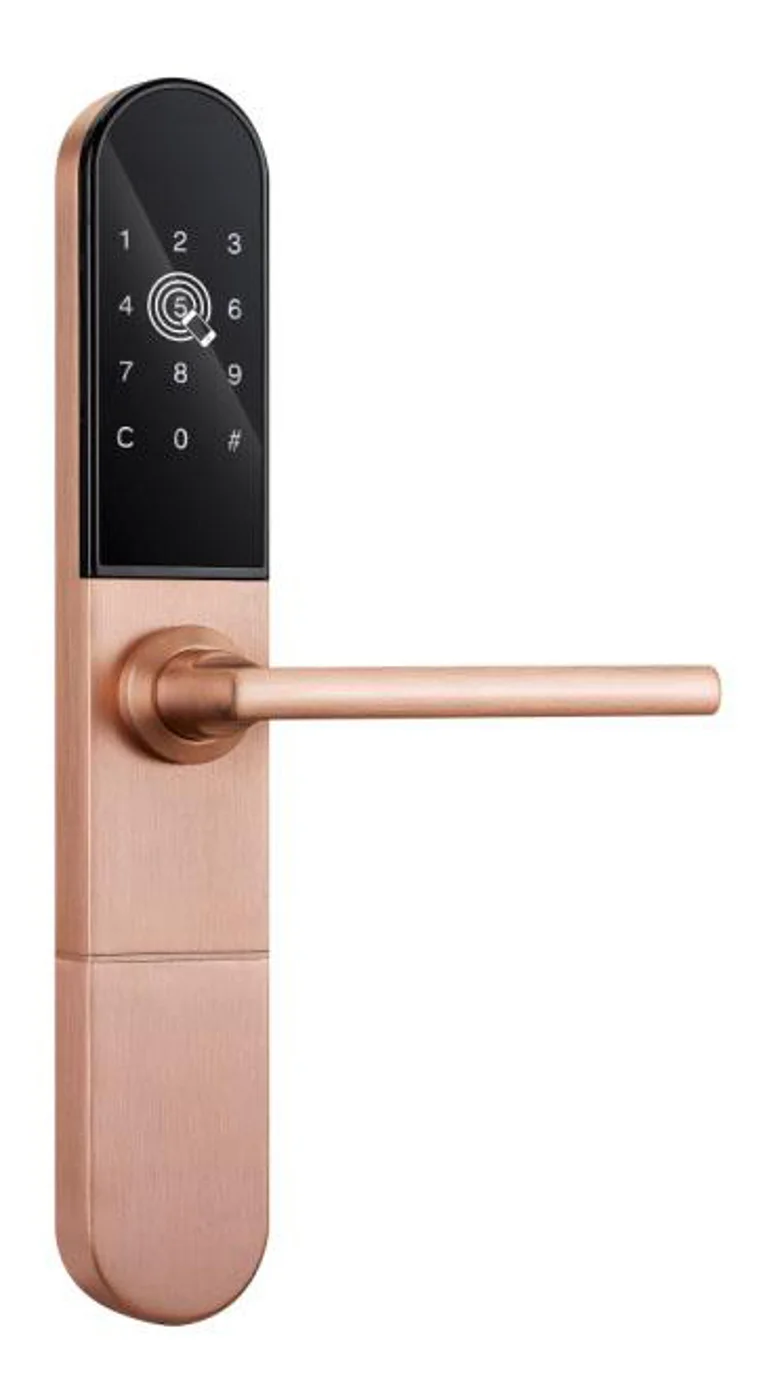
Smart Cabinet Lock — App-Managed, Multi-Site Dashboard
App-managed smart cabinet lock for office, parcel, and multi-site fleets. BLE app dashboard, audit trail, remote unlock, no per-lock server. Higher-tier chassis.
This page already points to it as the next recommended reference.
Office Cabinet Lock — PIN + Card for Filing & Pedestals
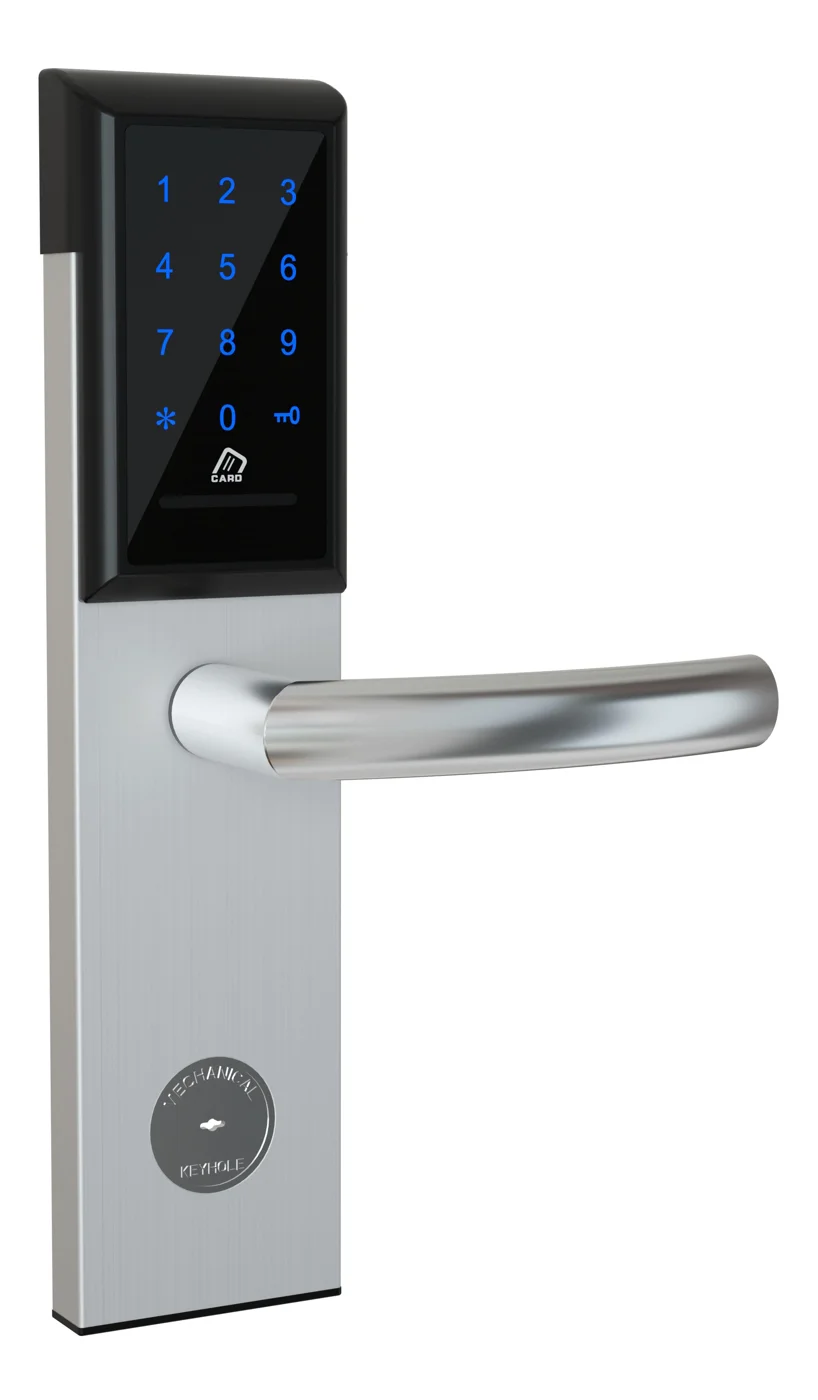
Offline PIN + card office cabinet lock for filing cabinets, pedestals, and drawers. Battery-powered 5-minute retrofit, no WiFi, no key management. CE/FCC/RoHS.
This page already points to it as the next recommended reference.
Gym Locker Lock — Offline Card, No WiFi Required
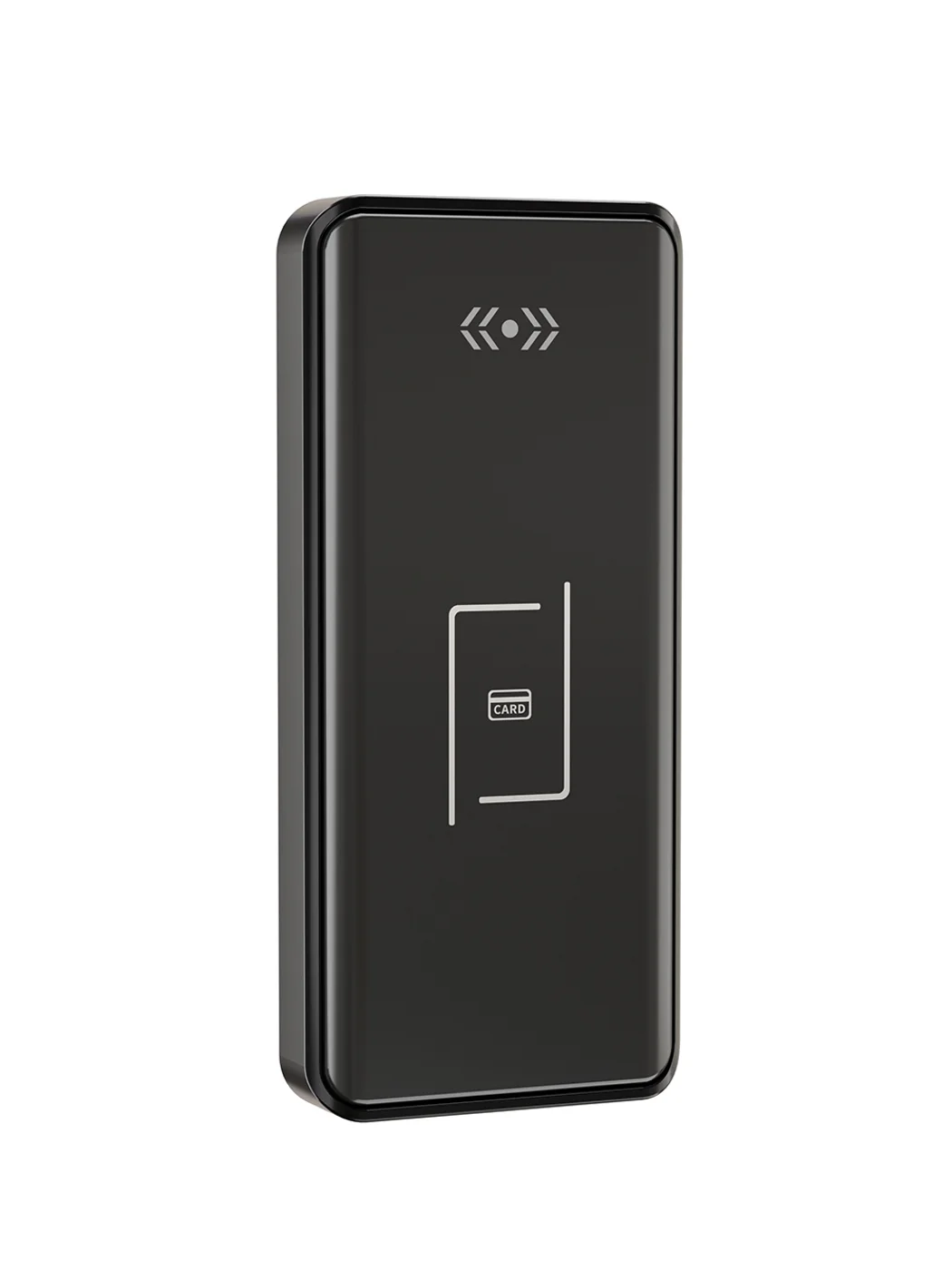
Offline card gym locker lock for fitness and pool lockers. MIFARE card, battery-powered 5-minute retrofit, no WiFi or server. Zinc alloy body, CE/FCC/RoHS.
This page already points to it as the next recommended reference.
Related blog posts
3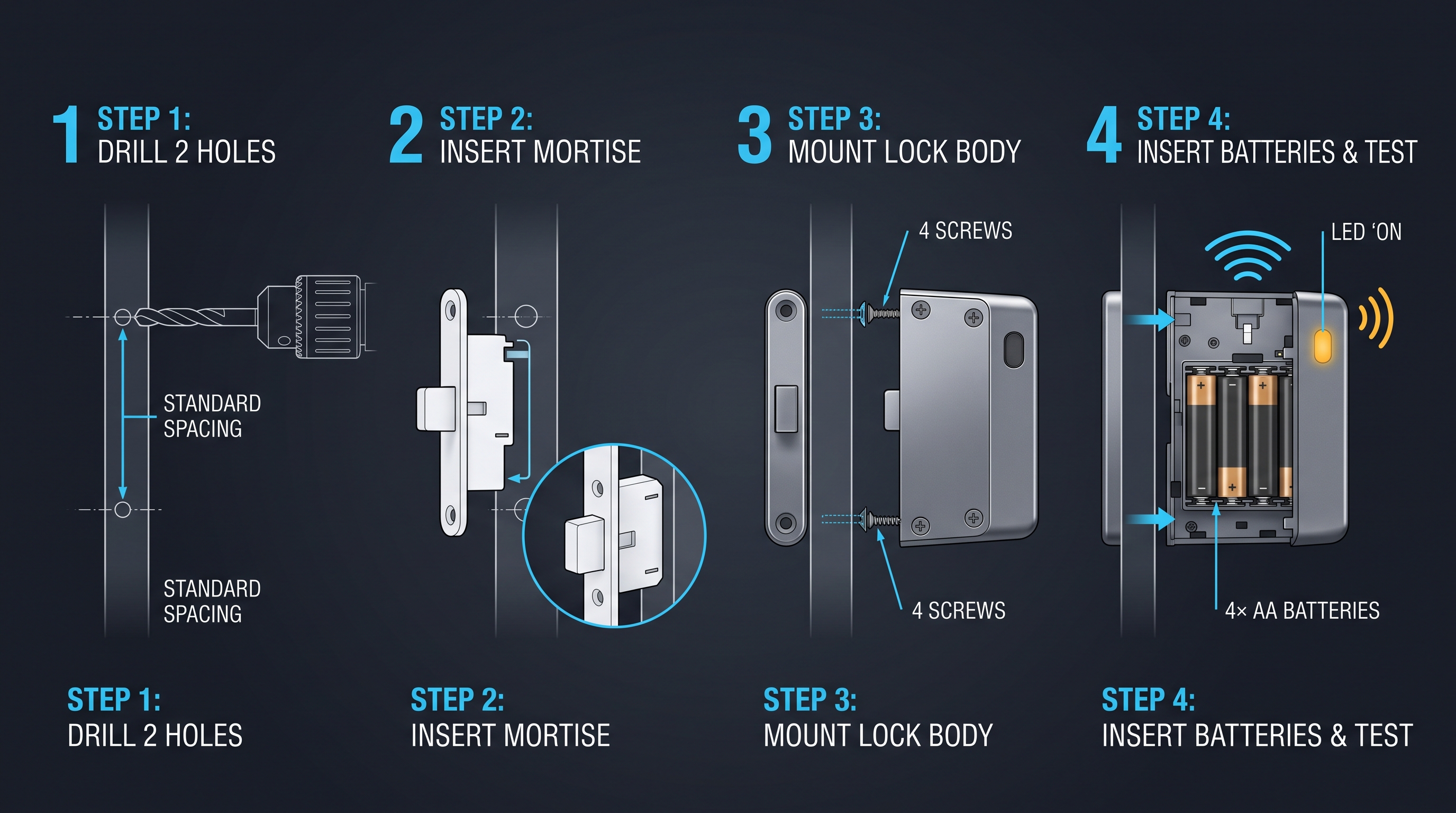
Mobile App Cabinet Lock: The Complete Guide to Smartphone-Controlled Cabinet Security
Discover how mobile app cabinet lock systems work. Explore BLE/Wi-Fi/NFC credentials, remote unlock, temporary codes, role-based access, cloud sync, security features, and deployment scenarios.
It supports the same product context: Smart Cabinet Lock — App-Managed, Multi-Site Dashboard, Office Cabinet Lock — PIN + Card for Filing & Pedestals, Gym Locker Lock — Offline Card, No WiFi Required.
MIFARE Cabinet Lock: Advanced Security Guide for MIFARE-Based Cabinet Access Systems
In-depth technical guide to MIFARE cabinet lock technology covering MIFARE Classic, Plus, DESFire, Ultralight variants, cryptographic security, installation, and multi-application smart card integration for cabinet access control.
It supports the same product context: Smart Cabinet Lock — App-Managed, Multi-Site Dashboard, Office Cabinet Lock — PIN + Card for Filing & Pedestals, Gym Locker Lock — Offline Card, No WiFi Required.
MIFARE Locker Lock: Definitive Guide to MIFARE-Based Smart Locker Security
Complete guide to MIFARE locker lock technology for gyms, schools, offices, and public facilities. Covers MIFARE Classic, Plus, DESFire variants, multi-user management, installation, networking, and smart locker ecosystem integration.
It supports the same product context: Gym Locker Lock — Offline Card, No WiFi Required.
Specify your cabinet lock project with our engineers
Send your locker count, cabinet type, and credential preference. We will return a sample plan and quote within 24 business hours.
- Move from general guidance into a product or application discussion.
- Use RFQ when pricing, drawings, MOQ, or launch timing needs structure.
- Keep a direct contact path visible for fast clarifications and handoff.