Locker Lock Manufacturer Guide: Top Global & Chinese Suppliers, R&D and Quality Systems
Comprehensive B2B guide to choosing a locker lock manufacturer — capabilities, QC, certifications, MOQ, lead time, IP, due diligence.
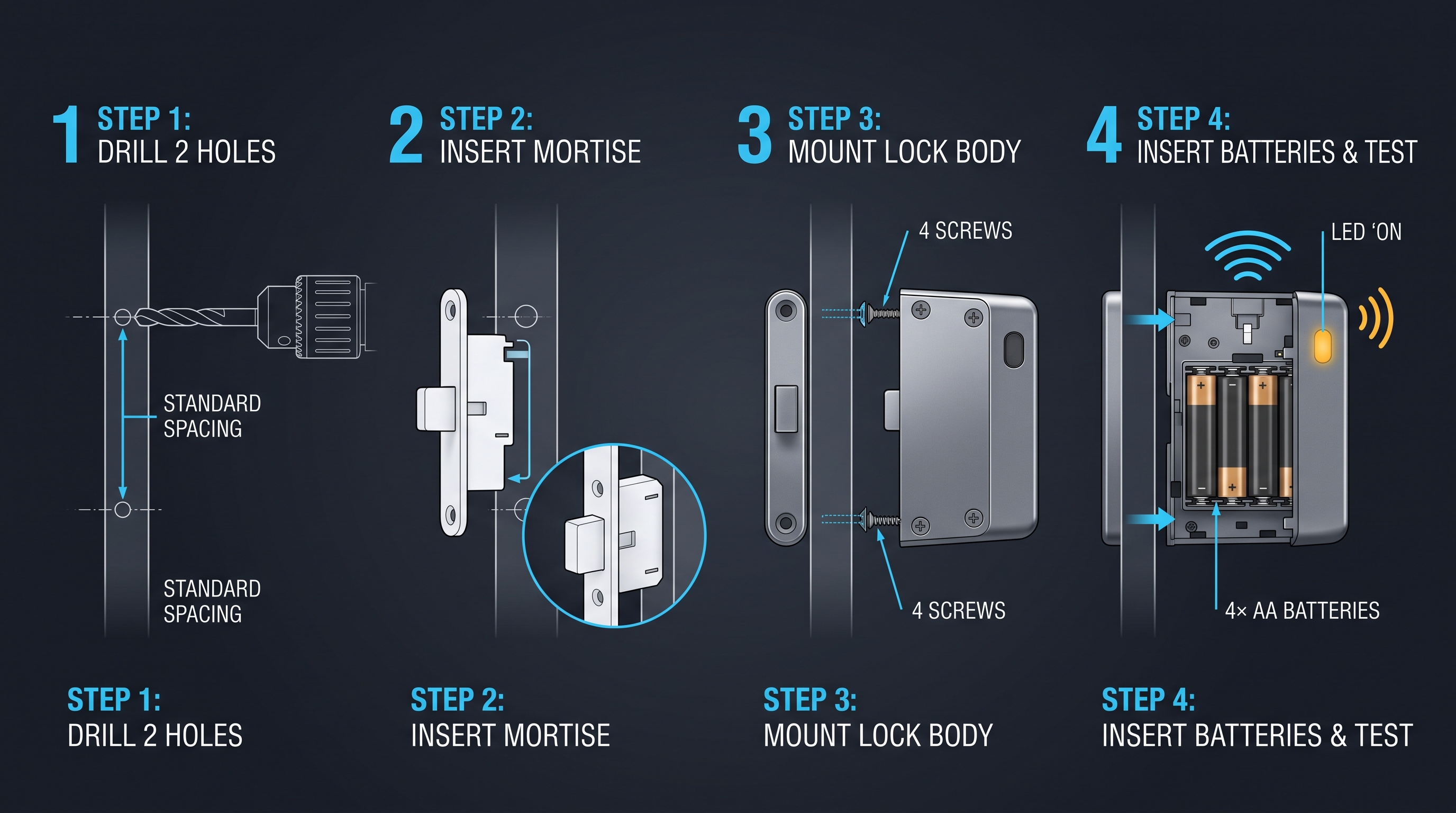
Selecting the right locker lock manufacturer is one of the most consequential decisions a B2B buyer will make in the smart-storage, fitness, education, healthcare, logistics and parcel-intake value chains. A locker lock sits at the intersection of mechanical engineering, embedded electronics, wireless communication and information security, and the supplier you choose will determine not only unit cost and lead time but also long-term field reliability, regulatory compliance and the defensibility of your brand. Unlike a generic locker lock factory that focuses on the production floor — assembly throughput, weld quality and panel stamping — a true locker lock manufacturer is evaluated on R&D investment, certified quality management, intellectual property ownership and the breadth of its product platform. The strongest manufacturers combine in-house mechanical tooling, PCBA lines, firmware teams and application-layer software, allowing them to deliver RFID, keypad, biometric, Bluetooth and app-based solutions under a single engineering umbrella. The strongest manufacturers combine in-house mechanical tooling, PCBA lines, firmware teams and application-layer software, allowing them to deliver RFID, keypad, biometric, Bluetooth and app-based solutions under a single engineering umbrella.
This guide walks international buyers, OEM brands, system integrators and procurement professionals through the criteria that separate a credible locker lock manufacturer from a commodity vendor, and it maps the global landscape with practical, data-driven benchmarks. By the end of this guide, a buyer should have a clear framework for evaluating any locker lock manufacturer, a set of data-driven benchmarks to challenge candidate pricing, and a 30-day decision process that reduces selection risk to a measurable, defensible level. The guide is built on the experiences of buyers who have completed hundreds of locker lock manufacturer engagements across fitness, education, parcel, healthcare and hospitality verticals. Their lessons — hard-won in the field — form the spine of the recommendations that follow.
What Is a Locker Lock Manufacturer and How Does It Differ From a Locker Lock Factory?
A locker lock manufacturer is an organization that owns the full product lifecycle of a locker lock: industrial design, mechanical engineering, electronic hardware design, firmware development, application software, tooling, injection molding or zinc die-casting, surface treatment, certification and after-sales support. The brand label on the carton may be a third-party OEM, but the engineering, BOM, patents and test reports belong to the manufacturer itself. A locker lock factory, by contrast, is primarily an assembly facility that may purchase motors, gearboxes, PCBs and housings from upstream vendors and focus on labor-intensive final assembly, packaging and shipping. The distinction matters because long-term partners need visibility into firmware revision control, BOM change management, supply chain risk and roadmap commitment — capabilities that exist only when the supplier functions as a true manufacturer. When you evaluate a locker lock manufacturer, ask who owns the schematic, the Gerber files, the FCC ID, the patent and the source code repository. A credible locker lock manufacturer will answer each question with confidence and provide supporting documentation within one week. A locker lock manufacturer that deflects or promises to answer after the NDA is signed is likely a trading company that cannot own engineering artifacts. A locker lock manufacturer that produces the schematic but cannot explain the power budget or the antenna impedance matching is an assembly shop with an external design partner. The depth of engineering ownership is the first and most reliable filter in the selection process.
Why Working With an Established Locker Lock Manufacturer Lowers Total Cost of Ownership
A capable locker lock manufacturer reduces TCO through three structural levers: design for manufacturability, in-house component qualification and proactive lifecycle management. Design for manufacturability folds tolerances, harness routing and connector selection into the early CAD stage, eliminating rework at NPI. In-house component qualification means the manufacturer has tested alternative motor families, hall-effect sensors and BLE modules against temperature, vibration and ESD profiles, so the buyer inherits a vetted BOM rather than a brittle one. Proactive lifecycle management means end-of-life notifications for sensors or wireless ICs arrive six to twelve months in advance, with last-time-buy options and form-fit-functional alternates. Buyers who source from a true locker lock manufacturer typically report 20 to 40 percent lower warranty cost over a five-year deployment compared with those sourcing from broker-style factories, even when the unit FOB price is identical.
A second TCO lever often overlooked is documentation. A locker lock manufacturer that maintains revision-controlled mechanical drawings, PCB Gerbers, firmware manifests and PCN/ECN history allows the buyer's engineering and quality teams to resolve field issues without traveling to the factory. A trading company or assembly-only factory cannot match this. A third lever is the manufacturer's ability to drive component substitution proactively: when a wireless IC goes end-of-life, the manufacturer should propose a form-fit-functional alternate, qualify it through reliability testing and ship a re-engineered SKU without a tooling change. Each of these levers is invisible at the PO line but visible in the field return rate, the engineering hours absorbed by your team and the lifetime cost of an installed base. Treat the manufacturer as an extension of your engineering organization, and the savings compound for the entire program life.
Core Product Lines a Full-Service Locker Lock Manufacturer Should Offer
A mature locker lock manufacturer operates four to six SKU families that cover virtually every commercial deployment: keypad locks, RFID locks, biometric locks, Bluetooth/app locks, and hybrid multi-credential locks that combine RFID with PIN or biometric fallback. Cabinet-mounted cam locks and hidden-solenoid locks are typically separate SKUs in the catalogue, as are mortise-style locks for timber doors and rim-mounted locks for metal doors. Most credible manufacturers also offer cabinet manager software or REST/MQTT APIs that allow the lock to integrate with third-party locker systems, parcel lockers and access control platforms. When reviewing a locker lock manufacturer, request the full SKU matrix and confirm whether each product is owned-engineered or simply re-branded from an upstream ODM; the answer will tell you whether you are buying a product or a label.
| Locker Lock Manufacturer SKU Family | Technology | MOQ (units) | OEM Price Range (USD) | Lead Time (working days) | Primary Certifications |
|---|---|---|---|---|---|
| Keypad Standard | 4-12 button membrane/capacitive | 500–1,000 | 7–18 | 20–30 | CE, FCC, RoHS |
| RFID Slim | 13.56 MHz MIFARE/DESFire | 500–1,000 | 12–28 | 25–35 | CE, FCC, RoHS, ISO 14443 |
| RFID Heavy-Duty | 13.56 MHz + 125 kHz | 1,000–2,000 | 18–35 | 30–40 | CE, FCC, RoHS, IP65 |
| Biometric Fingerprint | Semiconductor/capacitive sensor | 1,000–2,000 | 32–75 | 30–45 | CE, FCC, RoHS, ISO 19794 |
| Bluetooth/App | BLE 5.0/5.3 LE + NFC | 500–1,000 | 18–45 | 25–35 | CE, FCC, TELEC, RCM |
| Hybrid Multi-Credential | RFID + PIN + BLE fallback | 1,000–2,000 | 25–60 | 35–50 | CE, FCC, RoHS, KC |
| Cabinet Cam Lock | Solenoid/motor, metal housing | 1,000–3,000 | 5–15 | 20–30 | CE, FCC, UL 437 |
| Rim/Mortise Lock | Mechanical + motor assist | 500–1,000 | 12–30 | 25–40 | CE, FCC, BHMA A156.36 |
The table above illustrates the typical range across a full-service locker lock manufacturer. Actual pricing, lead time and MOQ will vary by manufacturer, by component specification and by the certification scope required for the target market. A buyer specifying a locker lock manufacturer for the first time should use this table as a pricing benchmark and challenge any candidate that quotes more than 20 percent outside the ranges above without a documented specification difference.
RFID Locker Lock Manufacturer Capabilities
The RFID product line is usually the largest revenue generator for a locker lock manufacturer, because RFID credentials are inexpensive, contactless and already issued by most enterprises through MIFARE Classic, MIFARE DESFire EV1/EV2, LEGIC, HID iCLASS or ISO 15693 systems. A serious locker lock manufacturer offers both 13.56 MHz and 125 kHz variants, supports AES-128 or 3DES crypto where the credential demands it, and exposes secure sector read/write for credential provisioning. Look for a manufacturer that publishes the supported credential list, key diversification scheme and SAM (secure access module) compatibility on the datasheet. Leading RFID locker lock manufacturer programs also publish EMVCo contactless test reports or at minimum ISO 14443 compliance certificates. Typical lead time for a 1,000-unit RFID run sits at 25 to 35 working days after tooling release, and OEM pricing per lock at MOQ of 1,000 units generally ranges from USD 12 to USD 28 depending on credential tier and housing finish.
Keypad and PIN-Based Locker Lock Manufacturer Programs
Keypad locks remain the workhorse of the locker industry because they need no credential infrastructure and no mobile app. A modern locker lock manufacturer designs keypad locks around 4 to 12 numeric buttons, a capacitive or mechanical membrane, anti-peep PIN entry, master code hierarchy, auto-relock timing and low-battery warning at 4.6 V. Power consumption at idle for a quality keypad lock sits between 18 and 35 microamperes, allowing four AA cells to deliver roughly 12 to 18 months of life at 10 actuations per day. Public-mode and assigned-mode behavior — where the user picks any free locker versus reserves a specific locker — is a critical firmware differentiator that an experienced locker lock manufacturer will document clearly. OEM pricing for keypad locks at MOQ 1,000 typically runs USD 7 to USD 18, with 4-AA alkaline cell holders shipped as standard.
Biometric Locker Lock Manufacturer Capabilities
Biometric locks add fingerprint, facial or palm-vein verification and are typically specified by fitness clubs, luxury residential developments, government facilities and high-end co-working spaces. A biometric locker lock manufacturer should disclose the sensor vendor (Common Criteria-certified modules such as those from Idemia, Suprema, NEXT Biometrics, or in-house optical sensors), the FAR/FRR targets at industry-standard thresholds (FAR under 1/100,000, FRR under 1 percent), the template storage policy (on-device only, encrypted, never leaving the lock) and the GDPR/CCPA posture for biometric data. Top-tier biometric locker lock manufacturer programs offer spoof detection using liveness detection, multi-finger enrollment (typically 5 to 20 templates) and a sub-second matching time. Pricing at MOQ 1,000 generally sits between USD 32 and USD 75 per lock depending on sensor and housing.
Buyers specifying biometric locks should also evaluate the firmware update path for the sensor module. A trustworthy biometric locker lock manufacturer will ship signed firmware images for the sensor and the lock MCU, maintain a cryptographic chain of trust from the manufacturing provisioning step to the deployed unit, and document a secure template revocation flow that allows end users or operators to delete biometric data on demand. These capabilities are essential when a lock is redeployed between tenants, when an employee leaves an organization, or when a regulatory audit demands proof of data minimization. The strongest biometric locker lock manufacturer programs publish their template handling white paper and make it available under NDA, allowing integrators and compliance officers to perform a documented risk assessment before deployment.
Bluetooth and App-Based Locker Lock Manufacturer Programs
Smartphone-driven locker locks are the fastest-growing segment, and a forward-looking locker lock manufacturer will support Bluetooth 5.0 or 5.3 LE, NFC tap-to-unlock, Wi-Fi HaLow or optional 4G LTE-M for cloud-connected lockers, and Apple Find My or Google Find My Device integration. The hardware must coexist with the credential ecosystem described earlier: BLE for shared use, RFID for issued credentials, PIN for backup. A serious locker lock manufacturer will publish the SDK, REST API and MQTT topics, support OTA firmware updates with signed images, and operate its own cloud or expose a deployable on-premises gateway. Battery budgets become critical in connected designs: a BLE advertisement interval of 800 milliseconds and a 250-millisecond connection window typically yields six to nine months of life on four AA cells. App-based locks at MOQ 1,000 generally price from USD 18 to USD 45 per unit.
Hybrid and Multi-Credential Locker Lock Manufacturer Solutions
The hybrid category is where the engineering depth of a locker lock manufacturer is most visible. A hybrid lock might accept RFID plus PIN, RFID plus BLE, or BLE plus biometric, with fallback to a mechanical key override. These designs require careful power budgeting across multiple radios, careful antenna isolation to keep RFID read range from degrading BLE performance, and a unified state machine that gracefully handles credential collisions. Buyers specifying hybrid locks should request a single SKU that can be field-upgraded by firmware feature flag — for example, allowing the same lock to operate as RFID-only today and BLE-plus-PIN tomorrow through a license key. Pricing for hybrid locks at MOQ 1,000 generally sits between USD 25 and USD 60, with OEM price breaks at 5,000 and 10,000 units.
Software and Platform Layer Owned by the Locker Lock Manufacturer
Hardware is only half of the story. A credible locker lock manufacturer will own or white-label a cabinet management platform that handles user enrollment, locker assignment, time-limited reservations, audit logs and remote unlock. The platform may be SaaS, on-premises or a hybrid cloud-edge model. APIs should be documented with OpenAPI or AsyncAPI, and integrations with property management systems, gym management software and parcel carrier networks should be referenceable. When a locker lock manufacturer also offers a robust platform layer, integrators save 30 to 50 percent of their project engineering hours because they avoid stitching together multiple vendors with mismatched SDKs and incompatible certificate chains.
Quality Control Systems: IQC, IPQC and OQC Standards at a Locker Lock Manufacturer
Quality is the single most measurable indicator of a mature locker lock manufacturer, and the strongest suppliers operate three explicit gates: IQC (incoming quality control), IPQC (in-process quality control) and OQC (outgoing quality control). Each gate is staffed by trained inspectors and backed by documented procedures, calibration records and SPC dashboards. When you audit a locker lock manufacturer, ask to see the IQC sampling plan for motors and PCBs, the IPQC traveler that follows each lot from SMT to assembly, and the OQC AQL sampling plan (typically ANSI/ASQ Z1.4 1.0 for general inspection and 2.5 for critical functions). A world-class locker lock manufacturer also operates reliability labs that run HALT (highly accelerated life test), HASS (highly accelerated stress screen), salt spray (ASTM B117), drop test (ISTA 1A/2A), thermal cycling, vibration (ISTA 3A) and ESD (IEC 61000-4-2). The presence of an in-house reliability lab is a strong proxy for engineering maturity.
How IQC Operates Inside a Serious Locker Lock Manufacturer
At IQC, every lot of motors, gearboxes, PCBs, batteries and plastic or zinc housings is inspected against an approved purchase specification. A serious locker lock manufacturer enforces AQL-based sampling for appearance defects and 100 percent electrical test for motors and PCBs. Counterfeit parts mitigation — particularly for wireless ICs and microcontrollers — is governed by a documented anti-counterfeit policy: components are sourced from franchised distributors, lot codes are logged in the ERP and high-risk parts are X-rayed or decapsulated on first article. The result is a manufacturing history file that traces every component back to its reel, date code and supplier lot, an essential deliverable for OEM customers in regulated industries.
How IPQC Operates Inside a Serious Locker Lock Manufacturer
IPQC walks the line. A top locker lock manufacturer stations inspectors at SMT, THT, assembly, firmware flashing and final test, with poka-yoke fixtures that detect mis-oriented motors, missing screws and improperly seated gaskets. Torque tools are calibrated and logged; ESD-safe workstations are tested daily; conformal coating or potting thickness is verified by cross-section or X-ray fluorescence on a sampling basis. Real-time SPC dashboards expose Cpk for critical dimensions, and operators stop the line when Cpk falls below 1.33. These controls turn a locker lock manufacturer into a learning system rather than a reactive repair shop.
How OQC Operates Inside a Serious Locker Lock Manufacturer
OQC is the last gate before shipment. A trusted locker lock manufacturer runs a 100 percent functional test that exercises the lock mechanism across the full voltage range, validates RFID read range, runs a Bluetooth pairing test and confirms firmware version and MAC address against the shipping manifest. AQL-based cosmetic inspection follows ANSI/ASQ Z1.4 sampling. Carton drop, vibration and temperature-soak tests are executed on shipping lot samples. Each carton is serialized, and the lot traveler is archived for seven to ten years to support field failure analysis.
A second quality signal is the calibration discipline of the test equipment itself. A locker lock manufacturer with an ISO/IEC 17025 accredited in-house lab or a documented calibration schedule against national institutes such as NIST, NPL or PTB is operating at a level that most brokers do not. Torque wrenches, micrometers, leak testers, RF analyzers and environmental chambers should each carry calibration stickers with next-due dates, and the records should be auditable on demand. A third signal is the manufacturer's corrective action system: the maturity of its 8D or A3 problem-solving process, the closure rate of CAPAs and the time-to-root-cause for recurring defects. A locker lock manufacturer that consistently resolves field-reported issues inside 30 days, with documented corrective and preventive action, is signaling a learning organization rather than a firefighting one. These three signals together — calibrated equipment, an accredited lab and a mature CAPA system — are reliable predictors of five-year field reliability.
Certifications Every Reputable Locker Lock Manufacturer Should Hold
Certifications are non-negotiable for any serious locker lock manufacturer selling into regulated markets. The baseline includes ISO 9001 for quality management, ISO 14001 for environmental management and ISO 45001 for occupational health and safety. Product-level certifications depend on geography and radio technology: CE (EMC Directive 2014/30/EU, RED 2014/53/EU, LVD 2014/35/EU, RoHS 2011/65/EU) for Europe; FCC Part 15 for the United States; IC RSS-Gen and RSS-210 for Canada; TELEC for Japan; KC for South Korea; SRRC for China; UKCA for the United Kingdom; RCM for Australia and New Zealand. Specific vertical certifications may include EN 16777 for fitness equipment, UL 437 for high-security locks, and BHMA A156.36 for auxiliary locks. A locker lock manufacturer that publishes a current certificate register on its website with audit dates and scope statements is signaling operational discipline.
| Certification | Market | Governing Body | Test Standard | Typical Cost (USD) | Duration (weeks) | Required for Locker Lock Manufacturer |
|---|---|---|---|---|---|---|
| ISO 9001:2015 | Global | ISO | Quality management system | 5,000–15,000 | 8–12 | Yes — baseline |
| CE (RED/EMC/LVD) | European Union | EU Commission | EN 301 489, EN 300 328, etc. | 8,000–25,000 | 4–8 | Yes (RF products) |
| FCC Part 15 | USA | FCC | 47 CFR Part 15 | 10,000–20,000 | 4–8 | Yes (wireless locks) |
| IC RSS | Canada | ISED | RSS-Gen, RSS-210 | 5,000–10,000 | 4–6 | Yes (Canada market) |
| RoHS | Global | EU/CPSIA | IEC 62321 | 2,000–5,000 | 2–4 | Yes — all products |
| UL 437 | USA | UL | UL 437 (key locks) | 15,000–30,000 | 10–16 | High-security niche |
| BHMA A156.36 | USA | BHMA | Auxiliary locks | 5,000–10,000 | 6–10 | Premium projects |
| TELEC | Japan | MIC | Ordinance Regulating Radio | 10,000–20,000 | 6–10 | Japan market |
| KC | South Korea | RRA | Radio Waves Act | 8,000–15,000 | 6–10 | South Korea market |
| SRRC | China | SRRC | Radio Regulations | 5,000–10,000 | 6–8 | China market |
| RCM | Australia/NZ | ACMA | Radiocommunications Act | 3,000–8,000 | 4–6 | ANZ market |
| REACH | EU | ECHA | Regulation EC 1907/2006 | 2,000–5,000 | 2–4 | Yes — material compliance |
| WEEE | EU | EU Commission | Directive 2012/19/EU | 1,000–3,000 | 2–4 | Yes — electronics |
The certification table above gives a buyer a realistic budget and timeline for regulatory compliance per target market. A locker lock manufacturer that has already obtained these certifications for its base SKU can reduce the cost by 40 to 60 percent for derivative SKUs through the family-certification route. This is one of the strongest arguments for choosing a locker lock manufacturer with a broad existing certification portfolio rather than a younger manufacturer that has only secured the basic CE and FCC marks. The family-certification savings on a three-SKU launch across Europe, North America and ANZ can easily exceed USD 50,000 in avoided test fees and engineering hours.
CE, FCC and RoHS Compliance Workflow at a Locker Lock Manufacturer
The compliance workflow at a credible locker lock manufacturer begins with a design-stage gap analysis against the applicable directives, continues through pre-compliance testing in the manufacturer's own lab, and culminates in formal certification at an accredited body such as TÜV, Intertek, SGS or Bureau Veritas. RoHS compliance requires material declarations, XRF screening and, where applicable, third-party lab verification using IEC 62321 methods. A mature locker lock manufacturer keeps a Declaration of Conformity template, technical file checklist and risk assessment per product family, and updates them whenever a BOM change crosses a regulated threshold. Buyers should request copies of the Declaration of Conformity, the test report summary and the certificate number for each SKU before placing a PO.
Certification scope and regional recertification timelines are also important factors. A locker lock manufacturer that has already certified a product family in Europe, North America, ANZ and Japan can typically add a new derivative SKU — a color variant, a different cable length or a custom label — with a reduced test scope, sometimes as fast as two to four weeks. A locker lock manufacturer that must recertify from scratch for each region may add 14 to 18 weeks to the project timeline. Always ask whether the manufacturer's certification house is accredited by ILAC or an equivalent mutual recognition body, because non-accredited test reports are not accepted by many national regulators. The strongest locker lock manufacturer programs consolidate certification responsibility under one engineering manager, produce a certification matrix per product family and maintain a tracking calendar that forecasts renewal dates for each certificate.
OEM and ODM Programs at a Locker Lock Manufacturer
OEM and ODM programs define how the locker lock manufacturer engages with branded customers. In an OEM engagement, the customer supplies the specification, branding and sometimes industrial design, and the manufacturer executes against it. In an ODM engagement, the manufacturer supplies a reference product that the customer rebrands and light-customizes. The most strategic locker lock manufacturer relationships combine both: ODM speed to market for the initial launch, followed by OEM differentiation as the customer's volumes grow. Expect tooling amortization to be amortized over the first three to six production batches for plastic housings and over the first ten to fifteen batches for zinc die-cast housings, and expect NRE (non-recurring engineering) charges to cover tooling, fixtures and certification.
OEM/ODM buyers should also negotiate the scope of customization. A flexible locker lock manufacturer will offer tiered customization: level one covers logo printing, custom packaging and color selection; level two covers cable length, connector type and battery chemistry; level three covers firmware feature sets, default lock-out timers and mobile app white-labeling; level four covers industrial design changes, custom PCBA layout and proprietary mechanical interfaces. The price difference between level one and level four can be a factor of five or more in NRE, so align the customization tier with your market strategy. Buyers launching a new brand should aim for level two or three on the first iteration, deferring full mechanical reinvention until sales data validates the product-market fit.
MOQ, Pricing and Volume Discount Curves at a Locker Lock Manufacturer
MOQ at a credible locker lock manufacturer typically begins at 500 to 1,000 units for standard SKUs in standard finishes, and rises to 2,000 to 5,000 units for customized finishes, special colors or customer-specific firmware. Pricing follows a tiered curve: the first 1,000 units carry the highest per-unit cost; 1,000 to 5,000 units unlock a 5 to 10 percent discount; 5,000 to 20,000 units unlock 10 to 18 percent; and 20,000+ units typically unlock 18 to 30 percent with tooling amortization fully recovered. For hybrid and biometric locks, MOQs may be higher because of sensor minimum order quantities and component lead time. A locker lock manufacturer that is comfortable with low MOQs is typically either smaller in scale or strategically using ODM inventory to reduce its risk — both situations require careful qualification.
Lead Time, Tooling and Production Ramp at a Locker Lock Manufacturer
Lead time is the most misunderstood commercial term in the industry. A seasoned locker lock manufacturer will quote three distinct milestones: sample lead time (7 to 15 working days for off-the-shelf SKUs, 25 to 45 for customized SKUs), tooling lead time (20 to 35 days for injection molds, 30 to 60 days for die-cast molds) and mass production lead time (20 to 45 working days depending on BOM availability and surface treatment). Buyers should also ask about capacity ramp curves — for example, a manufacturer with two SMT lines and a 30-day lead time at 5,000 units per month cannot promise a sudden ramp to 20,000 units without prior notice. The most professional locker lock manufacturer programs publish a capacity reservation calendar and accept long-horizon forecasts in exchange for priority scheduling.
Seasonal demand management is another aspect of lead-time planning that separates experienced manufacturers. Many locker lock manufacturer facilities face capacity pressure from March to June (pre-summer fitness season) and again from September to November (pre-holiday parcel-locker installations). A buyer who orders a 10,000-unit lot in May from a manufacturer that has not reserved capacity may experience a 55 to 70 working-day lead time instead of the standard 30 to 45. The solution is a capacity reservation agreement: the buyer submits a 12-month rolling forecast, the locker lock manufacturer guarantees a fixed production window and a penalty clause compensates the buyer if the window is missed. This type of agreement signals a mature relationship where both parties treat production planning as a shared responsibility rather than a transactional exchange. A locker lock manufacturer that offers a capacity reservation agreement at no additional cost is one that has invested in production planning software and demand forecasting capabilities. A locker lock manufacturer that charges a small reservation fee (typically 2 to 5 percent of the order value) and refunds it against the first invoice is one that treats capacity as a scarce resource and wants the buyer to demonstrate commitment. Both models are valid; the red flag is a locker lock manufacturer that offers no capacity guarantee at all and treats the buyer's order as a speculative request that will be scheduled only after payment clears.
R&D Depth and Innovation Indicators at a Locker Lock Manufacturer
R&D depth is the single strongest predictor of long-term partnership success with a locker lock manufacturer. Look for evidence of investment in five areas: mechanical engineering (CAD seat count, simulation tools, materials lab), electronics (RF lab, EMC chamber, optical inspection), firmware (signed image OTA, secure boot, TPM or SE), software (SDK quality, API design, cloud architecture) and IP (granted patents, pending applications, trade secrets). The strongest locker lock manufacturer organizations publish 10 to 40 active patent families, run dedicated firmware and security teams, and release two to four major product generations every three years. Ask for the headcount of engineers versus operators, the ratio of R&D spend to revenue, and the cadence of major product launches.
One additional R&D indicator is the presence of a dedicated security team or a published responsible-disclosure policy. A locker lock manufacturer that maintains a CVE numbering authority or subscribes to the Coordinated Vulnerability Disclosure standard is engineering security rather than bolting it on. Ask whether the manufacturer conducts penetration testing on each new firmware release, whether the test results are reviewed by an independent team and whether the secure boot chain is documented in a public white paper. These questions separate manufacturers that treat security as a marketing phrase from those that treat it as an engineering discipline. A manufacturer that passes all five indicators — high engineer ratio, active patents, regular product cadence, a security team and published disclosure policy — is a 15-year partnership prospect.
IP Protection Practices Required From a Locker Lock Manufacturer
Intellectual property is the oxygen of an OEM brand, and a trustworthy locker lock manufacturer signs NNN agreements (Non-disclosure, Non-use, Non-circumvention) before any technical exchange. The strongest manufacturers go further with tooling ownership clauses, source code escrow, customer-specific part numbering and segregation of production lines. They file design patents and utility models where the customer requests it, and they accept contractual penalties for unauthorized reference selling in the customer's vertical. The audit trail should include visitor logs, restricted-area access control, and segregated ERP BOMs for the customer's products. A locker lock manufacturer that pushes back on NNN terms or refuses to segregate tooling is signaling that it sees the relationship as transactional rather than strategic.
IP protection also extends to software. A locker lock manufacturer that ships an Android or iOS app as part of its product line should demonstrate that the app source code is under access control, that third-party SDKs embedded in the app are disclosed and that the app communicates with the lock and the cloud over TLS 1.3 or equivalent. If the locker lock manufacturer provides a white-label app, the buyer should be able to rebrand the app without sending the source code to a third-party contractor who is not covered by the NNN. The most secure locker lock manufacturer programs offer a dedicated app build pipeline where the buyer's brand name, logo, API endpoints and key store are injected at compile time and the binary is signed with the buyer's Apple Developer and Google Play certificates. This level of software IP hygiene ensures that the buyer's mobile presence is defensible and that the locker lock manufacturer cannot inadvertently feature a competing brand in the same app binary.
A further IP concern is the reuse of mechanical designs. A locker lock manufacturer that owns the injection mold for a customer-specific housing should be contractually prohibited from using that mold for any other customer. The mold should be physically marked with the customer's part number, stored in a segregated area and audited periodically. The strongest locker lock manufacturer agreements include a physical mold audit clause that allows the buyer to inspect the mold at the factory twice per year with 48 hours' notice. This clause prevents the common scenario where a manufacturer claims tooling is exclusive but is running the same mold for a competing brand on the night shift. IP protection is not a single contract clause — it is a system of mechanical, electronic, firmware and software controls that together create a defensible boundary around the buyer's product identity.
Due Diligence Checklist for Vetting a Locker Lock Manufacturer
Before signing a master supply agreement, run a structured due diligence process against the locker lock manufacturer. Begin with corporate verification: articles of incorporation, ultimate beneficial owner, audited financials and any litigation history. Move to operational verification: factory tour, capacity confirmation, equipment list and headcount by function. Continue with quality verification: ISO certificates, audit reports, IQC/IPQC/OQC procedures and field return metrics. Finish with commercial verification: customer references in your vertical, banker references and insurance coverage including product liability and recall insurance. A credible locker lock manufacturer welcomes this exercise and responds within seven business days; one that stalls or deflects is a risk.
The following due diligence checklist provides a structured template for any buyer evaluating a locker lock manufacturer:
| Due Diligence Domain | Item to Verify | Documentation Required | Pass/Fail Criteria | Priority |
|---|---|---|---|---|
| Corporate | Articles of incorporation, UBO registry | Business license, share register | Legal entity matches brand | Critical |
| Corporate | Litigation history | Court records, legal disclosures | No active IP or fraud suits | Critical |
| Financial | Audited P&L, balance sheet | Last 2 years audited statements | Revenue > $5M, positive EBITDA | High |
| Financial | Export credit insurance | Insurer's limit confirmation | Credit limit > order value | High |
| Financial | Customer concentration | Top 5 customers % of revenue | No single customer > 30% | Medium |
| Operational | Factory ownership | Lease or deed, floor plan | Matches RFI description | Critical |
| Operational | Equipment list | SMT, injection mold, test equipment inventory | Lines match claimed capacity | High |
| Operational | Headcount by function | HR register or org chart | Engineer-to-operator ratio > 1:10 | High |
| Quality | ISO certificates | ISO 9001, 14001, 45001 certificates | Valid with recent audit | Critical |
| Quality | IQC/IPQC/OQC procedures | Procedure documents, traveler samples | Documented and signed | Critical |
| Quality | Field return metrics | RMA reports, DPPM data, warranty claim history | DPPM < 1,500 | High |
| Quality | Calibration records | Equipment calibration certificates and schedule | In-date and auditable | High |
| IP | Patent portfolio | Granted patent list and application status | Minimum 3 active families | Medium |
| IP | NNN agreement template | Signed NNN or draft for review | Protects buyer technology | Critical |
| IP | Tooling segregation policy | Written policy, physical audit trail | Dedicated molds per customer | High |
| Commercial | Customer references | 3 references in buyer's vertical | Positive reference calls | Critical |
| Commercial | Insurance | Product liability, recall insurance certificates | Coverage > $2M per incident | Critical |
| Commercial | Banking references | Bank letter confirming account standing | No defaults or adverse reports | Medium |
A locker lock manufacturer that passes all critical items and at least 12 of the 17 total checklist items is qualified for a paid sample build and commercial negotiations. A locker lock manufacturer that fails any critical item or scores below 10 total items should be rejected. The checklist should be completed within 15 business days of initiating the due diligence process and archived in the supplier qualification file for audit purposes.
Financial health deserves particular attention. Ask the locker lock manufacturer for its last two audited financial statements or, at minimum, its export credit insurance limit, credit report from a recognized agency and bank references. A manufacturer that depends on a single customer for more than 30 percent of revenue, or that carries excessive short-term debt, may be financially motivated to take shortcuts during raw-materials price spikes. Tie the due diligence to commercial terms: a manufacturer that passes all financial checks can be offered extended payment terms in exchange for a small pricing concession, while a manufacturer that fails them should be restricted to letter-of-credit or pre-payment structures. Due diligence is not a bureaucratic step; it is the investment that protects the brand, the warranty budget and the five-year service promise.
Red Flags That Signal an Underqualified Locker Lock Manufacturer
The warning signs are surprisingly consistent across failed engagements. Refusal to share ISO certificates or audit reports. Generic marketing collateral with no factory photos. MOQ below 100 units on a "manufactured" SKU — almost always a trading company. Pricing dramatically below market without a corresponding specification difference. No engineering contact above the sales layer. Tooling described as "shared" rather than dedicated. A locker lock manufacturer that cannot produce a signed BOM with component vendor names and lot tracking is signaling that its supply chain is opaque. Walk away when any of these appear.
A closely related red flag is incomplete or evasive responses to the technical RFI. A locker lock manufacturer that cannot provide a signed BOM, a product family specification sheet, an FCC grantee code or a CE Declaration of Conformity within ten business days is likely reselling another manufacturer's product. A second red flag is a locker lock manufacturer that recommends a cash transaction before sample delivery or demands a large upfront tooling payment without a documented tooling contract. A third is a locker lock manufacturer that offers a per-unit price more than 20 percent below the market range without a credible explanation such as a verified design simplification or a consolidated component purchase. These patterns are so consistent across the industry that procurement teams refer to them as the speed-of-light warning signs: if the deal seems too fast, too cheap or too undocumented, the locker lock manufacturer is almost certainly not a manufacturer at all.
| Red Flag | What It Signals | Action Required |
|---|---|---|
| Cannot provide ISO 9001 certificate | No certified quality system | Remove from shortlist |
| MOQ below 100 units on a "manufactured" SKU | Trading company, not manufacturer | Request factory video tour |
| No engineering contact person offered | No engineering depth | Request R&D headcount |
| Pricing >20% below market without spec diff | Likely substandard BOM or counterfeit parts | Request signed BOM with lot codes |
| No FCC ID or CE DoC available | No regulatory compliance testing | Remove from shortlist |
| Refuses NNN agreement before technical exchange | No IP protection culture | Walk away |
| "Shared" tooling described for custom mold | Customer IP not segregated | Demand written segregation clause |
| Cannot provide signed BOM with component vendors | Opaque supply chain | Request traceability audit |
| No factory photos or visitor policy | Hides manufacturing floor | Insist on live video tour |
| Social media and website show no R&D activity | No engineering investment | Reject |
The red flag table above is a quick-reference tool that procurement teams can print and carry to trade shows or factory audits. A locker lock manufacturer that triggers three or more of these red flags should be removed from the shortlist regardless of price or MOQ flexibility. The cost of onboarding a problematic locker lock manufacturer — engineering hours for integration, quality hours for root-cause analysis, legal hours for contract disputes and lost sales from field failures — far exceeds any unit cost savings. The red flag table is not a theoretical exercise; it is a risk management tool built from the field experience of dozens of OEM buyers who have completed the selection process ahead of you.
Sourcing Locker Lock Manufacturer Partners in China Versus Western Suppliers
Chinese locker lock manufacturer capacity dominates global volume by a wide margin, with Shenzhen, Zhongshan, Foshan and Ningbo as the principal clusters. Western manufacturers in Germany, the United States, Italy and the United Kingdom tend to specialize in premium verticals such as high-security, healthcare-grade and luxury-spec projects, and they command a 30 to 80 percent price premium. A pragmatic sourcing strategy pairs a Tier-1 Chinese locker lock manufacturer for cost-sensitive volume with a regional distributor or system integrator for service-level response. When sourcing from China, insist on third-party inspection at pre-shipment, escrow or letter-of-credit payment terms, and a New York or Hong Kong shipping agent for logistics visibility.
The Chinese locker lock manufacturer ecosystem has matured significantly in the past decade. Many factories in the Zhongshan and Shenzhen clusters now employ teams of 15 to 40 engineers, operate automated SMT lines and have invested in in-house injection molding and zinc die-casting. The advantage of sourcing from a Chinese manufacturer is not limited to unit cost: lead times for new molds typically run 20 to 35 days versus 40 to 70 days in Western markets, and the ecosystem density around component suppliers — motors from Dongguan, PCBs from Shenzhen, batteries from Huizhou — means that BOM cost can be optimized more aggressively. The challenge is that the same density attracts intermediaries who pose as manufacturers. The solution is a guided factory audit using the checklist in this article, conducted by your own engineer or a trusted third-party inspection company such as Bureau Veritas, SGS or TÜV Rheinland, to confirm that the addresses, equipment and headcounts match the claims.
How to Structure a Master Supply Agreement With a Locker Lock Manufacturer
A master supply agreement (MSA) with a locker lock manufacturer should cover: forecast and order cadence, pricing and currency, tooling ownership and amortization, IP allocation, quality KPIs and remedies, warranty terms, indemnification, compliance and recall responsibilities, force majeure and termination. Quality KPIs typically include DPPM (defective parts per million) ceilings of 500 to 1,500 for cost-sensitive SKUs and 100 to 300 for premium SKUs. Warranty terms commonly run 24 to 36 months for mechanical and electronic defects. The MSA should also define change-control protocols: BOM substitutions, firmware revisions and end-of-life notices with 90 to 180 days of advance warning.
Field Reliability Metrics to Track After Onboarding a Locker Lock Manufacturer
After the locker lock manufacturer is onboarded, monitor a small set of field reliability metrics to ensure the partnership stays healthy. Track returns per thousand units per quarter, broken down by SKU and failure mode (mechanical, electronic, firmware, cosmetic). Track mean time between failures (MTBF) at 12, 24 and 36 months, and compare against the manufacturer's published target. Track on-time-in-full (OTIF) shipment rate against the MSA target of 95 to 98 percent. Track RMA turnaround time and the ratio of credit versus repair. A locker lock manufacturer that performs well on all four dimensions over four consecutive quarters has earned the right to participate in your next-generation program.
| Metric | Target (Premium SKU) | Target (Cost-Sensitive SKU) | Measurement Frequency | Escalation Threshold |
|---|---|---|---|---|
| DPPM (defective parts per million) | 100–300 | 500–1,500 | Monthly | >2x target for 2 months |
| OTIF (on-time in-full) | 97–99% | 95–97% | Per shipment | <90% for 2 shipments |
| Field return rate | <0.5% at 12 months | <1.0% at 12 months | Quarterly | >2% quarterly |
| RMA turnaround | <10 business days | <15 business days | Monthly | >20 days average |
| Warranty claim closure | <30 days | <45 days | Quarterly | >60 days any claim |
| OQC first-pass yield | >98% | >95% | Weekly | <90% for 1 week |
| IQC rejection rate | <1.5% | <3.0% | Per lot | >5% for 3 lots |
| CAPA closure rate | >90% within 30 days | >80% within 30 days | Monthly | <60% monthly |
The table above provides a concrete KPI framework that buyers can insert into their MSA with any locker lock manufacturer. A locker lock manufacturer that accepts these targets in the contract is one that has confidence in its quality system. A locker lock manufacturer that negotiates for significantly looser targets — for example, a DPPM ceiling above 3,000 — is either inexperienced or operating without the IQC, IPQC and OQC discipline described in this guide. The buyer should escalate any sustained breach of these KPIs to the quarterly steering committee and, if the locker lock manufacturer does not demonstrate corrective action within two consecutive quarters, begin a transition plan to a backup supplier. Field reliability is not a static attribute; it is the output of a quality system that must be measured, reviewed and continuously improved.
Negotiation Tactics That Win Better Terms From a Locker Lock Manufacturer
Three negotiation levers consistently improve outcomes with a locker lock manufacturer. First, commit to a 12-month rolling forecast with quarterly updates in exchange for locked pricing and capacity reservation. A locker lock manufacturer that can see demand 12 months ahead will allocate line time and raw materials more efficiently, and will pass some of that efficiency back as a pricing concession. Second, offer tooling co-investment for differentiated SKUs in exchange for exclusivity in a vertical or geography. A locker lock manufacturer that co-invests in tooling alongside the buyer is financially committed to the product's success and less likely to engineer a competing product for a third party. Third, propose a gain-share model where cost reductions from DFM or component substitution are split between buyer and manufacturer, encouraging the manufacturer to keep engineering attention on your account. Each lever aligns incentives and signals that you are a strategic, not transactional, customer. A locker lock manufacturer that responds to these proposals with a counteroffer rather than a rejection is one that has experience building long-term partnerships.
Sustainability, ESG and Compliance Posture of a Modern Locker Lock Manufacturer
Sustainability has moved from marketing tagline to commercial requirement. A modern locker lock manufacturer publishes a conflict minerals policy aligned with the Responsible Minerals Assurance Process, a REACH and RoHS declaration covering every BOM line, an energy and water consumption reduction plan, and an annual ESG report. Recycled-content zinc and aluminum housings, water-based surface coatings and bio-based plastics for non-structural parts are increasingly available. ESG-conscious buyers should require ISO 14001 certification, a science-based emissions target and a supplier code of conduct that the locker lock manufacturer cascades to its sub-suppliers.
European buyers, in particular, should be aware of the EU Corporate Sustainability Reporting Directive, which may require their locker lock manufacturer to disclose Scope 1, 2 and 3 emissions. A manufacturer that has not started carbon accounting will find it difficult to comply with CSRD requirements by the 2028 enforcement date. Even buyers outside Europe should anticipate that large fitness chains, university systems and government agencies will begin requiring ESG questionnaires as part of their procurement processes within the next three years. Selecting a locker lock manufacturer that already publishes a sustainability report and has a net-zero roadmap removes a future blocking point from the procurement flow and positions the buyer ahead of its own regulatory obligations.
Future Trends a Forward-Looking Locker Lock Manufacturer Is Preparing For
The locker industry is being reshaped by five trends, and a forward-looking locker lock manufacturer is investing in all of them. First, parcel and last-mile lockers are driving demand for high-cycle-count cam locks rated beyond 100,000 actuations, and a locker lock manufacturer that has tested its cam mechanisms to 200,000 cycles with less than 10 percent torque degradation is ahead of the curve. Second, mobile credentialing via Apple Wallet and Google Wallet is pushing NFC reader integration deeper into the lock, and a locker lock manufacturer that already supports HCE (host card emulation) and has an Apple MFI or Google Hardware Attestation certification is rare and valuable. Third, AI-driven locker assignment in shared spaces is increasing demand for occupancy sensors and analytics APIs that a locker lock manufacturer can provide through its platform layer. Fourth, sustainability regulations in Europe are accelerating bio-based plastics and recycled-content metals, and a locker lock manufacturer that has published a life-cycle assessment for its flagship SKU has a competitive advantage in regulated markets. Fifth, cybersecurity threats against connected locks are pushing secure boot, signed firmware and post-quantum crypto into the procurement spec, and a locker lock manufacturer that has published a security white paper and engaged an independent penetration testing firm is demonstrating leadership in a critical dimension. A locker lock manufacturer investing in these five areas is positioning itself as a 2030 partner, not a 2026 vendor.
Procurement teams should also watch the rise of standardized credential ecosystems. The gradual adoption of Matter and thread in the smart-home domain has begun to influence locker systems, with some integrators requesting interoperable lock modules that can be swapped across OEM brands without firmware rewrites. A locker lock manufacturer that participates in the Matter working group or publishes an interoperability matrix is preparing for a future where hardware is a commodity and the platform is the moat. Similarly, the shift toward "lock as a service" — where the manufacturer collects a monthly fee for the lock, software and support rather than selling hardware outright — will reward manufacturers that control the full stack. Buyers should ask every candidate locker lock manufacturer about its roadmap for these five shifts and treat the depth of the response as a signal of strategic maturity.
Common Mistakes When Choosing a Locker Lock Manufacturer
The most common mistake is choosing a locker lock manufacturer based purely on unit price, without modeling warranty, freight, certification, tooling amortization and downtime. The second most common mistake is failing to negotiate IP segregation, only to discover two years later that the same SKU is being offered to a competitor under a different brand. The third most common mistake is under-investing in the audit phase, accepting glossy brochures over factory walk-throughs. The fourth is choosing a manufacturer without a credible firmware update mechanism, which becomes critical when a security vulnerability emerges. Avoid these four mistakes and you will outperform 80 percent of your peer buyers.
A fifth common mistake is signing a multi-year exclusivity agreement with a locker lock manufacturer before the manufacturer has demonstrated consistent performance across three full production cycles. Exclusivity is a powerful tool: it can unlock preferential pricing, dedicated capacity and engineering attention. But it also prevents the buyer from dual-sourcing if the locker lock manufacturer's quality, lead time or financial health deteriorates. The recommended approach is a staged exclusivity ramp: a non-exclusive first year for qualification, a limited-product-category exclusivity in the second year if quality and delivery metrics are met, and full vertical or geographic exclusivity in the third year only after all KPIs have been sustained for two consecutive quarters. This staged approach protects the buyer while still offering the locker lock manufacturer a path to a strategic relationship.
A sixth mistake is ignoring the after-sales service structure during the initial evaluation. Many buyers evaluate a locker lock manufacturer purely on pre-sales responsiveness and factory quality, only to discover after the first shipment that the after-sales team is understaffed or the RMA process requires the buyer to absorb return freight costs. Ask the locker lock manufacturer for its service level agreement terms before signing: response time for technical support, RMA turnaround days, warranty claim procedure and whether replacement units are shipped in advance or only after the defective unit is received. A locker lock manufacturer that pre-ships replacement units at its own cost and within five business days is one that stands behind its product reliability. A locker lock manufacturer that requires the defective unit to arrive at the factory before a replacement ships is one that is optimizing for cash flow, not customer satisfaction. The difference in downtime cost for a deployed installation of 5,000 lockers can easily reach USD 50,000 per day of outage, so the after-sales structure is not a minor clause — it is a financial exposure that belongs in the weighted selection matrix.
Decision Framework: How to Pick the Right Locker Lock Manufacturer in 30 Days
A focused 30-day selection process for a locker lock manufacturer should follow four phases. Days 1 to 7, build a long list of 8 to 12 candidates from industry directories, trade shows and referrals, and run a written RFI against your specification. Days 8 to 14, narrow to 4 to 6 finalists based on capability match and request indicative quotations with MOQs, lead times and certifications. Days 15 to 21, audit the top three finalists on site or via live video, validating RFI responses against reality. Days 22 to 30, run a paid engineering sample build with the chosen partner and lock in commercial terms. A disciplined 30-day cadence prevents the most common failure mode: selection drift.
A useful tool during the decision phase is a weighted decision matrix that scores each locker lock manufacturer against the criteria discussed in this guide: R&D depth (15 percent weight), quality system maturity (15 percent), certification coverage (10 percent), IP protection posture (10 percent), OEM/ODM flexibility (10 percent), pricing and MOQ fit (10 percent), lead-time reliability (10 percent), software/platform depth (10 percent), sustainability posture (5 percent) and reference verification (5 percent). Assign each candidate a score of 1 to 5 on each criterion, multiply by the weight and sum. A locker lock manufacturer that scores below 3.5 on the weighted average should be rejected regardless of price advantage, because the cost of remediating quality, IP or compliance gaps will almost certainly exceed the unit savings. The weighted matrix transforms the selection process from a gut feeling into an auditable, defensible procurement decision.
During the same 30-day window, schedule at least two live demonstrations with the leading locker lock manufacturer candidate. The first demonstration should be technical: an engineer from the buyer's team walks through the integration API, the SDK and the firmware update flow. The second demonstration should be commercial: a sales director from the locker lock manufacturer presents pricing tiers, MOQ curves, lead-time commitments and the proposed MSA template. A locker lock manufacturer that performs well on both demonstrations is signaling alignment between engineering and commercial leadership, a strong predictor of partnership success. By contrast, a locker lock manufacturer whose sales team promises what engineering cannot deliver is signaling misalignment that will surface within the first production cycle.
After the demonstrations, request a paid engineering sample build. The sample build is the final litmus test: a top locker lock manufacturer will convert the buyer's specification into a working prototype in 25 to 45 working days, complete with mechanical samples, pre-compliance test reports and a draft user manual. The buyer should pay for the sample build — typically USD 2,000 to USD 15,000 depending on tooling and certification needs — and treat it as an investment in de-risking the partnership. A locker lock manufacturer that demands payment for samples is signaling that engineering time is scarce and that the relationship will be commercially serious from day one.
Final Recommendations for Engaging a Locker Lock Manufacturer
Engaging the right locker lock manufacturer is a multi-year strategic investment, and the highest-return activity you can perform is a disciplined, evidence-driven selection process anchored in R&D depth, certified quality systems and IP protection. Treat the relationship as a partnership rather than a purchase: share forecasts, share roadmap, share field data, and you will receive in return priority capacity, early access to new platforms and engineering attention that a transactional buyer will never see. Demand transparency on IQC, IPQC and OQC, on CE/FCC/RoHS and on OEM/ODM terms, and you will be rewarded with predictable quality, predictable cost and predictable lead time. The global locker lock manufacturer landscape is large and competitive, and the right partner is the one that aligns engineering investment with your roadmap for the next product generation and the decade beyond.
A final operational recommendation is to establish a joint steering committee with the locker lock manufacturer that meets quarterly at the director or VP level. The steering committee reviews not only quality and delivery KPIs but also the product roadmap, the technology roadmap, the capacity investment plan and any organizational changes at the locker lock manufacturer. A steering committee meeting that surfaces a pending R&D team reorganization or a component supply risk three months before it hits production is worth more than any contractual warranty clause. The strongest buyer-manufacturer relationships in the locker industry are characterized by transparency at the governance level, shared risk registers and a mutual commitment to being each other's preferred problem-solving partner. This is the relationship that survives component shortages, logistics disruptions and market shifts, and it is the relationship that a disciplined selection process — anchored in the criteria of this guide — is designed to discover.
To close this guide with a practical call to action, the buyer should compile the top three locker lock manufacturer candidates identified through the 30-day process and invite each to a technical scoping workshop. During the workshop, the buyer presents a future product concept — a locker lock that does not yet exist in either party's portfolio — and the locker lock manufacturer responds with a rough engineering estimate: component cost, tooling investment, development timeline and certification plan. The quality of the response — how quickly the locker lock manufacturer identifies the critical path, how transparently it flags risks and how creatively it proposes cost-saving alternatives — is the single most predictive signal of partnership potential. A locker lock manufacturer that delivers a thoughtful, data-driven response within one week of the workshop is a manufacturer that has the engineering bench, the commercial maturity and the strategic ambition to grow with the buyer's business for the next decade.
Not sure which lock fits your lockers?
Talk to our lock engineers about credentials, battery life, and retrofit fit — no obligation.
Related cabinet lock resources
Compare lock types, check installation guides, and download the product catalog
Related products
3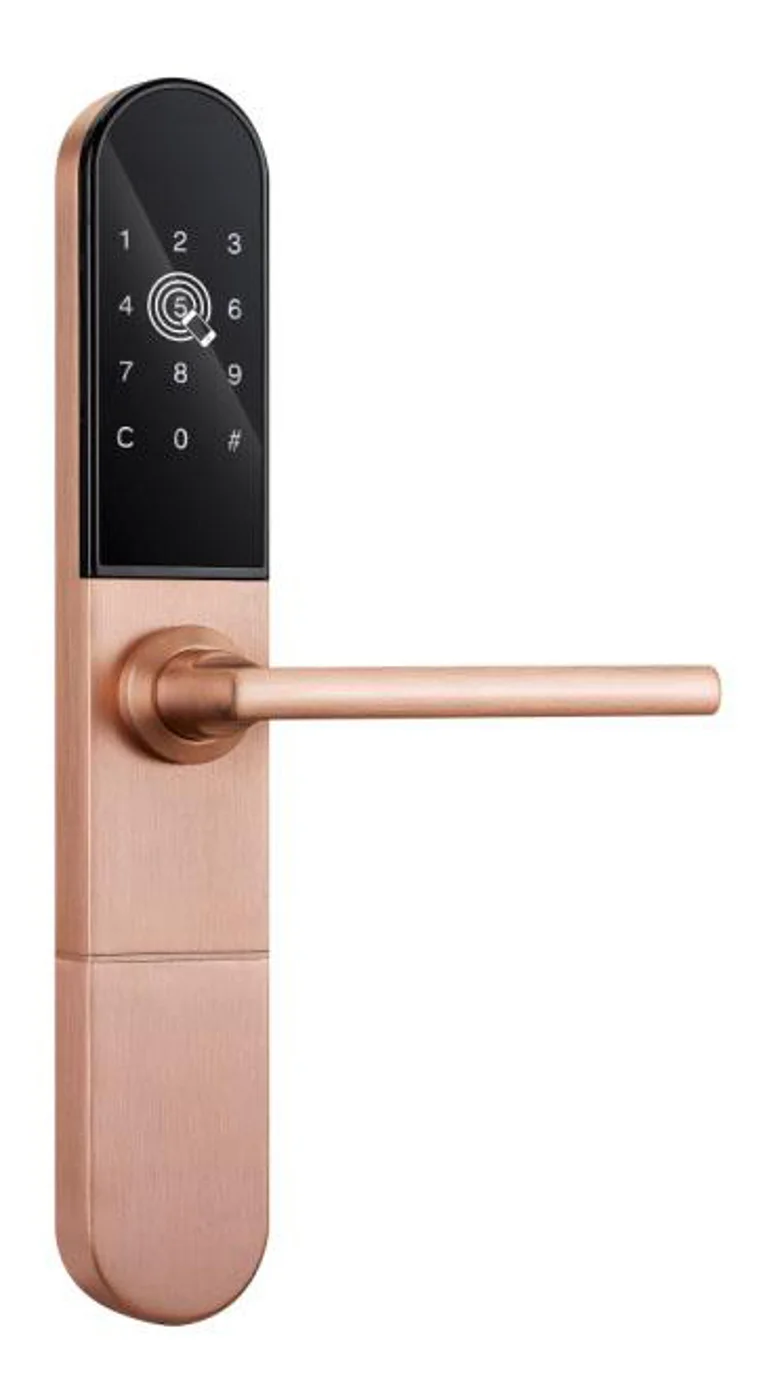
Smart Cabinet Lock — App-Managed, Multi-Site Dashboard
App-managed smart cabinet lock for office, parcel, and multi-site fleets. BLE app dashboard, audit trail, remote unlock, no per-lock server. Higher-tier chassis.
This page already points to it as the next recommended reference.
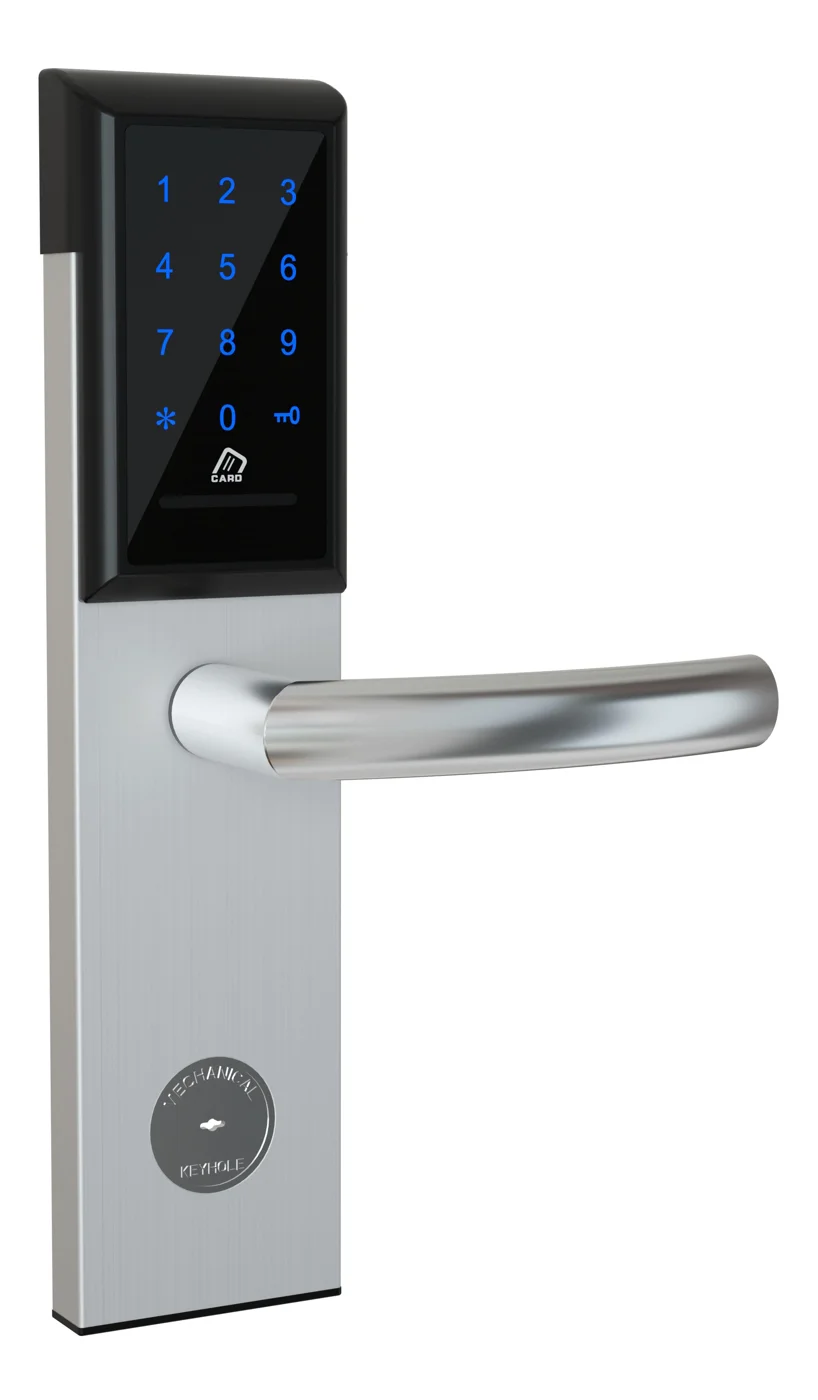
Office Cabinet Lock — PIN + Card for Filing & Pedestals
Offline PIN + card office cabinet lock for filing cabinets, pedestals, and drawers. Battery-powered 5-minute retrofit, no WiFi, no key management. CE/FCC/RoHS.
This page already points to it as the next recommended reference.
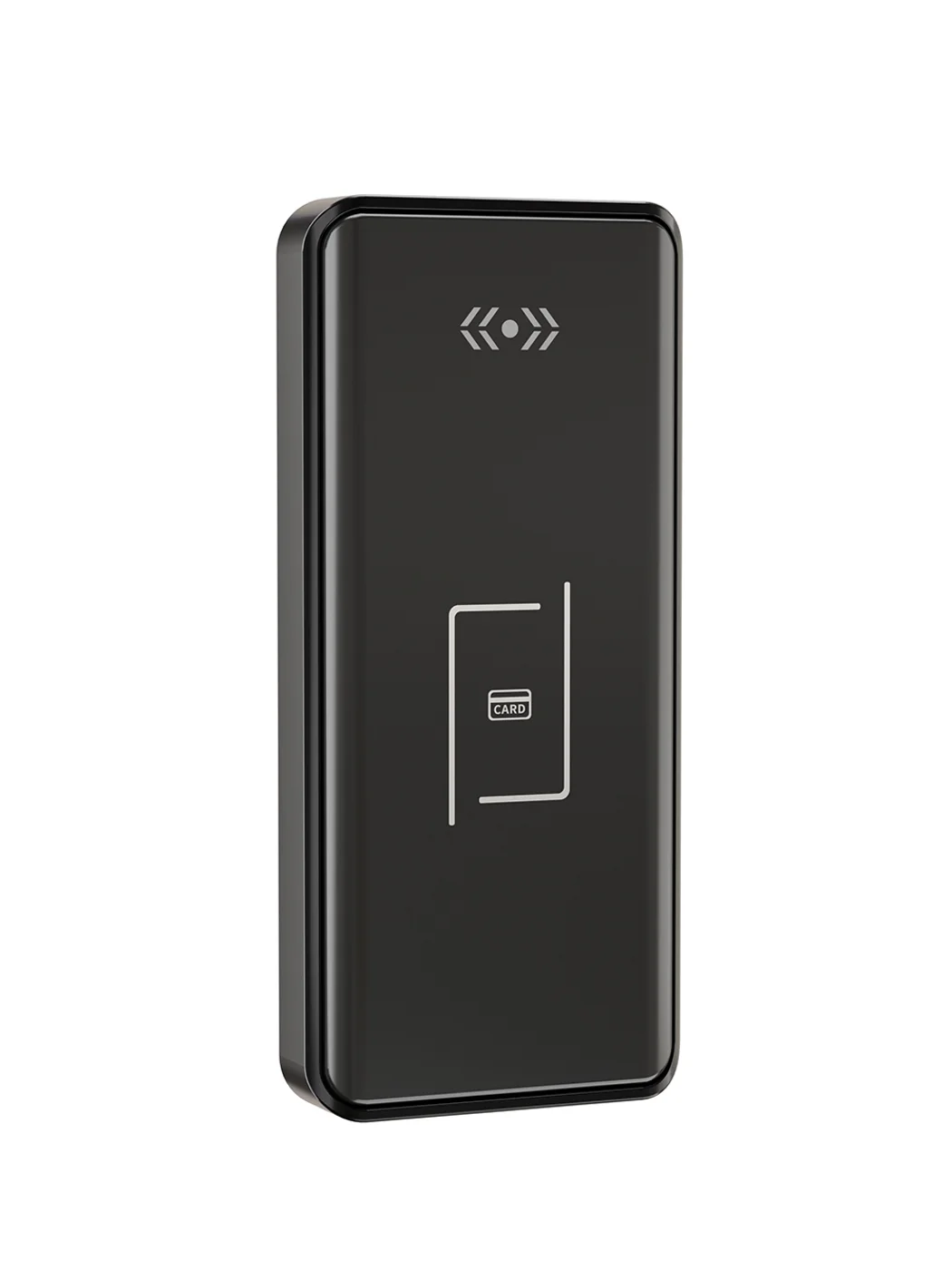
Gym Locker Lock — Offline Card, No WiFi Required
Offline card gym locker lock for fitness and pool lockers. MIFARE card, battery-powered 5-minute retrofit, no WiFi or server. Zinc alloy body, CE/FCC/RoHS.
This page already points to it as the next recommended reference.
Related blog posts
3
Mobile App Cabinet Lock: The Complete Guide to Smartphone-Controlled Cabinet Security
Discover how mobile app cabinet lock systems work. Explore BLE/Wi-Fi/NFC credentials, remote unlock, temporary codes, role-based access, cloud sync, security features, and deployment scenarios.
It supports the same product context: Smart Cabinet Lock — App-Managed, Multi-Site Dashboard, Office Cabinet Lock — PIN + Card for Filing & Pedestals, Gym Locker Lock — Offline Card, No WiFi Required.
MIFARE Cabinet Lock: Advanced Security Guide for MIFARE-Based Cabinet Access Systems
In-depth technical guide to MIFARE cabinet lock technology covering MIFARE Classic, Plus, DESFire, Ultralight variants, cryptographic security, installation, and multi-application smart card integration for cabinet access control.
It supports the same product context: Smart Cabinet Lock — App-Managed, Multi-Site Dashboard, Office Cabinet Lock — PIN + Card for Filing & Pedestals, Gym Locker Lock — Offline Card, No WiFi Required.
MIFARE Locker Lock: Definitive Guide to MIFARE-Based Smart Locker Security
Complete guide to MIFARE locker lock technology for gyms, schools, offices, and public facilities. Covers MIFARE Classic, Plus, DESFire variants, multi-user management, installation, networking, and smart locker ecosystem integration.
It supports the same product context: Gym Locker Lock — Offline Card, No WiFi Required.
Specify your cabinet lock project with our engineers
Send your locker count, cabinet type, and credential preference. We will return a sample plan and quote within 24 business hours.
- Move from general guidance into a product or application discussion.
- Use RFQ when pricing, drawings, MOQ, or launch timing needs structure.
- Keep a direct contact path visible for fast clarifications and handoff.