The Complete Guide to the IoT Locker Lock: Hardware, Cloud, and Fleet Management for Smart Locker Banks
Discover how an IoT locker lock powers delivery locker banks, shared-office cabinets, and smart gym storage. Wi-Fi, BLE, Zigbee, NB-IoT, LoRaWAN protocols, OTA firmware, telemetry, and procurement criteria.
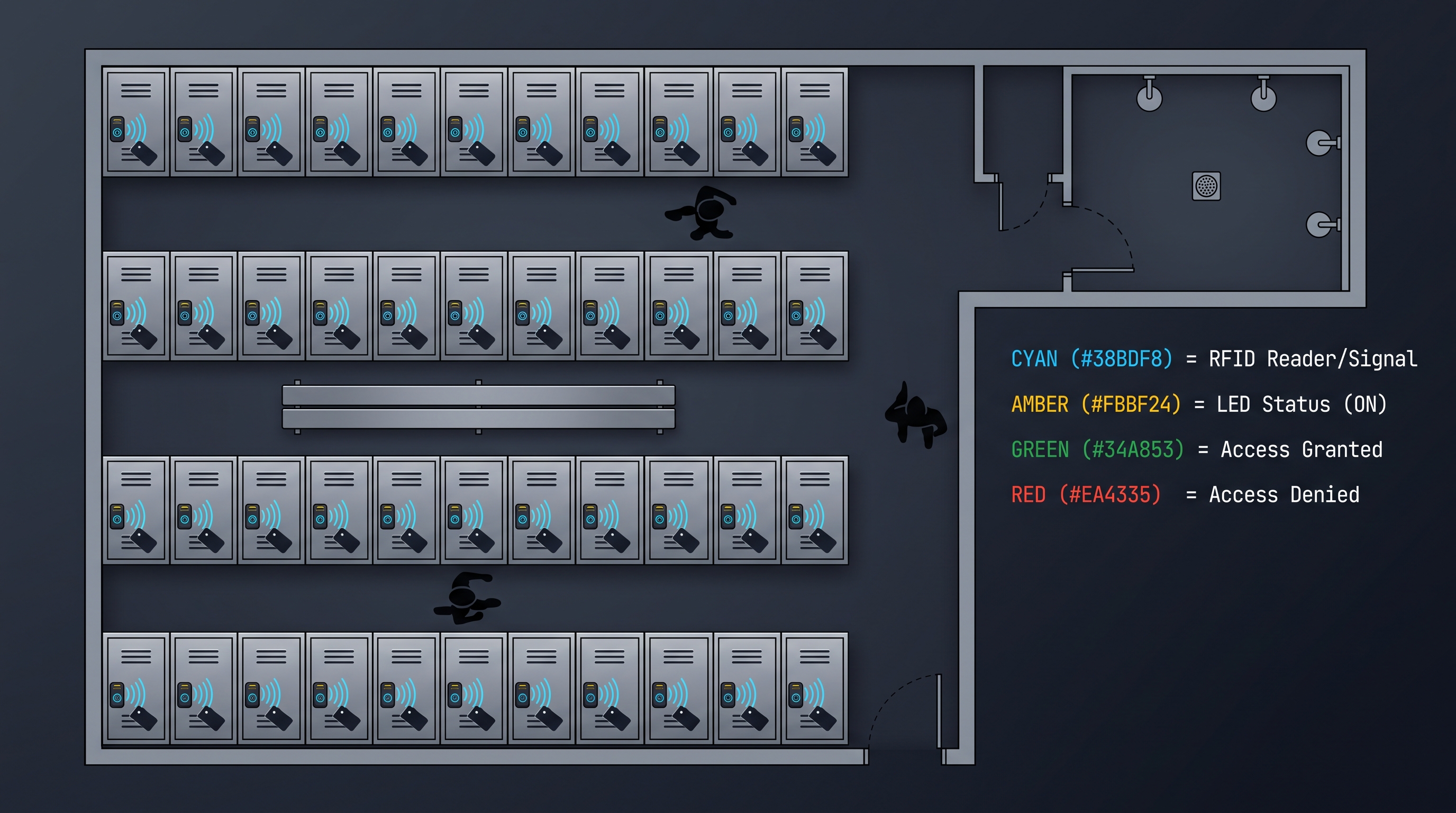
What Is an IoT Locker Lock and How Does It Differ from an IoT Cabinet Lock?
An IoT locker lock is an internet-connected electronic locking mechanism purpose-built for communal locker-bank scenarios such as parcel-delivery kiosks, click-and-collect stations, shared-office storage walls, smart-gym changing-room cabinets, and co-working day-lockers. Unlike a standalone IoT cabinet lock that secures a single private piece of furniture such as a filing cabinet or tool chest, an IoT locker lock is designed to operate as one node within a dense multi-compartment array where dozens or hundreds of identical locks share a single cloud gateway, a common power bus, and a central reservation or occupancy engine. An IoT locker lock draws between 3 µA in deep-sleep standby and 350–500 mA during a latch-cycle burst at 3.7 V nominal, with actuation completing in 120–250 ms. The wireless protocols used by an IoT locker lock span Wi-Fi 802.11b/g/n, Bluetooth 5.2/5.4 Low Energy, Zigbee 3.0, NB-IoT, and LoRaWAN, each imposing different trade-offs on battery life, gateway density, and cloud latency. The unit cost for a production-grade IoT locker lock module — including the solenoid, microcontroller, radio transceiver, reed-switch or Hall-effect sense circuit, and tamper sensor — ranges from USD 18 to 62 at moderate volumes, with UL 294, CE, FCC, and EN 16867 certifications being typical requirements for commercial deployment. Every IoT locker lock in a communal bank must be individually addressable, cryptographically authenticated, and capable of reporting its real-time state to a cloud occupancy engine that manages reservations across the entire bank. This communal, multi-tenant architecture is the defining characteristic that separates an IoT locker lock from a single-cabinet IoT cabinet lock. An IoT locker lock must also support a wider operating temperature range than a cabinet lock because locker banks are often installed in unconditioned spaces such as building lobbies, parking garages, and outdoor curbside locations. An IoT locker lock designed for outdoor use must include conformal coating on its PCB to protect against humidity and condensation that would not affect an indoor-only cabinet lock. An IoT locker lock deployed in a coastal environment additionally requires corrosion-resistant connectors and a sealed battery compartment rated to IP65 to withstand salt-laden air. An IoT locker lock for indoor gym or office use can omit these environmental protections, reducing its BOM cost by approximately USD 2-4.
Key Hardware Components of an IoT Locker Lock for Communal Locker Banks
Every IoT locker lock integrates five essential hardware subsystems that collectively determine its reliability, power efficiency, safety compliance, and total cost of ownership across a locker-bank deployment. An IoT locker lock is fundamentally a mechatronic device where the mechanical solenoid, the embedded MCU, the wireless radio, the sensor array, and the power supply must all work together within the tight physical envelope of a locker door. The actuator in an IoT locker lock is most commonly a bi-stable solenoid that consumes power only during the state transition — approximately 350 mA for 150 ms to unlock and a similar pulse to lock — and holds the bolt position magnetically with zero idle current. This actuation pulse is the single largest power-draw event in any IoT locker lock's operating cycle. The microcontroller unit in an IoT locker lock is typically an Arm Cortex-M4 or M33 core running at 48–96 MHz with 256 KB–1 MB of flash and 64–256 KB of SRAM, executing the lock's firmware stack and managing the radio protocol. The wireless transceiver in an IoT locker lock is chosen from the five major protocol families — Wi-Fi, BLE, Zigbee, NB-IoT, or LoRaWAN — each requiring its own RF front-end design and regulatory certification. The sensor suite in an IoT locker lock includes a Hall-effect sensor or reed switch for latch-position feedback, a tamper microswitch that fires an interrupt if the lock body is pried, and sometimes an accelerometer for detecting impacts or tilt of the entire locker column. The power subsystem of an IoT locker lock comprises either a primary battery pack for fully wireless installations or a low-voltage DC input from a central power bus with a supercapacitor or coin-cell backup rated for at least 72 hours of real-time-clock retention. The enclosure of an IoT locker lock is typically rated IP54 and constructed from zinc-alloy or stainless steel with a hardened latch bolt that passes EN 16867 Class 2 or Class 3 mechanical attack testing. A well-designed IoT locker lock module measures roughly 60 × 40 × 20 mm, small enough to fit within the 15–18 mm edge of a standard 18-mm locker door. The mechanical interoperability of an IoT locker lock with existing locker-door profiles is critical for retrofit deployments where replacing the entire door frame is cost-prohibitive. Every IoT locker lock must also include a manual override mechanism — typically a mechanical key override or a hidden release — that allows a facility manager to open the lock without power or network connectivity during an emergency.
Wireless Protocol Comparison for the IoT Locker Lock
Choosing the correct wireless protocol for an IoT locker lock is the most consequential architectural decision a locker-bank integrator makes, because it governs battery life, gateway infrastructure, cloud latency, per-unit BOM cost, and the physical density of lockers that a single access point can serve. Selecting the right IoT locker lock begins with understanding these protocol trade-offs, because the radio module is the most expensive individual component on the lock's BOM. The table below provides a side-by-side comparison of the five dominant protocols used in IoT locker lock deployments as of mid-2026. Each IoT locker lock's protocol choice directly affects the total cost of ownership for the locker bank over a multi-year operational horizon. An IoT locker lock that uses the wrong protocol for its deployment environment will suffer from either prematurely depleted batteries or unreliable cloud connectivity. An IoT locker lock intended for a high-density urban locker bank, for example, requires a different protocol than an IoT locker lock destined for a low-traffic suburban office lobby.
| Protocol | Frequency Band | Max Range (Indoor) | Peak Current (TX) | Sleep Current | Gateway Required | Max Locks per Gateway | Typical OTA Latency |
|---|---|---|---|---|---|---|---|
| Wi-Fi 802.11b/g/n | 2.4 GHz | 30–50 m | 250–350 mA | 10–50 µA | No (router only) | 30–60 per AP | 30–90 s |
| BLE 5.2/5.4 | 2.4 GHz | 10–30 m | 8–15 mA | 1–5 µA | Yes (BLE gateway) | 40–80 per gateway | 120–300 s |
| Zigbee 3.0 | 2.4 GHz | 15–40 m | 20–35 mA | 1–3 µA | Yes (coordinator + mesh) | 100–250 per coordinator | 60–180 s |
| NB-IoT (LTE Cat-NB2) | Licensed cellular | 1–15 km | 150–250 mA peak | 2–5 µA | Cellular tower only | Unlimited per cell | 30–60 s |
| LoRaWAN | EU868 / US915 | 500 m–5 km LOS | 25–40 mA | 1–2 µA | Yes (LoRa gateway) | 200–500 per gateway | Not practical |
BLE and Zigbee dominate indoor shared-office and retail-click-and-collect installations because their sub-15 mA peak current allows an IoT locker lock to exceed 18–24 months of operation at 30–60 actuations per day on a single 18650 cell. Wi-Fi is attractive for small locker banks where existing office Wi-Fi eliminates the need for a dedicated gateway, but the peak current penalty reduces battery life of an IoT locker lock to 6–9 months unless a wired power bus is installed. NB-IoT is rapidly gaining adoption for outdoor or curbside parcel-locker deployments where each IoT locker lock must be individually addressable without a local gateway. LoRaWAN is best suited for low-throughput telemetry from an IoT locker lock in very-large-area deployments such as campus locker fields, but cannot support reliable OTA firmware updates due to its restricted duty cycle. Regional regulatory constraints also affect IoT locker lock protocol selection: EU-based deployments increasingly favour NB-IoT or BLE to avoid licence-exempt band congestion, while North American integrators often default to Wi-Fi or BLE with Zigbee as a fallback for higher-density arrays. An IoT locker lock that supports dual-protocol operation — for example BLE for local proximity unlock combined with NB-IoT for cloud telemetry — offers the greatest deployment flexibility but carries a BOM premium of approximately USD 4–8 per unit.
Cloud Occupancy and Reservation Architecture for the IoT Locker Lock
The cloud platform that manages an IoT locker lock deployment is a distributed system comprising three tiers: the lock firmware and real-time embedded state machine on each IoT locker lock; a gateway or edge processor that aggregates events from a locker bank and relays them upstream; and a cloud backend that provides RESTful and WebSocket APIs for reservation, occupancy tracking, access control, telemetry ingestion, and OTA orchestration. The state machine inside each IoT locker lock maintains at minimum the following states: Idle (lock is latched, door closed, no active reservation), Reserved (a user session is pending, the IoT locker lock holds a time-bound token), Occupied (door has been opened and re-closed after a delivery or retrieval), Overstay (occupied beyond the allowed grace period), Jarred (latch detected partially engaged or door ajar), Tamper (physical breach attempt sensed on the IoT locker lock), Low Battery (voltage below configurable threshold), and Out of Service (fault or manual maintenance lockout). State transitions in an IoT locker lock are logged with a UTC timestamp and the trigger source — local sensor read, cloud API command, or BLE proximity handshake.
Reservation flow for a typical click-and-collect parcel locker powered by an IoT locker lock proceeds as follows. The consumer receives a one-time unlock code or a signed JWT via SMS, email, or the retailer's mobile app. The consumer approaches the locker bank, locates the assigned compartment (often indicated by a built-in RGB LED on the IoT locker lock bezel), and presents the credential via a touchscreen kiosk, a QR code scanner, or BLE proximity on their phone. The kiosk or gateway validates the token against the cloud backend and sends a signed unlock command to the specific IoT locker lock's radio address. The IoT locker lock verifies the cryptographic signature of the command using its pre-provisioned X.509 certificate, disengages the bi-stable solenoid, and reports the open event back to the cloud. The door-open sensor in the IoT locker lock begins polling at 100 ms intervals. When the user closes the door, the IoT locker lock automatically re-latches and reports the occupied state with a timestamp. If the door remains open beyond a configurable timeout, the cloud triggers a push notification to the retailer or facility manager. This entire reservation-to-occupancy loop depends on the IoT locker lock maintaining precise state synchronisation with the cloud backend even through transient network interruptions.
The occupancy data model for an IoT locker lock deployment must support both transient assignments and permanent assignments. The cloud backend maintains a record for each IoT locker lock with fields for compartment ID, bank ID, geographic location, assigned user or session ID, state with timestamps, battery voltage history, firmware version, and maintenance log. For fleet management at scale — a single deployment may span 500–5,000 IoT locker lock units across ten to one hundred bank locations — the cloud must support bulk operations: simultaneous OTA firmware rollout with staggered canary cohorts, aggregate telemetry dashboards showing average battery drain per IoT locker lock per month, unlock failure rate per bank, and tamper-event heatmaps. Automated alerting fires when any IoT locker lock's battery falls below the 20% threshold or when an IoT locker lock fails to acknowledge three consecutive commands. The telemetry pipeline from each IoT locker lock must guarantee at-least-once delivery with configurable retry and deduplication — typically 30 seconds with exponential backoff capped at five retries — because a lost unlock-acknowledgement event from an IoT locker lock can result in a courier being unable to complete a delivery.
API integration patterns for last-mile delivery carriers represent a distinct architectural concern for the IoT locker lock ecosystem. When a courier arrives at a parcel locker bank and scans a barcode on the central kiosk, the cloud assigns three specific IoT locker locks to that delivery run, the kiosk illuminates the corresponding lock LEDs, and after each parcel is deposited and the door closed, the IoT locker lock's closure event triggers a carrier-API notification. On the consumer side, the retailer's system receives the same event and generates the collection notification. The bidirectional integration demands that the IoT locker lock's event pipeline maintain at-least-once delivery semantics so that no parcel is left unacknowledged in the carrier's system. An IoT locker lock that experiences an event-pipeline outage during peak delivery hours can delay dozens of courier stops and erode consumer trust in the collection experience.
Data Payloads and Telemetry from an IoT Locker Lock
Telemetry generated by each IoT locker lock can be categorised into three tiers based on frequency and urgency, and the cloud platform must route each tier through an appropriate processing pipeline. The volume of telemetry from each IoT locker lock varies by protocol: a BLE-based IoT locker lock typically sends 5–15 KB per month in state-transition data, while an NB-IoT IoT locker lock sends 8–25 KB per month due to the larger cellular protocol overhead.
| Telemetry Tier | Example Payloads | Reporting Frequency | Cloud Processing Path |
|---|---|---|---|
| Critical events | Tamper alert, door ajar timeout, lock failure, forced-entry detection | Immediate (within 500 ms of detection) | Real-time stream processor to alerting engine to SMS/push notification |
| State transitions | Lock/unlock events, open/close events, reservation start/end, battery voltage snapshots | On change (event-driven) | Message broker to event store to carrier API proxy |
| Health & diagnostics | Firmware version, radio RSSI, connection uptime, temperature, actuation count, solenoid cycle time | Every 4–24 hours (batch) or on poll | Batch ingestion to time-series database to fleet dashboard |
A representative JSON telemetry payload from an IoT locker lock reporting a normal unlock event measured at 182 bytes uncompressed. Every IoT locker lock telemetry message includes a cryptographic signature that the cloud backend validates before accepting the event into the processing pipeline. This prevents spoofed events from a compromised MQTT broker or man-in-the-middle replay on the radio link. Signature verification at the cloud edge adds approximately 5–15 ms of latency per event and is considered a mandatory security control for any IoT locker lock deployment handling payment-linked transactions or personal data. The telemetry schema for an IoT locker lock should be versioned so that firmware updates can add new diagnostic fields without breaking downstream dashboards or alerting rules.
{
  "lock_id": "lock-bank03-comp14",
  "event": "unlock",
  "timestamp": "2026-08-04T14:32:18.427Z",
  "actuation_ms": 148,
  "battery_mv": 3720,
  "rssi_dbm": -67,
  "temp_c": 23.4,
  "door_state": "open",
  "tamper": false,
  "firmware": "v3.2.1",
  "signature": "MEUCIQCs...jV8="
}
OTA Firmware Update Strategy for the IoT Locker Lock
Over-the-air firmware updates are operationally critical for an IoT locker lock deployed in a communal locker bank, because the lock cannot be physically collected from the field for a wired flash — the cost of a truck roll to reflash a single IoT locker lock at a remote curbside kiosk typically exceeds USD 150. OTA updates fix security vulnerabilities, improve solenoid timing profiles, adjust battery-voltage calibration curves, add new protocol features, and patch edge-case bugs in the state machine. A robust OTA architecture for an IoT locker lock must address three constraints: limited available bandwidth over the chosen radio protocol, the need to preserve a fallback bootloader that survives a failed update, and the requirement to update hundreds of IoT locker lock units in a single bank without disrupting operational service.
A production-grade OTA pipeline for the IoT locker lock follows a staged canary process. The cloud operator uploads a signed firmware binary — typically 128–512 KB when compressed for a Cortex-M4 target — to the cloud OTA service. The service assigns the firmware to a canary cohort of 1–5% of the fleet. The target IoT locker lock units download the binary in chunks: for a BLE-connected IoT locker lock this proceeds over the ATT protocol at 10–40 Kbps per connection interval, taking 60–300 seconds for a 256 KB image; for an NB-IoT IoT locker lock the download uses CoAP over UDP with DTLS, achieving 50–120 Kbps with a typical completion time of 20–60 seconds. Each chunk is verified against a SHA-256 hash before the next chunk is requested, and after the complete image is stored in an external SPI flash partition, the IoT locker lock performs a cryptographic signature verification using the manufacturer's ECDSA P-256 public key baked into the bootloader. If the signature is valid, the IoT locker lock sets a boot-counter flag and reboots into the new application. If the new application fails to report healthy telemetry within 120 seconds of boot, the bootloader rolls back to the previous image and raises a "rollback" event to the cloud. Every IoT locker lock in the fleet should support at least one full rollback cycle so that a bad firmware push cannot brick a lock.
The canary window runs for 24–72 hours, during which the cloud monitors for anomalies from the canary cohort: increased unlock failure rate, elevated current draw, unexpected reboots, or abnormal radio reconnection counts from the canary IoT locker lock units. After the canary window passes with zero critical anomalies, the rollout proceeds to the remaining fleet in waves of 20% every 12–24 hours. Each wave can be paused or rolled back by an operator command. The total fleet-wide update time for an IoT locker lock deployment of 2,000 units is typically 5–10 days depending on wave sizing and rollback thresholds. Battery-powered IoT locker lock units present an additional constraint: the OTA service must verify that each target IoT locker lock's battery voltage is above a configurable threshold before initiating the download, because the radio active-receive current during an OTA session can temporarily depress a near-empty cell below the MCU brownout reset voltage. An IoT locker lock that browns out mid-update requires a physical truck roll to recover, negating the primary benefit of OTA.
Fleet Management and Maintenance of IoT Locker Lock Deployments
Managing a distributed network of IoT locker lock units across multiple bank locations requires a purpose-built fleet management platform that provides real-time visibility into every IoT locker lock's state, health, and location. At scale — beyond approximately 200 IoT locker lock units spread across 10 or more banks — manual processes become economically unviable. A fleet management dashboard for the IoT locker lock should surface at minimum the following data surfaces: a geographic map view with colour-coded health indicators per bank; a per-IoT-locker-lock detail panel showing state history, voltage trend over the trailing 30 days, actuation count, and last OTA update timestamp; a filterable alerts queue that groups events by severity; and a maintenance scheduler that forecasts battery-replacement windows based on per-IoT-locker-lock drain curves and historical actuation frequency. The fleet platform should also track the cumulative actuation count of each IoT locker lock and compare it against the manufacturer's mean-time-between-failure (MTBF) rating so that proactive replacements can be scheduled before mechanical wear causes a field failure.
Battery life prediction for an IoT locker lock is a non-trivial analytics problem because actual drain depends on three variable factors. First, actuation frequency per day varies from 2–10 actuations for a rarely used shared-office day-locker to 50–150 actuations for a high-traffic urban parcel-locker bank. Second, radio wake-up intervals for telemetry reporting are configurable and trade off battery life against dashboard freshness — an IoT locker lock reporting health telemetry every 4 hours will exhibit approximately 15–25% longer battery life than one reporting every hour. Third, ambient temperature affects lithium-cell capacity: at 0 °C the usable capacity drops by 20–30% relative to 25 °C, and at −10 °C the drop is 40–50%, which directly affects replacement cycles for outdoor curbside locker banks. The fleet platform should model each IoT locker lock's expected battery depletion using its actual actuation history rather than a static average, because two IoT locker lock units in the same bank can experience 10× different actuation counts due to compartment-size preference patterns.
| Locker Bank Use Case | Typical Actuations/Day | Battery Life (BLE, 1×18650) | Battery Life (NB-IoT, 1×18650) | Wired Power Available? | Recommended IoT Locker Lock Protocol |
|---|---|---|---|---|---|
| Shared-office day locker | 2–10 | 24–36 months | 18–24 months | Rarely | BLE 5.4 |
| Retail click-and-collect (indoor) | 20–60 | 12–20 months | 10–16 months | Sometimes | BLE or Zigbee |
| Urban parcel-delivery kiosk (outdoor) | 50–150 | 6–10 months | 8–14 months | Usually preferred | NB-IoT or Wi-Fi |
| Smart gym changing cubby | 10–30 | 18–30 months | 14–22 months | Rarely | BLE 5.4 |
| Multi-family package room | 30–80 | 10–16 months | 12–18 months | Usually preferred | Zigbee or Wi-Fi |
Fleet management platforms should also incorporate a lock-assignment rotation feature for high-utilisation deployments. In a parcel-delivery kiosk where the IoT locker locks in the top row accumulate five to ten times more actuations than the bottom row over a year, staggered battery depletion creates a maintenance schedule that requires visiting the bank every 4 months for some IoT locker lock units and every 18 months for others. By periodically rotating which physical IoT locker lock module is assigned to which compartment slot — a capability that requires the IoT locker lock to store its compartment identity in flash rather than having it hard-coded — the fleet platform can equalise wear and battery drain across the entire bank, reducing truck rolls by 35–50% in high-utilisation scenarios. This rotation strategy works because each IoT locker lock is physically identical and logically addressable through the cloud.
Last-Mile Delivery Integration with the IoT Locker Lock
The integration between an IoT locker lock and last-mile delivery carrier systems is where the operational value of a smart locker bank becomes most tangible for retailers, logistics providers, and consumers. Rather than requiring a courier to hand a package to a receptionist or leave it at an unsecured doorstep, a locker bank powered by IoT locker lock technology provides a verifiable chain of custody: the courier opens a specific IoT locker lock only after carrier-API authentication, deposits the parcel, closes the door, and the IoT locker lock's closure event triggers a timestamped record that satisfies the carrier's proof-of-delivery requirement. For the consumer, the same IoT locker lock event triggers a push notification or SMS containing a one-time unlock credential valid only for the assigned IoT locker lock for a single use or a limited time window. This chain-of-custody audit trail depends on every IoT locker lock reporting its state transitions with millisecond-precision timestamps that are cryptographically signed and stored immutably in the cloud event store.
The carrier-side integration follows a standardised sequence of five API calls between the locker-management cloud and the carrier's delivery-management system. First, the carrier's route-optimisation engine sends a locker-availability query to the locker cloud for a specific bank location, requesting the number of available compartments by size class. The locker cloud responds with the count of vacant compartments. Second, the carrier assigns parcels to specific compartments and sends an assignment manifest containing the carrier's shipment IDs and the assigned compartment IDs. Third, the locker cloud responds with per-compartment unlock codes and generates collection credentials for each consumer. Fourth, upon courier arrival, the kiosk sends an unlock-request containing the courier's authentication token and the compartment ID — the locker cloud validates the token and issues an unlock command to the specific IoT locker lock. Fifth, after the door is closed and the IoT locker lock reports the occupied state, the locker cloud sends a delivery-confirmation webhook to the carrier system. The total end-to-end latency from courier authentication to delivery confirmation is normally 2–5 seconds, with the IoT locker lock actuation itself contributing less than 250 ms of that window. Each of these five steps depends on the IoT locker lock being reachable, responsive, and cryptographically verified.
The consumer collection flow reverses steps four and five with different authentication. The consumer receives their credential, approaches the locker bank, and presents it at the kiosk or via BLE proximity. The cloud validates the credential, resolves the assigned IoT locker lock, and sends an unlock command. After the door is opened and closed, the IoT locker lock reports an empty-and-available state, and the cloud sends a collection-confirmation event to the carrier and retailer. Any attempt to unlock a non-assigned compartment — whether through credential guessing, physical tampering, or replay of a previously recorded radio command — is logged as a security event by the IoT locker lock and can trigger the lock's tamper alarm, a local siren, and a real-time notification to the facility security team. The IoT locker lock's tamper-detection firmware must distinguish between accidental door-slamming and intentional prying to avoid false-positive security alerts that desensitise facility staff.
Error Handling and Retry Logic for Delivery Events
No wireless link is perfectly reliable, and an IoT locker lock that sits inside a metal locker enclosure at the back of a concrete-and-steel building may experience transient radio outages that prevent an unlock command from being delivered on the first attempt. A production-grade IoT locker lock firmware stack implements a three-layer retry hierarchy for carrier and consumer unlock commands. Each layer in the hierarchy adds resilience without requiring the user to retry manually.
| Layer | Mechanism | Timeout | Max Retries | Fallback |
|---|---|---|---|---|
| Radio MAC layer | Automatic ACK/NAK retransmission | 5–50 ms per attempt | 4–7 | Drop the packet, report TX failure to MCU |
| Application ACK | IoT locker lock sends signed application-level ACK after actuation; gateway retries if ACK missing | 2–10 s per attempt | 3 | Gateway marks command as pending and retries on next wake-up |
| Cloud-level reconciliation | Cloud polls the IoT locker lock for its current state if no unlock confirmation received within 30 s | 30 s poll interval | 3 polls | Mark the IoT locker lock as unreachable, raise alert, offer alternate compartment |
If a courier receives an "unlock failed" error on the kiosk screen, the system should immediately offer an alternative available compartment, re-assign the parcel to a different IoT locker lock, and flag the original IoT locker lock for a maintenance ticket. This failover flow must complete within 5 seconds to avoid delaying the courier's route. In practice, over 99.5% of unlock commands to a healthy IoT locker lock succeed on the first application-level attempt in a well-designed BLE or NB-IoT deployment, and the majority of the remaining 0.5% succeed on the second attempt after a 5-second gateway retry. The cloud platform should track unlock-success-rate per IoT locker lock as a key health metric and flag any IoT locker lock whose success rate drops below 98% over a trailing 7-day window for proactive investigation.
Choosing the Right IoT Locker Lock for Your Deployment
Selecting an IoT locker lock for a specific locker-bank project requires evaluating ten distinct criteria that collectively determine whether the deployment meets its service-level objectives for uptime, security, battery life, integration complexity, and total cost of ownership over a 5–10 year operational horizon. The following checklist is designed to guide procurement teams through a structured comparison of available IoT locker lock modules on the market as of 2026. Every criterion should be weighted according to the specific deployment context, because an IoT locker lock that excels in a climate-controlled office environment may fail in an outdoor curbside kiosk.
1. Mechanical Form Factor and Installation
The IoT locker lock must physically fit the locker door profile. Measure the door edge thickness, the backset distance from the door edge to the centre of the lock mounting hole, and the clearance behind the door frame for the lock body. An IoT locker lock with a protruding solenoid or antenna housing that exceeds 22 mm depth will not fit flush within the door cavity of most commercial locker doors. Verify that the latch bolt throw is at least 12 mm for standard security (EN 16867 Class 2) and at least 18 mm for high-security (Class 3). For retrofitting existing key-cam locks, look for an IoT locker lock that uses the same 28 mm or 32 mm strike-plate cut-out pattern to avoid frameless door replacement. The mounting screw pattern of the IoT locker lock should match the existing lock's footprint to avoid drilling new holes in the door face.
2. Protocol Selection and Gateway Planning
Conduct a site-specific radio survey before committing to a protocol for your IoT locker lock. For indoor locker banks inside a retail store or office building, BLE 5.4 or Zigbee 3.0 are generally preferred because of their low peak current, mesh-capable topology, and low gateway cost. For outdoor curbside banks with no local Wi-Fi, NB-IoT or LTE-M1 offers carrier-grade reliability without requiring on-premises gateway hardware — each IoT locker lock communicates directly with the cellular tower. For small banks of 4–12 compartments where Wi-Fi is already present and a wired power bus is feasible, Wi-Fi eliminates the gateway hardware cost entirely. The per-lock radio BOM cost for an IoT locker lock varies from approximately USD 2–4 for BLE to USD 8–14 for NB-IoT modules. An IoT locker lock with dual-radio capability adds deployment flexibility but increases unit cost by USD 5–10.
3. Battery vs. Wired Power
Battery-powered IoT locker lock units offer the fastest deployment because they require no electrical wiring to each compartment door — the IoT locker lock is simply screwed into the door. However, battery replacement at scale creates a recurring operational expense of USD 3–8 per IoT locker lock per replacement cycle in consumable cost plus USD 2–5 per lock in labour. Wired power eliminates battery replacement and allows more frequent telemetry reporting but increases initial installation cost by USD 15–40 per compartment for wiring and connectors. Many commercial deployments use a hybrid approach: a central power bus with a supercapacitor or coin-cell backup on each IoT locker lock to maintain state and RTC during a mains outage of up to 72 hours. The battery-or-wired decision for an IoT locker lock should factor in the facility's maintenance budget and the lock's physical accessibility for battery swaps. An IoT locker lock installed in a ceiling-high locker column may require a ladder and a maintenance technician for each battery replacement, adding USD 8–15 per swap in labour overhead.
4. Security Certifications
The IoT locker lock must hold certifications appropriate for its deployment context. For parcel-delivery locker banks handling high-value goods, UL 294 and EN 16867 Class 3 are minimum requirements. For GDPR or CCPA-regulated environments, the IoT locker lock should support end-to-end encryption of all radio traffic and store no customer-identifying data in its flash memory. For payment-linked deployments such as smart-gym membership lockers, PCI DSS compliance of the cloud backend is required, and the IoT locker lock itself must not store any payment data. The cryptographic key storage within the IoT locker lock should use a hardware secure element rather than software-only flash storage to resist physical extraction attacks.
5. API and Integration Maturity
Evaluate the IoT locker lock vendor's API documentation and integration support. A mature IoT locker lock vendor provides a published REST API (OpenAPI 3.0 specification), WebSocket event stream, MQTT topic map for real-time events, and client SDKs in at least two languages. The API should support all CRUD operations on IoT locker lock assignments, reservation creation and cancellation, bulk configuration, OTA rollout management, and telemetry export. Verify that the carrier-integration endpoints are compatible with the Universal Parcel Locker Standard (UPLS) or carrier-specific APIs for DHL, UPS, FedEx, Amazon Hub, and national postal operators. Every IoT locker lock in the fleet should be individually addressable through the API by its unique lock ID.
| Criterion | Weight (1–5) | Minimum Acceptable Threshold | Ideal Threshold |
|---|---|---|---|
| Mechanical fit (form factor) | 5 | Physical dimensions within spec + 2 mm | Exact spec match, no adapter plate |
| Battery life (untethered install) | 4 | ≥ 12 months at 30 actuations/day | ≥ 24 months at 30 actuations/day |
| Wireless protocol ecosystem | 5 | At least one protocol meets range and gateway requirements | Dual-protocol (BLE + NB-IoT or BLE + Wi-Fi) |
| Security certifications | 5 | UL 294 + EN 16867 Class 2 | UL 294 + EN 16867 Class 3 + Common Criteria EAL2+ |
| Cloud API maturity | 4 | REST API + webhook support | OpenAPI 3.0 + SDK + MQTT + GraphQL |
| OTA capability | 3 | Canary-based OTA with rollback | Canary + A/B partition + delta/image compression |
| Operating temperature range | 3 | 0 °C to +50 °C | −20 °C to +65 °C |
| Per-unit BOM cost (10k volume) | 4 | ≤ USD 45 | ≤ USD 28 |
| MTBF (manufacturer stated) | 3 | ≥ 100,000 cycles | ≥ 300,000 cycles |
| Warranty | 3 | 12 months | 24–36 months |
6. Temperature and Environmental Rating
An outdoor parcel-locker bank in Chicago or Toronto will experience ambient temperatures from −30 °C in winter to +45 °C in summer, with direct solar radiation potentially raising the internal door temperature by an additional 10–15 °C. The IoT locker lock's specified operating temperature range must cover the deployment's climate extremes. Standard consumer-grade lithium cells cannot charge below 0 °C; for outdoor deployments in cold climates, specify the IoT locker lock with Li-FePO₄ cells or a heater-battery assembly. The IP rating for outdoor use must be at least IP54 for the IoT locker lock body and IP65 for the cable entry point if wired power is used. Condensation inside metal locker enclosures can corrode the IoT locker lock's electronics if the enclosure is not properly vented or potted.
7. Fleet Management Software Maturity
The IoT locker lock hardware is only half of the solution. The vendor's fleet management platform must provide real-time occupancy map, per-IoT-locker-lock voltage and event history, alerts queue with severity filtering, OTA rollout console, maintenance scheduling, and carrier-integration configuration. Evaluate the platform's uptime SLA — a well-engineered cloud backend for IoT locker lock management should guarantee 99.9% monthly uptime. Test the platform's scalability by asking for reference deployments of at least 500 IoT locker lock units under active management. If the vendor has no deployment of that scale, the platform may exhibit performance degradation when you surpass a few hundred IoT locker lock units.
Security Architecture of the IoT Locker Lock
Security for an IoT locker lock must be evaluated across three planes: physical security of the lock hardware, communications security of the radio link and cloud API, and operational security of the credential lifecycle. A vulnerability in any one plane can compromise the entire locker bank, potentially exposing hundreds of parcels or personal belongings to theft. The security architecture of an IoT locker lock should be designed with the assumption that an attacker has physical access to the lock body and can intercept radio communications — a realistic threat model for public-facing locker banks.
Physical security begins with the IoT locker lock's tamper detection. A well-designed IoT locker lock embeds at least one tamper microswitch that is normally closed when the lock body is seated against the door surface. If an attacker pries the IoT locker lock away from the door or removes the mounting screws, the microswitch opens, triggering an interrupt that sets a "tamper-detected" flag in the IoT locker lock's non-volatile memory and fires a real-time tamper alert. The IoT locker lock's MCU should also detect repeated failed actuation attempts and transition to a "fault-locked" state that requires a physical override key to reset. The latch bolt of an IoT locker lock should be hardened stainless steel, at least 5 mm in diameter for Class 2 applications and 8 mm for Class 3, resistant to manual sawing and prying. The IoT locker lock's tamper-detection circuit should be tested during manufacturing with a known-force pry test to verify the microswitch triggers at the designed threshold. An IoT locker lock that fails to detect a prying attack provides no physical security advantage over a mechanical cam lock. A properly hardened IoT locker lock should resist a 5-minute forced-entry attempt with common hand tools to qualify for insurance-grade security ratings.
Communications security mandates that every over-the-air command and telemetry event from an IoT locker lock is authenticated and encrypted. For BLE-based IoT locker lock units, this means using LE Secure Connections with Elliptic-Curve Diffie-Hellman key exchange and AES-128 CCM encryption for the link layer, plus an application-layer signature on each command payload. For NB-IoT IoT locker lock units, DTLS over UDP or TLS 1.3 over TCP must be enforced with mutual certificate authentication. The IoT locker lock's private key must be stored in a hardware secure element — a discrete crypto chip such as the NXP SE050 or Microchip ATECC608B costs approximately USD 0.60–1.20 in volume and provides secure key storage that resists side-channel extraction. No IoT locker lock should rely on software-only key storage in serial flash, because an attacker with physical access can read the flash via JTAG or SPI sniffing. The secure element in the IoT locker lock should also support certificate rotation so that the lock can be re-provisioned if its certificate expires or is compromised.
Credential lifecycle management determines how unlock tokens are generated, distributed, used, and revoked for the IoT locker lock. A time-limited unlock credential (a JWT with an exp claim set to 5 minutes after creation) is the current best practice for consumer collection from an IoT locker lock. The credential is generated by the cloud backend at the moment the consumer indicates they are at the locker bank. The credential is signed with the cloud's private key and transmitted to the consumer's device. The IoT locker lock or the local gateway verifies the credential's signature and expiry using the cloud's public key pre-provisioned during manufacturing. This design ensures that even if a credential is intercepted en route to the consumer's phone, the window for replay is limited to a few minutes. Revocation is handled by maintaining a blocklist of credential IDs on the cloud; the IoT locker lock should check this blocklist at least once per day during idle periods.
Return on Investment and Total Cost of Ownership for an IoT Locker Lock
Calculating the ROI of replacing a traditional key-cam or mechanical combination locker with an IoT locker lock requires modelling five cost categories over a 5-year operational horizon: hardware procurement, installation, connectivity, maintenance and battery replacement, and the operational savings from automation, reduced theft, and improved space utilisation. The following model uses a 50-compartment parcel-delivery locker bank as a representative scenario. Each IoT locker lock in the model is a BLE 5.4 unit with an 18650 battery, solenoid actuator, sensor suite, and IP54 enclosure.
Hardware procurement. 50 IoT locker lock modules at USD 35 per unit: USD 1,750. One BLE gateway at USD 180: USD 180. One touchscreen kiosk at USD 800: USD 800. Total hardware for the IoT locker lock deployment: USD 2,730.
Installation. Retrofitting the IoT locker lock units into existing locker doors at an estimated 45 minutes per compartment at a labour rate of USD 75/hour: 50 × 0.75 h × USD 75 ≈ USD 2,813. Each IoT locker lock requires mounting, antenna routing, battery insertion, gateway pairing, and cloud provisioning.
Connectivity. The gateway uses the facility's existing internet connection at zero marginal cost. Total connectivity: USD 360/year.
Maintenance and battery replacement. Battery replacement every 14 months at USD 4 per 18650 cell plus USD 3 per IoT locker lock labour: 50 IoT locker lock units × USD 7 / 14 months × 12 months ≈ USD 300/year. Miscellaneous maintenance for the IoT locker lock fleet: USD 200/year. Total maintenance: USD 500/year.
Operational savings. Eliminating lost-key replacement costs: approximately USD 18 per incident × 120 incidents/year = USD 2,160/year. Reducing theft and dispute resolution: parcel theft from unsecured areas costs retailers an average of USD 8 per parcel × 400 parcels/month = USD 38,400/year. Automating courier check-in and consumer notification saves approximately 6 hours per week of front-desk staff time at USD 22/hour = USD 6,864/year. Each IoT locker lock contributes to these savings by enabling verifiable chain-of-custody tracking for every delivery.
Five-year TCO and ROI. Total 5-year cost: hardware (USD 2,730) + installation (USD 2,813) + connectivity (5 × USD 360 = USD 1,800) + maintenance (5 × USD 500 = USD 2,500) = USD 9,843. Total 5-year operational savings: key-replacement (USD 10,800) + theft reduction at 50% of USD 38,400/year (USD 96,000) + staff time (USD 34,320) = USD 141,120. Net 5-year benefit: USD 131,277. ROI: 1,333%. The investment in IoT locker lock technology pays for itself within the first 2–4 months of operation in a medium-traffic parcel-delivery scenario. Each IoT locker lock in the bank generates measurable operational savings from its first day of service.
Future Trends for the IoT Locker Lock: Matter, AI Predictive Maintenance, and Energy Harvesting
Three technology trends will reshape the IoT locker lock market between 2026 and 2029. Matter 1.5 and 2.0 — the smart-home interoperability standard driven by the Connectivity Standards Alliance — is expected to add a "smart lock" device type that natively supports the use cases of the IoT locker lock, including multi-user credential management, occupancy reporting, and tamper alerts. A Matter-certified IoT locker lock will be able to join any Matter-compliant smart-home or building-management ecosystem without a proprietary gateway or vendor-specific hub, lowering integration cost and expanding the addressable market. Early Matter 1.3 drafts include a "container lock" cluster that maps directly to IoT locker lock semantics — reserve, occupy, release, overstay — and final ratification is anticipated in late 2026 or early 2027. A Matter-certified IoT locker lock will interoperate with any Matter controller, eliminating vendor lock-in for large deployments.
AI-driven predictive maintenance will move beyond simple voltage-threshold alerts to models that forecast IoT locker lock failure weeks or months in advance. By training a time-series anomaly detector on telemetry from millions of IoT locker lock actuation cycles — solenoid current profile, latch-engagement time, acoustic signature, temperature-correlated voltage sag — the fleet management platform can identify an IoT locker lock whose solenoid is beginning to wear out before it fails completely. This allows the operator to replace the IoT locker lock during a scheduled maintenance visit rather than responding to an emergency failure. Early deployments of predictive-maintenance models on IoT locker lock fleets are reporting 60–70% reduction in unplanned downtime events. Each IoT locker lock contributes actuation-cycle data that improves the predictive model's accuracy over time.
Energy-harvesting IoT locker lock units are the long-term endgame for fully wireless deployments. Prototypes demonstrated in 2025–2026 use a small photovoltaic panel integrated into the locker door face to trickle-charge a supercapacitor or thin-film solid-state battery, combined with a boost converter that can generate the 350 mA solenoid pulse from the stored charge. In a well-lit indoor environment, an energy-harvesting IoT locker lock can achieve indefinite operation with zero battery replacement. The primary technical challenge is the solenoid actuation energy — even a bi-stable solenoid requires approximately 50 mJ per transition — and accumulating that energy from a small PV cell under variable lighting requires a supercapacitor bank of 1–2 F at 5.5 V. Commercial energy-harvesting IoT locker lock products are expected to appear in late 2027 for indoor locker-bank deployments and are likely to carry a USD 8–12 premium over battery-powered equivalents at launch. An energy-harvesting IoT locker lock represents the ultimate convergence of low-power design and sustainable operation for the locker industry.
The IoT locker lock market is projected to grow at a compound annual growth rate (CAGR) of 18–24% from 2026 to 2031, driven by the expansion of e-commerce last-mile delivery infrastructure, the conversion of traditional mechanical lockers to smart cloud-managed banks, and the emergence of new use cases such as smart-gym day-lockers and university campus locker fields. As the hardware cost of an IoT locker lock module continues to decline — from a typical USD 30–45 in 2026 to an anticipated USD 15–25 by 2029 in volume — the total addressable market will broaden from enterprise parcel-locker networks to small businesses, co-working spaces, and residential multi-tenant buildings, establishing the IoT locker lock as a standard building-technology component on par with electronic door locks and smart thermostats. Every new locker bank built in 2027 and beyond will likely include IoT locker lock technology as a baseline specification rather than an upgrade option. An IoT locker lock is no longer a novelty component but an essential infrastructure element for any facility that manages shared storage at scale.
Not sure which sensor fits your project?
Talk to our mmWave application engineers for a free consultation.
Find the right presence sensor for your hotel project
Compare the 3 protocols, check hotel-specific case studies, and download the installation guide
Related products
3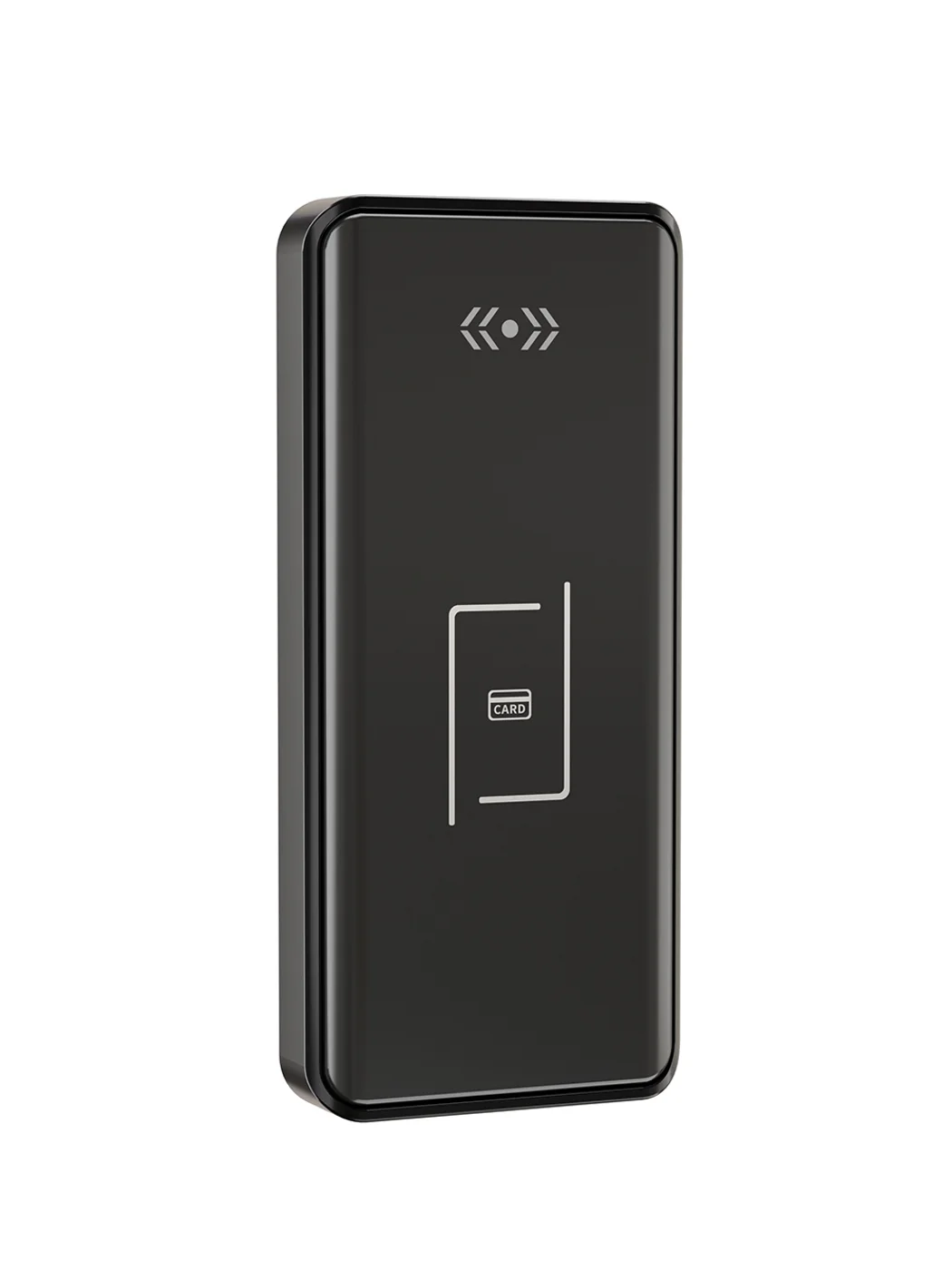
Gym Locker Lock — Offline Card, No WiFi Required
Offline card gym locker lock for fitness and pool lockers. MIFARE card, battery-powered 5-minute retrofit, no WiFi or server. Zinc alloy body, CE/FCC/RoHS.
This page already points to it as the next recommended reference.
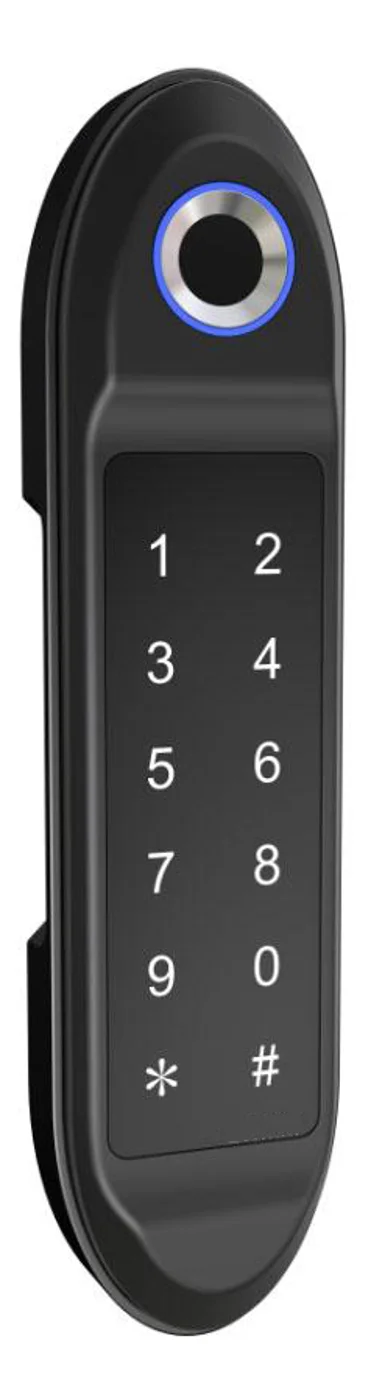
PIN Code Electronic Cabinet Lock — Stand-Alone, No WiFi
Offline keypad cabinet lock for gym, office and parcel lockers. Battery-powered, 5-minute retrofit, audit-free simple deployment. PIN + MIFARE card, DC 6V, 4×AA.
This page already points to it as the next recommended reference.
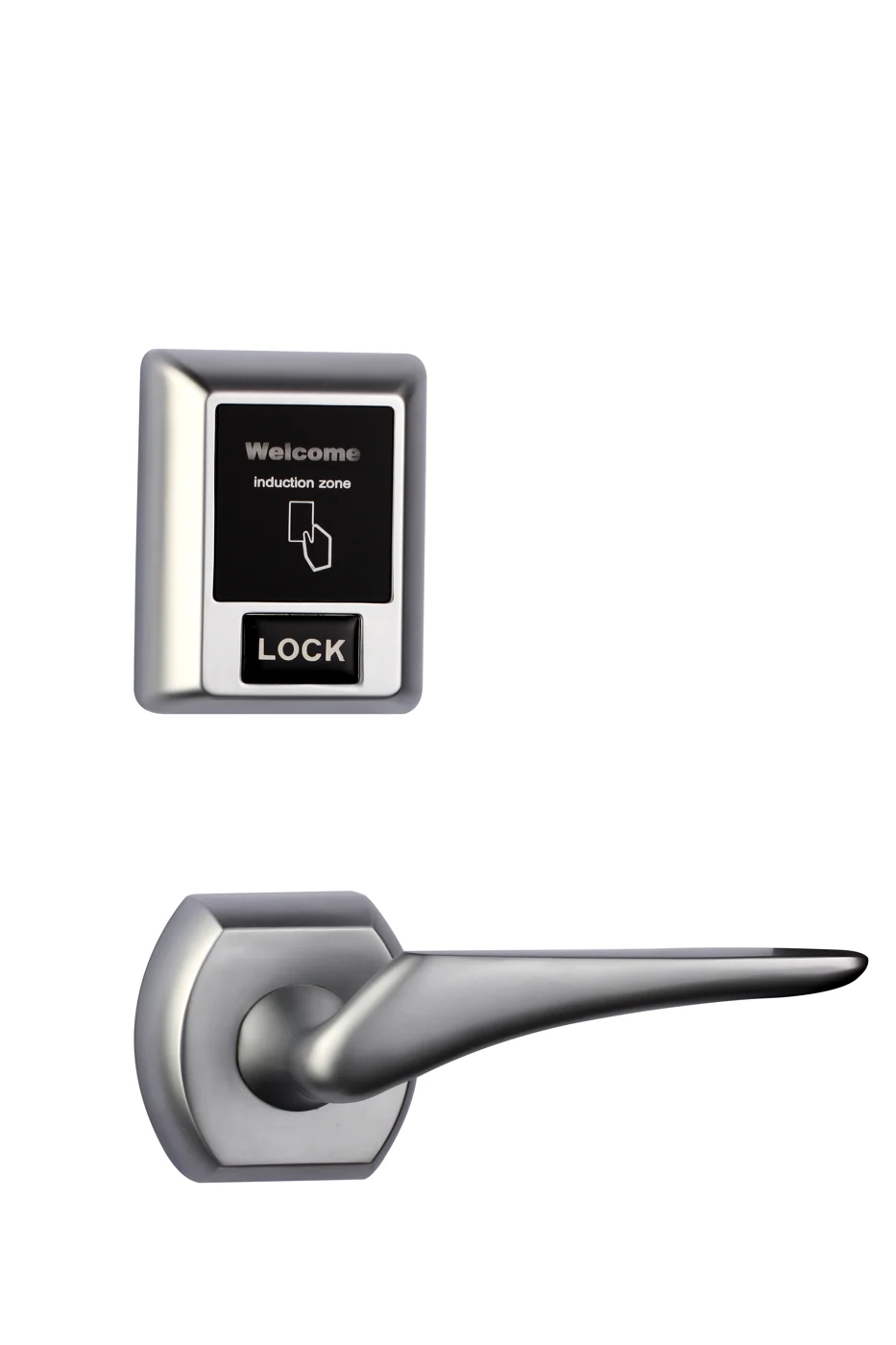
Bluetooth Cabinet Lock — App + PIN + Card, Managed Fleet
Offline BLE app cabinet lock for parcel, office, and managed locker fleets. App + PIN + MIFARE card, remote credential management, no server dependency, battery-powered retrofit.
This page already points to it as the next recommended reference.
Related blog posts
3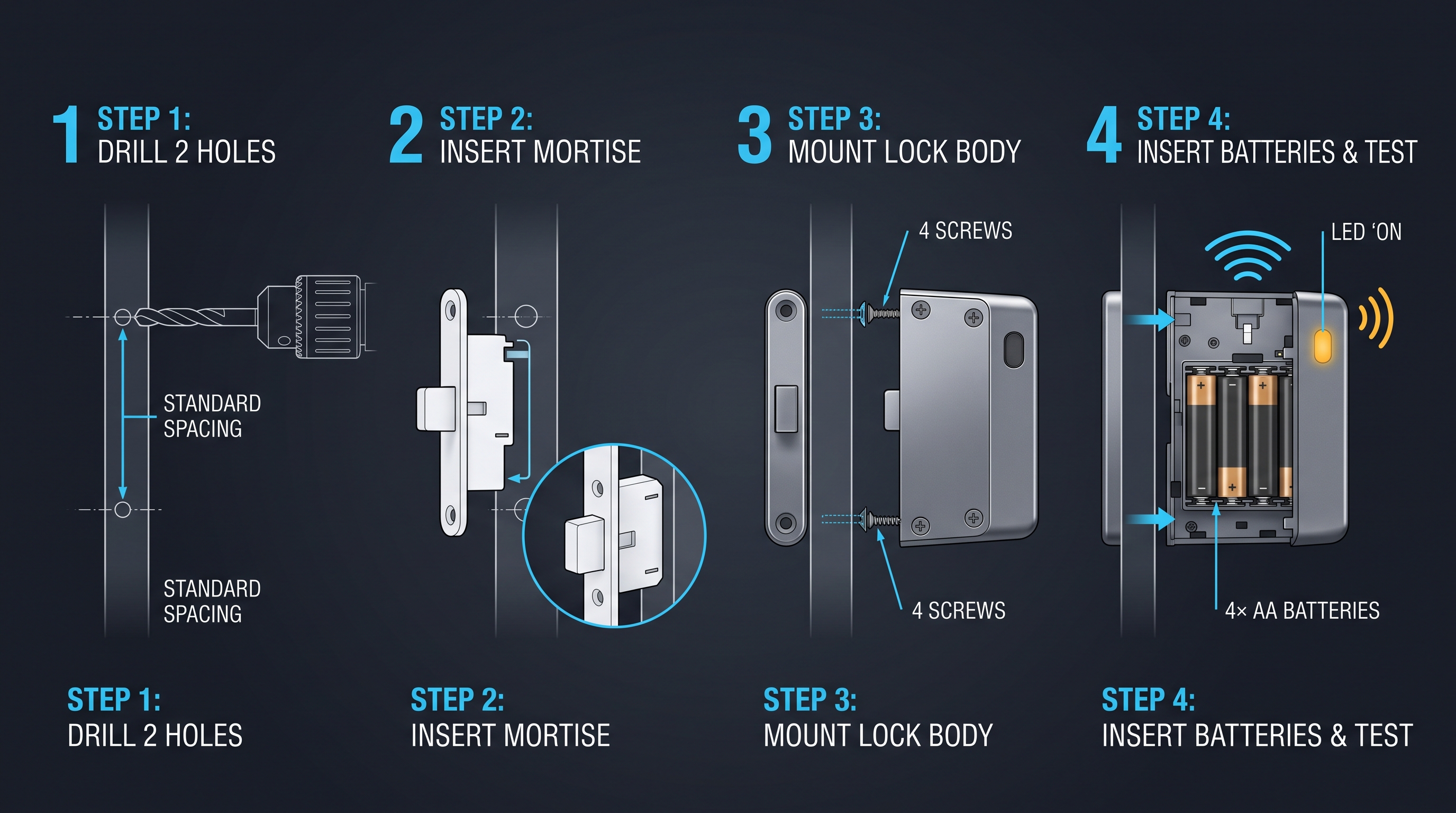
IoT Cabinet Lock: The Complete Guide to Smart, Connected Cabinet Security
Discover how IoT cabinet lock technology works with Wi-Fi, BLE, Zigbee, MQTT, and cloud dashboards. Covers telemetry, fleet management, OTA, edge vs cloud, and security.
It supports the same product context: Gym Locker Lock — Offline Card, No WiFi Required.
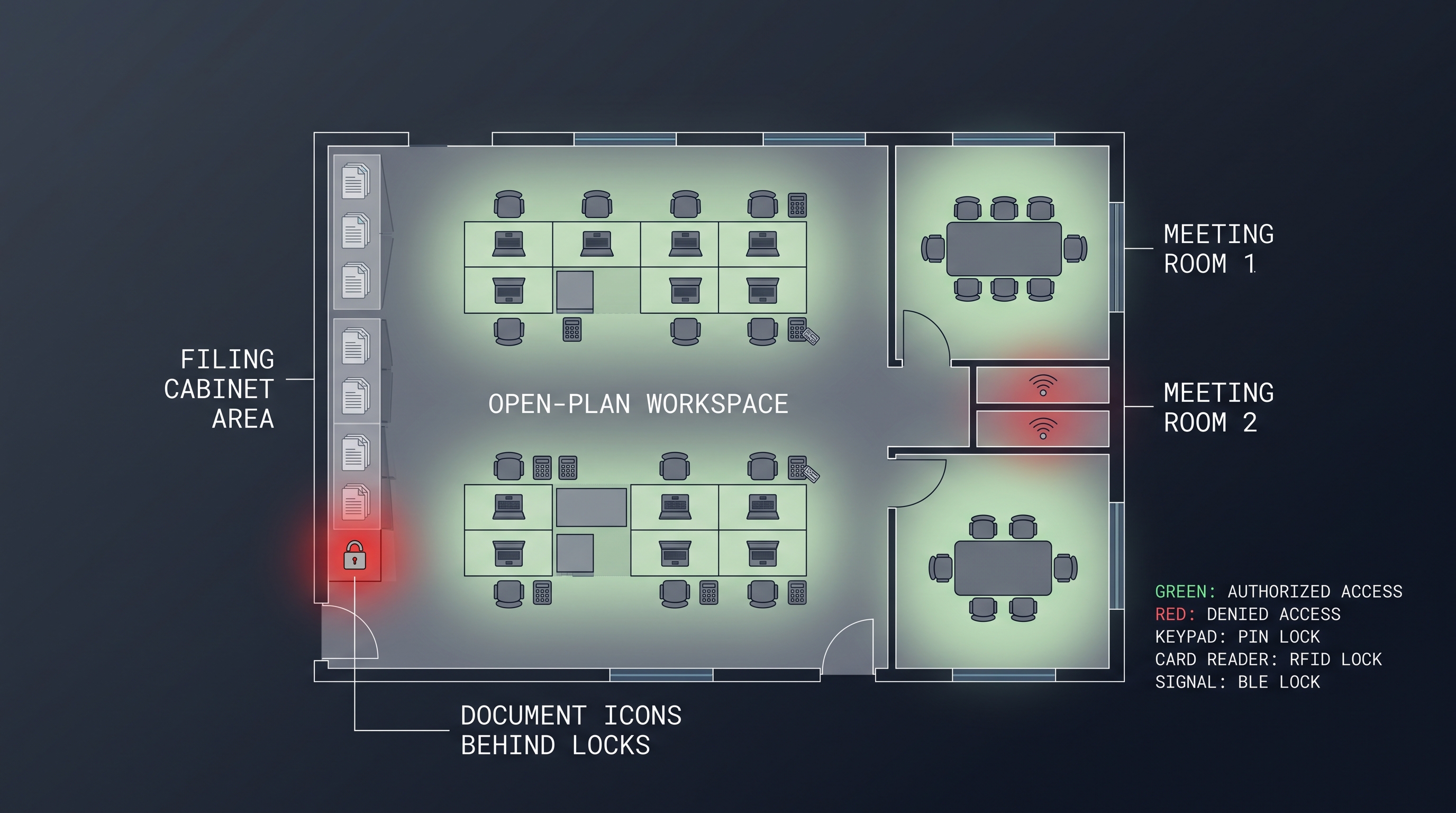
Invisible Cabinet Lock: The Complete 2026 Guide to Concealed, Undetectable Furniture and Cabinetry Security
Complete guide to invisible cabinet lock systems covering magnetic touch, RFID, electromagnetic, and Bluetooth concealed locks for luxury furniture, medical cabinets, retail displays, and office storage with installation, power, and selection criteria.
It supports the same product context: PIN Code Electronic Cabinet Lock — Stand-Alone, No WiFi.
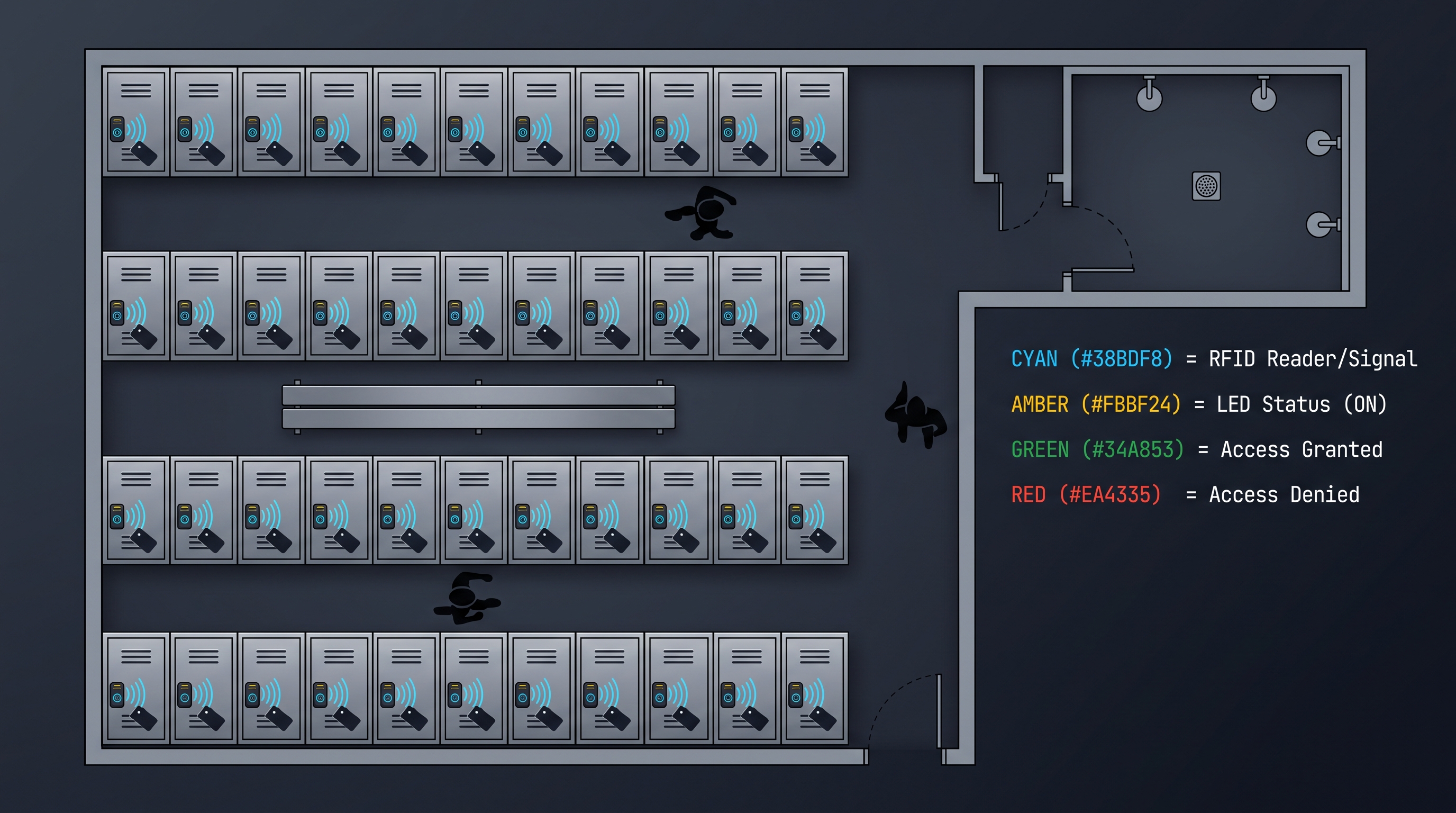
Intelligent Locker Lock: The 2026 Guide to Smart Locker Access Control
Explore intelligent locker lock technology with RFID, fingerprint, and app credentials, plus buying guides and use cases for gyms, offices, and parcel lockers.
It supports the same product context: Gym Locker Lock — Offline Card, No WiFi Required, PIN Code Electronic Cabinet Lock — Stand-Alone, No WiFi, Bluetooth Cabinet Lock — App + PIN + Card, Managed Fleet.
Specify your hotel project with our engineers
Send your room count, ceiling type, and protocol preference. We will return a sample plan and quote within 24 business hours.
- Move from general guidance into a product or application discussion.
- Use RFQ when pricing, drawings, MOQ, or launch timing needs structure.
- Keep a direct contact path visible for fast clarifications and handoff.