Intelligent Locker Lock: The 2026 Guide to Smart Locker Access Control
Explore intelligent locker lock technology with RFID, fingerprint, and app credentials, plus buying guides and use cases for gyms, offices, and parcel lockers.
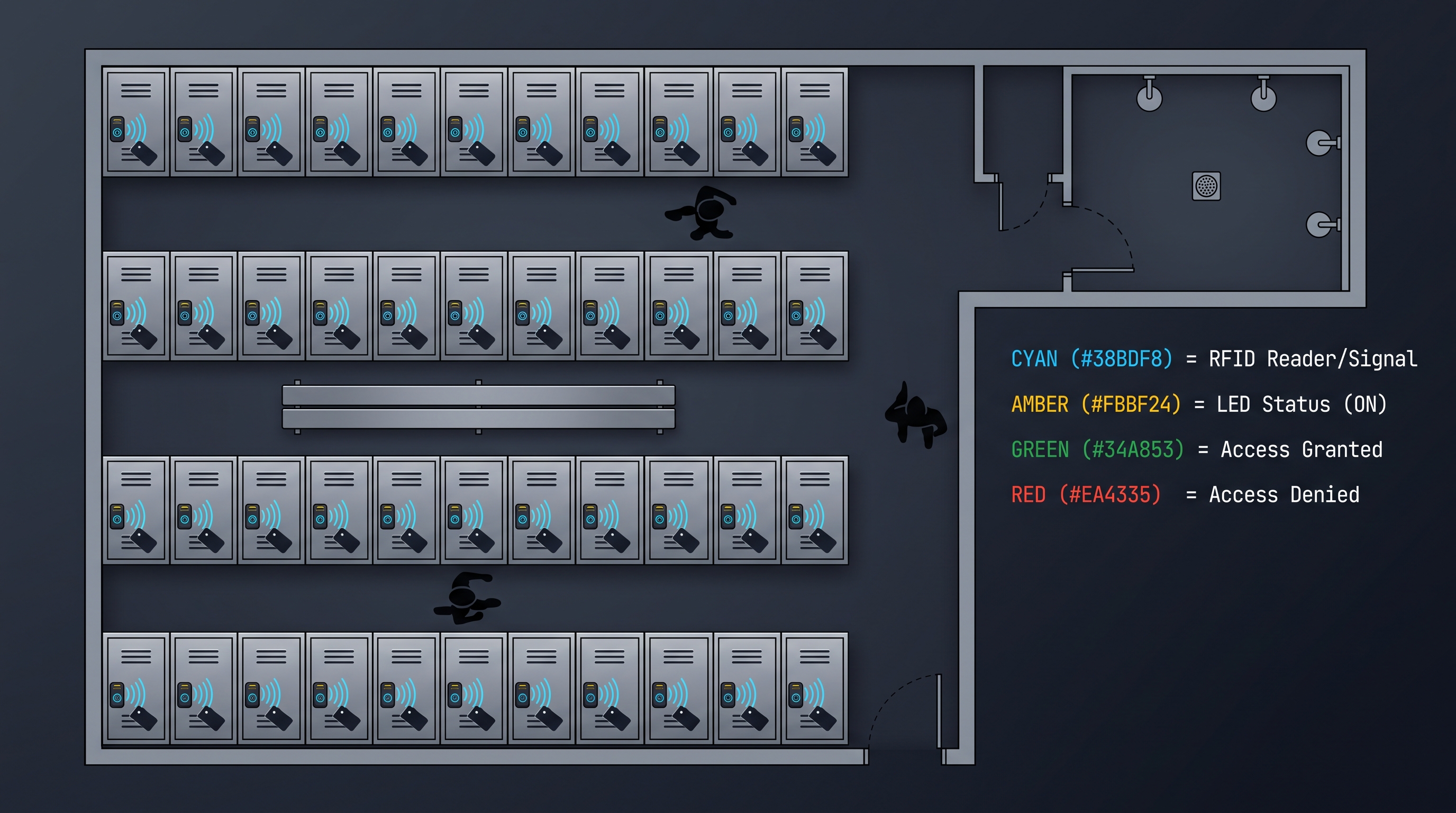
An intelligent locker lock is a connected, credential-authenticating lock that secures locker compartments in gyms, offices, schools, hospitals, and parcel networks, combining RFID, PIN, biometric, or smartphone credentials with network management for remote control, scheduling, and audit logging. A typical intelligent locker lock authenticates a credential in 0.3–1.0 seconds, drives a motorized or solenoid latch drawing 80–250 mA, and reports status over RS-485, Wi-Fi, Zigbee, or LoRaWAN to a central controller or cloud platform. Battery-powered intelligent locker lock models operate 12–24 months on 4×AA alkaline cells or 5 years on 3.6 V lithium thionyl chloride packs, with standby current of 15–40 µA. The intelligent locker lock stores 1,000–20,000 credentials in encrypted flash memory and logs 1,000–10,000 timestamped events per lock. Deployed across fitness chains, corporate hot-desking offices, universities, hospitals, and parcel networks, the intelligent locker lock enables day-use lockers, dynamic compartment assignment, time-scheduled access, and predictive maintenance. The intelligent locker lock reduces locker-management labor by 60–90 percent and lost-key replacement costs by 80 percent compared to mechanical padlocks. The global intelligent locker lock segment, part of the $2.1 billion smart locker market, is growing at 12–15 percent CAGR, driven by hybrid work, e-commerce parcel volume, and contactless-access mandates.
What Is an Intelligent Locker Lock and How Does It Work
An intelligent locker lock is a smart lock purpose-built for locker doors, combining electronic credential authentication with network connectivity so that a central platform can provision credentials, schedule access, monitor battery and status, and aggregate audit events across an entire locker fleet. The intelligent locker lock's hardware comprises a credential reader—RFID antenna at 13.56 MHz, capacitive keypad, 500 DPI fingerprint sensor, or BLE 5.0 radio—an ARM Cortex-M0+/M4 microcontroller at 48–100 MHz with 128–256 KB flash for credential and event storage, a motorized or solenoid actuator drawing 80–250 mA during the 0.3–0.8 second unlock, and a communication interface (RS-485, Wi-Fi, Zigbee, LoRaWAN) for controller or cloud reporting. Standby current of 15–40 µA sustains the reader polling loop and real-time clock. The intelligent locker lock authenticates a presented credential against a locally cached whitelist of up to 20,000 IDs in 100–500 ms, energizes the actuator, logs the event with a ±20 ppm timestamp, and transmits the event to the controller or platform. Remote operations—credential revocation, schedule changes, remote unlock for emergencies—propagate from the platform to each intelligent locker lock within seconds. The intelligent locker lock differs from a standalone electronic lock in its system integration: it exists as a node in a locker-management network, enabling fleet-wide visibility and control that individually managed locks cannot provide.
Core Architecture of an Intelligent Locker Lock
| Component | Function | Typical Specification |
|---|---|---|
| Credential reader | Capture RFID/PIN/fingerprint/BLE | 13.56 MHz / 500 DPI / BLE 5.0 |
| Microcontroller | Authenticate, actuate, log, report | ARM Cortex-M0+ at 48 MHz |
| Actuator | Retract latch on valid credential | Motor 80–250 mA, 0.3–0.8 s |
| Latch | Secure locker door | Steel, 12 mm throw |
| Communication | Controller/cloud reporting | RS-485, Wi-Fi, Zigbee, LoRaWAN |
| Power | Standalone battery operation | 4×AA 12–24 mo, Li-SOCl2 5 yr |
| Event memory | Audit storage | 1,000–10,000 events |
The Intelligent Locker Lock Authentication Flow
When a user presents a credential to any locker in the fleet, the intelligent locker lock captures it, compares it against the local whitelist, and unlocks within 0.3–1.0 seconds on a match. The event is logged locally and transmitted to the controller or cloud. The platform updates the occupancy dashboard, checks for policy violations (e.g., locker left open beyond a threshold), and triggers alerts. Conversely, the platform pushes commands—credential updates, schedule changes, remote unlock, firmware updates—to each intelligent locker lock. Event delivery completes within 1–3 seconds of a transaction on a connected network; during outages, the intelligent locker lock buffers events and uploads them on reconnection.
Types of Intelligent Locker Lock by Credential Technology
An intelligent locker lock is primarily categorized by its credential technology, and the choice shapes the locker user experience, management complexity, security posture, and hardware cost. Four credential tracks dominate: RFID (13.56 MHz MIFARE DESFire EV3 for cloning resistance, or legacy 125 kHz EM4100), PIN keypad (4–8 digit codes, scramble-pad options), biometric fingerprint (capacitive 500 DPI with liveness detection), and smartphone/BLE 5.0 (app-based, encrypted rolling codes). RFID intelligent locker locks command about 45 percent of the market, favored where users already carry badges or membership cards. PIN models hold 25 percent, chosen for tokenless simplicity in schools and public facilities. BLE smartphone models are the fastest-growing segment at 20 percent, driven by corporate hot-desking and phone-as-key preference. Biometric intelligent locker locks hold 10 percent, serving high-security healthcare, evidence, and executive lockers. The intelligent locker lock credential choice should mirror the facility's existing identity infrastructure: a gym with RFID membership cards reuses them for lockers; a phone-first office deploys BLE; a hospital pharmacy requires biometric non-repudiation; a school with 1,000 students opts for PIN to avoid card issuance. Multi-credential intelligent locker locks, supporting two or more token types, provide fallback access and satisfy dual-credential compliance requirements.
Credential Comparison
| Credential | Unlock speed | Security | User burden | Best fit |
|---|---|---|---|---|
| RFID (DESFire EV3) | 0.5 s | High | Carry card | Gyms, offices, campuses |
| PIN keypad | 1.0 s | Medium | Memorize code | Schools, public lockers |
| Fingerprint | 0.7 s | Very high | None | Healthcare, evidence |
| BLE smartphone | 0.8 s | High | Carry phone | Offices, premium gyms |
Intelligent Locker Lock vs Padlock and Keyed Locker Systems
An intelligent locker lock transforms locker operations when compared with the padlocks and keyed locker locks it replaces, delivering central management, auditability, and dynamic assignment that mechanical approaches cannot match. A gym supplying padlocks spends $4–12 per padlock and $18–35 per lost-key incident; an intelligent locker lock at $40–80 per locker eliminates key management entirely for day-use models that assign compartments dynamically. The intelligent locker lock provides audit trails—every open and close timestamped and attributed to a credential—enabling theft investigations that are impossible with padlocks. Time-based access lets a facility restrict locker use to operating hours, deterring overnight storage misuse. Remote credential revocation means a lost or stolen credential is neutralized fleet-wide within seconds, versus a mechanical system where a lost key compromises every locker it opens. The intelligent locker lock's occupancy data feeds dashboards, space-planning analytics, and housekeeping workflows. Its drawbacks—battery dependency, higher unit cost, and network dependency for remote features—are mitigated by 12–24 month battery life, emergency power terminals, and local credential caching that preserves unlock functionality during outages. For any facility managing more than 50 lockers, the intelligent locker lock achieves lower lifecycle cost and materially better security and operations than mechanical alternatives within 18–24 months.
Head-to-Head Comparison
| Dimension | Padlock / keyed locker | Intelligent locker lock |
|---|---|---|
| Unit cost | $4–12 padlock | $40–80 per locker |
| Credential | Physical key | RFID / PIN / fingerprint / app |
| Key management | Cut, distribute, recover | Digital provisioning/revocation |
| Audit trail | None | 1,000–10,000 events per lock |
| Occupancy visibility | None | Real-time dashboard |
| Time-based access | None | Configurable schedules |
| Lost credential cost | $18–35 per incident | $0 (revoke, reissue) |
| Battery/power | None | 4×AA 12–24 mo, or wired |
| Network dependency | None | Local caching preserves unlock |
| Best fit | <50 lockers | 50+ lockers, managed fleet |
Applications of the Intelligent Locker Lock Across Industries
The intelligent locker lock serves every vertical that manages locker banks, and each application tailors the lock's credentials, policies, and integration to its operational rhythm. In fitness centers, the intelligent locker lock enables day-use lockers opened by membership RFID card or club app, eliminating locker-front staff and providing occupancy dashboards and end-of-day auto-release. In corporate offices, the intelligent locker lock anchors hot-desking storage: employees book lockers via the desk-booking app, and the intelligent locker lock assigns compartments dynamically with mobile credentials valid for the booked day. In universities, the intelligent locker lock secures gym, library, and lab lockers under the campus card credential, with course-based access schedules. In hospitals, the intelligent locker lock secures staff lockers, supply lockers, and controlled-substance cabinets with biometric or dual-credential access and audit trails satisfying Joint Commission requirements. In parcel logistics, the intelligent locker lock at massive scale—10,000+ doors per deployment—secures pickup and drop-off compartments with QR codes delivered to recipients. Across all verticals, the intelligent locker lock's platform is the value multiplier: it provisions credentials, schedules access, monitors health, and aggregates audit data across the entire locker estate.
Fitness Center Day-Use Lockers
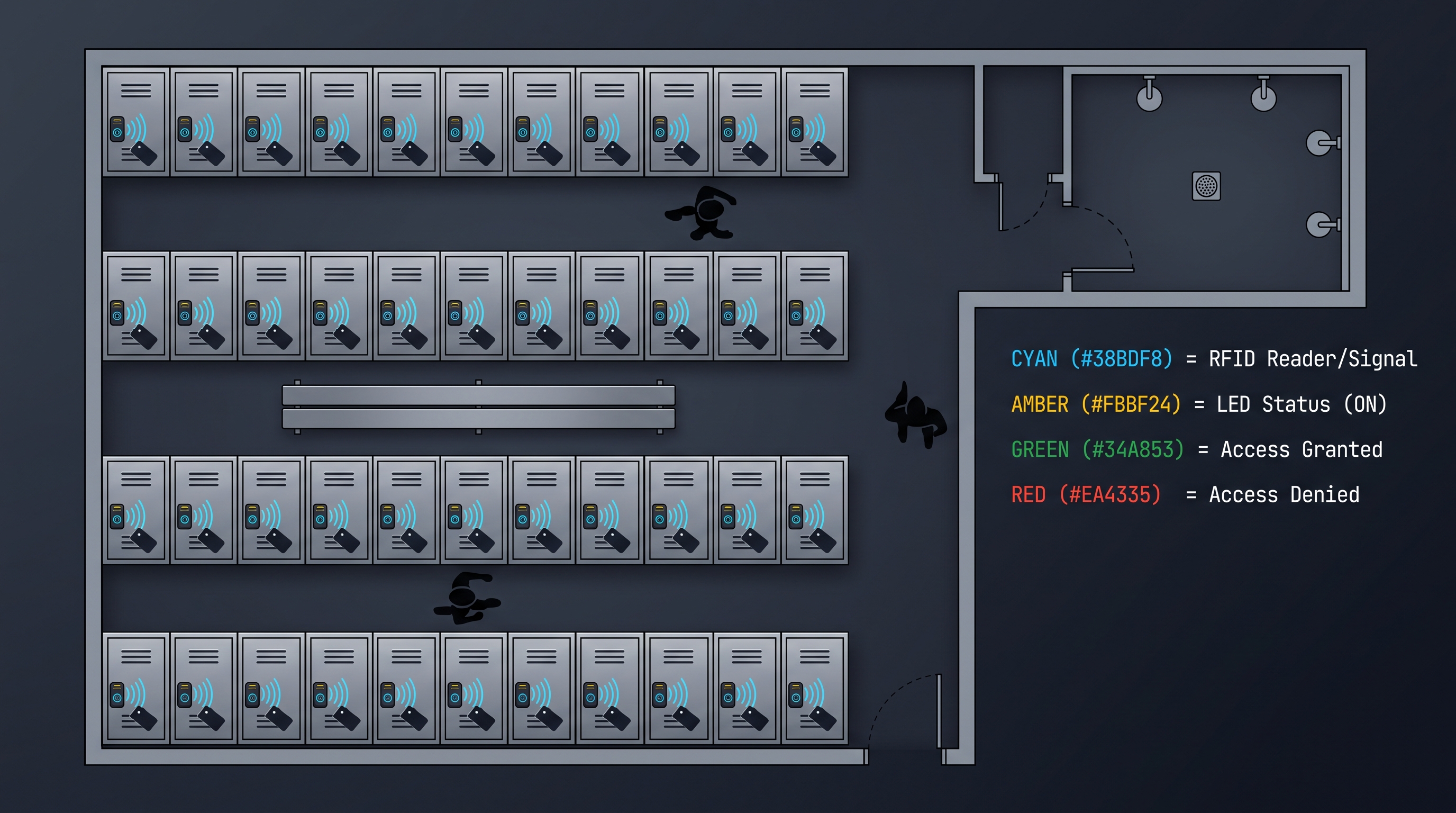
The gym intelligent locker lock turns the locker front into a self-service touchpoint. A member taps their RFID membership card or opens via the club app, and the intelligent locker lock assigns an available day-use compartment. Session-end auto-release clears compartments; occupancy feeds a lobby display showing free lockers. The audit trail identifies members who exceed session limits or leave lockers occupied overnight. Premium clubs integrate the intelligent locker lock with towel and equipment rental on the same credential.
Corporate Hot-Desking Storage
The office intelligent locker lock secures personal storage for hybrid workers. Employees book a locker in the same app used to reserve desks; the booking system pushes a mobile credential to an assigned intelligent locker lock for the booked duration. At day's end, the compartment auto-releases. Integration with Okta or Azure AD means departing employees lose locker access the instant their corporate account is deactivated, and a single credential opens the building, desk, and locker.
University Campus Lockers
The university intelligent locker lock unifies locker management across gyms, libraries, and labs under the campus card. Library study carrels are assigned via the reservation platform; lab-equipment lockers use course-based schedules; recreation-center lockers use day-use day passes. Campus security gets a single dashboard of all locker activity, and the intelligent locker lock's time-based access confines locker use to facility hours.
Healthcare Staff and Supply Lockers
The hospital intelligent locker lock operates in security tiers: staff personal lockers with RFID badge access, supply lockers with PIN or BLE for nursing-station convenience, and controlled-substance cabinets with biometric dual-credential mode. Every access to a narcotics cabinet is logged with user identity and timestamp, feeding the pharmacy's inventory reconciliation and satisfying DEA and Joint Commission audits. Tamper alerts notify security immediately.
Parcel and Transit Lockers
The parcel intelligent locker lock operates at extreme scale and throughput. Users receive a QR code via SMS or email, scan it at the locker bank, and the intelligent locker lock opens the assigned compartment. Compartments auto-assign by size class, and the platform notifies recipients with 24–72 hour pickup deadlines. Carrier and e-commerce APIs automate allocation, and the intelligent locker lock handles returns drop-off with the same credential model.
How to Choose the Right Intelligent Locker Lock: Buying Criteria
Selecting an intelligent locker lock for a facility requires evaluating credential technology, connectivity and topology, form factor, power strategy, management software, and security certification against the locker bank's user volume and operational requirements. The first decision is credential type: RFID for card-bearing populations, PIN for tokenless simplicity, BLE for phone-first offices, biometric for high-security tiers. The second is connectivity: RS-485 wired networks for reliability and low power, Wi-Fi mesh for retrofit without cabling, Zigbee for smart-building integration, LoRaWAN for outdoor and dispersed banks. The third is form factor: surface-mount intelligent locker lock bodies retrofit existing steel locker doors in 10–15 minutes; concealed mortise bodies suit new locker fabrication. The fourth is power: AA alkaline for 12–24 months, lithium thionyl chloride for 5-year outdoor intervals, wired 12 V DC for permanent installations. The fifth is the management platform: it must provision credentials, define schedules, report occupancy and battery health, export audit logs, and integrate with the facility's identity provider via SCIM/API. The sixth is security: AES-128 credential encryption, TLS 1.3 transport, tamper detection, lockout policies, and OTA firmware updates. Certifications to verify include FCC/CE/RoHS and, for North American life-safety, UL 1034. The intelligent locker lock buyer should also evaluate vendor viability—market tenure, installed-base references, spare-parts commitment of 7–10 years, and support SLAs—and run a pilot of 10–20 doors before large-scale deployment.
Selection Decision Matrix
| Facility | Recommended credential | Recommended connectivity |
|---|---|---|
| Public gym | RFID membership card | RS-485 or Wi-Fi |
| Corporate office | BLE app | Wi-Fi or RS-485 |
| School | PIN | RS-485 |
| Hospital pharmacy | Fingerprint + PIN | Wi-Fi |
| Outdoor parcel | QR code | LoRaWAN |
| Transit station | QR / RFID | Wi-Fi or LoRaWAN |
Management Platform Requirements
The intelligent locker lock management platform should provide user and group management, time-scheduled access policies, real-time occupancy and battery dashboards, audit export (CSV, Syslog), identity-provider integration (SCIM, LDAP, Okta, Azure AD), remote lock/unlock, and staged OTA firmware updates. A REST API and webhook support enable integration with desk-booking, membership, and parcel-carrier systems. The platform's uptime SLA should be 99.5 percent or better, and its security should include MFA for admins and role-based access control.
Installation and Network Commissioning for the Intelligent Locker Lock
Installing an intelligent locker lock across a locker bank follows a structured methodology that balances installation speed with commissioning quality. The process begins with a site audit measuring each locker door's thickness (0.8–2.0 mm steel), the latch strike gap, and interior cavity for the lock body and battery pack. Surface-mount intelligent locker lock bodies attach with four thru-bolts (2–3 Nm torque) and a 6–8 mm latch-cable hole, installing in 10–15 minutes per door. For RS-485 networked systems, the pre-wire phase runs 4-conductor shielded twisted-pair trunk cable (120-ohm termination, 1,200-meter max run) along locker banks. For Wi-Fi intelligent locker lock models, a site survey confirms -65 dBm RSSI at every locker door. After mechanical mounting, commissioning configures each lock: locker ID assignment, credential enrollment, unlock duration (0.3–0.8 s), lockout threshold (3–5 attempts), and real-time clock sync to NTP. For networked systems, the intelligent locker lock registers with the controller (128–256 locks per controller), and the platform pushes credential whitelists and schedules. A load test—50 valid and 50 invalid credential presentations per lock—verifies reliability before user onboarding. Post-installation, health polling every 60 seconds reports battery voltage, lock state, and last-event timestamp, enabling predictive maintenance.
Installation Phases (200-Door Locker Bank)
| Phase | Duration | Activities |
|---|---|---|
| Site audit | 2 days | Door measurement, cabling plan |
| Network pre-wire | 3–5 days | RS-485 trunk or Wi-Fi survey |
| Lock installation | 2–4 days | 50–100 locks/day, torque QC |
| Commissioning | 1–2 days | ID assignment, enrollment, clock sync |
| Platform setup | 1 day | Compartment map, schedules, integrations |
| Load test | 1 day | 50-cycle credential test per lock |
| User onboarding | 2–3 days | Credential import, phased rollout |
Security Considerations for the Intelligent Locker Lock
Security for an intelligent locker lock spans physical tamper resistance, credential cryptography, network transport, and platform hardening, and a comprehensive deployment addresses all layers. Physically, the intelligent locker lock uses a hardened steel latch with 12 mm throw resisting 50–80 N of prying force, recessed thru-bolt mounting keeping fasteners inaccessible from outside, and tamper switches that log and alarm on forced entry. Credential security varies by type: MIFARE DESFire EV3 with AES-128 mutual authentication defeats the card-cloning attacks that compromise legacy EM4100 systems; fingerprint templates are stored AES-128 encrypted and bound to a hardware unique key; PINs are hashed with lockout penalties after failed attempts. Network transport requires TLS 1.3 for Wi-Fi/cloud communication and AES-CCM/AES-GCM encryption for Zigbee and LoRaWAN payloads. The management platform requires multi-factor authentication, role-based access control, admin-action audit logging, and a documented vulnerability-management process. OTA firmware updates are essential: an intelligent locker lock with unpatched firmware is a target, and the vendor's update cadence and CVE response SLA should be evaluated in procurement. The intelligent locker lock's audit trail—1,000–10,000 timestamped events per lock—provides forensic evidence for internal investigations and regulatory compliance. A defense-in-depth approach, securing every layer rather than relying on any single control, is the correct posture for an intelligent locker lock deployment.
Security Layer Checklist
| Layer | Requirement |
|---|---|
| Physical | 12 mm steel latch, tamper switch, interior fasteners |
| RFID | DESFire EV3, AES-128 mutual authentication |
| Biometric | AES-128 template encryption, liveness detection |
| Network | TLS 1.3 (Wi-Fi), AES-CCM (Zigbee/LoRaWAN) |
| Platform | MFA, RBAC, admin audit, patching |
| Firmware | OTA updates, CVE response SLA |
| Audit | 1,000–10,000 timestamped events per lock |
Top Intelligent Locker Lock Brands and Models in 2026
The intelligent locker lock market is served by established access-control vendors and specialized locker-lock manufacturers across price tiers. Salto Systems and Dormakaba lead the premium networked segment, offering intelligent locker lock solutions within unified credential ecosystems that also manage building doors, satisfying corporate and campus requirements for single-credential access. Digilock dominates the gym and public-locker segment with ruggedized RFID and self-powering keypad intelligent locker locks proven across thousands of fitness centers. Southco serves premium furniture-integrated lockers with concealed electronic cam intelligent locker lock bodies. In the biometric intelligent locker lock niche, ekey and ievo supply fingerprint readers for healthcare and evidence applications. Chinese manufacturers—ZKTeco, Make Technology, and Giga Tms—offer cost-competitive intelligent locker locks at 30–50 percent below Western pricing, serving budget-conscious gyms, schools, and parcel deployments with comparable specifications. The intelligent locker lock buyer should weight the management platform and vendor software roadmap as heavily as hardware: the lock's value is realized through credential provisioning, scheduling, monitoring, and audit tooling. Reference calls with current customers in the same vertical and a pilot of 10–20 doors are strongly recommended before a large-scale intelligent locker lock order.
Brand Model Comparison
| Brand | Flagship | Credential | Connectivity | Price tier | Best fit |
|---|---|---|---|---|---|
| Salto | XS4 Locker | RFID, app | Zigbee, Wi-Fi | Premium | Corporate, campus |
| Dormakaba | Cattron Locker | RFID, app | Zigbee | Premium | Universities, transit |
| Digilock | Aura, ProNL | RFID, PIN | RS-485, BLE | Mid–high | Gyms, public lockers |
| Southco | Electronic E Cam | RFID, BLE | BLE | Premium | Furniture, healthcare |
| ekey | biometric locker | Fingerprint | Wi-Fi | Premium | Healthcare, evidence |
| ZKTeco | LBT, ML-series | RFID, fingerprint | RS-485, BLE | Budget | Gyms, schools |
| Make Technology | MK-series | RFID, PIN | RS-485, BLE | Budget | Schools, parcels |
| Giga Tms | GT-locker | RFID, PIN | RS-485 | Budget | Factories, schools |
Maintenance and Troubleshooting for the Intelligent Locker Lock
Maintaining an intelligent locker lock fleet is a data-driven operation because the locks report battery voltage, connectivity, and event telemetry to the management platform, enabling predictive rather than reactive service. The platform alerts on battery voltage below 2.6 V per cell, triggering replacement scheduling with 4–8 weeks of remaining operation; predictive models batch doors on the same controller into single technician visits, reducing dispatches by 30–50 percent. Connectivity health monitoring flags locks that drop offline for three consecutive poll cycles, prompting a technician dispatch. Credential hygiene requires revoking departed users' credentials via the platform, propagating deletion fleet-wide within seconds. Mechanical inspection, performed annually, checks latch engagement, door alignment, and screw torque (2–3 Nm); misaligned doors cause false-lock failures and accelerated battery drain. Reader maintenance differs by credential type: fingerprint readers need weekly dry-cloth and monthly alcohol cleaning; RFID readers need a clean antenna surface; keypads need periodic gap cleaning. Firmware updates follow a staged rollout—pilot on 10 percent of locks, then fleet-wide after a two-week soak. Common faults: rapid battery drain indicates repeated Wi-Fi reconnection (improve RSSI) or a faulty cell; intermittent credential rejection indicates a dirty reader (clean, re-enroll); offline locks indicate network issues (check controller, hub, cloud); latch failure despite valid credential indicates actuator failure or mechanical binding (inspect, replace unit). A documented runbook reduces mean-time-to-repair from hours to minutes.
Maintenance Schedule
| Interval | Task | Tooling |
|---|---|---|
| Monthly | Review battery and connectivity dashboard | Management platform |
| Quarterly | Clean credential readers | Dry cloth, 70% IPA |
| Annually | Mechanical inspection, latch alignment | Visual, pull test |
| Annually | Proactive battery replacement | AA alkaline / lithium |
| Per departure | Revoke credentials fleet-wide | Platform propagation |
| Quarterly | Staged firmware updates | OTA, 10% pilot |
Future Trends in Intelligent Locker Lock Technology
The intelligent locker lock is evolving toward standard protocol interoperability, AI-driven operations, energy independence, and deeper integration into the smart-building and parcel ecosystems. Matter standardization, expected to encompass locker-type locks by 2027, will make the intelligent locker lock interoperable across Apple Home, Google Home, and Samsung SmartThings, opening residential and small-format applications. AI-driven operations will transform the intelligent locker lock platform: predictive maintenance models forecasting battery exhaustion and actuator wear, demand-based compartment allocation learning peak usage hours, and anomaly detection flagging suspicious access patterns to prevent theft. Energy harvesting—kinetic from door motion, photovoltaic from locker-bank lighting, and RF harvesting from ambient signals—will reduce battery dependency, with low-duty-cycle intelligent locker lock models moving toward batteryless operation. In parcel logistics, the intelligent locker lock will become the standard interface for autonomous delivery: robots and drones will deposit packages into compartments that auto-assign and auto-open. The intelligent locker lock will also converge with digital-twin building platforms, feeding occupancy and transaction data into facility analytics for space planning and energy optimization. As radio and sensor costs fall and Matter matures, the intelligent locker lock will become a default building subsystem, deployed as standard equipment in new gyms, offices, and residential construction rather than an aftermarket retrofit.
Frequently Asked Questions About the Intelligent Locker Lock
The intelligent locker lock generates recurring questions about cost, power, security, and operation, and precise answers support informed procurement and deployment decisions. This FAQ addresses the most common intelligent locker lock inquiries.
How much does an intelligent locker lock cost per door?
An intelligent locker lock costs $40–80 per door for hardware, plus $10–25 per door for controllers, cabling, and installation labor in a networked deployment, totaling $50–105 per door. Premium biometric or multi-credential intelligent locker lock models range $120–200 per door. Annual platform licensing adds $2–5 per door for cloud-hosted systems.
How long does the battery last in an intelligent locker lock?
Standby-optimized intelligent locker lock models deliver 12–24 months on four AA alkaline batteries at 15–40 µA standby, assuming 20–40 unlocks per day. Lithium thionyl chloride packs extend intervals to 5 years for outdoor or hard-to-service lockers. The intelligent locker lock reports battery voltage to the platform, triggering replacement alerts below 2.6 V per cell.
Can an intelligent locker lock open during a network outage?
Yes. The intelligent locker lock authenticates credentials against a locally cached whitelist (up to 20,000 IDs), so unlock functionality continues during outages. Events buffer in non-volatile memory (1,000–10,000) and upload when connectivity resumes. Remote features—schedules, notifications, remote unlock—require connectivity, but basic authentication does not.
Can an intelligent locker lock reuse existing RFID badges?
Yes. An intelligent locker lock integrates with existing access-control platforms and identity providers via API, LDAP, or SCIM, importing card IDs for locker authorization. A gym's membership card or an office's employee badge serves as the locker credential, eliminating separate locker tokens.
What happens if someone forgets their credential?
The intelligent locker lock's management platform enables staff to open a specific locker with a master credential or via remote unlock. The audit trail logs the staff intervention, maintaining accountability. Day-use models auto-release at session end regardless of user action. Departed users' credentials are revoked fleet-wide in seconds.
Is an intelligent locker lock secure for outdoor lockers?
Yes, with appropriate specifications: IP54 or higher ingress protection, corrosion-resistant stainless steel or zinc-alloy hardware, and lithium thionyl chloride batteries rated for -20 to +60 °C. Outdoor intelligent locker lock deployments in parcel networks use LoRaWAN connectivity to avoid cabling and report battery and status every 60–300 seconds.
How does an intelligent locker lock handle firmware updates?
The intelligent locker lock receives firmware updates over-the-air (OTA) via its connectivity module—Wi-Fi, Zigbee, or the RS-485 controller. Updates are digitally signed to prevent tampering and applied with anti-rollback protection. Commercial deployments use staged rollouts: the update is deployed to 10 percent of the intelligent locker lock fleet, monitored for two weeks, then rolled out fleet-wide. The update process is transparent to end users and typically completes within 2–5 minutes per lock, during which the locker may be unavailable. The intelligent locker lock's firmware update cadence—ideally quarterly—is a procurement criterion, as unpatched locks accumulate known vulnerabilities.
What credential capacity does an intelligent locker lock require for facility needs?
Credential capacity must exceed the peak concurrent locker user population by 20–30 percent, not just the enrolled user count. A gym with 1,000 members but 300 daily visits needs an intelligent locker lock rated for at least 400 credentials to accommodate guest visits and growth. A university with 20,000 students but 2,000 daily gym users needs 3,000+ capacity. Consumer intelligent locker lock models store 100–300 credentials; commercial models scale to 4,000–20,000. The credential whitelist is stored in the lock's EEPROM or flash memory, synchronized from the controller or cloud platform, and retained across power cycles and battery changes.
Can an intelligent locker lock integrate with building automation systems?
Yes. A commercial intelligent locker lock with an API-equipped management platform integrates with building automation systems (BAS), smart-building platforms, and facility management software. Integration enables the BAS to query locker occupancy for HVAC zone adjustment (fewer occupants in the locker room = reduced ventilation demand), trigger cleaning alerts when locker usage exceeds a threshold, and correlate locker access events with building access logs for security investigations. The intelligent locker lock platform exposes REST APIs and webhooks for integration.
What fire and life-safety considerations apply to an intelligent locker lock?
An intelligent locker lock must not impede emergency egress or access. In life-safety-critical applications, the intelligent locker lock should support remote emergency unlock triggered by the fire alarm panel or building management system, allowing firefighters or staff to open all lockers. The lock should fail-safe (unlock) on power loss where egress is affected, though most locker applications are fail-secure with manual override. For North American deployments, the intelligent locker lock may require UL 1034 or equivalent certification, and the facility's fire marshal should review the deployment plan for compliance with local fire codes regarding locker access during emergencies.
How does an intelligent locker lock handle parcel and item tracking?
The intelligent locker lock, when integrated with a parcel or inventory management platform, supports item-level tracking by correlating locker access events with the items assigned to that compartment. When a parcel is deposited, the intelligent locker lock logs the compartment assignment and the carrier's credential; when the recipient retrieves the parcel, the lock logs the pickup credential and timestamp. The platform reconciles the deposit and pickup events, generating a complete chain-of-custody record. For high-value items (pharmaceuticals, evidence, IT equipment), the intelligent locker lock's audit trail satisfies chain-of-custody requirements that paper logs cannot match in reliability or searchability. The intelligent locker lock platform may also integrate weight sensors or RFID tag readers inside compartments to verify item presence automatically, eliminating manual inventory checks and alerting staff to discrepancies between expected and detected contents.
What is the typical return on investment for an intelligent locker lock deployment?
The intelligent locker lock delivers ROI through three mechanisms: labor savings, lost-key/credential savings, and throughput or revenue gains. Labor savings: a 500-locker gym deploying an intelligent locker lock eliminates locker-front staff time valued at $18,000–25,000 annually. Lost-key savings: replacing $18–35 per lost-key incident across a 500-locker facility averages $3,000–5,000 annually. Throughput gains: the intelligent locker lock processes 200–400 transactions per hour per bank versus 30–60 for a staffed counter, enabling 24/7 operation that captures revenue previously lost to closed hours. For a 500-locker gym, the intelligent locker lock investment ($25,000–40,000 hardware plus installation) pays back in 18–24 months. For a parcel locker at a 200-unit apartment complex, the intelligent locker lock pays back in 12–18 months through avoided delivery re-attempts and staff time. The intelligent locker lock's 7–10 year service life delivers substantial net savings after payback.
Can an intelligent locker lock be used in cold or humid environments?
Yes, with appropriate specifications. An intelligent locker lock rated for cold environments uses lithium thionyl chloride batteries (operating to -20 °C), stainless steel hardware to prevent condensation corrosion, and a capacitive keypad or RFID reader rather than a fingerprint sensor (which misreads on cold or wet fingers). For humid environments (poolside changing rooms, tropical climates), the intelligent locker lock should carry IP54 or higher ingress protection, use corrosion-resistant stainless steel or zinc-alloy hardware, and have gasketed enclosures protecting the electronics. The intelligent locker lock's gasket integrity should be inspected annually, and the lock's interior should be checked for condensation during routine maintenance. Outdoor parcel lockers deploy intelligent locker locks rated for -20 to +60 °C with IP54+ sealing, proving the technology's suitability for challenging environments when properly specified.
Conclusion: Maximizing Value with an Intelligent Locker Lock
The intelligent locker lock is the foundation of modern locker management, and the decision framework in this guide equips facilities to select and deploy the right intelligent locker lock for their locker banks. For gyms, an RFID intelligent locker lock with day-use assignment eliminates locker-front labor and improves member experience. For corporate offices, a BLE intelligent locker lock integrates with desk-booking and identity systems to secure hot-desking storage. For hospitals, a biometric or dual-credential intelligent locker lock satisfies compliance requirements with audited access. For schools and transit, a PIN or QR intelligent locker lock manages high volumes cost-effectively. Installation retrofits existing lockers in 10–15 minutes per door, battery life spans 12–24 months, and the management platform delivers provisioning, scheduling, monitoring, and audit across the entire fleet. As Matter, AI-driven operations, and energy harvesting mature, the intelligent locker lock will become a standard building subsystem. Facilities that adopt a standards-based, API-rich intelligent locker lock today will capture the operational, security, and compliance benefits earliest and avoid mid-life replacement.
Not sure which sensor fits your project?
Talk to our mmWave application engineers for a free consultation.
Find the right presence sensor for your hotel project
Compare the 3 protocols, check hotel-specific case studies, and download the installation guide
Related products
3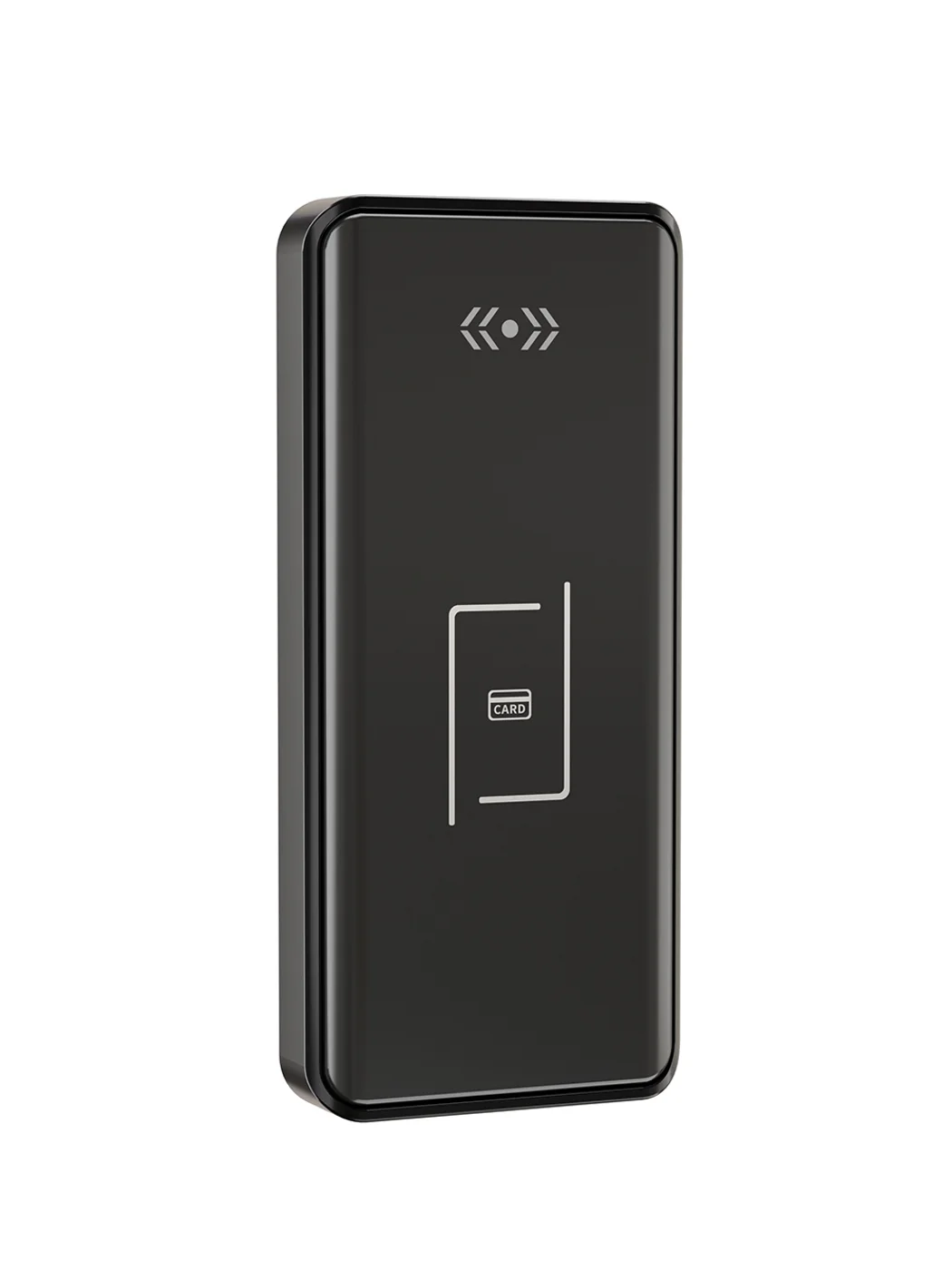
Gym Locker Lock — Offline Card, No WiFi Required
Offline card gym locker lock for fitness and pool lockers. MIFARE card, battery-powered 5-minute retrofit, no WiFi or server. Zinc alloy body, CE/FCC/RoHS.
This page already points to it as the next recommended reference.
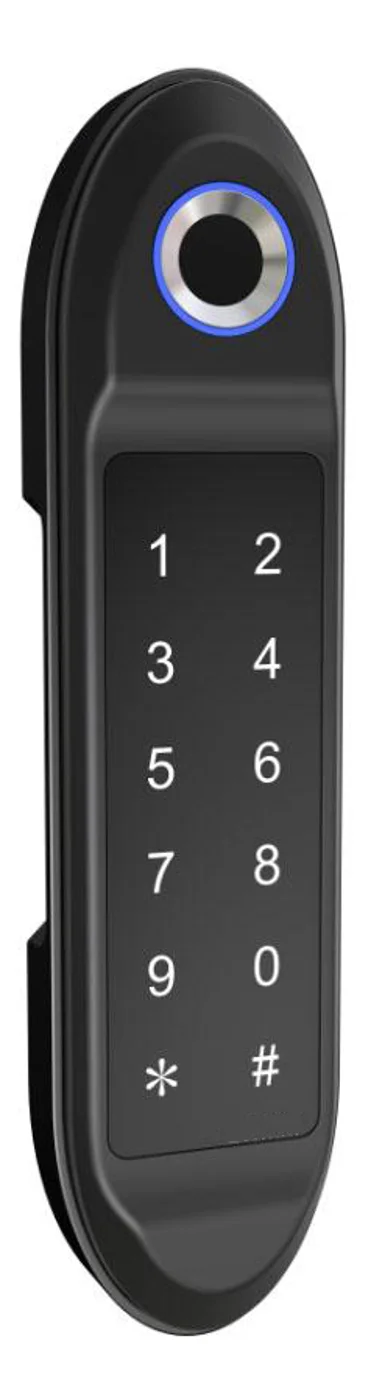
PIN Code Electronic Cabinet Lock — Stand-Alone, No WiFi
Offline keypad cabinet lock for gym, office and parcel lockers. Battery-powered, 5-minute retrofit, audit-free simple deployment. PIN + MIFARE card, DC 6V, 4×AA.
This page already points to it as the next recommended reference.
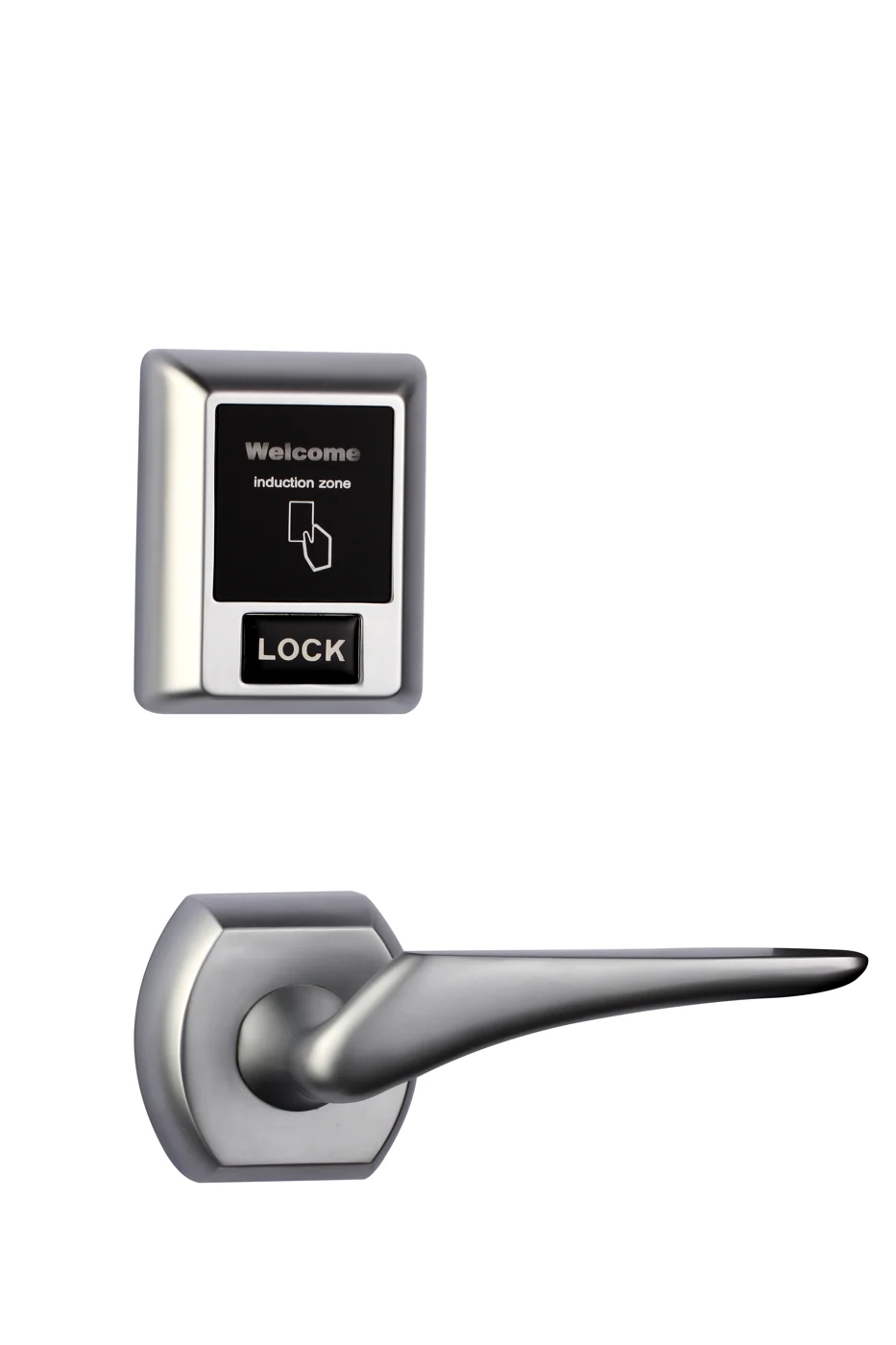
Bluetooth Cabinet Lock — App + PIN + Card, Managed Fleet
Offline BLE app cabinet lock for parcel, office, and managed locker fleets. App + PIN + MIFARE card, remote credential management, no server dependency, battery-powered retrofit.
This page already points to it as the next recommended reference.
Related blog posts
3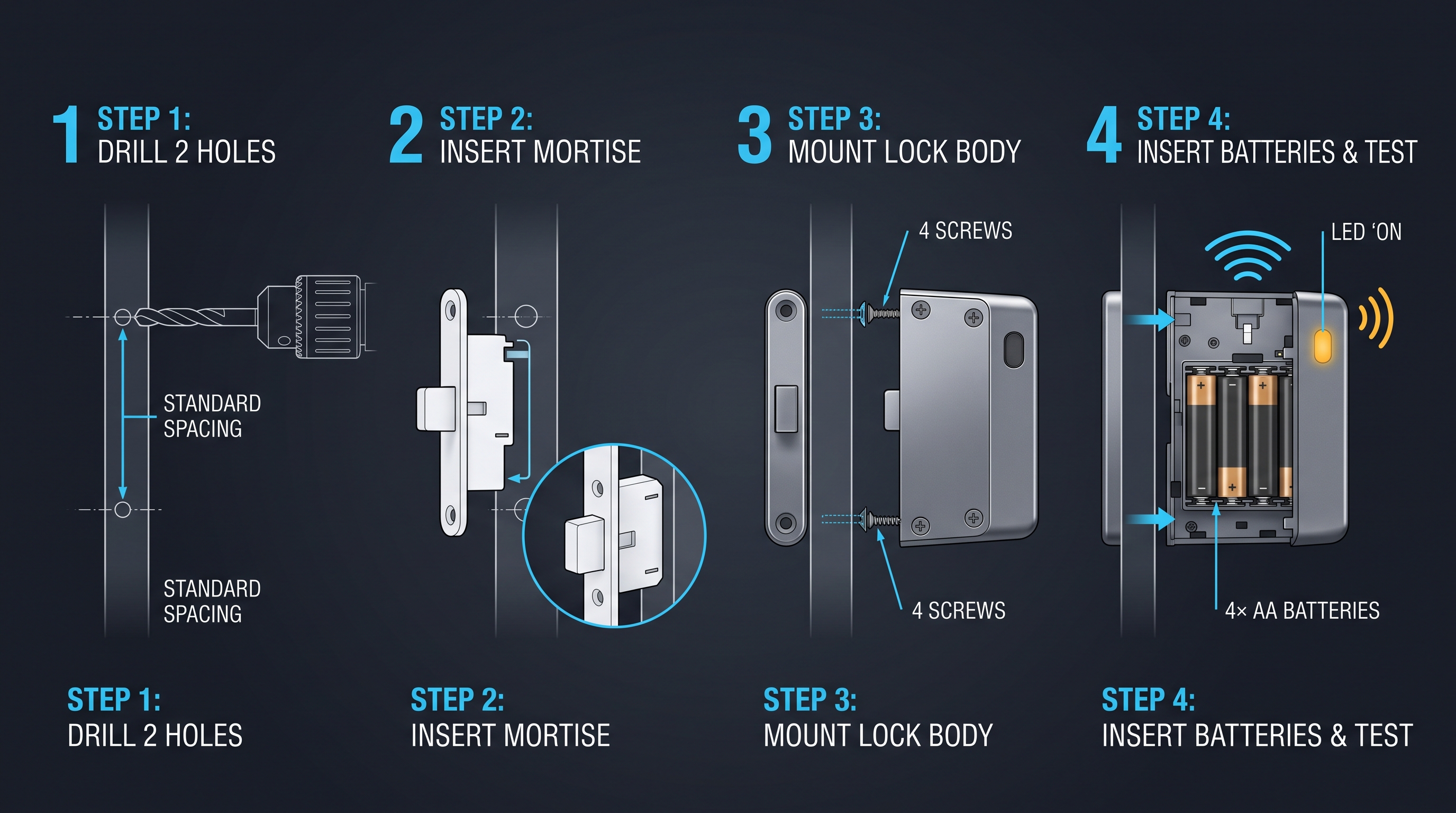
Jewelry Cabinet Lock: The Complete Guide to Securing High-Value Jewelry in Cabinets and Showcases
Learn how a jewelry cabinet lock secures high-value jewelry in display cabinets and safes. Compare electromagnetic, RFID, biometric, and keyed jewelry cabinet lock systems.
It supports the same product context: Gym Locker Lock — Offline Card, No WiFi Required.
IoT Cabinet Lock: The Complete Guide to Smart, Connected Cabinet Security
Discover how IoT cabinet lock technology works with Wi-Fi, BLE, Zigbee, MQTT, and cloud dashboards. Covers telemetry, fleet management, OTA, edge vs cloud, and security.
It supports the same product context: Gym Locker Lock — Offline Card, No WiFi Required.
The Complete Guide to the IoT Locker Lock: Hardware, Cloud, and Fleet Management for Smart Locker Banks
Discover how an IoT locker lock powers delivery locker banks, shared-office cabinets, and smart gym storage. Wi-Fi, BLE, Zigbee, NB-IoT, LoRaWAN protocols, OTA firmware, telemetry, and procurement criteria.
It supports the same product context: Gym Locker Lock — Offline Card, No WiFi Required, PIN Code Electronic Cabinet Lock — Stand-Alone, No WiFi, Bluetooth Cabinet Lock — App + PIN + Card, Managed Fleet.
Specify your hotel project with our engineers
Send your room count, ceiling type, and protocol preference. We will return a sample plan and quote within 24 business hours.
- Move from general guidance into a product or application discussion.
- Use RFQ when pricing, drawings, MOQ, or launch timing needs structure.
- Keep a direct contact path visible for fast clarifications and handoff.