IoT Cabinet Lock: The Complete Guide to Smart, Connected Cabinet Security
Discover how IoT cabinet lock technology works with Wi-Fi, BLE, Zigbee, MQTT, and cloud dashboards. Covers telemetry, fleet management, OTA, edge vs cloud, and security.
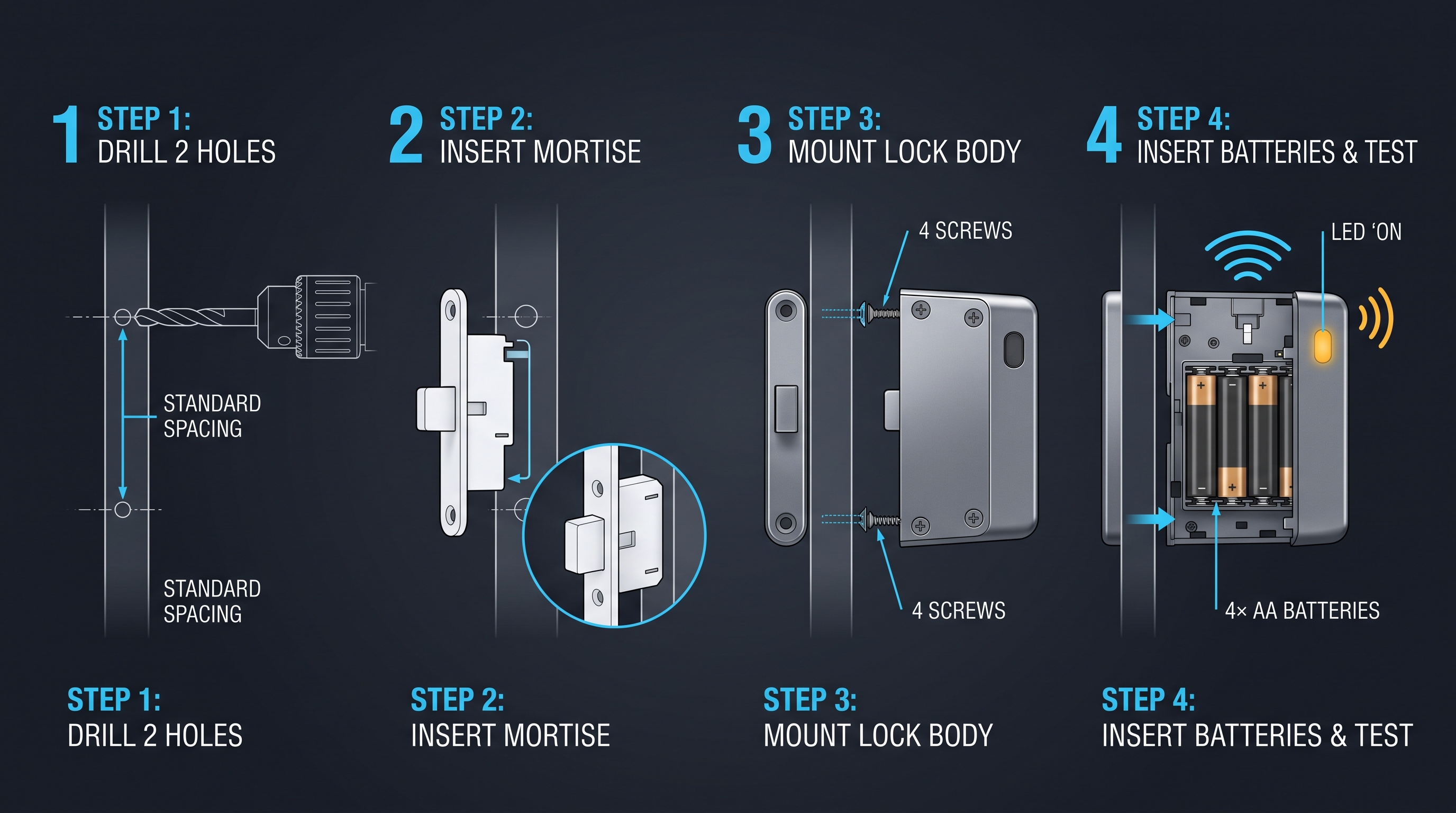
What Is an IoT Cabinet Lock and How Does It Redefine Physical Access Control?
An IoT cabinet lock is a network-connected electromechanical locking device that replaces traditional keyed or combination locks on cabinets, lockers, drawers, enclosures, and storage units, enabling remote authorization, real-time telemetry, automated audit logging, and integration with broader facility management or inventory systems. Unlike conventional cabinet locks that rely on physical keys, mechanical combinations, or standalone electronic keypads, any IoT cabinet lock embeds a wireless communication module—typically Wi-Fi (802.11 b/g/n, 2.4 GHz, drawing 150–350 mA during active transmission), Bluetooth Low Energy (BLE 5.x, 5–15 mA average, 50 ms connection latency), Zigbee (IEEE 802.15.4, 2.4 GHz, 20–40 mA, mesh-routing capable), Z-Wave (908.42 MHz or 868.42 MHz regional variants, 15–30 mA, sub-GHz penetration), Thread/Matter (IPv6-based, 10–25 mA, commissioning via QR code), NB-IoT (3GPP Release 13+, 200–400 mA peak, cellular licensed spectrum), or LoRaWAN (sub-GHz ISM band, 10–25 mA, 2–15 km range depending on urban density)—alongside a microcontroller (ARM Cortex-M4 or ESP32-class, 80–240 MHz, 512 KB–4 MB flash), a motor or solenoid actuator (typically 3–6 V DC, 200–500 ms throw time, rated for 100,000–500,000 cycles), and one or more sensors (magnetic reed switch for door state, thermistor or humidity sensor for environmental monitoring, accelerometer for tamper detection). Every IoT cabinet lock publishes telemetry via MQTT (publish-subscribe, QoS 0–2, TLS 1.3-secured, typical payload 50–200 bytes per event) or HTTPS (RESTful JSON, certificate-pinned, 200–500 ms round-trip per request) to a cloud or on-premises broker, where a dashboard renders live status, historical trends, battery health, firmware versions, and access events. Fleet management platforms then group tens, hundreds, or thousands of this IoT cabinet lock type into logical zones, apply granular permission policies, schedule OTA firmware updates in waves, and monitor exception events such as forced-entry attempts, low-battery warnings, or prolonged door-open alerts. The result is a paradigm shift from passive, audit-blind physical security to active, data-rich access governance that operationalizes every IoT cabinet lock interaction into actionable intelligence.
Core Connectivity Protocols Powering the Modern IoT Cabinet Lock
The choice of wireless protocol is the single most consequential architectural decision when deploying an IoT cabinet lock, as it determines power consumption, latency, range, infrastructure cost, scalability, and vendor lock-in risk. Each protocol occupies a distinct niche across the connectivity spectrum, and understanding their trade-offs is essential for matching the IoT cabinet lock to its operational environment. Wi-Fi (802.11 b/g/n at 2.4 GHz) offers the highest bandwidth and lowest latency of any common IoT protocol, with typical throughput of 10–50 Mbps and round-trip times under 50 ms on local networks, making this IoT cabinet lock protocol ideal for deployments in facilities that already have dense Wi-Fi access point coverage—such as offices, hospitals, schools, and retail stores. However, the power penalty is severe: an ESP32-based IoT cabinet lock transmitting Wi-Fi at +20 dBm draws 350–400 mA during active transmission, 70–80 mA in DTIM10 sleep listening, and requires careful duty-cycling to achieve acceptable battery life for the IoT cabinet lock. With a 2,000 mAh Li-Po battery, 10–20 daily unlock events, and optimized deep-sleep between transmissions, a Wi-Fi IoT cabinet lock typically lasts 6–12 months before requiring recharge or primary-cell replacement of the IoT cabinet lock battery. BLE 5.x reduces average current draw to 5–15 mA during connection intervals of 30–50 ms, with peak advertising bursts of 15–25 mA and deep-sleep current as low as 1–3 µA. A BLE-based IoT cabinet lock achieves 12–24 months of battery life on a single CR123A or two AAA cells (3,000–3,500 mAh aggregate), but the range is limited to 10–30 meters indoors, and this IoT cabinet lock protocol requires a gateway or smartphone relay for cloud connectivity—making BLE best suited for smaller deployments (10–50 IoT cabinet lock units) in close proximity to a hub or mobile device. Zigbee and Z-Wave occupy the mesh-networking tier: Zigbee (2.4 GHz, 20–40 mA TX, 250 kbps) and Z-Wave (sub-GHz, 15–30 mA TX, 40–100 kbps) for the IoT cabinet lock both support self-healing mesh topologies where each IoT cabinet lock can act as a router for neighboring devices, extending range beyond 100 meters and improving reliability through redundant paths. Any Zigbee IoT cabinet lock also functions as a range extender for neighboring IoT cabinet lock devices, and these protocols are the backbone of smart-building deployments (50–500 IoT cabinet lock units) where wall density, floor count, and metal cabinetry attenuate higher-frequency bands. Zigbee 3.0 and Z-Wave 800 series both support S2 security classes, AES-128 encryption, and inclusion via QR-code or PIN-based commissioning for each IoT cabinet lock. The Matter protocol, built on Thread (IPv6 6LoWPAN, 10–25 mA TX, 250 kbps at 2.4 GHz), adds application-layer interoperability across ecosystems, allowing a single IoT cabinet lock to be controlled simultaneously from Apple Home, Google Home, Amazon Alexa, and SmartThings without proprietary bridges—though Matter-certified IoT cabinet lock hardware remains limited in 2026 for industrial cabinet use cases. For wide-area IoT cabinet lock deployments, NB-IoT and LTE-M provide cellular IoT connectivity with licensed-spectrum reliability, wide-area coverage (1–10 km in urban environments, reaching into basements and shielded enclosures), and deep-sleep current of 3–5 µA with extended DRX cycles up to 2.9 seconds. An NB-IoT IoT cabinet lock transmits at 200–400 mA peak but only for 100–300 ms per uplink, with daily telemetry budgets as low as 1–2 KB per month, enabling 2–5 year battery life on four AA cells (8,000–10,000 mAh) when this IoT cabinet lock is deployed in a low-traffic location such as a utility cabinet, telecom enclosure, or outdoor storage unit. LoRaWAN complements NB-IoT with ultra-long-range sub-GHz communication (2–15 km line-of-sight, 1–5 km dense urban) at extreme power efficiency: 10–25 mA TX at +14 to +20 dBm, 1–2 µA deep-sleep, and a data rate of 0.3–50 kbps depending on spreading factor. A LoRaWAN IoT cabinet lock is ideal for agricultural, logistics, or infrastructure scenarios where IoT cabinet lock units are spaced hundreds of meters apart and cellular coverage is absent, though the low uplink duty cycle (0.1%–1% per sub-band in EU regulations, 1%–10% in US) limits the IoT cabinet lock's telemetry frequency to a few messages per hour.
| Protocol | Frequency Band | TX Current | Data Rate | Range (Indoor) | Battery Life (2,000 mAh) | Gateway Req. | Mesh |
|---|---|---|---|---|---|---|---|
| Wi-Fi (b/g/n) | 2.4 GHz | 150–400 mA | 10–50 Mbps | 20–50 m | 6–12 months | No | No |
| BLE 5.x | 2.4 GHz | 5–25 mA | 1–2 Mbps | 10–30 m | 12–24 months | Yes (or phone) | Limited |
| Zigbee 3.0 | 2.4 GHz | 20–40 mA | 250 kbps | 30–100 m | 12–30 months | Yes (coordinator) | Yes |
| Z-Wave 800 | Sub-GHz (region) | 15–30 mA | 40–100 kbps | 30–60 m | 12–36 months | Yes (controller) | Yes |
| Thread/Matter | 2.4 GHz | 10–25 mA | 250 kbps | 30–50 m | 18–36 months | Yes (border router) | Yes |
| NB-IoT | Licensed LTE | 200–400 mA | 20–250 kbps | 1–10 km (WAN) | 2–5 years | No (cellular) | No |
| LoRaWAN | Sub-GHz ISM | 10–25 mA | 0.3–50 kbps | 1–15 km (WAN) | 3–8 years | No (gateway-to-cloud) | Star |
Telemetry Architecture: How an IoT Cabinet Lock Transmits Data from Sensor to Dashboard
The telemetry pipeline of an IoT cabinet lock begins at the sensor layer, passes through local preprocessing on the IoT cabinet lock microcontroller, flows over the air via MQTT or HTTPS to a broker or API gateway, lands in a time-series database, and is finally rendered on a real-time dashboard—typically in under 200 milliseconds for local events and under 2 seconds for cloud-mediated events for the IoT cabinet lock. Understanding this pipeline is critical for engineers who must specify latency budgets, bandwidth allocation, cloud compute costs, and failover behavior for their IoT cabinet lock deployments. At the sensor level, a typical IoT cabinet lock integrates four primary sensing modalities: a magnetic reed switch (normally open or normally closed, 10–20 ms debounce, 1 mm–5 mm sensing gap) detects door position; a hall-effect or capacitive latch sensor confirms bolt throw (extended or retracted, 5–15 ms sensing time); a thermistor or digital temperature sensor (DHT22, SHT30, or BME280, ±0.3°C accuracy, 0.5–2 Hz sampling) monitors internal cabinet climate; and a MEMS accelerometer (LIS3DH, ADXL345, or BMI270, 10-bit to 14-bit resolution, 50–400 Hz sampling) provides tamper detection via vibration and tilt analysis. The IoT cabinet lock microcontroller reads these sensors at configurable intervals—typically once per second for door state, once per 5 minutes for temperature and humidity, and continuously buffered at 100 Hz for tamper events with a ring buffer of 2–5 seconds of pre-trigger data. Raw sensor values are then normalized, timestamped with the IoT cabinet lock RTC (drift-corrected via NTP or GPS every 6–24 hours, typical drift 1–5 ppm), and framed into a telemetry packet. The packet payload is serialized as a compact binary format (Protocol Buffers, CBOR, or MessagePack) or JSON, depending on bandwidth constraints and cloud-side parsing complexity. A typical MQTT telemetry packet for an IoT cabinet lock spans 80–200 bytes in binary or 200–500 bytes in JSON, containing device ID, timestamp, door state, lock state, battery voltage (percentage and millivolts), temperature in Celsius, humidity percentage, firmware version, RSSI, and an error-code bitmap. The IoT cabinet lock publishes this packet to an MQTT topic structured hierarchically (e.g., v2/sites/{site_id}/zones/{zone_id}/locks/{lock_id}/telemetry) using QoS 1 (at-least-once delivery) with a retained message set to false, ensuring duplicate-tolerant delivery without lingering stale state on the broker. Session persistence with a clean session flag set to false allows the broker to queue messages for an IoT cabinet lock that temporarily disconnects during deep-sleep cycles—a feature critical for battery-powered IoT cabinet lock units that alternate between 2–10 seconds of active radio and 30–300 seconds of sleep. On the broker side, an MQTT 5.0 broker such as EMQX (1 million concurrent connections per cluster node, <5 ms P99 latency) or Mosquitto (lighter weight, 100,000 concurrent connections) authenticates each IoT cabinet lock via X.509 client certificates or pre-shared keys, applies topic-level access control lists, and forwards the telemetry to a rule engine or stream processor. The rule engine may enrich the payload with device metadata from a registry database, compute derived metrics (battery runtime remaining based on linear regression of voltage drop over 7–14 days), and trigger alerts for threshold breaches (temperature >60°C, humidity >95%, door open >300 seconds). The enriched stream is written to a time-series database—TimescaleDB, InfluxDB, or AWS Timestream—at a write rate of 50–500 points per IoT cabinet lock per day depending on telemetry cadence. Over a fleet of 10,000 IoT cabinet locks at 100 points per day, the write throughput reaches 1 million points per day, requiring approximately 60–80 GB of hot storage per year plus tiered archival to cold object storage after 90 days. The dashboard, built on a real-time visualization framework such as Grafana, Superset, or a custom React application with WebSocket subscriptions, queries the database for time-range slices and displays each IoT cabinet lock's live status as a color-coded card (green for normal, yellow for door ajar, red for tamper, gray for offline >24 hours), aggregate fleet health as gauge charts, and per-lock telemetry as interactive time-series plots. Engineers configuring an IoT cabinet lock telemetry pipeline must also plan for offline buffering: the lock maintains a non-volatile flash or FRAM buffer of 1,000–10,000 events (configurable, typical 5,000 events), and upon reconnection after an outage, the IoT cabinet lock replays missed telemetry at a controlled rate of 1–10 messages per second to avoid overwhelming the broker or downstream database.
MQTT Versus HTTPS: Choosing the Right Transport for Your IoT Cabinet Lock
The transport protocol selection between MQTT and HTTPS is a foundational decision that affects latency, battery life, message ordering, cloud cost, and scalability for every IoT cabinet lock in a deployment. Both protocols run over TLS 1.3 (mandated by all major cloud IoT platforms since 2024) and support mutual authentication with X.509 certificates, but their architectural paradigms diverge in ways that map directly to IoT cabinet lock operational requirements. MQTT is a publish-subscribe protocol designed for the asymmetric, event-driven, high-loss, variable-latency networks that characterize IoT environments. When an IoT cabinet lock publishes a door-open event via MQTT, this IoT cabinet lock opens a single TCP connection to the broker (SYN-ACK handshake: 1 round trip), performs TLS negotiation (1–2 round trips depending on session resumption), and sends the 100–200 byte payload in a single PUBLISH packet. With a clean session and a persistent connection that remains open between telemetry intervals, the IoT cabinet lock avoids repeating the three-way handshake and TLS negotiation for every message—critical for IoT cabinet lock battery conservation, since each TLS handshake consumes 300–500 µAh at Wi-Fi power levels. An MQTT-connected IoT cabinet lock using BLE or Zigbee can sustain a persistent low-power connection with keepalive pings at 60–300 second intervals, drawing only 0.5–2 mA in a maintained connection state. The broker then distributes the message to all subscribers (the cloud backend, the local hub, and any monitoring clients) with a single publish, achieving one-to-many efficiency across the IoT cabinet lock fleet. MQTT QoS 1 guarantees at-least-once delivery, which is appropriate for IoT cabinet lock telemetry where duplicate delivery is tolerable (the cloud deduplicates by device ID and sequence or timestamp), and QoS 0 provides fire-and-forget for low-priority telemetry such as periodic temperature readings where a lost message from an IoT cabinet lock is acceptable. QoS 2 (exactly once) is generally avoided in battery-powered IoT cabinet lock designs due to the four-packet exchange overhead. HTTPS, by contrast, operates on a synchronous request-response model where the IoT cabinet lock initiates a POST or PUT request to a REST API endpoint for each event. The IoT cabinet lock must complete the full TCP plus TLS handshake for every request if no connection reuse is available (HTTP/2 multiplexing mitigates this but is rarely implemented on constrained MCUs). Each HTTPS POST carrying a telemetry payload of 200–500 bytes consumes 1.5–3 times more energy than an equivalent MQTT publish, primarily due to the larger header overhead (400–800 bytes per HTTP request versus 2–4 bytes per MQTT topic encoding) and the lack of persistent connection semantics in HTTP/1.1 clients on embedded devices. For any IoT cabinet lock, HTTPS is best reserved for infrequent, high-value operations where synchronous acknowledgment is essential: firmware download over HTTPS (range: 100 KB–2 MB, supporting range requests and ETag caching, 30–120 seconds at Wi-Fi throughput), certificate renewal (1–2 KB POST, once every 30–365 days), or command acknowledgments where the IoT cabinet lock must confirm that an administrative unlock command was received and executed. Many production IoT cabinet lock deployments adopt a hybrid approach: MQTT for real-time event telemetry (door open, door close, unlock, lock, tamper, battery low) and HTTPS for file transfers, provisioning, and management-plane operations, combining the eventing efficiency of pub-sub with the request-response reliability and caching robustness of REST.
| Feature | MQTT (with TLS 1.3) | HTTPS (HTTP/2 with TLS 1.3) |
|---|---|---|
| Connection Model | Persistent, stateful | Stateless (per-request) |
| Per-Message Overhead | 2–14 bytes (topic) + payload | 400–800 bytes (headers) + payload |
| Battery Impact (2,000 mAh lock) | 6–18 months typical | 3–10 months typical |
| Message Delivery Guarantees | QoS 0, 1, 2 | Synchronous 200/201 response |
| Real-Time Event Push | Native (broker push) | Polling or WebSocket required |
| Bandwidth Efficiency (10 msg/day) | ~5–20 KB/month | ~50–200 KB/month |
| Firewall Friendliness | Requires 1883/8883 open | Ubiquitous (80/443) |
| Session Queuing | Yes (clean session=false) | No |
| Device-to-Cloud Latency | 50–500 ms (persistent) | 200–2000 ms (cold start) |
| Suitability for IoT Cabinet Lock | Primary telemetry transport | Firmware, provisioning, management |
OTA Firmware Updates: Keeping the IoT Cabinet Lock Secure and Feature-Rich
Over-the-air firmware updates are a non-negotiable capability for any IoT cabinet lock deployed at scale, enabling remote patching of security vulnerabilities, addition of new protocol support, sensor calibration adjustments, power-management algorithm refinements, and user-interface improvements without physical access to potentially thousands of distributed IoT cabinet lock units. An IoT cabinet lock that lacks OTA capability becomes a static security liability within months of deployment, as its IoT cabinet lock firmware freezes at the moment of installation while the threat landscape, cloud API versions, and security standards continue to evolve. The OTA architecture for an IoT cabinet lock begins at the IoT cabinet lock bootloader, which must support A/B dual-bank or a reliable update mechanism with fallback recovery. In the dual-bank approach, the IoT cabinet lock microcontroller flash memory (2–4 MB on ESP32-class, 512 KB–2 MB on Cortex-M4 with external SPI flash) is partitioned into two banks: bank A holds the current active firmware, and bank B serves as the staging slot for the next update for this IoT cabinet lock. The IoT cabinet lock downloads the new firmware image (typically 200 KB–1.5 MB compressed, compressed with LZMA, zlib, or Heatshrink achieving 40–60% size reduction) over HTTPS from a CDN-served firmware repository, writing the raw bytes into bank B while continuing to operate normally from bank A. The download may be chunked into 1–16 KB blocks with SHA-256 verification per block, allowing the IoT cabinet lock to resume from the last verified block if the connection drops mid-download—a critical feature for NB-IoT and LoRaWAN IoT cabinet lock links where sustained throughput is limited to 0.3–50 kbps and a 500 KB firmware image could take 2–40 minutes to transfer to the IoT cabinet lock. After the complete image is written and its SHA-256 hash verified against the manifest signed with the manufacturer's ECDSA P-256 private key, the IoT cabinet lock sets a boot counter flag, toggles the active bank pointer, and triggers a watchdog-assisted reboot. On boot, the new bootloader validates the image signature using the embedded public key and checks a self-test routine (actuator cycle, sensor reading range checks, radio RSSI loopback). If the self-test fails or the boot counter exceeds a threshold (typically 3 consecutive failed boots), the bootloader reverts to bank A and reports a rollback event via telemetry. The entire OTA sequence, from manifest notification to verified boot, should complete within 10–60 seconds on a Wi-Fi IoT cabinet lock, 1–10 minutes on a BLE IoT cabinet lock with gateway relay, 10–60 minutes on an NB-IoT IoT cabinet lock, and 1–24 hours on a LoRaWAN IoT cabinet lock depending on payload size and regional duty-cycle restrictions. Fleet-level OTA orchestration introduces additional complexity: a platform managing 10,000 IoT cabinet lock devices must schedule updates in staggered waves (wave 1: 1% of fleet, 24-hour observation window; wave 2: 10%; wave 3: 30%; wave 4: remaining 59%), monitor rollback and error rates per wave, apply geo-fencing to update each IoT cabinet lock during local business off-hours (configurable as cron expressions per timezone), and fail-fast a wave if the error rate exceeds 5% combined with a success rate below 90%. The update manifest must include a monotonic version number (semver: v2.3.1+build20260804), a minimum compatible bootloader version, a release date, a required-license hash for compliance tracking, and a dependency matrix for multi-image updates where an IoT cabinet lock contains separate application, radio stack, and bootloader images that must be updated in a specific sequence. A well-implemented OTA pipeline transforms the IoT cabinet lock from a fixed-function appliance into a continuously evolvable platform that can receive new capabilities—such as Matter protocol support added after deployment, improved battery prediction algorithms, or upgraded encryption ciphers—without any physical intervention.
Sensor Fusion: Beyond Simple Door-State Monitoring in the IoT Cabinet Lock
While the primary function of any IoT cabinet lock is to secure a cabinet door, the sensor fusion capabilities integrated into modern IoT cabinet lock devices elevate the IoT cabinet lock from a binary access-control gate to a multidimensional environmental and operational intelligence node. A fully instrumented IoT cabinet lock aggregates data streams from its door-state sensor, latch-position sensor, temperature probe, humidity sensor, accelerometer, and auxiliary GPIO inputs, then fuses these signals on the local IoT cabinet lock microcontroller or in the cloud to infer states that no single sensor could determine alone. The door-state reed switch provides the most basic signal for any IoT cabinet lock: open or closed, sampled at 1–100 Hz depending on the event mode. The latch-position sensor (typically a microswitch or hall-effect sensor on the bolt mechanism) independently reports whether the bolt is extended or retracted on the IoT cabinet lock. Fusing these two signals on the IoT cabinet lock microcontroller yields four distinct states: door closed with bolt extended (secured), door closed with bolt retracted (unlocked but closed), door open with bolt retracted (open, normal), and door open with bolt extended (mechanical fault or forced-entry attempt where the bolt extended despite the door being open—a strong tamper indicator for the IoT cabinet lock). The accelerometer runs a background activity-detection algorithm at 50–400 Hz, computing the vector magnitude (square root of summed squares of X, Y, Z axes) minus the gravity vector to isolate dynamic acceleration seen by the IoT cabinet lock. When the magnitude exceeds a configurable threshold (50–500 mg, depending on cabinet mounting rigidity), the IoT cabinet lock logs a vibration event. A sequence of 3–10 vibration events within 1–5 seconds, correlated with a door-state transition from closed to open while the IoT cabinet lock remains in secured mode (bolt extended), triggers a forced-entry alert. The accelerometer also enables tilt detection: if an IoT cabinet lock reports a static tilt angle exceeding 10–20 degrees from its calibrated installation orientation, the device flags a potential cabinet displacement or tampering with the mounting. Temperature and humidity data, sampled at 0.1–2 Hz, serve both operational and environmental roles. Internally, the IoT cabinet lock temperature reading compensates the battery voltage measurement (Li-Po or Li-SOCl2 cells exhibit −2 to −6 mV/°C voltage slope), allowing the battery gauge to report accurate remaining capacity across a −20°C to +60°C range. Humidity readings above 70–80% inside an enclosed metal cabinet trigger ventilation alerts—particularly relevant for outdoor cabinets housing sensitive telecom or networking equipment where condensation can damage both the IoT cabinet lock electronics and the cabinet contents. An advanced IoT cabinet lock may also include a passive infrared sensor for occupancy detection in sensitive environments such as pharmaceutical cold storage or evidence lockers, or a current-sense resistor on the motor drive circuit to detect mechanical binding (current spike above 300–500 mA during bolt throw indicates friction, lubricant depletion, or misalignment). The sensor fusion engine on the IoT cabinet lock microcontroller runs a lightweight state machine with hysteresis to debounce transient signals—for example, a door-open event is only published after 500–1000 ms of continuous open state, filtering out brief door wobbles or sensor glitches. More sophisticated IoT cabinet lock deployments push buffered accelerometer windows to the cloud for ML-based classification: a convolutional neural network or random forest model trained on 5,000–50,000 labeled vibration samples can distinguish between authorized entry (smooth, single motion), forced prying (high-frequency, multi-peak signature), and environmental vibration (HVAC, footsteps, nearby machinery) with 95–99% accuracy, dramatically reducing false positive alarm rates. This sensor fusion pipeline, executed partially at the IoT cabinet lock edge and partially in the cloud, converts the IoT cabinet lock from a mechanical barrier with a network card into a cognitive security sentinel that understands the difference between a keycard swipe and a crowbar.
Edge Processing Versus Cloud Processing in the IoT Cabinet Lock
The architectural tension between edge processing and cloud processing in an IoT cabinet lock centers on latency, bandwidth, power consumption, autonomy during network outages, and compute cost, and the optimal split varies by use case, deployment scale, and network quality for each IoT cabinet lock. In an edge-heavy architecture, the microcontroller embedded in the IoT cabinet lock performs the majority of signal processing, state machine evaluation, anomaly detection, and even local ML inference before deciding which events to transmit to the cloud from the IoT cabinet lock. The edge processor of this IoT cabinet lock—an ESP32-S3 with 512 KB SRAM and 8 MB PSRAM, or an nRF5340 with 1 MB flash and 512 KB RAM—can run a lightweight FreeRTOS or Zephyr RTOS task every 10–50 ms to poll sensors, compute fused states, and compare against local thresholds for the IoT cabinet lock. When the door opens, the IoT cabinet lock edge processor immediately evaluates whether the bolt was secured at the time of opening, cross-references the current time against a locally cached (synchronized every 6–12 hours) authorized-access schedule, checks the IoT cabinet lock local audit log for the badge or RFID credential that was presented (if a reader is integrated), and decides within 20–50 ms whether to classify this as an authorized access, unauthorized access, or forced entry on this IoT cabinet lock. If classified as authorized, the IoT cabinet lock may log the event locally in FRAM (4–64 KB, 10 trillion write cycles, 0.5–1 µA standby) and publish a brief telemetry packet (50–100 bytes) to the cloud as an informational record from the IoT cabinet lock. If classified as tamper or forced entry, the IoT cabinet lock can trigger an immediate local audible alarm (piezo buzzer, 85–95 dB at 30 cm, 200–500 ms pulse), a visual alert (RGB LED, 10–20 mA), and—critically—a local actuator response such as engaging a secondary deadbolt or increasing solenoid holding current to resist forced opening, all within 100–200 ms and without waiting for any cloud round-trip from the IoT cabinet lock. The cloud, in this architecture, is a receiver of filtered, pre-classified events rather than the decision authority, reducing telemetry bandwidth by 60–95% compared to streaming all raw sensor data, and enabling the IoT cabinet lock to function fully autonomously during network outages that may last minutes to days. The cloud, in this architecture, is a receiver of filtered, pre-classified events rather than the decision authority, reducing telemetry bandwidth by 60–95% compared to streaming all raw sensor data, and enabling the IoT cabinet lock to function fully autonomously during network outages that may last minutes to days. In a cloud-heavy architecture, the IoT cabinet lock sends raw or lightly preprocessed sensor readings to the cloud at 0.1–10 Hz intervals, and the cloud server evaluates state, makes access decisions, and returns actuator commands. This approach offloads compute complexity from the constrained embedded IoT cabinet lock device, enabling richer classification models (larger neural networks, ensemble methods, access to historical cross-device data for behavioral basel ining) that could not run on a 240 MHz Cortex-M4. However, cloud-heavy designs introduce dependency on network connectivity: a cloud-dependent IoT cabinet lock becomes inoperative or falls back to fail-secure or fail-unlocked default behavior during outages, which may be unacceptable for security-critical or life-safety applications. The round-trip latency for cloud-mediated access control in an IoT cabinet lock, including sensor acquisition, MQTT publish, cloud processing, decision generation, and command delivery back to the IoT cabinet lock, ranges from 200 ms to 2 seconds on a typical LTE or broadband connection, and can exceed 5 seconds on congested NB-IoT networks with extended DRX sleep cycles—far slower than the 50–100 ms edge decision latency. A pragmatic third approach, edge-cloud hybrid with graceful degradation, is increasingly adopted by enterprise IoT cabinet lock platforms: the IoT cabinet lock maintains a local state machine with dynamic thresholds, makes primary access decisions locally, synchronizes decision summaries and raw sensor windows with the cloud asynchronously, and receives policy updates from the cloud during scheduled sync intervals (every 1–24 hours or on demand via MQTT commands). If the cloud detects anomalous cross-device patterns—such as the same credential used at geographically distant IoT cabinet lock devices 30 seconds apart, suggesting a cloned credential—it can push a policy update to all affected IoT cabinet lock devices within the same MQTT session. This hybrid architecture delivers the sub-200 ms reaction time needed for physical security while retaining the fleet-wide intelligence and policy agility of cloud processing.
| Decision Factor | Edge-Heavy IoT Cabinet Lock | Cloud-Heavy IoT Cabinet Lock | Hybrid (Edge + Cloud) |
|---|---|---|---|
| Access Decision Latency | 20–100 ms | 200–2000 ms | 20–100 ms (local) |
| Autonomy During Outage | Full | None (fails open or locked) | Full (cached policies) |
| Telemetry Bandwidth | 1–10 KB/month | 100–500 KB/month | 10–50 KB/month |
| ML Model Complexity | Lightweight (quantized, <100 KB) | Unlimited (GPU clusters) | Medium (edge + cloud ensembles) |
| Firmware Update Cost | Lower (smaller radio stack) | Higher (streaming sensor data) | Medium |
| Security Attack Surface | Smaller (less network exposure) | Larger (continuous cloud link) | Moderate |
| Deployment Complexity | Higher (per-device config) | Lower (thin client) | Moderate |
| Best Suited For | Remote, intermittent, or high-security | Well-connected, low-latency environments | Enterprise-scale fleet deployments |
Security Architecture: TLS, Encryption, and Key Rotation in the IoT Cabinet Lock
Security in an IoT cabinet lock is not a single feature but a layered architecture spanning the hardware root of trust, secure boot, encrypted storage, network transport, application-layer cryptography, key management, and lifecycle key rotation, because a compromise at any layer renders the entire IoT cabinet lock security model ineffective. At the hardware layer, a production IoT cabinet lock incorporates a secure element (such as the Microchip ATECC608A, NXP SE050, or Infineon OPTIGA Trust M) or a Trusted Execution Environment on the SoC to provision, store, and protect private keys and certificates from extraction via side-channel attacks, JTAG probing, or flash dumping from the IoT cabinet lock. The secure element generates a unique ECDSA P-256 or P-384 key pair on the factory floor during IoT cabinet lock provisioning, stores the private key in hardware that is zeroized upon tamper detection (an active mesh on the device package triggers immediate key erasure if continuity is broken), and never exposes the private key to the IoT cabinet lock application MCU over the I2C or SPI bus—the MCU sends data to the secure element for signing or encryption and receives the result without ever touching the raw key material of the IoT cabinet lock. Network transport security mandates TLS 1.3 (mutually authenticated, with X.509 client certificates pinned to the secure element) for all MQTT and HTTPS connections between the IoT cabinet lock and the cloud broker. TLS 1.3 reduces handshake round trips from two (TLS 1.2) to one in most cases, and eliminates insecure cipher suites such as RC4, 3DES, and static RSA key exchange, mandating forward-secrecy via ECDHE with P-256 (X25519 recommended for constrained IoT cabinet lock devices) and AEAD ciphers such as AES-128-GCM or ChaCha20-Poly1305. Each IoT cabinet lock is factory-provisioned with a unique device certificate signed by the manufacturer's Certificate Authority, and the cloud broker is configured to reject any client certificate that is expired, revoked (checked via OCSP stapling or a local CRL fetched daily), or issued by an unrecognized CA for that IoT cabinet lock. At the application layer, telemetry payloads and command messages from the IoT cabinet lock may be end-to-end encrypted with a per-device AES-256-GCM key in addition to TLS transport encryption, providing defense-in-depth against a compromised broker or misconfigured TLS termination affecting the IoT cabinet lock. The access control command—the critical message instructing the IoT cabinet lock to unlock—requires application-layer digital signature: the cloud backend signs the command payload with its ECDSA P-256 private key, appending the signature to the MQTT message, and the IoT cabinet lock verifies the signature using the cloud's public key stored in its secure element before executing the unlock. This prevents replay attacks (each command includes a monotonic sequence number and a timestamp with ±30 second window tolerance), man-in-the-middle modification, and mistaking a recorded telemetry acknowledgment for an unlock command. Key rotation is the most frequently overlooked aspect of IoT cabinet lock security. The IoT cabinet lock TLS client certificate expires every 365 days (configurable, 30–730 days), and the IoT cabinet lock must autonomously request a new certificate from the cloud Certificate Authority via the Automatic Certificate Management Environment (ACME) protocol or a lightweight proprietary enrollment protocol before expiration. The certificate renewal exchange is itself secured by the existing TLS session: the IoT cabinet lock sends a Certificate Signing Request signed by its secure element's still-valid private key, receives the new certificate, validates it against the manufacturer root CA, and atomically swaps the expired certificate in secure storage. If the certificate expires before renewal, the IoT cabinet lock enters a degraded mode where it can still operate local access decisions but cannot establish TLS connections to the cloud, and it flashes a yellow LED to notify the operator to physically service the unit. Application-level signing keys for access commands rotate on a shorter cycle, typically every 7–30 days, with the cloud pushing new public keys to the IoT cabinet lock fleet via signed MQTT configuration messages and the IoT cabinet lock confirming rotation by signing a nonce challenge with the new key. The fleet management platform maintains a key rotation dashboard showing each IoT cabinet lock's certificate expiry date, last key rotation timestamp, key version, and any renewal failures, enabling operators to monitor cryptographic hygiene across their entire deployed base and intervene preemptively before any IoT cabinet lock becomes unreachable due to expired credentials.
Fleet Management: Operating an IoT Cabinet Lock Network at Scale
Managing a single IoT cabinet lock is trivial; managing 500, 5,000, or 50,000 IoT cabinet lock units distributed across hundreds of sites, multiple time zones, varying network quality tiers, and mixed protocol generations requires a purpose-built fleet management platform that abstracts the individual IoT cabinet lock into a logical inventory with unified provisioning, monitoring, configuration, alerting, and OTA lifecycles. The fleet management platform for IoT cabinet locks typically runs as a SaaS multi-tenant application with a per-device or per-site licensing model, exposing REST and MQTT APIs for integration with upstream facility management, HR identity systems, inventory management, and SIEM platforms. Device provisioning is the first fleet operation: when a new IoT cabinet lock arrives at a deployment site, the installer scans a QR code on the IoT cabinet lock label, which contains the device serial number, the unique device ID (a 16-byte UUID or DER-encoded public key fingerprint), and the pre-provisioned MQTT topic prefix. The fleet platform registers the IoT cabinet lock in its inventory, assigns it to a site and zone, applies the site's configuration profile (telemetry interval, sensor thresholds, allowed time windows, backup unlock codes), and pushes an initial configuration message that the IoT cabinet lock picks up on its first MQTT connection. This zero-touch provisioning workflow reduces IoT cabinet lock deployment time from 10–15 minutes per lock (manual configuration via serial terminal or mobile app) to under 60 seconds per IoT cabinet lock, a decisive factor when deploying hundreds of IoT cabinet locks in a single facility. Once operational, the fleet dashboard renders a hierarchical view: organization > region > site > zone > lock, with each level aggregating health metrics upward. A site with 500 IoT cabinet locks shows overall health as a percentage (98.2% online, 1.6% degraded, 0.2% offline), aggregate battery distribution (40% above 80%, 35% at 50–80%, 18% at 20–50%, 7% below 20%), firmware version homogeneity (87% on v2.3.1, 10% on v2.3.0, 3% on v2.2.9), and recent alert counts by severity (critical, warning, info). Drilling into a specific zone or IoT cabinet lock shows the full telemetry time series, event log, credential access history, and radio diagnostics (RSSI, SNR, join attempts, packet error rate). Alert rules are configured at the fleet level or per site: battery voltage dropping below 3.3 V on any IoT cabinet lock triggers a "low battery" warning email and SMS to the site maintainer; any IoT cabinet lock reporting door-open duration exceeding a configurable threshold (default: 5 minutes) triggers a "door ajar" alert; three consecutive failed unlock attempts with an invalid credential within 60 seconds on an IoT cabinet lock triggers a "suspicious activity" alert; accelerometer tamper events on any IoT cabinet lock cause a "forced entry" critical alert that pages the security team via PagerDuty or Opsgenie within 30 seconds. The fleet platform maintains a separate audit log that records every human action taken on the platform—user login, permission change, unlock command, firmware wave initiation, configuration profile edit—for SOC 2 Type II compliance, with logs retained for 1–7 years depending on regulatory requirements (HIPAA for healthcare cabinets, SOX for financial records, GDPR for EU personal data storage). Bulk operations are essential for fleet efficiency: operators can change the telemetry interval from 300 seconds to 60 seconds across 2,000 IoT cabinet locks at a specific site with a single API call or UI action, and the platform fans out the configuration delta via MQTT configuration topics at a controlled rate of 100–500 locks per second to avoid network congestion or broker overload. The fleet platform computes a "battery health score" per IoT cabinet lock based on voltage trend over 14 days, temperature-compensated capacity estimation, and total actuation count (each motor throw consumes 50–150 mAh depending on motor type and throw duration), ranking each IoT cabinet lock by estimated days remaining so maintenance teams can perform targeted battery replacements rather than wasteful scheduled replacements of all IoT cabinet locks. This data-driven approach reduces battery maintenance cost by 30–60% and prevents the 5–15% of IoT cabinet locks that fail prematurely due to edge-case conditions such as abnormally high actuation rates or extreme temperature exposure.
Deployment at Scale: Real-World Considerations for the IoT Cabinet Lock
Deploying IoT cabinet locks at scale in real-world facilities introduces challenges that no datasheet or spec sheet fully captures, ranging from RF interference in metal cabinets and dense equipment rooms to physical mounting variations, power sourcing decisions, environmental hardening, and integration with existing access control and identity management systems. The first and most pervasive challenge for any IoT cabinet lock deployment is radio frequency performance inside metal enclosures. A standard 18-gauge steel cabinet attenuates 2.4 GHz signals by 15–25 dB, and a 14-gauge stainless steel cabinet may attenuate by 25–40 dB, effectively reducing a Wi-Fi IoT cabinet lock's indoor range from 30 meters to 5–10 meters and making BLE connections unreliable beyond 5 meters if the IoT cabinet lock is mounted on the interior of a metal cabinet door. Mitigation strategies include mounting the IoT cabinet lock on the exterior surface with the antenna protruding through a grommeted hole (best practice, +10–15 dB improvement over interior mounting), using an external antenna with an SMA connector routed outside the cabinet (the IoT cabinet lock enclosure has an IP67-rated SMA bulkhead connector), deploying a sub-GHz protocol such as Z-Wave (908 MHz) or LoRaWAN (868/915 MHz) that suffers 5–10 dB less penetration loss through metal than 2.4 GHz, or positioning a BLE/Zigbee gateway inside the same cabinet cluster so the distance from the IoT cabinet lock to the gateway is under 3 meters. In multi-cabinet rows typical of data centers, laboratories, and retail stockrooms, a single gateway mounted at the end of a row of 20 cabinets can serve all IoT cabinet lock units in that row if each IoT cabinet lock's antenna is positioned near the cabinet door hinge gap, providing a 1–3 cm aperture through which the RF signal can couple out of the enclosure. Power sourcing is the second critical deployment variable for any IoT cabinet lock. Battery-powered IoT cabinet locks offer the fastest installation (no wiring, no electrician, 2–5 minutes per lock) and the lowest per-unit installation cost ($10–$25 in labor versus $75–$200 for a wired IoT cabinet lock requiring conduit and a 12–24 V DC power run), but they introduce recurring maintenance costs for battery replacements every 6–36 months depending on protocol, telemetry cadence, and actuation frequency. Hardwired IoT cabinet locks, powered by 12–24 V DC from a nearby Power over Ethernet (PoE) switch, a USB-C wall adapter, or a building power distribution system, eliminate battery anxiety and enable continuous radio operation (no deep-sleep cycling), but the installation cost is 2–10 times higher and may not be feasible in retrofit scenarios where running conduit to each cabinet is impossible or prohibitively expensive. Many enterprise deployments opt for a tiered strategy: hardwired PoE-powered IoT cabinet locks in high-traffic areas (pharmacy cabinets, server racks, weapons lockers) where continuous connectivity and zero maintenance are paramount, and battery-powered IoT cabinet locks in low-traffic areas (archival storage, seasonal inventory, seldom-accessed utility cabinets) where installation speed and flexibility outweigh battery replacement costs. Site surveys are indispensable before an IoT cabinet lock scale deployment: a professional RF site survey using a spectrum analyzer and a reference IoT cabinet lock of the selected protocol measures RSSI and packet error rate at 10–20 cabinet locations across the facility, identifying dead zones, co-channel interference from existing Wi-Fi access points operating on the same Zigbee channel (channels 11, 15, 20, 25 overlap with Wi-Fi channels 1, 6, 11), and optimal gateway placement. The survey also documents cabinet material, door thickness, hinge gap dimensions, nearby sources of electrical noise (variable-frequency drives, microwave ovens, welding equipment), and ambient temperature extremes near HVAC vents or exterior walls. An often-overlooked deployment detail is mechanical compatibility: cabinets vary in door thickness (16 gauge to 11 gauge steel, 3 mm to 6 mm), handle type (T-handle, paddle, recessed pull, cam lock), and mounting pattern (hole center distances of 38 mm, 51 mm, or non-standard). The IoT cabinet lock must ship with multiple strike plates, spacer shims, and screw types (self-tapping sheet metal, machine screws for tapped holes, or through-bolts with Nylock nuts) to accommodate this variation, and the fleet platform's provisioning flow should include a "mounting variant" field so that replacement IoT cabinet locks are dispatched with the correct hardware kit for each cabinet model.
Choosing the Right IoT Cabinet Lock: A Decision Framework for Engineers and Operators
Selecting the optimal IoT cabinet lock for a specific deployment requires evaluating across eight dimensions: connectivity protocol, power source, actuation mechanism, sensor suite, security certifications, cloud platform integration, form factor, and total cost of ownership over a 3–5 year horizon. Each dimension interacts with the others, and the optimal IoT cabinet lock choice depends on prioritizing the operational constraints of the deployment environment. For connectivity, the decision tree begins with range and infrastructure: if the facility already has comprehensive Wi-Fi coverage and each cabinet is within 20 meters of an access point, a Wi-Fi IoT cabinet lock (ESP32-S3 or RTL8720-based) eliminates the need for additional gateway hardware and simplifies IT management, at the cost of higher battery drain and 6–12 month battery life. If the facility has no wireless infrastructure or has metal cabinets that block Wi-Fi, a Zigbee or Z-Wave IoT cabinet lock with a strategically placed gateway per zone provides reliable mesh coverage and 12–36 month battery life. If the deployment spans outdoor or geographically distributed cabinets (utility poles, parking lots, construction sites), a LoRaWAN or NB-IoT IoT cabinet lock provides kilometer-scale range with 2–8 year battery life, requiring only a cellular or LoRaWAN gateway within range. For power source, the trade-off is installation cost versus recurring maintenance: battery-powered IoT cabinet lock units cost $10–$25 to install and $3–$15 per year in battery replacement cost per lock, while hardwired IoT cabinet locks cost $75–$200 to install (electrician labor, conduit, PoE injector or power supply) and $0 per year in battery cost. The breakeven point is typically 3–5 years for high-traffic IoT cabinet locks that would need bi-annual battery replacement versus hardwired installation. Actuation mechanism matters for reliability and noise: solenoid-based IoT cabinet locks are simpler (no gears, fewer failure modes) and faster (100–300 ms throw) but consume 300–800 mA during actuation and produce an audible click; motor-gearbox IoT cabinet locks consume 50–150 mA, operate silently, and support soft-latching but have more mechanical wear points and 200–500 ms throw time. For libraries, quiet offices, and hospital wards, motor-gearbox IoT cabinet locks are strongly preferred; for warehouse lockers and utility cabinets where mechanical noise is irrelevant, solenoid IoT cabinet locks offer lower cost and higher reliability. Sensor suite requirements depend on the security level needed: a basic IoT cabinet lock includes door reed switch and latch position sensor; a mid-tier IoT cabinet lock adds temperature and humidity; a high-security IoT cabinet lock adds accelerometer with tamper detection and optional PIR occupancy or capacitive touch sensing. Cloud platform integration is the dimension most frequently underestimated during procurement: the IoT cabinet lock's telemetry must integrate with the facility's existing access control system (Lenel, Genetec, Brivo, or a custom SSO identity provider), inventory management system (SAP, Oracle NetSuite, or a custom ERP), and monitoring/alerting platform (Splunk, Datadog, PagerDuty). An IoT cabinet lock vendor that provides a documented, versioned, rate-limited REST API and MQTT topic schema—rather than requiring all operators to use their proprietary dashboard—is essential for enterprise-scale IoT cabinet lock deployment where the IoT cabinet lock fleet is one component in a larger security and operational technology stack. Security certifications to verify for any IoT cabinet lock include UL 294 (access control system), ANSI/BHMA A156.25 (electrified locking devices), FCC/CE/RCM for radio, and GDPR/CCPA compliance for data privacy—an IoT cabinet lock that has passed a SOC 2 Type II audit or ISO 27001 certification signals that the vendor takes security seriously at the organizational level, not just the IoT cabinet lock product level. Total cost of ownership is best modeled as a 5-year present-value calculation for each IoT cabinet lock: TCO = (per-lock hardware cost) + (per-lock installation cost) + (gateway infrastructure cost / number of locks served) + (sum of annual per-lock battery replacement, cloud subscription, and maintenance costs over 5 years, discounted at the organization's WACC). A $150 Wi-Fi IoT cabinet lock with $15 installation, no gateway cost, $12/year cloud subscription, and $6/year battery cost yields a 5-year TCO of approximately $150 + $15 + $0 + ($18 × 5) = $255 per IoT cabinet lock. A $90 Zigbee IoT cabinet lock with $18 installation, $80 gateway shared across 20 locks, $8/year cloud subscription, and $3/year battery cost yields a 5-year TCO of approximately $90 + $18 + $4 + ($11 × 5) = $167 per IoT cabinet lock. Running this model with real pricing from 2–3 vendors before making a procurement decision prevents the common mistake of selecting the lowest per-unit hardware cost without accounting for infrastructure, subscription, and maintenance expenses that often exceed hardware cost within 2–3 years of IoT cabinet lock ownership.
| Decision Dimension | Low-Range Option | Mid-Range Option | High-Range Option |
|---|---|---|---|
| Connectivity | BLE 5.x (10–30 m, $50–$80) | Zigbee/Z-Wave (50–100 m, $70–$120) | Cellular/NB-IoT (1–10 km, $120–$200) |
| Power Source | Battery-only (2–4 AA, $0 install) | Battery + backup (4 AA + supercap, $0 install) | Hardwired PoE/USB-C ($75–$200 install) |
| Actuation | Solenoid (100 ms, audible) | Motor-gearbox (300 ms, quiet) | Dual mechanism (motor + secondary solenoid) |
| Sensor Suite | Door + latch reed switch | Reed + temp/humidity + accelerometer | Full fusion (all above + PIR + current sense) |
| Security Cert | FCC/CE only | UL 294 + ANSI/BHMA | UL 294 + ANSI/BHMA + SOC 2 + ISO 27001 |
| Cloud Integration | Vendor dashboard only | Vendor dashboard + REST API | Full API + MQTT topic schema + SSO + SIEM |
| 5-Year TCO per Lock | $120–$200 | $160–$280 | $250–$450 |
Future Trajectories for the IoT Cabinet Lock: Matter, AI at the Edge, and Ubiquitous Connectivity
The IoT cabinet lock market, projected to grow at a compound annual growth rate of 18–24% from 2025 through 2030, is being shaped by three converging technology vectors: the adoption of Matter as a universal application-layer protocol for the IoT cabinet lock, the migration of AI inference from cloud to edge for real-time anomaly detection on the IoT cabinet lock, and the expansion of ubiquitous connectivity through satellite IoT and 5G NR reduced-capability (RedCap) radios for the IoT cabinet lock. Matter, built on the IPv6-based Thread networking protocol, promises interoperability across Apple Home, Google Home, Amazon Alexa, and Samsung SmartThings, and while Matter v1.0–v1.4 (released through early 2026) have focused primarily on door locks, smart lights, and thermostats in the residential context, the Matter specification's multi-admin feature—allowing a single IoT cabinet lock to be controlled from multiple ecosystems simultaneously—is being extended in Matter v1.5+ to cover commercial-grade "Cabinet Lock" and "Enclosure Lock" device types with mandated security features including biometric authentication, tamper notification, and remote firmware update with signed images for the IoT cabinet lock. A Matter-certified IoT cabinet lock would ship with a QR code that a facilities manager scans into the building's Apple Home or SmartThings hub, provisioning the IoT cabinet lock in under 30 seconds without any vendor-specific app or account creation, dramatically reducing the commissioning friction that has historically hindered IoT cabinet lock adoption in small-to-medium facilities. On the AI front, the availability of neural-network accelerators on microcontrollers (ESP32-P4 with vector extension, NXP i.MX RT1170 with NNPU, or Alif Semiconductor's Ensemble with Arm Ethos-U55) enables an IoT cabinet lock to run a quantized convolutional neural network consuming 50–200 KB of model weight memory and 10–50 mJ per inference, classifying vibration signatures into "authorized entry," "prying attack," "drilling attempt," "environmental noise," and "maintenance vibration" with 96–99% accuracy using an 8 KB sliding window of accelerometer data at 400 Hz. This edge-based classification eliminates the telemetry bandwidth and cloud compute cost of streaming raw vibration data from the IoT cabinet lock, allows the IoT cabinet lock to trigger an audible alarm or notify security within 50–100 ms of detecting a genuine attack, and operates fully offline, making it suitable for remote telecommunications cabinets, substations, and pipeline valve enclosures that lack reliable cloud connectivity. The third vector, ubiquitous connectivity, is being driven by satellite IoT services (AST SpaceMobile, Starlink Direct-to-Cell, Iridium NB-IoT) that allow an IoT cabinet lock deployed in any location with a view of the sky—offshore platforms, mountain-top telecom sites, agricultural equipment yards, cross-country pipeline valve boxes—to transmit telemetry via L-band or S-band satellite links at 20–50 bytes per message, with a latency of 30 seconds to 5 minutes, at a cost of $1–$5 per month per IoT cabinet lock. Additionally, 3GPP Release 17's NR RedCap (reduced capability, also called NR-Light) introduces a mid-tier cellular IoT radio operating in sub-7 GHz licensed spectrum with 5–20 MHz bandwidth, delivering 10–150 Mbps downlink and 5–50 Mbps uplink at 100–200 mA active current, positioning it between NB-IoT (20–250 kbps) and full 5G (1+ Gbps). A 5G RedCap IoT cabinet lock could support continuous video streaming (a 640×480 H.264 feed from a pinhole camera) alongside telemetry on a single radio, enabling visual verification of every access event at the IoT cabinet lock—a capability previously limited to hardwired or Wi-Fi-connected IoT cabinet locks with generous power budgets. As these three vectors converge over the next 3–5 years, the IoT cabinet lock will evolve from a connected mechatronic device into a fully autonomous, self-diagnosing, universally interoperable security node that is as at home on a smart factory floor in Germany as it is on a telecom tower in rural Kenya or a pharmaceutical cold storage warehouse in Singapore, united by the same MQTT telemetry schema and fleet management paradigm regardless of the underlying transport protocol powering the IoT cabinet lock.
Conclusion: The IoT Cabinet Lock as a Platform for Operational Intelligence
The IoT cabinet lock has matured from a niche connected gadget into a foundational element of modern physical security and operational intelligence, driven by the convergence of low-power wireless networking, cloud-scale telemetry pipelines, edge computing capability, and robust cryptographic security frameworks. Every IoT cabinet lock is no longer merely a lock that happens to be connected—it is a distributed sensing and actuation node that reports door state, latch position, environmental conditions, tamper events, battery health, and radio diagnostics across a standardized MQTT telemetry pipeline, integrates with fleet management platforms that handle provisioning, monitoring, alerting, OTA updates, and key rotation across thousands of IoT cabinet lock units, and interfaces with upstream identity, inventory, and security systems through documented APIs. The decision framework for selecting an IoT cabinet lock has become rigorous: connectivity protocol choice (Wi-Fi, BLE, Zigbee, Z-Wave, Thread/Matter, NB-IoT, or LoRaWAN) for the IoT cabinet lock must match the facility's existing infrastructure, building materials, range requirements, and battery life expectations; power sourcing trades off installation simplicity against recurring maintenance for the IoT cabinet lock; the sensor fusion and edge-processing architecture determines autonomy, latency, and bandwidth consumption of each IoT cabinet lock; the security architecture must span hardware root of trust through TLS 1.3, application-layer signing, and automated key rotation to remain resilient over a multi-year IoT cabinet lock deployment lifecycle; and the total cost of ownership model must account for hardware, installation, gateway amortization, cloud subscription, and battery replacement across a 5-year horizon for the IoT cabinet lock. Engineers and operators who approach the IoT cabinet lock not as a commodity hardware purchase but as a platform decision—one that affects their facility's security posture, maintenance workflows, data strategy, and integration architecture—will achieve IoT cabinet lock deployment outcomes that are secure, scalable, and operationally efficient from day one through year five and beyond. The technology trajectory is clear: Matter interoperability, edge AI for real-time threat classification, and satellite or 5G RedCap connectivity will continue to expand the realm of the possible, but the foundational principles of choosing the right connectivity for each IoT cabinet lock, architecting telemetry for reliability and efficiency, managing the IoT cabinet lock fleet as a unified logical system, and hardening every layer of the cryptographic stack will remain the bedrock of successful IoT cabinet lock deployments for the foreseeable future.
Not sure which sensor fits your project?
Talk to our mmWave application engineers for a free consultation.
Find the right presence sensor for your hotel project
Compare the 3 protocols, check hotel-specific case studies, and download the installation guide
Related products
3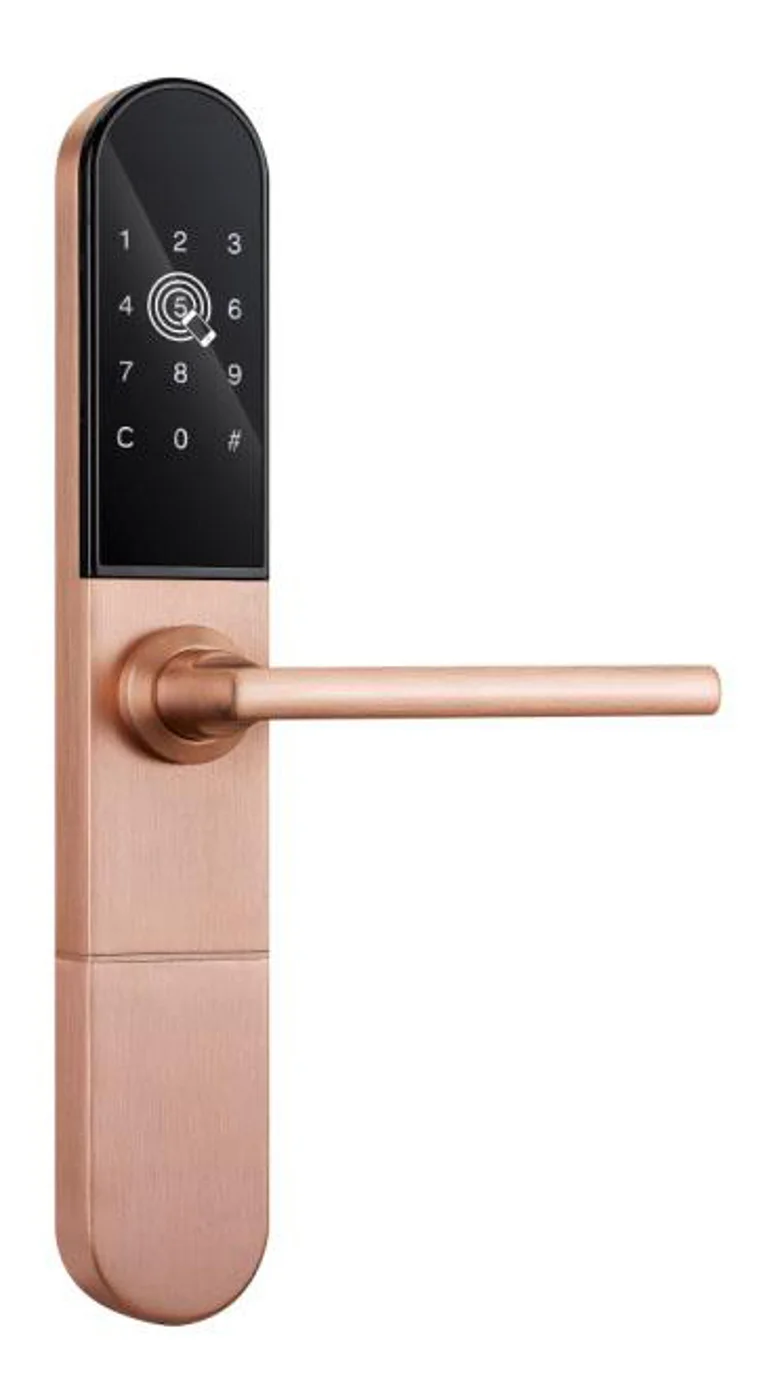
Smart Cabinet Lock — App-Managed, Multi-Site Dashboard
App-managed smart cabinet lock for office, parcel, and multi-site fleets. BLE app dashboard, audit trail, remote unlock, no per-lock server. Higher-tier chassis.
This page already points to it as the next recommended reference.
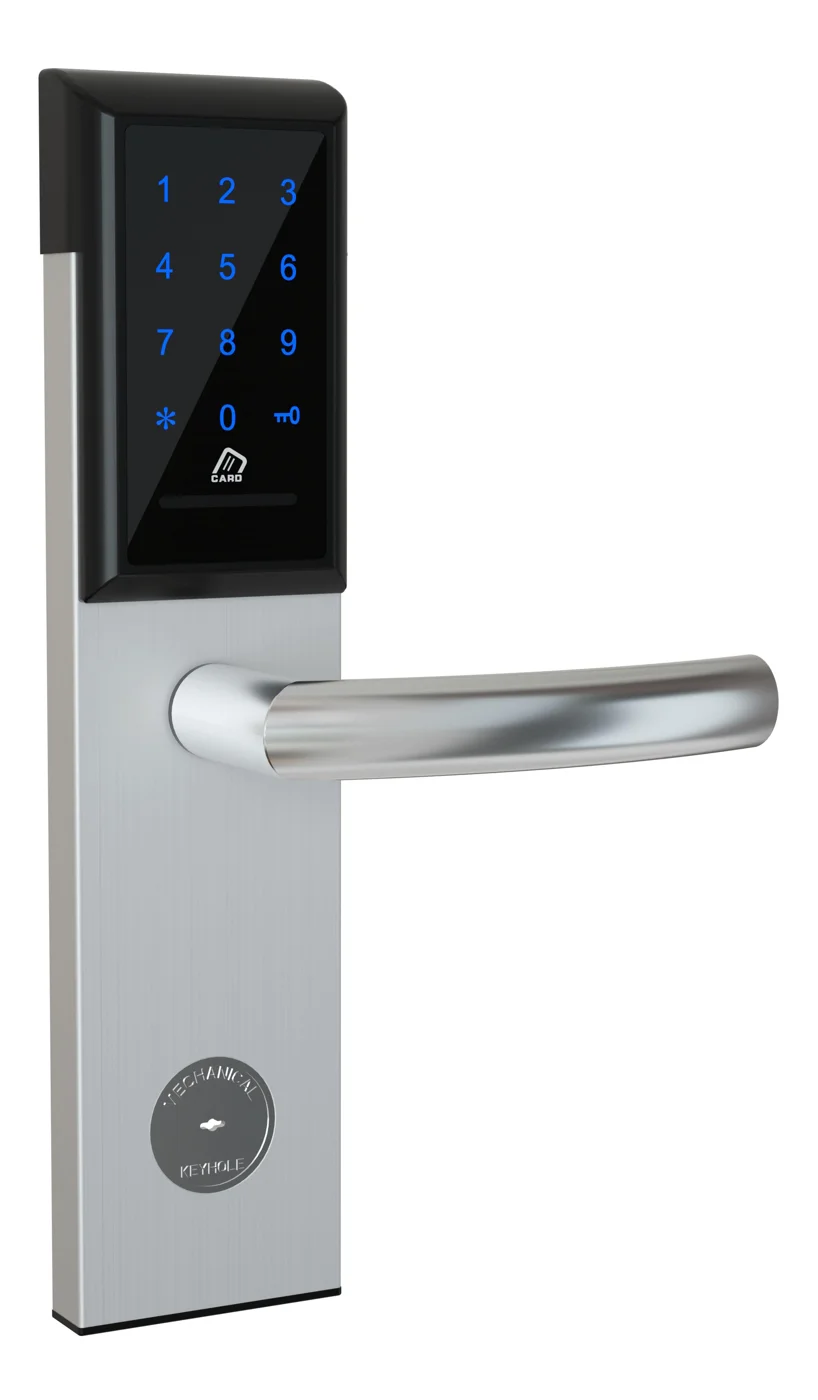
Office Cabinet Lock — PIN + Card for Filing & Pedestals
Offline PIN + card office cabinet lock for filing cabinets, pedestals, and drawers. Battery-powered 5-minute retrofit, no WiFi, no key management. CE/FCC/RoHS.
This page already points to it as the next recommended reference.
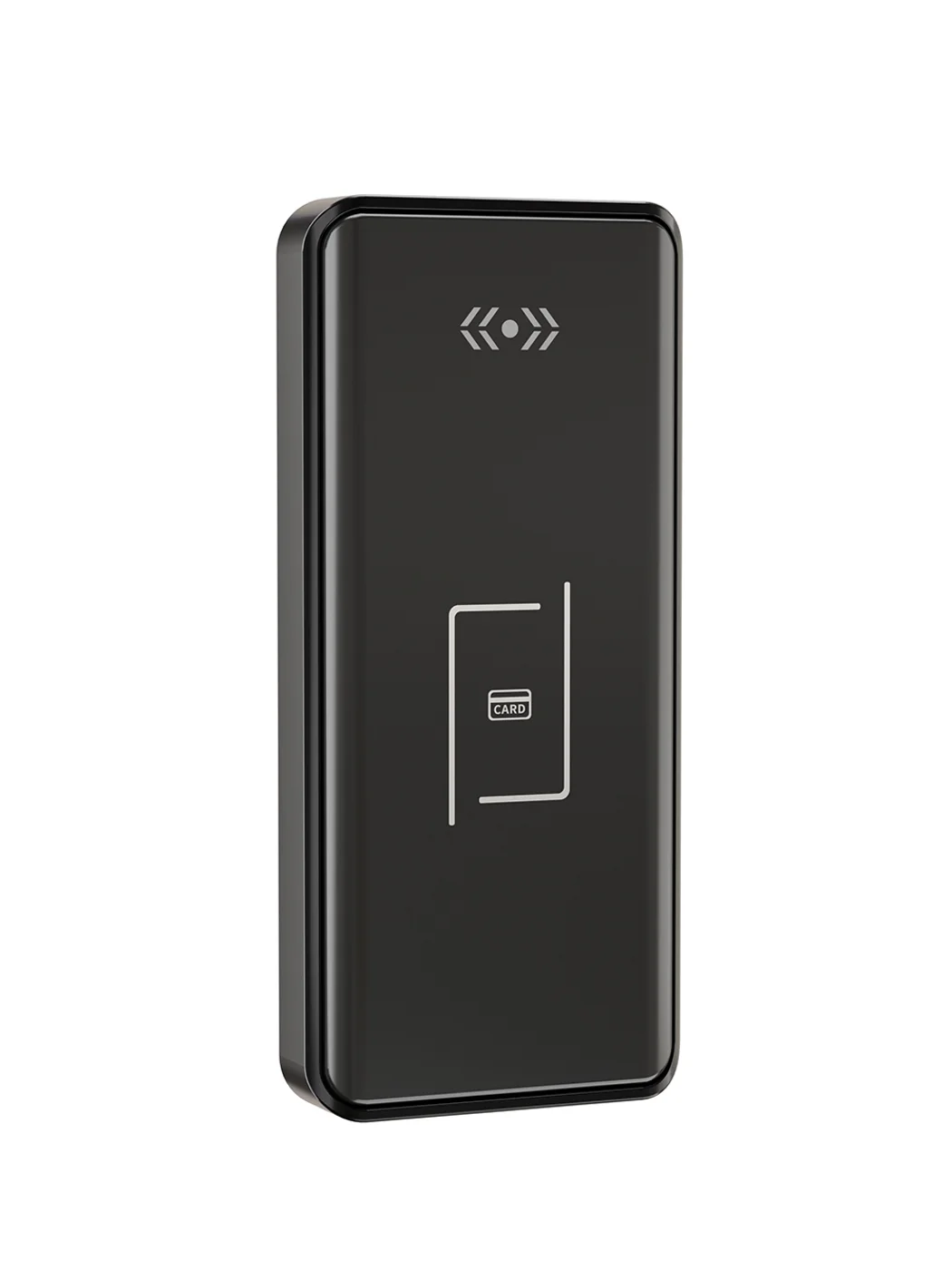
Gym Locker Lock — Offline Card, No WiFi Required
Offline card gym locker lock for fitness and pool lockers. MIFARE card, battery-powered 5-minute retrofit, no WiFi or server. Zinc alloy body, CE/FCC/RoHS.
This page already points to it as the next recommended reference.
Related blog posts
3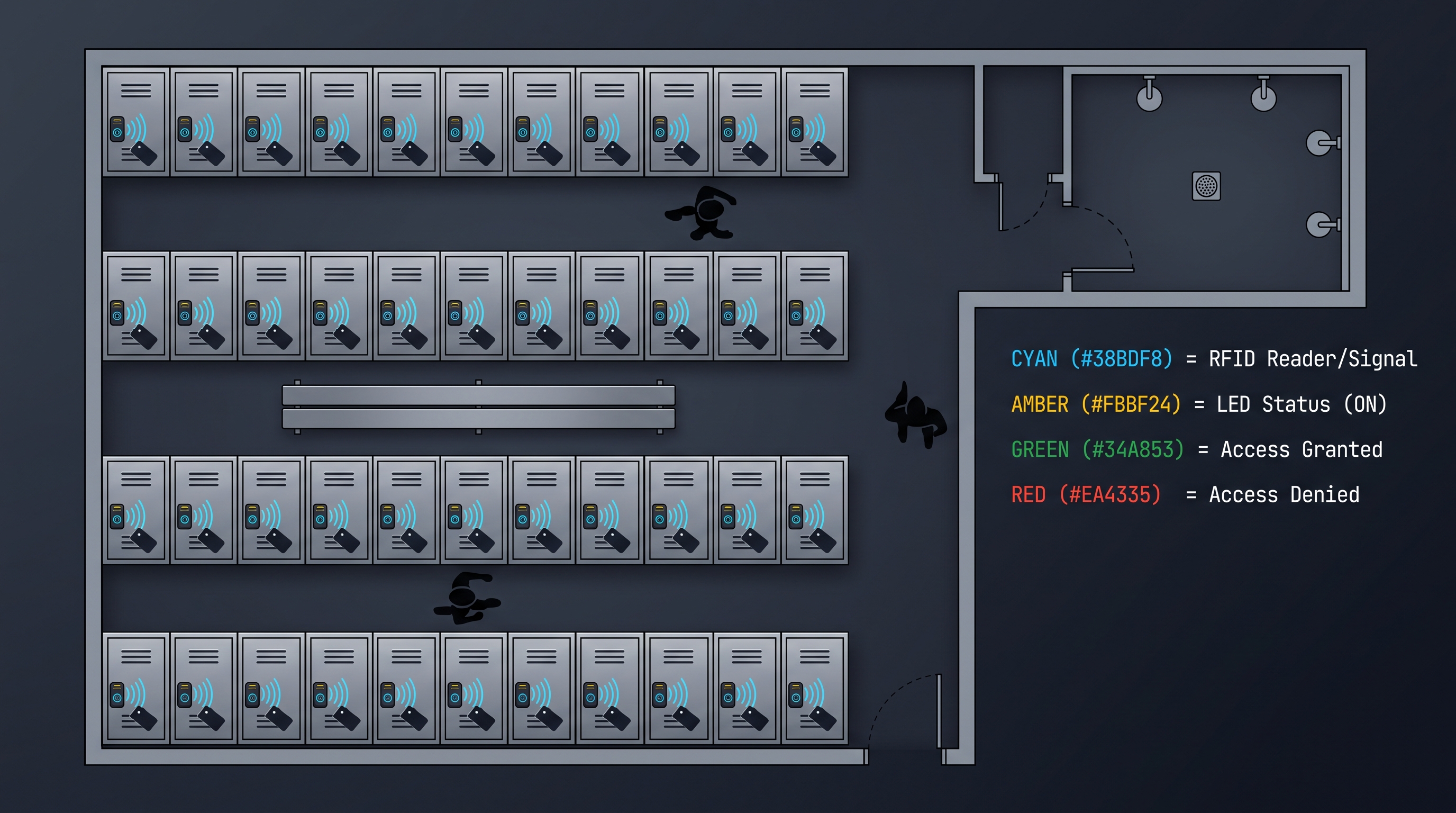
The Complete Guide to the IoT Locker Lock: Hardware, Cloud, and Fleet Management for Smart Locker Banks
Discover how an IoT locker lock powers delivery locker banks, shared-office cabinets, and smart gym storage. Wi-Fi, BLE, Zigbee, NB-IoT, LoRaWAN protocols, OTA firmware, telemetry, and procurement criteria.
It supports the same product context: Gym Locker Lock — Offline Card, No WiFi Required.
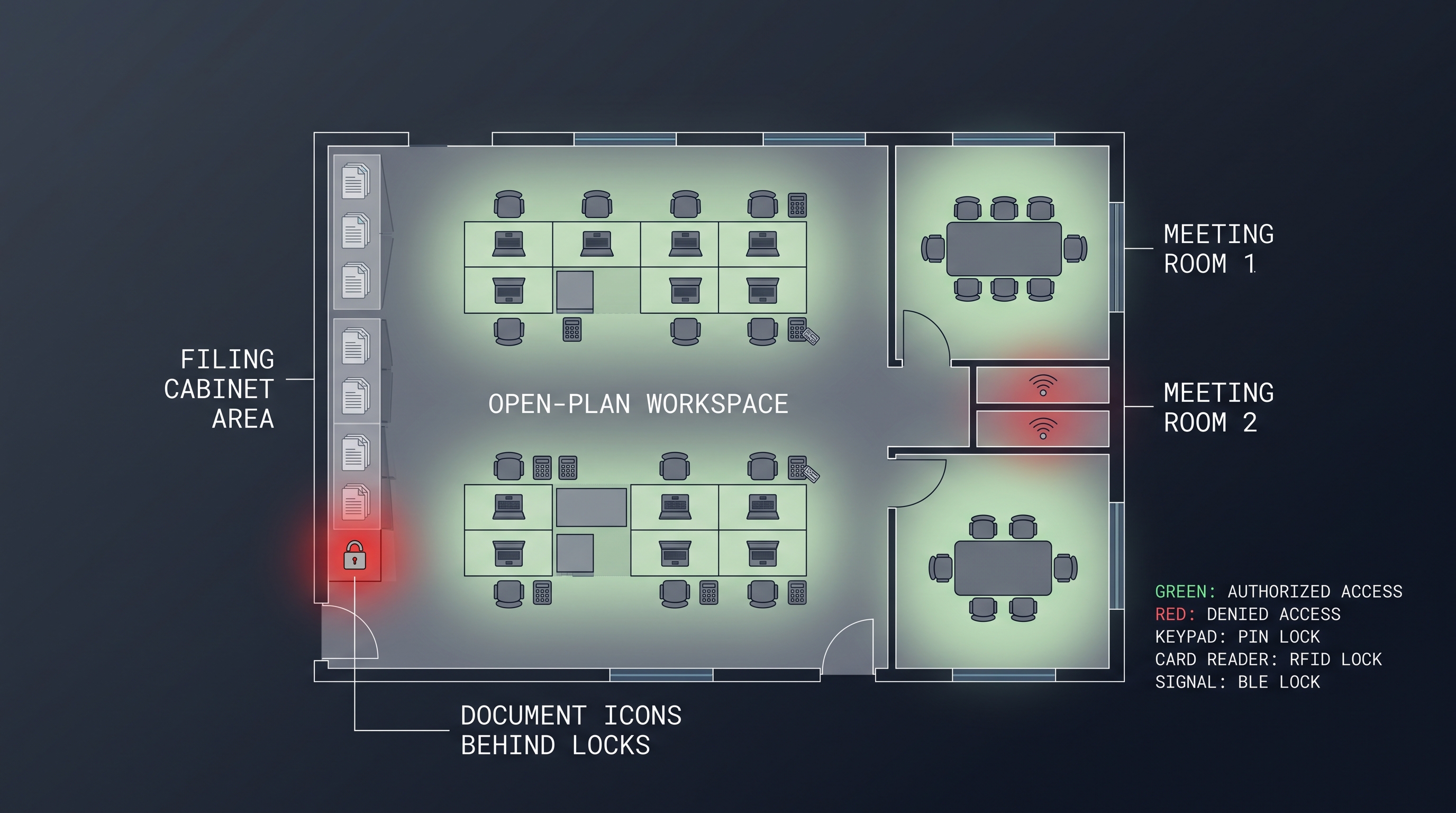
Invisible Cabinet Lock: The Complete 2026 Guide to Concealed, Undetectable Furniture and Cabinetry Security
Complete guide to invisible cabinet lock systems covering magnetic touch, RFID, electromagnetic, and Bluetooth concealed locks for luxury furniture, medical cabinets, retail displays, and office storage with installation, power, and selection criteria.
It supports the same product context: Office Cabinet Lock — PIN + Card for Filing & Pedestals.
Intelligent Locker Lock: The 2026 Guide to Smart Locker Access Control
Explore intelligent locker lock technology with RFID, fingerprint, and app credentials, plus buying guides and use cases for gyms, offices, and parcel lockers.
It supports the same product context: Gym Locker Lock — Offline Card, No WiFi Required.
Specify your hotel project with our engineers
Send your room count, ceiling type, and protocol preference. We will return a sample plan and quote within 24 business hours.
- Move from general guidance into a product or application discussion.
- Use RFQ when pricing, drawings, MOQ, or launch timing needs structure.
- Keep a direct contact path visible for fast clarifications and handoff.