Display Cabinet Lock: The Complete Guide to Securing Glass Showcases and Retail Display Cabinets
Learn how a display cabinet lock secures glass showcases and retail displays. Compare electromagnetic, RFID, and keyed display cabinet lock types for any application.
A display cabinet lock is a specialized locking mechanism designed to secure glass display cabinets, retail showcases, museum exhibit cases, and commercial display units where the contents must be visible to viewers but protected from theft and unauthorized access. Unlike standard cabinet locks that secure opaque doors, a display cabinet lock must function on transparent glass or acrylic panels, mount to narrow metal or wood frames surrounding the glass, and provide sufficient holding force to resist forced entry attempts while remaining unobtrusive enough not to detract from the displayed merchandise. Common display cabinet lock variants include electromagnetic locks providing 300 to 600 kg of holding force, RFID display cabinet locks operating at 125 kHz or 13.56 MHz, keyed cam locks mounted on the cabinet frame, and smart display cabinet locks with Bluetooth or WiFi connectivity. Selecting the appropriate display cabinet lock requires evaluating the glass thickness, frame material, display cabinet dimensions, power availability, and the value of the displayed items the display cabinet lock protects.
What Is a Display Cabinet Lock and Why It Matters for Retail Security
A display cabinet lock is a security device specifically engineered to secure display cabinets — glass-fronted showcases used in retail stores, museums, galleries, trade shows, and collector displays — where merchandise or artifacts must remain visible while being protected from theft. The display cabinet lock differs from standard cabinet locks in three critical ways: it must mount to the frame surrounding glass rather than drilling into the glass itself, it must provide holding force sufficient to resist showcase-specific attack methods such as glass smashing or frame prying, and it must be aesthetically unobtrusive so that the lock does not distract from the displayed items. The display cabinet lock achieves these objectives through electromagnetic holding force, mechanical cam lock engagement on the frame, RFID-controlled latches, or smart lock mechanisms integrated into the display cabinet structure. Understanding what makes a display cabinet lock distinct from a general cabinet lock is essential for securing retail and museum assets effectively.
The importance of a display cabinet lock for retail security cannot be overstated. Retail display cabinets contain the highest-value merchandise in a store — jewelry, electronics, collectibles, pharmaceuticals, and luxury goods — making them the primary target for both opportunistic theft and organized retail crime. The National Retail Federation reports that organized retail crime costs retailers over 700,000 USD per million dollars of sales annually, with display cabinet smash-and-grab attacks being a leading tactic. A properly specified display cabinet lock deters smash-and-grab attempts by holding the cabinet door closed even if the glass is broken, delays forced entry long enough for law enforcement or security to respond, and provides audit trail evidence when equipped with RFID or smart lock technology. For museums and galleries, a display cabinet lock protects irreplaceable artifacts and must meet insurance requirements that often specify minimum holding force and attack resistance ratings for the display cabinet lock.
Defining Characteristics of a Display Cabinet Lock
Several defining characteristics distinguish a display cabinet lock from other locking mechanisms. First, glass-compatible mounting: the display cabinet lock mounts to the metal or wood frame surrounding the glass panels, never penetrating the glass itself. Second, high holding force: a display cabinet lock typically provides 300 to 600 kg of holding force to resist forced entry through prying, pulling, or glass-breaking attacks. Third, frame-integrated design: the display cabinet lock is engineered to fit within the narrow profile of display cabinet frames, which are typically 20 to 40 mm wide. Fourth, aesthetic minimalism: the display cabinet lock is designed to be visually unobtrusive, with compact lock bodies and concealed mounting hardware that do not distract from the displayed items. Fifth, access control integration: many display cabinet lock variants support integration with retail access control systems, enabling centralized management of which staff can access which display cabinet lock and when. These characteristics collectively define the display cabinet lock category.
The Security Economics of Display Cabinet Locks
The economics of display cabinet lock selection are driven by the value of the protected merchandise and the cost of theft events. A display cabinet holding 10,000 USD of jewelry justifies a 100 to 150 USD electromagnetic display cabinet lock that provides 600 kg of holding force and RFID access control — the lock cost is 1 to 1.5 percent of the protected value, and preventing a single theft event pays for the display cabinet lock many times over. A display cabinet holding 500 USD of general merchandise may only justify a 20 to 30 USD keyed cam display cabinet lock, as the lock cost would be 4 to 6 percent of the protected value. The security economics also factor in insurance requirements: many retail insurance policies mandate specific display cabinet lock types and holding forces for high-value merchandise, and non-compliance can void theft coverage. For museums, insurance requirements for artifact display often specify display cabinet lock certifications such as EN 14846 grade 4 or higher, making certified display cabinet lock selection a regulatory as well as a security requirement.
Types of Display Cabinet Lock Mechanisms Compared
A display cabinet lock is manufactured in five primary mechanism types, each suited to different display cabinet constructions, security tiers, and access management requirements. The five dominant display cabinet lock variants are electromagnetic locks, RFID display cabinet locks, keyed cam locks, Bluetooth and smart display cabinet locks, and mechanical plunger locks. Electromagnetic display cabinet locks use continuous 12 V or 24 V DC power to sustain 300 to 600 kg of holding force and are the preferred choice for high-value retail displays and museum exhibit cases. RFID display cabinet locks read credentials at 125 kHz or 13.56 MHz and support multi-staff access with audit logging. Keyed cam display cabinet locks provide simple, power-free security at low cost for lower-value displays. Bluetooth and smart display cabinet locks integrate with smartphone apps for remote access and monitoring. Mechanical plunger display cabinet locks offer reliable, power-free operation for utility display cases. Each display cabinet lock type presents distinct trade-offs in power, installation, security, and cost.
Selecting among these display cabinet lock types requires matching the mechanism to the specific display cabinet application. For a jewelry showcase holding 20,000 USD of merchandise, an electromagnetic display cabinet lock with RFID access is the appropriate choice. For a museum display case holding irreplaceable artifacts, a certified electromagnetic display cabinet lock with dual-credential access provides the necessary security. For a trade show display cabinet holding moderate-value products, a keyed cam display cabinet lock may suffice. For a smart retail environment, a Bluetooth display cabinet lock with app-based access management offers modern convenience. The comparison table below summarizes the key parameters of each display cabinet lock type.
| Parameter | Electromagnetic | RFID | Keyed Cam | Bluetooth Smart | Mechanical Plunger |
|---|---|---|---|---|---|
| Power Required | 12/24 V DC | 12 V DC or battery | None | Battery | None |
| Holding Force | 300–600 kg | Moderate | Moderate | Moderate | Moderate |
| Credential | Key switch/RFID | RFID card/fob | Physical key | Smartphone app | Physical tool |
| Access Logging | Optional | Yes | No | Yes | No |
| Multi-User | Yes | Yes | Limited (key copies) | Yes | No |
| Cost (USD) | 30–120 | 25–80 | 5–20 | 40–150 | 5–15 |
| Installation | Moderate–Hard | Moderate | Easy | Easy–Moderate | Easy |
| Best Use | High-value retail | Multi-staff retail | Budget displays | Smart retail | Utility displays |
Electromagnetic Display Cabinet Lock
The electromagnetic display cabinet lock is the gold standard for securing high-value merchandise in glass display cabinets. It uses an electromagnet and a steel armature plate to hold the display cabinet door closed with 300 to 600 kg of holding force. When energized with 12 V or 24 V DC, the electromagnet generates a powerful magnetic field that grips the armature plate mounted on the display cabinet door, resisting all but the most determined forced entry attempts. Interrupting the power supply — through a key switch, RFID reader, push button, or access control system — releases the display cabinet lock. The electromagnetic display cabinet lock is inherently fail-safe, unlocking when power is removed, which is important for emergency egress but means a power outage disables security. This display cabinet lock type is preferred for jewelry showcases, museum exhibit cases, electronics displays, pharmaceutical cabinets, and any display cabinet requiring maximum holding force and integration with retail access control systems. Installation of an electromagnetic display cabinet lock requires hardwired power and cable routing to the access control trigger.
RFID Display Cabinet Lock
The RFID display cabinet lock embeds an RFID antenna in or behind the display cabinet frame, reading staff credentials at 125 kHz or 13.56 MHz. When an authorized staff member presents their RFID card, fob, or wristband within 2 to 5 cm of the concealed antenna, the controller verifies the credential and drives a solenoid or motor to release the display cabinet lock. The RFID display cabinet lock supports multi-staff access management, individual credential assignment and revocation, and audit logging — recording which staff member opened which display cabinet lock and when. This makes the RFID display cabinet lock the preferred choice for multi-staff retail environments, museum galleries with multiple exhibit cases, and any display cabinet application where accountability and access tracking are required. Power options include hardwired 12 V DC or battery packs. The 13.56 MHz variant offers enhanced security with encrypted credential protocols, while the 125 kHz variant is more economical but more vulnerable to credential cloning.
Keyed Cam Display Cabinet Lock
The keyed cam display cabinet lock is the simplest and most economical display cabinet lock option. It consists of a lock cylinder mounted on the display cabinet frame and a cam (a metal arm) that rotates to engage or disengage a strike plate on the door. The display cabinet lock is operated by a physical key inserted into the cylinder, which rotates the cam to lock or unlock the display cabinet. The keyed cam display cabinet lock requires no electrical power, has no electronic components to fail, and provides reliable operation at minimal cost. It is the standard display cabinet lock for lower-value retail displays, trade show cases, school trophy cases, and any display cabinet where the security requirements do not justify an electronic lock. Limitations include single-user operation (key duplication is the only multi-user option), no access logging, and vulnerability to lock picking and key duplication. For budget-conscious display cabinet security, the keyed cam display cabinet lock provides adequate protection at 5 to 20 USD.
Bluetooth and Smart Display Cabinet Lock
The Bluetooth and smart display cabinet lock represents the latest advancement in display cabinet security technology. A Bluetooth Low Energy module embedded in the display cabinet lock communicates with a smartphone app, allowing authorized staff to unlock the display cabinet by tapping a button in the app, or automatically via proximity unlock when the authorized phone comes within range. Some smart display cabinet locks also integrate with retail management systems via WiFi, enabling centralized access management across multiple display cabinet locks in a store, real-time notifications when a display cabinet lock is opened, and access scheduling (e.g., allowing specific staff access only during their shifts). The smart display cabinet lock typically operates on coin-cell or AA batteries and offers features including temporary digital keys for temporary staff, access logging, and integration with inventory management systems. This display cabinet lock type is ideal for modern retail environments, smart museums, and any display cabinet application where digital access management adds value.
Mechanical Plunger Display Cabinet Lock
The mechanical plunger display cabinet lock is a purely mechanical display cabinet locking device that operates on a push-to-lock, push-to-release principle. The plunger mechanism is installed inside the display cabinet frame; when the door is pushed closed, the plunger compresses and locks into a strike plate. Pushing the door inward again releases the plunger and opens the display cabinet lock. To prevent unauthorized access, a concealed release method — such as a pin hole accessible only with a specific tool or a hidden lever — must be used to actuate the release when the display cabinet lock is in locked mode. The mechanical plunger display cabinet lock requires no electrical power, contains no electronic components, and provides reliable operation in environments where electronics are unsuitable, such as outdoor display cases or high-humidity environments. Its security level is moderate, and this display cabinet lock is best suited for utility display cases, outdoor showcase cabinets, and applications where simplicity and reliability are paramount.
Display Cabinet Lock Installation Guide for Glass and Frame-Mounted Cabinets
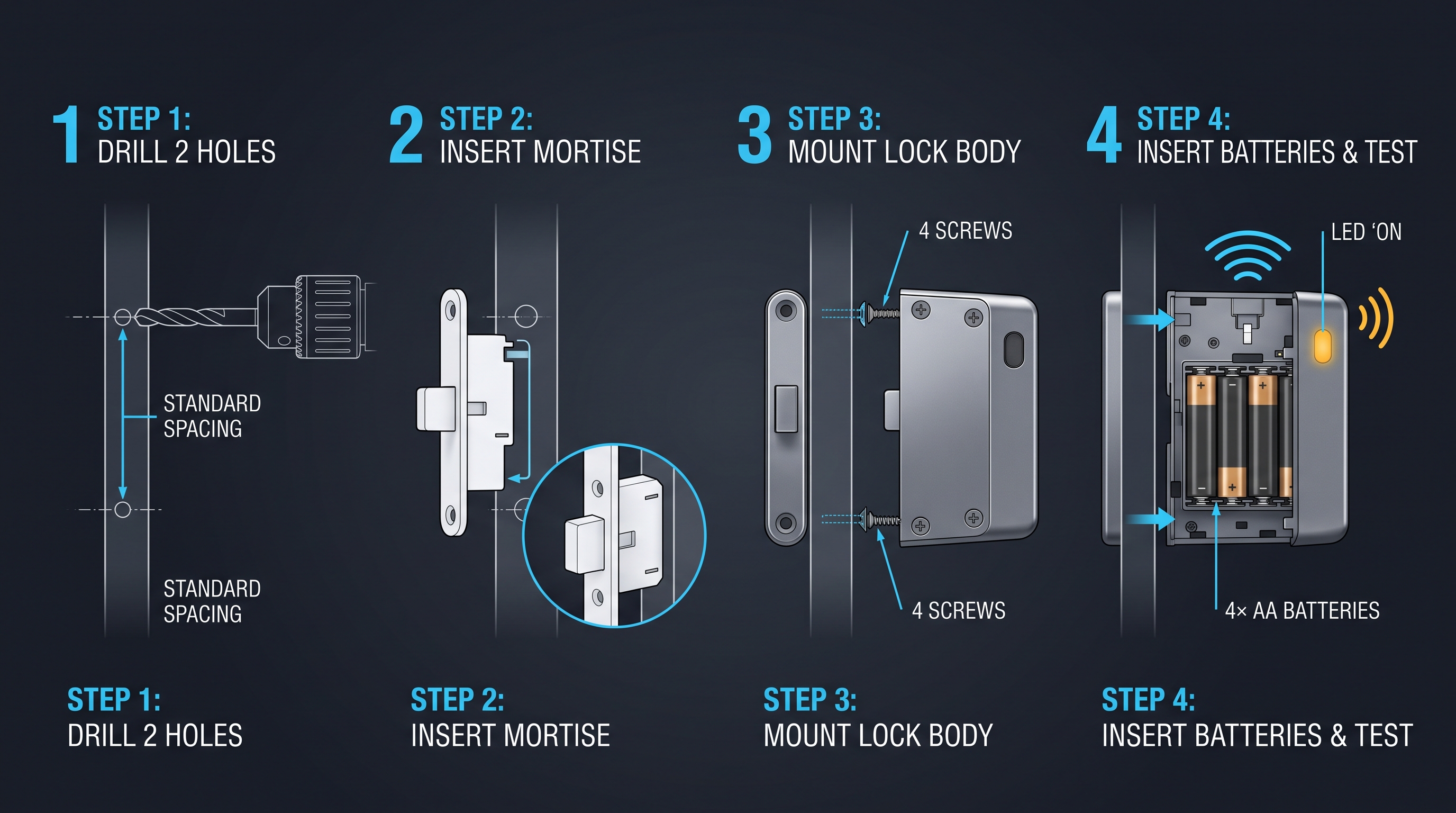
A display cabinet lock installation is the procedure of mounting a locking mechanism on or within a display cabinet frame to secure the glass door panel, and the installation technique varies substantially by frame material, glass type, and display cabinet construction. Glass display cabinets present unique installation challenges because the display cabinet lock cannot be mounted to the glass itself — it must attach to the metal or wood frame surrounding the glass. Aluminum frame display cabinets, the most common type in retail, accommodate screw-mounted display cabinet lock bodies with pilot holes drilled into the frame extrusion. Wood frame display cabinets allow screw mounting and may permit recessing the display cabinet lock body for a flush installation. Frameless glass display cabinets, which use tempered glass panels joined by metal clips or adhesive, require specialized display cabinet lock variants that clamp onto the glass edge or bond to the glass surface with high-strength adhesive. A successful display cabinet lock installation demands accurate measurement of the frame profile, verification that the lock body fits within the frame dimensions, and proper routing of power cables for powered display cabinet lock variants.
The installation complexity for a display cabinet lock ranges from 10 minutes for a keyed cam lock on a wood frame to several hours for an electromagnetic display cabinet lock requiring hardwired power, cable routing through the frame, and access control integration. Before beginning any display cabinet lock installation, assemble the required tools: a drill with appropriate bits for metal or wood, a screwdriver set, a tape measure, a pencil, a level, glass-safe cleaning supplies, and for powered locks, a multimeter and wire strippers. Always test-fit the display cabinet lock body before committing to permanent mounting. The following sections detail display cabinet lock installation procedures for each common display cabinet frame type.
Installing a Display Cabinet Lock on Aluminum Frame Cabinets
Aluminum frame display cabinets — the standard in retail jewelry, electronics, and collectible displays — use extruded aluminum profiles typically 20 to 40 mm wide. To install a display cabinet lock on an aluminum frame, begin by marking the lock body position on the interior side of the frame, ensuring it aligns with the door when closed. Drill pilot holes in the aluminum frame using a drill bit sized for the mounting screws (typically 3 mm for 4 mm screws). Secure the display cabinet lock body to the frame with self-tapping screws. Mount the strike plate or armature plate on the door frame section, aligned with the lock body. For an electromagnetic display cabinet lock, ensure the armature plate contacts the electromagnet fully when the door is closed — adjust the mounting position or use shims if the frame is slightly warped. Route power cables through the hollow interior of the aluminum frame extrusion, exiting at the base of the display cabinet where they connect to the power supply. Test the display cabinet lock operation five to ten times to confirm reliable engagement before declaring the installation complete.
Installing a Display Cabinet Lock on Wood Frame Cabinets
Wood frame display cabinets — found in museums, galleries, antique shops, and custom furniture — accommodate display cabinet lock installation with standard woodworking techniques. Mark the display cabinet lock body position on the interior of the wood frame, drill pilot holes, and secure the lock body with wood screws. For a recessed display cabinet lock installation, use a Forstner bit to create a cavity in the wood frame that houses the lock body flush with the surface. Mount the strike plate or armature plate on the door frame section. For electromagnetic display cabinet locks on wood frames, ensure the armature plate makes full contact with the electromagnet — wood frames may warp with humidity changes, requiring periodic adjustment. Route power cables along the interior of the wood frame, securing them with cable clips and concealing them behind trim if aesthetic considerations demand. Wood frame display cabinets may require additional weatherproofing for the display cabinet lock if the cabinet is in a humid environment, as wood expansion and contraction can affect lock alignment over time.
Installing a Display Cabinet Lock on Frameless Glass Cabinets
Frameless glass display cabinets — which use tempered glass panels joined by metal clips, adhesive, or stand-off fittings — present the most challenging display cabinet lock installation scenario. The display cabinet lock cannot penetrate the glass and must either clamp onto the glass edge or bond to the glass surface. Clamp-on display cabinet locks grip the glass edge with padded jaws, providing a mechanical mounting without drilling. Adhesive-mount display cabinet locks use high-strength structural adhesive (rated for 10 to 20 kg of shear force) to bond the lock body to the glass surface. Electromagnetic display cabinet locks are the most common choice for frameless glass cabinets because the armature plate can be bonded to the glass door and the electromagnet bonded to the adjacent fixed glass panel, providing invisible locking with high holding force. For any frameless glass display cabinet lock installation, clean the glass surfaces thoroughly with isopropyl alcohol before applying adhesive, allow the adhesive to cure for the full manufacturer-specified time (typically 24 to 72 hours), and test the bond strength before relying on the display cabinet lock for security. Never drill into tempered glass — it will shatter.
How to Choose the Right Display Cabinet Lock
Choosing the right display cabinet lock requires a systematic evaluation of five primary selection criteria: security level, access method, power availability, display cabinet compatibility, and budget. A display cabinet lock for a low-value display case needs only basic deterrence and no power, making a keyed cam display cabinet lock ideal at 5 to 20 USD. A display cabinet lock for a jewelry showcase requires high holding force and audit logging, pointing to an electromagnetic or RFID display cabinet lock at 30 to 120 USD. A display cabinet lock for a smart retail environment benefits from app control and centralized management, favoring a Bluetooth or WiFi smart display cabinet lock at 40 to 150 USD. The display cabinet lock selection process begins with a threat assessment — what merchandise is displayed, what is its value, what theft methods are likely — and then maps the security requirement to a display cabinet lock type, access method, and budget.
Beyond the five primary criteria, consider secondary factors that affect long-term satisfaction with the display cabinet lock. Battery life for wireless display cabinet lock variants ranges from 6 months for Bluetooth smart locks to 12 months for RFID battery-powered locks. Warranty periods for a display cabinet lock range from 1 to 5 years, with electromagnetic display cabinet locks typically carrying the longest warranties. Visual unobtrusiveness matters for display cabinet locks — the lock should not distract from the displayed merchandise, so choose compact lock bodies and concealed mounting hardware. Credential management complexity varies by display cabinet lock type: keyed cam locks require physical key management and duplication, while RFID and smart display cabinet locks support instant credential deletion and reissuance. The decision matrix below maps common display cabinet applications to the recommended display cabinet lock type.
| Application | Recommended Lock | Security Grade | Access Method | Budget (USD) |
|---|---|---|---|---|
| Jewelry showcase | Electromagnetic | High | RFID/key switch | 50–120 |
| Electronics display | Electromagnetic | High | Key switch/RFID | 40–100 |
| Museum exhibit case | Electromagnetic | High | Dual credential | 60–150 |
| Pharmacy display | RFID | Medium-High | RFID badge | 30–80 |
| Trade show display | Keyed cam | Low-Medium | Physical key | 5–20 |
| School trophy case | Keyed cam | Low | Physical key | 5–15 |
| Smart retail display | Bluetooth smart | Medium | Smartphone app | 40–150 |
| Outdoor display case | Mechanical plunger | Medium | Physical tool | 5–15 |
| Collectible display | Electromagnetic | High | RFID/key switch | 40–120 |
Security Level Assessment for Display Cabinet Locks
Security level is the most critical factor in display cabinet lock selection. Assess security on three dimensions: holding force, bypass resistance, and credential security. Holding force for electromagnetic display cabinet locks ranges from 300 kg for entry-level models to 600 kg or more for high-security units — a 300 kg display cabinet lock resists casual pulling and prying, but a determined attacker with a pry bar could eventually defeat it, while a 600 kg display cabinet lock resists all but professional-grade breaching tools. Bypass resistance for keyed cam display cabinet locks depends on the cylinder quality: standard pin tumbler cylinders can be picked in under 60 seconds by a skilled locksmith, while high-security cylinders with sidebar protection and drill resistance resist picking and drilling for 5 to 15 minutes. Credential security for RFID display cabinet locks depends on the frequency: 125 kHz cards are cloneable with a 10 USD reader, while 13.56 MHz Mifare DESFire cards with AES-128 encryption are effectively unclonable. Match the display cabinet lock security level to the merchandise value and the sophistication of likely theft attempts.
Power and Wiring Considerations for Display Cabinet Locks
Power availability constrains display cabinet lock selection significantly. If the display cabinet is near an electrical outlet or can be connected to building power, hardwired 12 V DC electromagnetic and RFID display cabinet locks offer the highest reliability and unlimited operation. If no power is available — common for freestanding display cabinets in retail aisles or trade show booths — the options narrow to battery-powered RFID display cabinet locks (4 AA batteries, 6 to 12 month life), battery-powered Bluetooth smart display cabinet locks (CR2032 or AA, 6 month life), or non-powered keyed cam and mechanical plunger display cabinet locks. For display cabinet lock installations requiring hardwired power, plan the cable route from the power supply to the display cabinet lock body, ensuring cables are concealed within the display cabinet frame and protected from damage. Many retail display cabinets include internal cable channels in the aluminum frame extrusion specifically designed for display cabinet lock power wiring. Use 22 AWG or thicker wire for runs under 3 meters. For battery-powered display cabinet locks, choose models with low-battery indicators to prevent lockout when batteries deplete.
Display Cabinet Lock Security Grades and Industry Certifications
A display cabinet lock security grade is a standardized classification that rates the display cabinet lock resistance to forced attack, and the applicable frameworks include the European EN 14846 standard, the American ANSI/BHMA grading system, and the Sold Secure framework. EN 14846 classifies electromechanical display cabinet locks into grades 1 through 6, where grade 6 represents the highest security with requirements for 1,000 Newton lateral force resistance and 500 Newton axial force resistance. ANSI/BHMA grades range from grade 3 (residential, lowest) through grade 1 (commercial, highest), with grade 1 display cabinet locks tested to 800,000 open-close cycles. Sold Secure assigns Bronze, Silver, and Gold ratings based on structured attack testing. A display cabinet lock carrying an EN 14846 grade 4 or higher, an ANSI/BHMA grade 2 or higher, or a Sold Secure Silver rating provides meaningful forced-attack resistance suitable for protecting valuable merchandise. Certification testing for a display cabinet lock is performed by accredited laboratories including TUV, Intertek, and UL.
For retail and museum applications, display cabinet lock certification may be an insurance or regulatory requirement. Many retail insurance policies specify minimum display cabinet lock security grades for high-value merchandise, and museums must often meet insurance requirements that specify display cabinet lock certifications for artifact exhibit cases. When evaluating a certified display cabinet lock, look beyond the grade to the specific test parameters: cycle count, force resistance values, environmental testing conditions, and attack method categories. The comparison table below maps the major certification frameworks to their security tiers and applicable display cabinet lock types.
| Certification | Grade/Rating | Security Level | Typical Application | Applicable Lock Types |
|---|---|---|---|---|
| EN 14846 | Grade 1–2 | Low | School trophy cases | Keyed cam, mechanical |
| EN 14846 | Grade 3–4 | Medium | Retail displays | RFID, electromagnetic |
| EN 14846 | Grade 5–6 | High | Jewelry, museum | Electromagnetic |
| ANSI/BHMA | Grade 3 | Residential | Home display | Keyed cam, mechanical |
| ANSI/BHMA | Grade 2 | Light commercial | Retail, trade show | RFID, electromagnetic |
| ANSI/BHMA | Grade 1 | Commercial | High-value retail | Electromagnetic |
| Sold Secure | Bronze | Basic | Low-value display | Keyed cam, mechanical |
| Sold Secure | Silver | Medium | Valuable display | RFID, electromagnetic |
| Sold Secure | Gold | High | High-value, critical | Electromagnetic |
EN 14846 Certification for Display Cabinet Locks
EN 14846 is the European standard specifically addressing electromechanical locks, including display cabinet lock variants that use electrical actuation. The standard defines six security grades based on endurance (open-close cycles), lateral and axial force resistance, environmental resistance, and manipulation resistance. For a display cabinet lock to achieve EN 14846 grade 4, it must withstand 100,000 operating cycles, 1,000 Newton lateral force, 500 Newton axial force, and 72 hours of humidity cycling at 40 degrees Celsius and 95 percent relative humidity. Grade 6 requires 500,000 cycles, 2,000 Newton lateral force, and 1,000 Newton axial force. When sourcing a display cabinet lock for a commercial retail or museum application in Europe or markets recognizing European standards, EN 14846 certification is frequently a procurement and insurance requirement. Verify display cabinet lock certification by requesting the test certificate from the manufacturer.
ANSI/BHMA Grading for Display Cabinet Locks
The ANSI/BHMA grading system is the dominant security standard in North America for display cabinet lock evaluation. ANSI/BHMA grade 1 represents the highest security level, tested to 800,000 cycles and significant force resistance. Grade 2 is intermediate, tested to 400,000 cycles, suitable for retail display cabinet lock applications. Grade 3 is residential, tested to 200,000 cycles. For a display cabinet lock, ANSI/BHMA grade 2 is typically the minimum recommended for retail applications, while grade 1 is appropriate for high-value merchandise displays and museum exhibit cases. The ANSI/BHMA standard for cabinet locks is ANSI/BHMA A156.11, which is the relevant sub-standard for evaluating a display cabinet lock. Products certified to ANSI/BHMA standards carry a certification mark and can be verified in the BHMA certified products directory.
Display Cabinet Lock vs Standard Cabinet Lock: Key Differences
A display cabinet lock differs from a standard cabinet lock in several critical ways that reflect the unique security and aesthetic requirements of display applications. The primary difference is glass compatibility: a display cabinet lock must mount to the frame surrounding glass panels rather than drilling into an opaque door, while a standard cabinet lock typically mounts through a wood or metal door. The second difference is holding force: a display cabinet lock typically provides 300 to 600 kg of holding force to resist showcase-specific attacks such as glass smashing and frame prying, while a standard cabinet lock may provide only moderate holding force since the opaque door itself provides additional resistance. The third difference is aesthetic unobtrusiveness: a display cabinet lock must be visually minimal so it does not distract from displayed merchandise, while a standard cabinet lock may have a more visible profile. The fourth difference is access control integration: a display cabinet lock is more likely to support multi-staff access management and audit logging for retail and museum accountability.
The display cabinet lock versus standard cabinet lock decision is straightforward: if the cabinet has glass doors or panels and is used to display merchandise or artifacts, a display cabinet lock is the correct choice. If the cabinet has opaque doors and is used for general storage, a standard cabinet lock may suffice. The comparison table below summarizes the key differences.
| Factor | Display Cabinet Lock | Standard Cabinet Lock |
|---|---|---|
| Glass compatibility | Yes — mounts to frame | No — mounts through door |
| Holding force | 300–600 kg (electromagnetic) | Moderate |
| Aesthetic unobtrusiveness | High — minimal visual profile | Moderate |
| Frame mounting | Yes — designed for narrow frames | No — designed for door mounting |
| Access control integration | Common (RFID, smart) | Less common |
| Multi-staff access | Yes (RFID, smart variants) | Limited |
| Audit logging | Yes (electronic variants) | No |
| Cost (USD) | 5–150 | 3–80 |
| Best application | Glass display cabinets | Opaque storage cabinets |
When a Display Cabinet Lock Is Essential
A display cabinet lock is essential whenever glass-fronted cabinets are used to display valuable or irreplaceable items. In retail environments, jewelry showcases, electronics displays, pharmaceutical cabinets, and luxury goods displays all require a display cabinet lock that provides high holding force and access control. In museum and gallery environments, artifact exhibit cases require a display cabinet lock that meets insurance specifications for holding force and attack resistance. In collector displays — coin cases, stamp displays, sports memorabilia, figurine cabinets — a display cabinet lock protects collectibles that may be irreplaceable and whose value appreciates over time. In trade show environments, a display cabinet lock secures product samples and demo units that are transported between events and displayed in public aisles. In all these scenarios, the display cabinet lock is not optional — it is the primary physical security barrier between valuable items and potential theft.
When a Standard Cabinet Lock May Suffice
A standard cabinet lock may suffice when the cabinet has opaque doors and is used for general storage rather than display. In office storage cabinets, filing cabinets, and supply closets, a standard cabinet lock provides adequate security without the specialized features of a display cabinet lock. In residential applications such as pantry cabinets, garage storage, and utility cabinets, a standard cabinet lock is appropriate. In hospitality back-of-house storage, a standard cabinet lock secures supplies and equipment without the need for the high holding force or aesthetic minimalism of a display cabinet lock. The cost savings of a standard cabinet lock (3 to 80 USD versus 5 to 150 USD for a display cabinet lock) make it the economical choice when display-specific features are not required. However, if the cabinet has glass doors — even if used for storage rather than display — a display cabinet lock is recommended for the superior glass-compatible mounting and higher holding force.
Smart Retail Integration for Your Display Cabinet Lock
A smart retail integrated display cabinet lock connects to a retail management or access control system via WiFi, Bluetooth, Zigbee, or a wired network, enabling centralized management, scheduling, audit logging, and real-time monitoring across all display cabinet locks in a store. The smart display cabinet lock typically pairs with a management dashboard that provides lock and unlock controls for each display cabinet lock, staff credential management, access scheduling (e.g., allowing specific staff access to specific display cabinet locks only during their shifts), and real-time alerts when a display cabinet lock is opened outside of authorized hours or by an unauthorized credential. WiFi display cabinet lock variants connect directly to the store network for cloud-based management, while Zigbee and wired display cabinet lock variants integrate with existing retail access control infrastructure. The smart display cabinet lock is particularly valuable in multi-location retail chains where centralized access management across all stores' display cabinet locks reduces administrative overhead and improves security consistency.
Smart retail integration elevates the display cabinet lock from a standalone physical barrier to a component of a coordinated retail security ecosystem. The practical benefits are significant: receiving an alert when a display cabinet lock is opened after store hours, automatically logging which staff member accessed which display cabinet lock during a theft investigation, or temporarily granting a vendor access to a specific display cabinet lock for restocking. The comparison table below evaluates the major connectivity options for smart display cabinet lock integration.
| Protocol | Range | Battery Life | Hub Required | Cloud Access | Best For |
|---|---|---|---|---|---|
| WiFi | 30–50 m | 3–6 months | No | Yes (direct) | Cloud-managed retail |
| Bluetooth (BLE) | 10–30 m | 6–12 months | No | No (via phone) | Single-store, app-based |
| Zigbee | 30–100 m | 8–14 months | Yes | Yes (via hub) | Multi-device retail |
| Wired (RS-485) | 300+ m | N/A (powered) | Controller | Yes (via controller) | Enterprise retail chains |
WiFi Display Cabinet Lock Integration
A WiFi display cabinet lock connects directly to the store's WiFi network, enabling cloud-based management of the display cabinet lock from any location. The management dashboard provides lock and unlock controls, staff credential management, access scheduling, and real-time notifications when the display cabinet lock is opened. WiFi display cabinet locks are ideal for multi-location retail chains where a central security team needs to monitor and manage display cabinet locks across all stores from a single dashboard. The limitation of WiFi is battery consumption — WiFi display cabinet locks typically require battery replacement every 3 to 6 months, or hardwired power for continuous operation. For retail environments with hardwired power available at each display cabinet, WiFi display cabinet locks offer the best combination of cloud management and installation flexibility.
Bluetooth Display Cabinet Lock Integration
A Bluetooth display cabinet lock pairs directly with a smartphone app, allowing authorized staff to unlock the display cabinet by tapping a button in the app or via proximity unlock. Bluetooth display cabinet locks do not require a hub or network connection, making them easy to deploy in single-store retail environments without existing access control infrastructure. Battery life for Bluetooth display cabinet locks is typically 6 to 12 months, making them lower-maintenance than WiFi variants. The limitation is range: control is limited to within 10 to 30 meters of the display cabinet lock, and remote management from outside the store requires a WiFi bridge. For single-store retail, museum galleries, and trade show displays, a Bluetooth display cabinet lock offers an excellent balance of convenience, battery life, and cost.
Display Cabinet Lock Maintenance and Troubleshooting
A display cabinet lock requires regular maintenance to ensure reliable display cabinet lock operation over its service life, and the maintenance regime differs by display cabinet lock type. Electromagnetic display cabinet locks require periodic inspection of the armature plate contact surface for corrosion or debris, verification of power supply voltage (12 V or 24 V DC within plus or minus 10 percent), and testing of the display cabinet lock release mechanism under load. RFID display cabinet locks need battery replacement every 6 to 12 months, antenna position verification, and periodic review of the staff credential database. Keyed cam display cabinet locks need occasional lock cylinder lubrication with graphite powder and inspection of the cam and strike plate for wear. Bluetooth and smart display cabinet locks require battery replacement, app or firmware updates, and verification of wireless connectivity to the display cabinet lock. A well-maintained display cabinet lock provides 5 to 10 years of reliable service, while a neglected display cabinet lock may fail within 2 to 3 years.
Troubleshooting a display cabinet lock follows a systematic approach: identify the symptom, isolate the cause, and apply the fix for the display cabinet lock. The most common display cabinet lock problems are failure to lock, failure to unlock, intermittent operation, and credential non-recognition when using the display cabinet lock. The troubleshooting table below maps display cabinet lock symptoms to likely causes and fixes.
| Symptom | Likely Cause | Fix |
|---|---|---|
| Electromagnetic lock will not hold | Dirty armature plate, low voltage, warped frame | Clean plate, check power supply, shim frame |
| RFID lock does not read credential | Dead battery, antenna misaligned, card damaged | Replace battery, reposition antenna, replace card |
| Keyed cam lock will not turn | Worn key, dirty cylinder, misaligned strike | Replace key, lubricate cylinder, realign strike |
| Bluetooth lock will not connect | Dead battery, phone Bluetooth off, app outdated | Replace battery, enable Bluetooth, update app |
| Lock engages but door opens anyway | Strike plate misaligned, armature plate loose | Realign strike plate, tighten armature plate |
| Intermittent operation | Loose wiring, low battery, humidity corrosion | Tighten connections, replace battery, clean contacts |
| Glass door misalignment affecting lock | Hinge settling, frame warping | Adjust hinges, shim frame, realign lock body |
Routine Maintenance Schedule for Display Cabinet Locks
Establish a routine maintenance schedule for the display cabinet lock to prevent display cabinet lock failures and extend service life. Monthly: test each display cabinet lock and unlock operation three to five times, and visually inspect the display cabinet lock body, armature plate, and strike plate for loose fasteners, debris, or corrosion. Quarterly: clean the display cabinet lock contact surfaces and armature plate with isopropyl alcohol, check power supply voltage for powered display cabinet locks, and verify that all staff credentials (keys, RFID cards, app access) function correctly with the display cabinet lock. Semi-annually: replace batteries in battery-powered display cabinet locks, review and update the staff credential database for RFID and smart display cabinet locks, and inspect cable connections for powered display cabinet locks. Annually: perform a full operational test under load, lubricate keyed cam display cabinet lock cylinders with graphite powder, and verify that the display cabinet lock still meets the security requirements of its application. Document each display cabinet lock maintenance action to build a service history.
Common Display Cabinet Lock Failures and Solutions
The most common display cabinet lock failure is battery depletion in wireless variants, which causes the display cabinet lock to stop responding to credentials. The solution is preventive: use low-battery indicators and replace batteries at 20 percent capacity. For electromagnetic display cabinet locks, the most common failure is armature plate contamination — dust and glass cleaner residue on the contact surface reduces holding force by 50 percent or more. The solution is quarterly cleaning with isopropyl alcohol. For RFID display cabinet locks, antenna misalignment after frame adjustment or hinge settling causes intermittent credential reads. The solution is to reposition the antenna. For keyed cam display cabinet locks, cylinder wear and key duplication degradation cause the key to stick or fail to turn. The solution is cylinder replacement and cutting new keys from the original blank. In all cases, retaining spare parts (extra keys, replacement armature plates, spare solenoids) accelerates troubleshooting and minimizes display cabinet downtime.
Display Cabinet Lock Applications Across Retail and Museum Environments
A display cabinet lock serves critical applications across retail, museum, gallery, trade show, collector, and institutional environments, each with distinct requirements for security level, access method, and aesthetic integration. In retail, the display cabinet lock secures jewelry showcases, electronics displays, pharmaceutical cabinets, luxury goods displays, and cosmetic testers. In museums and galleries, the display cabinet lock secures artifact exhibit cases, art display vitrines, and interactive display units. At trade shows, the display cabinet lock secures product demo cabinets and sample display cases. In collector environments, the display cabinet lock secures coin, stamp, card, and memorabilia displays. In institutional settings, the display cabinet lock secures school trophy cases, church display cabinets, and government exhibit cases. Each application of the display cabinet lock demands a specific combination of security grade, access method, and form factor.
The diversity of display cabinet lock applications means no single lock type serves all needs. The table below maps environment applications to the recommended display cabinet lock characteristics.
| Environment/Application | Recommended Lock | Security Grade | Access Method | Special Requirement |
|---|---|---|---|---|
| Jewelry showcase | Electromagnetic | High | RFID/key switch | Insurance compliance |
| Electronics display | Electromagnetic | High | Key switch/RFID | High holding force |
| Museum exhibit case | Electromagnetic | High | Dual credential | EN 14846 certified |
| Pharmacy display | RFID | Medium-High | RFID badge | Audit logging |
| Trade show display | Keyed cam | Low-Medium | Physical key | Portable, no power |
| School trophy case | Keyed cam | Low | Physical key | Budget, durable |
| Smart retail display | Bluetooth smart | Medium | Smartphone app | Cloud management |
| Outdoor display case | Mechanical plunger | Medium | Physical tool | Weather resistant |
| Collector display | Electromagnetic | High | RFID/key switch | Aesthetic minimalism |
Retail Display Cabinet Lock Applications
In retail environments, the display cabinet lock is the primary physical security barrier for high-value merchandise. Jewelry showcases use electromagnetic display cabinet locks with 600 kg of holding force and RFID access control, ensuring that only authorized staff can open the showcase and that every access is logged for audit purposes. Electronics displays use electromagnetic display cabinet locks to secure smartphones, tablets, and accessories — the high holding force resists smash-and-grab attacks where a thief attempts to yank the display door open. Pharmaceutical display cabinets use RFID display cabinet locks to comply with controlled substance storage regulations, which require audit logging of all access. Luxury goods displays — watches, handbags, fragrances — use electromagnetic or RFID display cabinet locks that combine high security with aesthetic minimalism so the lock does not detract from the luxury brand presentation. In all retail applications, the display cabinet lock must balance maximum holding force with visual unobtrusiveness and operational efficiency for staff who access the display cabinet frequently throughout the business day.
Museum and Gallery Display Cabinet Lock Applications
In museum and gallery environments, the display cabinet lock must meet stringent insurance and conservation requirements that often exceed retail security standards. Museum exhibit cases use electromagnetic display cabinet locks certified to EN 14846 grade 5 or 6, providing 600 kg or more of holding force and dual-credential access (two-person rule) for high-value artifacts. The display cabinet lock must be aesthetically invisible — museum visitors should see the artifact, not the lock — so compact lock bodies and concealed mounting are essential. Museum display cabinet locks also support environmental conservation requirements: the lock must not create thermal bridges that could cause condensation inside the exhibit case, and electromagnetic display cabinet locks must be shielded to prevent electromagnetic interference with sensitive artifact materials. For traveling exhibitions, the display cabinet lock must be robust enough to withstand repeated installation and removal without degrading. Museum insurance policies typically specify minimum display cabinet lock certifications and holding forces, making certified display cabinet lock selection a compliance requirement as well as a security decision.
Display Cabinet Lock Cost Analysis and Return on Investment
A display cabinet lock cost analysis must consider not only the purchase price but also installation, power, maintenance, and the value of protected merchandise over the display cabinet lock service life. The purchase price of a display cabinet lock ranges from 5 USD for a basic keyed cam lock to 150 USD for a high-end electromagnetic or smart display cabinet lock, with mid-range RFID and electromagnetic display cabinet locks at 25 to 120 USD. Installation costs range from zero (DIY keyed cam display cabinet lock) to 100 to 300 USD for professional installation of an electromagnetic display cabinet lock requiring hardwired power and access control integration. Power costs for electromagnetic display cabinet locks are minimal — a 12 V DC, 300 mA display cabinet lock consumes approximately 3.6 watts, costing under 5 USD per year in electricity. Maintenance costs over a 10-year service life include battery replacement for wireless display cabinet lock variants and occasional component replacement. The total 10-year cost of ownership for a display cabinet lock ranges from 25 USD for a keyed cam lock to 500 USD for a professionally installed electromagnetic display cabinet lock.
The return on investment for a display cabinet lock is calculated by comparing the total cost of ownership against the expected loss from theft. A display cabinet lock protecting 20,000 USD of jewelry has a clear ROI if it prevents even one theft event — the 100 to 150 USD lock cost is less than 1 percent of the protected value. A display cabinet lock protecting 500 USD of general merchandise may only justify a 20 USD keyed cam display cabinet lock, as a more expensive lock would represent 10 percent or more of the protected value. The table below illustrates the cost-benefit analysis for common display cabinet lock applications.
| Application | Lock Cost (USD) | Install Cost (USD) | 10-Year TCO (USD) | Protected Value (USD) | ROI Breakpoint |
|---|---|---|---|---|---|
| Jewelry showcase | 100 | 100 | 250 | 10,000–50,000 | 1 prevented theft |
| Electronics display | 80 | 100 | 230 | 2,000–10,000 | 1 prevented theft |
| Museum exhibit case | 120 | 200 | 400 | Irreplaceable | Insurance compliance |
| Pharmacy display | 60 | 50 | 150 | Regulatory compliance | Regulatory avoidance |
| Trade show display | 15 | 0 (DIY) | 25 | 500–2,000 | 1 prevented theft |
| School trophy case | 10 | 0 (DIY) | 15 | Sentimental | 1 prevented theft |
Budget Tiers for Display Cabinet Lock Purchases
Display cabinet lock products cluster into three budget tiers. The budget tier (5 to 25 USD) includes keyed cam locks and mechanical plunger locks — suitable for trade show displays, school trophy cases, and low-value merchandise display cabinet lock applications. The mid-range tier (25 to 80 USD) includes quality RFID display cabinet locks, entry-level electromagnetic display cabinet locks, and basic Bluetooth smart display cabinet locks — suitable for pharmacy displays, electronics displays, and mid-range retail display cabinet lock applications. The premium tier (80 to 150+ USD) includes high-holding-force electromagnetic display cabinet locks, WiFi smart display cabinet locks with cloud management, and certified commercial-grade display cabinet locks — suitable for jewelry showcases, museum exhibit cases, and high-value merchandise display cabinet lock applications. When selecting a display cabinet lock within a budget tier, prioritize the features most critical to the display cabinet lock application: for a jewelry display cabinet lock, holding force and insurance compliance; for a pharmacy display cabinet lock, audit logging and regulatory compliance; for a trade show display cabinet lock, portability and ease of installation.
Future Trends in Display Cabinet Lock Technology
A display cabinet lock is evolving rapidly with advances in biometric sensing, artificial intelligence, wireless protocols, and integration with retail management systems, and the leading trends expected to shape the display cabinet lock market through 2030 include fingerprint and facial recognition integration, AI-powered theft detection, cloud-based multi-store management, and integration with electronic article surveillance (EAS) systems. Biometric display cabinet locks embed a fingerprint sensor in the display cabinet frame, enabling staff to unlock the display cabinet with a fingerprint rather than a key or RFID card, eliminating credential loss and cloning risks. AI-powered display cabinet locks integrate with store video surveillance to analyze access patterns and flag anomalies, such as a display cabinet lock being opened by an unusual credential or at an unusual time, and correlating access events with video footage for instant investigation. Cloud-based display cabinet lock management enables a central security team to monitor and manage all display cabinet locks across a multi-store retail chain from a single dashboard. EAS integration links the display cabinet lock to the store's electronic article surveillance system, triggering alarms when merchandise is removed from the display cabinet without authorized access.
These trends will expand the display cabinet lock market significantly. The global retail security market, which includes display cabinet lock products, is projected to grow from approximately 50 billion USD in 2024 to over 80 billion USD by 2030, driven by rising organized retail crime, smart retail adoption, and museum security modernization. The display cabinet lock segment is growing faster than the overall retail security market because display cabinets are the primary physical barrier for high-value merchandise, and retailers are increasingly investing in smart, connected display cabinet locks that provide both physical security and digital audit capabilities. Manufacturers investing in biometric integration, AI-powered analytics, and cloud management will capture disproportionate market share for their display cabinet lock products.
Biometric Display Cabinet Lock Development
Biometric integration is the most significant emerging trend in display cabinet lock technology. Fingerprint sensors can be embedded in the display cabinet frame, reading a staff member's fingerprint through a thin overlay on the frame surface. The sensor communicates with a controller that matches the fingerprint against stored templates, typically enrolling 10 to 100 fingerprints depending on the display cabinet lock model. Facial recognition display cabinet locks use a compact camera module integrated into the display cabinet frame and on-device neural processing to recognize authorized staff faces, eliminating the need for any physical credential. The biometric display cabinet lock offers the highest security and convenience for retail staff: no key to lose, no RFID card to clone, and access is inherently tied to the authorized individual. Current limitations include cost (100 to 300 USD for biometric display cabinet locks), power consumption, and the need for a sensor surface on the display cabinet frame. As sensor costs decline, biometric display cabinet locks will become standard in high-value retail applications by 2028.
AI-Powered Display Cabinet Lock Analytics
AI-powered analytics represents the next frontier in display cabinet lock intelligence. By integrating the display cabinet lock with store video surveillance, point-of-sale systems, and staff scheduling databases, AI analytics can identify suspicious access patterns that would be invisible to manual monitoring. For example, the AI system can flag a display cabinet lock that is opened by a staff credential during a shift when that staff member is not scheduled, or a display cabinet lock that is opened more frequently than the historical baseline, which may indicate merchandise pilferage. The AI system can also correlate display cabinet lock access events with point-of-sale transactions, flagging cases where merchandise is removed from the display cabinet but no corresponding sale is recorded. This level of intelligent monitoring transforms the display cabinet lock from a passive physical barrier into an active component of a retail loss prevention strategy, providing real-time alerts and investigative evidence that no standalone display cabinet lock can match.
Display Cabinet Lock Selection Checklist and Final Recommendations
A display cabinet lock selection checklist consolidates the criteria discussed throughout this guide into an actionable framework for making a display cabinet lock purchasing decision. Begin with a threat assessment: identify the merchandise to be displayed, its value, the likely theft methods (smash-and-grab, insider theft, organized retail crime), and the consequences of theft. Next, determine the display cabinet lock access method: single-user (keyed cam), multi-staff with logging (RFID), smart retail integrated (Bluetooth, WiFi), or high-security with audit trail (electromagnetic with access control). Then evaluate display cabinet lock cabinet compatibility: frame material (aluminum, wood, frameless glass), frame width, glass thickness, and door type (hinged, sliding). Verify display cabinet lock power availability: hardwired 12 V DC, battery, or non-powered. Set a budget that includes display cabinet lock purchase price, installation, and 10-year maintenance. Finally, verify display cabinet lock certifications: EN 14846 grade, ANSI/BHMA grade, or Sold Secure rating appropriate for the display cabinet lock application and any insurance requirements. The display cabinet lock that satisfies all these criteria is the correct display cabinet lock choice.
The following checklist summarizes the display cabinet lock selection process:
- Threat assessment: What merchandise is displayed, what is its value, and what theft methods are likely?
- Security level: Does the merchandise value justify EN 14846 grade 4+, ANSI/BHMA grade 2+, or Sold Secure Silver+ for the display cabinet lock?
- Access method: Single-user (keyed cam), multi-staff (RFID), smart retail (Bluetooth/WiFi), or high-security (electromagnetic) for the display cabinet lock?
- Cabinet compatibility: Aluminum frame, wood frame, or frameless glass? Frame width and glass thickness for the display cabinet lock?
- Power availability: Hardwired 12 V DC available? If battery, acceptable maintenance interval? If non-powered, is keyed cam sufficient for the display cabinet lock?
- Installation: DIY or professional? If professional, budget 50 to 300 USD for display cabinet lock installation.
- Certifications: Does the display cabinet lock application require certified security grades for insurance compliance?
- Budget: Display cabinet lock purchase price plus installation plus 10-year maintenance within the total cost of ownership target?
- Smart retail integration: If applicable, which platform? Which protocol for the display cabinet lock?
- Warranty: 1-year minimum, 3 to 5 years for premium electromagnetic and smart display cabinet locks.
Final Recommendations by Display Cabinet Lock Application
For jewelry showcase applications, a certified electromagnetic display cabinet lock at 80 to 120 USD with RFID access provides the holding force and audit logging that high-value merchandise demands. For museum exhibit cases, a certified electromagnetic display cabinet lock at 100 to 150 USD with dual-credential access meets insurance and conservation requirements. For electronics and luxury goods displays, an electromagnetic display cabinet lock at 60 to 100 USD provides high holding force against smash-and-grab attacks. For pharmacy and regulated displays, an RFID display cabinet lock at 50 to 80 USD provides audit logging for regulatory compliance. For smart retail environments, a WiFi or Bluetooth display cabinet lock at 50 to 120 USD provides cloud-based access management. For trade show and portable displays, a keyed cam display cabinet lock at 10 to 20 USD provides simple, power-free security. For school and institutional trophy cases, a keyed cam display cabinet lock at 5 to 15 USD provides budget-friendly deterrence. For outdoor display cases, a mechanical plunger display cabinet lock at 5 to 15 USD provides weather-resistant, power-free security. Selecting the right display cabinet lock for each application ensures optimal security, aesthetics, and total cost of ownership for the display cabinet lock investment.
Not sure which sensor fits your project?
Talk to our mmWave application engineers for a free consultation.
Find the right presence sensor for your hotel project
Compare the 3 protocols, check hotel-specific case studies, and download the installation guide
Related products
3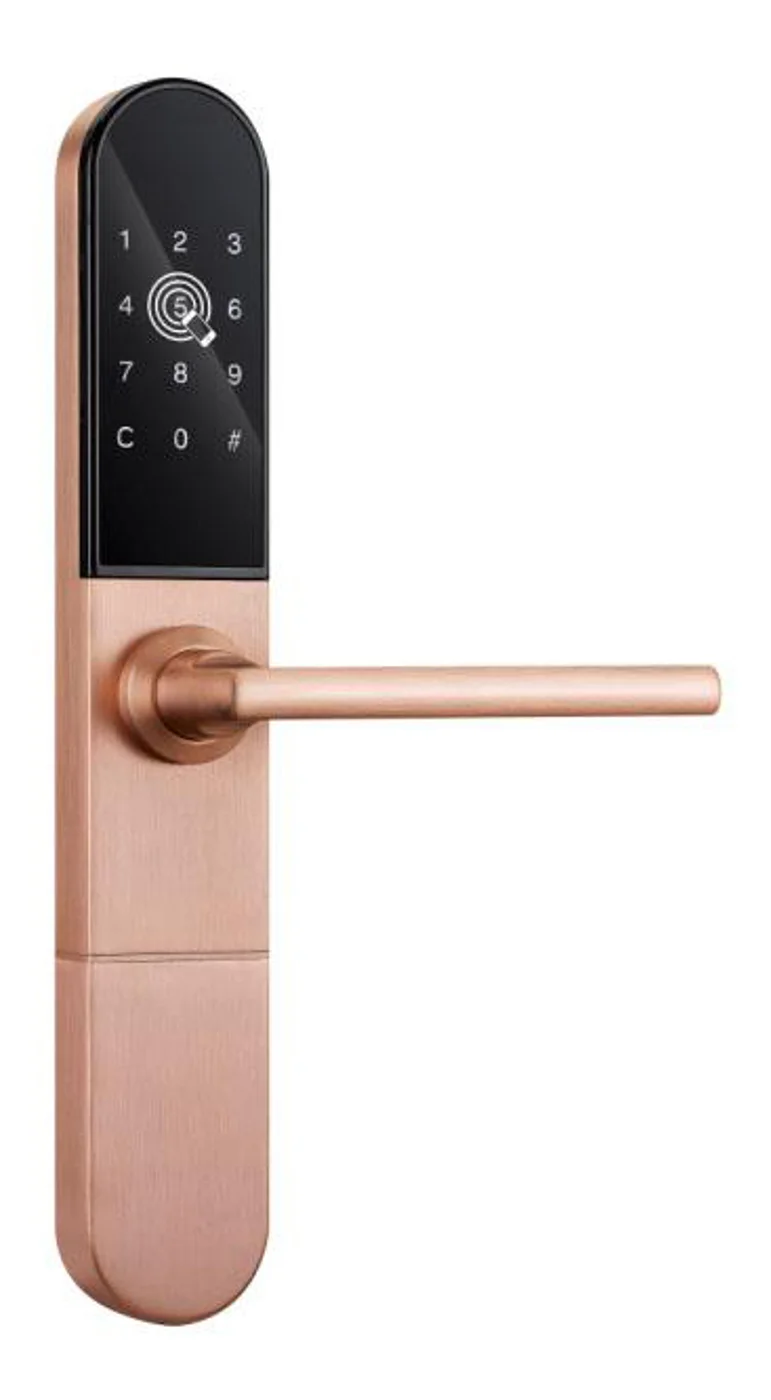
Smart Cabinet Lock — App-Managed, Multi-Site Dashboard
App-managed smart cabinet lock for office, parcel, and multi-site fleets. BLE app dashboard, audit trail, remote unlock, no per-lock server. Higher-tier chassis.
This page already points to it as the next recommended reference.
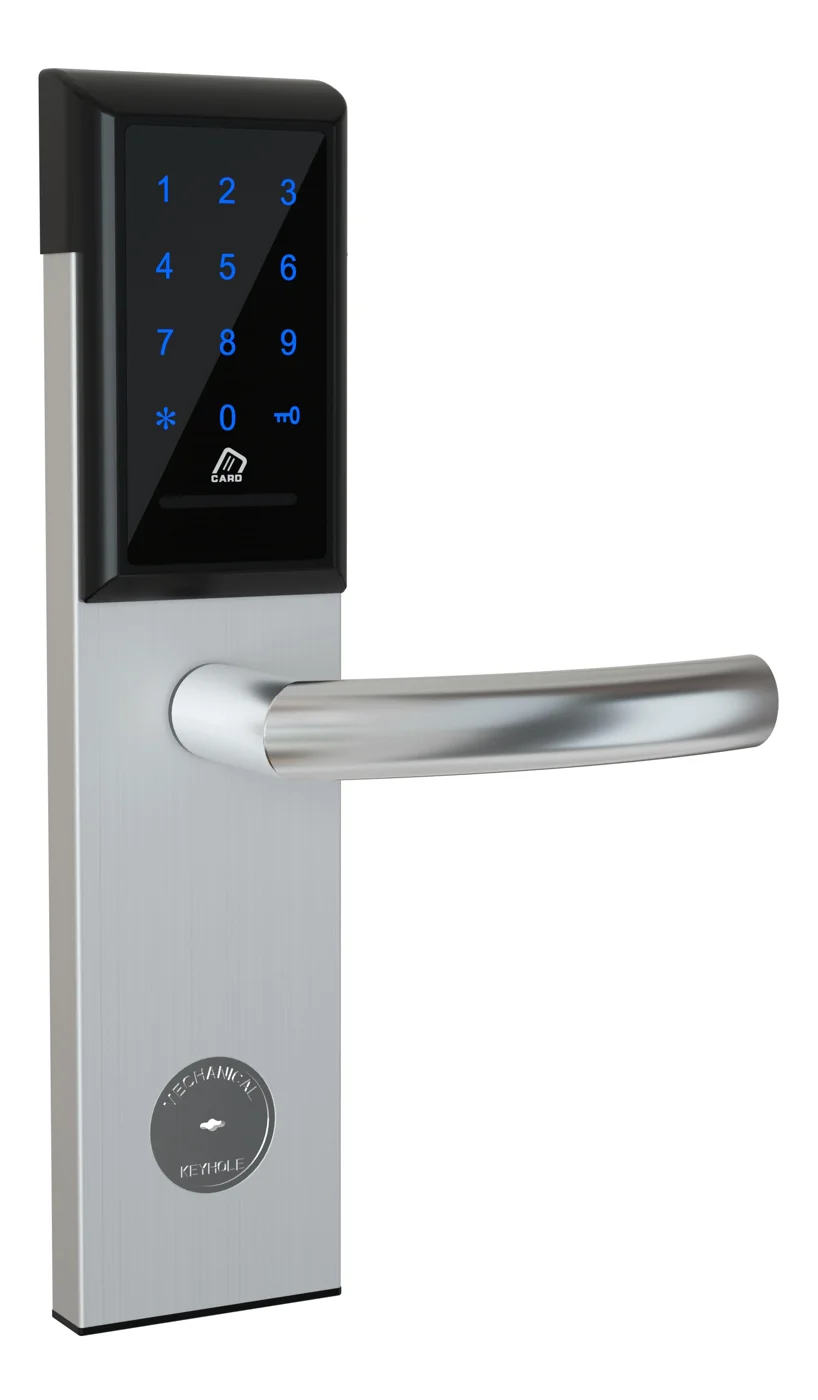
Office Cabinet Lock — PIN + Card for Filing & Pedestals
Offline PIN + card office cabinet lock for filing cabinets, pedestals, and drawers. Battery-powered 5-minute retrofit, no WiFi, no key management. CE/FCC/RoHS.
This page already points to it as the next recommended reference.
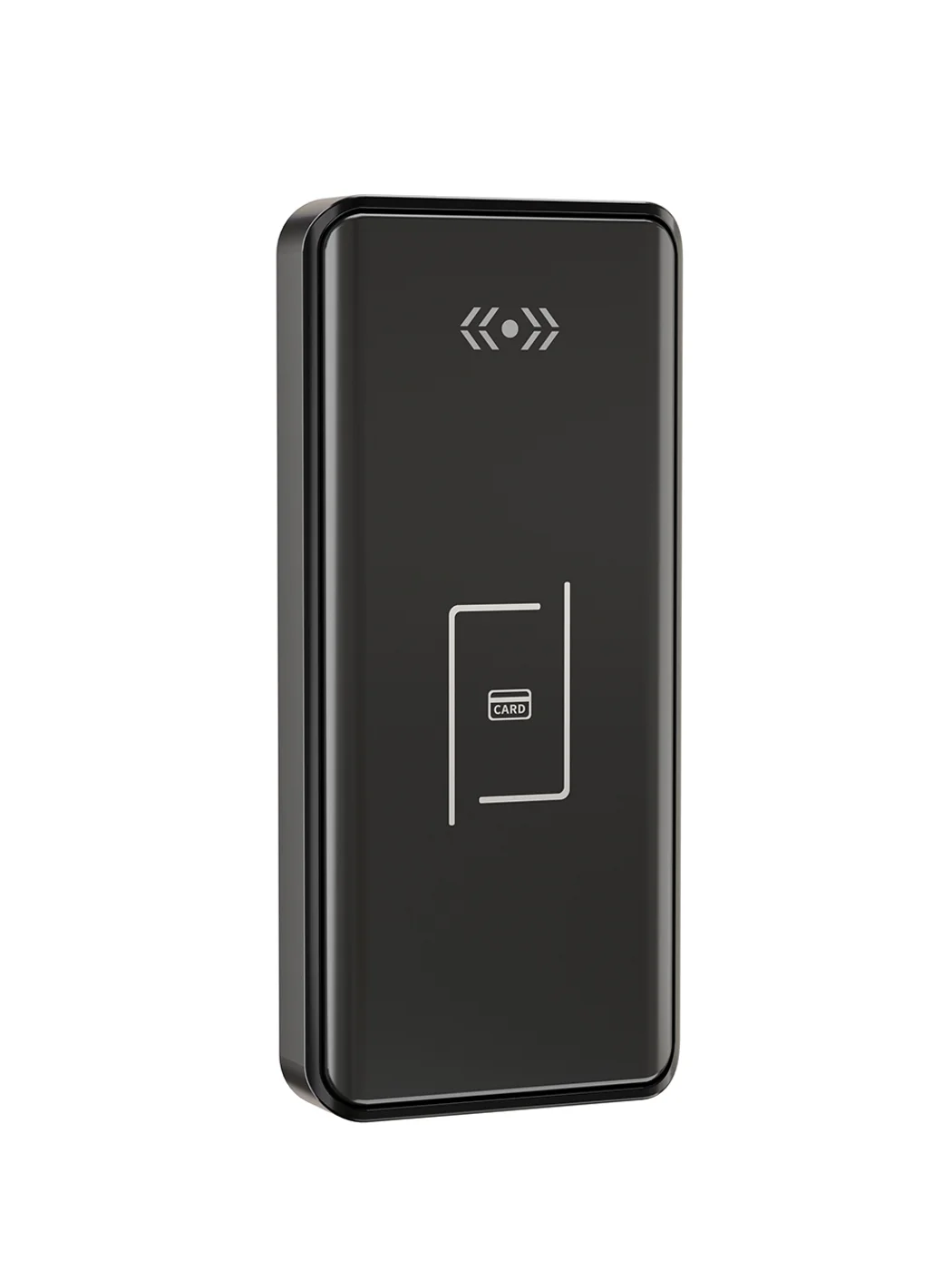
Gym Locker Lock — Offline Card, No WiFi Required
Offline card gym locker lock for fitness and pool lockers. MIFARE card, battery-powered 5-minute retrofit, no WiFi or server. Zinc alloy body, CE/FCC/RoHS.
This page already points to it as the next recommended reference.
Related blog posts
3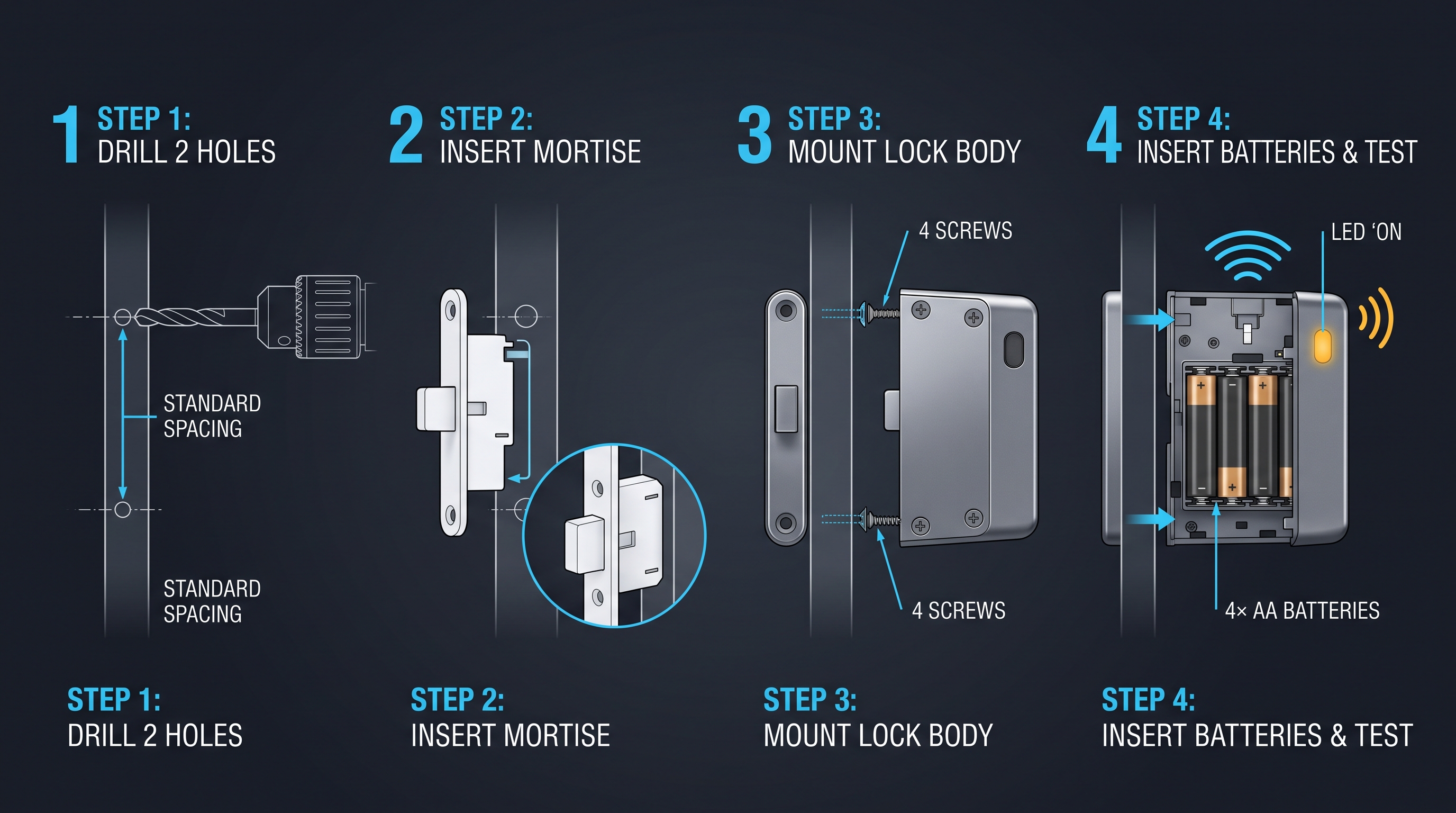
Electronic Cabinet Access: The Complete Guide to Digital Cabinet Entry
Electronic cabinet access replaces keyed locks with digital credentials, generating an access record and letting admins add or revoke users without touching hardware; this guide covers keypad, RFID, biometric, and connected electronic cabinet access methods.
It supports the same product context: Smart Cabinet Lock — App-Managed, Multi-Site Dashboard, Office Cabinet Lock — PIN + Card for Filing & Pedestals, Gym Locker Lock — Offline Card, No WiFi Required.
Electronic Access Cabinet: The Complete Guide to Smart Locking Enclosures
Explore electronic access cabinet systems with RFID, Bluetooth, PIN, and biometric control. Learn about powered enclosures for IT, healthcare, and evidence management.
It supports the same product context: Smart Cabinet Lock — App-Managed, Multi-Site Dashboard, Office Cabinet Lock — PIN + Card for Filing & Pedestals, Gym Locker Lock — Offline Card, No WiFi Required.
Digital Wardrobe Lock: The 2026 Guide to Keyless Wardrobe and Closet Security
Compare digital wardrobe lock options with PIN, RFID, fingerprint, and app credentials, with installation guides, power data, and use cases for home, hotel, and gym wardrobes.
It supports the same product context: Gym Locker Lock — Offline Card, No WiFi Required.
Specify your hotel project with our engineers
Send your room count, ceiling type, and protocol preference. We will return a sample plan and quote within 24 business hours.
- Move from general guidance into a product or application discussion.
- Use RFQ when pricing, drawings, MOQ, or launch timing needs structure.
- Keep a direct contact path visible for fast clarifications and handoff.