Digital Locker System: The Complete 2026 Guide to Smart Parcel and Access Lockers
A complete guide to digital locker systems covering QR code, RFID, mobile and biometric lockers for parcels, gyms, offices, libraries, and retail.
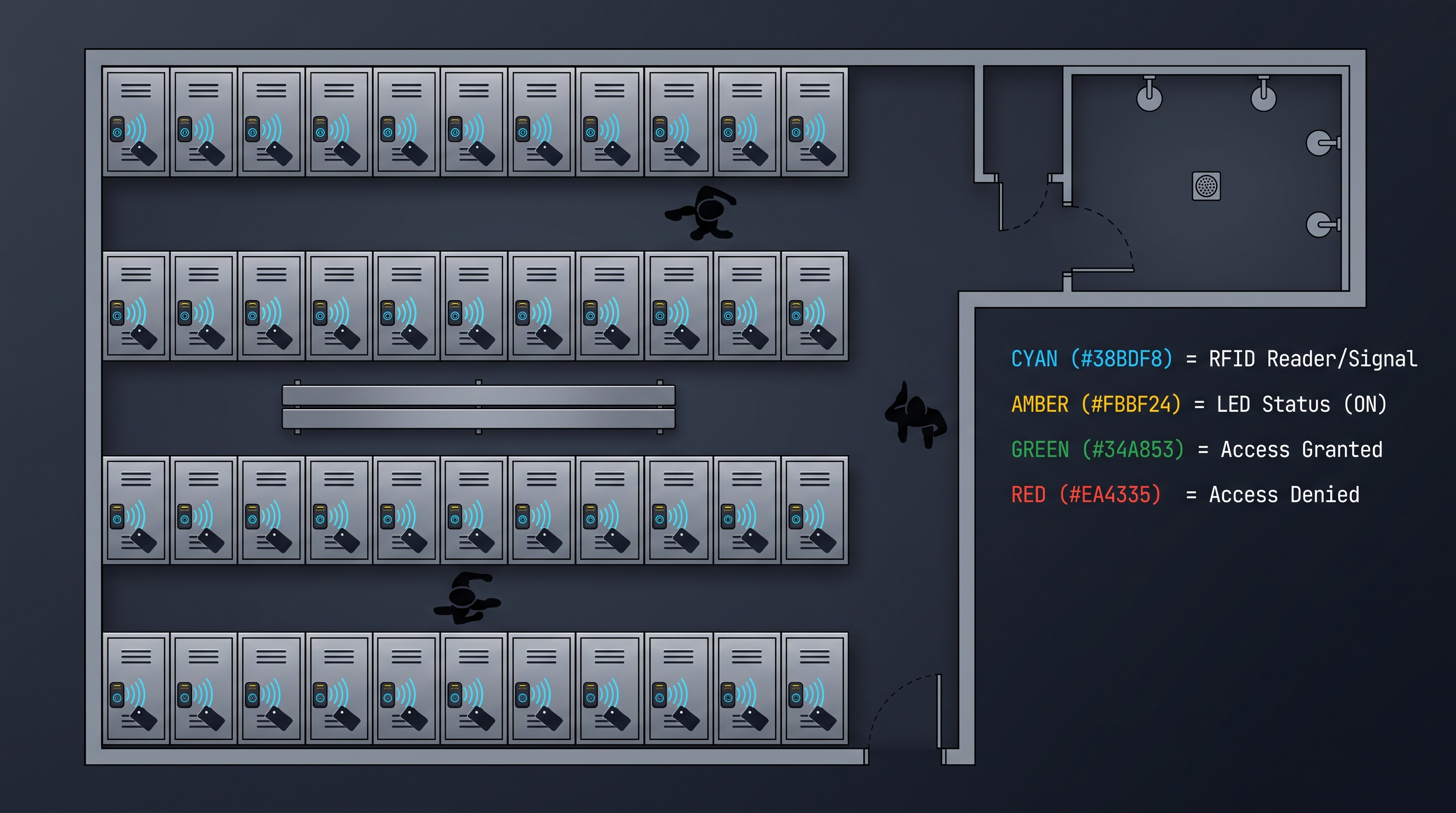
A digital locker system is an automated access-control network that secures locker compartments using software-generated or electronically stored credentials—QR codes, barcodes, RFID cards, mobile-app tokens, or biometric data—rather than physical keys or mechanical combinations. A typical digital locker system comprises a controller managing up to 128–256 compartments over RS-485, an app or web platform that assigns and delivers one-time credentials, and locks that authenticate within 0.5–1.5 seconds. The digital locker system enables unattended operations such as parcel pickup, day-use gym storage, and retail click-and-collect, processing 200–400 transactions per hour per locker bank. Cloud-connected digital locker system deployments report 99.5–99.9 percent uptime, support 24/7 operation, and integrate via REST APIs with e-commerce, ERP, and access-control platforms. The global digital locker system market reached $2.3 billion in 2025 and is forecast to grow at 13.5 percent CAGR through 2032, driven by e-commerce parcel volume growth, hybrid-work hot-desking, and contactless-access health mandates. A digital locker system typically reduces locker-management labor by 60–90 percent while adding audit trails and real-time occupancy visibility that mechanical lockers cannot provide.
What Is a Digital Locker System and How Does It Work
A digital locker system is a cloud-connected or on-premise-managed network of electronic locker locks and controllers that provisions credentials digitally, authenticates users at the door, and logs every access event with a timestamped audit trail. The digital locker system's operational cycle begins when the platform assigns a compartment and delivers a credential to the user's device—a QR code via SMS or email, a barcode on a kiosk receipt, an RFID card loaded from the access-control system, or a push-enabled mobile-app token. The user presents the credential to the lock's reader, which validates it against the compartment's authorized-credential list stored in the lock's EEPROM (up to 20,000 IDs) or against the controller's cache, and the digital locker system retracts the latch within 0.5–1.5 seconds. The event—credential ID, timestamp to ±20 ppm clock accuracy, action type, and compartment status—is logged to non-volatile memory and relayed to the platform. Standby current of 15–40 µA sustains 12–24 months on 4×AA alkaline batteries, or 5 years on 3.6 V lithium thionyl chloride packs. The digital locker system differs from a static keyed locker bank in that its management is entirely software-driven: compartments can be repurposed dynamically, access windows scheduled, credentials revoked instantly, and the entire fleet monitored from a dashboard.
Core Components of a Digital Locker System
A digital locker system integrates hardware and software into a service-oriented architecture. The lock layer captures credentials and moves the latch. The controller layer aggregates locks, caches policies, and bridges to the network. The software layer provisions credentials, drives the user interface, and exposes APIs.
| Component | Function | Typical Specification |
|---|---|---|
| Locker lock | Authenticate, actuate latch | RFID / QR / BLE / biometric, 0.5–1.5 s |
| Controller | Manage 128–256 compartments | RS-485 9,600–115,200 bps |
| Management platform | Credential provisioning, dashboards | Cloud or on-premise, REST API |
| User interface | Booking, payment, pickup notification | Web app, iOS/Android, SMS |
| Kiosk (optional) | Self-service rental/payment | 10.1-inch touchscreen, thermal printer |
| Power | Sustain lock + controller | 4×AA 12–24 mo, or wired 12 V DC |
The Transaction Flow
When a parcel carrier drops a delivery, the digital locker system allocates an empty compartment of the correct size class (S/M/L/XL), generates a unique pickup code, and notifies the recipient via SMS, email, or app push with a delivery deadline (typically 24–72 hours). When the recipient presents the credential, the digital locker system validates it and unlocks the assigned compartment. After the door closes, the lock re-locks, and the platform marks the transaction complete. If the credential is presented at the wrong compartment, the digital locker system logs a mismatch and guides the user to the correct door. If a credential is presented to any locked compartment without authorization, the digital locker system logs a denial and enforces a lockout penalty after 3–5 failures.
Types of Digital Locker System by Credential and Operating Model
A digital locker system is categorized by two orthogonal axes: the credential type it authenticates and the operating model that manages it. Credential types include QR/barcode codes delivered to a user's phone or kiosk receipt, RFID cards or fobs (13.56 MHz MIFARE DESFire, 125 kHz EM4100), mobile-app tokens using BLE 5.0 with encrypted rolling codes, PIN codes entered on a keypad, and biometric fingerprints for high-security compartments. Operating models divide into cloud-hosted platforms, on-premise server installations, and hybrid configurations that run the locker platform locally with cloud analytics. Cloud-hosted digital locker system platforms dominate new deployments (roughly 65 percent share in 2026) because they eliminate server maintenance, enable multi-site management from one dashboard, and receive continuous feature updates. On-premise digital locker systems (25 percent) suit facilities with strict data-residency mandates—hospitals, defense contractors, certain government buildings—where locker transaction data cannot leave the premises. Hybrid digital locker systems (10 percent) cache operations locally for reliability and replicate analytics to the cloud. The digital locker system credential choice should match the user population: parcel networks favor QR codes because no enrollment is needed; gyms reuse membership RFID cards; corporate offices use mobile tokens aligned with the identity provider; pharmacies require biometric non-repudiation. The digital locker system's operating model choice balances data governance, internet reliability, and total cost of ownership.
QR Code and Barcode Digital Locker System
The QR code digital locker system is the default for unattended public and parcel applications because it requires zero user enrollment. The platform encodes the compartment ID, an expiry timestamp, and a one-time token into a QR payload, delivers it via SMS/email/app, and the user scans it at the lock's camera or 2D scanner. The digital locker system validates the payload signature (HMAC-SHA256) and unlock expiry; expired or reused codes are rejected. QR codes expire after first use and typically also after a configurable window of 24–72 hours. This digital locker system model underpins Amazon Hub, InPost, and most city parcel lockers.
RFID Card Digital Locker System
The RFID digital locker system leverages credentials users already carry—employee badges, membership cards, campus cards—so the locker credential is a secondary use of an existing token. The digital locker system imports card IDs from the facility access-control platform via API or LDAP and maps them to compartment-access policies. MIFARE DESFire EV3 with AES-128 mutual authentication prevents the cloning attacks that compromise legacy 125 kHz systems. This digital locker system model suits gyms, corporate offices, and universities where card populations already exist.
Mobile App and BLE Digital Locker System
The mobile-app digital locker system turns the smartphone into the credential and the booking console. Users reserve a compartment in the app, the digital locker system assigns one, and the phone opens it via BLE 5.0 encrypted rolling codes on tap-to-open or proximity-unlock (1–2 meters) mode. The app provides live occupancy maps, booking history, and remote-open for administrators. The mobile digital locker system consumes 30–60 µA standby, reducing battery life to 10–14 months. This model is the default for corporate hot-desking and premium gyms.
Biometric Digital Locker System
The biometric digital locker system uses capacitive 500 DPI fingerprint sensors with FRR of 0.1–1.0 percent and FAR of 0.0001–0.001 percent, storing 100–3,000 templates per lock with enrollment in 3–5 presses. Liveness detection distinguishes live skin from silicone replicas. This digital locker system serves hospital pharmacies, forensic evidence lockers, and executive suites where credential non-repudiation and non-transferability matter more than throughput.
Cloud vs On-Premise vs Hybrid Operating Models
| Operating model | Hosting | Pros | Cons | Best fit |
|---|---|---|---|---|
| Cloud-hosted | Vendor cloud (AWS/Azure) | Zero server ops, multi-site, auto-updates | Data residency, internet dependency | Multi-site retail, parcel, gyms |
| On-premise | Facility server | Data control, offline reliability | Maintenance burden, manual upgrades | Hospitals, defense, government |
| Hybrid | Local cache + cloud | Local reliability, cloud analytics | Architecture complexity | Enterprises with WAN resilience |
Digital Locker System vs Traditional Lockers: A Comparison
A digital locker system transforms the economics and user experience of storage when compared with traditional mechanical lockers and keyed cabinets. A traditional keyed locker costs $150–400 per compartment and requires issuing, tracking, and replacing physical keys, at an administrative cost of $18–35 per lost-key incident. A digital locker system compartment costs $150–350 including the smart lock and amortized platform costs, and eliminates physical credential logistics entirely for QR-code models. The digital locker system provides capabilities mechanical lockers cannot: real-time occupancy visibility, remote compartment assignment, time-limited access, transaction-specific audit logs, and unattended 24/7 operation. User experience also diverges sharply: traditional lockers require the user to carry and manage a key, while a digital locker system delivers the credential to a phone. Security-wise, traditional keyed cylinders are vulnerable to bumping, picking, and key duplication, whereas a digital locker system with encrypted credentials and audit trails raises the attack cost and provides post-incident forensic data. The digital locker system's drawbacks are power dependency, network dependency for cloud models, and higher upfront hardware cost, offset by lower lifecycle operational cost. For any facility with more than 20 compartments or 24/7 access requirements, the digital locker system achieves a lower total cost of ownership than traditional lockers within 18–30 months.
Detailed Comparison Table
| Dimension | Traditional keyed locker | Digital locker system |
|---|---|---|
| Cost per compartment | $150–400 | $150–350 (incl. smart lock) |
| Credential | Physical key | QR / RFID / app / biometric |
| Lost credential cost | $18–35 per incident | $0–2 (reissue token) |
| Occupancy visibility | None (manual checks) | Real-time dashboard |
| Remote assignment | Not possible | Instant, per-transaction |
| Time-limited access | Not supported | Configurable windows |
| Audit trail | None | Full event log with timestamps |
| Unattended operation | Limited | 24/7 with zero staff |
| Power dependency | None | 4×AA, 12–24 months |
| Network dependency | None | Cloud models need internet |
| Lifecycle TCO | High after key management | Lower within 18–30 months |
Applications of the Digital Locker System Across Industries
A digital locker system serves a widening range of industries because its software-defined model adapts to each vertical's transactional workflows. In parcel logistics, the digital locker system is the backbone of unattended last-mile delivery: Amazon Hub, InPost, and carrier networks deploy digital locker systems with QR-code pickup, temperature-controlled compartments for groceries, and reverse-logistics drop-off for returns. In retail, the digital locker system powers click-and-collect and same-day pickup, integrating with the e-commerce platform so an order's status automatically updates when the customer retrieves it. In gyms and fitness centers, the digital locker system manages day-use lockers with the membership card or app, eliminating locker-front staff. In corporate offices, the digital locker system anchors hot-desking storage, assigned dynamically via booking software and integrated with the identity provider. In libraries and universities, the digital locker system enables reservable study carrels, semester-long book lockers, and 24/7 item pickup. In healthcare, the digital locker system secures controlled-substance cabinets with biometric dual-credential access and audit trails satisfying Joint Commission requirements. In transit and hospitality, the digital locker system provides guest luggage storage and station lockers with QR or RFID credentials. The digital locker system's API-first design lets each industry integrate compartment events into its own workflows, making the locker a programmatic touchpoint rather than a standalone amenity.
Parcel and Last-Mile Logistics
The parcel digital locker system handles the full delivery lifecycle: carrier allocation, recipient notification, code-based pickup, and returns drop-off. Multi-size compartments (S/M/L/XL) accommodate envelopes to 30 kg parcels. The digital locker system sends pickup notifications with 24–72 hour deadlines, alerts for late pickup, and generates return labels for reverse logistics. Carrier integrations (FedEx, UPS, DHL, USPS) automate compartment allocation via API, so a carrier can drop parcels into digital locker system banks without a staffed counter.
Gym and Fitness Center Storage
The gym digital locker system replaces the locker-front desk. Members tap their membership RFID card or open via the club app, and the digital locker system assigns an available day-use compartment, releasing it at session end. Occupancy feeds a lobby display and the club app, letting members find a free locker before entering. The audit trail identifies members who exceed session limits. Premium clubs pair the digital locker system with towel and equipment rental on the same credential.
Corporate Office Hot-Desking
The office digital locker system secures personal storage for hybrid workers. Employees book a locker through the desk-booking app; the digital locker system assigns a compartment and pushes a mobile credential valid for the booked day. At end of day, the compartment auto-releases. Integration with Okta or Azure AD means a departing employee loses locker access the moment their corporate account is deactivated.
Library, University, and Research Storage
The university digital locker system spans libraries, labs, and recreation centers. Students reserve study carrels or research lockers via the library platform, and the digital locker system issues a campus-card or app credential. Lab-equipment lockers use course-based access schedules. The unified digital locker system gives campus security a single audit dashboard across all locker activity.
Healthcare and Controlled-Substance Storage
The healthcare digital locker system operates in three security tiers: staff personal lockers (RFID badge), supply lockers (PIN or BLE), and controlled-substance cabinets (biometric with dual-credential mode). Every access to a narcotics cabinet is logged with user identity and timestamp, satisfying DEA and Joint Commission audit requirements. The digital locker system's tamper alerts notify security immediately.
Retail Click-and-Collect
The retail digital locker system integrates with the point-of-sale and e-commerce platform. An online order placed for pickup allocates a compartment; the customer receives a QR code; scanning it at the digital locker system retrieves the order. The e-commerce order status updates automatically when the compartment opens and closes, and the digital locker system flags uncollected orders after a configurable hold time, triggering restock workflows.
Digital Locker System Architecture: Controllers, Software, and Integration
The digital locker system's architecture is defined by how controllers, software, and external platforms interact, and the design choices determine scalability, reliability, and integration depth. The edge tier consists of compartment locks that capture credentials and actuate latches, each running a 48 MHz microcontroller with 256 KB flash and a locally cached whitelist of up to 20,000 credentials. The control tier comprises controllers that aggregate 128–256 locks per unit over RS-485 at 9,600–115,200 bps, buffer events, and provide a LAN bridge via Ethernet or Wi-Fi. The application tier is the digital locker system platform: credential provisioning, compartment assignment, occupancy dashboards, audit export, and API gateway. For cloud-hosted digital locker systems, the platform runs on AWS or Azure with TLS 1.3 between locks/controllers and the cloud, and REST/GraphQL APIs for third-party integration. Event delivery to the platform typically occurs within 1–3 seconds of a transaction; if the network is down, the digital locker system caches events locally (1,000–10,000 per lock) and uploads them on reconnection. Integration depth distinguishes a digital locker system from a smart-lock collection: parcel-carrier APIs automate compartment allocation, e-commerce platforms update order status, HR systems propagate employee credentials, and SIEM platforms ingest audit events. The digital locker system's API documentation and sandbox environment should be evaluated as first-class procurement criteria.
Hardware Specifications
| Component | Specification | Notes |
|---|---|---|
| Lock MCU | ARM Cortex-M0+ at 48 MHz | 256 KB flash, 32 KB RAM |
| Credential reader | 13.56 MHz / QR scanner / BLE 5.0 | 0.5–1.5 s authentication |
| Latch actuator | Motor 80–250 mA, 12 mm throw | 100,000+ cycle lifetime |
| Controller | RS-485, 128–256 locks | 1,200 m bus, 120 ohm term |
| Battery | 4×AA alkaline or 3.6 V Li-SOCl2 | 12–24 months or 5 years |
| Network | Ethernet, Wi-Fi, 4G LTE | Redundancy optional |
Software and API Integration Points
The digital locker system's software layer exposes integration points that determine how deeply the locker embeds in facility workflows. REST APIs cover compartment status, credential provisioning, event subscription (webhooks), and analytics. Webhooks push events—parcel delivered, parcel picked up, compartment empty, low battery, tamper—to third-party systems in real time. The digital locker system also integrates with identity providers via SCIM for employee credential lifecycle automation. A well-documented API with a sandbox environment accelerates integration and reduces professional-services cost.
Security and Compliance for the Digital Locker System
Security in a digital locker system spans physical tamper resistance, credential cryptography, network security, and regulatory compliance, and each layer must be designed and validated deliberately. Physical security centers on a hardened stainless steel latch with 12 mm throw resisting 50–80 N of prying force, recessed thru-bolt mounting, and tamper switches that log and alarm on forced entry. Credential cryptography depends on the token type: MIFARE DESFire EV3 with AES-128 for RFID, HMAC-SHA256-signed one-time QR payloads, BLE 5.0 with ECDH key exchange and rolling codes for mobile, and template-hashed capacitive fingerprints with liveness detection for biometrics. Network security requires TLS 1.3 for lock-to-platform communication, WPA3-Enterprise for Wi-Fi-connected locks, and a patched management server with multi-factor admin authentication and role-based access control. Regulatory compliance varies by vertical: DEA and Joint Commission requirements for hospital controlled-substance storage, GDPR for European deployments where locker data includes personal pickup records, and PCI-DSS scoping if the digital locker system processes card payments at kiosks. A compliant digital locker system should support data-retention policies, export audit logs in standard formats (CSV, Syslog, CEF) for SIEM ingestion, and provide region-specific data residency for cloud-hosted deployments. Procurement should include a security review of the digital locker system vendor's encryption practices, firmware update process, and penetration-test history.
Credential Security by Type
| Credential | Security mechanism | Cloning / forgery resistance |
|---|---|---|
| QR / barcode | HMAC-SHA256 signature, one-time expiry | High (expiry + single use) |
| MIFARE DESFire EV3 | AES-128 mutual authentication | High |
| EM4100 (125 kHz) | Static ID, no encryption | Very low (clonable) |
| BLE 5.0 mobile | ECDH + rolling codes | High |
| Fingerprint | Template hash + liveness | Very high |
| PIN | Hashed, lockout after failures | Medium (shoulder-surfing) |
Compliance Frameworks
| Vertical | Framework | Digital locker system requirement |
|---|---|---|
| Healthcare | DEA, Joint Commission | Dual-credential biometric, full audit |
| EU | GDPR | Data minimization, retention policies |
| Payment kiosks | PCI-DSS | Scoped cardholder data handling |
| North America | UL 1034, FCC, RoHS | Certified lock hardware |
| EU market | CE, RED, RoHS | Certified radio + electronics |
Cost and ROI Analysis for a Digital Locker System
The digital locker system's total cost of ownership must be modeled over a 5–7 year horizon, incorporating hardware, platform fees, installation, and ongoing operations, then compared against the labor and friction costs it eliminates. A 50-compartment digital locker system costs $15,000–30,000 in hardware ($150–350 per compartment for lock plus controller) plus $3,000–8,000 installation, and $2,000–5,000 per year in cloud-platform fees (typically $2–5 per compartment monthly). The labor savings are substantial: a staffed locker counter or reception desk costs $30,000–50,000 per year in wages; the digital locker system reduces this to near zero for parcel pickup, gym day-use, and retail click-and-collect. Lost-key and credential administration costs fall from $18–35 per incident to under $2 per token reissue. Increased throughput is another ROI driver: the digital locker system processes 200–400 transactions per hour per bank versus 30–60 for a staffed counter, and it operates 24/7. For a parcel locker at a 200-unit apartment complex, the digital locker system typically pays back its investment within 12–18 months through avoided delivery re-attempts (each failed delivery costs couriers $5–10), building-staff time, and lost-package claims. For a gym, the digital locker system pays back within 18–24 months through locker-front labor elimination and improved member experience. The digital locker system should be evaluated on net present value over 5 years, including maintenance, firmware, and the renewal cost of cloud subscriptions.
5-Year TCO Model (50-Compartment Parcel Locker)
| Cost item | Year 1 | Year 2 | Year 3 | Year 4 | Year 5 |
|---|---|---|---|---|---|
| Hardware | $18,000 | $0 | $0 | $0 | $500 (spares) |
| Installation | $5,000 | $0 | $0 | $0 | $0 |
| Cloud platform | $2,500 | $2,500 | $2,500 | $2,500 | $2,500 |
| Maintenance | $500 | $500 | $800 | $800 | $1,000 |
| Total annual | $26,000 | $3,000 | $3,300 | $3,300 | $4,000 |
| Staff avoided (est.) | $24,000 | $24,000 | $24,000 | $24,000 | $24,000 |
| Net cash flow | -$2,000 | +$21,000 | +$20,700 | +$20,700 | +$20,000 |
How to Choose a Digital Locker System: Buyer's Checklist
Choosing a digital locker system requires a structured evaluation across credential model, platform architecture, hardware ruggedness, integration depth, and vendor viability, weighted by the facility's operational priorities. Define the primary use case first: parcel pickup, day-use gym storage, office hot-desking, or retail click-and-collect—each implies a different credential and integration profile. Verify the digital locker system supports the needed credential type and that its management platform integrates with the facility's identity provider, e-commerce platform, or booking software via documented APIs and webhooks. Assess hardware for the environment: IP54+ ingress protection for outdoor banks, corrosion-resistant steel for poolside gyms, and vandal-resistant construction for public transit. Confirm power strategy: AA battery life of 12–24 months, lithium packs for 5-year intervals, or wired 12 V DC for permanent installations. Evaluate the platform's reliability and security: uptime SLAs of 99.5 percent or better, TLS 1.3, penetration-testing history, GDPR/data-residency options, and a documented firmware update cadence. Model total cost of ownership over 5–7 years, including cloud subscription and replacement parts. Finally, verify vendor viability: years in market, reference installations in the same vertical, installer certification program, spare-parts availability for 7–10 years, and support SLAs with defined response times. A weighted scorecard across these criteria produces a digital locker system shortlist matched to the facility's specific needs, and on-site pilot of 4–8 compartments is strongly recommended before a large-scale order.
Buyer's Checklist
- Use case and credential model defined (QR, RFID, app, biometric)
- Platform architecture confirmed (cloud, on-premise, hybrid)
- Identity-provider and workflow integrations verified via API docs
- Hardware ingress protection matched to environment (IP54+)
- Power strategy selected (AA, lithium, wired 12 V)
- Uptime SLA confirmed (≥99.5 percent)
- Security reviewed (TLS 1.3, pen-test history, firmware cadence)
- 5–7 year TCO modeled with labor savings
- Vendor reference calls completed in the same vertical
- 4–8 compartment pilot executed before scale-up
Installation and Operation of the Digital Locker System
Installing a digital locker system follows a phased methodology that balances speed with quality, because a compartment that fails in production is visible to every user. The digital locker system installation begins with a site audit: measuring compartment dimensions (commercial locker interiors run 300–600 mm wide, 450–600 mm deep, 300–450 mm high), door thickness (0.8–2.0 mm steel, 18–25 mm wood), and planning controller and cable routing. The network pre-wire phase runs RS-485 trunk cabling along locker banks (4-conductor shielded twisted pair, 120-ohm termination) or validates Wi-Fi coverage at -65 dBm RSSI for wireless models. The lock installation sprint mounts 50–100 locks per day with a 6–8 mm latch cable hole and 2–3 Nm bolt torque, followed by a pairwise test after every 20 locks. The commissioning phase configures each controller's IP addressing, registers locks by locker ID, synchronizes the real-time clock to NTP, and verifies battery voltage and reader function. The platform configuration maps compartments to size classes, sets access schedules, and integrates with external systems. A load test of 50 valid and invalid credential presentations per lock verifies reliability before user onboarding. Operational procedures then take over: the digital locker system dashboard is monitored for battery alerts (<2.6 V per cell), offline locks (no poll for 3 cycles), tamper events, and rejection spikes, with defined response SLAs. Predictive maintenance uses the voltage curve to batch battery replacements by controller, reducing dispatches by 30–50 percent.
Installation Phase Schedule (50-Compartment Bank)
| Phase | Duration | Activities |
|---|---|---|
| Site audit | 1 day | Compartment/door measurement, cabling plan |
| Network pre-wire | 1–2 days | RS-485 trunk, termination, or Wi-Fi survey |
| Lock installation | 1–2 days | Mount 25–50 locks/day, torque 2–3 Nm |
| Commissioning | 1 day | IP config, clock sync, registration |
| Platform setup | 1 day | Compartment map, schedules, integrations |
| Load test | 0.5 day | 50-cycle credential test per lock |
| User onboarding | 1 day | Staff training, phased rollout |
Future Trends in the Digital Locker System Market
The digital locker system is evolving toward AI-driven operation, standardization, and deeper integration into the parcel and smart-building ecosystems. AI will transform the digital locker system in three ways: predictive maintenance models that forecast battery exhaustion and reader failure from telemetry, demand-based compartment allocation that learns peak hours and re-sizes compartments accordingly, and anomaly detection that flags suspicious pickup patterns to prevent parcel theft. Standardization is advancing through the Matter protocol, which added door locks in version 1.2 and is expected to encompass locker locks by 2027, enabling digital locker system interoperability with Apple Home, Google Home, and Samsung SmartThings for residential and small-format deployments. In parcel logistics, the digital locker system will become the standard last-meter interface for autonomous delivery—robots and drones will deposit packages directly into open digital locker system compartments—and refrigerated and freezer compartments will expand into grocery delivery. Sustainability pressures are driving rechargeable lithium power with 10-year lifespans and energy-harvesting lock prototypes that draw power from door motion and ambient RF. Finally, the digital locker system will converge with digital-twin building platforms, feeding occupancy and transaction data into facility analytics for space planning and energy optimization. Facilities that select a standards-based, API-rich digital locker system today will be positioned to adopt these advances without replacing hardware.
Frequently Asked Questions About the Digital Locker System
The digital locker system raises recurring questions from facilities managers, IT teams, and procurement officers. This section answers the most common digital locker system questions with technical specificity.
How much does a digital locker system cost?
A digital locker system costs $150–350 per compartment in hardware plus controller costs, with installation adding $50–150 per compartment. Cloud platform fees run $2–5 per compartment monthly. A 50-compartment digital locker system typically costs $18,000–35,000 fully installed, with annual platform fees of $1,500–3,000.
What happens if the internet goes down?
A well-architected digital locker system caches credentials and events locally. Locks retain the compartment whitelist (up to 20,000 credentials) and continue to authenticate during outages; events queue locally and upload when connectivity returns. Compartments provisioned during an outage are stored in a pending queue and complete when the platform reconnects. The digital locker system does not depend on real-time cloud communication for basic unlock.
How secure is a QR code digital locker system?
A properly implemented QR digital locker system uses HMAC-SHA256-signed payloads with a timestamped expiry and single-use enforcement. Codes cannot be replayed after use and expire within a configurable 24–72 hour window. Screenshot theft is mitigated by pairing the code with a recipient-identifying email/SMS and by the code's short validity period.
Can a digital locker system reuse existing RFID badges?
Yes. A digital locker system integrates with existing access-control platforms (Lenel, Genetec, CCure) and identity providers (Okta, Azure AD) via API, LDAP, or SCIM, importing card IDs for locker authorization. The employee or member badge then serves as the locker credential, eliminating the need to issue separate tokens.
What is the typical battery life in a digital locker system?
Standby current of 15–40 µA yields 12–24 months on four AA alkaline batteries in a gym or office averaging 20–40 unlocks per day. Lithium thionyl chloride packs extend this to 5 years for outdoor or hard-to-service compartments. The digital locker system reports battery voltage to the dashboard, triggering replacement alerts below 2.6 V per cell with 4–8 weeks of remaining operation.
How does a digital locker system handle returns and reverse logistics?
Parcel-oriented digital locker systems support returns: the platform generates a return label and assigns an empty compartment of matching size; the customer places the item and scans the label or enters a code; the carrier is notified for pickup. The digital locker system tracks the compartment state from drop-off to carrier collection, closing the loop with the carrier's API.
Conclusion: Deploying a Digital Locker System That Pays for Itself
The digital locker system has matured from a novelty into a standard facility subsystem, and the decision framework in this guide equips buyers to deploy it profitably. The digital locker system's defining advantage is software-defined management: credentials are provisioned and revoked digitally, compartments are repurposed dynamically, occupancy is visible in real time, and every transaction is audited. Selecting the right digital locker system requires matching credential and operating model to the use case—QR for unattended parcels, RFID for card-bearing populations, mobile for phone-first offices, biometric for high-security compartments—and validating platform integration, hardware ruggedness, security, and vendor viability before purchase. A disciplined installation with a load-tested pilot and predictive maintenance delivers the digital locker system's rated reliability over a 7–10 year life. With payback periods of 12–30 months depending on the vertical, the digital locker system is not merely a convenience upgrade but a measurable operational investment. As AI, Matter standardization, and autonomous delivery reshape the market, facilities that adopt a standards-based, API-rich digital locker system today will capture the benefits earliest and avoid mid-life replacement.
Not sure which sensor fits your project?
Talk to our mmWave application engineers for a free consultation.
Find the right presence sensor for your hotel project
Compare the 3 protocols, check hotel-specific case studies, and download the installation guide
Related products
3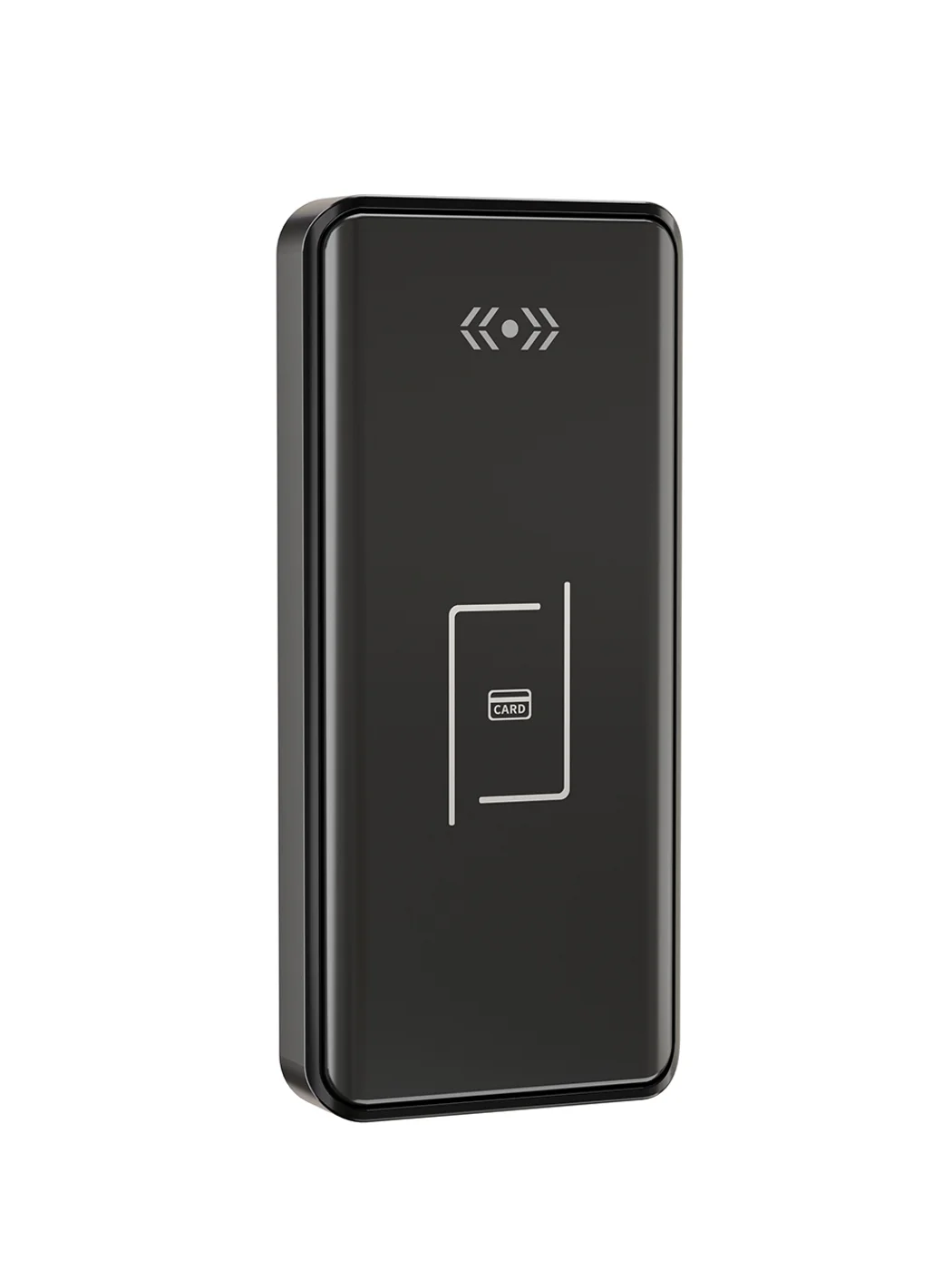
Gym Locker Lock — Offline Card, No WiFi Required
Offline card gym locker lock for fitness and pool lockers. MIFARE card, battery-powered 5-minute retrofit, no WiFi or server. Zinc alloy body, CE/FCC/RoHS.
This page already points to it as the next recommended reference.
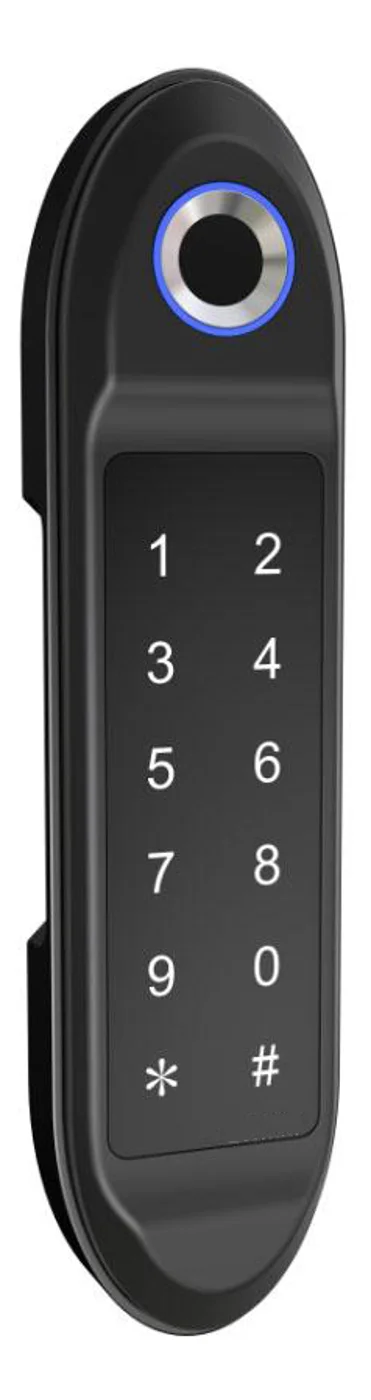
PIN Code Electronic Cabinet Lock — Stand-Alone, No WiFi
Offline keypad cabinet lock for gym, office and parcel lockers. Battery-powered, 5-minute retrofit, audit-free simple deployment. PIN + MIFARE card, DC 6V, 4×AA.
This page already points to it as the next recommended reference.
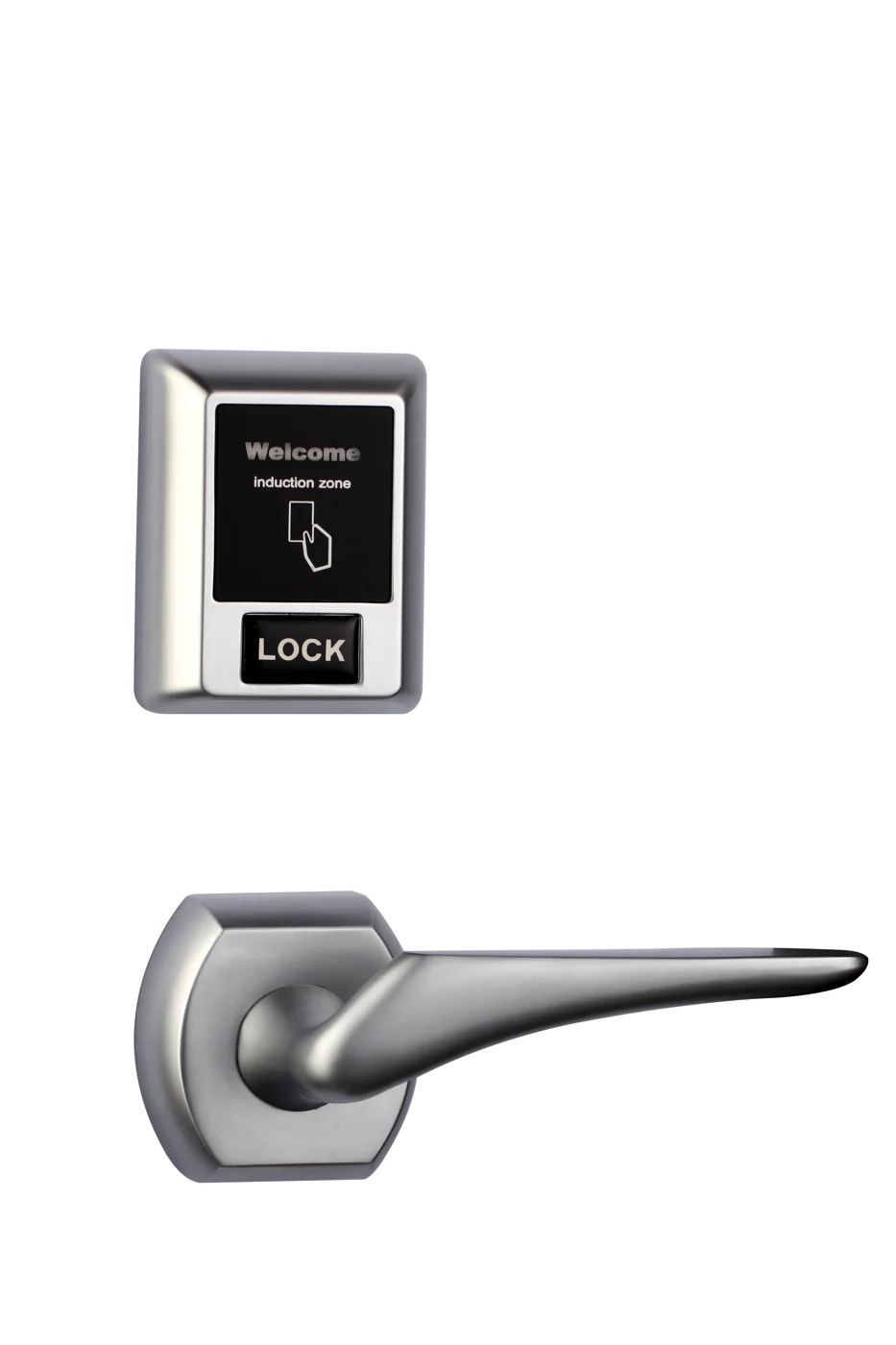
Bluetooth Cabinet Lock — App + PIN + Card, Managed Fleet
Offline BLE app cabinet lock for parcel, office, and managed locker fleets. App + PIN + MIFARE card, remote credential management, no server dependency, battery-powered retrofit.
This page already points to it as the next recommended reference.
Related blog posts
3
Electronic Cabinet Access: The Complete Guide to Digital Cabinet Entry
Electronic cabinet access replaces keyed locks with digital credentials, generating an access record and letting admins add or revoke users without touching hardware; this guide covers keypad, RFID, biometric, and connected electronic cabinet access methods.
It supports the same product context: Gym Locker Lock — Offline Card, No WiFi Required.
Display Cabinet Lock: The Complete Guide to Securing Glass Showcases and Retail Display Cabinets
Learn how a display cabinet lock secures glass showcases and retail displays. Compare electromagnetic, RFID, and keyed display cabinet lock types for any application.
It supports the same product context: Gym Locker Lock — Offline Card, No WiFi Required.
Electronic Access Cabinet: The Complete Guide to Smart Locking Enclosures
Explore electronic access cabinet systems with RFID, Bluetooth, PIN, and biometric control. Learn about powered enclosures for IT, healthcare, and evidence management.
It supports the same product context: Gym Locker Lock — Offline Card, No WiFi Required.
Specify your hotel project with our engineers
Send your room count, ceiling type, and protocol preference. We will return a sample plan and quote within 24 business hours.
- Move from general guidance into a product or application discussion.
- Use RFQ when pricing, drawings, MOQ, or launch timing needs structure.
- Keep a direct contact path visible for fast clarifications and handoff.