Digital Locker Lock: The Complete 2026 Guide to Smart, Keyless Gym, Office, and Parcel Storage Access Control
Complete guide to digital locker lock selection covering RFID, Bluetooth, PIN, QR code, and biometric access technologies for gyms, offices, parcel delivery, schools, hospitals, and commercial locker banks with installation, battery life, and ROI data.
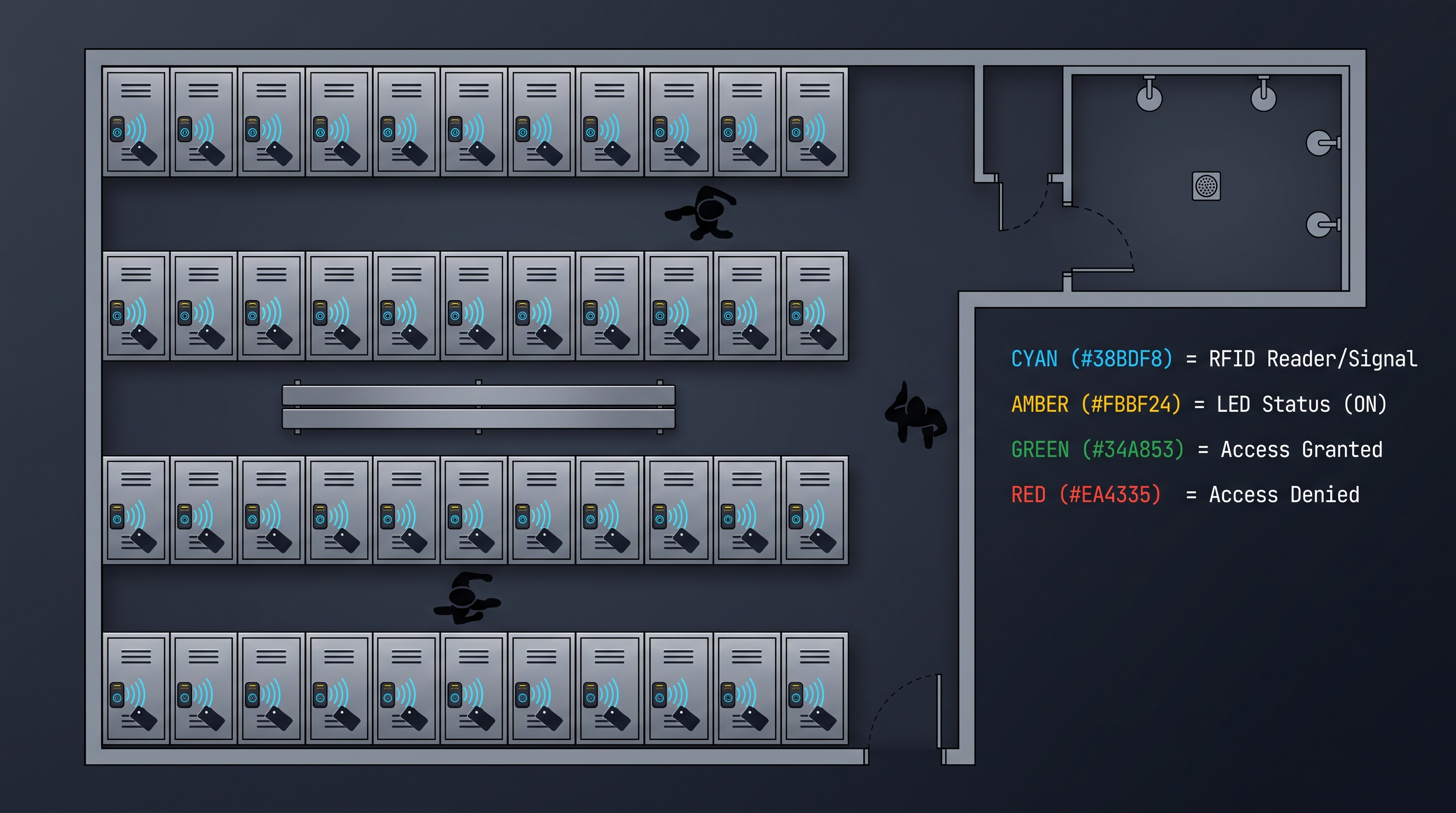
A digital locker lock is an electronic access-control device that secures a locker compartment by authenticating users through electronically stored or software-generated credentials — contactless RFID cards or wristbands at 13.56 MHz or 125 kHz, PIN codes entered on an integrated backlit keypad, QR codes or barcodes scanned from a smartphone screen or printed receipt, BLE 5.0 encrypted rolling tokens transmitted from a mobile application, or capacitive 508 DPI fingerprint templates captured and matched locally — rather than through physical keys, mechanical combination dials, or coin-deposit mechanisms that have dominated locker access since the early twentieth century. A modern digital locker lock integrates a 16–32 MHz ARM Cortex-M0/M3 microcontroller with 128–512 KB flash memory for credential storage and transaction logging, a credential reader tailored to the access technology, a DC motor or electromagnetic solenoid actuator drawing 150–400 mA during the 0.3–1.5 second latch retraction window, and a power management integrated circuit sustaining 15–40 microamps standby current that yields 12–24 months of continuous operation from four AA alkaline cells or up to five years from a single 3.6 V lithium thionyl chloride D-cell pack in low-cycle applications. The global digital locker lock market reached $1.8 billion in revenue in 2025 and is projected to expand at a compound annual growth rate of 14.2 percent through 2032, propelled by the rapid buildout of automated parcel locker networks exceeding 1.5 million locker banks globally by 2028, the structural shift toward hot-desking and flexible office layouts requiring dynamically assignable day-use storage, post-pandemic health-safety mandates favoring contactless access in high-touch fitness and aquatic-center environments, and the integration of digital locker lock fleets into enterprise building-management and IoT platforms via standardized REST APIs and Matter-over-Thread protocol support. A single digital locker lock transaction captures 5–20 data points per event — credential identifier, timestamp to one-second or finer resolution, door-open and door-close events, successful access versus denied attempt, real-time battery voltage, and tamper-detection alerts — generating an audit trail that mechanical keyed or combination locker locks cannot approach and enabling the operational analytics (peak-hour usage distributions, per-compartment dwell-time calculations, occupancy heat maps) that facility managers use to right-size locker banks and reduce average per-user wait times by 30–50 percent compared with unmonitored mechanical locker fleets.
What Is a Digital Locker Lock and How Does It Work
A digital locker lock is an electromechanical device that replaces the key cylinder, combination dial, or coin-operated mechanism of a conventional locker lock with a microcontroller-driven authentication-and-actuation subsystem, providing per-user credential accountability, remote credential lifecycle management, time-restricted access policies, and per-transaction audit logging that no purely mechanical locker security product can deliver. The digital locker lock's operational sequence begins when a user presents a credential to the lock's input interface — tapping an RFID membership card or silicone wristband within 2–6 centimeters of the inductive antenna zone, presenting a QR code to the lock's integrated 2D CMOS scanner module, typing a 4–12 digit personal identification number on a silicone-membrane or capacitive-touch keypad, initiating a Bluetooth Low Energy encrypted connection from a companion smartphone app at a range of 1–10 meters, or placing a fingertip on a capacitive 508 DPI fingerprint sensor — at which instant the lock's microcontroller wakes from its sub-microamp deep-sleep state, captures the credential data into a buffer, and executes the authentication routine: for RFID, a binary search of the stored authorized-card identifier list in non-volatile flash (supporting 500–20,000 UIDs locally) against the presented card's unique identifier or, for DESFire EV2/EV3 credentials, an AES-128 mutual challenge-response handshake; for PIN, a SHA-256 hash computation of the entered digits compared against the stored code hash table; for QR, an HMAC-SHA256 signature validation of the decoded payload against the lock's stored platform public key plus a real-time-clock check for expiry; for BLE, an ECDH P-256 ephemeral key exchange with AES-128-CCM message encryption and token signature verification; for biometric, a minutiae-point template matching algorithm operating on the extracted 30–60 ridge-ending, bifurcation, and whorl features against the 20–100 stored reference templates with a False Acceptance Rate below 0.0001 percent and a False Rejection Rate of 0.1–1.0 percent. The digital locker lock executes the entire authentication sequence — from credential capture to match decision — within 50–200 milliseconds, after which the microcontroller energizes the actuator: a 3–6 V DC micro-motor driving a worm-gear or rack-and-pinion retraction mechanism that withdraws the hardened-steel latch bolt from the frame-mounted strike plate, or an electromagnetic solenoid with spring return. Latch retraction completes within 0.2–1.5 seconds, the lock's RGB LED flashes green, and the door can be opened. The user closes the door; a magnetic reed switch or Hall-effect sensor detects door closure via the change in magnetic field from a small magnet embedded in the door or frame, and the digital locker lock auto-relocks within a configurable 2–10 second delay, logging the transaction as complete. If the presented credential is invalid, expired, or not in the authorized list, the digital locker lock flashes a red LED, emits a short audible rejection tone, and logs the denial event including the credential identifier (or a hash) and timestamp. After a configurable threshold of 3–5 consecutive invalid attempts, the digital locker lock enforces a lockout cooldown of 30–300 seconds, deterring brute-force enumeration attacks.
The digital locker lock differs from a traditional mechanical locker lock along four operational dimensions that collectively justify its adoption in any deployment of 20 or more compartments. First, credential lifecycle management: a digital locker lock enables an administrator to issue, modify, and revoke access rights through software — a departing employee's RFID badge is deactivated across all managed digital locker lock compartments in under five seconds via a dashboard click or automated identity-provider integration, whereas a mechanical key must be physically recovered (often unsuccessfully, leaving a lingering security gap) or the affected cylinder must be rekeyed by a locksmith at a cost of $15–50 per cylinder. Second, access granularity: a digital locker lock supports time-restricted access policies — a custodial-staff RFID badge unlocks cleaning-supply lockers only between 11 PM and 5 AM, and is denied at all other hours — plus one-time-use credentials, such as a parcel-recipient QR code that expires after a single successful scan or after a 24–72 hour window, and role-based policies where different credential classes open different subsets of lockers. Third, auditability: every digital locker lock transaction produces a timestamped, attributable log entry — who accessed which compartment, when, through which authentication method, and for how long — providing the forensic data basis for theft investigation, regulatory compliance reporting, and operational capacity planning. Fourth, system integration: a digital locker lock fleet connects to facility management platforms over RS-485, Ethernet, WiFi, or LoRaWAN, surfacing real-time occupancy dashboards, predictive battery-replacement alerts from declining voltage trend analysis, and API-driven integration with building access-control platforms (Lenel, Genetec, CCure), membership-management CRMs (Mindbody, ABC Fitness), and parcel-carrier ecosystems including Amazon Hub and UPS Access Point networks.
Core Components of a Digital Locker Lock
| Component | Function | Typical Specification |
|---|---|---|
| Microcontroller | Credential processing, actuator control, event logging | 16–32 MHz ARM Cortex-M0/M3, 128–512 KB flash, 8–32 KB SRAM |
| Credential reader | Capture and decode user credential | RFID 13.56 MHz / 125 kHz antenna, 2D CMOS QR scanner, capacitive fingerprint 508 DPI |
| Actuator motor or solenoid | Retract latch bolt on successful authentication | DC motor 3–6 V at 150–400 mA peak, or solenoid with spring return |
| Latch bolt | Physically retain door in closed position | Hardened steel or zinc alloy, 8–14 mm diameter, 8–15 mm throw |
| Door-position sensor | Detect door open/close state for auto-relock | Magnetic reed switch with embedded door magnet, or Hall-effect sensor |
| Power supply module | Regulate battery power, manage sleep states | 4×AA alkaline or lithium cells, or 3.6 V Li-SOCl2 D-cell pack |
| Communication module | Network connectivity for managed models | RS-485 bus, BLE 5.0, WiFi 802.11 b/g/n 2.4 GHz, or LoRaWAN 868/915 MHz |
| Status indicators | Provide visual and audible user feedback | RGB LED (green access, red denied, amber low battery), piezo buzzer 85 dB |
The Digital Locker Lock Transaction Lifecycle
Consider a fitness-center digital locker lock: a member approaches a vacant locker, presents their RFID wristband (already paired to their membership account in the gym CRM), and the digital locker lock reads the 13.56 MHz MIFARE DESFire card's 7-byte UID, locates it in the stored whitelist in under 80 milliseconds, retracts the latch, and illuminates the green LED. The member opens the door, stows their gym bag and valuables, closes the door, and the digital locker lock senses door closure and auto-engages the latch within five seconds. The lock logs: member credential ID (hashed), locker compartment number, timestamp of unlock and re-lock, and current battery voltage. When the member finishes their workout and returns, the same wristband presentation reverses the cycle — unlock, retrieve, close, auto-lock — and the platform registers the compartment as vacant and available for the next member. If the member forgets which locker they used, they can tap their wristband on any locker in the bank; the lock that flashes green is theirs, and the others flash red, guiding them to the correct compartment. If the member's membership expires or is frozen, the platform pushes a credential revocation command that propagates to all digital locker locks on the network, and the wristband is denied access within seconds.
In a parcel digital locker lock scenario, a delivery courier scans the shipment barcode at the locker bank kiosk; the platform allocates a compartment of appropriate size class (S/M/L/XL), generates a single-use QR code containing the locker identifier, a cryptographically signed transaction token, and a 48-hour expiry timestamp, and transmits it to the recipient via SMS and email. When the recipient presents the QR code to the digital locker lock's scanner, the lock decodes the payload, validates the HMAC-SHA256 signature against its stored platform public key, confirms the expiry timestamp has not elapsed, retracts the latch, and illuminates the green LED. The recipient retrieves the parcel, closes the door, and the digital locker lock auto-locks and reports the transaction complete. The QR code is immediately invalidated — any subsequent presentation, by the original recipient or anyone to whom they forwarded the code, is rejected. The entire parcel pickup transaction requires 3–8 seconds and involves zero attendant interaction, enabling 24/7 unattended operation at throughputs of 200–400 collections per hour per locker bank.
Types of Digital Locker Lock by Access Technology
A digital locker lock is categorized primarily by the credential technology it authenticates, and this choice determines the user experience profile, the security posture, the credential-provisioning burden, the per-unit hardware cost, the battery-life expectation, and the integration architecture. The five primary digital locker lock access technologies — RFID contactless card and wristband, PIN keypad, QR code and barcode scanner, Bluetooth Low Energy mobile application, and biometric capacitive fingerprint — each serve distinct use cases, user populations, operational environments, and threat models. The correct digital locker lock technology selection process must map the deployment's primary user profile, access frequency and churn rate, existing credential infrastructure, environmental conditions (indoor dry, indoor humid or wet, outdoor sheltered, outdoor exposed), network availability, and security requirements to the technology that optimally satisfies those constraints. This section provides a detailed technical, operational, and economic comparison of each digital locker lock access technology category.
RFID Contactless Digital Locker Lock
The RFID digital locker lock is the most widely deployed digital locker lock technology globally, dominant in fitness centers, corporate offices, healthcare facilities, universities, and any environment where users already carry an RFID-enabled access badge, membership card, or wristband that can serve double duty as the locker credential — eliminating the need for separate locker-specific tokens and the associated procurement, distribution, and replacement logistics. The RFID digital locker lock's reader module comprises a printed-circuit-board trace or wire-wound ferrite-core inductive antenna coil 25–40 mm in diameter and an RFID transceiver integrated circuit — typically an NXP CLRC663, ST25R3916, or Texas Instruments TRF7970A for 13.56 MHz high-frequency operation, or an EM Microelectronic EM4095 or AMS AS3933 for 125 kHz low-frequency operation — that communicates with the credential's embedded RFID chip through inductive coupling at reading distances of 2–6 centimeters. At 13.56 MHz, the digital locker lock reads ISO/IEC 14443 Type A and Type B contactless smart cards, including MIFARE Classic (1 KB or 4 KB of user memory organized into 16 or 40 sectors, each secured by a 48-bit sector key), MIFARE DESFire EV2 and EV3 (with AES-128 mutual authentication between the reader and card, 4–32 KB of memory organized into flexible application files, and support for Secure Messaging that encrypts all air-interface communication), MIFARE Ultralight C (with 3DES authentication for lower-cost single-application tokens), and NFC Forum Type 2 and Type 4 tags integrated into smartphones. The digital locker lock reads the card's factory-programmed Unique Identifier (4, 7, or 10 bytes depending on card type) or, for DESFire credentials, authenticates to a dedicated locker-access application file using a diversified key derived from the card UID and a master key held securely in the lock's and the platform's hardware security module. At 125 kHz, the less-expensive digital locker lock reads EM4100/EM4200, HID Prox, and Indala proximity credentials, which transmit a fixed, unencrypted 26–37 bit Wiegand-format facility code and card number that cannot be modified — this is the legacy installed base that represents approximately 40 percent of RFID lockers globally as of 2026.
The authorized-credential whitelist stored in the RFID digital locker lock's flash memory supports 500–20,000 card UIDs or application identifiers depending on model and flash capacity, programmed via a master configuration card (an RFID card with a special command-sector payload that, when presented in programming mode, enters credential-enrollment sequence), via a USB-connected administrator programming keypad, or, for networked locks, pushed from the cloud management platform over the RS-485 bus, WiFi, or LoRaWAN downlink. When a user presents a credential, the digital locker lock's microcontroller reads the UID or application data, executes a binary search or indexed lookup against the stored whitelist, and actuates the latch on match within 0.3–1.0 second total wall-clock time from tap to unlock. The primary advantages of the RFID digital locker lock are zero per-transaction user friction (tap-and-open, no typing, no app launching, no phone retrieval), unlimited user scalability when using standard card formats (the lock stores up to 20,000 UIDs locally, and cloud-connected models effectively support millions of users because the platform manages the global credential database), and the ability to leverage existing badge infrastructure (the employee badge that opens the building entrance door also opens the employee's assigned locker, with no additional credential cost and no user training burden). The primary security consideration is credential cloning vulnerability: legacy 125 kHz EM4100 proximity cards transmit a static, unencrypted UID on every read cycle, and a $25 Proxmark3 or Flipper Zero device can capture and replay that UID from up to one meter away, opening the digital locker lock with the cloned signal. Facilities deploying RFID digital locker locks should specify 13.56 MHz MIFARE DESFire EV2 or EV3 compatibility as the minimum security standard for any locker compartment storing valuables, personal electronics, sensitive documents, or controlled substances, and should plan a migration timeline from 125 kHz to DESFire for existing deployments. The dual-frequency digital locker lock — supporting both 125 kHz and 13.56 MHz in a single reader, typically at a $5–10 per-unit premium over single-frequency models — provides a seamless migration path by allowing phased badge replacement.
PIN Keypad Digital Locker Lock
The PIN digital locker lock is the lowest-cost and simplest electronic locker access technology, using a 12–16 button membrane or capacitive-touch keypad with digits 0–9 and auxiliary function buttons (asterisk or cancel, pound or confirm) to accept a user-entered numeric code. The PIN digital locker lock's microcontroller stores 20–200 unique user codes in hashed form — SHA-256 or a proprietary salted hash — in its EEPROM or flash, and supports configurable code lengths of 4–12 digits (longer codes resist observation and guessing but increase entry time and user error rate). When a user types a code on the keypad and presses the confirm button, the digital locker lock's hashing routine computes the digest of the entered digits and compares it against each stored code hash sequentially; on the first match, the lock actuates the latch within 0.5–1.0 second. The PIN digital locker lock offers the lowest hardware purchase cost ($15–35 per unit), the simplest deployment preparation (no credential procurement, no card distribution, no app installation — users receive their code verbally, on a printed slip, or via SMS and memorize it), and the broadest user compatibility (any person who can remember a 4–12 digit number can use it, regardless of whether they carry a smartphone, an RFID badge, or any other token). The primary disadvantages are the hidden ongoing operational costs of PIN management: user-forgotten PINs generate support requests at an estimated rate of 0.5–2.0 incidents per lock per month in gym and school deployments, consuming $5–25 of staff time per incident for code reset and re-issuance; PIN sharing between family members, friends, or coworkers undermines the per-user accountability that is one of the digital locker lock's primary value propositions (multiple people knowing the same code means the audit log cannot attribute an access event to a specific individual); and keypad membrane degradation in high-use environments — gym locker rooms with 50–200 daily unlock cycles per lock experience membrane-surface printing wear, tactile-feedback deterioration, and eventual button-contact failure within 18–36 months, requiring keypad module replacement or full lock replacement. The PIN digital locker lock is best suited for small-scale deployments of fewer than 20 lockers, environments with low user churn such as a family home gym or a small office with a stable staff roster, temporary or seasonal installations (summer-camp lockers, event-venue temporary storage), and applications where the user population does not carry compatible RFID badges and smartphone penetration is insufficient to support Bluetooth-app-based access.
QR Code and Barcode Scanner Digital Locker Lock
The QR code digital locker lock is the standard access technology for unattended parcel pickup networks, retail click-and-collect fulfillment, and any digital locker lock application where the user population is transient, unregistered, and receives one-time access credentials delivered remotely — by SMS, email, in-app notification, or printed on a kiosk receipt — rather than carrying a persistent token. The QR code digital locker lock incorporates a 2D barcode scanner module — a CMOS image sensor at 640×480 or 1280×720 pixel resolution with a red LED or laser diode illumination source and a lens optimized for the 5–15 cm reading distance typical of phone-screen presentation — capable of decoding QR Code (Model 1 and Model 2), Data Matrix ECC200, PDF417 stacked-linear, Aztec, and standard 1D barcodes including Code 128 and Code 39. When a parcel carrier deposits a delivery, the locker management platform allocates an empty compartment of the correct size class, generates a unique QR payload encoding the compartment identifier, a single-use cryptographically signed transaction token, and an expiry timestamp (typically 24–72 hours), encrypts or signs the payload using HMAC-SHA256 with a per-lock or per-site symmetric key, and delivers the rendered QR image to the recipient via multiple channels (SMS MMS, HTML email, push notification to the carrier's app, or printout on the delivery-notice card left at the recipient's door). When the recipient presents the QR code on their smartphone screen to the digital locker lock's scanner, the lock's microcontroller decodes the QR payload, recomputes the HMAC-SHA256 signature over the payload fields using the locally stored platform key and compares it to the received signature, verifies the expiry timestamp against the lock's real-time clock (synchronized via the network or, for offline locks, a battery-backed RTC with annual drift under 5 minutes), and retracts the latch if all validations pass. The QR digital locker lock expires the code immediately after the first successful scan — a code-presented-twice rejection is logged and alerted — preventing the common social-engineering attack where the legitimate recipient forwards the QR screenshot to an accomplice for unauthorized collection. The QR code digital locker lock's primary advantage is its universality: any recipient with a functioning smartphone can display a QR code, regardless of whether they possess an RFID card, have installed a specific app, or have memorized a PIN. Zero user enrollment is required, and an unlimited number of unique, single-use credentials can be generated from the platform, limited only by the entropy of the cryptographically random transaction-token field (128 bits provides 2^128 unique values, far exceeding any practical deployment scale). The primary operational limitation is scanner decode reliability in adverse environmental conditions: direct sunlight on the scanner window, rain droplets or condensation on the scanner lens, low-contrast display settings on damaged or budget smartphone screens, and scratched or cracked phone screen protectors reduce QR decode success rates from 99+ percent under laboratory lighting to 92–97 percent in outdoor, humid, or high-glare conditions. Outdoor digital locker lock deployments should specify scanner modules with an IP66 or IP67 environmental rating, actively heated scanner windows for condensation and frost resistance, and sunlight-readable assistive illumination that overcomes direct-sun contrast washout.
Bluetooth Low Energy (BLE) Mobile App Digital Locker Lock
The Bluetooth digital locker lock replaces physical credentials with a smartphone application that communicates with the lock over Bluetooth Low Energy 5.0 or 5.2 operating in the 2.4 GHz ISM band, using AES-128-CCM encryption for message confidentiality and authentication and LE Secure Connections pairing with Elliptic Curve Diffie-Hellman P-256 key exchange for session-key derivation. The digital locker lock advertises its presence via BLE beacon frames at a configurable interval (typically 1 Hz, consuming 3–8 microamps average advertising current) containing the lock's unique 48-bit Bluetooth device address, a service UUID identifying the locker-access application, and a rolling manufacturer-specific data field that changes on each advertisement to prevent tracking. When the user's companion app (iOS 14+ or Android 8+, distributed through the respective app stores and authenticated to the locker platform cloud) detects the lock's advertisement within configurable proximity — 1–2 meters for deliberate tap-to-open interaction, or 5–10 meters for proximity-based background unlock — it initiates an encrypted connection, exchanges ephemeral ECDH P-256 public keys, derives the session key, and transmits a cryptographically signed unlock token containing the user's platform identity, the lock's identifier, a timestamp, and a nonce. The digital locker lock validates the token signature using the platform public key stored in its firmware, checks the lock identifier and nonce against its own identity and a replay-prevention counter, and if all validations pass, retracts the latch within 0.3–1.0 second. The BLE digital locker lock enables interaction patterns that credential-based locks cannot: remote unlock via internet relay (the user's phone sends an unlock command to the cloud platform over cellular or WiFi, the platform routes it to the lock via an on-site BLE gateway or WiFi connection, and the lock opens — useful for granting building-maintenance or pet-sitter access when the locker owner is away), digital key sharing (the locker user generates a time-limited, permission-scoped access token in the app and sends it to a family member, colleague, or service provider via messaging or email — the recipient's app receives and stores the token and uses it to unlock the locker during the specified window), proximity-based auto-unlock (the lock opens automatically when the authorized phone approaches within 1–2 meters, eliminating any deliberate credential-presentation action), and lock-status polling (the app displays whether the locker is currently locked, unlocked, occupied, vacant, or in-need-of-maintenance based on the lock's most recent reported state). The BLE digital locker lock is the preferred technology for co-working spaces, premium fitness clubs, technology-company offices, and modern multifamily residential buildings where smartphone-native interaction is the expected and valued user experience. The primary adoption barrier is the onboarding requirement: every user must download and configure the locker app, create an account, and accept permissions (Bluetooth, location for background BLE scanning on Android, and notifications), a process that takes 2–5 minutes and causes 10–20 percent user drop-off. This is mitigated by multi-protocol digital locker locks that also accept RFID cards or PIN codes as fallback credentials, providing an immediate access path for users who decline app installation while offering the enhanced BLE experience for those who adopt it.
Biometric Fingerprint Digital Locker Lock
The biometric digital locker lock authenticates users through a capacitive fingerprint sensor — a semiconductor grid of 160×160 to 256×360 micro-capacitor electrode cells at 508 DPI resolution — that measures the sub-surface capacitance differential between fingerprint ridges (which make direct contact with the sensor surface, yielding higher capacitance) and valleys (which bridge the sensor electrodes with an air gap, yielding lower capacitance), constructing a three-dimensional-like depth map that is inherently resistant to spoofing via two-dimensional photographs or lifted latent prints. The sensor's embedded image-processing pipeline extracts 30–60 stable minutiae points — ridge endings, bifurcations, whorls, arches, and loops — from the captured image, discards low-quality or ambiguous features, and generates a compact mathematical template (typically 256–512 bytes) that represents the unique, invariant characteristics of the finger while being computationally infeasible to reverse into a fingerprint image. The biometric digital locker lock stores 20–100 of these templates in its secure flash memory (each template indexed to a user identifier) and, at authentication time, compares the live-scanned template against the stored reference templates using a minutiae-based matching algorithm or, in premium sensors, a neural-network-based matching engine that achieves improved accuracy on degraded fingerprints (wet, dry, worn, or scarred). Matching completes in 100–500 milliseconds, and the lock's False Acceptance Rate — the probability that an unauthorized finger is incorrectly matched to a stored template — is specified below 0.0001 percent for capacitive sensors with liveness detection, while the False Rejection Rate — the probability that the legitimate enrolled finger is incorrectly rejected — is specified at 0.1–1.0 percent under optimal conditions, rising to 3–8 percent for wet, very dry, or contaminated fingers. Premium biometric digital locker locks incorporate two additional sensor capabilities: liveness detection, which analyzes the capacitive impedance characteristics across multiple excitation frequencies to distinguish live human skin (with its conductive sub-dermal tissue layers and characteristic moisture-dependent dielectric profile) from silicone, gelatin, latex, or wood-glue replicas, and multi-spectral imaging, which simultaneously captures surface ridge-and-valley patterns at multiple wavelengths of light (visible, near-infrared), penetrating the outermost dead-skin layer to image the live sub-surface ridge structure and dramatically improving recognition of dry, worn, or dirty fingertips. The biometric digital locker lock provides the strongest non-repudiation among all digital locker lock technologies: a fingerprint cannot be shared between users (unlike a PIN code, which is trivially communicated), cannot be lost or stolen (unlike an RFID card or wristband, which can fall off or be taken), and cannot be forgotten (unlike a password or memorized code), and the unlock event is incontrovertibly linked to the specific individual whose finger was presented — a property essential for controlled-substance pharmacy cabinets, forensic-evidence storage lockers, executive private lockers, and government classified-material compartments where attribution certainty is a regulatory requirement. The primary limitation is environmental sensor reliability: wet fingertips immediately after showering or hand-washing, very dry skin common in winter months or among healthcare workers who sanitize hands with alcohol gel 20–50 times per shift, and dirty or contaminated fingertips (construction workers, mechanics) can cause false rejections that degrade the user experience and generate support calls. Multi-spectral sensors and liveness-detection-capable modules mitigate wet and dry finger issues but add $20–40 to the biometric digital locker lock unit cost versus basic capacitive-only sensors.
Multi-Protocol Digital Locker Lock
The multi-protocol digital locker lock combines two or more credential-reader technologies into a single lock — most commonly RFID plus Bluetooth BLE, RFID plus PIN keypad, or RFID plus Bluetooth plus PIN — enabling a single digital locker lock to serve a population with diverse credential preferences: gym members who prefer the simplicity of an RFID wristband alongside tech-enthusiast members who want smartphone-tap access; office employees who carry RFID building-access badges plus contractors and visitors who receive one-day PIN codes; university students who use campus ID cards plus faculty who prefer a mobile app. The multi-protocol digital locker lock costs $70–150 per unit, a $15–40 premium over single-protocol models, but this premium is justified in any deployment where credential-preference heterogeneity would otherwise require deploying multiple lock models in different locker zones and managing them as separate systems. The multi-protocol digital locker lock evaluates credentials in a priority order — for example, BLE proximity is checked first when a paired phone is detected nearby, then RFID, then PIN entry — with a total unlock latency of 0.5–2.0 seconds depending on which protocol is active and whether the lock must transition between credential-processing modes.
| Technology | Unit Cost (USD) | Per-User Credential Cost | Users Supported Locally | Unlock Time | Rated Battery Life | Security Grade | Best-Fit Application |
|---|---|---|---|---|---|---|---|
| RFID 13.56 MHz MIFARE DESFire | $35–80 | $0 if existing badge; $1–3 per new card | 500–20,000 UIDs in flash | 0.3–1.0 s | 12–24 months on 4×AA | High: AES-128 mutual auth, anti-cloning | Gyms, offices, hospitals, universities |
| RFID 125 kHz EM/HID Prox | $25–55 | $0 if existing badge; $0.50–1.50 new card | 500–20,000 UIDs in flash | 0.3–1.0 s | 12–24 months on 4×AA | Low: static UID, trivially clonable | Legacy retrofits, budget, low-value storage |
| PIN Keypad | $15–35 | $0 (memorized; no physical credential) | 20–200 hash-stored codes | 0.5–1.5 s depending on code length | 12–18 months on 4×AA | Medium: hash-stored, observation-vulnerable | Small deployments, temporary/seasonal |
| QR Code / Barcode Scanner | $40–90 | $0 (phone-displayed; no physical credential) | Unlimited (cryptographic validation) | 1.0–3.0 s including scan and decode | 10–18 months on 4×AA | High: HMAC-SHA256 signed, single-use | Parcel pickup, retail click-and-collect |
| Bluetooth BLE 5.0+ Mobile App | $45–110 | $0 (user's existing smartphone) | 50–500 app-registered users | 0.3–1.0 s | 10–14 months on 4×AA (BLE advertising continuous) | High: AES-128-CCM, ECDH P-256 | Co-working, modern offices, premium gyms |
| Fingerprint Capacitive 508 DPI | $50–120 | $0 (biometric; no physical credential) | 20–100 stored templates | 0.3–0.8 s (sensor + match) | 12–18 months on 4×AA | Very High: FAR < 0.0001%, liveness detection | Pharmacy, evidence, executive, classified |
| Multi-Protocol (RFID+BLE+PIN) | $70–150 | $0–$3 depending on credential used | Varies per protocol | 0.5–2.0 s | 10–16 months on 4×AA | High (strongest active protocol applies) | Heterogeneous user populations |
Digital Locker Lock vs Mechanical Locker Lock: Total Cost of Ownership and Capability Comparison
A digital locker lock transforms the fundamental economics, security posture, and user experience of locker management when compared with traditional mechanical keyed cylinder locks, combination dial locks, and coin-operated or token-deposit locker mechanisms that have been the dominant locker access technologies since the early twentieth century. The conventional mechanical keyed locker lock — a pin-tumbler or wafer-tumbler cylinder with a cam arm that engages a frame-mounted strike plate — costs $8–25 per unit to purchase, requires zero batteries and zero networking, and can function for decades with occasional lubrication, making it appear, on a per-unit hardware-cost basis, to be the economically rational choice. However, the mechanical keyed locker lock imposes substantial hidden lifecycle operational costs that its upfront price obscures: key management labor at an estimated 3.1–8.3 hours per lock per year for issuing, tracking, collecting, and replacing keys (at a loaded labor rate of $25–40 per hour in North American and European facilities), rekeying expense at $15–50 per cylinder when an employee departs or a key is lost (for a facility with 15 percent annual staff turnover and 100 lockers, this represents $225–750 annually), key replacement and hardware maintenance ($3–8 per active key per year for cutting duplicates, replacing worn or broken keys, and repairing seized cylinders), and the operational friction of manual compartment assignment: a gym attendant must maintain a physical key checkout register, a written log of which member has which locker key, and a process for collecting keys at departure — all tasks that a digital locker lock with RFID badges or PIN codes automates entirely. The mechanical locker lock also provides zero audit trail: when a theft occurs from a keyed locker, the investigation must rely on witness interviews and the hope that the key register was meticulously maintained; the lock itself yields no forensic data about who opened it or when. This inability to attribute access events to specific individuals makes mechanical locker locks fundamentally unsuitable for any storage scenario involving valuable items, sensitive documents, controlled substances, or regulatory compliance obligations.
The digital locker lock costs $25–150 per unit — a hardware premium of 2–6 times the mechanical alternative — but eliminates key management labor entirely for RFID, BLE mobile-app, and biometric models where the credential is pre-existing or part of the user's person, reduces rekeying cost to zero (credential revocation is a software operation that completes in seconds across an entire fleet), provides per-transaction audit logging with user identity, compartment identifier, timestamp, and event type for every access, and enables dynamic, real-time compartment assignment: a gym attendant can view locker occupancy on a dashboard and assign any vacant compartment to any arriving member without physical key exchange. The digital locker lock further provides capabilities that mechanical locks cannot deliver: time-restricted access policies (cleaning-staff badges work only during scheduled overnight hours), automatic compartment expiry and release (a day-use office locker reassigns at 8 PM; a parcel pickup code expires after 48 hours), predictive maintenance (declining battery voltage trends trigger replacement alerts 4–8 weeks before depletion), and API integration with membership management, identity provider, and building-access-control platforms.
The total cost of ownership comparison over a five-year lifecycle for a representative 100-compartment gym locker deployment illustrates the financial case quantitatively. Traditional keyed mechanical locks: hardware cost $1,500–2,500 (one-time), annual key management labor 312–832 staff hours at $25/hour loaded ($7,800–20,800 per year), annual rekeying for 15 percent annual staff and membership turnover on 100 compartments ($2,250–6,000 per year), annual key and cylinder replacement ($800–1,500 per year). Five-year cumulative TCO: $61,750–157,000. RFID digital locker locks at the mid-range tier: hardware cost $5,000–8,000 (one-time), annual battery replacement for 100 locks performing 80 cycles per day each ($150–400 per year in alkaline cells plus 10–20 labor hours), annual cloud platform subscription at $1.50–3.00 per lock per month ($1,800–3,600 per year), annual IT administration labor of 20–50 hours at $35/hour ($700–1,750 per year), and annual 2 percent lock hardware failure replacement ($100–160 per year). Five-year cumulative TCO: $17,750–33,950. The digital locker lock deployment saves approximately $28,000–139,000 over five years on a 100-compartment scale, achieving full payback within 8–18 months and delivering substantial net savings in every subsequent year of operation.
| Cost Category | Mechanical Keyed Locks (100 units, 5-year) | Digital Locker Lock RFID (100 units, 5-year) | Net Savings |
|---|---|---|---|
| Lock hardware acquisition (one-time) | $1,500–2,500 | $5,000–8,000 | -$3,500 to -$5,500 |
| Annual key/credential management labor | $7,800–20,800 | $700–1,750 | $7,100–19,050 per year |
| Annual rekeying / credential revocation | $2,250–6,000 | $0 (instant software revocation) | $2,250–6,000 per year |
| Annual key/cylinder replacement | $800–1,500 | $0 (no physical keys) | $800–1,500 per year |
| Annual battery replacement | $0 | $150–400 | -$150 to -$400 per year |
| Annual platform subscription | $0 | $1,800–3,600 | -$1,800 to -$3,600 per year |
| Annual theft/loss reduction | Baseline (no audit trail) | 40–60% reduction vs baseline | $1,500–5,000 per year estimated |
| 5-Year Cumulative Total Cost | $61,750–157,000 | $17,750–33,950 | $27,800–139,050 |
Digital Locker Lock Deployment by Industry: Requirements, Technology Fit, and Operational Benchmarks
A digital locker lock deployment must be tailored to the operational requirements of its host vertical, because the access pattern, user churn rate, credential compatibility expectation, environmental stress, and integration complexity differ sharply across gyms, parcel networks, corporate offices, educational institutions, healthcare facilities, and public-transit or municipal environments. This section details the digital locker lock selection criteria, recommended technologies, environmental specifications, and key performance metrics for each primary deployment vertical.
Gym and Fitness Center Digital Locker Lock
The gym digital locker lock operates in a high-frequency, high-churn environment where 200–1,000 users cycle through 50–500 lockers per day, the membership roster changes by 5–15 percent monthly as members join, cancel, or freeze their accounts, and the ambient environment includes elevated humidity, airborne chlorine vapor in facilities with swimming pools or hot tubs, sweat contact on the lock face, and occasional direct water splash from showers or cleaning. The gym digital locker lock must authenticate the user's credential and retract the latch within one second to prevent locker-room bottlenecks during peak post-work hours (typically 6–8 AM and 5–8 PM on weekdays), must survive 50–200 unlock-and-relock cycles per day per compartment without actuator degradation (the motor or solenoid is rated for 50,000–100,000 lifetime cycles, translating to 2–5 years at 100 daily cycles), must resist corrosion from the humid, chlorinated, and saline atmosphere — 316 stainless steel hardware containing 2–3 percent molybdenum for enhanced chloride pitting resistance, or marine-grade aluminum with Type III hard anodization, plus conformal coating on the internal printed circuit board — and must integrate via REST API or direct database connector with the gym's membership management platform (Mindbody, ABC Fitness Solutions, ClubReady, Zingfit, Glofox) so that membership-card RFID credentials are automatically provisioned for digital locker lock access upon account activation and automatically revoked across all locks upon membership cancellation, suspension, or freeze, without manual intervention from gym staff. The recommended gym digital locker lock technology is dual-frequency RFID supporting both 13.56 MHz MIFARE DESFire for security and 125 kHz EM/HID for legacy membership-card compatibility, with multi-protocol BLE as an optional add-on for premium clubs whose member demographic expects and prefers smartphone-tap access. Battery life in the gym digital locker lock typically achieves 10–16 months rather than the 18–24 month manufacturer rating, because of the 80–200 daily cycles far exceeding the 10–20 cycles-per-day assumption baked into laboratory battery-life testing protocols; facility operators should budget for annual battery replacement across the entire fleet and should track per-lock cycle counts from the management dashboard to identify high-usage outliers for targeted mid-cycle replacement.
| Gym Digital Locker Lock Requirement | Target Specification | Rationale |
|---|---|---|
| Daily unlock cycles per lock | 50–200 | Peak-hour throughput demands; budget locks rated for 20/day fail |
| User churn rate accommodation | 5–15% monthly membership change | API integration with gym CRM for automated provisioning/revocation |
| Environmental protection rating | IP65 minimum, IP66 preferred | Humidity, sweat, chlorine vapor, water splash from cleaning |
| Housing and bolt material | 316 stainless steel | Chloride corrosion resistance for pool-adjacent locker rooms |
| Credential integration | REST API or database connector to gym CRM | Zero-touch credential provisioning and revocation |
| Unlock latency | Under 1.0 second | Minimize queue formation at peak hours |
| Actuator cycle rating | 50,000–100,000 cycles lifetime | 2–5 year life at 100 cycles/day |
| Surface hygiene | Antimicrobial keypad material (silver-ion or copper-infused) | Reduce bacterial colonization on high-touch lock surface |
| Battery replacement interval (actual) | 10–16 months | Plan annual replacement with 10% spare lock inventory |
Parcel and E-Commerce Logistics Digital Locker Lock
The parcel digital locker lock serves unattended, frequently outdoor or semi-outdoor parcel locker banks where recipients are transient, unregistered, and receive one-time access credentials delivered to their phone or email. The parcel digital locker lock must operate reliably across an extended temperature range of -30 to +60 degrees Celsius for street-facing, unheated, and air-temperature-exposed deployments; must resist precipitation ingress, dust, and condensation with an IP66 or IP67 environmental rating; must authenticate QR codes presented on smartphone screens with 95+ percent first-pass decode success in outdoor lighting conditions (direct sunlight, shade, rain, and after-dark) using a heated scanner window, sunlight-readable assistive illumination, and a scratch-resistant sapphire or chemically strengthened glass scanner lens; must integrate with parcel-carrier application programming interfaces (UPS, FedEx, DHL Express, Amazon Logistics, national postal operators including USPS, Canada Post, Royal Mail, La Poste, Deutsche Post DHL) and e-commerce platform APIs (Shopify, Magento, WooCommerce, Salesforce Commerce Cloud, BigCommerce) for automated locker allocation upon delivery scan, recipient notification, and carrier pickup of returns; must support scalable, cryptographically secure one-time credential generation — each QR payload is signed with HMAC-SHA256 using a per-site platform key and expires on first successful scan or after a configured time window, preventing code-reuse and code-forwarding fraud; must report real-time compartment occupancy to the platform to enable the allocation algorithms that choose the optimal compartment size class for each incoming parcel; and must support remote reboot, firmware update, and diagnostic data retrieval over the network link (Ethernet, WiFi, or cellular 4G/LTE) to minimize the need for on-site technician dispatch to physically attended locker locations. The recommended parcel digital locker lock is a QR-code-first lock with a 2D CMOS scanner module rated IP66 or higher, with an integral or externally mounted heated scanner window for outdoor deployments, and with either wired Ethernet for fixed-installation locker banks inside apartment lobbies and retail stores or cellular 4G/LTE Cat-1 or Cat-M1 for standalone street furniture lockers without wired infrastructure. Throughput is a critical parcel digital locker lock operational metric: carrier deposit requires 3–10 seconds (scanning the delivery manifest barcode, which the platform maps to an assigned compartment of the correct size class), and recipient collection requires 3–8 seconds (the recipient retrieves the QR from SMS or email, positions the phone screen 5–15 cm from the scanner, and waits for decode, validation, and unlock). Scanner reliability in outdoor environments is the primary operational failure mode and the leading source of parcel digital locker lock support calls and truck rolls; selecting a scanner module tested and validated for the specific deployment environment (outdoor urban, coastal marine, desert, or sub-arctic) is the single most impactful hardware specification decision in a parcel locker deployment.
Corporate Office Digital Locker Lock
The corporate office digital locker lock supports the structural shift to hybrid and flexible working models — where employees attend the office 2–3 days per week rather than 5, and permanent assigned desks and lockers are replaced with hot-desking and day-use storage — by enabling dynamic, software-driven locker assignment that auto-releases compartments at the end of each workday and makes them available for next-day booking. The office digital locker lock must integrate with the corporate identity provider — Microsoft Entra ID (Azure Active Directory), Okta, Ping Identity, JumpCloud, or on-premise LDAP and Active Directory — via System for Cross-domain Identity Management (SCIM 2.0) provisioning or REST API, so that the employee's building-access RFID badge automatically serves as the locker credential (eliminating any separate credential procurement or distribution), and locker access rights mirror the employee's directory group memberships: human-resources-staff badges open HR-department lockers but not finance-department lockers, IT-staff badges open server-room and network-closet storage lockers, and executive-staff badges open executive-floor private lockers. The office digital locker lock should support time-restricted access policies that align with the organization's operating hours and hybrid-work schedules, policy-based compartment auto-release at a configurable time each evening (typically 7–9 PM) so that lockers are available for fresh assignment each morning without staff intervention, real-time occupancy dashboards integrated with the workplace management platform (Condeco, Teem by iOFFICE, Robin Powered, OfficeSpace, Envoy) so that employees can locate an available locker from the same app they use to book a desk or meeting room, and integration with the building-access-control platform (Lenel, Genetec, CCure, Gallagher) for unified badging and audit-trail consolidation. The recommended office digital locker lock is 13.56 MHz MIFARE DESFire RFID as the baseline technology — matching the corporate badge standard — with optional BLE mobile-app support for companies that have adopted a mobile-first credential strategy using employee smartphones with HID Mobile Access, WaveLynx, or SwiftConnect digital badges. Battery life in office digital locker locks typically achieves or exceeds the 18–24 month rating because daily unlock cycles are modest (5–15 per locker per day in a hot-desking day-use model), enabling a low-maintenance operational profile that aligns with corporate facilities-team staffing models.
Education Digital Locker Lock
The education digital locker lock serves K-12 school, college, and university locker deployments where lockers are assigned on a semester, term, or annual basis, and the primary security objectives are theft prevention among a student population that shares hallways and common areas, and streamlined locker assignment at the beginning of each academic term (traditionally a manual process consuming hundreds of staff hours to issue mechanical keys or combination codes to thousands of students). The education digital locker lock must support semester-based automated provisioning: at the start of each term, the student information system roster is imported to the locker management platform, and each student's campus RFID ID card is automatically authorized for their assigned locker compartment for the duration of the term, with access automatically expiring on the last day of the term. Multi-building or multi-campus deployments require centralized management from a single platform over the campus wired or WiFi network. The education digital locker lock should be specified with vandal-resistant features: a hardened-steel faceplate (Rockwell C 45+ hardness, minimum 2.5 mm thickness), tamper-resistant mounting screws (Torx security, Tri-wing, or one-way), a pry-resistant latch bolt with a minimum 12 mm throw and anti-saw hardened pins, and tamper-event logging that captures forced-door attempts and multiple failed-credential-presentation sequences with immediate alerting to campus security or the facility manager. Education digital locker locks benefit from an audible or visual occupancy indicator — a small LED or LCD icon on the lock face that displays whether the compartment is locked, unlocked, or in an alarm state — so that students and security staff can visually identify anomalous locker states during routine hallway patrols without requiring a management dashboard. The recommended education digital locker lock is 13.56 MHz MIFARE DESFire RFID integrated with the campus one-card system (CBORD, Atrium, Blackboard Transact, TouchNet), with WiFi or wired Ethernet networking for centralized management.
Healthcare Digital Locker Lock
The healthcare digital locker lock serves hospital staff locker rooms, pharmacy controlled-substance cabinets, patient-belongings storage lockers, and clinical-supply storage compartments — environments governed by stringent regulatory frameworks including the Health Insurance Portability and Accountability Act (HIPAA) Security Rule for protected health information, the Drug Enforcement Administration (DEA) controlled-substance storage security mandates under 21 CFR 1301.75, and Joint Commission Medication Management standards (MM.03.01.01) requiring locked storage that prevents unauthorized medication access and diversion. The healthcare digital locker lock must withstand repeated daily disinfection with hospital-grade cleaning agents — quaternary ammonium compounds, accelerated hydrogen peroxide at 0.5 percent concentration, sodium hypochlorite at 1:10 dilution, and 70 percent isopropyl alcohol — applied via saturated wipe or spray-and-wipe protocol, requiring housing materials that have been validated for chemical-compatibility with the specific disinfectants used at the deploying facility (typically ABS-polycarbonate blend or powder-coated 316 stainless steel with chemical-resistant sealants) and sealed electronics with IP65 or higher ingress protection achieved through silicone compression gaskets at the keypad-reader interface, battery compartment, and all housing seams. For pharmacy controlled-substance cabinets subject to DEA audit, the healthcare digital locker lock must provide dual-authentication — two separate authorized staff credentials, each with a different credential type (biometric fingerprint plus RFID badge, or two distinct PIN codes), presented within a configurable time window (typically 5–30 seconds), must both authenticate successfully before the lock releases — non-repudiable per-transaction audit logging that links every cabinet access to the specific individual(s) who presented credentials (biometric template match provides the strongest non-repudiation; RFID badge plus witnessed PIN provides moderate non-repudiation), tamper-evident logging that records and immediately alerts on any attempt to force, pry, drill, or magnetically bypass the lock, and configurable automatic re-lock delay (typically 5–30 seconds after door closure, with an override for extended-access sessions such as inventory counts). The recommended healthcare digital locker lock for staff personal lockers is 13.56 MHz RFID integrated with the hospital access-control platform and employee badge system; for controlled-substance cabinets, biometric fingerprint with liveness detection plus RFID badge as a secondary factor; for patient-belongings lockers in emergency departments and inpatient units, RFID or PIN keypad with a simple, guest-accessible interface and override key for nursing staff.
| Industry Vertical | Recommended Digital Locker Lock Technology | Minimum Environmental Rating | Critical Integration | Key Operational Metric |
|---|---|---|---|---|
| Gym and Fitness | Dual-freq RFID (13.56 MHz + 125 kHz), optional BLE | IP65–IP66 | Gym CRM API (Mindbody, ABC, ClubReady) | Under 1.0 s unlock, 50–200 cycles/day |
| Parcel and Logistics | QR code 2D scanner, IP66+ outdoor rated | IP66–IP67, -30 to +60 C | Carrier API (UPS, FedEx, DHL), e-commerce API | Scanner decode reliability outdoor 95%+ |
| Corporate Office | DESFire RFID, optional BLE mobile app | IP54–IP65 | Identity provider SCIM (Azure AD, Okta) | Dynamic assignment, evening auto-release |
| Education K-12 and University | DESFire RFID, vandal-resistant housing | IP54, tamper-resistant faceplate | Student Information System, campus card system | Semester-based provisioning and expiry |
| Healthcare | RFID for staff lockers; biometric + RFID for pharmacy | IP65, chemical-disinfectant-resistant | Access control, EHR optional | Non-repudiation, disinfection durability, dual-auth |
Digital Locker Lock Installation and Retrofit: A Complete Technical Guide
Installing a digital locker lock into a new locker bank during construction or retrofitting a digital locker lock into existing lockers to replace mechanical locks represents the most labor-intensive and risk-laden phase of a digital locker lock deployment. A failed installation — where locks do not fit the existing mounting holes, latch bolts do not align with existing strike plates, or the interior lock body collides with locker shelves or back walls — causes project delays, budget overruns, and loss of user confidence. This section provides a structured, phase-based installation process validated through thousands of commercial locker retrofits.
Phase 1: Pre-Installation Compartment Survey
Before ordering a single digital locker lock, physically inspect and document every locker compartment that will receive one. Create a spreadsheet with the following columns for each compartment: locker bank identifier, compartment number, door material (sheet steel gauge or mm, HDPE plastic, laminated MDF, solid wood, or glass), door thickness in millimeters measured with calipers at the mounting-hole location, existing mounting hole diameter in millimeters (16, 19, or 22 mm are the most common mechanical lock barrel diameters), interior depth behind the door face measured from the interior surface of the door to the back wall of the locker at the mounting-hole centerline (must exceed the digital locker lock body depth of 20–50 mm plus a 10 mm clearance margin for ventilation and flex — a minimum of 55 mm is recommended), door swing direction and latch handing (left-hand, right-hand, or ambidextrous — specify the correct handed model or verify that the selected digital locker lock is field-configurable for hand), existing strike plate or keeper type (surface-mounted or mortised into the frame, its vertical position relative to the mounting hole centerline, and the slot dimensions), adjacent-door clearance (in multi-door locker banks, verify that the digital locker lock's faceplate does not protrude beyond the door face plane such that it would interfere with the adjacent door's opening arc), and network connectivity notes (distance to nearest RS-485 bus termination point, Ethernet drop, WiFi access point, or LoRaWAN gateway, with RSSI measurement at the locker location if wireless). This survey typically requires 5–10 minutes per compartment and is the single highest-value pre-deployment activity — discovering that 40 out of 200 existing lockers have 16 mm mounting holes when the selected digital locker lock requires a 22 mm hole is a discovery best made during planning, not after 200 expensive locks have arrived on the loading dock.
Phase 2: Mechanical Removal and Mounting-Hole Preparation
Remove the existing mechanical lock from each compartment: unscrew the interior retaining nut — typically a 17–22 mm hex nut, occasionally a slotted or Phillips-head screw — using an appropriately sized socket wrench or screwdriver, slide the lock barrel out through the front of the door, and remove the frame-mounted strike plate or keeper (typically secured with two Phillips or slotted screws). If the existing lock was riveted rather than nut-secured, drill out the rivets using a drill bit 0.5–1.0 mm smaller than the rivet diameter to avoid enlarging the rivet hole in the door. If the existing mounting hole diameter is smaller than the digital locker lock's barrel diameter, enlarge it using a step drill bit (also called a unibit) from the front face of the door, drilling at low speed with light pressure to produce a clean, round hole. The step drill bit produces a self-centering, burr-free hole when used correctly; a standard twist drill bit should never be used for this operation because it is prone to walking, producing an oval or off-center hole. After enlarging, deburr both the front and rear hole edges with a countersink bit, a deburring tool, or a fine half-round file. For locker doors thinner than 0.8 mm (typical of budget sheet-steel lockers), install a stainless-steel reinforcing washer or laser-cut reinforcing plate on the interior face of the door — a 1.5–2.0 mm thick plate with an outer diameter of 30–40 mm and a center hole matching the lock barrel diameter — to distribute the retaining-nut clamping force across a larger area and prevent the lock from pulling through or deforming the thin door metal under repeated use.
Phase 3: Digital Locker Lock Mounting and Strike-Plate Alignment
Insert the digital locker lock barrel through the prepared mounting hole from the front. Verify that the lock face is oriented correctly — the credential-reader surface or keypad is upright and level, and any directional icons (tap-zone rings, biometric sensor outlines, QR scanner windows) are properly aligned. On the interior side of the door, slide the lock body or mounting bracket onto the barrel's threaded section and hand-tighten the retaining nut. Before final torque, verify interior clearance: the lock body must clear the locker's interior shelves, hanging rods, coat hooks, and back wall by a minimum of 5 mm on all sides to allow for ventilation, to prevent binding during thermal expansion and contraction of the metal locker body, and to permit the lock body to be removed for battery replacement or service without disassembling the locker's interior fittings. Install or adapt the strike plate: the digital locker lock's latch bolt centerline must align with the centerline of the frame-mounted strike-plate slot, and the bolt must engage the keeper with a minimum of 3 mm of overlap depth (the distance the extended bolt penetrates into the keeper slot when the door is closed and the latch is at rest). With the door held in the closed position, visually or with a machinist's scribe, mark the strike plate's correct position on the frame such that the bolt fully enters the slot. Drill pilot holes using a bit diameter appropriate for the strike-plate mounting screws (the pilot hole diameter should be approximately 75 percent of the screw's minor diameter for sheet metal, or 90 percent for wood frames) and secure the strike plate with the supplied screws. Test the latch engagement: close the door fully and verify that the bolt audibly clicks into the strike plate, that the door cannot be pulled open without retracting the latch (either electronically or with the mechanical override key), and that the closed door sits flush with the frame or adjacent doors without a visible gap at the lock edge that would indicate insufficient bolt engagement or strike-plate misalignment.
Phase 4: Torque, Power, and Initial Test
Tighten the retaining nut to the manufacturer's specified torque using a calibrated torque screwdriver or wrench: typically 3–5 Newton-meters for metal locker doors, and 1.5–2.5 Newton-meters for plastic, MDF, or wood doors. Over-torquing crushes plastic lock housings, deforms thin metal doors, and can bind the latch mechanism; under-torquing permits the lock to rotate or work loose over time. Install fresh batteries according to the lock's battery orientation markings — alkaline AA cells inserted with correct polarity, or a lithium thionyl chloride pack connected to the lock's battery input terminal. The digital locker lock should emit a startup sequence: typically a green LED flash, an ascending audible beep, and possibly a brief motor or solenoid self-test cycle. If the lock does not power on or emits a red LED or error beep pattern, remove the batteries, verify polarity, check for bent or corroded battery contacts, and reinsert. Once powered, verify the lock's basic function: use the manufacturer's default master code or programming card to enter programming mode, enroll a test credential (a test RFID card or a test PIN), exit programming mode, and test that presenting the test credential unlocks the latch, the door opens freely, and the lock auto-relocks within the configured delay on door closure. Test rejection: present an unenrolled credential and verify the lock flashes red and refuses to unlock. For networked digital locker locks, configure the network connection (RS-485 bus address, WiFi SSID and passphrase via the manufacturer's provisioning app, or LoRaWAN OTAA join parameters), verify connectivity from the management platform (ping the lock, confirm firmware version, sync the real-time clock), and test that a lock/unlock event appears on the platform dashboard within the expected latency window (under 30 seconds for RS-485 and WiFi, under 2–5 minutes for LoRaWAN with adaptive data rate).
Phase 5: Fleet Acceptance Testing
After every digital locker lock in the deployment is installed, programmed, and networked, execute a systematic acceptance test protocol: for every lock, perform the authorized-credential test (present a known-authorized credential, verify unlock within 1.5 seconds), unauthorized-credential test (present a known-unauthorized credential, verify denial with red LED), mechanical-override test (if the lock has an emergency mechanical keyway, verify the key retracts the latch regardless of battery or electronic state), tamper-alarm test (if the lock has a tamper sensor, apply force to the locked door and verify the alarm activates audibly and is reported to the platform), consecutive-cycle test (cycle the lock 10 times through unlock-door-open-door-close-auto-lock and verify consistent, reliable operation with no missed unlocks, no sticking, and no unusual motor noise that might indicate a binding mechanism), and battery-voltage recording (record the as-installed battery voltage from the lock's diagnostic readout or the platform dashboard as a baseline for future trend analysis). For networked locks, verify that each of the 10 test-cycle transactions appears correctly on the management platform with accurate credential identifier, timestamp, compartment number, and event type.
| Installation Step | Time per Lock (experienced installer) | Tools Required | Common Pitfalls and Mitigations |
|---|---|---|---|
| Pre-installation survey | 5–10 min | Calipers, tape measure, flashlight, spreadsheet | Skipping interior-clearance measurement causes lock-body collision |
| Remove existing lock | 2–5 min | Socket wrench, screwdriver, drill (if riveted) | Seized retaining nuts; use penetrating oil 30 min before removal |
| Enlarge mounting hole if needed | 3–8 min | Step drill bit, deburring tool, file | Oval or walk-off hole from twist drill; use step bit only |
| Mount lock and align strike | 5–15 min | Retaining-nut wrench, torque screwdriver, scribe | Insufficient bolt-keeper overlap; test with pull force |
| Torque retaining nut | 1–2 min | Torque screwdriver or wrench | Over-torquing cracks plastic; under-torquing allows rotation |
| Insert batteries and power-on | 2–3 min | Fresh batteries of correct type | Reversed polarity; bent battery contacts; verify startup sequence |
| Program credentials and network | 5–15 min | Master card, programming keypad, or platform | Forgetting auto-relock delay; bus address conflict on RS-485 |
| Acceptance test with 10 cycles | 5–10 min | Authorized and unauthorized test credentials | Skipping unauthorized-credential rejection test masks programming errors |
Digital Locker Lock Power Management, Battery Life Optimization, and Maintenance Planning
The digital locker lock is a battery-operated device in 85–90 percent of global deployments because the cost, complexity, and aesthetic disruption of routing low-voltage power cabling to individual locker doors — particularly in a retrofit scenario where the locker bank is an existing free-standing structure — outweighs the labor of periodic battery replacement. A thorough understanding of the digital locker lock's power architecture, battery chemistry options, low-battery detection and management strategy, and preventive-maintenance scheduling is essential for achieving the lock's rated service life and avoiding the single most common and user-frustrating digital locker lock failure mode: a dead-battery lockout.
Power Budget Decomposition and Battery Chemistry Selection
The digital locker lock's power consumption decomposes into three operational states: deep-sleep standby, during which the microcontroller is in its lowest-power sleep mode (consuming 0.5–5 microamps), the credential-reader interface is in a low-duty-cycle wake-on-approach polling mode (the RFID antenna pulses a carrier-detect field for 50–200 microseconds every 200–500 milliseconds, the capacitive-touch keypad scans at 10–20 Hz, the BLE radio advertises at 1 Hz), and the total system standby current is 15–40 microamps; active authentication, during which the microcontroller wakes to full clock speed, the credential reader operates at full power (RFID field generation at 100–200 milliwatts, QR scanner illumination LED on, fingerprint sensor image capture), and the authentication computation executes, consuming 10–30 milliamps for 0.5–2.0 seconds; and actuator operation, during which the DC motor or solenoid draws its peak current of 150–400 milliamps for 0.2–1.0 second to retract the latch bolt against the spring or motor-load torque. The digital locker lock's energy consumption per unlock cycle — the product of current draw times duration for each of the three phases — typically totals 0.5–2.5 milliwatt-hours per cycle depending on the access technology, actuator type, and the lock's efficiency.
Battery chemistry selection has a first-order effect on digital locker lock operational life and total maintenance cost. Standard alkaline cells (LR6 AA, 1.5 V nominal, 2,500–3,000 mAh capacity at a 25 mA discharge rate, declining significantly at temperatures below 0 degrees Celsius and in high-drain pulse applications) are the lowest-cost option at $0.30–0.60 per cell but deliver the shortest operational life: 12–18 months for a gym digital locker lock experiencing 80 cycles per day, and 18–24 months for an office lock at 10 cycles per day. Lithium iron disulfide cells (Li-FeS2 AA, 1.5 V nominal, 3,000–3,500 mAh, flat discharge voltage curve, excellent low-temperature performance to -40 degrees Celsius) cost $1.50–2.50 per cell — 4–5 times the alkaline price — but extend operational life by 40–60 percent and eliminate the risk of alkaline electrolyte leakage that can corrode the lock's battery contacts and internal electronics over multi-year deployment. Lithium thionyl chloride cells (Li-SOCl2, 3.6 V nominal, commercially available in AA, C, and D form factors with capacities of 2.6, 8.5, and 19 Ah respectively, extremely flat discharge curve, operational from -55 to +85 degrees Celsius) are the recommended choice for outdoor or hard-to-service digital locker lock installations where battery replacement is logistically difficult or expensive: a single Li-SOCl2 D-cell pack can power a moderate-cycle (20–50 cycles per day) digital locker lock for 3–5 years, dramatically reducing the operational burden of battery replacement. The lithium thionyl chloride cell's only significant limitation is its relatively low pulse-current capability — a large capacitor or a hybrid-layer capacitor (HLC) is often required in parallel to supply the 150–400 mA actuator current pulse, which the cell's high internal resistance cannot deliver directly.
Low-Battery Detection, Warning, and Predictive Replacement
The digital locker lock's power-management integrated circuit continuously samples the battery voltage both at rest (open-circuit voltage, measured during idle periods) and under load (during the actuator pulse, when voltage sag reveals the battery's internal resistance and remaining capacity). Alkaline cells start at 1.55–1.60 V when fresh and decline gradually over their service life to approximately 0.9–1.0 V at full discharge; lithium iron disulfide cells maintain a flatter 1.5 V plateau for approximately 90 percent of their capacity before a rapid voltage drop at end-of-life; lithium thionyl chloride cells hold 3.6 V within 0.1 V for their entire rated capacity before a sharp cutoff. The digital locker lock's first low-battery warning threshold is typically set at 1.0–1.1 V per cell for alkaline and Li-FeS2 (4.0–4.4 V for a 4-cell AA pack) or at 3.3 V for a 3.6 V Li-SOCl2 pack. When the sampled voltage (filtered to remove transient sags) drops below this threshold, the digital locker lock emits a distinctive low-battery warning sequence on every unlock: typically 3–5 rapid beeps or amber LED flashes before the normal green access confirmation. This warning persists for 4–8 weeks of continued operation at typical cycle rates, providing a generous window for scheduling and completing battery replacement without service interruption. When the voltage drops below the critical minimum threshold (approximately 0.9 V per cell for alkaline, 3.0 V for Li-SOCl2), the digital locker lock enters its end-of-life behavior — which must be either fail-safe (the lock remains unlocked, allowing access to the compartment but without security) or fail-secure (the lock remains locked, securing the compartment but potentially locking out the legitimate user) depending on the deployment's threat model and the manufacturer's default. Both behaviors are undesirable, and the entire purpose of predictive battery management is to prevent the lock from ever reaching its critical-voltage state.
For networked digital locker lock deployments, the management platform receives the per-lock battery-voltage reading with every transaction and can apply trend analysis: a sustained, monotonic voltage decline over 4–8 transaction cycles or 2–4 weeks, with a projected crossing of the warning-threshold voltage at a calculated future date, triggers a predictive replacement alert to the maintenance team. The alert recommends scheduling battery replacement for all locks in that bank (or at least all locks installed at the same time) within a specified window, converting battery replacement from a reactive, complaint-driven maintenance task into a planned, batched maintenance activity. The industry best practice for high-cycle gym and parcel locker deployments is calendar-based fleet-wide battery replacement — annually for gyms with 80–200 daily cycles and alkaline cells, every 18 months for offices with 5–15 daily cycles and alkaline cells, every 24–30 months for any environment using lithium iron disulfide cells, and every 3–5 years for lithium thionyl chloride outdoor installations — supplemented by the predictive-alert system to identify and replace outlier locks that are depleting faster than the fleet average (a lock adjacent to a sauna door that runs warmer and thus depletes faster, or a lock in the most popular locker bank that cycles 3 times the fleet average).
Preventive Maintenance Program
| Maintenance Activity | Frequency | Party Responsible | Tools and Notes |
|---|---|---|---|
| Battery voltage fleet review (dashboard) | Weekly (networked), monthly (standalone with manual read) | Facility manager or maintenance supervisor | Identify declining-voltage lock outliers for targeted replacement |
| Fleet battery replacement (all locks) | Annually (high-cycle), every 18 months (medium), every 2–5 years (Li-SOCl2) | Maintenance team | Use lithium cells for high-use or outdoor; keep spares for one full fleet replacement |
| Firmware version audit and update check | Quarterly | IT or facility manager | Apply security patches within 30 days of critical CVE publication |
| Keypad membrane condition inspection | Every 6 months for high-use; annually for medium | Maintenance technician | Replace worn, cracked, or button-label-unreadable keypad modules |
| QR scanner lens cleaning | Monthly for outdoor; quarterly for indoor | Maintenance or custodial staff | Use dry microfiber cloth only; no solvents, no abrasive cleaners |
| Lock cycle functionality spot-test (10% random sample) | Monthly | Maintenance technician | Verify unlock speed, latch full engagement, battery warning present if applicable |
| Latch bolt and mechanism lubrication | Annually | Maintenance technician | Apply dry PTFE spray lubricant only; wet lubricants attract dust and cause binding |
| Tamper seal visual inspection | Annually | Maintenance technician | Replace damaged tamper seals; cross-reference tamper logs for correlation |
| Spare-parts inventory audit | Quarterly | Procurement or maintenance supervisor | Maintain 5% of installed base as spare locks; replenish battery stock |
A digital locker lock fleet maintenance program should budget for a 1–3 percent annual hardware failure rate — primarily actuator motor or gear-train wear in high-cycle gym environments, keypad membrane degradation in humid or high-touch deployments, QR scanner module image-sensor or illumination-LED failure in outdoor parcel lockers, and electronic-component failure from corrosion in inadequately sealed locks deployed in wet environments — and maintain a spare-parts inventory of 5 percent of the installed base (5 spare locks for every 100 deployed), plus a stock of replacement batteries sufficient for one complete fleet replacement. The total annual maintenance cost for a 100-lock digital locker lock deployment ranges from $500 to $3,000 — approximately 1–3 percent of the initial hardware investment per year — which is substantially lower than the 8–15 percent annual maintenance burden of mechanical keyed locker locks due to the digital locker lock's elimination of key cutting, cylinder rekeying, and lost-key lock-replacement labor and materials.
Digital Locker Lock Security: Threat Model, Hardening Strategies, and Operational Best Practices
A digital locker lock, despite its cryptographic and electronic sophistication, faces a multi-vector threat surface that spans credential attacks (cloning, replay, brute-force enumeration, shoulder-surfing), physical attacks (prying, drilling, shimming, magnetic bypass, lock faceplate removal), electronic attacks (RFID sniffing and relay, BLE man-in-the-middle interception, side-channel power-analysis), network attacks (WiFi deauthentication, RS-485 bus packet injection, cloud-platform credential-database compromise), and insider attacks (authorized users exceeding their permission scope, platform administrators abusing privilege to create backdoor credentials, maintenance staff extracting stored credential databases during service). A comprehensive digital locker lock security strategy addresses each threat vector through a layered combination of technology specification, configuration policy, operational procedure, and continuous monitoring.
Credential Security by Access Technology
The RFID digital locker lock's most widespread and exploitable vulnerability is the static, unencrypted unique identifier broadcast by legacy 125 kHz EM4100, HID Prox, and Indala proximity cards. An attacker using a $25 Proxmark3, Flipper Zero, or even a smartphone with an NFC reader app can capture the card's UID from up to one meter away — from the card in the user's pocket, purse, or dangling from a lanyard — in under one second, and replay it to the digital locker lock with a cloned card or a software-defined radio that emulates the 125 kHz carrier and modulation. The mitigation for digital locker lock deployments is unequivocal: migrate from 125 kHz to 13.56 MHz MIFARE DESFire EV2 or EV3 credentials with AES-128 mutual authentication. In the DESFire mutual-authentication protocol, the digital locker lock generates a random challenge nonce and sends it to the card; the card encrypts the challenge using its application-sector AES key (a diversified per-card key derived from the card's UID and a master key held in the lock's hardware security module) and returns the ciphertext; the lock independently computes the expected ciphertext using its copy of the diversified key and compares; if they match, the lock has authenticated the card, and the card has simultaneously authenticated the lock (because only a genuine lock possesses the master key needed to derive the correct sector key). A cloned 125 kHz card possessing only a copied UID cannot compute the correct challenge-response ciphertext and is rejected. For existing RFID digital locker lock deployments with 125 kHz infrastructure that cannot be immediately replaced, implement a compensating control: multi-factor authentication — RFID card presentation plus PIN entry — so that a cloned RF signal alone, absent knowledge of the user's memorized PIN, is insufficient to unlock the locker.
The PIN digital locker lock's primary vulnerabilities are code sharing between users and shoulder-surfing observation. Code sharing is a behavioral vulnerability that no technical control can fully eliminate, but it can be deterred and detected: enforce minimum PIN length of 6–8 digits (longer codes are more difficult to observe accurately and harder to guess systematically), enforce PIN uniqueness (the lock rejects an attempt to set a code already in use by another user), implement anti-passback logic where a specific PIN cannot be used to unlock a different compartment within a configurable cooldown window (deterring PIN-sharing by limiting its utility), and display the last-unlock timestamp on the lock's screen or dashboard so the legitimate user can detect unauthorized access. Shoulder-surfing mitigation includes keypad shields or recessed keypad designs, randomized keypad layouts (the digit positions change on each use, displayed on a small screen — used in high-security banking applications but rare in locker locks due to cost), and requiring a press-and-hold confirm gesture that obscures the exact digits entered.
The BLE digital locker lock's primary vulnerability is the relay attack, where an attacker places a relay device near the authorized user's phone (which may be in their pocket or on a desk 10 meters from the lock) and a second relay device near the lock. The relay pair transparently forwards the BLE radio signals between the phone and the lock at the speed of light, causing the lock to believe the authorized phone is physically proximate and enabling proximity-based auto-unlock without the user's knowledge or consent. Mitigation: disable proximity-based auto-unlock for locks protecting valuable or sensitive items, or specify BLE 5.1 or later chipsets that support Bluetooth Direction Finding with Angle of Arrival and Angle of Departure measurement, or Phase-Based Ranging that measures the round-trip time-of-flight of the BLE signal at the physical layer (not at the application layer), which cannot be spoofed by a relay device because the relay inherently adds tens to hundreds of nanoseconds of additional propagation delay that the lock can detect as an anomalous distance.
The QR code digital locker lock's primary vulnerability is code screenshot forwarding: the legitimate recipient takes a screenshot of the QR code and sends it via messaging app to an accomplice, who presents the code and collects the parcel before or after the legitimate recipient. Mitigation: the QR payload includes a single-use transaction token that the platform invalidates on first successful presentation, and the lock reports the first-use event in real time; the delivery SMS or email includes warning text stating "This code is single-use and linked to your account — do not share." Code-screenshot forwarding remains possible in a race condition where the accomplice presents the code before the legitimate recipient, but the platform can detect this pattern (the legitimate recipient later attempts to scan an already-used code and reports non-receipt) and can require identity verification for high-value parcel redelivery.
Physical Attack Resistance
The digital locker lock's physical housing, latch mechanism, and mounting must resist a range of physical attacks that require only common hand tools — screwdrivers, pry bars, hammers, drills, and strong magnets — and that an attacker in a semi-private space (apartment-building parcel room at 3 AM, gym locker room during off-peak hours) has minutes rather than seconds to execute. The housing faceplate should be hardened carbon steel (Rockwell C hardness 45–55) with a minimum thickness of 2.5 mm, or investment-cast zinc alloy (Zamak 5) with a minimum thickness of 3.0 mm, secured to the lock body with tamper-resistant screws (Torx security pin-in-center, Tri-wing, or one-way slotted) that require bits not commonly found in consumer multi-bit screwdriver sets. The latch bolt should be hardened steel of 10–14 mm diameter with a minimum throw (extension distance into the frame strike plate) of 10 mm; a bolt with a dead-latching plunger — a secondary, spring-loaded pin adjacent to the main bolt that is depressed by the strike plate when the door is closed, and when depressed, mechanically locks the main bolt in the extended position, preventing it from being pushed back with a shim or plastic card — defeats the most common low-skill physical attack on locker locks. Anti-saw pins or rollers embedded in the latch bolt body — hardened steel cylinders that rotate freely when contacted by a hacksaw or reciprocating-saw blade, preventing the blade teeth from biting — defeat saw attacks. The electronic actuator (motor or solenoid) and the internal printed circuit board should be shielded by a steel or mu-metal (high-permeability nickel-iron alloy) magnetic shield that attenuates the magnetic field from a strong rare-earth magnet applied to the lock faceplate, preventing magnetic manipulation of the solenoid or motor that could retract the latch bolt without electronic authentication.
Network and Platform Security
For networked digital locker lock fleets, the management platform represents the highest-value target — compromising the platform, through credential-stuffing, phishing of administrator credentials, or an unpatched software vulnerability, grants an attacker the ability to issue credentials that open any managed lock, to erase audit trails, and to lock out legitimate users. Platform security requirements: TLS 1.3 (not 1.2, which is vulnerable to downgrade attacks) for all communication between locks, browsers, APIs, and the platform, with certificate pinning to prevent man-in-the-middle interception; mutual TLS or certificate-based lock authentication so the platform verifies it is communicating with a genuine, factory-provisioned digital locker lock and not an impersonator connected to the network; role-based access control with a minimum of four tiers — viewer (read-only access to occupancy and logs), operator (credential provisioning and revocation, no platform configuration changes), manager (lock policy configuration, user management, report generation), and administrator (full platform configuration, firmware update deployment, API key management, audit log access); multi-factor authentication enforced for all accounts with manager or administrator privileges, using time-based one-time passwords or FIDO2 hardware security keys, not SMS-based codes; automated session timeout after 15 minutes of administrative-account inactivity; full, immutable audit logging of every platform administrative action — credential creation, deletion, policy modification, firmware update push, API key rotation — stored in an append-only log with cryptographic chain-of-custody hashing; SOC 2 Type II certification for the cloud platform provider, with the SOC 3 summary report publicly available and the full SOC 2 report available under mutual non-disclosure agreement; and a published vulnerability disclosure and incident response policy with a defined maximum time-to-patch for critical, high, medium, and low severity vulnerabilities.
Operational Security Procedures
| Security Control | Implementation Details | Minimum Frequency |
|---|---|---|
| Active credential audit | Compare platform active-credential list against current personnel/membership roster; identify and investigate orphaned credentials | Monthly |
| Departed-user credential revocation | Revoke all credentials for staff who have separated or members who have cancelled, within one business day | Within 24 hours of departure notification |
| Platform administrator access review | Review and confirm the necessity of every administrative account; remove accounts of departed IT staff | Quarterly |
| Failed-access event log analysis | Review clusters of denied-access events for evidence of brute-force or credential-guessing attacks | Weekly for high-security; monthly for standard |
| Firmware security patch deployment | Apply vendor-issued security firmware updates to all locks | Within 30 days of patch release for critical CVEs |
| Physical tamper inspection | Visual inspection of lock faceplates, housings, and strike plates for pry marks, drill holes, or deformation | Monthly for public-access; quarterly for employee-access |
| Third-party penetration test | Engage an independent security consultancy to test lock hardware, firmware, wireless protocols, and cloud platform | Annually, or after any major platform version upgrade |
| Incident response tabletop exercise | Simulate a reported locker theft and trace the event through the digital locker lock audit trail to identify the investigation and reporting workflow gaps | Annually |
Selecting the Right Digital Locker Lock: A Systematic Decision Framework
Choosing the optimal digital locker lock for a specific deployment requires systematically evaluating every relevant dimension of the deployment context and mapping the identified requirements to the appropriate technology, tier, vendor, and configuration. The following seven-dimension decision framework provides a structured methodology for the selection process.
Dimension 1: User Population Profile. Identify the digital locker lock's end users and their credential characteristics. Transient, unregistered users — parcel recipients, retail click-and-collect customers, day-pass gym visitors — require QR code digital locker locks that require zero user enrollment and deliver credentials remotely, or PIN keypad locks with codes distributed at a kiosk. Pre-registered, card-carrying populations — employees with corporate access badges, gym members with RFID membership cards, university students with campus one-card credentials — are best served by RFID digital locker locks that leverage the badge or card the user already carries, eliminating any separate credential procurement, distribution, or user training. Smartphone-centric populations — co-working members, premium gym clients, technology-company employees — benefit from BLE app-based digital locker locks that provide a modern, app-native experience with digital-key-sharing and remote-unlock capabilities. Fixed-user, high-security populations — pharmacy directors, evidence custodians, executive staff, government classified-material handlers — require biometric digital locker locks because a fingerprint provides credential non-transferability and the strongest attribution certainty.
Dimension 2: Access Frequency and Duty Cycle. Estimate the expected daily unlock-and-relock cycles per digital locker lock. Low duty cycle of 1–10 cycles per day (office personal lockers in a permanent-assignment model, long-term student lockers) is tractable for any digital locker lock technology; battery life will approach the manufacturer's rated value, and actuator wear is not a limiting factor. Medium duty cycle of 10–50 cycles per day (hospital staff lockers, standard-traffic gym lockers) requires a digital locker lock rated for a minimum 20 cycles per day by the manufacturer, with expected battery life of 60–80 percent of the rated duration. High duty cycle of 50–200+ cycles per day (high-traffic gyms, urban parcel pickup hubs) requires a commercial-grade digital locker lock with an actuator rated for 50,000–100,000 lifetime cycles, and battery replacement should be planned annually regardless of the manufacturer's rated battery life. Very high duty cycle of 200–500+ cycles per day (mega-gym chains during January peak, central-city parcel hubs during holiday peak season) may justify upgrading to wired-power digital locker locks — 12 V DC central power or Power-over-Ethernet — to eliminate battery management entirely.
Dimension 3: Operating Environment. Document the physical and chemical conditions at each digital locker lock location. Indoor, climate-controlled spaces (corporate offices, school hallways, hospital corridors) are manageable with standard IP54-rated digital locker locks. Indoor, humid or wet spaces (gym locker rooms, pool changing rooms, spa and sauna lockers) mandate IP65 or IP66 environmental rating, 316 stainless steel or marine-grade aluminum housing, conformally coated internal electronics, and antimicrobial keypad surfaces for hygiene. Outdoor, sheltered spaces (parcel lockers under an awning, parking-garage-mounted lockers) require IP65 minimum, extended temperature range from -20 to +60 degrees Celsius, lithium batteries for cold-weather capacity retention, and heated scanner windows for QR-code models. Outdoor, fully exposed spaces (street-facing parcel lockers, construction-site equipment lockers, beach and marina lockers) require IP66 or IP67, temperature range from -30 to +60 degrees Celsius, UV-stabilized polymer or powder-coated metal housing that resists sun degradation, lithium thionyl chloride batteries for extreme-temperature operation, and cellular 4G/LTE or LoRaWAN connectivity (no reliance on site WiFi that may not reach outdoor locations).
Dimension 4: Network Infrastructure Available. Survey the communication infrastructure at every digital locker lock bank location. RS-485 wired bus: available in new construction or comprehensive renovation; daisy-chain wiring connects locks in series on a 4-conductor cable; lowest per-lock networking hardware cost; requires physical cable installation at deployment time. Ethernet: available where structured cabling already exists (IT closets, data rooms, modern office buildouts); each lock or lock controller requires a Category 5e or better cable run back to an Ethernet switch port; highest reliability and bandwidth. WiFi: available in virtually all modern buildings; verify received signal strength of -65 dBm or better (stronger) at every locker location using a site-survey tool; WiFi-connected locks consume 20–30 percent more power than RS-485 or LoRaWAN, proportionally reducing battery life; vulnerable to access-point reboots, channel congestion, and firmware changes outside the locker administrator's control. LoRaWAN: available if a gateway is installed within line-of-sight range (2–5 km urban, 10–15 km rural); lowest power consumption for battery-operated digital locker locks; limited downlink bandwidth (8–16 bytes per message, 1–10 downlink opportunities per day depending on the network server's fair-use policy); suitable for periodic status reporting and batch credential updates, not for real-time interactive control. Cellular 4G/LTE Cat-1 or Cat-M1, or NB-IoT: available anywhere with cellular network coverage; no local network infrastructure or coordination required; per-lock cellular modem adds $15–30 to hardware cost; monthly data plan adds $1–3 per lock per month; cellular connectivity is the default for standalone outdoor parcel lockers. No network: standalone digital locker locks with all credentials stored locally and programmed via master card or administrator keypad; lowest upfront cost; no remote management, no real-time occupancy visibility, no consolidated audit trail — acceptable only for very small deployments (fewer than 20 lockers) where remote management is not required.
Dimension 5: Integration Scope. Document the third-party systems the digital locker lock platform must exchange data with. For gyms: membership management CRM integration for automated credential provisioning and revocation. For corporate offices: identity provider SCIM or LDAP integration for badge-based locker access synchronized with directory group membership. For parcel logistics: carrier API integration (UPS, FedEx, DHL, national postal operators) and e-commerce platform API integration (Shopify, Magento, WooCommerce, custom web stores) for automated locker assignment, notification, and returns processing. For education: student information system integration for semester-based locker provisioning from course enrollment data. For healthcare: hospital access-control platform integration and, for controlled-substance lockers, electronic health record or pharmacy management system integration for medication-dispensing workflow linkage. Verify the digital locker lock platform's API documentation (RESTful with JSON payloads, OAuth 2.0 or API-key authentication, rate limits, webhook support for event-driven integration), published integration case studies for the specific third-party system and version, and customer references who have successfully integrated that system at a similar deployment scale.
Dimension 6: Five-Year Total Cost of Ownership. Build a complete TCO model for each short-listed digital locker lock candidate: hardware cost (lock unit price times quantity, plus spares at 5 percent of fleet size, plus any required controllers, gateways, or access points), installation labor (hours estimated from pre-installation survey times the loaded hourly labor rate, including any subcontracted trades), credential procurement and replacement (cards, wristbands, or fobs for initial issuance at 100 percent of user population plus 10–15 percent annual replacement for lost and damaged credentials), platform subscription (per-lock-per-month fee times 60 months for cloud-managed locks; zero for standalone locks), network infrastructure (gateways, cabling, access points, cellular data plans amortized over their 5-year hardware life), battery replacement (cell cost plus labor per replacement event times the estimated number of replacement cycles over 5 years at the deployment's actual cycle rate), ongoing maintenance labor (hours per month for firmware updates, log review, credential audits, and lock inspection), and lock replacement (1–3 percent of fleet annually for hardware failures times the replacement lock unit cost plus installation labor). Compare the aggregated 5-year TCO for each digital locker lock option against the 5-year TCO of the existing mechanical lock fleet (or of purchasing new mechanical locks). The TCO analysis typically demonstrates that the digital locker lock achieves payback within 8–18 months for any deployment of 20 or more compartments and delivers substantial net savings in every subsequent year.
Dimension 7: Vendor Evaluation and Long-Term Viability. Assess each digital locker lock manufacturer and platform vendor across: years in the digital lock market (minimum 5 years; 10+ preferred for enterprise and government deployments), financial stability and ownership structure, installed base scale (ask: "How many locks of this exact model are in active field service today, and in how many distinct customer sites?"), customer references for deployments of comparable scale, vertical, and geography (contact at least three references directly by phone or video call, with specific questions about lock reliability rate, actual battery life versus claimed, technical support responsiveness, and post-deployment surprises), warranty terms (2–3 years standard, with cross-ship advance replacement for critical failures — the vendor ships the replacement lock immediately rather than requiring the failed unit to be returned first), technical support availability and quality (US or in-region phone and email support, with published service-level objectives for response and resolution times by severity level), firmware and software update cadence (review the published release history for the preceding 12–24 months; look for security patches released within 30 days of critical CVE publication, feature releases at least twice per year, and a published product roadmap), trial and evaluation program (request 5–10 evaluation units of each short-listed model and deploy them in the actual target environment for a minimum 30 days, with real users, real credentials, and real access patterns — the trial period reveals real-world differences that specification sheets and 15-minute product demos obscure), supply chain resilience (lead times under 4 weeks for standard orders from regional inventory, diversified manufacturing with multiple production sites, documented semiconductor component sourcing strategy that avoids single-supplier dependency), and backward compatibility commitment (the vendor's published policy on credential and API compatibility across product generations — a commitment to backward compatibility protects the customer from forced mid-lifecycle lock replacement when the vendor's product line evolves).
Digital Locker Lock Emerging Technologies and Market Trends: 2027 and Beyond
The digital locker lock product category is evolving rapidly along four technology vectors that will reshape product architectures, integration patterns, and operational economics within the next three to five years.
Matter and Thread protocol standardization. The Connectivity Standards Alliance's Matter application-layer protocol, operating over Thread (IEEE 802.15.4 mesh), WiFi, and Ethernet transport layers, will bring native, cross-platform interoperability to the digital locker lock category — a Matter-certified digital locker lock will be controllable from Apple Home, Google Home, Amazon Alexa, and Samsung SmartThings simultaneously, without proprietary manufacturer hubs, bridges, or vendor-specific apps. Lock provisioning, credential issuance, and status monitoring will use standardized Matter clusters, and the Thread mesh network — already widely deployed through smart speakers, displays, and border routers in tens of millions of homes — will provide low-power, self-healing connectivity for digital locker lock banks with per-node power consumption low enough to enable coin-cell or energy-harvesting operation. The first Matter-certified digital locker lock products are expected in late 2026 to early 2027, initially targeting residential and small-office deployments, with enterprise-scale Matter-over-Thread management platforms following in 2027–2028.
AI and machine learning for predictive locker management. Digital locker lock platforms with access to multi-year, multi-site transaction datasets will deploy machine learning models that predict hourly, daily, and seasonal locker demand patterns, enabling dynamic compartment allocation that pre-reserves lockers for predicted peak hours, automated locker-bank rebalancing that directs users to under-utilized zones, dynamic pricing for premium lockers (larger compartments, locations nearer to gym floor or pool, lockers with integrated USB charging), and predictive maintenance that schedules battery replacement and actuator service based on degradation patterns learned from tens of thousands of identical digital locker lock units in the fleet. AI-enabled digital locker lock management platforms will reduce average per-user wait times by an additional 20–30 percent beyond what static, rule-based occupancy management achieves.
Ultra-wideband (UWB) precision positioning. UWB radios conforming to IEEE 802.15.4z, operating at 3.1–10.6 GHz with centimeter-level ranging accuracy achieved through time-of-flight measurement of sub-nanosecond pulses, will be integrated into premium digital locker locks to enable tap-free, gesture-free access: the authorized user, carrying a UWB-equipped smartphone (iPhone 11 and later, Samsung Galaxy S21 Ultra and later, Google Pixel 6 Pro and later) or a UWB-equipped corporate badge, walks toward their assigned locker, and the correct digital locker lock — identified by the UWB ranging system as the lock closest to the user's device, with sub-30 cm confidence — unlocks automatically as the user approaches. The UWB digital locker lock eliminates the "which locker is mine" search friction in large locker banks and the BLE proximity ambiguity problem where multiple locks within a 10-meter radius all trigger simultaneously.
Energy harvesting and indefinitely battery-free operation. Indoor photovoltaic cells optimized for the 200–1,000 lux illumination levels typical of indoor environments (amorphous silicon or dye-sensitized cells with 10–20 percent conversion efficiency under fluorescent and LED lighting), combined with RF energy harvesting from ambient 2.4 GHz WiFi or 900 MHz LoRa signals, will power a supercapacitor energy buffer that sustains low-cycle digital locker locks indefinitely — 5–15 unlock cycles per day in an office or school environment, with a supercapacitor or small rechargeable lithium-polymer cell buffering harvested energy for the actuator current pulse — eliminating battery replacement for the service life of the lock. Energy-harvesting digital locker locks have entered early commercial deployment in 2025–2026 for office and education applications with low-cycle profiles; broader availability and support for moderate-cycle applications (20–50 cycles per day) is expected by 2028–2029.
| Emerging Technology | Anticipated Commercial Timeline | Impact on Digital Locker Lock | Near-Term Action for Buyers |
|---|---|---|---|
| Matter-over-Thread certification | Late 2026–2027 (consumer); 2027–2028 (enterprise) | Cross-platform interoperability, reduced vendor lock-in | Specify Matter-ready roadmap in 2026 RFPs; require OTA firmware-updateable hardware |
| AI-driven predictive management | 2026–2028 (early adopter); 2028+ (mainstream) | Dynamic demand prediction, predictive maintenance, dynamic pricing | Select cloud platform with open API and data-warehouse export for model training |
| UWB centimeter-precision positioning | 2027–2029 (premium tier); 2029+ (mid-range) | Tap-free automatic unlock at correct compartment, zero user action | Evaluate as premium add-on; not yet essential for standard deployments |
| Indoor-light energy harvesting | 2026–2029 (low-cycle only); 2029+ (moderate cycle) | Battery-free operation for life of lock in office/education | Pilot in low-cycle environments with illumination above 300 lux |
| Post-quantum cryptography | NIST standards finalized 2024; product integration 2028–2030 | CRYSTALS-Kyber key encapsulation and CRYSTALS-Dilithium signatures for credential exchange | Verify lock firmware is field-updateable; monitor vendor's PQC roadmap |
Conclusion: Building a Digital Locker Lock Deployment That Delivers Measurable ROI
The digital locker lock has matured from a niche electronic novelty into a core facility infrastructure component, and the systematic methodology detailed in this guide equips facility managers, procurement specialists, IT directors, and security professionals to deploy it with technical rigor and economic confidence. The digital locker lock's fundamental advantage over mechanical alternatives is software-defined credential management — every dimension of who may access which locker, during which time windows, and with what degree of auditability and attribution, is configured, monitored, and adjusted through a platform interface rather than through physical key exchange, manual combination distribution, and labor-intensive rekeying procedures. Selecting the optimal digital locker lock requires evaluating the deployment across the seven decision dimensions — user population profile, access frequency and duty cycle, operating environment, available network infrastructure, integration scope, five-year total cost of ownership, and vendor viability — and mapping those requirements to the most appropriate access technology (RFID, PIN keypad, QR code scanner, BLE mobile app, or biometric fingerprint) and management model (standalone, cloud-managed, or on-premise managed).
The pre-installation compartment survey — documenting every locker's door material, thickness, mounting-hole diameter, interior depth, strike-plate position, networking conditions, and environmental exposure — is the single highest-value activity in the deployment lifecycle, preventing the retrofit-incompatibility discoveries that derail timelines and inflate budgets when encountered after lock purchase. A systematic acceptance test on every installed digital locker lock — authorized and unauthorized credential verification, mechanical override test, tamper-alarm test, and consecutive-cycle reliability test — provides objective evidence that the fleet performs to specification before live user turnover. An ongoing preventive maintenance program with calendar-based fleet battery replacement, quarterly firmware and credential audits, monthly lock functionality spot-checks, and a 5 percent spare-parts inventory sustains the digital locker lock fleet's reliability, security, and user satisfaction over its 7–10 year operational life.
The total cost of ownership case decisively favors the digital locker lock over mechanical alternatives for any deployment encompassing 20 or more compartments, with payback in 8–18 months and cumulative five-year net savings of $28,000–139,000 for a representative 100-compartment gym or office deployment. As Matter standardization, AI-driven predictive management, UWB positioning, and energy-harvesting technologies reshape the digital locker lock product landscape over the next 3–5 years, specifying modular, over-the-air updateable, API-rich hardware today positions the deployment to adopt emerging capabilities without mid-lifecycle lock replacement. The digital locker lock is not merely a convenience upgrade over the keyed and combination locks of the past century — it is a measurable operational investment in staff productivity, asset security, user experience, and data-driven facility management that pays for itself within its first year of service and generates positive returns in every subsequent year.
Not sure which sensor fits your project?
Talk to our mmWave application engineers for a free consultation.
Find the right presence sensor for your hotel project
Compare the 3 protocols, check hotel-specific case studies, and download the installation guide
Related products
3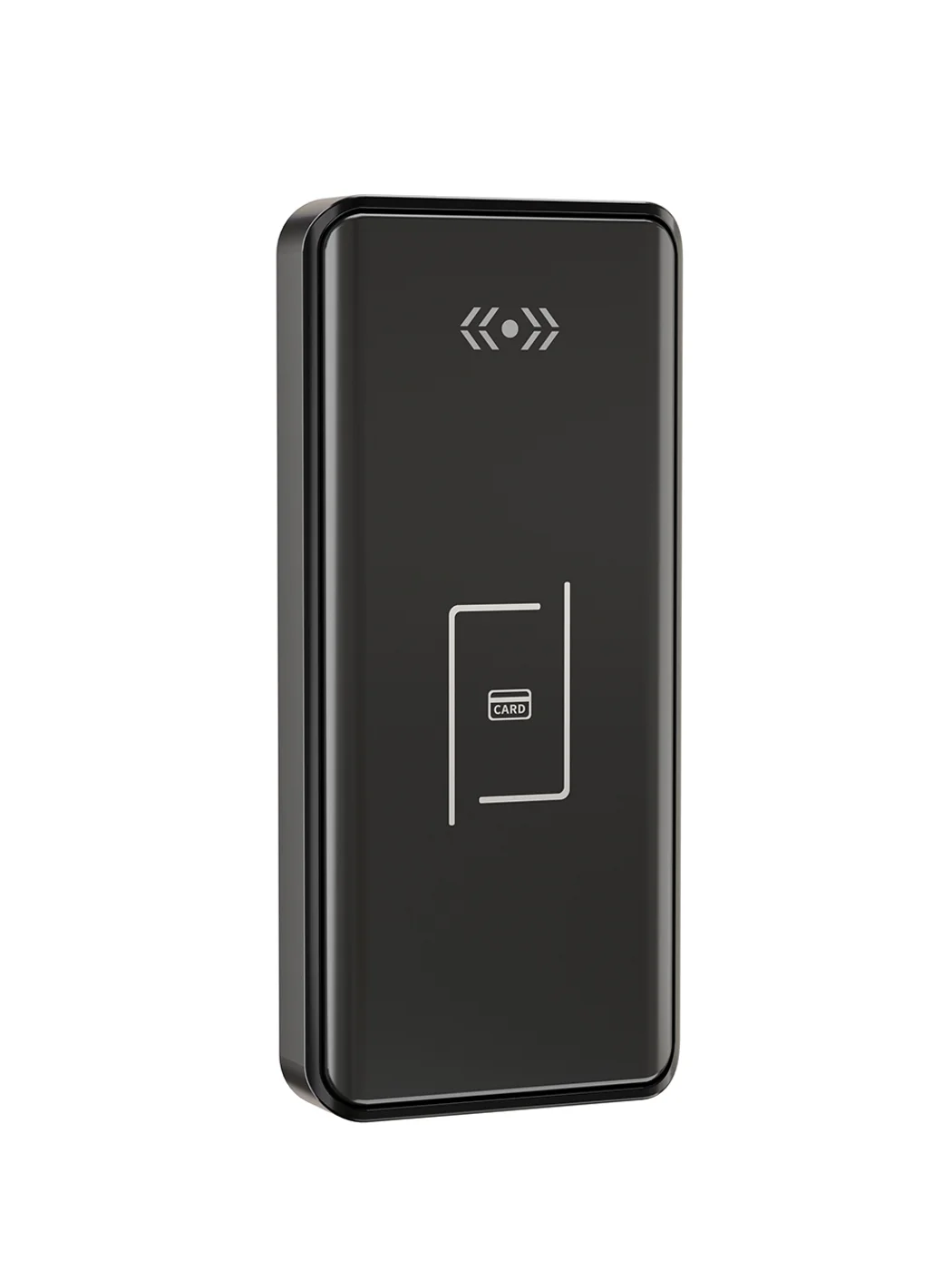
Gym Locker Lock — Offline Card, No WiFi Required
Offline card gym locker lock for fitness and pool lockers. MIFARE card, battery-powered 5-minute retrofit, no WiFi or server. Zinc alloy body, CE/FCC/RoHS.
This page already points to it as the next recommended reference.
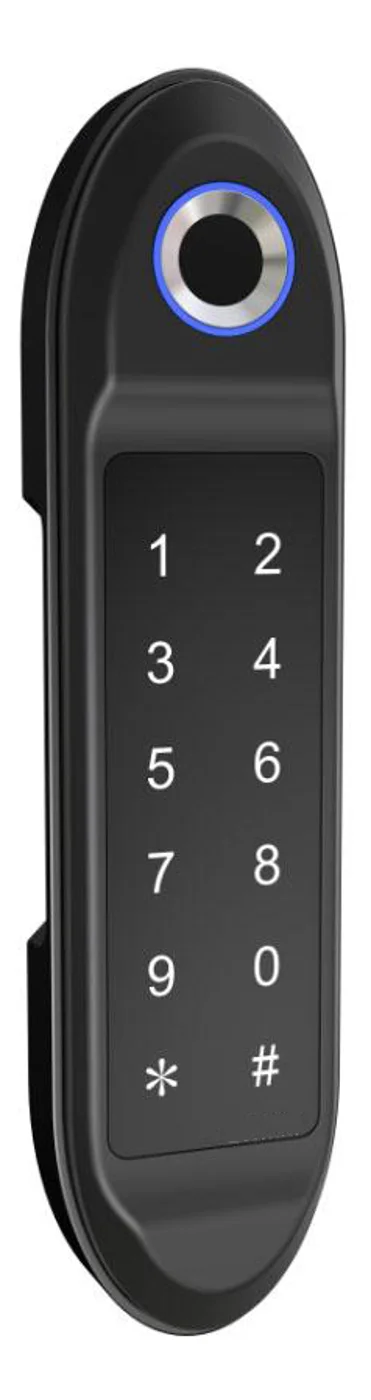
PIN Code Electronic Cabinet Lock — Stand-Alone, No WiFi
Offline keypad cabinet lock for gym, office and parcel lockers. Battery-powered, 5-minute retrofit, audit-free simple deployment. PIN + MIFARE card, DC 6V, 4×AA.
This page already points to it as the next recommended reference.
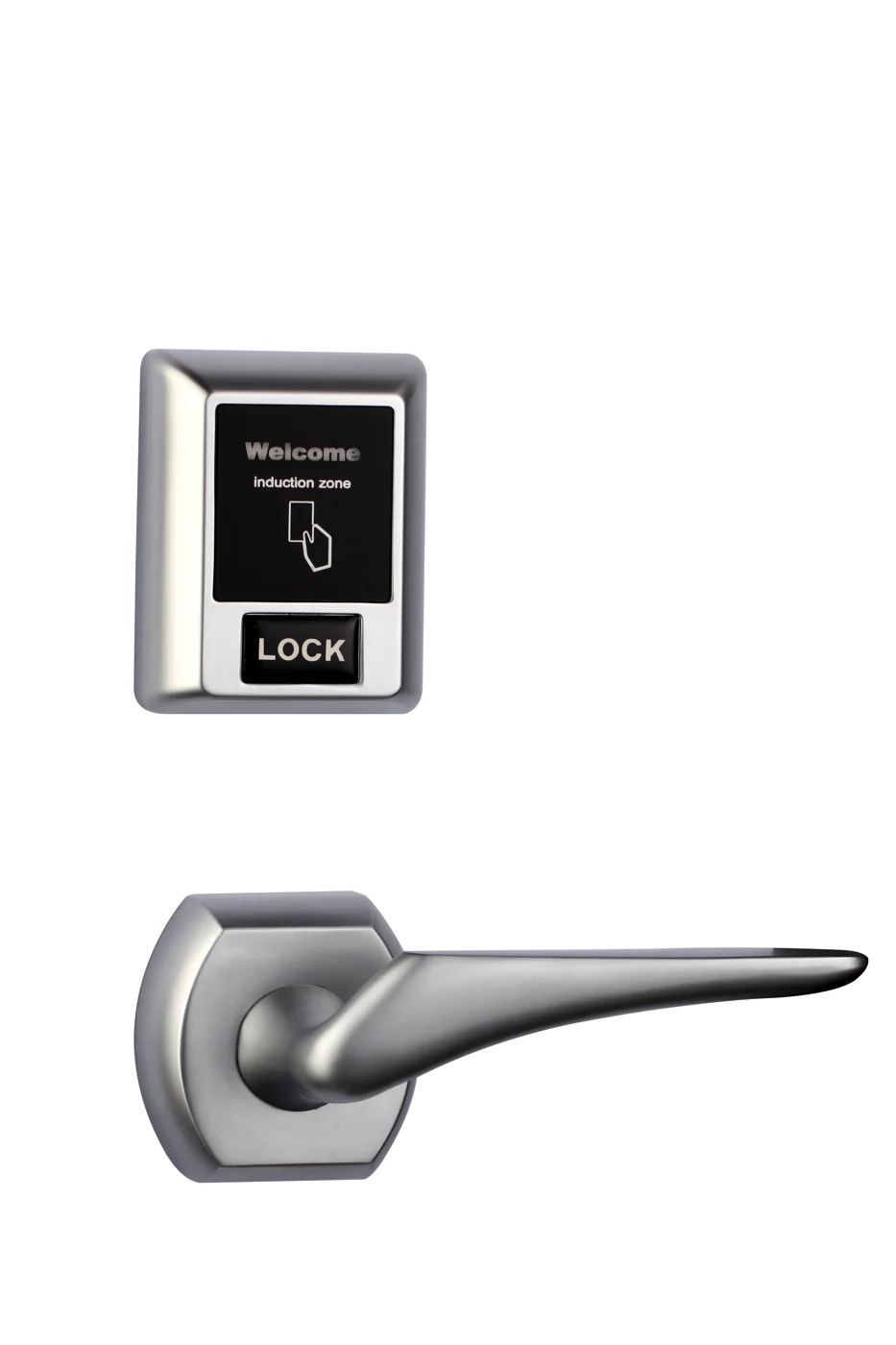
Bluetooth Cabinet Lock — App + PIN + Card, Managed Fleet
Offline BLE app cabinet lock for parcel, office, and managed locker fleets. App + PIN + MIFARE card, remote credential management, no server dependency, battery-powered retrofit.
This page already points to it as the next recommended reference.
Related blog posts
3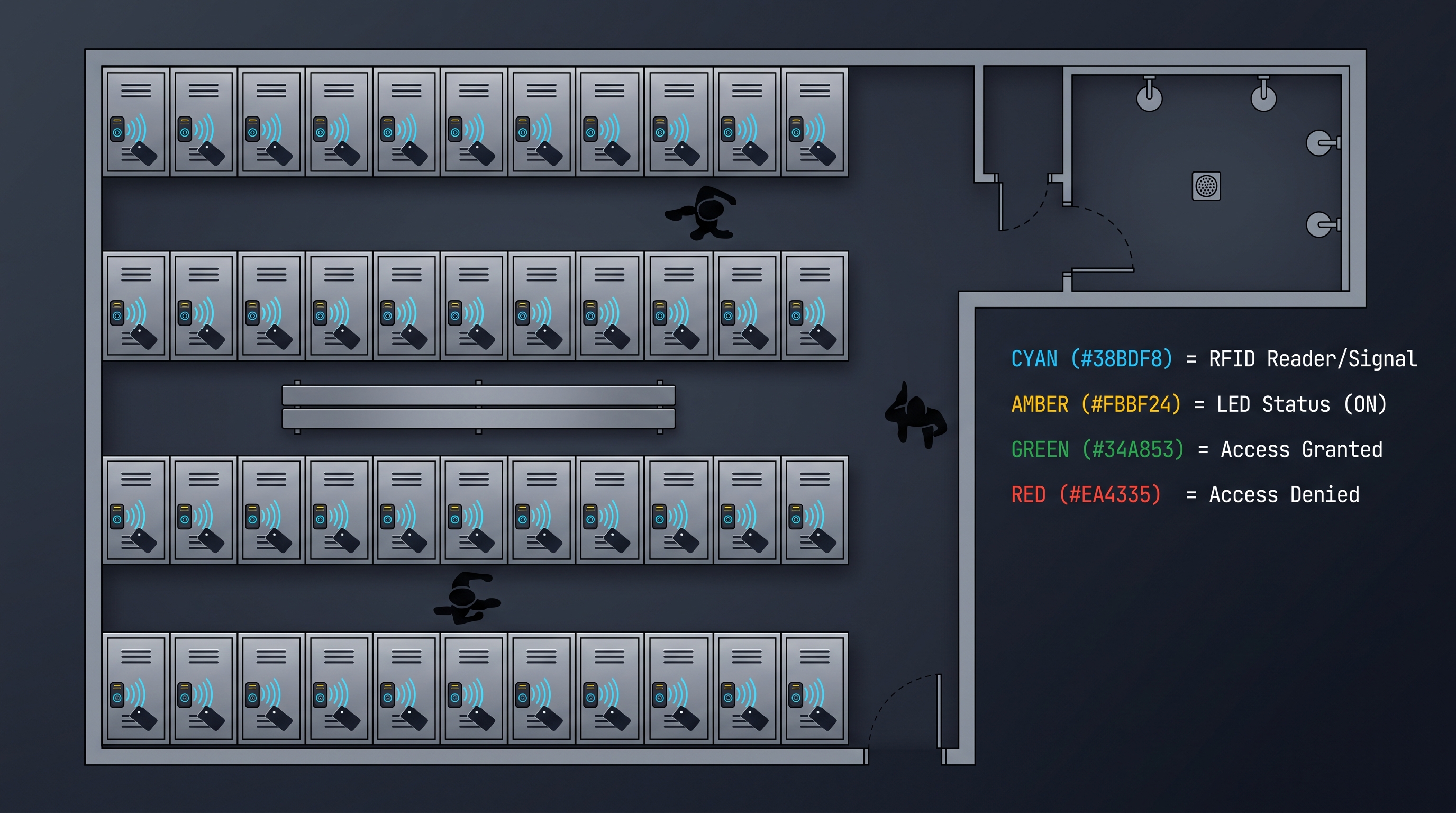
The Complete Guide to Digital Locker Management System Platforms in 2026
Explore how a digital locker management system transforms locker fleet operations with real-time monitoring, API integration, multi-site dashboards, and deployment flexibility for gyms, hotels, schools, and offices.
It supports the same product context: Gym Locker Lock — Offline Card, No WiFi Required, PIN Code Electronic Cabinet Lock — Stand-Alone, No WiFi, Bluetooth Cabinet Lock — App + PIN + Card, Managed Fleet.
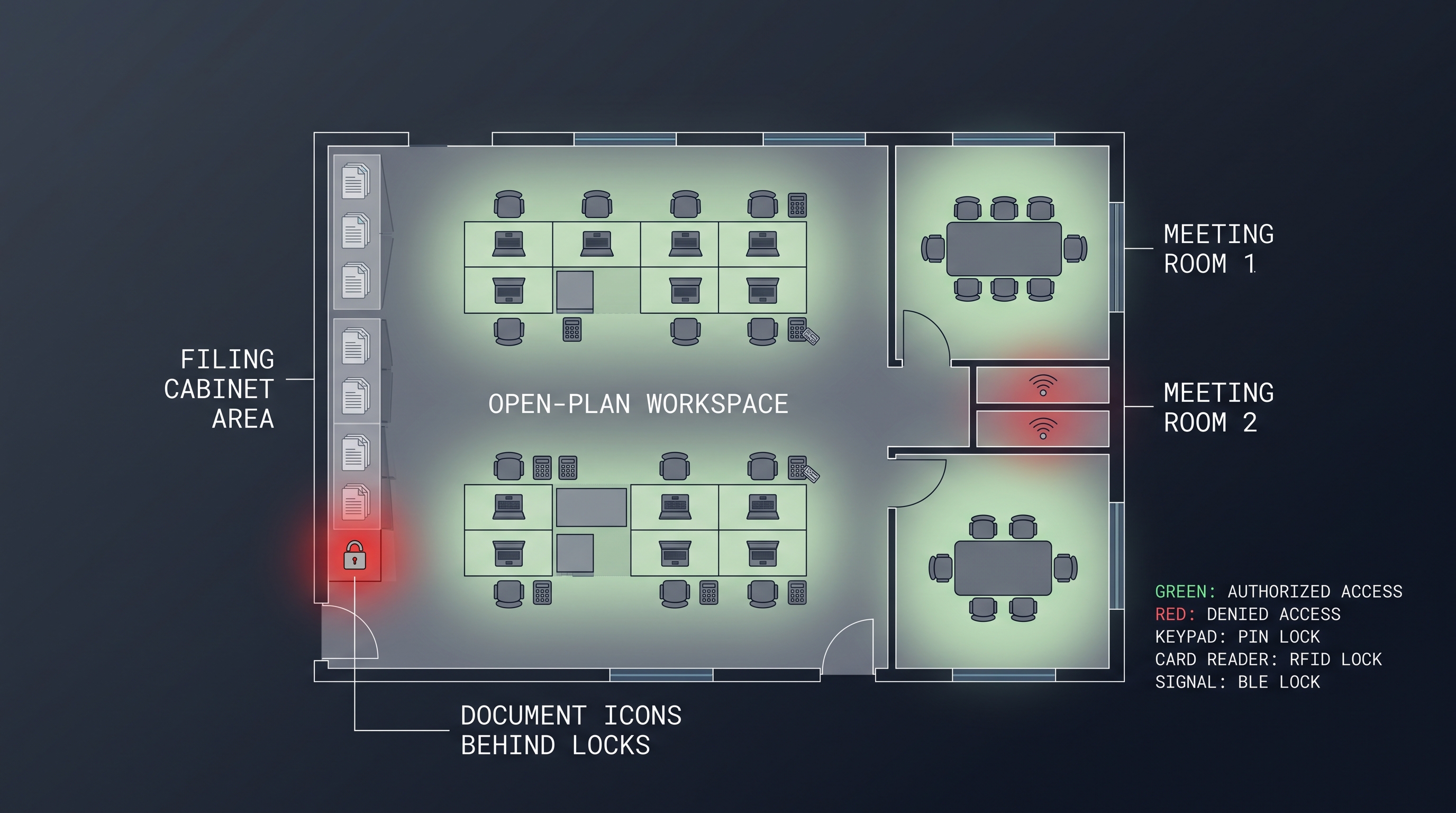
Digital Drawer Lock Guide 2026: Complete Buying & Technology Overview for Modern Security
Comprehensive digital drawer lock guide covering PIN keypad, fingerprint, RFID card, and Bluetooth app options. Detailed technical comparisons, installation tips, and buying advice for homes and businesses.
It supports the same product context: PIN Code Electronic Cabinet Lock — Stand-Alone, No WiFi.
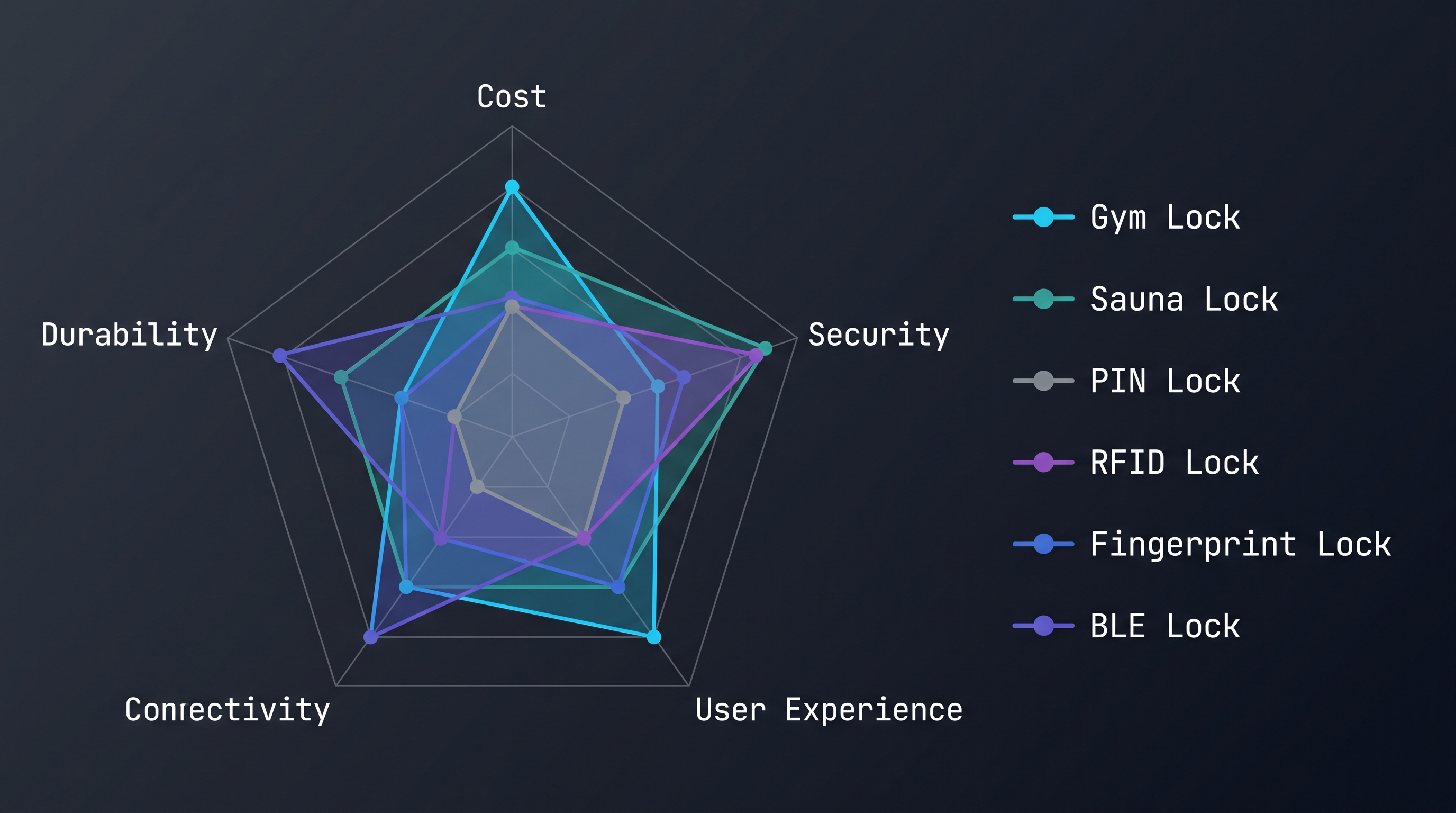
How to Choose a Defibrillator Cabinet Lock: Security vs. Emergency Access
Learn how a defibrillator cabinet lock balances theft protection with sub-5-second emergency access. Compare break-glass, electronic solenoid, and motorized latch with compliance data.
It supports the same product context: Gym Locker Lock — Offline Card, No WiFi Required.
Specify your hotel project with our engineers
Send your room count, ceiling type, and protocol preference. We will return a sample plan and quote within 24 business hours.
- Move from general guidance into a product or application discussion.
- Use RFQ when pricing, drawings, MOQ, or launch timing needs structure.
- Keep a direct contact path visible for fast clarifications and handoff.