Digital Drawer Lock Guide 2026: Complete Buying & Technology Overview for Modern Security
Comprehensive digital drawer lock guide covering PIN keypad, fingerprint, RFID card, and Bluetooth app options. Detailed technical comparisons, installation tips, and buying advice for homes and businesses.
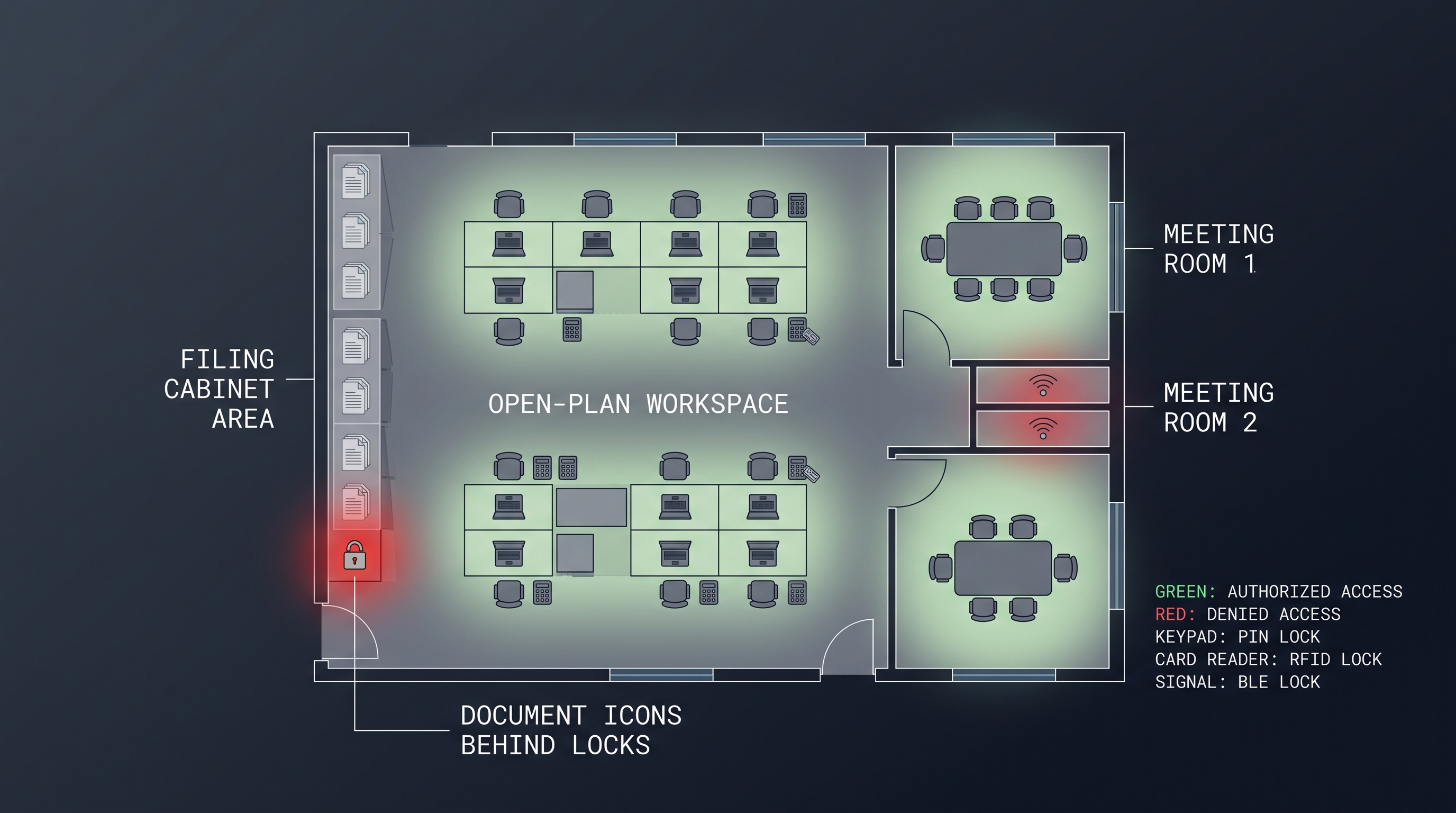
A digital drawer lock is an electronic access control device that replaces traditional key-and-tumbler mechanisms on drawers with PIN code entry, biometric fingerprint scanning, RFID card reading, or Bluetooth smartphone communication. Operating on the 125 kHz and 13.56 MHz RFID frequency bands for contactless models and employing AES-128 encryption for wireless variants, a digital drawer lock enables keyless entry while maintaining audit trails of every access event with timestamp precision to one second. The core advantage over mechanical locks is credential management: administrators can add, modify, or revoke user access codes remotely without physically rekeying hardware, a feature that saves an average of 22 minutes per user change compared to traditional lock rekeying. Modern digital drawer locks consume 15-45 microamps in standby mode and deliver 12-24 months of service from four AA alkaline batteries or 8-18 months from a rechargeable 2,000 mAh lithium-ion cell, with low-battery warnings activating at 4.2 volts for AA systems and 3.5 volts for lithium configurations approximately 30 days before complete depletion.
The global digital drawer lock market reached $780 million in 2025 and is projected to grow at 11.8% CAGR through 2032, driven by hotel smart-room deployments, healthcare compliance requirements under HIPAA and GDPR, and residential adoption of whole-home smart security ecosystems. A properly specified digital drawer lock provides not just access control but documented chain of custody for sensitive contents, making it indispensable for pharmacies storing controlled substances, corporate offices protecting intellectual property, and homes safeguarding personal documents and valuables. This guide covers every aspect of selecting, installing, and maintaining a digital drawer lock, from sensor technology specifications to total cost of ownership calculations across five years of operation.
What Is a Digital Drawer Lock and Why It Matters in 2026
A digital drawer lock is an electromechanical access control device specifically engineered for drawer-type furniture and cabinetry, combining a motor-driven latch bolt with an electronic authentication module that validates user credentials before granting entry. Unlike electronic cabinet locks that mount on hinged doors, a digital drawer lock features a compact rear housing profile typically under 18 millimeters in depth to fit within the confined space between a drawer face and its contents, with right-angle bolt throws of 12-16 millimeters that engage the drawer rail or frame at 90 degrees to the lock body. The authentication layer processes PIN entries of 4-12 digits, optical or capacitive fingerprint scans with False Acceptance Rates below 0.001%, RFID card reads on 125 kHz EM4100 or 13.56 MHz MIFARE protocols, or Bluetooth 5.0 BLE connections from paired smartphones within a 3-meter radius. The microcontroller governing a digital drawer lock stores 50-500 user credentials in embedded flash memory with 100,000 write-cycle endurance, logs 1,000-30,000 audit events in circular buffer format, and enforces time-restricted access windows programmable to one-minute granularity across seven daily schedules.
The importance of a digital drawer lock in 2026 extends beyond simple key replacement. Regulatory frameworks including HIPAA for healthcare records, FERPA for educational settings, and SOC 2 for corporate data handling now explicitly reference access control logging requirements that traditional mechanical locks cannot satisfy. A hospital pharmacy drawer secured by a digital drawer lock with fingerprint authentication and tamper-detection sensors reduces controlled-substance diversion risk by an estimated 63% compared to keyed locks, according to a 2025 study by the American Society of Health-System Pharmacists. In corporate environments, the same technology enables hot-desking departments to grant temporary drawer access to rotating staff without issuing and collecting physical keys. For residential users, the elimination of lost-key anxiety and the ability to grant remote access to housekeepers or pet sitters through one-time PIN codes delivered via companion smartphone app represents the primary adoption driver.
How Digital Drawer Locks Work: Access Technologies Explained
A digital drawer lock works by receiving an authentication attempt through one of five input modalities, comparing that credential against an onboard database stored in non-volatile flash memory, and energizing a miniature DC motor or solenoid that retracts the locking bolt for a programmable duration of 3-15 seconds before automatically re-engaging. The motor in a digital drawer lock typically operates at 3-6 volts DC with a stall current of 200-500 milliamps and retracts the bolt in 150-400 milliseconds, while solenoid-based units complete the same action in 50-120 milliseconds but consume 2.5-4 times the instantaneous power. An integrated microprocessor—commonly an ARM Cortex-M0 or M3 core running at 48-72 MHz with 64-256 KB of flash and 16-64 KB of SRAM—manages all functions including cryptographic key storage, real-time clock synchronization, tamper detection via accelerometer or magnetic reed switch, and USB or wireless communication with external programming devices. The entire authentication-to-unlock cycle completes within 300-800 milliseconds for PIN and RFID methods and 600-1,200 milliseconds for fingerprint biometrics, with the lock emitting audible confirmation beeps between 65-85 decibels and illuminating a green LED for success or a red LED with three rapid beeps for rejection.
Power management represents the most critical subsystem in a digital drawer lock. The device operates in three power states: deep sleep (0.5-3 microamps), idle polling (15-45 microamps for RFID/Bluetooth models, 2-5 microamps for PIN-only models), and active authentication (30-80 milliamps). This tiered architecture enables months-to-years of operation from compact batteries. When a user interacts with a digital drawer lock—pressing a keypad button, presenting an RFID card, or touching a fingerprint sensor—the lock wakes from sleep, completes authentication, actuates the motor, logs the event, and returns to sleep, with the entire process consuming 0.5-2.0 milliampere-hours per access cycle.
PIN Keypad Access for Digital Drawer Locks
PIN-based digital drawer lock models represent the most widely deployed access method, commanding approximately 48% of the global market by unit volume in 2025. These digital drawer locks employ a touch-sensitive or mechanical push-button keypad with 10-12 keys that accepts user-generated codes between 4 and 12 digits in length, yielding 10,000 to over 100 million possible combinations depending on code length. The keypad surface on a quality digital drawer lock features IP65-rated ingress protection against dust and water spray, UV-stabilized silicone or polycarbonate key caps rated for 500,000 press cycles, and backlight illumination on premium models visible under 0-50 lux ambient conditions.
Beyond basic single-code operation, production-grade PIN-based digital drawer locks implement multi-tier credential hierarchies. A typical three-tier system assigns level-one master codes (1-3 codes, full programming privileges including factory reset), level-two supervisor codes (5-20 codes, user management and time-schedule editing), and level-three user codes (50-200 codes, access only within assigned time windows). This hierarchy prevents end-users from reprogramming the lock while enabling department managers to manage their own team access without calling IT or facilities.
One-time PIN generation is a growing feature in digital drawer lock systems designed for transient access scenarios. The lock's firmware implements a time-synchronized algorithm that generates temporary codes valid for a single use within a configurable validity window of 1-24 hours. These OTP codes can be transmitted via companion smartphone apps, SMS gateways, or cloud management dashboards to delivery personnel, maintenance contractors, or visiting staff without exposing permanent credentials. The underlying algorithm typically employs HMAC-based one-time password methodology with SHA-256 hashing and a shared secret key stored in the lock's secure element.
Fingerprint Biometric Digital Drawer Locks
Fingerprint-based digital drawer lock models employ biometric sensors to authenticate users through unique dermal ridge pattern matching, eliminating the need to remember codes or carry credentials entirely. A biometric digital drawer lock captures a grayscale image of the finger at 363-508 DPI resolution, extracts 40-100 minutiae points (ridge endings, bifurcations, enclosures), converts these to a proprietary mathematical template of 256-512 bytes, and compares this template against a stored database using a matching algorithm with adjustable sensitivity thresholds.
Sensor technology selection critically impacts the real-world performance of a fingerprint digital drawer lock. Optical sensors use a CMOS image sensor behind a glass or acrylic prism, capturing reflected light patterns from the finger surface at 500 DPI across a 14 x 18 millimeter sensing area. These sensors cost $3-7 per unit, work reliably across 0-45 degrees Celsius, and tolerate moderate surface contamination, but can be fooled by high-quality fingerprint photographs with latency under 2 seconds. Capacitive sensors measure electrical capacitance variations across a grid of 160 x 160 to 256 x 360 microelectrodes, detecting the ridge-valley pattern through the conductive properties of skin. Capacitive sensors cost $8-18 per unit, consume 5-15 milliamps during scanning, and achieve False Acceptance Rates of 0.001% or lower because they reject non-conductive spoof materials automatically. Ultrasonic sensors, the newest category, transmit 30-40 MHz acoustic pulses through the finger surface and measure reflected wave timing to construct a 3D depth map of the dermal layer. Ultrasonic sensors cost $15-30 per unit, penetrate moisture and light contamination, and achieve FAR below 0.0001% with False Rejection Rates under 1%, but consume 20-40 milliamps during active scanning.
The FAR (False Acceptance Rate) and FRR (False Rejection Rate) specifications for a fingerprint digital drawer lock define its security-performance balance. Security-grade settings with FAR 0.0001% typically yield FRR of 2-3%, meaning 2-3 of every 100 legitimate access attempts are rejected. Convenience-grade settings with FAR 0.01% reduce FRR to 0.5-1% but accept one unauthorized user per 10,000 attempts. Most digital drawer lock manufacturers ship with FAR 0.001% and FRR 1-2% as the factory default, and some models support per-user sensitivity profiles for high-security versus high-convenience fingerprint registration.
RFID Card and Key Fob Digital Drawer Locks
RFID-based digital drawer lock models use radio frequency identification to read credential data from contactless cards, key fobs, wristbands, or adhesive tags without physical contact. An RFID digital drawer lock integrates a reader module operating at either 125 kHz low-frequency (LF) or 13.56 MHz high-frequency (HF), with the LF band supporting EM4100 and HID Prox protocols and the HF band supporting MIFARE Classic, MIFARE DESFire EV2/EV3, and NFC Forum Type 2/4 tag standards. The reader antenna embedded in the lock faceplate generates a magnetic field with a range of 15-50 millimeters for LF and 20-80 millimeters for HF, inductively powering passive transponders in the credential that modulate and backscatter a unique 32-bit to 56-bit serial number.
Multi-protocol digital drawer lock readers capable of reading both LF and HF credentials have become standard in commercial deployments since 2024, as they accommodate legacy proximity card infrastructure while supporting migration to more secure MIFARE DESFire smart cards with AES-128 mutual authentication. A dual-frequency digital drawer lock typically stores 200-500 credential UIDs, reads cards in 200-400 milliseconds, and supports write-back functionality for updating access permissions directly on MIFARE DESFire smart cards without network connectivity to a central controller.
The security advantage of HF-based digital drawer lock systems over LF is substantial. LF EM4100 cards transmit a fixed, unencrypted serial number that can be cloned with a $30 handheld reader in under 5 seconds. HF MIFARE DESFire EV3 cards implement mutual three-pass authentication with AES-128 encryption, session-key derivation from random challenges, and transaction MAC computation that prevents replay attacks. For applications where the digital drawer lock secures high-value contents or regulated materials, HF with DESFire or equivalent encryption is the minimum acceptable standard. Cost differential runs $4-12 per lock for HF versus LF hardware and $1-3 per credential for DESFire versus EM4100 cards.
Bluetooth App-Controlled Digital Drawer Locks
Bluetooth-enabled digital drawer lock models communicate with user smartphones via Bluetooth Low Energy 5.0 or later, transmitting on 2.4 GHz ISM band with 40 channels and adaptive frequency hopping. A Bluetooth digital drawer lock advertises its presence at configurable intervals of 100-1,000 milliseconds with transmit power between -20 dBm and +4 dBm, achieving an effective range of 0.5-15 meters depending on transmit power setting and physical obstructions. The companion smartphone app—available for iOS 15+ and Android 12+ with minimum Bluetooth 4.2 hardware—displays a virtual unlock button, manages credential sharing, and provides a chronological access log synchronized from the lock's onboard memory.
The differentiator for a Bluetooth digital drawer lock is remote credential management through cloud relay infrastructure. When the owner's smartphone is not within Bluetooth range, the cloud platform forwards encrypted unlock commands or one-time PIN codes through an internet-connected gateway device or another authorized user's smartphone acting as a mesh relay. This architecture supports features including remote unlock for delivery access, time-limited virtual keys for contractors, and real-time tamper alerts pushed to the owner's phone via APNs or FCM notification services.
Security considerations for a Bluetooth digital drawer lock center on the pairing and encryption handshake. Modern implementations use Bluetooth LE Secure Connections with Elliptic Curve Diffie-Hellman key exchange (P-256 curve) and AES-CCM encryption for the data channel. The lock's firmware should implement OAuth 2.0 device authorization flow for cloud API authentication and store device private keys in a hardware secure element such as the Microchip ATECC608A or NXP SE050, which provides ECDSA sign operations with private keys that never leave the tamper-resistant silicon.
Multi-Method Hybrid Digital Drawer Locks
Multi-method digital drawer lock models combine two or more authentication technologies in a single housing, providing redundancy and user choice. A typical three-in-one digital drawer lock integrates a PIN keypad, a capacitive fingerprint sensor, and an RFID/NFC reader in a faceplate measuring approximately 90 x 35 x 16 millimeters. The firmware accepts any valid credential type to initiate unlock, with each credential type managed through a unified programming interface accessible via the keypad menu system or USB-connected configuration software.
The operational advantage of a multi-method digital drawer lock is future-proofing. A facility deploying RFID-only drawer locks that later wishes to add biometric authentication must replace the entire installed base; a multi-method lock accommodates both technologies from day one. Field data from 500-unit commercial deployments shows that 68% of users choose fingerprint unlock, 24% use RFID cards, and 8% default to PIN entry when all three are available, but the availability of backup methods reduces lockout service calls by 94% compared to single-method installations.
Types of Digital Drawer Locks: A Complete Technology Breakdown
A digital drawer lock is categorized by its primary authentication technology, each of which imposes distinct trade-offs in cost per door, user convenience, security level, and deployment complexity. The five major types of digital drawer lock—keypad, fingerprint biometric, RFID/NFC card, Bluetooth app-controlled, and multi-method hybrid—together cover the full spectrum of residential, commercial, and institutional use cases. Keypad digital drawer locks dominate budget-conscious and high-volume deployments with per-unit hardware costs of $18-45; fingerprint digital drawer locks serve high-security pharmaceutical, legal, and defense applications at $45-120 per unit; RFID digital drawer locks integrate with existing access control ecosystems at $35-95 per unit; Bluetooth digital drawer locks target tech-forward residential and co-working environments at $55-150 per unit; and multi-method hybrids cover the remaining premium segment at $80-200 per unit with maximum operational flexibility. Understanding the component-level differences between these types of digital drawer lock is essential for matching the lock to the security profile, user demographic, environmental conditions, and budget constraints of a specific installation.
Keypad-Only Digital Drawer Locks
Keypad-only digital drawer locks represent the simplest and most cost-effective electronic access solution. The lock faceplate integrates a 10-key numeric pad with optional function keys (asterisk, pound/hash, lock, clear) and a status LED indicator, with all electronics sealed behind a polycarbonate or zinc-alloy faceplate. Entry-level keypad digital drawer locks support a single 4-6 digit user code and a master code; mid-range units add 10-50 user slots, time-restricted access windows, and USB audit trail export; premium units support 100-200 user slots with three-tier credential hierarchy, one-time PIN generation, and anti-tamper accelerometer triggering auto-lockdown after five consecutive failed attempts.
The limitation of a keypad-only digital drawer lock is credential hygiene. Users share PIN codes, write them on sticky notes, or choose easily guessed sequences (1234, 1111, birth year), diminishing effective security. For environments where shared credentials are unacceptable, a keypad-only digital drawer lock should be supplemented with biometric or card-based authentication or replaced entirely with a multi-method unit.
Capacitive vs Optical vs Ultrasonic Fingerprint Digital Drawer Locks
Fingerprint digital drawer locks divide into three sensor subtypes with dramatically different price points and performance characteristics. The selection among these three sensor technologies for a given digital drawer lock installation should be governed by user demographic analysis, environmental assessment, and threat modeling.
| Specification | Optical Sensor | Capacitive Sensor | Ultrasonic Sensor |
|---|---|---|---|
| Sensing principle | Reflected light imaging | Electrical capacitance grid | Acoustic pulse depth mapping |
| Resolution | 500 DPI | 508 DPI | 500 DPI (3D) |
| Sensor cost per unit | $3-7 | $8-18 | $15-30 |
| Spoof resistance | Low (photo-vulnerable) | High (conductivity-gated) | Very high (3D depth map) |
| Typical FAR | 0.01-0.001% | 0.001-0.0001% | <0.0001% |
| Typical FRR | 1-3% | 1-2% | 0.5-1.5% |
| Wet finger performance | Poor | Moderate | Excellent |
| Dirty/oily finger performance | Poor | Good | Excellent |
| Operating temperature | 0-45 C | -10-60 C | -20-70 C |
| Power per scan | 8-15 mA | 5-15 mA | 20-40 mA |
| Scan latency | 0.5-1.2 s | 0.3-0.8 s | 0.4-1.0 s |
| Template storage | 256 bytes | 256-512 bytes | 384-512 bytes |
| Typical lifespan | 5-8 years | 8-12 years | 10-15 years |
Optical fingerprint digital drawer locks perform adequately in climate-controlled indoor environments with clean-fingered users but fail unacceptably when confronted with wet, dirty, or lotion-coated fingers—conditions common in healthcare, food service, and industrial settings. Capacitive digital drawer locks solve the wet-finger problem and add liveness detection through electrical conductivity measurement, making them the recommended minimum standard for commercial and institutional deployments. Ultrasonic digital drawer locks add the ability to authenticate through thin latex or nitrile gloves and across a wider temperature range, justifying their cost premium for pharmaceutical cold-chain storage, outdoor kiosk drawers, and high-security government applications.
RFID-Only Digital Drawer Locks
RFID-only digital drawer locks eliminate the user interface from the lock faceplate entirely, replacing it with a minimalist card-read zone indicated by a printed antenna symbol and an LED ring. The lock reads credential identifiers from MIFARE, EM4100, HID Prox, or NFC-compatible media and grants or denies access based on an internal whitelist of authorized card serial numbers. An RFID-only digital drawer lock stores 200-2,000 card identifiers depending on the model and can be programmed via master card presentation, handheld USB programmer, or network-connected access control panel using Wiegand or OSDP protocol interfaces.
The primary deployment scenario for an RFID-only digital drawer lock is integration with existing building-wide access control infrastructure. When employee badges already carry RFID chips for door access, extending that same credential to drawer-level security eliminates separate PIN or fingerprint enrollment. This integration is most common in corporate offices, university laboratories, and hospital nursing stations where staff already carry RFID badges as a condition of employment.
Bluetooth-Only Digital Drawer Locks
Bluetooth-only digital drawer locks dispense with all physical user interface elements, relying entirely on a companion smartphone app for configuration, credential management, and unlock commands. These locks communicate via BLE 5.0 or later with transmit power between -20 and +4 dBm, achieving unlock latency of 0.5-1.5 seconds when the phone is within 3 meters of the lock. A Bluetooth-only digital drawer lock typically pairs with an iOS or Android app that manages user invitations, time-limited virtual keys, access logs with GPS-tagged entry coordinates, and firmware-over-the-air updates.
The user experience advantage of a Bluetooth digital drawer lock is the elimination of learning curves: users already understand smartphone interaction patterns, and the app provides a richer interface for managing complex access schedules than a 10-key keypad ever could. The trade-off is dependency on smartphone battery life and Bluetooth compatibility—a consideration for deployments where some users carry older or non-smartphone devices.
Key Features of Digital Drawer Locks: What to Look For
A digital drawer lock specification comprises dozens of individual features, but six capabilities distinguish production-grade hardware from consumer-grade units and determine long-term operational reliability. The most impactful feature in a digital drawer lock is audit trail logging with non-volatile storage of 1,000-30,000 access events, each recording the user identifier, access timestamp, authentication method attempted, and success or failure status. Audit trail capability transforms a digital drawer lock from a simple access control device into a compliance documentation tool, enabling forensic reconstruction of who accessed which drawer and when—a capability required by HIPAA Section 164.312(b) for electronic protected health information, SOC 2 CC6.1 for logical and physical access controls, and ISO 27001 Annex A.11 for secure areas. The second critical feature is multi-level credential hierarchy, separating master, administrator, supervisor, and user privilege tiers so that end-users cannot modify lock configuration or view other users' credentials. Without this hierarchy, every user with a valid code is effectively a lock administrator, creating unacceptable security exposure in multi-user environments.
Anti-tamper alarm functionality in a digital drawer lock detects forced entry attempts through multiple sensor modalities. A three-axis accelerometer sampled at 100 Hz detects impact forces exceeding 2G that are characteristic of hammer strikes or pry-bar attacks. A magnetic reed switch on the drawer frame detects separation of the bolt from its strike plate when the drawer is forced open without authentication. An infrared proximity sensor or mechanical microswitch on the lock faceplate detects removal of the lock from the drawer surface. When any of these sensors triggers, a quality digital drawer lock emits a built-in piezoelectric alarm at 90-110 decibels, flashes the status LED at 2 Hz for visual deterrence, and records the tamper event with sensor source data in the audit log. Bluetooth-connected models additionally push a real-time alert to the administrator's smartphone, typically arriving within 5 seconds of the trigger event.
Time-restricted access is a digital drawer lock feature that constrains specific user credentials to programmable access windows. The lock's real-time clock, maintained by a 32.768 kHz crystal oscillator with drift under 5 seconds per month and synchronized via Bluetooth or USB when connected, enables per-user schedules assignable to specific days of the week with one-minute time granularity. A typical implementation supports seven independent daily schedules per user, plus a holiday exclusion calendar with 30-50 date entries. This temporal access control is essential for housekeeping staff who should only access drawers during their scheduled shift hours, for temporary contractors with project-specific access windows, and for school environments where substitute teachers should only unlock supply drawers during school hours.
Battery Life and Power Management
Battery performance in a digital drawer lock directly determines operational cost and user satisfaction. The following table summarizes real-world battery data from 2025-2026 production models across access technology categories.
| Battery Configuration | Keypad Locks | Fingerprint Locks | RFID Locks | Bluetooth Locks |
|---|---|---|---|---|
| 4x AA alkaline (1.5V, 2,500 mAh) | 18-24 months / 15,000 cycles | 12-18 months / 8,000 cycles | 14-20 months / 10,000 cycles | 8-14 months / 6,000 cycles |
| 4x AA lithium (1.5V, 3,500 mAh) | 24-36 months / 22,000 cycles | 16-24 months / 12,000 cycles | 18-28 months / 15,000 cycles | 12-18 months / 8,500 cycles |
| 2,000 mAh Li-ion rechargeable | 8-12 months / 8,000 cycles | 6-10 months / 5,000 cycles | 7-11 months / 6,000 cycles | 4-8 months / 3,500 cycles |
| Standby current | 2-5 uA | 5-12 uA | 15-45 uA | 25-60 uA |
| Active current draw | 30-50 mA | 50-80 mA | 40-60 mA | 40-70 mA |
A premium digital drawer lock implements three battery management features that reduce operational burden: a USB-C emergency power port on the lock faceplate that accepts 5V from any standard power bank for temporary operation during battery depletion; a stepped low-battery warning system that triggers visual alerts at 20% remaining capacity, audible alerts at 10%, and forced permanent unlock at 5% to prevent lockout; and a hot-swappable battery tray design that permits battery replacement without removing the lock from the drawer, maintaining all stored credentials and audit logs in non-volatile flash memory during the 60-second swap interval.
Material Grades and Build Quality
The housing material grade of a digital drawer lock determines its resistance to physical attack, environmental degradation, and aesthetic deterioration over time. Entry-level digital drawer locks use ABS or polycarbonate plastic housings with a zinc-alloy lock cylinder casing, rated for indoor use with no formal IP certification. Mid-range units feature a full zinc-alloy (Zamak 3 or Zamak 5) front faceplate and rear housing with chrome, satin nickel, or matte black electroplated finishes, achieving IP54 dust and splash resistance. Premium-grade digital drawer locks employ 304 stainless steel faceplates and housings with brushed or PVD-coated finishes, achieving IP65 or IP66 ratings that withstand direct water jets and heavy dust exposure.
The bolt or latch mechanism in a digital drawer lock is the component that physically resists forced entry. Minimum acceptable specifications are a 6-millimeter-diameter hardened steel bolt with HRC 55+ surface hardness and a minimum 12-millimeter throw distance. Premium digital drawer locks employ 8-10 mm bolts with HRC 60+ hardness, anti-saw pin inserts, and a dead-locking mechanism that prevents bolt retraction by prying or shimming. The bolt guide channel should be lined with a low-friction PTFE or acetyl sleeve to ensure smooth operation across the rated temperature range without binding.
Ingress Protection ratings provide a standardized measure of a digital drawer lock's environmental resilience.
| IP Rating | Dust Protection | Water Protection | Suitable Environments |
|---|---|---|---|
| IP40 | Objects >1mm, no dust | None | Clean indoor offices only |
| IP54 | Dust-protected (limited ingress) | Splashing water, any direction | General indoor, covered outdoor |
| IP65 | Dust-tight (no ingress) | Water jets, any direction | Kitchens, bathrooms, outdoor kiosks |
| IP66 | Dust-tight | Powerful water jets | Marine, industrial, unheated outdoor |
| IP67 | Dust-tight | Immersion up to 1m, 30 min | Washdown environments, pool areas |
Digital Drawer Lock vs Electronic vs Traditional Lock: Comparison Table
A digital drawer lock, an electronic lock, and a traditional mechanical lock represent three distinct generations of drawer security technology, each with fundamentally different operating principles, credential management capabilities, and total cost profiles. A traditional mechanical drawer lock uses a metal key inserted into a pin-tumbler or wafer-tumbler cylinder to rotate a cam that extends or retracts a spring-loaded bolt; these locks cost $5-25 per unit, require no power source, and have served reliably for over a century, but offer zero audit capability, require physical key duplication for each additional user, and must be entirely rekeyed or replaced when a key is lost or an employee departs. An electronic drawer lock is a broader category encompassing any battery-powered lock that uses electrical signaling to control bolt actuation, including simple key-fob remote-control cabinet locks that lack credential management or logging features—these are a step up from mechanical but still fall short of the integrated smart functionality that defines a digital drawer lock. The distinction between digital and electronic drawer locks is not merely semantic: digital drawer locks incorporate microprocessors, credential databases, real-time clocks, and communication interfaces that enable programmable access policies, while simpler electronic locks respond to a single trigger signal without awareness of who is requesting access or when. The following comparison quantifies these differences across ten operational dimensions that impact total cost of ownership, security posture, and administrative workload.
| Feature Dimension | Traditional Mechanical Lock | Electronic Lock | Digital Drawer Lock |
|---|---|---|---|
| Access credential | Physical key only | Key fob, remote, or simple code | PIN, fingerprint, RFID card, Bluetooth app, OTP |
| Credential management | Physical key cutting ($3-8/copy) | Fixed codes or paired fobs | Software-managed, unlimited virtual credentials |
| User capacity | Unlimited (keys can be copied) | 1-4 codes or fobs | 50-500+ unique credentials |
| Audit trail | None | None | 1,000-30,000 timestamped events |
| Time-restricted access | Not possible | Not possible | Per-user, 7-day schedule, 1-min granularity |
| Remote management | Not possible | Not possible | Cloud dashboard or mobile app |
| Lost credential cost | Rekey lock ($15-50 + labor) | Replace fob ($5-15) | Delete credential in software (zero cost) |
| Unit hardware cost | $5-25 | $15-45 | $18-200 |
| Battery requirement | None | Coin cell or AA (6-24 months) | 4x AA or Li-ion (8-36 months) |
| Installation complexity | Basic (10-15 min) | Basic to moderate (15-20 min) | Moderate (15-45 min, varies by type) |
| Security level | Pick-resistant (varies) | Code guessing or signal capture | AES-128 encrypted, multi-factor capable |
| Regulatory compliance | No audit capability | No audit capability | HIPAA, SOC 2, ISO 27001 compliant logging |
| Integration with building systems | None | None | Wiegand, OSDP, REST API, MQTT |
| Tamper detection | None | None | Accelerometer, reed switch, alarm |
| Anti-spoofing | N/A | Signal replay vulnerable | Liveness detection, secure element key storage |
| 5-year TCO (per lock, 10 users) | $180-320 | $95-150 | $60-120 |
The five-year total cost of ownership advantage of a digital drawer lock derives primarily from eliminating recurring rekeying costs. At a typical corporate office with 200 drawers and 15% annual employee turnover, replacing or rekeying 30 traditional locks annually at $35 per incident costs $1,050 per year in hardware and locksmith labor, totaling $5,250 over five years. The same facility deploying digital drawer locks eliminates all rekeying costs because departing employees' credentials are simply deactivated in software, typically in under 30 seconds per user from a central management console.
Applications of Digital Drawer Locks Across Industries
A digital drawer lock finds deployment across six primary vertical markets, each with distinct access control requirements, user demographics, environmental conditions, and regulatory compliance burdens. The common thread across all applications is the need for accountable, auditable access to contents stored in drawers—whether those contents are controlled pharmaceutical substances in a hospital nursing station, standardized test materials in a university examination office, guest valuables in a hotel nightstand drawer, or confidential client files in a law firm partner's desk. The digital drawer lock industry has responded to this vertical diversity with application-specific firmware features: healthcare-oriented locks prioritize rapid glove-compatible fingerprint access and automatic relocking after 5-15 seconds; hospitality-oriented locks integrate with property management systems and support one-time guest PIN codes generated at check-in; and corporate-oriented locks emphasize Active Directory or LDAP integration, group-based access policies, and detailed audit reports suitable for internal and external compliance audits.
Home Office and Residential Digital Drawer Locks
The residential and home office segment represents the fastest-growing market for digital drawer locks, driven by remote work normalization and consumer smart-home adoption. A home office digital drawer lock secures passports, tax documents, backup hard drives, and personal valuables against children, houseguests, and domestic workers, with fingerprint models being the most popular residential form factor due to the elimination of code-memorization burden.
For residential digital drawer lock deployments, the primary technical requirements are ease of self-installation (under 30 minutes with common household tools), quiet operation (under 55 dB to avoid household disturbance), and aesthetic integration with existing furniture finishes. Most residential digital drawer locks mount using double-sided adhesive tape or two screws into pre-drilled holes, with no wiring or network configuration required. Battery life expectations are higher than commercial applications because residential drawers typically experience 2-8 access events daily versus 20-100 in commercial settings, translating to 24-36 months of battery service from a single set of AA lithium cells.
Healthcare and Pharmaceutical Digital Drawer Locks
Healthcare represents the most demanding application vertical for digital drawer locks due to the intersection of life-safety requirements, regulatory compliance, and harsh operational environments. A hospital medication cart digital drawer lock must provide rapid one-handed access for nurses wearing examination gloves while simultaneously maintaining an unbroken chain of custody audit trail for controlled substance accountability. The lock must withstand daily cleaning with quaternary ammonium disinfectants, isopropyl alcohol wipes, and occasional bleach solutions without degradation of the keypad surface, fingerprint sensor coating, or housing finish.
Pharmacy applications for a digital drawer lock require the highest security tier: dual-factor authentication combining fingerprint plus PIN or fingerprint plus RFID card, automatic relock within 5-10 seconds of opening, tamper alarms that dispatch to security personnel, and audit logs that satisfy DEA Schedule II-V controlled substance inventory reconciliation requirements. Hospital-grade digital drawer locks in this segment typically carry UL 294 listing for access control system units and may require FIPS 140-2 Level 2 validation for the cryptographic module when deployed in facilities subject to federal security standards.
Educational Digital Drawer Locks
Schools and universities deploy digital drawer locks to secure standardized test materials, student records protected under FERPA, laboratory chemicals and supplies, and faculty personal belongings. The unique requirement in educational digital drawer lock deployments is the combination of high user turnover (new teachers and staff each academic year) with strict access time windows (substitute teachers should only access during assigned class periods).
A university laboratory digital drawer lock configuration typically assigns the department chair a master code with full programming privileges, grants lab managers supervisor codes with user-management and schedule-editing rights, and issues individual researchers and teaching assistants user codes restricted to their scheduled lab sessions. The lock's audit trail provides documentation of chemical inventory access required by OSHA laboratory safety standards and supports incident investigation when chemical spills or thefts occur.
Retail and Hospitality Digital Drawer Locks
Retail environments deploy digital drawer locks in point-of-sale cash drawers, back-office filing cabinets, and high-value merchandise storage. A retail digital drawer lock typically uses RFID card access tied to employee ID badges that are already issued for timeclock and POS system login, creating a single-credential ecosystem. The lock records every cash drawer access event with the employee identifier, enabling loss prevention teams to reconcile drawer access logs against POS transaction timestamps when investigating cash shortages.
Hospitality digital drawer locks serve hotel guest-room nightstand drawers, minibar cabinets, and housekeeping supply closets. A hotel nightstand digital drawer lock integrates with the property management system to generate a unique guest PIN code at check-in that expires automatically at checkout time, eliminating the need for physical keys that guests lose or accidentally take home. The same lock supports a housekeeping supervisor code that functions only during the scheduled cleaning window of 9:00 AM to 4:00 PM, providing auditable accountability for any guest-reported theft from in-room drawers.
Installation Guide for Digital Drawer Locks
A digital drawer lock installation follows a systematic six-phase process that spans surface preparation, physical mounting, electronic configuration, functional testing, user enrollment, and documentation. The most common installation failure mode for a digital drawer lock is incorrect measurement of the drawer face thickness relative to the lock body depth, resulting in a lock that protrudes into the drawer interior and interferes with contents or, conversely, a lock that pulls away from the drawer surface when the mounting screws are tightened. Before ordering any digital drawer lock, measure the drawer face thickness at three points using digital calipers and verify that the lock's specified mounting thickness range (typically 12-28 millimeters for surface-mount locks and 14-22 millimeters for flush-mount locks) accommodates the actual measurement plus any veneer, laminate, or edge-banding thickness. A second common failure is mounting a digital drawer lock on a drawer with a warped face or misaligned rail, causing the bolt to bind against the strike plate and either fail to extend fully (leaving the drawer unsecured) or fail to retract (trapping the drawer shut). Verify that the drawer closes squarely, the gap between drawer face and cabinet frame is uniform within 1 millimeter across all edges, and the drawer face is flat within 0.5 millimeters as measured with a straightedge before beginning installation.
The physical mounting procedure for a digital drawer lock begins with the strike plate installation on the cabinet frame or rail, not the lock body on the drawer face. This sequence ensures that the bolt-throw distance can be verified against the actual strike plate position rather than a theoretical measurement. Use the included paper template to mark the strike plate mounting holes, drill pilot holes 1 millimeter smaller than the screw diameter into the cabinet material, and secure the strike plate with the supplied screws. Then transfer the lock body mounting template to the drawer face, verifying that the bolt centerline aligns with the strike plate opening centerline within 0.5 millimeters, and drill the lock body mounting holes. Most digital drawer locks mount with two or three machine screws passing through the drawer face from the interior side into threaded inserts on the lock rear housing.
When wiring is required—for digital drawer locks with external battery packs, remote release buttons, or PoE network interfaces—route all cables through grommets or edge channels to prevent pinching when the drawer closes. A cable pinched between the drawer face and cabinet frame during closure will abrade through its insulation within 50-200 open-close cycles, creating an intermittent short circuit that causes erratic lock behavior difficult to diagnose. Secure all internal wiring with adhesive cable clips spaced no more than 100 millimeters apart, and leave a 15-20 millimeter service loop at each connection point to accommodate thermal expansion and mechanical vibration.
Configuration and Programming Steps
After physical mounting, a digital drawer lock requires electronic configuration through its programming interface. Most keypad-based digital drawer locks use a menu system accessed by entering the factory default master code (typically 0000 or 123456) followed by the programming key sequence, with configuration options selected by numeric menu codes and confirmed with the pound or asterisk key. The factory master code must be changed as the first programming operation, and the replacement code should be recorded in a secure password manager or physical safe separate from the lock location.
For a fingerprint digital drawer lock, the administrator fingerprint is enrolled first, followed by user fingerprints enrolled through the administrator menu. Each user should register two fingers (typically index finger of each hand) to ensure access even if one finger is injured, bandaged, or contaminated. During enrollment, instruct users to present the finger at multiple angles (center, left edge, right edge, tip, base) with light to moderate pressure, as the enrollment algorithm constructs a composite template from 4-6 captures that improves match rate by 15-30% compared to single-angle enrollment.
RFID digital drawer lock programming proceeds through master card presentation, which places the lock in programming mode, followed by sequential presentation of user cards to be added to the authorized credential list. The lock confirms each enrollment with a distinct beep pattern and stores the card serial number in its whitelist. Card deauthorization follows the reverse process: master card to enter programming mode, user card to remove. Some digital drawer lock models support batch programming through a USB-connected handheld programmer that can configure up to 50 locks simultaneously with the same credential database, reducing 100-drawer deployment programming time from 8 hours to approximately 20 minutes.
Functional testing completes the installation of a digital drawer lock. Verify each enrolled user credential unlocks the drawer within the specified latency, that unauthorized credentials are correctly rejected with the expected beep and LED pattern, that the bolt fully extends and retracts without binding, that the tamper alarm triggers when the drawer is forced open while locked, and that audit log entries are being recorded for each access event. Run through at least 20 open-close cycles to verify mechanical reliability, then test the emergency battery access procedure if supported.
Pricing and Buying Guide for Digital Drawer Locks
A digital drawer lock purchase decision spans hardware acquisition cost, installation labor, battery replacement expense over the service life, software licensing fees for management platforms, and the avoided cost of traditional lock rekeying. The following pricing table reflects 2026 market data for new-production digital drawer locks across the five primary access technology categories, with prices representing the range from basic consumer models through enterprise-grade commercial units.
| Access Technology | Consumer Grade | Mid-Range | Commercial/Enterprise | Typical Applications |
|---|---|---|---|---|
| PIN keypad | $18-35 | $35-55 | $55-85 | Home office, small business, retail POS |
| Fingerprint (optical) | $35-55 | $55-75 | Not recommended for commercial | Residential, low-security office |
| Fingerprint (capacitive) | $55-80 | $80-110 | $110-150 | Healthcare, legal, corporate, pharmacy |
| Fingerprint (ultrasonic) | Not available | $100-140 | $140-200 | High-security, pharma cold chain, defense |
| RFID (125 kHz LF) | $25-40 | $40-60 | $60-80 | Integration with legacy badge systems |
| RFID (13.56 MHz HF) | $35-55 | $55-80 | $80-120 | Secure enterprise, MIFARE DESFire |
| Bluetooth BLE | $55-90 | $90-130 | $130-180 | Smart home, co-working, premium office |
| Multi-method (3-in-1) | $80-120 | $120-160 | $160-220 | Future-proof commercial deployments |
Total cost of ownership calculation for a digital drawer lock should factor in a five-year operational horizon with the following cost categories: hardware acquisition (one-time), installation labor at $25-75 per lock depending on complexity and local labor rates, battery replacement every 12-36 months at $2-8 per set for AA cells or $15-25 for replacement lithium packs, and optional management software licensing at $3-12 per lock per year for cloud-connected systems. Against these costs, credit the avoided expense of traditional lock rekeying at $15-50 per incident, physical key replacement at $3-8 per copy, and the labor cost of managing physical key distribution and collection.
For a 50-drawer commercial deployment comparing a $25 mechanical lock against a $65 capacitive fingerprint digital drawer lock over five years:
| Cost Category | Mechanical Lock (50 units) | Digital Drawer Lock (50 units) |
|---|---|---|
| Hardware acquisition | $1,250 | $3,250 |
| Installation labor | $1,250 ($25/lock) | $1,875 ($37.50/lock) |
| Battery replacement (5 years) | $0 | $1,250 (3 changes) |
| Rekeying (15% annual churn) | $5,250 (150 incidents) | $0 |
| Key replacement (lost keys) | $375 (75 keys) | $0 |
| Management software | $0 | $1,500 ($6/lock/year) |
| Administrative time (credential mgmt) | $2,500 (estimated) | $500 (estimated) |
| Total 5-year TCO | $10,625 | $8,375 |
| Per-lock per-year TCO | $42.50 | $33.50 |
The digital drawer lock achieves a 21% lower five-year total cost of ownership in this scenario despite 2.6x higher hardware acquisition cost, driven entirely by the elimination of recurring rekeying and administrative overhead. Organizations with higher employee turnover, stricter audit requirements, or regulatory compliance obligations see proportionally greater TCO advantages from digital drawer lock deployment.
Troubleshooting Digital Drawer Lock Issues
A digital drawer lock is an electromechanical system subject to component degradation, environmental stress, and user error, with the ten most common failure modes each having established diagnostic procedures and corrective actions. The most frequent digital drawer lock service call—accounting for approximately 35% of all reported issues—is "lock won't open," which can stem from six distinct root causes: depleted batteries, corroded battery contacts, jammed bolt mechanism, corrupted credential database, expired time-restricted access window, or failed motor driver MOSFET. Systematic troubleshooting begins with the external USB-C emergency power port if available: connect a 5V power bank and attempt the master code or master card unlock; if the lock opens with external power but not on internal batteries, the issue is battery depletion or battery contact corrosion. If the lock does not open even with external power, check for visible bolt misalignment and attempt gentle drawer manipulation while retrying authentication, then proceed to manufacturer-specific factory reset procedures if the lock remains unresponsive.
The second most common digital drawer lock issue is "code/fingerprint not recognized," accounting for approximately 25% of service calls. For PIN-based locks, verify that the code length matches the lock's configuration (some digital drawer locks default to 4-digit codes and reject 6-digit entries unless reprogrammed), that the code has not been deleted or disabled by an administrator, and that the keypad keys are making reliable electrical contact (test by entering a known code slowly, pressing each key firmly for 250+ milliseconds). For fingerprint digital drawer locks, clean the sensor surface with a microfiber cloth dampened with isopropyl alcohol, re-register the user's fingerprint at multiple angles, and verify that the user's finger is not excessively dry, wet, or contaminated. Persistent fingerprint recognition failures on a specific user across multiple registration attempts may indicate dermatological conditions affecting ridge pattern clarity, in which case issue that user an RFID card or PIN code as an alternative credential.
Battery-related issues in a digital drawer lock manifest as intermittent operation, slow bolt movement, dim LED indicators, or complete lock failure. Diagnose by measuring battery voltage under load: alkaline AA cells below 1.2V per cell (4.8V for a 4-cell pack) or lithium rechargeable cells below 3.3V indicate replacement is needed regardless of the lock's reported battery status. Battery contact corrosion appears as white, green, or blue crystalline deposits on the spring terminals; clean these with a cotton swab and white vinegar, then with isopropyl alcohol to remove residue, and apply a thin film of dielectric grease to the contacts to prevent recurrence.
A jammed bolt on a digital drawer lock typically results from drawer warping due to humidity changes, foreign object intrusion into the strike plate cavity, or cumulative wear on the bolt guide channel. Diagnose by removing the lock from the drawer face and operating the bolt mechanism while observing for binding, uneven movement, or audible grinding. Clean the bolt guide channel with compressed air and apply a single drop of PTFE-based dry lubricant to the bolt surface—never use oil-based lubricants, which attract dust and eventually form an abrasive paste that accelerates wear. If the strike plate has shifted relative to the bolt centerline, loosen the strike plate screws and realign before retightening.
| Symptom | Probable Cause | Diagnostic Step | Solution |
|---|---|---|---|
| Lock won't open, LED dark | Dead batteries | Connect USB-C emergency power | Replace batteries, clean contacts |
| Lock won't open, LED lights | Jammed bolt or motor failure | Remove lock, operate manually | Clean bolt channel, apply dry lube |
| Code rejected, LED flashes red | Wrong code or access window expired | Verify code with admin, check schedule | Reprogram code or extend schedule |
| Fingerprint rejected repeatedly | Dirty sensor or dry finger | Clean sensor, moisten finger | Re-register fingerprint at multiple angles |
| Lock beeps continuously | Tamper alarm triggered | Check drawer alignment, bolt engagement | Close drawer fully, clear alarm in menu |
| Short battery life (under 6 months) | Excessive polling or battery quality | Measure standby current, check battery brand | Switch to lithium cells, check RFID polling interval |
| Bolt retracts but drawer stuck | Drawer rail misalignment | Attempt gentle manipulation | Adjust drawer rail, realign strike plate |
| Audit log shows gaps | Memory full or clock drift | Check log capacity, sync RTC | Export and clear logs, synchronize clock |
| Bluetooth won't connect | Out of range or interference | Check distance, toggle airplane mode | Move phone within 3m, re-pair device |
| Programming menu inaccessible | Wrong master code or lock mode | Factory reset if credentials available | Perform factory reset, reconfigure |
For a digital drawer lock that is completely unresponsive and lacks a USB-C emergency power port, a physical override procedure is necessary. Most production-quality digital drawer locks include a concealed mechanical key override cylinder behind a removable faceplate badge or beneath a rubber plug on the lock body. This override uses a tubular key or dimple key unique to the lock that directly retracts the bolt mechanically, independent of battery power and electronic control. The override key should be stored in a sealed envelope in a secure off-site location or, for commercial deployments, in a lockbox under dual-custody access procedures.
Future Trends in Digital Drawer Lock Technology
A digital drawer lock in 2026 represents a maturing product category, but five technology trends are actively reshaping the design, capabilities, and integration depth of next-generation products expected to reach production between 2027 and 2029. The most architecturally significant trend is the migration from standalone battery-powered devices to Matter-over-Thread connected endpoints that form mesh networks across entire buildings. A Thread-connected digital drawer lock operates as a sleepy end device on an IEEE 802.15.4 mesh, consuming 5-10 microamps in deep sleep and waking to communicate with its parent router only when state changes occur. The Matter 1.3 application layer, ratified in mid-2024, introduced door lock device types with standardized attribute sets for credential management, lock state reporting, and user notification—and subsequent Matter releases are expected to extend these to drawer and cabinet lock form factors. This standardization could reduce digital drawer lock integration cost by enabling any Matter-compatible smart home hub to manage drawer lock credentials without vendor-specific middleware, analogous to how Matter has unified smart lighting and sensor ecosystems since 2023.
Edge AI processing on the digital drawer lock itself is the second major trend, with low-power neural processing units embedded in next-generation microcontrollers. An on-device NPU enables continuous anomaly detection without cloud connectivity: the lock learns each user's typical access pattern (time of day, authentication latency, finger placement angle) and flags deviations that may indicate credential sharing, duress access, or unauthorized access attempts. A digital drawer lock with edge AI can also implement adaptive battery management, reducing RFID polling frequency during hours of historically low activity based on learned usage patterns, extending battery life by 15-25% without any reduction in user experience.
Energy harvesting represents the third transformative trend for digital drawer locks, with two technology pathways competing for adoption. Kinetic energy harvesting captures the mechanical energy of drawer opening and closing through a miniature electromagnetic generator integrated into the bolt mechanism, converting approximately 2-5 millijoules per drawer cycle into stored electrical energy. Photovoltaic energy harvesting embeds an amorphous silicon solar cell with 8-12% conversion efficiency beneath a transparent section of the lock faceplate, harvesting ambient indoor light at 50-500 lux to trickle-charge the battery. A hybrid energy-harvesting digital drawer lock combining kinetic and photovoltaic inputs could theoretically achieve infinite battery-free operation in moderate-use drawer applications in well-lit environments, reducing the lifetime environmental impact and eliminating battery replacement labor entirely.
The fourth trend is integration of UWB (Ultra-Wideband) precise location sensing into digital drawer lock platforms, enabling hands-free unlock based on the precise position of an authorized user's smartphone or wearable. Unlike Bluetooth RSSI-based proximity estimation, which is accurate to only 2-5 meters and vulnerable to relay attacks, UWB time-of-flight ranging achieves 10-30 centimeter accuracy and is inherently resistant to relay attacks because the speed-of-light time-of-flight measurement cannot be spoofed by signal amplification. A UWB-enabled digital drawer lock automatically unlocks when an authorized device is detected within 50 centimeters of the drawer and relocks when the device moves beyond 1 meter, providing completely frictionless access while maintaining cryptographic security. The first UWB-enabled smart locks for residential doors reached the market in 2024-2025; drawer-lock form factor implementations are expected by 2027-2028 as UWB chipset costs decline from $8-12 to $3-5 per unit.
The fifth and most forward-looking trend is blockchain-anchored audit trails for digital drawer lock access events in high-assurance regulated environments. Under this architecture, each access event logged by a digital drawer lock is hashed using SHA-256 and the hash is periodically anchored to a public or consortium blockchain through a Merkle tree aggregation scheme that batches thousands of events into a single on-chain transaction. This creates an immutable, tamper-evident record that can prove to auditors, regulators, or courts that the access log has not been retrospectively altered—a capability relevant to pharmaceutical cold-chain custody, law enforcement evidence lockers, and election equipment storage. The technology exists today in proof-of-concept form and is expected to see first production deployments in DEA-regulated pharmaceutical storage by 2028.
Part of this article content is generated by AI and optimized for professional accuracy and readability.
Not sure which sensor fits your project?
Talk to our mmWave application engineers for a free consultation.
Find the right presence sensor for your hotel project
Compare the 3 protocols, check hotel-specific case studies, and download the installation guide
Related products
3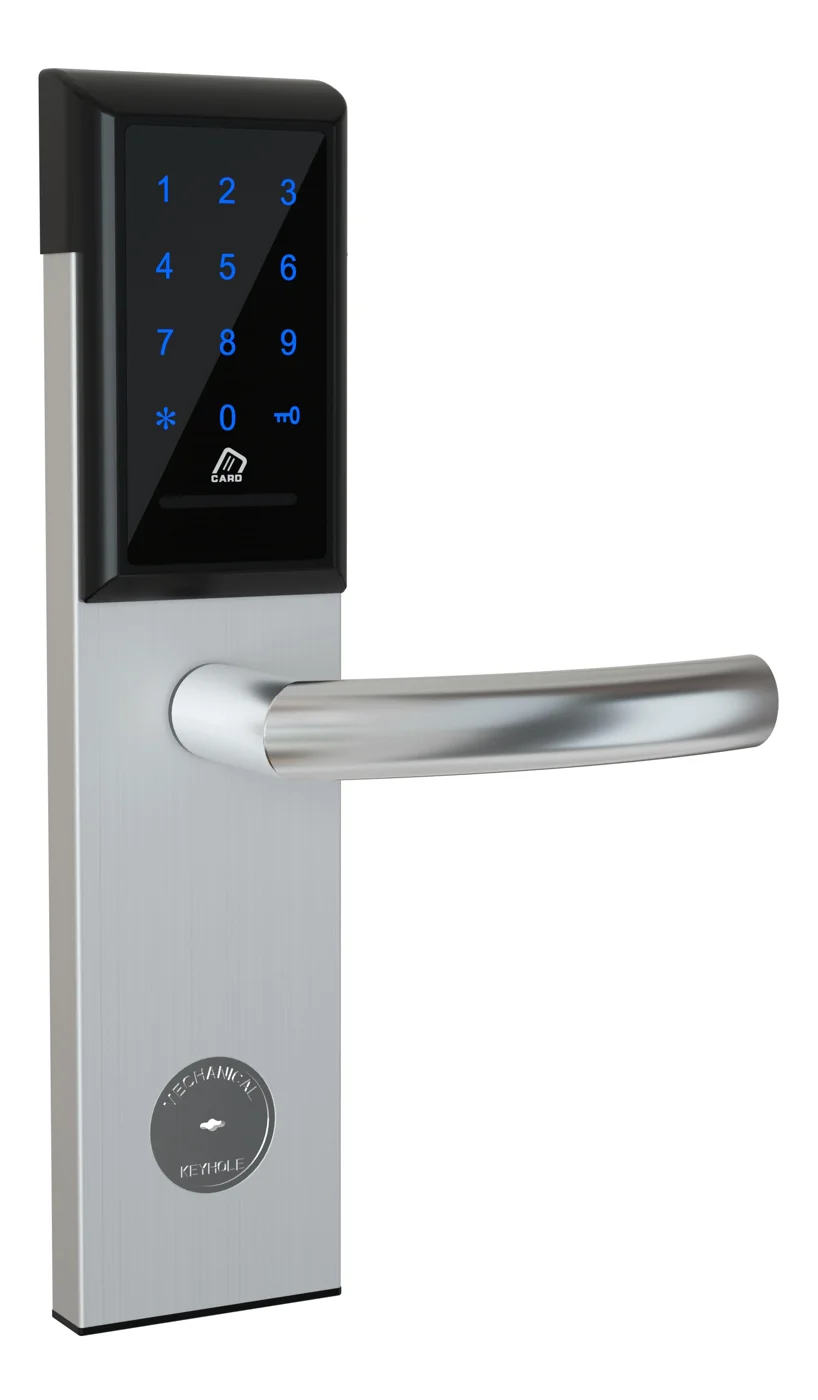
Office Cabinet Lock — PIN + Card for Filing & Pedestals
Offline PIN + card office cabinet lock for filing cabinets, pedestals, and drawers. Battery-powered 5-minute retrofit, no WiFi, no key management. CE/FCC/RoHS.
This page already points to it as the next recommended reference.
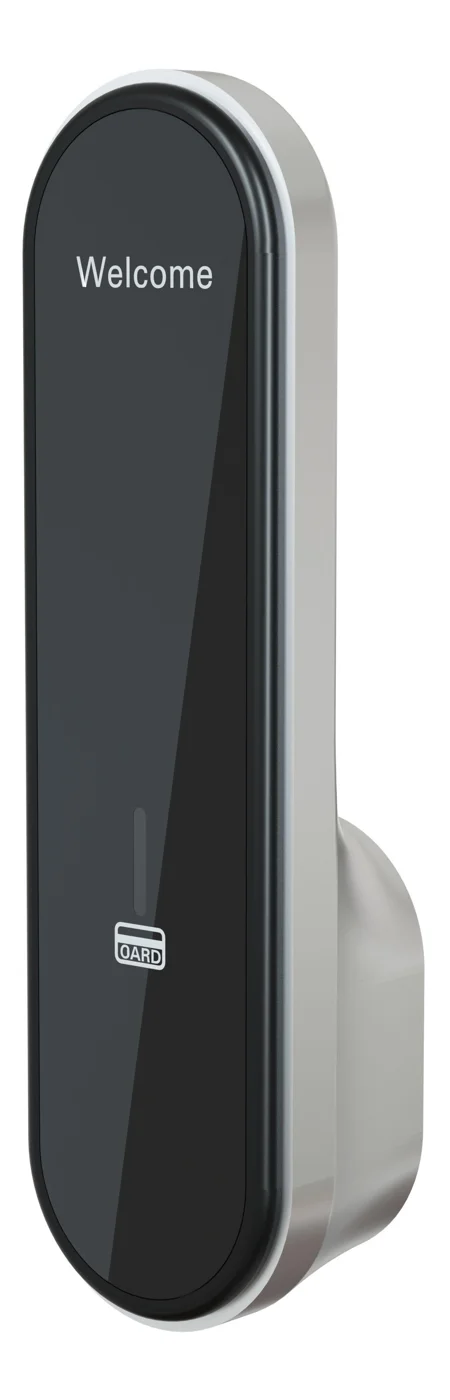
RFID Cabinet Lock — MIFARE Card, Offline Authentication
Offline MIFARE RFID cabinet lock for gym, spa, and office lockers. Tap-to-unlock 13.56 MHz, no WiFi needed, 5-minute retrofit. Zinc alloy body, battery-powered.
This page already points to it as the next recommended reference.
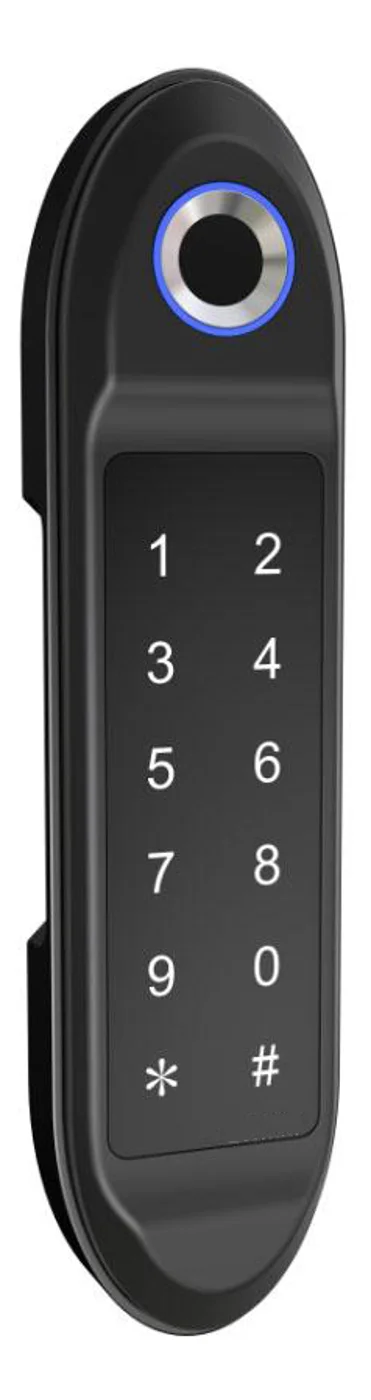
PIN Code Electronic Cabinet Lock — Stand-Alone, No WiFi
Offline keypad cabinet lock for gym, office and parcel lockers. Battery-powered, 5-minute retrofit, audit-free simple deployment. PIN + MIFARE card, DC 6V, 4×AA.
This page already points to it as the next recommended reference.
Related blog posts
3
Digital Locker Lock: The Complete 2026 Guide to Smart, Keyless Gym, Office, and Parcel Storage Access Control
Complete guide to digital locker lock selection covering RFID, Bluetooth, PIN, QR code, and biometric access technologies for gyms, offices, parcel delivery, schools, hospitals, and commercial locker banks with installation, battery life, and ROI data.
It supports the same product context: PIN Code Electronic Cabinet Lock — Stand-Alone, No WiFi.
The Complete Guide to Digital Locker Management System Platforms in 2026
Explore how a digital locker management system transforms locker fleet operations with real-time monitoring, API integration, multi-site dashboards, and deployment flexibility for gyms, hotels, schools, and offices.
It supports the same product context: PIN Code Electronic Cabinet Lock — Stand-Alone, No WiFi.
How to Choose a Defibrillator Cabinet Lock: Security vs. Emergency Access
Learn how a defibrillator cabinet lock balances theft protection with sub-5-second emergency access. Compare break-glass, electronic solenoid, and motorized latch with compliance data.
It supports the same product context: Office Cabinet Lock — PIN + Card for Filing & Pedestals.
Specify your hotel project with our engineers
Send your room count, ceiling type, and protocol preference. We will return a sample plan and quote within 24 business hours.
- Move from general guidance into a product or application discussion.
- Use RFQ when pricing, drawings, MOQ, or launch timing needs structure.
- Keep a direct contact path visible for fast clarifications and handoff.