Digital Cabinet Lock Price: The Complete Pricing Guide for 2026
Digital cabinet lock price ranges from $1.50 to $300+ depending on credential type, actuator, IP rating, audit trail, and MOQ. Full breakdown of cost drivers, TCO, and factory negotiation tactics.
What Determines Digital Cabinet Lock Price?
The digital cabinet lock price is determined by seven primary cost drivers: credential type, actuator mechanism, audit trail capacity, environmental sealing (IP rating), enclosure material, communication protocol, and brand certification overhead. Entry-level RFID card locks with solenoid actuation and ABS plastic bodies start at $1.50--$8.00 per unit at 1,000+ MOQ, while enterprise-grade biometric locks with motorized deadbolts, IP68 stainless steel housings, and full audit logging command $80--$300+ per unit. The mid-range sweet spot of $15--$45 covers Bluetooth-enabled zinc alloy locks with AES-128 encryption rated IP54, suitable for most office, healthcare, and hospitality applications. Understanding these seven variables is the foundation of any intelligent procurement decision, because the cheapest unit on Alibaba often carries hidden costs -- tooling molds, certification fees, battery replacement cycles, and tariff classifications -- that can double the effective digital cabinet lock price over a 12-month deployment. This guide breaks down each variable, maps every pricing tier, and provides factory-tested negotiation tactics to help you land the right lock at the right price, whether you are sourcing 50 units for a small office or 50,000 for a global hotel chain.
Credential Type and Digital Cabinet Lock Price
The authentication method a lock supports is the single largest variable affecting digital cabinet lock price. Credential technologies range from passive 125 kHz RFID to multi-factor smartphone + biometric hybrids, and each carries a different bill-of-materials cost that flows directly to the end price.
RFID Card and Key Fob Locks
RFID-based locks using 125 kHz EM4100 or 13.56 MHz Mifare Classic cards represent the lowest-cost entry point. The reader IC costs $0.12--$0.35, the antenna coil adds $0.05--$0.10, and the passive card is $0.08--$0.30 depending on encoding quantity. Complete RFID cabinet locks from OEM suppliers such as Shenzhen Hune or Yong Tai typically range from $1.50--$6.00 per unit at 1,000+ MOQ. The digital cabinet lock price for RFID-only models is competitive because there is no onboard processing -- the controller simply reads the card UID and compares it against a small whitelist stored in EEPROM. However, security is limited: 125 kHz cards can be cloned with a $20 reader, and Mifare Classic encryption has been broken since 2008. For low-security environments like general office storage or breakroom cabinets, RFID locks offer the best cost-to-convenience ratio. Expect to pay $2.50--$4.00 per lock at 500--1,000 MOQ, with card costs of $0.15--$0.35 each. The deficiency is zero audit trail and no remote management, which pushes the total cost of ownership higher if locks need to be re-keyed frequently.
Bluetooth Low Energy (BLE) Locks
Bluetooth-enabled locks add a Nordic nRF52 or Dialog DA14531 SoC costing $0.60--$1.80, plus a CR2032 or CR2450 battery holder, a PCB antenna, and sometimes a small OLED or RGB LED indicator. The BLE digital cabinet lock price typically falls between $10--$35 per unit at 1,000 MOQ. The BOM premium over RFID is $2--$4, but the software overhead -- app development, cloud backend, BLE stack certification (FCC, CE, BQB) -- adds $15,000--$50,000 in non-recurring engineering (NRE) that the factory amortizes into the unit price. Most BLE locks support capacitive touch or mechanical key override, and the average power consumption is 15--30 uA sleep, 8--20 mA burst during advertisement, and 80--120 mA during motor actuation. A CR2032 battery lasts 8--14 months at 10--15 operations per day. BLE locks are the most popular segment for office and hospitality deployments because they enable credential sharing via smartphone, time-based access schedules, and basic event logging (last 100--500 events). The digital cabinet lock price in this tier is heavily influenced by whether the lock includes a real-time clock (RTC) for offline scheduling -- adding an RTC with backup supercapacitor adds $0.60--$1.20 to the BOM.
Biometric Fingerprint Locks
Fingerprint cabinet locks use a capacitive or optical sensor paired with a dedicated DSP or ARM Cortex-M4 MCU for on-device matching. The sensor module costs $1.50--$4.00 for capacitive (good) and $0.80--$2.00 for optical (lower accuracy), plus the MCU adds $0.80--$2.50. Biometric digital cabinet lock price ranges from $18--$45 at 1,000 MOQ, with premium models featuring live finger detection (LFD) and anti-spoofing algorithms commanding $35--$60. The false acceptance rate (FAR) on budget optical sensors is 1:1,000--1:5,000, while capacitive sensors achieve 1:50,000--1:100,000. Enrollment capacity is typically 20--200 fingerprints, with high-end models storing up to 500 templates. The critical cost driver in biometric locks is the matching algorithm licensing -- many OEMs charge $0.30--$1.00 per unit for a licensed algorithm (e.g., Synochip or Fingerprint Cards AB), while proprietary algorithms are absorbed into the MCU firmware cost. Biometric locks are common in healthcare (medication cabinets), laboratories (controlled substances), and high-security government installations. The digital cabinet lock price premium over BLE is justified when the use case demands non-transferable credentials -- fingerprints cannot be borrowed or shared like cards or phones.
PIN Code and Keypad Locks
Membrane keypad or capacitive touch PIN locks cost $3.00--$12.00 at 1,000 MOQ, occupying a middle ground between RFID and BLE. The keypad matrix and driver IC add $0.30--$0.80, and the MCU must handle debounce, code storage, and lockout timing. PIN-based digital cabinet lock price is driven by the number of user codes (typically 10--100), whether the lock supports master code + user code hierarchy, and the lockout timeout after failed attempts. Budget PIN locks ($3--$6) use a 4-digit fixed code stored in OTP memory, while programmable PIN locks ($7--$12) store codes in EEPROM and support 6--8 digit codes, timed lockout (30--300 seconds after 5 failures), and sometimes a tamper alarm. PIN locks are the simplest to deploy -- no cards to issue, no app to install -- but they suffer from shoulder-surfing risk and code-sharing friction. The digital cabinet lock price for PIN variants is relatively stable because the BOM has not changed significantly in the past decade, and most manufacturers use mature, amortized MCU platforms.
Multi-Factor and Wi-Fi Locks
Locks combining two or more credentials -- RFID + PIN, BLE + fingerprint, QR code + NFC -- represent the high end of the market. Multi-factor digital cabinet lock price ranges from $35--$150 at 1,000 MOQ, and Wi-Fi cabinet locks (ESP32 or RTL8720-based) add $3--$6 to the BOM for the radio module plus FCC/CE certification costs of $15,000--$30,000 per model. Wi-Fi locks consume 80--200 mA during active transmission, requiring either a larger battery (4x AA or Li-Po pack) or a wired power supply, both of which add $1--$4 to the BOM. The digital cabinet lock price for Wi-Fi models typically starts at $50--$80 and can exceed $200 for enterprise-grade units with PoE power and cloud-managed access control. These locks are deployed in large-scale IoT deployments where real-time monitoring, remote unlock, and integration with building management systems (BMS) are required.
Actuator Mechanism: Solenoid vs. Motor
The mechanical component that physically moves the latch or deadbolt is the second most important cost driver in digital cabinet lock price. Two actuator types dominate the market: solenoid and geared DC motor. A third, less common variant -- shape-memory alloy (SMA) -- remains niche due to reliability concerns.
Solenoid Actuators
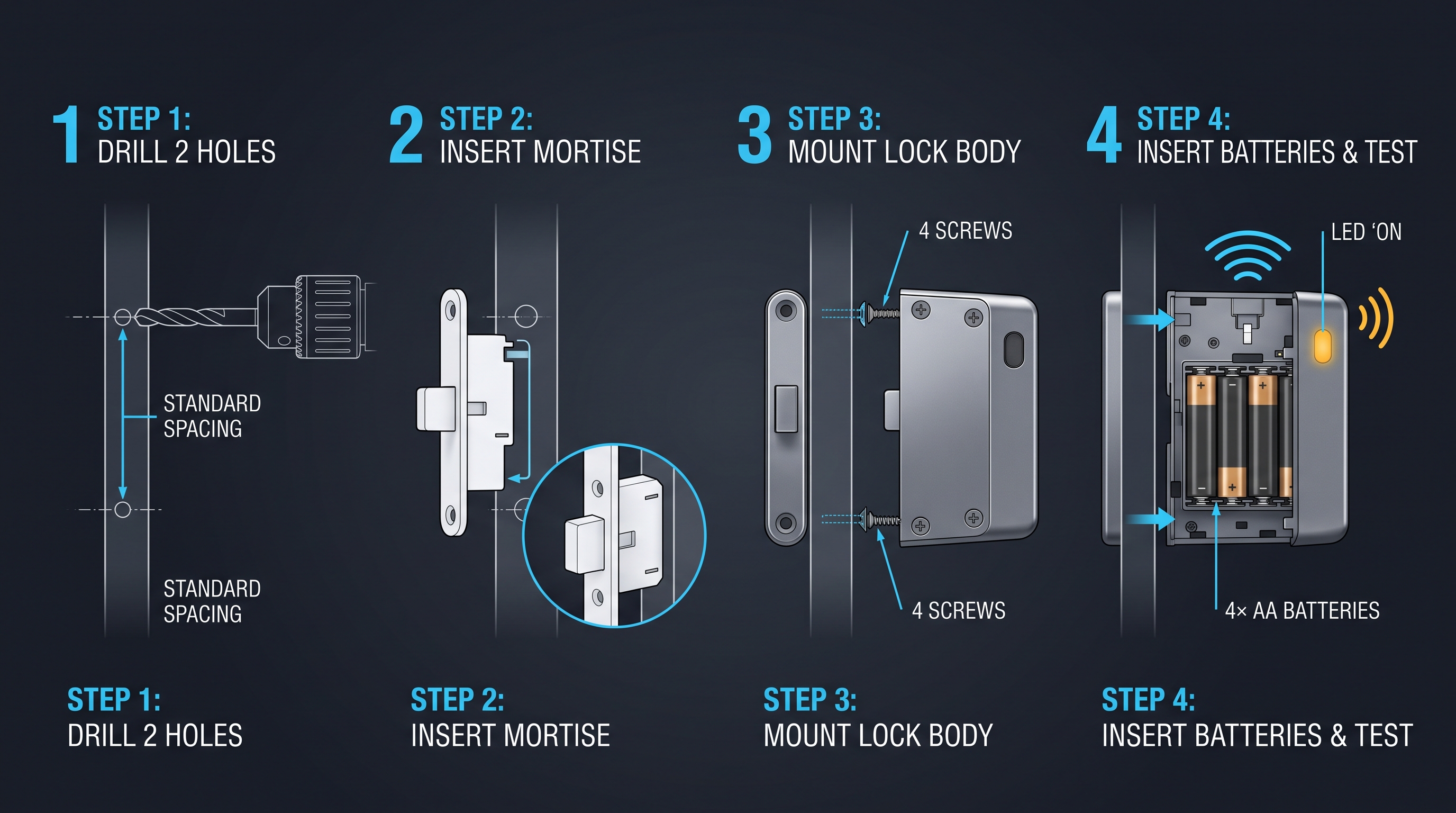
Solenoid-based locks use an electromagnetic coil to pull a spring-loaded plunger, releasing the latch when energized. The solenoid coil costs $0.15--$0.50, requires 150--500 mA at 3--6 V, and produces an audible "click" that many users find reassuring. Solenoid digital cabinet lock price is the lowest possible because the mechanism is simple, contains no gears or wear-prone plastic reduction trains, and can be manufactured at high speed on automated winding machines. However, solenoids have drawbacks: they consume power continuously in the unlocked state (latching solenoids mitigate this with a permanent magnet but add $0.20--$0.40), and they cannot drive heavy deadbolts -- the holding force is typically 2--5 N. Solenoid locks are best suited for low-security applications where the cabinet door is already closed by a spring or gravity, and the solenoid merely prevents the handle from being pressed. The digital cabinet lock price for solenoid actuated locks is $1.50--$8.00, making them the default choice for cost-sensitive projects like hotel minibars, school lockers, and retail display cabinets.
Geared DC Motor Actuators
Motorized locks use a small DC motor (typically an FK-130 or N20 micro gear motor) with a planetary or spur gear reduction train to rotate a cam, deadbolt, or latch pawl. The motor + gearbox assembly costs $0.60--$2.50, requires 80--200 mA during actuation (only for 0.3--1.0 seconds), and draws zero current in the locked or unlocked steady state. Motorized digital cabinet lock price is $3--$15 higher than solenoid equivalents because the gear train requires tighter tolerances, more assembly labor, and a more complex control algorithm with stall detection and end-stop sensing. The major advantage is that a motor can drive a true deadbolt -- 8--15 mm throw with 30--100 N holding force -- comparable to a mechanical cam lock. Motorized locks also operate silently, which is critical in libraries, hotel rooms, and executive offices. The digital cabinet lock price premium for motorized actuation is almost always justified when security requirements demand a deadbolt or when silent operation is specified. For medical and pharmaceutical cabinets, motorized locks with manual override (key or mechanical turn-knob) are standard.
Hybrid and SMA Actuators
A small number of premium locks use shape-memory alloy (Nitinol) wire actuators, which contract when heated electrically. SMA actuators cost $0.40--$1.00, consume 300--600 mA, and are silent, but they have slow reset times (0.5--2.0 seconds) and limited cycle life (typically 50,000--100,000 cycles vs. 200,000+ for motors). Hybrid mechanisms combining a solenoid for quick release with a motor for deadbolt locking exist but are rare, and the digital cabinet lock price for these is $25--$60 due to the dual actuator BOM and complex control firmware.
Audit Trail Capacity and Digital Cabinet Lock Price
Audit trail capability -- the ability to record who accessed a cabinet and when -- is a feature that differentiates consumer-grade locks from enterprise access control systems. The price impact of audit logging scales with storage capacity, tamper resistance, and retrieval method.
No Audit (Basic Locks)
Locks with no audit trail simply store a small whitelist of authorized credentials (card UIDs, PIN codes, or fingerprint templates) in EEPROM. The MCU costs $0.15--$0.40, and the total storage is 64--512 bytes. These locks represent the baseline digital cabinet lock price of $1.50--$12.00. They are suitable for environments where access logging is not required -- personal storage, breakroom cabinets, and low-risk inventory. The absence of audit logging eliminates the need for a real-time clock (RTC), flash memory, and cryptographic authentication, saving $0.80--$2.00 in BOM cost.
On-Device Logging (500--5,000 Events)
Mid-range locks store a timestamped event log in serial flash (2--16 Mbit) alongside an RTC with backup supercapacitor or coin cell. The flash IC adds $0.20--$0.80, the RTC adds $0.25--$0.60, and the backup capacitor adds $0.10--$0.25. These locks log each credential presentation -- door open, door close, unauthorized attempt, tamper detection -- with a Unix timestamp. The digital cabinet lock price for on-device audit locks is $8--$35. Retrieval is typically via BLE download to a smartphone app or via USB-UART cable, requiring physical proximity. This is sufficient for most office and hotel deployments where periodic audits are acceptable (e.g., weekly download rounds by a security manager). The key BOM driver is the backup capacitor -- a 1.0 F supercapacitor at 5.5 V costs $0.40--$0.70 and ensures the RTC keeps time for 7--30 days without the main battery.
Cloud-Connected Audit Logging
Enterprise locks with Wi-Fi or Ethernet connectivity stream events to a cloud server in real time or near-real time (batch upload every 30--120 seconds). The added radio, stronger MCU (dual-core or Cortex-M4 with cryptographic accelerator), and cloud platform subscription add $4--$12 to the digital cabinet lock price and $3--$15 per lock per year in cloud fees. The lock must also support TLS 1.2/1.3, certificate provisioning, and secure boot, which require a larger flash (16--64 Mbit) and an MCU with hardware crypto acceleration. The digital cabinet lock price for cloud-audited locks is $45--$300, with the enterprise tier typically including a 3--5 year cloud subscription bundled into the hardware price. Regulatory compliance environments -- HIPAA (healthcare), SOX (finance), GDPR (EU data protection) -- often mandate cloud audit trails with immutable logs and chain-of-custody timestamps.
IP Rating and Environmental Sealing
The Ingress Protection (IP) rating directly correlates with digital cabinet lock price because achieving high sealing requires additional gaskets, potting compounds, corrosion-resistant materials, and more complex assembly.
IP40 and Below (Indoor Dry)
Locks rated IP40 or lower have no formal sealing -- the PCB is exposed to ambient air, and the enclosure relies on the cabinet's own sealing. These locks cost $1.50--$6.00 and are suitable only for climate-controlled indoor environments (offices, homes, retail stores). The digital cabinet lock price at this level is dominated by the credential and actuator costs, with no premium for environmental protection. Life expectancy in a clean office is 5--8 years, but humidity above 70% RH or dust exposure can cause contact corrosion within 6--12 months.
IP54 (Splash and Dust Resistant)
IP54-rated locks include a silicone gasket around the enclosure seam, a mylar or PET cover over the keypad, and conformal coating on the PCB (acrylic or silicone, costing $0.05--$0.15 per board). The gasket adds $0.08--$0.25, and the keypad cover adds $0.10--$0.30. The digital cabinet lock price for IP54 locks is $8--$35, representing the mainstream commercial segment. This rating is sufficient for kitchens, breakrooms, hotel bathrooms, warehouse storage, and light industrial environments. The conformal coating provides protection against condensation and incidental splashes, and the gasket prevents dust ingress into the electronics cavity. IP54 locks are the most common in the mid-range tier because the cost increment ($0.50--$1.50) is modest relative to the reliability improvement.
IP65 and Above (Water Jet and Immersion)
IP65 (water jet resistant) and IP67 (temporary immersion) locks require a fully sealed enclosure with a continuous compression gasket, screw-down or snap-fit covers with multiple sealing points, and fully potted electronics (epoxy or polyurethane potting compound, costing $0.30--$1.00 per unit). The enclosure typically switches from standard ABS to glass-filled nylon or die-cast zinc alloy with a powder coat. The digital cabinet lock price for IP65+ locks is $25--$80. IP67 locks used in outdoor cabinet applications (public lockers, outdoor kiosks, marine environments) also require stainless steel or brass hardware to prevent galvanic corrosion, adding $0.50--$2.00 to the BOM. The potting process adds 15--30 seconds to the assembly cycle, reducing throughput and increasing labor cost. For IP68 locks (continuous immersion, 1+ meter), the digital cabinet lock price jumps to $50--$150, and the design must incorporate a pressure equalization membrane (Gore-Tex vent, $0.40--$0.80) to prevent diaphragm pumping during temperature cycles.
Enclosure Material: Zinc Alloy vs. ABS Plastic
The material used for the lock housing and latch significantly affects digital cabinet lock price, perceived quality, and mechanical durability.
ABS and Polycarbonate Plastic
Standard ABS (acrylonitrile butadiene styrene) or polycarbonate enclosures are injection-molded, with tooling costs of $1,500--$5,000 per cavity. The per-unit material cost is $0.08--$0.30 for ABS and $0.15--$0.50 for glass-filled polycarbonate. Plastic digital cabinet lock price locks are $1.50--$15.00, dominating the entry-level tier. The advantages are low cost, light weight, and color flexibility (molded-in color, no painting required). The disadvantages are lower impact resistance (ABS can crack at -20 degrees C), UV degradation in direct sunlight (embrittlement after 1--3 years), and lower perceived quality for premium applications. ABS locks are perfectly adequate for interior use where the lock is not subject to physical attack or extreme temperature cycles.
Zinc Alloy (Die-Cast)
Zinc alloy (typically ZDC-3 or ZAMAK-3) enclosures are die-cast, requiring tooling costs of $3,000--$12,000 per cavity, higher than plastic. The per-unit material cost is $0.30--$0.80 for zinc, plus the cost of plating or powder coating ($0.10--$0.30). Zinc alloy digital cabinet lock price locks are $8--$50, occupying the mid-range and upper tiers. Zinc offers higher tensile strength (250--350 MPa), better perceived weight ("premium feel"), and excellent corrosion resistance when plated (nickel, chrome, or black oxide). The die-casting process produces tighter dimensional tolerances than injection molding, resulting in less play in the latch mechanism and a more consistent feel. For applications where the lock will be touched frequently -- hotel guestroom cabinets, executive office furniture, retail display cases -- zinc alloy is the standard material despite the higher digital cabinet lock price, because the tactile quality and durability justify the premium.
Stainless Steel and Brass
Stainless steel (304 or 316) and brass enclosures are used in marine, medical, food-service, and high-security environments. Machined or stamped stainless housings cost $1.00--$3.00 per unit in material and require more expensive tooling and slower production cycles. The digital cabinet lock price for stainless steel locks is $35--$150. Brass is used primarily for the latch mechanism (cam, deadbolt, or strike plate) in high-wear applications because of its self-lubricating properties. The cost premium for stainless steel over zinc alloy is 2--5x, but the corrosion resistance is necessary for applications involving frequent washdown, salt spray, or chemical exposure.
Communication Protocol and Digital Cabinet Lock Price
The protocol the lock uses to communicate with controllers, apps, or cloud servers adds a layer of cost that varies dramatically with range, power consumption, and certification complexity.
Wired Protocols (RS-485, Wiegand, CAN Bus)
Wired cabinet locks use RS-485 (2-wire differential bus, up to 1,200 m), Wiegand (26--34 bit, used in access control panels), or CAN bus (automotive and industrial). The transceiver IC costs $0.30--$1.00, and the locking connector and cable add $0.20--$0.60. Wired digital cabinet lock price is $8--$30, but the installation cost -- running conduit, pulling cable, terminating connectors -- is $15--$50 per lock point, making wired solutions more expensive in total. Wired protocols are preferred in existing access control retrofit projects where a central panel already exists, because the lock itself is cheaper than a wireless equivalent and the power is supplied over the bus (no batteries). The digital cabinet lock price for wired locks is stable because the technology is mature and the certification costs are low (no radio emissions testing).
Bluetooth Low Energy (BLE 5.x)
BLE 5.x locks use a 2.4 GHz radio with a range of 10--30 meters indoors. The BLE module (PCB trace antenna or chip antenna) costs $0.50--$1.50, and the certification costs (FCC, CE, IC, TELEC) add $15,000--$30,000 per model, amortized over the production run. The digital cabinet lock price for BLE locks is $10--$45, with the BLE stack royalty (if using a third-party stack like BlueKit or Nordic SoftDevice) adding $0.10--$0.50 per unit. BLE is the dominant wireless protocol for cabinet locks due to its low power consumption, ubiquitous smartphone support, and sufficient bandwidth for credential transfer and audit log download. The BLE digital cabinet lock price tier is projected to remain stable through 2028 as the chipset prices continue to decline with volume.
Wi-Fi and Ethernet
Wi-Fi cabinet locks (802.11 b/g/n, typically ESP32 or Realtek RTL8720) cost $5--$10 more in BOM than BLE equivalents due to the higher-power radio, larger flash (4--16 MB vs. 512 KB--2 MB), and the need for a bigger battery or power supply. The digital cabinet lock price for Wi-Fi locks is $50--$200, driven by the FCC/CE certification cost ($20,000--$40,000), the Wi-Fi Alliance certification fee ($5,000--$15,000), and the cloud infrastructure for remote management. Wi-Fi locks eliminate the need for a hub or bridge, but the power consumption (80--200 mA active, 200--500 uA sleep) requires frequent battery changes (3--6 months for a 4xAA pack at 10 operations/day) or a wired power source. The digital cabinet lock price for PoE (Power over Ethernet) variants is $80--$300, but these locks eliminate battery concerns entirely and are preferred for high-traffic enterprise installations.
Zigbee, Thread, and Matter
Smart home protocol locks (Zigbee 3.0, Thread, Matter) add $1.50--$4.00 to the BOM for the radio module and require certification with the Connectivity Standards Alliance (CSA) at $7,000--$15,000 per model. The digital cabinet lock price for Matter-compatible locks is $30--$80, positioning them as a premium alternative to BLE-only locks. The promise of Matter is cross-platform interoperability (Apple Home, Google Home, Amazon Alexa, Samsung SmartThings), but the certification timeline (12--20 weeks) and the need for a Thread border router or Zigbee coordinator add to the deployment cost. These protocols are relevant for smart furniture and integrated office environments where the cabinet lock is part of a larger smart building ecosystem.
Brand, Certification, and Warranty Overhead
The digital cabinet lock price premium associated with established brands (SALTO, Hafele, ASSA ABLOY, CompX, Southco) is typically 50--300% over equivalent OEM white-label products. This premium covers four specific cost areas.
Safety and Regulatory Certifications
CE marking (European Conformity) requires a technical file, risk assessment, and declaration of conformity costing $3,000--$8,000 per model. UL 294 (access control system units) testing costs $8,000--$20,000 and takes 8--16 weeks. FCC Part 15 testing (USA) for wireless modules costs $5,000--$15,000. EN 14846 (mechanical durability for locks) testing costs $4,000--$10,000. These certifications are included in the price of branded locks but are often absent from unbranded OEM products. The digital cabinet lock price for a fully certified lock can be $5--$15 higher than an identical uncertified unit, but the certification is mandatory for commercial installations in regulated markets and for insurance compliance.
Warranty Terms
Entry-level OEM locks typically carry a 1-year warranty. Mid-range branded locks (e.g., CompX, Hafele) offer 2--3 years. Enterprise brands (SALTO, ASSA ABLOY) provide 3--5 years with advanced replacement. The warranty reserve -- the amount the manufacturer sets aside for predicted returns -- is 2--5% of the digital cabinet lock price for entry-level, 3--8% for mid-range, and 5--12% for enterprise. A 5-year warranty at 5% annual failure rate requires a reserve of $0.75--$4.50 per lock, which is reflected in the price.
Brand Reputation and Support
Branded locks include technical documentation, installation guides, API documentation, and phone/email support. The overhead for these services is $1--$5 per lock for mid-range brands and $5--$20 per lock for enterprise brands. The digital cabinet lock price from a major brand also includes the cost of maintaining a distributor network, sales representatives, and marketing materials. For procurement teams that require vendor approval, insurance letters, and on-site support, the brand premium is a necessary cost of doing business.
Digital Cabinet Lock Price Tiers: Entry, Mid-Range, Enterprise
The digital cabinet lock price market can be organized into three tiers, each defined by specific feature sets, target applications, and quality expectations.
| Tier | Price Range (1,000 MOQ) | Typical Credential | Actuator | Material | IP Rating | Audit Trail | Key Application |
|---|---|---|---|---|---|---|---|
| Entry | $1.50--$8.00 | 125 kHz RFID, fixed PIN | Solenoid | ABS plastic | IP40 or none | None | School lockers, breakroom cabinets, retail displays |
| Mid-Range | $10--$45 | BLE, programmable PIN, fingerprint | Geared DC motor | Zinc alloy die-cast | IP54 | 500--5,000 events on-device | Office furniture, hotel cabinets, healthcare storage |
| Enterprise | $50--$300 | Wi-Fi, multi-factor, Biometric + BLE | Motorized deadbolt | Stainless steel | IP65--IP68 | Cloud-connected, real-time, HIPAA/SOX compliant | Pharma cabinets, government installations, marine |
The digital cabinet lock price overlap between tiers ($8--$12 and $45--$55) reflects configurations where a mid-range lock is specced with a premium credential (e.g., BLE lock with fingerprint sensor) or an enterprise lock is stripped of cloud services for local-only operation.
Unit Price vs. Minimum Order Quantity (MOQ)
Understanding the relationship between MOQ and digital cabinet lock price is essential for accurate budgeting. The table below shows typical pricing at different order quantities for a mid-range BLE zinc alloy lock.
| Order Quantity | Unit Price (USD) | Total Cost | MOQ Impact Factor |
|---|---|---|---|
| 10 units (sample) | $15.00--$35.00 | $150--$350 | 1.5--3.5x premium over volume price |
| 100 units | $12.00--$25.00 | $1,200--$2,500 | 1.2--2.5x |
| 500 units | $9.00--$18.00 | $4,500--$9,000 | 0.9--1.8x |
| 1,000 units | $7.00--$15.00 | $7,000--$15,000 | 0.7--1.5x (baseline) |
| 5,000 units | $5.50--$12.00 | $27,500--$60,000 | 0.55--1.2x |
| 10,000 units | $4.50--$10.00 | $45,000--$100,000 | 0.45--1.0x |
| 50,000+ units | $3.50--$8.00 | $175,000--$400,000 | 0.35--0.8x |
The digital cabinet lock price drops sharply between 100 and 1,000 units (25--40% reduction) because the factory amortizes the tooling, programming jig, and test fixture costs over the batch. Between 1,000 and 10,000 units, the price reduction is 15--25%. Beyond 10,000 units, the marginal reduction is 5--10% per order of magnitude, limited by the raw material cost floor. The MOQ for custom OEM locks (custom color, logo, firmware) is typically 1,000--3,000 units, with sample MOQ of 10--50 units at 2--4x the volume price.
Sample Pricing and NRE Costs
Procurement teams evaluating digital cabinet lock price often overlook the upfront engineering costs -- samples, NRE, tooling -- that are separate from the unit price.
Sample Pricing
Samples are typically sold at 2--4x the volume price because they require manual assembly, programming, and testing. A mid-range BLE lock with a volume price of $12.00 costs $25--$45 as a sample. Shipping (DHL, FedEx, UPS) from China to the US or Europe adds $25--$60 per sample shipment. The digital cabinet lock price for samples should be budgeted at $50--$100 per unit including shipping, and 3--5 samples are usually needed for mechanical fit check, RF performance testing, and field trials. Most factories require 50% or 100% payment for samples, with the cost sometimes deducted from the first production order if the order exceeds $5,000--$10,000.
Tooling and Mold Costs
Custom tooling is the largest upfront cost in a new product development.
| Tooling Type | Cost Range | Typical Lead Time | Units Amortized Over |
|---|---|---|---|
| ABS injection mold (single cavity) | $1,500--$5,000 | 20--35 days | 5,000--20,000 |
| Zinc alloy die-cast mold | $3,000--$12,000 | 30--50 days | 10,000--50,000 |
| Silicone keypad mold | $500--$2,000 | 15--25 days | 5,000--20,000 |
| PCB stencil and fixture | $200--$500 | 5--10 days | 1,000--10,000 |
| Full custom lock (all molds + fixtures) | $8,000--$25,000 | 45--90 days | 20,000--100,000 |
The digital cabinet lock price negotiation should always include a discussion of who owns the mold after the production run. If you pay for the mold, you should own it and be able to transfer it to another factory. Many factories quote a lower unit price by absorbing the mold cost, but then the mold is factory-owned, creating a switching cost if quality issues arise.
Firmware and App NRE
Custom firmware development -- modifying the lock's BLE communication protocol, adding custom credential formats, or integrating with a third-party access control API -- costs $5,000--$25,000 depending on complexity. A companion mobile app (iOS + Android) with basic lock management, credential sharing, and audit log viewing costs $20,000--$60,000 for a white-label version from a factory's software partner. Full custom app development with cloud backend, user management, and BMS integration costs $50,000--$200,000. The digital cabinet lock price in a custom development project should be analyzed as hardware + software NRE, not just the unit cost.
Shipping, Tariff, and Import Costs
The landed digital cabinet lock price -- the total cost to get the lock to your warehouse -- includes freight, insurance, duties, and customs clearance fees that can add 15--40% to the FOB price.
Incoterms: FOB vs. EXW vs. CIF
Understanding Incoterms is critical when comparing quotes from different factories.
| Incoterm | Seller Responsibility | Buyer Responsibility | Typical Price Impact |
|---|---|---|---|
| EXW (Ex Works) | Pack goods at factory | All transportation, export/import customs, insurance | +10--15% for freight + duties |
| FOB (Free on Board) | Deliver to port, load onto vessel | Ocean/air freight, insurance, import customs | Baseline (factory price + port fees) |
| CIF (Cost, Insurance, Freight) | Freight + insurance to destination port | Import customs, inland freight | +8--12% over FOB |
Most Chinese factories quote digital cabinet lock price on FOB Shenzhen or FOB Ningbo terms. The FOB price includes the factory price, inland trucking to the port, port handling fees, and export customs clearance. From FOB, the buyer adds ocean freight ($300--$1,500 per cubic meter for sea, depending on route and container type) or air freight ($4--$8 per kg), marine insurance (0.1--0.3% of cargo value), import duties (2.5--8% for electronic locks into the US under HTS 8301.70.0000, 0--4% into the EU), and customs broker fees ($150--$400 per shipment). The digital cabinet lock price landed in the US or Europe from a Chinese factory is typically 1.15--1.40x the FOB quote.
Tariff Classification
Electronic cabinet locks are classified under HS code 8301.70.0000 (Padlocks and locks, base metal) or 8301.40.1100 (Other locks, base metal, for furniture). The US Section 301 tariffs on Chinese-origin goods have added 7.5--25% to the duty rate since 2018, depending on the specific HTS code and whether an exclusion applies. The digital cabinet lock price from Chinese factories for US buyers should include a tariff contingency of 10--20% unless the lock is assembled in a non-Chinese country (Vietnam, Mexico, Taiwan) to avoid the additional duty. Some factories now offer FOB Vietnam or FOB Taiwan to help buyers reduce tariff exposure, but the base digital cabinet lock price from these alternative origins is typically 5--15% higher than the China FOB price due to the less mature supply chain.
Total Cost of Ownership (TCO) Over 5 Years
The digital cabinet lock price is just the acquisition cost. The total cost of ownership (TCO) over 5 years includes battery replacement, maintenance labor, failed unit replacement, credential management, and decommissioning. A TCO analysis often reveals that the cheapest lock is the most expensive over time.
TCO Comparison by Tier
| Cost Category | Entry Tier ($4 lock) | Mid-Range ($18 lock) | Enterprise ($90 lock) |
|---|---|---|---|
| Acquisition (per unit) | $4.00 | $18.00 | $90.00 |
| Battery cost (5 years) | $0 (no battery -- wired or mechanical) | $6.00 (3x CR2032 at $2.00 each, replaced annually) | $0 (PoE or wired; or 1x Li-Po replacement at $8.00) |
| Battery replacement labor | $0 | $7.50 (3 x 15 min at $50/hr labor) | $0 |
| Failed units (5% annual failure) | $1.00 (25% of locks replaced over 5 years at $4.00) | $1.80 (10% of locks replaced at $18.00) | $0.90 (1% of locks replaced at $90.00) |
| Credential management (5 years) | $0.30 (replace lost cards) | $0.50 (app management, occasional card re-issue) | $5.00 (cloud subscription at $1/lock/year) |
| Installation labor | $5.00 (20 min at $50/hr) | $5.00 (20 min) | $12.50 (30 min + network config) |
| Decommissioning | $1.00 | $1.00 | $1.00 |
| 5-Year TCO per lock | $11.30 | $39.80 | $109.40 |
The digital cabinet lock price at entry tier ($4.00) delivers a 5-year TCO of $11.30 per lock, but the reliability is low -- 25% will fail within 5 years in a commercial environment. The mid-range lock ($18.00) has a 5-year TCO of $39.80, driven largely by battery replacement costs. The enterprise lock ($90.00) has a 5-year TCO of $109.40, but with near-zero failure rate and no battery labor. The per-lock-per-year TCO is $2.26 (entry), $7.96 (mid), and $21.88 (enterprise). The digital cabinet lock price TCO analysis shows that the mid-range tier offers the best balance of reliability and cost for most commercial applications, provided the battery replacement labor is factored into the operating budget.
Battery Life and Replacement Cost
Battery life is the single largest variable in mid-range TCO. A BLE lock with a CR2032 (225 mAh) operating at 15 actuations/day with 10-second BLE connection per actuation consumes approximately:
- Sleep: 20 uA x 86,400 seconds = 480 mAh per year (theoretical; actual sleep current is typically 15--30 uA)
- BLE advertising: 15 mA x 300 ms x 100 cycles/day = 0.125 mAh per day = 45.6 mAh per year
- BLE connection: 12 mA x 5 seconds x 15 actuations = 0.25 mAh per day = 91.3 mAh per year
- Motor actuation: 100 mA x 0.5 seconds x 15 actuations = 0.208 mAh per day = 75.9 mAh per year
- Total: 692.8 mAh per year -- exceeds a CR2032's 225 mAh capacity
This simplified calculation explains why most BLE cabinet locks use a CR2450 (620 mAh) or two CR2032 in parallel (450 mAh), and why actual battery life is 8--14 months rather than the 2--3 years claimed by some manufacturers. The digital cabinet lock price should be evaluated with battery life as a key specification -- ask the factory for the measured average current at a defined duty cycle, not a theoretical maximum. A lock that uses a CR2450 (battery cost $1.50--$2.50) and lasts 12 months has a battery replacement cost of $1.50--$2.50 per year, which at $50/hr labor for 15 minutes represents $12.50 per replacement, or $62.50 over 5 years -- far exceeding the lock's digital cabinet lock price.
How to Read a Digital Cabinet Lock Price Quote
Factory quotes for digital cabinet lock price vary in format and completeness. A professional quote should include the following elements, and missing any should raise a red flag.
Essential Quote Components
A valid quote should specify:
- Unit price at the quoted MOQ, with per-unit breakdown if possible (lock body, credential cards, mounting hardware, packaging)
- MOQ (minimum order quantity) and whether it applies to the first order only or to all reorders
- Lead time for samples (typically 7--15 days) and production (25--50 days, depending on mold availability and order volume)
- Incoterms (FOB, EXW, CIF, DAP) with the specific port or location
- Packaging details (individual blister pack, bulk box, poly bag -- costs $0.05--$0.30 per unit)
- Payment terms (typical: 30% deposit, 70% before shipment for first orders; 30/70 or T/T for repeat orders; L/C for large volumes)
- Certifications included in the price (FCC, CE, RoHS, REACH) and whether test reports are provided
- Warranty period, terms, and whether warranty is return-to-factory or advance replacement
- Mold ownership if custom tooling is involved
- Sample cost and whether sample cost is deducted from the first production order
Red Flags in Quotes
Watch for these warning signs when evaluating digital cabinet lock price quotes:
- Price too low by more than 30% compared to other quotes for the same specification -- the factory may be using thinner gauge metal, lower-grade plastic, or counterfeit ICs
- MOQ > 5,000 for a standard product -- a factory with a standard product line should offer 500--1,000 MOQ
- No certification documentation -- the lock may not pass FCC or CE testing, which would make it illegal to import and sell in regulated markets
- Ex-works only -- the factory may not have an export license or experience with international shipping
- Payment terms > 50% deposit -- 30% is standard; 50% is acceptable for custom molds; 100% up front is a significant risk
- No warranty terms -- a professional factory will provide a written warranty statement
- Brand name missing or ambiguous -- "Shenzhen XYZ Technology Co., Ltd." is a trading company, not a manufacturer; the digital cabinet lock price from a trading company is typically 10--30% higher than from the factory direct
Negotiating Digital Cabinet Lock Price with Factories
Effective negotiation of digital cabinet lock price requires preparation, relationship building, and an understanding of the factory's cost structure.
Preparation Before Negotiation
Before contacting a factory, gather the following information:
- Target price based on your TCO analysis and budget -- not a random number, but a price that allows the factory a reasonable margin (15--25% for standard products, 25--40% for custom products)
- Competing quotes from at least 3--5 factories for the same specification
- Annual volume projection -- even if you start with 500 units, a credible 3-year forecast of 20,000 units gives leverage
- Alternative specifications -- know which features you can trade off (e.g., drop IP67 to IP54 to save $2--$4, or switch from zinc alloy to ABS to save $3--$6)
- Market intelligence -- component prices (Nordic nRF52 at $0.80--$1.50, CR2032 at $0.15--$0.30, zinc alloy die-cast at $0.40--$0.80 per unit) help you evaluate whether a factory's digital cabinet lock price is reasonable
Negotiation Tactics
Use these tactics that have been tested with Chinese, Taiwanese, and Vietnamese lock manufacturers:
- Start with the specification, not the price. Ask the factory to quote the best digital cabinet lock price for your exact specification. If you start with "I need a lock under $10," the factory will quote a $9.50 lock that may lack critical features.
- Negotiate the MOQ, not the unit price. A factory's margin on the first order is often thin due to setup costs. Ask for a lower MOQ (e.g., 500 instead of 1,000) at the same unit price, then negotiate a price reduction on the second order once the mold is running.
- Offer to pay for tooling separately. If the factory quotes $12.00 per lock with mold included, ask for a separate tooling cost ($5,000) and a lower unit price ($8.00) with mold ownership. The total cost at 1,000 units is $5,000 + $8,000 = $13,000 vs. $12,000 -- but at 5,000 units, it becomes $5,000 + $40,000 = $45,000 vs. $60,000. This is a powerful lever for higher volumes.
- Bundle shipping. If you negotiate a good digital cabinet lock price FOB, ask the factory to arrange and quote consolidated shipping. Factories with regular container shipments can often get better freight rates than individual buyers.
- Ask for a sample discount. Standard samples at 3x the volume price are expensive. Ask for 2--3 samples at 1.5x the volume price, with the promise of a production order within 60 days.
- Use the end-of-month/quarter timing. Chinese factories have sales targets and may offer 3--8% discounts in the last week of the month or the last month of the quarter to meet their targets.
- Offer a deposit faster. Standard payment is 30% deposit, 70% before shipment. Offering 40% deposit with the order (or 50% deposit for custom molds) can unlock 3--5% off the digital cabinet lock price because it improves the factory's cash flow.
- Request an annual price lock. If you commit to a 12-month volume, ask for a fixed digital cabinet lock price with a 2--3% price adjustment clause for component cost changes, protecting both parties.
Common Price Reduction Targets
When negotiating digital cabinet lock price, focus on these specific cost-reduction items that are within the factory's control:
| Cost Item | Typical Savings | How to Achieve |
|---|---|---|
| Packaging | $0.05--$0.20/unit | Switch from individual blister pack to bulk poly bag |
| Manual | $0.10--$0.30/unit | Accept digital manual (PDF) instead of printed booklet |
| Screw kit | $0.03--$0.08/unit | Use standard screws instead of custom-length fasteners |
| Mounting bracket | $0.15--$0.50/unit | Accept a universal bracket instead of a custom-designed one |
| Cable length | $0.05--$0.15/unit | Accept 150 mm cable instead of 300 mm (for wired locks) |
| Packaging color | $0.02--$0.05/unit | Accept standard white box instead of custom printed box |
| Credential cards | $0.05--$0.15/card | Accept 50 cards instead of 100 cards per lock |
| Battery | $0.05--$0.15/unit | Accept no battery included (buy CR2032 locally) |
Removing these optional items from the digital cabinet lock price quote can reduce the unit price by $0.50--$1.50 without affecting the lock's functionality or quality.
Where to Get Accurate Digital Cabinet Lock Price Quotes
Finding reliable suppliers for digital cabinet lock price quotes requires different strategies depending on the volume, certification requirements, and target market.
Online B2B Platforms
Alibaba is the most accessible source for digital cabinet lock price quotes, with thousands of suppliers listed. Filter by "Verified Manufacturer" (gold badge), "Assessed Supplier" (on-site inspection), and "Trade Assurance" (buyer protection). Request quotes from at least 5--10 suppliers with the same specification sheet and compare the digital cabinet lock price quotes for consistency. Be aware that Alibaba prices are often inflated by 15--30% for the platform commission and the supplier's expectation of negotiation. The Alibaba "RFQ" (Request for Quotation) feature lets you broadcast your specification to multiple suppliers simultaneously.
Made-in-China and Global Sources are secondary platforms with similar dynamics. 1688.com (Alibaba's domestic Chinese platform) has lower prices but requires a Chinese agent or trading company to negotiate and arrange export. The digital cabinet lock price on 1688.com is typically 20--40% lower than Alibaba, but the suppliers are not set up for export documentation, English communication, or international shipping.
Trade Shows
Canton Fair (Guangzhou, April and October) is the largest physical venue for sourcing cabinet locks. Hall 18.2 and 19.2 at the Phase 2 fair typically host lock and hardware exhibitors. The digital cabinet lock price quoted at trade shows is often 5--15% better than online because the factory sees you as a serious buyer. Intersec (Dubai, January), ISC West (Las Vegas, March), and Security Essen (Germany, September) are regional security trade shows where mid-range and enterprise digital cabinet lock price quotes can be obtained from established brands.
Factory Direct Sourcing
For volumes above 5,000 units, direct factory visits to Shenzhen, Dongguan, Wenzhou (the lock manufacturing hub of China), and Zhongshan are recommended. Wenzhou-based manufacturers (e.g., Zhejiang Yangtai, Wenzhou Mingda) produce the majority of the world's cabinet locks and offer the lowest digital cabinet lock price for entry and mid-range products. A factory visit allows you to inspect the production line, verify the quality control process, and negotiate face-to-face, which typically yields 10--20% better pricing than remote negotiation.
Industry-Specific Recommendations
| Industry | Recommended Supplier Type | Expected digital cabinet lock price | Key Certification |
|---|---|---|---|
| Hospitality | Branded (SALTO, Hafele, ASSA ABLOY) or their OEM partners | $25--$80 | CE, UL, EN 14846 |
| Healthcare | Medical-grade OEM (Shenzhen Hune, CompX) | $35--$120 | HIPAA compliance, UL 294, antimicrobial coating |
| Education | Wenzhou-based OEM (Mingda, Yangtai) | $3--$18 | RoHS, REACH, fire safety (EN 1634) |
| Retail | Wenzhou/OEM for RFID + solenoid locks | $1.50--$8.00 | CE, RoHS |
| Marine | Stainless steel specialists (Southco, EMKA) | $50--$150 | IP68, salt spray test (ASTM B117) |
| Government | Enterprise (ASSA ABLOY, SALTO) | $80--$300 | UL 294, FIPS 140-2, TAA compliance |
Summary: Finding the Right Digital Cabinet Lock Price
The digital cabinet lock price is not a single number -- it is a function of credential type, actuator mechanism, audit trail capacity, IP rating, enclosure material, communication protocol, and brand overhead. Entry-level locks at $1.50--$8.00 serve basic needs but carry high failure rates and no audit capabilities. The mid-range sweet spot of $10--$45 covers BLE-enabled zinc alloy locks with IP54 protection and on-device audit logging, representing the best value for most commercial deployments. Enterprise locks at $50--$300 provide cloud-connected, high-security, fully certified solutions for regulated industries.
The key to landing the right digital cabinet lock price is understanding the factory's cost structure and negotiating intelligently -- separate tooling from unit price, negotiate MOQ before price, bundle shipping, and always request a detailed quote with Incoterms, certification, and warranty terms. A 5-year TCO analysis that includes battery replacement, maintenance labor, and failure rates will prevent the mistake of buying cheap locks that cost more over time. For accurate quotes, source from multiple channels -- Alibaba for initial comparison, 1688.com through an agent for the lowest price, trade shows for relationship building, and factory visits for production-scale pricing.
The digital cabinet lock price market is competitive and transparent when you know what to look for. With the framework in this guide, you can evaluate any quote, negotiate with confidence, and select the lock that balances upfront cost with long-term reliability for your specific application.
Not sure which sensor fits your project?
Talk to our mmWave application engineers for a free consultation.
Find the right presence sensor for your hotel project
Compare the 3 protocols, check hotel-specific case studies, and download the installation guide
Related products
3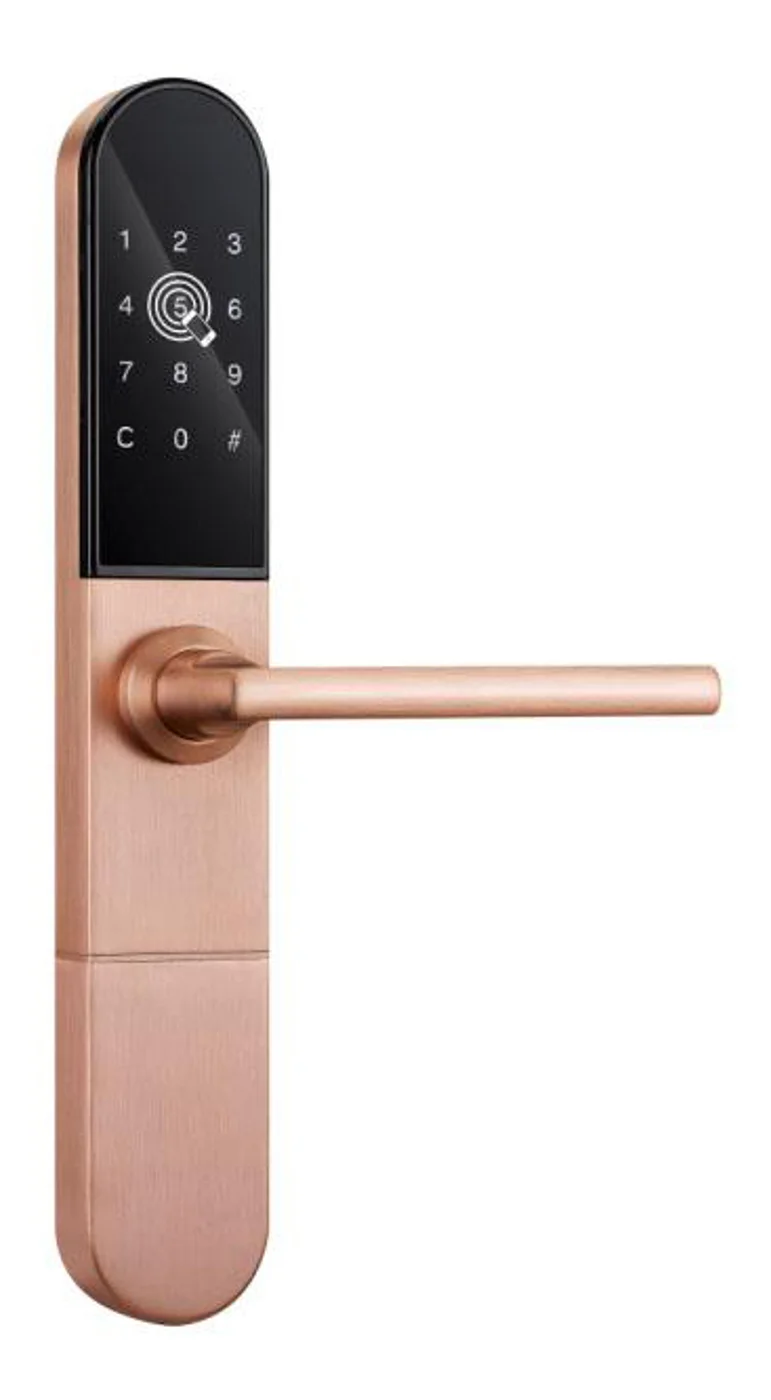
Smart Cabinet Lock — App-Managed, Multi-Site Dashboard
App-managed smart cabinet lock for office, parcel, and multi-site fleets. BLE app dashboard, audit trail, remote unlock, no per-lock server. Higher-tier chassis.
This page already points to it as the next recommended reference.
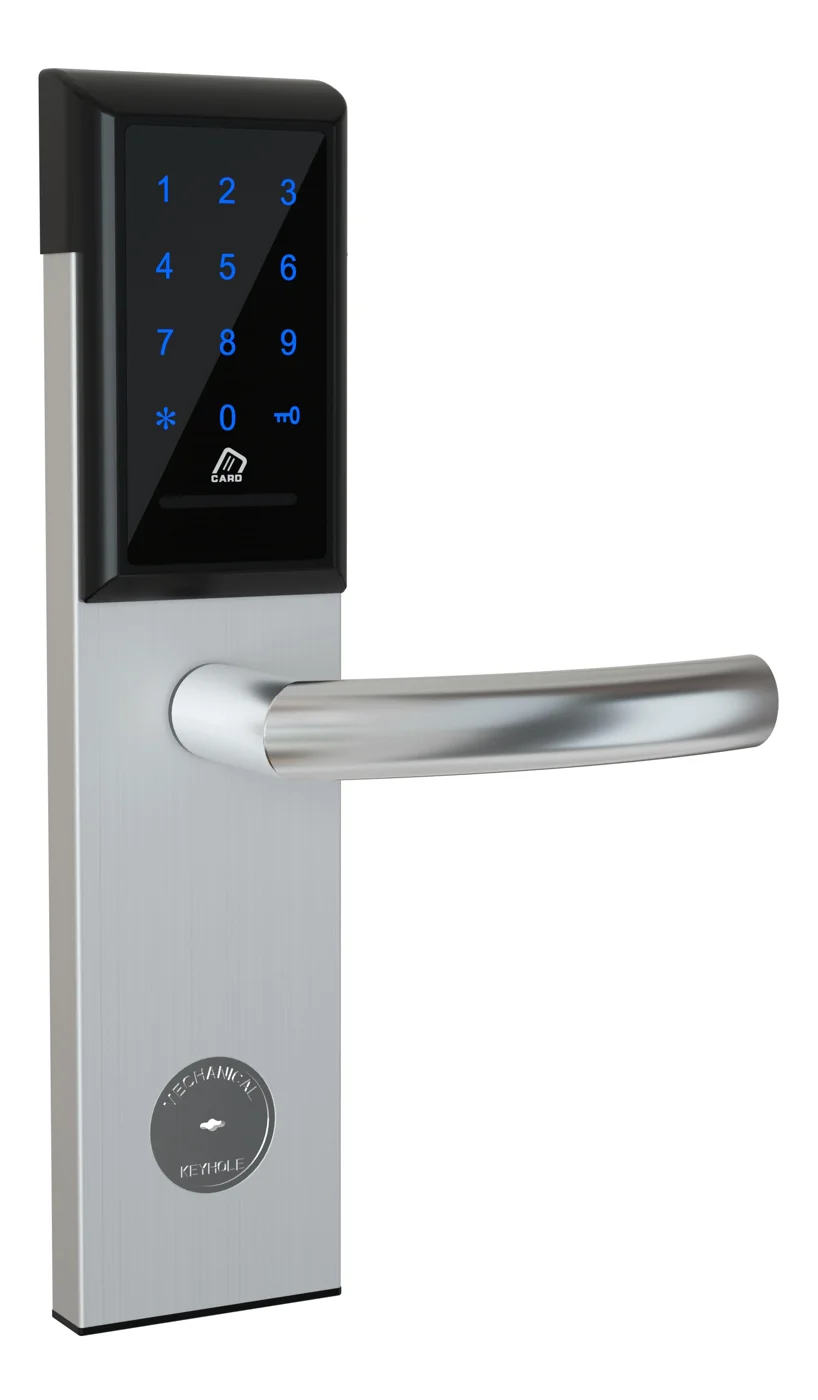
Office Cabinet Lock — PIN + Card for Filing & Pedestals
Offline PIN + card office cabinet lock for filing cabinets, pedestals, and drawers. Battery-powered 5-minute retrofit, no WiFi, no key management. CE/FCC/RoHS.
This page already points to it as the next recommended reference.
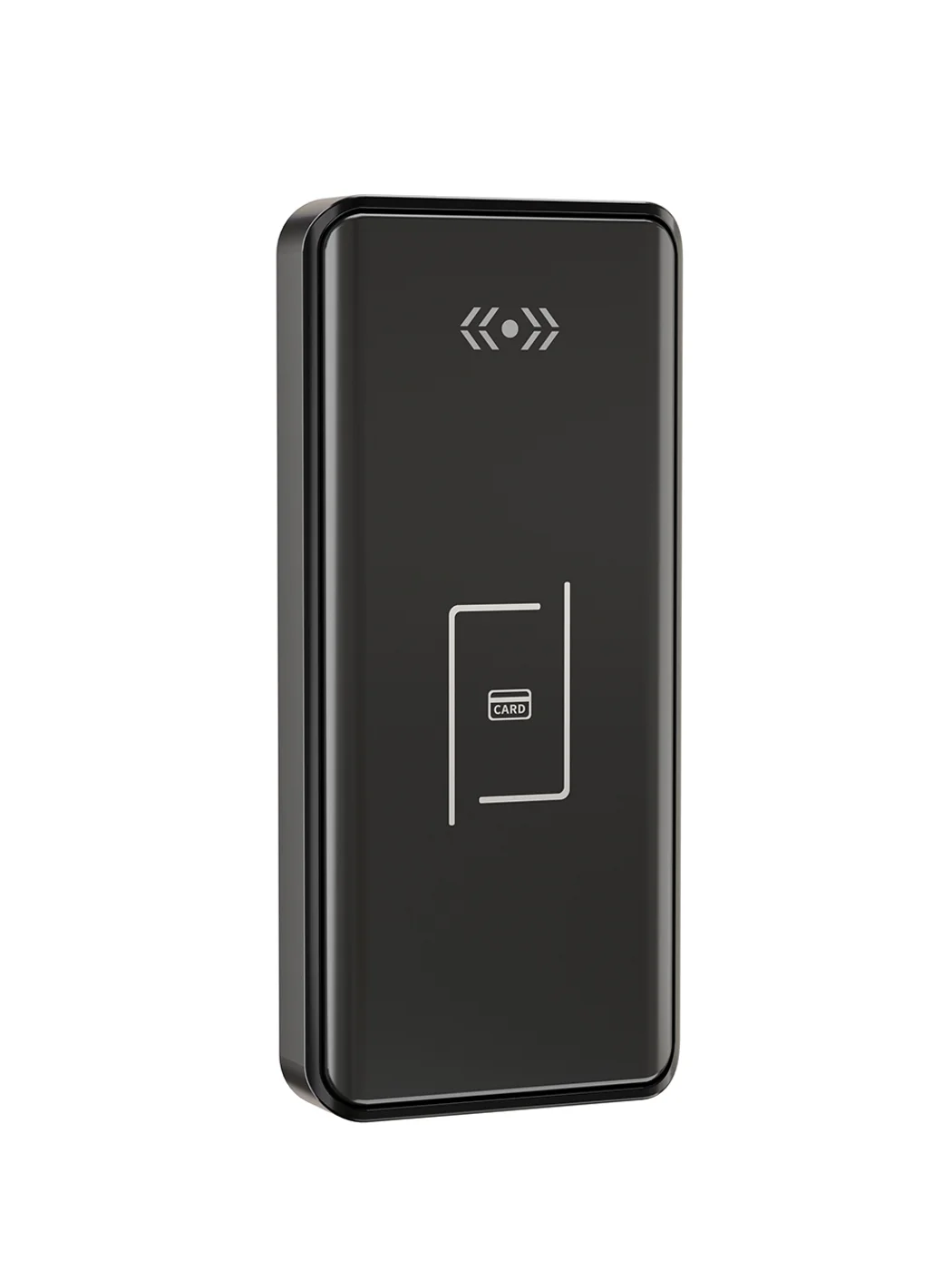
Gym Locker Lock — Offline Card, No WiFi Required
Offline card gym locker lock for fitness and pool lockers. MIFARE card, battery-powered 5-minute retrofit, no WiFi or server. Zinc alloy body, CE/FCC/RoHS.
This page already points to it as the next recommended reference.
Related blog posts
3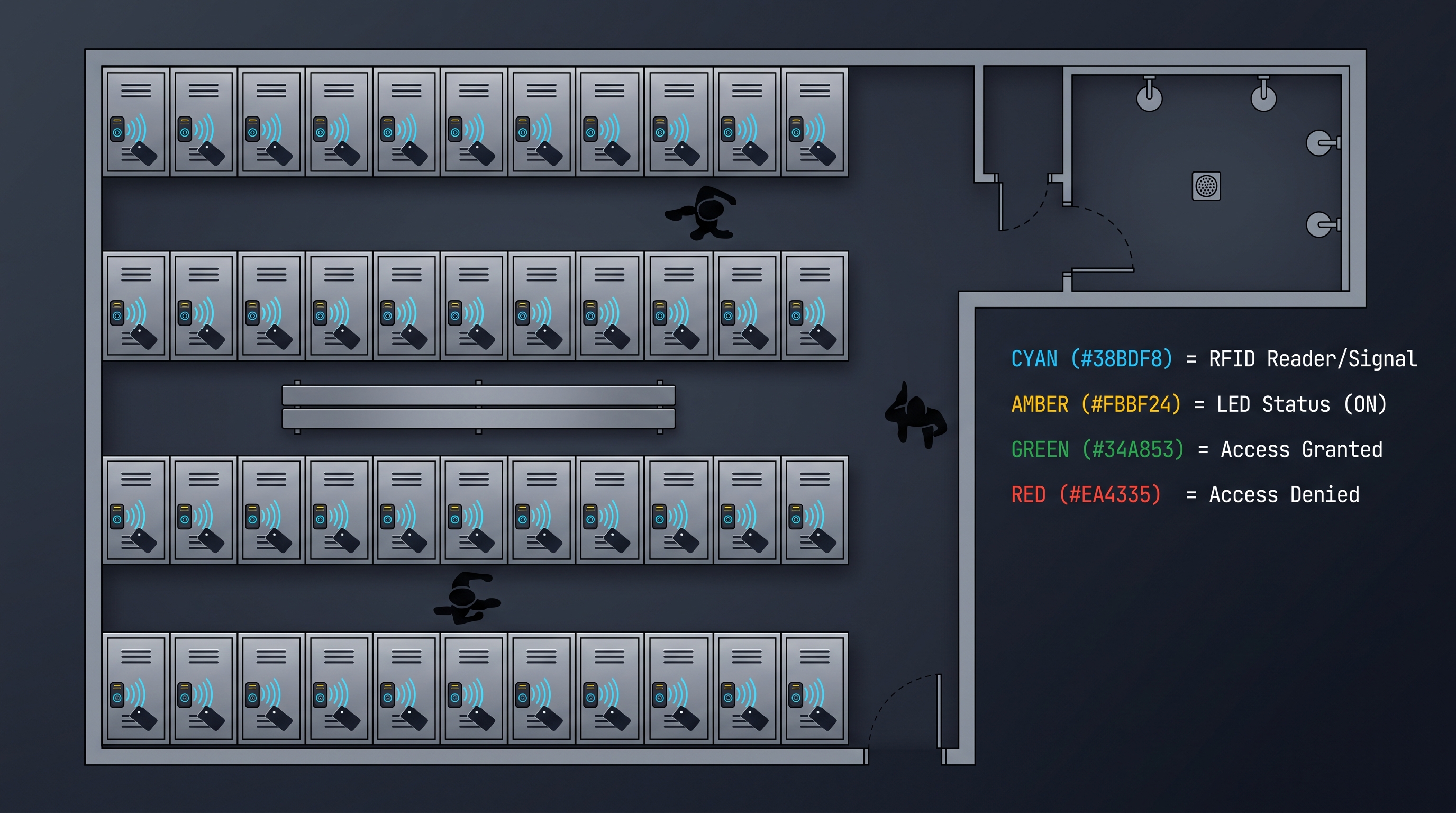
Digital Locker Lock: The Complete 2026 Guide to Smart, Keyless Gym, Office, and Parcel Storage Access Control
Complete guide to digital locker lock selection covering RFID, Bluetooth, PIN, QR code, and biometric access technologies for gyms, offices, parcel delivery, schools, hospitals, and commercial locker banks with installation, battery life, and ROI data.
It supports the same product context: Gym Locker Lock — Offline Card, No WiFi Required.
The Complete Guide to Digital Locker Management System Platforms in 2026
Explore how a digital locker management system transforms locker fleet operations with real-time monitoring, API integration, multi-site dashboards, and deployment flexibility for gyms, hotels, schools, and offices.
It supports the same product context: Gym Locker Lock — Offline Card, No WiFi Required.
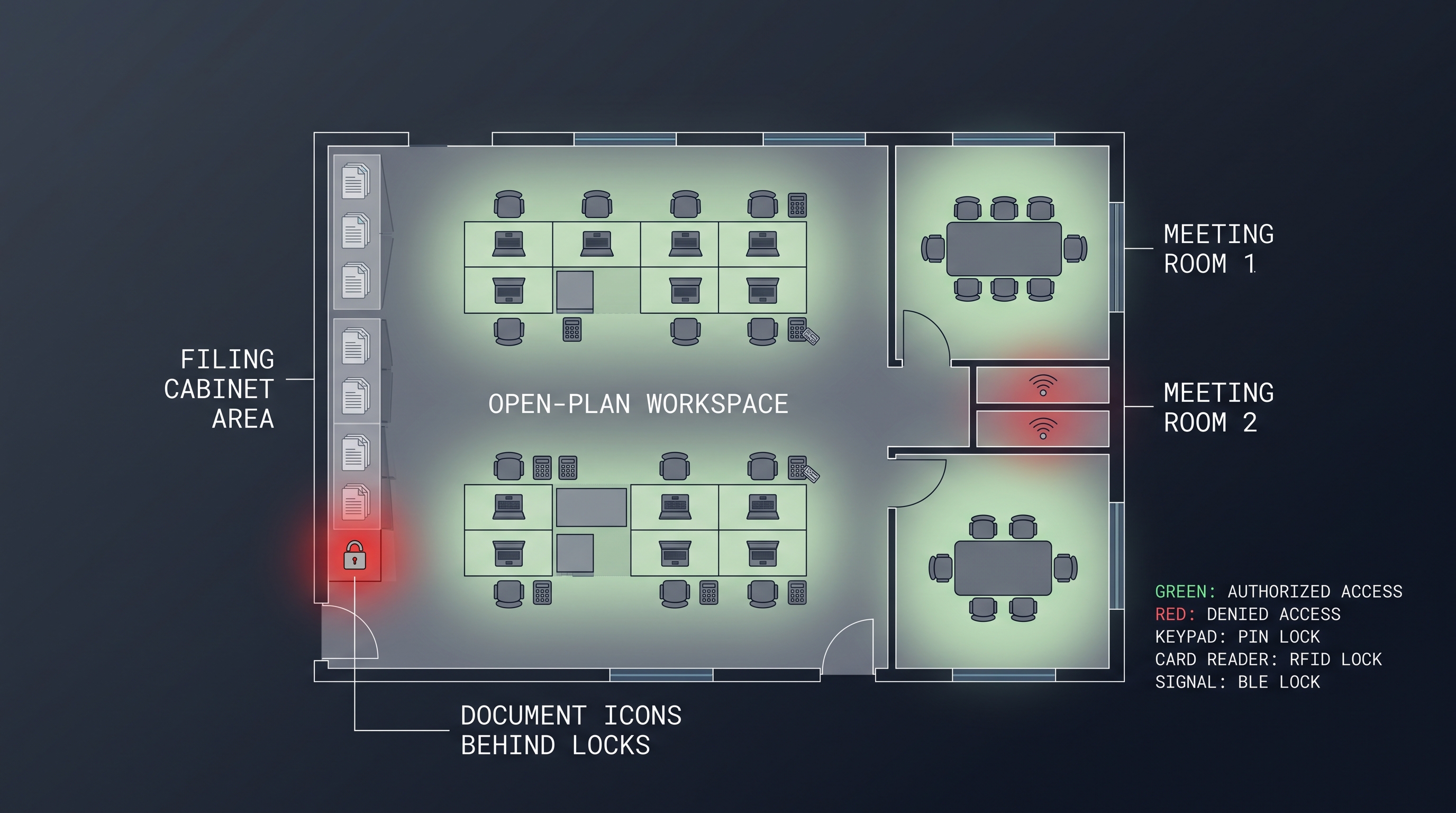
Digital Drawer Lock Guide 2026: Complete Buying & Technology Overview for Modern Security
Comprehensive digital drawer lock guide covering PIN keypad, fingerprint, RFID card, and Bluetooth app options. Detailed technical comparisons, installation tips, and buying advice for homes and businesses.
It supports the same product context: Office Cabinet Lock — PIN + Card for Filing & Pedestals.
Specify your hotel project with our engineers
Send your room count, ceiling type, and protocol preference. We will return a sample plan and quote within 24 business hours.
- Move from general guidance into a product or application discussion.
- Use RFQ when pricing, drawings, MOQ, or launch timing needs structure.
- Keep a direct contact path visible for fast clarifications and handoff.