The Complete Guide to Custom Locker Lock Manufacturing and OEM/ODM Design
Learn everything about designing a custom locker lock for hotels, gyms, schools, and brands — OEM/ODM process, credential options, firmware, tooling costs, MOQ, lead times, certification, and factory partnership.
What Is a Custom Locker Lock and Why Choose OEM/ODM Manufacturing?
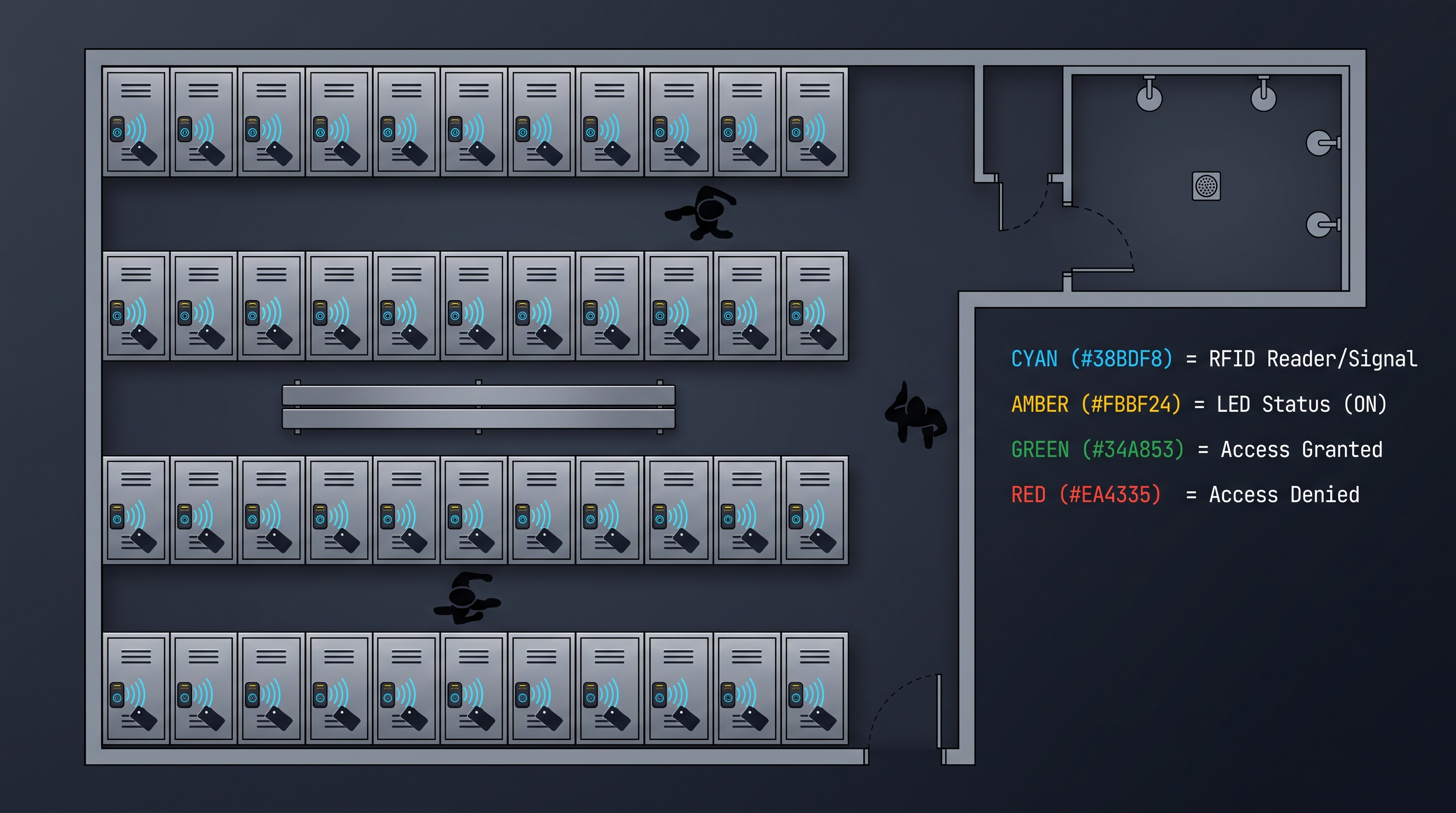
A custom locker lock is a purpose-built electronic or mechanical locking device manufactured to a buyer's specifications through OEM (Original Equipment Manufacturing) or ODM (Original Design Manufacturing) partnerships with a factory. Unlike off-the-shelf padlocks or standard electronic locks sold through retail channels, a custom locker lock is engineered to meet the exact dimensional, credential, aesthetic, firmware, and branding requirements of a specific project or organization. Typical minimum order quantities (MOQ) for a custom locker lock range from 500 to 5,000 units depending on the complexity of the customization, with tooling costs spanning $1,500 to $15,000 for injection-molded housing components and lead times of 8 to 20 weeks from design sign-off to first article inspection. The OEM/ODM route is chosen by hotel chains requiring keycard compatibility with their existing PMS (Property Management System), fitness brands needing corrosion-resistant finishes for chlorine-heavy pool areas, school districts mandating specific master-key hierarchies across hundreds of lockers, and technology companies that want to embed their own RFID readers or IoT firmware into the lock body. The core advantage is total control over every variable — credential technology, housing material, mounting geometry, firmware behavior, and visual identity — without bearing the full overhead of designing a lock from scratch. The factory provides the core mechanical chassis, motor driver board, and basic firmware skeleton, while the buyer specifies the customizations that differentiate their product in the marketplace. This article walks through every stage of the custom locker lock development pipeline, from initial requirements gathering and factory selection through prototyping, tooling, certification, and volume production, so you can approach your project with realistic timelines, budgets, and technical expectations.
Understanding the OEM vs. ODM Distinction for Locker Locks
When sourcing a custom locker lock, the first decision is whether to pursue an OEM or ODM arrangement. In an OEM (Original Equipment Manufacturing) relationship, the buyer provides a complete design specification — including CAD drawings of the lock housing, a PCB layout for the electronics, a bill of materials, and firmware requirements — and the factory manufactures the product exactly as specified. OEM is appropriate when you already have a lock design, hold relevant patents, or need the lock to integrate with a proprietary ecosystem where every interface must be precisely controlled. The factory acts purely as a contract manufacturer, and you retain full ownership of the design. Tooling costs in an OEM scenario are typically lower because the factory uses existing molds or modifies standard tooling, ranging from $1,500 for minor housing modifications to $8,000 for a new injection mold. In an ODM (Original Design Manufacturing) arrangement, the buyer selects an existing platform or reference design from the factory's catalog and requests modifications — changing the RFID frequency from 13.56 MHz to 125 kHz, swapping the housing color from silver to black with a custom logo, adjusting the master-key algorithm in firmware, or adding a Bluetooth interface for app-based access. ODM is faster and cheaper for most commercial projects because the factory's engineering team handles the design work, and the buyer pays only for the delta between the standard product and the customized version. ODM tooling costs run $3,000 to $15,000 because new molds or mold inserts are typically required to accommodate custom housing geometry. Both OEM and ODM paths can produce a fully branded, unique product that meets your credential, finish, firmware, and certification requirements — the difference is how much design risk and engineering investment you take on versus delegating to the factory.
Key Credential Options for Your Custom Locker Lock
The credential system is the most consequential technical decision you will make when designing a custom locker lock because it determines how users authenticate, how the lock communicates with the wider access-control infrastructure, and what level of security the locker provides. The three dominant credential families are RFID (Radio Frequency Identification), Bluetooth Low Energy (BLE), and biometric fingerprint scanning, each with its own frequency bands, power consumption profiles, and ecosystem compatibility requirements. A custom locker lock designed for hotel use will almost certainly require 13.56 MHz RFID credential compatibility (MIFARE Classic, DESFire, or Ultralight) to work with the hotel's existing keycard encoding infrastructure, while a school locker project might opt for 125 kHz low-frequency RFID because of lower per-card costs ($0.15 to $0.40 per card versus $0.50 to $1.20 for 13.56 MHz) and simpler card issuance workflows. Fitness centers increasingly demand BLE-enabled custom locker locks so members can open lockers with their smartphones via a branded fitness app, which requires the lock firmware to support Bluetooth 5.0 or 5.2 with a battery life target of at least 12 months using two CR123A cells (3V each, typical quiescent current under 15 microamps). Biometric custom locker locks, while less common due to their higher cost ($45 to $120 per unit at volume), are specified for high-security environments like law enforcement locker rooms or corporate R&D facilities where credential sharing must be eliminated. The table below compares the most common credential technologies available for customization.
| Credential Technology | Frequency / Protocol | Typical Read Range | Battery Life (4xAA) | Per-Unit BOM Cost (1K qty) | Best For |
|---|---|---|---|---|---|
| Low-Frequency RFID | 125 kHz (EM4100, HID Prox) | 2-5 cm | 18-24 months | $8-$15 | Schools, budget projects |
| High-Frequency RFID | 13.56 MHz (MIFARE, DESFire) | 3-8 cm | 12-18 months | $12-$25 | Hotels, offices |
| BLE (Bluetooth Low Energy) | 2.4 GHz (BLE 5.0/5.2) | 0-10 m | 8-14 months | $18-$35 | Fitness, app-based access |
| Fingerprint Biometric | Capacitive sensor | N/A (touch) | 6-12 months | $35-$80 | High-security, govt |
| Combo (RFID + BLE) | Multi-protocol | 0-10 m | 6-10 months | $28-$50 | Premium, multi-use |
Custom RFID Card and Tag Design for Locker Locks
When your custom locker lock uses RFID credentials, you have substantial design freedom over the card or tag form factor, the printed artwork, the chip type, and the encoding scheme. Card customization begins with selecting the RFID chip and frequency — MIFARE Classic 1K is the most widely supported but offers limited encryption, while MIFARE DESFire EV2 or EV3 provides AES-128 encryption and is recommended for hotel and corporate environments where data security matters. The physical card design can include full-color CMYK printing on both sides, a matte or gloss laminate finish, raised or flat embossing for card numbers, and magnetic stripe addition if the card must also serve as a legacy swipe credential. Custom shapes beyond the standard CR80 (85.6 mm x 54 mm) card are possible but require custom die-cutting tooling at $800 to $2,500 and increase per-unit cost by $0.20 to $0.60. Key fobs, wristbands, and adhesive tags are alternative form factors for custom locker lock credentials, each requiring different antenna designs and injection-molded housings. A custom wristband for a water park locker application, for example, needs a flexible PVC encapsulation that withstands continuous immersion in chlorinated water and UV exposure, adding approximately $0.30 to $0.80 per unit versus a standard PVC card. Card encoding — the process of writing the unique facility code, site code, and card number to the chip — can be performed at the factory before shipment or done in the field using an encoding station you supply. Factory pre-encoding is typical for projects with fewer than 10,000 credentials and costs $0.05 to $0.15 per card; for larger deployments, you may prefer to encode cards yourself to maintain control over the credential database. The key constraint is that the encoding scheme must match the firmware logic in your custom locker lock, so the credential data structure must be finalized before firmware development begins.
Custom RFID Reader Module Integration
The RFID reader module inside your custom locker lock must be selected or designed to match the credential technology you have chosen, and this decision drives the PCB layout, antenna tuning, and power budget of the lock. For 13.56 MHz HF RFID, common reader ICs include the NXP PN532, PN5180, or ST25R3916, each supporting different feature sets — the PN5180 offers Dynamic Power Output (DPO) for improved read range and ISO 14443A/B compatibility, while the ST25R3916 adds Automatic Antenna Tuning (AAT) which compensates for the metal enclosure interference that is almost always present in a locker door environment. When integrating the reader module into a custom locker lock housing, the antenna coil must be positioned away from the metal latch mechanism by at least 5 mm to avoid detuning, and a ferrite shield (typically 0.3 mm to 0.5 mm thick) should be bonded to the back of the antenna PCB to isolate it from the metal door. Power consumption of the RFID reader at full transmit is typically 80 mA to 200 mA at 3.3V, but the reader should be duty-cycled (e.g., 100 ms on, 900 ms off) to keep average current draw under 20 mA and preserve battery life. A custom locker lock using 125 kHz LF RFID can use the EM4095 or Atmel ATA5279 reader IC, which draws 50 mA to 120 mA during active reading but has a shorter read range, which can actually be an advantage in metal locker environments because it reduces false reads from adjacent lockers. Your factory's RF engineer will tune the antenna matching network (typically a series capacitor and parallel resistor network) to achieve the target read range at the lowest possible power consumption. If your custom locker lock must read both 125 kHz and 13.56 MHz credentials (a dual-frequency configuration), the reader module will require two separate antenna circuits and a multiplexing scheme, increasing the PCB area by approximately 30% and adding $3 to $6 to the BOM cost.
Custom Housing Design, Materials, and Finishes for Locker Locks
The housing of a custom locker lock is the most visible expression of your brand and must simultaneously satisfy aesthetic, ergonomic, environmental, and mechanical requirements. Housing customization encompasses the outer shell geometry, the material selection (most commonly ABS, polycarbonate, zinc alloy, or stainless steel), the surface finish (textured, glossy, soft-touch, or brushed metal), and the color specified as a Pantone reference. Injection-molded ABS (Acrylonitrile Butadiene Styrene) is the most common housing material for indoor locker locks because it offers good impact resistance, dimensional stability, and low cost — a typical ABS housing for a custom locker lock adds $1.20 to $3.50 to the unit cost at 1,000-piece quantities. For outdoor or high-humidity environments such as pool locker rooms, a polycarbonate housing with UV stabilization is recommended, which adds $0.50 to $1.00 per unit versus ABS but provides superior weatherability and resists yellowing over five to seven years of direct sun exposure. Zinc alloy die-cast housings provide a premium feel and higher torque resistance for the latch mechanism, with material and die-casting costs adding $4 to $9 per unit, but they are susceptible to galvanic corrosion if paired with aluminum locker doors without a nylon isolation gasket. The table below summarizes the most common housing materials and their trade-offs for custom locker lock projects.
| Housing Material | Relative Cost vs. ABS | Tooling Cost (new mold) | Typical Lead Time (weeks) | Best Environment | Surface Finish Options |
|---|---|---|---|---|---|
| ABS (injection molded) | 1.0x (baseline) | $3,000-$8,000 | 6-10 | Indoor (office, school) | Gloss, matte, textured |
| Polycarbonate (PC) | 1.3x-1.6x | $4,000-$10,000 | 8-12 | Outdoor, humid, pool | UV-textured, matte |
| Zinc Alloy (die-cast) | 3.0x-4.5x | $6,000-$15,000 | 10-16 | Premium indoor, high-use | Brushed, polished, painted |
| Stainless Steel (304) | 5.0x-8.0x | $8,000-$18,000 | 12-20 | Marine, chemical, outdoor | Brushed, bead-blasted |
| ABS + Metal Overlay | 2.0x-2.5x | $3,500-$9,000 | 8-12 | Branded, decorative | Any + laser engraving |
Color, Finish, and Branding Customization for Locker Locks
Color customization on a custom locker lock is achieved through either molded-in color (where the resin itself is pigmented before molding) or secondary painting/coating processes. Molded-in color is preferred for high-volume production because it eliminates a secondary operation and is more scratch-resistant, but the color selection is limited to the factory's standard resin palette unless you pay for custom color matching, which costs $500 to $1,500 and adds two to three weeks to the tooling timeline. Pantone-matched painting or powder coating offers unlimited color options and is applied after molding, with costs of $0.50 to $1.50 per unit depending on the number of coats and whether masking is required for two-tone designs. The surface texture of the housing can be specified using VDI (Verein Deutscher Ingenieure) texture standards — VDI 12 to VDI 18 is a fine matte texture suitable for most locker locks, VDI 24 to VDI 30 provides a medium texture that hides fingerprints well, and VDI 36 to VDI 45 gives a coarse texture appropriate for industrial environments. For fitness center lockers that see frequent contact with sweaty hands, a soft-touch overmold using thermoplastic polyurethane (TPU) applied over the ABS base provides a grippy, comfortable feel and is available in multiple durometers (Shore A 50 to Shore A 80), adding $0.80 to $2.00 per unit. Branding is applied to a custom locker lock through pad printing, screen printing, laser engraving, or in-mold decoration (IMD). Laser engraving is the most durable option for metal or painted housings because the mark is physically etched into the surface and cannot wear off, with a setup cost of $200 to $500 per design file and per-unit cost of $0.15 to $0.40. Pad printing is suitable for curved or irregular surfaces and costs $0.10 to $0.30 per unit after a $150 to $400 plate charge per color. For the highest-quality branding with unlimited color gradients and photorealistic graphics, in-mold decoration bonds the artwork to the plastic during the molding process, but the tooling cost is $2,000 to $5,000 higher than a standard mold and the MOQ for IMD is typically 3,000 units minimum.
Custom Mounting and Mechanical Interface Design
The mounting geometry of a custom locker lock is one of the most frequently underestimated engineering challenges because it must interface precisely with the locker door preparation — the holes, cutouts, and backset dimensions that already exist in the door or frame. If you are designing a custom locker lock for new locker production, you can specify the mounting pattern freely, typically a four-hole rectangular pattern with M4 or M5 machine screws on a 38 mm to 45 mm bolt spacing. For retrofit projects where the lock must replace an existing mechanical lock or a competitor's electronic lock, the mounting plate must match the legacy hole pattern exactly, which may require a custom adapter plate stamped from 1.5 mm or 2.0 mm cold-rolled steel. The latch mechanism itself has several configuration options: a spring-loaded deadbolt that extends 12 mm to 20 mm into the door frame, a hook bolt commonly used in gym lockers that resists prying with a 90-degree hooked profile, or a cam lock mechanism where a rotating cam engages a strike plate. Each latch type requires different cutout geometry in the locker door and frame, and the factory will provide a mounting template drawing (typically a DXF or DWG file) that specifies every critical dimension. The backset — the distance from the edge of the door to the center of the lock mounting hole — is a critical dimension that must be specified early because it determines the latch extension length and the geometry of the lock body. Common backset values for locker locks are 25 mm, 30 mm, 38 mm, and 50 mm, with the larger backsets typically used for full-height gym lockers that have thicker door frames. A custom locker lock for a hotel luggage locker might require a 38 mm backset with a 16 mm deadbolt throw and a reinforced strike plate to meet ASTM F883-19 performance standards for Type L (luggage locker) applications. The mounting screws should be stainless steel (grade 304 or 316) for any environment where corrosion is a concern, and the screw heads should be tamper-resistant Torx (TR20 or TR25) or one-way screws to prevent unauthorized removal of the lock from the door.
Custom Firmware Development for Locker Locks
Firmware is the intelligence layer of your custom locker lock and represents the deepest engineering investment in the customization process because it governs every behavior — how the lock authenticates a credential, how it manages power, how it communicates with management software, and how it handles error states. A typical custom locker lock firmware project involves developing or modifying code for a Cortex-M0, M3, or M4 microcontroller (such as the STM32G0, Nordic nRF52840, or NXP LPC series) with the real-time operating system (RTOS) choice (FreeRTOS, Zephyr, or bare-metal) depending on the complexity of concurrent tasks — reading the RFID module, managing BLE advertising intervals, monitoring battery voltage, driving the motor, and handling the watchdog timer. Firmware development for a custom locker lock costs $8,000 to $35,000 depending on feature scope, with a typical project spanning 8 to 16 weeks including integration testing and certification support. The factory's firmware team will typically provide a base SDK (Software Development Kit) that implements the core lock behaviors — credential matching, motor actuation, and basic power management — and your team or a contracted firmware engineer modifies the code to implement your specific master code scheme, audit logging requirements, API integration parameters, and user experience preferences. The most important firmware customization areas are the master-key hierarchy, the audit trail, and the communication protocol for integration with higher-level access control systems.
Custom Master Code and Key Hierarchy Schemes
The master code scheme is the most security-critical firmware feature in a custom locker lock because it defines who can open which locks and under what conditions. At minimum, every electronic locker lock supports a master code or master credential that can open all locks in the installation, but the hierarchy can be much more granular. A typical school locker project might require a three-tier hierarchy: a system administrator credential that opens every lock, a faculty master that opens only the lockers assigned to a specific corridor or floor, and individual user credentials that open only one assigned locker. The firmware must store this hierarchy in non-volatile memory (typically the MCU's internal flash or an external EEPROM like the 24LC256), with the mapping between credential UIDs and access permissions stored in a lookup table that can hold 500 to 10,000 entries depending on the flash budget. For hotel luggage locker applications, the master code scheme often includes a time-limited override — a guest credential that grants access for a specific date range, after which the credential is automatically invalidated by the firmware. This time-limited access requires the firmware to maintain a real-time clock (RTC) with a backup supercapacitor or coin cell (CR1220) so that the lock retains accurate time even when the main batteries are disconnected. The master code scheme can also include a "lockdown" feature where a specific credential, when presented, places the lock into a state where no credentials except the ultimate master can open it — useful for security incidents or after-hours scenarios. All of these behaviors are configured through firmware parameters (compile-time defines or EEPROM-stored configuration bytes) that your engineering team specifies in a Firmware Requirements Document (FRD) provided to the factory before development begins. The factory will quote firmware customization based on the number of hierarchical levels (base price covers three levels, each additional level adds $1,500 to $3,000) and whether the scheme requires cryptographic authentication using AES-128 CMAC for credential validation.
Audit Logging and Event Tracking in Firmware
An audit log is a firmware-managed record of every significant event that occurs on a custom locker lock — each lock and unlock event, each invalid credential attempt, each battery replacement, and each tamper detection event. The audit log is critical for security investigations, usage analytics, and maintenance planning. For a custom locker lock, the audit log is typically stored in an external serial flash memory chip (such as the Winbond W25Q64 or W25Q128, providing 64 Mbit or 128 Mbit of storage) and formatted as a circular buffer of fixed-length records, each containing a timestamp, event type code, credential UID (or truncated hash), and a status byte. A 128 Mbit flash chip can store approximately 200,000 to 400,000 audit records depending on record length, which represents years of event data for a typical installation. The firmware must implement a flash wear-leveling algorithm to distribute writes across the memory array and prevent premature failure of the flash cells, which are typically rated for 100,000 program-erase cycles. Audit records are retrieved through the lock's communication interface — either by physically connecting a programming dongle to the lock's UART or I2C test points, or wirelessly via BLE if the lock supports it. For cloud-connected custom locker lock installations, the firmware can upload audit records to a server via a BLE-to-WiFi gateway or a LoRaWAN bridge, with the upload triggered when the lock's log reaches 80% capacity or on a configurable time interval (daily, weekly, or monthly). The audit log customization typically adds $3,000 to $8,000 to the firmware development cost and requires the selection of an external flash memory IC with sufficient capacity for your projected event volume. The factory will provide a data format specification so your management software team can parse the log records correctly.
API and Integration Firmware for Locker Lock Systems
If your custom locker lock must communicate with external software — a hotel Property Management System (PMS), a gym membership platform, a school's Active Directory, or a custom mobile app — the firmware must implement a communication protocol and API (Application Programming Interface) for data exchange. For BLE-enabled custom locker locks, the firmware exposes a GATT (Generic Attribute Profile) service with characteristics for lock/unlock commands, battery status, lock state, firmware version, and audit log access. The GATT service UUID can be a custom 128-bit UUID that identifies your brand's lock ecosystem, preventing interference from other BLE devices in the environment. The firmware must implement encryption at the application layer using AES-128 or AES-256, even though BLE 5.x includes link-layer encryption, because the credential data and master codes are sensitive and should not be exposed even to a device that has paired at the BLE level. For custom locker locks that connect to a local network via an ESP32 or similar WiFi module, the firmware implements an HTTP REST API or MQTT client that communicates with a cloud-based access control server. The REST API typically includes endpoints for opening a specific lock, querying lock status, uploading audit logs, updating firmware OTA (Over-The-Air), and synchronizing the credential database. MQTT is preferred for large installations because it maintains a persistent connection with low overhead and supports publish-subscribe messaging — a lock can publish its status changes (door opened, door closed, battery low) to a topic, and the central server subscribes to those topics across all locks. The API integration scope adds $5,000 to $18,000 to firmware development depending on the number of endpoints, the authentication scheme (OAuth 2.0, API key, or mutual TLS), and whether the integration requires custom adapter software on the server side. The factory will provide an API documentation package (typically an OpenAPI 3.0 specification or equivalent) that your software team uses to build the integration.
Branding, Logo, and Packaging Customization for Locker Locks
Branding on a custom locker lock goes far beyond printing a logo on the housing — it encompasses the lock's entire visual identity, including the brand name or logo on the faceplate, the color scheme of the housing, the design of any LED indicators, the sound profile of the beeper, and the packaging that the lock ships in. The most common branding method for a custom locker lock is pad printing or laser engraving the logo onto the front face of the housing, with laser engraving offering the best durability for high-use environments because the mark is physically etched into the material. Pad printing supports multicolor logos (one color per printing pass, with each pass adding $0.08 to $0.20 to the unit cost) and can reproduce fine details down to 0.1 mm line width, making it suitable for complex brand marks. For brands that want a three-dimensional logo, the injection mold itself can be engraved with the logo as a recessed or raised feature — a recessed logo (engraved into the mold cavity) produces a raised logo on the finished part, and vice versa. Mold-engraved branding adds $800 to $3,000 to the tooling cost depending on the logo size and complexity but adds zero per-unit cost and provides the most integrated, wear-resistant branding possible. The LED indicator color and behavior can also be customized to match brand colors — for example, a blue LED for standby, a green LED for successful unlock, and a red LED for error or low battery. The LED driver firmware is configured to match the specific LED part number (typically a 0603 or 0805 SMD LED with forward voltage of 2.0V to 3.4V depending on color) and current-limiting resistor value to achieve the target brightness of 100 mcd to 500 mcd. The audio beeper, if present, can be customized to play a specific melody or tone sequence — a short 1 kHz tone for a successful unlock versus a 500 Hz pulsed tone for an error — by modifying the PWM frequency and duty cycle in firmware. Packaging for a custom locker lock is typically a branded blister pack or a printed cardboard box with foam insert, with custom printing costs of $0.30 to $1.50 per unit at 1,000-piece order quantities and a one-time graphic design fee of $500 to $2,000. The packaging should include the installation template, mounting screws, any required adapter plates, and a quick-start guide printed with your brand's visual identity.
Prototyping Your Custom Locker Lock
Prototyping is the phase where your custom locker lock design moves from CAD files and firmware specifications to physical hardware that can be tested, evaluated, and refined before tooling commitment. The prototyping process typically involves three stages: a form-and-fit prototype using 3D-printed housing parts, an electronic functional prototype using a development board or prototype PCB, and an integrated prototype that combines both into a working lock for field testing. The form-and-fit prototype is produced using SLA (Stereolithography) or SLS (Selective Laser Sintering) 3D printing, which produces parts accurate to within 0.1 mm to 0.3 mm — sufficient to verify that the housing mounts correctly to the locker door, that the latch aligns with the strike plate, and that the battery compartment accommodates the specified cells. SLA 3D printing for a custom locker lock housing costs $150 to $500 per prototype set depending on the number of parts and the complexity of the geometry, with a lead time of 3 to 7 business days. The electronic functional prototype uses a breadboard or custom prototype PCB (typically a 4-layer board for RF designs) with the selected MCU, RFID reader IC, motor driver, and power management components, allowing the firmware team to validate credential reading, motor actuation, power consumption, and communication interfaces before the production PCB is designed. A prototype PCB run of 10 to 50 boards costs $300 to $1,500 and takes 2 to 4 weeks including assembly. The integrated prototype combines the 3D-printed housing with the prototype PCB and is tested in the actual locker environment — the door is opened and closed 5,000 to 10,000 cycles to validate mechanical reliability, the RFID reading is tested with the lock mounted on a metal door to verify antenna tuning, and the battery life is estimated by measuring quiescent current over a 48-hour period. Any issues discovered during integrated prototyping — latch binding, RF detuning, battery drain, or firmware bugs — are documented in a corrective action report and addressed before production tooling is ordered. The entire prototyping phase for a custom locker lock typically takes 4 to 10 weeks and costs $3,000 to $15,000 depending on the number of prototype iterations required. Most factories require a signed Design Approval (DA) form after integrated prototyping before proceeding to tooling, so it is important to complete thorough testing at this stage.
Tooling, MOQ, NRE, and Lead Time for Custom Locker Lock Production
Tooling (also called mold making) is the largest upfront investment in a custom locker lock project because the injection molds used to produce the housing parts are precision-engineered steel or aluminum tools that must be cut by CNC machining or EDM (Electrical Discharge Machining). An injection mold for a custom locker lock housing consists of two halves — the cavity side (which forms the outer surface) and the core side (which forms the interior features) — plus any side-action slides required for undercuts, snap-fit features, or side holes. Mold steel is typically P20 or H13 tool steel for production volumes above 10,000 units, while aluminum molds (7075-T6 or QC-7) are used for pilot runs or lower-volume projects because they cost 30% to 50% less but wear out after approximately 50,000 to 100,000 cycles versus 500,000+ cycles for steel. The NRE (Non-Recurring Engineering) cost covers all the engineering work that happens before production — design review, DFM (Design for Manufacturability) analysis, prototype testing, firmware development, certification management, and first article inspection — and ranges from $5,000 to $30,000 depending on the project complexity. The MOQ (Minimum Order Quantity) for a custom locker lock is the minimum number of units the factory will produce in a single production run, and it varies significantly based on the level of customization. The table below shows typical MOQ, tooling, and NRE ranges for different customization levels.
| Customization Level | Typical MOQ (units) | Tooling Cost (steel mold) | NRE Cost | Per-Unit Cost (at MOQ) | Total Lead Time (weeks) |
|---|---|---|---|---|---|
| Color/finish change only | 500-1,000 | $1,500-$4,000 | $2,000-$5,000 | $12-$25 | 4-6 |
| Logo engraving + color | 1,000-2,000 | $3,000-$6,000 | $3,000-$8,000 | $15-$35 | 6-10 |
| RFID freq/credential swap | 1,000-3,000 | $4,000-$8,000 | $5,000-$12,000 | $18-$45 | 8-14 |
| Full housing redesign (ODM) | 2,000-5,000 | $6,000-$15,000 | $8,000-$20,000 | $20-$55 | 10-18 |
| Full custom design (OEM) | 3,000-5,000 | $8,000-$18,000 | $12,000-$30,000 | $25-$80 | 14-20 |
Understanding Tooling Cost Breakdown for Locker Lock Molds
The tooling cost for a custom locker lock is determined by the number of cavities in the mold, the complexity of the part geometry, the surface finish requirements, and the steel type. A single-cavity mold (one part per cycle) for a simple two-piece ABS locker lock housing typically costs $3,000 to $6,000, while a two-cavity mold that produces two housings per cycle costs $5,000 to $11,000 and reduces per-unit cost by 30% to 40% at high volumes because cycle time is effectively halved. The mold must include ejection pins to push the finished part out of the cavity, cooling channels to control the plastic cooling rate (which affects warpage and cycle time), and venting grooves to allow trapped air to escape during injection. The surface finish of the mold cavity is specified using the SPI (Society of the Plastics Industry) finish standards: SPI A-1 is a high-gloss diamond-polished finish suitable for decorative surfaces, SPI B-1 is a fine matte finish produced by 600-grit stone, and SPI C-1 is a medium matte finish from 320-grit stone that hides sink marks well. Each higher grade of surface finish adds $500 to $2,000 to the mold cost because the cavity surface requires more polishing time. Textured finishes applied through chemical etching (using MT-11000 or similar patterns) add $400 to $1,500 to the mold cost. The mold design and machining process takes 4 to 8 weeks, followed by 1 to 2 weeks for mold tryout where the factory runs the mold in the injection molding machine and adjusts process parameters (melt temperature, injection pressure, cooling time) to achieve acceptable parts. First article parts from the mold tryout are measured on a CMM (Coordinate Measuring Machine) and the dimensional report is shared with you for approval before production begins.
Certification and Compliance for Custom Locker Locks
Certification is the process of testing and documenting that your custom locker lock meets the regulatory and industry standards required for its intended market and application. The specific certifications required depend on the lock's electronics (RF emissions and safety), mechanical construction (fire rating, structural integrity), and application environment (wet locations, outdoor exposure). Every custom locker lock that contains active electronics must comply with FCC Part 15 (in the United States) or the equivalent ETSI EN 300 330 (in the European Union) for unintentional and intentional RF emissions. If the lock uses RFID at 125 kHz or 13.56 MHz, the radiated emissions must be measured at a certified test lab to confirm they stay below the limits specified in FCC Part 15.225 (for 13.56 MHz) or FCC Part 15.209 (for 125 kHz). FCC testing for a custom locker lock costs $3,000 to $8,000 and takes 2 to 4 weeks including pre-compliance testing, final measurement, and filing. For the European market, CE marking requires compliance with the Radio Equipment Directive (RED) 2014/53/EU, which covers RF performance, EMC (Electromagnetic Compatibility), and electrical safety (Low Voltage Directive 2014/35/EU). RED testing costs $4,000 to $10,000 and requires the appointment of an Authorized Representative in the EU if the manufacturer is outside the European Union. For hotel locker applications, UL 1037 (Standard for Safety for Antitheft Alarms and Devices) or UL 294 (Standard for Safety for Access Control System Units) may be required by the hotel's insurance carrier or local building code. UL 294 certification covers performance, endurance, and line security testing and adds $8,000 to $20,000 to the project cost with a 6 to 12 week testing timeline. Mechanical certification standards for locker locks include ASTM F883-19 (Standard Performance Specification for Padlocks and Combination Locks) and BHMA A156.19 (American National Standard for Locker Locks). ASTM F883-19 categorizes locks by grade (Grade 1 is highest security) and tests for pull strength, torque resistance, cycling endurance (100,000 cycles for Grade 1), and environmental conditioning. The cycling endurance test alone requires a dedicated test fixture that opens and closes the lock continuously for several weeks. Fire-rated locker installations may require the lock to carry a UL 10C or NFPA 80 rating if the locker is part of a fire-rated corridor or egress path, which typically means the lock must automatically release or allow free egress when a fire alarm is triggered — a firmware requirement that must be specified during the design phase.
Working with a Factory to Design Your Custom Locker Lock
Selecting and partnering with the right factory is the single most important business decision in your custom locker lock project because the factory's engineering capability, communication responsiveness, quality systems, and production capacity directly determine whether your product ships on time, within budget, and at the specified quality level. The ideal factory for a custom locker lock project has demonstrated experience in electronic lock manufacturing, maintains in-house injection molding, SMT (Surface Mount Technology) assembly lines for PCB production, a firmware engineering team, and a quality lab with environmental chambers, RF testing equipment, and mechanical test fixtures. When evaluating potential factory partners, request a Factory Audit Report or schedule a video walkthrough of the production floor, paying particular attention to the ESD (Electrostatic Discharge) protection measures in the SMT area, the cleanliness of the injection molding shop, and the calibration status of the test equipment. Communication cadence should be established in the initial agreement — most successful custom locker lock projects operate on a weekly engineering status call with a written agenda and minutes, plus a shared project management platform (Notion, Asana, or a custom portal) where drawings, firmware builds, test reports, and schedules are tracked. The factory should provide a comprehensive Project Schedule at the outset that shows each milestone: design review completion, prototype delivery, tooling start, first article inspection, pre-production sample shipment, and volume production start. Payment terms for custom locker lock projects typically follow a 30-40-30 structure: 30% deposit to start engineering and tooling, 40% upon approval of first article samples, and 30% before shipment of the production order. Some factories offer a 30-30-30-10 structure with a final payment after the buyer receives and inspects the goods. Intellectual property (IP) protection is a critical concern — ensure the contract includes a Non-Disclosure Agreement (NDA) and a clear IP ownership clause stating that any designs, CAD files, firmware source code, and tooling you pay for are your exclusive property. In China, where most electronic lock factories are located, the factory should provide a copyright or design patent registration for your custom locker lock design as additional IP protection under Chinese law, typically at a cost of $500 to $1,500 that you should include in the project budget.
Design for Manufacturability (DFM) Review Process
The DFM (Design for Manufacturability) review is the formal engineering process where the factory's production engineers analyze your custom locker lock design and provide feedback on changes that will improve production yield, reduce cycle time, lower cost, or eliminate quality risks. The DFM review typically covers wall thickness consistency (recommended 1.5 mm to 3.0 mm for ABS housings), draft angles (minimum 1 degree for textured surfaces, 0.5 degrees for polished surfaces), rib and boss geometry (rib thickness should be 50% to 60% of the nominal wall thickness to prevent sink marks), and gate location (where the molten plastic enters the mold cavity). The factory's DFM report will include specific recommendations with before-and-after cross-section drawings showing the proposed geometry changes, and each recommendation will be tagged as "Required" (the part cannot be produced without this change), "Recommended" (quality or yield will improve), or "Optional" (cosmetic or cost improvement). A typical DFM review for a custom locker lock housing takes one to two weeks and is the best time to catch issues that would be expensive or impossible to fix after the mold is cut. The DFM review also covers the electronic assembly process — the factory will check that the PCB footprint matches the housing standoffs, that the battery compartment allows for automated battery contact assembly, and that the cable routing between the PCB and the motor/latch assembly does not interfere with the latch movement. Approving the DFM report is a formal milestone in the project schedule, and any design changes requested after DFM approval will incur change order fees ($200 to $1,000 per change depending on the impact on tooling).
Quality Control and Inspection During Production
Quality control for a custom locker lock production run follows a structured inspection plan that covers incoming materials, in-process manufacturing, and finished goods. The factory should provide a QC Plan (Quality Control Plan) that specifies the inspection points, sample sizes, and acceptance criteria for each production stage. Incoming QC inspects the plastic resin (checking the material certificate against the specified grade and color), the PCB components (verifying part numbers, date codes, and quantities), and the RFID modules (testing read range against the specification). In-process QC checks the injection molding parameters (melt temperature within +/- 5 degrees C, injection pressure within +/- 5%) and performs visual inspection of the molded parts for flash, sink marks, short shots, and color consistency. AQL (Acceptable Quality Level) sampling according to ANSI/ASQ Z1.4-2008 (or ISO 2859-1) is used for visual and dimensional inspection, with most custom locker lock projects specifying AQL 1.0 for major defects and AQL 2.5 for minor defects. Functional testing is performed on 100% of finished locks — each lock is powered on, presented with a known-good credential, cycled through lock and unlock operations, and checked for correct LED and beeper response. A subset of units (typically 10 to 30 pieces per production lot) undergoes extended functional testing that includes 1,000 open-close cycles, battery voltage measurement at 10-minute intervals during cycling, and a 48-hour quiescent current measurement to confirm the sleep-mode current is within specification. The factory will issue a Final Inspection Report and a Certificate of Conformance (CoC) with each shipment, and you have the right to conduct a source inspection at the factory before shipment. For large projects, hiring a third-party quality inspection company (such as SGS, Bureau Veritas, or Intertek) to perform the final inspection adds $400 to $1,200 per inspection day but provides an independent quality assessment.
Cost Optimization Strategies for Custom Locker Lock Projects
Managing the total cost of a custom locker lock project requires balancing upfront tooling and NRE investment against per-unit production cost, and several strategies can significantly reduce both. The most impactful cost lever is housing design simplification — reducing the number of separate housing parts from three (front cover, back plate, battery door) to two (one-piece body with integrated battery compartment, single cover) can reduce tooling costs by 25% to 40% and assembly labor by 30% to 50%. Eliminating unnecessary cosmetic features such as complex curves, two-tone colors, or metallic paint reduces mold complexity and secondary operation costs. Selecting a standard battery configuration (4x AA alkaline or 2x CR123A lithium) instead of a custom battery pack eliminates the cost of custom battery tooling ($2,000 to $5,000) and simplifies UL/UN38.3 battery certification. Volume commitment is the most effective long-term cost reduction strategy — committing to 5,000 units per year for two years instead of 1,000 units per order typically reduces per-unit pricing by 15% to 30% because the factory can amortize tooling and NRE across a larger production base. Combining multiple projects into a single factory engagement — for example, ordering a standard locker lock and a premium version with biometric sensor in the same production run — allows the factory to share PCB assembly setup costs and combine testing procedures. On the firmware side, using the factory's standard communication protocol and API rather than developing a custom protocol can save $8,000 to $15,000 in development cost and reduce integration testing time by 4 to 8 weeks. If your project does not require a unique credential format, using the factory's standard RFID encoding scheme eliminates the need for custom card encoding firmware and reduces per-card encoding costs by $0.05 to $0.10. Finally, planning for a single certification run that covers the largest target market first (typically FCC for North America or CE for Europe) and adding other regional certifications in subsequent production runs spreads the certification cost over multiple shipments rather than front-loading the entire cost.
Conclusion and Next Steps for Your Custom Locker Lock Project
Designing and manufacturing a custom locker lock is a structured engineering process that spans requirements definition, factory selection, credential specification, housing and finish customization, firmware development, prototyping, tooling, certification, and production. A well-managed custom locker lock project with moderate customization scope — new housing color, logo branding, and a specific RFID credential format — will cost $15,000 to $40,000 in tooling and NRE, take 12 to 18 weeks from kickoff to first shipment, and deliver a per-unit cost of $18 to $45 at a 1,000-unit MOQ. More ambitious projects involving full housing redesign, custom firmware with API integration, biometric credential support, and multi-region certification can reach $50,000 to $100,000 in upfront investment with lead times of 20 to 30 weeks and per-unit costs of $45 to $120 at similar volumes. The key to a successful outcome is investing sufficient time in the requirements phase — documenting every credential, housing, firmware, branding, and certification requirement in a Product Specification Document (PSD) before approaching factories — and selecting a factory partner whose engineering capability, communication practices, and quality systems align with your project's complexity and timeline. Start by creating a one-page Project Brief that lists your target market, required credential technology, housing preferences, firmware features, target price point, and projected annual volume, then reach out to 3 to 5 factories with this brief for initial quotation. Most factories will respond with a preliminary quotation and technical questionnaire within 3 to 10 business days, and the most responsive factories with clear, detailed questions about your requirements are usually the best candidates for partnership. The custom locker lock market continues to grow as hotels, gyms, schools, and corporate facilities transition from mechanical locks to electronic access control, and investing in a well-designed custom product positions your brand or project to meet the security, convenience, and aesthetic demands of modern locker environments.
Not sure which sensor fits your project?
Talk to our mmWave application engineers for a free consultation.
Find the right presence sensor for your hotel project
Compare the 3 protocols, check hotel-specific case studies, and download the installation guide
Related products
3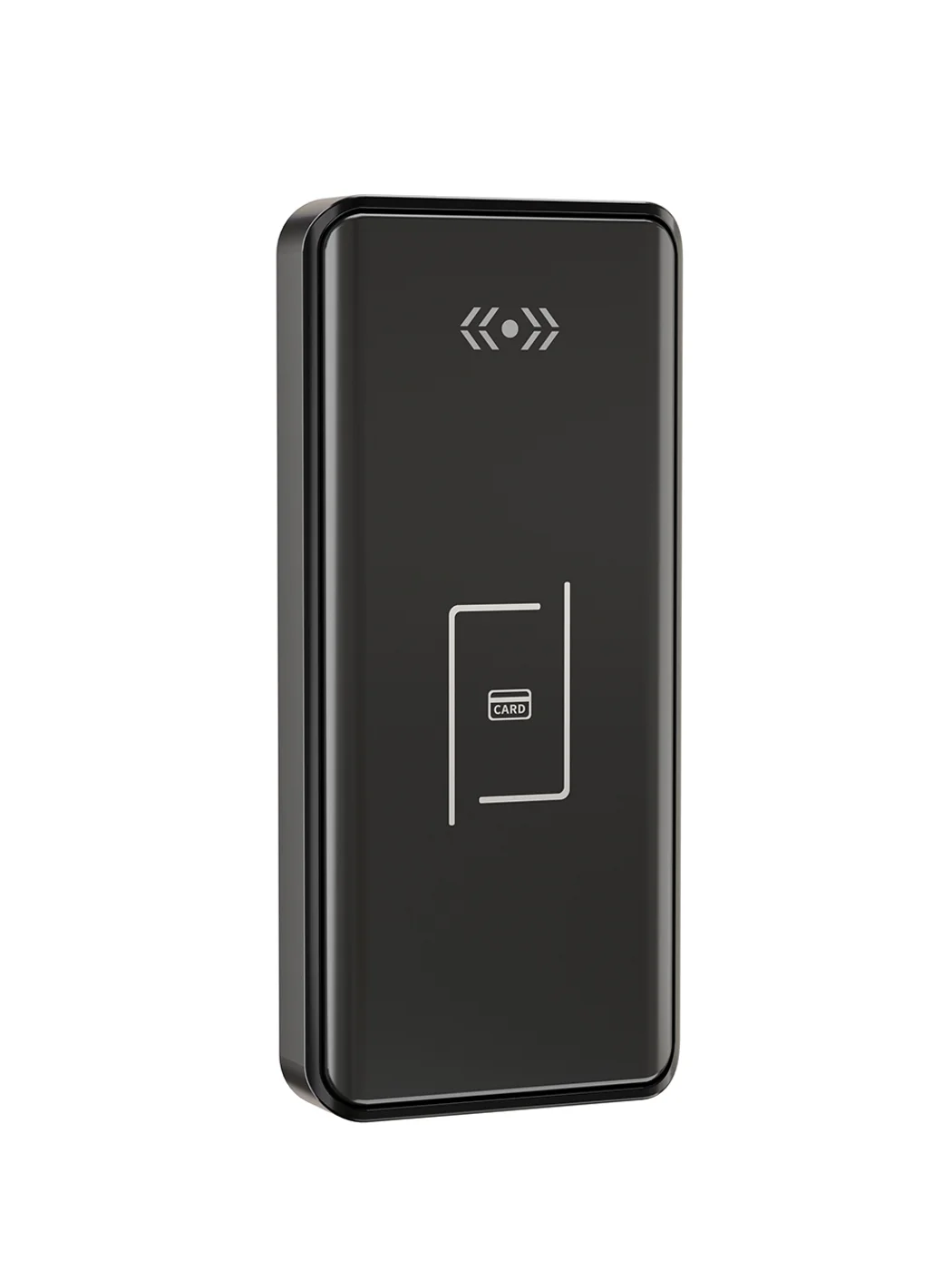
Gym Locker Lock — Offline Card, No WiFi Required
Offline card gym locker lock for fitness and pool lockers. MIFARE card, battery-powered 5-minute retrofit, no WiFi or server. Zinc alloy body, CE/FCC/RoHS.
This page already points to it as the next recommended reference.
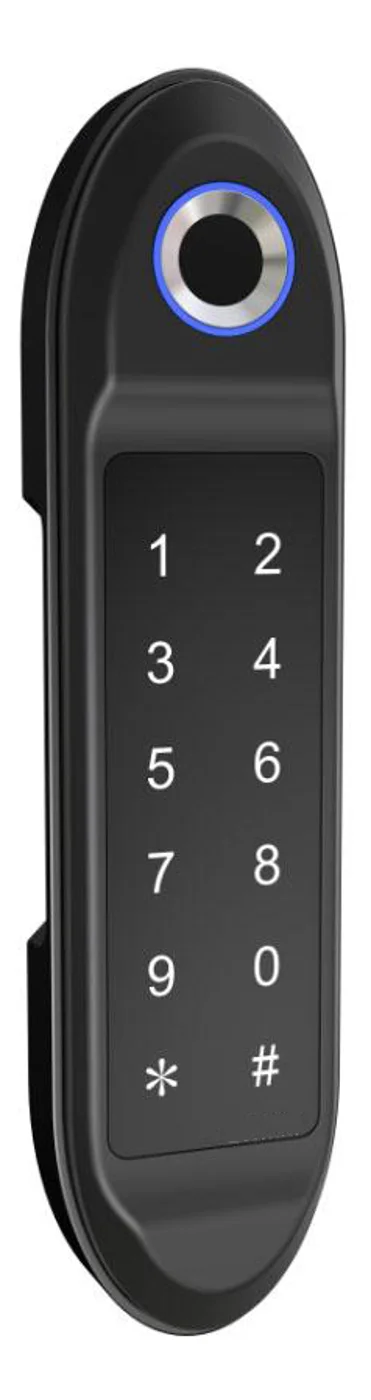
PIN Code Electronic Cabinet Lock — Stand-Alone, No WiFi
Offline keypad cabinet lock for gym, office and parcel lockers. Battery-powered, 5-minute retrofit, audit-free simple deployment. PIN + MIFARE card, DC 6V, 4×AA.
This page already points to it as the next recommended reference.
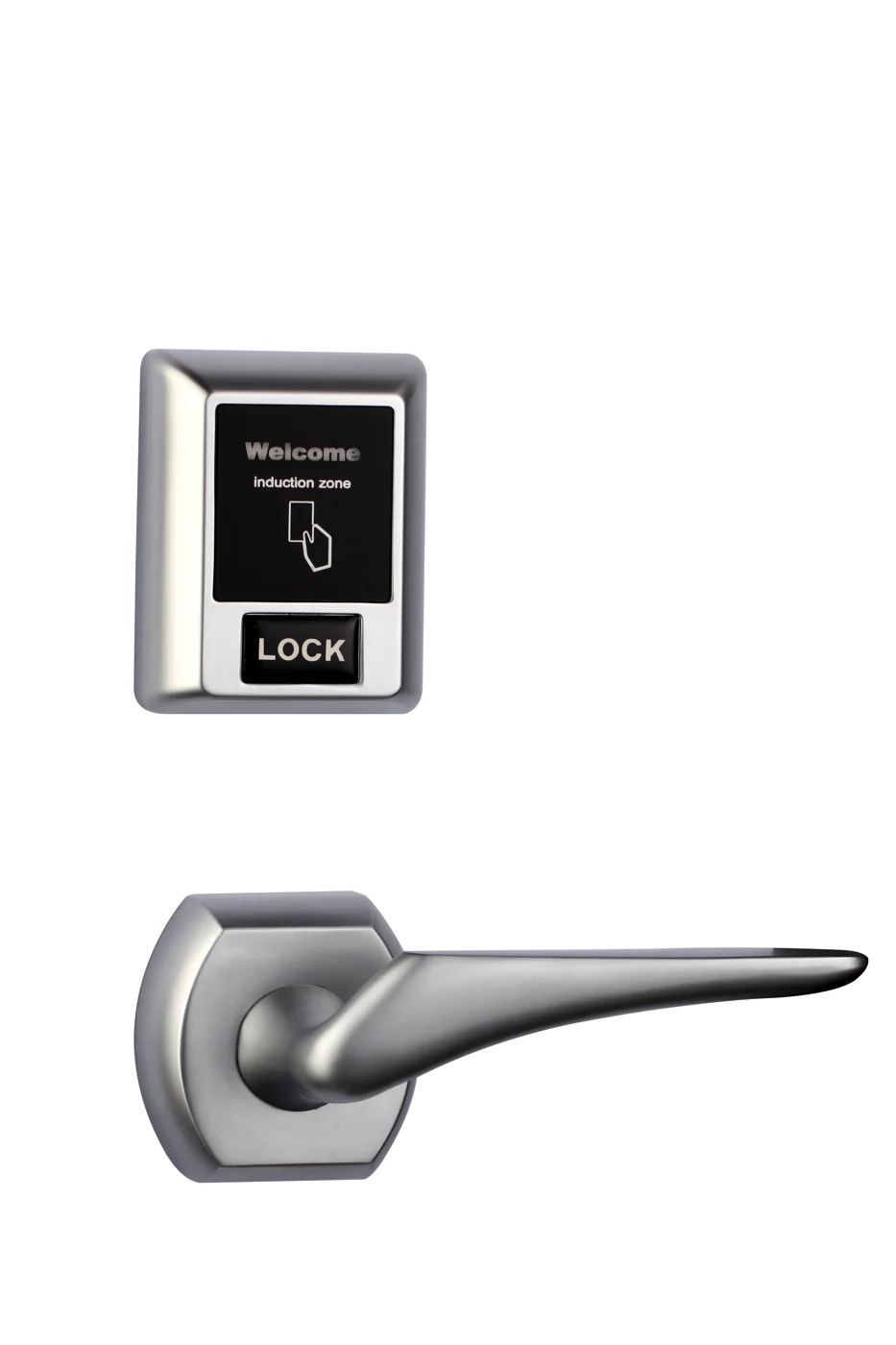
Bluetooth Cabinet Lock — App + PIN + Card, Managed Fleet
Offline BLE app cabinet lock for parcel, office, and managed locker fleets. App + PIN + MIFARE card, remote credential management, no server dependency, battery-powered retrofit.
This page already points to it as the next recommended reference.
Related blog posts
3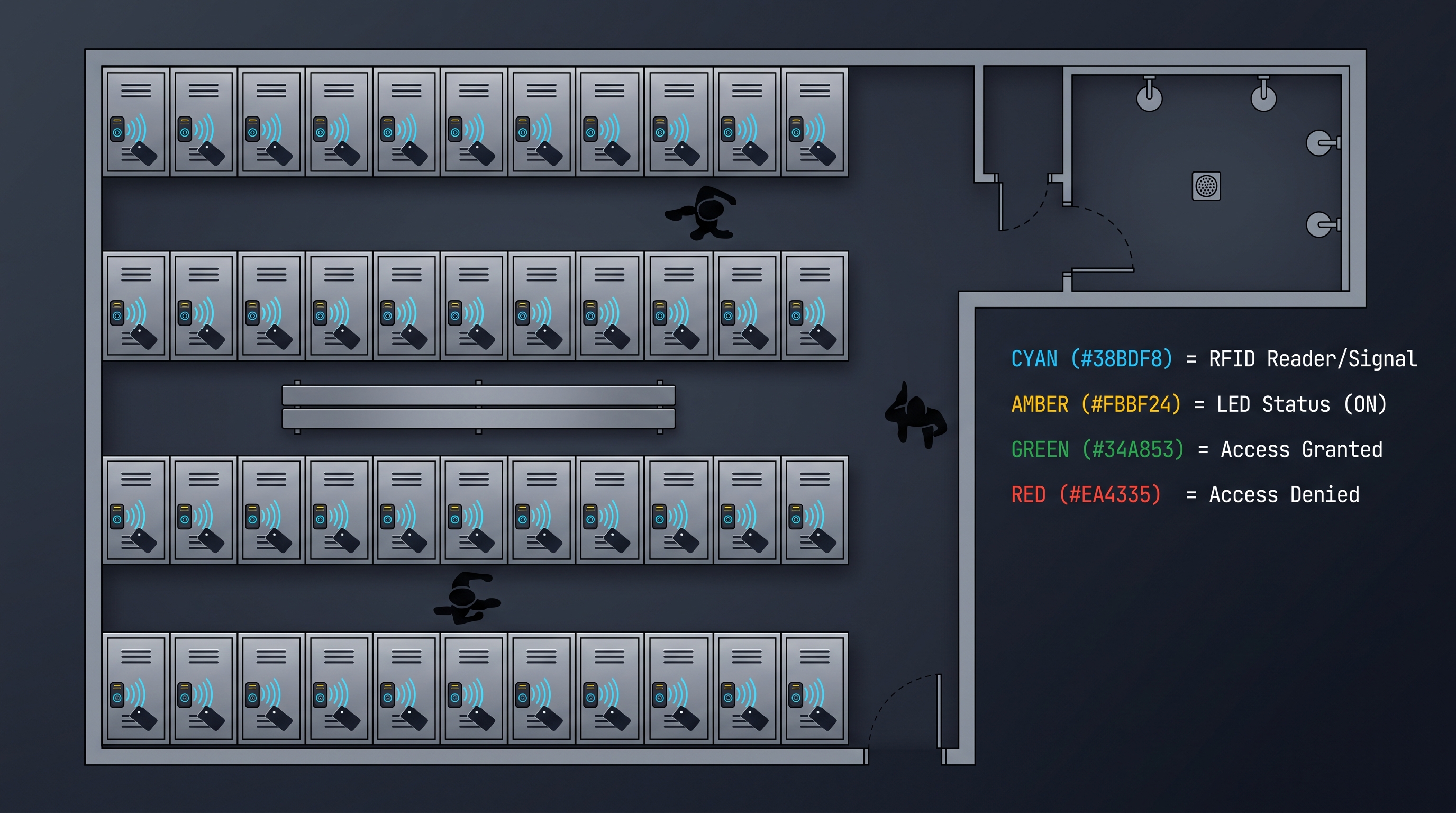
Digital Locker Lock: The Complete 2026 Guide to Smart, Keyless Gym, Office, and Parcel Storage Access Control
Complete guide to digital locker lock selection covering RFID, Bluetooth, PIN, QR code, and biometric access technologies for gyms, offices, parcel delivery, schools, hospitals, and commercial locker banks with installation, battery life, and ROI data.
It supports the same product context: Gym Locker Lock — Offline Card, No WiFi Required, PIN Code Electronic Cabinet Lock — Stand-Alone, No WiFi, Bluetooth Cabinet Lock — App + PIN + Card, Managed Fleet.
The Complete Guide to Digital Locker Management System Platforms in 2026
Explore how a digital locker management system transforms locker fleet operations with real-time monitoring, API integration, multi-site dashboards, and deployment flexibility for gyms, hotels, schools, and offices.
It supports the same product context: Gym Locker Lock — Offline Card, No WiFi Required, PIN Code Electronic Cabinet Lock — Stand-Alone, No WiFi, Bluetooth Cabinet Lock — App + PIN + Card, Managed Fleet.
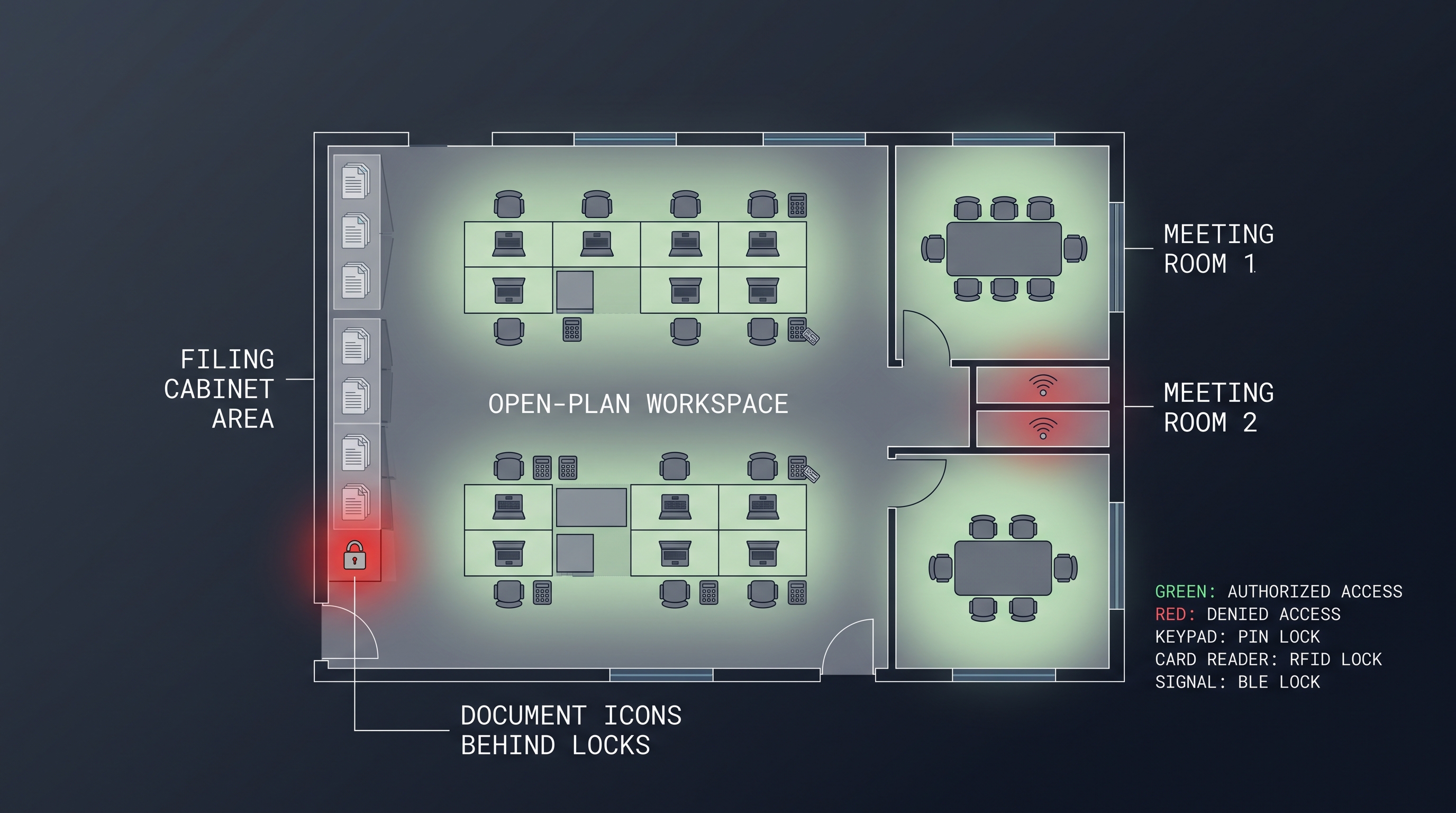
Digital Drawer Lock Guide 2026: Complete Buying & Technology Overview for Modern Security
Comprehensive digital drawer lock guide covering PIN keypad, fingerprint, RFID card, and Bluetooth app options. Detailed technical comparisons, installation tips, and buying advice for homes and businesses.
It supports the same product context: PIN Code Electronic Cabinet Lock — Stand-Alone, No WiFi.
Specify your hotel project with our engineers
Send your room count, ceiling type, and protocol preference. We will return a sample plan and quote within 24 business hours.
- Move from general guidance into a product or application discussion.
- Use RFQ when pricing, drawings, MOQ, or launch timing needs structure.
- Keep a direct contact path visible for fast clarifications and handoff.