The Complete Guide to Custom Cabinet Lock Development for Business
A practical guide to custom cabinet lock development: dimensions, branding, credentials, OEM/ODM, tooling, MOQ, samples, lead time, IP, and quality control.
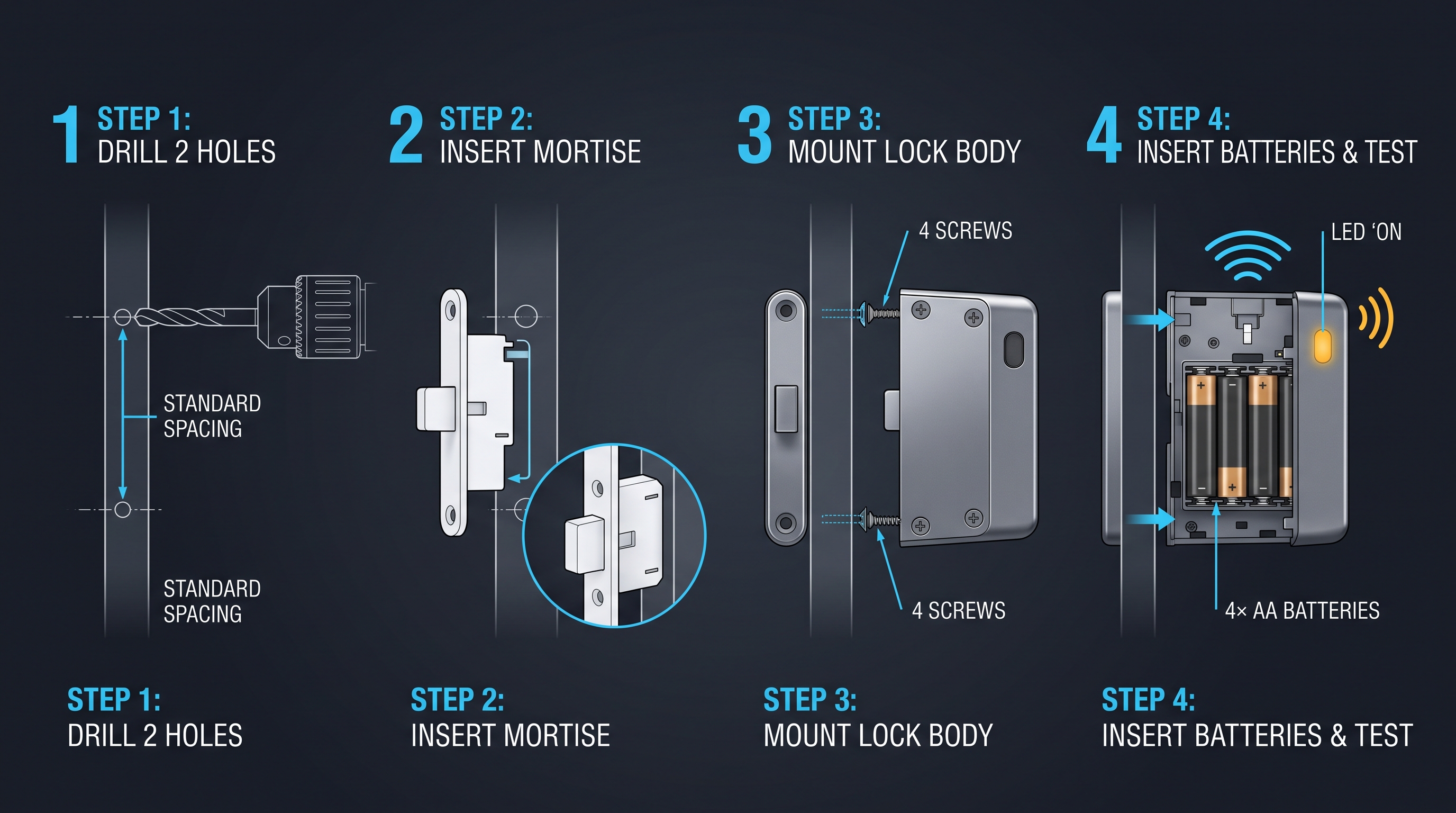
Running a business that installs, resells, or manufactures cabinetry often means discovering that no stock lock fits the project. A custom cabinet lock closes that gap by giving you control over every physical and electronic attribute, from cylinder length and cam geometry to the logo engraved on the faceplate and the credential system that opens it. This guide covers the full lifecycle of custom cabinet lock development: types, mechanisms, customization dimensions, engineering, tooling, MOQ, samples, lead time, IP protection, quality control, and the decision framework for choosing a custom cabinet lock over a standard one. You will learn which numbers belong in a specification sheet, how NDA and NRE terms protect a custom cabinet lock design, and how to run an OEM or ODM custom cabinet lock program that survives mass production without surprises.
Custom Cabinet Lock Types and Classification
A custom cabinet lock is a cabinet locking device engineered, tooled, and produced to the buyer's exact dimensions, branding, credential system, materials, and quality requirements rather than purchased from a standard catalog. Typical customization of a custom cabinet lock spans cylinder lengths from 15 mm to 60 mm, cam sizes of 15, 20, and 25 mm, and panel thickness fits from 12 mm to 80 mm, with bolt throws from 6 mm to 12 mm. A custom cabinet lock can be mechanical, electronic, or hybrid, and each class carries different tooling costs, with zinc die-casting molds for a custom cabinet lock commonly ranging from USD 8,000 to USD 30,000. Most factories quote MOQs between 500 and 3,000 units for true custom cabinet lock development, while modified-standard programs start near 100 units. Certified units carry CE, FCC, and RoHS marks.
Cam, Deadbolt, and Latch-Style Custom Cabinet Locks
The mechanical architecture is the first decision in a custom cabinet lock program. A cam lock rotates a cam 90 degrees when the key turns, and this type of custom cabinet lock is the most common in office furniture and file cabinets because the cam can be trimmed to fit different drawer depths. A deadbolt-style custom cabinet lock extends a bolt into a strike plate with a 6 mm to 12 mm throw for stronger forced-entry resistance. Latch-style and push-to-open magnetic designs remove the keyhole entirely, which suits concealed applications. The mechanism class of a custom cabinet lock determines mold geometry, die-casting complexity, and unit price, so matching the mechanism to the cabinet opening is the most important early choice in any custom cabinet lock specification.
Mechanical, Electronic, and Hybrid Custom Cabinet Lock Systems
A custom cabinet lock is also classified by how the user authenticates. A mechanical custom cabinet lock uses a key with a 5-to-7-pin tumbler cylinder and costs the least to develop because tooling is simpler and there is no electronics. An electronic custom cabinet lock adds a microcontroller, reader, and battery for PIN, RFID, biometric, or Bluetooth control, and it is the fastest-growing category. RFID custom cabinet lock programs typically read 13.56 MHz MIFARE or 125 kHz EM4100 cards, while BLE versions operate at 2.4 GHz. A hybrid custom cabinet lock combines an electronic actuator with a mechanical key override, so the lock still opens when the battery dies. The class of custom cabinet lock you choose changes NRE, tooling, and certification, so classify your project before contacting a factory.
Common Substrates, Finishes, and Protection Ratings
The material and finish of a custom cabinet lock define its look and lifespan. The most common body is die-cast zinc alloy, which plates and coats well, while stainless steel 304 and 316 are specified for marine or chemical environments and brass for premium hardware. A custom cabinet lock in ABS/PC plastic is the lightest and cheapest option and is common for electronic keypads. Finish options for a custom cabinet lock include satin nickel, chrome, matte black powder coating, brass plating, and PVD gunmetal, with PVD the most scratch resistant. Most interior programs specify IP54, while industrial applications need an IP65 custom cabinet lock. When the furniture has a brand palette, factories color-match to RAL or Pantone, and the finish of the custom cabinet lock should be approved on the pre-production sample because plating changes after tooling are expensive.
How a Custom Cabinet Lock Works: Principles and Mechanisms
A custom cabinet lock works by converting operator input, such as a key turn, PIN code, RFID card, or fingerprint, into a mechanical action that retracts a latch, bolt, cam, or magnet inside the cabinet frame. Electronic variants of a custom cabinet lock use a microcontroller running at 16 to 72 MHz, powered by two to four AA batteries or a 3.7 V lithium cell, with standby current below 10 µA to reach 50,000 to 100,000 cycles per battery set. RFID models read 13.56 MHz MIFARE Classic, MIFARE DESFire, or 125 kHz EM4100 credentials, while Bluetooth models of a custom cabinet lock operate over BLE 4.2 or 5.0 at 2.4 GHz. A motor-driven custom cabinet lock generates 5 to 8 N of bolt force, while a solenoid design delivers 3 to 5 N. Because actuation force, backset, and cam geometry are buyer-defined, a custom cabinet lock can be tuned to fit a specific panel while keeping a consistent credential experience.
Key and Cam Rotation Mechanics
In a key-operated custom cabinet lock, the user turns the key to rotate the plug and a connected cam or bolt through an arc of 90 to 180 degrees. The pin-tumbler core of this custom cabinet lock has 5 to 7 pins, producing tens of thousands of key combinations, and the cam profile determines how the rotation translates into drawer travel. A mechanical custom cabinet lock must match the cabinet backset, typically 25 mm, 32 mm, or 40 mm from the door edge to the keyhole center. Plug rotation, cam angle, and cam shape are fully customizable parts of a custom cabinet lock, and factories will machine cams to the buyer's drawing. Because these are small changes to a custom cabinet lock, buyers should always state backset and cam angle in the RFQ.
Electronic Actuation: Solenoid Versus Motor Bolt
An electronic custom cabinet lock releases its latch through one of two actuators. A solenoid pushes with 3 to 5 N of force, which suits light cams and latches, but it draws 300 to 900 mA for 50 to 150 ms, which taxes the battery. A motor-driven custom cabinet lock retracts a bolt with 5 to 8 N, suits heavier deadbolts and swing handles, and draws only 100 to 300 mA for 200 to 500 ms. The actuator choice shapes the battery budget and mechanical life of the custom cabinet lock: a solenoid design may achieve 30,000 to 80,000 cycles, while a motorized custom cabinet lock can be rated for 100,000 to 150,000 cycles. When the cabinet door is heavy steel, the actuator force of the custom cabinet lock must be verified during sampling.
Credential Verification and Power Management
When a user presents a credential to an electronic custom cabinet lock, the reader captures the data and the controller compares it against the enrolled list, then commands the actuator to open. The authentication decision for a typical custom cabinet lock completes in 80 to 300 ms, and the lock stores an event log of the last 500 to 10,000 entries. Power management keeps a custom cabinet lock viable as a battery device: standby current below 10 µA, deep-sleep wake on touch, and low-battery warnings at a set voltage threshold. Fleet deployments configure the credential set of a custom cabinet lock at the factory or over BLE, and online models report events over WiFi 802.11 b/g/n, Zigbee 3.0, or RS-485 to a central server, giving the custom cabinet lock the same audit depth as a building access control system.
Custom Cabinet Lock Features and Specification Comparison
A custom cabinet lock is specified against a defined feature matrix that covers mechanical strength, electrical behavior, credential support, ingress protection, and compliance, and this matrix separates a genuine custom cabinet lock from a relabeled standard one. Buyers compare bolt throw from 6 mm to 12 mm, pull force from 100 N to 500 N, IP ratings from IP54 to IP65, and battery life from 30,000 to 150,000 cycles. Electronic features of a custom cabinet lock include PIN lengths of 4 to 8 digits, card capacity from 50 to 2,000 credentials, audit trails of 500 to 10,000 events, and optional BLE provisioning over 2.4 GHz. A comparison table is the fastest way to evaluate a custom cabinet lock because it exposes trade-offs between price, tooling, and security. Every metric in the matrix becomes an acceptance criterion once the custom cabinet lock enters mass production.
The Feature Matrix That Defines a Custom Cabinet Lock
A complete feature matrix for a custom cabinet lock has mechanical and electronic rows. Mechanical rows cover bolt throw, cam size, cylinder length, backset, pull force, cycle life, material, finish, and IP rating. Electronic rows of a custom cabinet lock cover credential types, capacity, audit depth, protocols, battery chemistry, standby current, and provisioning. For a keypad custom cabinet lock, the matrix records the number of administrator codes and the lockout policy, typically 30 seconds to 5 minutes after 3 to 10 failed attempts. For an RFID custom cabinet lock, it records the card families accepted, and many programs use dual-frequency readers for both 13.56 MHz and 125 kHz cards. Writing the matrix forces every stakeholder to agree on what the custom cabinet lock must do before tooling starts.
Side-by-Side Comparison of Standard and Custom Cabinet Lock Options
| Parameter | Standard mechanical cam lock | Standard electronic lock | Custom cabinet lock (electronic) | Custom cabinet lock (heavy duty) |
|---|---|---|---|---|
| Bolt throw | 6 mm fixed | 8 mm fixed | 6-12 mm | 10-12 mm |
| Pull force | 150 N | 200 N | 100-300 N | 300-500 N |
| Credential capacity | 1 key | 100-500 PIN or cards | 200-2,000 | 200-2,000 |
| Audit trail | None | 500 events | 500-10,000 events | 10,000+ events |
| Battery cycles | Not applicable | 30,000 | 50,000-100,000 | 100,000-150,000 |
| IP rating | IP54 | IP54 | IP54-IP65 | IP65 |
| Typical tooling cost | None | None | USD 3,000-15,000 | USD 8,000-40,000 |
| Unit price at 1,000 pcs | USD 1.50-3.00 | USD 8-15 | USD 12-25 | USD 25-45 |
Reading the Trade-offs in a Custom Cabinet Lock Comparison
The table shows why a custom cabinet lock is a value decision rather than a price decision. A standard mechanical lock has zero tooling cost, but it offers no audit trail and no brand surface, which pushes commercial programs toward an electronic custom cabinet lock even when the unit cost triples. The pull-force and bolt-throw rows matter most for high-traffic furniture: a custom cabinet lock rated at 300 N resists forced entry far better than a 150 N standard cam. The battery-cycle row converts directly into maintenance cost, and a custom cabinet lock rated for 100,000 cycles at ten uses per day lasts over 27 years, versus about 8 years for a 30,000-cycle unit. When comparing quotes, ask every factory for the same feature matrix, and the cheapest custom cabinet lock is often the one missing a row rather than the one with the best engineering.
Custom Cabinet Lock Customization Options: Dimensions, Branding, Credentials, and Materials
A custom cabinet lock can be changed in five primary dimensions: physical dimensions and panel fit, branding, credential configuration, colors and materials, and internal electronics. Panel thickness compatibility typically ranges from 12 mm to 80 mm, with cylinder lengths in 5 mm increments from 15 mm to 60 mm and cam profiles in 15, 20, and 25 mm sizes. Branding options for a custom cabinet lock include laser engraving, pad printing, and metal inlay, with laser-marked logos costing about USD 0.10 to USD 0.50 per unit at volume. Credential configuration of a custom cabinet lock can fix the PIN length, card format, and maximum enrolled credentials, often 200 to 2,000. Material choices for a custom cabinet lock range from ABS/PC plastic to zinc alloy and stainless steel 304, with finishes such as satin nickel, matte black, chrome, and PVD gunmetal. Defining these five dimensions makes a custom cabinet lock reproducible, testable, and auditable in serial production.
Custom Dimensions and Panel Fit
The physical fit of a custom cabinet lock is the most common reason businesses go custom. A cabinet with a 45 mm insulated door, a curved aluminium profile, or a recessed drawer front will not accept a stock cylinder. A custom cabinet lock solves this with cylinder lengths in 5 mm increments and mounting that clamps panels from 12 mm to 80 mm thick. The mounting hole diameter, usually 19 mm to 24 mm, and the backset must appear on the custom cabinet lock drawing so the factory machines the thread length correctly. Drawers with unusual offsets need a custom cabinet lock with an adjustable cam that can be cut or replaced. Dimensioning errors are the number one cause of rejected samples, so send a 2D drawing with ±0.5 mm tolerances on the mounting features of the custom cabinet lock.
Custom Branding and Logo Engraving
Branding is where a custom cabinet lock becomes part of the product identity. The main methods are laser engraving, which removes material for a permanent two-tone mark; pad printing, which adds color on curved surfaces; and metal inlay, which presses a contrasting badge into the face. Laser engraving on a custom cabinet lock is the most common choice for electronics because it is permanent and cheap at volume, working on zinc, steel, and anodized aluminium. Factories charge a one-time fixture fee of about USD 50 to USD 300 for a branded custom cabinet lock, and the per-unit cost of branding a custom cabinet lock drops from about USD 0.50 at 500 units to USD 0.10 at 10,000. Approve the logo position and engraving depth on the pre-production sample of the custom cabinet lock, because the mark must not cover screws or ventilation slots.
Custom Credential Configuration
Credential configuration is the functional customization that turns a custom cabinet lock into a managed access point. A PIN-based custom cabinet lock can fix the code length at 4 to 8 digits, the number of user codes at up to 200, and the lockout policy after failed attempts. An RFID custom cabinet lock selects the card family, the capacity of the enrollment table, and whether master and sub-master cards are supported. Many hospitality programs require a custom cabinet lock that reads the same 13.56 MHz MIFARE hotel card used for room doors. BLE-enabled custom cabinet lock programs add provisioning through a mobile app, time schedules, and remote lock or unlock over a 2.4 GHz link secured by AES-128. Freeze the credential configuration of the custom cabinet lock during sampling, because firmware changes after tooling are possible but expensive.
Custom Colors, Materials, and Finishes
The visual identity of a custom cabinet lock is defined by its material and finish. The buyer selects the body material, zinc alloy being the default for durability, with stainless steel for corrosion resistance and ABS/PC for lightweight electronic housings. The finish palette for a custom cabinet lock includes satin nickel, chrome, matte black, brass, and PVD gunmetal, and factories color-match to RAL or Pantone when a furniture brand needs consistency. Powder coating and anodizing add color, while PVD coating is the most durable finish, adding roughly USD 0.30 to USD 0.80 per unit to a custom cabinet lock at volume. Antibacterial coatings are an emerging option for healthcare and food-service custom cabinet lock programs. Because finish is applied after machining, changing the finish of a custom cabinet lock is easy during sampling but impossible after mass production starts.
Custom Cabinet Lock Applications and Use Cases by Industry
A custom cabinet lock is deployed wherever furniture, storage, or equipment needs controlled access that a standard catalog lock cannot deliver, with the most common sectors being office furniture, hotel cupboards, medical cabinetry, retail display cases, industrial tool cabinets, and lockers. A healthcare facility might require a custom cabinet lock that holds 1,000 medication credentials, logs 10,000 audit events, and resists salt spray for 72 hours, while a hotel may need a custom cabinet lock with front-desk master override and 125 kHz EM cards for 400 rooms. Office applications ask for a custom cabinet lock with standby current below 10 µA and BLE provisioning for 200 to 500 workstations. Industrial environments push for an IP65-rated custom cabinet lock with anti-corrosion plating. Each sector turns operational rules into a tailored requirement that only a custom cabinet lock can satisfy at scale, which makes the application the fastest way to shortlist a factory.
Hospitality and Hotel Furniture
Hotels are among the largest buyers of custom cabinet lock programs because guestroom furniture must be locked, branded, and managed with the same key that opens the room door. A typical property needs a custom cabinet lock for the in-room cupboard, minibar, and wardrobe safe, all reading the guest's 13.56 MHz MIFARE card. The front desk needs a master card and a housekeeping sub-master, and the custom cabinet lock must log which card opened which cupboard and when. Hospitality programs also demand low acoustic noise from the actuator, because a loud click in a silent guestroom is a review risk. Many chains standardize on a single custom cabinet lock platform across hundreds of properties, and a 400-room property expects a custom cabinet lock that survives a 5- to 7-year renovation cycle.
Healthcare, Laboratory, and Medication Storage
Healthcare is the sector where a custom cabinet lock earns its keep through auditability. Medication cabinets, controlled-substance storage, and patient lockers all need access control that proves who accessed what and when, and a custom cabinet lock with a 500- to 10,000-event audit trail provides that evidence. In the United States, facilities tracking controlled substances align custom cabinet lock logging with DEA expectations, while hospitals anywhere benefit from HIPAA-adjacent documentation. A common spec for a medical custom cabinet lock is 1,000-credential capacity, AES-128 encrypted communication, and a finish that tolerates repeated disinfection with alcohol and bleach. Because healthcare is crowded, a silent motor actuator and an emergency key override are preferred, and anti-tamper alarms that trigger after five failed attempts are standard. A medical custom cabinet lock is usually specified with ISO 9001 manufacturing, RoHS materials, and 24-to-72-hour salt-spray resistance.
Retail, Industrial, and Workplace Environments
Retailers use a custom cabinet lock to protect high-value display cases, inventory cabinets, and back-office storage while keeping the store aesthetic intact. A jewelry or electronics display often needs a custom cabinet lock with a low-profile face, remote open from the counter, and an audit trail tied to each staff badge. Industrial facilities specify a custom cabinet lock for tool cribs and chemical cabinets, with IP65 sealing, anti-corrosion plating, and tool-free installation on steel enclosures. Workplaces are moving to personal mobile lockers, and a custom cabinet lock with BLE provisioning and office-badge compatibility is now a standard specification in activity-based offices. The decisive advantage of a custom cabinet lock is that one credential, whether a badge, fingerprint, or phone, opens every secured cabinet, which removes the tangle of keys that standard locks create.
Custom Cabinet Lock Design Process and Engineering Workflow
A custom cabinet lock is designed through a five-stage process that typically spans 45 to 90 days before mass production: requirements, concept and feasibility, 3D modeling and design-for-manufacturability, prototyping and sampling, and validation with tooling kickoff. During requirements, the buyer specifies panel thickness, backset, cam geometry, credential type, cycle-life target, and certification list, and the factory translates these into a spec sheet with tolerances of ±0.05 mm on critical dimensions of the custom cabinet lock. The concept stage produces 3D CAD models in STEP or IGES format, followed by design-for-manufacturability reviews that reduce part count and mold complexity. A functional prototype of a custom cabinet lock is usually delivered within 15 to 30 days, and the engineering team runs drop tests, torque tests, and 50,000-cycle endurance runs before approving tooling. A professional custom cabinet lock program treats each stage as a gate with signed approvals.
Requirements Definition and Feasibility Study
Every custom cabinet lock program starts with a written requirements document, because the factory cannot engineer what has not been specified. The document states the cabinet type, door material, panel thickness, backset, mounting hole diameter, security level, credential types, battery life target, cycle-life target, IP rating, temperature range, and certifications. The factory then runs a feasibility study that asks whether the geometry of the custom cabinet lock is manufacturable, whether the electronics fit the envelope, and whether the target price is achievable at the proposed MOQ. This stage produces the first cost estimate, usually within 5 to 10 working days of the RFQ, and it is when an honest factory tells the buyer that a cheaper modified-standard custom cabinet lock would meet 90 percent of the requirement at 40 percent of the NRE, which is why a realistic requirements stage protects every custom cabinet lock budget.
3D Modeling, DFM, and Engineering Review
Once the concept is approved, the engineering team builds a full 3D model of the custom cabinet lock and runs a design-for-manufacturability review. DFM examines draft angles for die casting, wall thickness for plastic injection, gate and ejector placement, and the tolerance stack of assembled parts. A well-executed DFM on a custom cabinet lock can reduce part count by 20 to 30 percent and cut mold cost by 15 to 25 percent, because each eliminated screw or spring removes a cavity from the mold. The model is delivered in STEP or IGES format for buyer review, and interference between the custom cabinet lock and the cabinet frame is caught before steel is cut. The review also produces the BOM, the wiring schematic, and the test plan, and it freezes the drawing revision used for tooling. After tooling, a single cavity change on a custom cabinet lock can cost USD 500 to USD 2,000 and add 2 to 4 weeks.
Prototyping, Sampling, and Validation
Prototyping is where the custom cabinet lock becomes tangible. The factory produces a first batch of functional samples, usually 10 to 50 units, using 3D-printed housings, CNC-machined metal parts, and prototype PCBs, delivered within 15 to 30 days of design approval. The buyer tests these samples on real cabinets, checking fit, feel, and function, while the engineering team runs 50,000-cycle endurance runs, 500 N pull tests, drop tests from 1 m, and 24-to-72-hour salt-spray exposure. A second pre-production sample round follows any revisions, made with near-final tooling to validate the production process of the custom cabinet lock. Only after the pre-production samples of the custom cabinet lock pass the full test plan does the factory cut production molds. Buyers who skip validation on a custom cabinet lock routinely discover dimensional drift in the first mass-production lot.
Custom Cabinet Lock Tooling Costs, Samples, MOQ, and Lead Time
Tooling for a custom cabinet lock is the largest up-front cost and the biggest driver of lead time, with injection molds for plastic components ranging from USD 3,000 to USD 15,000 and zinc die-casting molds ranging from USD 8,000 to USD 40,000 depending on cavity count. Sample stages for a custom cabinet lock usually run two rounds: engineering samples at 15 to 25 days and pre-production samples at 30 to 45 days, each batch typically 10 to 50 units. MOQs for a true custom cabinet lock start at 500 units, with 1,000 to 3,000 units the sweet spot that amortizes tooling over three to five production runs, while modified-standard programs can drop to 100 units. Full production lead time after sample approval is typically 25 to 45 days for 1,000 to 10,000 units. A custom cabinet lock with a new mold therefore ships roughly 70 to 135 days from first RFQ, and planning that window correctly decides whether the custom cabinet lock program launches on time.
Tooling Cost Breakdown for a Custom Cabinet Lock
Tooling cost is the sum of every mold, die, and fixture needed to mass-produce a custom cabinet lock, quoted as a one-time NRE charge separate from unit price. Plastic parts need injection molds, zinc and aluminum bodies need die-casting molds, and steel levers need stamping dies. A typical plastic-injection custom cabinet lock program carries USD 3,000 to USD 15,000 in mold cost, while a zinc die-cast body costs USD 8,000 to USD 40,000 for a one- to four-cavity mold. Multi-cavity molds raise up-front cost but lower per-unit price, because a four-cavity custom cabinet lock mold cycles four parts per shot and cuts cycle cost by 60 to 70 percent. Tooling also includes the logo electrode and color-matching plaque, so ask for a line-item tooling quote for the custom cabinet lock, and state in the contract that tooling ownership transfers to the buyer.
| Tooling type | Typical material | Typical cost | Cavity count | Typical lead time |
|---|---|---|---|---|
| Plastic injection mold | ABS/PC | USD 3,000-15,000 | 1-4 | 20-40 days |
| Zinc die-casting mold | Zinc alloy | USD 8,000-40,000 | 1-4 | 30-60 days |
| Stamping die | Steel or brass | USD 2,000-8,000 | 1-2 | 15-30 days |
| CNC fixtures and jigs | Steel | USD 1,000-5,000 | Not applicable | 10-20 days |
Sample Cycles and Approval Gates
Samples are the quality gate between design and production for every custom cabinet lock program. The first engineering-sample round, delivered in 15 to 25 days, proves that the mechanism works, the electronics respond, and the dimensions of the custom cabinet lock match the drawing. The buyer tests first-round custom cabinet lock samples on real cabinets, and the factory revises any failing parts. The second, pre-production round, delivered in 30 to 45 days, is built with the actual production tooling, so it validates the manufacturing method of the custom cabinet lock, including plating, printing, and assembly. Pre-production samples of a custom cabinet lock are the artifacts that get signed off for mass production, and the buyer should keep a sealed reference sample for final-lot comparison. Each sample round carries a fee of about USD 100 to USD 500, usually credited against the first order.
MOQ Strategies for Small-Batch and Large Programs
Minimum order quantity is the most negotiated number in a custom cabinet lock contract. A modified-standard custom cabinet lock, which changes only branding, finish, or firmware on an existing platform, can be produced at an MOQ of 100 to 300 units because there is no new tooling. A true custom cabinet lock with new molds starts at 500 units, and most factories quote 1,000 to 3,000 units as the economic batch for a die-cast body. For a small-batch custom cabinet lock program under 500 units, expect a per-unit premium of 30 to 80 percent over the 1,000-unit price. Above 10,000 units, factories offer tiered pricing that drops the unit cost by 15 to 30 percent, and the custom cabinet lock tooling amortizes so fully that the premium nearly disappears. A smart strategy is to run a small-batch custom cabinet lock pilot, then commit to a large order once the design is proven.
Lead Time Planning From RFQ to Shipment
The total lead time of a custom cabinet lock spans RFQ, sampling, tooling, production, and shipping, and each phase has its own clock. The RFQ and feasibility phase takes 5 to 10 working days, engineering samples 15 to 25 days, pre-production samples 30 to 45 days, and mass production 25 to 45 days for 1,000 to 10,000 units. Summing these, a new custom cabinet lock ships 70 to 135 days after the first RFQ, while a modified-standard custom cabinet lock can ship in 30 to 45 days because no tooling is required. Sea freight from China adds 25 to 40 days to the United States or Europe, and air freight adds 5 to 10 days at four to six times the cost. To compress lead time on a custom cabinet lock, order long-lead components during sampling, approve drawings within 48 hours, and book production capacity before pre-production samples pass, which can save 20 to 30 days.
Custom Cabinet Lock OEM and ODM Development with IP Protection
A custom cabinet lock is developed through one of two models: OEM, where the buyer supplies the complete design and the factory manufactures to print, or ODM, where the factory designs and engineers the custom cabinet lock around the buyer's functional requirements and brand. OEM gives the buyer full design control and is ideal when the buyer already holds CAD files and patents, while ODM is faster because the factory reuses proven platforms, cutting engineering time by 30 to 60 percent. Every serious custom cabinet lock program starts with a mutual NDA before any drawings are shared, and the contract should define IP ownership, invention assignment, non-compete clauses, and tooling ownership. In ODM work, buyers typically pay a one-time NRE fee of USD 2,000 to USD 15,000 for engineering, prototyping, and test setup. Registered designs, utility patents, and trademarks protect a custom cabinet lock across USPTO and CNIPA jurisdictions, and the IP strategy for the custom cabinet lock should be set before the first drawing leaves the buyer's office.
OEM Versus ODM Models for a Custom Cabinet Lock
The first strategic decision in a custom cabinet lock program is whether to work OEM or ODM. In an OEM arrangement, the buyer owns the complete design and hands the factory a drawing package and BOM, which gives the buyer full control over every component and full ownership of the intellectual property from day one, and OEM suits businesses that already have design capability. In an ODM arrangement, the buyer describes the functional requirement, such as a BLE keypad custom cabinet lock for 500 lockers with a specific face dimension, and the factory designs the internals around its existing platform, cutting development time by 30 to 60 percent. Most first-time buyers choose ODM for their first custom cabinet lock and migrate to OEM for later generations, and the contract must state which model applies because it changes who owns the firmware of the custom cabinet lock and the mold.
NDA, IP Ownership, and Patent Protection
Intellectual property protection begins with a mutual NDA signed before the first drawing, sample, or quotation of the custom cabinet lock is exchanged. The NDA should cover mechanical drawings, firmware, test plans, pricing, and customer lists, and it should survive the business relationship for at least five years. The development contract must state who owns the IP created during the project: for an OEM custom cabinet lock, the buyer owns everything, while for an ODM custom cabinet lock, the buyer owns the customizations and the factory retains background IP in its base platform. Buyers should register utility and design patents for the novel mechanism of the custom cabinet lock in both USPTO and CNIPA, and a non-compete clause should prevent the factory from offering the same custom cabinet lock design to a competitor for 2 to 3 years.
NRE Fees and Contract Terms
Non-recurring engineering cost is the one-time charge a factory bills for designing, prototyping, and tooling up a custom cabinet lock, and it is separate from the per-unit price. A typical NRE for a mechanical custom cabinet lock is USD 2,000 to USD 8,000, while an electronic custom cabinet lock with firmware development carries USD 5,000 to USD 15,000, and certification testing can add USD 3,000 to USD 10,000. Payment terms for a custom cabinet lock program usually follow a 30-30-30-10 schedule: 30 percent at signing, 30 percent at design approval, 30 percent at sample approval, and 10 percent at mass-production kickoff. Buyers should insist the NRE of a custom cabinet lock is quoted as a line item, not buried in the unit price, because a transparent NRE makes factories comparable and the amortization easy to calculate.
Custom Cabinet Lock Quality Control and Certification Standards
A custom cabinet lock must pass a defined quality-control chain before shipment, typically IQC (incoming), IPQC (in-process), FQC (final), and OQC (outgoing), with AQL 2.5 sampling and first-article inspection on every new mold. Mechanical tests include 50,000 to 150,000 cycle endurance, 3 to 5 N solenoid force, 5 to 8 N motor bolt force, and pull force of 100 to 500 N, while environmental tests cover 24-to-72-hour salt spray and -20 °C to 60 °C temperature ranges. Each custom cabinet lock batch ships with a test report documenting the results, and traceability marks link every unit to its production date and batch, which protects the custom cabinet lock from material defects through field-ready assembly. Compliance for a custom cabinet lock usually includes CE, FCC, and RoHS for electronics, with optional UL 2054 battery safety, REACH, and EN 14846 structural certification. A factory with ISO 9001 certification should also provide process audits and 48-hour corrective-action response times, and the quality plan for the custom cabinet lock should be written into the purchase contract.
The Quality Control Chain and AQL Sampling
Quality control for a custom cabinet lock is a four-stage chain, and each stage has a defined inspection point. Incoming quality control inspects raw materials, plating batches, PCBs, and purchased motors, and quarantines any lot that fails the chemical or dimensional test. In-process quality control monitors the production line, checking that the die-casting, plating, and assembly steps of the custom cabinet lock hold their tolerances. Final quality control tests every unit's function, cycling each custom cabinet lock open and closed and verifying the electronics, while outgoing quality control re-checks a random sample of the packed order. The sampling plan for a custom cabinet lock is usually AQL 2.5 for major defects and AQL 4.0 for minor defects. Buyers can request third-party inspection, such as SGS or Bureau Veritas, on each custom cabinet lock lot.
Mechanical, Electrical, and Environmental Testing
The test plan for a custom cabinet lock has three families: mechanical, electrical, and environmental. Mechanical testing covers cycle endurance of 50,000 to 150,000 open-close operations, pull force of 100 to 500 N, torque of the key plug, and drop testing from 1 m, compared against the cycle-life target of the custom cabinet lock. Electrical testing verifies the actuation force, solenoid current of 300 to 900 mA, motor current of 100 to 300 mA, standby current below 10 µA, and the low-battery threshold. Environmental testing exposes the custom cabinet lock to salt spray for 24 to 72 hours, temperature cycling from -20 °C to 60 °C, and humidity up to 90 percent. Each test family produces a report, and a custom cabinet lock that passes all three will almost never fail in the field, while a unit that skipped environmental testing can corrode at a cold warehouse.
Certifications and Compliance for Market Access
Certification is the regulatory gate that a custom cabinet lock must pass to be sold in a given market. For the European Union, an electronic custom cabinet lock needs CE marking under the EMC and Low Voltage Directives, RoHS compliance, and EN 14846 for mechanical strength. For the United States, an electronic custom cabinet lock needs FCC Part 15 certification for the radio module and, if it contains a lithium battery, UL 2054 or IEC 62133 battery safety. REACH and California Proposition 65 apply to materials and finishes of the custom cabinet lock, and the factory should supply test reports proving regulated substances are within limits. Certification testing for a custom cabinet lock adds USD 3,000 to USD 10,000 and 4 to 8 weeks to the schedule, so state the certification list in the requirements document rather than discovering it at the end.
Custom Cabinet Lock vs Standard Cabinet Lock: When Custom Makes Sense
A custom cabinet lock makes sense when volume, brand, credential, dimensional, or compliance requirements exceed what a standard catalog lock can provide, while a standard cabinet lock wins when the application is generic and tooling cannot be justified. If projected annual volume is below 500 units, the per-unit cost of a custom cabinet lock can exceed standard pricing by 50 to 200 percent, making a standard lock with an adapter plate the better choice. Above 1,000 units per year, tooling amortization often brings a custom cabinet lock within 10 to 30 percent of standard prices while delivering a branded, fleet-consistent product. Customization also pays when a facility needs one credential system across mixed hardware, or when a strict certification such as EN 14846 or audit logging is mandatory. The decision is a total-cost-of-ownership calculation, not a sticker-price comparison. For most businesses, the custom cabinet lock crossover sits between 500 and 1,000 units per year, and presenting the comparison table to finance makes the custom cabinet lock decision data-driven.
When a Custom Cabinet Lock Is the Right Investment
A custom cabinet lock is the right choice when any of five conditions holds. First, volume: above 1,000 units per year, tooling amortization brings the custom cabinet lock price close to standard, and the brand value is free. Second, branding: a custom cabinet lock with a laser-engraved logo reinforces the brand on every touchpoint and prevents competitors from copying the fit. Third, credentials: if the facility uses a single badge or app across doors and cabinets, a custom cabinet lock that reads the same credential eliminates a parallel key system. Fourth, dimensions: a non-standard panel thickness or offset makes a custom cabinet lock the only way to get a clean fit. Fifth, compliance: audit trails, EN 14846 certification, or controlled-substance logging cannot be met by a standard lock. When two of these hold, the custom cabinet lock is usually the lower total cost.
When a Standard Cabinet Lock Is the Better Buy
A standard cabinet lock is the better buy when the application is generic and the volume is low. If the business needs 100 locks for internal storage, buying a stock cam lock for USD 2 to USD 5 each and installing it in an hour is rational, because a custom cabinet lock at 100 units would cost USD 15 to USD 40 per unit plus NRE. Standard locks also win when the timeline is tight, because a stock lock ships in days while a custom cabinet lock takes 70 to 135 days. When spare-part availability matters, a standard lock is easier to replace from any distributor, while a custom cabinet lock depends on the original factory. The discipline of a good buyer is to run the numbers honestly: if the premium of the custom cabinet lock is not repaid by brand equity, credential consolidation, or compliance, the standard lock is the financially correct answer.
Total Cost of Ownership Analysis
The table below compares the five-year total cost of standard locks versus a custom cabinet lock at three annual volumes, including tooling amortization, unit price, installation, and credential management.
| Annual volume | Standard lock 5-yr total cost | Custom cabinet lock 5-yr total cost (incl. tooling) | Custom premium |
|---|---|---|---|
| 200 units | USD 400-600 | USD 1,500-2,500 | +150-250% |
| 1,000 units | USD 2,000-3,000 | USD 3,200-5,000 | +20-60% |
| 5,000 units | USD 10,000-15,000 | USD 11,000-16,000 | +5-15% |
At 200 units per year, the custom cabinet lock premium is too high for most budgets, and a standard lock with a branded adapter plate is the pragmatic choice. At 1,000 units, the custom cabinet lock premium falls to 20 to 60 percent, which is defensible when branding or credential consolidation is included. At 5,000 units, the custom cabinet lock premium is just 5 to 15 percent, and the custom unit pays for itself through brand consistency and reduced key-management labor. The crossover for most businesses is between 500 and 1,000 units per year, and the analysis should also credit the custom cabinet lock with audit-trail and remote-management value. Presenting this table to finance makes the custom cabinet lock decision one of arithmetic rather than enthusiasm.
Custom Cabinet Lock Case Studies and Market Outlook
Case studies show that a custom cabinet lock delivers measurable ROI when the customization targets a real operational constraint: a hotel group with 12,000 rooms cut key-duplication costs by 40 percent using a custom cabinet lock with BLE provisioning and central management; a medical cabinetry manufacturer reduced medication misfill risk by standardizing on a custom cabinet lock with 1,000-credential capacity and 10,000-event audit logs; and a retail chain reduced theft losses by 25 percent after deploying an IP65 custom cabinet lock with remote access control on display cases. The market outlook favors customization: the global smart lock market is projected to grow at roughly 12 to 15 percent CAGR through 2030, and commercial furniture buyers increasingly treat a custom cabinet lock as a specification item. Expect faster sample cycles, lower tooling thresholds near 300 units, and growing demand for Matter and WiFi-enabled custom cabinet lock programs in the next 24 months.
Hospitality Case Study: BLE Custom Cabinet Lock Fleet
A hotel group operating 12,000 guestrooms across 60 properties wanted in-room cupboard locks that matched the property management system without changing the room-card infrastructure. The group ran an ODM program for a custom cabinet lock based on a proven BLE keypad platform, with the faceplate rebranded and firmware configured to accept the hotel's 13.56 MHz MIFARE room cards. Each custom cabinet lock recorded events locally and synced to the server over BLE gateways. After 18 months, key-duplication and reissue costs fell by 40 percent, housekeeping no longer carried a master key ring, and guest complaints about stuck cupboards dropped because the motorized custom cabinet lock opened softly. The group now specifies the same custom cabinet lock for every new-build property as part of its standard room package.
Healthcare Case Study: Audit-Ready Custom Cabinet Lock
A medical cabinetry manufacturer supplying hospital furniture needed a locking solution that satisfied its customers' controlled-substance and liability requirements. The manufacturer developed a custom cabinet lock with 1,000-credential capacity, a 10,000-event audit trail, and a fingerprint option for high-security drawers, in a finish that survives daily disinfection. Each custom cabinet lock was configured at the factory with master credentials, and the audit data could be exported to CSV for compliance reviews. In the first year, documented medication misfill incidents fell by an estimated 25 percent, and the audit logs resolved several disputes about who accessed which cabinet and when. The custom cabinet lock also became a sales differentiator, and the manufacturer's average order value rose by 18 percent once the custom cabinet lock was included in the standard product line.
Retail Case Study: Remote-Managed Custom Cabinet Lock
A retail chain with 120 stores wanted display-case security that protected high-value electronics while allowing staff to open cases quickly with a badge. The chain deployed a custom cabinet lock with an IP65-rated body, a low-profile face, and remote open from the point-of-sale system over WiFi. Each custom cabinet lock accepted the staff RFID badge, logged every opening to a central server, and could be locked or unlocked remotely. Over 12 months, the chain measured a 25 percent reduction in display-case theft losses, partly because the audit trail deterred internal shrinkage and partly because remote control let staff close cases instantly at closing time. The custom cabinet lock also reduced key loss, which had been chronic with the old cam locks, and the chain plans to standardize the same custom cabinet lock across new store fit-outs.
Market Outlook and Buying Tips for Custom Cabinet Lock Programs
The commercial furniture market is moving toward electronic and branded locking, and the economics of a custom cabinet lock are improving as tooling thresholds fall. Factories are offering modified-standard custom cabinet lock programs at 300-unit MOQs, 3D-printed sample runs that cut prototype lead time to 7 to 10 days, and ODM platforms that support Matter, WiFi, and Zigbee so a custom cabinet lock can join a building's smart ecosystem. The buying tips are consistent: define the feature matrix before contacting factories, sign an NDA before sharing drawings, demand line-item tooling and NRE quotes, insist on two sample rounds, and write the certification list into the contract. Buyers who treat the custom cabinet lock as an engineering project rather than a purchase order consistently get better prices and quality. The right next step is a small-batch pilot custom cabinet lock program that proves the design before full commitment.
The business case for a custom cabinet lock is ultimately about control: control over fit, control over brand, control over credentials, and control over audit. When volume, compliance, or brand requirements justify the tooling, the custom cabinet lock is not a premium expense but an investment that standard locks cannot match. Start with the feature matrix, protect the IP, validate the samples, and the custom cabinet lock will repay the effort in every cabinet it secures. This guide gives you everything needed to open a custom cabinet lock RFQ with confidence.
Not sure which sensor fits your project?
Talk to our mmWave application engineers for a free consultation.
Find the right presence sensor for your hotel project
Compare the 3 protocols, check hotel-specific case studies, and download the installation guide
Related products
3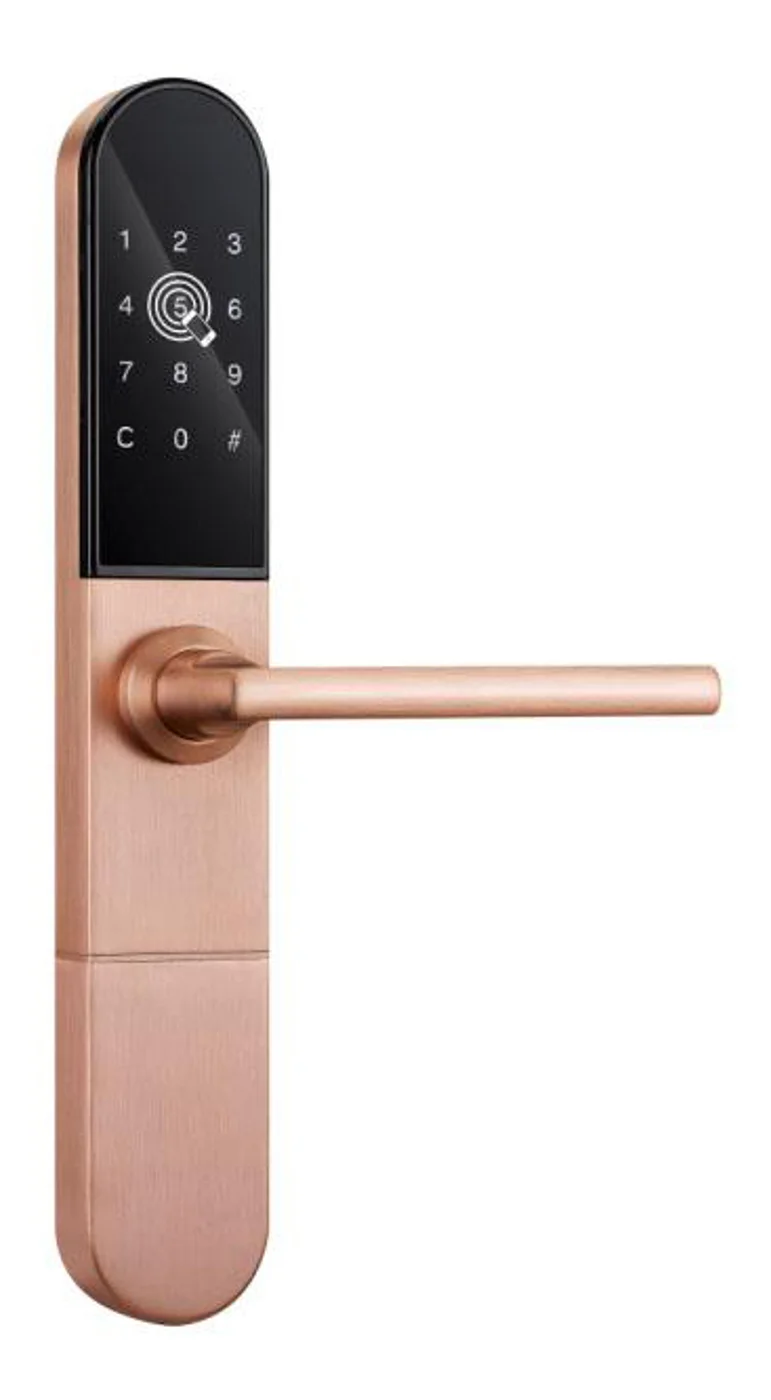
Smart Cabinet Lock — App-Managed, Multi-Site Dashboard
App-managed smart cabinet lock for office, parcel, and multi-site fleets. BLE app dashboard, audit trail, remote unlock, no per-lock server. Higher-tier chassis.
This page already points to it as the next recommended reference.
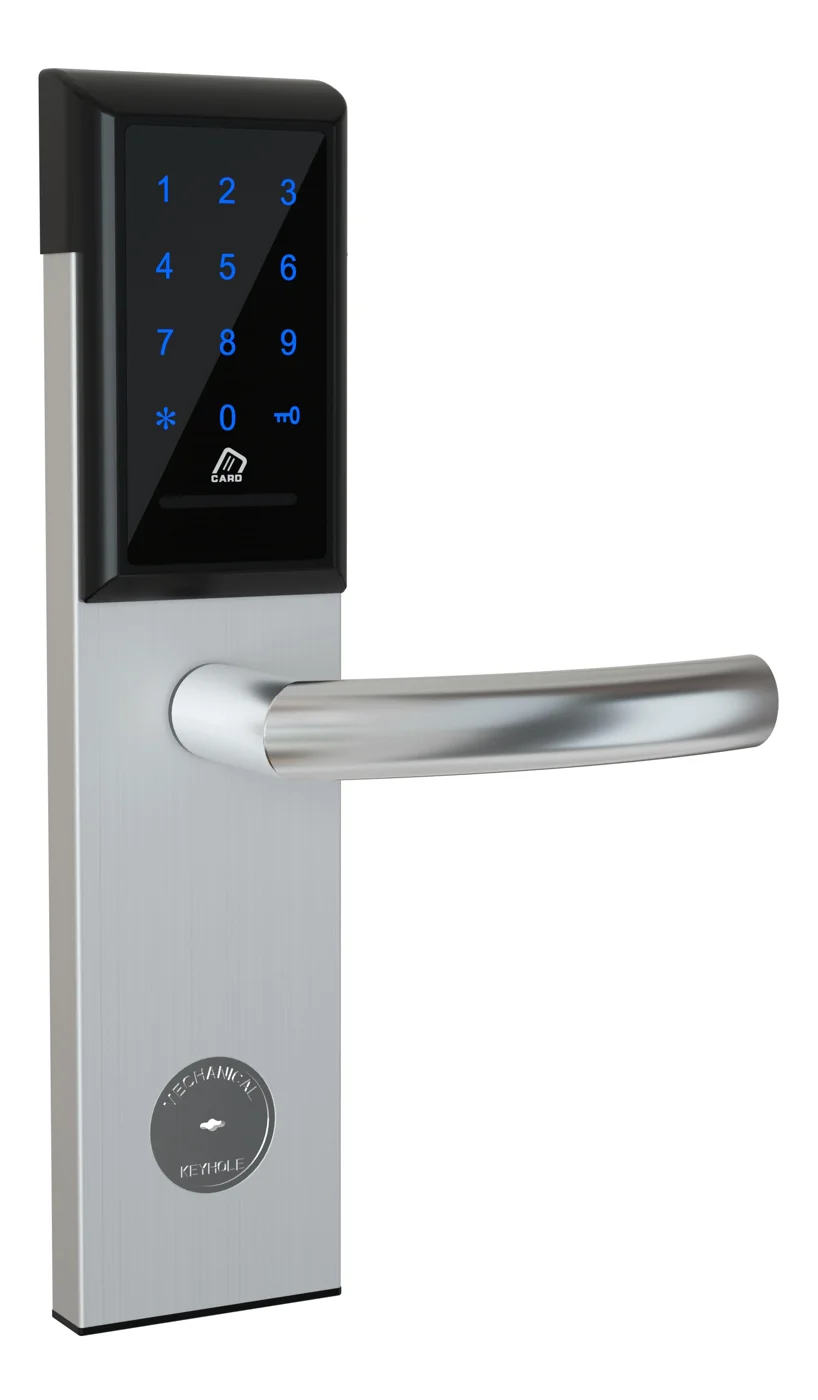
Office Cabinet Lock — PIN + Card for Filing & Pedestals
Offline PIN + card office cabinet lock for filing cabinets, pedestals, and drawers. Battery-powered 5-minute retrofit, no WiFi, no key management. CE/FCC/RoHS.
This page already points to it as the next recommended reference.
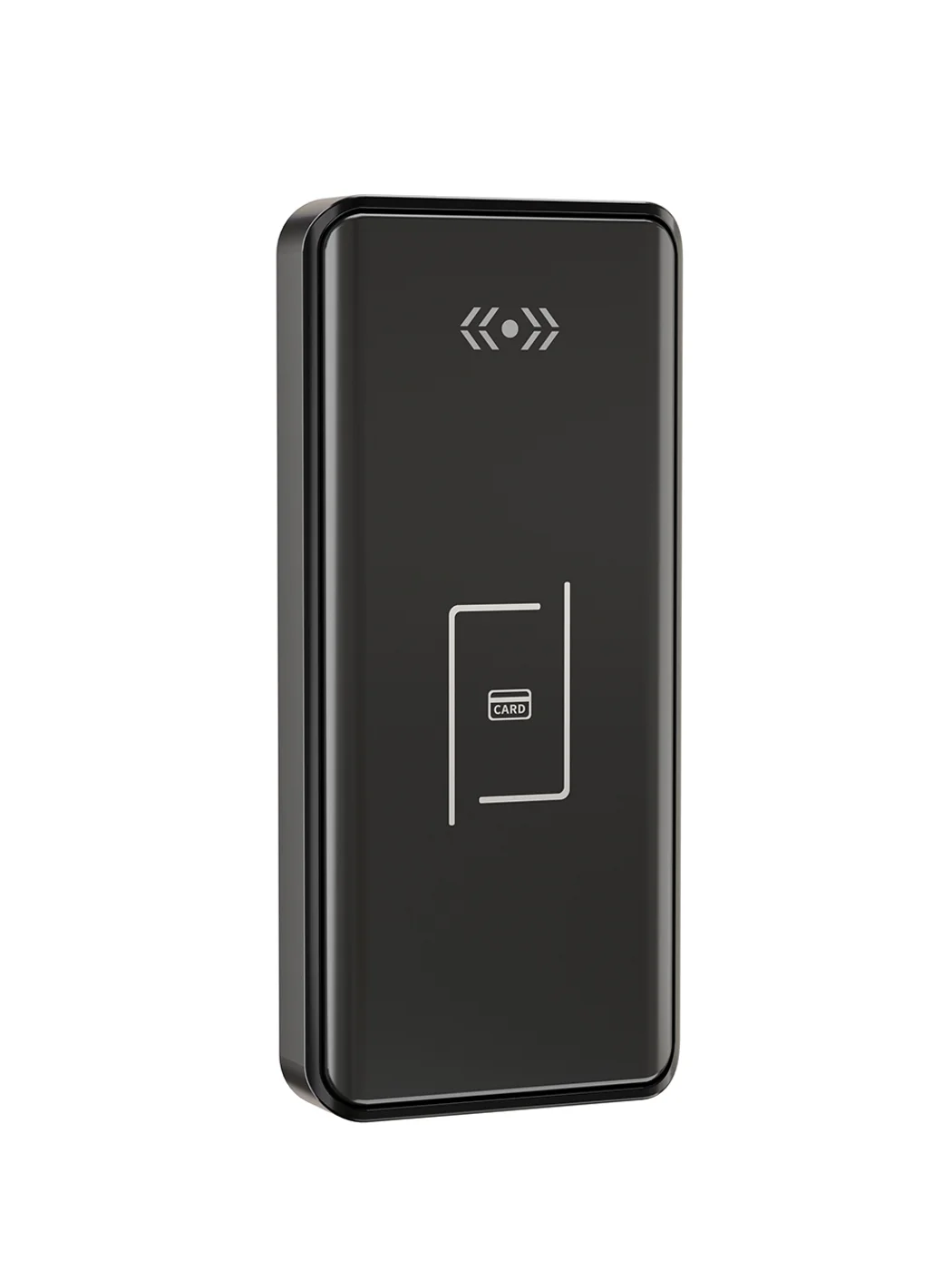
Gym Locker Lock — Offline Card, No WiFi Required
Offline card gym locker lock for fitness and pool lockers. MIFARE card, battery-powered 5-minute retrofit, no WiFi or server. Zinc alloy body, CE/FCC/RoHS.
This page already points to it as the next recommended reference.
Related blog posts
3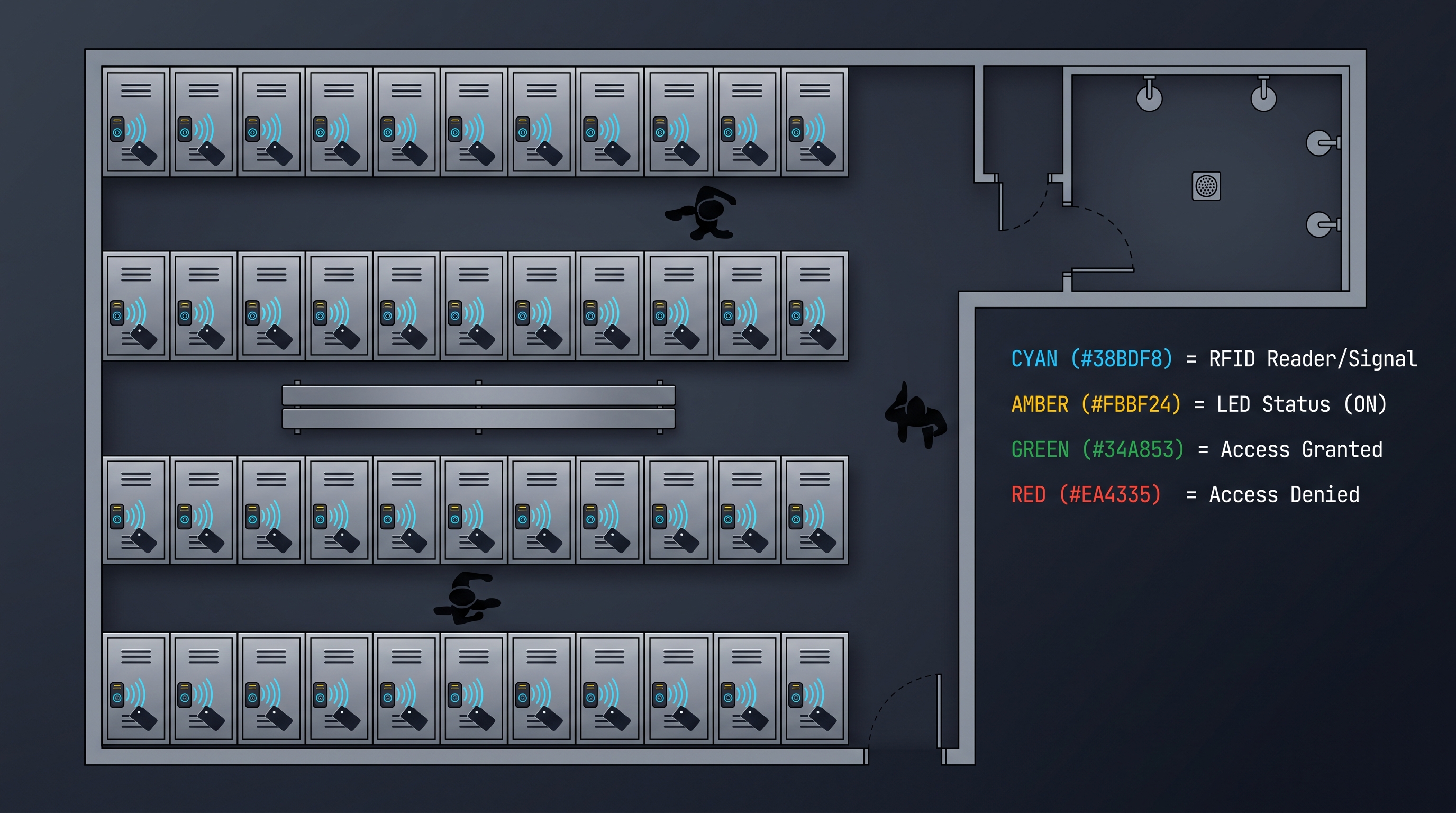
Digital Locker Lock: The Complete 2026 Guide to Smart, Keyless Gym, Office, and Parcel Storage Access Control
Complete guide to digital locker lock selection covering RFID, Bluetooth, PIN, QR code, and biometric access technologies for gyms, offices, parcel delivery, schools, hospitals, and commercial locker banks with installation, battery life, and ROI data.
It supports the same product context: Gym Locker Lock — Offline Card, No WiFi Required.
The Complete Guide to Digital Locker Management System Platforms in 2026
Explore how a digital locker management system transforms locker fleet operations with real-time monitoring, API integration, multi-site dashboards, and deployment flexibility for gyms, hotels, schools, and offices.
It supports the same product context: Gym Locker Lock — Offline Card, No WiFi Required.
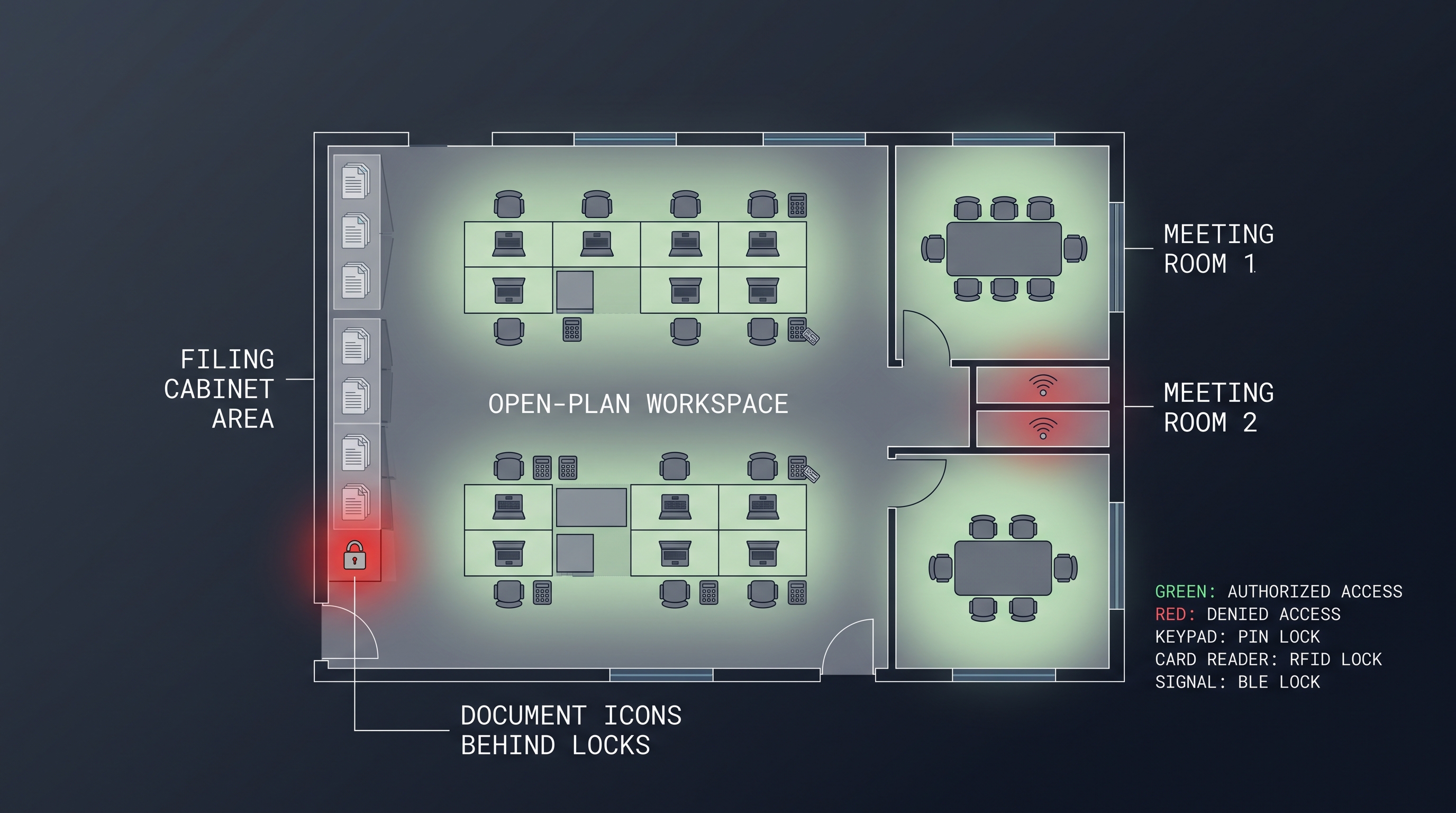
Digital Drawer Lock Guide 2026: Complete Buying & Technology Overview for Modern Security
Comprehensive digital drawer lock guide covering PIN keypad, fingerprint, RFID card, and Bluetooth app options. Detailed technical comparisons, installation tips, and buying advice for homes and businesses.
It supports the same product context: Office Cabinet Lock — PIN + Card for Filing & Pedestals.
Specify your hotel project with our engineers
Send your room count, ceiling type, and protocol preference. We will return a sample plan and quote within 24 business hours.
- Move from general guidance into a product or application discussion.
- Use RFQ when pricing, drawings, MOQ, or launch timing needs structure.
- Keep a direct contact path visible for fast clarifications and handoff.