Code Cabinet Lock: Electronic PIN Security for Modern Storage
A code cabinet lock replaces keys with PIN entry on a keypad, verifying codes against stored values to drive a motorized bolt; this guide explains code cabinet lock technology, lockout policies, power, tamper response, and selection for cabinets and lockers.
Understanding the Code Cabinet Lock and Its Core Technology
A code cabinet lock is an electronic security device that secures cabinets, drawers, lockers, and storage compartments using a numeric access code rather than a physical key. The fundamental operating principle of a code cabinet lock involves a digital keypad or touch interface on the exterior of the cabinet connected to an electronic control module inside, which verifies entered codes against stored values and activates a motorized latch or solenoid when authentication succeeds. This shift from mechanical to electronic access control has transformed how individuals and organizations think about cabinet security, moving from a paradigm of physical key management to one of digital credential management that offers far greater flexibility, accountability, and convenience.
The internal architecture of a code cabinet lock consists of several integrated subsystems that work together to provide secure, reliable operation. The input subsystem captures user code entries through the keypad, which may use physical buttons, capacitive touch sensors, or a touchscreen interface depending on the model. The processing subsystem is centered on a microcontroller that stores access codes in non-volatile memory, compares entered codes against stored values, enforces security policies such as lockout after incorrect attempts, and controls the output subsystem. The output subsystem includes the motor driver circuit and the actuator, which is typically a small DC gear motor that drives a cam or bolt mechanism to lock and unlock the cabinet. A code cabinet lock also includes a power subsystem that manages battery voltage, monitors charge levels, and provides low-battery warnings well before power is exhausted.
The authentication process in a code cabinet lock follows a carefully designed sequence that balances security with user convenience. When the code cabinet lock is in its idle state, the microcontroller is in a low-power sleep mode to conserve battery life. Pressing any key on the keypad generates an interrupt that wakes the microcontroller, which then begins monitoring the keypad for further input. As each digit is entered, the code cabinet lock stores the value in a buffer. Depending on the model, the user may need to press an enter or confirm key after entering the complete code, or the code cabinet lock may automatically evaluate the code once the expected number of digits has been entered. If the entered code matches a stored code, the microcontroller energizes the motor or solenoid, retracting the locking bolt for a preset duration typically three to ten seconds. If the code does not match, the code cabinet lock indicates the error through a red LED flash or audible beep and increments an internal failed-attempt counter.
Security policies within a code cabinet lock are enforced by the microcontroller firmware and are critical to preventing both casual and determined unauthorized access. The most important policy is the lockout policy, which specifies how many consecutive incorrect code entries are allowed before the code cabinet lock temporarily disables the keypad. A typical configuration allows three incorrect attempts before a 30-second lockout, with the lockout duration increasing after each subsequent block of failed attempts, perhaps to five minutes, then 30 minutes. This exponential backoff makes brute-force attacks against a code cabinet lock impractical, as trying all possible combinations on a four-digit code cabinet lock would take months or years with lockout delays. Some advanced code cabinet lock models also implement duress code support, where entering a specific alternative code unlocks the cabinet normally but silently triggers an alert to security personnel or logs a duress event in the audit trail.
The memory technology used in a code cabinet lock is important for both security and reliability. Non-volatile memory ensures that access codes are retained even when batteries are removed or completely drained. Early code cabinet lock designs used EEPROM chips, while modern units typically use flash memory with wear-leveling algorithms to support hundreds of thousands of code write cycles over the product lifetime. The codes stored in a code cabinet lock should be cryptographically hashed rather than stored in plain text, so that even if an attacker were to extract the memory chip and read its contents, the actual access codes would not be recoverable. This is a feature present in higher-end code cabinet lock products but not always in budget models, making it an important point of differentiation when security is a primary concern.
Advantages of Choosing a Code Cabinet Lock Over Traditional Keyed Locks
The fundamental advantage of a code cabinet lock over a mechanical keyed lock is the elimination of physical keys from the security equation. Physical keys create a cascade of operational and security problems that a code cabinet lock solves entirely. Keys can be lost, requiring expensive lock replacement or rekeying. Keys can be duplicated at any hardware store or kiosk without the knowledge or consent of the lock owner, creating unknown security vulnerabilities. Keys can be loaned to unauthorized individuals and returned without any record of the transfer. Keys wear down over time, eventually failing to operate the lock smoothly or at all. A code cabinet lock eliminates every one of these problems by replacing the physical key with a numeric code that can be changed instantly whenever security requires it and that leaves no physical artifact to be lost, stolen, or copied.
The access management flexibility of a code cabinet lock is transformative for any environment where multiple people need access to the same storage. Consider a shared office supply cabinet accessed by twenty employees. With a mechanical lock, twenty keys must be issued and tracked, and any key can be copied. When an employee leaves, collecting their key is an unreliable process that often results in a lost key and a lock that must be replaced. With a code cabinet lock, each employee gets a unique code or a shared department code can be used, and when an employee leaves, their personal code is simply deleted from the code cabinet lock memory in seconds. No hardware changes, no lock replacement, no security gap. Temporary access for a contractor or visitor is handled by creating a temporary code in the code cabinet lock that is deleted when the work is complete.
Audit trail and accountability are benefits of a code cabinet lock that mechanical locks cannot provide at any price. A keyed lock has no way to record who opened the cabinet, when, or how many times. If something goes missing from a cabinet, there is no evidence trail to determine who accessed it. A code cabinet lock with audit trail capability records every access event: which user code was used, the date and time of access, and whether the access was granted or denied. This creates accountability that deters theft and misuse, as every user knows their access is being logged. In regulated industries such as healthcare, finance, and pharmaceuticals, the audit trail from a code cabinet lock can be essential for demonstrating compliance with security requirements during audits and investigations.
The convenience and speed of a code cabinet lock deliver practical everyday benefits. Unlocking a code cabinet lock requires only a few seconds of keypad entry, typically faster than finding the right key on a keyring, inserting it into a keyhole, and turning it. This speed advantage is particularly meaningful in environments where cabinets are accessed frequently throughout the day, such as nursing stations where medication cabinets may be opened dozens of times per shift. A code cabinet lock can often be operated with one hand, which provides meaningful convenience in busy environments. There is no key to drop, no lock to fumble with in low light, and no concern about whether you remembered to bring the right key to the right cabinet.
Enhanced security configurations are possible with a code cabinet lock in ways that mechanical locks cannot match. A code cabinet lock can enforce minimum code length, ensuring that users do not choose trivially guessable codes like 1234 or 0000. A code cabinet lock can require periodic code changes, forcing users to update their codes on a schedule that reduces the risk of code compromise. A code cabinet lock can implement time-based restrictions, where certain user codes only work during specific hours or days of the week. A code cabinet lock can support two-person access, requiring two different user codes to be entered within a short window before the cabinet unlocks, a feature commonly used for high-value or high-risk storage in financial and pharmaceutical settings.
Cost analysis over the lifetime of the lock favors a code cabinet lock in many deployment scenarios, despite a higher initial purchase price compared to a basic mechanical cabinet lock. The primary cost savings come from the elimination of key management activities: no more cutting duplicate keys, no more lock replacement due to lost keys, no more administrative time spent tracking who has which key, and no more emergency locksmith calls when the only key to an important cabinet goes missing. For organizations with a significant number of cabinets, the administrative savings alone can justify the investment in a code cabinet lock system. Additionally, the theft deterrence and accountability provided by a code cabinet lock's audit trail can prevent losses that far exceed the cost of the lock hardware.
Aesthetic and modern design is an advantage of a code cabinet lock that may not drive the purchase decision but contributes to overall satisfaction. A code cabinet lock presents a clean, modern appearance with a sleek keypad that can be backlit for both visual appeal and usability in low light. The absence of a visible keyhole contributes to a minimalist aesthetic that aligns with contemporary design preferences in both residential and commercial interiors. A code cabinet lock communicates that the space values both security and technology, which can be a positive signal in environments like executive offices, luxury retail, and premium residential settings.
Different Types and Categories of Code Cabinet Lock Products
The code cabinet lock market encompasses a diverse range of products designed for different applications, security levels, and budget points. Understanding the categories and their distinguishing features is essential for selecting a code cabinet lock that is appropriate for a specific use case.
Basic standalone code cabinet lock units represent the entry point of the market. These are self-contained electronic locks with a numeric keypad on one side and the lock mechanism on the other, powered by batteries and requiring no external connections. Programming of access codes on a basic standalone code cabinet lock is done directly on the keypad by entering a programming mode, usually through a master code or a hidden programming button. These code cabinet lock units typically support a limited number of user codes, somewhere between one and twenty depending on the model. They may or may not include an audit trail, and if they do, the audit log must be retrieved by connecting the code cabinet lock to a computer via a USB cable or by reading the log through the lock's programming interface. Basic standalone code cabinet lock products are the most affordable option and are suitable for residential use, small offices, and any application where simplicity outweighs the need for advanced management features.
Bluetooth-connected code cabinet lock models add wireless smartphone connectivity to the basic electronic lock platform. A Bluetooth code cabinet lock can be programmed and managed through a mobile app, which provides a much more user-friendly interface than the keypad-based programming of a standalone unit. Through the app, an administrator can create, edit, and delete user codes, view the audit trail with timestamps, configure security settings like auto-lock timing and alarm behavior, and in some models, use the phone itself as a credential to unlock the code cabinet lock without entering a code. The Bluetooth code cabinet lock typically retains the physical keypad for everyday unlocking, so users without the app can still access the cabinet with their code. This category of code cabinet lock is ideal for small to medium businesses, schools, and shared office environments where a manageable number of locks need to be administered, and the convenience of app-based management justifies the moderate price premium over a standalone unit.
WiFi-connected and cloud-managed code cabinet lock systems represent the high end of the market in terms of both capability and cost. A WiFi code cabinet lock connects directly to a wireless network and communicates with a cloud server, enabling real-time remote management from a web dashboard accessible from anywhere with an internet connection. Administrators can push code changes to one lock or a thousand locks simultaneously, receive instant alerts for security events, and integrate the code cabinet lock with other building systems through published APIs. Cloud-managed code cabinet lock systems support essentially unlimited users and provide comprehensive audit logging with real-time access to data. These systems are designed for large enterprises, universities, healthcare systems, and government facilities where locks are measured in the hundreds or thousands and centralized management is a requirement rather than a nice-to-have.
Multi-credential code cabinet lock models combine a numeric keypad with one or more additional authentication methods, typically an RFID card reader, a fingerprint sensor, or an NFC module for smartphone tap-to-unlock. The multi-credential code cabinet lock provides flexibility that accommodates different user preferences and security requirements. Some users may prefer to tap an RFID badge they already carry for building access, while others prefer entering a code on the keypad. A multi-credential code cabinet lock can also support two-factor authentication for higher security, requiring both a card tap and a PIN entry before the cabinet unlocks. This category is popular in corporate environments with existing badge infrastructure, high-security government and military facilities, and any setting where different user groups have different credential preferences.
Locker-specific code cabinet lock designs are optimized for the unique demands of locker applications in schools, gyms, and employee changing rooms. A locker code cabinet lock must withstand high-frequency use, often hundreds of cycles per day in busy environments. The mechanisms are typically more robust than those in a general-purpose code cabinet lock, with hardened latches designed for repeated impact as locker doors are closed. The user interface of a locker code cabinet lock is simplified for ease of use by a broad population, often with large, clearly labeled buttons and simple, intuitive programming sequences. Many locker code cabinet lock models feature auto-lock on door closure, ensuring that lockers are always secured when not actively in use. Some locker code cabinet lock products are designed as retrofit replacements for common mechanical locker lock form factors, fitting into the same mounting holes for easy upgrading of existing locker banks.
Furniture-grade code cabinet lock products are designed for integration into office furniture, filing cabinets, residential cabinetry, and other applications where appearance is as important as function. These hidden code cabinet lock designs minimize visible hardware, often with a slim touch keypad that is nearly flush with the cabinet surface and available in finishes that match common cabinet hardware. The lock mechanism of a furniture-grade code cabinet lock is typically compact to fit within drawer rails and thin cabinet panels. These products are commonly used in executive office furniture, hotel guest room cabinetry, and high-end residential kitchens and bathrooms where visible security hardware would detract from the design aesthetic.
Heavy-duty and industrial code cabinet lock models are built for demanding environments where standard electronic locks would quickly fail. Features of an industrial code cabinet lock include weather sealing for outdoor or washdown installations, extended temperature ratings for unconditioned spaces, corrosion-resistant materials and finishes, and higher bolt strength and holding force ratings. An industrial code cabinet lock is used in utility enclosures, telecommunications cabinets, outdoor storage lockers, manufacturing equipment cabinets, and food processing facilities where exposure to water, chemicals, dust, or temperature extremes is routine.
Code Cabinet Lock Security Architecture and Features
The security architecture of a code cabinet lock can be understood as a layered defense system where each layer addresses a different category of threat. The outermost layer is physical security, which protects the code cabinet lock against brute-force mechanical attacks. The middle layers include electronic security measures that protect against attempts to bypass or manipulate the lock's electronics. The inner layers consist of logical security policies that govern code management and authentication behavior.
Physical security in a code cabinet lock begins with the materials and construction of the lock housing and bolt mechanism. A quality code cabinet lock uses a housing made from zinc alloy, stainless steel, or reinforced engineering plastic, designed to resist prying, drilling, and impact attacks. The bolt or latch of a code cabinet lock should be made from hardened steel and should engage deeply enough into the strike plate that the cabinet door cannot be forced open without visibly damaging the cabinet itself. Some code cabinet lock models include anti-pry shields that block the insertion of tools between the cabinet door and frame, and anti-drill plates that protect the lock mechanism from drilling attacks. The keypad face of a code cabinet lock is typically made from a durable material that resists scratching and wear so that frequently used digits do not become visibly worn, which would reduce the effective code space by revealing which digits are used in the code.
Tamper detection is an important physical security feature in a code cabinet lock. A tamper switch or sensor detects when the code cabinet lock housing has been removed from the cabinet or when the lock has been subjected to force beyond normal operation. When tampering is detected, the code cabinet lock can emit an audible alarm from a built-in buzzer, flash warning LEDs, and log the event with a timestamp. Connected code cabinet lock models can send an instant alert to administrators or a central monitoring system. The tamper alarm serves both as a deterrent, as would-be intruders generally do not want to attract attention, and as a notification mechanism that alerts responsible parties to a security incident in progress.
Electronic security in a code cabinet lock protects against attacks that target the lock's circuitry rather than its physical structure. Voltage injection attacks attempt to apply external voltage to the keypad or cable connections to bypass the microcontroller and directly energize the motor or solenoid. A properly designed code cabinet lock includes protection circuits such as transient voltage suppressors, reverse-voltage protection diodes, and isolation between the external-facing keypad circuit and the internal motor control circuit. Side-channel attacks that attempt to extract the access code by analyzing the code cabinet lock's power consumption or electromagnetic emissions during code entry are theoretically possible but require sophisticated equipment and proximity to the lock, making them impractical for most real-world threats.
Logical security in a code cabinet lock encompasses the software-based policies and protections implemented in the lock's firmware. The code verification algorithm is fundamental: the code cabinet lock should compare entered codes against stored codes using a constant-time comparison to prevent timing attacks that could reveal information about the correct code based on how long the comparison takes. Code length enforcement is a basic logical security measure; a code cabinet lock should support a minimum of four digits and ideally six to eight digits for applications requiring higher security. The lockout policy discussed earlier is a critical logical security feature that prevents brute-force attacks. Some code cabinet lock models implement a one-time code feature, where a temporary code is generated that works for a single use and then self-destructs, ideal for granting one-time access to a service technician or delivery person.
Encryption and secure communication are essential in a code cabinet lock that includes wireless connectivity. A Bluetooth code cabinet lock should use Bluetooth Low Energy with AES-128 or AES-256 encryption for all communication between the lock and the management app. A WiFi code cabinet lock should use WPA2 or WPA3 for wireless network security and TLS encryption for communication with cloud servers. The management app and cloud service for a connected code cabinet lock should enforce strong authentication for administrative access, ideally with multi-factor authentication to prevent an attacker who obtains administrative credentials from compromising all locks in a system.
| Security Feature | Basic Standalone | Mid-Range Bluetooth | Premium WiFi/Cloud |
|---|---|---|---|
| Code Length | 4-6 digits | 4-8 digits | 4-12 digits |
| Failed Attempt Lockout | Basic | Configurable | Advanced with escalation |
| Tamper Alarm | Optional buzzer | Audible + app alert | Multi-channel alerting |
| Audit Trail | None or basic | Detailed with timestamps | Real-time with analytics |
| Code Encryption at Rest | Rare | Common | Standard |
| Communication Encryption | None | AES-128 | TLS + AES-256 |
| Two-Factor Support | No | Optional | Standard |
| Remote Disable | No | Via app | Instant cloud command |
| Firmware Updates | None | Via app | Over-the-air automatic |
Step-by-Step Code Cabinet Lock Installation Guide
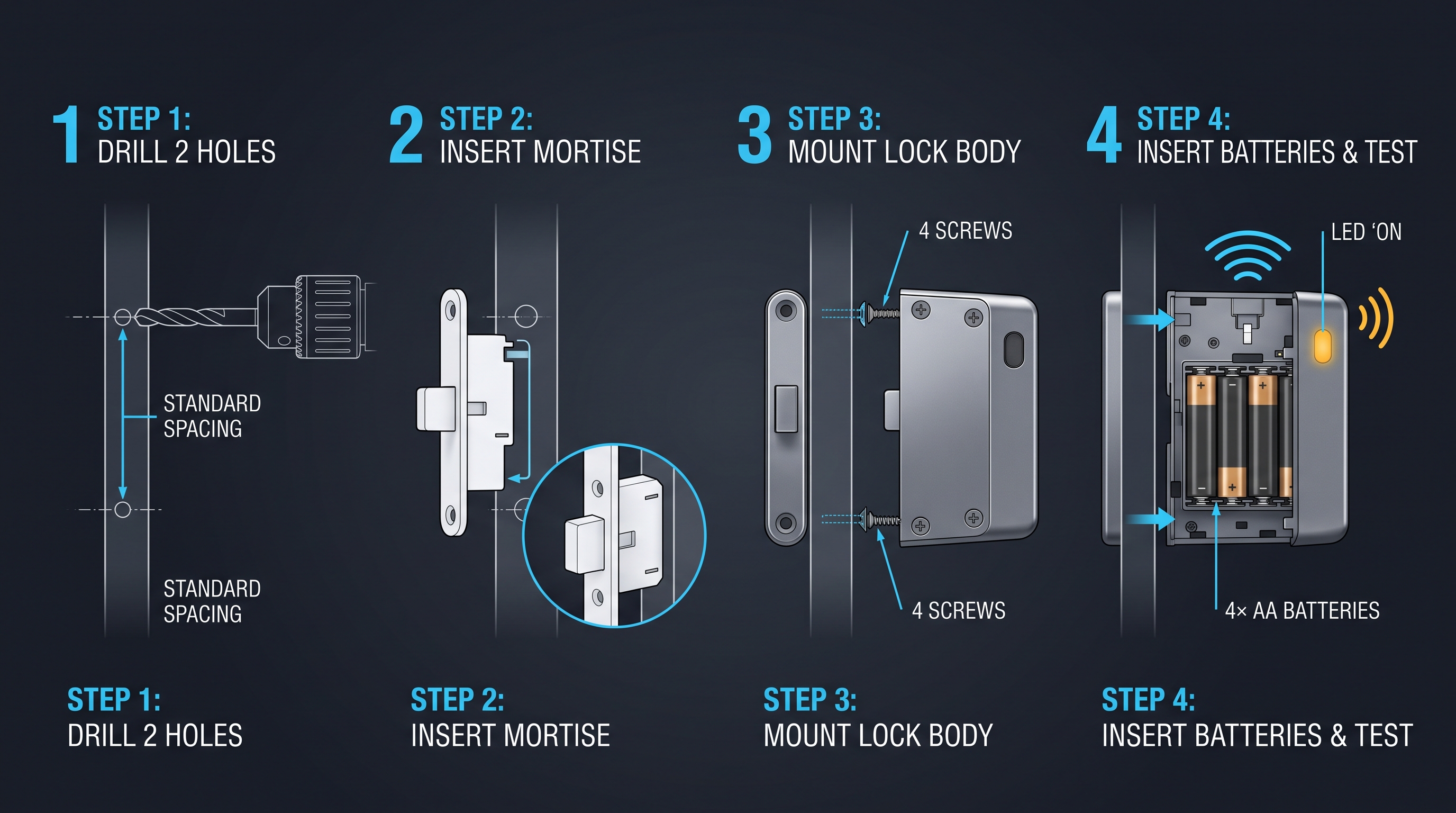
Installing a code cabinet lock is a manageable project for anyone with basic DIY skills and common tools. The process varies by lock model and cabinet type, but the general procedure follows a consistent pattern. Before beginning, verify that the code cabinet lock you have purchased is compatible with your cabinet's material, door thickness, and mounting configuration. Most code cabinet lock products are designed for doors between 12mm and 22mm thick, though extended-reach models are available for thicker doors.
Preparation is the first phase of code cabinet lock installation. Gather the necessary tools: a drill with the required drill bit sizes specified in the lock manual, a hole saw or Forstner bit for the main lock body hole, screwdrivers appropriate for the mounting screws provided, a pencil for marking, a center punch, a tape measure or ruler, and safety glasses. Remove any existing lock from the cabinet, keeping the old strike plate in place if it is compatible with the new code cabinet lock or removing it if a new one is provided. Clean the cabinet surface around the installation area to remove dirt, grease, and old adhesive residue, which ensures that any adhesive gaskets or seals on the code cabinet lock will bond properly.
Marking the hole positions is the most critical step for ensuring that the code cabinet lock is installed straight and functions properly. Most code cabinet lock products include a paper template that can be taped to the cabinet door at the desired position. If no template is provided, use the lock body itself as a template, holding it in the desired position and marking through the mounting holes. The center of the main lock body hole is typically positioned 20mm to 30mm from the edge of the cabinet door, but follow the specific measurements in your code cabinet lock manual. Use a center punch to create a small indentation at each drill mark to prevent the drill bit from walking when starting the hole.
Drilling the holes for a code cabinet lock requires care and the right tools for the cabinet material. For wood cabinets, a standard wood hole saw or Forstner bit of the specified diameter works well. Drill from the exterior face of the cabinet door to ensure a clean entry hole on the visible surface. Apply gentle, steady pressure and let the tool do the work; forcing the drill can cause splintering on the exit side. For metal cabinets, use a bi-metal hole saw and apply cutting oil to lubricate and cool the cut. Drill at a moderate speed to avoid overheating the bit and the metal. For laminate or composite cabinets, use a sharp hole saw and drill slowly to prevent chipping the surface laminate. After drilling the main hole, drill any secondary holes specified in the code cabinet lock manual, such as a smaller hole for a keypad cable pass-through or additional mounting screw holes.
Deburring and surface preparation follow the drilling step. Use fine-grit sandpaper or a deburring tool to smooth any rough edges around the drilled holes, both on the exterior and interior surfaces of the cabinet door. Sharp edges can damage the code cabinet lock's cable during installation or create stress points that lead to cracking of the cabinet material over time. If the code cabinet lock uses an adhesive gasket or mounting pad, clean the area around the hole with the provided alcohol wipe or with isopropyl alcohol on a lint-free cloth to ensure strong adhesion. Allow the cleaned surface to dry completely before proceeding.
Mounting the lock body into the cabinet door is the next step. Insert the threaded barrel of the code cabinet lock through the main hole from the interior side of the door. If the lock has a separate keypad connected by a ribbon cable, feed the cable through the designated pass-through hole first, being careful not to pinch, kink, or strain the cable. Secure the lock body to the door using the provided mounting nut or bracket, tightening it firmly but not excessively, as overtightening can crack the cabinet material or distort the lock housing. If the code cabinet lock includes a mounting plate or reinforcement washer, install it on the interior side of the door before tightening the mounting nut to distribute the clamping force and prevent pull-through.
Attaching the keypad to the exterior face is a detail-sensitive step. For code cabinet lock models where the keypad connects via cable to the lock body, carefully connect the cable, observing the correct orientation of the connector. The connector is often keyed to prevent incorrect insertion, but check the manual to confirm. Press the keypad assembly into the mounting hole from the exterior, ensuring it sits flush against the cabinet surface. Secure the keypad with the provided screws or by tightening from the interior side depending on the code cabinet lock design. If the keypad uses an adhesive backing, peel the protective film and press the keypad firmly into place, applying even pressure for 30 seconds to ensure full adhesion. Take care that the keypad is square and properly aligned, as it is the most visible part of the code cabinet lock installation.
Installing the strike plate is the final mechanical step. Close the cabinet door and observe where the lock bolt contacts the cabinet frame or opposite door. Mark the position for the strike plate, ensuring that when the code cabinet lock bolt extends, it will fully engage into the strike opening. For a spring-loaded latch bolt, the strike plate must have a ramp or beveled edge that guides the latch into the strike opening as the door closes. Drill pilot holes for the strike plate screws and secure the strike plate. Test the door closure several times to verify that the code cabinet lock bolt engages smoothly and completely every time. If the bolt catches or requires extra force to close the door, adjust the strike plate position slightly until the operation is smooth.
Powering and programming the code cabinet lock completes the installation. Install fresh batteries of the specified type, checking the polarity markings in the battery compartment. Most code cabinet lock units will beep or flash an LED to confirm power-up. Immediately set the master or administrator code following the instructions in the manual. This is usually the first operation required after power-up and must be completed before any other programming is possible. Choose a master code that is memorable to the administrator but not easily guessable. Then add user codes for all authorized individuals. Test each code thoroughly: enter the code, confirm that the code cabinet lock unlocks, open and close the door, and verify that the lock re-engages. Test that incorrect codes are properly rejected. For any additional features like auto-relock timing, wrong-code lockout, or audible feedback settings, configure them according to your preferences and the environment where the code cabinet lock is installed.
Applications of Code Cabinet Lock Technology Across Industries
Code cabinet lock technology has been adopted across a remarkably broad range of industries and applications, each with specific requirements that inform the choice of lock features and specifications. Understanding how a code cabinet lock is used in different contexts provides insight into which features matter most for a given application.
Healthcare facilities are among the most demanding users of code cabinet lock technology. Hospitals, clinics, nursing homes, and pharmacies use a code cabinet lock on medication storage cabinets, controlled substance lockers, patient supply carts, and medical records filing systems. The regulatory environment in healthcare, particularly around controlled substances, requires strict access control with individual accountability. A code cabinet lock used in healthcare must provide detailed audit trails to satisfy Drug Enforcement Administration and state pharmacy board requirements. The ability of a code cabinet lock to support unique user codes for each authorized staff member, combined with comprehensive logging of every access, provides the documentation needed for regulatory compliance. The rapid unlock capability of a code cabinet lock is critical in emergency situations where nurses and physicians need immediate access to life-saving medications and supplies.
Educational institutions deploy code cabinet lock systems across classrooms, laboratories, administrative offices, and student facilities. Teachers use a code cabinet lock on supply cabinets to secure expensive equipment such as tablets, laptops, science lab instruments, and audiovisual gear. The keyless nature of a code cabinet lock means that teachers do not need to carry and protect cabinet keys throughout the busy school day. University research laboratories secure sensitive materials, expensive equipment, and hazardous substances behind a code cabinet lock that provides individual access to multiple researchers with full audit trail accountability. School administrative offices use a code cabinet lock on filing cabinets containing student records to comply with the Family Educational Rights and Privacy Act requirements for protecting personally identifiable information.
Corporate office environments rely heavily on code cabinet lock systems for securing sensitive business information and valuable assets. Human resources departments use a code cabinet lock on personnel file cabinets to maintain confidentiality and comply with privacy regulations. Finance departments secure physical financial records, check stock, and payment instruments behind a code cabinet lock with dual-control access requirements. IT departments use a code cabinet lock on server rack cabinets and network equipment enclosures to control physical access to critical infrastructure, often with the code cabinet lock integrated into the organization's broader physical access control system. Executive offices use a code cabinet lock on personal storage such as credenzas, wet bars, and private filing cabinets for both security and the modern, professional appearance the locks provide.
Retail businesses use code cabinet lock technology in both customer-facing and back-of-house applications. High-value merchandise display cases for jewelry, watches, electronics, and luxury goods are secured with a code cabinet lock that allows sales associates to quickly open the case for customer presentations while securing the merchandise at all other times. Back-of-house stockrooms use a code cabinet lock on inventory cabinets to track employee access and reduce shrinkage, with the audit trail providing accountability when inventory discrepancies are found. Pharmacy sections of retail stores use a code cabinet lock for controlled medication storage, and liquor departments use a code cabinet lock for high-value spirits and age-restricted products.
Hospitality applications for a code cabinet lock include hotel in-room safes and minibar cabinets, where the guest sets a personal code at check-in and the code is automatically cleared at checkout. Hotel housekeeping departments use a code cabinet lock on supply closets and linen storage to control access and track inventory usage. Restaurant and bar managers use a code cabinet lock on liquor storage cabinets and cash handling areas to prevent employee theft. Conference centers and event venues use a code cabinet lock on equipment storage to control access to expensive audiovisual and presentation equipment.
Residential applications of a code cabinet lock have expanded rapidly as part of the broader smart home trend. Homeowners use a code cabinet lock on medicine cabinets to prevent accidental access by children while maintaining convenient access for adults. Gun safes and weapon storage cabinets are secured with a code cabinet lock that provides quick access in emergencies while preventing unauthorized access. Home office filing cabinets with tax documents, financial records, and personal identification documents benefit from the security of a code cabinet lock. The convenience of keyless access is particularly valued in residential settings where multiple household members need access to shared cabinets.
Industrial and infrastructure applications present the most demanding physical environments for a code cabinet lock. Utility companies use a code cabinet lock on equipment enclosures at electrical substations, water treatment plants, and telecommunications sites, where the locks must withstand weather exposure, temperature extremes, and potential vandalism. Manufacturing facilities use a code cabinet lock on tool cribs, parts storage, and maintenance supply cabinets to control access to expensive tooling and maintain accountability. Transportation facilities including airports, rail stations, and ports use a code cabinet lock on equipment and supply cabinets throughout their facilities.
Government and military applications demand the highest levels of security and reliability from a code cabinet lock. Classified document storage, evidence rooms, armories, and sensitive equipment storage all use a code cabinet lock that meets government security standards such as those published by the General Services Administration. Two-factor authentication with a code plus an additional credential is standard in these applications. The audit trail of a code cabinet lock in government use must be tamper-proof and forensically sound. These applications drive the development of the most secure code cabinet lock technologies, which eventually trickle down into commercial and consumer products.
Code Cabinet Lock Troubleshooting and Maintenance
Regular maintenance of a code cabinet lock is essential for ensuring reliable long-term operation and preventing the inconvenience and potential security issues of a lock failure. The maintenance requirements of a code cabinet lock are modest but important, and attention to a few key areas will keep the lock operating smoothly for years.
Battery management is the most important ongoing maintenance task for any battery-powered code cabinet lock. Most manufacturers recommend replacing batteries annually as a preventive measure, even if the low-battery indicator has not yet activated. When the code cabinet lock does signal low battery through beeps, flashing lights, or app notifications, replace the batteries immediately rather than waiting. Always use high-quality alkaline batteries from a reputable brand; budget batteries are more prone to leakage, which can permanently damage the code cabinet lock's internal electronics. When replacing batteries, inspect the battery compartment for any signs of corrosion or leakage. If corrosion is present, clean the battery contacts carefully with a cotton swab dipped in white vinegar or isopropyl alcohol, then dry thoroughly before installing new batteries.
Keypad maintenance for a code cabinet lock involves both cleaning and inspection. The keypad is the primary user interface and accumulates oils, dirt, and wear from regular use. Clean the keypad periodically with a soft cloth slightly dampened with water or a mild, non-abrasive cleaner. Do not use harsh chemicals, abrasive cleaners, or excessive moisture, which can damage the keypad membrane, seep into the code cabinet lock housing, and cause electronic failure. Inspect the keypad for visible wear on frequently used buttons, as worn key labels can indicate which digits are part of the access code, reducing the effective security of the code cabinet lock. If significant wear is observed, consider changing the access codes to use different digits or replacing the keypad if the code cabinet lock design allows it.
Mechanical maintenance focuses on the bolt or latch mechanism and door alignment. Over time, cabinet doors can sag on their hinges due to weight, wear, or building settlement, causing the code cabinet lock bolt to misalign with the strike plate. If the lock begins to bind, requires extra force to close, or fails to latch consistently, check the door alignment before assuming the lock is faulty. Tighten hinge screws, add shims behind hinges, or adjust the strike plate position to restore proper alignment. The bolt mechanism of a code cabinet lock may benefit from occasional lubrication, but use only a dry lubricant such as graphite powder or PTFE spray. Oil-based lubricants attract dust and can gum up the mechanism, eventually causing the code cabinet lock to malfunction.
Firmware and software updates are maintenance tasks for connected code cabinet lock models with Bluetooth or WiFi capabilities. Manufacturers periodically release firmware updates that fix bugs, patch security vulnerabilities, and add new features. Check the manufacturer's app or website for available updates and apply them promptly, particularly security-related updates. The update process for a code cabinet lock typically involves connecting to the lock via Bluetooth from within range, or through the cloud management platform for WiFi-connected locks, then initiating the update and allowing it to complete without interruption. Do not remove batteries or disconnect power during a code cabinet lock firmware update, as this can corrupt the firmware and require factory service to recover.
Common troubleshooting scenarios for a code cabinet lock include unresponsive keypad, motor activation without bolt movement, and persistent error indications. If the code cabinet lock keypad is completely unresponsive, the batteries are the first thing to check. Even if the batteries were recently replaced, a defective battery or poor contact can cause a dead lock. Try removing and reinstalling the batteries, ensuring the contacts are clean and making firm connection. If the code cabinet lock has an external power or jump-start capability, use it to test whether the lock powers on with an external power source, which would confirm a battery issue.
When a code cabinet lock beeps and the motor can be heard activating, but the bolt does not retract enough to open the door, the problem is typically mechanical rather than electronic. The bolt may be binding against the strike plate due to door misalignment. If the cabinet can be opened through an alternative method, observe the bolt movement while entering a code to identify where it is binding. If the bolt does not move at all despite the motor sound, the internal gear train may be stripped or jammed, which generally requires replacement of the code cabinet lock. Before concluding that the lock is defective, check that nothing inside the cabinet is pressing against the door and putting tension on the bolt.
A code cabinet lock that beeps or flashes error patterns is communicating a specific condition through its diagnostic indicators. Refer to the user manual for the meaning of the specific pattern. Common error patterns include a single long beep after code entry indicating an incorrect code, rapid beeping indicating a low battery condition, a series of beeps in a specific count indicating a tamper alarm, and a repeating beep pattern indicating that the code cabinet lock is in lockout mode after too many incorrect attempts. If the lock is in lockout mode, wait for the lockout period to expire, which is typically stated in the manual, before attempting to enter a code again. If a code cabinet lock enters a persistent error state that cannot be resolved by replacing batteries or waiting for a lockout to expire, a factory reset may be required. The factory reset procedure varies by model but typically involves pressing a hidden reset button on the interior of the lock or a specific button combination on the keypad. Note that a factory reset typically erases all user codes and settings, requiring the code cabinet lock to be fully reprogrammed.
Smart Features and Integration of Modern Code Cabinet Lock Systems
The evolution of the code cabinet lock from a simple standalone electronic device to a connected smart security component has opened up capabilities that dramatically change how cabinet security is implemented and managed. Understanding the smart features and integration options available in modern code cabinet lock systems is essential for selecting a product that will serve both current and future needs.
Cloud-based management is the most powerful capability in a connected code cabinet lock ecosystem. Rather than accessing each lock individually for programming or audit review, administrators manage the entire fleet of code cabinet lock units from a centralized web dashboard. User codes can be created once and pushed to all locks that the user should have access to, or unique codes can be assigned per lock per user. When a user's access needs to be revoked, a single action in the dashboard removes their code from every code cabinet lock in the system. The cloud platform maintains a unified audit trail across all locks, enabling security analysis that looks for patterns across time and location. The cloud-managed code cabinet lock approach transforms cabinet security from an isolated per-cabinet activity to an enterprise-wide security function.
API integration enables a code cabinet lock to participate in automated workflows and communicate with other business systems. A code cabinet lock platform with a well-designed REST API can be integrated with human resources systems so that access is automatically provisioned when an employee is hired and automatically revoked when they depart. Integration with building access control systems creates a unified security ecosystem where the same credential that opens the front door also opens assigned cabinets. Integration with laboratory information management systems or pharmacy management systems can automate access to specific storage cabinets based on work orders or prescription fulfillment workflows. The API-enabled code cabinet lock becomes a programmable security component rather than a standalone device.
Mobile credential support extends a code cabinet lock beyond numeric code entry to include smartphone-based authentication. Users can unlock a compatible code cabinet lock by tapping their phone, using a secure app-based unlock button, or through automatic proximity detection using Bluetooth. Mobile credentials offer several security advantages: phones can require biometric authentication such as fingerprint or facial recognition before transmitting the credential, mobile credentials can be remotely revoked without any interaction with the user or the code cabinet lock, and mobile credentials cannot be shared or copied the way a numeric code can be told to another person. As smartphone ownership has become essentially universal, mobile credential support in a code cabinet lock is transitioning from a premium feature to an expected capability.
Time-based and schedule-based access controls add a temporal dimension to the security of a code cabinet lock. A code cabinet lock with a real-time clock can restrict access based on time of day, day of the week, or specific date ranges. Cleaning staff codes might only work during their scheduled shift hours. Temporary contractor codes might have a built-in expiration date after which the code is automatically deactivated. School locker access might be restricted to school hours to prevent after-hours loitering and vandalism. These schedule-based policies are configured in the code cabinet lock management platform and enforced automatically by each lock, creating a level of policy control that would be impossible to achieve manually.
Conditional and context-aware access is an emerging capability in advanced code cabinet lock systems. The lock can consider multiple factors when deciding whether to grant access, not just whether the entered code exists in its memory. A code cabinet lock might require two-person authentication for high-value cabinets, where two different user codes must be entered within a specified time window. A code cabinet lock might elevate its security requirements during non-business hours, requiring two-factor authentication when the building alarm system indicates that the facility is in after-hours mode. A code cabinet lock in a laboratory might deny access to a chemical storage cabinet if the ventilation system reports a fault, preventing anyone from opening the cabinet in unsafe conditions.
Predictive maintenance and health monitoring are smart features that use data from a code cabinet lock to prevent failures before they occur. A connected code cabinet lock continuously monitors its battery voltage, motor current draw, lock cycle count, and environmental conditions. This data is analyzed in the cloud platform to predict when batteries will need replacement, when the mechanism is showing signs of wear that indicate impending failure, and when environmental conditions exceed the code cabinet lock's rated operating range. Maintenance can be scheduled proactively based on actual condition rather than on a fixed calendar schedule, reducing both the risk of unexpected lock failures and the cost of unnecessary preventive maintenance visits.
Selecting the Best Code Cabinet Lock: A Decision Framework
Choosing the right code cabinet lock from the many products on the market requires systematically evaluating your specific requirements and matching them to the capabilities of available locks. A structured decision process ensures that you get a code cabinet lock that provides appropriate security, convenient access, and reliable operation without paying for unnecessary features.
The security assessment is the foundation of the code cabinet lock selection process. Start by determining what is being protected and what the consequences of unauthorized access would be. A code cabinet lock on a shared office supplies cabinet has minimal security requirements: basic code authentication with a four-digit code is sufficient. A code cabinet lock on a controlled substance storage cabinet in a hospital has high security requirements: multi-credential support, comprehensive audit trail, tamper alarm, and integration with the facility's security infrastructure. A code cabinet lock protecting classified information in a government facility has the highest security requirements: certified to government standards, two-factor authentication, tamper-proof audit logging, and resistance to sophisticated attack methods. Honestly assess the threat level to avoid both under-specifying and over-specifying the code cabinet lock.
The user population and access patterns significantly influence code cabinet lock selection. How many people need access, and how frequently does that group change? A code cabinet lock for a private office used by one person with stable access needs can be the simplest standalone model. A code cabinet lock for a shared resource accessed by a rotating cast of employees, contractors, and visitors needs Bluetooth or WiFi connectivity for efficient code management. A code cabinet lock for hundreds of users across a large organization needs cloud-based management with role-based administration that allows department managers to manage their own locks without having access to others. Consider the technical comfort level of users: a code cabinet lock in a public-facing area or used by the general public needs an intuitive interface, while a code cabinet lock used by trained staff can have a more complex interface.
Environmental factors determine which code cabinet lock models are physically suitable. Measure the cabinet door thickness and verify compatibility with the code cabinet lock specifications. Determine whether the installation location is indoors in a climate-controlled environment, indoors but subject to temperature fluctuations such as a warehouse or garage, or outdoors with exposure to weather. Consider humidity, dust, chemical exposure, and cleaning requirements. A code cabinet lock in a food processing facility may be exposed to washdown procedures with water and sanitizing chemicals, requiring a sealed, chemical-resistant model. A code cabinet lock in a woodworking shop will be exposed to fine dust that can foul unprotected mechanisms. A code cabinet lock at an outdoor utility enclosure needs weather sealing, UV resistance, and an extended temperature range.
Management requirements drive the choice between standalone, Bluetooth-connected, and WiFi-connected code cabinet lock systems. If you are managing one to three code cabinet lock units and rarely need to change codes, a standalone lock programmed at the keypad is cost-effective and simple. If you are managing five to fifty locks and need to administer codes and view audit trails regularly, Bluetooth-connected code cabinet lock models managed through a smartphone app strike the right balance of capability and cost. If you are managing hundreds or thousands of locks across multiple locations, need real-time monitoring and alerts, and must integrate with other business systems, a WiFi-connected code cabinet lock system with cloud management is the only practical choice.
Budget must account for the total cost of ownership of a code cabinet lock, not just the purchase price. The initial hardware cost of a basic standalone code cabinet lock is the lowest, but it requires the highest administrative effort per lock. A Bluetooth-connected code cabinet lock costs more upfront but saves significant administrative time. A cloud-managed WiFi code cabinet lock has the highest initial and ongoing costs, including per-lock subscription fees and network infrastructure, but for large deployments the administrative efficiency, security benefits, and integration capabilities deliver a compelling return on investment. Factor in the cost of batteries over the expected life of the code cabinet lock, the cost of installation labor if professional installation is used, and the cost of ongoing management and maintenance.
Future-proofing should be a consideration in code cabinet lock selection. Technology evolves rapidly, and a code cabinet lock that meets today's needs may be technologically obsolete in a few years. Consider choosing a code cabinet lock platform that supports over-the-air firmware updates to address security vulnerabilities and add features over time. Look for a code cabinet lock that uses industry-standard communication protocols rather than proprietary ones that limit future integration options. Consider a code cabinet lock system that supports multiple credential types so that you are not locked into a single authentication method. If you anticipate growth, choose a code cabinet lock platform that scales gracefully from a small deployment to a large one without requiring replacement of hardware.
The Future of Code Cabinet Lock Technology and Innovation
The code cabinet lock industry is in a period of rapid technological evolution, driven by advances in connectivity, miniaturization, power management, and artificial intelligence. Understanding where code cabinet lock technology is heading helps in making purchasing decisions that will remain relevant as the technology matures.
Miniaturization is enabling code cabinet lock designs that fit into ever-smaller spaces, opening up applications in thin cabinet doors, drawer fronts, and furniture where traditional lock form factors would not fit. Advances in micro-motor technology, flexible printed circuit boards, and compact battery designs allow a code cabinet lock to be only slightly larger than a mechanical cabinet lock while providing all the benefits of electronic access control. The continued miniaturization of code cabinet lock components will eventually make electronic locks the default choice rather than a premium option for cabinets of all types.
Energy harvesting technologies promise to reduce or eliminate the battery replacement burden of a code cabinet lock. Small photovoltaic cells integrated into the keypad surface can trickle-charge batteries from ambient light, extending battery life significantly or potentially enabling indefinite operation without battery changes in well-lit environments. Piezoelectric energy harvesting from the mechanical motion of pressing the keypad or opening the cabinet door can generate small amounts of power with each use. Thermoelectric generators can harvest energy from temperature differentials. While none of these technologies alone can fully power today's code cabinet lock, combinations of harvesting technologies with efficient power management may enable the first generation of maintenance-free code cabinet lock products.
Artificial intelligence applied to a code cabinet lock's operational data can detect security anomalies and predict failures. An AI model running in the cloud platform can analyze access patterns across all code cabinet lock units in a facility and flag anomalies such as a user code being used at unusual hours, in an unusual sequence, or from an unusual pattern relative to other system events. An AI model can predict battery life and mechanical wear based on usage patterns, environmental data, and comparisons with similar locks in the installed base, enabling truly predictive maintenance rather than calendar-based replacement schedules.
Enhanced biometric integration will expand the authentication options available in a code cabinet lock. While fingerprint sensors are already available in some high-end code cabinet lock models, emerging biometric technologies such as palm vein recognition, iris scanning at close range, and behavioral biometrics that authenticate based on typing rhythm could provide higher security with less user friction. A code cabinet lock might combine facial recognition for hands-free operation with a spoken code for authentication, or use ultrasonic fingerprint sensing that works through dirt, moisture, and gloves.
Quantum-resistant cryptography will eventually become important for a code cabinet lock with wireless connectivity, as quantum computing threatens to break the public-key cryptographic algorithms currently used to secure wireless communication. While practical quantum attacks on code cabinet lock systems are years away, forward-looking manufacturers are beginning to explore post-quantum cryptographic algorithms that can be implemented in the constrained computing environment of a code cabinet lock. Early adoption of quantum-resistant cryptography will be a differentiator for code cabinet lock products sold into high-security government and defense markets.
Sustainable design is an emerging focus in code cabinet lock development. Manufacturers are exploring recyclable and bio-based materials for lock housings, modular designs that allow individual components to be replaced rather than discarding the entire lock, and energy-efficient designs that extend battery life and reduce battery waste. A code cabinet lock designed for sustainability might feature a housing made from recycled ocean plastic, a modular architecture that allows the electronics module to be upgraded without replacing the mechanical components, and an energy-harvesting power system that eliminates disposable batteries entirely.
Standardization efforts across the electronic lock industry could make code cabinet lock products from different manufacturers interoperable, allowing a mix of lock brands to be managed from a single platform. Industry standards for electronic lock communication protocols, credential formats, and management APIs would reduce vendor lock-in, increase competition, and give buyers the confidence that their code cabinet lock investment will not be stranded if a manufacturer exits the market or discontinues a product line. While meaningful standardization is still in early stages, the trend is toward greater openness and interoperability across the electronic lock industry.
Footer: Copyright 2026. This comprehensive guide to the code cabinet lock category provides detailed information on technology, installation, security, applications, and future trends. Consult a qualified security professional or the code cabinet lock manufacturer for product-specific recommendations. All information is provided for educational purposes.
Not sure which sensor fits your project?
Talk to our mmWave application engineers for a free consultation.
Find the right presence sensor for your hotel project
Compare the 3 protocols, check hotel-specific case studies, and download the installation guide
Related products
3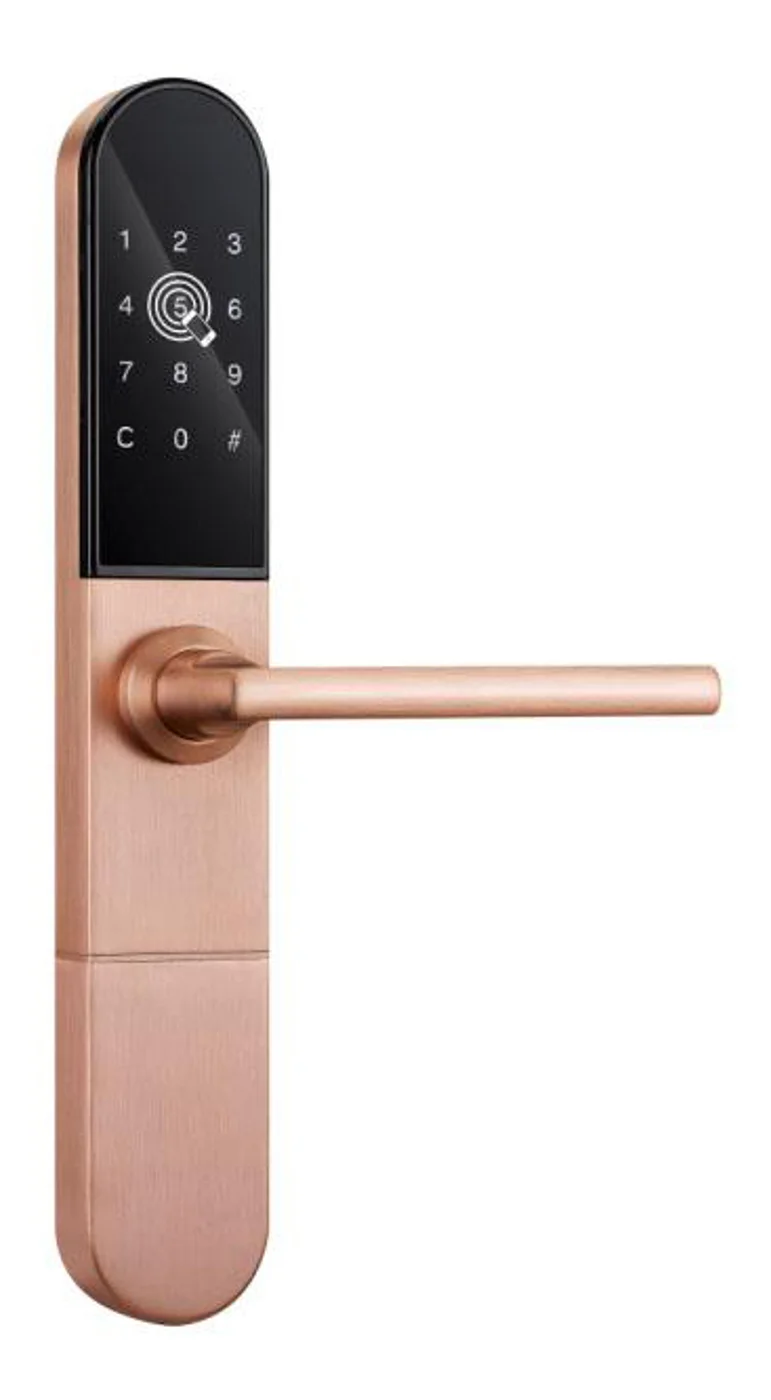
Smart Cabinet Lock — App-Managed, Multi-Site Dashboard
App-managed smart cabinet lock for office, parcel, and multi-site fleets. BLE app dashboard, audit trail, remote unlock, no per-lock server. Higher-tier chassis.
This page already points to it as the next recommended reference.
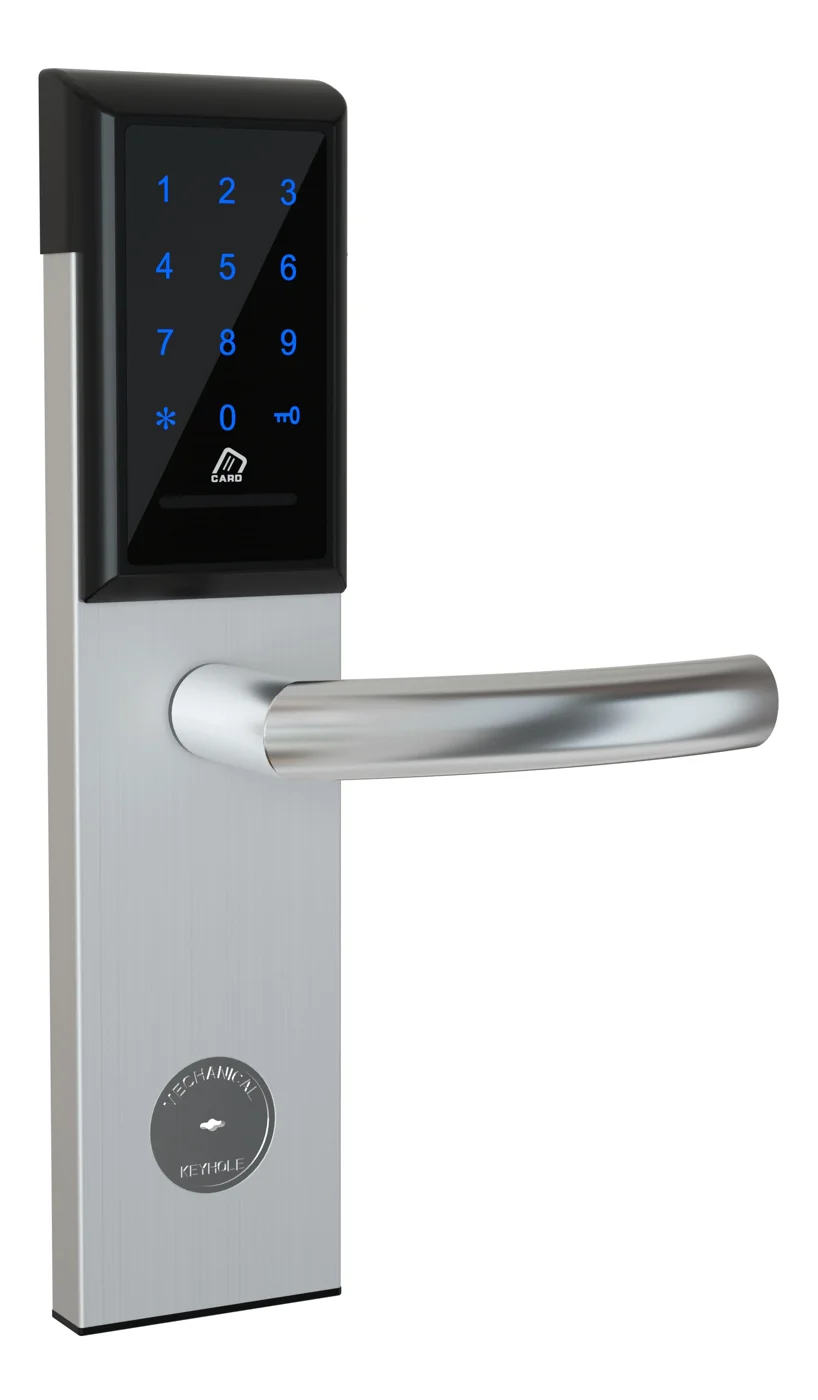
Office Cabinet Lock — PIN + Card for Filing & Pedestals
Offline PIN + card office cabinet lock for filing cabinets, pedestals, and drawers. Battery-powered 5-minute retrofit, no WiFi, no key management. CE/FCC/RoHS.
This page already points to it as the next recommended reference.
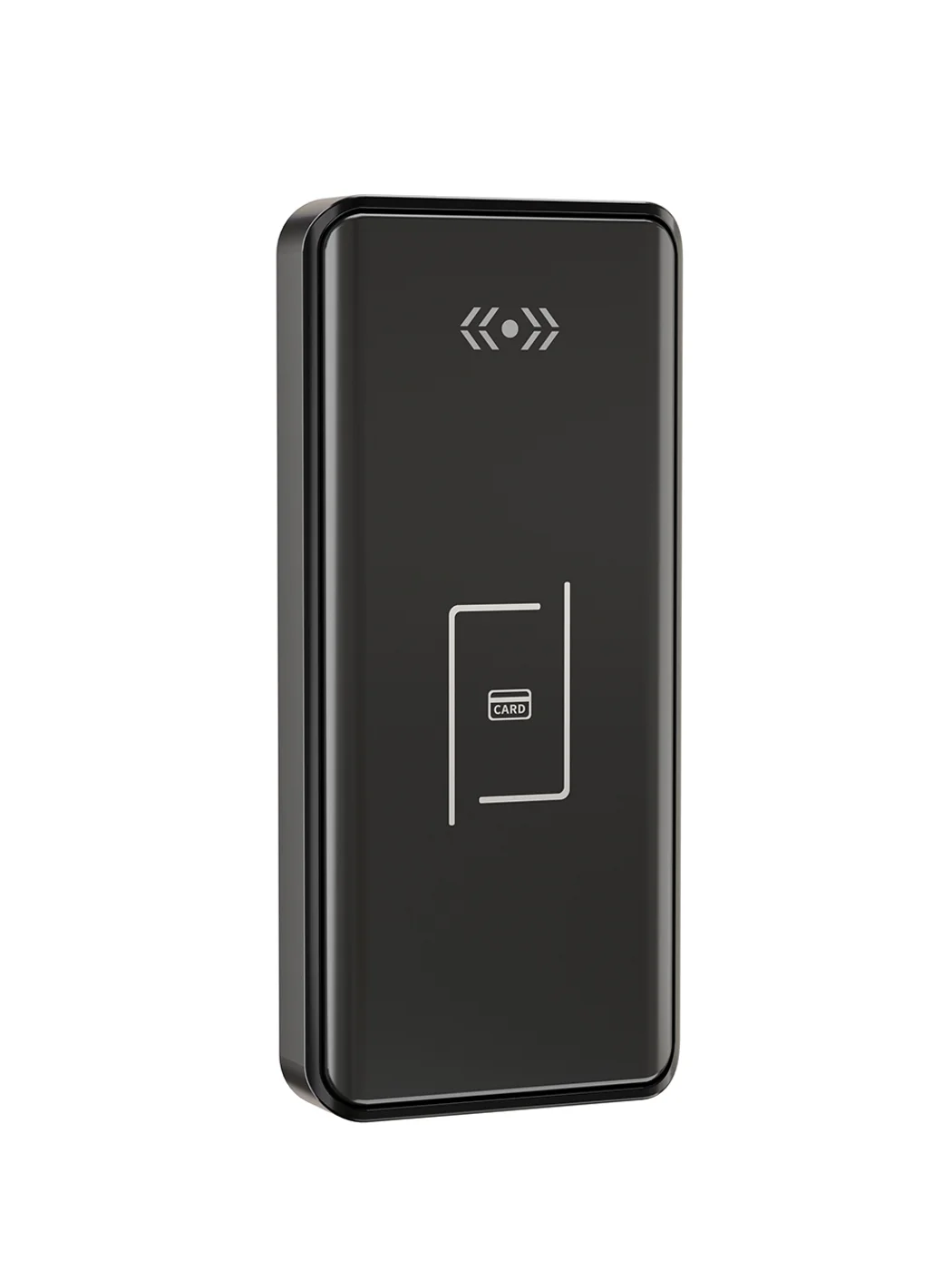
Gym Locker Lock — Offline Card, No WiFi Required
Offline card gym locker lock for fitness and pool lockers. MIFARE card, battery-powered 5-minute retrofit, no WiFi or server. Zinc alloy body, CE/FCC/RoHS.
This page already points to it as the next recommended reference.
Related blog posts
3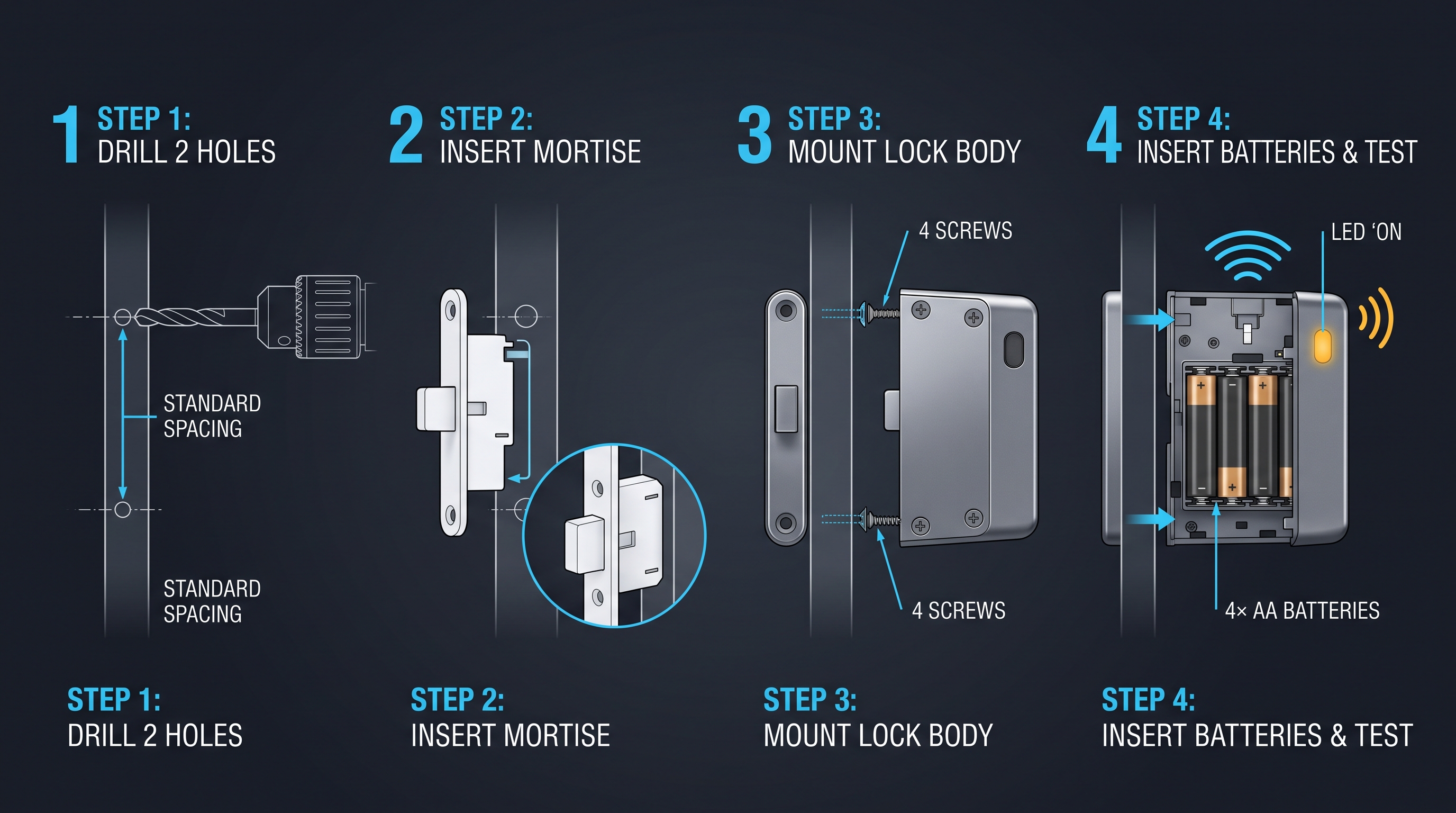
Controlled Substance Cabinet Lock Guide: DEA Compliance, Security, and Selection
Learn how a controlled substance cabinet lock meets DEA requirements for Schedule II-V drug storage, with dual custody, biometric access, and encrypted audit trails.
It supports the same product context: Smart Cabinet Lock — App-Managed, Multi-Site Dashboard, Office Cabinet Lock — PIN + Card for Filing & Pedestals, Gym Locker Lock — Offline Card, No WiFi Required.
Cloud Locker Lock: The Complete Guide to Smart Cloud-Connected Locker Security Systems
A comprehensive technical guide to cloud locker lock systems covering architecture, communication protocols, security, deployment scenarios, cost analysis, and future trends for connected locker access control.
It supports the same product context: Smart Cabinet Lock — App-Managed, Multi-Site Dashboard, Office Cabinet Lock — PIN + Card for Filing & Pedestals, Gym Locker Lock — Offline Card, No WiFi Required.
Cloud Cabinet Lock: Ultimate Guide to Cloud-Connected Cabinet Access Control
A comprehensive guide to cloud cabinet lock technology covering remote management, real-time audit trails, and multi-site cabinet access control for enterprises.
It supports the same product context: Smart Cabinet Lock — App-Managed, Multi-Site Dashboard, Office Cabinet Lock — PIN + Card for Filing & Pedestals, Gym Locker Lock — Offline Card, No WiFi Required.
Specify your hotel project with our engineers
Send your room count, ceiling type, and protocol preference. We will return a sample plan and quote within 24 business hours.
- Move from general guidance into a product or application discussion.
- Use RFQ when pricing, drawings, MOQ, or launch timing needs structure.
- Keep a direct contact path visible for fast clarifications and handoff.