Cloud Cabinet Lock: Ultimate Guide to Cloud-Connected Cabinet Access Control
A comprehensive guide to cloud cabinet lock technology covering remote management, real-time audit trails, and multi-site cabinet access control for enterprises.
What Is a Cloud Cabinet Lock System?
A cloud cabinet lock is an internet-connected electronic locking mechanism that enables remote management, real-time monitoring, and centralized access control for cabinets, enclosures, and storage units across distributed environments. Unlike traditional mechanical or standalone electronic locks, a cloud cabinet lock communicates through wireless protocols to a centralized cloud platform, allowing administrators to grant, revoke, and audit access permissions from any location with internet connectivity. This technology represents the convergence of physical security hardware with modern cloud computing infrastructure. A cloud cabinet lock typically incorporates wireless communication modules, cryptographic processors, and firmware that interfaces with cloud-based management software. The system maintains persistent connectivity to the cloud, enabling instant status updates, event logging, and alerting that transform cabinet access from an isolated physical operation into an auditable digital workflow. A cloud cabinet lock fundamentally changes how organizations secure their physical assets by bridging physical access control and digital identity management. The cloud cabinet lock delivers measurable value across every deployment scenario.
Core Architecture of a Cloud Cabinet Lock
A cloud cabinet lock system consists of three primary architectural layers. The hardware layer includes the physical lock mechanism, which may use motorized latches, solenoid-driven bolts, or electromagnetic locking plates. This hardware is integrated with a control board featuring a microcontroller, wireless communication module, cryptographic co-processor, and power management circuitry. The communication layer handles the transport of commands, status updates, and telemetry between the lock hardware and the cloud platform. This layer supports multiple protocols to accommodate different deployment environments, including WiFi operating in the 2.4 GHz and 5 GHz bands, LTE-M with maximum throughput of 375 kbps, NB-IoT across bands B3, B5, B8, and B20, and Bluetooth Low Energy with gateway bridging to the cloud. The cloud layer consists of the remote management platform, data storage infrastructure, API services, and integration middleware that connects the cloud cabinet lock to existing enterprise systems such as identity providers, security information and event management platforms, and building management systems. A cloud cabinet lock provides the reliability and control that modern access management demands. A cloud cabinet lock provides the reliability and control that modern access management demands. A cloud cabinet lock provides the reliability and control that modern access management demands.
Who Benefits from Cloud Cabinet Lock Technology
The adoption of cloud cabinet lock systems spans virtually every industry that requires controlled access to physical enclosures. IT departments managing server racks and network cabinets benefit from cloud cabinet lock technology by eliminating the need for key management across distributed data center locations. Healthcare organizations use cloud cabinet lock solutions to secure medication cabinets, patient record storage, and controlled substance enclosures while maintaining HIPAA compliance through comprehensive audit trails. Retail enterprises deploy cloud cabinet lock systems for high-value merchandise displays, cash handling cabinets, and back-of-house inventory storage, with the ability to adjust access permissions during shift changes without physical key handoffs. Industrial and manufacturing facilities rely on cloud cabinet lock technology to secure tool cribs, hazardous material storage, and maintenance access panels across factory floors. Government agencies and defense contractors implement cloud cabinet lock systems to meet stringent security requirements for classified material storage, with every access event logged and attributable to specific authorized personnel through multi-factor authentication integration. Banking and financial institutions deploy cloud cabinet lock solutions for safe deposit box management, teller cash drawer cabinets, and document storage, leveraging the immutable audit capabilities to satisfy regulatory compliance requirements. The cloud cabinet lock represents a core component of contemporary cabinet security architecture. The cloud cabinet lock represents a core component of contemporary cabinet security architecture.
How Does a Cloud Cabinet Lock Work?
A cloud cabinet lock is a sophisticated access control device that operates through an interplay of embedded hardware, wireless communication protocols, cloud computing infrastructure, and identity management services. A cloud cabinet lock begins with an authentication event: a user presents credentials through a mobile application, RFID badge, biometric scanner, PIN keypad, or a combination of these factors. The local authentication module on the cloud cabinet lock processes this credential and, depending on the system architecture, either validates it locally against a cached permission database or forwards it to the cloud platform for verification. Once authenticated, the cloud cabinet lock actuates its locking mechanism, typically within a response time under 500 milliseconds, ensuring near-instantaneous access for authorized users. Simultaneously, the cloud cabinet lock transmits an event record to the cloud platform containing the user identity, timestamp, lock identifier, access method, and outcome status. This event is stored with digital signing and cryptographic hashing to ensure immutability for audit purposes.
Authentication Methods in Modern Cloud Cabinet Lock Systems
Modern cloud cabinet lock devices support a diverse range of authentication modalities to accommodate different security requirements and operational contexts. Mobile-based authentication has become the predominant method for cloud cabinet lock access, leveraging Bluetooth Low Energy proximity sensing combined with encrypted challenge-response protocols. When a user approaches a cloud cabinet lock with an authorized mobile device, the lock detects proximity and initiates a secure handshake, often without requiring the user to remove the device from their pocket. RFID and NFC badge authentication remains popular for cloud cabinet lock deployments where users require quick tap-to-unlock functionality, with the cloud cabinet lock supporting multiple card formats including MIFARE, HID, and DESFire. Biometric authentication on cloud cabinet lock hardware has advanced significantly, with fingerprint sensors and facial recognition cameras integrated directly into the lock faceplate, performing local template matching to minimize latency while synchronizing biometric templates with the cloud for centralized enrollment management. PIN code authentication on cloud cabinet lock keypads provides a fallback method that operates independently of any carried device, with the cloud cabinet lock supporting single-use temporary codes, time-restricted codes, and duress codes that trigger silent alarms. The cloud cabinet lock is engineered for consistent performance across diverse environments. The cloud cabinet lock is engineered for consistent performance across diverse environments.
Communication Protocol Details and Architecture
The communication stack in a cloud cabinet lock is engineered for reliability, security, and power efficiency. MQTT version 3.1.1 and 5.0 serve as the primary messaging protocol for cloud cabinet lock telemetry and command delivery, operating over persistent TLS 1.3 encrypted connections to the cloud broker. The publish-subscribe model of MQTT allows a cloud cabinet lock to efficiently report state changes to multiple subscribers without polling, while also receiving commands pushed from the management platform with minimal latency. For cloud cabinet lock devices deployed in constrained network environments, CoAP (Constrained Application Protocol) provides a lightweight alternative that maps to HTTP semantics while operating over UDP with DTLS security, enabling efficient communication for battery-powered cloud cabinet lock hardware. HTTPS REST API endpoints complement these real-time protocols for configuration operations, firmware distribution, and bulk management tasks, with each cloud cabinet lock maintaining a secure TLS 1.3 channel that supports client certificate authentication for mutual TLS verification. Adopting a cloud cabinet lock reduces operational overhead while improving security posture. Adopting a cloud cabinet lock reduces operational overhead while improving security posture.
Battery Management and Power Optimization
Power management is a critical engineering consideration for wireless cloud cabinet lock devices, as the majority operate on battery power to avoid the cost and complexity of running electrical wiring to each cabinet location. A cloud cabinet lock typically uses CR123A lithium batteries or high-capacity AA lithium batteries, selected for their high energy density, wide operating temperature range, and stable discharge voltage characteristics. Through aggressive power optimization strategies including deep sleep modes during idle periods, scheduled wake intervals for cloud synchronization, and event-driven communication that transmits only on state change, a well-engineered cloud cabinet lock achieves battery life ranging from two to four years under normal usage patterns. The cloud cabinet lock monitors battery voltage continuously and reports predictive depletion estimates to the management platform, triggering proactive replacement alerts well before any operational disruption. Some cloud cabinet lock models incorporate hybrid power architectures that combine primary batteries with energy harvesting from ambient light or kinetic energy from door operation, further extending service intervals and reducing maintenance burden. For facilities seeking stronger access governance, the cloud cabinet lock is a proven choice.
End-to-End Data Flow
The complete operational cycle of a cloud cabinet lock encompasses multiple data processing stages that ensure security, reliability, and auditability. When an access request is initiated at a cloud cabinet lock, the local controller first validates the request against cached authorization policies stored in secure on-device memory, enabling offline operation even during network interruptions. The cloud cabinet lock then encrypts the event record using AES-256-GCM authenticated encryption before transmission, ensuring both confidentiality and integrity of the data in transit. Upon receipt at the cloud platform, the event passes through an ingestion pipeline that validates the digital signature, enriches the record with contextual data from integrated systems, checks for policy violations or anomalous patterns, and stores the immutable event in a time-series database for audit and analytics. The cloud cabinet lock management platform then distributes real-time notifications to configured recipients through email, SMS, push notifications, or webhook integrations, enabling immediate awareness of access events. Simultaneously, the platform updates the cloud cabinet lock status in the management dashboard, recalculates compliance metrics, and triggers any automated workflows associated with the access event, such as maintenance work order creation or security incident escalation. The cloud cabinet lock combines robust hardware with intelligent software for dependable operation.
Cloud Cabinet Lock vs Traditional Cabinet Locks
A cloud cabinet lock is a transformative access control solution that converts cabinet access from an isolated mechanical operation into a fully managed digital service, representing a fundamental shift in how organizations control and audit physical access. A cloud cabinet lock eliminates the core limitations of traditional locking mechanisms: the inability to remotely manage permissions, the lack of auditable access records, the vulnerability to key duplication, and the operational burden of physical key management. A cloud cabinet lock provides real-time visibility into every access event, enables instant permission revocation across thousands of cabinets worldwide, and generates tamper-proof audit trails that satisfy the most stringent compliance requirements. When comparing a cloud cabinet lock to conventional mechanical locks, keypad-based electronic locks, and standalone RFID locks, the differentiation extends beyond the cloud cabinet lock itself to encompass the entire operational ecosystem: management software, credential lifecycle management, event analytics, system integration capabilities, and scalability characteristics. A cloud cabinet lock represents not merely a better lock, but a fundamentally different approach to.
| Feature | Cloud Cabinet Lock | Mechanical Key Lock | Keypad Electronic Lock | Standalone RFID Lock |
|---|---|---|---|---|
| Remote Management | Full cloud-based remote control and monitoring | None; physical presence required | None; local programming only | None; local programming only |
| Access Audit Trail | Complete, immutable cloud-stored audit logs with timestamps and user identity | No audit capability | Basic local event log; limited capacity | Basic local event log; limited capacity |
| Permission Management | Granular, time-based, role-based access policies managed from any location | Physical key distribution and collection only | Local PIN programming at each lock | Local card enrollment at each lock |
| Real-Time Alerts | Instant notifications for access events, tamper attempts, low battery, and offline status | None | None | None |
| Multi-Site Management | Centralized dashboard for unlimited locations and cabinets | Independent management per site | Independent programming per lock | Independent programming per lock |
| Integration Capability | API-based integration with identity providers, SIEM, BMS, ERP systems | None | None | Limited to access control panels |
| Key/Credential Security | Encrypted digital credentials, multi-factor authentication, instant revocation | Physical keys; vulnerable to duplication and loss | PIN codes; vulnerable to sharing and observation | RFID cards; vulnerable to cloning and loss |
| Scalability | Thousands of cabinets managed from single platform | Linear scaling with physical key management overhead | Linear scaling with per-lock programming effort | Linear scaling with per-lock programming effort |
| Battery Life | 2-4 years with low-battery alerts and remote monitoring | Not applicable; no electronics | 1-3 years; no remote battery monitoring | 1-3 years; no remote battery monitoring |
| Compliance Support | Built-in audit reports for SOC 2, ISO 27001, HIPAA, GDPR | Requires manual logbook maintenance | Requires manual log review and correlation | Requires manual log review and correlation |
| Total Cost of Ownership | Higher initial hardware cost; lower ongoing operational cost; predictable subscription pricing | Low initial cost; high ongoing key management and rekeying costs | Moderate initial cost; moderate ongoing PIN management costs | Moderate initial cost; moderate ongoing card management costs |
When Mechanical Locks Still Make Sense
Despite the overwhelming advantages of a cloud cabinet lock, there remain niche scenarios where traditional mechanical locks may be appropriate. Cabinets in environments with no wireless connectivity whatsoever, where a cloud cabinet lock cannot establish the necessary communication channel, may require mechanical alternatives or satellite-based connectivity solutions. Extremely cost-sensitive applications where the per-lock value of the secured contents is minimal and no audit trail is required may not justify the investment in a cloud cabinet lock. Temporary installations lasting only hours or days may benefit from the simplicity of a mechanical padlock. However, the number of legitimate use cases for mechanical locks continues to shrink as cloud cabinet lock hardware costs decrease and cellular IoT coverage expands to reach previously unconnected locations. The operational savings from eliminated key management, reduced security incidents, and automated compliance reporting typically offset the higher initial hardware investment in a cloud cabinet lock within twelve to eighteen months of deployment. The cloud cabinet lock supports scalable growth from a single cabinet to enterprise installations.
Key Features of Cloud Cabinet Lock Systems
A cloud cabinet lock delivers value through a comprehensive feature set that extends far beyond the basic act of locking and unlocking. A cloud cabinet lock platform provides granular access control with time-based, role-based, and context-based permission policies that can be created, modified, and revoked instantaneously from a centralized management interface. A cloud cabinet lock generates a complete, immutable audit trail of every access event, tamper attempt, battery status change, and configuration modification, with each record cryptographically signed and stored in cloud infrastructure with configurable retention periods. A cloud cabinet lock integrates with enterprise identity management systems through standard protocols including SAML, OAuth 2.0, OpenID Connect, and LDAP, enabling single sign-on and automated user provisioning that eliminates the security risks associated with manual credential management. A cloud cabinet lock monitors its own health continuously, reporting battery voltage, wireless signal strength, firmware version, temperature, and tamper sensor status to the management platform, with configurable alerting thresholds that notify administrators of conditions requiring attention.
Remote Access Management
The remote access management capability of a cloud cabinet lock fundamentally changes how organizations handle physical access provisioning. Rather than dispatching technicians to rekey locks or physically deliver keys, administrators grant and revoke access through a web dashboard or mobile application that propagates changes to the target cloud cabinet lock within seconds. Time-bound access grants allow temporary contractors, maintenance personnel, or visiting staff to access specific cabinets during defined time windows, with the cloud cabinet lock automatically revoking access when the window expires. One-time access codes generated through the cloud cabinet lock platform provide emergency or exceptional access without creating persistent credentials, with each code valid for a single use and a configurable time limit. Location-based access policies on a cloud cabinet lock can restrict access to specific cabinets based on the user's current location within a facility, adding a geospatial dimension to authorization decisions. Bulk permission operations enable administrators to modify access for hundreds of cloud cabinet lock devices simultaneously, such as revoking all access for a terminated employee, with audit confirmation that every device received and applied the policy update. The cloud cabinet lock provides real-time visibility into every access event.
Comprehensive Audit and Reporting
The audit capabilities of a cloud cabinet lock transform regulatory compliance from a manual, error-prone process into an automated, verifiable workflow. Every interaction with a cloud cabinet lock generates an event record containing the precise timestamp synchronized to UTC, the authenticated user identity, the access method employed, the authorization decision and its rationale, the lock response time, and any contextual metadata such as location or accompanying personnel. These records are transmitted in real time to the cloud cabinet lock platform, where they are stored with Write-Once-Read-Many protection that prevents retroactive modification or deletion, satisfying the data integrity requirements of regulations including SOC 2 Type II, ISO 27001, HIPAA, and GDPR. The cloud cabinet lock reporting engine generates pre-formatted compliance reports for specific regulatory frameworks, mapping access events to corresponding control requirements and maintaining the evidence chain for auditor review. Customizable dashboard views provide real-time visibility into cloud cabinet lock activity across the entire organization, with drill-down capability to examine individual events, user activity patterns, or cabinet-level statistics. A properly configured cloud cabinet lock restricts access to authorized personnel only.
Tamper Detection and Security Alerts
A cloud cabinet lock incorporates multiple tamper detection mechanisms that provide defense-in-depth against physical attacks. An integrated accelerometer and gyroscope detect vibration patterns consistent with drilling, prying, or impact attempts, enabling the cloud cabinet lock to trigger immediate alerts and, in some configurations, activate additional locking mechanisms. Magnetic reed switches and hall effect sensors monitor the door position and detect attempts to bypass the lock mechanism entirely by manipulating the door or frame. A cloud cabinet lock with a built-in ambient light sensor can detect when a cabinet is opened in darkness or when the lock faceplate has been removed, triggering a tamper condition. When any tamper sensor is activated, the cloud cabinet lock immediately transitions to a heightened security state, transmits an urgent alert to the management platform, and optionally activates local audible or visual alarms to deter further tampering. The cloud cabinet lock platform correlates tamper events across multiple devices to identify coordinated attack patterns and can automatically increase the security posture of nearby cabinets when a tamper event is detected in the vicinity. The cloud cabinet lock integrates cleanly with existing infrastructure and identity systems.
Cloud Cabinet Lock Communication Protocols
A cloud cabinet lock relies on robust wireless communication to maintain its connection to the cloud management platform, and the choice of communication protocol represents a critical design decision that affects deployment flexibility, power consumption, coverage range, and operational cost. A cloud cabinet lock may employ one or more communication technologies depending on the deployment environment, with multi-protocol support increasingly common in enterprise-grade hardware. A cloud cabinet lock operating in an office building with existing WiFi infrastructure typically leverages the 2.4 GHz or 5 GHz WiFi bands for high-bandwidth, low-latency communication. A cloud cabinet lock deployed in a remote outdoor enclosure or a distributed facility without WiFi coverage uses cellular IoT technologies such as LTE-M or NB-IoT to connect to the cloud platform through public mobile networks. A cloud cabinet lock installed in a metal enclosure or shielded environment may use Bluetooth Low Energy to communicate with a nearby gateway device that bridges to the cloud via Ethernet or WiFi.
| Protocol | Frequency Band | Typical Range | Max Data Rate | Power Consumption | Latency | Best Deployment Scenario |
|---|---|---|---|---|---|---|
| WiFi 2.4 GHz | 2.400-2.4835 GHz | 50-100 m indoor | 150 Mbps | High | 20-50 ms | Office buildings with existing WiFi infrastructure |
| WiFi 5 GHz | 5.150-5.850 GHz | 30-70 m indoor | 867 Mbps | High | 10-30 ms | High-density deployments requiring low interference |
| LTE-M (Cat-M1) | Licensed cellular bands | Several km from tower | 375 kbps uplink / 300 kbps downlink | Low-Medium | 50-100 ms | Distributed outdoor cabinets, multi-site deployments |
| NB-IoT | Licensed cellular bands (B3/B5/B8/B20) | Several km from tower | 62.5 kbps uplink / 26 kbps downlink | Very Low | 1-10 seconds | Remote cabinets with low data requirements |
| Bluetooth LE 5.0+ with Gateway | 2.400-2.4835 GHz | 10-100 m to gateway | 2 Mbps (LE 2M PHY) | Very Low | 10-30 ms | Clustered cabinets connected to local gateway |
| LoRaWAN | 863-870 MHz (EU), 902-928 MHz (US) | 2-15 km | 0.3-50 kbps | Ultra Low | 1-5 seconds | Isolated outdoor cabinets, agricultural sites |
| Ethernet (PoE) | Wired (Cat5e/Cat6) | 100 m from switch | 100-1000 Mbps | N/A (powered) | <5 ms | Data center cabinets, high-security fixed installations |
MQTT Protocol in Cloud Cabinet Lock Systems
MQTT has emerged as the de facto standard messaging protocol for cloud cabinet lock communication, with both MQTT version 3.1.1 and the more recent MQTT version 5.0 offering features specifically suited to IoT lock applications. A cloud cabinet lock using MQTT establishes a persistent TLS 1.3 encrypted connection to an MQTT broker hosted in the cloud platform, maintaining a lightweight keepalive mechanism that consumes minimal power while ensuring the broker detects connection loss within configurable timeout periods. The publish-subscribe model allows a cloud cabinet lock to publish telemetry data including lock state changes, access events, battery levels, and tamper alerts to specific topics, while subscribing to command topics through which the cloud platform pushes configuration changes, firmware updates, and access policy modifications. MQTT 5.0 introduced session expiry, message expiry, and reason codes that enhance the reliability of cloud cabinet lock communication by providing explicit status information for every message exchange. The Quality of Service levels in MQTT allow a cloud cabinet lock to select appropriate delivery guarantees for different message types: QoS 0 for periodic telemetry where occasional data loss is acceptable, QoS 1 for access events that must be delivered at least once, and QoS 2 for critical commands such as firmware update initiation that require exactly-once delivery semantics. The cloud cabinet lock simplifies compliance with regulatory access-control requirements.
CoAP for Constrained Cloud Cabinet Lock Devices
For cloud cabinet lock deployments where MQTT's TCP-based connection overhead is problematic due to extreme power constraints or network limitations, the Constrained Application Protocol provides a lightweight alternative. A cloud cabinet lock implementing CoAP communicates over UDP with DTLS security, avoiding the connection maintenance overhead of TCP while still providing RESTful semantics for resource access. CoAP's observe extension allows a cloud cabinet lock management platform to subscribe to state changes on individual lock resources, receiving asynchronous notifications when the lock state changes without polling. Block-wise transfer in CoAP enables a cloud cabinet lock to receive firmware updates or transmit bulk telemetry in manageable chunks without implementing complex fragmentation logic. The proxy and caching mechanisms defined in CoAP allow intermediate gateway devices to optimize cloud cabinet lock communication by aggregating telemetry from multiple locks and minimizing the number of cloud connections required. A cloud cabinet lock enhances accountability through detailed usage records.
Cloud Cabinet Lock Security and Encryption
A cloud cabinet lock implements a multi-layered security architecture spanning the hardware, firmware, communication, and cloud platform layers to protect against threats ranging from physical tampering to sophisticated network attacks. A cloud cabinet lock begins its security foundation at the hardware level with a secure element or trusted platform module that protects cryptographic keys, performs hardware-accelerated encryption operations, and resists physical extraction attempts through active tamper detection and memory encryption. A cloud cabinet lock uses AES-256-GCM for symmetric encryption of all stored and transmitted data, with Galois/Counter Mode providing both confidentiality through encryption and integrity through authentication tags that detect any modification of the ciphertext. A cloud cabinet lock establishes all network connections through TLS version 1.3, which mandates forward secrecy through ephemeral Diffie-Hellman key exchange, removes support for deprecated cryptographic algorithms, and reduces the handshake to a single round trip for improved performance on constrained devices.
Cryptographic Architecture
The cryptographic architecture of a cloud cabinet lock is designed to maintain security even under the assumption that individual components could be compromised. Each cloud cabinet lock is provisioned with a unique device identity certificate during manufacturing, burned into the secure element and used for mutual TLS authentication with the cloud platform. The cloud cabinet lock generates ephemeral session keys for each communication session using elliptic curve Diffie-Hellman key exchange over Curve25519, ensuring that compromise of a long-term key does not expose past session data. AES-256-GCM is employed for all bulk encryption within the cloud cabinet lock, with 256-bit keys providing security against both classical and quantum computing attacks for the foreseeable future. The cloud cabinet lock uses HMAC-SHA256 for message authentication on locally stored data and for integrity verification during firmware updates. Certificate pinning prevents the cloud cabinet lock from connecting to rogue servers by embedding the expected server certificate or public key in the device firmware, with revocable pinning that allows certificate rotation through signed update packages. Deploying a cloud cabinet lock streamlines permission management for administrators.
Network Security and Threat Mitigation
A cloud cabinet lock operates on potentially hostile networks and must defend against a range of network-based threats. The cloud cabinet lock implements strict firewall rules that permit only outbound connections to the cloud platform on specific ports, rejecting all unsolicited inbound traffic and eliminating the attack surface associated with open ports. Rate limiting on the cloud cabinet lock prevents brute-force attacks against authentication interfaces, with exponential backoff and lockout periods configured through the management platform. The cloud cabinet lock validates all incoming commands against authorization policies before execution, preventing unauthorized or maliciously crafted commands from causing operational disruption. Regular vulnerability scanning of the cloud cabinet lock firmware identifies and patches security issues before deployment, with over-the-air update capability that ensures all devices in the field receive security patches without requiring physical access. The cloud cabinet lock platform implements intrusion detection patterns that analyze device behavior across the fleet to identify anomalies indicative of compromise, such as unusual access patterns, unexpected firmware changes, or abnormal communication behavior.
Compliance and Certification Standards
A cloud cabinet lock deployed in regulated environments must demonstrate compliance with applicable security standards and certifications. SOC 2 Type II certification of the cloud cabinet lock platform provides independent validation that the system maintains effective controls over security, availability, and confidentiality, with ongoing monitoring rather than point-in-time assessment. ISO 27001 certification demonstrates that the cloud cabinet lock management system is supported by a comprehensive information security management system with documented policies, risk assessments, and continuous improvement processes. For healthcare deployments, a cloud cabinet lock system that processes or stores protected health information must support HIPAA compliance through features including comprehensive access logging, user authentication, automatic logoff, and data encryption both in transit and at rest. CE marking confirms that the cloud cabinet lock hardware meets European Union safety, health, and environmental requirements, while FCC certification validates electromagnetic compatibility and radio frequency emission compliance for the United States market. RoHS compliance ensures that the cloud cabinet lock hardware is manufactured without hazardous substances including lead, mercury, and cadmium, supporting environmental sustainability objectives and regulatory requirements.
Cloud Cabinet Lock Deployment Scenarios
A cloud cabinet lock adapts to diverse deployment environments, each presenting unique access control requirements, environmental conditions, and integration challenges. A cloud cabinet lock in an enterprise office setting manages access to server racks, network equipment cabinets, document storage, and supply closets across multiple floors or buildings, integrating with corporate identity providers for single sign-on and automated provisioning. A cloud cabinet lock in a healthcare facility secures medication dispensing cabinets, patient record storage, controlled substance inventory, and medical supply rooms, with strict access controls that enforce segregation of duties and comprehensive audit trails for regulatory compliance. A cloud cabinet lock in a retail environment protects high-value merchandise displays, cash handling cabinets, inventory storage, and loss prevention evidence lockers, with time-based access windows aligned to shift schedules and instant revocation for terminated employees. A cloud cabinet lock in an industrial facility controls access to tool cribs, maintenance panels, hazardous material storage, and production line equipment cabinets, with ruggedized hardware rated for dust, moisture, and temperature extremes.
Enterprise Office Deployment
Enterprise deployment of cloud cabinet lock technology typically involves integration with existing IT infrastructure and identity management systems. The cloud cabinet lock connects to the corporate WiFi network or a dedicated IoT network segment, authenticating through 802.1X with device certificates to ensure only authorized lock hardware joins the network. Integration with Microsoft Entra ID, Okta, or other identity providers through SAML or OpenID Connect enables the cloud cabinet lock platform to consume user identities, group memberships, and role assignments directly from authoritative sources. Automated provisioning workflows synchronize organizational changes to cloud cabinet lock permissions, granting access when employees join departments, adjusting permissions on role changes, and immediately revoking all access upon termination. The cloud cabinet lock dashboard provides facility managers with real-time visibility into cabinet status across all corporate locations, with geospatial mapping that shows lock locations on floor plans for intuitive navigation and management.
Healthcare Facility Deployment
Healthcare deployments of cloud cabinet lock systems address the unique regulatory and operational requirements of clinical environments. A cloud cabinet lock securing medication cabinets supports witness-based access workflows where two authorized clinicians must authenticate to access controlled substances, with the cloud cabinet lock platform recording both identities and the medication inventory change. Integration with electronic health record systems allows the cloud cabinet lock to verify that access requests correspond to active medication orders for specific patients, adding a clinical context layer to authorization decisions. The cloud cabinet lock platform generates audit reports formatted for Joint Commission survey requirements and DEA controlled substance accountability, reducing the compliance burden on clinical staff who would otherwise maintain manual logs. Antimicrobial coatings on cloud cabinet lock hardware reduce bacterial transmission in clinical environments, while sealed enclosures protect internal electronics from cleaning agents used in terminal disinfection procedures.
Retail and Hospitality Deployment
Retail deployment of cloud cabinet lock solutions focuses on loss prevention, operational efficiency, and employee accountability. A cloud cabinet lock on high-value merchandise displays can be configured to require manager approval for access during non-business hours, with time-delayed opening to deter smash-and-grab theft. Integration with point-of-sale systems allows the cloud cabinet lock platform to correlate inventory access events with transaction records, identifying discrepancies that may indicate internal theft. The cloud cabinet lock supports shift-based access schedules that automatically adjust permissions at shift changes, eliminating the need for manual key handoffs that create accountability gaps between shifts. In hospitality environments, a cloud cabinet lock secures housekeeping supply cabinets, minibar storage, and guest luggage storage, with housekeeping staff receiving time-limited access to specific floor cabinets during their assigned shifts.
Banking and Financial Services Deployment
Financial institutions deploying cloud cabinet lock technology must satisfy regulatory examination standards while supporting complex operational workflows. A cloud cabinet lock in a bank branch integrates with the institution's core banking system to verify that access to teller cash drawer cabinets corresponds to authenticated and authorized employees during business hours. Dual-control access policies on a cloud cabinet lock enforce the requirement that two authorized personnel must authenticate to open high-security cabinets, with the cloud platform validating that both individuals are properly authorized and recording both identities in the immutable audit trail. The cloud cabinet lock platform provides pre-configured reports aligned with FFIEC examination handbook requirements, streamlining regulatory examinations by presenting access control evidence in the format examiners expect. Integration with video surveillance systems allows the cloud cabinet lock platform to correlate access events with video footage, bookmarking relevant surveillance recordings with access event timestamps for efficient incident investigation.
Cloud Cabinet Lock Management Platform Features
A cloud cabinet lock management platform serves as the central nervous system of the access control ecosystem, providing the interfaces, automation, and analytics that transform individual lock hardware into a cohesive security management solution. A cloud cabinet lock platform provides a web-based administrative dashboard that presents real-time status of all connected devices across all locations, with intuitive navigation that allows administrators to zoom from global fleet status down to individual cabinet configuration. A cloud cabinet lock platform includes a policy engine that translates organizational access control requirements into machine-enforceable rules, supporting attribute-based access control, time-based constraints, location-based restrictions, and approval workflows. A cloud cabinet lock platform generates analytics and insights from the accumulated access event data, identifying usage patterns, detecting anomalies, forecasting maintenance needs, and quantifying security posture trends. A cloud cabinet lock platform exposes comprehensive REST APIs and webhook integrations that enable connection to adjacent enterprise systems, creating automated workflows that span physical access control and digital business processes.
User and Role Management
The user management capabilities of a cloud cabinet lock platform enable efficient administration of potentially thousands of users across hundreds of locations. Role-based access control within the cloud cabinet lock platform maps organizational roles to cabinet access permissions, with role hierarchies that support inheritance and override semantics for flexible policy definition. Just-in-time access provisioning in the cloud cabinet lock platform allows users to request temporary cabinet access that triggers an approval workflow, with access automatically revoked after the approved time window without administrative intervention. Federated identity integration enables the cloud cabinet lock platform to consume user accounts from existing directory services, eliminating duplicate identity management and reducing the security risks of stale accounts. Multi-tenancy capabilities in the cloud cabinet lock platform support managed service provider models where a single platform instance serves multiple client organizations with complete data isolation and independent configuration.
Audit, Reporting, and Compliance
The audit subsystem of a cloud cabinet lock platform maintains a complete, immutable record of all system activity for compliance and forensic purposes. The cloud cabinet lock platform ingests event streams from all connected devices, normalizing data formats and enriching records with user, location, and policy context to create comprehensive access event records. Tamper-evident event storage uses cryptographic chaining similar to blockchain technology, where each event record includes a hash of the previous record, making retroactive modification of any single record detectable through hash chain verification. The cloud cabinet lock platform includes a report builder that enables administrators to create custom reports combining access events, user activity, device status, and policy configuration data, with scheduling and distribution options for automated compliance reporting. Configuration audit trails track every modification to cloud cabinet lock policies, user permissions, and system settings, maintaining a complete history of who changed what, when, and from where, supporting root cause analysis of security incidents.
API and Integration Capabilities
The integration capabilities of a cloud cabinet lock platform enable organizations to embed cabinet access control into broader business and security workflows. RESTful APIs exposed by the cloud cabinet lock platform support CRUD operations on all managed entities including users, groups, locks, policies, and access events, with granular OAuth 2.0 scopes controlling API client access to specific resources. Webhook integrations allow external systems to subscribe to cloud cabinet lock events, receiving real-time notifications of access events, tamper alerts, device status changes, and policy modifications via HTTP callbacks. Pre-built connectors for major identity providers, SIEM platforms, building management systems, and IT service management tools accelerate integration without custom development. A cloud cabinet lock platform SDK provides language-specific client libraries for Python, Java, JavaScript, and C# that encapsulate API authentication, retry logic, and data model mapping, reducing integration development effort.
Choosing a Cloud Cabinet Lock Solution
Selecting the right cloud cabinet lock solution requires systematic evaluation across multiple dimensions to ensure the chosen system meets current requirements while supporting future growth and evolving security needs. A cloud cabinet lock evaluation begins with a thorough assessment of the deployment environment, including cabinet types and dimensions, wireless coverage characteristics, power availability, environmental conditions, and the number of cabinets to be secured. A cloud cabinet lock selection process must consider the authentication modalities required by different user populations, from mobile-based access for office workers to badge-based access for industrial environments to biometric verification for high-security applications. A cloud cabinet lock platform evaluation examines the management software capabilities, integration ecosystem, scalability characteristics, security certifications, and total cost of ownership. A cloud cabinet lock vendor assessment considers factors including company stability, support quality, product roadmap alignment, reference customers in similar industries, and the maturity of the partner ecosystem for installation and ongoing support.
| Selection Criterion | Basic Requirements | Enterprise Requirements | Premium Requirements |
|---|---|---|---|
| Authentication Methods | Mobile app, PIN code | Mobile app, RFID, PIN, biometric | All methods plus multi-factor combinations |
| Communication Protocol | Single protocol (BLE or WiFi) | Dual protocol with automatic failover | Multi-protocol with software-defined radio |
| Audit Trail | Cloud-stored access logs with 90-day retention | Immutable audit trail with 7-year retention and compliance reports | Blockchain-verified events with SIEM integration |
| API Integration | Basic REST API | Comprehensive REST API with webhooks | Full API suite with SDK, pre-built connectors, and workflow automation |
| Scalability | Up to 100 cabinets | Up to 10,000 cabinets | Unlimited cabinets with multi-tenant architecture |
| Security Certification | TLS 1.3, AES-256 encryption | SOC 2 Type II, ISO 27001 certified platform | FedRAMP authorized, PCI DSS compliant, HIPAA BA available |
| Hardware Certifications | CE, FCC, RoHS | CE, FCC, RoHS, IP65 rated | All certifications plus MIL-STD-810 for extreme environments |
| Battery Life | 1-2 years with standard batteries | 2-3 years with lithium batteries | 3-4+ years with energy harvesting |
| Offline Operation | No offline capability | Cached policies for 24-hour offline operation | Extended offline operation with periodic sync via cellular |
Vendor Evaluation Framework
A structured vendor evaluation process for cloud cabinet lock solutions ensures comprehensive assessment and objective comparison. Begin by defining functional requirements through stakeholder interviews with security, facilities, IT, and compliance teams, documenting must-have versus nice-to-have criteria before engaging vendors. Request references from cloud cabinet lock customers in the same industry vertical with similar deployment scale, and conduct reference calls that explore not just technical capabilities but also support responsiveness, product quality, and unexpected challenges. Evaluate the cloud cabinet lock management platform through hands-on demonstration and trial access, focusing on the interfaces your administrators and users will interact with daily. Request and review the most recent SOC 2 Type II report for the cloud cabinet lock platform, examining control test results and any noted exceptions to assess the security posture of the vendor's cloud operations. Understand the cloud cabinet lock vendor's product roadmap, particularly their approach to new communication technologies, security standards, and integration capabilities that may be relevant to your organization's future requirements. Negotiate service level agreements that specify availability targets, support response times, and escalation procedures for the cloud cabinet lock platform, with financial remedies for failure to meet commitments.
Total Cost of Ownership Calculation
A comprehensive total cost of ownership analysis for a cloud cabinet lock deployment extends beyond hardware purchase price to encompass the full lifecycle costs over a three to five year horizon. Hardware costs include the cloud cabinet lock units themselves, any required gateway devices, installation hardware, and spare units for rapid replacement. Installation costs cover technician time for physical mounting, network configuration, platform enrollment, and user training during initial deployment. Subscription costs for the cloud cabinet lock platform typically follow per-device-per-month or per-device-per-year pricing with tiered feature packages, and these recurring costs must be projected over the evaluation period. Operational savings from the cloud cabinet lock deployment should be quantified and offset against costs, including eliminated key management labor, reduced security incident response, automated compliance reporting, and decreased insurance premiums due to improved security controls. Integration costs for connecting the cloud cabinet lock platform to existing systems should be estimated based on available pre-built connectors versus custom development requirements. The resulting total cost of ownership comparison typically demonstrates that a cloud cabinet lock deployment achieves return on investment within twelve to eighteen months compared to traditional lock systems, with savings increasing in subsequent years as operational efficiencies compound.
Cloud Cabinet Lock Installation and Maintenance
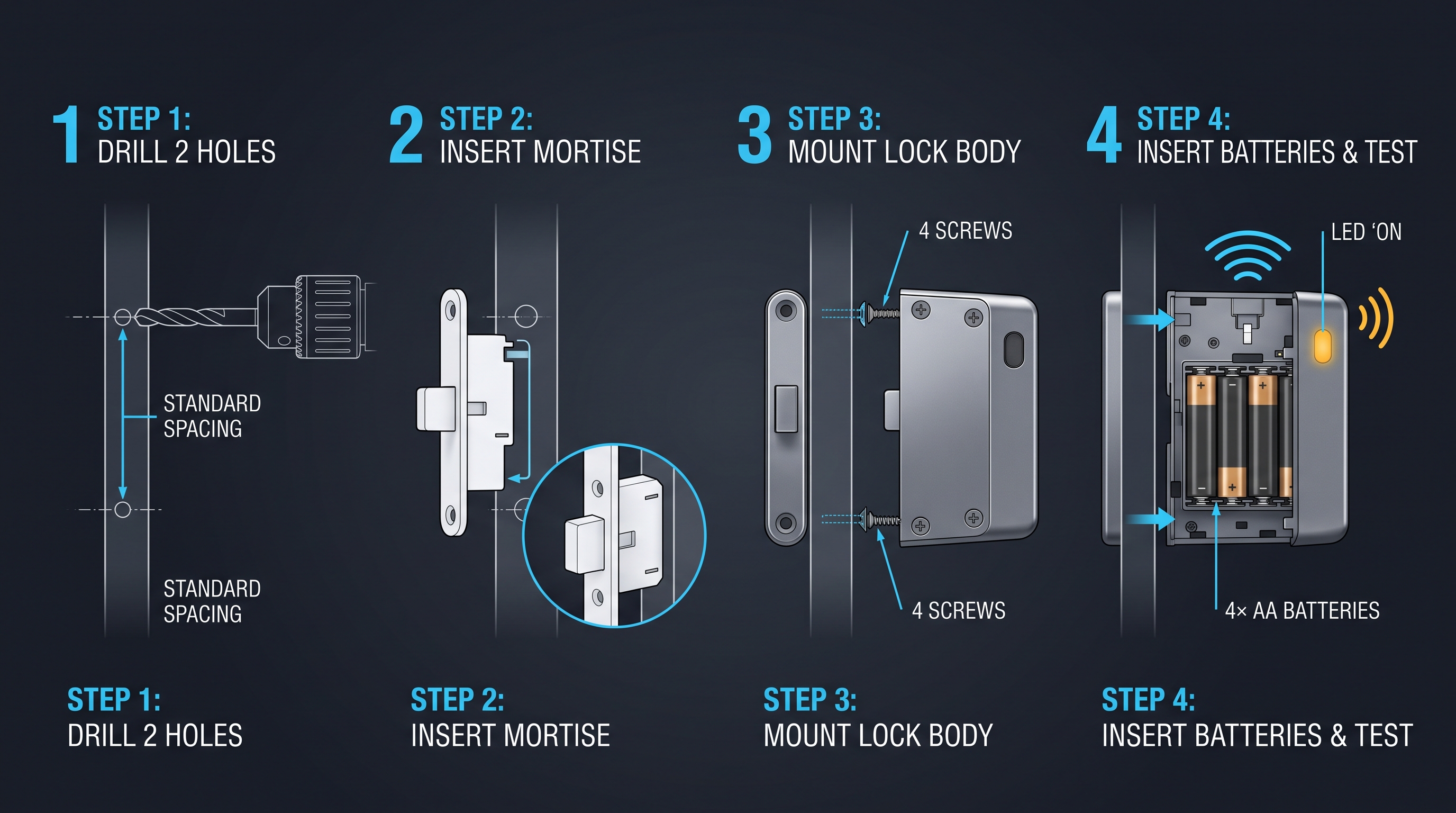
A cloud cabinet lock installation requires careful planning and execution to ensure reliable operation, optimal wireless communication, and seamless integration with the management platform. A cloud cabinet lock installation begins with a site survey that maps each cabinet location, assesses wireless signal strength for the selected communication protocol, identifies potential sources of interference, and documents any environmental factors that may affect lock performance or longevity. A cloud cabinet lock mounted on a cabinet must align precisely with the existing strike plate or require installation of the compatible strike hardware included with the lock kit, with attention to door gap tolerances that affect both security and battery consumption. A cloud cabinet lock enrollment process registers each device in the management platform, assigns it to a location and cabinet group, configures initial access policies, and verifies end-to-end communication from the lock through to the cloud dashboard.
Pre-Installation Planning and Site Survey
Thorough pre-installation planning is essential for successful cloud cabinet lock deployment. The site survey team should map each cabinet that will receive a cloud cabinet lock, documenting the cabinet material and thickness, door swing direction, existing locking mechanism, and available mounting area for the lock faceplate and any internal components. Wireless signal strength measurements should be taken at each cabinet location using a test device with the same radio module and antenna configuration as the cloud cabinet lock, ensuring that reliable connectivity exists before installation proceeds. For WiFi-connected cloud cabinet lock devices, the survey should assess network capacity to handle the additional connected devices and the coverage overlap between access points that enables roaming without connectivity loss. For cellular-connected cloud cabinet lock devices, the survey should measure signal strength for the target carrier and technology, identifying any locations that may require external antennas or signal boosting. The site survey should also evaluate the physical security of each cabinet location, considering whether the cloud cabinet lock alone provides adequate security or whether supplementary measures such as reinforced strike plates or security screws should be specified.
Installation Process and Best Practices
The physical installation of a cloud cabinet lock follows standardized procedures that ensure consistent quality and reliability across the deployment. The installer begins by removing the existing mechanical or electronic lock hardware, preserving the cabinet finish by using appropriate tools and techniques for the cabinet material and construction. The cloud cabinet lock mounting template is aligned with the existing lock cutout or used to mark the required cutout dimensions for new installations, with careful measurement ensuring that the lock bolt or latch engages securely with the strike plate. After mounting the cloud cabinet lock hardware, the installer connects the battery power source following the polarity markings in the installation guide, verifies that the lock mechanism actuates correctly through the manual test mode, and confirms that the tamper detection sensors are functioning properly. The network configuration step connects the cloud cabinet lock to the designated wireless network, authenticating through the pre-configured credentials or device certificates provisioned during manufacturing. Platform enrollment completes the installation by registering the cloud cabinet lock in the management dashboard, assigning location metadata, applying initial access policies, and performing an end-to-end access test that confirms the complete chain from credential presentation through cloud event logging.
Ongoing Maintenance and Lifecycle Management
A proactive maintenance program maximizes the reliability and lifespan of cloud cabinet lock hardware while minimizing operational disruptions. Battery replacement for a cloud cabinet lock should be performed on a predictive schedule informed by platform telemetry rather than waiting for battery depletion, with typical replacement intervals of two to three years for devices using CR123A or AA lithium batteries. The cloud cabinet lock platform provides battery health dashboards that show remaining capacity estimates for each device, with automated alerts when individual units approach replacement thresholds. Firmware updates for a cloud cabinet lock are distributed over-the-air (OTA) through the management platform, with staged rollout that tests updates on a subset of devices before fleet-wide deployment to minimize the impact of any unforeseen issues. Physical inspection of cloud cabinet lock hardware during battery replacement visits should examine the lock for signs of tampering, environmental damage, or mechanical wear, with preventative replacement of any components showing degradation. Periodic access policy audits review all active permissions in the cloud cabinet lock platform, identifying and removing stale entries for users who have changed roles or left the organization, maintaining the principle of least privilege across the entire cabinet access control system.
Future Trends in Cloud Cabinet Lock Technology
A cloud cabinet lock ecosystem continues to evolve rapidly, driven by advances in wireless communication, artificial intelligence, edge computing, and changing organizational security requirements. A cloud cabinet lock of the near future will likely incorporate artificial intelligence for behavioral anomaly detection, using machine learning models trained on historical access patterns to identify unusual activity that may indicate compromised credentials or insider threats. A cloud cabinet lock platform will increasingly leverage edge computing to process access decisions and analytics locally, reducing cloud dependency for latency-sensitive operations while maintaining centralized management and audit capabilities. A cloud cabinet lock will adopt next-generation communication technologies including WiFi 7, 5G NR Reduced Capability devices, and satellite IoT connectivity, expanding deployment possibilities to previously unreachable locations. A cloud cabinet lock will integrate more deeply with building digital twin models, enabling simulation-based optimization of cabinet placement and access workflows.
Artificial Intelligence and Machine Learning Integration
The integration of AI and machine learning into cloud cabinet lock platforms represents one of the most transformative emerging trends. Anomaly detection algorithms running on the cloud cabinet lock platform will learn normal access patterns for each cabinet, user, and time period, flagging deviations that warrant investigation while minimizing false positives that desensitize administrators to alerts. Predictive maintenance capabilities will analyze cloud cabinet lock telemetry data including battery discharge curves, motor current draw patterns, and environmental sensor readings to forecast component failures before they occur, enabling proactive replacement that prevents operational downtime. User behavior analytics applied to cloud cabinet lock access data will identify patterns such as tailgating, credential sharing, and unusual access sequences that may indicate policy violations or security breaches. The cloud cabinet lock platform will use reinforcement learning to optimize access policies, suggesting modifications that improve security posture while minimizing user friction based on observed access patterns and user feedback.
Next-Generation Communication Technologies
Emerging wireless technologies will significantly expand the deployment possibilities for cloud cabinet lock systems. WiFi 7, based on the IEEE 802.11be standard, will provide the cloud cabinet lock with multi-link operation that simultaneously uses multiple frequency bands for improved reliability and reduced latency, while 320 MHz channel bandwidth and 4K QAM modulation increase throughput for bandwidth-intensive applications like firmware updates and diagnostic data uploads. 5G NR Reduced Capability devices, designed specifically for mid-tier IoT applications like a cloud cabinet lock, will offer optimized power consumption, reduced complexity, and support for both sub-6 GHz and mmWave frequencies while maintaining 5G core network integration. Satellite IoT connectivity through services such as Iridium and emerging low-earth orbit constellations will enable a cloud cabinet lock to operate in truly remote locations beyond terrestrial network coverage, opening applications in mining, oil and gas, maritime, and remote infrastructure. Ultra-wideband precision ranging integrated into a cloud cabinet lock will enable centimeter-accurate user positioning, supporting location-based access policies that verify the user is physically adjacent to the correct cabinet before granting access.
Sustainability and Environmental Considerations
Environmental sustainability is emerging as a significant factor in cloud cabinet lock design and deployment. Next-generation cloud cabinet lock hardware will incorporate energy harvesting technologies including indoor photovoltaic cells optimized for artificial light spectra, thermoelectric generators that convert ambient temperature differentials, and kinetic energy harvesters that capture energy from door operation, extending battery life indefinitely for many deployment scenarios. Cloud cabinet lock manufacturers are increasingly designing for circular economy principles, with modular hardware architectures that enable individual component replacement rather than whole-device disposal, take-back programs that ensure proper recycling of end-of-life electronics, and packaging made from recycled and biodegradable materials. The cloud cabinet lock platform will provide carbon footprint dashboards that calculate the environmental impact of the deployed fleet, including battery consumption, data center energy allocation, and hardware lifecycle emissions, supporting organizational sustainability reporting requirements. Energy-efficient communication protocols and deep sleep optimizations in future cloud cabinet lock designs will further reduce power consumption, extending the viability of battery-powered operation and reducing the environmental burden of battery manufacturing and disposal.
Cost Analysis and ROI of Cloud Cabinet Lock Systems
A cloud cabinet lock deployment represents a strategic investment that delivers measurable financial returns through operational efficiency gains, risk reduction, and compliance automation. A cloud cabinet lock system typically achieves return on investment within a twelve to eighteen month period when compared against the total cost of traditional lock management, with cumulative savings accelerating in subsequent years as the operational efficiencies compound and the initial hardware costs are fully amortized. A cloud cabinet lock eliminates the recurring costs associated with physical key management: key duplication when keys are lost, lock rekeying when employees depart or keys are compromised, technician dispatch for access changes, and administrative time spent tracking key issuance and returns. A cloud cabinet lock reduces security incident costs by providing real-time tamper alerts that enable rapid response, comprehensive audit trails that deter internal theft, and automated access revocation that eliminates the window of vulnerability between employee termination and lock rekeying.
Detailed Cost Components
A comprehensive cost analysis for a cloud cabinet lock deployment encompasses hardware acquisition, installation, platform subscription, ongoing maintenance, and integration costs. Cloud cabinet lock hardware units typically range from one hundred fifty to four hundred fifty dollars per lock depending on features, authentication modalities, communication options, and environmental ratings, with volume discounts available for deployments exceeding one hundred units. Gateway devices, if required for Bluetooth Low Energy or LoRaWAN connectivity, add approximately fifty to two hundred dollars per gateway, with each gateway typically supporting twenty to fifty cloud cabinet lock devices within range. Installation labor for a cloud cabinet lock averages thirty to sixty minutes per cabinet for straightforward replacements, with higher estimates for new cutout installations, challenging cabinet materials, or locations requiring additional wireless infrastructure. Platform subscription pricing for a cloud cabinet lock typically ranges from five to twenty-five dollars per device per month, with enterprise tiers including premium features such as advanced analytics, API access, SSO integration, and priority support. Battery replacement costs for a cloud cabinet lock average five to fifteen dollars every two to three years per device, a modest operational expense that should be budgeted as part of the ongoing maintenance program. Integration costs vary widely based on the complexity of the target systems and the availability of pre-built connectors, ranging from minimal costs for standard identity provider integrations to significant development investment for custom integrations with proprietary legacy systems.
ROI Calculation Methodology
A rigorous ROI calculation for a cloud cabinet lock deployment quantifies both the direct cost savings and the risk reduction benefits over a multi-year analysis period. Begin by calculating the annual cost of the current lock management approach, including key management labor quantified as fully burdened hourly rates multiplied by the documented time spent on key issuance, retrieval, tracking, and rekeying operations, averaged over the past twelve months for accuracy. Add the annual cost of security incidents attributable to key control failures, including theft losses where keys were used for unauthorized access, investigation costs for key-related incidents, and the labor cost of rekeying operations following key loss or employee termination. Quantify the annual cost of compliance activities related to cabinet access control, including time spent preparing access logs for audits, responding to auditor inquiries about key control procedures, and remediating audit findings related to physical access control. Compare this baseline against the projected annualized cost of the cloud cabinet lock solution including hardware amortized over a five-year useful life, platform subscription fees, estimated installation labor, battery replacement costs, and allocated IT support time. The resulting calculation typically demonstrates that a cloud cabinet lock deployment achieves positive ROI within twelve to eighteen months, with a three-year net present value that is strongly positive even when applying conservative discount rates and excluding the difficult-to-quantify benefits of improved security posture and reduced breach probability.
Operational Efficiency Gains Beyond Direct Cost Savings
Beyond the directly quantifiable financial returns, a cloud cabinet lock deployment generates operational efficiencies that improve organizational effectiveness. The elimination of physical key handoff processes in a cloud cabinet lock environment removes a friction point that often delays work, with users gaining immediate access to cabinets upon authorization rather than waiting for key retrieval and return. Remote troubleshooting capabilities of a cloud cabinet lock enable IT and facility teams to diagnose and often resolve access issues without dispatching technicians, reducing mean time to resolution from hours or days to minutes. The analytics capabilities of a cloud cabinet lock platform provide insights that enable better resource allocation decisions, such as identifying underutilized cabinets that could be repurposed or high-traffic cabinets that might benefit from additional capacity. The scalability of a cloud cabinet lock management platform means that adding cabinets to the system incurs only incremental hardware cost without proportional increase in management overhead, supporting organizational growth without corresponding growth in security operations staffing.
Part of this article content is generated by AI and optimized for professional accuracy and readability.
Not sure which sensor fits your project?
Talk to our mmWave application engineers for a free consultation.
Find the right presence sensor for your hotel project
Compare the 3 protocols, check hotel-specific case studies, and download the installation guide
Related products
3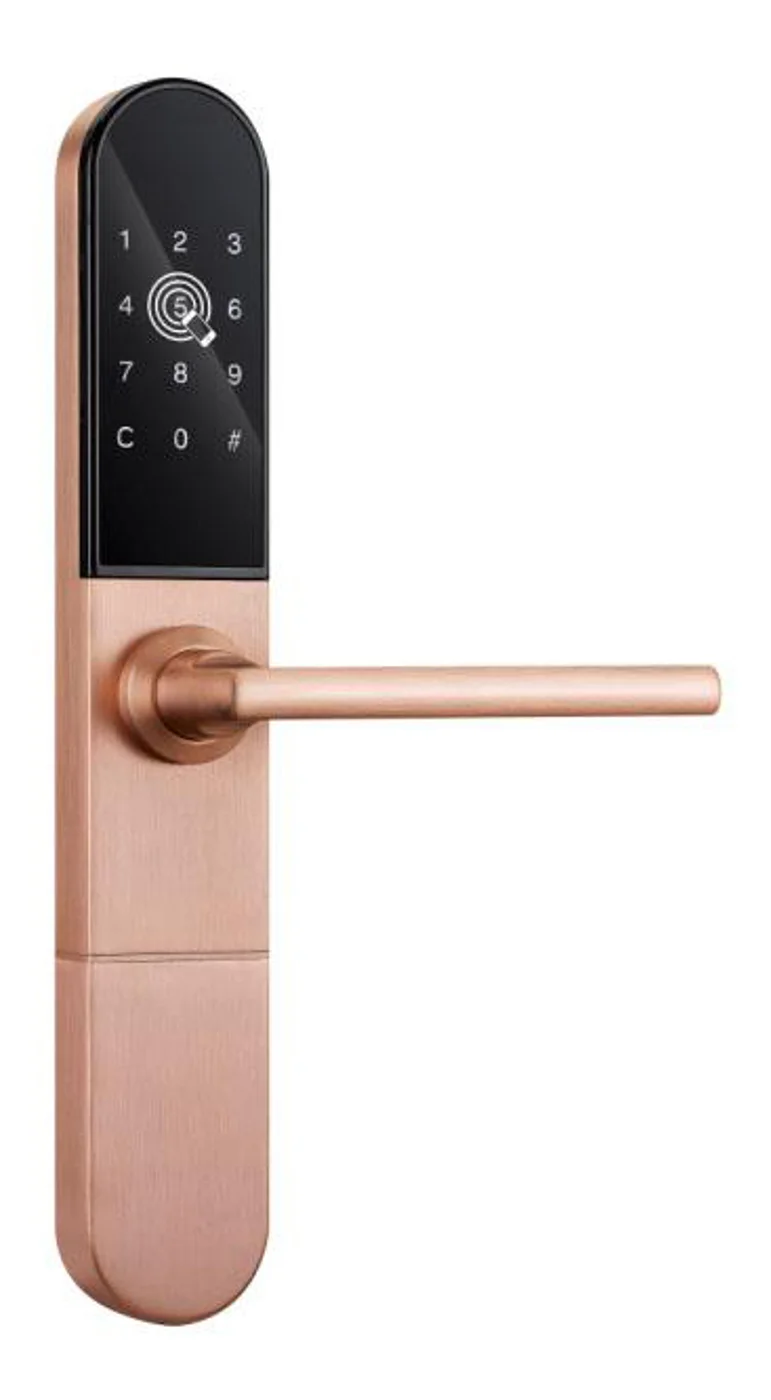
Smart Cabinet Lock — App-Managed, Multi-Site Dashboard
App-managed smart cabinet lock for office, parcel, and multi-site fleets. BLE app dashboard, audit trail, remote unlock, no per-lock server. Higher-tier chassis.
This page already points to it as the next recommended reference.
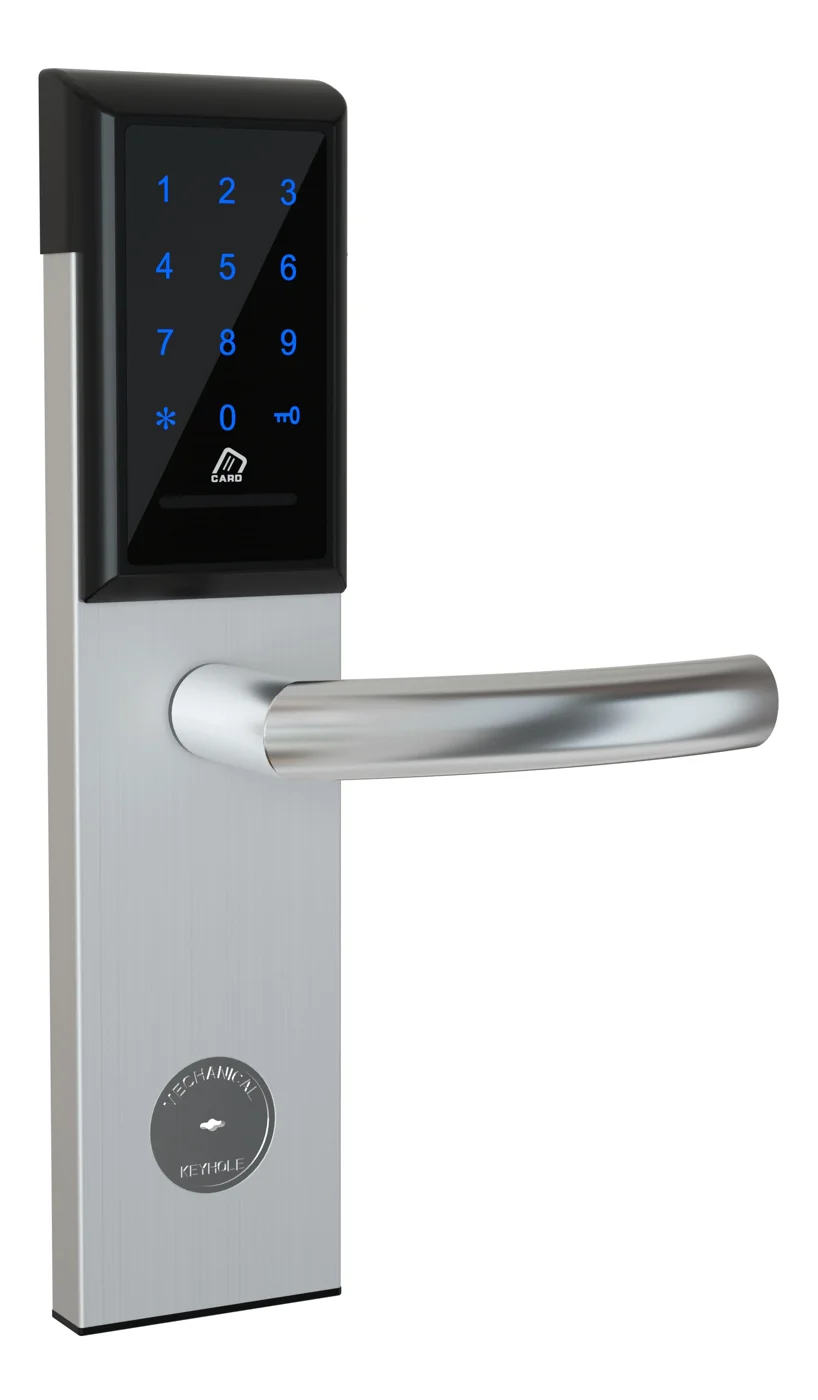
Office Cabinet Lock — PIN + Card for Filing & Pedestals
Offline PIN + card office cabinet lock for filing cabinets, pedestals, and drawers. Battery-powered 5-minute retrofit, no WiFi, no key management. CE/FCC/RoHS.
This page already points to it as the next recommended reference.
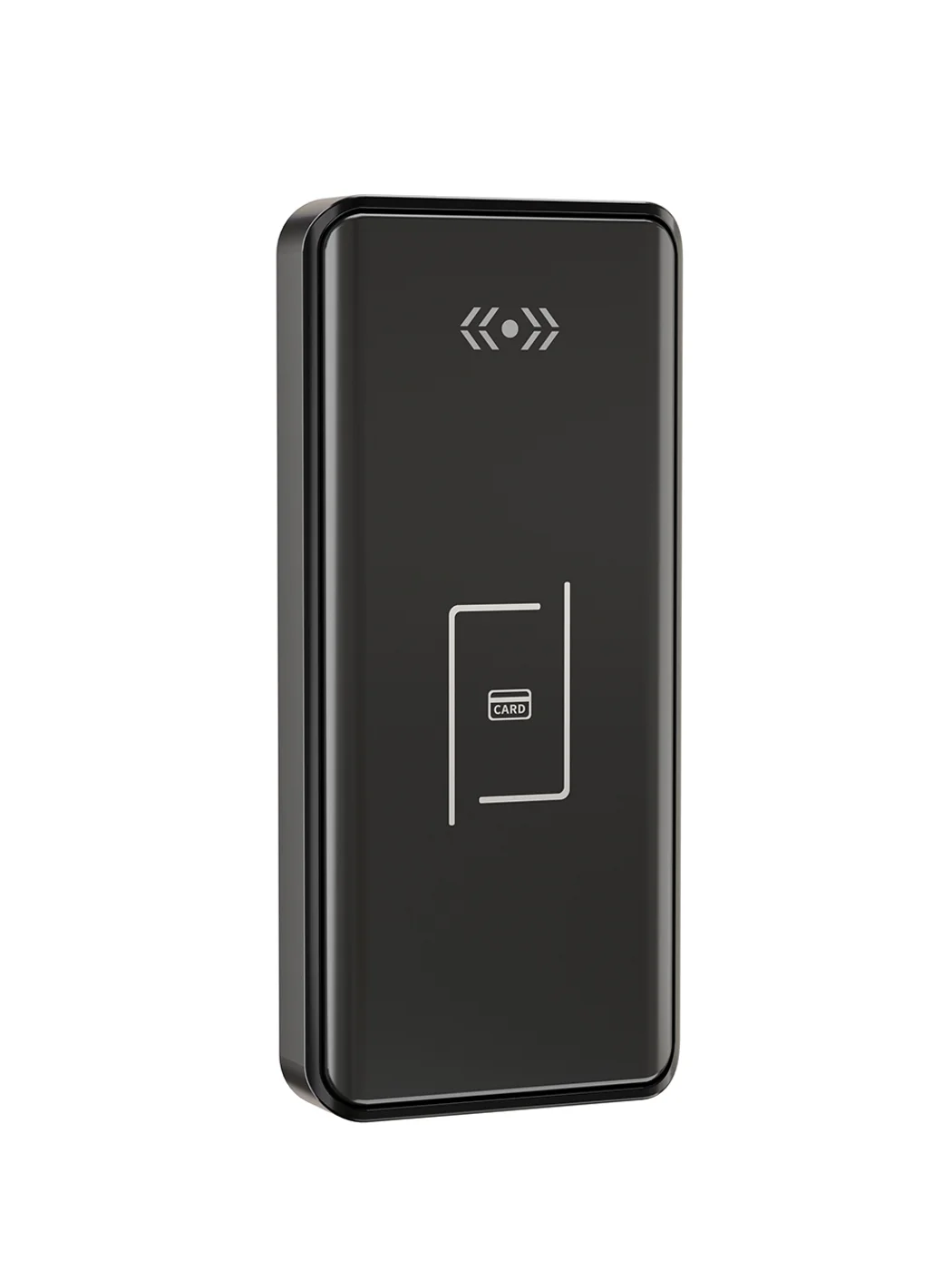
Gym Locker Lock — Offline Card, No WiFi Required
Offline card gym locker lock for fitness and pool lockers. MIFARE card, battery-powered 5-minute retrofit, no WiFi or server. Zinc alloy body, CE/FCC/RoHS.
This page already points to it as the next recommended reference.
Related blog posts
3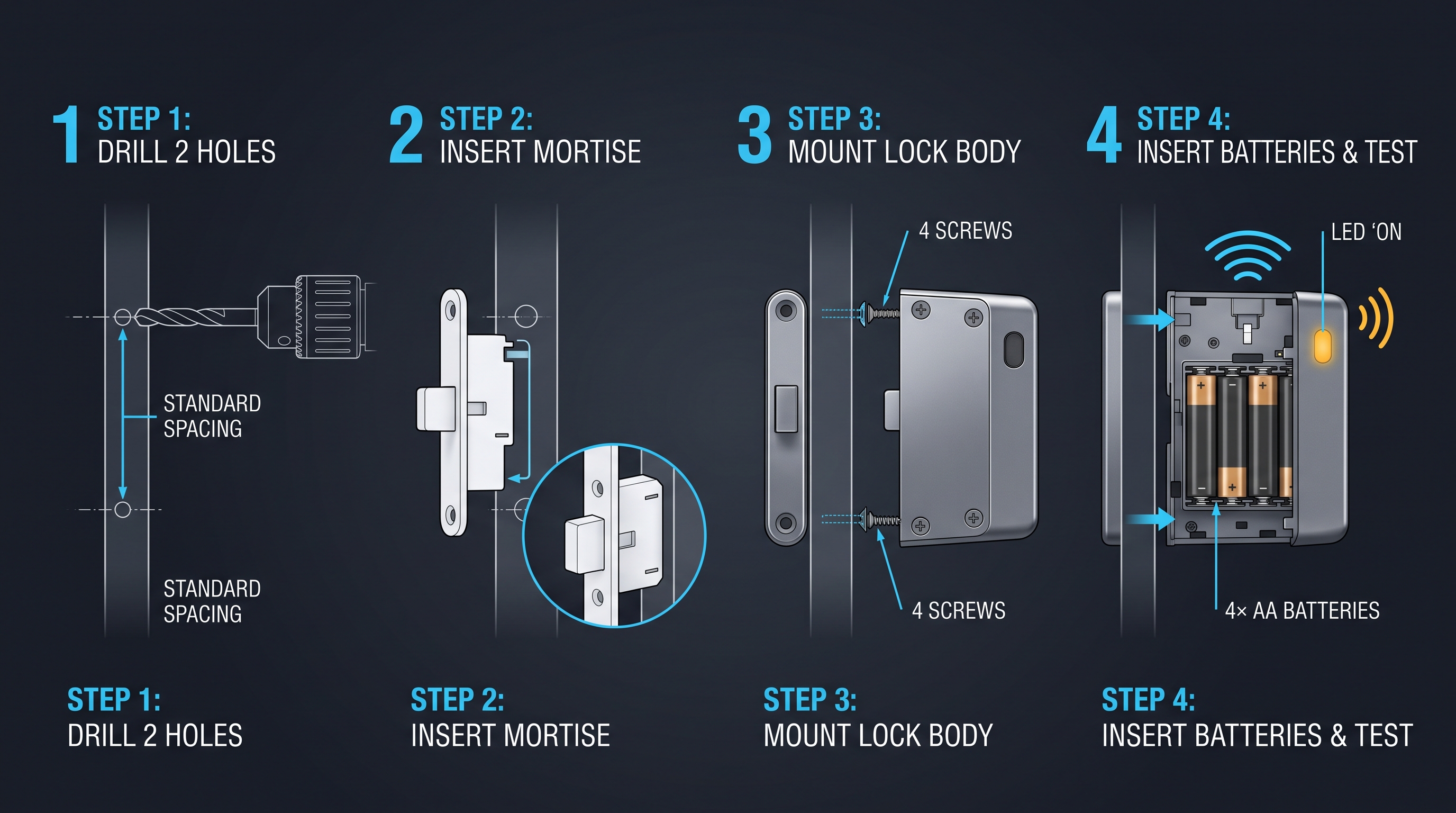
Cam Lock Electronic: Modernizing the Workhorse Cabinet Lock
Cam lock electronic combines the classic cam lock form factor with RFID, keypad, and BLE credentials. Retrofit compatible with standard cylinder bores. Complete guide.
It supports the same product context: Smart Cabinet Lock — App-Managed, Multi-Site Dashboard, Office Cabinet Lock — PIN + Card for Filing & Pedestals, Gym Locker Lock — Offline Card, No WiFi Required.
Card Cabinet Lock: Ultimate Guide to Smart Card-Activated Cabinet Security Systems
Complete exploration of card cabinet lock technology including MIFARE, DESFire, NFC smartphone credentials, installation guides, security protocols, and enterprise integration strategies for card-based cabinet access.
It supports the same product context: Smart Cabinet Lock — App-Managed, Multi-Site Dashboard, Office Cabinet Lock — PIN + Card for Filing & Pedestals, Gym Locker Lock — Offline Card, No WiFi Required.
Cabinet Smart Lock: The Complete Guide to Connected Cabinet Security and Access Control
A comprehensive guide to cabinet smart lock systems covering WiFi, Zigbee, biometric, RFID types, installation, integration, and best practices for homes and businesses.
It supports the same product context: Smart Cabinet Lock — App-Managed, Multi-Site Dashboard, Office Cabinet Lock — PIN + Card for Filing & Pedestals, Gym Locker Lock — Offline Card, No WiFi Required.
Specify your hotel project with our engineers
Send your room count, ceiling type, and protocol preference. We will return a sample plan and quote within 24 business hours.
- Move from general guidance into a product or application discussion.
- Use RFQ when pricing, drawings, MOQ, or launch timing needs structure.
- Keep a direct contact path visible for fast clarifications and handoff.