Cabinet Access Control: The Ultimate 2026 Guide to Intelligent Cabinet Security Management
A comprehensive guide to cabinet access control covering electronic locking technologies, credential types, integration architectures, installation best practices, and industry-specific deployment strategies for intelligent cabinet security management.
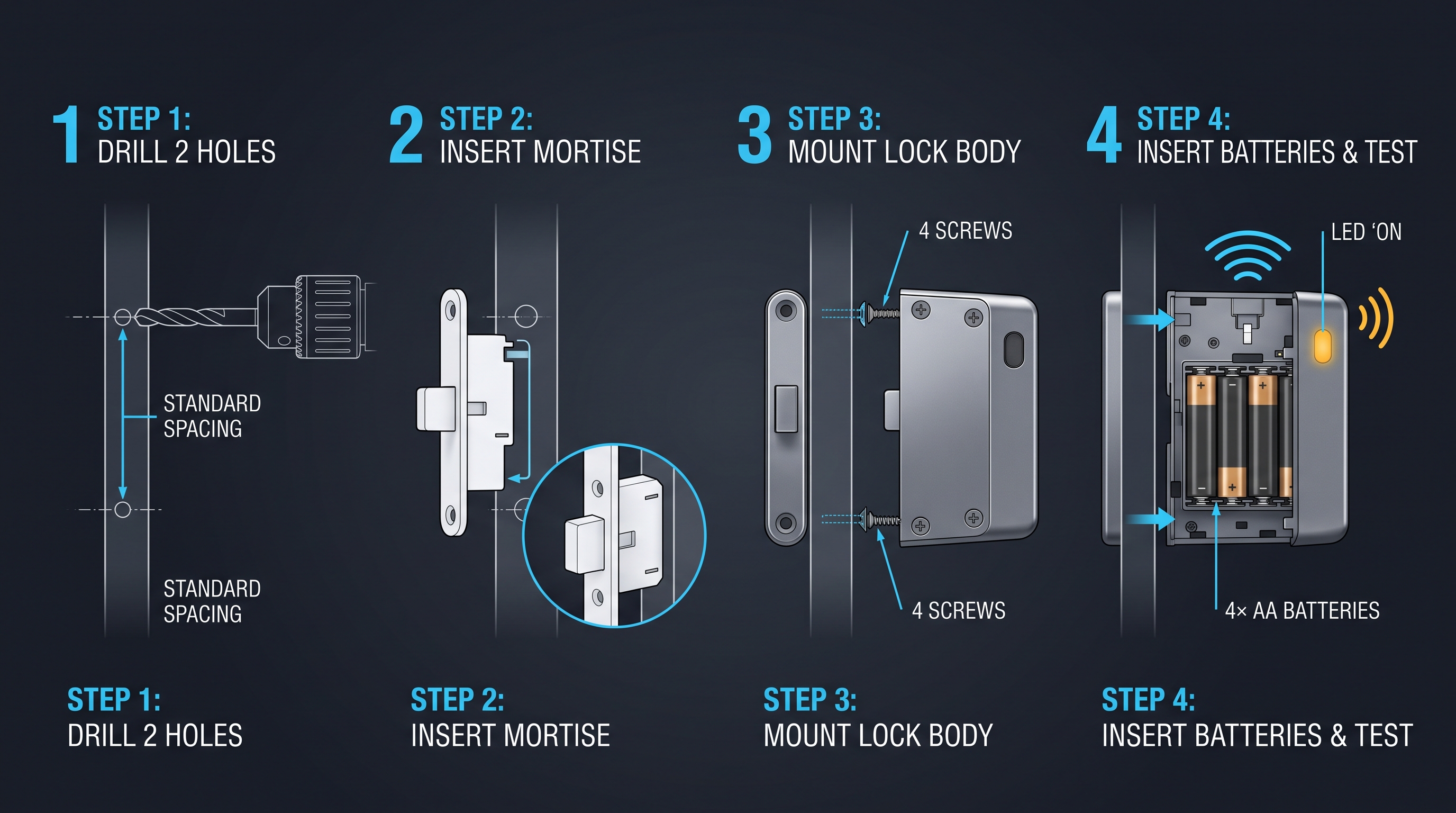
For facility managers, security directors, IT administrators, and procurement professionals asking "what is a cabinet access control system" or searching for "cabinet access control installation near me," this comprehensive guide explains every layer of intelligent cabinet security. Cabinet access control replaces mechanical keys with electronic credentials including RFID cards, PIN codes, biometric scans, and mobile wallets that authenticate each user before the bolt retracts. A networked cabinet access control platform logs every entry, integrates with identity providers such as Active Directory or Okta, and supports audit trails required by HIPAA, FERPA, and similar regulations. Whether deployed on pharmacy cabinets, server racks, file drawers, gun safes, retail display cases, or factory tool storage, a properly specified cabinet access control system reduces theft, eliminates key copying, simplifies administration, and demonstrates compliance. This guide covers credential technologies, hardware architectures, communication protocols, management software, integration patterns, deployment planning, maintenance procedures, security risks, and industry-specific strategies for organizations planning or upgrading a cabinet access control investment.
Understanding Cabinet Access Control Fundamentals
Cabinet access control is the systematic approach to managing who can open secured cabinets, drawers, and storage enclosures within a facility. Unlike a simple lock that provides only a binary secured-or-unsecured state, cabinet access control encompasses the full ecosystem of hardware, software, credentials, policies, and procedures that govern access to protected storage. A well-designed cabinet access control implementation answers not just whether someone can access a cabinet, but who accessed it, when, for how long, and whether that access was appropriate given their role and schedule.
The evolution of cabinet access control from mechanical keys to electronic systems mirrors the broader transformation of physical security over the past three decades. Traditional mechanical cabinet access control relied on physical keys distributed to authorized individuals. This approach created multiple security vulnerabilities: keys could be copied without detection, lost keys required expensive rekeying, separated employees might retain access indefinitely, and there was no record of who accessed what and when. Modern cabinet access control systems address every one of these limitations through electronic authentication, centralized management, and comprehensive audit logging.
The fundamental components of any cabinet access control system include the locking hardware installed on each cabinet, the credentials carried or known by authorized users, the authentication mechanism that validates those credentials, the controller or software platform that makes access decisions, and the administrative interface through which security managers configure and monitor the system. Cabinet access control ranges from simple standalone electronic locks with local code storage to enterprise-grade networked systems managing thousands of cabinets across multiple facilities with integration into broader physical security and identity management platforms.
The driving forces behind cabinet access control adoption span regulatory compliance, operational efficiency, and risk management. Regulations such as HIPAA in healthcare, FERPA in education, and various data protection laws require organizations to control and document access to sensitive information stored in cabinets. Operational efficiency improves when cabinet access control eliminates the time and cost of mechanical key management. Risk management benefits from the visibility that cabinet access control provides into access patterns, enabling security teams to detect anomalies, investigate incidents, and demonstrate due diligence to auditors and insurers.
This comprehensive guide to cabinet access control examines every dimension of the technology and practice, from the electronic locking mechanisms at the hardware layer to the enterprise identity management systems at the integration layer. Whether you are planning a cabinet access control deployment for a single department or developing an organization-wide strategy covering thousands of storage units, the detailed technical and practical information in this guide provides a foundation for informed decision-making and successful implementation.
How Cabinet Access Control Systems Work: Technology Deep Dive
The architecture of a cabinet access control system can be understood as a layered stack, with each layer providing specific functions that collectively deliver secure, manageable, and auditable access to protected storage. At the physical layer, the cabinet access control system includes the electronic lock hardware mounted on each cabinet, comprising the locking mechanism, the credential reader, the controller board, the power source, and the communication interface. This hardware layer represents the most visible component of cabinet access control, as it is what users interact with directly when accessing secured cabinets.
The credential layer of cabinet access control encompasses the various technologies that users present to authenticate their identity. PIN codes entered on keypads represent the simplest credential type in cabinet access control, requiring no physical token but relying entirely on the user's memory. RFID cards and fobs add a possession factor to cabinet access control, requiring the user to present a physical token that contains a unique identifier or cryptographic key. Biometric credentials including fingerprints, facial recognition, and iris scans add an inherence factor to cabinet access control, authenticating the user based on physical characteristics that cannot be lost, shared, or forgotten.
The controller layer of cabinet access control is where access decisions are made. In a standalone cabinet access control configuration, each lock contains its own controller that stores authorized credential data locally and makes access decisions independently. This distributed cabinet access control architecture is simple to deploy but becomes administratively burdensome as the number of locks and users grows, because any change to access privileges must be programmed into each affected lock individually. In a networked cabinet access control configuration, locks communicate with centralized controllers or cloud-based platforms that maintain the master database of authorized users and access policies.
The communication layer of cabinet access control connects the locks to the management infrastructure. Wired cabinet access control installations typically use RS-485, Wiegand, or Ethernet connections, providing reliable communication but requiring cable runs to each cabinet. Wireless cabinet access control installations use technologies such as Bluetooth Low Energy, Wi-Fi, Zigbee, or Z-Wave to communicate without physical wiring, dramatically reducing installation complexity and cost at the expense of battery dependence and potential wireless interference. Hybrid cabinet access control architectures combine wired and wireless elements to balance the reliability of wired connections with the flexibility of wireless deployment.
The management software layer of cabinet access control provides the interface through which administrators configure the system, manage users and credentials, define access policies, view audit trails, and generate reports. This is where the strategic value of cabinet access control is most apparent, as the software transforms raw access events into actionable security intelligence. Modern cabinet access control management platforms increasingly operate in the cloud, enabling administrators to manage locks across multiple sites from any web browser or mobile application, with data synchronized in real time across the entire deployment.
The integration layer of cabinet access control connects the cabinet-level security with the organization's broader security and IT infrastructure. Integration with identity management systems such as Active Directory, LDAP, or Azure AD enables cabinet access control to automatically reflect changes in user status—when an employee is hired, their cabinet access privileges can be provisioned automatically; when they are terminated, all cabinet access is revoked instantly. Integration with security information and event management or SIEM platforms allows cabinet access control events to be correlated with other security data for comprehensive threat detection and incident response.
Key Components of a Complete Cabinet Access Control Solution
The electronic locking hardware that forms the physical foundation of cabinet access control comes in several form factors, each suited to different cabinet types and security requirements. Cam lock form factor cabinet access control devices replace traditional mechanical cam locks in the circular mounting holes common on file cabinets, desk drawers, and metal storage cabinets. These units typically measure sixteen to twenty-two millimeters in diameter and extend the electronic components behind the mounting surface. Bolt lock form factor cabinet access control devices provide a rectangular bolt that extends into a strike plate or receiving hole, offering greater physical strength than cam lock designs for applications requiring higher forced-entry resistance.
The credential reader integrated into each cabinet access control device determines what authentication methods the system supports. Keypad readers for cabinet access control accept numeric PIN codes, providing a budget-friendly credential option with zero per-user token cost. RFID readers for cabinet access control support contactless cards and fobs across multiple frequency bands—125 kHz proximity, 13.56 MHz smart cards including MIFARE and DESFire, and in some cases UHF for extended range applications. Biometric readers integrated into cabinet access control devices enable fingerprint, facial, or iris-based authentication. Multi-technology cabinet access control readers combine two or more reader types in a single device, supporting credential migration strategies and multi-factor authentication requirements.
The power architecture of cabinet access control is a critical design consideration that affects both installation complexity and ongoing maintenance requirements. Battery-powered cabinet access control devices operate on standard alkaline or lithium batteries, typically providing one to two years of service before replacement. The elimination of wiring makes battery-powered cabinet access control the most practical option for retrofit installations where running power cables would be prohibitively expensive or disruptive. Hardwired cabinet access control devices receive power through low-voltage wiring from an external power supply or access control panel, eliminating battery replacement requirements but adding installation complexity. Some cabinet access control products support Power over Ethernet or PoE, receiving both power and data through a single Ethernet cable.
The locking mechanism within cabinet access control hardware must balance security with reliability and power efficiency. Solenoid-based cabinet access control mechanisms use an electromagnetic coil to retract a spring-loaded bolt when energized, providing reliable operation with moderate power consumption. Motor-driven cabinet access control mechanisms use a small electric motor to drive the bolt through a gear train, offering greater bolt extension force and the ability to lock or unlock without continuous power application. Shape memory alloy or SMA actuators in advanced cabinet access control designs use materials that change shape when heated by an electric current, providing silent operation in a very compact form factor suitable for furniture-integrated applications.
The management software that orchestrates cabinet access control operations is as important as the hardware itself. A capable cabinet access control management platform provides user and credential management, enabling administrators to add, modify, and revoke user access from a central interface. Access policy configuration allows cabinet access control administrators to define rules governing who can access which cabinets, during what time windows, and under what conditions. Audit trail functionality records every cabinet access control event with timestamps, user identification, and success or failure status, creating a forensic-quality record for security investigations and compliance demonstrations.
Alerting and notification capabilities within cabinet access control management software keep security personnel informed of significant events. A cabinet access control system can generate alerts for tamper attempts, repeated failed access attempts suggesting brute-force attacks, cabinet doors left open beyond a configured timeout, low battery conditions, and offline locks that have lost communication with the management platform. These proactive alerts transform cabinet access control from a passive security measure into an active monitoring system that identifies potential threats as they emerge rather than after a breach is discovered.
Cabinet Access Control Credential Technologies Compared
PIN codes represent the most widely deployed credential type in cabinet access control due to their simplicity and zero per-user cost. A cabinet access control system using PIN codes requires no physical tokens—each authorized user knows a numeric code that they enter on a keypad to gain access. The security of PIN-based cabinet access control depends on code complexity, code management practices, and physical security of the keypad against observation. Best practices for PIN-based cabinet access control include minimum code lengths of four to six digits, lockout after multiple failed attempts, regular code rotation, unique codes per user rather than shared codes, and privacy shields or randomized touchscreen keypads to prevent shoulder surfing.
RFID credentials for cabinet access control offer the convenience of contactless operation with a simple tap of a card or fob. Low frequency 125 kHz proximity cards used in cabinet access control transmit a fixed unique identifier when energized by the reader field, providing basic identification but lacking cryptographic security. High frequency 13.56 MHz smart cards such as MIFARE Classic and MIFARE DESFire used in cabinet access control support mutual authentication between card and reader, encrypted communication, and configurable memory sectors for storing additional data beyond the card identifier. The choice of RFID technology for cabinet access control should consider compatibility with existing credential populations—if employees already carry building access cards, extending that same credential to cabinet access control creates a seamless single-card experience.
Biometric credentials for cabinet access control authenticate users based on unique physical characteristics. Fingerprint recognition is the most common biometric modality in cabinet access control due to the compact size, low cost, and proven reliability of capacitive and optical fingerprint sensors. Facial recognition for cabinet access control has become increasingly viable as camera and processor technology advances, offering touchless operation that is particularly valuable in healthcare and food service environments where hygiene is critical. Iris and retinal scanning represent the highest accuracy biometric modalities but are generally cost-prohibitive for cabinet access control applications outside of extremely high-security government or research environments.
Mobile credentials for cabinet access control leverage smartphones as authentication tokens, using Bluetooth Low Energy or NFC communication. A user with a mobile credential for cabinet access control authenticates through an app on their phone, which communicates with the lock to verify authorization. Mobile credentials eliminate the cost of physical cards, enable remote issuance and revocation, and can incorporate additional security factors such as the phone's biometric unlock or device-level encryption. As smartphone ubiquity approaches one hundred percent in many user populations, mobile credentials are becoming an increasingly attractive cabinet access control option, particularly for organizations seeking to reduce plastic card consumption and the associated environmental impact.
Multi-factor authentication in cabinet access control combines two or more credential types to provide defense in depth. A common cabinet access control multi-factor configuration pairs a PIN code, something the user knows, with an RFID card, something the user has, requiring both for access. Another pairs a biometric, something the user is, with a PIN or card. Multi-factor cabinet access control significantly raises the difficulty of unauthorized access, as an attacker must compromise multiple authentication factors simultaneously. The trade-off is increased access time and user complexity, which must be weighed against security requirements for the protected contents.
The credential management lifecycle in cabinet access control spans issuance, usage monitoring, and revocation. Credential issuance involves verifying the identity of the individual receiving the credential and associating it with their access privileges in the cabinet access control system. Ongoing monitoring detects anomalous usage patterns that might indicate credential compromise, such as a credential being used at unusual times or in unusual locations. Revocation removes access privileges when an individual's authorization ends, whether due to role change, employment termination, or credential loss. The speed and completeness of credential revocation across all cabinet access control points is one of the most important security characteristics of any system.
| Credential Type | Read Time | Per-User Cost | Hygiene | Migration Effort | Best Cabinet Access Control Application |
|---|---|---|---|---|---|
| PIN keypad | 2-4 s | None | Medium | Per-code rotation | Schools, basic office cabinets |
| 125 kHz proximity card | 0.4 s | Low | High | Single-frequency reader | Retrofits reusing legacy badges |
| 13.56 MHz MIFARE DESFire | 0.3 s | Medium | High | Card re-issuance | Corporate offices, pharmacies |
| Fingerprint biometric | 1 s | None after enrollment | Low | Re-enrollment on sensor change | High-security and hygiene-critical cabinets |
| Facial recognition | 0.5 s | None | Highest | Camera and lighting tuning | Healthcare, food service cabinets |
| Mobile wallet (BLE/NFC) | 0.5 s | App provisioning | High | App deployment | Smart offices, member-only venues |
| Multi-factor PIN plus card | 4-6 s | Medium | Medium | Policy definition | Regulated and high-value storage |
Cabinet Access Control Integration Architectures
Standalone cabinet access control represents the simplest integration architecture, with each lock operating independently. In this cabinet access control model, user credentials are programmed directly into each lock, access decisions are made locally, and audit data must be retrieved individually from each lock. Standalone cabinet access control is appropriate for small deployments of up to approximately twenty locks where the administrative burden of per-lock programming is manageable. The primary advantages of standalone cabinet access control are low cost, simple installation with no wiring or network configuration, and no dependency on external systems that could fail and disable access.
Semi-online cabinet access control introduces a programming device or gateway that bridges between standalone locks and management software. In this cabinet access control architecture, administrators configure access policies in the management software, then use a handheld programming device or wireless gateway to push configurations to individual locks. Access decisions still occur locally at each lock, but credential management is centralized. Semi-online cabinet access control provides a pragmatic middle ground, delivering the management benefits of centralization without the infrastructure requirements of full networking. This cabinet access control model is well suited to medium deployments of twenty to two hundred locks where the efficiency of centralized management justifies the investment in programming infrastructure.
Fully networked cabinet access control connects each lock to a central controller or server, enabling real-time access decisions based on a current credential database. In this cabinet access control architecture, when a user presents a credential at any lock, the lock queries the central system to verify that the credential is currently authorized. This real-time validation eliminates the vulnerability window between credential revocation in the management system and the next local sync at each lock, ensuring that revoked credentials are denied access immediately across the entire cabinet access control deployment. Networked cabinet access control also provides real-time event reporting, with access events appearing in the management console seconds after they occur.
Cloud-based cabinet access control extends the networked model by hosting the management platform and credential database in the cloud rather than on-premises servers. This cabinet access control architecture eliminates the need for organizations to maintain server infrastructure for their security systems, with the cloud provider handling availability, backups, security patching, and capacity scaling. Cloud-based cabinet access control enables multi-site management from any location with internet access, making it particularly attractive for organizations with geographically distributed operations. The considerations for cloud-based cabinet access control include internet dependency—the locks must maintain connectivity to function—and data sovereignty requirements that may restrict where access control data can be stored.
OSDP or Open Supervised Device Protocol is increasingly important in cabinet access control integration. Unlike the older Wiegand protocol, which transmits card data in one direction without encryption, OSDP provides bidirectional encrypted communication between readers and controllers. A cabinet access control system using OSDP can monitor reader status, detect tampering or disconnection, and support more sophisticated interactions than simple card-read-and-grant. As organizations upgrade their access control infrastructure, specifying OSDP-compatible cabinet access control hardware ensures compatibility with modern security standards and provides a foundation for future enhancements.
Integration with identity management systems transforms cabinet access control from a siloed security function into a component of the organization's overall identity lifecycle management. When cabinet access control integrates with Active Directory, LDAP, or cloud identity providers, user access privileges are automatically provisioned when accounts are created, updated when roles change, and revoked when accounts are deactivated. This integration eliminates the security gap that occurs when cabinet access control is managed separately from IT identity systems, where departed employees might retain physical access to cabinets long after their network accounts have been disabled.
Cabinet Access Control Installation Planning and Execution
A successful cabinet access control installation begins with a comprehensive site survey that documents every cabinet to be secured. The site survey for cabinet access control should record cabinet dimensions, door and drawer construction materials and thicknesses, existing lock types and mounting hole configurations, proximity to power sources and network connections, environmental conditions including temperature range and humidity exposure, and the value and sensitivity of the contents to be protected. This detailed survey data enables accurate cabinet access control hardware selection, identifies compatibility issues before they become installation problems, and supports accurate budgeting for hardware and labor.
The selection of cabinet access control hardware for each location must account for the physical characteristics documented in the site survey. Cabinet door thickness determines which lock models are compatible, as most cabinet access control locks have a specified range of acceptable door thicknesses, typically twelve to twenty-five millimeters for standard models. The mounting hole configuration determines whether a cabinet access control lock can be installed without modifying the cabinet—many electronic locks are designed to fit the same hole patterns as common mechanical cam locks, enabling straightforward retrofits. The material of the cabinet—wood, metal, laminate, or glass—affects drilling requirements, mounting hardware selection, and the risk of damage during installation.
The electrical infrastructure for cabinet access control must be planned before installation begins. For battery-powered cabinet access control devices, the primary electrical consideration is battery type and expected replacement interval, which affects maintenance planning but not installation wiring. For wired cabinet access control devices, the installation plan must include cable pathways from each cabinet to the nearest power source and, for networked models, to the nearest network connection point. Cable pathways for cabinet access control should avoid areas subject to frequent movement, pinch points when doors close, sources of electromagnetic interference, and locations where cables could be accidentally damaged during normal operations.
Network planning for networked cabinet access control includes determining IP address allocation, configuring firewall rules to permit communication between locks and management servers, and ensuring adequate wireless coverage for Wi-Fi connected devices. Each networked cabinet access control device requires a unique IP address, either statically assigned or obtained via DHCP with address reservation to ensure consistent addressing. Firewall configurations must balance security—restricting cabinet access control traffic to only the necessary ports and destinations—with operational requirements for lock-server communication. For wireless cabinet access control deployments, a site survey of Wi-Fi signal strength at each cabinet location should be conducted to identify coverage gaps before locks are installed.
The physical installation of cabinet access control hardware requires careful attention to alignment, mounting security, and wiring management. The lock body must be mounted perpendicular to the cabinet surface to ensure smooth bolt operation without binding. Mounting screws should be tightened to the manufacturer's specified torque, as over-tightening can distort the lock housing and under-tightening can allow the lock to loosen over time. For cabinet access control installations involving wiring, cables should be secured with appropriate clips or ties, kept clear of moving parts, and provided with sufficient slack to allow for cabinet door or drawer movement without straining connections.
User enrollment and testing procedures for cabinet access control must be completed before the system goes live. Each authorized user should be enrolled in the cabinet access control system, issued credentials if physical tokens are used, and trained on proper operation. Testing should verify that each enrolled credential reliably unlocks the appropriate cabinets, that unenrolled credentials are rejected, that audit events are being recorded correctly, that tamper and low-battery alerts function, and that emergency access procedures such as mechanical overrides work as designed. All cabinet access control testing should be performed with cabinet doors and drawers open to eliminate the risk of lockout if a malfunction is discovered.
Cabinet Access Control Security Analysis and Threat Mitigation
A thorough security analysis of cabinet access control examines the system at every layer, from physical hardware to administrative procedures, to identify vulnerabilities and specify appropriate mitigations. The threat model for cabinet access control defines who might attempt unauthorized access, what resources and capabilities they possess, what they seek to obtain, and what consequences would result from a successful breach. This cabinet access control threat model drives security requirements: a medicine cabinet in a hospital requires different security characteristics than an office supply cabinet, even though both use the same cabinet access control technology.
Physical attacks against cabinet access control hardware include prying, drilling, impact, and manipulation of the locking mechanism. Defenses against physical attacks in cabinet access control include hardened steel bolts and anti-pry plates, drill-resistant materials at critical points, tamper-detection switches that trigger alarms when the lock housing is disturbed, and robust mounting designs that distribute attack forces across a larger surface area. No cabinet access control device is completely impervious to a determined physical attack with unlimited time and tools, but well-designed hardware significantly increases the time, skill, and tools required, which serves as an effective deterrent in most threat scenarios.
Electronic attacks against cabinet access control systems target the communication between credentials and readers, the internal electronics of the lock, or the network connecting locks to management infrastructure. RFID credential cloning, where an attacker reads an authorized card and reproduces its data on a blank card, can be prevented through the use of cryptographic smart cards that perform challenge-response authentication rather than broadcasting static identifiers. Relay attacks, where an attacker extends the communication between a legitimate card and a reader, can be mitigated through distance-bounding protocols. Network attacks against cabinet access control can be prevented through encryption of all communications, strong authentication of devices connecting to the management platform, and network segmentation that isolates cabinet access control traffic from general-purpose networks.
Credential security in cabinet access control depends on the strength of the credential technology and the policies governing credential lifecycle management. PIN codes, the simplest credential in cabinet access control, are vulnerable to observation, guessing, and sharing. Mitigations include minimum code lengths, lockout after failed attempts, periodic mandatory code changes, and unique per-user codes that support individual accountability. Card-based credentials in cabinet access control are vulnerable to loss, theft, and unauthorized duplication. Mitigations include prompt reporting and revocation of lost cards, technology choices that resist cloning, and periodic revalidation of continued access need for all cardholders.
Administrative security is often the weakest link in cabinet access control, regardless of the sophistication of the hardware. Cabinet access control policies should define who can authorize access changes, what approvals are required, how changes are documented, and how the configuration is periodically audited for correctness. Separation of duties in cabinet access control administration prevents any single individual from both authorizing access and configuring it in the system. Regular access reviews should verify that every user with cabinet access control privileges still requires that access, and that no unauthorized access grants have been created, whether accidentally or maliciously.
Audit and compliance capabilities in cabinet access control provide the visibility needed to detect security incidents, investigate their scope and impact, and demonstrate regulatory compliance. A cabinet access control system should log all access events including successful accesses, denied attempts, administrative changes to user privileges or system configuration, and system events such as low battery alerts or communication failures. These cabinet access control audit logs should be protected from tampering or deletion, stored for a retention period appropriate to regulatory requirements and organizational policies, and regularly reviewed for anomalous patterns that might indicate security issues.
Cabinet Access Control Across Industries: Applications and Case Studies
Healthcare cabinet access control deployments secure medication storage, patient records, controlled substances, expensive medical devices, and hazardous materials. The cabinet access control requirements in healthcare are particularly demanding: access must be rapid in emergencies, yet security must be rigorous enough to satisfy DEA controlled substance regulations, HIPAA patient privacy requirements, and Joint Commission accreditation standards. A hospital cabinet access control deployment typically includes tiered access levels where nurses can access general supply cabinets, charge nurses can access certain medication cabinets, and pharmacists have authority over controlled substance storage, with all access comprehensively logged for audit purposes.
Pharmaceutical research and manufacturing cabinet access control secures intellectual property, research samples, precursor chemicals, and finished products subject to regulatory control. In these environments, cabinet access control often integrates with laboratory information management systems to enforce workflow-based access, where a researcher can only access a specific cabinet after completing required steps in the experimental protocol. The cabinet access control audit trail provides chain of custody documentation that may be required for patent applications, regulatory submissions, and internal investigations.
Higher education cabinet access control spans laboratories with hazardous chemicals and expensive equipment, IT equipment cabinets in classrooms and server rooms, faculty research storage, student records in administrative offices, and musical instrument and athletic equipment lockers. University cabinet access control often integrates with the campus smart card system, so the same student or staff ID card that provides building access, meal plan, and library privileges also controls access to appropriate cabinets and lockers. Laboratory safety regulations increasingly require documented access control for hazardous materials storage, making cabinet access control an important compliance tool for university environmental health and safety programs.
Corporate cabinet access control secures file cabinets containing personnel records, financial documents, contracts, intellectual property, and other confidential business information. The integration of cabinet access control with corporate identity management systems ensures that when an employee's building access is revoked upon termination, their cabinet access is simultaneously revoked. This closes a common security gap in organizations where HR processes promptly deactivate network accounts and door access but physical file cabinet keys may not be recovered for days or weeks after an employee's departure.
Government and defense cabinet access control applications involve classified document storage, evidence rooms, weapons and sensitive equipment armories, and secure communications equipment storage. These cabinet access control deployments must meet stringent standards including FIPS 201 compliance for credential security, TEMPEST requirements for electromagnetic emissions control, and various forced-entry resistance standards depending on the classification level of stored materials. Multi-factor cabinet access control is typically mandatory, combining a government-issued credential such as a CAC or PIV card with a PIN or biometric verification.
Hospitality cabinet access control includes guest room safes, minibar cabinets, housekeeping supply storage, maintenance equipment lockers, and back-of-house administrative cabinets. Hotel cabinet access control often integrates with the property management system, so guest room safe access can be linked to the guest's room key card for the duration of their stay. Staff cabinet access control in hospitality environments manages access to cleaning supplies, linens, and equipment, with audit trails supporting loss prevention and operational efficiency analysis. The self-service model enabled by cabinet access control in guest-facing applications reduces front desk workload and eliminates a common guest friction point.
Retail cabinet access control secures high-value merchandise display cases, cash office cabinets, stock room access, and pharmacy product storage within retail locations. Loss prevention is the primary driver for retail cabinet access control, with audit trails providing investigative support when inventory discrepancies are discovered. Time-restricted cabinet access control in retail environments can limit stock room access to business hours or specific shifts, and can require dual authorization—two staff members present simultaneously—for access to high-value or cash-handling areas.
Cabinet Access Control Selection and Procurement Strategy
The requirements gathering phase for cabinet access control procurement must engage all stakeholders who will interact with the system. Security managers define the threat model and minimum security requirements. Facilities managers provide information about cabinet types, quantities, and installation environments. IT managers specify network and integration requirements. The employees who will use cabinet access control daily provide essential feedback on usability requirements that will determine whether the system is embraced or resisted. Legal and compliance teams identify regulatory requirements that the cabinet access control system must satisfy. Gathering input from all stakeholders before issuing a request for proposal prevents the costly discovery of requirements after procurement is underway.
A structured evaluation framework for cabinet access control vendors should include weighted criteria reflecting organizational priorities. Security effectiveness—the system's resistance to the defined threat model—is typically the highest-weighted criterion. Usability directly affects whether cabinet access control will be used correctly and consistently. Total cost of ownership including hardware, installation, software licensing, maintenance, and credential costs over the expected system lifetime should be calculated for each cabinet access control option. Scalability to accommodate organizational growth prevents early obsolescence. Vendor stability and support quality affect long-term system reliability and the availability of spare parts, software updates, and technical assistance.
Hands-on evaluation of cabinet access control products is essential before committing to a large-scale purchase. Request evaluation units from shortlisted cabinet access control vendors and install them in representative locations within the actual deployment environment. Test with the credential types used by the organization. Verify manufacturer claims about battery life, read range, and durability through extended testing. Evaluate the management software by having the actual administrators who will use it daily perform common tasks such as adding users, configuring access schedules, and generating audit reports. The cabinet access control evaluation period should be long enough to identify any issues that would not be apparent in a brief demonstration.
The total cost of ownership calculation for cabinet access control extends well beyond the initial hardware purchase. Installation costs vary by cabinet type, with metal cabinets requiring different tools and techniques than wood, and some installations requiring reinforcement plates or custom mounting brackets. Credential costs include the initial issuance of cards or fobs and ongoing replacements for lost or damaged credentials. Battery replacement costs over the expected service life of battery-powered cabinet access control devices can be substantial for large deployments. Software licensing fees may be recurring annual costs. Training costs ensure that users and administrators can operate the cabinet access control system effectively. Maintenance costs cover spare parts, technical support, and potential on-site service visits.
Scalability planning for cabinet access control considers both the number of locks and the number of users that the system must support over its expected lifetime. A cabinet access control platform that works well for a pilot deployment of ten locks may become unmanageable at one hundred or one thousand locks. Evaluate whether the management software can handle bulk operations such as adding hundreds of users simultaneously or updating firmware across all locks in a deployment. Consider whether the cabinet access control system can support geographically distributed locations from a central management console. The cabinet access control platform selected should accommodate anticipated growth over the next five years to avoid the cost and disruption of migrating to a different system mid-deployment.
Cabinet Access Control Maintenance and Ongoing Operations
Battery management is the most frequent operational task for battery-powered cabinet access control deployments. Establish a proactive replacement schedule rather than waiting for low-battery indicators, which can fail or be ignored. The battery replacement schedule for cabinet access control should be based on manufacturer estimates of battery life under typical usage, reduced by approximately twenty percent as a safety margin. Documentation should track the replacement date for each cabinet access control lock, enabling trend analysis that may identify units with abnormal power consumption indicating developing electronic problems. The battery type specified by the manufacturer should be used—substituting different battery chemistries can cause incorrect low-battery detection or even damage to the cabinet access control electronics.
Firmware and software updates for cabinet access control systems address security vulnerabilities, fix bugs, and add new features. A patch management process for cabinet access control should include monitoring manufacturer announcements for available updates, evaluating the relevance and urgency of each update to the specific deployment, testing updates on a representative subset of locks before broad deployment, and scheduling updates during periods of low cabinet access activity to minimize disruption. The cabinet access control management software should be similarly maintained, with updates applied to management servers and administrator workstations following the same evaluation and testing process.
Physical inspection of cabinet access control hardware should be conducted periodically to detect developing problems before they cause lock failures. Inspect each cabinet access control lock for signs of physical attack, loose mounting, corrosion, or mechanical wear. Operate each lock several times to confirm smooth bolt movement without binding. Verify that LED indicators and audible signals are functioning, as these provide important user feedback. Check that the strike plate or receiving hole is properly aligned with the bolt. Physical inspection of cabinet access control hardware should be integrated into the organization's routine facilities inspection schedule.
Audit log review is a critical cabinet access control operational practice that supports both security and compliance. Regular review of cabinet access control audit logs can identify unusual access patterns such as repeated failed attempts suggesting a brute-force attack, access at unusual times suggesting misuse of credentials, or access by individuals whose authorization should have been revoked. Automated analysis tools can flag anomalous cabinet access control events for human review, improving the efficiency and consistency of audit log monitoring. The frequency of cabinet access control audit log review should be based on the sensitivity of the protected contents and applicable regulatory requirements.
User access review is a periodic process of verifying that all active cabinet access control credentials are still appropriately authorized. Personnel changes, role changes, and organizational restructuring can result in individuals retaining cabinet access control privileges that are no longer needed—a phenomenon known as privilege creep. Quarterly or semi-annual access review for cabinet access control involves generating a report of all active users and their access privileges, having managers verify that each access grant is still appropriate, and promptly revoking any access that is no longer needed. This cabinet access control access review process is particularly important for compliance with regulations that require periodic access re-certification.
Incident response procedures for cabinet access control define how the organization responds to security events involving cabinets. A cabinet access control incident response plan should address scenarios including a cabinet found forced open, discovery of an unauthorized access event in audit logs, loss or theft of administrator credentials, and detection of tampering with cabinet access control hardware. The plan should specify who is notified, what immediate containment actions are taken, how evidence is preserved, how the scope of the incident is determined, and what remediation actions are required to restore security. Regular drills of cabinet access control incident response procedures ensure that personnel are prepared to respond effectively when real incidents occur.
Cabinet Access Control Future Trends and Innovation Directions
Artificial intelligence and machine learning are poised to transform cabinet access control from a rule-based system to an intelligent, adaptive security platform. AI-powered cabinet access control can learn normal access patterns for each user and cabinet, detecting anomalies that may indicate credential compromise, insider threat activity, or reconnaissance by external attackers. Predictive maintenance algorithms in cabinet access control can analyze actuator performance data to identify locks that are likely to fail, enabling proactive replacement before a failure occurs. Natural language interfaces for cabinet access control management could allow administrators to configure the system and query audit data using conversational commands rather than navigating complex software interfaces.
The convergence of cabinet access control with broader Internet of Things ecosystems will create new integration possibilities and new security considerations. A cabinet access control system integrated with building management systems could automatically adjust climate control in areas where sensitive materials are stored, based on access patterns and environmental monitoring. Integration with inventory management systems could trigger reorder alerts when supply cabinets are accessed frequently enough to indicate depleting stock. However, each integration point also expands the attack surface of cabinet access control, requiring careful security architecture and ongoing vulnerability management.
Sustainability considerations are increasingly influencing cabinet access control product design and procurement decisions. Manufacturers are reducing packaging, selecting recycled and recyclable materials, and designing for disassembly to facilitate end-of-life material recovery. Energy-efficient cabinet access control designs reduce battery consumption and the associated battery waste stream. Rechargeable battery options and energy harvesting technologies that capture energy from door movement or ambient light promise to reduce or eliminate disposable battery use in cabinet access control. Organizations incorporating environmental criteria into their procurement processes should evaluate cabinet access control products on energy efficiency, material sustainability, and manufacturer take-back programs for end-of-life units.
Cybersecurity of cabinet access control systems is receiving increased attention as these devices become more connected and software-defined. Future cabinet access control products will incorporate hardware security modules for cryptographic key storage, secure boot processes that verify firmware integrity before execution, encrypted communications for all network traffic, and regular third-party security audits of both hardware and software. Standards and certification programs for IoT device security will extend to cabinet access control, providing buyers with independent assurance of cybersecurity quality. Zero-trust architectures for cabinet access control will assume that no device, user, or network is inherently trustworthy, requiring continuous verification for every access attempt.
The user experience of cabinet access control will continue to improve through advances in reader technology, credential convenience, and system responsiveness. Faster read times for RFID and NFC credentials will reduce the perceived delay between credential presentation and lock release. Improved fingerprint sensor technology will reduce false rejection rates that frustrate users and drive workarounds. Mobile credentials will become more seamless, potentially enabling passive authentication where the cabinet access control system recognizes an authorized user's phone as they approach and unlocks without requiring any explicit action.
Biometric cabinet access control advances including vein pattern recognition, gait analysis, and behavioral biometrics may supplement or replace current fingerprint and facial recognition technologies. Vein pattern recognition, which images the unique pattern of blood vessels in a finger or palm, offers high accuracy and is extremely difficult to spoof. Behavioral biometrics for cabinet access control could authenticate users based on the unique way they interact with the lock—their keypad typing rhythm, their card presentation motion, or their approach pattern. These emerging technologies may enable continuous cabinet access control authentication where the system confirms the user's identity throughout their interaction with the cabinet, not just at the moment of initial access.
Part of this article content is generated by AI and optimized for professional accuracy and readability.
Not sure which sensor fits your project?
Talk to our mmWave application engineers for a free consultation.
Find the right presence sensor for your hotel project
Compare the 3 protocols, check hotel-specific case studies, and download the installation guide
Related products
3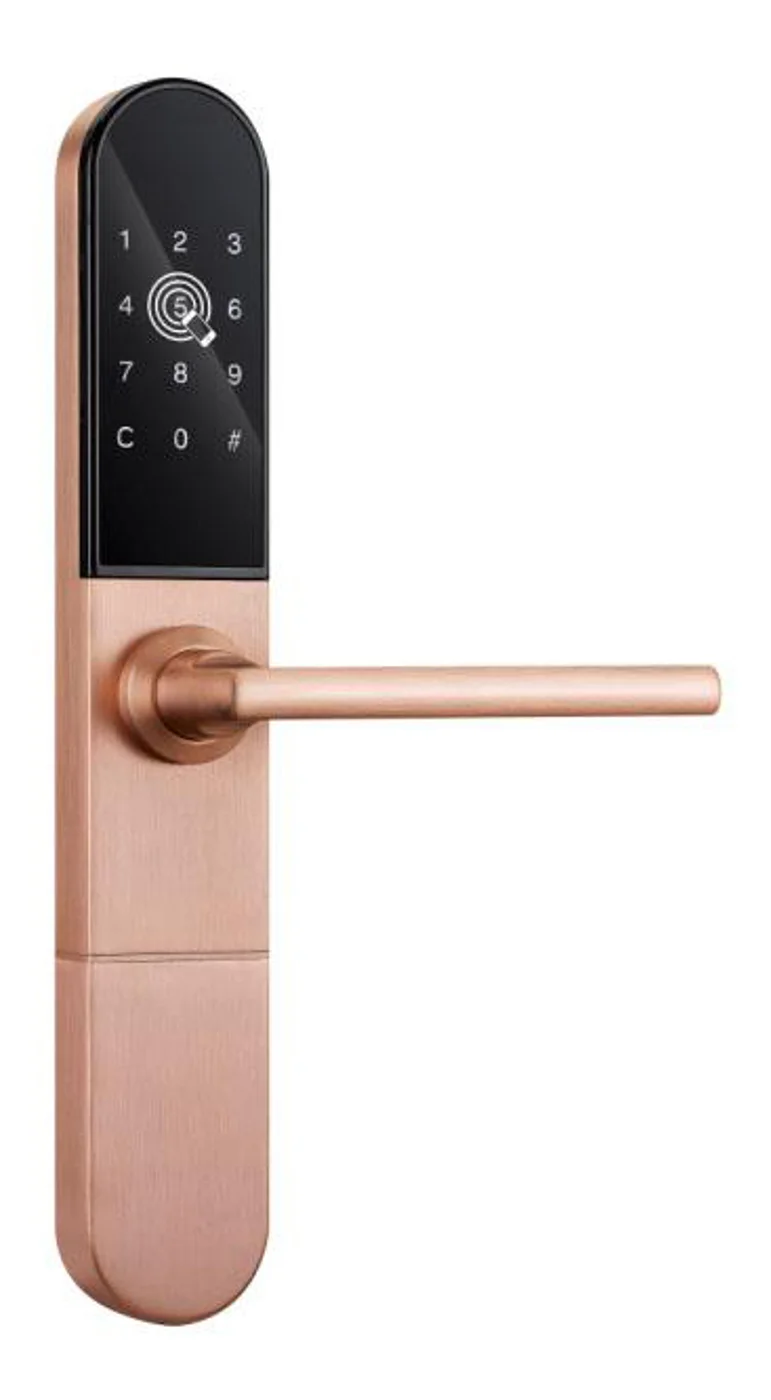
Smart Cabinet Lock — App-Managed, Multi-Site Dashboard
App-managed smart cabinet lock for office, parcel, and multi-site fleets. BLE app dashboard, audit trail, remote unlock, no per-lock server. Higher-tier chassis.
This page already points to it as the next recommended reference.
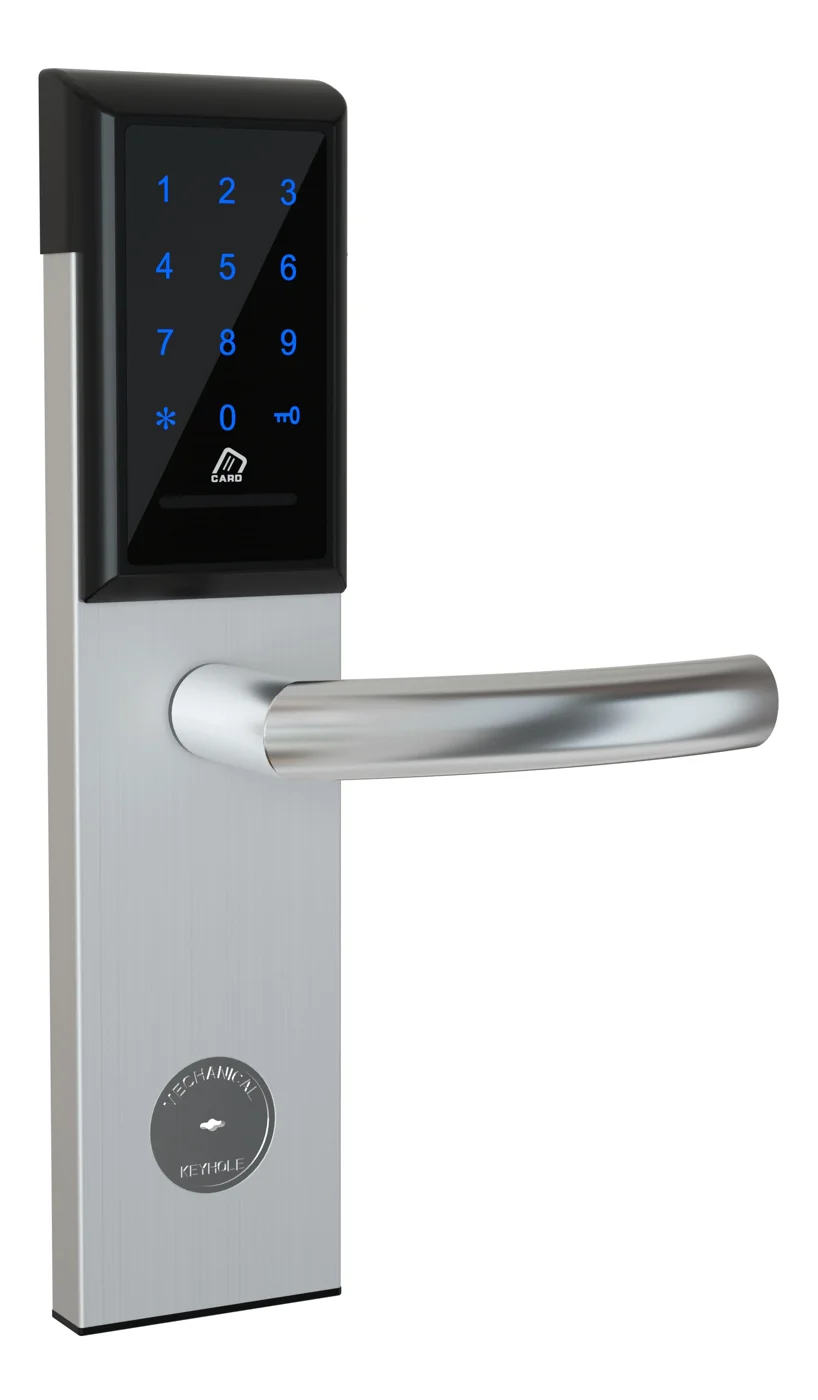
Office Cabinet Lock — PIN + Card for Filing & Pedestals
Offline PIN + card office cabinet lock for filing cabinets, pedestals, and drawers. Battery-powered 5-minute retrofit, no WiFi, no key management. CE/FCC/RoHS.
This page already points to it as the next recommended reference.
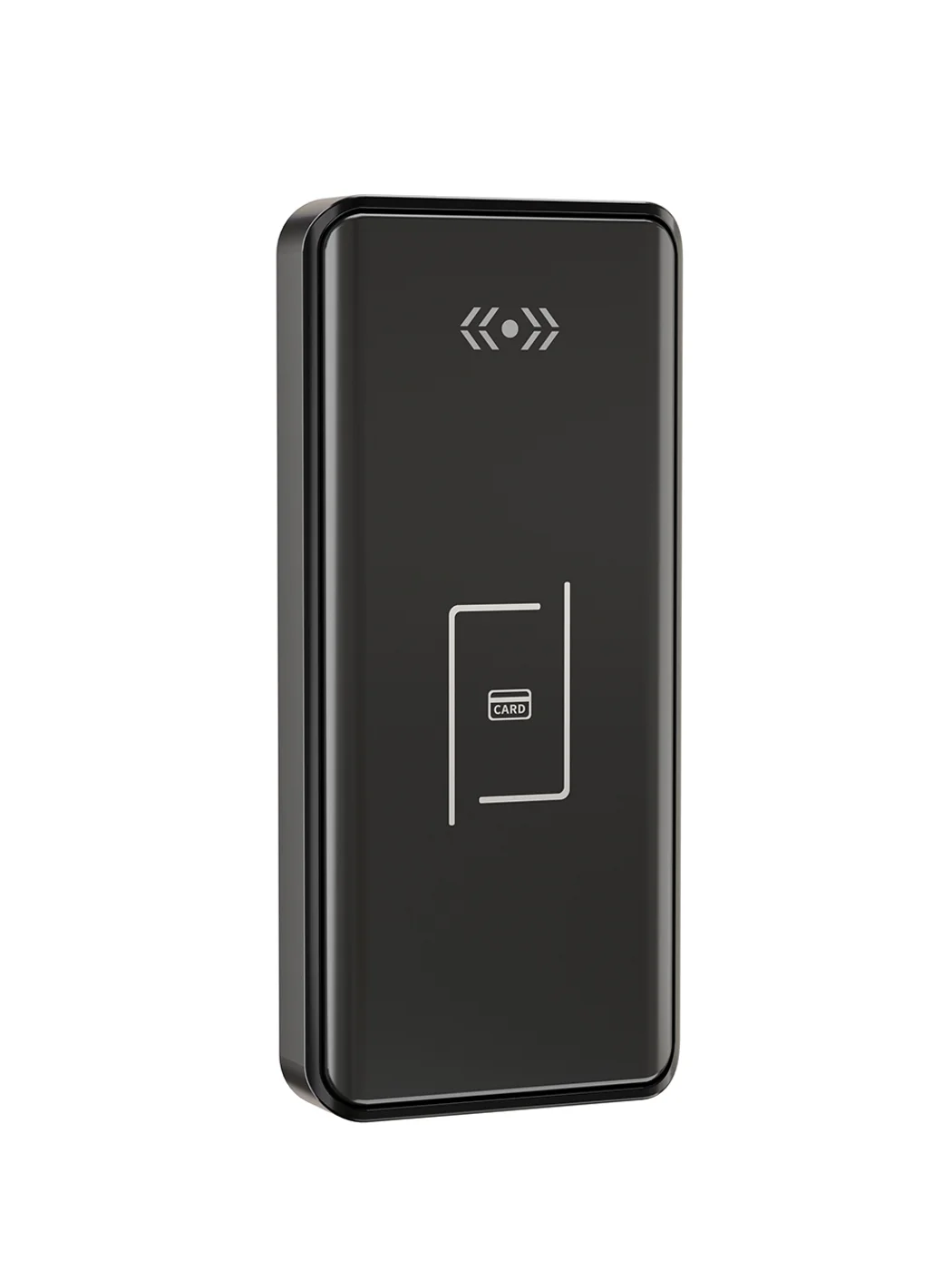
Gym Locker Lock — Offline Card, No WiFi Required
Offline card gym locker lock for fitness and pool lockers. MIFARE card, battery-powered 5-minute retrofit, no WiFi or server. Zinc alloy body, CE/FCC/RoHS.
This page already points to it as the next recommended reference.
Related blog posts
3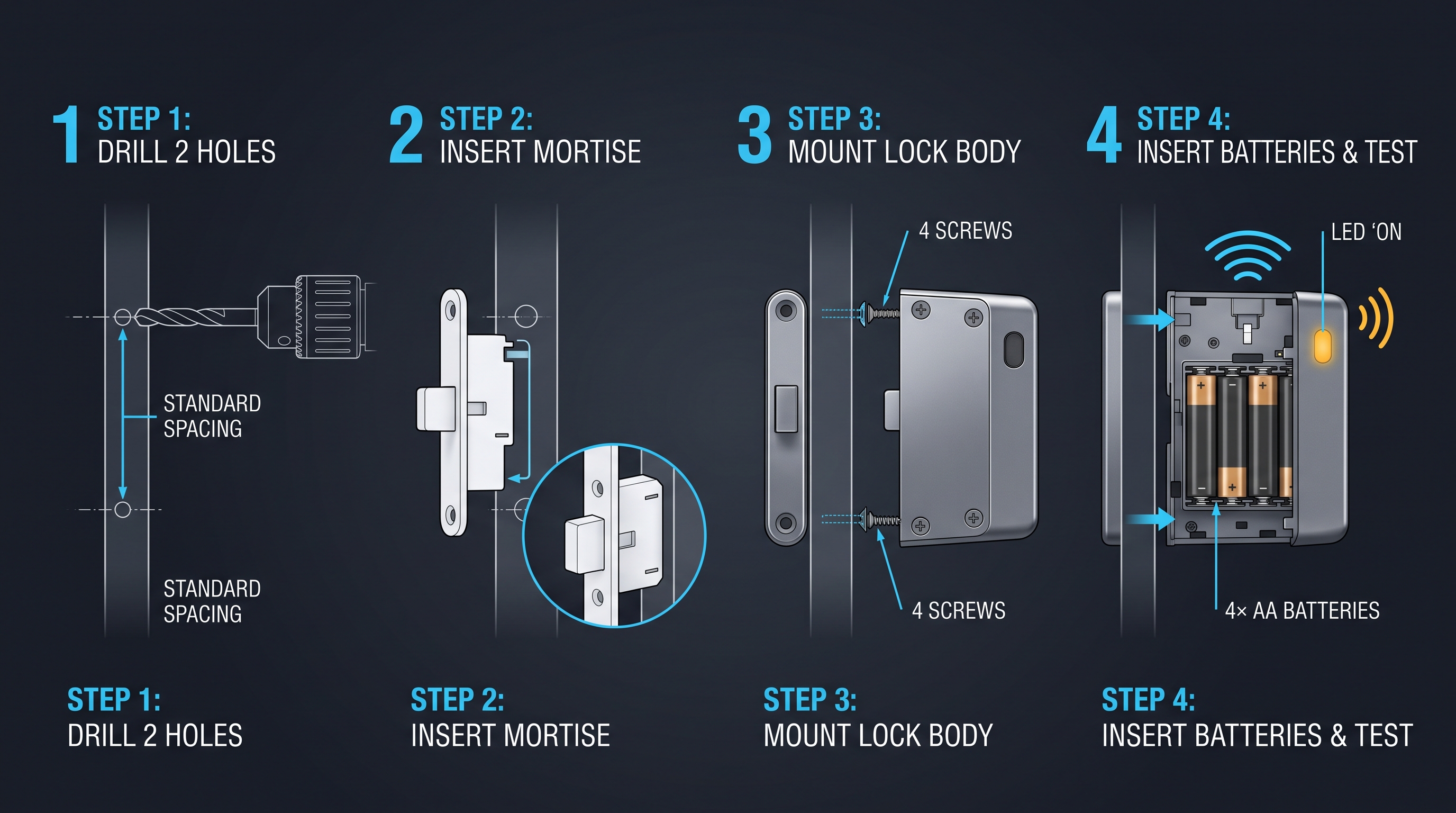
Cabinet Lock Electronic: Complete Technical Guide for 2026 Buyers and Integrators
Comprehensive guide to cabinet lock electronic systems covering types, working principles, installation, pricing, and buying criteria for commercial applications.
It supports the same product context: Smart Cabinet Lock — App-Managed, Multi-Site Dashboard, Office Cabinet Lock — PIN + Card for Filing & Pedestals, Gym Locker Lock — Offline Card, No WiFi Required.
Cabinet Digital Lock: Complete Technical Guide for 2026 Buyers and Integrators
Comprehensive guide to cabinet digital lock systems covering types, working principles, installation, pricing, and buying criteria for commercial and residential applications.
It supports the same product context: Smart Cabinet Lock — App-Managed, Multi-Site Dashboard, Office Cabinet Lock — PIN + Card for Filing & Pedestals, Gym Locker Lock — Offline Card, No WiFi Required.
cabinet latch electronic: The Complete Guide to Electronic Latches for Cabinets, Furniture, and Enclosures
Learn what a cabinet latch electronic is, how solenoid, motor, electromagnetic strike, and push-to-open electronic latches work, plus 12V/24V wiring, fail-secure vs fail-safe, relay and app control, use cases, installation, pricing, and troubleshooting.
It supports the same product context: Smart Cabinet Lock — App-Managed, Multi-Site Dashboard, Office Cabinet Lock — PIN + Card for Filing & Pedestals, Gym Locker Lock — Offline Card, No WiFi Required.
Specify your hotel project with our engineers
Send your room count, ceiling type, and protocol preference. We will return a sample plan and quote within 24 business hours.
- Move from general guidance into a product or application discussion.
- Use RFQ when pricing, drawings, MOQ, or launch timing needs structure.
- Keep a direct contact path visible for fast clarifications and handoff.