How to Buy Digital Cabinet Lock in 2026: Complete Purchasing Guide for Home, Office, and Commercial Use
Expert guide on where and how to buy digital cabinet lock systems. Compare NFC, RFID, Bluetooth, and fingerprint digital cabinet locks with vendor selection tips, pricing tiers, installation planning, and warranty considerations.
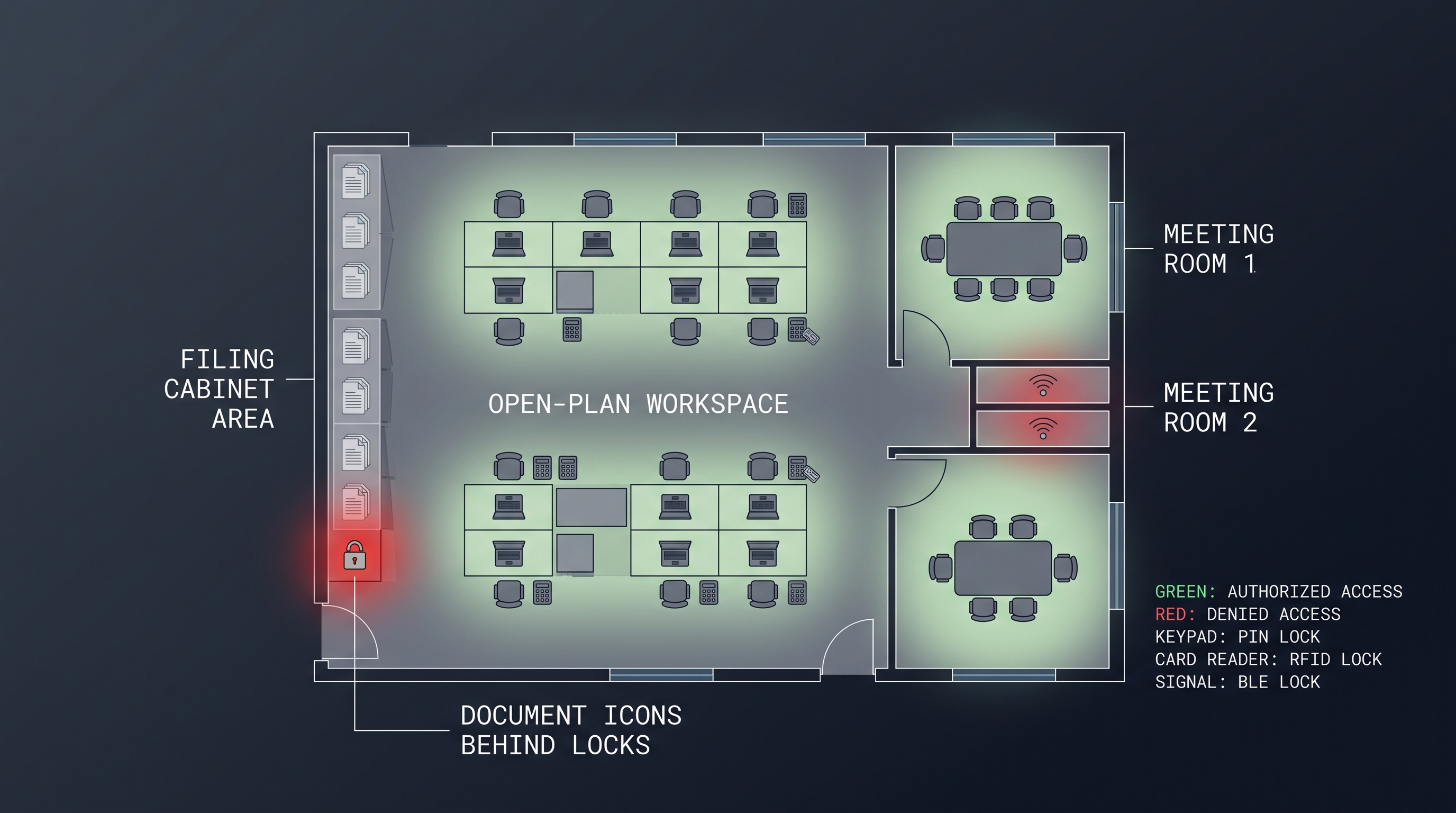
Purchasing digital cabinet locks — whether for a single home office filing cabinet, a 50-cabinet corporate deployment, a 200-locker gym retrofit, or a multi-site retail chain — requires navigating a diverse product landscape spanning five access technologies, four price tiers, three management models, and dozens of vendors with widely varying quality, support, and longevity. The decision to buy digital cabinet lock systems is fundamentally different from purchasing mechanical locks because it involves selecting an access control technology platform that will serve the organization for 5-10 years, not just a commodity hardware component. Organizations that approach the decision to buy digital cabinet lock systems with a mechanical-lock procurement mindset — focusing primarily on hardware price and physical fit — inevitably encounter issues: selecting the wrong access technology for their user population (requiring premature replacement), underestimating total lifecycle costs (particularly battery management, credential replacement, and software subscriptions), or failing to verify installation compatibility with existing cabinet hardware (causing retrofit delays and budget overruns). This comprehensive purchasing guide covers every phase of the decision to buy digital cabinet lock systems — from requirements definition and technology selection through vendor evaluation, pricing negotiation, bulk ordering, installation planning, and post-purchase support — providing the structured framework and quantitative benchmarks that facility managers, procurement specialists, IT directors, and security-conscious homeowners need to make informed purchasing decisions. Whether you need to lock a single home filing cabinet or outfit an entire corporate headquarters, this guide's methodology ensures you buy digital cabinet lock systems that deliver the security, convenience, and return on investment your deployment requires.
Why Buy Digital Cabinet Lock: Evaluating the Upgrade from Mechanical Keys
The decision to buy digital cabinet lock systems starts with understanding what digital locks deliver that mechanical locks cannot: per-user credential accountability — every unlock event is logged with user identity, timestamp (1-second resolution), cabinet identifier, and authentication method (RFID card, PIN code, Bluetooth, fingerprint), creating an audit trail that enables theft investigation, compliance reporting, and access pattern analysis that is impossible with mechanical keys (which provide zero traceability — when a document goes missing from a filing cabinet, the investigation must rely on key holder interviews and guesswork rather than objective access records). Credential lifecycle management without physical key exchange — when an employee departs, their digital cabinet lock access is revoked in seconds via software (master card deprogramming, platform dashboard click, or identity provider integration), eliminating the security gap where departed employees retain physical keys for days, weeks, or indefinitely after separation. When organizations buy digital cabinet lock systems, they replace the perpetual operational cost of physical key management (estimated at $80-$330 per lock per year for issuing, tracking, replacing, and rekeying) with a one-time hardware investment plus $0.50-$3.00 per lock per year in battery replacement and minimal ongoing administration. Access flexibility — time-restricted access (cleaning staff can unlock supply cabinets only during their scheduled hours), temporary access (a contractor receives cabinet access that automatically expires after a defined time window), and role-based access (HR staff can open HR filing cabinets but not finance cabinets, and vice versa) — all managed through software without physical key exchange.
The compliance dimension of the business case to buy digital cabinet lock systems is particularly compelling for regulated organizations. Financial services firms subject to SOX 404 must demonstrate documented access controls for physical assets impacting financial reporting integrity — mechanical keys fail this requirement (no audit trail, no unique user identification), while digital cabinet locks satisfy it with per-user access logging and configurable access policies. Healthcare organizations subject to HIPAA Security Rule must implement unique user identification and automatic logoff for storage containing protected health information — digital cabinet locks with RFID badge authentication and auto-relock meet these requirements, while mechanical keys are inherently non-compliant (shared, duplicable, no audit trail). The cost of a single compliance audit finding or data breach fine ($10,000-$1,500,000 depending on regulation and severity) dwarfs the incremental cost of buying digital cabinet lock systems rather than mechanical locks.
| Business Case Factor | Mechanical Keyed Lock | Digital Cabinet Lock | Financial Impact |
|---|---|---|---|
| Annual Key Management Labor (50 cabinets) | 156-416 hours ($3,900-$16,600) | 10-25 hours ($250-$1,000) | $3,650-$15,600 annual savings |
| Annual Rekeying Cost (15% turnover) | $1,500-$4,000 | $0 (software-based revocation) | $1,500-$4,000 annual savings |
| Theft/Loss Reduction (annual) | Baseline | 30-50% reduction | $700-$3,500 annual savings |
| Compliance Audit Preparation (annual) | 40-80 hours ($1,000-$3,200) | 10-20 hours ($250-$800) | $750-$2,400 annual savings |
| Total Annual Savings | $6,600-$25,500 | ||
| Hardware Investment (50 locks) | $500-$1,250 (one-time) | $2,500-$4,000 (one-time) | $1,250-$3,500 one-time premium |
| Payback Period | 1-4 months | ||
| 5-Year Net Savings | $30,000-$120,000 |
Buy Digital Cabinet Lock: Technology Selection Criteria
When you buy digital cabinet lock systems, the technology selection process must match the authentication method to the specific user population, access patterns, and environment: RFID card-based digital cabinet locks operating at 13.56 MHz (MIFARE Classic, MIFARE DESFire EV2/EV3 with AES-128 mutual authentication, ISO/IEC 14443 Type A/B) or 125 kHz (EM4100, HID Prox, Indala) are the industry standard for offices, healthcare facilities, and institutional deployments where employees already carry access badges — buying digital cabinet lock systems that read the existing employee badge eliminates credential issuance costs (no separate cabinet key or fob needed), simplifies user onboarding (the badge that opens the building door also opens the assigned cabinet), and provides the administrative efficiency of managing all access through a single credential system. The best value when you buy digital cabinet lock systems with RFID is achieved by selecting dual-frequency models supporting both 125 kHz and 13.56 MHz in a single reader — the $5-$10 per-lock premium for dual-frequency capability is a fraction of the cost of replacing single-frequency locks when the organization upgrades its badge technology from 125 kHz EM/HID to 13.56 MHz DESFire. Bluetooth Low Energy (BLE) digital cabinet locks (2.4 GHz, BLE 5.0/5.2 with AES-128-CCM encryption, LE Secure Connections using ECDH P-256) provide smartphone-based access eliminating physical credentials entirely — when you buy digital cabinet lock systems with BLE, users access cabinets via a mobile app (iOS and Android) that communicates with the lock wirelessly, with features including remote unlock, time-limited digital key sharing (sending a contractor temporary access), and proximity-based auto-unlock. BLE digital cabinet locks are the best choice for co-working spaces, technology companies, and modern offices where smartphone-native interaction is preferred. PIN keypad digital cabinet locks (4-12 digit codes, 20-200 user code slots) offer the simplest and lowest-cost deployment — no credential procurement, no card distribution, no smartphone app — making them suitable for small deployments (under 20 cabinets), temporary installations, and environments where users do not carry compatible badges. The trade-off is the hidden cost of PIN management (forgotten codes generating support calls, codes shared between users undermining accountability) and keypad membrane degradation in humid or high-use environments. Fingerprint biometric digital cabinet locks (capacitive sensors, 508 DPI, FAR below 0.0001%, 20-100 stored fingerprints) provide the highest security and convenience for fixed-user cabinets — executive offices, medical supply cabinets, evidence storage — where the credential cannot be shared, stolen, or forgotten. The key limitation is wet finger performance (fingerprint recognition degrades to 85-92% reliability with wet post-shower or sweaty fingers), making biometric less suitable for gym or aquatic environments where RFID wristbands remain the better choice.
Multi-protocol digital cabinet locks combining two or more access technologies (RFID + BLE, RFID + fingerprint, or RFID + BLE + PIN) provide maximum flexibility when you buy digital cabinet lock systems for environments with diverse user populations — a gym with both tech-savvy smartphone-preferred young adults and traditional RFID wristband users, or an office with employees who carry access badges and contractors who receive temporary PIN codes. The per-lock premium for multi-protocol capability ($15-$40) is justified when the user population has diverse credential preferences, as it avoids the need to deploy different lock models for different user segments.
| Technology | Lock Cost per Unit | Credential Cost | User Capacity | Best Application | Environmental Limitation |
|---|---|---|---|---|---|
| RFID (13.56 MHz MIFARE/DESFire) | $30-$80 | $0.50-$2.00 per card (or $0 if using existing badge) | Unlimited (card-based) | Offices, healthcare, education | None (works in all indoor environments) |
| RFID (125 kHz EM/HID) | $25-$60 | $0.50-$1.00 per card | Unlimited (card-based) | Budget, legacy badge compatibility | Unencrypted (credential cloning risk) |
| Bluetooth (BLE 5.0/5.2) | $45-$110 | $0 (user smartphone) | 50-500 users (app-based) | Co-working, tech offices, smart homes | Requires smartphone, app installation |
| PIN Keypad | $15-$35 | $0 (memorized) | 20-200 codes | Budget, small, temporary | Keypad membrane wear in humid environments |
| Fingerprint (Capacitive) | $50-$120 | $0 (biometric) | 20-100 fingerprints | Executive, medical, high-security | Wet finger failure (85-92% reliability) |
| Multi-Protocol | $70-$150 | $0-$2.00 per credential | Unlimited (card) + 50-500 (BLE) | Diverse user populations | Higher per-lock cost |
Environmental durability is a critical technology selection criterion when you buy digital cabinet lock systems for demanding environments. Hospital medication cabinets exposed to daily disinfectant cleaning (quaternary ammonium, hydrogen peroxide, bleach) require chemical-resistant housings with sealed electronics — specifying IP65 or higher and verifying the lock manufacturer's chemical compatibility testing for the specific disinfectants used. Gym and aquatic center lockers exposed to humidity, chlorine, and water splash require IP65-IP67 rated locks with 316 stainless steel construction (containing 2-3% molybdenum for enhanced chloride corrosion resistance). Outdoor storage cabinets require IP66-IP67, UV-resistant housing, and extended temperature range (-20 C to +60 C). Specifying locks designed and tested for the deployment environment — rather than hoping indoor-rated locks will survive — is essential when you buy digital cabinet lock systems for demanding conditions.
Buy Digital Cabinet Lock: Vendor Evaluation and Selection
When you buy digital cabinet lock systems, vendor evaluation must assess factors beyond the product specification sheet because a digital cabinet lock platform is a 5-10 year commitment: vendor stability and market longevity — evaluate years in the digital lock market (5+ years minimum, 10+ years preferred for enterprise deployments), financial stability (public company or well-funded private company with transparent financials, not a startup with uncertain runway), and commitment to the product line (recent investment in new products, active firmware development, published product roadmap). A vendor that exits the market leaves customers with unsupported hardware, no path to security updates, and orphaned management platforms — requiring complete system replacement at full cost. Trial deployment is the most effective evaluation tool: request 5-10 evaluation units from each short-listed vendor and deploy them in the actual environment for 30-90 days, testing with actual users, actual credentials, actual access patterns, and actual environmental conditions. The trial period reveals real-world performance differences that specification sheets obscure — card read reliability with actual user credentials (which may be worn, scratched, or contaminated), battery life under actual usage patterns (which rarely match laboratory conditions), user acceptance (the technically superior lock may confuse users generating support calls), and management platform usability (the dashboard that looks clean in a 5-minute demo may be frustrating when managing 200 locks daily). Customer references are essential: request at least three references from deployments of similar scale and application, and contact those references directly with specific questions — how many lock failures per 100 locks per year? What battery life do you actually achieve? How responsive is technical support to critical issues? What surprised you after deployment?
Supply chain reliability has emerged as a critical vendor evaluation criterion. When you buy digital cabinet lock systems for a deployment of 200+ locks, verify lead times for standard orders (under 4 weeks for professional tier), manufacturing redundancy (multiple manufacturing locations for resilience), inventory practices (local or regional inventory vs build-to-order from single factory), and component sourcing strategies (diversified semiconductor sourcing vs dependency on a single chip supplier). Place a small order (10-20 locks) before committing to a 200+ lock purchase to validate lead time claims and provide additional trial units.
| Vendor Evaluation Factor | What to Verify | How to Verify | Red Flags |
|---|---|---|---|
| Company Stability | Years in market, financial health | Public records, industry reputation | Startup with no track record, opaque financials |
| Product Track Record | Deployment scale, reliability | Customer references, case studies | No references of similar scale or industry |
| Technical Support | Response time, expertise | Test with support inquiry during trial | No phone support, overseas-only support |
| Warranty Terms | Duration, coverage, replacement process | Read warranty document; test replacement | Short warranty, restrictive replacement process |
| Firmware Update Cadence | Security patches and feature updates | Review release history | No updates in 12+ months |
| Supply Chain | Lead times, inventory, manufacturing | Place small order; verify ship-from location | 6+ week lead time, single manufacturing location |
| Trial Support | Trial units, technical support | Request trial; evaluate support quality | Resists or charges for trial deployment |
Buy Digital Cabinet Lock: Pricing, Budgeting, and Total Cost of Ownership
When you buy digital cabinet lock systems, the total cost of ownership framework spans hardware acquisition (the lock itself at $15-$150 per lock depending on technology and tier), installation labor ($5-$20 per lock for mounting, battery insertion, programming), credential procurement (cards, wristbands, or keyfobs at $0.50-$3.00 per user for initial issuance plus 5-15% annual replacement), cloud platform subscription for smart managed models ($1-$5 per lock per month, representing $60-$300 per lock over 5 years), networking infrastructure for smart connected locks ($5-$30 per lock for WiFi APs, BLE gateways, or LoRaWAN gateways amortized across the fleet), ongoing maintenance (battery replacement at $0.50-$3.00 per lock per year, firmware updates via staff time, lock repair or replacement for the 1-3% annual failure rate), and integration development for API integration with existing systems ($5,000-$25,000 for custom development depending on complexity). The hardware cost typically represents only 40-60% of the total deployment cost — organizations that budget only for hardware when they buy digital cabinet lock systems consistently experience 30-50% budget overruns when installation, credentials, platforms, and maintenance costs materialize.
Volume pricing is significant when you buy digital cabinet lock systems at scale. Representative volume discount tiers: 1-10 locks at 0-5% discount, 10-50 locks at 10-20%, 50-200 locks at 20-30%, 200-500 locks at 30-40%, 500+ locks at 35-50%. Obtain quotes from 3+ vendors and be transparent about the competitive evaluation process for the most favorable pricing.
| Price Tier | Hardware per Lock | Technology | Audit Trail | Service Life | 5-Year TCO (50 Locks) | 5-Year TCO (200 Locks) |
|---|---|---|---|---|---|---|
| Budget ($15-$35) | $15-$35 | PIN keypad or 125 kHz RFID | None or 1,000 events | 2-3 years | $3,500-$7,000 | $12,000-$22,000 |
| Standard ($35-$70) | $35-$70 | 13.56 MHz RFID | 1,000-10,000 events | 3-5 years | $5,000-$9,000 | $18,000-$30,000 |
| Professional ($70-$120) | $70-$120 | Multi-protocol, fingerprint option | 10,000-50,000 events | 5-7 years | $6,500-$11,000 | $22,000-$38,000 |
| Enterprise ($120-$180+) | $120-$180+ | All protocols + cloud API | 100,000+ cloud events | 7+ years | $8,500-$15,000 | $30,000-$55,000 |
Buy Digital Cabinet Lock: Installation Planning and Preparation
Preparation before you buy digital cabinet lock systems determines installation success: cabinet survey and measurement is the essential first step — physically inspect every cabinet to be secured, measuring the existing lock cutout diameter with a caliper (19 mm or 21 mm standard, but non-standard sizes exist), the cabinet material and thickness, the door swing direction, the clearance depth behind the lock mounting surface (accounting for drawer slides, cabinet frame members, and adjacent hardware), and the distance from the lock cylinder axis to the locking bar or strike plate contact point (determining required cam length). This survey produces a spreadsheet mapping each cabinet to its specific installation requirements and identifying the 10-25% of cabinets needing modification. Organizations that skip the pre-purchase cabinet survey discover during installation that 15-30% of cabinets require modification or alternative lock models, causing delays and budget overruns.
The purchasing plan when you buy digital cabinet lock systems should include spares: 5% of the planned lock quantity as spare locks, spare batteries (one full set per 20 locks), spare mounting hardware (assortment of screws, retaining nuts, spacers, cams), and spare credentials (10% over initial issuance for immediate replacement needs). The incremental cost of spares (5-8% of hardware budget) is trivial compared to the operational impact of a failed lock that cannot be immediately replaced because no spares are on site.
| Pre-Purchase Activity | Importance | How to Perform | Consequences of Skipping |
|---|---|---|---|
| Cabinet Survey and Measurement | Essential | Caliper-measure every cabinet cutout, thickness, clearance, cam reach | 15-30% of locks won't fit, project delays |
| Environment Assessment | High | Document humidity, temperature, chemical exposure per location | Locks fail prematurely in harsh environments |
| User Population Analysis | High | Count users, turnover, credential preferences, technical comfort | Wrong technology selected, user resistance |
| Budget Planning (Hardware + Lifecycle) | Essential | Build 5-year TCO model including all cost dimensions | 30-50% budget overrun |
| Spare Parts Planning | High | 5% spare locks, spare batteries, hardware, credentials | Downtime awaiting replacement shipments |
| Installation Training | Medium | Hands-on training before deployment begins | Installation errors, extended per-cabinet time |
| User Communication Plan | Medium | Usage instructions, contact info, expectations | High support request volume, user frustration |
Buy Digital Cabinet Lock: Warranty, Support, and After-Sale Service
When you buy digital cabinet lock systems, the warranty and support package is as important as the hardware — electronic locks are more complex than mechanical locks and failures are more disruptive (a dead electronic lock creates an immediate access emergency vs a mechanical key that always works): warranty duration should be 2-3 years for professional-tier locks, 1-2 years for standard tier, with coverage including manufacturing defects, electronic component failure, motor or solenoid failure, and battery leakage damage (a leading failure cause that some manufacturers exclude). The warranty replacement process should be cross-shipment with prepaid return label — the vendor ships a replacement immediately upon claim, not requiring the defective unit to be returned first (which leaves the cabinet unsecured for 3-7 days). Technical support should be available 8/5 business hours minimum (24/7 for healthcare and critical deployments), with P1 response time under 4 hours (lock inoperable, cabinet cannot be accessed), phone support availability for urgent issues, and a defined escalation path to senior engineering. Verify support quality during the trial period by placing a test support inquiry and measuring response time and resolution quality.
Firmware update commitment is an increasingly important support dimension. When you buy digital cabinet lock systems, verify the vendor's firmware update policy: frequency of security patches (monthly for security, quarterly for features is the baseline), duration of post-EOL support (minimum 2 years of security patches after end-of-sale, 3-5 years preferred for 7-10 year deployment lifecycles), and update delivery method (OTA for smart connected locks, USB for standalone models). Vendors with published vulnerability disclosure programs and security bulletins demonstrate a mature security posture.
Buy Digital Cabinet Lock: Where to Purchase and Supply Chain Considerations
When you buy digital cabinet lock systems, the purchasing channel selection impacts pricing, lead times, support quality, and long-term product availability: direct-from-manufacturer purchasing (buying through the lock manufacturer's sales team or website) typically provides the best pricing for orders of 50+ locks (manufacturer-direct pricing eliminates distributor margins of 15-30%), the most authoritative technical support (direct access to manufacturer engineering when complex issues arise), and the most current product information (firmware update schedules, product roadmap, discontinuation timelines). Direct purchasing is the recommended channel when you buy digital cabinet lock systems for deployments of 50+ locks, for enterprise and government procurement requiring vendor due diligence documentation, and for deployments requiring integration support or custom configuration that distributors cannot provide. Authorized distributor purchasing (buying through an industrial supply distributor such as Grainger, McMaster-Carr, Fastenal, or a specialized security equipment distributor) typically provides faster delivery for standard models (distributors stock popular lock models in regional warehouses, enabling 1-3 day delivery vs 1-4 weeks for manufacturer-direct orders), the convenience of consolidated purchasing (combining locks with other facility supplies on a single purchase order), and established credit and billing relationships (no need to set up a new vendor account). Distributor purchasing is the recommended channel when you buy digital cabinet lock systems for smaller deployments (1-20 locks), for urgent needs requiring fast delivery, and for organizations that prefer consolidated purchasing with existing supply chain partners. Online marketplace purchasing (buying through Amazon Business, Alibaba, eBay, or other e-commerce platforms) offers the lowest upfront prices for budget-tier locks ($10-$25 per lock) but presents significant risks: counterfeit products (independent testing shows 30-60% of "brand name" electronic products sold through third-party marketplace sellers are counterfeit, delivering 20-50% of rated performance and failing within months), no manufacturer warranty support (counterfeit products are not covered by the brand's warranty, leaving the buyer with no recourse), and no technical support (marketplace sellers lack the technical expertise to troubleshoot installation or operational issues). Online marketplace purchasing should be limited to known-commodity items from the manufacturer's own authorized storefront on the platform, not from third-party sellers claiming to offer the same product at a lower price — the savings of $5-$15 per lock are quickly consumed by the cost of premature lock replacements and the operational disruption of lock failures.
International purchasing considerations apply when you buy digital cabinet lock systems for deployment outside the lock brand's country of origin: verify that the lock model holds the required certifications for the deployment country (CE marking for European Union, FCC for United States, ISED for Canada, ACMA for Australia, MIC for Japan, SRRC for China — each jurisdiction has specific electromagnetic compatibility, radio frequency, and safety certification requirements that must be met before the product can be legally imported and operated). Wireless frequency band compliance is particularly important for smart connected digital cabinet locks: a lock designed for the US market using 915 MHz LoRaWAN or 2.4 GHz WiFi may not be compliant or legal in other countries with different frequency allocations or power limits. Import duties and customs clearance add 0-5% to the purchase cost depending on the product's harmonized tariff classification (electronic locks typically fall under HS code 8301.40, attracting duty rates that vary by trade agreements between the exporting and importing countries). International shipping adds 2-6 weeks to lead times and introduces customs clearance delays that must be factored into deployment timelines.
Supply chain resilience planning when you buy digital cabinet lock systems involves understanding the vendor's manufacturing and component sourcing strategy: single-factory manufacturing (all locks produced at one facility — vulnerable to factory disruption from natural disasters, geopolitical events, labor disputes, or pandemic-related shutdowns) carries concentration risk that manifests as extended lead times or complete unavailability during disruptions. Multi-factory or multi-contract-manufacturer production (locks produced at 2+ geographically distributed factories) provides supply chain resilience through production redundancy. Component sourcing diversification — particularly for semiconductors, the primary bottleneck during the 2020-2023 global chip shortage — is indicated by designs that accept multiple pin-compatible components (e.g., RFID reader ICs from NXP and ST Microelectronics, microcontrollers from ST and Microchip, BLE modules from Nordic and Silicon Labs) rather than designs locked to a single supplier's component. When you buy digital cabinet lock systems for mission-critical deployments, verify with the vendor their manufacturing redundancy strategy, lead time commitments with financial penalties for failure to deliver, and their component sourcing approach for the semiconductors most at risk in the current supply environment.
Buy Digital Cabinet Lock: Security and Authentication Standards to Verify
When you buy digital cabinet lock systems, the security architecture of the authentication technology must be verified against the specific threat profile of your deployment: RFID-based digital cabinet locks using 13.56 MHz MIFARE DESFire EV2 or EV3 implement AES-128 encryption with mutual three-pass authentication — the lock generates a random 8-byte challenge (nonce), the credential encrypts this challenge using its stored AES-128 key and returns the ciphertext, and the lock verifies the response against its independently computed expected ciphertext. Only if the credential proves knowledge of the secret key (without ever transmitting the key itself) does the lock authenticate. This cryptographic protocol prevents the credential cloning and replay attacks that plague 125 kHz EM and HID Prox systems, which transmit a fixed serial number in plain text — trivially clonable with a $10 handheld reader-writer available on any electronics marketplace. When you buy digital cabinet lock systems for environments where credential cloning represents a genuine security risk (pharmaceutical storage, cash handling, proprietary information, regulated environments), specifying 13.56 MHz DESFire authentication is mandatory and 125 kHz-only locks are unacceptable. The per-lock cost premium for DESFire over 125 kHz EM is $5-$15 — a trivial investment relative to the security risk it mitigates.
Bluetooth LE digital cabinet locks should implement LE Secure Connections (introduced in Bluetooth 4.2, mandatory in BLE 5.0+, using Elliptic Curve Diffie-Hellman with the P-256 curve for key exchange instead of the legacy Temporary Key protocol that is vulnerable to passive eavesdropping) and AES-128-CCM link-layer encryption (mandatory in BLE 4.0+, providing confidentiality and integrity for all data transmitted over the wireless link). When you buy digital cabinet lock systems with BLE, verify that the lock uses BLE 5.0 or later (which mandates LE Secure Connections and eliminates legacy pairing options vulnerable to downgrade attacks) and that the companion mobile app implements certificate pinning (preventing man-in-the-middle attacks where a rogue BLE device impersonates the lock). BLE locks using legacy BLE 4.0-4.1 pairing (Just Works, Passkey Entry without LE Secure Connections) should be rejected for security-sensitive deployments.
Fingerprint biometric digital cabinet locks must comply with biometric privacy regulations that vary by jurisdiction and are increasingly enforced with significant penalties: Illinois's Biometric Information Privacy Act (BIPA, 740 ILCS 14) imposes statutory damages of $1,000 per negligent violation and $5,000 per intentional violation for unauthorized collection, storage, or disclosure of biometric data. GDPR Article 9 classifies biometric data as a "special category" of personal data subject to enhanced protection requirements. The California Consumer Privacy Act (CCPA) and Texas Capture or Use of Biometric Identifier Act (CUBI) impose additional requirements. When you buy digital cabinet lock systems with fingerprint authentication for deployments in jurisdictions with biometric privacy laws, verify that: (a) the lock stores fingerprint data as irreversible templates (hashed feature vectors per ISO/IEC 24745, not raw fingerprint images), (b) templates are encrypted at rest using AES-256 with device-unique keys, (c) biometric authentication is processed entirely within the lock's secure element or trusted execution environment — never transmitting raw biometric data off-device or storing it in cloud platforms, and (d) the lock provides a mechanism for complete biometric data erasure upon decommissioning or user deletion that satisfies the data subject rights requirements of applicable regulations.
| Authentication Technology | Security Standard | Clone Resistance | Regulatory Compliance Risk | When to Use | When to Avoid |
|---|---|---|---|---|---|
| 125 kHz EM/HID Prox | No encryption (plain-text serial) | None (trivially clonable) | None inherent | Budget deployments, low-security | Any environment with cloning risk |
| MIFARE Classic (13.56 MHz) | Crypto-1 (proprietary, weak) | Low (crackable with known attacks) | None inherent | Legacy compatibility, medium-security | High-security, regulated environments |
| MIFARE DESFire EV2/EV3 (13.56 MHz) | AES-128 mutual authentication | High (requires key extraction) | None inherent | Healthcare, finance, government, pharma | None (recommended for all new deployments) |
| BLE with LE Secure Connections | ECDH P-256 + AES-128-CCM | High (requires MITM with cert bypass) | None inherent | Smartphone-native user population | Environments where phones not permitted |
| BLE with Legacy Pairing | Temporary Key (vulnerable) | Low (passive eavesdropping) | None inherent | None | All security-sensitive deployments |
| Capacitive Fingerprint | 508 DPI, FAR <0.0001%, encrypted template | Very high (biometric, non-transferable) | High (BIPA, GDPR, CCPA, CUBI) | Executive, medical, high-security | Jurisdictions without biometric consent process |
Buy Digital Cabinet Lock: Integration and Ecosystem Planning
When you buy digital cabinet lock systems, the integration with your existing infrastructure determines whether the lock deployment becomes a seamless part of your facility's access ecosystem or a standalone island requiring separate management and duplicating administrative effort: employee badge integration — the single most valuable integration when you buy digital cabinet lock systems — means the RFID lock reads the same 13.56 MHz MIFARE card that opens the building door, accesses the elevator, and authenticates at the printer. This eliminates the cost and administrative burden of issuing, managing, and replacing separate cabinet keys or credentials (estimated savings of $5-$15 per employee per year in credential procurement and management), simplifies the user experience (one badge for everything), and aligns cabinet access lifecycle with building access lifecycle (when an employee's badge is deactivated upon departure, their cabinet access is automatically revoked — if the badge system and cabinet lock platform are integrated). When you buy digital cabinet lock systems, verify card compatibility with your specific badge technology: MIFARE Classic vs MIFARE DESFire EV2/EV3, card serial number (CSN) read vs sector-based read (which requires knowing the sector number and authentication key programmed into your badges), and dual-frequency capability (125 kHz + 13.56 MHz) if your badge program uses multiple technologies or is migrating from 125 kHz to 13.56 MHz.
Software system integration through APIs extends the value of your purchase when you buy digital cabinet lock systems beyond standalone cabinet access: workspace booking platform integration (Condeco, Teem, Robin, Envoy) enables dynamic locker assignment — when an employee books desk 42 for Tuesday, the pedestal cabinet under desk 42 is automatically assigned to their credentials for Tuesday only, with automatic release at end of day. Parcel management system integration (Pitney Bowes, Notifii, PackageX, Amazon Key) enables automated delivery locker workflows — the delivery driver scans a package, the system finds an available locker, remotely unlocks it, logs the occupancy, sends a pickup code to the recipient, and verifies the code when the recipient arrives. This workflow requires zero human intervention from building staff and operates 24/7. Access control system integration (Lenel, Genetec, CCure, OpenPath) enables unified credential management — the same platform that manages building door access also manages cabinet access, with a single interface for access policy configuration, audit reporting, and alarm monitoring. Identity provider integration (Azure AD, Okta, OneLogin) via SCIM 2.0 automates user lifecycle — when HR creates or deactivates an employee record, the cabinet lock system automatically provisions or revokes access within seconds, eliminating the security gap of manual administration.
The integration development effort when you buy digital cabinet lock systems ranges from trivial (pre-built connectors for common platforms, deployable in hours with vendor configuration support) to substantial (custom REST API integration with proprietary in-house systems, requiring 40-500+ hours of development at $100-$200 per hour). When evaluating vendors, ask specifically about the availability of pre-built connectors for your target integration platforms, request API documentation and an evaluation sandbox during the trial period, and have a developer on your team attempt a simple integration (authenticate, list locks, unlock, retrieve events, subscribe to webhook) to validate API quality and documentation accuracy before committing to a purchase.
| Integration Type | Integration Complexity | Development Cost | Key Benefit | Pre-Built Connectors Availability |
|---|---|---|---|---|
| Employee Badge (RFID) | Low (card format match) | $0 (compatibility verification) | Eliminated credential cost and administration | N/A (hardware compatibility) |
| Identity Provider (SCIM 2.0) | Medium (SAML/OIDC + SCIM config) | $2,000-$5,000 | Automated user lifecycle, 80-90% admin reduction | Azure AD, Okta, OneLogin common |
| Workspace Booking Platform | Medium (API integration) | $5,000-$15,000 | Dynamic locker assignment, hot-desking enablement | Condeco, Robin, Teem common |
| Parcel Management System | Medium-High (multi-workflow API) | $10,000-$25,000 | Automated delivery/pickup, zero-staff operation | Pitney Bowes, Notifii, PackageX partial |
| Access Control System | High (proprietary protocols) | $15,000-$30,000 | Unified credential management, single interface | Lenel, Genetec, CCure partial (via middleware) |
| Custom Enterprise Application | High (custom development) | $20,000-$100,000+ | Full automation of proprietary workflows | None (custom development required) |
Buy Digital Cabinet Lock: Step-by-Step Purchasing Checklist
Organizations that buy digital cabinet lock systems following this structured process avoid the common errors — selecting the wrong technology, underestimating total cost, failing to verify compatibility, choosing a vendor that exits the market — that undermine otherwise well-intentioned security upgrade projects. The process spans approximately 12-16 weeks for a typical 50-200 lock deployment. Each phase builds on the previous, and skipping or rushing any phase increases the probability of costly errors that manifest during or after deployment.
The purchasing process must be tailored to the specific deployment context. A single-home-office purchaser buying one or two digital cabinet locks can compress the evaluation to 2-4 weeks: read online reviews (with appropriate skepticism for marketplace reviews that may be incentivized or fake — look for detailed, specific reviews from verified purchasers rather than generic five-star ratings that lack substantive detail), verify the lock fits the cabinet's cutout dimensions (19 mm or 21 mm caliper-measured, not estimated), purchase from the manufacturer's website or an authorized distributor (avoiding marketplace third-party sellers to ensure genuine product and warranty coverage), and install following the included instructions (typically 10-20 minutes per cabinet with basic tools). An enterprise organization with a 200-lock deployment across multiple facilities should follow the full 12-16 week process with trial deployment, competitive vendor evaluation, contract negotiation, and phased rollout.
(1) Requirements Definition (Weeks 1-2): Document scope (number of cabinets, cabinet types, locations), user population (total users, turnover rate, credential preferences, technical comfort), environment (indoor/outdoor, humidity, temperature, chemical exposure), integration requirements (employee badges, workspace booking, parcel management, identity provider, access control, custom applications), compliance obligations (SOX, HIPAA, GDPR, PCI DSS, internal security policies), and budget constraints (hardware acquisition, installation, ongoing operational). This documented requirements document ensures that subsequent technology and vendor evaluations are anchored to actual operational needs rather than vendor sales presentations.
(2) Cabinet Survey (Weeks 2-3): Physically inspect and measure every cabinet — cutout diameter (caliper, not estimate), material, thickness, door swing direction, clearance depth, cam reach distance — creating a spreadsheet mapping each cabinet to its specific installation requirements and identifying the 10-25% needing modification. This survey prevents the very common procurement error of ordering locks that do not fit the cabinets they are intended to secure.
(3) Technology Selection (Weeks 3-4): Based on requirements and survey, identify the appropriate access technology (RFID, BLE, keypad, fingerprint, or multi-protocol), lock tier (budget, standard, professional, enterprise), and management model (standalone, BLE gateway, or cloud-connected). Shortlist 3-5 lock models from 2-4 vendors that meet the technical requirements and are compatible with the cabinet dimensions identified in the survey. Request dimensional drawings and compatibility documentation from each vendor to verify fit before ordering trial units.
(4) Vendor Evaluation (Weeks 4-10): Request trial units (5-10 locks per short-listed vendor), deploy in actual environment for 30-90 days. Evaluate real-world performance: card/wristband read reliability with actual user credentials, battery performance under actual usage, user acceptance and ease of use, management platform usability, API documentation quality, and technical support responsiveness (test by placing a support inquiry). Contact at least 2-3 customer references per vendor, asking specific questions about reliability, battery life, support quality, and deployment surprises.
(5) Pricing and Negotiation (Weeks 8-12): Obtain competitive quotes from 3+ vendors (competitive pressure yields the most favorable pricing). Build a 5-year TCO model for each vendor including hardware, installation, credentials, platform subscriptions, batteries, maintenance, and decommissioning. Negotiate pricing (volume discounts 20-40% for 200+ locks), warranty terms (2-3 years minimum, cross-ship replacement, battery leakage coverage), platform subscription terms (multi-year commitment discount, annual price increase cap), and data portability/termination assistance provisions.
(6) Purchase and Deployment (Weeks 10-16): Issue purchase order with negotiated terms. Order spares (5% of lock quantity plus batteries, hardware, credentials). Schedule installation during facility closure or off-hours. Conduct installation training for facility staff. Pre-stage lock configuration (label locks with cabinet numbers, pre-load user access in management platform before physical installation). Execute installation following the structured workflow. Commission network connectivity for smart locks. Configure user access policies and integrations. Perform acceptance testing with representative users. Distribute credentials and user training materials. Monitor the first 30 days closely for deployment issues and user feedback.
| Purchasing Milestone | Activities | Key Deliverables | Typical Duration | Skip-If Risk |
|---|---|---|---|---|
| Requirements Definition | Scope, users, environment, budget | Requirements document | 1-2 weeks | Wrong technology selected |
| Cabinet Survey | Measure every cabinet | Survey spreadsheet, compatibility assessment | 1-2 weeks | 15-30% of locks won't fit |
| Technology Selection | Match requirements to technology/tier | Technology selection, vendor shortlist | 1-2 weeks | Under/over-specification |
| Vendor Evaluation | Trial deployment, references, support testing | Trial report, reference feedback, scorecard | 4-8 weeks | Product doesn't perform as marketed |
| Pricing and Negotiation | Competitive quotes, TCO, terms | Final quotes, negotiated contract | 2-4 weeks | 30-50% budget overrun over lifecycle |
| Purchase and Deployment | PO, installation, configuration, testing, training | Operational system, trained users | 2-6 weeks | Deployment failures, user rejection |
Part of this article content is generated by AI and optimized for professional accuracy and readability.
Not sure which sensor fits your project?
Talk to our mmWave application engineers for a free consultation.
Find the right presence sensor for your hotel project
Compare the 3 protocols, check hotel-specific case studies, and download the installation guide
Related products
3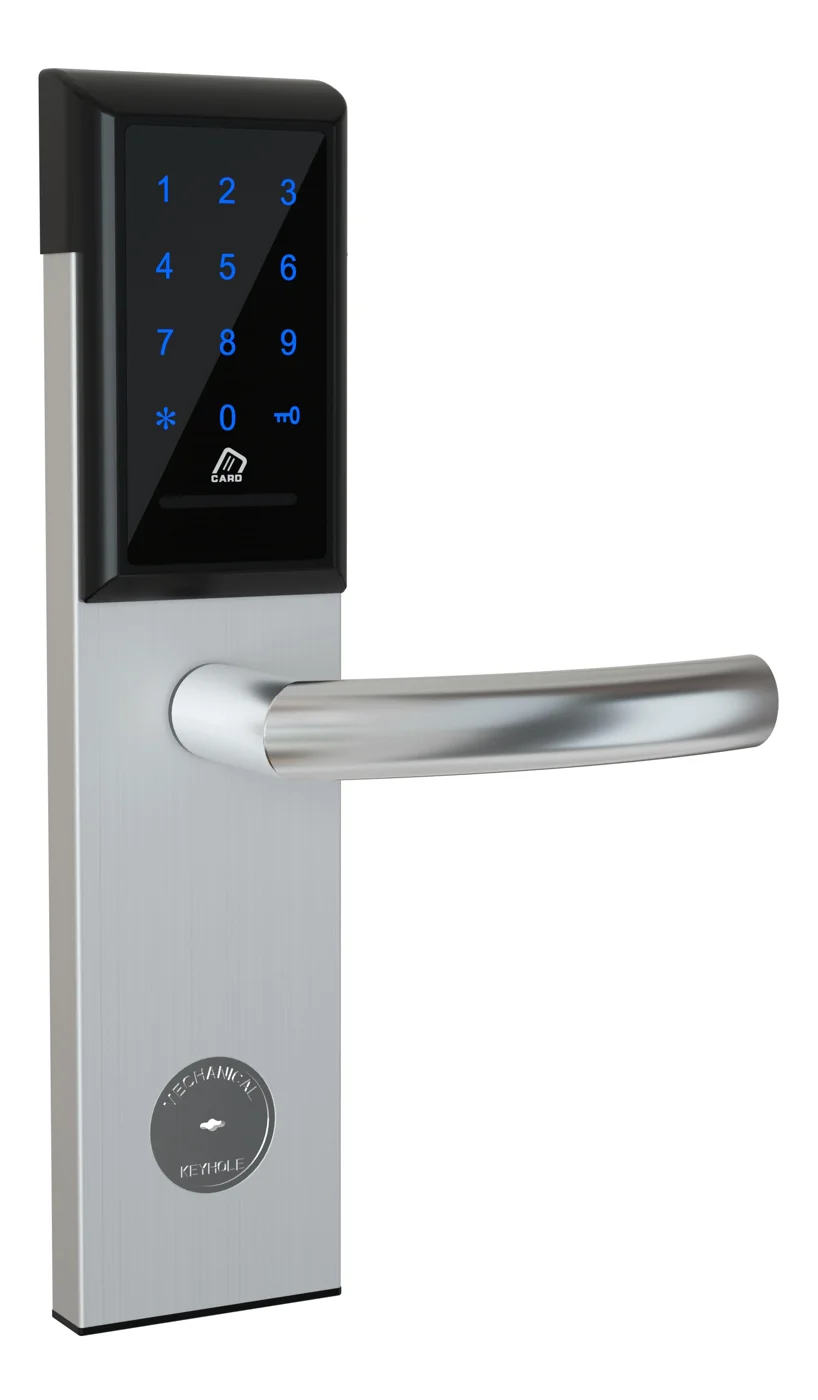
Office Cabinet Lock — PIN + Card for Filing & Pedestals
Offline PIN + card office cabinet lock for filing cabinets, pedestals, and drawers. Battery-powered 5-minute retrofit, no WiFi, no key management. CE/FCC/RoHS.
This page already points to it as the next recommended reference.
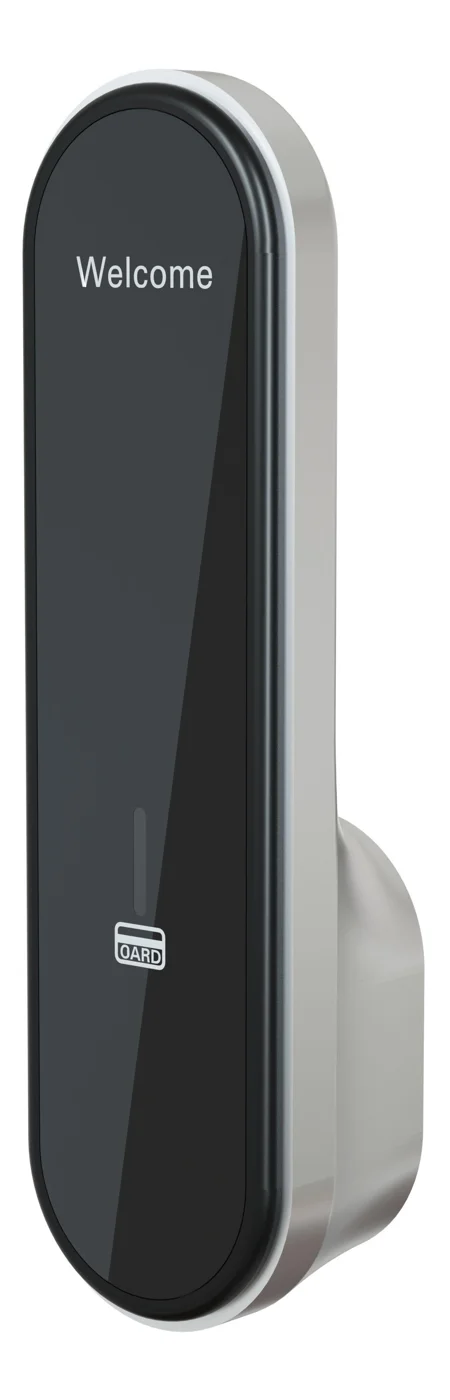
RFID Cabinet Lock — MIFARE Card, Offline Authentication
Offline MIFARE RFID cabinet lock for gym, spa, and office lockers. Tap-to-unlock 13.56 MHz, no WiFi needed, 5-minute retrofit. Zinc alloy body, battery-powered.
This page already points to it as the next recommended reference.
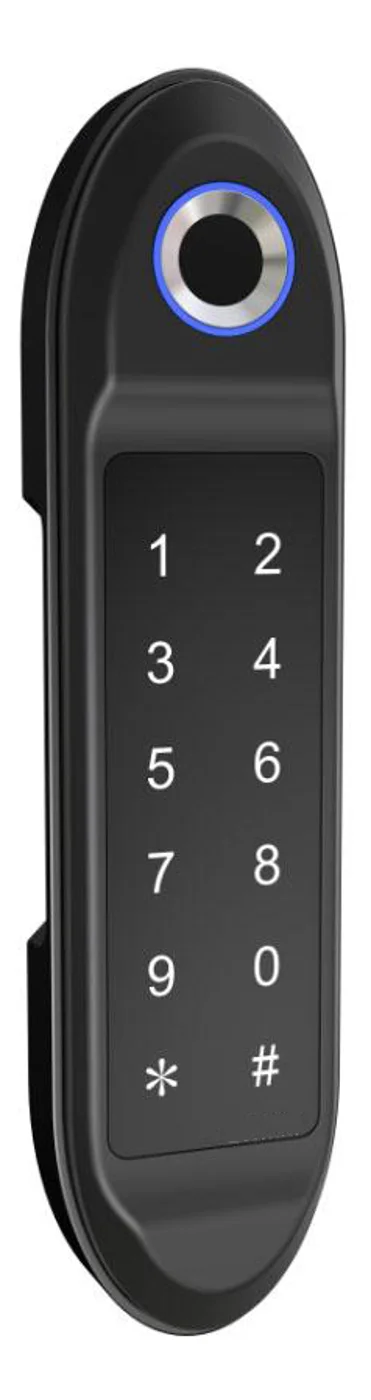
PIN Code Electronic Cabinet Lock — Stand-Alone, No WiFi
Offline keypad cabinet lock for gym, office and parcel lockers. Battery-powered, 5-minute retrofit, audit-free simple deployment. PIN + MIFARE card, DC 6V, 4×AA.
This page already points to it as the next recommended reference.
Related blog posts
3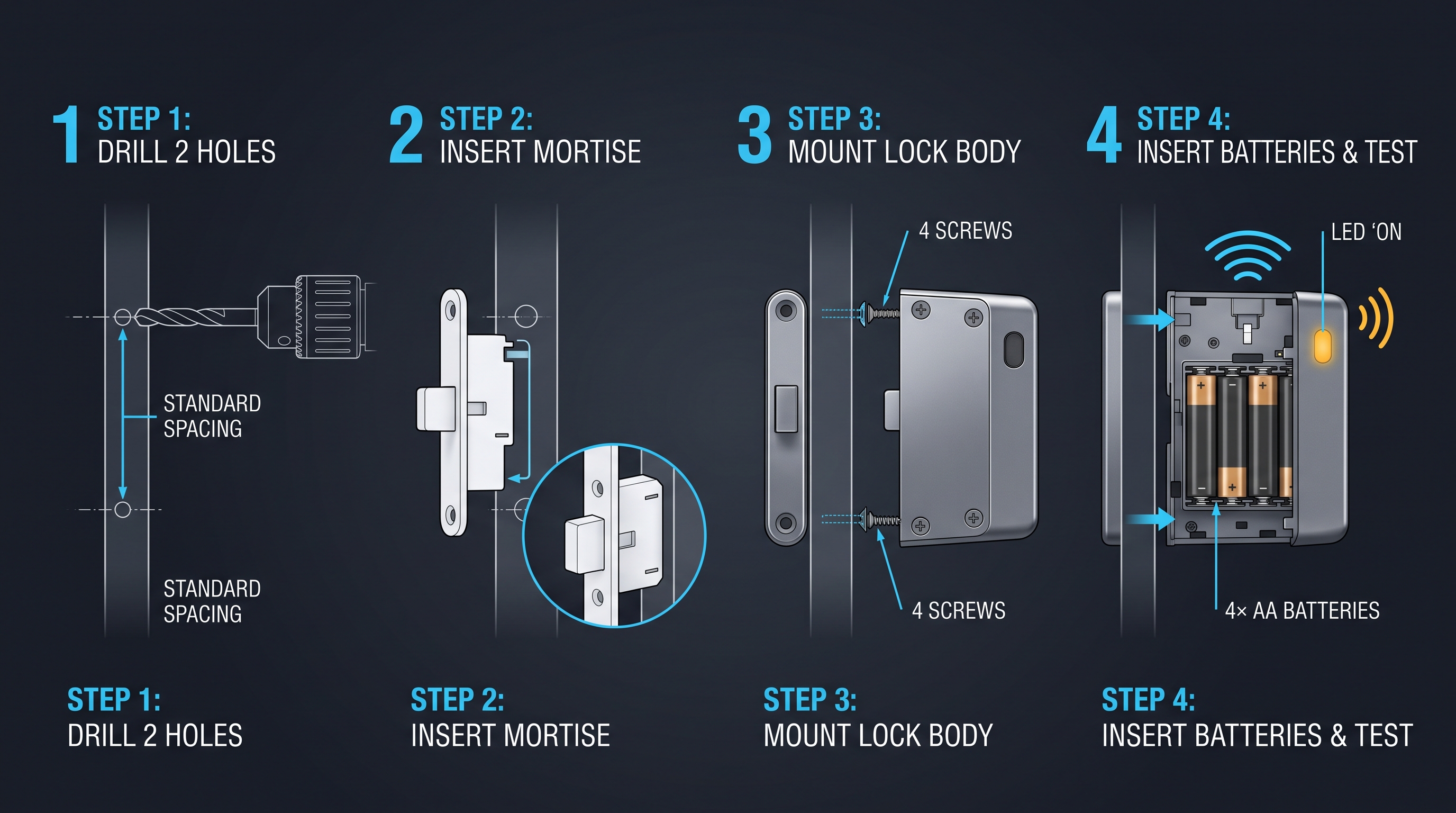
Cabinet Lock Electronic: Complete Technical Guide for 2026 Buyers and Integrators
Comprehensive guide to cabinet lock electronic systems covering types, working principles, installation, pricing, and buying criteria for commercial applications.
It supports the same product context: Office Cabinet Lock — PIN + Card for Filing & Pedestals.
Cabinet Digital Lock: Complete Technical Guide for 2026 Buyers and Integrators
Comprehensive guide to cabinet digital lock systems covering types, working principles, installation, pricing, and buying criteria for commercial and residential applications.
It supports the same product context: Office Cabinet Lock — PIN + Card for Filing & Pedestals.
cabinet latch electronic: The Complete Guide to Electronic Latches for Cabinets, Furniture, and Enclosures
Learn what a cabinet latch electronic is, how solenoid, motor, electromagnetic strike, and push-to-open electronic latches work, plus 12V/24V wiring, fail-secure vs fail-safe, relay and app control, use cases, installation, pricing, and troubleshooting.
It supports the same product context: Office Cabinet Lock — PIN + Card for Filing & Pedestals.
Specify your hotel project with our engineers
Send your room count, ceiling type, and protocol preference. We will return a sample plan and quote within 24 business hours.
- Move from general guidance into a product or application discussion.
- Use RFQ when pricing, drawings, MOQ, or launch timing needs structure.
- Keep a direct contact path visible for fast clarifications and handoff.