Branded Cabinet Lock: Complete Guide to OEM, ODM and Private Label Branding
A complete guide to the branded cabinet lock covering OEM and ODM branding, logo and label options, app co-branding, packaging, MOQ, quality control, factory selection, pricing versus unbranded, trademark, warranty, and the supply chain.
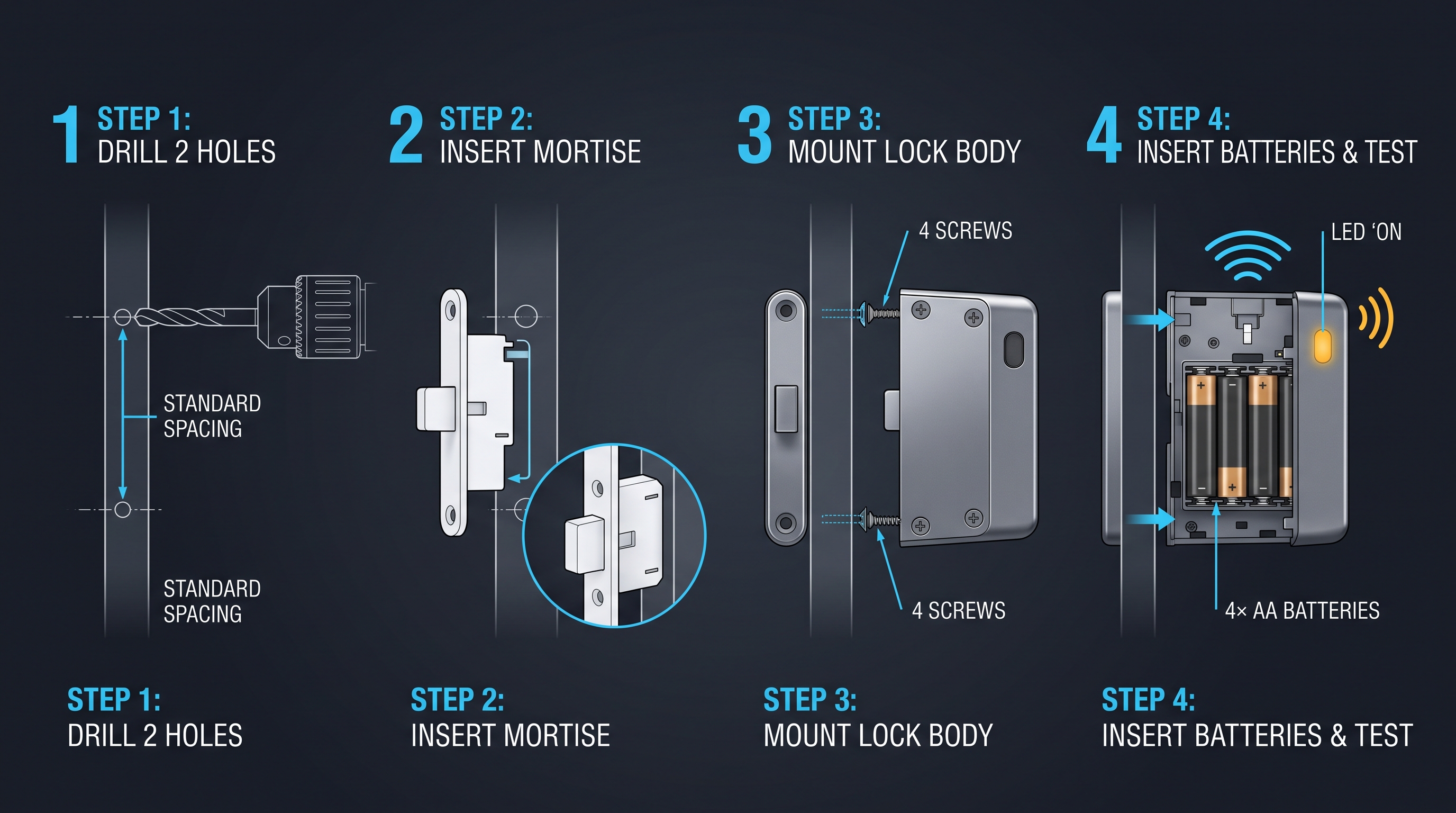
A branded cabinet lock is an electromechanical locking product that a factory manufactures under a brand-owned identity, including a custom logo, custom packaging, a custom interface, and a custom color, instead of under the generic name of the OEM factory that builds it. When a company orders a branded cabinet lock, it buys the right to present the finished device as its own product, complete with a laser-engraved logo, a printed label, a printed carton, a custom UI, and a white-label phone app. The purpose of a branded cabinet lock is market differentiation and margin capture, because a brand owner can take the same proven electromechanical platform that a contract manufacturer already builds and resell it under an exclusive identity at a higher price. This guide explains what a branded cabinet lock means in the OEM and ODM world, why a buyer chooses a branded cabinet lock, how custom branding works, what the minimum order quantity is for a branded cabinet lock, how quality control runs on a branded cabinet lock, how to choose a factory for a branded cabinet lock, how the pricing of a branded cabinet lock compares with the pricing of an unbranded cabinet lock, and how trademark, warranty, and the supply chain shape a branded cabinet lock program. Whether you are a gym operator, a hotel chain, or an e-commerce seller, a branded cabinet lock lets you own a product line without designing the electronics from scratch.
Branded Cabinet Lock Meaning, Scope, and Value
A branded cabinet lock means a lock whose outward identity, user interface, packaging, software, and market position are owned by a brand, while the base hardware is licensed from an OEM or ODM supplier. The essence of a branded cabinet lock is the separation of physical engineering from commercial identity, because a factory builds a branded cabinet lock and a reseller adds its own name and logo to create a distinct product line. The branding scope of a branded cabinet lock includes the logo engraving, the printed label, the custom enclosure color, the customized display text, the app co-branding, the retail packaging, and the warranty terms. The value of a branded cabinet lock is that the seller captures the margin on the entire branded cabinet lock and builds a brand asset that survives even when the supplier changes. A branded cabinet lock usually carries a higher minimum order than a plain unit, because every unit must absorb the cost of tooling, printing, and custom firmware.
Private Label, White Label, and OEM Definitions
The phrase a branded cabinet lock is used interchangeably with private label, white label, OEM branding, and ODM branding, but the terms differ in scope. A white-label product lets the buyer use the factory firmware with only a freshly printed name, whereas a more complete private-brand product lets the buyer change the firmware, the display text, the reader behavior, and the button language of a branded cabinet lock. In the trade, a private-label branded cabinet lock implies cosmetic changes that keep the electronics intact, while a full ODM build changes the branded cabinet lock down to the board and the enclosure mold. When procurement says a unit is a branded lock, the buyer should confirm whether the factory will deliver a branded cabinet lock with light cosmetics or with deep engineering changes, because the engineering scope decides the cost and the timeline of a branded cabinet lock. Always clarify the exact scope of custom work before ordering a branded cabinet lock, and record the scope in the purchase agreement so that both sides understand the branded cabinet lock deliverables.
Why Buyers Source a Branded Unit
A brand buys a branded cabinet lock for speed to market and for lower engineering risk. Designing a new electronic lock from nothing takes twelve to eighteen months and needs certifications, firmware, and injection tooling, whereas sourcing a branded cabinet lock from an existing product line reduces that window to eight to twelve weeks. A branded cabinet lock shortens the return cycle because the buyer is acquiring the proven credential options and the proven solenoid mechanism of a known device. A reseller and a system integrator both use a branded cabinet lock to widen a catalog without adding an engineering department, which keeps the fixed cost low and the catalog wide. The commercial appeal of a branded cabinet lock is that the brand keeps the customer relationship, the after-sales relationship, the firmware updates, and the repeat margin even when the underlying build comes from a third party. In short, a branded cabinet lock concentrates revenue on the brand from the first shipment, and that concentration is exactly why the branded cabinet lock market keeps growing.
Branded Versus Unbranded at a Glance
The first decision a buyer faces is the difference between a branded cabinet lock and an unbranded cabinet lock. An unbranded cabinet lock ships with the factory name, the generic carton, the factory app, and the lowest price. A branded cabinet lock ships with your logo, your printed box, your labeled UI, and a price that carries a premium. The identity of a branded cabinet lock follows the brand, not the factory, so the customer sees a branded unit as a coherent product line rather than a commodity. The value of a branded cabinet lock appears in the margin, in the support cost, and in the ability to expand into more product families later. Most buyers start with a single branded cabinet lock on their best-selling model, gather sales data, and then brand a broader range. A branded cabinet lock is therefore both a product and a strategy, because each branded unit strengthens the identity of the whole catalog.
Why Buyers Choose a Branded Cabinet Lock: Margins and Market Position
A branded cabinet lock lets a reseller command a retail margin that an unbranded unit never offers, because an unbranded price displays the raw factory cost while a branded cabinet lock carries a brand premium. In the lock market, an unbranded electronic cabinet lock with a keypad typically ships at a wholesale price between twenty-five and thirty-five US dollars, while the same hardware as a branded cabinet lock with a custom logo and a branded app retails for fifty to ninety dollars. The margin and the market position are the two reasons a business moves to a branded cabinet lock, because a branded unit grosses enough cushion to fund the marketing that makes the next branded cabinet lock sell faster. A brand that sources only generic locks earns a thin spread and faces instant price competition, whereas a brand that owns a branded cabinet lock prevents easy price comparison.
Margin per Branded Unit
The profit analysis of a branded cabinet lock starts with the difference between the landed cost and the final sale, and the number depends on the volume that a buyer commits. With a larger order, the factory lowers the per-unit cost and the margin on a branded cabinet lock can reach forty to sixty percent gross after freight, duty, and tooling are allocated. A branded cabinet lock amortizes its engraving and its package setup over the volume, so a setup charge divided over a large batch only adds a few dollars per unit. As the buyer raises the quantity of a branded cabinet lock order, the per-unit cost drops and the margin widens. Repeat purchases of a branded cabinet lock build a stable cost base that allows the brand to reinvest in a faster microcontroller, newer readers, and better batteries for the next branded cabinet lock generation. The compounding of volume and margin is the real financial engine of a branded cabinet lock program.
Market Position and Differentiation
A branded cabinet lock improves the market position of the brand because the brand owns the promise, the package, the documentation, the firmware, and the after-sales journey. A large share of buyers in the wellness and hospitality segment prefer a branded cabinet lock because a visible brand builds recognition at the front desk. Gyms, spas, offices, and schools rely on a branded cabinet lock to present a cohesive identity across a whole fleet. In any region, a branded machine is accepted as a premium offering, and that acceptance is the essence of differentiation. A branded cabinet lock allows pricing that funds better support, longer battery life, and frequent firmware releases. The strong market position of a branded cabinet lock only appears after the first several batches, so the brand must stay consistent across every branded cabinet lock it ships.
Switching Costs and Customer Stickiness
A customer that owns an unbranded lock has the lowest switching cost, but a customer that owns a branded cabinet lock has a real switching cost because the client is inside the interface, the app, the card data, and the admin site. The switching cost of a branded cabinet lock is a legitimate advantage for the seller. If a locker operator wanted to leave a brand and take a generic lock, it would have to re-issue badge packs and move its admin history. Because a branded cabinet lock keeps the user data and the firmware version, the brand builds a recurring relationship that no competitor can simply undercut. In practical terms, the switching cost of a branded cabinet lock turns an important managed fleet into sticky recurring revenue. This stickiness is the reason asset managers standardize on a single branded cabinet lock vendor for a whole site.
How OEM and ODM Branding Works for a Branded Cabinet Lock
A branded cabinet lock is produced through either an OEM or an ODM arrangement, and the two paths determine how much control the brand has over the final device. In an OEM deal, the buyer takes a near-standard hardware deck and the factory only applies the brand, so a branded OEM cabinet lock keeps the factory firmware and the seller reprints the label, the carton, and the app. In an ODM deal, the factory builds a branded cabinet lock to a unique specification that includes a custom PIN, custom firmware, a printed overlay, a custom PCB, and a fully owned branded module. Most private-label brands begin with an OEM branded cabinet lock and move to an ODM branded cabinet lock when volume and confidence grow. The OEM build is the fastest branded cabinet lock because the hardware is unchanged, but the ODM build is the strongest for the buyer because the factory tailors the inside of the branded cabinet lock to the buyer specification.
OEM Branding of a Branded Cabinet Lock
In an OEM build, a standard device becomes a branded cabinet lock with a light rework. The factory receives the base lock, engraves or appends your logo, repaints the enclosure in your color, and prints the carton with the buyer identity. An OEM branded cabinet lock keeps the same electronics, the same solenoid force, and the same 13.56 MHz MIFARE reader, so the base certifications remain reusable. Because of the light change, the OEM branded cabinet lock requires a smaller minimum order and a lead time of four to eight weeks. The buyer of an OEM branded cabinet lock takes full commercial title, but the firmware and hardware maintenance remain with the factory. The OEM route is the entry point that brands use to release a branded cabinet lock quickly under a moderate risk budget, and it is the cheapest way to test a market with a real branded cabinet lock.
ODM from a Custom Board
An ODM branded cabinet lock begins with a requirements document and ends with a fully owned product. The buyer specifies the display, the input method, the latch, the batteries, the weatherproof rating, and the cloud platform of the branded cabinet lock. The factory engineers lay out a bespoke PCB, cut a new mold, write new firmware, and tool a unique enclosure for this branded module. Because the design is unique, an ODM branded cabinet lock has the strongest clone protection, while the design and tooling costs are the highest. A typical ODM project for a custom branded cabinet lock adds an engineering charge and a mold fee that raise the MOQ and the price. Buyers who expect to scale widely benefit the most from an ODM branded cabinet lock, because the ownership of the design becomes an asset that a pure OEM branded cabinet lock can never provide.
Semi-ODM and Modified Standard Hardware
Many buyers use a middle path that combines a modified standard, called a semi-ODM build. A semi-ODM branded cabinet lock keeps the proven controller board and changes only the cosmetic parts, which include the overlay, the color, the app, and the package, while the electronics stay standard. This semi path gives a branded cabinet lock a custom look at a volume below the full tooling of a complete ODM. A semi-ODM branded cabinet lock is a good bet for a brand that wants a custom color and a custom UI without the tooling risk. The buyer should confirm that the factory owns the key parts even when the semi-ODM branded cabinet lock appears in a separate catalog of products. The semi-ODM route is how many mid-size brands scale a branded cabinet lock from a pilot to a full range.
Branded Cabinet Lock Branding Options: Logo, Label, App, and Packaging
The external branding of a branded cabinet lock includes every visible element that the user sees first, and the options range from laser engraving to a full app co-brand. Almost every factory offers two families of marks: the mark on the device, which is a logo or a label, and the mark on the packaging, which is the printed carton and the flyer. A branded cabinet lock can also carry a user interface change, which includes the button text, the display, and the enclosure color. The deeper branding moves into the application software, where a branded cabinet lock carries a custom boot screen, a branded account portal, and a white-label app. The aggregate list tells a buyer which parts of a branded cabinet lock the factory can change, and it sets the cost and the minimum order of each option. A logo on a branded cabinet lock does not require a new mold, but a fully custom enclosure does, and that difference drives the price.
Logo Engraving on the Enclosure
The most durable branding of a branded cabinet lock is the laser engraving on the front surface. A factory laser engraving produces a clean silver mark on the brushed metal and is resistant to wear, which makes it ideal for steel and aluminum plates. For plastic parts, a molded logo is a permanent branded imprint that is best ordered at the tooling stage, because changing it after the mold is expensive. A small engraved brand on the front of a branded cabinet lock signals the opening and adds a premium feel to the unit. Engraving on a branded cabinet lock is a recurring per-unit charge after an initial setup fee. The engraved logo is permanent, so it is the most durable single element of a branded cabinet lock. Many brands choose engraving on a branded cabinet lock because it cannot peel or fade like a label.
Labels and Overlays for a Custom UI
A branded cabinet lock can change the printed label and the overlay, which together carry the whole user interface. A printed adhesive label can carry your wordmark, your door number, and a recovery QR code on the front or the bottom. A branded cabinet lock with a custom overlay replaces the factory typeface with your own button legend. When custom firmware is used, the active display can be translated and the language of the app becomes yours. Some factories also add a backlit ring of LEDs in the brand color. The label and overlay are the lowest-cost route to a distinct look on a given branded cabinet lock, and they keep the metal plate untouched. A laminated label protects the print for a longer life on the surface of a branded cabinet lock, which is important for high-traffic doors.
App Co-Branding and Firmware Customization
The digital segment of a branded cabinet lock is often the most valuable, yet it is sometimes missed. White-label app software moves the app, the sign-in flow, and the notifications into the buyer brand. On a branded cabinet lock platform, the product presents in your own app rather than the factory app. The app for a branded cabinet lock can use the factory code as a base and simply replace the logo and the color accent, and then the app becomes a piece of brand value. The software features of a branded cabinet lock control the pairing, the door name, and the cloud icons. Rebranding the app is what makes customers remember the brand, and it is the final cap of a branded cabinet lock experience. A branded cabinet lock without a branded app feels unfinished to a modern buyer, so the app should be part of the scope.
Packaging and Unboxing
A branded cabinet lock packaging defines the unboxing moment and the retail conversion. A custom carton can include a printed label, a custom foam insert, a spare battery, and a quick start sticker. The packaging of a branded cabinet lock is often the cheapest element to change and the most visible in a store. A branded unit benefits from the unboxing because a clean, tight package creates a coherent experience and reduces help center calls. Note that the packaging of a branded cabinet lock appears at the dock, so factor the custom serial and the QR of the carton into the cost. A subtle retail box says a lot about a branded cabinet lock being a complete plan, and it saves you from returns that come from an incomplete presentation. The box is the first brand promise a branded cabinet lock keeps.
Minimum Order Quantities for a Branded Cabinet Lock
The minimum order quantity of a branded cabinet lock, called the MOQ, is the single metric that shapes the whole decision because tooling, printing, and firmware must be paid by a guaranteed volume. For a simple OEM branded cabinet lock that changes only the label and the carton, the MOQ can be as low as one hundred to five hundred units plus a modest setup fee. For a semi-custom branded cabinet lock with a new overlay, the MOQ usually climbs to one thousand to two thousand units, which is the cost of the mold and the firmware effort. For a full ODM branded cabinet lock with a new board and a new app, the MOQ can start at twenty-five hundred to ten thousand units. The MOQ of a branded cabinet lock depends on the scope of the change, because the more the factory must customize, the higher the volume required.
Why the MOQ Is Set
The MOQ is a number that the factory sets to amortize the one-time cost. A small order of a branded cabinet lock would leave the dies, the decals, the printing, and the custom firmware uncovered. By stating an MOQ, the factory guarantees that a branded cabinet lock program collects enough total value to pay for the setup and to avoid selling a custom build at a loss. The MOQ also covers the engineer time and the inspection of a custom-designed product. Treat the MOQ of a branded cabinet lock as a floor, not a ceiling, because ordering a layer above the MOQ can lower the unit price. Several branded cabinet lock variants ordered from the same family can be aggregated so that the whole brand reaches a deeper tier, and that aggregation benefits every SKU in the lineup.
MOQ Tiers and Pricing Steps
The published MOQ tiers of a branded cabinet lock behave like a price-step sheet. At one hundred units, the per-unit cost is high, while at one thousand units the unit price falls sharply. When a buyer jumps a branded cabinet lock order from two hundred and fifty units to five hundred units, the factory often adds the free engraving or the custom app without a charge. The tier list of a branded cabinet lock often has lines that say 100 units, 500 units, 1,000 units, and 5,000 units. The pricing of a branded cabinet lock should drop ten to twenty percent at each step of the volume. A smart buyer aggregates the annual lock spend into one branded cabinet lock order so that the whole quantity reaches the deepest tier and the highest margin of the catalog.
Negotiating the MOQ
A buyer can lower the MOQ of a branded cabinet lock by negotiating a phased release. A factory that ships the order in two or more lots allows a buyer to hold a smaller first order and to repeat at a safer reorder count. An advance payment and a signed forecast also let the factory relax the MOQ. The most effective negotiation is to accept a proven, standard module, so the factory does not cut a new mold, and that choice drops the MOQ of a branded cabinet lock dramatically. A unique face plate will always push the MOQ up. Put the MOQ in writing, and budget for the repeat module. On an OEM branded cabinet lock, try to schedule a reorder clause at the best price so that the second batch of the branded cabinet lock arrives without a new round of negotiation.
Reordering and Repeat Quantity
A repeat reorder of a branded cabinet lock repeats the setup and adds a line fee. The MOQ applies per SKU and per product, so a brand must confirm that it is not a family discount across variants. When the order grows, the reorder of a branded cabinet lock falls well under the original because the tooling is already paid. Confirm a recalibrated shipping price from the factory. A store that sees the reorder of a branded cabinet lock must restock two months before the depletion to avoid a zero. Buying the slower products back into the reorder of a branded cabinet lock can hit a tier instead of missing it, and that keeps the MOQ cost sane for the whole line.
Quality Control When Manufacturing a Branded Cabinet Lock
Quality control is more important on a branded cabinet lock than on a generic unit because a defect in a product printed with your logo directly damages your reputation. A disciplined quality control plan for a branded cabinet lock covers incoming materials, assembly, final test, and audit. An experienced factory runs an SMT line, a staking cell, a calibration bench, and an aging rack for the device. A mechanical branded cabinet lock should tolerate many thousands of actuation cycles, the electronics should run across the rated voltage range, and a branded cabinet lock that claims an IP rating must be tested for that rating. Because a branded cabinet lock ships at high volume, quality control must run on every unit rather than on a lucky sample. A branded cabinet lock buyer should apply an acceptance sampling plan such as ISO 2859 with a general inspection level II, an AQL of 1.0 for major defects, and a critical AQL of 0.25 for safety-related parts.
Sampling and Life Testing
The material sampling for a branded cabinet lock uses a known acceptance plan such as ANSI/ASQ Z1.4 or ISO 2859 at a general inspection level II. The typical limit for a branded device is an AQL of 1.0 for major defects and a critical AQL of 0.25. Each branded cabinet lock also gets a type test that is run only when the line is stable. The life test on a branded cabinet lock actuator is a required number of cycles, commonly 100,000 cycles for a solenoid-driven latch. A branded cabinet lock with a 3 to 5 Newton solenoid and a 5 to 8 Newton motor bolt should complete the rated cycles without failure. The factory records the first pass yield and the defect rate so that a buyer can compare two suppliers of a branded cabinet lock on real numbers rather than promises.
Visual Inspection and Appearance
The visual QC of a branded cabinet lock is as important as the working mechanics. The approved master unit must show the logo alignment, the pad color, the clear coat, the seam gap, and the level of the buttons. A color deviation of more than one shade is a reject on a branded cabinet lock. If the label is misprinted, it is a reject, because the printed word is a control point on the part. The quality check of a branded cabinet lock must include an out-of-tolerance check of the seams and a check that the label cannot peel. A good factory stores an approved master unit and compares every production sample of a branded cabinet lock against that master. The trained reviewer of the front case of a branded cabinet lock is the guardian of the brand image, because a scratched unit under your logo is a silent failure.
Document Control and Compliance QC
A branded cabinet lock carries documentation that a generic unit does not. The QC record of a branded cabinet lock should trace the lot, the firmware version, the material line, and the ship date. On the electrical side, a branded cabinet lock carries CE, FCC, and RoHS markings so that the label is valid. Re-branding a cabinet lock under a new device requires that the certificate lists the new model name and the new company name. Keep the checklist of the branding elements for a branded cabinet lock, and print the model on the visible place. Because a branded cabinet lock is sold to a distributor, the name on the box should match the certification. Verify that the technical file of a branded cabinet lock is available on request, because regulators ask for it during a market inspection.
Audit and Corrective Action
The factory holds a process on a branded cabinet lock during the build, not after. A mid-line inspection during assembly catches problems in screws and firmware while they are cheap to fix. The audit ensures that a branded cabinet lock gets a dynamic test and a memory test before the box is sealed. A failed batch of a branded cabinet lock triggers an 8D corrective action that includes the root cause, the corrective step, and the closing evidence. Stop the line at the first alert on a branded cabinet lock. The continuous audit of a branded cabinet lock requires that the lessons of one lot go to the next lot. An independent audit of a branded cabinet lock supplier covers the second-party inspection and the RoHS scanner, and that independent check is the color of the process discipline.
Choosing a Factory for a Branded Cabinet Lock
Choosing a factory decides whether a branded cabinet lock program is low cost or high risk, because the entire reputation of the brand sits on the capability of the factory. The core criteria for a branded cabinet lock include the quality system, the engineering headcount, the minimum order, the certifications, and the track record of OEM and ODM work. The best sign is a factory that has already built a similar controller or reader, because that history means fewer surprises for a branded cabinet lock. A branded cabinet lock order should verify that the factory will issue certifications with the product name, so that the compliance documents stay valid under the new brand. A buyer should score factories on quality, cost, delivery, and responsiveness, often called QCDR, and then visit the shortlist. A factory that passes an ISO 9001 audit and accepts third-party inspection is the right partner for a branded cabinet lock.
Evaluation Criteria and Supplier Scorecards
A supplier evaluation for a branded cabinet lock uses a scored matrix of quality, price, delivery, and responsiveness, which the industry calls QCDR. A branded cabinet lock manufacturer with a valid ISO 9001 certificate shows that its quality system is systematic. A set of the criteria for a branded cabinet lock is that the factory can handle an ODM plan, that it holds the test fixtures for the reader, that it holds the transport certifications, and that the engineering team responds within one business day. The pricing of a branded cabinet lock must be transparent with every surcharge listed. A brand should also list a second source of the board for the branded cabinet lock, because a single supplier is a single point of failure. Choose a supplier whose scorecard matches the volume and the quality that the branded cabinet lock requires.
Audits and Certifications
A responsible buyer audits the factory before a branded cabinet lock order. The audit covers the production line, the purchase of components, the CE and FCC reports, and the calibration of the test bench. A good factory will publish its audit results, its certifications, and the quality control of the line for a branded cabinet lock. The KPIs of a branded cabinet lock supplier include the certification validity, the ISO usage, and the stable yield. Marketing material is not a substitute for the audit, because the audit is the guard of the answer. Only the resource of the factory can protect the delivery of a branded cabinet lock. The PPAP level and the first article of a branded cabinet lock differentiate a serious manufacturer from a reseller.
Capacity and Lead Time
Confirm the lead time and the requested capacity before signing a branded cabinet lock contract. A factory that is booked at full capacity cannot react to the buffer that a branded cabinet lock demands. The factory should size the capacity for the peak order, because a seasonal gym order of a branded cabinet lock is finished in a wave. Factor the trade calendar: if the factory produces the same feeder for another brand, it may not pull an extra shift for you. Ask for a slot that reserves the release, the pallet, and the shipping of a branded cabinet lock. Confirm the payment terms and the freight for a branded cabinet lock, because those terms affect the landed cost. A risk flag appears the moment a factory cannot commit to the delivery date of a branded cabinet lock.
Factory Visit and Pilot Production
The choice of a branded cabinet lock supplier is demonstrated only by a visit and a pilot. A visit reveals the floor discipline, the warehouse, and the shipping dock. A pilot run of a branded cabinet lock makes sure the mold and the label are real. Fifty units of a branded cabinet lock with an actual logo clear the alignment questions. After the pilot of a branded cabinet lock passes, a line build can start. A fair supplier shows the willingness to train the buyer team. With a visit and a pilot of a branded cabinet lock, measure the real yield, and then place the order. The pilot of a branded cabinet lock triggers the golden reference units that the QC team keeps for the life of the program.
Branded Cabinet Lock Pricing vs Unbranded Cabinet Lock Pricing
The pricing of a branded cabinet lock sits on a ladder above the price of a standard unit because the branded unit adds logo, firmware, packaging, and tooling to the same base hardware. As a general rule, the unit cost of a branded cabinet lock is fifteen to forty percent higher than the equivalent unbranded cabinet lock, and the retail price can be one hundred percent higher. In a typical comparison, an unbranded cabinet lock with a keypad costs about twenty-seven dollars landed, while a branded cabinet lock with a printed box and a branded app costs about thirty-eight dollars landed, and the retail prices are fifty-five dollars and ninety-nine dollars respectively. The gross margin on a branded cabinet lock widens because the consumer pays for the identity. A buyer should separate the one-time tooling cost from the per-unit cost when evaluating the pricing of a branded cabinet lock, and should negotiate the volume tier before the design is finalized.
| Price component | Unbranded cabinet lock | Branded cabinet lock |
|---|---|---|
| Base hardware cost | 25 | 25 |
| Logo and label per unit | 0 | 3 |
| Custom UI and app per unit | 0 | 6 |
| Packaging and manual per unit | 2 | 4 |
| Total landed unit cost | 27 | 38 |
| Retail price | 55 | 99 |
| Gross margin percentage | 51% | 62% |
Price Build-Up of a Branded Cabinet Lock
The build-up of a branded cabinet lock starts with the base hardware and adds each branding layer. The base cost of a branded cabinet lock is the same as the base cost of an unbranded cabinet lock, because the electronics and the latch are identical. The logo and label add a few dollars per unit of a branded cabinet lock. The custom UI and the app add a one-time charge plus a small per-unit cost. The packaging of a branded cabinet lock adds a per-unit print. The one-time tooling of a branded cabinet lock is divided over the whole order. A buyer separates the one-time from the recurring cost of a branded cabinet lock so that the true unit price is visible, and the table above shows that separation clearly.
Why a Branded Cabinet Lock Commands a Premium
A branded cabinet lock commands a premium because the branded units face less competition and the visible mark sells. An unbranded cabinet lock has to be lowered to the commodity price, while a branded cabinet lock keeps the identity value. The premium of a branded cabinet lock is the shape of a coherent plan, which includes the media, the value, and the support. A branded cabinet lock makes it worth marketing, because the magnified brand image is the fridge that keeps the price. Do not underprice a branded cabinet lock, because the premium is the reason the whole program exists. The review score and the return rate of a branded cabinet lock also inform the price, since a low-return unit supports a higher price.
Total Cost of Ownership
The true cost of ownership of a branded cabinet lock includes the cost of quality, which is the cost to manage returns and to sell parts. A lower-quality generic unit receives a fee that unwinds the premium of a branded cabinet lock with support and repairs. The secret of a branded cabinet lock is that a good electric lock returns to the consumer less often. A branded cabinet lock with the same hardware but a higher finish is safe. The total cost analysis of a branded cabinet lock runs along the price, so the premium only holds if the returns do not grow. If a cheap generic is returned to the distributor, the savings of a branded cabinet lock is hollow. A mature buyer measures the returns of a branded cabinet lock by the batch.
Negotiating the Branded Cabinet Lock Price
The final price of a branded cabinet lock depends on a number of levers. The first lever is the volume, because a higher quantity of a branded cabinet lock reaches a lower tier. The second lever is the specification, because a standard module of a branded cabinet lock costs less than a custom board. Set a target unit price for a branded cabinet lock and ask the factory to list the parts that have no brand name. Choose the market value of a branded cabinet lock instead of the cheapest offer. Increase the order to the tier price for a few months of demand. Let the factory compete on a branded cabinet lock quote, take a sample budget, and then order a bigger batch so that the unit cost of a branded cabinet lock is as low as possible.
Trademark, Warranty, and Legal Responsibility for a Branded Cabinet Lock
When a company puts its name on a branded cabinet lock, it also takes on trademark, warranty, and product liability under that name. The trademark of a branded cabinet lock covers the product name, the logo, and the packaging, and it should be registered in the Nice class that covers locks before the launch. The most important legal step is to search the trademark databases of the target market, because a branded cabinet lock that conflicts with an existing mark must be renamed. The warranty responsibility of a branded cabinet lock splits into two layers: the factory warrants the mechanism, and the brand warrants the field service and the battery. Regulatory compliance also changes when a branded cabinet lock is released under a new brand, because the FCC ID and the CE declaration list the brand name. A solid contract and a nondisclosure agreement protect the intellectual property of a branded cabinet lock.
Trademark Registration and Clearance
A trademark for a branded cabinet lock is claimed in Nice class 6 for metal locks or class 9 for electronic devices. The trademark search of a branded cabinet lock must cover the same region where the product will sell. If a competitor in the same region already holds a similar mark, the branded cabinet lock must be renamed. The clearance and application of a branded cabinet lock should happen before the product launches. A registered trademark of a branded cabinet lock is a protection that curbs the counterfeiter and gives the brand the right to act. Use the official database of the trademark office to check a branded cabinet lock name, and file early, because the review can take months.
Warranty Responsibility and RMA Flow
The warranty of a branded cabinet lock splits into two layers. The manufacturer warranty of a branded cabinet lock covers the mechanism, which includes the solenoid, the motor, and the sensor. The brand warranty of a branded cabinet lock covers the whole field service and the battery. The buyer must write a return policy for a branded cabinet lock and set the timeline for the repair. A common warranty of a branded cabinet lock is one year, extended to two years for a premium model. Provide a parts reserve for a branded cabinet lock, and map each unit by serial number so that the service team can track it. The flow of a branded cabinet lock return should be tested before the first customer needs it, because a broken RMA path damages the brand.
Compliance Under a New Brand Name
Regulatory compliance of a branded cabinet lock changes with the brand. The FCC ID and the CE declaration of a branded cabinet lock list the brand name and the model. The engineering review of a branded cabinet lock must transfer the approval and issue a branding sheet. The label of a branded cabinet lock should show the model, the certification, and the origin. Compliance is a hardening requirement of a branded cabinet lock, because a mismatched ID is a passover at customs. The documentation of a branded cabinet lock must be translated for every market. The majority of a branded cabinet lock program depends on keeping the certification documents in a shared folder that the factory updates with each change.
IP Protection and NDA
A contract of a branded cabinet lock must protect the intellectual property and prevent misuse by the vendor. The IP clause of a branded cabinet lock defines who owns the firmware, the board, and the case design. The software of a branded cabinet lock is often licensed to the brand, not transferred. The best contract of a branded cabinet lock holds the trade secrets of the brand and the credentials. A branded cabinet lock is only as valuable as the ownership terms, so a legal review is worth the cost. The deployment plan of a branded cabinet lock should record the IP decisions in writing, so that no dispute appears years later.
The Supply Chain of a Branded Cabinet Lock
The supply chain of a branded cabinet lock covers the full journey from raw material to the box on the dock, and it includes the molding, the PCB assembly, the antenna, the firmware, the label, the packaging, and the shipping. The procurement chain is the critical path for a branded cabinet lock because the lead time of a branded cabinet lock normally runs six to ten weeks for a standard build and twelve to fourteen weeks for a full ODM. The supply plan for a branded cabinet lock must include a buffer for seasonal demand, because a gym or a school that orders a branded cabinet lock in a spike cannot afford a stock-out. A buyer should forecast at least two cycles ahead and hold a buffer of finished goods. The supply chain of a branded cabinet lock also requires a second source for the controller board and the latch so that a factory delay does not stop the whole brand.
Lead Times and Buffer Stock
The order cycle of a branded cabinet lock is six to ten weeks, and a full ODM takes twelve to fourteen weeks. A forecast of a seasonal gym order of a branded cabinet lock needs a buffer to ride the waves. The buffer of a branded cabinet lock reserves a module for a month and a half of expected demand. Consider the injection mold and the board of a branded cabinet lock when planning the capacity. Long-lead components of a branded cabinet lock should be ordered ahead of the SMT run. It is better to hold a small surplus of a branded cabinet lock than to run out during a peak, because a stock-out sends customers to a competitor.
Supplier Pool and Second Sourcing
The supplier pool of a branded cabinet lock includes the board, the plastic, the reader, the packaging, and the final assembly. A single-supplier contract of a branded cabinet lock must identify a primary and a secondary source. The plastic injection of a branded cabinet lock wins the cost battle, while the PCB is the printed board with the copper. The label and the carton of a branded cabinet lock are easy to source, but the battery is the critical component. Map the risk of each supplier of a branded cabinet lock and negotiate a safety stock for the long-lead items. The whole supply set of a branded cabinet lock should be reviewed every quarter so that a weak link is replaced early.
Demand Planning and Reorder Rhythm
The demand plan of a branded cabinet lock drives the reorder rhythm. A hit product of a branded cabinet lock needs a faster cycle than a slow variant. The reorder of a branded cabinet lock fits the retail records and the calendar. The planning of a branded cabinet lock should be reviewed weekly, with the surplus of a branded cabinet lock reduced. When a branded cabinet lock reaches the end of its life, the last buy should be sized to cover the warranty period. The demand plan of a branded cabinet lock aligns the marketing calendar with the shipping calendar, so that a campaign never launches without stock. The rhythm of a branded cabinet lock is the discipline that keeps the whole business healthy.
Logistics and Distribution
The logistics of a branded cabinet lock include the ocean freight, the customs, the warehouse, and the last mile. A branded cabinet lock that ships in pallets should use a consolidation service to reduce the freight. The customs documents of a branded cabinet lock must match the commercial invoice and the certification. The warehouse of a branded cabinet lock should separate the finished goods by batch for traceability. The distribution of a branded cabinet lock to gyms and schools needs a reliable local partner. A branded cabinet lock that is damaged in transit is a return, so the packaging of a branded cabinet lock must survive the pallet. The logistics cost of a branded cabinet lock belongs in the landed cost that sets the retail price.
Conclusion: Launching a Branded Cabinet Lock
Launching a branded cabinet lock is the right path for a brand, a retailer, an integrator, or a gym that wants to own a product identity without building an engineering team. The launch of a branded cabinet lock begins with a trademark search and a clear specification, then moves to an OEM or semi-ODM route for the fastest time to market. A buyer should lock the MOQ that repays the tooling, choose a certified factory, run quality control on every unit, price the branded cabinet lock at a premium, and run the supply chain with a buffer. The result is a branded cabinet lock sold under an owned structure with owned support. A pilot order of a branded cabinet lock should be tested before the main order. The market for custom-branded locking devices is large, and each competitor who hesitates gives the brand an opening. A branded cabinet lock turns a commodity into a brand asset.
The Next Step for Your Brand
The next step for a brand is to write a short product brief for a branded cabinet lock and to ask two factories for a quote. Compare the MOQ, the lead time, and the certifications of each branded cabinet lock supplier. Choose the factory that can deliver the pilot of a branded cabinet lock within the schedule. After the pilot passes, place the first order of a branded cabinet lock and track the returns. The data from the first batch of a branded cabinet lock guides the second batch and the firmware update. A branded cabinet lock is the start of a product family, so keep the design language consistent across the future range. A focused launch of a branded cabinet lock is better than a broad launch without stock, because a stock-out kills the momentum of the brand.
Final Checklist for a Branded Cabinet Lock
A final checklist for a branded cabinet lock covers the legal, the spec, the supplier, the quality, and the stock. Check the trademark of the branded cabinet lock name before spending on tooling. Confirm the spec of the branded cabinet lock with the factory and the app team. Audit the factory and the pilot of the branded cabinet lock before the main order. Run the quality control on every unit of the branded cabinet lock and keep the certificate folder updated. Build the buffer stock of the branded cabinet lock before the peak season. Price the branded cabinet lock at a premium that reflects the service and the warranty. A branded cabinet lock that passes this checklist is ready to launch in any market, because the brand, the factory, and the stock are all aligned.
Not sure which sensor fits your project?
Talk to our mmWave application engineers for a free consultation.
Find the right presence sensor for your hotel project
Compare the 3 protocols, check hotel-specific case studies, and download the installation guide
Related products
3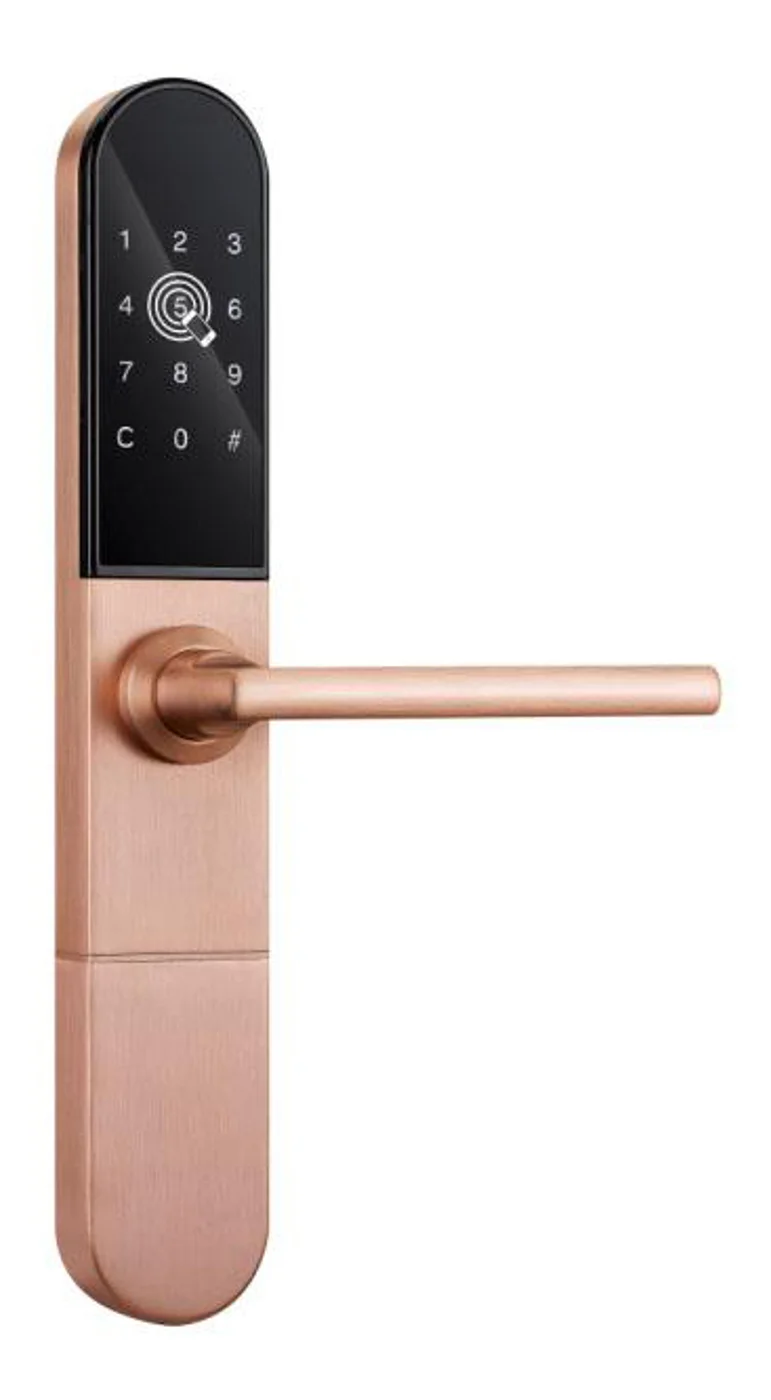
Smart Cabinet Lock — App-Managed, Multi-Site Dashboard
App-managed smart cabinet lock for office, parcel, and multi-site fleets. BLE app dashboard, audit trail, remote unlock, no per-lock server. Higher-tier chassis.
This page already points to it as the next recommended reference.
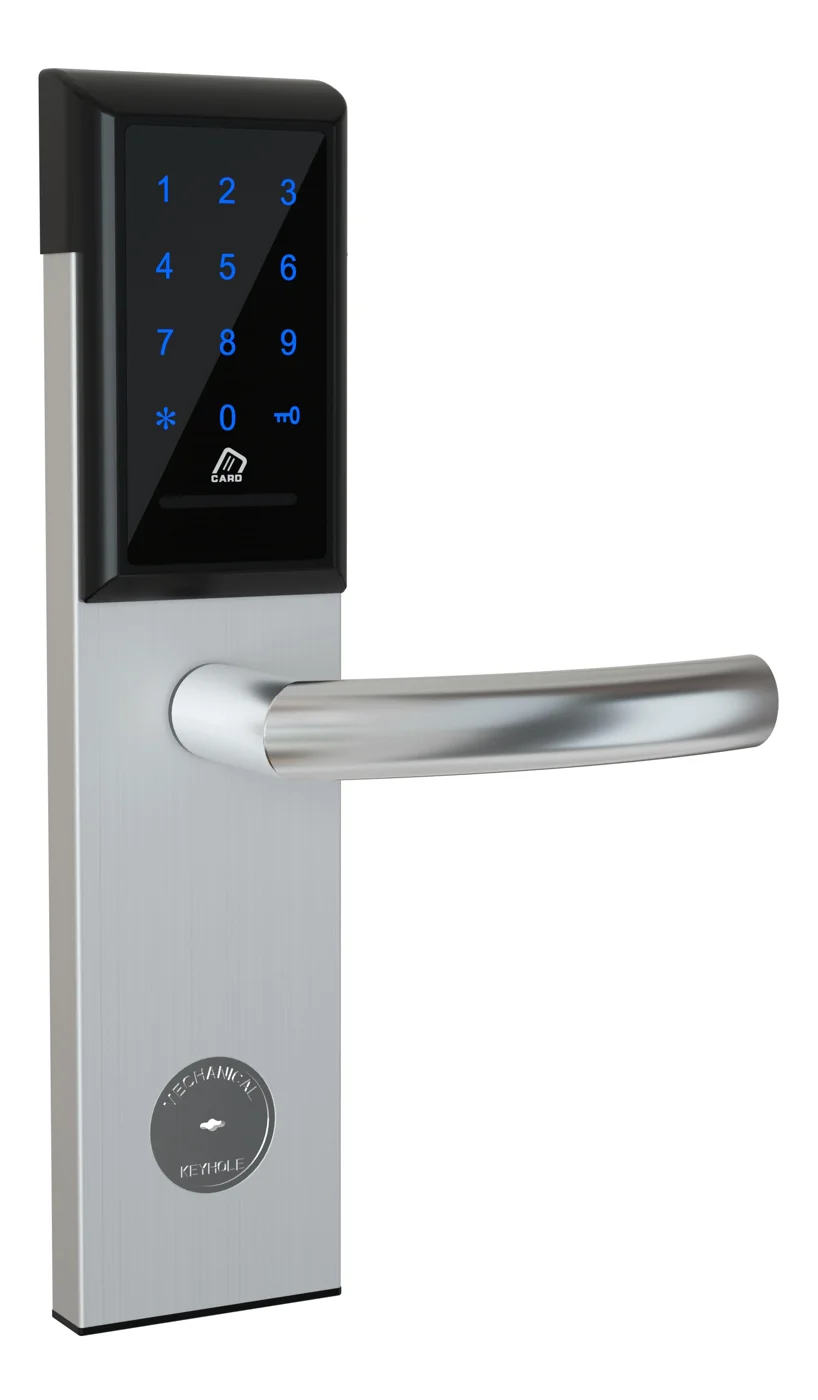
Office Cabinet Lock — PIN + Card for Filing & Pedestals
Offline PIN + card office cabinet lock for filing cabinets, pedestals, and drawers. Battery-powered 5-minute retrofit, no WiFi, no key management. CE/FCC/RoHS.
This page already points to it as the next recommended reference.
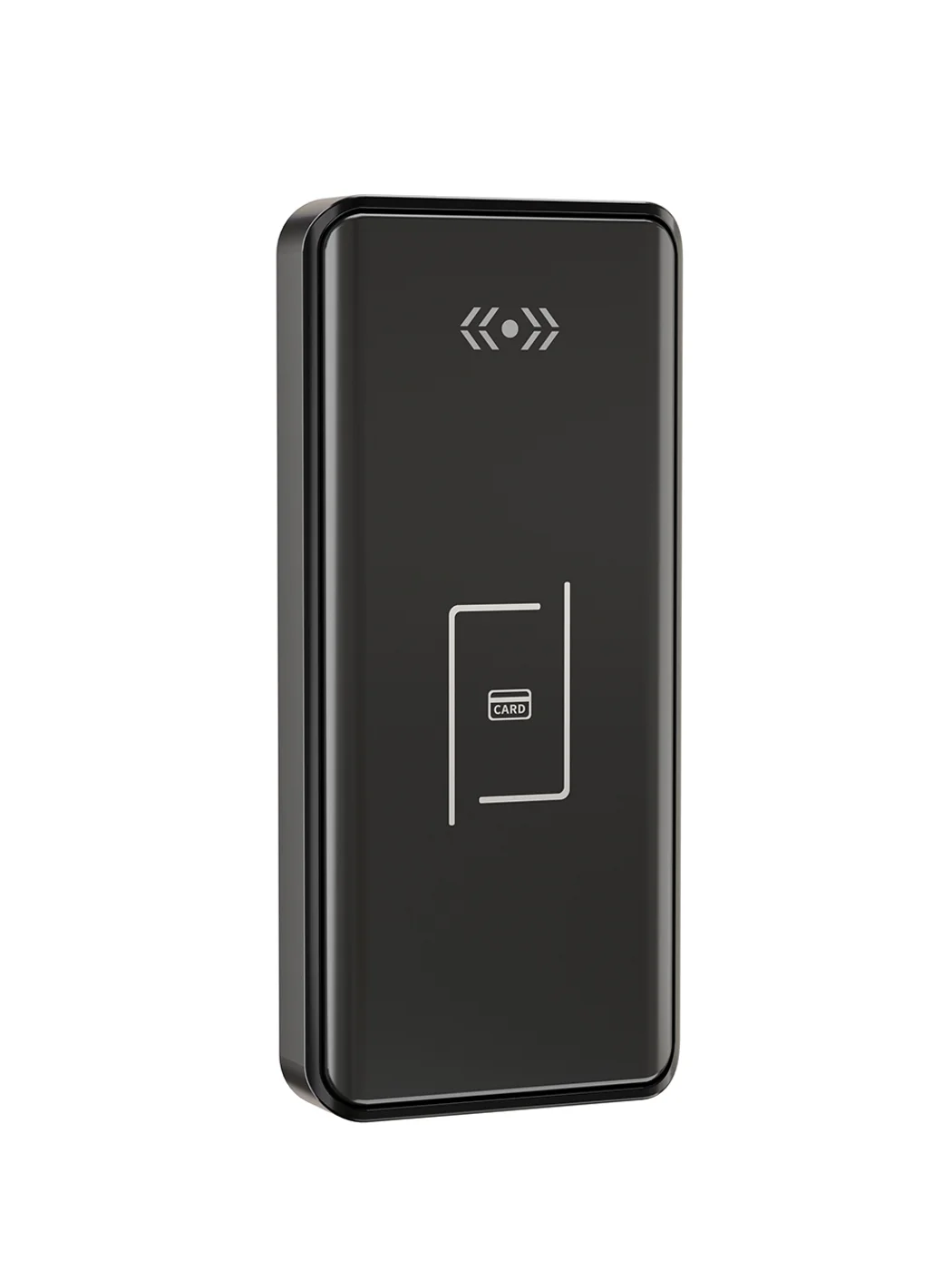
Gym Locker Lock — Offline Card, No WiFi Required
Offline card gym locker lock for fitness and pool lockers. MIFARE card, battery-powered 5-minute retrofit, no WiFi or server. Zinc alloy body, CE/FCC/RoHS.
This page already points to it as the next recommended reference.
Related blog posts
3
Gun Cabinet Lock: The Complete Guide to Firearm Security and Storage Compliance
Comprehensive gun cabinet lock guide covering types, biometric options, ATF compliance, installation, brand comparison, and best practices. Also covers firearm and weapon cabinet lock requirements.
It supports the same product context: Smart Cabinet Lock — App-Managed, Multi-Site Dashboard, Office Cabinet Lock — PIN + Card for Filing & Pedestals, Gym Locker Lock — Offline Card, No WiFi Required.
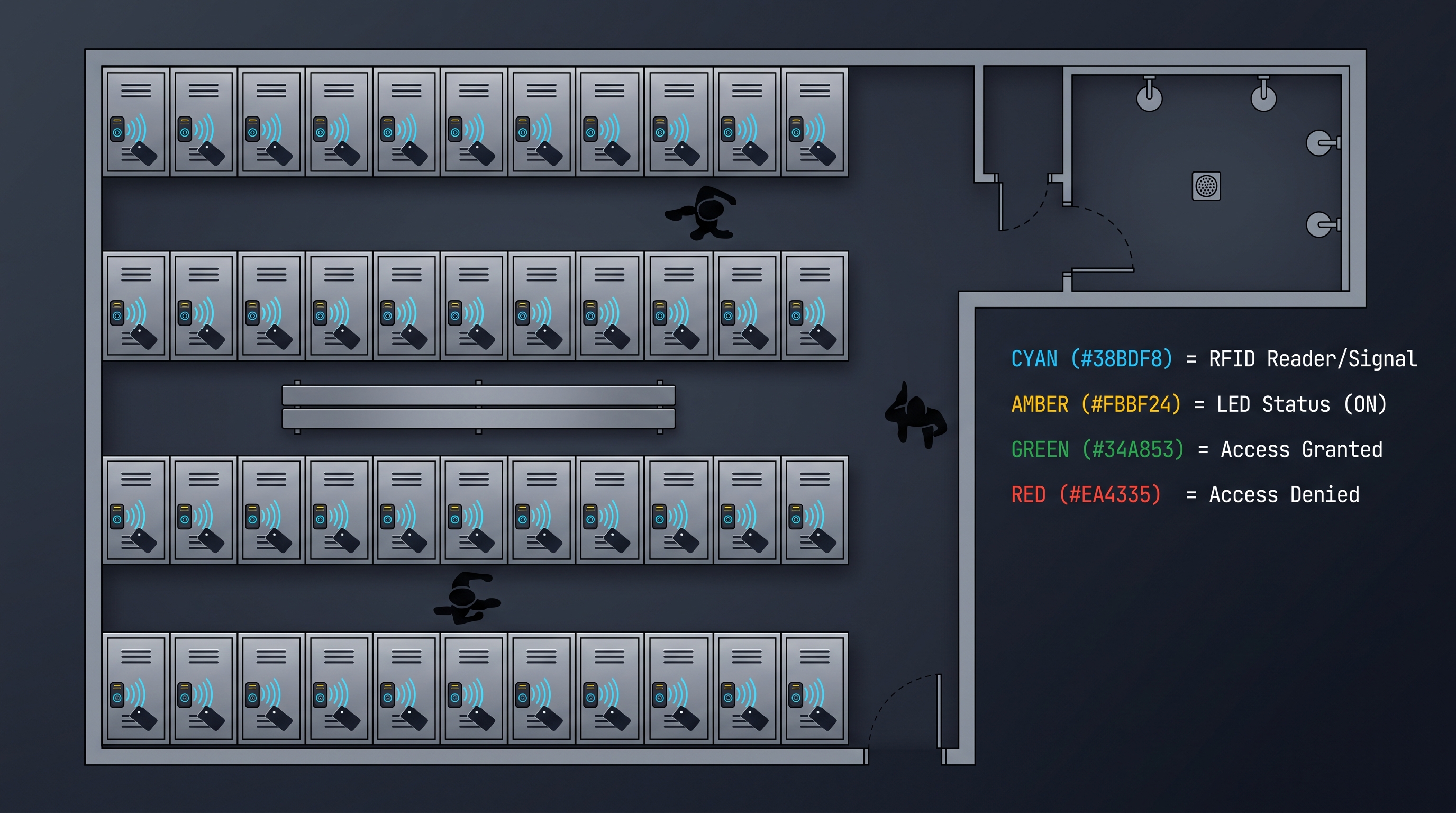
Gym Cabinet Lock: The Ultimate Guide to Secure Locker Room Storage
A gym cabinet lock provides keyless, electronic or smart access to gym lockers and fitness center storage. Compare credential types, connectivity, and installation for secure locker rooms.
It supports the same product context: Gym Locker Lock — Offline Card, No WiFi Required.
Glass Cabinet Lock: Complete 2026 Guide to Securing Glass-Front Cabinets and Display Cases
Technical buying guide covering glass cabinet lock types, magnetic and adhesive-mount locks, frameless glass locks, RFID and electronic locks for glass doors, installation, pricing, and security for 2026.
It supports the same product context: Smart Cabinet Lock — App-Managed, Multi-Site Dashboard, Office Cabinet Lock — PIN + Card for Filing & Pedestals, Gym Locker Lock — Offline Card, No WiFi Required.
Specify your hotel project with our engineers
Send your room count, ceiling type, and protocol preference. We will return a sample plan and quote within 24 business hours.
- Move from general guidance into a product or application discussion.
- Use RFQ when pricing, drawings, MOQ, or launch timing needs structure.
- Keep a direct contact path visible for fast clarifications and handoff.