Gym Cabinet Lock: The Ultimate Guide to Secure Locker Room Storage
A gym cabinet lock provides keyless, electronic or smart access to gym lockers and fitness center storage. Compare credential types, connectivity, and installation for secure locker rooms.
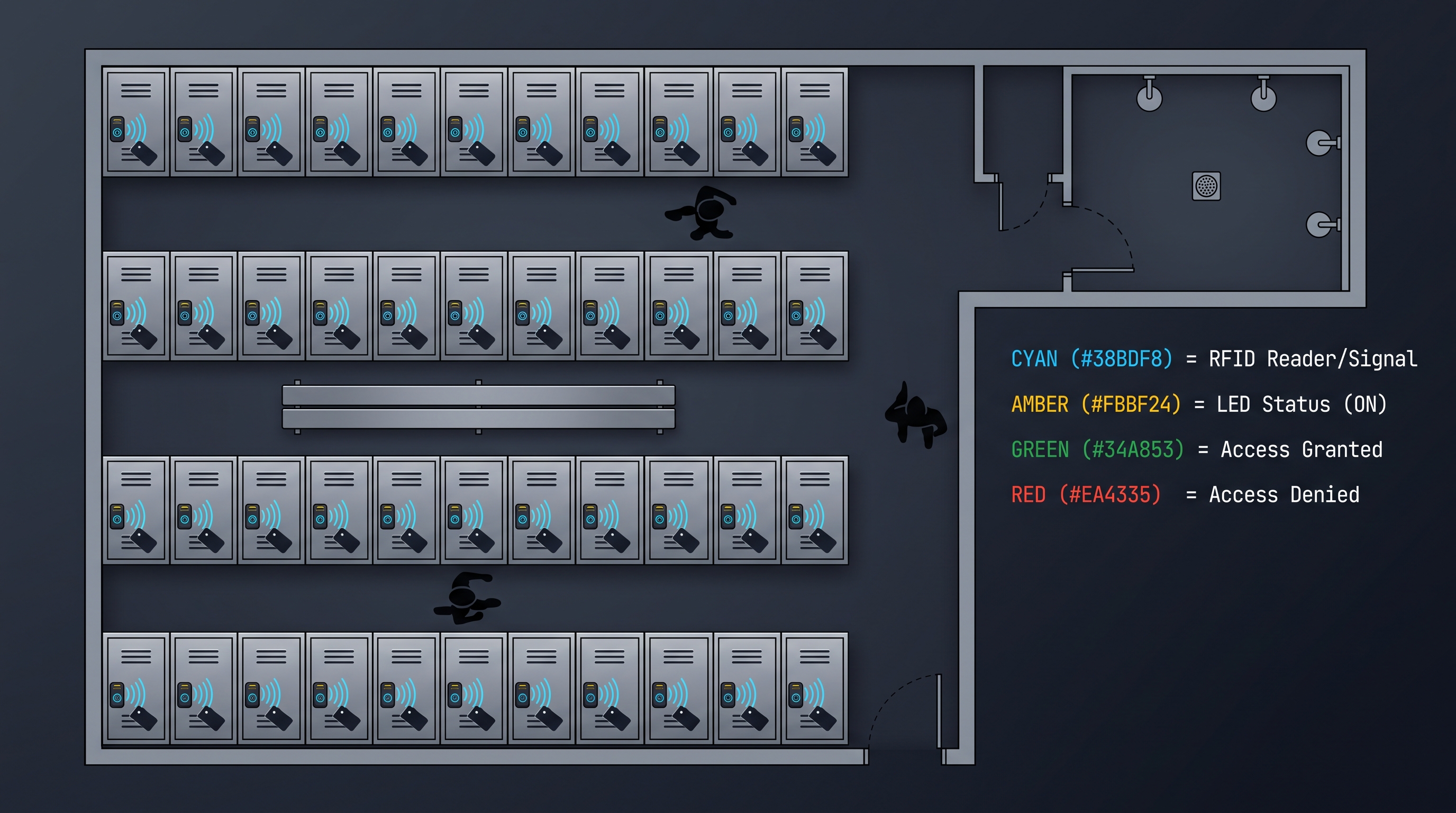
A gym cabinet lock is an electronic or smart locking device specifically designed for fitness center lockers, gym storage compartments, and athletic facility cabinets, replacing traditional keyed padlocks and combination dials with digital credentials such as RFID wristbands, PIN codes, biometric scans, or smartphone apps. Typical units are rated for 100,000 to 500,000 unlock cycles, operate on two to four AA batteries or a rechargeable lithium pack for 12 to 24 months at 50 to 100 unlocks per day, and support between 50 and 2,000 individual user credentials with full audit logging of every access event. The gym cabinet lock must withstand high humidity, sweat, cleaning chemicals, and physical impact while maintaining a sub-two-second unlock time for rapid turnover between users. Communication protocols include Bluetooth Low Energy 5.0, NFC at 13.56 MHz, Zigbee, Z-Wave, and WiFi at 2.4 GHz, with gateways enabling centralized management of hundreds of lockers from a single cloud console. A gym cabinet lock carries IP54 to IP65 ingress protection ratings, CE, FCC, and often UL 294 certification, and is deployed in commercial gyms, hotel fitness centers, university athletic facilities, and corporate wellness centers.
What Is a Gym Cabinet Lock?
A gym cabinet lock is a specialized electronic locking mechanism built for the demanding environment of fitness centers, where lockers are exposed to moisture, physical impact, heavy usage, and rapid turnover of users. Unlike a general-purpose electronic lock, the gym cabinet lock is engineered with a sealed, corrosion-resistant body, a motorized cam or latch rated for hundreds of thousands of cycles, and a credential system designed for transient user populations who may visit the facility daily, weekly, or only once. The gym cabinet lock authenticates a digital credential — traditionally a 125 kHz or 13.56 MHz RFID wristband issued to the member, a PIN code entered on a keypad, a biometric fingerprint, or increasingly a Bluetooth Low Energy signal from the member's smartphone — and then energizes a small DC motor or solenoid that retracts the locking element in under two seconds. Because gym environments experience wide temperature and humidity swings, the gym cabinet lock enclosure must be sealed to at least IP54, protecting against dust and water spray, and the electronic components must withstand condensation, chlorine vapors from nearby pools, and cleaning chemical exposure without corroding or malfunctioning.
The gym cabinet lock market has grown significantly as fitness chains, hotel operators, and university athletic departments replace mechanical locks with electronic access systems. The key driver is operational efficiency: a facility with 500 lockers and turnstile-level member authentication eliminates the burden of managing physical keys, resetting forgotten combinations, cutting off abandoned padlocks, and accounting for unreturned tokens. A gym cabinet lock system that ties locker access to the same RFID wristband or membership card used for facility entry creates a seamless member experience while giving the operator real-time visibility into locker utilization, dwell time, and cleaning requirements. Industry estimates place the payback period for a gym cabinet lock system at 12 to 24 months, driven primarily by labor savings from eliminated key management and reduced member service desk inquiries about lockers.
A gym cabinet lock differs from an office or residential electronic lock in several important respects. First, the user population is transient: most lockers are used by a different person each visit, not by a single owner, so the credential system must support instant assignment and automatic release. Second, the access duration is measured in hours, not years, typically corresponding to a workout session or a hotel stay, so the gym cabinet lock must include automatic time-out and release features. Third, the lock body must resist physical abuse, including yanking, prying, and impact from bags and equipment, while continuing to operate reliably. Fourth, the gym cabinet lock often integrates with the facility's membership management system, so that a member's locker access is automatically activated when they check in and deactivated when their membership expires. These characteristics define the gym cabinet lock as a distinct product class within the broader electronic locking category.
The credential model for a gym cabinet lock is fundamentally different from that of an office drawer lock. In an office, a drawer lock may have five authorized users and remain locked and unlocked by those same five people for years. In a gym, a gym cabinet lock may see 20 different users in a single day, each using the locker for an hour, and the lock must be ready to accept a new credential assignment instantly after the previous user finishes. This demands a different credential architecture: one that supports rapid provisioning and deprovisioning, does not require pairing or enrollment at the lock face, and can be managed through a centralized platform that handles locker-occupancy state machine logic. Understanding this transience is key to specifying the right gym cabinet lock for any fitness environment.
Core Components of a Gym Cabinet Lock
The gym cabinet lock is built around five core subsystems that must work reliably under harsh conditions. The reader captures the credential, which in a gym setting is most commonly a 125 kHz RFID wristband for existing installations, a 13.56 MHz encrypted RFID wristband or card for newer systems, a Bluetooth LE signal from a smartphone running the gym's app, or a PIN entered on a sealed capacitive keypad. The controller, typically an ARM Cortex-M microcontroller, validates the credential against a local or cloud-based directory and manages the locker-occupancy state machine, including time-outs and release logic. The actuator, a geared DC motor or solenoid, retracts the locking cam or bolt in under two seconds and must be rated for at least 100,000 cycles to withstand a decade of gym traffic. The power stage manages batteries or a wired power supply, with battery-based models using smart power management to achieve multi-year operation. The enclosure protects the electronics from moisture, dust, and impact, typically with an IP54 or higher rating and a reinforced mounting bracket.
| Subsystem | Function | Typical Specification |
|---|---|---|
| Reader | Captures gym-appropriate credential | 13.56 MHz RFID, 125 kHz RFID, BLE 5.0, keypad |
| Controller | Validates access and manages state | ARM Cortex-M, 64 KB to 512 KB flash |
| Actuator | Moves locking cam or bolt | 6 to 12 V DC motor, 100k to 500k cycle rating |
| Power stage | Manages battery or wired energy | 2 to 4 AA cells, 12 to 24 month life, PoE option |
| Enclosure | Protects against gym environment | IP54 to IP65, zinc alloy or stainless body |
How a Gym Cabinet Lock Works
A gym cabinet lock follows a structured operational cycle designed for speed, reliability, and self-service use by members who may have no training. When a member presents a credential — a wristband tapped against the reader, a PIN entered on the keypad, or a Bluetooth signal from a phone — the gym cabinet lock captures the credential payload and passes it to the microcontroller for validation. If the credential is recognized and authorized, the controller energizes the motor or solenoid, which retracts the locking cam in under two seconds, and the locker door can be opened. The gym cabinet lock then registers the locker as occupied, starts an internal timer, and logs the access event with a timestamp and credential ID. When the user closes the locker and presses a lock button or presents the same credential again, the lock secures the door and either retains or releases the credential assignment depending on the configured policy. The entire cycle, from credential presentation to bolt retraction, is engineered to take under two seconds even in a noisy RF environment full of competing Bluetooth and WiFi signals from fitness equipment and member devices.
The occupancy management model is what most distinguishes the gym cabinet lock from a conventional electronic lock. A gym cabinet lock typically supports three operating modes: single-use, where each credential is assigned to a locker for one session and automatically released at check-out or after a timeout period; multi-session, where the credential persists across visits for a defined period such as a week or month; and permanent, for staff lockers or VIP members with assigned lockers. The smartest gym cabinet lock models implement a dynamic allocation model in which any available locker is assignable to any credential on demand, maximizing locker utilization by ensuring that no locker sits idle while a member waits. The management platform maintains a real-time map of which lockers are occupied, by whom, and for how long, enabling cleaning staff to prioritize vacated lockers and management to identify lockers that are occupied beyond the facility's maximum session duration.
Power management in a gym cabinet lock is critical because a dead battery at an occupied locker creates a service incident that inconveniences the member and burdens the staff. Most gym cabinet lock models use two to four AA alkaline or lithium batteries, with battery life influenced by the unlock frequency, the radio protocol, and the ambient temperature. A BLE-based gym cabinet lock on lithium AA cells may achieve 18 to 24 months of battery life even at 80 unlocks per day, while a WiFi-connected model may need battery replacement every 3 to 6 months. The best gym cabinet lock products feature predictive battery monitoring, sending a low-battery alert to the management console when capacity drops below 20 percent and a critical alert at 10 percent, giving staff ample time to replace batteries during off-peak hours rather than responding to a member complaint. Some premium models include a physical emergency key override, while others provide a 9 V external battery contact for emergency jump-start access to a locked locker.
Authentication and Occupancy Flow
The authentication and occupancy flow in a gym cabinet lock proceeds through several distinct states. In the free state, the locker is unoccupied and available, and any authorized credential can claim it. When a member presents a credential, the gym cabinet lock moves to the assigning state, where it validates the credential and, if approved, retracts the bolt and transitions to the occupied state. In the occupied state, the same credential can unlock the locker repeatedly within a session, and the lock tracks cumulative open time. When the member closes the locker and secures it by pressing the lock button or tapping the credential, the lock transitions to the secured state — still occupied by the same member, but mechanically locked. At check-out, the member releases the locker, the gym cabinet lock returns to the free state, and the next user can claim it. If the member forgets to check out, the gym cabinet lock can be configured to time out after a facility-defined period, typically 2 to 4 hours, auto-releasing the locker and freeing it for the next member.
Gym Cabinet Lock vs Traditional Locker Locks
Comparing a gym cabinet lock to traditional locker locking methods — padlocks, built-in key locks, and mechanical combination locks — reveals advantages in security, operations, and member experience that have driven rapid adoption across the fitness industry. Traditional padlocks are owned by members and are frequently lost, forgotten, or used to permanently claim lockers, creating a management burden for staff who must cut off abandoned locks and a frustration for members who find their preferred lockers perpetually occupied. A built-in electronic gym cabinet lock eliminates member-owned locks entirely, giving the facility complete control over locker assignment, duration of use, and turnover. The gym cabinet lock also eliminates the security weakness of combination locks, where combinations can be shared, shoulder-surfed, or decoded, and key locks, where keys can be lost, copied, and used to access the wrong locker.
| Attribute | Traditional Padlock | Built-In Key Lock | Gym Cabinet Lock |
|---|---|---|---|
| Initial cost per locker | 5 to 30 USD | 10 to 40 USD | 60 to 250 USD |
| Locker assignment control | None, member brings lock | Limited, staff manages keys | Full, automated via management console |
| Access audit | None | Basic sign-out log | Timestamped, exportable event log |
| Locker utilization visibility | None | None | Real-time occupancy dashboard |
| Time-to-open | 10 to 30 seconds with key | 10 to 20 seconds | Under 2 seconds |
| Physical security | Varies widely by padlock quality | Moderate, keys can be copied | High, no keyway exposed |
| Cleaning integration | Manual inspection | Manual inspection | Automated vacate notifications |
| Member experience | Must carry key or remember combo | Must carry key | Tap wristband, enter PIN, or use phone |
The operational advantages of a gym cabinet lock extend beyond the lock itself. With traditional padlock-based systems, staff walk the locker room floor each evening, visually inspect lockers, cut off locks that appear abandoned, and record locker conditions manually. With a gym cabinet lock system, the management console shows exactly which lockers are occupied, by which members, and when they were last accessed. Cleaning staff receive automated notifications when a locker is vacated, enabling them to clean and sanitize lockers immediately rather than waiting for their evening route. The system can automatically release lockers that exceed the facility's maximum occupancy time, ensuring fair access and maximizing turnover during peak hours. These operational gains contribute to a cleaner, more orderly locker room and a significant reduction in the staff hours dedicated to locker management.
Member experience with a gym cabinet lock is markedly superior to the padlock model. Members arrive at the fitness center, choose any available locker, and secure it with a tap of their RFID wristband, the same wristband they use for facility entry and payments. There is no fumbling with a combination dial while sweat drips from their workout, no worry about leaving a key in the lock, and no anxiety about whether someone has guessed their combination. When the workout ends, the member taps the wristband to unlock the locker, retrieves their belongings, and walks away, with the locker automatically releasing and notifying cleaning staff. This frictionless experience is increasingly expected by fitness consumers, particularly at premium clubs where the gym cabinet lock is part of a broader technology-forward member experience. For hotel fitness centers, where guests bring the room key card and expect a consistent credential experience, a gym cabinet lock that reads the same RFID card used for room access delivers a seamless hospitality experience that mechanical locker locks cannot match.
Credential Types for a Gym Cabinet Lock
The credential is the member-facing component of a gym cabinet lock system, and the choice of credential technology determines the member experience, the cost of deployment, and the security level. Fitness facilities must select a credential that is convenient for members to use before, during, and after workouts, durable enough to withstand sweat, pool water, and impact, and compatible with the gym cabinet lock reader technology. The four most common credential types are RFID wristbands, PIN codes, smartphone Bluetooth credentials, and biometric fingerprints, with each offering distinct trade-offs for different gym types and member demographics.
| Credential Type | Member Convenience | Durability | Cost per User | Best Fit |
|---|---|---|---|---|
| RFID wristband | Extremely high, worn during workout | Very high, waterproof | 2 to 10 USD | Commercial gyms, health clubs |
| PIN keypad | High, nothing to carry | High, sealed keypad | Zero per user | Budget gyms, community centers |
| Bluetooth smartphone | High if app is used | Dependent on phone | Zero if members have phones | Premium clubs with apps |
| Fingerprint biometric | Very high, nothing to carry | High sensor rating needed | Built into lock | Boutique studios, VIP areas |
| RFID membership card | High, already carried | High, laminated | 1 to 3 USD | Multi-site chains, hotels |
RFID Wristband Credentials
The RFID wristband is the dominant credential for commercial gym cabinet lock installations because it integrates seamlessly with the fitness experience. Members wear the wristband throughout their workout, so the credential is always at hand, never left in a pocket or on a bench, and the tap-to-open interaction takes under one second. A 13.56 MHz RFID wristband with encryption, such as Mifare DESFire or Ultralight C, provides strong security with mutual authentication and prevents cloning, while the lower-frequency 125 kHz wristbands common in legacy systems offer convenience at the cost of weaker security. The gym cabinet lock with an RFID reader typically supports both frequency bands to accommodate mixed populations and phased migrations. Because wristbands are waterproof, impact-resistant, and can be worn in pools, saunas, and steam rooms, they outperform cards and phones in the demanding gym environment. Facilities that issue wristbands recover the per-unit cost through member deposits, rental fees, or the operational savings from eliminating padlock management.
PIN Keypad Credentials
A keypad-based gym cabinet lock accepts a numeric PIN, typically 4 to 8 digits, entered on a sealed capacitive keypad that resists moisture and impact. The PIN credential model has the advantage of zero per-user cost and no physical token to distribute, collect, or replace, making it particularly attractive for budget gyms, community recreation centers, and high-school athletic facilities where issuing wristbands to transient populations would be logistically burdensome. Members choose or are assigned a PIN at their first visit, enter it on the gym cabinet lock keypad to secure a locker, and use the same PIN to unlock at the end of the session. The facility configures the system to release the PIN-locker association at check-out or after a timeout, so the same PIN can be reused by the next member. Security best practices for a keypad gym cabinet lock include enforcing a minimum PIN length of 4 to 6 digits, locking out after 3 to 5 consecutive failed attempts, and requiring PIN changes at regular intervals for long-term members.
Bluetooth Smartphone Credentials
Smartphone-based credentials for a gym cabinet lock use Bluetooth Low Energy communication between the member's phone and the lock, typically through the fitness facility's mobile app. The app generates an encrypted rolling token that the gym cabinet lock validates through a mutual authentication handshake, and the lock can be configured to unlock automatically when the authorized phone is in proximity, a feature especially convenient when hands are full with gym bags and water bottles. The smartphone credential model works best in premium clubs where members already use the facility's app for check-in, class booking, and payments, because the gym cabinet lock becomes an extension of the digital member journey. The limitations are Bluetooth range variability, phone battery dependence, and the requirement that members download and stay logged into the app, which can be a barrier for older members or those who prefer to keep their phone in the locker rather than carrying it during the workout.
Fingerprint Biometric Credentials
A biometric gym cabinet lock uses a capacitive fingerprint sensor to authenticate the member, matching the presented print against enrolled templates stored securely on the lock. The biometric model offers the ultimate in convenience — nothing to carry, nothing to remember — and the highest level of identity assurance, since a fingerprint cannot be shared, borrowed, or forgotten. A gym cabinet lock with fingerprint authentication typically enrolls 50 to 100 fingerprints per device and achieves recognition in under 0.5 seconds with false acceptance rates below 0.001 percent. The main considerations are the higher hardware cost of the fingerprint sensor, the need for the sensor to perform reliably when fingers are damp or pruned after swimming, and member acceptance, which varies by culture and demographic. Biometric gym cabinet lock models are most common in boutique fitness studios, VIP locker areas, and high-security athletic facilities where the premium experience and strong identity binding justify the additional hardware cost.
Connectivity and Management for a Gym Cabinet Lock
A gym cabinet lock is rarely deployed in isolation; it is almost always part of a networked system that includes a central management platform, gateways or hubs, and integration with the facility's membership management software, access control system, and cleaning workflow tools. The connectivity architecture determines how the gym cabinet lock communicates with the management platform, how real-time the data is, and what management features are available. Fitness facilities must choose a connectivity model that matches their locker footprint, building infrastructure, and operational requirements.
Bluetooth Low Energy with Gateway
The BLE gateway architecture is the most common connectivity model for gym cabinet lock systems with up to a few hundred lockers. Each gym cabinet lock communicates over BLE 5.0 with one or more gateways positioned in the locker room, and the gateway bridges to the cloud over Ethernet or WiFi. The gateway aggregates lock status, credential events, and battery data from all the gym cabinet lock units in range, sending this data to the management platform and forwarding commands such as remote unlock or credential assignment to individual locks. A single gateway typically supports 50 to 150 gym cabinet lock units within a 30-meter range, depending on the locker room layout and the density of metal lockers, which reflect and absorb radio signals. The BLE gateway model offers low power consumption at the lock, centralized management through the cloud, and real-time monitoring, at the cost of requiring gateways to be installed and powered in the locker room.
Zigbee Mesh Networking
Zigbee mesh networking is well-suited to large gym cabinet lock deployments spanning multiple locker rooms or floors. In a Zigbee mesh, each gym cabinet lock acts as a router, retransmitting packets for neighboring locks and extending the network range far beyond what any single radio could achieve. A single Zigbee coordinator can manage up to 2,400 gym cabinet lock units, and the self-healing mesh automatically reroutes traffic around any failed nodes, providing resilience that a simple star topology BLE gateway cannot match. The Zigbee model is particularly attractive for new gym construction where the coordinator can be positioned optimally, but it can also be retrofitted into existing locker rooms by adding powered Zigbee repeaters. Battery life on Zigbee is slightly shorter than pure BLE because of the router overhead, but the 12 to 18 months achievable on four AA cells is still acceptable for most fitness operators.
WiFi Direct Connectivity
A WiFi gym cabinet lock connects directly to the building's 2.4 GHz WiFi network, eliminating the need for a separate hub or gateway. This simplifies installation for small gyms and boutique studios where a gateway would be overkill, and it enables real-time cloud management without additional hardware. The trade-off is power consumption: WiFi transmissions draw significantly more current than BLE or Zigbee, so a WiFi gym cabinet lock on alkaline AA cells may need battery replacement every 3 to 6 months, which becomes a maintenance burden at scale. Some manufacturers address this with larger lithium battery packs or with hybrid designs that use WiFi only for management traffic and BLE for the credential exchange. For gyms with powered lockers, such as those with integrated USB charging ports or PoE infrastructure, a wired WiFi gym cabinet lock offers the simplest cloud integration with no battery limitations.
Integration with Membership Management
The full value of a gym cabinet lock system is realized when it integrates with the facility's membership management software. When a member checks in at the front desk or turnstile, the membership system activates the member's credential for locker use. The gym cabinet lock management platform receives this activation event and authorizes the member to claim any available locker. When the member's membership expires or is suspended, that authorization is automatically revoked, preventing unauthorized locker use. Integration also enables the facility to enforce locker policies programmatically: a gym cabinet lock can deny access to members who have exceeded their daily session limit, can prioritize lockers for premium membership tiers, and can generate usage reports segmented by membership type. This integration is typically achieved through API calls between the gym cabinet lock management platform and the membership system, using REST, MQTT, or WebSocket interfaces.
Gym Cabinet Lock Use Cases by Facility Type
The gym cabinet lock is deployed across a diverse range of fitness and wellness facilities, each with different requirements for security, durability, member experience, and integration. Understanding how the gym cabinet lock is used in each facility type helps operators and specifiers choose the right product and configuration for their specific environment.
Commercial Gym and Health Club
In a large commercial gym with 200 to 1,000 lockers, the gym cabinet lock must be durable, fast, and integrated with the club's access control and membership systems. RFID wristband-based gym cabinet lock models dominate this segment because members already wear wristbands for facility entry, and the gym cabinet lock extends the wristband's utility to locker access. The management platform must handle high-volume real-time data, showing locker occupancy, session duration, and cleaning status on dashboards used by front-desk staff, cleaning crews, and operations managers. Peak hour performance is critical: at 6 PM on a weeknight, the gym cabinet lock fleet may process 50 to 100 unlock events per minute as members arrive in waves, so the system must maintain sub-two-second unlock times without queuing or drops. Commercial clubs also value the gym cabinet lock's ability to support tiered access, where premium members get access to preferred locker areas and standard members are directed to general-use lockers, all enforced automatically by credential authorization.
Hotel Fitness Center
Hotel fitness centers pose unique requirements for a gym cabinet lock. The user population is transient: guests stay for one to three nights and use the fitness center once or twice, so the credential system must be frictionless and self-explanatory with no onboarding. The most common hotel gym cabinet lock credentials are the guest's existing room key card, which is typically a 13.56 MHz RFID card, and the guest's smartphone through the hotel's mobile app. The gym cabinet lock must read the same RFID card used for the guest room door, maintaining a consistent credential experience throughout the property. For hotels, aesthetic integration is important: the gym cabinet lock should blend with the locker's wood or laminate finish, and the reader should be inconspicuous. The management platform must provide hotel-specific reports, such as locker utilization by time of day and average session duration, to help the facility director right-size the locker count and cleaning schedule.
University and School Athletic Facilities
University athletic departments deploy gym cabinet lock systems in varsity locker rooms, recreational facility locker bays, and physical education storage areas. The credential model in education settings often combines long-term locker assignments for varsity athletes, who may have the same locker for an entire season, with short-term assignments for recreational users, who may use a locker for a single workout. A gym cabinet lock for this environment must support both modes: permanent credential assignments for varsity lockers with multi-month durations, and single-session assignments for recreational lockers with automatic midnight release. The management platform must integrate with the university's student identity system, so that a student card or ID number can be used as the gym cabinet lock credential, eliminating the cost of distributing separate tokens. Durability requirements are high in educational settings, where the gym cabinet lock may face more physical abuse and a less attentive user base than in commercial environments.
Corporate Wellness Center
Corporate fitness centers within office buildings use the gym cabinet lock to secure lockers for employees who work out before, during, or after the workday. The credential is typically the employee's existing building access badge at 13.56 MHz, so the gym cabinet lock integrates into the corporate security ecosystem without requiring additional card issuance. A key requirement in corporate settings is integration with the HR and building management systems: when an employee leaves the company, their gym cabinet lock access is revoked along with their building access, automatically and immediately. Corporate wellness centers also use the gym cabinet lock's usage data to justify their existence, reporting metrics such as unique locker users per month, average session duration, and peak utilization to demonstrate ROI to facility managers and HR leadership. The gym cabinet lock in a corporate environment benefits from a more disciplined user population than commercial gyms, which can reduce physical damage but also places higher expectations on the technology's reliability and integration polish.
High-Security Athletic Facilities
Professional sports team facilities, Olympic training centers, and high-security athletic compounds require a gym cabinet lock with enhanced security features. Two-factor authentication — typically a badge plus a PIN or a badge plus a fingerprint — is standard, preventing unauthorized access even if a credential token is lost or stolen. The gym cabinet lock audit trail in these environments is critical for compliance with league security protocols, anti-doping regulations, and chain-of-custody requirements for sensitive materials. Tamper detection must be immediate and must trigger a real-time security alert, not just a log entry, because unauthorized locker access could indicate an intelligence-gathering attempt by a competitor. While these high-security gym cabinet lock deployments represent a small niche of the overall market, they drive innovation in features such as encrypted real-time communication, tamper-evident seals, and integration with video surveillance systems that eventually filter down to mainstream commercial products.
Installation and Retrofit for Gym Cabinet Lock Systems
Installing a gym cabinet lock system involves electrical and mechanical work across the locker room. The process varies significantly depending on whether the lockers are new or existing, the type of locker material, the power source, and the number of lockers being outfitted. A well-planned installation minimizes locker room downtime and ensures that each gym cabinet lock operates reliably from day one.
New Locker Installation
When new lockers are being specified for a gym, the gym cabinet lock can be factory-installed as an OEM option, integrated into the locker design from the start. The manufacturer cuts a precise opening for the reader face and lock body, routes the battery compartment to an accessible location, and tests each gym cabinet lock at the factory before shipping. This approach yields the cleanest installation with no visible wires, no aftermarket modifications, and the highest level of tamper resistance because the lock body is concealed within the locker wall. OEM gym cabinet lock integration adds 50 to 150 USD to the cost of each locker, depending on the lock model and the credential technology. For a 500-locker fitness center being built from scratch, specifying OEM gym cabinet lock integration is the preferred approach because it avoids the labor and disruption of retrofitting locks into brand-new lockers after they are installed.
Retrofit Installation into Existing Lockers
Retrofitting a gym cabinet lock into existing lockers is more common than new-locker OEM, because most fitness facilities already have lockers and are upgrading from mechanical locks to electronic. The retrofit process begins with a site survey to assess locker material, locker wall thickness, existing lock cutout dimensions, and the availability of the locker interior for installing the lock body and battery compartment. For wooden or laminate lockers, the gym cabinet lock body is typically installed inside the locker door, with a hole drilled through the door face for the reader and a small channel routed for the interconnecting cable. For metal lockers, the lock body mounts inside the door using bolts or a bracket, and a hole is punched or laser-cut for the reader face. The retrofit gym cabinet lock must match the existing cutout dimensions — common sizes are 16 mm, 19 mm, or 25 mm cylinder holes — or include an adapter plate that converts the existing opening to the lock's required format. Professional retrofit installation typically takes 20 to 40 minutes per locker, depending on the locker material and the installer's experience, and a team of two can retrofit 40 to 60 lockers per day.
Power and Wiring Considerations
Powering a gym cabinet lock fleet is one of the most consequential installation decisions because it determines ongoing maintenance requirements and the choice of lock models. Battery-powered gym cabinet lock systems are the simplest to install because they require no wiring to each locker, and they are the only practical option for freestanding lockers without adjacent power. The trade-off is the perpetual task of replacing batteries: a 500-locker facility with WiFi-based gym cabinet lock units may need to replace 500 sets of batteries every 3 to 6 months, while a BLE or Zigbee system may need replacements every 12 to 24 months. Some high-end fitness facilities opt for powered lockers, running low-voltage DC power to each locker via conduits in the locker room floor or walls, which enables the gym cabinet lock to operate permanently without battery changes. Powered models can include additional features such as in-locker USB charging ports for member devices, which enhances the member experience and can offset the wiring cost. Facilities undertaking major locker room renovations should evaluate the powered-locker option, while those seeking a faster retrofit should choose battery-powered gym cabinet lock models with the longest battery life available.
Gym Cabinet Lock Security and Tamper Resistance
A gym cabinet lock operates in an environment where it is subject to opportunistic physical attacks from thieves and aggressive handling from members in a hurry. The lock must resist picking, prying, shimming, and brute-force attacks while continuing to function after years of heavy use. Security in a gym cabinet lock depends on the combination of physical hardening, electronic authentication strength, and the management platform's ability to detect and respond to anomalies.
Physical Tamper Resistance
The gym cabinet lock body must withstand physical force. The lock housing is typically zinc alloy or stainless steel, with a thickness of 3 to 6 millimeters at the weakest point, sufficient to resist prying with a screwdriver or small crowbar. The locking cam or bolt should be hardened steel with a thickness of at least 10 millimeters, engaging a reinforced strike plate on the locker frame so that force applied to the door does not simply bend the bolt out of engagement. The reader face on the locker exterior should be flush-mounted with no protruding edges that can be gripped by a tool, and the fasteners securing the lock body to the locker door should be accessible only from the interior, so that the lock cannot be unbolted from outside. Premium gym cabinet lock models include a tamper switch that detects physical tampering and triggers a real-time alert to the management platform, enabling security staff to respond immediately rather than discovering the breach hours later.
Electronic Security and Encryption
The electronic security of a gym cabinet lock depends on the credential technology and the communication protocol. RFID credentials at 13.56 MHz should use encrypted variants such as Mifare DESFire EV2 or Ultralight C, which implement mutual authentication and AES-128 encryption, rather than unencrypted UID-only cards that can be cloned with 15 USD readers available online. Bluetooth communication should use BLE pairing with LE Secure Connections, which provides AES-128 CCM encryption and protects against passive eavesdropping and man-in-the-middle attacks. The gym cabinet lock firmware should implement a rate limiter on authentication attempts, locking out for 30 to 60 seconds after 3 to 5 consecutive failures, and should log every failed attempt with the credential ID and timestamp. Signed firmware updates, verified by the lock before installation, prevent an attacker from loading malicious firmware that could bypass authentication. The management platform should enforce TLS 1.3 for all cloud communications and should support multi-factor authentication for administrator access to the management console.
Locker Abuse and Vandalism Mitigation
The gym cabinet lock faces abuse that goes beyond deliberate attacks, including members hanging on locker doors, slamming doors, and yanking on locked doors. The lock mechanism must tolerate these forces without failing, which is why quality gym cabinet lock actuators are rated for at least 100,000 cycles, not just 10,000 or 20,000 as found in light-duty office locks. The force required to pull open a locked gym cabinet lock door should exceed 200 kilograms to defeat body-weight pulling attacks, and the bolt or cam should be designed so that lateral force on the door is transferred to the locker frame rather than bending the lock mechanism itself. For gyms that experience deliberate vandalism, such as community recreation centers in high-crime areas, reinforced gym cabinet lock models with thicker housings, anti-drill pins, and hardened steel bolts are available. The management platform can also help by identifying patterns of abuse — such as a particular locker that repeatedly shows tamper events — and alerting staff to investigate and potentially deploy additional physical security measures.
Gym Cabinet Lock Compliance and Standards
A gym cabinet lock sold and deployed in regulated markets must comply with applicable safety, radio, and environmental standards. Certifications demonstrate independent testing of the product's performance and safety, and they are often required by commercial insurance policies, building codes, or corporate procurement policies.
Electrical and Radio Standards
A gym cabinet lock with any wireless communication must carry radio certifications for its target markets. In the United States, FCC Part 15 certification verifies that the device does not cause harmful interference and accepts interference from other sources. The gym cabinet lock must also meet FCC SAR requirements for devices that emit radio frequency energy near the body, though the low transmission power and brief duty cycle of BLE and Zigbee generally make compliance straightforward. In Europe, the CE mark indicates compliance with the Radio Equipment Directive (RED) 2014/53/EU, and a gym cabinet lock must also meet the EMC Directive and the Low Voltage Directive if it includes a wired power supply option. Additional certifications such as UKCA for the United Kingdom, IC for Canada, and TELEC for Japan may be required depending on distribution.
Ingress Protection and Environmental Ratings
The gym cabinet lock must withstand the moisture, humidity, and chemical exposure of a fitness environment. The IP (Ingress Protection) rating defines the level of protection against solids and liquids, and a gym cabinet lock should carry at least an IP54 rating, meaning it is protected against dust ingress sufficient to prevent malfunction (first digit 5) and against water splashed from any direction (second digit 4). For poolside lockers exposed to splash and spray, an IP65 gym cabinet lock, which is fully dust-tight and protected against water jets, is recommended. The IP rating should be verified through independent laboratory testing, not just the manufacturer's claim, and the certification documentation should be provided as part of the procurement package. In addition to IP rating, the gym cabinet lock should be tested for corrosion resistance, with ASTM B117 salt spray testing of at least 96 hours for metal components, and for resistance to common cleaning chemicals such as quaternary ammonium compounds, bleach solutions, and alcohol-based sanitizers.
Accessibility Compliance
A gym cabinet lock must be usable by members with disabilities, and in the United States, this means compliance with the Americans with Disabilities Act (ADA) where applicable. The lock face should be mounted at a reachable height, typically 48 inches maximum from the floor for a forward reach, and the unlocking operation should require no grasping, pinching, or twisting of the wrist. Touch-to-open RFID and keypad-based gym cabinet lock models generally meet these requirements, but keyed override cylinders and small mechanical levers may not. The gym cabinet lock should provide audible feedback such as a beep on successful unlock for members with visual impairments, and some models include a vibration feedback option for users who are deaf or hard of hearing. In Europe, EN 301 549 harmonized accessibility standards apply, and in public-sector procurement, Accessibility Conformance Reports (ACRs) based on VPAT (Voluntary Product Accessibility Template) may be requested.
Cost and Return on Investment for a Gym Cabinet Lock
The decision to deploy a gym cabinet lock system is ultimately a financial one, and facility operators must understand both the upfront cost and the ongoing operational savings to build a business case. The cost of a gym cabinet lock system comprises hardware, installation, management platform licensing, and ongoing maintenance such as battery replacement and support. The savings come from reduced staff labor, eliminated padlock and key management, increased locker utilization, and improved member satisfaction and retention.
Hardware and Installation Cost Breakdown
The hardware cost for a gym cabinet lock ranges from 60 to 250 USD per locker, depending on the credential type, connectivity protocol, and build quality. Entry-level PIN keypad models are at the low end, while fingerprint biometric models with WiFi connectivity are at the high end. Installation labor adds 20 to 60 USD per locker for professional installation, with on-site training and commissioning included. The management platform cost, whether cloud subscription or on-premises server license, adds 2 to 15 USD per locker per year. For a mid-sized gym with 300 lockers, the total upfront investment ranges from 25,000 to 90,000 USD, with annual platform costs of 600 to 4,500 USD. The price per locker drops significantly at scale as the fixed costs of system integration, training, and project management are amortized across more units.
| Cost Component | Budget System | Mid-Range System | Premium System |
|---|---|---|---|
| Gym cabinet lock hardware per unit | 60 to 90 USD | 100 to 150 USD | 180 to 250 USD |
| Gateway or hub | 200 to 500 USD per gateway | 300 to 800 USD | 500 to 1,500 USD |
| Installation labor per locker | 15 to 25 USD | 25 to 40 USD | 35 to 60 USD |
| Platform licensing per year per locker | 1 to 3 USD | 3 to 8 USD | 8 to 15 USD |
| RFID wristbands per thousand | 1,500 to 3,000 USD | 3,000 to 6,000 USD | 6,000 to 10,000 USD |
| Battery replacement per year | 3 to 6 USD per locker | 2 to 4 USD | 1 to 3 USD |
Operational Savings and Payback Period
The payback period for a gym cabinet lock system typically ranges from 12 to 24 months, driven by several categories of operational savings. The largest saving is staff labor: staff no longer spend time cutting off abandoned padlocks (saved 5 to 15 minutes per lock, at labor rates of 15 to 25 USD per hour), managing key sign-out logs, or resetting forgotten combinations. A 300-locker gym may save 10 to 20 staff hours per week on locker-related tasks, translating to 7,500 to 15,000 USD annually. The elimination of padlock replacement costs for the facility saves 5 to 20 USD per abandoned lock, and a busy gym may cut 200 to 500 padlocks per year. Locker utilization gains, while harder to quantify, are real: a gym cabinet lock system that auto-releases lockers after a timeout ensures that the maximum number of lockers are available during peak hours, improving member experience and potentially enabling the facility to serve more members with the same locker count. Member retention gains from the improved experience are the most speculative but potentially the largest benefit, as locker frustration is a frequently cited pain point in gym satisfaction surveys.
Maintenance and Long-Term Care for a Gym Cabinet Lock
A gym cabinet lock is a low-maintenance device, but regular attention to batteries, firmware, cleaning, and mechanical alignment ensures maximum service life and minimizes the member-facing impact of any failure. Facility operators should establish a maintenance cadence and train staff on basic troubleshooting procedures to handle common issues without escalating to manufacturer support.
Battery Management Strategy
Effective battery management for a gym cabinet lock fleet requires a proactive, data-driven approach. The management platform should provide a dashboard showing the battery level of every gym cabinet lock, color-coded by status: green for above 50 percent, yellow for 20 to 50 percent, and red for below 20 percent. Staff should perform battery replacement during scheduled maintenance windows, typically monthly or quarterly, replacing all red and yellow batteries in a single visit rather than responding to individual low-battery alerts. Lithium AA cells are recommended for gym cabinet lock products because they maintain voltage more consistently than alkaline as they discharge, perform better in the temperature fluctuations of a locker room, and have a longer shelf life for the spares inventory. Used batteries should be recycled through a certified e-waste handler, and the maintenance log should record the date of replacement and the battery brand and type for each gym cabinet lock, enabling trend analysis and vendor negotiations.
Cleaning and Sanitization Compatibility
The gym cabinet lock is exposed to the same cleaning protocols as the rest of the locker room, and it must withstand frequent application of disinfectants and sanitizers without damage to the reader surface, keypad, or housing. The lock face should be specified with a chemically resistant coating or material, such as glass-filled polycarbonate or PVD-coated stainless steel, and the seal around the reader should prevent liquid ingress during wipe-down. Cleaning staff should be trained to spray cleaning solution onto a cloth rather than directly onto the gym cabinet lock, to avoid forcing liquid under the reader bezel or into the keypad openings. Some gym cabinet lock models include a cleaning mode that disables the reader for 60 seconds while the lock face is being wiped, preventing accidental unlock triggers during cleaning.
Firmware Updates and Cybersecurity Hygiene
Firmware updates are as important for a gym cabinet lock as they are for any other network-connected device. The management platform should support fleet-wide firmware deployment, allowing the operator to push updates to all gym cabinet lock units or to a selected subset during off-hours. Each update should be cryptographically signed and verified by the lock before installation, with automatic rollback if the update fails. The platform should maintain a firmware inventory showing the version running on each gym cabinet lock, flagging units that have missed updates. The operator should establish a firmware update schedule, such as quarterly for routine updates and within 48 hours for critical security patches, and should document each update in the maintenance log. Cybersecurity hygiene also includes regular review of administrator accounts on the management platform, deactivation of unused accounts, enforcement of strong passwords or multi-factor authentication, and periodic review of access control rules to ensure that former employees no longer have console access.
Gym Cabinet Lock Market Trends and Innovations
The gym cabinet lock market is evolving rapidly, influenced by broader trends in fitness technology, IoT, and member experience expectations. Facility operators planning a gym cabinet lock investment today should consider not only current capabilities but the feature roadmap that will keep their locker rooms competitive over the next five to ten years.
Mobile-First and Super-App Integration
The trend toward mobile-first fitness experiences is accelerating, driven by the proliferation of fitness club apps that handle everything from membership management and class booking to workout tracking and social features. The gym cabinet lock is becoming a feature within these super-apps, with the locker unlock API integrating directly into the app that members already use multiple times per session. A member opens the app to check in at the turnstile, uses the same app to unlock a locker with a tap, tracks their workout, and uses the app to pay for a smoothie at the juice bar — all with a single, seamless credential flow. This integration creates lock-in for both the technology vendor and the fitness operator, so specifiers should evaluate the openness of the gym cabinet lock API and its compatibility with the major fitness management platforms.
UWB and Precise Location
Ultra-Wideband (UWB) technology, operating at 3.1 to 10.6 GHz with centimeter-level precision, is beginning to appear in high-end electronic locking products and is expected to reach gym cabinet lock products within the next two to three years. UWB enables precise ranging between the member's phone and the gym cabinet lock, so the lock can determine whether the phone is on the correct side of the locker door and within a specific unlock zone, typically 0.5 to 1.5 meters. This spatial awareness enables a hands-free unlock experience that is both more convenient and more secure than Bluetooth proximity unlock, which can be vulnerable to relay attacks because BLE signal strength is a poor proxy for distance. As UWB chipsets from Apple, Samsung, and NXP become more widely available and cost-effective, gym cabinet lock manufacturers will adopt UWB for the premium segment, offering a tap-free, hands-full unlock experience that is both highly convenient and cryptographically resistant to relay attacks.
Sustainability and Circular Design
Environmental sustainability is becoming a procurement criterion for fitness facilities, particularly those with corporate members or ESG commitments. Gym cabinet lock manufacturers are responding with products designed for circularity: lock bodies made from recycled zinc alloy, packaging from recycled cardboard, and battery compartments designed to accept rechargeable Li-ion cells instead of disposable alkaline cells. Energy-harvesting technologies, while still in the research phase for this product category, could eventually eliminate battery waste entirely by converting the mechanical energy of locker door opening and closing into electrical energy stored in a supercapacitor. Facilities with powered lockers can reduce their carbon footprint by specifying gym cabinet lock models powered by the building's low-voltage DC bus, eliminating batteries from the system entirely.
Frequently Asked Questions About Gym Cabinet Locks
Can a gym cabinet lock be used outdoors?
Most gym cabinet lock products are rated for indoor use, but models with IP65 or higher ingress protection can be used in covered outdoor areas such as poolside lockers. Full outdoor exposure, with rain, direct sunlight, and temperature extremes, is not recommended for any current gym cabinet lock product. If outdoor locker security is required, specify a gym cabinet lock with a conformal coating on the PCB, a fully sealed enclosure with a Gore vent for pressure equalization, and UV-stabilized materials for the reader face and keypad. Consult the manufacturer's environmental specifications and obtain written confirmation of outdoor suitability before deploying any gym cabinet lock in an exposed outdoor location.
What happens if the gym cabinet lock battery dies while the locker is occupied?
Every gym cabinet lock includes an emergency access method. The most common is a mechanical key override, a concealed cylinder accessible from the locker exterior that allows staff to unlock the door with a master key. Some models feature an external battery contact pad: a staff member holds a 9 V battery against the contacts, providing enough power for the microcontroller to boot and unlock the locker once. Facilities should train all shift supervisors on the emergency access procedure, store the master key or jump-start tool in a secure but accessible location, and document each emergency access event in the management platform's maintenance log.
How does a gym cabinet lock handle locker squatting?
Locker squatting — where a member leaves personal items in a locker beyond the permitted session duration — is a common operational challenge in fitness facilities. A gym cabinet lock system addresses this through automatic timeout and release. The facility sets a maximum session duration, typically 2 to 4 hours for commercial gyms and 1 to 2 hours for high-turnover facilities. If a member has not unlocked the gym cabinet lock by the end of the timeout period, the lock automatically releases, and the locker appears as vacant and available on the management dashboard. The system can be configured to send a push notification or SMS to the member warning of the impending timeout, giving them an opportunity to extend their session if the facility allows it. For facilities that do not allow automatic release for liability reasons, the gym cabinet lock can instead flag the locker as overstayed on the dashboard, enabling staff to investigate and resolve the situation manually.
Is a gym cabinet lock compatible with all locker types?
A gym cabinet lock must be matched to the locker type based on door material, thickness, opening direction, and available mounting depth inside the door. Most gym cabinet lock products are designed for the common locker formats found in fitness centers: single-tier full-height lockers, double-tier half-height lockers, and box lockers with a single small door. Metal lockers, laminate lockers, and wood veneer lockers all require slightly different mounting hardware and installation techniques, but the core gym cabinet lock mechanism is typically adaptable to all three. Before purchasing, the facility should send sample locker photos and measurements to the gym cabinet lock manufacturer or installer for a compatibility assessment, and the first few installations should be treated as a pilot to validate that the chosen model fits and functions correctly on the facility's specific lockers.
How many gym cabinet locks can one person manage?
The management question is not about the locks but about the platform. A single facility operations manager can manage 500 to 2,000 gym cabinet lock units through a modern cloud management platform, because the platform automates credential lifecycle, battery monitoring, occupancy tracking, and alerting. The day-to-day tasks that require human attention are limited to responding to low-battery alerts (scheduled maintenance, not crisis management), handling member lock-out assistance (typically a few incidents per week in a large facility), and reviewing the occupancy dashboard to optimize cleaning schedules. The staffing model does not scale linearly with the number of gym cabinet lock units; the platform absorbs almost all of the additional management burden as the fleet grows.
What credentials work best for a gym cabinet lock system?
RFID wristbands at 13.56 MHz with encryption are the preferred credential for commercial gym cabinet lock deployments because they are worn during the workout, waterproof, durable, and integrate with entry access and payment systems. For budget-conscious facilities, PIN keypads eliminate the cost of wristbands and work well with a patient, trained member base. Bluetooth smartphone credentials are ideal for premium clubs where the member app is central to the digital experience. Fingerprint biometrics provide the highest security and convenience but at the highest cost. The credential decision should be based on the facility's member demographics, technology budget, and existing access control ecosystem, not on any absolute ranking of credential types.
Part of this article content is generated by AI and optimized for professional accuracy and readability.
Not sure which sensor fits your project?
Talk to our mmWave application engineers for a free consultation.
Find the right presence sensor for your hotel project
Compare the 3 protocols, check hotel-specific case studies, and download the installation guide
Related products
3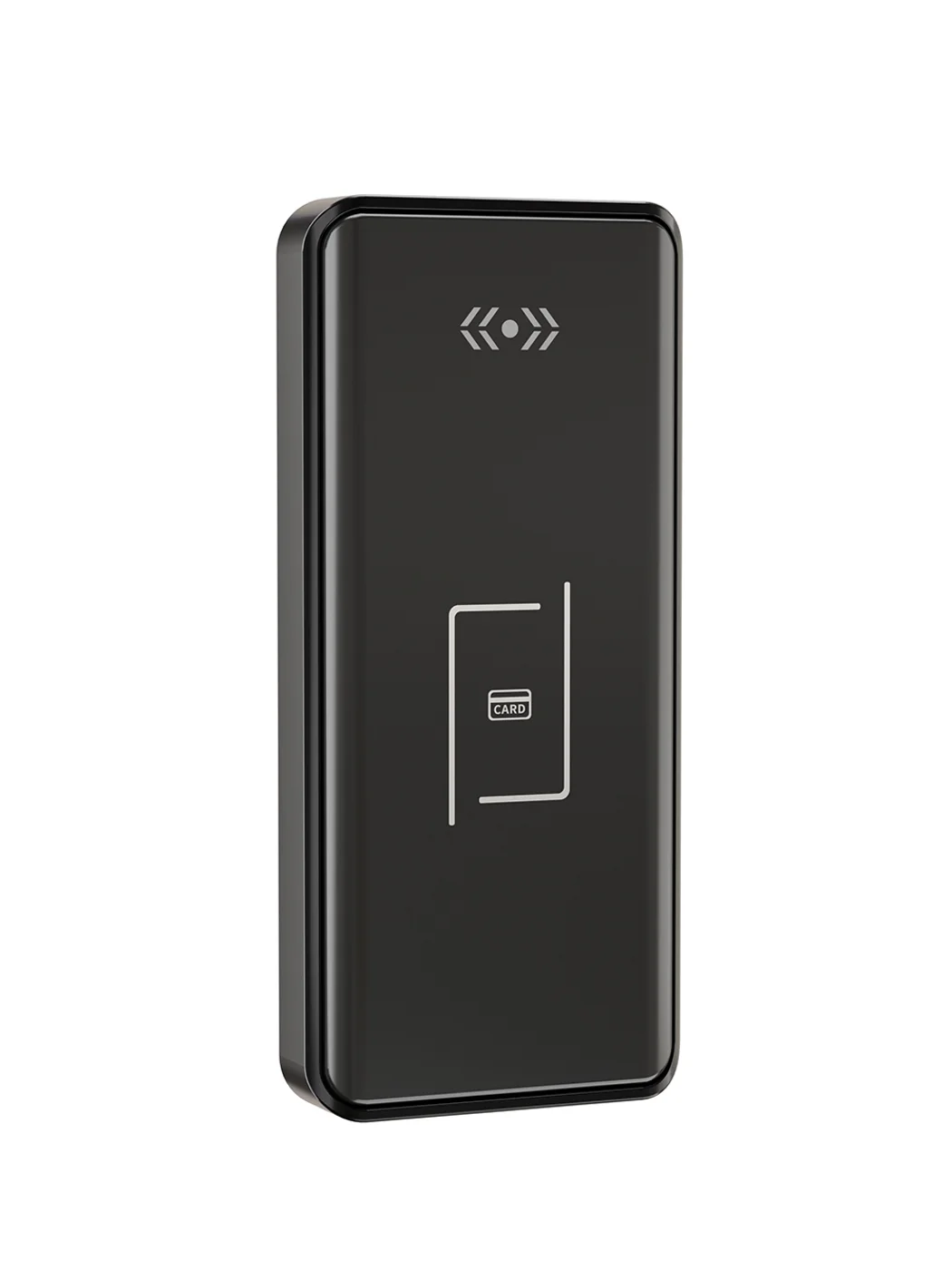
Gym Locker Lock — Offline Card, No WiFi Required
Offline card gym locker lock for fitness and pool lockers. MIFARE card, battery-powered 5-minute retrofit, no WiFi or server. Zinc alloy body, CE/FCC/RoHS.
This page already points to it as the next recommended reference.
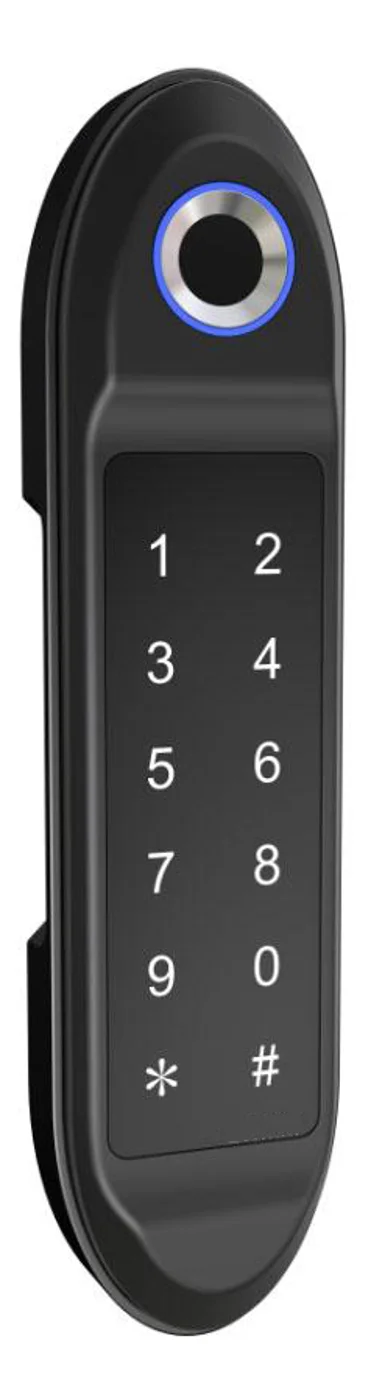
PIN Code Electronic Cabinet Lock — Stand-Alone, No WiFi
Offline keypad cabinet lock for gym, office and parcel lockers. Battery-powered, 5-minute retrofit, audit-free simple deployment. PIN + MIFARE card, DC 6V, 4×AA.
This page already points to it as the next recommended reference.
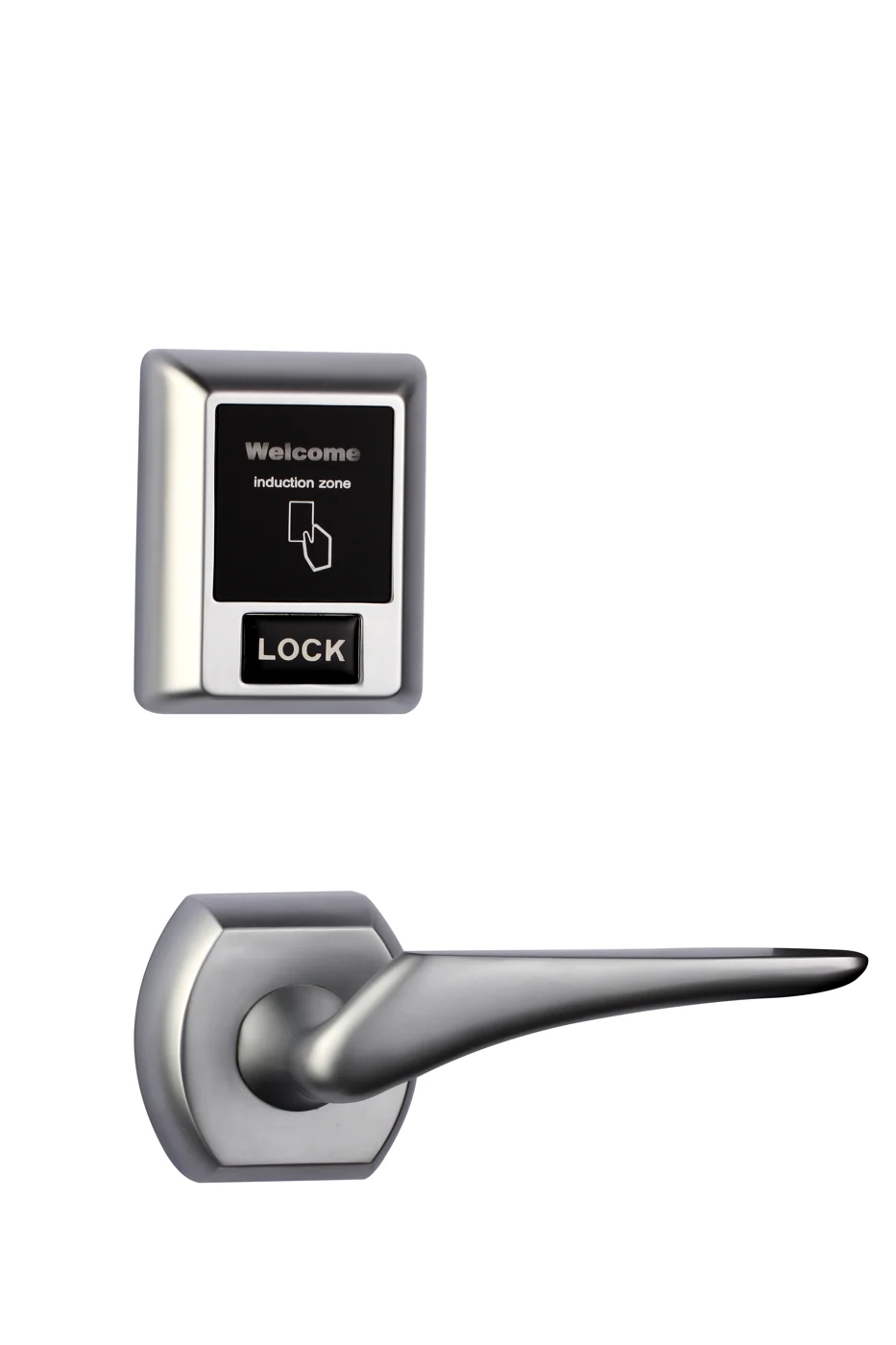
Bluetooth Cabinet Lock — App + PIN + Card, Managed Fleet
Offline BLE app cabinet lock for parcel, office, and managed locker fleets. App + PIN + MIFARE card, remote credential management, no server dependency, battery-powered retrofit.
This page already points to it as the next recommended reference.
Related blog posts
3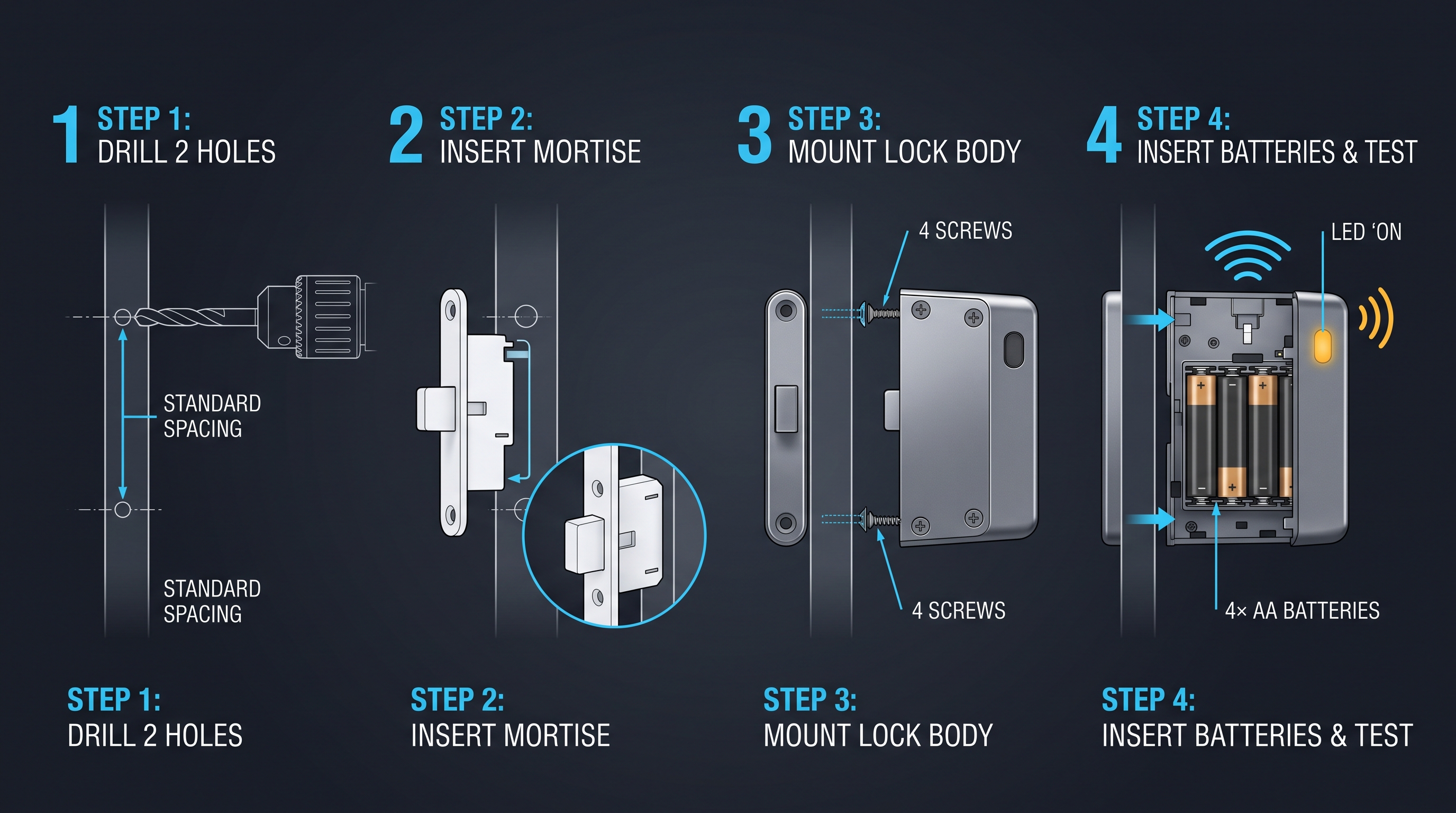
Gun Cabinet Lock: The Complete Guide to Firearm Security and Storage Compliance
Comprehensive gun cabinet lock guide covering types, biometric options, ATF compliance, installation, brand comparison, and best practices. Also covers firearm and weapon cabinet lock requirements.
It supports the same product context: Gym Locker Lock — Offline Card, No WiFi Required.
Glass Cabinet Lock: Complete 2026 Guide to Securing Glass-Front Cabinets and Display Cases
Technical buying guide covering glass cabinet lock types, magnetic and adhesive-mount locks, frameless glass locks, RFID and electronic locks for glass doors, installation, pricing, and security for 2026.
It supports the same product context: Gym Locker Lock — Offline Card, No WiFi Required.
Fingerprint Drawer Lock: The Complete 2026 Guide to Biometric Drawer Security
Explore fingerprint drawer lock technology with detailed specs, types, installation guides, and use cases for home, office, and healthcare drawer security.
It supports the same product context: PIN Code Electronic Cabinet Lock — Stand-Alone, No WiFi.
Specify your hotel project with our engineers
Send your room count, ceiling type, and protocol preference. We will return a sample plan and quote within 24 business hours.
- Move from general guidance into a product or application discussion.
- Use RFQ when pricing, drawings, MOQ, or launch timing needs structure.
- Keep a direct contact path visible for fast clarifications and handoff.