Panduan Lengkap Kunci Laci Keyless: Kontrol Akses RFID, PIN, Biometrik, dan Bluetooth
Bagaimana kunci laci keyless menghilangkan kunci fisik di kantor, layanan kesehatan, ritel, dan brankas. Membahas jenis kredensial RFID, PIN, biometrik, dan Bluetooth beserta panduan retrofit.
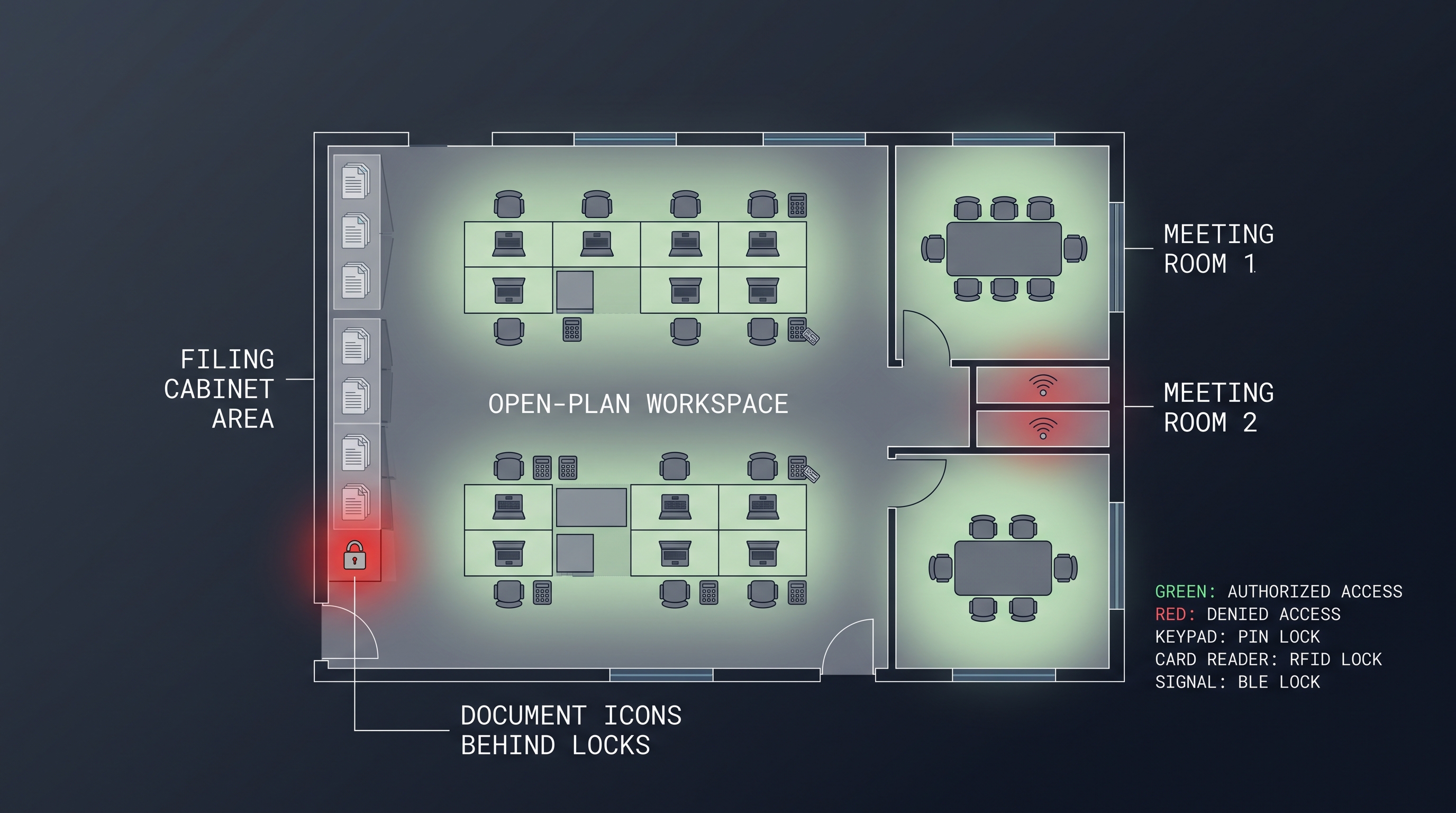
Kunci Laci Keyless: Panduan Lengkap Kontrol Akses Berbasis Kredensial
Kunci laci keyless adalah mekanisme pengunci yang diaktifkan secara elektronik untuk mengamankan laci, kabinet, atau pedestal menggunakan kredensial digital — token RFID, kode PIN, sidik jari biometrik, otorisasi smartphone Bluetooth, atau kombinasi dari semuanya — alih-alih kunci logam tradisional. Jarak dorong baut biasanya berukuran 15–20 mm dengan gaya tahan 2000–3000 N, ditenagai oleh 6 V DC (empat sel baterai alkali AA) atau pasokan kabel 12 V / 24 V DC yang menarik 200–500 mA saat pengaktifan dan kurang dari 10 µA dalam mode standby. Unit bersertifikat memiliki rating UL 1034 (Burglary-Resistant Electric Locking Mechanisms), UL 2054 (paket baterai), dan FCC Part 15 (emisi RF), dengan siklus hidup yang diuji hingga 100.000–500.000 operasi pada suhu 25 °C dan kelembapan 50% RH. Pasar perangkat keras kontrol akses elektronik global, termasuk kunci laci keyless, bernilai sekitar USD 12,8 miliar pada tahun 2025 dan diproyeksikan melampaui USD 22 miliar pada tahun 2032, didorong oleh migrasi dari sistem kunci mekanis ke platform kredensial yang dikelola perangkat lunak di berbagai sektor komersial, institusional, dan hunian. Setiap kunci laci keyless dalam panduan ini merepresentasikan pergeseran dari ketergantungan pada kunci fisik menuju manajemen kredensial digital — sebuah transformasi yang mendefinisikan ulang cara fasilitas mengontrol akses ke setiap laci yang diamankan dan diwujudkan melalui transformasi kredensial kunci laci keyless.
Transformasi paling menentukan dari kunci laci keyless adalah penggantian kunci fisik — sebuah artefak nyata, yang dapat diduplikasi, dan dapat hilang — dengan kredensial digital yang dapat diterbitkan, dimodifikasi, dicabut, dan diaudit secara real time. Ini bukan sekadar peningkatan inkremental dari kunci mekanis; ini adalah perubahan mendasar dalam cara otoritas akses didefinisikan, didistribusikan, dan diatur. Jika kunci mekanis memperlakukan setiap kunci sebagai sakelar on/off biner yang identik bagi setiap pemegangnya, kunci laci keyless memperlakukan setiap kredensial sebagai izin yang unik, terikat waktu, dan sensitif konteks yang dapat disesuaikan untuk pengguna individual, laci tertentu, jadwal, atau acara tertentu. Kunci mekanis menjadi liabilitas sejak dipotong; kredensial digital dalam kunci laci keyless adalah aset yang dapat disempurnakan, ditangguhkan, atau dihapus tanpa menyentuh kunci laci keyless itu sendiri. Panduan ini mengkaji setiap dimensi kunci laci keyless — jenis kredensial, opsi arsitektur, lingkungan penerapan, dan metrik operasional yang menentukan ROI — sehingga manajer fasilitas, direktur keamanan, dan profesional pengadaan dapat mengambil keputusan yang tepat untuk menggantikan infrastruktur laci berkunci mereka dengan sistem kontrol akses berbasis perangkat lunak yang dibangun di sekitar transformasi kredensial kunci laci keyless.
Mengapa Kunci Laci Keyless Menghilangkan Masalah Kunci Fisik
Kunci laci keyless menyelesaikan masalah mendasar yang dimiliki oleh setiap sistem kunci mekanis: kunci itu sendiri adalah mata rantai terlemah dalam rantai keamanan. Kunci fisik hilang, dicuri, diduplikasi, dipinjam, dan dilupakan dengan frekuensi yang mengkhawatirkan. Departemen Kehakiman Amerika Serikat memperkirakan bahwa 30% semua pelanggaran keamanan di fasilitas komersial melibatkan kunci yang hilang atau dicuri, dan biaya rata-rata penggantian silinder (rekeying) untuk satu suite kantor berkisar antara USD 150 hingga USD 400 tergantung pada jumlah kunci dan silinder yang terlibat. Bagi fasilitas dengan 200 kunci laci mekanis di berbagai departemen, satu peristiwa rekeying akibat kunci induk yang hilang dapat menelan biaya antara USD 30.000 hingga USD 80.000 dalam bentuk tenaga kerja, material, dan downtime — dan itu pun mengasumsikan kunci yang terkompromi segera ditemukan, padahal kenyataannya jarang terjadi. Kunci laci keyless menghilangkan seluruh kategori risiko ini karena sejak awal tidak ada kunci fisik yang dapat hilang, diduplikasi, atau dicuri. Kunci laci keyless adalah satu-satunya cara untuk menjamin bahwa kredensial yang hilang tidak dapat mengompromikan keamanan laci.
Saat Anda memasang kunci laci keyless, biaya rekeying turun menjadi nol. Jika seorang karyawan keluar dari perusahaan, kehilangan ponsel, atau lupa kode PIN mereka, administrator cukup menghapus atau memodifikasi kredensial digital dalam perangkat lunak kontrol akses. Tidak ada tukang kunci yang dipanggil, tidak ada silinder yang dilepas, tidak ada kunci yang dipotong, dan tidak ada workstation yang dibiarkan tanpa pengamanan selama proses rekeying berlangsung. Penghematan operasional dari kunci laci keyless terus bertambah seiring waktu: kantor berukuran menengah yang mengganti 100 kunci laci mekanis dengan kunci laci keyless dapat mengembalikan investasi perangkat kerasnya dalam 14 hingga 18 bulan melalui hilangnya biaya rekeying, berkurangnya waktu respons terhadap kunci yang hilang, dan berkurangnya beban administrasi. Lebih jauh, kredensial digital dalam kunci laci keyless menghilangkan celah keamanan antara saat kunci hilang dan saat kunci dinonaktifkan — sebuah jendela yang dapat berlangsung berhari-hari hingga berminggu-minggu dalam sistem berkunci, di mana setiap laci yang diamankan oleh kunci tersebut rentan terhadap akses tidak sah. Kunci laci keyless menutup jendela tersebut secara instan karena pencabutan kredensial dalam kunci laci keyless terjadi di perangkat lunak, dalam hitungan detik, tanpa memedulikan di mana kredensial fisik berada.
Kredensial RFID: Andalan Kunci Laci Keyless
Kunci laci keyless berbasis RFID mengautentikasi pengguna melalui kredensial frekuensi radio yang dibawa pada fob, kartu, atau gelang, yang umumnya beroperasi pada 125 kHz (proximity frekuensi rendah) atau 13.56 MHz (smart card frekuensi tinggi). Protokol proximity 125 kHz, yang digunakan oleh format lama HID Prox dan EM4100, menawarkan jarak baca 2–5 cm dengan identifier 64-bit yang diprogram dari pabrik dan tidak dapat ditulis ulang — kredensial sederhana yang cocok untuk aplikasi keamanan rendah di mana biaya per kredensial menjadi prioritas utama. Protokol smart card 13.56 MHz, yang digunakan pada kredensial HID iCLASS, MIFARE Classic, MIFARE DESFire EV3, dan PIV, menyediakan jarak baca 1–4 cm dengan autentikasi timbal balik, transfer data terenkripsi, dan memori yang dapat ditulis untuk menyimpan profil pengguna, jadwal akses, serta penghitung audit langsung di dalam kartu. MIFARE DESFire EV3, standar emas saat ini untuk kredensial RFID keamanan tinggi, menggunakan enkripsi AES 128-bit dengan protokol secure messaging yang mencegah serangan relay, cloning, dan penyadapan, serta meraih sertifikasi Common Criteria EAL 4+. Kunci laci keyless RFID adalah jenis kredensial yang paling teruji di lapangan, dengan jutaan unit yang tersebar di seluruh dunia di setiap sektor komersial.
Kunci laci keyless RFID membaca identifier unik (UID) atau data aplikasi kredensial dan membandingkannya dengan daftar kontrol akses (ACL) lokal yang tersimpan dalam memori non-volatile kunci laci keyless, yang biasanya mampu menampung 500 hingga 2.000 kredensial pengguna. Ketika kredensial cocok dengan entri yang terotorisasi, kunci laci keyless mengaktifkan solenoid atau motornya selama 0,5 hingga 1,5 detik, menarik baut dan memungkinkan laci terbuka. Setiap transaksi dicatat dalam audit trail kunci laci keyless dengan cap waktu, ID kredensial, dan jenis peristiwa (diberikan, ditolak, tamper). Kunci laci keyless berkomunikasi dengan panel kontrol akses atau perangkat lunak manajemen melalui RS-485, Wiegand, atau protokol nirkabel seperti Zigbee, Thread, atau Bluetooth Low Energy. Dalam konfigurasi terjejaring, ACL dapat diperbarui secara real time, dan audit trail dapat diambil pada interval dari 15 menit hingga 24 jam tergantung pada topologi jaringan dan strategi penghematan baterai kunci laci keyless. Kredensial RFID menawarkan keseimbangan terbaik antara biaya, daya tahan, dan keamanan untuk lingkungan komersial dengan lalu lintas tinggi, dan tetap menjadi jenis kredensial yang paling banyak diterapkan dalam sistem kunci laci keyless di instalasi kantor, layanan kesehatan, dan pemerintahan.
Kredensial Kode PIN: Kunci Laci Keyless yang Mandiri
Kunci laci keyless berbasis PIN mengharuskan pengguna memasukkan kode numerik pada keypad terintegrasi — umumnya 12 tombol (0–9 ditambah * dan #) atau konfigurasi lebih kecil 6 tombol untuk laci kompak — guna mengotorisasi pembukaan. Kunci laci keyless menyimpan PIN dalam memorinya sendiri, biasanya sepanjang 4 hingga 8 digit, dengan unit modern yang mendukung 50 hingga 500 PIN unik per kunci laci keyless. Keypad umumnya dilengkapi lampu latar untuk operasi di tempat redup dan dibuat dari silikon atau polikarbonat dengan umur pakai terukur 500.000 hingga 1.000.000 penekanan per tombol. Rangkaian keypad terhubung ke kontroler kunci laci keyless melalui kabel pita tersegel atau sirkuit flex, dengan rating perlindungan masuk IP54 atau lebih tinggi untuk menahan debu dan kelembapan di lingkungan kebersihan atau penyajian makanan. Entri PIN diproses oleh mikrokontroler khusus dalam kunci laci keyless yang membandingkan kode yang dimasukkan dengan daftar PIN tersimpan menggunakan algoritma perbandingan constant-time untuk melawan serangan side-channel berbasis timing. Kunci laci keyless PIN adalah cara paling hemat biaya untuk beralih dari kunci mekanis ketika belum ada infrastruktur kontrol akses yang tersedia.
Keunggulan utama kunci laci keyless PIN adalah operasinya yang berdiri sendiri: tanpa kartu, tanpa fob, tanpa smartphone, tanpa koneksi jaringan. Kunci diprogram langsung melalui keypad menggunakan PIN induk, atau melalui kabel pemrograman sementara yang menghubungkan laptop dengan perangkat lunak manajemen kunci. Hal ini menjadikan kunci berbasis PIN sebagai titik masuk berbiaya paling rendah untuk penerapan kunci laci keyless, dengan harga unit berkisar USD 60 hingga USD 150 untuk aplikasi satu laci. Kerugiannya adalah PIN dapat diintip (shoulder-surfing), dibagikan, atau ditebak, sehingga kunci laci keyless PIN paling cocok untuk lingkungan keamanan rendah hingga menengah di mana tujuan utamanya adalah kenyamanan dan kemampuan audit alih-alih kontrol akses keamanan tinggi. Banyak kunci PIN dilengkapi fitur duress: jika pengguna memasukkan PIN dengan satu digit diubah (misalnya memasukkan 1235 alih-alih 1234 sebagai kode duress yang disepakati), kunci terbuka seperti biasa tetapi secara diam-diam mengirimkan alarm ke sistem kontrol akses, memungkinkan pengguna membuka laci di bawah paksaan tanpa mengungkapkan bahwa alarm telah diaktifkan. Kemampuan duress ini unik milik kunci laci keyless berbasis PIN dan tidak tersedia pada kunci fisik.
Kredensial Biometrik: Kunci Laci Keyless Beraktivasi Sidik Jari
Kunci laci keyless biometrik mengautentikasi pengguna melalui karakteristik fisiologis yang unik — paling umum sidik jari, tetapi juga pola vena jari atau pemindaian iris pada aplikasi keamanan tinggi — sehingga menghilangkan kebutuhan akan token, kartu, atau kode yang harus diingat pada kunci laci keyless. Sensor sidik jari kunci laci keyless umumnya merupakan sensor kapasitif atau optik dengan resolusi 508 dpi atau lebih tinggi, memindai area 256 x 360 piksel. Sensor kapasitif pada kunci laci keyless menggunakan susunan kapasitor mikroskopis untuk mendeteksi pola lembah-dan-puncak sidik jari, sedangkan sensor optik menerangi jari dan menangkap citra pantulannya. Kunci laci keyless biometrik modern menggabungkan algoritma deteksi keaslian (liveness detection) yang menganalisis denyut nadi, keringat, atau aliran darah di bawah permukaan untuk menolak upaya spoofing menggunakan gelatin, silikon, atau sidik jari cetakan. False acceptance rate (FAR) untuk kunci laci keyless biometrik bersertifikat biasanya 1 dari 100.000 atau lebih rendah, dengan false rejection rate (FRR) sebesar 1% hingga 3% dalam kondisi normal. Kunci laci keyless biometrik adalah opsi kredensial paling higienis karena pengguna hanya menyentuh sensor dengan jarinya sendiri.
Kunci laci keyless biometrik menyimpan templat sidik jari secara lokal dalam memori aman kunci laci keyless, biasanya 20 hingga 100 templat per kunci laci keyless, menggunakan algoritma hash satu arah yang membuat rekonstruksi sidik jari asli dari data tersimpan menjadi mustahil. Templat dibuat saat pendaftaran (enrollment), ketika pengguna menempelkan jarinya tiga hingga lima kali dan kunci laci keyless mengekstrak titik-titik minutiae yang khas — ujung ridge, bifurkasi, dan pola inti — untuk membentuk representasi matematis dari sidik jari. Templat ini dienkripsi dan disimpan dalam memori flash NAND pada kunci laci keyless dengan daya tahan terukur 10.000 hingga 100.000 siklus tulis. Selama autentikasi, pengguna menempelkan jarinya, sensor kunci laci keyless menangkap citra langsung, mengekstrak minutiae, dan membandingkan templat hasil dengan templat tersimpan dalam waktu kurang dari satu detik. Kunci laci keyless biometrik ideal untuk lingkungan di mana higienitas menjadi yang utama (layanan kesehatan, penyiapan makanan) karena tidak memerlukan kontak dengan permukaan bersama selain sentuhan sesaat jari pada sensor, dan menghilangkan pertukaran fob, kartu, atau keypad antar pengguna. Tidak ada kunci fisik yang pernah menyentuh kunci laci keyless ini — sidik jari pengguna adalah kredensialnya.
Kredensial Bluetooth dan Smartphone: Kunci Laci Keyless Terjejaring
Kunci laci keyless berbasis Bluetooth menggunakan Bluetooth Low Energy (BLE) 4.2 atau 5.0 untuk berkomunikasi dengan smartphone yang menjalankan aplikasi kontrol akses khusus. Kunci laci keyless mengiklankan keberadaannya melalui beacon BLE, dan smartphone mendeteksi kunci laci keyless, mengambil kredensial pengguna dari secure element (misalnya Apple Secure Enclave, Android Trusted Execution Environment), lalu mengirimkan token otorisasi terenkripsi ke kunci laci keyless melalui koneksi BLE. Protokol BLE beroperasi pada pita ISM 2.4 GHz dengan jangkauan 10–30 meter garis pandang, meskipun pengguna umumnya harus berada dalam jarak 1–2 meter dari kunci laci keyless untuk mengautentikasi dan membukanya. Koneksi BLE dienkripsi menggunakan mode AES-128 CCM (Counter with CBC-MAC), dengan kunci sesi yang diturunkan dari kunci rahasia kredensial dan nonce acak yang dipertukarkan selama proses pairing. Konsumsi daya kunci laci keyless BLE sangat rendah: radio BLE menarik sekitar 5–15 mA selama transmisi aktif, tetapi duty cycle-nya kurang dari 1%, menghasilkan rata-rata arus 10–30 µA dalam mode standby, sehingga kunci laci keyless dapat beroperasi selama 12–18 bulan dengan empat sel baterai alkali AA. Kunci laci keyless Bluetooth adalah jenis kredensial yang menawarkan rangkaian fitur paling lengkap bagi organisasi yang menuntut manajemen jarak jauh.
Kunci laci keyless Bluetooth adalah opsi dengan konektivitas jaringan paling kaya, mengaktifkan fitur-fitur yang mustahil dilakukan kunci laci keyless standalone: penerbitan dan pencabutan kredensial jarak jauh, jadwal akses berbasis waktu, geofencing (pembukaan otomatis saat pengguna terotorisasi mendekat), akses tamu sementara melalui email atau SMS, dan pencatatan audit real time yang mengalir ke platform kontrol akses berbasis cloud seperti Genea, Salto, atau Openpath. Kunci laci keyless Bluetooth juga dapat beroperasi dalam mode "soft" di mana pengguna membuka laci dengan menempelkan ponsel berkemampuan NFC ke muka kunci laci keyless, memadukan kepraktisan RFID dengan infrastruktur manajemen kredensial smartphone. Firmware kunci laci keyless Bluetooth dapat diperbarui over the air (OTA), sehingga patch keamanan dan peningkatan fitur dapat diterapkan tanpa melepas kunci laci keyless dari laci. Kunci laci keyless Bluetooth menjadi pilihan utama bagi organisasi yang sudah menggunakan sistem kontrol akses berbasis cloud untuk pintu mereka dan ingin memperluas platform manajemen kredensial yang sama ke infrastruktur laci dan kabinet, menciptakan ekosistem kontrol akses terpadu di mana setiap kunci laci keyless melapor ke dashboard cloud yang sama dengan setiap kunci pintu.
Fail-Safe versus Fail-Secure: Mode Operasi Kritis Kunci Laci Keyless
Penamaan fail-safe atau fail-secure pada kunci laci keyless menentukan apakah kunci mengunci atau melepas saat daya terputus — keputusan yang membawa implikasi besar bagi keselamatan jiwa, perlindungan aset, dan kepatuhan terhadap kode bangunan. Kunci laci keyless fail-safe membuka saat daya hilang, artinya baut menarik dan laci dapat dibuka saat listrik padam. Konfigurasi kunci laci keyless ini diwajibkan oleh kode bangunan untuk jalur evakuasi dan dispesifikasikan dalam UL 1034 untuk mekanisme penguncian listrik "Fail Safe". Sebaliknya, kunci laci keyless fail-secure tetap terkunci saat daya hilang, mempertahankan baut pada posisi terdorong dan menjaga laci tetap teraman selama pemadaman listrik. Kunci laci keyless harus dibuka secara manual menggunakan kunci override mekanis atau Emergency release dengan cadangan baterai. Pilihan antara fail-safe dan fail-secure bukanlah fitur produk dari kunci laci keyless; ini adalah keputusan manajemen risiko yang harus diambil dengan berkonsultasi kepada otoritas berwenang (AHJ) dan rencana keselamatan kebakaran fasilitas. Setiap pembelian kunci laci keyless harus menyertakan keputusan terdokumentasi tentang mode operasi yang dibutuhkan.
Untuk aplikasi laci dan kabinet, fail-secure adalah konfigurasi yang dominan karena laci bukan jalur evakuasi dan prioritasnya biasanya perlindungan aset alih-alih keselamatan jiwa. Kunci laci keyless fail-secure pada kabinet farmasi atau laci kas memastikan isi tetap terkunci jika gedung kehilangan daya, mencegah pencurian selama periode rentan yang diketahui. Kunci override mekanis — umumnya kunci tubular atau disc-detainer — disimpan dalam kotak kaca pecah tersegel atau dibawa petugas keamanan yang ditunjuk untuk akses darurat. Kunci laci keyless fail-safe digunakan pada aplikasi khusus seperti penyimpanan aman di fasilitas kesehatan jiwa, di mana risiko pasien terjebak atau kebutuhan akses segera selama evakuasi darurat mengalahkan pertimbangan perlindungan aset. Beberapa kunci laci keyless canggih menawarkan sakelar fail-safe/fail-secure yang dapat dikonfigurasi di lapangan, memungkinkan pemasang menentukan mode operasi saat instalasi berdasarkan aplikasi spesifik dan persyaratan kode. Fleksibilitas ini membuat satu SKU kunci laci keyless cocok untuk kedua jenis instalasi.
Masa Pakai Baterai dan Manajemen Daya: Menjaga Kunci Laci Keyless Tetap Operasional
Masa pakai baterai kunci laci keyless ditentukan oleh kimia sumber daya, frekuensi pengaktifan kunci laci keyless, arus standby elektronika kunci laci keyless, dan efisiensi rangkaian penggerak motor atau solenoid. Sumber daya paling umum untuk kunci laci keyless adalah empat sel baterai alkali AA yang dipasang seri, memberikan 6 V DC dengan kapasitas tipikal 2.000 hingga 3.000 mAh tergantung merek dan laju pelepasan. Sel lithium AA (1.5 V L91) untuk kunci laci keyless menawarkan 3.000 hingga 3.500 mAh dengan kurva pelepasan yang datar dan performa suhu rendah yang unggul, memperpanjang masa pakai baterai kunci laci keyless sebesar 30% hingga 50% di lingkungan penyimpanan dingin. Arus standby elektronika kunci laci keyless — mikrokontroler, radio BLE dalam mode tidur, dan sensor tamper — berkisar 5 µA hingga 30 µA, didominasi konsumsi mode deep-sleep mikrokontroler. Arus pengaktifan kunci laci keyless, yang ditarik selama 300 hingga 1.500 milidetik per pembukaan, berkisar 200 mA hingga 500 mA. Duty cycle radio BLE, jika terpasang pada kunci laci keyless, menambah rata-rata 10 hingga 30 µA tergantung interval advertising (umumnya 100 ms hingga 1.000 ms) dan jumlah peristiwa koneksi per jam. Kunci laci keyless yang dirancang dengan baik memaksimalkan masa pakai baterai dengan menjaga mikrokontroler tetap dalam deep sleep di antara pengaktifan.
Kunci laci keyless tipikal yang dipasang di lingkungan kantor dengan 10 hingga 20 kali pembukaan per hari akan mencapai masa pakai baterai 12 hingga 18 bulan dengan empat sel baterai alkali AA. Unit dengan lalu lintas tinggi di lingkungan ritel atau layanan kesehatan dengan 50 hingga 100 kali pembukaan per hari mungkin mengalami masa pakai baterai turun menjadi 6 hingga 9 bulan. Kunci memantau tegangan baterainya dan melaporkan kapasitas tersisa melalui perangkat lunak kontrol akses, biasanya pada tiga ambang: "Good" (> 60% tersisa), "Low" (20–60%, peringatan dikirim ke administrator), dan "Critical" (< 20%, kunci mungkin menolak untuk membuka dan memerlukan penggantian segera). Banyak kunci laci keyless dilengkapi bypass baterai lemah: ketika tegangan baterai turun di bawah ambang pengaktifan, kunci tetap dapat dibuka dengan mengaplikasikan baterai eksternal 9 V ke terminal tersembunyi pada muka kunci, atau dengan menggunakan kunci override mekanis. Kompartemen baterai dirancang agar dapat diakses tanpa melepas kunci dari laci, biasanya melalui penutup berengsel pada muka kunci yang dibuka dengan obeng kecil atau celah koin. Artinya, kunci laci keyless tidak pernah perlu dilepas dari perabot untuk penggantian baterai rutin.
Opsi Retrofit: Mengonversi Laci Berkunci Menjadi Kunci Laci Keyless
Pasar retrofit untuk kunci laci keyless telah berkembang pesat seiring organisasi menyadari manfaat operasional akses keyless namun menghadapi biaya modal penggantian seluruh sistem perabot. Kunci laci keyless retrofit menggantikan cam lock mekanis atau deadbolt yang ada dengan kunci elektronik yang pas ke lubang pemasangan yang sama, umumnya lubang berdiameter 19 mm (3/4") atau 22 mm (7/8") dengan slot cam 16 mm atau 20 mm. Cam lock mekanis standar menggunakan rotasi 90 derajat kunci untuk menggerakkan cam yang mencengkeram pelat strike pada rangka laci. Kunci laci keyless elektronik retrofit menggantikan silinder dengan aktuator elektronik — solenoid atau gearmotor DC kecil — yang menggerakkan profil cam yang sama, tanpa memerlukan modifikasi pada laci atau kabinet selain melepas kunci lama dan memasang kunci laci keyless baru. Kunci retrofit diamankan dengan mur pengikat di belakang muka laci, identik dengan metode pemasangan kunci mekanis aslinya. Artinya, laci apa pun yang saat ini memiliki kunci mekanis dapat ditingkatkan menjadi kunci laci keyless dalam hitungan menit.
Spesifikasi kunci utama untuk kunci laci keyless retrofit adalah dimensi backset — jarak dari pusat lubang pemasangan kunci ke tepi muka laci — yang harus sesuai dengan konfigurasi kabinet yang ada. Backset yang umum adalah 16 mm, 19 mm, 22 mm, dan 25 mm, dengan beberapa kunci yang menawarkan lengan cam dapat disesuaikan untuk mengakomodasi berbagai backset. Cam itu sendiri biasanya berupa lengan paduan seng atau baja tahan karat yang berputar 90 derajat untuk mencengkeram pelat strike, dengan ketebalan 2,5 mm hingga 3,5 mm dan panjang 20 mm hingga 40 mm tergantung desain kabinet. Kunci laci keyless retrofit mencakup modul elektronik (keypad, sensor biometrik, atau pembaca RFID), papan kontroler, kompartemen baterai, dan aktuator, semuanya terintegrasi dalam satu housing yang muat dalam kedalaman 40–60 mm di belakang muka laci. Waktu pemasangan kunci laci keyless retrofit adalah 5 hingga 15 menit per laci, hanya memerlukan obeng Phillips untuk melepas kunci lama, memasukkan kunci baru, mengencangkan mur pengikat, dan secara opsional menghubungkan antena eksternal atau kabel jaringan jika kunci merupakan bagian dari jaringan mesh nirkabel. Kunci laci keyless retrofit adalah jalur tercepat menuju keamanan keyless bagi perabot yang sudah ada.
Audit Trail: Apa yang Direkam Kunci Laci Keyless dan Mengapa Penting
Kemampuan audit trail kunci laci keyless adalah fitur terpenting yang membedakannya dari kunci mekanis. Setiap upaya pembukaan — berhasil atau ditolak — direkam dalam memori non-volatile kunci dengan cap waktu, identifier kredensial, jenis peristiwa, dan status kunci (tingkat baterai, kondisi tamper, versi firmware). Audit trail biasanya disimpan dalam memori serial NOR flash 8 MB hingga 64 MB, mampu menampung 50.000 hingga 500.000 peristiwa sebelum peristiwa terlama ditimpa. Pada kunci laci keyless terjejaring, audit trail diunggah ke server kontrol akses pusat pada interval mulai dari mendekati real time (untuk kunci yang terhubung via Ethernet atau Wi-Fi) hingga unggahan terjadwal (untuk kunci pada jaringan mesh BLE atau Zigbee yang melakukan polling setiap 15 menit hingga 24 jam). Kunci standalone menyimpan audit trail secara lokal dan harus diunduh menggunakan kabel pemrograman atau smartphone berkemampuan NFC yang bertindak sebagai pengumpul data. Setiap kunci laci keyless menyediakan rekam forensik yang tidak dapat ditandingi kunci mekanis.
Audit trail melayani berbagai fungsi keamanan dan kepatuhan. Bagi organisasi layanan kesehatan yang tunduk pada HIPAA, audit trail menunjukkan bahwa zat terkendali, rekam pasien, dan perlengkapan medis hanya diakses oleh personel yang berwenang, serta menyediakan rekam forensik atas setiap peristiwa akses untuk audit regulasi. Bagi lembaga keuangan, audit trail mendokumentasikan akses ke laci kas, instrumen negosiable, dan catatan rahasia, mendukung pengendalian internal yang diwajibkan oleh Sarbanes-Oxley Act dan Payment Card Industry Data Security Standard (PCI DSS). Bagi kontraktor pemerintah dan pertahanan, audit trail mendukung persyaratan National Industrial Security Program Operating Manual (NISPOM) untuk kontrol akses terhadap materi terklasifikasi. Audit trail dapat diekspor dalam format CSV, JSON, atau XML dan diintegrasikan ke sistem security information and event management (SIEM) untuk korelasi otomatis dengan peristiwa keamanan lainnya, seperti log akses kartu, metadata pengawasan video, dan peringatan sistem deteksi intrusi. Audit trail kunci laci keyless mengubah akses laci dari peristiwa yang tak tercatat menjadi titik data yang dapat dilacak dan dianalisis.
Penerapan di Kantor: Kunci Laci Keyless di Tempat Kerja Modern
Kantor modern menerapkan kunci laci keyless sebagai komponen fundamental strategi kontrol aksesnya, mengamankan lemari arsip, pedestal, loker, dan kabinet yang berisi dokumen sensitif, peralatan IT, dan barang pribadi. Lingkungan kantor open-plan menghadirkan tantangan unik bagi keamanan laci: meja sering kosong selama rapat, istirahat makan siang, dan di luar jam kerja, menyisakan barang pribadi dan aset perusahaan terpapar pencurian oportunistik. Kunci laci keyless pada setiap pedestal meja mengurangi risiko pencurian sebesar USD 50 hingga USD 200 per kejadian untuk barang pribadi, dan hilangnya kunci induk bersama menghilangkan masalah "migrasi kunci" di mana kunci ditinggalkan di laci yang tidak dikunci, hilang, atau dipinjam tanpa otorisasi. Beban administrasi pengelolaan 200 hingga 500 kunci mekanis di kantor berisi 100 orang sangat besar: log kontrol kunci, formulir penggantian kunci hilang, dan rekeying berkala menyita waktu manajemen fasilitas berjam-jam setiap bulan. Kunci laci keyless menghilangkan seluruh beban tersebut.
Penerapan kunci laci keyless di lingkungan kantor umumnya mengikuti pendekatan bertahap. Fase pertama menyasar laci berisiko tinggi: arsip HR, penyimpanan peralatan IT, kabinet departemen keuangan, dan kantor eksekutif. Fase kedua diperluas ke pedestal dan loker kantor umum, sering menggunakan kredensial PIN atau RFID berbiaya lebih rendah yang dibagikan dengan sistem kontrol akses yang sudah diterapkan untuk pintu kantor. Fase ketiga mengintegrasikan kunci laci keyless ke infrastruktur kontrol akses yang ada di gedung, memungkinkan kredensial kartu atau smartphone yang sama membuka pintu kantor sekaligus laci meja. Metrik operasionalnya sangat menarik: organisasi yang menerapkan kunci laci keyless di seluruh perabot kantornya melaporkan pengurangan insiden kunci hilang sebesar 60% hingga 80%, pengurangan waktu manajemen fasilitas untuk isu terkait kunci sebesar 40% hingga 60%, dan peningkatan kepuasan karyawan terhadap keamanan tempat kerja sebesar 20% hingga 40%. Biaya per kunci untuk kunci laci keyless terjejaring berkisar USD 120 hingga USD 250 termasuk instalasi, dengan periode pengembalian 12 hingga 18 bulan dari hilangnya biaya rekeying dan manajemen kunci.
Penerapan di Layanan Kesehatan: Kunci Laci Keyless untuk Zat Terkendali dan Rekam Pasien
Lingkungan layanan kesehatan menuntut tingkat kontrol akses tertinggi untuk penyimpanan berbasis laci, dan kunci laci keyless diterapkan dalam rentang aplikasi klinis yang semakin luas: keranjang obat, laci anestesi, kabinet zat terkendali, arsip rekam pasien, dan penyimpanan perlengkapan medis. U.S. Drug Enforcement Administration (DEA) mewajibkan zat terkendali Jadwal II hingga V disimpan dalam kabinet atau laci yang terkunci dengan aman, dan 21 CFR 1301.72 dari DEA menspesifikasikan bahwa mekanisme penguncian harus menyediakan "controlled access" — persyaratan yang lebih mudah dipenuhi dan didokumentasikan dengan kunci laci keyless elektronik dibandingkan sistem kunci mekanis. Audit trail dari kunci laci keyless menyediakan dokumentasi yang diwajibkan oleh DEA, The Joint Commission, dan Drug Supply Chain Security Act (DSCSA) untuk setiap akses terhadap zat terkendali, termasuk identitas orang yang mengakses laci, waktu akses, dan durasi periode pintu terbuka. Di layanan kesehatan, kunci laci keyless bukanlah pilihan — ini adalah kebutuhan kepatuhan.
Kunci laci keyless di layanan kesehatan biasanya diterapkan dalam konfigurasi fail-secure menggunakan kredensial RFID yang terintegrasi dengan sistem kartu identitas rumah sakit, yang sering berbasis smart card HID iCLASS atau MIFARE DESFire. Kunci terhubung ke sistem kontrol akses rumah sakit, yang juga terintegrasi dengan sistem rekam medis elektronik (EHR) dan sistem lemari dispensing otomatis (ADC). Integrasi ini memungkinkan alur kerja di mana perawat mengautentikasi ke kunci laci dengan kartu identitasnya, sistem kontrol akses memverifikasi kredensialnya terhadap jadwal penugasan pasien, dan laci hanya terbuka jika perawat tersebut ditugaskan pada pasien yang obatnya berada di laci itu. Seluruh transaksi dicatat dalam EHR, sistem ADC, dan audit trail kontrol akses, menciptakan rekam berlapis yang saling merujuk tentang akses obat yang memenuhi persyaratan pencatatan DEA selama dua tahun. Kunci laci keyless untuk layanan kesehatan dirancang untuk sanitasi yang sering, dengan permukaan keypad atau sensor tersegel yang mampu menahan 10.000 siklus pembersihan dengan isopropil alkohol, tisu pemutih, atau senyawa amonium kuartener tanpa degradasi elektronika maupun antarmuka pengguna.
Penerapan di Ritel: Kunci Laci Keyless untuk Kas dan Inventaris
Lingkungan ritel menggunakan kunci laci keyless untuk mengamankan laci kas, kabinet inventaris, etalase, dan penyimpanan back-office, dengan persyaratan kredensial yang sangat berbeda dari penerapan di kantor atau layanan kesehatan. Laci kas dalam sistem point-of-sale (POS) ritel biasanya diamankan dengan kunci laci keyless yang terintegrasi dengan perangkat lunak POS: ketika kasir menyelesaikan transaksi yang melibatkan uang tunai, sistem POS mengirimkan perintah buka ke kunci melalui koneksi kabel atau nirkabel, dan laci terbuka otomatis. Kunci laci keyless untuk laci kas umumnya merupakan kunci solenoid fail-secure dengan dorongan baut 15 mm, ditenagai pasokan 12 V atau 24 V DC dari terminal POS, menghilangkan kebutuhan baterai di lingkungan siklus tinggi yang dapat mencapai 100 hingga 300 kali pembukaan per hari. Solenoid dinilai untuk 500.000 hingga 1.000.000 siklus, dengan rating duty cycle kontinu 25% hingga 50% untuk mencegah coil overheat pada aplikasi frekuensi tinggi. Kunci laci keyless di POS adalah skenario penerapan dengan siklus paling intensif dalam penggunaan komersial.
Aplikasi kabinet inventaris dan etalase di ritel menggunakan kelas kunci laci keyless yang berbeda, sering kali kunci PIN atau RFID dengan jumlah siklus lebih rendah (10 hingga 50 kali pembukaan per hari) tetapi dengan penekanan lebih kuat pada ketahanan tamper dan estetika. Kunci laci keyless ritel harus tahan terhadap serangan fisik seperti pembobolan, pengeboran, dan benturan, serta umumnya dinilai untuk gaya tahan 2000 N atau lebih tinggi. Kunci sering dipasang pada etalase kaca di mana modul elektronik dipasang di sisi dalam laci atau pintu, dengan hanya antena pembaca RFID atau keypad yang terlihat melalui lubang pada kaca. Kunci ritel harus beroperasi andal pada rentang suhu 0 °C hingga 50 °C dan kelembapan hingga 95% non-kondensasi, kondisi yang umum di toko dengan jendela kaca besar dan cakupan HVAC yang bervariasi. Audit trail dari kunci laci keyless ritel digunakan untuk analisis pencegahan kehilangan, mengorelasikan peristiwa akses laci dengan data penyusutan inventaris guna mengidentifikasi pola pencurian internal atau ketidakpatuhan prosedur.
Penerapan Brankas dan Vault: Kunci Laci Keyless Keamanan Tinggi
Kunci laci keyless untuk aplikasi brankas dan vault beroperasi pada tingkat keamanan lebih tinggi daripada kunci kelas komersial, menggabungkan fitur yang dirancang untuk melawan serangan fisik dan elektronik yang canggih. Kunci laci keyless kelas brankas menggunakan persyaratan autentikasi multi-faktor — biasanya kode PIN ditambah sidik jari biometrik, atau kode PIN ditambah kredensial RFID — untuk memenuhi persyaratan autentikasi dua faktor (2FA) dari UL 687 (Safe and Vault Locks) dan UL 2058 (High-Security Electronic Locks). Elektronika kunci dicelup dalam epoksi untuk menahan tamper dan masuknya kelembapan, dan mikrokontrolernya dilapisi jaringan konduktif yang mendeteksi serta meng-nolkan memori jika bahan potting dilanggar. Kunci kelas brankas diuji hingga 500.000 siklus di bawah beban, dengan dorongan baut 20 mm dan gaya tahan 5000 N atau lebih tinggi, menggunakan baut baja yang di-hardening hingga HRC 60 atau lebih. Kelas kunci laci keyless ini dirancang untuk menggagalkan serangan fisik yang terencana.
Kunci laci keyless kelas brankas mencakup fitur time-delay yang diwajibkan oleh UL 2058 untuk aplikasi keamanan tinggi: kunci menolak membuka selama periode jeda yang dapat diprogram (biasanya 5 hingga 60 menit) setelah kredensial yang benar dimasukkan, selama itu pengguna tidak dapat membatalkan pembukaan. Jeda ini mencegah skenario pembukaan paksa di mana penyerang menculik pengguna terotorisasi dan memaksanya membuka brankas segera. Kunci juga dilengkapi fitur silent alarm yang memicu notifikasi ke pos pemantauan atau personel keamanan saat kode duress dimasukkan atau saat kunci mendeteksi peristiwa tamper (upaya kredensial salah berulang, guncangan fisik, atau upaya pembongkaran). Kunci laci keyless kelas brankas diterapkan di toko perhiasan, brankas senjata, vault dokumen, dan penyimpanan aset bernilai tinggi di mana biaya kebocoran — diukur dalam puluhan hingga ratusan ribu dolar — membenarkan harga per kunci USD 300 hingga USD 800.
Memilih Kunci Laci Keyless yang Tepat: Kerangka Pengambilan Keputusan
Memilih kunci laci keyless yang tepat untuk suatu aplikasi memerlukan evaluasi lima dimensi: jenis kredensial, konektivitas jaringan, sumber daya, rating keamanan, dan bentuk fisik. Keputusan jenis kredensial untuk setiap kunci laci keyless didorong oleh populasi pengguna dan infrastruktur kontrol akses yang ada. Jika organisasi sudah menerbitkan kartu RFID untuk akses pintu, kunci laci keyless RFID yang menerima kartu yang sama adalah pilihan logis, menghilangkan kebutuhan kredensial terpisah dan mengurangi total biaya administrasi untuk setiap kunci laci keyless dalam penerapan. Jika organisasi belum memiliki sistem kontrol akses dan populasi laci kecil (kurang dari 50 kunci), kunci laci keyless berbasis PIN dengan pemrograman lokal menawarkan biaya awal paling rendah dan jalur instalasi paling sederhana untuk retrofit kunci laci keyless. Jika laci digunakan oleh populasi sementara — pekerja lepas, kontraktor, atau mahasiswa — kunci laci keyless biometrik menghilangkan kebutuhan menerbitkan dan mengumpulkan kredensial, meskipun proses enrollment harus dikelola dengan cermat. Setiap pilihan kunci laci keyless harus dimulai dengan keputusan jenis kredensial.
Keputusan konektivitas jaringan untuk kunci laci keyless menentukan apakah unit beroperasi sebagai perangkat standalone atau sebagai bagian dari sistem kontrol akses terintegrasi. Kunci laci keyless standalone diprogram secara lokal, menyimpan audit trail-nya sendiri, dan memerlukan intervensi manual untuk memperbarui kredensial atau mengambil data audit — cocok untuk penerapan kecil dengan kurang dari 20 kunci. Kunci laci keyless terjejaring terhubung ke panel kontrol akses atau platform cloud melalui protokol kabel (RS-485, Ethernet) atau nirkabel (BLE mesh, Zigbee, Wi-Fi), memungkinkan manajemen kredensial terpusat, pengambilan audit trail real time, dan integrasi dengan sistem keamanan lainnya. Biaya konektivitas jaringan menambah USD 30 hingga USD 100 per kunci laci keyless untuk modul komunikasi, tetapi penghematan operasional dari manajemen terpusat umumnya menutup biaya tambahan tersebut dalam waktu 12 bulan untuk penerapan 50 kunci atau lebih. Kunci laci keyless terjejaring adalah pilihan tepat bagi organisasi yang berencana memperluas penerapan kontrol aksesnya.
Tabel Perbandingan Spesifikasi Kunci Laci Keyless
| Parameter | Berbasis PIN | Berbasis RFID | Biometrik | Bluetooth / BLE |
|---|---|---|---|---|
| Jenis Kredensial | Kode numerik (4-8 digit) | Fob/kartu 125 kHz atau smart card 13.56 MHz | Sidik jari (kapasitif atau optik) | Aplikasi smartphone via BLE 4.2/5.0 |
| Pengguna per Kunci | 50 hingga 500 kode | 500 hingga 2.000 UID | 20 hingga 100 templat | Tak terbatas (dikelola cloud) |
| Waktu Autentikasi | 1,5 hingga 3,0 detik | 0,5 hingga 1,5 detik | 0,8 hingga 1,5 detik | 1,0 hingga 3,0 detik |
| Arus Standby | 5 hingga 15 µA | 5 hingga 15 µA | 8 hingga 25 µA | 10 hingga 30 µA |
| Arus Pengaktifan | 200 hingga 400 mA | 200 hingga 400 mA | 300 hingga 500 mA | 200 hingga 500 mA |
| Masa Pakai Baterai (10 kali buka/hari) | 12 hingga 18 bulan | 12 hingga 18 bulan | 10 hingga 15 bulan | 12 hingga 18 bulan |
| Harga Tipikal (kunci saja) | USD 60 hingga USD 150 | USD 80 hingga USD 200 | USD 120 hingga USD 300 | USD 100 hingga USD 250 |
| Opsi Jaringan | Hanya standalone | Kabel atau nirkabel | Standalone atau nirkabel | Nirkabel (BLE mesh, Wi-Fi) |
| Tingkat Keamanan | Rendah hingga Menengah | Menengah hingga Tinggi | Tinggi | Menengah hingga Tinggi |
| Kasus Penggunaan Tipikal | Pedestal kantor, loker | Kantor, layanan kesehatan, pemerintahan | Farmasi, keamanan tinggi, laboratorium | Kantor, multi-lokasi, dikelola cloud |
| Ketahanan Tamper | Rendah | Menengah | Menengah hingga Tinggi | Rendah hingga Menengah |
| Rating IP | IP54 (keypad) | IP54 (pembaca) | IP54 (sensor) | IP54 (housing) |
| Siklus Hidup | 100.000 hingga 500.000 | 100.000 hingga 500.000 | 100.000 hingga 300.000 | 100.000 hingga 500.000 |
| Kepatuhan | UL 1034, FCC Part 15 | UL 1034, UL 294, FCC Part 15 | UL 1034, FCC Part 15 | UL 1034, FCC Part 15, BLE SIG |
Instalasi dan Integrasi Kunci Laci Keyless
Instalasi kunci laci keyless mengikuti proses yang konsisten terlepas dari jenis kredensial, dengan variasi tergantung apakah kunci laci keyless merupakan pengganti drop-in retrofit untuk cam lock mekanis atau instalasi baru yang memerlukan lubang pemasangan khusus. Instalasi dimulai dengan melepas kunci yang ada: untuk cam lock, ini melibatkan pembongkaran mur pengikat di belakang muka laci, menarik silinder kunci keluar dari depan, dan melepas cam dari belakang silinder. Kunci laci keyless baru dimasukkan melalui lubang pemasangan yang sama, mur pengikat dikencangkan untuk mengamankan kunci laci keyless ke muka laci, dan cam dipasang ke poros aktuator dengan orientasi yang tepat untuk rotasi 90 derajat. Kunci laci keyless kemudian diuji dengan menyajikan kredensial dan memverifikasi bahwa cam terdorong dan tertarik sepenuhnya, mencengkeram pelat strike pada rangka laci tanpa macet atau clearance berlebihan. Memasang kunci laci keyless tidak memerlukan alat khusus selain obeng Phillips.
Pengkabelan kunci laci keyless terjejaring bergantung pada protokol komunikasi. Kunci laci keyless kabel RS-485 memerlukan dua kabel twisted-pair: satu untuk sinyal data RS-485 (jalur A dan B) dan satu untuk daya (12 V atau 24 V DC). Kabel dijalankan melalui saluran manajemen kabel kabinet atau lubang 10 mm yang dibor di belakang kabinet, dit terminasi di panel kontrol akses atau network hub terdekat. Kunci laci keyless nirkabel tidak memerlukan pengkabelan selain pemasangan baterai, tetapi kunci harus berada dalam jangkauan gateway atau repeater mesh jaringan nirkabel — biasanya 10 hingga 30 meter untuk BLE, 30 hingga 100 meter untuk Zigbee, dan 50 hingga 300 meter untuk Wi-Fi tergantung konstruksi dinding dan interferensi. Kunci laci keyless nirkabel didaftarkan ke perangkat lunak kontrol akses dengan memindai kode QR pada bodi kunci, memasukkan alamat MAC kunci, atau menggunakan tap NFC untuk mentransfer data konfigurasi kunci laci keyless dari smartphone. Perangkat lunak kemudian membuat profil kunci laci keyless, menetapkan daftar kredensial awal, dan mengatur jadwal akses, zona waktu, serta interval unggah audit trail untuk setiap kunci laci keyless di jaringan.
Kalkulus Keamanan: Kapan Kunci Laci Keyless Menjadi Pilihan yang Tepat
Keputusan untuk menerapkan kunci laci keyless harus didasarkan pada kalkulus keamanan yang menimbang nilai aset yang dilindungi terhadap biaya kunci laci keyless, biaya infrastruktur manajemen kredensial, dan risiko operasional dari mode kegagalan kredensial kunci laci keyless. Aset yang diamankan oleh laci berkisar dari nilai dapat diabaikan (barang pribadi di meja kantor) hingga kritis bagi nyawa (obat-obatan di keranjang darurat rumah sakit) hingga secara finansial katastrofik (instrumen negosiable di vault bank). Biaya kunci laci keyless harus proporsional dengan nilai aset dan model ancaman. Untuk laci perlengkapan kantor senilai USD 50, kunci laci keyless seharga USD 150 adalah over-engineered; untuk laci zat terkendali senilai USD 50.000, kunci laci keyless yang sama under-engineered jika tidak memiliki 2FA, deteksi tamper, dan integrasi jaringan. Proses seleksi kunci laci keyless harus selalu dimulai dengan penilaian nilai aset.
Mode kegagalan kunci laci keyless berbeda dari kunci mekanis dan harus direncanakan dalam penilaian risiko operasional setiap penerapan kunci laci keyless. Mode kegagalan utama kunci laci keyless adalah habisnya baterai: kunci tidak akan terbuka saat baterai sangat lemah, memerlukan kunci override mekanis atau bypass daya eksternal. Mode kegagalan sekunder kunci laci keyless adalah kegagalan komponen elektronik: mikrokontroler, sensor, atau aktuator dapat rusak setelah siklus hidup terukurnya, umumnya 100.000 hingga 500.000 operasi, yang setara dengan 10 hingga 50 tahun penggunaan normal pada lingkungan 20 kali pembukaan per hari untuk kunci laci keyless. Mode kegagalan tersier adalah hilangnya konektivitas jaringan: kunci laci keyless nirkabel yang tidak dapat berkomunikasi dengan server kontrol akses tetap beroperasi dari ACL lokalnya, tetapi pembaruan kredensial dan unggahan audit trail untuk kunci laci keyless tersebut ditunda hingga konektivitas pulih. Setiap mode kegagalan kunci laci keyless ini diantisipasi oleh desain kunci: kunci override mekanis, bypass baterai eksternal, ACL lokal dengan operasi fallback, dan penyimpanan audit trail non-volatile yang bertahan dari kehilangan daya. Kunci laci keyless yang dispesifikasikan dengan benar memperhitungkan setiap mode kegagalan dengan strategi mitigasi terdokumentasi.
Masa Depan Kunci Laci Keyless: Tren dan Inovasi
Pasar kunci laci keyless berkembang sepanjang beberapa lintasan teknologi yang akan memperluas kemampuannya dan menurunkan biayanya dalam lima hingga sepuluh tahun ke depan. Lintasan pertama adalah konvergensi platform kredensial: smartphone yang sama yang membuka pintu kantor, mengotorisasi login laptop, dan mengautentikasi aplikasi cloud juga akan membuka laci meja, kabinet arsip, dan lemari persediaan. Tren ini secara langsung menguntungkan kunci laci keyless karena identitas digital yang sama yang mengautentikasi akses cloud juga akan mengotorisasi akses laci fisik, menggunakan satu platform IAM yang mengelola setiap kredensial kunci laci keyless dari satu konsol. Konvergensi ini menghilangkan kebutuhan kredensial fisik terpisah (kartu, fob, PIN) dan menciptakan pengalaman kontrol akses terpadu di mana smartphone pengguna adalah kunci untuk setiap sumber daya fisik dan digital yang berhak mereka akses.
Lintasan kedua adalah integrasi kunci laci keyless dengan Internet of Things (IoT) untuk pemantauan lingkungan. Mikrokontroler, sensor, dan konektivitas nirkabel kunci menyediakan platform untuk fungsi tambahan: pemantauan suhu dan kelembapan di laci farmasi, deteksi getaran di kabinet pengiriman, deteksi cahaya di etalase, dan deteksi okupansi di kabinet arsip. Kunci menjadi endpoint IoT multifungsi yang menyediakan bukan hanya kontrol akses tetapi juga pemantauan lingkungan, analitik penggunaan, dan peringatan pemeliharaan prediktif. Lintasan ketiga adalah adopsi sumber daya energy-harvesting untuk kunci laci keyless: tindakan pengguna menggerakkan pegangan laci menghasilkan energi mekanik yang cukup, melalui generator piezoelektrik atau elektromagnetik, untuk menyalakan siklus autentikasi dan penguncian, menghilangkan kebutuhan baterai sepenuhnya. Kunci laci keyless energy-harvesting masih berada di tahap prototipe per 2026, dengan produk komersial pertama yang diharapkan memasuki pasar pada 2028, menyasar aplikasi di mana penggantian baterai tidak praktis, seperti laci POS ritel volume tinggi dan lingkungan kesehatan steril.
Kasus Ekonomi Kunci Laci Keyless
Total biaya kepemilikan (TCO) kunci laci keyless lebih rendah daripada TCO kunci mekanis dalam periode lima tahun, meskipun biaya perangkat keras awal kunci laci keyless lebih tinggi, berkat hilangnya biaya rekeying, berkurangnya overhead manajemen kunci, dan manfaat operasional audit trail. Perhitungan TCO untuk penerapan 100 laci kunci laci keyless dengan harga USD 150 per kunci (termasuk instalasi) adalah sekitar USD 15.000 pada tahun pertama, dengan biaya pemeliharaan tahunan USD 500 hingga USD 1.000 untuk penggantian baterai pada setiap kunci laci keyless (USD 5 hingga USD 10 per kunci per 18 bulan) dan lisensi perangkat lunak (USD 2 hingga USD 5 per kunci laci keyless per bulan untuk platform kontrol akses cloud). TCO lima tahun untuk penerapan kunci laci keyless adalah sekitar USD 22.000 hingga USD 28.000.
TCO lima tahun untuk 100 laci yang sama dengan kunci mekanis adalah sekitar USD 25.000 hingga USD 40.000, termasuk biaya awal kunci (USD 5 hingga USD 15 per kunci, sekitar USD 1.000), pemotongan dan distribusi kunci (USD 500), dan dua hingga tiga peristiwa rekeying seharga USD 3.000 hingga USD 8.000 masing-masing (USD 6.000 hingga USD 24.000), ditambah biaya berkelanjutan tenaga kerja manajemen kunci (USD 500 hingga USD 1.000 per tahun). Kunci laci keyless mencapai titik impas pada 18 hingga 24 bulan dan memberikan penghematan bersih USD 3.000 hingga USD 12.000 selama lima tahun, sekaligus menyediakan audit trail, manajemen jarak jauh, dan fleksibilitas kredensial yang tidak dapat ditandingi sistem mekanis. Kasus ekonomi kunci laci keyless semakin kuat seiring bertambahnya skala penerapan: untuk 500 kunci, penghematan lima tahun dari kunci laci keyless berkisar USD 25.000 hingga USD 60.000, dan untuk 1.000 kunci laci keyless, penghematannya melampaui USD 60.000 hingga USD 120.000. ROI kunci laci keyless meningkat seiring skala karena biaya infrastruktur perangkat lunak bersifat tetap sementara biaya manajemen kunci mekanis tumbuh linear dengan jumlah kunci.
Persyaratan Kepatuhan dan Sertifikasi untuk Kunci Laci Keyless
Persyaratan kepatuhan dan sertifikasi untuk kunci laci keyless bervariasi menurut yurisdiksi, aplikasi, dan persyaratan asuransi fasilitas. Sertifikasi dasar untuk setiap kunci laci keyless yang dijual di Amerika Serikat adalah UL 1034, yang mencakup mekanisme penguncian listrik tahan pembobolan dan menguji siklus hidup, gaya tahan, ketahanan suhu, ketahanan kelembapan, dan keselamatan kelistrikan. UL 1034 mewajibkan kunci laci keyless menahan 100.000 siklus tanpa kegagalan, mempertahankan gaya tahannya setelah paparan suhu dari -40 °C hingga 85 °C dan kelembapan 85% selama 240 jam, serta lulus uji dielektrik voltage-withstand 500 VAC. Kunci laci keyless juga harus memiliki sertifikasi FCC Part 15 untuk intentional radiators (untuk kunci laci keyless nirkabel) atau unintentional radiators (untuk kunci laci keyless kabel), memastikan emisi elektronik kunci tidak mengganggu perangkat lain dan kunci kebal terhadap interferensi eksternal pada level wajar. Setiap kunci laci keyless yang dijual di AS harus membawa sertifikasi dasar ini, dan kunci laci keyless yang tidak memilikinya tidak boleh dispesifikasikan untuk penggunaan komersial.
Untuk aplikasi layanan kesehatan, kunci laci keyless harus mematuhi UL 1069 (Hospital Signaling and Nurse Call Equipment) jika kunci laci keyless terintegrasi dengan sistem nurse call, dan kunci laci keyless harus memenuhi persyaratan National Fire Protection Association (NFPA) 99 untuk peralatan listrik di fasilitas kesehatan. Paket baterai kunci laci keyless harus bersertifikat UL 2054 (Household and Commercial Batteries) atau IEC 62133 (Secondary Cells and Batteries for Portable Applications) untuk memastikan paket baterai tidak terbakar atau meledak dalam kondisi normal maupun gangguan. Untuk aplikasi brankas dan vault, kunci laci keyless harus memenuhi UL 2058 (High-Security Electronic Locks) atau UL 687 (Safe and Vault Locks), yang mewajibkan 2FA, deteksi tamper, kemampuan time-delay, dan ketahanan terhadap serangan manipulasi. Untuk instalasi di Kanada, kunci laci keyless harus memiliki sertifikasi CSA C22.2 No. 205-M1983 untuk peralatan sinyal dan komunikasi. Untuk instalasi di Eropa, kunci laci keyless harus memiliki penandaan CE dan mematuhi EN 14846 (Building Hardware — Locks and Latches — Electromechanically Operated Locks and Striking Plates) serta Radio Equipment Directive (RED) 2014/53/EU untuk perangkat nirkabel. Memverifikasi sertifikasi adalah langkah esensial dalam setiap proses pengadaan kunci laci keyless.
Pertanyaan Umum tentang Kunci Laci Keyless
Apakah kunci laci keyless dapat dipasang pada laci apa saja? Sebagian besar kunci laci keyless dirancang agar cocok dengan lubang pemasangan standar 19 mm (3/4") atau 22 mm (7/8") yang digunakan cam lock mekanis, menjadikan kunci laci keyless kompatibel dengan sebagian besar perabot kantor, kabinet, dan laci penyimpanan. Untuk laci tanpa lubang kunci sebelumnya, memasang kunci laci keyless memerlukan pengeboran lubang 19 mm atau 22 mm pada muka laci, yang dapat dilakukan dengan hole saw standar atau mata bor step. Dimensi backset — jarak dari pusat lubang pemasangan ke tepi laci — harus berada dalam rentang yang dispesifikasikan oleh produsen kunci laci keyless, umumnya 16 mm hingga 25 mm.
Berapa lama masa pakai baterai pada kunci laci keyless? Masa pakai baterai kunci laci keyless bergantung pada frekuensi penggunaan kunci laci keyless, jenis kredensial, dan kimia baterai, tetapi kunci laci keyless tipikal di lingkungan kantor dengan 10 hingga 20 kali pembukaan per hari akan memberikan 12 hingga 18 bulan operasi dengan empat sel baterai alkali AA. Unit kunci laci keyless dengan lalu lintas tinggi mungkin memerlukan penggantian baterai setiap 6 hingga 9 bulan, sementara unit dengan lalu lintas rendah dapat bertahan 24 bulan atau lebih. Kunci laci keyless melaporkan tingkat baterai ke perangkat lunak kontrol akses, dan peringatan baterai lemah dikirim ke administrator 30 hingga 60 hari sebelum baterai kunci laci keyless habis total. Setiap kunci laci keyless menyediakan pemantauan status baterai melalui antarmuka manajemennya.
Apa yang terjadi jika baterai habis dan saya tidak memiliki cadangan? Setiap kunci laci keyless dilengkapi kunci override mekanis yang dapat membuka kunci laci keyless saat baterai habis, umumnya kunci tubular atau disc-detainer yang disimpan di lokasi aman. Banyak kunci laci keyless juga dilengkapi terminal bypass baterai eksternal pada muka kunci yang menerima baterai standar 9 V, memungkinkan pengguna menyalakan kunci laci keyless sementara dan membuka laci bahkan tanpa kunci override. Kunci override mekanis untuk kunci laci keyless harus disimpan dalam amplop tersegel atau kotak kunci agar tidak digunakan tanpa izin sambil memastikan tersedia untuk keadaan darurat. Override mekanis adalah metode akses pilihan terakhir untuk setiap kunci laci keyless.
Apakah kunci laci keyless bisa diretas? Keamanan kunci laci keyless bergantung pada jenis kredensial dan implementasi yang digunakan pada kunci laci keyless. Kredensial MIFARE DESFire EV3 dan HID iCLASS SE yang digunakan pada kunci laci keyless menggunakan enkripsi AES 128-bit dengan autentikasi timbal balik dan tahan terhadap serangan cloning, replay, dan penyadapan. Kunci laci keyless berbasis BLE menggunakan enkripsi AES-128 CCM dengan derivasi kunci sesi dan tahan terhadap sebagian besar serangan nirkabel bila diimplementasikan dengan benar. Kunci laci keyless berbasis PIN rentan terhadap shoulder-surfing dan serangan brute-force jika PIN-nya pendek atau kunci laci keyless tidak menerapkan lockout setelah upaya salah berulang. Kunci laci keyless biometrik rentan terhadap spoofing jika sensor tidak memiliki deteksi keaslian. Model ancaman untuk kunci laci keyless harus dievaluasi berdasarkan nilai aset yang dilindungi: untuk sebagian besar aplikasi komersial, keamanan kunci laci keyless yang diimplementasikan dengan baik melampaui keamanan kunci mekanis, yang dapat dibuka dengan picking, bumping, atau diduplikasi dengan alat yang tersedia di toko perkakas mana pun.
Berapa banyak pengguna yang dapat disimpan dalam kunci laci keyless? Kapasitas pengguna kunci laci keyless bergantung pada konfigurasi memori kunci dan jenis kredensial. Kunci laci keyless berbasis PIN umumnya menyimpan 50 hingga 500 PIN unik. Kunci laci keyless RFID menyimpan 500 hingga 2.000 identifier kredensial unik. Kunci laci keyless biometrik menyimpan 20 hingga 100 templat sidik jari. Kunci laci keyless Bluetooth yang menggunakan manajemen kredensial berbasis cloud tidak memiliki batas praktis pada jumlah pengguna, karena daftar kredensial disimpan di server kontrol akses dan ACL lokal kunci laci keyless hanya menyimpan cache kredensial yang paling baru digunakan.
Kesimpulan: Kunci Laci Keyless sebagai Investasi Keamanan Strategis
Kunci laci keyless bukan sekadar peningkatan kenyamanan dari kunci mekanis; ini adalah investasi strategis dalam keamanan, efisiensi, dan kemampuan audit infrastruktur kontrol akses fisik organisasi. Transformasi kredensial kunci laci keyless — menggantikan kunci fisik dengan kredensial digital yang dapat diterbitkan, dimodifikasi, dicabut, dan diaudit secara real time — secara fundamental mengubah profil risiko penyimpanan berbasis laci, menghilangkan kerentanan yang selama puluhan tahun diterima sebagai tak terelakkan: kunci hilang, duplikasi tanpa izin, dan celah keamanan antara kehilangan kunci dan rekeying. Kemampuan audit trail kunci laci keyless menyediakan bukti forensik yang esensial untuk kepatuhan regulasi, investigasi internal, dan program pencegahan kehilangan, sementara kemampuan manajemen jarak jauh kunci laci keyless mengurangi beban administrasi manajemen fasilitas dan personel keamanan. Setiap kunci laci keyless yang diterapkan membawa organisasi lebih dekat ke lingkungan kontrol akses yang sepenuhnya didefinisikan perangkat lunak.
Pemilihan kunci laci keyless memerlukan evaluasi cermat terhadap jenis kredensial, opsi konektivitas, konfigurasi fail-safe versus fail-secure, sumber daya, dan bentuk fisik, tetapi kerangka keputusan untuk memilih kunci laci keyless cukup lugas: identifikasi nilai aset yang dilindungi, ukuran populasi pengguna, infrastruktur kontrol akses yang ada, dan anggaran untuk penerapan awal kunci laci keyless. Periode pengembalian investasi kunci laci keyless umumnya 12 hingga 24 bulan, didorong oleh hilangnya biaya rekeying, berkurangnya insiden kunci hilang, dan efisiensi operasional manajemen kredensial terpusat untuk setiap kunci laci keyless. Bagi organisasi dengan 50 kunci laci mekanis atau lebih, kasus ekonomi konversi ke kunci laci keyless sangat meyakinkan, dan manfaat keamanan, kepatuhan, serta operasional kunci laci keyless jauh melampaui pengembalian finansial investasinya. Kunci laci keyless bukan sekadar kategori produk — ini adalah titik akhir logis dari transformasi kredensial yang mendefinisikan ulang kontrol akses fisik di setiap sektor komersial.
Sebagian konten artikel ini dihasilkan oleh AI dan dioptimalkan untuk akurasi profesional serta keterbacaan.
The Keyless Drawer Lock: A Complete Guide to Credential-Based Access Control
A keyless drawer lock is an electronically actuated locking mechanism that secures a drawer, cabinet, or pedastal using digital credentials — RFID tokens, PIN codes, biometric fingerprints, Bluetooth smartphone authorization, or a combination of these — rather than a traditional metal key. The bolt throw typically measures 15–20 mm with a holding force of 2000–3000 N, powered by a 6 V DC (four AA alkaline cells) or 12 V / 24 V DC wired supply drawing 200–500 mA during actuation and less than 10 µA in standby. Certified units carry UL 1034 (Burglary-Resistant Electric Locking Mechanisms), UL 2054 (battery pack), and FCC Part 15 (RF emissions) ratings, with cycle life tested to 100,000–500,000 operations at 25 °C and 50% RH. The global electronic access control hardware market, including keyless drawer locks, was valued at approximately USD 12.8 billion in 2025 and is projected to exceed USD 22 billion by 2032, driven by the migration from mechanical key systems to software-managed credential platforms across commercial, institutional, and residential sectors. Every keyless drawer lock in this guide represents the shift from physical-key dependency to digital credential management — a transformation that redefines how facilities control access to every secured drawer and is embodied by the keyless drawer lock credential transformation.
The defining transformation of a keyless drawer lock is the replacement of the physical key — a tangible, duplicatable, losable artifact — with a digital credential that can be issued, modified, revoked, and audited in real time. This is not merely an incremental improvement over keyed locks; it is a fundamental shift in how access authority is defined, distributed, and governed. Where a keyed lock treats every key as a binary on/off switch that is identical for every holder, a keyless drawer lock treats each credential as a unique, time-bound, and context-sensitive permission that can be tailored to an individual user, a specific drawer, a schedule, or an event. The mechanical key is a liability the moment it is cut; the digital credential in a keyless drawer lock is an asset that can be perfected, suspended, or deleted without touching the keyless drawer lock. This guide examines every dimension of the keyless drawer lock — credential types, architectural options, deployment environments, and the operational metrics that determine ROI — so that facility managers, security directors, and procurement professionals can make informed decisions about replacing their keyed drawer infrastructure with a software-defined access control system built around the keyless drawer lock credential transformation.
Why a Keyless Drawer Lock Eliminates the Pain of Physical Keys
A keyless drawer lock solves the fundamental problem that every keyed lock system shares: the key itself is the weakest link in the security chain. Physical keys are lost, stolen, duplicated, borrowed, and forgotten with alarming regularity. The United States Department of Justice estimates that 30% of all security breaches in commercial facilities involve a lost or stolen key, and the average cost of rekeying a single office suite ranges from USD 150 to USD 400 depending on the number of locks and cylinders involved. For a facility with 200 keyed drawer locks across multiple departments, a rekeying event triggered by a lost master key can cost between USD 30,000 and USD 80,000 in labor, materials, and downtime — and that assumes the compromised key is discovered quickly, which it rarely is. A keyless drawer lock eliminates this entire risk category because there is no physical key to lose, duplicate, or steal in the first place. A keyless drawer lock is the only way to guarantee that a lost credential cannot compromise drawer security.
When you install a keyless drawer lock, the rekeying cost drops to zero. If an employee leaves the company, loses their phone, or forgets their PIN, the administrator simply deletes or modifies the digital credential in the access control software. No locksmith is called, no cylinders are removed, no keys are cut, and no workstations are left unsecured while the rekeying takes place. The operational savings from a keyless drawer lock compound over time: a mid-sized office that replaces 100 keyed drawer locks with keyless drawer locks can recover the hardware investment in 14 to 18 months through eliminated rekeying costs, reduced lost-key response time, and lower administrative overhead. Furthermore, digital credentials in a keyless drawer lock eliminate the security gap between the moment a key is lost and the moment it is deactivated — a window that can extend for days or weeks in keyed systems, during which every drawer secured by that key is vulnerable to unauthorized access. The keyless drawer lock closes that window instantly because credential revocation in a keyless drawer lock happens in software, in seconds, regardless of where the physical credential is located.
RFID Credentials: The Workhorse of the Keyless Drawer Lock
An RFID-based keyless drawer lock authenticates users through a radio-frequency credential carried on a fob, card, or wristband, typically operating at 125 kHz (low-frequency proximity) or 13.56 MHz (high-frequency smart card). The 125 kHz proximity protocol, used by legacy HID Prox and EM4100 formats, offers a read range of 2–5 cm with a 64-bit factory-programmed identifier that cannot be rewritten — a simple credential suitable for low-security applications where the cost per credential is paramount. The 13.56 MHz smart card protocol, deployed in HID iCLASS, MIFARE Classic, MIFARE DESFire EV3, and PIV credentials, provides read ranges of 1–4 cm with mutual authentication, encrypted data transfer, and writable memory that can store user profiles, access schedules, and audit counters directly on the card. MIFARE DESFire EV3, the current gold standard for high-security RFID credentials, uses 128-bit AES encryption with a secure messaging protocol that prevents relay attacks, cloning, and eavesdropping, achieving Common Criteria EAL 4+ certification. An RFID keyless drawer lock is the most field-proven credential type, with millions of units deployed worldwide across every commercial sector.
The RFID keyless drawer lock reads the credential's unique identifier (UID) or application data and compares it against a local access control list (ACL) stored in the keyless drawer lock's non-volatile memory, which can typically hold 500 to 2,000 user credentials. When the credential matches an authorized entry, the keyless drawer lock energizes its solenoid or motor for 0.5 to 1.5 seconds, retracting the bolt and allowing the drawer to open. The transaction is logged in the keyless drawer lock's audit trail with a timestamp, credential ID, and event type (granted, denied, tamper). The keyless drawer lock communicates with the access control panel or management software over RS-485, Wiegand, or wireless protocols such as Zigbee, Thread, or Bluetooth Low Energy. In a networked configuration, the ACL can be updated in real time, and the audit trail can be polled at intervals from 15 minutes to 24 hours depending on the network topology and battery conservation strategy of the keyless drawer lock. The RFID credential offers the best balance of cost, durability, and security for high-traffic commercial environments, and it remains the most widely deployed credential type in keyless drawer lock systems across office, healthcare, and government installations.
PIN Code Credentials: The Self-Sufficient Keyless Drawer Lock
A PIN-based keyless drawer lock requires the user to enter a numeric code on an integrated keypad — typically 12-button (0–9 plus * and #) or a smaller 6-button configuration for compact drawers — to authorize an opening. The keyless drawer lock stores the PIN in its on-board memory, usually 4 to 8 digits in length, with modern units supporting 50 to 500 unique PINs per keyless drawer lock. The keypad is often backlit for low-light operation and constructed from silicone or polycarbonate with a rated life of 500,000 to 1,000,000 actuations per key. The keypad assembly connects to the keyless drawer lock controller via a sealed ribbon cable or flex circuit, with an ingress protection rating of IP54 or higher to resist dust and moisture in janitorial or food-service environments. The PIN entry is processed by a dedicated microcontroller in the keyless drawer lock that compares the entered code against the stored PIN list using a constant-time comparison algorithm to resist timing side-channel attacks. The PIN keyless drawer lock is the most cost-effective way to convert from mechanical keyed locks when no existing access control infrastructure is present.
The chief advantage of the PIN keyless drawer lock is its self-contained operation: no cards, no fobs, no smartphones, no network connection required. The lock is programmed directly through the keypad using a master PIN, or via a temporary programming cable that connects to a laptop running the lock management software. This makes the PIN-based lock the lowest-cost entry point for keyless drawer lock deployment, with unit prices ranging from USD 60 to USD 150 for single-drawer applications. The disadvantage is that PINs can be observed (shoulder-surfing), shared, or guessed, so the PIN keyless drawer lock is best suited for low-to-medium security environments where the primary goal is convenience and auditability rather than high-security access control. Many PIN locks incorporate a duress feature: if the user enters a PIN where one digit is altered (e.g., entering 1235 instead of 1234 for a pre-arranged duress code), the lock opens normally but silently signals an alarm to the access control system, allowing the user to open the drawer under coercion without revealing that an alert has been triggered. This duress capability is unique to the PIN-based keyless drawer lock and is not available with physical keys.
Biometric Credentials: The Fingerprint-Activated Keyless Drawer Lock
A biometric keyless drawer lock authenticates the user through a unique physiological characteristic — most commonly a fingerprint, but also finger-vein patterns or iris scans in high-security applications — eliminating the need for any token, card, or remembered code on the keyless drawer lock. The fingerprint sensor of the keyless drawer lock is typically a capacitive or optical sensor with a resolution of 508 dpi or higher, scanning a 256 x 360 pixel area. Capacitive sensors in the keyless drawer lock use an array of microscopic capacitors to detect the ridge-and-valley pattern of the fingerprint, while optical sensors illuminate the finger and capture the reflected image. Modern biometric keyless drawer locks incorporate liveness detection algorithms that analyze pulse, perspiration, or subsurface blood flow to reject spoof attempts using gelatin, silicone, or printed fingerprints. The false acceptance rate (FAR) for a certified biometric keyless drawer lock is typically 1 in 100,000 or lower, with a false rejection rate (FRR) of 1% to 3% under normal conditions. A biometric keyless drawer lock is the most hygienic credential option because the user touches only their own finger to the sensor.
The biometric keyless drawer lock stores fingerprint templates locally in the keyless drawer lock secure memory, typically 20 to 100 templates per keyless drawer lock, using a one-way hash algorithm that makes it impossible to reconstruct the original fingerprint from the stored data. The template is created during enrollment, when the user presents their finger three to five times and the keyless drawer lock extracts the distinctive minutiae points — ridge endings, bifurcations, and core patterns — to create a mathematical representation of the fingerprint. This template is encrypted and stored in NAND flash memory in the keyless drawer lock with a rated endurance of 10,000 to 100,000 write cycles. During authentication, the user presents their finger, the keyless drawer lock sensor captures a live image, extracts the minutiae, and compares the resulting template against the stored templates in less than one second. The biometric keyless drawer lock is ideal for environments where hygiene is paramount (healthcare, food preparation) because it requires no contact with shared surfaces beyond the finger's momentary touch of the sensor, and it eliminates the transfer of fobs, cards, or keypads between users. No physical key ever touches this keyless drawer lock — the user's fingerprint is their credential.
Bluetooth and Smartphone Credentials: The Networked Keyless Drawer Lock
A Bluetooth-based keyless drawer lock uses Bluetooth Low Energy (BLE) 4.2 or 5.0 to communicate with a smartphone running a dedicated access control application. The keyless drawer lock advertises its presence via BLE beacons, and the smartphone detects the keyless drawer lock, retrieves the user's credential from a secure element (e.g., Apple Secure Enclave, Android Trusted Execution Environment), and transmits an encrypted authorization token to the keyless drawer lock over a BLE connection. The BLE protocol operates in the 2.4 GHz ISM band with a range of 10–30 meters line-of-sight, though the user typically must be within 1–2 meters of the keyless drawer lock to authenticate and open it. The BLE connection is encrypted using AES-128 CCM (Counter with CBC-MAC) mode, with a session key derived from the credential's secret key and a random nonce exchanged during the pairing process. The power consumption of a BLE keyless drawer lock is extremely low: the BLE radio draws approximately 5–15 mA during active transmission, but the duty cycle is less than 1%, resulting in an average current draw of 10–30 µA in standby, allowing the keyless drawer lock to operate for 12–18 months on four AA alkaline cells. The Bluetooth keyless drawer lock is the credential type that offers the richest feature set for organizations that demand remote management.
The Bluetooth keyless drawer lock is the most network-connected option, enabling features that are impossible with standalone keyless drawer locks: remote credential issuance and revocation, time-based access schedules, geofencing (automatically unlocking when the authorized user approaches), temporary guest access via email or SMS, and real-time audit logging that flows into cloud-based access control platforms such as Genea, Salto, or Openpath. The Bluetooth keyless drawer lock can also operate in a "soft" mode where the user unlocks the drawer by tapping a NFC-enabled phone against the keyless drawer lock face, combining the convenience of RFID with the credential management infrastructure of the smartphone. The Bluetooth keyless drawer lock firmware is updatable over the air (OTA), so security patches and feature enhancements can be deployed without removing the keyless drawer lock from the drawer. The Bluetooth keyless drawer lock is the preferred choice for organizations that already use a cloud-based access control system for their doors and want to extend the same credential management platform to their drawer and cabinet infrastructure, creating a unified access control ecosystem where every keyless drawer lock reports to the same cloud dashboard as every door lock.
Fail-Safe Versus Fail-Secure: The Critical Operating Mode of a Keyless Drawer Lock
The fail-safe or fail-secure designation of a keyless drawer lock determines whether the keyless drawer lock engages or disengages when power is interrupted — a decision that carries profound implications for life safety, asset protection, and code compliance. A fail-safe keyless drawer lock unlocks when power is removed, meaning the bolt retracts and the drawer can be opened during a power failure. This configuration of a keyless drawer lock is mandated by building codes for egress paths and is specified in UL 1034 for "Fail Safe" electric locking mechanisms. A fail-secure keyless drawer lock, by contrast, remains locked when power is removed, maintaining the bolt in the extended position and keeping the drawer secured during a power outage. The keyless drawer lock must be manually unlocked using a mechanical override key or a battery-backed emergency release. The choice between fail-safe and fail-secure is not a product feature of a keyless drawer lock; it is a risk management decision that must be made in consultation with the authority having jurisdiction (AHJ) and the facility's fire safety plan. Every keyless drawer lock purchase should include a documented decision about which operating mode is required.
For drawer and cabinet applications, fail-secure is the dominant configuration because drawers are not egress paths and the priority is typically asset protection rather than life safety. A fail-secure keyless drawer lock in a pharmaceutical cabinet or a cash drawer ensures that the contents remain locked if the building loses power, preventing theft during a known vulnerable period. The mechanical override key — often a tubular or disc-detainer key — is stored in a sealed glass-break box or with a designated security officer for emergency access. Fail-safe keyless drawer locks are used in specialized applications such as secure storage in mental health facilities, where the risk of a patient being trapped or the need for immediate access during an emergency evacuation outweighs the asset protection concern. Some advanced keyless drawer locks offer a field-configurable fail-safe/fail-secure switch, allowing the installer to set the operating mode at the time of installation based on the specific application and code requirements. This flexibility makes a single keyless drawer lock SKU suitable for both types of installations.
Battery Life and Power Management: Keeping the Keyless Drawer Lock Operational
The battery life of a keyless drawer lock is determined by the chemistry of the power source, the frequency of actuations of the keyless drawer lock, the standby current draw of the keyless drawer lock electronics, and the efficiency of the motor or solenoid drive circuit. The most common power source for a keyless drawer lock is four AA alkaline cells in series, delivering 6 V DC with a typical capacity of 2,000 to 3,000 mAh depending on the brand and discharge rate. Lithium AA cells (1.5 V L91) for a keyless drawer lock offer 3,000 to 3,500 mAh with a flat discharge curve and superior low-temperature performance, extending keyless drawer lock battery life by 30% to 50% in cold storage environments. The standby current draw of the keyless drawer lock electronics — the microcontroller, BLE radio in sleep mode, and tamper sensors — ranges from 5 µA to 30 µA, dominated by the microcontroller's deep-sleep mode consumption. The actuation current of the keyless drawer lock, drawn for 300 to 1,500 milliseconds per opening, ranges from 200 mA to 500 mA. The duty cycle of the BLE radio, if equipped in the keyless drawer lock, adds 10 to 30 µA average depending on the advertising interval (typically 100 ms to 1,000 ms) and the number of connection events per hour. A well-designed keyless drawer lock maximizes battery life by keeping the microcontroller in deep sleep between actuations.
A typical keyless drawer lock installed in an office environment with 10 to 20 openings per day will achieve a battery life of 12 to 18 months on four AA alkaline cells. High-traffic units in retail or healthcare environments with 50 to 100 openings per day may see battery life reduced to 6 to 9 months. The lock monitors its battery voltage and reports the remaining capacity through the access control software, typically at three thresholds: "Good" (> 60% remaining), "Low" (20–60%, alert sent to administrator), and "Critical" (< 20%, lock may refuse to open and requires immediate replacement). Many keyless drawer locks feature a low-battery bypass: when the battery voltage drops below the actuation threshold, the lock can still be opened by applying an external 9 V battery to a hidden terminal on the lock face, or by using the mechanical override key. The battery compartment is designed to be accessed without removing the lock from the drawer, typically through a hinged cover on the lock face that opens with a small screwdriver or coin slot. This means a keyless drawer lock never needs to be removed from the furniture for routine battery replacement.
Retrofit Options: Converting a Keyed Drawer to a Keyless Drawer Lock
The retrofit market for keyless drawer locks has expanded dramatically as organizations recognize the operational benefits of keyless access but face the capital cost of replacing entire furniture systems. A retrofit keyless drawer lock replaces the existing mechanical cam lock or deadbolt with an electronic lock that fits into the same mounting cutout, typically a 19 mm (3/4") or 22 mm (7/8") diameter hole with a 16 mm or 20 mm cam slot. The standard mechanical cam lock uses a 90-degree rotation of the key to extend or retract a cam that engages a strike plate on the drawer frame. The retrofit electronic keyless drawer lock replaces the cylinder with an electronic actuator — a solenoid or small DC gearmotor — that drives the same cam profile, requiring no modification to the drawer or cabinet beyond the removal of the old lock and the installation of the new keyless drawer lock. The retrofit lock is secured with a retaining nut on the back of the drawer face, identical to the mounting method of the original mechanical lock. This means any drawer that currently has a mechanical lock can be upgraded to a keyless drawer lock in minutes.
The key specification for a retrofit keyless drawer lock is the backset dimension — the distance from the center of the lock mounting hole to the edge of the drawer face — which must match the existing cabinet configuration. Common backsets are 16 mm, 19 mm, 22 mm, and 25 mm, with some locks offering adjustable cam arms that accommodate multiple backsets. The cam itself is typically a zinc-alloy or stainless-steel arm that rotates 90 degrees to engage the strike plate, with a thickness of 2.5 mm to 3.5 mm and a length of 20 mm to 40 mm depending on the cabinet design. The retrofit keyless drawer lock includes the electronic module (keypad, biometric sensor, or RFID reader), the controller board, the battery compartment, and the actuator, all integrated into a single housing that fits within the 40–60 mm depth behind the drawer face. The installation time for a retrofit keyless drawer lock is 5 to 15 minutes per drawer, requiring only a Phillips screwdriver to remove the old lock, insert the new lock, tighten the retaining nut, and optionally connect an external antenna or network cable if the lock is part of a wireless mesh network. The retrofit keyless drawer lock is the fastest path to keyless security for existing furniture.
The Audit Trail: What a Keyless Drawer Lock Records and Why It Matters
The audit trail capability of a keyless drawer lock is the single most important feature that distinguishes it from a mechanical keyed lock. Every opening attempt — successful or denied — is recorded in the lock's non-volatile memory with a timestamp, the credential identifier, the event type, and the lock's status (battery level, tamper state, firmware version). The audit trail is typically stored in an 8 MB to 64 MB serial NOR flash memory, capable of holding 50,000 to 500,000 events before the oldest events are overwritten. In a networked keyless drawer lock, the audit trail is uploaded to the central access control server at intervals ranging from near-real-time (for locks connected via Ethernet or Wi-Fi) to scheduled uploads (for locks on BLE or Zigbee mesh networks that poll every 15 minutes to 24 hours). Standalone locks store the audit trail locally and must be downloaded using a programming cable or an NFC-enabled smartphone that acts as a data collector. Every keyless drawer lock provides a forensic record that no keyed lock can match.
The audit trail serves multiple security and compliance functions. For healthcare organizations subject to HIPAA, the audit trail demonstrates that controlled substances, patient records, and medical supplies were accessed only by authorized personnel, and it provides a forensic record of every access event for regulatory audits. For financial institutions, the audit trail documents access to cash drawers, negotiable instruments, and confidential records, supporting the internal controls required by the Sarbanes-Oxley Act and the Payment Card Industry Data Security Standard (PCI DSS). For government and defense contractors, the audit trail supports the National Industrial Security Program Operating Manual (NISPOM) requirements for access control to classified materials. The audit trail can be exported in CSV, JSON, or XML format and integrated into security information and event management (SIEM) systems for automated correlation with other security events, such as badge access logs, video surveillance metadata, and intrusion detection system alerts. The keyless drawer lock audit trail transforms drawer access from an unrecorded event into a trackable, analyzable data point.
Office Deployment: The Keyless Drawer Lock in the Modern Workplace
The modern office deploys the keyless drawer lock as a fundamental component of its access control strategy, securing lateral files, pedestals, lockers, and cabinets that contain sensitive documents, IT equipment, and personal property. The open-plan office environment presents unique challenges for drawer security: desks are often unoccupied during meetings, lunch breaks, and after hours, leaving personal belongings and company assets exposed to opportunistic theft. A keyless drawer lock on each desk pedestal reduces the risk of theft from USD 50 to USD 200 per incident for personal items, and the elimination of shared master keys eliminates the "key migration" problem where keys are left in unlocked drawers, lost, or borrowed without authorization. The administrative overhead of managing 200 to 500 mechanical keys in a 100-person office is substantial: key control logs, lost-key replacement forms, and periodic rekeying consume hours of facility management time each month. A keyless drawer lock eliminates all of that overhead.
The deployment of keyless drawer locks in an office environment typically follows a phased approach. The first phase targets high-risk drawers: HR files, IT equipment storage, finance department cabinets, and executive offices. The second phase extends to general office pedestals and lockers, often using a lower-cost PIN or RFID credential that is shared among the access control system already deployed for office doors. The third phase integrates the keyless drawer lock into the building's existing access control infrastructure, allowing the same badge or smartphone credential to open both the office door and the desk drawer. The operational metrics are compelling: organizations that deploy keyless drawer locks across their office furniture report a 60% to 80% reduction in lost-key incidents, a 40% to 60% reduction in facility management time spent on lock-related issues, and a 20% to 40% increase in employee satisfaction with workplace security. The cost per lock for a networked keyless drawer lock ranges from USD 120 to USD 250 including installation, with a payback period of 12 to 18 months from eliminated rekeying and key management costs.
Healthcare Deployment: The Keyless Drawer Lock for Controlled Substances and Patient Records
The healthcare environment demands the highest level of access control for drawer-based storage, and the keyless drawer lock is deployed in a widening range of clinical applications: medication carts, anesthesia drawers, controlled substance cabinets, patient record files, and medical supply storage. The U.S. Drug Enforcement Administration (DEA) requires that controlled substances in Schedule II through V be stored in a securely locked cabinet or drawer, and the DEA's 21 CFR 1301.72 specifies that the locking mechanism must provide "controlled access" — a requirement that is more easily met and documented with an electronic keyless drawer lock than with a mechanical key system. The audit trail from a keyless drawer lock provides the documentation required by the DEA, The Joint Commission, and the Drug Supply Chain Security Act (DSCSA) for every access to controlled substances, including the identity of the person accessing the drawer, the time of access, and the duration of the open-door period. In healthcare, a keyless drawer lock is not optional — it is a compliance necessity.
The keyless drawer lock in healthcare is typically deployed in a fail-secure configuration using RFID credentials integrated with the hospital's existing badge system, which is often based on HID iCLASS or MIFARE DESFire smart cards. The lock is networked to the hospital's access control system, which is itself integrated with the electronic health record (EHR) system and the automated dispensing cabinet (ADC) system. This integration enables a workflow where the nurse authenticates to the drawer lock with their badge, the access control system verifies their credentials against the patient assignment schedule, and the drawer opens only if the nurse is assigned to the patient whose medications are in that drawer. The entire transaction is logged in the EHR, the ADC system, and the access control audit trail, creating a redundant, cross-referenced record of medication access that satisfies DEA record-keeping requirements for two years. The healthcare keyless drawer lock is designed for frequent sanitization, with a sealed keypad or sensor surface that withstands 10,000 cycles of cleaning with isopropyl alcohol, bleach wipes, or quaternary ammonium compounds without degradation of the electronics or the user interface.
Retail Deployment: The Keyless Drawer Lock for Cash and Inventory
The retail environment uses the keyless drawer lock to secure cash drawers, inventory cabinets, display cases, and back-office storage, with credential requirements that differ substantially from office or healthcare deployments. The cash drawer in a retail point-of-sale (POS) system is typically secured with a keyless drawer lock that is integrated with the POS software: when the cashier completes a transaction requiring cash, the POS system sends an unlock command to the lock via a wired or wireless connection, and the drawer opens automatically. The keyless drawer lock for cash drawers is typically a fail-secure solenoid lock with a bolt throw of 15 mm, powered by the POS terminal's 12 V or 24 V DC supply, eliminating the need for batteries in a high-cycle environment that may see 100 to 300 openings per day. The solenoid is rated for 500,000 to 1,000,000 cycles, with a continuous duty cycle rating of 25% to 50% to prevent coil overheating in high-frequency applications. A keyless drawer lock at the POS is the most cycle-intensive deployment scenario in commercial use.
Inventory cabinet and display case applications in retail use a different class of keyless drawer lock, often a PIN or RFID lock with a lower cycle count (10 to 50 openings per day) but a stronger emphasis on tamper resistance and aesthetics. The retail keyless drawer lock must resist physical attacks such as prying, drilling, and impact, and it is typically rated for a holding force of 2000 N or higher. The lock is often installed in glass display cases where the electronic module is mounted on the inside of the drawer or door, with only the RFID reader antenna or keypad visible through a cutout in the glass. The retail lock must operate reliably in a temperature range of 0 °C to 50 °C and humidity up to 95% non-condensing, conditions that are common in storefronts with large glass windows and variable HVAC coverage. The audit trail from a retail keyless drawer lock is used for loss prevention analysis, correlating drawer access events with inventory shrinkage data to identify patterns of internal theft or procedural non-compliance.
Safe and Vault Deployment: The High-Security Keyless Drawer Lock
The keyless drawer lock for safe and vault applications operates at a higher security level than commercial-grade locks, incorporating features that are designed to resist sophisticated physical and electronic attacks. The safe-grade keyless drawer lock uses a multi-factor authentication requirement — typically a PIN code plus a biometric fingerprint, or a PIN code plus an RFID credential — to satisfy the two-factor authentication (2FA) requirements of UL 687 (Safe and Vault Locks) and UL 2058 (High-Security Electronic Locks). The lock's electronics are potted in epoxy to resist tampering and moisture ingress, and the microcontroller is coated with a conductive mesh that detects and zeroizes the memory if the potting compound is breached. The safe-grade lock is tested to 500,000 cycles under load, with a bolt throw of 20 mm and a holding force of 5000 N or higher, using a hardened steel bolt that is case-hardened to HRC 60 or higher. This class of keyless drawer lock is designed to defeat determined physical attacks.
The safe-grade keyless drawer lock includes a time-delay feature that is mandated by UL 2058 for high-security applications: the lock refuses to open for a programmable delay period (typically 5 to 60 minutes) after the correct credential is presented, during which the user cannot cancel the opening. This delay prevents a forced-opening scenario where an attacker kidnaps the authorized user and forces them to open the safe immediately. The lock also includes a silent alarm feature that triggers a notification to the monitoring station or security personnel when a duress code is entered or when the lock detects a tamper event (repeated incorrect credential attempts, physical shock, or disassembly attempt). The safe-grade keyless drawer lock is deployed in jewelry stores, gun safes, document vaults, and high-value asset storage where the cost of a breach — measured in tens or hundreds of thousands of dollars — justifies the per-lock price of USD 300 to USD 800.
Choosing the Right Keyless Drawer Lock: A Decision Framework
Selecting the correct keyless drawer lock for a given application requires evaluating five dimensions: credential type, network connectivity, power source, security rating, and form factor. The credential type decision for any keyless drawer lock is driven by the user population and the existing access control infrastructure. If the organization already issues RFID badges for door access, an RFID keyless drawer lock that accepts the same badge is the logical choice, eliminating the need for a separate credential and reducing the total cost of administration for every keyless drawer lock in the deployment. If the organization has no existing access control system and the drawer population is small (fewer than 50 locks), a PIN-based keyless drawer lock with local programming offers the lowest upfront cost and the simplest installation path for a keyless drawer lock retro fit. If the drawers are used by a transient population — temporary workers, contractors, or students — a biometric keyless drawer lock eliminates the need to issue and collect credentials, though the enrollment process must be managed carefully. Every keyless drawer lock choice should begin with a credential type decision.
The network connectivity decision for a keyless drawer lock determines whether the unit operates as a standalone device or as part of an integrated access control system. Standalone keyless drawer locks are programmed locally, store their own audit trails, and require manual intervention to update credentials or retrieve audit data — suitable for small deployments with fewer than 20 locks. Networked keyless drawer locks are connected to an access control panel or cloud platform via wired (RS-485, Ethernet) or wireless (BLE mesh, Zigbee, Wi-Fi) protocols, enabling centralized credential management, real-time audit trail retrieval, and integration with other security systems. The network connectivity cost adds USD 30 to USD 100 per keyless drawer lock for the communication module, but the operational savings from centralized management typically offset the incremental cost within 12 months for deployments of 50 locks or more. A networked keyless drawer lock is the right choice for organizations that plan to scale their access control deployment.
Keyless Drawer Lock Specification Comparison Table
| Parameter | PIN-Based | RFID-Based | Biometric | Bluetooth / BLE |
|---|---|---|---|---|
| Credential Type | Numeric code (4-8 digits) | 125 kHz fob/card or 13.56 MHz smart card | Fingerprint (capacitive or optical) | Smartphone app via BLE 4.2/5.0 |
| Users per Lock | 50 to 500 codes | 500 to 2,000 UIDs | 20 to 100 templates | Unlimited (cloud-managed) |
| Authentication Time | 1.5 to 3.0 seconds | 0.5 to 1.5 seconds | 0.8 to 1.5 seconds | 1.0 to 3.0 seconds |
| Standby Current | 5 to 15 µA | 5 to 15 µA | 8 to 25 µA | 10 to 30 µA |
| Actuation Current | 200 to 400 mA | 200 to 400 mA | 300 to 500 mA | 200 to 500 mA |
| Battery Life (10 open/day) | 12 to 18 months | 12 to 18 months | 10 to 15 months | 12 to 18 months |
| Typical Price (lock only) | USD 60 to USD 150 | USD 80 to USD 200 | USD 120 to USD 300 | USD 100 to USD 250 |
| Network Option | Standalone only | Wired or wireless | Standalone or wireless | Wireless (BLE mesh, Wi-Fi) |
| Security Level | Low to Medium | Medium to High | High | Medium to High |
| Typical Use Case | Office pedestals, lockers | Office, healthcare, government | Pharma, high-security, labs | Office, multi-site, cloud-managed |
| Tamper Resistance | Low | Medium | Medium to High | Low to Medium |
| IP Rating | IP54 (keypad) | IP54 (reader) | IP54 (sensor) | IP54 (enclosure) |
| Cycle Life | 100,000 to 500,000 | 100,000 to 500,000 | 100,000 to 300,000 | 100,000 to 500,000 |
| Compliance | UL 1034, FCC Part 15 | UL 1034, UL 294, FCC Part 15 | UL 1034, FCC Part 15 | UL 1034, FCC Part 15, BLE SIG |
Installation and Integration of a Keyless Drawer Lock
The installation of a keyless drawer lock follows a consistent process regardless of the credential type, with variations depending on whether the keyless drawer lock is a retrofit drop-in replacement for a mechanical cam lock or a new installation requiring a custom mounting hole. The installation begins with removing the existing lock: for a cam lock, this involves unscrewing the retaining nut on the back of the drawer face, pulling the lock cylinder out through the front, and removing the cam from the back of the cylinder. The new keyless drawer lock is inserted through the same mounting hole, the retaining nut is tightened to secure the keyless drawer lock to the drawer face, and the cam is attached to the actuator shaft with the correct orientation for the 90-degree rotation. The keyless drawer lock is then tested by presenting the credential and verifying that the cam extends and retracts fully, engaging the strike plate on the drawer frame without binding or excessive clearance. Installing a keyless drawer lock requires no specialized tools beyond a Phillips screwdriver.
The wiring of a networked keyless drawer lock depends on the communication protocol. An RS-485 wired keyless drawer lock requires two twisted-pair cables: one for the RS-485 data signal (A and B lines) and one for power (12 V or 24 V DC). The cable is run through the cabinet's wire management channel or a 10 mm hole drilled in the back of the cabinet, terminated at the nearest access control panel or network hub. A wireless keyless drawer lock requires no wiring beyond the battery installation, but the lock must be within range of the wireless network's gateway or mesh repeater — typically 10 to 30 meters for BLE, 30 to 100 meters for Zigbee, and 50 to300 meters for Wi-Fi depending on the wall construction and interference. The wireless keyless drawer lock is enrolled in the access control software by scanning a QR code on the lock body, entering the lock's MAC address, or using an NFC tap to transfer the keyless drawer lock configuration data from a smartphone. The software then creates the keyless drawer lock profile, assigns the initial credential list, and sets the access schedule, time zone, and audit trail upload interval for every keyless drawer lock on the network.
The Security Calculus: When a Keyless Drawer Lock Is the Right Choice
The decision to deploy a keyless drawer lock should be based on a security calculus that weighs the value of the assets being protected against the cost of the keyless drawer lock, the cost of the credential management infrastructure, and the operational risk of the keyless drawer lock credential's failure modes. The assets secured by a drawer range from negligible value (personal items in an office desk) to life-critical (medications in a hospital crash cart) to financially catastrophic (negotiable instruments in a bank vault). A keyless drawer lock cost must be proportional to the asset value and the threat model. For a USD 50 drawer of office supplies, a USD 150 keyless drawer lock is over-engineered; for a USD 50,000 drawer of controlled substances, the same keyless drawer lock is under-engineered if it lacks 2FA, tamper detection, and network integration. The keyless drawer lock selection process should always begin with an asset valuation.
The failure modes of a keyless drawer lock are different from those of a mechanical lock and must be planned for in the operational risk assessment of any keyless drawer lock deployment. The primary failure mode of a keyless drawer lock is battery depletion: the lock will not open when the battery is critically low, requiring the mechanical override key or an external power bypass. The secondary failure mode of a keyless drawer lock is electronic component failure: the microcontroller, sensor, or actuator may fail after its rated cycle life, typically 100,000 to 500,000 operations, which corresponds to 10 to 50 years of normal use in a 20-opening-per-day environment for a keyless drawer lock. The tertiary failure mode is network connectivity loss: a wireless keyless drawer lock that cannot communicate with the access control server continues to operate from its local ACL, but credential updates and audit trail uploads for that keyless drawer lock are deferred until connectivity is restored. Each of these failure modes of a keyless drawer lock is addressed by the lock's design: the mechanical override key, the external battery bypass, the local ACL with fallback operation, and the non-volatile audit trail storage that survives a power loss. A properly specified keyless drawer lock accounts for every failure mode with a documented mitigation strategy.
The Future of the Keyless Drawer Lock: Trends and Innovations
The keyless drawer lock market is evolving along several technology trajectories that will expand its capabilities and reduce its cost over the next five to ten years. The first trajectory is the convergence of credential platforms: the same smartphone that opens the office door, authorizes the laptop login, and authenticates the cloud application will also unlock the desk drawer, the file cabinet, and the supply closet. This trend directly benefits the keyless drawer lock because it means the same digital identity that authenticates cloud access will also authorize physical drawer access, using a single IAM platform that manages every keyless drawer lock credential from one console. This convergence eliminates the need for separate physical credentials (badges, fobs, PINs) and creates a unified access control experience where the user's smartphone is the key to every physical and digital resource they are authorized to access.
The second trajectory is the integration of the keyless drawer lock with the Internet of Things (IoT) for environmental monitoring. The lock's microcontroller, sensors, and wireless connectivity provide a platform for additional functions: temperature and humidity monitoring in pharmaceutical drawers, vibration sensing in shipping cabinets, light sensing in display cases, and occupancy sensing in filing cabinets. The lock becomes a multi-function IoT endpoint that provides not only access control but also environmental monitoring, usage analytics, and predictive maintenance alerts. The third trajectory is the adoption of energy-harvesting power sources for the keyless drawer lock: the user's actuation of the drawer handle generates enough mechanical energy, through a piezoelectric or electromagnetic generator, to power the authentication and locking cycle, eliminating the need for batteries entirely. Energy-harvesting keyless drawer locks are in the prototype stage as of 2026, with the first commercial products expected to enter the market by 2028, targeting applications where battery replacement is impractical, such as high-volume retail POS drawers and sterile healthcare environments.
The Economic Case for the Keyless Drawer Lock
The total cost of ownership (TCO) for a keyless drawer lock is lower than the TCO for a mechanical keyed lock over a five-year period, despite the higher upfront hardware cost of a keyless drawer lock, due to the elimination of rekeying costs, reduced key management overhead, and the operational benefits of the audit trail. The TCO calculation for a 100-drawer deployment of keyless drawer locks at USD 150 per lock (including installation) is approximately USD 15,000 in year one, with annual maintenance costs of USD 500 to USD 1,000 for battery replacement on every keyless drawer lock (USD 5 to USD 10 per lock per 18 months) and software licensing (USD 2 to USD 5 per keyless drawer lock per month for cloud access control platforms). The five-year TCO for the keyless drawer lock deployment is approximately USD 22,000 to USD 28,000.
The five-year TCO for the same 100 drawers with mechanical keyed locks is approximately USD 25,000 to USD 40,000, including the initial lock cost (USD 5 to USD 15 per lock, approximately USD 1,000), key cutting and distribution (USD 500), and two to three rekeying events at USD 3,000 to USD 8,000 each (USD 6,000 to USD 24,000), plus the ongoing cost of key management labor (USD 500 to USD 1,000 per year). The keyless drawer lock breaks even at 18 to 24 months and delivers a net savings of USD 3,000 to USD 12,000 over five years, while also providing the audit trail, remote management, and credential flexibility that the mechanical system cannot match. The economic case for a keyless drawer lock strengthens as the deployment size increases: for 500 locks, the five-year savings from keyless drawer locks ranges from USD 25,000 to USD 60,000, and for 1,000 keyless drawer locks, the savings exceed USD 60,000 to USD 120,000. The ROI of a keyless drawer lock improves with scale because the software infrastructure cost is fixed while the mechanical key management cost grows linearly with lock count.
Compliance and Certification Requirements for a Keyless Drawer Lock
The compliance and certification requirements for a keyless drawer lock vary by jurisdiction, application, and the insurance requirements of the facility. The baseline certification for any keyless drawer lock sold in the United States is UL 1034, which covers burglary-resistant electric locking mechanisms and tests for cycle life, holding force, temperature resistance, humidity resistance, and electrical safety. UL 1034 requires the keyless drawer lock to withstand 100,000 cycles without failure, maintain its holding force after exposure to temperatures from -40 °C to 85 °C and humidity of 85% for 240 hours, and pass a dielectric voltage-withstand test of 500 VAC. The keyless drawer lock must also carry the FCC Part 15 certification for intentional radiators (for wireless keyless drawer locks) or unintentional radiators (for wired keyless drawer locks), ensuring that the lock's electronic emissions do not interfere with other devices and that the lock is immune to reasonable levels of external interference. Any keyless drawer lock sold in the US should carry these baseline certifications, and a keyless drawer lock lacking them should not be specified for commercial use.
For healthcare applications, the keyless drawer lock must comply with UL 1069 (Hospital Signaling and Nurse Call Equipment) if the keyless drawer lock is integrated with the nurse call system, and the keyless drawer lock must meet the National Fire Protection Association (NFPA) 99 requirements for electrical equipment in healthcare facilities. The keyless drawer lock battery pack must be certified to UL 2054 (Household and Commercial Batteries) or IEC 62133 (Secondary Cells and Batteries for Portable Applications) to ensure that the battery pack does not catch fire or explode under normal or fault conditions. For safe and vault applications, the keyless drawer lock must meet UL 2058 (High-Security Electronic Locks) or UL 687 (Safe and Vault Locks), which require 2FA, tamper detection, time-delay capability, and resistance to manipulation attacks. For Canadian installations, the keyless drawer lock must carry the CSA C22.2 No. 205-M1983 certification for signal and communications equipment. For European installations, the keyless drawer lock must carry the CE marking and comply with the EN 14846 (Building Hardware — Locks and Latches — Electromechanically Operated Locks and Striking Plates) and the Radio Equipment Directive (RED) 2014/53/EU for wireless devices. Verifying certifications is an essential step in any keyless drawer lock procurement process.
Frequently Asked Questions About the Keyless Drawer Lock
Can a keyless drawer lock be installed on any drawer? Most keyless drawer locks are designed to fit the standard 19 mm (3/4") or 22 mm (7/8") mounting hole used by mechanical cam locks, making the keyless drawer lock compatible with the vast majority of office furniture, cabinets, and storage drawers. For drawers without a pre-existing lock hole, installing a keyless drawer lock requires drilling a 19 mm or 22 mm hole through the drawer face, which can be done with a standard hole saw or step drill bit. The backset dimension — the distance from the center of the mounting hole to the edge of the drawer — must be within the range specified by the keyless drawer lock manufacturer, typically 16 mm to 25 mm.
How long does the battery last in a keyless drawer lock? The battery life of a keyless drawer lock depends on the frequency of use of the keyless drawer lock, the type of credential, and the battery chemistry, but a typical keyless drawer lock in an office environment with 10 to20 openings per day will provide 12 to18 months of operation on four AA alkaline cells. High-traffic keyless drawer lock units may require battery replacement every 6 to 9 months, while low-traffic keyless drawer lock units may last 24 months or more. The keyless drawer lock reports the battery level to the access control software, and the low-battery alert is sent to the administrator 30 to 60 days before the keyless drawer lock battery is critically depleted. Every keyless drawer lock provides battery status monitoring through its management interface.
What happens if the battery dies and I don't have a replacement? Every keyless drawer lock includes a mechanical override key that can open the keyless drawer lock when the battery is dead, typically a tubular or disc-detainer key that is stored in a secure location. Many keyless drawer locks also include an external battery bypass terminal on the lock face that accepts a standard 9 V battery, allowing the user to power the keyless drawer lock temporarily and open the drawer even without the override key. The mechanical override key for the keyless drawer lock should be stored in a sealed envelope or a key lock box to prevent unauthorized use while ensuring it is available for emergencies. The mechanical override is a last-resort access method for any keyless drawer lock.
Can a keyless drawer lock be hacked? The security of a keyless drawer lock depends on the credential type and the implementation used in the keyless drawer lock. MIFARE DESFire EV3 and HID iCLASS SE credentials used in a keyless drawer lock use 128-bit AES encryption with mutual authentication and are resistant to cloning, replay, and eavesdropping attacks. BLE-based keyless drawer locks use AES-128 CCM encryption with session key derivation and are resistant to most wireless attacks when properly implemented. PIN-based keyless drawer locks are vulnerable to shoulder-surfing and brute-force attacks if the PIN is short or the keyless drawer lock does not implement a lockout after repeated incorrect attempts. Biometric keyless drawer locks are vulnerable to spoofing if the sensor lacks liveness detection. The threat model for a keyless drawer lock should be evaluated based on the value of the assets being protected: for most commercial applications, the security of a properly implemented keyless drawer lock exceeds the security of a mechanical keyed lock, which can be picked, bumped, or duplicated with tools available at any hardware store.
How many users can be stored in a keyless drawer lock? The user capacity of a keyless drawer lock depends on the lock's memory configuration and the credential type. PIN-based keyless drawer locks typically store 50 to 500 unique PINs. RFID keyless drawer locks store 500 to 2,000 unique credential identifiers. Biometric keyless drawer locks store 20 to100 fingerprint templates. Bluetooth keyless drawer locks that use cloud-based credential management have no practical limit on the number of users, as the credential list is stored on the access control server and the keyless drawer lock local ACL caches only the most recently used credentials.
Conclusion: The Keyless Drawer Lock as a Strategic Security Investment
The keyless drawer lock is not merely a convenience upgrade from a mechanical keyed lock; it is a strategic investment in the security, efficiency, and auditability of an organization's physical access control infrastructure. The credential transformation of the keyless drawer lock — replacing the physical key with a digital credential that can be issued, modified, revoked, and audited in real time — fundamentally changes the risk profile of drawer-based storage, eliminating the vulnerabilities that have been accepted as inevitable for decades: lost keys, unauthorized duplication, and the security gap between key loss and rekeying. The audit trail capability of a keyless drawer lock provides forensic evidence that is essential for regulatory compliance, internal investigations, and loss prevention programs, while the remote management capability of a keyless drawer lock reduces the administrative burden on facility management and security personnel. Every keyless drawer lock deployed moves an organization closer to a fully software-defined access control environment.
The choice of a keyless drawer lock requires careful evaluation of credential types, connectivity options, fail-safe versus fail-secure configurations, power sources, and form factors, but the decision framework for selecting a keyless drawer lock is straightforward: identify the value of the assets being protected, the size of the user population, the existing access control infrastructure, and the budget for the initial keyless drawer lock deployment. The payback period for the investment in keyless drawer locks is typically 12 to 24 months, driven by the elimination of rekeying costs, the reduction in lost-key incidents, and the operational efficiencies of centralized credential management for every keyless drawer lock. For organizations with 50 or more keyed drawer locks, the economic case for converting to keyless drawer locks is compelling, and the security, compliance, and operational benefits of a keyless drawer lock extend well beyond the financial return on investment. The keyless drawer lock is not just a product category — it is the logical endpoint of the credential transformation that is redefining physical access control across every commercial sector.
Belum yakin kunci mana yang cocok untuk lemari Anda?
Bicara dengan engineer kami soal jenis kredensial, daya tahan baterai, dan kesesuaian retrofit — tanpa kewajiban.
Sumber terkait kunci lemari
Bandingkan jenis kunci, lihat panduan pemasangan, dan unduh katalog produk
Produk terkait
3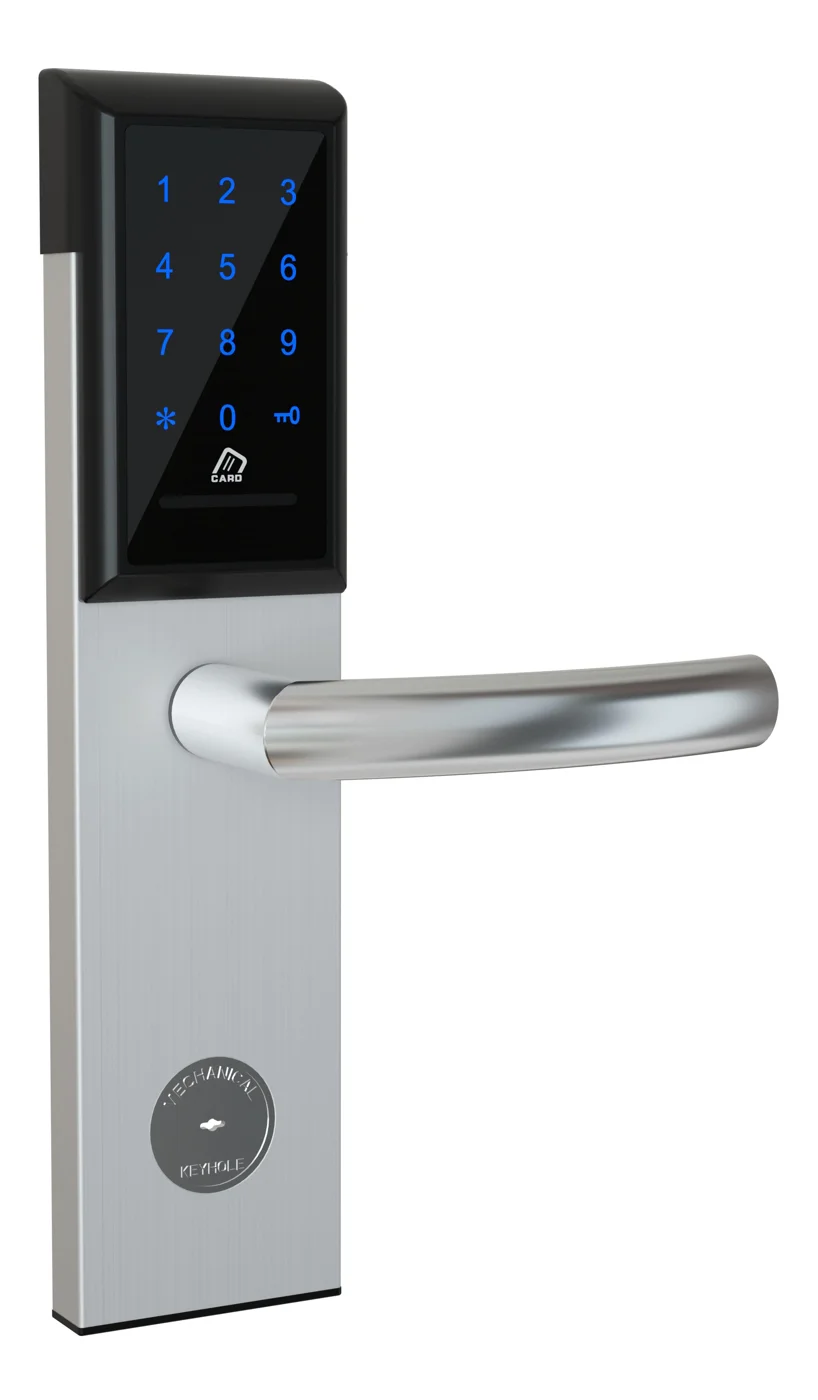
Kunci Lemari Kantor — PIN + Kartu untuk Arsip & Pedestal
Kunci lemari kantor PIN + kartu offline untuk lemari arsip, pedestal, dan laci. Retrofit baterai 5 menit, tanpa WiFi, tanpa manajemen kunci. CE/FCC/RoHS.
Halaman ini sudah menunjuk ke halaman tersebut sebagai referensi yang direkomendasikan berikutnya.
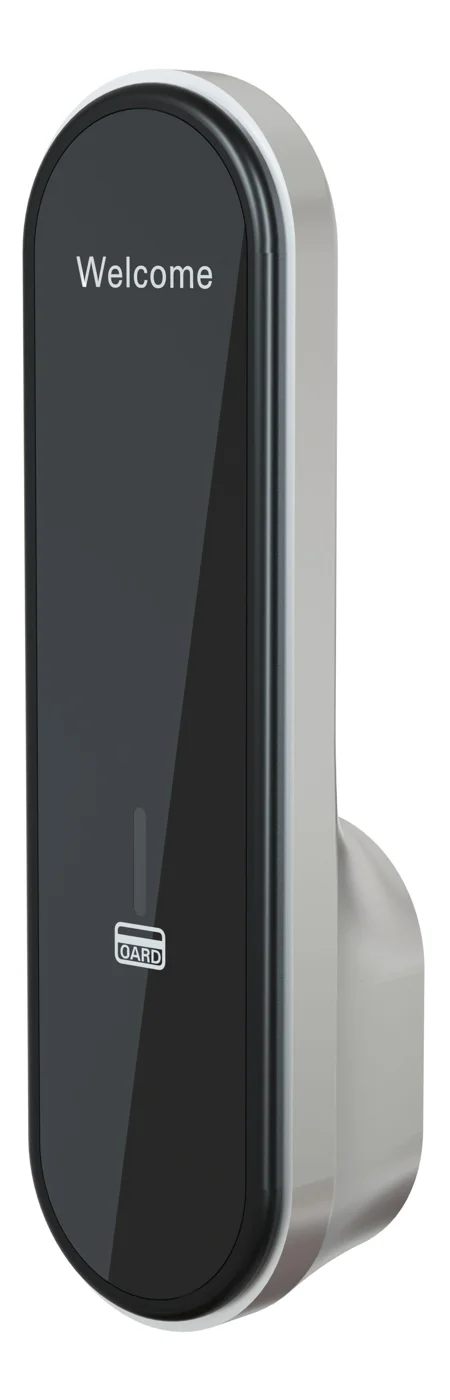
Kunci Lemari RFID — Kartu MIFARE, Autentikasi Offline
Kunci lemari RFID MIFARE offline untuk loker gym, spa, dan kantor. Buka dengan tap 13.56 MHz, tanpa WiFi, retrofit 5 menit. Bodi zinc alloy, baterai.
Halaman ini sudah menunjuk ke halaman tersebut sebagai referensi yang direkomendasikan berikutnya.
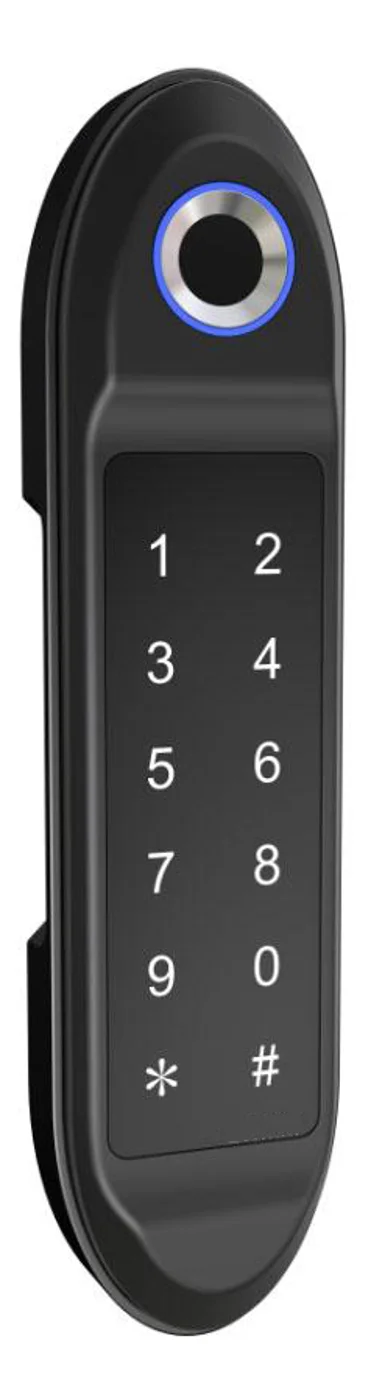
Kunci Lemari Elektronik Kode PIN — Mandiri, Tanpa WiFi
Kunci lemari keypad offline untuk loker gym, kantor, dan paket. Bertenaga baterai, retrofit 5 menit, pemasangan sederhana. PIN + kartu MIFARE, DC 6V, 4×AA.
Halaman ini sudah menunjuk ke halaman tersebut sebagai referensi yang direkomendasikan berikutnya.
Artikel blog terkait
3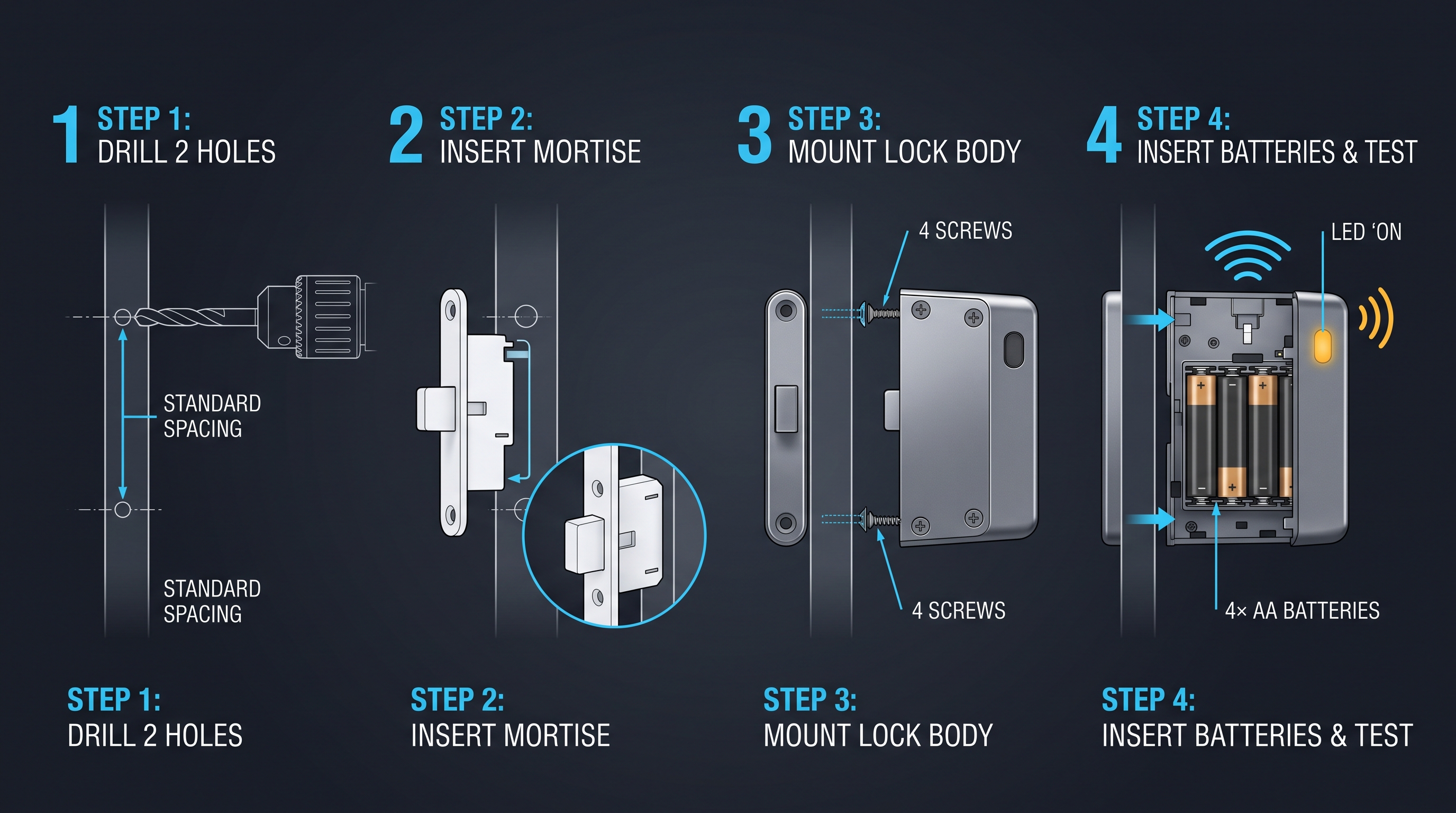
Kunci Lemari Aplikasi Mobile: Panduan Lengkap Keamanan Lemari Berbasis Smartphone
Temukan cara kerja sistem kunci lemari aplikasi mobile. Jelajahi kredensial BLE/Wi-Fi/NFC, pembukaan jarak jauh, kode sementara, akses berbasis peran, sinkronisasi cloud, fitur keamanan, dan skenario penerapan.
Halaman tersebut mendukung konteks produk yang sama: Kunci Lemari Kantor — PIN + Kartu untuk Arsip & Pedestal.
Kunci Lemari MIFARE: Panduan Keamanan Lanjutan Sistem Akses
Panduan teknis mendalam kunci lemari MIFARE: varian Classic, Plus, DESFire, Ultralight, keamanan kriptografi, dan instalasi untuk kontrol akses lemari.
Halaman tersebut mendukung konteks produk yang sama: Kunci Lemari Kantor — PIN + Kartu untuk Arsip & Pedestal.
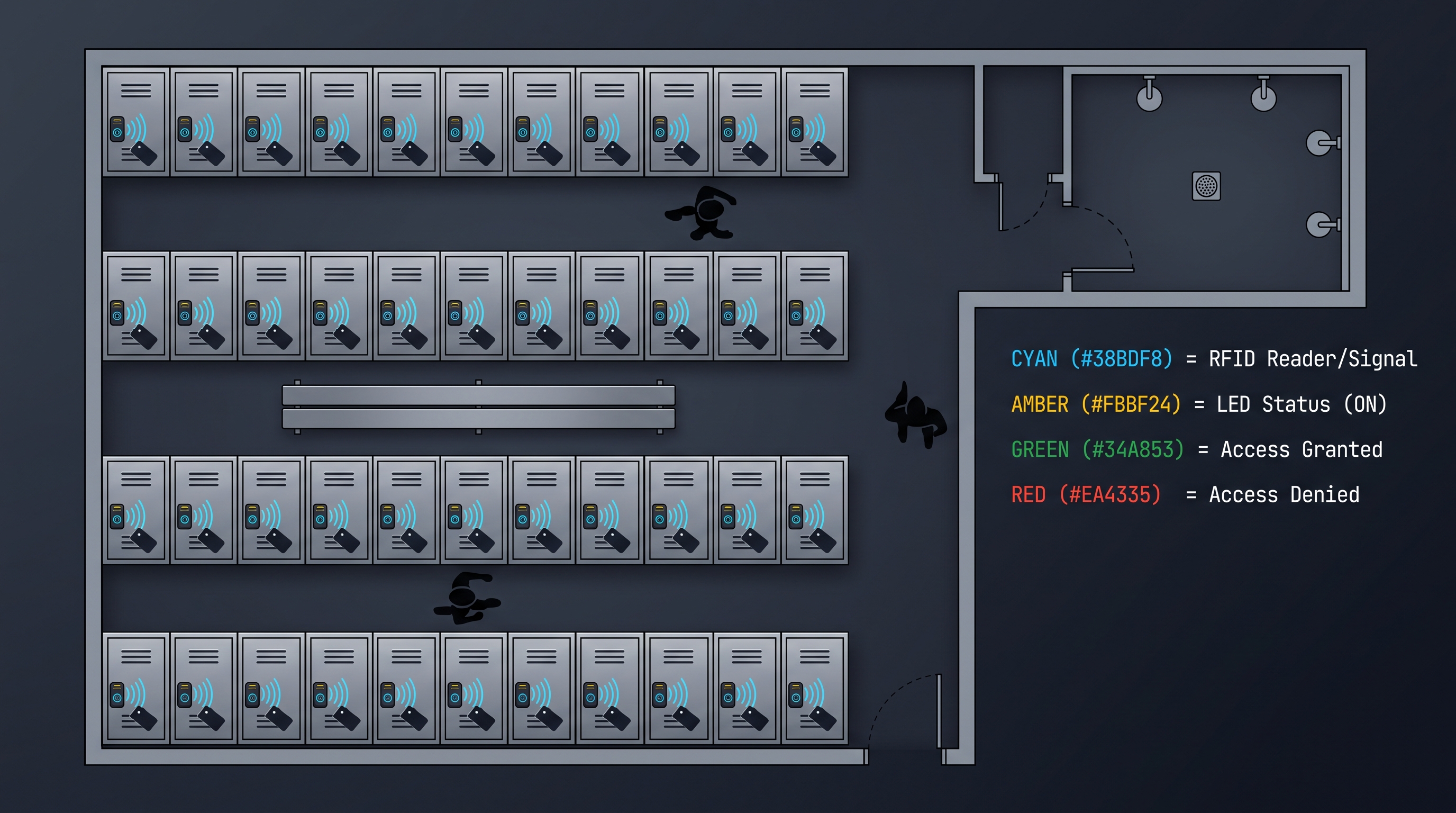
Kunci Loker MIFARE: Panduan Definitif Keamanan Loker Pintar
Panduan lengkap kunci loker MIFARE untuk gym, sekolah, kantor, dan fasilitas umum: Classic, Plus, DESFire, instalasi, jaringan, dan integrasi loker pintar.
Halaman tersebut mendukung konteks produk yang sama: Kunci Lemari Elektronik Kode PIN — Mandiri, Tanpa WiFi.
Tentukan proyek kunci lemari Anda bersama engineer kami
Kirimkan jumlah loker, jenis lemari, dan preferensi kredensial. Kami akan mengirim rencana sampel dan penawaran dalam 24 jam kerja.
- Beralih dari panduan umum ke diskusi produk atau aplikasi.
- Gunakan RFQ saat harga, gambar teknis, MOQ, atau jadwal peluncuran membutuhkan struktur.
- Jaga jalur kontak langsung tetap terlihat untuk klarifikasi cepat dan serah terima.