Kode Sementara Kunci Lemari: Panduan Lengkap Akses PIN
Panduan lengkap kode sementara kunci lemari: PIN sekali pakai, kode terbatas waktu, keamanan TOTP, dan akses lemari fleksibel untuk perhotelan dan properti.
Apa Itu Sistem Kode Sementara Kunci Lemari?
Kode sementara kunci lemari adalah nomor identifikasi pribadi berdurasi pendek yang terikat waktu atau sekali pakai yang memberikan akses terkendali ke lemari, loker, brankas, atau unit penyimpanan yang diamankan tanpa memerlukan kredensial permanen atau kunci fisik. Sistem kode sementara kunci lemari memadukan mekanisme penguncian elektronik atau elektromekanis dengan platform manajemen berbasis perangkat lunak yang mampu membuat, mendistribusikan, memvalidasi, dan mengakhiri masa berlaku kode numerik ini sesuai kebijakan yang ditentukan administrator. Berbeda dengan PIN statis yang tetap berlaku tanpa batas waktu hingga diubah secara manual, kode sementara kunci lemari terikat pada batasan seperti jendela validitas yang ditentukan, penanda sekali pakai, batas percobaan yang dapat dikonfigurasi, atau asosiasi dengan identitas pengguna terverifikasi tertentu. Pendekatan ini telah diterapkan di hotel, apartemen servis, kantor perusahaan, fasilitas kesehatan, kampus pendidikan, dan ruang kerja bersama di mana individu yang berbeda membutuhkan akses jangka pendek yang dapat diaudit ke lemari aman yang sama. Kode sementara kunci lemari dengan demikian merupakan evolusi signifikan dari manajemen kunci mekanis.
Memahami Dasar-Dasar Kode Sementara
Pada tingkat paling dasar, kode sementara kunci lemari berfungsi sebagai kredensial digital sekali pakai yang mengotorisasi pengguna untuk membuka pintu lemari, laci, atau kompartemen selama periode yang telah ditentukan dan terbatas. Kode sementara kunci lemari disediakan oleh administrator kepada pengguna akhir melalui saluran komunikasi seperti SMS, email, aplikasi seluler khusus, portal web, atau kartu cetak. Penerima memasukkan kode sementara kunci lemari pada keypad numerik yang terpasang pada kunci lemari, dan jika kode tersebut valid, masih berlaku, dan berada dalam parameter yang diotorisasi, mekanisme kunci akan terlepas. Setelah kode digunakan sesuai jumlah penggunaan yang ditentukan atau melewati jendela waktunya, kode sementara kunci lemari otomatis dinyatakan tidak valid oleh firmware pengontrol kunci, memastikan tidak ada hak akses sisa melampaui periode otorisasi yang dimaksudkan. Perilaku kedaluwarsa mandiri inilah yang membedakan kode sementara kunci lemari dari PIN permanen konvensional yang akan bertahan dalam memori kunci tanpa batas waktu.
Komponen Inti Arsitektur Sistem
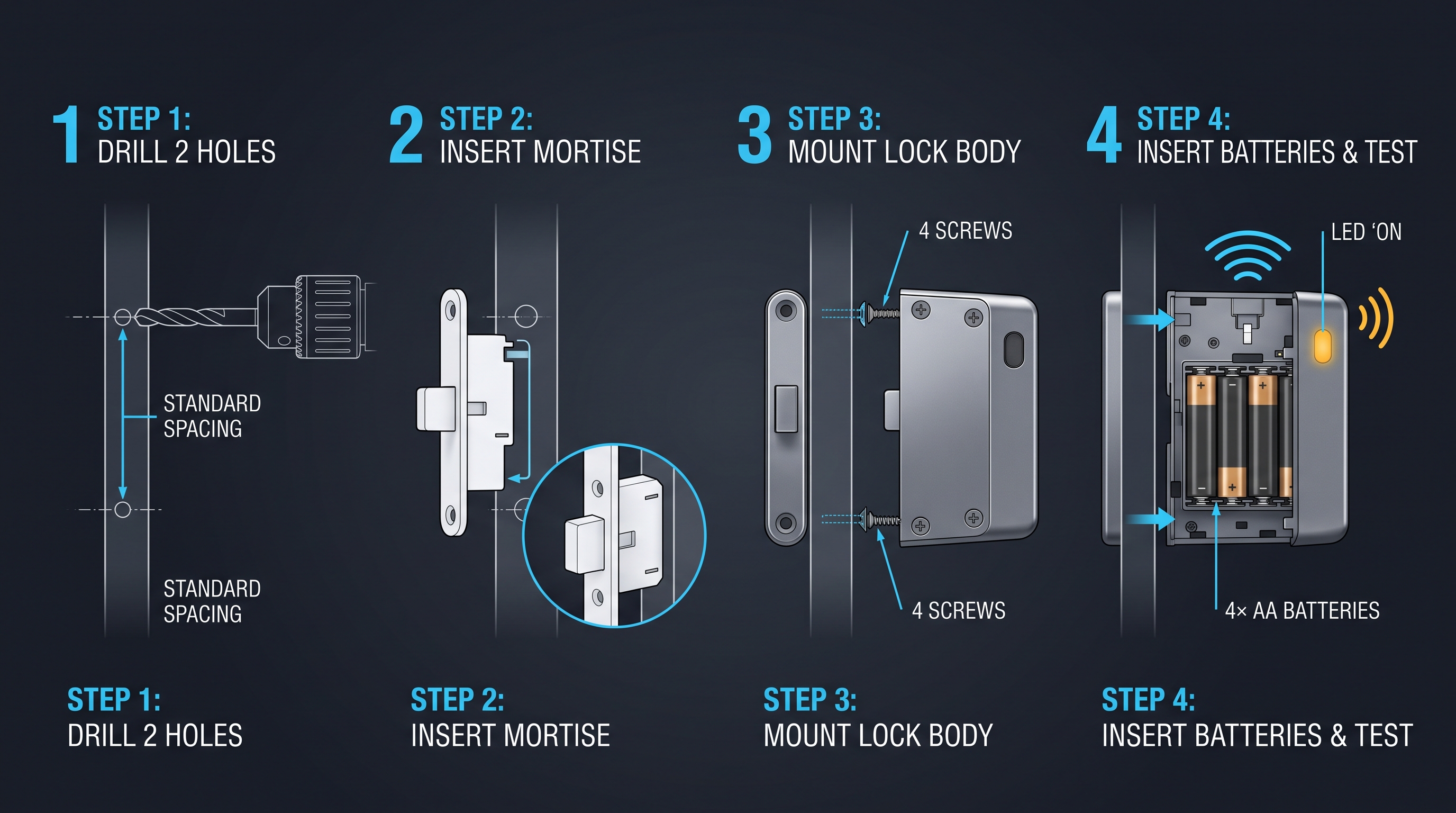
Sistem kode sementara kunci lemari yang lengkap tersusun dari beberapa komponen perangkat keras dan perangkat lunak yang terintegrasi. Mekanisme kunci elektronik adalah aktuator fisik yang mengamankan pintu lemari dan merespons entri kode yang valid. Kunci ini digerakkan oleh papan kontrol berbasis mikrokontroler yang menyimpan logika validasi, memelihara jam real-time internal (RTC) dengan presisi plus minus lima bagian per juta, dan mengelola antarmuka pengguna yang terdiri dari keypad numerik, indikator LED, dan buzzer audio. Kunci ini ditenagai baterai berumur panjang, biasanya sel lithium CR123A dengan kapasitas nominal lima belas ratus miliampere-jam, yang menyediakan energi yang cukup untuk ribuan siklus pembukaan. Firmware mengimplementasikan algoritma kriptografi yang memvalidasi entri kode sementara kunci lemari, termasuk dukungan untuk algoritma Time-based One-Time Password sebagaimana didefinisikan dalam RFC 6238 menggunakan HMAC-SHA-256. Antarmuka manajemen administrator menyediakan platform tempat personel yang berwenang membuat, mendistribusikan, mencabut, dan mengaudit penggunaan kode sementara kunci lemari di seluruh armada kunci yang dipasang.
Cara Kerja Sistem Kode Sementara Kunci Lemari
Kode sementara kunci lemari beroperasi melalui urutan pembuatan kriptografi, distribusi aman, validasi real-time, dan kedaluwarsa otomatis yang bersama-sama memastikan akses hanya diberikan kepada individu yang berwenang selama jendela waktu yang diotorisasi. Kode sementara kunci lemari memulai siklus hidupnya ketika administrator menentukan parameter akses yang mencakup durasi validitas, jumlah penggunaan yang diizinkan, dan identitas penerima yang dituju, setelah itu sistem menghasilkan kode numerik dengan menerapkan algoritma kriptografi pada kunci rahasia, penanda waktu, dan metadata kontekstual opsional. Kode sementara kunci lemari yang dihasilkan kemudian dikirimkan kepada penerima melalui saluran aman. Ketika penerima memasukkan kode sementara kunci lemari pada keypad kunci, mikrokontroler memproses digit tersebut melalui algoritma verifikasi yang sama menggunakan rahasia dan jam real-time yang tersimpan. Jika semua pemeriksaan lolos, kunci mengaktifkan motor dan pengguna memperoleh akses. Validasi deterministik ini memungkinkan kode sementara kunci lemari berfungsi andal bahkan tanpa konektivitas jaringan.
Algoritma Time-Based One-Time Password Secara Detail
Algoritma TOTP yang distandarisasi dalam RFC 6238 membentuk tulang punggung kriptografi sebagian besar implementasi kode sementara kunci lemari modern. Algoritma ini mengambil kunci rahasia bersama yang diketahui oleh sistem pembuatan dan pengontrol kunci, menggabungkannya dengan stempel waktu Unix saat ini yang dibagi dengan interval langkah waktu yang dapat dikonfigurasi, dan memproses kombinasi ini melalui fungsi hash berbasis HMAC untuk menghasilkan keluaran yang deterministik namun aman secara kriptografis. Keluaran ini kemudian dipotong menjadi kode numerik yang dapat dibaca manusia dengan panjang yang dapat dikonfigurasi, biasanya antara empat hingga sepuluh digit untuk aplikasi kode sementara kunci lemari. Parameter langkah waktu, yang paling umum dikonfigurasi sebagai tiga puluh atau enam puluh detik, menentukan seberapa sering kode yang valid berubah. Firmware validasi kode sementara kunci lemari melakukan perhitungan identik menggunakan RTC internal dan rahasia bersamanya, dan biasanya menerima kode dari langkah waktu saat ini dan yang berdekatan untuk mengakomodasi drift jam yang kecil. Jendela toleransi ini merupakan parameter desain kritis untuk sistem kode sementara kunci lemari.
Siklus Keputusan Pengontrol Kunci
Ketika pengguna memasukkan digit pada keypad sistem kode sementara kunci lemari, pengontrol kunci memulai siklus keputusan multi-tahap. Pengontrol pertama-tama membaca rangkaian digit lengkap dan memeriksanya terhadap kriteria format dasar seperti panjang kode yang diharapkan. Pengontrol kemudian mengeksekusi perhitungan TOTP menggunakan kunci rahasia yang tersimpan dan nilai penghitung waktu saat ini dari RTC-nya, menghasilkan himpunan nilai kode yang valid untuk jendela saat ini dan yang berdekatan. Jika kode sementara kunci lemari yang dimasukkan cocok dengan nilai valid mana pun, pengontrol memeriksa apakah kode telah dikonsumsi jika dikonfigurasi sebagai sekali pakai, dilacak melalui memori non-volatil yang bertahan antar siklus daya. Pengontrol juga memverifikasi batasan terikat waktu tambahan apa pun. Setelah lolos semua pemeriksaan, pengontrol mengaktifkan motor atau solenoid, menyalakan LED hijau, membunyikan nada konfirmasi, dan mencatat peristiwa tersebut dalam log auditnya. Jika ada pemeriksaan yang gagal, pengontrol menambah penghitung percobaan gagal, dan jika kegagalan berturut-turut melebihi ambang tiga hingga lima entri, pengontrol masuk ke dalam penguncian selama tiga puluh menit, melindungi sistem kode sementara kunci lemari dari serangan brute-force.
Sinkronisasi Waktu dan Manajemen Drift
Jam real-time dalam kunci kode sementara kunci lemari adalah komponen kritis yang akurasinya secara langsung menentukan keandalan validasi kode berbasis waktu. Modul RTC ini biasanya mencapai stabilitas frekuensi plus minus lima bagian per juta, yang berarti drift sekitar 2,6 menit per tahun. Meskipun presisi ini memadai untuk sebagian besar penerapan kode sementara kunci lemari, dalam periode panjang tanpa sinkronisasi ulang jam kunci dapat bergeser relatif terhadap server pembuatan, berpotensi menyebabkan kode yang valid ditolak jika drift yang terakumulasi melebihi jendela toleransi. Untuk mengatasi hal ini, sistem kode sementara kunci lemari menggunakan strategi termasuk sinkronisasi ulang berkala melalui antarmuka nirkabel, penyesuaian otomatis berdasarkan offset yang diamati selama validasi yang berhasil, dan jendela toleransi yang lebih lebar untuk penerapan dengan konektivitas terbatas. Beberapa desain kode sementara kunci lemari tingkat lanjut menggabungkan osilator kristal terkompensasi suhu yang mengurangi drift menjadi di bawah dua bagian per juta, memperpanjang periode operasi bebas pemeliharaan.
Kode Sementara Kunci Lemari vs Kunci PIN Permanen
Kode sementara kunci lemari menyediakan paradigma kontrol akses yang secara fundamental berbeda dibandingkan kunci nomor identifikasi pribadi permanen, dan perbedaan ini memiliki implikasi mendalam bagi keamanan, efisiensi operasional, dan skalabilitas. Kode sementara kunci lemari dirancang untuk melayani kebutuhan akses sementara di mana otorisasi pada dasarnya bersifat transien, spesifik konteks, dan dibatasi oleh waktu atau batasan penggunaan, sedangkan kunci PIN permanen dioptimalkan untuk akses berulang jangka panjang oleh sekumpulan pengguna tetap yang diketahui dan otorisasinya bertahan tanpa batas waktu hingga secara eksplisit dicabut. Pendekatan kode sementara kunci lemari unggul di lingkungan di mana kebutuhan akses bersifat dinamis, seperti hotel di mana tamu check-in dan check-out setiap hari, kantor bersama di mana karyawan yang berbeda menggunakan lemari yang sama pada hari yang berbeda, atau fasilitas penyimpanan mandiri dengan perputaran pengguna yang tinggi. Sebaliknya, kunci PIN permanen cocok untuk lingkungan di mana himpunan pengguna yang berwenang kecil, stabil, dan diketahui sebelumnya, seperti lemari obat keluarga atau ruang perawatan tim tetap.
Tabel Perbandingan: Kode Sementara Kunci Lemari vs Kunci PIN Permanen
| Fitur | Kode Sementara Kunci Lemari | Kunci PIN Permanen |
|---|---|---|
| Masa berlaku kode | Kedaluwarsa otomatis setelah jendela waktu atau sekali pakai | Tetap berlaku hingga diubah secara manual |
| Manajemen pengguna | Buat kode untuk pengguna mana pun sesuai permintaan tanpa provisi | Harus mendaftarkan setiap pengguna terlebih dahulu dan menetapkan PIN unik |
| Model keamanan | Setiap kode sekali pakai; kompromi memiliki dampak terbatas | Kompromi PIN memberikan akses tanpa batas hingga dicabut |
| Kemampuan audit | Setiap kode dapat dilacak ke peristiwa penerbitan dan penerima tertentu | PIN saja mungkin tidak mengidentifikasi pengguna mana yang memasukkannya jika dibagikan |
| Beban operasional | Rendah untuk lingkungan perputaran tinggi; kode kedaluwarsa sendiri | Tinggi untuk lingkungan perputaran tinggi; pencabutan manual diperlukan |
| Operasi offline | Didukung penuh melalui benih kriptografi pra-bagi | Didukung penuh karena PIN disimpan lokal di memori kunci |
| Skalabilitas | Sangat baik untuk ratusan atau ribuan pengguna transien | Dibatasi kapasitas penyimpanan PIN dan beban administratif |
| Pengalaman pengguna | Sederhana: terima kode dan masukkan; tanpa pendaftaran | Memerlukan pendaftaran awal dan menghafal PIN pribadi |
| Penerapan ideal | Hotel, sewa liburan, ruang kerja bersama, layanan kesehatan | Hunian pribadi, kantor tim tetap, penyimpanan keluarga |
| Mekanisme pencabutan | Otomatis secara desain; tanpa tindakan administratif | Diperlukan penghapusan atau penimpaan manual oleh administrator |
Kapan Memilih Masing-Masing Pendekatan
Keputusan antara menerapkan sistem kode sementara kunci lemari versus kunci PIN permanen harus dipandu terutama oleh penilaian jujur terhadap pola akses yang mencirikan lingkungan tersebut. Jika permintaan akses dapat diprediksi, jarang, dan selalu berasal dari kelompok kecil yang sama dalam jangka panjang, solusi PIN permanen mungkin memadai dan hemat biaya. Namun, jika permintaan akses tidak dapat diprediksi dalam waktu, volume, atau identitas, jika kebutuhan pada dasarnya terbatas waktu, atau jika jumlah total pengguna berbeda melebihi beberapa lusin, maka sistem kode sementara kunci lemari menjadi penting untuk mempertahankan keamanan dan kewarasan operasional. Arsitektur kode sementara kunci lemari juga memberikan keunggulan signifikan di lingkungan yang digerakkan oleh kepatuhan seperti fasilitas kesehatan yang diatur oleh HIPAA atau layanan keuangan yang tunduk pada persyaratan audit SOC 2, di mana kemampuan menghasilkan catatan akses granular berstempel waktu yang terkait dengan individu yang dapat diidentifikasi dan peristiwa otorisasi spesifik bersifat wajib. Dalam konteks teregulasi ini, kode sementara kunci lemari menyediakan pengikatan kriptografi antara peristiwa akses dan pengguna yang berwenang yang diharapkan oleh auditor.
Jenis-Jenis Kode Sementara Kunci Lemari
Kode sementara kunci lemari dapat distrukturkan untuk mengakomodasi banyak skenario akses melalui berbagai jenis kode yang bervariasi dalam masa validitas, batasan penggunaan, dan profil penerima yang dituju. Kode sementara kunci lemari yang dikategorikan sekali pakai dirancang untuk situasi di mana peristiwa akses harus terjadi tepat satu kali dan percobaan berikutnya otomatis ditolak. Kode sementara kunci lemari yang dikategorikan terbatas waktu adalah varian paling umum di perhotelan, di mana kode valid untuk jendela yang ditentukan dari beberapa jam hingga beberapa hari. Kode sementara kunci lemari pengunjung terikat pada catatan pendaftaran dengan batasan seperti hari tertentu atau jam terbatas. Kode sementara kunci lemari layanan diterbitkan untuk personel pemeliharaan dan dibatasi pada jam kerja. Kode sementara kunci lemari pengiriman terkait dengan pengiriman dan hanya diaktifkan ketika paket dalam perjalanan. Kode sementara kunci lemari acara dibuat secara batch untuk konferensi di mana setiap peserta membutuhkan kredensial untuk durasi acara.
Tabel Perbandingan: Jenis Kode Sementara Kunci Lemari
| Jenis Kode | Masa Validitas | Batas Penggunaan | Penerima Tipikal | Skenario Umum | Pemicu Kedaluwarsa |
|---|---|---|---|---|---|
| Kode Sekali Pakai | Menit hingga jam | Hanya sekali pakai | Kurir, inspektur | Pengiriman paket, penitipan barang bukti | Entri berhasil pertama |
| Kode Terbatas Waktu | Jam hingga minggu | Tanpa batas dalam jendela | Tamu hotel, penyewa | Menginap hotel, sewa liburan | Akhir jendela validitas |
| Kode Pengunjung | Jam hingga hari | Entri maksimum dapat dikonfigurasi | Tamu, pengunjung | Akses tamu, peserta rapat | Akhir jendela atau batas entri |
| Kode Layanan | Hanya jam shift | Tanpa batas dalam jam | Petugas kebersihan, teknisi | Housekeeping, pemeliharaan | Akhir jendela shift |
| Kode Pengiriman | Jendela pengiriman | Sekali pakai | Kurir, logistik | Penitipan paket | Konfirmasi pengiriman atau penggunaan |
| Kode Acara | Durasi acara | Tanpa batas selama acara | Peserta, partisipan | Konferensi, pameran dagang | Akhir acara |
Kasus Penggunaan Kode Sekali Pakai
Kode sementara kunci lemari sekali pakai adalah varian paling ketat dan memberikan keamanan tertinggi karena kode dinyatakan tidak valid pada momen penggunaan berhasil pertamanya, memastikan kode tidak dapat digunakan kembali, dibagikan, atau dikompromikan di berbagai peristiwa akses. Kasus penggunaan umum untuk kode sementara kunci lemari sekali pakai mencakup pengiriman paket ke kotak surat hunian atau ruang paket apartemen, di mana kurir memasukkan kode untuk membuka loker, menitipkan paket, dan kode langsung dinyatakan batal. Pola yang sama berlaku untuk loker barang bukti di penegakan hukum di mana rantai pengawasan mengharuskan loker dibuka hanya sekali per penitipan, loker penjemputan dan penitipan cucian, serta penitipan sampel farmasi di lingkungan klinis di mana regulasi mewajibkan kompartemen penerimaan dibuka hanya sekali per pengiriman. Kode sementara kunci lemari sekali pakai juga ideal untuk kunjungan pemeliharaan atau inspeksi di mana teknisi membutuhkan akses selama satu kunjungan tanpa ekspektasi akses berikutnya dari rangkaian kode yang sama.
Kasus Penggunaan Kode Terbatas Waktu
Kode sementara kunci lemari terbatas waktu adalah tulang punggung dunia kontrol akses dan merupakan varian yang paling sering ditemui orang saat menginap di hotel, menyewa properti liburan, atau mengakses ruang kerja bersama. Kode sementara kunci lemari terbatas waktu dikonfigurasi dengan stempel waktu mulai dan berakhir yang spesifik, dan pengontrol kunci hanya menerima kode selama interval tersebut. Jendela validitas tipikal berkisar dari beberapa jam untuk janji layanan singkat, satu hari penuh untuk pengunjung harian, beberapa hari untuk tamu sewa liburan, hingga minggu atau bulan untuk penyewa jangka panjang. Kode sementara kunci lemari otomatis kedaluwarsa pada akhir jendela yang dikonfigurasi tanpa intervensi administratif, dan firmware kunci secara permanen menolak percobaan berikutnya hingga kode baru dibuat. Kedaluwarsa otomatis ini adalah salah satu fitur keamanan paling kuat dari model kode sementara kunci lemari karena mengeliminasi seluruh masalah kredensial usang yang menumpuk di memori kunci tanpa batas waktu.
Kode Pengunjung, Layanan, Pengiriman, dan Acara
Kode sementara kunci lemari pengunjung disesuaikan untuk akses tamu di hotel, sewa jangka pendek, dan rumah tamu perusahaan di mana otorisasi terkait dengan catatan pemesanan. Kode sementara kunci lemari layanan dirancang untuk akses vendor dan kontraktor berulang, dapat dikonfigurasi agar hanya valid selama jam kerja tertentu seperti Senin hingga Jumat dari pukul delapan pagi hingga lima sore, dan dapat dirotasi mingguan untuk membatasi nilai kode yang terekspos. Kode sementara kunci lemari pengiriman dioptimalkan untuk akses kurir ke loker paket, sering terkait dengan catatan pelacakan pengiriman tunggal sehingga kode hanya aktif ketika paket dalam perjalanan dan dinyatakan tidak valid setelah pengiriman dikonfirmasi. Kode sementara kunci lemari acara dibuat secara massal untuk instalasi sementara seperti booth pameran dagang, lemari kit sambutan konferensi, gudang ritel pop-up, atau penyimpanan perlengkapan festival, dan biasanya valid untuk durasi terkompresi acara itu sendiri, yang dapat berkisar dari jam hingga hari.
Metode Pembuatan Kode Sementara Kunci Lemari
Kode sementara kunci lemari dapat dibuat melalui berbagai metodologi teknis, masing-masing menawarkan pertukaran berbeda antara keamanan, skalabilitas, kemudahan administratif, dan kompatibilitas dengan operasi offline. Kode sementara kunci lemari yang dibuat melalui algoritma berbasis cloud memanfaatkan server terpusat yang menyimpan benih kriptografi dengan aman, melakukan perhitungan TOTP, dan mendistribusikan kode yang dihasilkan melalui saluran komunikasi standar. Pendekatan berpusat cloud ini menawarkan fleksibilitas dan skalabilitas terbesar untuk penerapan kode sementara kunci lemari dengan lusinan atau ratusan unit kunci di berbagai lokasi, karena administrator dapat mengelola seluruh armada dari satu dasbor terpadu. Metode pembuatan kode sementara kunci lemari berbasis cloud juga paling mudah diintegrasikan dengan sistem eksternal seperti platform manajemen properti, mesin pemesanan, dan basis data pengunjung, memungkinkan penerbitan kode sepenuhnya otomatis yang tidak memerlukan intervensi manual setelah integrasi dikonfigurasi. Namun, pembuatan berbasis cloud memperkenalkan ketergantungan pada konektivitas jaringan, memerlukan strategi fallback offline.
Pembuatan Kode Sementara Kunci Lemari Secara Offline
Untuk penerapan di lokasi terpencil, fasilitas bawah tanah, atau lingkungan aman di mana konektivitas nirkabel dilarang, kode sementara kunci lemari harus dapat dibuat melalui algoritma offline yang tidak memerlukan akses jaringan eksternal. Pembuatan offline mengandalkan algoritma TOTP yang sama sebagaimana didefinisikan dalam RFC 6238 tetapi menjalankan perhitungan sepenuhnya pada perangkat administrator lokal, yang menyimpan kunci rahasia kriptografi yang telah dimuat sebelumnya ke pengontrol kunci selama provisi awal. Perangkat lokal menghitung kode sementara kunci lemari berdasarkan waktu saat ini dan rahasia bersama, menghasilkan kode valid yang diverifikasi kunci secara independen karena kunci menyimpan rahasia yang sama dan mengeksekusi algoritma yang sama. Mode offline pembuatan kode sementara kunci lemari ini penting untuk lingkungan keamanan tinggi seperti instalasi militer, fasilitas diplomatik, dan laboratorium penelitian sensitif di mana konektivitas eksternal dilarang, dan berharga untuk lemari penggunaan sesekali di rumah liburan terpencil atau stasiun penelitian lapangan di mana akses yang jarang tidak membenarkan konektivitas jaringan persisten.
Pembuatan Kode Secara Batch dan Massal
Ketika sebuah fasilitas perlu menerbitkan banyak kode sementara kunci lemari secara bersamaan, seperti untuk konferensi dengan ratusan peserta atau pergantian asrama universitas musiman di mana mahasiswa baru masing-masing membutuhkan akses loker, sistem pembuatan harus mendukung kemampuan batch dan massal yang efisien. Proses pembuatan kode sementara kunci lemari batch mengambil file input terstruktur yang berisi parameter untuk setiap kode termasuk identifier penerima, jendela validitas, dan parameter batasan, dan menghasilkan file output yang sesuai dengan kode yang dibuat dan metadata untuk distribusi otomatis. Pembuatan kode sementara kunci lemari massal juga dapat menghasilkan satu rangkaian kode tunggal yang berfungsi di beberapa unit kunci untuk periode yang ditentukan, berguna bagi manajer fasilitas yang membutuhkan akses ke sejumlah lemari selama shift mereka. Varian kode sementara kunci lemari ini harus digunakan dengan bijak karena mewakili pemberian yang lebih luas dengan risiko yang secara proporsional lebih besar jika dikompromikan, dan harus selalu dikombinasikan dengan jam validitas terbatas dan pencatatan audit yang ketat.
Pembuatan Terprogram Berbasis API
Platform kode sementara kunci lemari modern menyediakan RESTful API yang memungkinkan sistem perangkat lunak eksternal membuat, mendistribusikan, dan mengelola kode secara terprogram tanpa intervensi manusia. Sistem manajemen properti hotel dapat memanggil API kode sementara kunci lemari untuk otomatis membuat kode untuk setiap tamu yang tiba saat check-in, dengan jendela validitas disesuaikan dengan tanggal pemesanan dan kode dikirimkan via SMS. Platform logistik pengiriman dapat memanggil API yang sama ketika paket dikirim untuk menerbitkan kode sementara kunci lemari sekali pakai kepada kurir, dengan unit loker diidentifikasi otomatis berdasarkan alamat pengiriman. Sistem hot-desking kantor dapat memanggil API untuk menetapkan kode sementara kunci lemari harian kepada setiap karyawan yang memesan workstation. Integrasi terprogram melalui endpoint API ini mengubah kode sementara kunci lemari dari solusi titik terisolasi menjadi komponen sepenuhnya otomatis dari ekosistem manajemen akses yang lebih luas, mengeliminasi pembuatan kode manual sebagai langkah alur kerja dan secara dramatis mengurangi ruang untuk kesalahan manusia.
Keamanan Kode Sementara Kunci Lemari
Sistem kode sementara kunci lemari harus dirancang dengan keamanan sebagai prinsip fundamental alih-alih sekadar pelengkap, karena kode itu sendiri merupakan target menarik bagi penyerang yang mencari akses tidak sah dan musuh canggih yang mungkin mencoba mengekstrak rahasia kriptografi dari firmware kunci. Arsitektur keamanan kode sementara kunci lemari yang tangguh menggunakan banyak lapisan pertahanan. Fondasi kriptografi harus dibangun di atas algoritma standar industri yang teruji publik, dengan algoritma TOTP yang didefinisikan dalam RFC 6238 menggunakan HMAC-SHA-256 sebagai pilihan praktik terbaik saat ini. Materi kunci rahasia bersama harus dihasilkan dari sumber angka acak yang aman secara kriptografis, disimpan dalam memori tahan gangguan. Logika validasi kode sementara kunci lemari harus mengimplementasikan perbandingan waktu-konstan untuk mencegah serangan side-channel timing, dan firmware kunci harus tahan terhadap upaya ekstraksi fisik melalui penonaktifan port debug dan enkripsi memori. Pertahanan berlapis ini memastikan kode sementara kunci lemari menahan vektor serangan jarak jauh maupun fisik.
Perlindungan Brute-Force dan Mekanisme Penguncian
Setiap implementasi kode sementara kunci lemari harus menyertakan perlindungan brute-force yang tangguh untuk mengalahkan serangan tebakan otomatis. Pertahanan standar adalah ambang penguncian progresif yang menonaktifkan entri kode setelah sejumlah percobaan gagal berturut-turut yang dapat dikonfigurasi, dengan praktik terbaik industri berupa pemicu penguncian setelah tiga hingga lima entri tidak valid diikuti periode tunggu wajib tiga puluh menit. Strategi ini secara dramatis meningkatkan biaya waktu untuk menyerang kode sementara kunci lemari, karena bahkan kode empat digit dengan sepuluh ribu nilai yang mungkin memerlukan rata-rata lima ribu percobaan gagal per tebakan yang berhasil, dan pada lima percobaan per tiga puluh menit waktu pembobolan rata-rata memanjang menjadi sekitar dua ratus delapan hari. Untuk rangkaian kode sementara kunci lemari yang lebih panjang dalam rentang enam hingga sepuluh digit, waktu brute-force menjadi efektif tak terbatas dalam garis waktu operasional yang wajar. Ambang penguncian tiga hingga lima percobaan dengan periode penguncian tiga puluh menit, sebagaimana direkomendasikan NIST SP 800-63B, memberikan keamanan yang tangguh terhadap penyerang dengan sumber daya memadai yang memiliki perangkat keras khusus untuk pembuatan dan transmisi kandidat kode.
Keamanan Kanal dan Praktik Terbaik Pengiriman
Keamanan kode sementara kunci lemari tidak hanya bergantung pada integritas kriptografi tetapi juga pada kerahasiaan saluran komunikasi tempat kode ditransmisikan. Kode yang dikirim via SMS tidak aman rentan terhadap intersepsi melalui kerentanan jaringan SS7, serangan SIM swap, dan pencurian ponsel, dan harus dilengkapi verifikasi tambahan ketika isi lemari cukup sensitif. Pengiriman email kode sementara kunci lemari membawa risiko kompromi kotak surat melalui phishing, dan harus dipasangkan dengan kontrol autentikasi email seperti DMARC, DKIM, dan SPF. Notifikasi push aplikasi seluler dengan pengiriman payload terenkripsi end-to-end menyediakan saluran keamanan lebih tinggi untuk distribusi kode sementara kunci lemari karena konten dienkripsi dari server manajemen ke perangkat penerima dan didekripsi hanya dalam lingkungan eksekusi aman aplikasi yang terautentikasi. Pengiriman suara melalui panggilan telepon terenkripsi juga layak untuk penerima yang tidak menggunakan aplikasi ponsel pintar, memberikan tingkat verifikasi manusia yang berharga dalam mengonfirmasi pihak penerima adalah penerima yang dituju.
Standar Kepatuhan dan Sertifikasi
Sistem kode sementara kunci lemari yang ditujukan untuk lingkungan komersial atau kelembagaan harus mematuhi standar regulasi dan industri yang relevan. Komponen perangkat keras, termasuk keypad, papan sirkuit, dan radio nirkabel, harus memiliki penandaan CE untuk kepatuhan kompatibilitas elektromagnetik dan keselamatan Uni Eropa, sertifikasi FCC untuk regulasi emisi frekuensi radio Amerika Serikat, dan sertifikasi RoHS untuk pembatasan zat berbahaya. Rakitan keypad harus diberi rating minimal IP65 untuk perlindungan kedap debu dan tahan semburan air, memastikan kunci dapat dibersihkan dengan aman menggunakan disinfektan, terekspos lingkungan lembap, dan dipasang di lokasi luar ruang atau semi-luar ruang. Perangkat lunak kode sementara kunci lemari harus memfasilitasi kepatuhan terhadap regulasi perlindungan data seperti GDPR dan CCPA, dengan fitur privacy-by-design yang meminimalkan pengumpulan data pribadi, mengenkripsi semua catatan audit yang tersimpan, dan menyediakan kemampuan permintaan akses subjek data. NIST SP 800-63B memberikan panduan tingkat jaminan autentikator yang harus dipenuhi kode sementara kunci lemari untuk tingkat sensitivitas berbeda, memastikan keselarasan dengan standar autentikasi federal.
Kasus Penggunaan dan Skenario Kode Sementara Kunci Lemari
Penerapan kode sementara kunci lemari menciptakan nilai di berbagai industri dan skenario aplikasi yang sangat luas, dengan benang merah berupa kebutuhan memberikan akses berbatas waktu ke kompartemen aman kepada individu yang tidak memiliki hubungan permanen dengan organisasi. Kode sementara kunci lemari mungkin paling umum di lingkungan hotel, di mana hampir setiap kamar hotel modern berisi brankas dalam kamar yang diamankan oleh kode sementara kunci lemari yang digunakan tamu selama masa menginap sebelum kode otomatis dinyatakan tidak valid saat check-out. Ini meluas ke aplikasi belakang panggung di mana staf housekeeping menggunakan kode sementara kunci lemari untuk mengakses penyimpanan linen bersih, tim engineering menggunakan kode sementara kunci lemari untuk masuk ke loker peralatan pemeliharaan, dan staf resepsionis menggunakan kode sementara kunci lemari untuk mengambil barang berharga yang dititipkan tamu. Model kode sementara kunci lemari yang sama diskalakan dari satu properti butik hingga jaringan multinasional, menunjukkan keserbagunaan luar biasa di sektor perhotelan.
Skenario Properti Hunian dan Multi-Keluarga
Kode sementara kunci lemari sama bernilainya di lingkungan hunian, terutama di gedung apartemen multi-keluarga, kompleks kondominium, dan komunitas berpagar di mana fasilitas gedung seperti pusat kebugaran, pusat bisnis, ruang paket, dan area penyimpanan bersama harus dapat diakses penghuni tanpa overhead distribusi kunci fisik. Manajer properti dapat menerbitkan kode sementara kunci lemari kepada setiap penghuni baru yang memberikan akses ke ruang paket selama masa sewa, lalu otomatis mencabut kode ketika penghuni pindah tanpa harus mengambil kunci fisik atau mengganti kunci. Staf gedung dapat diberi kode sementara kunci lemari yang hanya valid selama jam shift terjadwal, dengan kode otomatis berubah pada awal setiap shift untuk mencegah akumulasi kredensial. Pengunjung dan tamu menginap dapat menerima kode sementara kunci lemari selama masa tinggal mereka, dan teknisi pemeliharaan dapat diberi kode yang hanya valid untuk jendela spesifik janji temu terjadwal mereka.
Penyewaan Liburan dan Host Sewa Jangka Pendek
Industri sewa liburan telah menjadi salah satu pengadopsi teknologi kode sementara kunci lemari paling antusias karena langsung mengatasi tantangan operasional pemberian akses kepada puluhan atau ratusan tamu berbeda tanpa risiko penyerahan kunci fisik. Host sewa liburan dapat membuat kode sementara kunci lemari untuk setiap tamu yang tiba, mengatur jendela validitas dimulai pada waktu check-in di tanggal kedatangan dan berakhir pada waktu check-out di tanggal keberangkatan, dan mengirimkan kode otomatis melalui platform pesan sistem pemesanan. Alur kerja kode sementara kunci lemari otomatis ini mengeliminasi kebutuhan host menemui setiap tamu secara fisik, memungkinkan check-in mandiri larut malam tanpa mengharuskan host hadir pada jam tidak nyaman, dan mencegah risiko keamanan mantan tamu mempertahankan kunci yang berfungsi. Pendekatan kode sementara kunci lemari yang sama bekerja untuk akses fasilitas bersama seperti loker perlengkapan pantai atau penyimpanan perlengkapan BBQ komunal.
Aplikasi Layanan Kesehatan dan Berbasis Kepatuhan
Penerapan kode sementara kunci lemari di fasilitas kesehatan seperti rumah sakit, klinik, atau fasilitas perawatan lansia mengatasi kombinasi menuntut antara kontrol akses dan persyaratan audit yang mencirikan lingkungan kesehatan teregulasi. Lemari penyimpanan obat, brankas zat terkendali, loker peralatan medis, dan area penyimpanan barang milik pasien semuanya dapat diamankan dengan kode sementara kunci lemari yang memberikan akses hanya kepada personel berwenang selama jam kerja dan menghasilkan catatan audit terperinci untuk kepatuhan terhadap HIPAA, persyaratan zat terkendali DEA, dan regulasi dewan farmasi negara bagian. Kode sementara kunci lemari dapat dikonfigurasi agar hanya valid selama jendela administrasi obat tertentu, menegakkan pemisahan tugas berbasis waktu yang mencegah satu staf mengakses lemari obat di luar jam. Jejak audit yang dihasilkan sistem kode sementara kunci lemari menyediakan dasar pembuktian untuk audit kepatuhan dan materi forensik yang dibutuhkan untuk menyelidiki dugaan penyimpangan.
Kantor Perusahaan dan Ruang Kerja Bersama
Lingkungan kantor perusahaan dengan lalu lintas pengunjung yang sering, pekerja kontrak, dan pengaturan tempat duduk fleksibel sangat diuntungkan oleh penerapan kode sementara kunci lemari. Lemari penyimpanan ruang konferensi yang berisi peralatan audiovisual dapat diakses pengunjung selama rapat mereka menggunakan kode sementara kunci lemari yang hanya valid untuk durasi rapat. Lemari penyimpanan hot-desk yang menampung barang pribadi pengguna harian yang ditetapkan dapat dibuka dengan kode sementara kunci lemari yang dibuat otomatis ketika pengguna memesan workspace. Lemari perlengkapan bersama yang berisi perlengkapan kantor, item pantry snack, dan merchandise perusahaan dapat dioperasikan staf yang bertugas menggunakan kode sementara kunci lemari yang diterbitkan resepsionis dan valid selama durasi shift. Fleksibilitas model kode sementara kunci lemari dalam skenario multi-guna ini sangat berharga karena memungkinkan perangkat keras kunci fisik yang sama melayani skenario akses yang berbeda fundamental tanpa memerlukan kunci khusus terpisah.
Lingkungan Pendidikan dan Kelembagaan
Sekolah, universitas, museum, dan institusi pendidikan lainnya dapat menerapkan sistem kode sementara kunci lemari untuk mengelola akses ke area terbatas dan penyimpanan peralatan. Departemen musik universitas dapat menerbitkan kode sementara kunci lemari kepada setiap mahasiswa yang terdaftar di kelas instrumen, memberikan akses ke ruang penyimpanan selama semester dan mencabut kode setelah kursus selesai. Laboratorium kimia dapat dilengkapi kode sementara kunci lemari yang memberikan akses mahasiswa pascasarjana hanya selama jam lab terjadwal dan otomatis mengunci selama akhir pekan. Museum dapat menerbitkan kode sementara kunci lemari kepada konservator kunjungan yang hanya valid selama durasi keterlibatan proyek mereka, dengan sistem otomatis melacak setiap peristiwa akses untuk akuntansi dan keamanan. Efektivitas biaya model kode sementara kunci lemari di lingkungan kelembagaan sangat menarik karena mengeliminasi kebutuhan staf manajemen kunci khusus untuk melacak ratusan kunci mekanis yang diterbitkan kepada populasi transien.
Manajemen dan Siklus Hidup Kode Sementara Kunci Lemari
Kode sementara kunci lemari memiliki siklus hidup manajemen yang terdefinisi dengan baik yang mencakup seluruh rentang operasional dari pembuatan awal melalui penggunaan aktif hingga kedaluwarsa akhir dan pengarsipan. Siklus hidup kode sementara kunci lemari dimulai dengan fase pembuatan, di mana administrator mendefinisikan parameter termasuk waktu mulai validitas, waktu berakhir, jumlah penggunaan yang diizinkan, identifier penerima, dan batasan opsional seperti kunci mana yang menerima kode. Fase pembuatan mengikuti, menerapkan parameter yang dikonfigurasi ke algoritma TOTP untuk menghasilkan rangkaian kode numerik yang menginkarnasi batasan kebijakan yang dikodekan. Kode sementara kunci lemari kemudian memasuki fase distribusi, di mana kode dikirimkan kepada penerima yang dituju melalui saluran yang ditunjuk. Kode kemudian berada dalam fase aktifnya, di mana dapat digunakan nol atau lebih kali tergantung kebijakan penggunaan, dengan setiap peristiwa akses dicatat untuk audit. Akhirnya, kode sementara kunci lemari mencapai fase kedaluwarsanya melalui kedaluwarsa otomatis berbasis waktu atau konsumsi berbasis penggunaan, dan catatannya beralih ke penyimpanan arsip.
Pemantauan Aktif dan Audit Akses
Setelah kode sementara kunci lemari didistribusikan dan secara aktif digunakan, platform manajemen melacak setiap peristiwa akses termasuk pembukaan yang berhasil, percobaan entri gagal, dan peristiwa yang relevan keamanan seperti peringatan deteksi tamper atau peringatan baterai lemah. Kemampuan pemantauan aktif inilah yang membuat sistem kode sementara kunci lemari jauh lebih dari sekadar kunci dengan keypad; ia mengubah kunci lemari menjadi perangkat edge cerdas yang menghasilkan aliran telemetri operasional dan keamanan berkelanjutan yang dapat dianalisis administrator untuk deteksi anomali, perencanaan kapasitas, pelaporan kepatuhan, dan investigasi insiden. Entri log audit kode sementara kunci lemari biasanya mencatat identifier kode, identifier kunci, stempel waktu percobaan, hasil keberhasilan atau kegagalan, dan jenis kegagalan akses jika ditolak karena kedaluwarsa, batas penggunaan terlampaui, atau pembatasan di luar jam. Data audit granular yang terkait dengan setiap kode sementara kunci lemari mendukung pelaporan kepatuhan, deteksi anomali, dan investigasi forensik sepanjang siklus hidup kode.
Proses Kedaluwarsa dan Pencabutan
Kedaluwarsa kode sementara kunci lemari adalah terminasi normal dan diharapkan dari siklus hidupnya, terjadi otomatis ketika jendela validitas telah berlalu atau jumlah penggunaan yang diizinkan telah habis. Firmware kunci kode sementara kunci lemari menegakkan kedaluwarsa dengan memeriksa waktu sistem saat ini dan penghitung penggunaan kumulatif terhadap batasan yang dikodekan dalam struktur kode, secara permanen menolak percobaan lebih lanjut menggunakan kode yang kedaluwarsa tanpa memerlukan komunikasi dengan server manajemen atau intervensi manual. Perilaku kedaluwarsa mandiri otomatis ini adalah fitur operasional terkuat dari kode sementara kunci lemari karena mengeliminasi masalah kredensial usang, di mana kredensial akses yang valid menumpuk tanpa batas saat pengguna datang dan pergi tetapi otorisasi mereka tidak pernah berakhir secara formal. Model kode sementara kunci lemari memastikan setiap kredensial memiliki titik akhir yang terdefinisi, dan sistem otomatis menegakkan titik akhir tersebut tanpa bergantung pada ketekunan administratif.
Pencabutan Darurat dan Paksa
Situasi tidak dapat dihindari muncul di mana kode sementara kunci lemari harus dicabut sebelum kedaluwarsa terjadwalnya, dan sistem harus menyediakan mekanisme untuk pencabutan online maupun offline. Pencabutan online melalui platform manajemen terhubung memungkinkan administrator segera menyatakan tidak valid kode sementara kunci lemari tertentu atau mencabut semua kode aktif yang terkait dengan pengguna, kunci, atau insiden keamanan tertentu. Perintah pencabutan menyebar ke unit kunci yang terdampak melalui saluran komunikasi yang tersedia, dan firmware segera menghapus kode yang dicabut dan menolak percobaan berikutnya. Pencabutan offline kode sementara kunci lemari lebih menantang dan mungkin memerlukan kunjungan fisik ke kunci dengan alat servis atau perangkat override master, pertimbangan penting untuk lingkungan di mana kunci sengaja diisolasi dari konektivitas jaringan. Autentikasi pengguna yang kuat termasuk autentikasi multi-faktor harus selalu diperlukan untuk mengotorisasi pencabutan paksa kode sementara kunci lemari guna mencegah penyerang yang telah memperoleh akses manajemen mencabut kode yang valid secara jahat.
Pengarsipan Pasca-Siklus Hidup dan Pelaporan Kepatuhan
Setelah kode sementara kunci lemari kedaluwarsa atau dicabut, catatan auditnya harus dipreservasi dalam penyimpanan arsip aman untuk periode retensi yang cukup secara hukum mulai dari bulan di lingkungan berisiko lebih rendah hingga beberapa tahun di industri teregulasi di mana retensi bukti kepatuhan jangka panjang diwajibkan. Data audit yang terkait dengan kode sementara kunci lemari sepanjang siklus hidupnya mendukung sekumpulan kemampuan pelaporan kepatuhan dan operasional yang kaya termasuk pengungkapan riwayat akses per pengguna untuk permintaan akses subjek data GDPR, laporan volume penggunaan agregat untuk perencanaan kapasitas, laporan deteksi anomali yang menandai pola tidak biasa seperti percobaan gagal berlebihan, dan laporan manajemen perubahan yang mendokumentasikan tindakan administratif termasuk pembuatan kode, modifikasi, dan pencabutan dini. Sistem arsip kode sementara kunci lemari harus menyediakan penyimpanan tamper-evident dengan verifikasi integritas kriptografi untuk memastikan catatan audit historis tidak dapat diubah tanpa terdeteksi, mempertahankan nilai pembuktian riwayat akses kode sementara kunci lemari untuk tujuan kepatuhan dan dukungan litigasi.
Memilih Solusi Kode Sementara Kunci Lemari
Solusi kode sementara kunci lemari harus dipilih melalui evaluasi cermat terhadap banyak faktor termasuk lingkungan fisik, kemampuan teknis populasi pengguna, persyaratan keamanan dan kepatuhan, total anggaran, dan karakteristik skalabilitas. Sistem kode sementara kunci lemari yang bekerja sempurna di kantor dalam ruangan beriklim terkontrol mungkin sepenuhnya tidak cocok untuk fasilitas penyimpanan mandiri luar ruang yang terekspos hujan, suhu ekstrem, dan sinar matahari langsung. Kunci kode sementara kunci lemari dengan fitur nirkabel kaya mungkin ideal untuk hotel mewah dengan staf IT di lokasi, tetapi kunci yang sama mungkin terlalu berlebihan untuk kabin liburan pedesaan tanpa internet. Proses seleksi karenanya harus dimulai dengan penilaian menyeluruh terhadap lingkungan penerapan, populasi pengguna, persyaratan integrasi, dan batasan operasional, diikuti evaluasi terstruktur terhadap solusi kode sementara kunci lemari kandidat terhadap matriks kriteria berbobot yang mencerminkan prioritas spesifik skenario penerapan.
Pertimbangan Fisik dan Lingkungan
Bentuk fisik kunci kode sementara kunci lemari harus kompatibel dengan batasan pemasangan lemari target, dan unit kunci tersedia dalam berbagai bentuk, ukuran, dan konfigurasi untuk mengakomodasi jenis furnitur berbeda termasuk pintu lemari standar, laci geser, etalase kaca, dan karya kayu kustom. Antarmuka keypad harus terbaca jelas dan ergonomis dapat diakses oleh pengguna dengan berbagai tinggi badan dan kemampuan fisik, dengan tombol taktil besar yang mudah dioperasikan tanpa umpan balik visual untuk kepatuhan aksesibilitas, dan dengan keypad berlampu latar yang memungkinkan kode sementara kunci lemari dimasukkan dalam kondisi cahaya rendah. Rumah kunci dan keypad harus dibangun dari material tangguh seperti paduan seng, baja tahan karat, atau polimer rekayasa yang diperkuat yang menahan keausan harian dan penyalahgunaan sesekali yang diterima perangkat keras publik. Rating lingkungan sangat penting untuk penerapan luar ruang atau semi-luar ruang, dengan rating perlindungan masuk IP65 atau lebih tinggi diperlukan untuk kunci yang terekspos hujan, debu, atau bahan kimia pembersih.
Kemampuan Teknis dan Pengalaman Pengguna
Kegunaan solusi kode sementara kunci lemari adalah fungsi tidak hanya dari perangkat keras kunci tetapi juga antarmuka perangkat lunak tempat administrator membuat dan mengelola kode dan tempat penerima menerima dan berinteraksi dengan kode yang ditetapkan. Solusi kode sementara kunci lemari ideal menyediakan aplikasi seluler bersih dan intuitif untuk administrator yang mendukung semua fungsi esensial termasuk pembuatan kode individual dan batch, manajemen grup penerima, pemantauan status kunci, dan tinjauan log audit, sambil tetap dapat diakses oleh pengguna non-teknis seperti manajer properti, supervisor shift, dan agen resepsionis. Antarmuka pengiriman kode untuk pengguna akhir harus transparan dan tidak memerlukan instalasi aplikasi khusus, dengan kode sementara kunci lemari muncul langsung di thread SMS, kotak masuk email, atau notifikasi aplikasi pemesanan tanpa friksi tambahan. Solusi kode sementara kunci lemari juga harus memberikan umpan balik jelas kepada pengguna di keypad kunci, dengan warna LED konsisten, nada audio, dan pesan kesalahan.
Kemampuan Integrasi dan Otomatisasi
Sejauh mana platform kode sementara kunci lemari dapat berintegrasi dengan sistem operasional yang ada sering menjadi faktor penentu dalam mencapai imbal hasil investasi penuh, karena pembuatan kode manual padat karya dan rentan kesalahan, dan otomatisasi melalui integrasi mengeliminasi sumber terbesar biaya operasional berkelanjutan dan insiden keamanan. Platform kode sementara kunci lemari harus menyediakan RESTful API yang terdokumentasi baik dengan endpoint komprehensif untuk pembuatan kode, pencabutan, kueri status, dan ekspor data audit, dengan autentikasi diamankan melalui bearer token OAuth 2.0 dan transport terenkripsi TLS. Platform juga harus menawarkan integrasi siap pakai dengan sistem manajemen properti populer, platform pemesanan, dan solusi manajemen pengunjung, dengan modul konektor standar yang dapat dipasang tanpa upaya pengembangan kustom. API kode sementara kunci lemari harus mendukung callback webhook untuk notifikasi peristiwa real-time, memungkinkan sistem eksternal bereaksi segera terhadap peristiwa akses tanpa polling.
Tabel Perbandingan: Kriteria Evaluasi Solusi Kode Sementara Kunci Lemari
| Kriteria Evaluasi | Solusi Tingkat Dasar | Solusi Kelas Menengah | Solusi Enterprise |
|---|---|---|---|
| Kualitas build keypad | Plastik ABS, tanpa lampu latar | Paduan seng dengan membran silikon, berlampu latar | Baja tahan karat dengan kaca diperkeras, IP65+ |
| Konektivitas nirkabel | Tidak ada, sepenuhnya offline | Hanya Bluetooth Low Energy | BLE, Wi-Fi, Zigbee, LoRaWAN multi-mode |
| Antarmuka manajemen | Hanya aplikasi seluler | Aplikasi seluler dan dasbor web | Aplikasi seluler, dasbor web, REST API, SSO |
| Metode pembuatan kode | TOTP manual pada perangkat admin | Berbasis cloud dengan pengiriman SMS/email | Berbasis cloud dengan API penuh dan webhook |
| Pencatatan audit | Memori kunci lokal, 100 peristiwa | Tersinkron cloud, retensi 90 hari | Jejak audit penuh, retensi dapat dikonfigurasi, SIEM |
| Kapasitas pengguna | Hingga 50 kode aktif per kunci | Hingga 500 kode aktif, manajemen grup | Tanpa batas, akses berbasis peran, multi-tenant |
| Model dukungan | Hanya email, jam kerja | Telepon dan email, jam diperpanjang | Manajer khusus, 24/7, didukung SLA |
| Sertifikasi kepatuhan | Hanya CE | CE, FCC, RoHS | CE, FCC, RoHS, ISO 27001, SOC 2 Type II |
| Perkiraan biaya per kunci | Di bawah seratus dolar | Seratus hingga tiga ratus dolar | Tiga ratus hingga delapan ratus dolar |
Penilaian Skalabilitas dan Total Biaya
Penerapan kode sementara kunci lemari harus dievaluasi untuk total biaya kepemilikannya selama rentang operasional yang diproyeksikan alih-alih hanya biaya akuisisi perangkat keras di muka. Total biaya mencakup harga unit perangkat keras kunci dikalikan jumlah kunci kode sementara kunci lemari yang dipasang, biaya perangkat lunak manajemen termasuk lisensi per kursi atau per kunci, biaya modul konektivitas nirkabel dan biaya paket data berkelanjutan, tenaga kerja instalasi termasuk modifikasi listrik atau furnitur, biaya pelatihan administrator, biaya penggantian baterai berkelanjutan, dan biaya tidak langsung dari downtime sistem. Solusi kode sementara kunci lemari yang dipilih secara bertanggung jawab harus tampil baik pada metrik total biaya ini relatif terhadap alternatif seperti manajemen kunci mekanis, kode PIN permanen bersama, atau metode akses non-elektronik. Solusi kode sementara kunci lemari juga harus dievaluasi untuk karakteristik skalabilitasnya, memastikan platform dapat mengakomodasi pertumbuhan dari penerapan pilot awal hingga peluncuran skala penuh tanpa memerlukan migrasi platform.
Kode Sementara Kunci Lemari vs Metode Akses Sementara Lainnya
Kode sementara kunci lemari merupakan salah satu pendekatan di antara beberapa pendekatan untuk memberikan akses terbatas waktu ke lemari aman, dan setiap metode alternatif membawa keunggulan dan kelemahan berbeda yang harus ditimbang terhadap persyaratan spesifik. Kode sementara kunci lemari membedakan dirinya melalui kombinasi unik kesederhanaan, kemampuan offline, kebutuhan infrastruktur rendah, dan aksesibilitas universal, tetapi penting untuk memahami lanskap penuh opsi guna membuat keputusan penerapan yang tepat. Metode berbasis kode QR mengharuskan pengguna mempresentasikan kode QR yang dibuat dinamis ke pemindai optik, mengeliminasi kesalahan entri PIN manual tetapi memperkenalkan ketergantungan pada smartphone yang berfungsi. Metode undangan berbasis aplikasi memprovisikan kredensial digital melalui aplikasi khusus, memberikan pengalaman elegan tetapi menciptakan ketergantungan keras pada instalasi aplikasi, konektivitas internet, dan ketersediaan server. Metode RFID dan kunci fisik masing-masing membawa pertukaran tersendiri yang dirancang untuk diatasi kode sementara kunci lemari melalui pendekatan arsitekturnya yang berbeda.
Perbandingan Akses Berbasis Kode QR
Metode akses kode QR semakin populer di sistem loker yang dipasang di arena olahraga, klub kebugaran, dan venue hiburan di mana populasi pengguna sebagian besar membawa smartphone modern dan sesi akses diukur dalam jam. Namun, pendekatan kode QR memperkenalkan komponen perangkat keras tambahan berupa pemindai optik dan elektronik drivernya, yang menimbulkan biaya bill of materials tambahan, konsumsi daya tambahan pada anggaran baterai, titik kerentanan mekanis tambahan, dan kompleksitas pemeliharaan tambahan dibandingkan antarmuka keypad yang elegan dan mandiri pada kunci kode sementara kunci lemari. Pemindai optik juga memerlukan pembersihan berkala dan dapat mengalami degradasi kinerja di lingkungan luar ruang berdebu, kotor, atau lembap di mana membran keypad silikon tahan cuaca sederhana akan terus berfungsi andal. Kode sementara kunci lemari menghindari semua ketergantungan terkait pemindai dengan hanya mengharuskan pengguna memasukkan rangkaian numerik pada keypad standar.
Perbandingan Akses Undangan Berbasis Aplikasi
Metode undangan berbasis aplikasi mengharuskan administrator mengirim undangan ke smartphone penerima melalui aplikasi manajemen akses khusus, yang kemudian memprovisikan kredensial digital ke perangkat pengguna. Pendekatan ini memberikan pengalaman pengguna elegan ketika tumpukan teknologi berfungsi dengan benar, tetapi menciptakan ketergantungan keras pada beberapa tautan rapuh termasuk penerima memiliki aplikasi yang benar terinstal dan diperbarui, perangkat penerima memiliki koneksi internet aktif pada momen akses, server manajemen online dan dapat dijangkau, dan antarmuka komunikasi kunci proprietary berfungsi. Kode sementara kunci lemari menghindari semua ketergantungan ini dengan memindahkan logika validasi ke dalam kunci itu sendiri dan hanya memerlukan jari manusia yang berfungsi dan rangkaian numerik yang dimasukkan dengan benar, itulah sebabnya tetap menjadi pendekatan pilihan untuk aplikasi di daerah terpencil, lokasi bawah tanah, fasilitas aman, dan skenario apa pun di mana keandalan jaringan tidak dapat dijamin.
Perbandingan Akses RFID dan Kartu Kunci
Sistem akses berbasis RFID dan kartu kunci mengharuskan pengguna membawa token fisik yang berisi chip kredensial, dan kunci membaca kredensial ini ketika token dipresentasikan dekat pembaca. Meskipun akses RFID bisa sangat cepat dan nyaman bagi pengguna yang mengakses lemari yang sama secara sering dengan kredensial pribadi mereka sendiri, ini memperkenalkan friksi operasional signifikan untuk akses tamu transien karena token RFID harus diproduksi secara fisik, diprogram, diterbitkan, dikumpulkan, dan diprogram ulang antar pengguna. Beban logistik perangkat keras ini sepenuhnya dihindari oleh kode sementara kunci lemari dengan mengirimkan kredensial melalui udara sebagai rangkaian teks pendek yang dapat diterima penerima di ponsel mana pun, dibaca dari dokumen cetak, atau dihafal. Untuk sebagian besar instalasi, kode sementara kunci lemari menjadi tulang punggung penegakan kebijakan akses, dengan RFID disediakan untuk populasi lebih kecil pengguna sering yang diuntungkan oleh kenyamanan tap-and-go.
Perbandingan Akses Kunci Fisik
Kunci mekanis fisik mewakili pendekatan paling tradisional untuk kontrol akses lemari, dan tidak memerlukan elektronik, firmware, baterai, atau konfigurasi perangkat lunak, menjadikannya cocok untuk skenario akses paling sederhana. Namun, kunci fisik membawa keterbatasan keamanan dan operasional yang melekat yang menjadi semakin bermasalah seiring pertumbuhan skala dan kompleksitas. Kode sementara kunci lemari memberikan solusi untuk semua keterbatasan kunci fisik ini dengan menjadikan kredensial pada dasarnya sekali pakai, kedaluwarsa mandiri, dan dapat diaudit tanpa memerlukan interaksi fisik antara administrator dan pengguna. Kode sementara kunci lemari membantu fasilitas mengurangi ketergantungan pada kunci fisik dan proses manual, mengeliminasi biaya pemotongan kunci, pelacakan kunci, pengumpulan kunci, penggantian kunci, dan insiden keamanan yang tidak terelakkan akibat kunci hilang atau tidak dikembalikan.
Tabel Perbandingan: Kode Sementara Kunci Lemari vs Metode Alternatif
| Metode Akses | Infrastruktur Diperlukan | Ketergantungan Pengguna | Operasi Offline | Jejak Audit | Mekanisme Kedaluwarsa | Biaya per Pengguna |
|---|---|---|---|---|---|---|
| Kode Sementara Kunci Lemari | Keypad numerik, server kredensial | Ponsel atau kode cetak | Didukung penuh | Pencatatan granular per peristiwa | Otomatis berbasis waktu atau penggunaan | Sangat rendah |
| Akses Kode QR | Pemindai optik, server QR | Smartphone dengan layar | Terbatas, QR pra-dibuat | Pencatatan per pemindaian | QR dapat menyematkan kedaluwarsa | Rendah, pemindai menambah biaya BOM |
| Undangan Berbasis Aplikasi | Radio kunci, server undangan, aplikasi | Smartphone, aplikasi, internet | Sangat terbatas | Pencatatan terperinci level aplikasi | Kebijakan terkode aplikasi | Rendah per pengguna, infrastruktur tinggi |
| RFID / Kartu Kunci | Pembaca RFID, pemrograman kartu | Token fisik dibawa | Didukung penuh | Per tap dengan ID token | Tidak kedaluwarsa otomatis | Sedang, token per pengguna |
| Kunci Fisik | Kunci mekanis, pemotongan kunci | Kunci fisik | Sepenuhnya offline | Tidak ada tanpa log manual | Tidak ada kedaluwarsa otomatis | Rendah per kunci, staf tinggi |
Integrasi Kode Sementara Kunci Lemari dengan Sistem Akses
Platform kode sementara kunci lemari mencapai nilai operasional terbesarnya ketika diintegrasikan dengan sistem perangkat lunak manajemen akses, manajemen properti, dan operasional yang lebih luas yang sudah mengatur aktivitas harian. Penerapan kode sementara kunci lemari yang beroperasi sebagai pulau fungsi terisolasi hanya memberikan sebagian kecil dari nilai yang tersedia ketika perangkat keras kunci yang sama terhubung ke lapisan integrasi otomatis yang menghubungkan pembuatan kode langsung dengan peristiwa dalam sistem pemesanan, penjadwalan, dan identitas. Arsitektur integrasi untuk platform kode sementara kunci lemari biasanya mengikuti model hub-and-spoke, dengan server manajemen diposisikan sebagai hub pusat yang mengekspos API terdokumentasi baik yang memungkinkan sistem eksternal memanggil operasi pembuatan kode, pencabutan, dan kueri sebagai bagian dari alur kerja mereka sendiri. Integrasi ini mengubah kode sementara kunci lemari dari perangkat akses mandiri menjadi komponen partisipan ekosistem teknologi organisasi.
Integrasi Sistem Manajemen Properti
Dalam konteks perhotelan, integrasi antara platform kode sementara kunci lemari dan sistem manajemen properti yang menangani reservasi, check-in dan check-out tamu, dan penugasan kamar memungkinkan alur kerja penerbitan kode sepenuhnya otomatis yang tidak memerlukan intervensi manual dari staf resepsionis. Ketika tamu check-in melalui sistem manajemen properti, sistem memanggil API kode sementara kunci lemari dengan detail pemesanan tamu termasuk nomor kamar yang ditetapkan dan tanggal check-in dan check-out, dan API merespons dengan kode unik yang valid untuk durasi menginap. Sistem manajemen properti kemudian otomatis mengirim kode ini kepada tamu melalui saluran komunikasi pilihan, yang dapat berupa email, SMS, notifikasi push melalui aplikasi seluler hotel, atau kartu cetak yang diserahkan di resepsionis. Kode sementara kunci lemari otomatis dicabut pada waktu check-out tamu tanpa tindakan manual apa pun, dan sistem segera siap menerbitkan kode baru untuk tamu berikutnya yang check-in ke kamar yang sama.
Integrasi Manajemen Pengunjung dan Sistem Identitas
Dalam konteks kantor perusahaan atau kelembagaan, integrasi antara platform kode sementara kunci lemari dan sistem manajemen pengunjung memungkinkan alur kerja otomatis serupa untuk akses tamu dan pengunjung ke ruang konferensi, lemari peralatan, dan fasilitas bersama. Ketika rapat dijadwalkan pada sistem kalender perusahaan, sistem manajemen pengunjung mendaftarkan awal peserta eksternal yang diharapkan dan platform kode sementara kunci lemari menghasilkan kode yang memberikan akses ke lemari penyimpanan ruang konferensi selama jendela rapat. Ketika pengunjung tiba di resepsionis, proses check-in memicu sistem manajemen pengunjung mengirim kode sementara kunci lemari mereka via SMS atau email, dan pengunjung kemudian dapat mengakses penyimpanan ruang konferensi tanpa memerlukan kunci fisik atau kartu akses permanen. Integrasi dengan sistem identitas perusahaan memungkinkan platform kode sementara kunci lemari menegakkan kebijakan kontrol akses berbasis peran, dengan hak istimewa pembuatan kode dibatasi pada administrator yang berwenang dan parameter kode dibatasi oleh klasifikasi keamanan isi lemari.
Integrasi Logistik dan Pengiriman Paket
Dalam gedung hunian atau fasilitas komersial dengan operasi penanganan paket, integrasi antara platform kode sementara kunci lemari dan sistem logistik pengiriman memungkinkan pengiriman otomatis ke loker paket tanpa mengharuskan penerima hadir secara fisik. Ketika kurir memindai barcode paket di bay pengiriman gedung, sistem logistik mengkueri platform kode sementara kunci lemari untuk unit loker paket yang tersedia, menerima kode sekali pakai yang valid untuk jendela pengiriman, dan kurir menggunakan kode ini untuk membuka loker yang ditunjuk dan menitipkan paket. Sistem logistik kemudian menghasilkan kode sementara kunci lemari kedua yang dikirim kepada penerima paket via SMS atau email, dengan kode penerima ini valid untuk jendela penjemputan lebih panjang yang dapat diperpanjang beberapa hari untuk mengakomodasi jadwal penerima. Pendekatan terintegrasi ini mengeliminasi masalah pengiriman gagal dan pencurian paket serta menyediakan jejak audit lengkap setiap peristiwa penitipan dan penjemputan untuk perlindungan tanggung jawab dan penyelesaian sengketa layanan pelanggan.
Integrasi Sistem Manajemen Gedung dan Smart Home
Platform kode sementara kunci lemari dapat diintegrasikan dengan sistem manajemen gedung dan platform otomasi smart home untuk memungkinkan respons terkoordinasi terhadap peristiwa keamanan dan kondisi lingkungan. Jika sistem alarm kebakaran gedung memicu peringatan evakuasi, platform kode sementara kunci lemari terintegrasi dapat otomatis menghasilkan kode darurat yang memberikan petugas pemadam kebakaran akses segera ke semua lemari penyimpanan di zona terdampak tanpa memerlukan penerbitan kode individual melalui alur kerja normal. Jika sensor lingkungan gedung mendeteksi banjir atau anomali kelembapan di lokasi lemari tertentu, sistem terintegrasi dapat menerbitkan kode layanan sementara kode sementara kunci lemari kepada tim engineering gedung dan menugaskan mereka untuk memeriksa dan memperbaiki masalah. Respons terkoordinasi ini hanya mungkin ketika platform kode sementara kunci lemari diintegrasikan sebagai komponen partisipan ekosistem otomasi dan keamanan gedung yang lebih luas alih-alih beroperasi sebagai silo mandiri yang terputus dari sistem operasional lainnya.
Tren Masa Depan Teknologi Kode Sementara Kunci Lemari
Kode sementara kunci lemari adalah produk dari lanskap teknologi yang berevolusi cepat sebagai respons terhadap kemajuan miniaturisasi semikonduktor, protokol nirkabel, algoritma kriptografi, sensor biometrik, dan perangkat edge cerdas. Platform kode sementara kunci lemari yang dispesifikasikan hari ini harus dievaluasi tidak hanya terhadap keadaan seni saat ini tetapi juga terhadap lintasan tren teknologi yang muncul, karena rentang operasional perangkat keras kunci lemari biasanya mencakup lima hingga sepuluh tahun. Ekosistem kode sementara kunci lemari dibentuk oleh tren konvergen termasuk kriptografi pasca-kuantum, pengikatan biometrik, manajemen akses prediktif berbasis kecerdasan buatan, desain kunci pemanenan energi berkelanjutan, dan aplikasi eksperimental blockchain dan teknologi distributed ledger untuk verifikasi akses terdesentralisasi. Setiap tren ini berpotensi secara signifikan membentuk ulang pasar kode sementara kunci lemari selama dekade mendatang, sehingga pembeli yang berorientasi masa depan harus merencanakan sesuai.
Kriptografi Pasca-Kuantum dan Ketahanan Masa Depan
Munculnya teknologi komputasi kuantum praktis pada akhirnya menimbulkan ancaman teoretis namun signifikan terhadap fondasi kriptografi sistem kode sementara kunci lemari saat ini, karena komputer kuantum yang cukup kuat yang menjalankan algoritma Shor akan mampu memfaktorkan secara efisien angka prima besar yang menopang primitif kriptografi RSA dan ECC yang digunakan dalam operasi pertukaran kunci dan tanda tangan digital. Meskipun algoritma simetris HMAC-SHA-256 yang digunakan untuk pembuatan kode sementara kunci lemari TOTP dianggap lebih tahan terhadap serangan kuantum daripada algoritma asimetris, dengan algoritma Grover hanya memberikan percepatan kuadratik alih-alih eksponensial untuk serangan brute-force, ekosistem kriptografi yang lebih luas di sekitar platform kode sementara kunci lemari masih harus diperkeras. Platform kode sementara kunci lemari yang berorientasi masa depan mulai menggabungkan algoritma kriptografi pasca-kuantum dari proses standardisasi pasca-kuantum NIST ke dalam operasi pertukaran kunci dan tanda tangan digital mereka, memastikan platform tetap aman secara kriptografis sepanjang rentang operasionalnya bahkan saat komputasi kuantum matang menuju kemampuan ancaman praktis.
Pengikatan Biometrik dan Kode Sementara Multi-Faktor
Integrasi kemampuan sensor biometrik ke dalam perangkat keras kode sementara kunci lemari adalah tren yang muncul yang menjanjikan penguatan keamanan substansial dengan mengikat setiap kode ke identitas biometrik penerima yang dituju. Kunci kode sementara kunci lemari yang dilengkapi sensor sidik jari, kamera pengenalan wajah, atau pemindai pola vena dapat mengharuskan pengguna mempresentasikan kode numerik yang benar dan sampel biometrik yang cocok sebelum akses diberikan, yang secara efektif mengeliminasi risiko kode yang diintersepsi atau dicuri digunakan oleh individu tidak sah. Data biometrik dapat diproses secara lokal pada perangkat kunci tanpa mengirimkan sampel mentah ke server eksternal mana pun, mengatasi kekhawatiran privasi yang secara historis memperlambat adopsi biometrik di yurisdiksi sensitif privasi. Implementasi kode sementara kunci lemari di masa depan diharapkan menggabungkan modalitas biometrik yang semakin canggih termasuk biometrik perilaku berkelanjutan yang menganalisis ritme dan profil tekanan entri keypad secara real-time untuk mendeteksi anomali yang mengindikasikan pengguna tidak sah.
Kecerdasan Buatan dan Manajemen Akses Prediktif
Penerapan kecerdasan buatan dan pembelajaran mesin pada data operasional yang dihasilkan penerapan kode sementara kunci lemari membuka kemungkinan baru untuk manajemen akses prediktif yang mengantisipasi kebutuhan pengguna dan memprovisikan kredensial akses sebelum pengguna membuat permintaan eksplisit. Platform kode sementara kunci lemari dengan pembelajaran mesin terintegrasi dapat menganalisis pola akses historis untuk memprediksi kapan pengguna individu kemungkinan membutuhkan akses ke lemari tertentu berdasarkan faktor seperti jadwal kalender, perilaku akses masa lalu, waktu dalam sehari, hari dalam seminggu, dan peristiwa berulang seperti siklus inventaris bulanan atau kunjungan restocking mingguan. Sistem kemudian dapat pra-membuat dan pra-mengirim kode sementara kunci lemari kepada pengguna yang diprediksi, menyederhanakan pengalaman akses mereka dengan mengeliminasi kebutuhan untuk secara eksplisit meminta kode untuk peristiwa akses rutin. Kemampuan kecerdasan buatan yang sama dapat diterapkan pada deteksi anomali keamanan, dengan sistem menandai peristiwa akses yang menyimpang dari pola yang mapan untuk tinjauan manusia.
Desain Kunci Berkelanjutan dan Pemanenan Energi
Keberlanjutan lingkungan perangkat keras kode sementara kunci lemari menjadi kriteria seleksi yang semakin penting seiring organisasi menghadapi tekanan tumbuh untuk mengurangi jejak karbon, mengeliminasi limbah baterai, dan menyelaraskan pengadaan dengan komitmen keberlanjutan perusahaan dan kerangka pelaporan ESG. Desain kunci kode sementara kunci lemari masa depan diharapkan menggabungkan teknologi pemanenan energi yang menangkap energi ambien untuk melengkapi atau menggantikan baterai konvensional, dengan pendekatan menjanjikan termasuk sel surya yang terintegrasi ke rumah kunci untuk penerapan luar ruang atau dalam ruangan yang terang, harvester energi kinetik yang menangkap energi dari tindakan fisik membuka dan menutup pintu lemari, dan generator termoelektrik yang memanfaatkan diferensial suhu antara interior lemari dan lingkungan ambien. Pendekatan pemanenan energi ini dapat memperpanjang masa pakai baterai kunci kode sementara kunci lemari dari bulan menjadi tahun atau bahkan mengeliminasi baterai sepenuhnya dalam kondisi menguntungkan, secara dramatis mengurangi beban pemeliharaan dan dampak lingkungan penerapan skala besar.
Blockchain dan Verifikasi Akses Terdesentralisasi
Aplikasi eksperimental blockchain dan teknologi distributed ledger untuk kontrol akses mulai muncul di pasar kode sementara kunci lemari, dengan potensi memungkinkan verifikasi terdesentralisasi kredensial akses tanpa memerlukan otoritas pusat untuk memvalidasi setiap kode. Platform kode sementara kunci lemari yang dibangun di atas fondasi blockchain dapat menerbitkan kredensial akses sebagai token kriptografi pada distributed ledger, dengan perangkat kunci secara independen memverifikasi validitas setiap kredensial yang dipresentasikan dengan memeriksa status ledger alih-alih mengandalkan server terpusat. Pendekatan terdesentralisasi ini dapat meningkatkan resiliensi sistem kode sementara kunci lemari terhadap gangguan server dan vektor serangan terpusat, dan dapat memungkinkan skenario berbagi akses lintas organisasi di mana pengguna yang dikredensialkan oleh satu organisasi dapat mengakses lemari yang dikelola organisasi berbeda tanpa memerlukan hubungan kepercayaan bilateral kompleks antara dua platform manajemen.
Analisis Biaya dan ROI Sistem Kode Sementara Kunci Lemari
Penerapan kode sementara kunci lemari memerlukan analisis biaya dan perhitungan imbal hasil investasi yang ketat sebagai langkah esensial dalam pengadaan, karena akuisisi perangkat keras di muka hanya mewakili sebagian kecil dari total biaya kepemilikan. Penerapan kode sementara kunci lemari harus dievaluasi menggunakan model total biaya kepemilikan multi-tahun yang menangkap semua biaya langsung dan tidak langsung termasuk akuisisi perangkat keras, lisensi perangkat lunak, tenaga kerja instalasi, pemeliharaan, penggantian baterai, pelatihan, dan dukungan pengguna, serta model manfaat yang mengkuantifikasi pengurangan tenaga kerja manajemen kunci, pengurangan pencurian, peningkatan kepatuhan audit, peningkatan kepuasan tamu, dan efisiensi yang dimungkinkan oleh otomasi dan integrasi. Keputusan investasi kode sementara kunci lemari harus mempertimbangkan imbal hasil finansial yang dapat diukur dan manfaat kualitatif dari peningkatan keamanan, kemampuan audit, dan pengalaman pengguna yang tetap nyata dan signifikan. Analisis ROI kode sementara kunci lemari yang terstruktur dengan baik biasanya mengungkapkan kasus bisnis menarik untuk penerapan di sebagian besar skenario perhotelan, hunian, dan kelembagaan.
Rincian Biaya Perangkat Keras dan Akuisisi
Biaya perangkat keras penerapan kode sementara kunci lemari didorong terutama oleh harga per unit perangkat keras kunci, yang bervariasi berdasarkan kualitas build, set fitur, dan kemampuan komunikasi nirkabel. Kunci kode sementara kunci lemari tingkat dasar yang cocok untuk aplikasi dalam ruangan keamanan rendah biasanya berkisar dari delapan puluh hingga seratus lima puluh dolar per unit, sementara kunci kelas menengah dengan keypad berlampu latar, konstruksi paduan tangguh, dan konektivitas Bluetooth berkisar dari seratus lima puluh hingga tiga ratus dolar, dan kunci kelas enterprise dengan rating IP65, nirkabel multi-mode, kemampuan kriptografi lanjutan, dan pencatatan audit terintegrasi berkisar dari tiga ratus hingga delapan ratus dolar. Biaya infrastruktur nirkabel untuk penerapan terhubung mencakup perangkat gateway yang menjembatani protokol nirkabel kunci ke jaringan area lokal gedung, dengan setiap gateway biasanya mendukung antara dua puluh hingga seratus unit kunci tergantung protokol dan tata letak fisik. Biaya perangkat lunak manajemen dapat distrukturkan sebagai lisensi perpetual, langganan tahunan per kunci, atau biaya transaksi per kode, dengan harga langganan tahunan biasanya berkisar dari lima belas hingga enam puluh dolar per kunci per tahun untuk platform kode sementara kunci lemari kelas menengah.
Analisis Biaya Operasional dan Pemeliharaan
Biaya operasional berkelanjutan penerapan kode sementara kunci lemari mencakup tenaga kerja administrator untuk pembuatan dan manajemen kode, penggantian baterai selama rentang operasional, paket data nirkabel untuk kunci terhubung, pembaruan perangkat lunak dan patch keamanan, serta perbaikan atau penggantian perangkat keras sesekali untuk unit yang gagal karena cacat komponen, kerusakan lingkungan, atau penyalahgunaan fisik. Biaya penggantian baterai untuk kunci kode sementara kunci lemari yang ditenagai baterai lithium CR123A dengan kapasitas nominal lima belas ratus miliampere-jam relatif sederhana, dengan kunci tipikal mencapai antara delapan ribu hingga lima belas ribu siklus pembukaan per baterai tergantung frekuensi penggunaan keypad, aktivitas komunikasi nirkabel, dan suhu ambien. Pada biaya baterai grosir sekitar dua dolar per sel CR123A dan interval penggantian rata-rata dua belas hingga delapan belas bulan untuk pola penerapan tipikal, biaya baterai tahunan per kunci kode sementara kunci lemari berada di rentang satu dolar tiga puluh sen hingga dua dolar, yang dapat diabaikan dibandingkan komponen biaya operasional lainnya.
Penghematan Tenaga Kerja dan Peningkatan Efisiensi
Manfaat finansial paling signifikan dari penerapan kode sementara kunci lemari biasanya adalah pengurangan biaya tenaga kerja yang terkait dengan manajemen kunci, penerbitan kredensial akses, dan fasilitasi akses fisik dibandingkan pendekatan alternatif. Properti hotel dengan dua ratus kamar yang menggantikan manajemen kunci mekanis untuk brankas dalam kamar dengan sistem kode sementara kunci lemari dapat mengeliminasi tenaga kerja resepsionis yang terkait dengan penerbitan dan pengumpulan kunci brankas, yang biasanya menghabiskan antara tiga hingga lima menit per menginap tamu dan terakumulasi menjadi antara seratus hingga seratus enam puluh tujuh jam waktu agen resepsionis per tahun pada tingkat okupansi tujuh puluh persen. Pada biaya tenaga kerja agen resepsionis beban penuh sekitar dua puluh lima dolar per jam, penghematan tenaga kerja saja berjumlah antara dua ribu lima ratus hingga empat ribu seratus tujuh puluh lima dolar per tahun untuk satu properti dua ratus kamar, yang merupakan kontribusi bermakna terhadap perhitungan imbal hasil investasi untuk penerapan kode sementara kunci lemari.
Pengurangan Pencurian dan Mitigasi Tanggung Jawab
Peningkatan keamanan yang diberikan penerapan kode sementara kunci lemari diterjemahkan langsung menjadi pengurangan pencurian, shrinkage, dan eksposur tanggung jawab. Properti sewa liburan yang menggantikan kunci fisik bersama atau PIN permanen dengan kode sementara kunci lemari unik untuk setiap tamu dan otomatis dicabut saat checkout mengeliminasi kemungkinan mantan tamu masuk kembali menggunakan kunci yang dipertahankan atau kredensial bersama, yang merupakan penyebab utama pencurian di properti sewa jangka pendek. Jejak audit yang dihasilkan sistem kode sementara kunci lemari menyediakan dasar pembuktian untuk klaim asuransi dan investigasi penegakan hukum ketika pencurian terjadi, dan menyediakan catatan yang dapat dipertahankan bahwa pemilik properti mengambil tindakan pencegahan keamanan yang wajar, yang dapat secara substansial mengurangi eksposur tanggung jawab dalam litigasi perdata yang timbul dari insiden pencurian. Keunikan per pengguna dari setiap kode sementara kunci lemari juga menciptakan efek jera yang kuat, karena pelaku buruk potensial tahu bahwa akses mereka dilacak secara individual dan penyalahgunaan apa pun dapat diatribusikan secara definitif ke kredensial spesifik mereka.
Pengurangan Biaya Kepatuhan dan Audit
Dalam industri teregulasi seperti layanan kesehatan, layanan keuangan, dan distribusi farmasi, biaya menunjukkan kepatuhan terhadap persyaratan kontrol akses selama audit regulasi bisa substansial, dan sistem kode sementara kunci lemari dengan pencatatan audit komprehensif dapat secara dramatis mengurangi biaya ini dibandingkan pencatatan log manual atau rekonstruksi catatan akses dari sumber yang terpisah-pisah. Jejak audit kode sementara kunci lemari menyediakan catatan tunggal, otoritatif, berstempel waktu dari setiap peristiwa akses yang dapat diekspor langsung ke format yang diperlukan auditor, mengeliminasi proses padat karya mengorelasikan lembar tanda tangan kertas, log penerbitan kunci, dan ingatan staf anekdotal menjadi narasi kepatuhan yang koheren. Pengurangan waktu persiapan audit kepatuhan saja dapat membenarkan investasi dalam platform kode sementara kunci lemari bagi organisasi yang tunduk pada audit regulasi yang sering atau ekstensif, dan peningkatan kualitas dan kelengkapan jejak audit mengurangi risiko temuan audit, denda, dan biaya remediasi yang dapat diakibatkan oleh catatan akses yang tidak lengkap atau tidak andal.
Kerangka Perhitungan ROI yang Komprehensif
Perhitungan imbal hasil investasi komprehensif untuk penerapan kode sementara kunci lemari harus mengagregasi semua manfaat yang dapat diukur dan membandingkannya terhadap total biaya kepemilikan selama periode evaluasi representatif, biasanya lima tahun untuk penerapan padat perangkat keras. Nilai sekarang bersih dari manfaat harus dihitung menggunakan tingkat diskonto yang tepat yang mencerminkan biaya modal organisasi, dan periode pengembalian harus diidentifikasi sebagai titik di mana manfaat kumulatif melampaui biaya kumulatif. Untuk sebagian besar penerapan kode sementara kunci lemari berskala bermakna dalam konteks perhotelan, hunian, atau kelembagaan, periode pengembalian biasanya berada antara delapan belas bulan dan tiga tahun, dengan periode pengembalian terpendek terjadi di lingkungan perputaran tinggi di mana penghematan tenaga kerja dari manajemen kode otomatis paling substansial. Bahkan dalam skenario di mana periode pengembalian finansial melampaui tiga tahun, peningkatan keamanan, kemampuan audit, dan peningkatan pengalaman pengguna yang diberikan sistem kode sementara kunci lemari sering membenarkan investasi atas dasar kualitatif yang sulit diukur dalam istilah finansial namun tetap nyata dan signifikan.
Sebagian konten artikel ini dihasilkan oleh AI dan dioptimalkan untuk akurasi profesional dan keterbacaan.
What Is a Cabinet Lock Temporary Code System?
A cabinet lock temporary code is a short, time-bound or one-time-use personal identification number that grants controlled access to a secured cabinet, locker, safe, or storage unit without requiring a permanent credential or physical key. A cabinet lock temporary code system pairs an electronic or electromechanical locking mechanism with a software-based management platform capable of generating, distributing, validating, and expiring these numerical codes according to administrator-defined policies. Unlike a static PIN that remains valid indefinitely until manually changed, a cabinet lock temporary code is bound to constraints such as a defined validity window, a single-use flag, a configurable attempt limit, or an association with a specific verified user identity. This approach has been deployed across hotels, serviced apartments, corporate offices, healthcare facilities, educational campuses, and coworking spaces where different individuals need short-term, auditable access to the same secured cabinet. The cabinet lock temporary code therefore represents a significant evolution over mechanical key management.
Understanding Temporary Code Fundamentals
At its most basic level, a cabinet lock temporary code functions as a disposable digital credential that authorizes a user to unlock a cabinet door, drawer, or compartment for a predetermined and limited period. The cabinet lock temporary code is supplied by the administrator to the end user through a communication channel such as SMS, email, a dedicated mobile application, a web portal, or a printed card. The recipient enters the cabinet lock temporary code on a numeric keypad mounted on the cabinet lock, and if the code is valid, current, and within its authorized parameters, the lock mechanism disengages. Once the code has been used the designated number of times or has exceeded its defined time window, the cabinet lock temporary code is automatically invalidated by the lock controller firmware, ensuring that no residual access privilege remains beyond the intended authorization period. This self-expiring behavior distinguishes the cabinet lock temporary code from a conventional permanent PIN that would persist in lock memory indefinitely.
Core Components of the System Architecture
A complete cabinet lock temporary code system is composed of several integrated hardware and software components. The electronic lock mechanism is the physical actuator that secures the cabinet door and responds to valid code entries. This lock is driven by a microcontroller-based control board that stores validation logic, maintains an internal real-time clock (RTC) with a precision of plus or minus five parts per million, and manages the user interface consisting of a numeric keypad, LED indicators, and an audible buzzer. The lock is powered by a long-life battery, typically a CR123A lithium cell with a nominal capacity of fifteen hundred milliamp-hours, which provides sufficient energy for thousands of unlock cycles. The firmware implements cryptographic algorithms that validate cabinet lock temporary code entries, including support for the Time-based One-Time Password algorithm as defined in RFC 6238 using HMAC-SHA-256. An administrator management interface provides the platform through which authorized personnel generate, distribute, revoke, and audit cabinet lock temporary code usage across a fleet of deployed locks.
How Cabinet Lock Temporary Code Systems Work
A cabinet lock temporary code operates through a sequence of cryptographic generation, secure distribution, real-time validation, and automatic expiration that together ensure access is granted only to authorized individuals during authorized time windows. A cabinet lock temporary code begins its life cycle when an administrator specifies access parameters including duration of validity, number of permitted uses, and the identity of the intended recipient, after which the system generates a numeric code by applying a cryptographic algorithm to a secret key, a timestamp, and optional contextual metadata. The generated cabinet lock temporary code is then transmitted to the recipient through a secure channel. When the recipient enters the cabinet lock temporary code on the lock keypad, the microcontroller processes the digits through the same verification algorithm using its stored secret and real-time clock. If all checks pass, the lock energizes and the user gains access. This deterministic validation enables the cabinet lock temporary code to function reliably even without network connectivity.
Time-Based One-Time Password Algorithm in Detail
The TOTP algorithm standardized in RFC 6238 forms the cryptographic backbone of most modern cabinet lock temporary code implementations. The algorithm takes a shared secret key known to both the generation system and the lock controller, combines it with the current Unix timestamp divided by a configurable time step interval, and processes this combination through an HMAC-based hash function to produce a deterministic but cryptographically secure output. This output is then truncated to a human-readable numeric code of configurable length, typically between four and ten digits for cabinet lock temporary code applications. The time step parameter, most commonly configured as thirty or sixty seconds, determines how frequently the valid code changes. The cabinet lock temporary code validation firmware performs the identical computation using its internal RTC and shared secret, and it typically accepts codes from the current and adjacent time steps to account for minor clock drift. This tolerance window is a critical design parameter for cabinet lock temporary code systems.
The Lock Controller Decision Cycle
When a user enters digits on the keypad of a cabinet lock temporary code system, the lock controller initiates a multi-stage decision cycle. The controller first reads the complete digit string and checks it against basic format criteria such as expected code length. The controller then executes the TOTP computation using its stored secret key and the current time counter value from its RTC, generating the set of valid code values for the current and adjacent windows. If the entered cabinet lock temporary code matches any valid value, the controller checks whether the code has already been consumed if configured as single-use, tracked through non-volatile memory that persists across power cycles. The controller also verifies any additional time-bound constraints. Upon passing all checks, the controller activates the motor or solenoid, illuminates a green LED, sounds a confirmation tone, and records the event in its audit log. If any check fails, the controller increments a failed-attempt counter, and if consecutive failures exceed the threshold of three to five entries, the controller enters a thirty-minute lockout, protecting the cabinet lock temporary code system against brute-force attacks.
Clock Synchronization and Drift Management
The real-time clock within a cabinet lock temporary code lock is a critical component whose accuracy directly determines the reliability of time-based code validation. These RTC modules typically achieve a frequency stability of plus or minus five parts per million, translating to a drift of approximately 2.6 minutes per year. While this precision is adequate for most cabinet lock temporary code deployments, over extended periods without re-synchronization the lock clock may drift relative to the generation server, potentially causing valid codes to be rejected if accumulated drift exceeds the tolerance window. To address this, cabinet lock temporary code systems employ strategies including periodic re-synchronization through wireless interfaces, automatic adjustment based on observed offsets during successful validations, and wider tolerance windows for deployments with limited connectivity. Some advanced cabinet lock temporary code designs incorporate temperature-compensated crystal oscillators that reduce drift to under two parts per million, extending the maintenance-free operational period.
Cabinet Lock Temporary Code vs Permanent PIN Locks
A cabinet lock temporary code provides a fundamentally different access control paradigm compared to a permanent personal identification number lock, and the distinction has profound implications for security, operational efficiency, and scalability. A cabinet lock temporary code is designed to serve ephemeral access needs where authorization is inherently transient, context-specific, and bounded by time or usage constraints, whereas a permanent PIN lock is optimized for long-term recurring access by a stable set of known users whose authorization persists indefinitely until explicitly revoked. The cabinet lock temporary code approach shines in environments where access requirements are dynamic, such as hotels where guests check in and out daily, shared offices where different employees use the same cabinets on different days, or self-storage facilities with frequent user turnover. In contrast, permanent PIN locks suit environments where the authorized user set is small, stable, and known in advance, such as a family medicine cabinet or a fixed-team maintenance room.
Comparison Table: Cabinet Lock Temporary Code vs Permanent PIN Locks
| Feature | Cabinet Lock Temporary Code | Permanent PIN Lock |
|---|---|---|
| Code lifetime | Expires automatically after time window or single use | Remains valid until manually changed |
| User management | Generate codes for any user on demand without provisioning | Must pre-register each user and assign a unique PIN |
| Security model | Each code is disposable; compromise has limited blast radius | Compromise of a PIN grants indefinite access until revoked |
| Audit capability | Each code can be traced to a specific issuance event and recipient | PIN alone may not identify which user entered it if shared |
| Operational overhead | Low for high-turnover environments; codes self-expire | High for high-turnover environments; manual revocation required |
| Offline operation | Fully supported via pre-shared cryptographic seeds | Fully supported since PIN is stored locally in lock memory |
| Scalability | Excellent for hundreds or thousands of transient users | Limited by PIN storage capacity and administrative burden |
| User experience | Simple: receive code and enter it; no enrollment needed | Requires initial enrollment and memorization of personal PIN |
| Ideal deployment | Hotels, vacation rentals, coworking spaces, healthcare | Private residences, fixed-team offices, family storage |
| Revocation mechanism | Automatic by design; no administrative action needed | Manual deletion or overwrite by administrator required |
When to Choose Each Approach
The decision between deploying a cabinet lock temporary code system versus a permanent PIN lock should be guided primarily by an honest assessment of the access patterns that characterize the environment. If access requests are predictable, infrequent, and always originate from the same small group over long periods, a permanent PIN solution may be adequate and cost-effective. However, if access requests are unpredictable in timing, volume, or identity, if needs are inherently time-limited, or if the total number of distinct users exceeds a few dozen, then a cabinet lock temporary code system becomes essential for maintaining both security and operational sanity. The cabinet lock temporary code architecture also provides significant advantages in compliance-driven environments such as healthcare facilities governed by HIPAA or financial services subject to SOC 2 audit requirements, where the ability to produce granular, time-stamped access records tied to identifiable individuals and specific authorization events is mandatory. In these regulated contexts, the cabinet lock temporary code provides the cryptographic binding between the access event and the authorized user that auditors expect.
Types of Cabinet Lock Temporary Codes
A cabinet lock temporary code can be structured to accommodate many access scenarios through different code types that vary in validity period, usage constraints, and intended recipient profile. A cabinet lock temporary code categorized as one-time is designed for situations where the access event should occur exactly once and subsequent attempts are automatically rejected. A cabinet lock temporary code categorized as time-limited is the most common variant in hospitality, where the code is valid for a defined window from a few hours to several days. A visitor cabinet lock temporary code is bound to a registration record with constraints such as specific days or restricted hours. A service cabinet lock temporary code is issued to maintenance personnel and restricted to working hours. A delivery cabinet lock temporary code is linked to a shipment and activated only when the package is in transit. An event cabinet lock temporary code is generated in batches for conferences where attendees each need a credential for the event duration.
Comparison Table: Types of Cabinet Lock Temporary Codes
| Code Type | Validity Period | Usage Limit | Typical Recipient | Common Scenario | Expiration Trigger |
|---|---|---|---|---|---|
| One-Time Code | Minutes to hours | Single use only | Courier, inspector | Parcel delivery, evidence deposit | First successful entry |
| Time-Limited Code | Hours to weeks | Unlimited within window | Hotel guest, tenant | Hotel stay, vacation rental | End of validity window |
| Visitor Code | Hours to days | Configurable max entries | Guest, visitor | Guest access, meeting attendee | Window end or entry limit |
| Service Code | Shift hours only | Unlimited within hours | Cleaner, technician | Housekeeping, maintenance | End of shift window |
| Delivery Code | Delivery window | Single use | Courier, logistics | Package drop-off | Delivery confirmation or use |
| Event Code | Event duration | Unlimited during event | Attendee, participant | Conference, trade show | End of event |
One-Time Code Use Cases
A one-time cabinet lock temporary code is the most restrictive variant and provides the highest security because the code is invalidated at the moment of its first successful use, ensuring it cannot be reused, shared, or compromised across multiple access events. Common use cases for a one-time cabinet lock temporary code include parcel delivery to a residential mailbox or apartment package room, where the courier enters the code to open the locker, deposits the package, and the code is immediately voided. This same pattern applies to evidence lockers in law enforcement where chain of custody requires the locker be opened only once per deposit, to laundry pickup and drop-off lockers, and to pharmaceutical sample drops in clinical settings where regulations mandate the receiving compartment be opened only once per delivery. The one-time cabinet lock temporary code is also ideal for maintenance or inspection visits where the technician needs access during a single visit with no expectation of subsequent access from the same code string.
Time-Limited Code Use Cases
A time-limited cabinet lock temporary code is the workhorse of the access control world and is the variant most people encounter when staying in hotels, renting vacation properties, or accessing shared workspaces. The time-limited cabinet lock temporary code is configured with a specific start and end timestamp, and the lock controller accepts the code only during that interval. Typical validity windows range from a few hours for a brief service appointment, to a full day for a daily visitor, to several days for a vacation rental guest, to weeks or months for a long-term tenant. The cabinet lock temporary code automatically expires at the end of the configured window without administrative intervention, and the lock firmware permanently rejects subsequent attempts until a new code is generated. This automatic expiration is one of the most powerful security features of the cabinet lock temporary code model because it eliminates the entire problem of stale credentials accumulating in lock memory indefinitely.
Visitor, Service, Delivery, and Event Codes
The visitor cabinet lock temporary code is tailored to guest access in hotels, short-term rentals, and corporate guest houses where authorization is tied to a booking record. The service cabinet lock temporary code is designed for recurring vendor and contractor access, configurable to be valid only during specific working hours such as Monday through Friday from eight AM to five PM, and may be rotated weekly to limit the value of any exposed code. The delivery cabinet lock temporary code is optimized for courier access to parcel lockers, often linked to a single shipment tracking record so the code becomes active only when the package is in transit and is invalidated once delivery is confirmed. The event cabinet lock temporary code is generated in bulk for temporary installations such as trade show booths, conference welcome kit cabinets, popup retail storerooms, or festival supply storage, and is typically valid for the compressed duration of the event itself, which may range from hours to days.
Cabinet Lock Temporary Code Generation Methods
A cabinet lock temporary code can be generated through a variety of technical methodologies, each offering different trade-offs between security, scalability, administrative convenience, and compatibility with offline operation. A cabinet lock temporary code generated through cloud-based algorithms leverages a centralized server that securely stores cryptographic seeds, performs the TOTP computation, and distributes the resulting codes through standard communication channels. This cloud-centric approach offers the greatest flexibility and scalability for a cabinet lock temporary code deployment with dozens or hundreds of lock units across multiple locations, because administrators can manage the entire fleet from a single unified dashboard. The cloud-based cabinet lock temporary code generation method is also the easiest to integrate with external systems such as property management platforms, booking engines, and visitor databases, enabling fully automated code issuance that requires zero manual intervention once the integration is configured. However, cloud-based generation introduces a dependency on network connectivity, requiring offline fallback strategies.
Offline Cabinet Lock Temporary Code Generation
For deployments in remote locations, underground facilities, or secure environments where wireless connectivity is prohibited, a cabinet lock temporary code must be generatable through offline algorithms that require no external network access. Offline generation relies on the same TOTP algorithm defined in RFC 6238 but runs the computation entirely on the local administrator device, which stores the cryptographic secret key pre-loaded onto the lock controller during initial provisioning. The local device computes the cabinet lock temporary code based on the current time and shared secret, producing a valid code that the lock verifies independently because it holds the same secret and executes the same algorithm. This offline mode of cabinet lock temporary code generation is essential for high-security environments such as military installations, diplomatic facilities, and sensitive research laboratories where external connectivity is forbidden, and it is valuable for occasional-use cabinets in remote vacation homes or field research stations where infrequent access does not justify persistent network connectivity.
Batch and Bulk Code Generation
When a facility needs to issue many cabinet lock temporary codes simultaneously, such as for a conference with hundreds of attendees or a seasonal university dormitory changeover where incoming students each need locker access, the generation system must support efficient batch and bulk capabilities. A batch cabinet lock temporary code generation process takes a structured input file containing parameters for each code including recipient identifier, validity window, and constraint parameters, and it produces a corresponding output file with generated codes and metadata for automated distribution. Bulk cabinet lock temporary code generation can also produce a single code string that works across multiple lock units for a defined period, which is useful for facility managers who need access to a range of cabinets during their shift. This variant of the cabinet lock temporary code must be used judiciously because it represents a broader grant with proportionally greater risk if compromised, and it should always be combined with restricted validity hours and rigorous audit logging.
API-Driven Programmatic Generation
Modern cabinet lock temporary code platforms provide RESTful APIs that enable external software systems to programmatically generate, distribute, and manage codes without human intervention. A hotel property management system can call the cabinet lock temporary code API to automatically generate a code for each arriving guest at check-in, with the validity window aligned to booking dates and the code delivered via SMS. A shipping logistics platform can call the same API when a package is dispatched to issue a one-time cabinet lock temporary code to the courier, with the locker unit automatically identified based on the delivery address. An office hot-desking system can call the API to assign a cabinet lock temporary code for the day to each employee who reserves a workstation. This programmatic integration via API endpoints transforms the cabinet lock temporary code from an isolated point solution into a fully automated component of the broader access management ecosystem, eliminating manual code generation as a workflow step and dramatically reducing the window for human error.
Cabinet Lock Temporary Code Security
A cabinet lock temporary code system must be designed with security as a foundational principle rather than an afterthought, because the codes themselves represent an attractive target for attackers seeking unauthorized access and sophisticated adversaries who may attempt to extract cryptographic secrets from lock firmware. A robust cabinet lock temporary code security architecture employs multiple layers of defense. The cryptographic foundations must be built on industry-standard, publicly vetted algorithms, with the TOTP algorithm defined in RFC 6238 using HMAC-SHA-256 as the current best-practice choice. The shared secret key material must be generated from a cryptographically secure random number source, stored in tamper-resistant memory. The cabinet lock temporary code validation logic must implement constant-time comparison to prevent timing side-channel attacks, and the lock firmware must resist physical extraction attempts through debug port disabling and memory encryption. These layered defenses ensure the cabinet lock temporary code withstands both remote and physical attack vectors.
Brute-Force Protection and Lockout Mechanisms
Every cabinet lock temporary code implementation must include robust brute-force protection to defeat automated guessing attacks. The standard defense is a progressive lockout threshold that disables code entry after a configurable number of consecutive failed attempts, with industry best practice being a lockout trigger after three to five invalid entries followed by a mandatory thirty-minute waiting period. This strategy dramatically increases the time cost of attacking a cabinet lock temporary code, because even a four-digit code with ten thousand possible values would require an average of five thousand failed attempts per successful guess, and at five attempts per thirty minutes the average crack time extends to approximately two hundred eight days. For longer cabinet lock temporary code strings in the six to ten digit range, the brute-force time becomes effectively infinite within any reasonable operational timeline. The lockout threshold of three to five attempts with a thirty-minute lockout period, as recommended by NIST SP 800-63B, provides security robust against well-resourced attackers with specialized hardware for code candidate generation and transmission.
Channel Security and Delivery Best Practices
The security of a cabinet lock temporary code depends not only on cryptographic integrity but also on the confidentiality of the communication channel through which the code is transmitted. Codes delivered via unsecured SMS are vulnerable to interception through SS7 network vulnerabilities, SIM swap attacks, and phone theft, and should be supplemented with additional verification when cabinet contents are sufficiently sensitive. Email delivery of a cabinet lock temporary code carries risks of mailbox compromise through phishing, and should be paired with email authentication controls such as DMARC, DKIM, and SPF. Mobile app push notifications with end-to-end encrypted payload delivery provide a higher-security channel for cabinet lock temporary code distribution because the content is encrypted from the management server to the recipient device and decrypted only within the secure execution environment of the authenticated application. Voice delivery over an encrypted phone call is also viable for recipients who do not use smartphone apps, providing a level of human verification valuable in confirming the receiving party is the intended recipient.
Compliance and Certification Standards
A cabinet lock temporary code system intended for commercial or institutional environments must comply with relevant regulatory and industry standards. The hardware components, including the keypad, circuit board, and wireless radio, must carry CE marking for European Union electromagnetic compatibility and safety compliance, FCC certification for United States radio frequency emission regulations, and RoHS certification for hazardous substance restrictions. The keypad assembly should be rated to at least IP65 for dust-tight and water-jet-resistant protection, ensuring the lock can be safely cleaned with disinfectants, exposed to humid environments, and installed in outdoor or semi-outdoor locations. The cabinet lock temporary code software should facilitate compliance with data protection regulations such as GDPR and CCPA, with privacy-by-design features that minimize personal data collection, encrypt all stored audit records, and provide data subject access request capabilities. NIST SP 800-63B provides guidance on authenticator assurance levels that the cabinet lock temporary code should meet for different sensitivity tiers, ensuring alignment with federal authentication standards.
Cabinet Lock Temporary Code Use Cases and Scenarios
A cabinet lock temporary code deployment creates value across an exceptionally broad range of industries and application scenarios, with the common thread being the need to grant time-bounded access to a secured compartment to individuals who do not have a permanent relationship with the organization. A cabinet lock temporary code is perhaps most ubiquitous in hotel environments, where virtually every modern hotel room contains an in-room safe secured by a cabinet lock temporary code that the guest uses for the duration of their stay before the code is automatically invalidated on checkout. This extends to back-of-house applications where housekeeping staff use a cabinet lock temporary code to access clean linen storage, the engineering team uses a cabinet lock temporary code to enter maintenance equipment lockers, and front desk staff use a cabinet lock temporary code to retrieve guest-stored valuables. The same cabinet lock temporary code model scales from a single boutique property to a multinational chain, demonstrating exceptional versatility across the hospitality sector.
Residential and Multi-Family Property Scenarios
A cabinet lock temporary code is equally valuable in residential settings, particularly in multi-family apartment buildings, condominium complexes, and gated communities where building amenities such as fitness centers, business centers, package rooms, and shared storage areas must be accessible to residents without the overhead of physical key distribution. A property manager can issue a cabinet lock temporary code to each new resident granting access to the package room for the duration of the lease, then automatically revoke the code when the resident moves out without physically retrieving a key or rekeying the lock. Building staff can be issued a cabinet lock temporary code valid only during scheduled shift hours, with the code automatically changing at the start of each shift to prevent credential accumulation. Visitors and houseguests can receive a cabinet lock temporary code for the duration of their stay, and maintenance technicians can be given a code valid only for the specific window of their scheduled appointment.
Vacation Rental and Short-Term Rental Hosts
The vacation rental industry has become one of the most enthusiastic adopters of cabinet lock temporary code technology because it directly addresses the operational challenges of granting access to dozens or hundreds of different guests without the risks of physical key handoffs. A vacation rental host can generate a cabinet lock temporary code for each arriving guest, set the validity window to start at check-in time on the arrival date and end at check-out time on the departure date, and deliver the code automatically through the booking system messaging platform. This automated cabinet lock temporary code workflow eliminates the need for the host to physically meet every guest, enables late-night self-check-in without requiring the host at awkward hours, and prevents the security risk of a former guest retaining a working key. The same cabinet lock temporary code approach works for shared amenity access such as a beach equipment locker or communal BBQ supply storage.
Healthcare and Compliance-Driven Applications
A cabinet lock temporary code deployment in a healthcare facility such as a hospital, clinic, or assisted living facility addresses the demanding combination of access control and audit requirements that characterize the regulated healthcare environment. Medication storage cabinets, controlled substance vaults, medical equipment lockers, and patient belongings storage areas can all be secured with a cabinet lock temporary code that grants access only to authorized personnel during working hours and produces a detailed audit record for compliance with HIPAA, DEA controlled substance requirements, and state pharmacy board regulations. The cabinet lock temporary code can be configured to be valid only during specific medication administration windows, enforcing a time-based separation of duties that prevents a single staff member from accessing the medication cabinet at off-hours. The audit trail generated by the cabinet lock temporary code system provides the evidentiary basis for compliance audits and the forensic material needed to investigate suspected diversion.
Corporate Offices and Shared Workspaces
A corporate office environment with frequent visitor traffic, contract workers, and flexible seating arrangements benefits substantially from a cabinet lock temporary code deployment. Conference room storage cabinets containing audiovisual equipment can be accessed by visitors during their meeting using a cabinet lock temporary code valid only for the meeting duration. Hot-desk storage cabinets holding personal items for assigned daily users can be opened with a cabinet lock temporary code generated automatically when the user reserves a workspace. Shared supply closets containing office supplies, snack pantry items, and company merchandise can be operated by on-duty staff who use a cabinet lock temporary code issued by the receptionist and valid for the shift duration. The flexibility of the cabinet lock temporary code model in these mixed-use scenarios is particularly valuable because it allows the same physical lock hardware to serve fundamentally different access scenarios without requiring separate dedicated locks.
Educational and Institutional Environments
Schools, universities, museums, and other educational institutions can deploy a cabinet lock temporary code system to manage access to restricted areas and equipment storage. A university music department can issue a cabinet lock temporary code to each student enrolled in an instrument class, granting access to the storage room during the semester and revoking the code upon course completion. A chemistry laboratory can be equipped with a cabinet lock temporary code granting graduate student access only during scheduled lab hours and automatically locking down during weekends. A museum can issue a cabinet lock temporary code to visiting conservators valid only for the duration of their project engagement, with the system automatically tracking every access event for accounting and security. The cost-effectiveness of the cabinet lock temporary code model in institutional settings is compelling because it eliminates the need for dedicated key management staff to track hundreds of mechanical keys issued to a transient population.
Cabinet Lock Temporary Code Management and Lifecycle
A cabinet lock temporary code has a well-defined management lifecycle that spans the entire operational lifespan from initial creation through active usage to eventual expiration and archival. A cabinet lock temporary code lifecycle begins with the creation phase, in which an administrator defines parameters including validity start time, end time, number of permitted uses, the recipient identifier, and optional constraints such as which locks accept the code. The generation phase follows, applying the configured parameters to the TOTP algorithm to produce a numeric code string embodying the encoded policy constraints. The cabinet lock temporary code then enters the distribution phase, during which the code is delivered to the intended recipient through the designated channel. The code is then in its active phase, where it may be used zero or more times depending on usage policy, with each access event logged for audit. Finally, the cabinet lock temporary code reaches its expiration phase through automatic time-based expiry or usage-based consumption, and its records transition to archival storage.
Active Monitoring and Access Auditing
Once a cabinet lock temporary code has been distributed and is actively in use, the management platform tracks every access event including successful unlocks, failed entry attempts, and security-relevant events such as tamper detection alerts or low battery warnings. This active monitoring capability is what makes a cabinet lock temporary code system far more than merely a lock with a keypad; it transforms the cabinet lock into an intelligent edge device producing a continuous stream of operational and security telemetry that administrators can analyze for anomaly detection, capacity planning, compliance reporting, and incident investigation. The cabinet lock temporary code audit log entry typically records the code identifier, lock identifier, timestamp of the attempt, success or failure outcome, and the type of access failure if denied due to expiry, usage limit exceeded, or out-of-hours restriction. This granular audit data associated with each cabinet lock temporary code supports compliance reporting, anomaly detection, and forensic investigation throughout the code lifecycle.
Expiration and Revocation Processes
The expiration of a cabinet lock temporary code is the normal and expected termination of its lifecycle, occurring automatically when the validity window has elapsed or the permitted number of uses has been exhausted. The cabinet lock temporary code lock firmware enforces expiration by checking the current system time and cumulative usage counter against the constraints encoded in the code structure, permanently rejecting any further attempts using an expired code without requiring communication with the management server or manual intervention. This automatic self-expiration behavior is the single most powerful operational feature of a cabinet lock temporary code because it eliminates the stale-credential problem, where valid access credentials accumulate indefinitely as users come and go but their authorization never formally lapses. The cabinet lock temporary code model ensures that every credential has a defined end point, and the system automatically enforces that endpoint without relying on administrative diligence.
Emergency and Forced Revocation
Situations inevitably arise in which a cabinet lock temporary code must be revoked before its scheduled expiration, and the system must provide mechanisms for both online and offline revocation. Online revocation through a connected management platform enables an administrator to immediately invalidate a specified cabinet lock temporary code or revoke all active codes associated with a particular user, lock, or security incident. The revocation command propagates to affected lock units through the available communication channel, and the firmware immediately removes the revoked code and rejects subsequent attempts. Offline revocation of a cabinet lock temporary code is more challenging and may require a physical visit to the lock with a service tool or master override device, an important consideration for environments where locks are intentionally isolated from network connectivity. Strong user authentication including multi-factor authentication should always be required to authorize forcible revocation of a cabinet lock temporary code to prevent an attacker who has gained management access from maliciously revoking valid codes.
Post-Lifecycle Archival and Compliance Reporting
After a cabinet lock temporary code has expired or been revoked, its audit records should be preserved in secure archival storage for a legally sufficient retention period ranging from months in lower-risk environments to several years in regulated industries where long-term compliance evidence retention is mandated. The audit data associated with a cabinet lock temporary code throughout its lifecycle supports a rich set of compliance and operational reporting capabilities including per-user access history disclosures for GDPR data subject access requests, aggregate usage volume reports for capacity planning, anomaly detection reports flagging unusual patterns such as excessive failed attempts, and change management reports documenting administrative actions including code creation, modification, and early revocation. The cabinet lock temporary code archival system should provide tamper-evident storage with cryptographic integrity verification to ensure that historical audit records cannot be undetectably altered, maintaining the evidentiary value of the cabinet lock temporary code access history for compliance and litigation support purposes.
Choosing a Cabinet Lock Temporary Code Solution
A cabinet lock temporary code solution must be selected through careful evaluation of multiple factors including the physical environment, the technical capability of the user population, security and compliance requirements, total budget, and scalability characteristics. A cabinet lock temporary code system that performs flawlessly in a climate-controlled indoor office may be completely unsuitable for an outdoor self-storage facility exposed to rain, temperature extremes, and direct sunlight. A cabinet lock temporary code lock with rich wireless features may be ideal for a luxury hotel with on-site IT staff, but that same lock may be overengineered for a rural vacation cabin with no internet. The selection process must therefore begin with a thorough assessment of the deployment environment, user population, integration requirements, and operational constraints, followed by a structured evaluation of candidate cabinet lock temporary code solutions against a weighted criteria matrix reflecting the specific priorities of the deployment scenario.
Physical and Environmental Considerations
The physical form factor of a cabinet lock temporary code lock must be compatible with the mounting constraints of the target cabinets, and lock units come in a variety of shapes, sizes, and configurations to accommodate different furniture types including standard cabinet doors, slide-out drawers, glass display cases, and custom millwork. The keypad interface must be clearly legible and ergonomically accessible to users of varying heights and physical abilities, with large tactile buttons that are easy to operate without visual feedback for accessibility compliance, and with backlit keypads that enable the cabinet lock temporary code to be entered in low-light conditions. The lock housing and keypad must be constructed from robust materials such as zinc alloy, stainless steel, or reinforced engineering polymer that withstand daily wear and the occasional abuse that public-facing hardware receives. The environmental rating is crucial for outdoor or semi-outdoor deployments, with an IP65 or higher ingress protection rating being necessary for locks exposed to rain, dust, or cleaning chemicals.
Technical Capability and User Experience
The usability of a cabinet lock temporary code solution is a function not only of the lock hardware but also of the software interfaces through which administrators generate and manage codes and through which recipients receive and interact with their assigned codes. The ideal cabinet lock temporary code solution provides a clean, intuitive mobile application for administrators that supports all essential functions including individual and batch code generation, recipient group management, lock status monitoring, and audit log review, while remaining accessible to non-technical users such as property managers, shift supervisors, and front desk agents. The code delivery interface for end users should be transparent and require no special application installation, with the cabinet lock temporary code appearing directly in the SMS thread, email inbox, or booking app notification without additional friction. The cabinet lock temporary code solution should also provide clear feedback to users at the lock keypad, with consistent LED colors, audible tones, and error messaging.
Integration Capabilities and Automation
The extent to which a cabinet lock temporary code platform can integrate with existing operational systems is often the deciding factor in achieving full return on investment, because manual code generation is labor-intensive and error-prone, and automation through integration eliminates the most significant source of ongoing operational cost and security incidents. The cabinet lock temporary code platform should provide a well-documented RESTful API with comprehensive endpoints for code generation, revocation, status querying, and audit data export, with authentication secured through OAuth 2.0 bearer tokens and TLS-encrypted transport. The platform should also offer off-the-shelf integrations with popular property management systems, booking platforms, and visitor management solutions, with standard connector modules that can be deployed without custom development effort. The cabinet lock temporary code API should support webhook callbacks for real-time event notification, enabling external systems to react immediately to access events without polling.
Comparison Table: Evaluation Criteria for Cabinet Lock Temporary Code Solutions
| Evaluation Criterion | Entry-Level Solution | Mid-Range Solution | Enterprise Solution |
|---|---|---|---|
| Keypad build quality | ABS plastic, non-backlit | Zinc alloy with silicone membrane, backlit | Stainless steel with hardened glass, IP65+ |
| Wireless connectivity | None, fully offline | Bluetooth Low Energy only | BLE, Wi-Fi, Zigbee, LoRaWAN multi-mode |
| Management interface | Mobile app only | Mobile app and web dashboard | Mobile app, web dashboard, REST API, SSO |
| Code generation methods | Manual TOTP on admin device | Cloud-based with SMS/email delivery | Cloud-based with full API and webhooks |
| Audit logging | Local lock memory, 100 events | Cloud-synced, 90-day retention | Full audit trail, configurable retention, SIEM |
| User capacity | Up to 50 active codes per lock | Up to 500 active codes, group management | Unlimited, role-based access, multi-tenant |
| Support model | Email-only, business hours | Phone and email, extended hours | Dedicated manager, 24/7, SLA-backed |
| Compliance certifications | CE only | CE, FCC, RoHS | CE, FCC, RoHS, ISO 27001, SOC 2 Type II |
| Approximate per-lock cost | Under one hundred dollars | One hundred to three hundred dollars | Three hundred to eight hundred dollars |
Scalability and Total Cost Assessment
A cabinet lock temporary code deployment must be evaluated for its total cost of ownership over the projected operational lifespan rather than upfront hardware acquisition cost alone. The total cost includes the lock hardware unit price multiplied by the number of cabinet lock temporary code locks deployed, the management software cost including per-seat or per-lock licensing, wireless connectivity module costs and ongoing data plan charges, installation labor including electrical or furniture modification, training cost for administrators, ongoing battery replacement cost, and the indirect cost of system downtime. A responsibly selected cabinet lock temporary code solution should perform favorably on this total-cost metric relative to alternatives such as mechanical key management, shared permanent PIN codes, or non-electronic access methods. The cabinet lock temporary code solution should also be evaluated for its scalability characteristics, ensuring that the platform can accommodate growth from an initial pilot deployment to a full-scale rollout without requiring a platform migration.
Cabinet Lock Temporary Code vs Other Temporary Access Methods
A cabinet lock temporary code represents one approach among several for granting time-limited access to secured cabinets, and each alternative method carries distinct advantages and disadvantages that must be weighed against specific requirements. A cabinet lock temporary code distinguishes itself through its unique combination of simplicity, offline capability, low infrastructure requirements, and universal accessibility, but it is important to understand the full landscape of options to make an informed deployment decision. The QR code-based method requires the user to present a dynamically generated QR code to an optical scanner, eliminating manual PIN entry errors but introducing a dependency on a functioning smartphone. The app-based invitation method provisions a digital credential through a dedicated application, providing a sleek experience but creating hard dependencies on app installation, internet connectivity, and server availability. RFID and physical key methods each carry their own trade-offs that the cabinet lock temporary code is designed to address through its different architectural approach.
QR Code-Based Access Comparison
The QR code access method is becoming increasingly popular in locker systems deployed in sports arenas, fitness clubs, and entertainment venues where the user population predominantly carries modern smartphones and access sessions are measured in hours. However, the QR code approach introduces an additional hardware component in the form of the optical scanner and its driver electronics, which imposes additional bill of materials cost, additional power consumption on the battery budget, an additional point of mechanical vulnerability, and additional maintenance complexity compared to the elegantly self-contained keypad interface of a cabinet lock temporary code lock. The optical scanner also requires periodic cleaning and may suffer performance degradation in dusty, dirty, or humid outdoor environments where a simple weatherproof silicone keypad membrane would continue to function reliably. The cabinet lock temporary code avoids all scanner-related dependencies by requiring only that the user enter a numeric string on a standard keypad.
App-Based Invitation Access Comparison
The app-based invitation method requires the administrator to send an invite to the recipient smartphone via a dedicated access management application, which then provisions a digital credential to the user device. This approach provides a sleek user experience when the technology stack functions correctly, but it creates a hard dependency on several fragile links including the recipient having the correct application installed and updated, the recipient device having an active internet connection at the moment of access, the management server being online and reachable, and the proprietary lock communication interface being functional. A cabinet lock temporary code avoids all of these dependencies by moving validation logic into the lock itself and requiring only a working set of human fingers and a correctly entered numeric string, which is why it remains the preferred approach for applications in remote areas, underground locations, secure facilities, and any scenario where network reliability cannot be guaranteed.
RFID and Key Card Access Comparison
RFID and key card-based access systems require the user to physically carry a token containing a credential chip, and the lock reads this credential when the token is presented near the reader. While RFID access can be very fast and convenient for users who access the same cabinet frequently with their own personal credential, it introduces significant operational friction for transient guest access because the RFID token must be physically produced, programmed, issued, collected, and reprogrammed between users. This hardware logistics burden is something a cabinet lock temporary code sidesteps entirely by transmitting the credential through the air as a short text string that the recipient can receive on any phone, read from a printed document, or memorize. For most installations, the cabinet lock temporary code becomes the backbone of access policy enforcement, with RFID reserved for the smaller population of frequent users who benefit from the tap-and-go convenience.
Physical Key Access Comparison
Physical mechanical keys represent the most traditional approach to cabinet access control, and they require no electronics, no firmware, no batteries, and no software configuration, making them suitable for the simplest access scenarios. However, physical keys carry inherent security and operational limitations that become increasingly problematic as scale and complexity grow. A cabinet lock temporary code provides solutions to all of these physical key limitations by making the credential inherently disposable, self-expiring, and auditable without requiring any physical interaction between the administrator and the user. The cabinet lock temporary code helps facilities reduce reliance on physical keys and manual processes, eliminating the costs of key cutting, key tracking, key collection, lock rekeying, and the security incidents that inevitably result from lost or unreturned keys.
Comparison Table: Cabinet Lock Temporary Code vs Alternative Methods
| Access Method | Infrastructure Required | User Dependency | Offline Operation | Audit Trail | Expiration Mechanism | Cost per User |
|---|---|---|---|---|---|---|
| Cabinet Lock Temporary Code | Numeric keypad, credential server | Phone or printed code | Fully supported | Granular per-event logging | Automatic time or usage based | Very low |
| QR Code Access | Optical scanner, QR server | Smartphone with screen | Limited, QR pre-generated | Per-scan logging | QR can embed expiry | Low, scanner adds BOM cost |
| App-Based Invitation | Lock radio, invite server, app | Smartphone, app, internet | Very limited | Detailed app-level logging | App-coded policies | Low per-user, high infra |
| RFID / Key Card | RFID reader, card programming | Physical token carried | Fully supported | Per-tap with token ID | Not auto-expiring | Medium, token per user |
| Physical Key | Mechanical lock, key cutting | Physical key | Fully offline | None without manual log | No automatic expiration | Low per-key, high staffing |
Cabinet Lock Temporary Code Integration with Access Systems
A cabinet lock temporary code platform achieves its greatest operational value when integrated with the broader access management, property management, and operational software systems that already govern daily activities. A cabinet lock temporary code deployment that operates as an isolated island of functionality delivers only a fraction of the value available when the same lock hardware is connected to an automated integration layer that ties code generation directly to events in booking, scheduling, and identity systems. The integration architecture for a cabinet lock temporary code platform typically follows a hub-and-spoke model, with the management server positioned as a central hub exposing well-documented APIs that allow external systems to invoke code generation, revocation, and querying operations as part of their own workflows. This integration transforms the cabinet lock temporary code from a standalone access device into a participating component of the organizational technology ecosystem.
Property Management System Integration
In a hospitality context, the integration between a cabinet lock temporary code platform and the property management system that handles reservations, guest check-in and check-out, and room assignments enables a fully automated code issuance workflow requiring zero manual intervention from front desk staff. When a guest checks in through the property management system, the system calls the cabinet lock temporary code API with the guest booking details including assigned room number and check-in and check-out dates, and the API responds with a unique code valid for the duration of the stay. The property management system then automatically sends this code to the guest via the preferred communication channel, which may be email, SMS, a push notification through the hotel mobile app, or a printed card handed over at the front desk. The cabinet lock temporary code is automatically revoked at guest check-out time without any manual action, and the system immediately becomes ready to issue a new code for the next guest checking into that same room.
Visitor Management and Identity System Integration
In a corporate office or institutional context, the integration between a cabinet lock temporary code platform and a visitor management system enables a similarly automated workflow for guest and visitor access to conference rooms, equipment closets, and shared amenities. When a meeting is scheduled on the corporate calendar system, the visitor management system pre-registers expected external attendees and the cabinet lock temporary code platform generates codes granting access to the conference room storage cabinet during the meeting window. When a visitor arrives at reception, the check-in process triggers the visitor management system to send the visitor their cabinet lock temporary code via SMS or email, and the visitor can then access the conference room storage without requiring a physical key or permanent access card. Integration with corporate identity systems enables the cabinet lock temporary code platform to enforce role-based access control policies, with code generation privileges restricted to authorized administrators and code parameters constrained by the security classification of the cabinet contents.
Logistics and Package Delivery Integration
In a residential building or commercial facility with package handling operations, integration between a cabinet lock temporary code platform and a shipping logistics system enables automated delivery to parcel lockers without requiring the recipient to be physically present. When a courier scans a package barcode at the building delivery bay, the logistics system queries the cabinet lock temporary code platform for an available parcel locker unit, receives back a one-time code valid for the delivery window, and the courier uses this code to open the designated locker and deposit the package. The logistics system then generates a second cabinet lock temporary code sent to the package recipient via SMS or email, with this recipient code valid for a longer pickup window that may extend for several days to accommodate the recipient schedule. This integrated approach eliminates failed delivery and package theft problems and provides a complete audit trail of every deposit and pickup event for liability protection and customer service dispute resolution.
Building Management System and Smart Home Integration
A cabinet lock temporary code platform can be integrated with building management systems and smart home automation platforms to enable coordinated responses to security events and environmental conditions. If the building fire alarm system triggers an evacuation alert, the integrated cabinet lock temporary code platform can automatically generate emergency codes granting fire department responders immediate access to all storage cabinets in the affected zone without requiring individual code issuance through the normal workflow. If a building environmental sensor detects a flood or humidity anomaly in a specific cabinet location, the integrated system can issue a temporary service cabinet lock temporary code to the building engineering team and dispatch them to inspect and remediate the problem. These coordinated responses are only possible when the cabinet lock temporary code platform is integrated as a participating component of the broader building automation and security ecosystem rather than operating as a standalone silo disconnected from other operational systems.
Future Trends in Cabinet Lock Temporary Code Technology
A cabinet lock temporary code is the product of a technology landscape evolving rapidly in response to advances in semiconductor miniaturization, wireless protocols, cryptographic algorithms, biometric sensing, and intelligent edge devices. A cabinet lock temporary code platform being specified today should be evaluated not only against the current state of the art but also against the trajectory of emerging technology trends, because the operational lifespan of cabinet lock hardware typically extends for five to ten years. The cabinet lock temporary code ecosystem is being shaped by converging trends including post-quantum cryptography, biometric binding, artificial intelligence-driven predictive access management, sustainable energy-harvesting lock designs, and experimental applications of blockchain and distributed ledger technology to decentralized access verification. Each of these trends has the potential to significantly reshape the cabinet lock temporary code market over the coming decade, so forward-looking buyers should plan accordingly.
Post-Quantum Cryptography and Future-Proofing
The eventual emergence of practical quantum computing technology poses a theoretical but significant threat to the cryptographic foundations of current cabinet lock temporary code systems, because sufficiently powerful quantum computers running Shor algorithm would be able to efficiently factor the large prime numbers underpinning RSA and ECC cryptographic primitives used in key exchange and digital signature operations. While the symmetric HMAC-SHA-256 algorithm used for TOTP cabinet lock temporary code generation is considered more resistant to quantum attack than asymmetric algorithms, with Grover algorithm providing only a quadratic rather than exponential speedup for brute-force attacks, the broader cryptographic ecosystem surrounding the cabinet lock temporary code platform must still be hardened. Forward-looking cabinet lock temporary code platforms are beginning to incorporate post-quantum cryptographic algorithms from the NIST post-quantum standardization process into their key exchange and digital signature operations, ensuring the platform remains cryptographically secure throughout its operational lifespan even as quantum computing matures toward practical threat capability.
Biometric Binding and Multi-Factor Temporary Codes
The integration of biometric sensing capabilities into cabinet lock temporary code hardware is an emerging trend that promises to substantially strengthen security by binding each code to the biometric identity of its intended recipient. A cabinet lock temporary code lock equipped with a fingerprint sensor, facial recognition camera, or vein pattern scanner can require the user to present both the correct numeric code and a matching biometric sample before granting access, which effectively eliminates the risk of an intercepted or stolen code being used by an unauthorized individual. The biometric data can be processed locally on the lock device without transmitting raw samples to any external server, addressing the privacy concerns that have historically slowed biometric adoption in privacy-sensitive jurisdictions. Future cabinet lock temporary code implementations are expected to incorporate increasingly sophisticated biometric modalities including continuous behavioral biometrics that analyze the rhythm and pressure profile of keypad entries in real time to detect anomalies suggesting an unauthorized user.
Artificial Intelligence and Predictive Access Management
The application of artificial intelligence and machine learning to the operational data generated by a cabinet lock temporary code deployment is opening new possibilities for predictive access management that anticipates user needs and pre-provisions access credentials before the user makes an explicit request. A cabinet lock temporary code platform with integrated machine learning can analyze historical access patterns to predict when individual users are likely to need access to specific cabinets based on factors such as calendar schedule, past access behavior, time of day, day of week, and recurring events such as monthly inventory cycles or weekly restocking visits. The system can then pre-generate and pre-deliver cabinet lock temporary codes to predicted users, streamlining their access experience by eliminating the need to explicitly request a code for routine access events. The same artificial intelligence capabilities can be applied to security anomaly detection, with the system flagging access events that deviate from established patterns for human review.
Sustainable and Energy-Harvesting Lock Designs
The environmental sustainability of cabinet lock temporary code hardware is becoming an increasingly important selection criterion as organizations face growing pressure to reduce their carbon footprint, eliminate battery waste, and align procurement with corporate sustainability commitments and ESG reporting frameworks. Future cabinet lock temporary code lock designs are expected to incorporate energy harvesting technologies that capture ambient energy to supplement or replace the conventional battery, with promising approaches including solar cells integrated into the lock housing for outdoor or well-lit indoor deployments, kinetic energy harvesters that capture energy from the physical act of opening and closing the cabinet door, and thermoelectric generators that exploit temperature differentials between the cabinet interior and ambient environment. These energy harvesting approaches can extend the battery life of a cabinet lock temporary code lock from months to years or even eliminate the battery entirely in favorable conditions, dramatically reducing the maintenance burden and environmental impact of large-scale deployments.
Blockchain and Decentralized Access Verification
Experimental applications of blockchain and distributed ledger technology to access control are beginning to appear in the cabinet lock temporary code market, with the potential to enable decentralized verification of access credentials without requiring a central authority to validate each code. A cabinet lock temporary code platform built on a blockchain foundation could issue access credentials as cryptographic tokens on a distributed ledger, with the lock device independently verifying the validity of each presented credential by checking the ledger state rather than relying on a centralized server. This decentralized approach could improve the resilience of the cabinet lock temporary code system against server outages and centralized attack vectors, and it could enable cross-organizational access sharing scenarios where a user credentialed by one organization can access cabinets managed by a different organization without requiring a complex bilateral trust relationship between the two management platforms.
Cost Analysis and ROI of Cabinet Lock Temporary Code Systems
A cabinet lock temporary code deployment requires rigorous cost analysis and return on investment calculation as an essential step in procurement, because upfront hardware acquisition represents only a fraction of total cost of ownership. A cabinet lock temporary code deployment should be evaluated using a multi-year total cost of ownership model capturing all direct and indirect costs including hardware acquisition, software licensing, installation labor, maintenance, battery replacement, training, and user support, as well as a benefits model quantifying reduced key management labor, reduced theft, improved audit compliance, enhanced guest satisfaction, and efficiencies enabled by automation and integration. The cabinet lock temporary code investment decision should consider both quantifiable financial returns and qualitative benefits of improved security, auditability, and user experience that are nonetheless real and significant. A properly structured cabinet lock temporary code ROI analysis typically reveals a compelling business case for deployment across most hospitality, residential, and institutional scenarios.
Hardware and Acquisition Cost Breakdown
The hardware cost of a cabinet lock temporary code deployment is driven primarily by the per-unit price of the lock hardware, which varies based on build quality, feature set, and wireless communication capabilities. Entry-level cabinet lock temporary code locks suitable for low-security indoor applications typically range from eighty to one hundred fifty dollars per unit, while mid-range locks with backlit keypads, robust alloy construction, and Bluetooth connectivity range from one hundred fifty to three hundred dollars, and enterprise-grade locks with IP65 rating, multi-mode wireless, advanced cryptographic capabilities, and integrated audit logging range from three hundred to eight hundred dollars. The wireless infrastructure cost for connected deployments includes gateway devices that bridge the lock wireless protocol to the building local area network, with each gateway typically supporting between twenty and one hundred lock units depending on protocol and physical layout. The management software cost may be structured as a perpetual license, a per-lock annual subscription, or a per-code transaction fee, with annual subscription pricing typically ranging from fifteen to sixty dollars per lock per year for mid-range cabinet lock temporary code platforms.
Operational and Maintenance Cost Analysis
The ongoing operational cost of a cabinet lock temporary code deployment includes administrator labor for code generation and management, battery replacement over the operational lifespan, wireless data plans for connected locks, software updates and security patches, and occasional hardware repair or replacement for units that fail due to component defects, environmental damage, or physical abuse. The battery replacement cost for a cabinet lock temporary code lock powered by a CR123A lithium battery with a nominal capacity of fifteen hundred milliamp-hours is relatively modest, with a typical lock achieving between eight thousand and fifteen thousand unlock cycles per battery depending on keypad use frequency, wireless communication activity, and ambient temperature. At a wholesale battery cost of approximately two dollars per CR123A cell and an average replacement interval of twelve to eighteen months for typical deployment patterns, the annual battery cost per cabinet lock temporary code lock is in the range of one dollar and thirty cents to two dollars, which is negligible compared to other operational cost components.
Labor Savings and Efficiency Gains
The most significant financial benefit of a cabinet lock temporary code deployment is typically the reduction in labor cost associated with key management, access credential issuance, and physical access facilitation compared to alternative approaches. A hotel property with two hundred rooms that replaces mechanical key management for in-room safes with a cabinet lock temporary code system can eliminate the front desk labor associated with issuing and collecting safe keys, which typically consumes between three and five minutes per guest stay and accumulates to between one hundred and one hundred sixty-seven hours of front desk agent time per year at a seventy percent occupancy rate. At a fully loaded front desk agent labor cost of approximately twenty-five dollars per hour, this labor saving alone amounts to between two thousand five hundred and four thousand one hundred seventy-five dollars per year for a single two hundred room property, which represents a meaningful contribution to the return on investment calculation for the cabinet lock temporary code deployment.
Theft Reduction and Liability Mitigation
The security improvement delivered by a cabinet lock temporary code deployment translates directly into reduced theft, shrinkage, and liability exposure. A vacation rental property that replaces a shared physical key or permanent PIN with a cabinet lock temporary code unique to each guest and automatically revoked at checkout eliminates the possibility of a former guest re-entering using a retained key or shared credential, which is a leading cause of theft in short-term rental properties. The audit trail produced by the cabinet lock temporary code system provides the evidentiary basis for insurance claims and law enforcement investigations when theft does occur, and it provides a defensible record that the property owner took reasonable security precautions, which can substantially reduce liability exposure in civil litigation arising from theft incidents. The per-user uniqueness of each cabinet lock temporary code also creates a powerful deterrent effect, as potential bad actors know that their access is individually traced and any misconduct can be definitively attributed to their specific credential.
Compliance and Audit Cost Reduction
In regulated industries such as healthcare, financial services, and pharmaceutical distribution, the cost of demonstrating compliance with access control requirements during regulatory audits can be substantial, and a cabinet lock temporary code system with comprehensive audit logging can dramatically reduce this cost compared to manual log keeping or reconstruction of access records from disparate sources. The cabinet lock temporary code audit trail provides a single, authoritative, time-stamped record of every access event that can be exported directly into the format required by the auditor, eliminating the labor-intensive process of correlating paper sign-in sheets, key issuance logs, and anecdotal staff recollections into a coherent compliance narrative. The reduction in compliance audit preparation time alone can justify the investment in a cabinet lock temporary code platform for organizations subject to frequent or extensive regulatory audits, and the improved quality and completeness of the audit trail reduces the risk of audit findings, fines, and remediation costs that can result from incomplete or unreliable access records.
Comprehensive ROI Calculation Framework
A comprehensive return on investment calculation for a cabinet lock temporary code deployment should aggregate all quantifiable benefits and compare them against the total cost of ownership over a representative evaluation period, typically five years for a hardware-intensive deployment. The net present value of the benefits should be calculated using an appropriate discount rate reflecting the organization cost of capital, and the payback period should be identified as the point at which cumulative benefits exceed cumulative costs. For most cabinet lock temporary code deployments of meaningful scale in hospitality, residential, or institutional contexts, the payback period typically falls between eighteen months and three years, with the shortest payback periods occurring in high-turnover environments where labor savings from automated code management are most substantial. Even in scenarios where the financial payback period extends beyond three years, the security improvement, audit capability, and user experience enhancement delivered by the cabinet lock temporary code system often justify the investment on qualitative grounds that are difficult to quantify in financial terms but are nonetheless real and significant.
Part of this article content is generated by AI and optimized for professional accuracy and readability.
Belum yakin sensor mana yang cocok untuk proyek Anda?
Bicaralah dengan insinyur aplikasi mmWave kami untuk konsultasi gratis.
Temukan sensor kehadiran yang tepat untuk proyek hotel Anda
Bandingkan 3 protokol, periksa studi kasus khusus hotel, dan unduh panduan instalasi
Produk terkait
3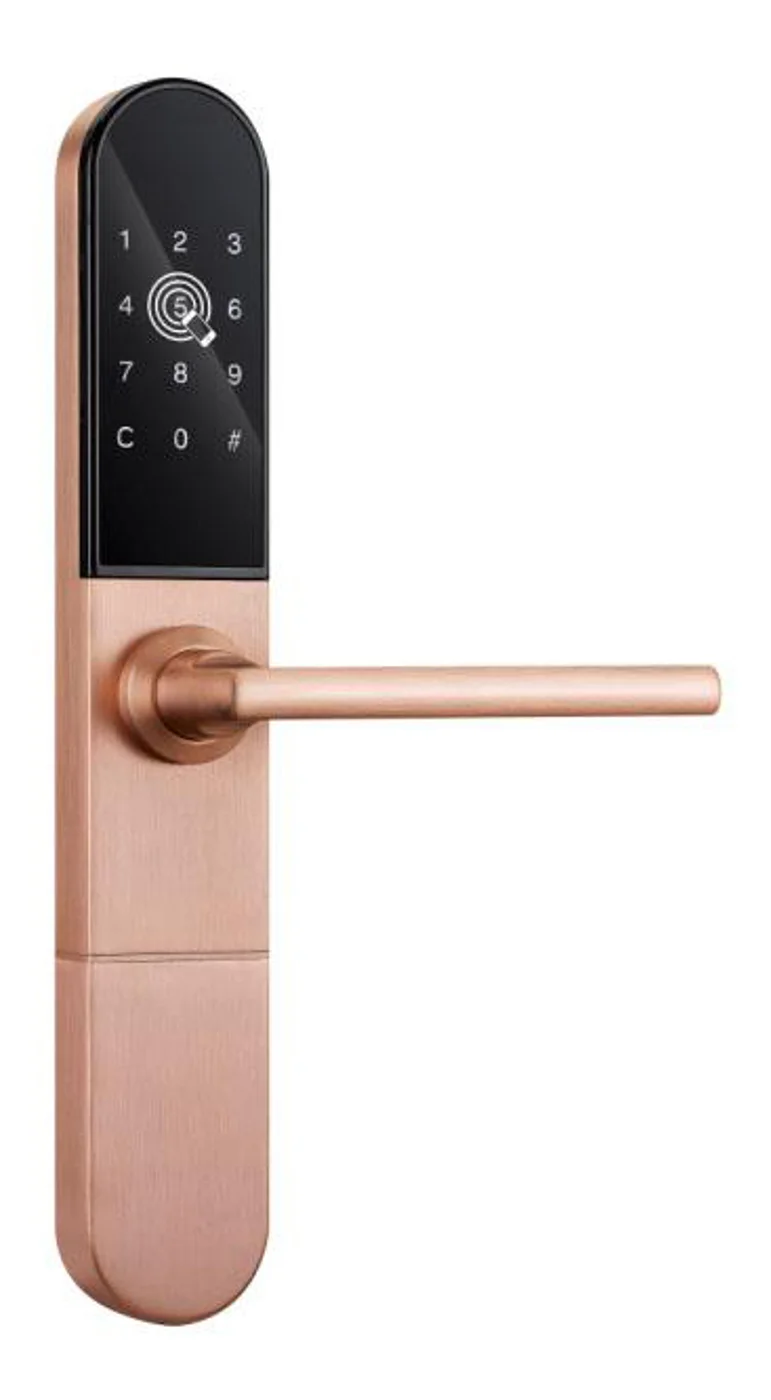
Kunci Lemari Pintar — Dikelola Aplikasi, Dasbor Multi-Lokasi
Kunci lemari pintar yang dikelola via aplikasi untuk kantor, paket, dan armada multi-lokasi. Dasbor aplikasi BLE, jejak audit, buka jarak jauh, tanpa server per kunci.
Halaman ini sudah menunjuk ke halaman tersebut sebagai referensi yang direkomendasikan berikutnya.
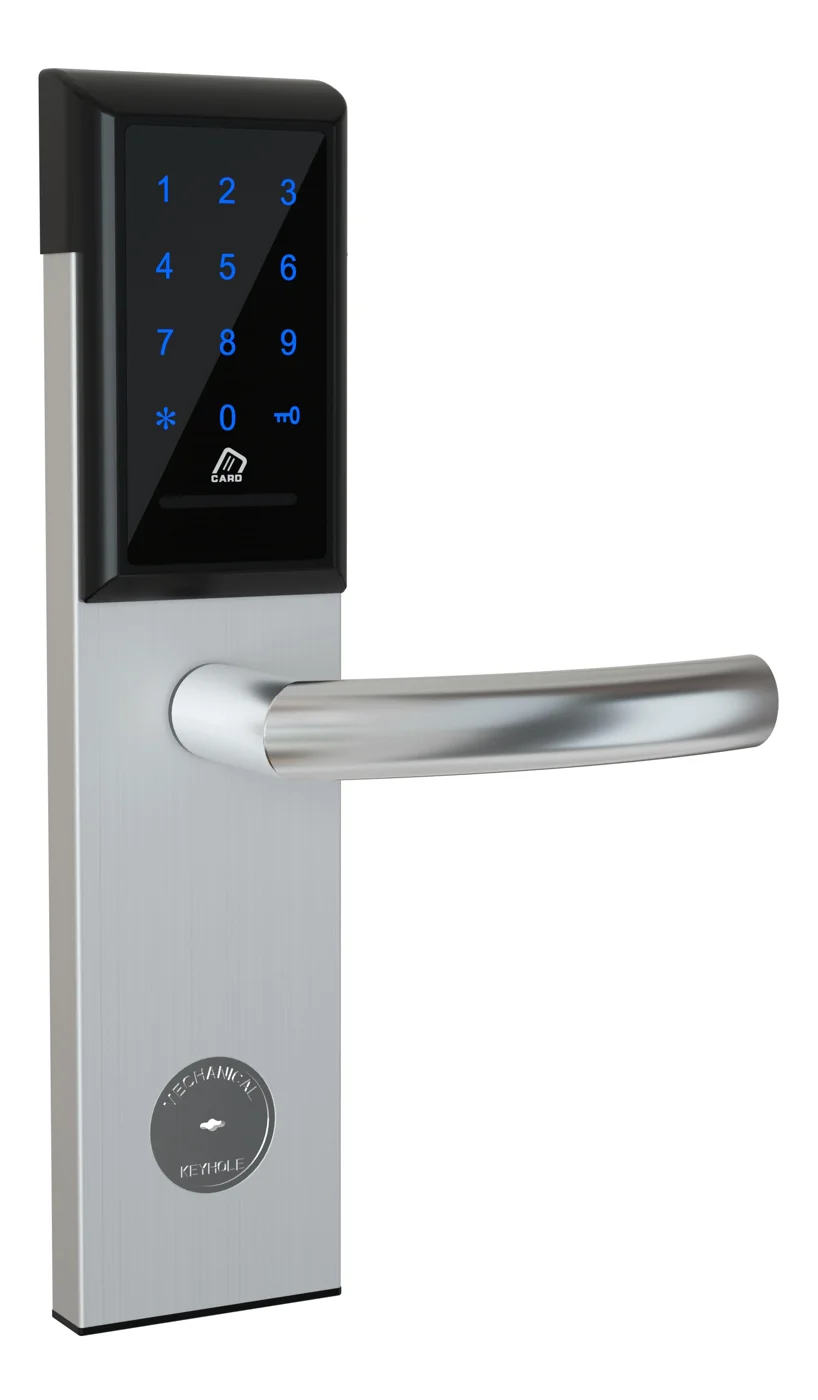
Kunci Lemari Kantor — PIN + Kartu untuk Arsip & Pedestal
Kunci lemari kantor PIN + kartu offline untuk lemari arsip, pedestal, dan laci. Retrofit baterai 5 menit, tanpa WiFi, tanpa manajemen kunci. CE/FCC/RoHS.
Halaman ini sudah menunjuk ke halaman tersebut sebagai referensi yang direkomendasikan berikutnya.
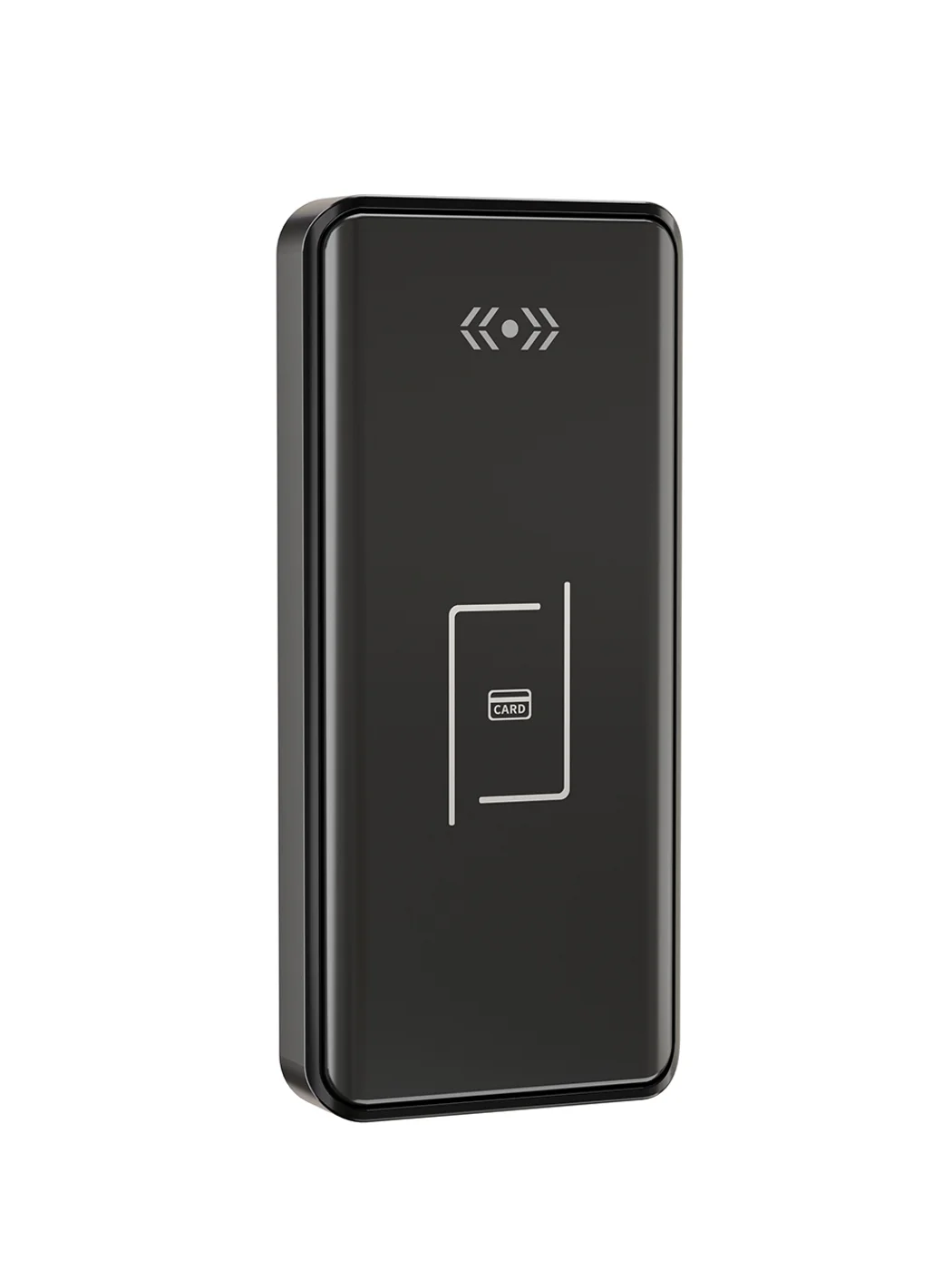
Kunci Loker Gym — Kartu Offline, Tanpa WiFi
Kunci loker gym kartu offline untuk loker fitness dan kolam. Kartu MIFARE, baterai, retrofit 5 menit, tanpa WiFi atau server. Zinc alloy, CE/FCC/RoHS.
Halaman ini sudah menunjuk ke halaman tersebut sebagai referensi yang direkomendasikan berikutnya.
Artikel blog terkait
3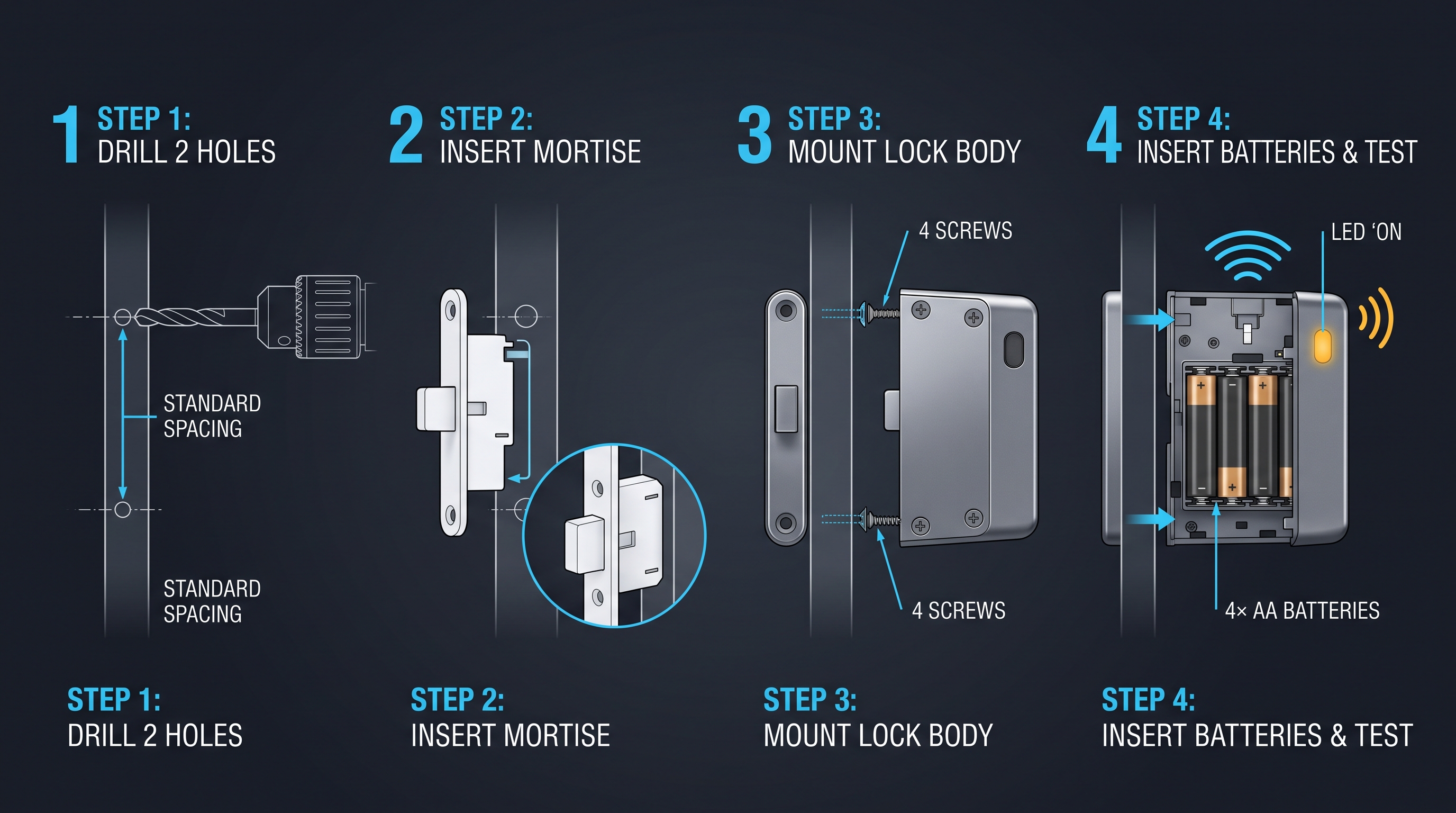
Gembok Lemari Cloud: Panduan Utama Kontrol Akses Kabinet
Panduan lengkap teknologi gembok lemari cloud mencakup manajemen jarak jauh, jejak audit waktu nyata, dan kontrol akses kabinet multi-lokasi untuk perusahaan.
Halaman tersebut mendukung konteks produk yang sama: Kunci Lemari Pintar — Dikelola Aplikasi, Dasbor Multi-Lokasi, Kunci Lemari Kantor — PIN + Kartu untuk Arsip & Pedestal, Kunci Loker Gym — Kartu Offline, Tanpa WiFi.
Cam Lock Elektronik: Memodernisasi Kunci Kabinet Andalan
Cam lock elektronik memadukan bentuk klasik cam lock dengan kredensial RFID, keypad, dan BLE. Kompatibel retrofit lubang silinder standar. Panduan lengkap.
Halaman tersebut mendukung konteks produk yang sama: Kunci Lemari Pintar — Dikelola Aplikasi, Dasbor Multi-Lokasi, Kunci Lemari Kantor — PIN + Kartu untuk Arsip & Pedestal, Kunci Loker Gym — Kartu Offline, Tanpa WiFi.
Kunci Lemari Kartu: Panduan Utama Keamanan Lemari Pintar
Jelajah lengkap teknologi kunci lemari kartu: MIFARE, DESFire, kredensial NFC ponsel, instalasi, protokol keamanan, dan strategi integrasi enterprise.
Halaman tersebut mendukung konteks produk yang sama: Kunci Lemari Pintar — Dikelola Aplikasi, Dasbor Multi-Lokasi, Kunci Lemari Kantor — PIN + Kartu untuk Arsip & Pedestal, Kunci Loker Gym — Kartu Offline, Tanpa WiFi.
Rinci proyek hotel Anda bersama insinyur kami
Kirimkan jumlah kamar, jenis plafon, dan preferensi protokol Anda. Kami akan mengirimkan rencana sampel dan penawaran dalam 24 jam kerja.
- Beralih dari panduan umum ke diskusi produk atau aplikasi.
- Gunakan RFQ saat harga, gambar teknis, MOQ, atau jadwal peluncuran membutuhkan struktur.
- Jaga jalur kontak langsung tetap terlihat untuk klarifikasi cepat dan serah terima.