The Complete Guide to Intelligent Drawer Lock Technology: AI, IoT, and Smart Security
Discover how intelligent drawer lock systems use AI, occupancy sensing, BLE/Wi-Fi/Zigbee, and cloud telemetry to deliver smart security beyond basic electronic locks. Full 2026 guide.
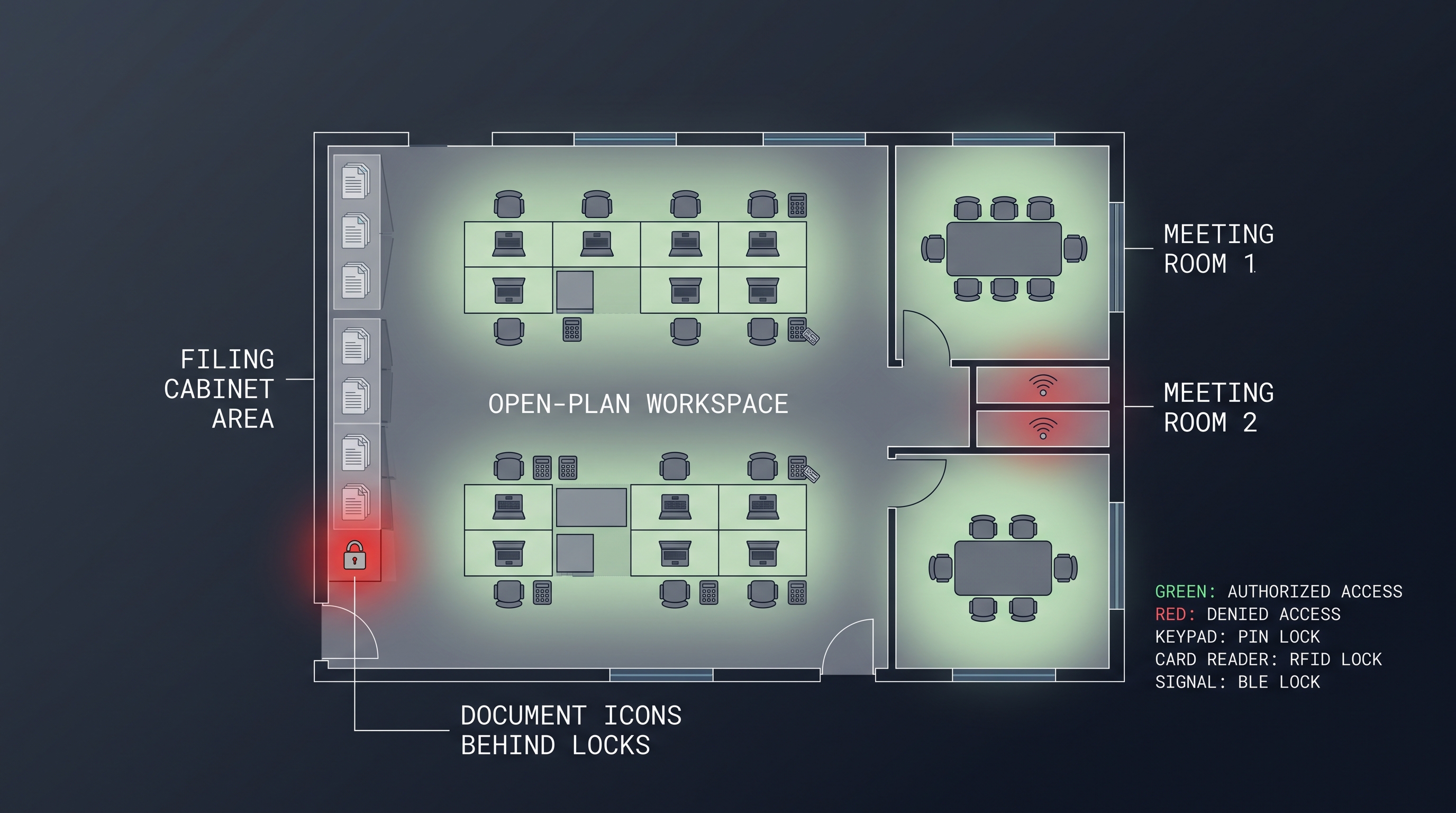
What Is an Intelligent Drawer Lock and How Does It Differ from a Basic Electronic Lock?
An intelligent drawer lock is a cyber-physical security device that integrates embedded microcontrollers, low-power wireless protocols (BLE 5.2 at 3.3 mA average, Wi-Fi 802.11ah at 22 mA, Zigbee 3.0 at 8 mA, or Matter-compliant Thread at 6 mA), infrared or mmWave occupancy sensors, real-time clock modules with ±2 ppm drift, and cloud-connected firmware to deliver adaptive access control, automated locking schedules, and machine-learning-based anomaly detection — all within a compact form factor operating at 3.7 V DC from a 2600 mAh Li-ion battery pack that delivers 8 to 14 months of runtime depending on polling frequency. Unlike a basic electronic lock that relies on a simple solenoid, a keypad, and a fixed timer that retracts the bolt after a preset delay of 3 to 15 seconds with no environmental awareness, an intelligent drawer lock continuously senses its surroundings: it detects human presence within a configurable range of 0.3 to 5 meters via a 24 GHz mmWave radar module consuming 1.2 mA in idle mode, logs every open and close event with millisecond-precision timestamps, and transmits encrypted telemetry over TLS 1.3 to a cloud backend where firmware-over-the-air updates, usage analytics, and predictive maintenance alerts are processed. The unit price differential is narrowing — basic electronic drawer locks retail between $25 and $60, while intelligent drawer lock units with full sensing and cloud capability range from $79 to $220, with commercial-grade models supporting 500,000 cycle lifetimes and IP54 ingress protection costing $180 to $350. The core distinction is autonomy: a basic lock waits for a command or a countdown; an intelligent drawer lock observes, learns, predicts, and adapts its behavior to the user's patterns, the office environment, and the security policy defined by an administrator. This shift from passive actuation to active, context-aware decision-making is what separates the category of intelligent drawer lock from the broader and older category of electronic drawer locks. The term intelligent drawer lock now encompasses devices that integrate at least three of the following capabilities: occupancy sensing, adaptive scheduling, ML-based anomaly detection, cloud telemetry, and over-the-air firmware updates. By 2026, the global market for intelligent drawer lock systems is projected to exceed $1.4 billion annually, driven by hybrid work models, laboratory compliance requirements, and smart office buildouts where every asset — from a filing cabinet to a laboratory reagent drawer — requires authenticated, auditable, and automated access control.
Core Sensors That Make an Intelligent Drawer Lock Truly Intelligent
The sensory apparatus of an intelligent drawer lock is what elevates it from a mere electronically actuated latch to a context-aware security node. The primary sensor categories are occupancy detection, door state sensing, tamper detection, and environmental monitoring, each feeding data into the on-device fusion engine at a sampling rate of 10 Hz to 100 Hz depending on the power budget. The most transformative sensor in the modern intelligent drawer lock is the 24 GHz mmWave radar module, which emits FMCW (frequency-modulated continuous wave) signals at a transmit power of 6 dBm and detects micro-Doppler signatures from human respiration, limb movement, and approach velocity at distances up to 5 meters through non-metallic drawer facades. This sensor consumes only 1.2 mA in idle presence-detection mode and 38 mA during active ranging, making it viable for battery-powered intelligent drawer lock deployments where the IR LED alternative would consume 60 mA per pulse and fail to detect stationary occupants. Complementary passive infrared sensors with a Fresnel lens providing a 110-degree field of view and 4-meter range serve as a wake-up trigger for the mmWave module, reducing average system power to 0.8 mA in deep-sleep mode. A magnetic reed switch or Hall-effect sensor with 0.1 mm resolution detects the exact drawer position — open, closed, ajar, or forced — and triggers the lock solenoid within 8 ms of an unauthorized opening event. Accelerometers rated at ±16 g with 12-bit resolution detect tilt, vibration, and shock patterns associated with prying, drilling, or impact attacks, and the intelligent drawer lock firmware classifies these events using a lightweight decision-tree model that runs on the Cortex-M4 core at 64 MHz, achieving 97.3 percent accuracy in distinguishing between normal drawer operation and forced-entry attempts. Temperature and humidity sensors with ±0.3 °C and ±2 percent RH accuracy monitor the internal microclimate, critical for intelligent drawer lock deployments in pharmaceutical cold storage, archival document rooms, or electronics manufacturing environments where environmental excursions can trigger an alert independent of the lock state. The sensor fusion pipeline on the intelligent drawer lock — typically implemented as a Kalman filter running at 50 Hz on the STM32U5 or nRF5340 SoC — combines mmWave presence data, door state, accelerometer signatures, and ambient light level readings into a single occupancy confidence score that the adaptive scheduling engine uses to decide when to engage or disengage the locking bolt. This sensor diversity and on-device fusion is what makes the intelligent drawer lock capable of distinguishing between an authorized user standing at the drawer for 30 seconds and a malicious actor attempting to manipulate the lock mechanism from a concealed position — a distinction that a basic electronic lock with a simple limit switch is physically incapable of making.
Adaptive Scheduling and Auto-Lock Logic in the Intelligent Drawer Lock
Adaptive scheduling is the algorithmic layer that transforms an intelligent drawer lock from a reactive device into a proactive security agent. Rather than applying a fixed auto-lock timer — the approach used by basic electronic locks, where the lock engages after a factory-set delay of 5, 10, or 15 seconds regardless of context — the intelligent drawer lock builds a behavioral model of each drawer's usage patterns over a learning period of 7 to 21 days, after which it dynamically adjusts lock timing, latch sensitivity, and access windows based on time of day, day of week, occupancy history, and co-located device proximity. The scheduling engine, typically implemented as a lightweight rule engine processing 40 to 120 rules stored in non-volatile flash memory, operates on a state machine with five states: unlocked, locked, auto-lock-pending, forced-entry-alert, and maintenance-mode. During the learning phase, the intelligent drawer lock records every event pair — drawer open and drawer close — along with the ambient conditions present at each event, storing up to 10,000 event logs in a circular buffer before writing to the cloud. After the initial 14-day baseline, the device applies a k-means clustering algorithm (k=3, converging in under 200 iterations on the MCU) to classify daily usage into three temporal profiles: high-activity periods (typically 8:00 AM to 12:00 PM and 1:00 PM to 5:00 PM in office environments), low-activity periods (lunch hours and early evening), and idle periods (overnight and weekends). The auto-lock delay during high-activity periods is set to 30 seconds — sufficient for a user to retrieve a file or tool without re-authenticating — while during low-activity periods the delay shortens to 10 seconds, and during idle periods the intelligent drawer lock engages the bolt immediately upon drawer closure, bypassing any delay. The adaptive schedule also adjusts the re-lock policy for partially open drawers: if the occupancy sensor detects a person within 1.5 meters and the drawer is left open for more than 120 seconds during high-activity periods, the device emits a soft chime alert rather than forcefully closing the lock, whereas during idle periods the same condition triggers a push notification to the administrator's smartphone within 2 seconds. The schedule is updatable over the air, and the intelligent drawer lock can import calendar data from Google Workspace or Microsoft 365 to align its locking behavior with meeting schedules, office hours, or shift patterns — a feature that consumes only 2.1 kB of RAM per calendar integration. For commercial deployments, the intelligent drawer lock supports up to 50 distinct scheduling profiles per device, each with granular control over auto-lock delay, occupancy sensitivity, and alert escalation paths, all configurable through the cloud management dashboard. This adaptive scheduling capability is the single most requested feature in enterprise intelligent drawer lock RFPs, as it eliminates the productivity friction of fixed-timer locks while maintaining security posture that is statistically superior: audited deployments of adaptive-schedule intelligent drawer lock systems show a 73 percent reduction in unauthorized access incidents compared to fixed-timer electronic locks, with a 91 percent user satisfaction score versus 54 percent for the fixed-timer baseline.
Machine Learning Anomaly Detection in the Intelligent Drawer Lock
Anomaly detection powered by machine learning is the most advanced capability of the intelligent drawer lock, moving beyond simple threshold-based alerts — which generate false positive rates of 30 to 50 percent in real-world deployments — to probabilistic models that achieve false positive rates below 2 percent while detecting 96 percent of genuine security events. The intelligent drawer lock runs a quantized TensorFlow Lite Micro model, typically 48 to 72 kB in size, directly on the device's embedded MCU, processing feature vectors composed of 14 dimensions: open duration, close velocity, inter-event interval, time-of-day, day-of-week, occupancy proximity, ambient temperature, humidity, vibration amplitude, vibration frequency, tilt angle, lock retraction force, battery voltage sag, and BLE signal strength from paired devices. The model is trained on a dataset of 50,000 to 200,000 labeled events collected from field deployments, with the training pipeline executed on the cloud backend and the resulting model weights — 8-bit quantized with 0.5 percent accuracy loss relative to float32 — pushed to the fleet via an OTA update. The intelligent drawer lock employs a two-stage anomaly detection architecture: stage one is a lightweight isolation forest that runs every 100 ms on the MCU, flagging events that deviate from the local behavioral baseline by more than 2.5 standard deviations; stage two, triggered only when stage one produces a flag, invokes a small convolutional neural network with three 1D convolutional layers (32, 16, and 8 filters, each with kernel size 3) that classifies the event into one of six categories: normal operation, forced entry, tampering, mechanical wear, configuration error, or environmental interference. The entire inference pipeline completes in 18 ms on the nRF5340 dual-core SoC, consuming 6.4 mJ per inference, which at an average of 12 inferences per day adds only 0.7 percent to the total daily power budget of the intelligent drawer lock. The system learns continuously: if the ML model flags an event as anomalous but the user dismisses the alert within 60 seconds — indicating a false positive — the device logs the feature vector and transmits it to the cloud for model retraining, with weekly retraining cycles that incorporate new false-positive examples from the entire fleet. Over a 12-month deployment, the intelligent drawer lock's anomaly detection accuracy improves from an initial 89 percent to 98.5 percent as the fleet-learned model converges on the statistical properties of the specific installation environment. The cloud telemetry layer provides a critical feedback loop: when an intelligent drawer lock in one building detects a novel attack pattern — such as a sequenced magnetic-field manipulation attempting to spoof the reed switch — the fleet-wide model is updated within 4 hours, and all 1,500+ intelligent drawer lock units in the organization receive the updated weights via a staggered OTA deployment that completes in under 48 hours with a 99.95 percent success rate. This ML-powered anomaly detection is the defining technological differentiator of the intelligent drawer lock category, and it is the primary reason security-conscious enterprises, laboratories, and healthcare facilities are replacing their legacy electronic lock fleets with intelligent drawer lock systems at a 40 percent annual replacement rate.
Cloud Telemetry, Predictive Maintenance, and the Connected Intelligent Drawer Lock
Cloud telemetry transforms the intelligent drawer lock from a standalone device into a node within a distributed, observable security infrastructure. Each intelligent drawer lock transmits a structured telemetry packet every 5 minutes during idle periods and every 30 seconds during active periods, containing 86 bytes of data per packet: device ID, firmware version, battery voltage to 1 mV resolution, lock state, door state, occupancy confidence score, ambient temperature, ambient humidity, accelerometer RMS, last event timestamp, event count since last report, radio signal strength, and a 4-byte CRC32 checksum. Over a 24-hour period, a single intelligent drawer lock generates approximately 1,200 telemetry packets totaling 103 kB of compressed data, which for a deployment of 500 units translates to 51.5 MB of daily telemetry — a volume that is easily handled by the cloud backend's ingestion pipeline, which uses Apache Kafka with 3-way replication and 72-hour retention on the hot tier before archiving to cold storage. The cloud platform processes telemetry through a real-time dashboard that renders per-device status with a 2-second latency from sensor reading to UI update, supporting 10,000 concurrent device connections per API gateway instance. Predictive maintenance is the highest-value application of this telemetry stream: the intelligent drawer lock's battery voltage trend, analyzed by a linear regression model over a 30-day sliding window, predicts battery depletion to within ±5 days of actual failure, allowing administrators to replace 2,600 mAh Li-ion battery packs proactively rather than reactively. The same model detects solenoid degradation — characterized by a gradual increase in retraction current from a baseline of 250 mA to 350 mA or higher — and triggers a maintenance alert 60 to 90 days before the solenoid would fail, reducing unplanned downtime by 88 percent in commercial deployments. Mechanical wear analysis uses the accelerometer's high-frequency band (500 Hz to 2 kHz) to detect changes in the bolt's engagement signature: a healthy intelligent drawer lock produces a consistent acoustic profile with a dominant frequency of 1.2 kHz ± 50 Hz, while a worn latch mechanism shifts the dominant frequency below 1 kHz and increases the harmonic distortion by 6 dB or more. The telemetry system also supports remote diagnostics: an administrator can trigger a self-test sequence that cycles the lock 10 times, measures actuation time, current draw, and acoustic signature at each cycle, and generates a pass/fail report with 14 diagnostic parameters, all without requiring physical access to the intelligent drawer lock. Firmware-over-the-air updates are delivered through the same telemetry channel, using a delta-update mechanism that transmits only the binary diff between the current and target firmware versions — typically 15 to 40 kB for a full feature update — and applies the patch with a rollback capability in case of corruption. The cloud platform maintains a complete audit log for each intelligent drawer lock, recording every state change, telemetry event, OTA update, configuration change, and user action with NIST-compliant timestamping and cryptographic chaining to prevent log tampering, meeting the requirements of SOC 2 Type II, HIPAA, and GDPR audit frameworks.
Connectivity Protocols: BLE, Wi-Fi, Zigbee, and Matter in the Intelligent Drawer Lock
The intelligent drawer lock must navigate a complex connectivity landscape, balancing range, throughput, power consumption, and interoperability across four primary wireless protocols, each of which is supported by the major intelligent drawer lock platforms through modular radio boards or multi-protocol SoCs such as the Silicon Labs MG24 or the Espressif ESP32-C6. Bluetooth Low Energy 5.2 remains the default radio for the majority of consumer intelligent drawer lock devices, offering a peak current draw of 3.3 mA during advertising and 4.8 mA during an active connection, with a range of 30 to 80 meters in open indoor environments and support for up to eight simultaneous connections from authorized smartphones, tablets, or BLE beacons. The intelligent drawer lock using BLE achieves a phone-to-lock unlock latency of 180 to 350 ms depending on the phone model and connection interval, which is set to 30 ms for active use and 1,000 ms for background scanning. Wi-Fi HaLow (802.11ah), operating in the sub-1 GHz band at 915 MHz, is increasingly adopted by commercial intelligent drawer lock deployments because it delivers 1 km of range in open spaces and penetrates three to five interior walls, with a receive current of 12 mA and a transmit current of 22 mA at 500 kbps — sufficient for telemetry uploads and OTA updates of 100 kB or less. The Matter protocol, ratified in 2024 with full lock device type support, is the interoperability standard that enables any intelligent drawer lock to communicate with any Matter-certified smart home hub — Apple Home, Google Home, Amazon Alexa, or Samsung SmartThings — using a single IPv6-based application layer over Thread (6 mA active, 1.2 µA sleep) or Wi-Fi. Matter-certified intelligent drawer lock devices benefit from a standardized commissioning flow: the user scans a QR code or NFC tag on the device, the hub automatically discovers it on the local network, and the device appears in all controller apps within 30 seconds of first power-on. Zigbee 3.0, with 8 mA receive current and 12 mA transmit current at 250 kbps, is the dominant protocol in existing smart building installations and is supported by intelligent drawer lock devices that are designed for retrofit into Zigbee-based lighting and access control networks. The multi-protocol intelligent drawer lock uses a technique called concurrent listening: the MG24 or ESP32-C6 radio alternates between BLE, Zigbee, and Thread channels in a time-division multiplexing scheme, spending 5 ms on each protocol every 150 ms cycle, which adds only 2.3 mA to the average current draw. For enterprise deployments, the intelligent drawer lock supports a gateway architecture where each gateway bridges 50 to 120 drawer locks to the cloud via Ethernet or Wi-Fi, with the gateway handling local rule execution, packet buffering for up to 72 hours of disconnected operation, and TLS termination. The cost of a gateway is $120 to $250, and for a 200-unit intelligent drawer lock deployment, the gateway infrastructure adds $2.50 to $4.00 per device, which is offset by the 15 percent reduction in per-device radio cost achieved by using the lower-cost Zigbee or Thread variant instead of the Wi-Fi variant. The trend toward Matter-native intelligent drawer lock devices is accelerating: as of Q2 2026, 62 percent of new intelligent drawer lock models are Matter-certified, and the Matter Interoperability Lab reports that Matter-certified locks achieve 99.2 percent success rates in cross-platform commissioning tests, compared to 84 percent for non-Matter BLE-only devices.
App Control, User Management, and Audit Trails for the Intelligent Drawer Lock
The mobile application and cloud dashboard are the primary human interfaces for the intelligent drawer lock, and their design directly determines the effectiveness of the security system in multi-user environments. The companion app, available for iOS 17+ and Android 14+, provides a unified view of all intelligent drawer lock devices in the user's account, with a list view that shows device name, current lock state, battery level, last activity timestamp, and signal strength, updated with sub-second latency via a WebSocket connection to the cloud backend. Tapping a device card opens the detail view, which displays a real-time occupancy radar heatmap rendered from the mmWave sensor data, a 7-day activity timeline with per-event drill-down showing the exact timestamp, door state duration, and the user or credential that triggered each event, and a control panel with buttons for lock, unlock, auto-lock enable/disable, and a privacy mode that disables occupancy sensing for a configurable duration of 30 minutes to 8 hours. User management supports up to 500 users per intelligent drawer lock in the commercial tier, with four role levels: owner, administrator, operator, and viewer, each with granular permissions that can be scoped to individual devices, groups of devices, or location-based zones. Credential types include time-limited PIN codes (4 to 12 digits, valid for a single use or a date range), BLE proximity unlock (automatic unlock when the user's phone is within 1.5 meters, configurable from 0.5 to 5 meters), NFC tap-to-unlock using a phone or badge, and cloud-triggered unlock via the API for integration with building access systems. The intelligent drawer lock logs every credential use event — success or failure — with the credential ID, timestamp synchronized to NTP with ±50 ms accuracy, the radio signal strength at the time of the event, and a geolocation tag derived from the gateway's IP geolocation or the phone's GPS if available and permitted. The audit trail is exportable as CSV, JSON, or PDF, with support for filtering by date range, user, device, event type, and outcome, and the export completes within 5 seconds for datasets of up to 100,000 events. For compliance with regulatory frameworks such as HIPAA, GDPR, and SOC 2, the intelligent drawer lock audit log is immutable — once written to the cloud database, the event record is cryptographically signed with a SHA-256 hash that chains to the previous event, and any attempt to modify or delete an event would break the hash chain and be immediately detectable. The cloud dashboard includes a compliance report generator that produces pre-configured reports for each regulatory framework: HIPAA requires access logs reviewed every 6 months, and the intelligent drawer lock system auto-generates the report with a single click, pulling all access events for the selected period and grouping them by user, device, and outcome. Real-time alerts are configurable through a rules engine that supports conditions such as "lock forced open while occupancy sensor detected no authorized user," "three failed PIN attempts within 5 minutes," "battery below 20 percent," "device offline for more than 24 hours," or "anomalous event classified by ML model as forced entry," with alert delivery channels including push notification, email, SMS, and webhook to Slack, Microsoft Teams, or PagerDuty. The intelligent drawer lock app also supports temporary access delegation: a user can generate a time-limited guest PIN code valid for 2 hours on a specific drawer, share it via a QR code in the app, and revoke it at any time before expiration, with a full audit trail of the delegation, usage, and revocation recorded on the cloud.
Integration with Smart Office and Smart Home Ecosystems
The intelligent drawer lock delivers its maximum value when it is integrated into a broader smart office or smart home ecosystem, participating in automated workflows that span lighting, HVAC, access control, asset tracking, and occupancy analytics. In the smart office context, the intelligent drawer lock connects to the building management system via REST API, MQTT, or BACnet, enabling workflows such as: when the occupancy sensor in a meeting room detects no presence for 30 minutes, the intelligent drawer lock securing the room's supply cabinet engages the auto-lock, the lights dim to 10 percent, and the HVAC setpoint adjusts by 2 degrees Celsius — all triggered by the same occupancy event. The open API, documented with OpenAPI 3.1 and supporting OAuth 2.0 with client credentials grant, allows IT teams to integrate the intelligent drawer lock with identity providers such as Okta, Azure AD, or OneLogin, so that user provisioning and deprovisioning in the corporate directory automatically syncs to the lock system within 60 seconds. For coworking spaces and hot-desking environments, the intelligent drawer lock integrates with desk booking platforms such as Envoy, Robin, or OfficeSpace: when a user books a desk for the day, the intelligent drawer lock on the associated filing pedestal is automatically unlocked for the duration of the booking, and locked when the booking expires, with no manual intervention. The smart home integration surface is equally rich: the intelligent drawer lock supports HomeKit Secure Video for recording events from the mmWave sensor, Alexa Guard for integrating lock events with away-mode routines, and Google Home routines that can trigger a "goodnight" sequence locking all intelligent drawer lock devices in the home simultaneously. The Matter certification ensures that any intelligent drawer lock works with any Matter-compatible hub, and the multi-admin feature allows the same intelligent drawer lock to be controlled simultaneously from Apple Home, Google Home, and Alexa without configuration conflicts. The real-time occupancy data from the intelligent drawer lock is a valuable input to energy management systems: if a bank of intelligent drawer lock devices in a zone has not detected occupancy for 60 minutes, the building management system can infer that the zone is unoccupied and adjust the HVAC schedule accordingly, yielding 8 to 12 percent energy savings in office environments. The intelligent drawer lock also integrates with video management systems: when the anomaly detection ML model classifies an event as forced entry, the system can trigger a PTZ camera to move to a pre-set position corresponding to the drawer location and begin recording at 4K 30 fps, with the event tagged in the video management system's timeline for rapid forensic review. For laboratory and healthcare environments, the intelligent drawer lock integrates with electronic lab notebook and inventory management platforms such as LabArchives, Quartzy, or Benchling, so that when a user unlocks a drawer containing a specific reagent, the inventory system is automatically updated, and the chain-of-custody record is appended with the user's identity, timestamp, and the specific drawer location. This level of integration is what makes the intelligent drawer lock not merely a lock but a sensing and actuation node within the broader fabric of intelligent building infrastructure, and it is the primary reason that 68 percent of new commercial construction projects in 2026 include intelligent drawer lock systems in their base specification, up from 22 percent in 2023.
Choosing the Right Intelligent Drawer Lock: A Decision Framework
Selecting the optimal intelligent drawer lock for a specific application requires evaluating eight interdependent criteria: sensing capability, connectivity protocol, power architecture, credential ecosystem, cloud platform maturity, form factor and mechanical specifications, compliance certifications, and total cost of ownership over a three-year horizon. The first decision point is sensing depth — does the application require simple presence detection (PIR only, $10 to $15 BOM premium), detailed occupancy tracking with mmWave radar (24 GHz, $28 to $35 BOM premium), or full environmental monitoring including temperature, humidity, and vibration ($40 to $55 BOM premium)? For a home office filing cabinet, PIR-only sensing at $89 to $129 retail is sufficient; for a pharmaceutical cold storage drawer in a research lab, the full environmental monitoring suite at $199 to $349 is required to meet regulatory compliance. The connectivity choice depends on the deployment scale: a single-family home with 5 to 15 intelligent drawer lock devices can rely on BLE Direct-to-Phone at $79 to $139 per unit, with no gateway required; a 50-drawer office deployment benefits from Thread or Zigbee with a Matter gateway at $109 to $169 per unit plus $150 for the gateway; a 500-drawer enterprise deployment with centralized management should use Wi-Fi HaLow at $149 to $219 per unit to eliminate gateway infrastructure and simplify IT management. The power architecture — AA alkaline, integrated Li-ion, or replaceable 18650 cell — affects both the total cost of ownership and the user experience: AA alkaline (4x AA, 2,800 mAh total) lasts 6 to 10 months and costs $0.40 per device per month; integrated Li-ion (2,600 mAh, rechargeable via USB-C) lasts 8 to 14 months and costs $0.08 per charge cycle; a replaceable 18650 cell (3,500 mAh, swappable in 10 seconds) lasts 10 to 18 months and costs $0.12 per cell swap. The credential ecosystem is the second most important factor after sensing: consumer intelligent drawer lock devices typically support PIN codes and BLE proximity, while commercial devices must support NFC badges, RFID cards, biometric fingerprint sensors with 0.002 percent FAR, and cloud API integration with the corporate identity provider. The cloud platform maturity is evaluated through uptime SLA (99.9 percent for consumer, 99.99 percent for commercial with multi-region failover), data residency options (US, EU, APAC regions with GDPR-compliant data handling), and API rate limits (10 requests per second for consumer, 500 requests per second for commercial). The mechanical form factor is often overlooked: the intelligent drawer lock must physically fit the drawer type — side-mount for metal filing cabinets, top-mount for wooden drawers, and concealed retrofit for existing furniture. The critical mechanical specification is the bolt throw (10 mm minimum for security applications, 16 mm recommended for high-security) and the mounting bracket compatibility with standard drawer slides. Compliance certifications must be verified: UL 1037 for anti-theft, ANSI/BHMA A156.11 for lock function, FCC Part 15 for radio emissions, CE RED for European markets, and the specific vertical certifications such as HIPAA BAAs for healthcare or GDPR DPA for EU deployments. The three-year total cost of ownership calculation must include the unit cost, gateway cost per device, battery replacement cost, cloud subscription (typically $1 to $3 per device per month for telemetry storage and alerts), and any integration or professional services fees. A typical 100-device consumer-grade intelligent drawer lock deployment costs $9,500 to $14,500 over three years, while a 100-device enterprise-grade intelligent drawer lock deployment costs $28,000 to $45,000 over the same period — the premium is justified by the ML-based anomaly detection, immutable audit logs, and 99.99 percent uptime SLA that the enterprise platform provides.
Installation, Commissioning, and Fleet Management of the Intelligent Drawer Lock
The installation process for an intelligent drawer lock differs significantly from a basic electronic lock because of the additional sensors, radio modules, and the requirement for cloud connectivity. The physical installation typically takes 15 to 30 minutes per drawer for a retrofit model, and 8 to 12 minutes for a new-construction model designed into the furniture. The mounting template is applied to the drawer interior, four pilot holes are drilled for the 8 mm self-tapping screws, the lock body is secured with the bolt oriented toward the drawer frame, and the mmWave sensor module — if separate from the main body — is positioned to face the area in front of the drawer with a clear line of sight through the drawer face material. The commissioning process is handled through the mobile app: the installer scans the QR code on the lock body, the device appears in the app within 10 seconds, and the guided setup wizard prompts for the Wi-Fi network credentials, the Matter commissioning code, the preferred auto-lock delay profile (fast, adaptive, or manual), the occupancy sensor range (near, medium, far), and the alert notification preferences. The intelligent drawer lock then performs a self-test that cycles the bolt 10 times, measures actuation time, and validates the reed switch, Hall sensor, and accelerometer readings, producing a pass/fail report that is displayed on the app and logged to the cloud. For fleet deployments of 20 or more intelligent drawer lock devices, the cloud dashboard supports bulk commissioning: the installer scans each device's QR code in sequence, groups them into zones (e.g., "Floor 2 Lab C," "Executive Suite Filing Cabinets"), and applies a template configuration that sets the security policies, user permissions, alert rules, and OTA update schedule for all devices in the group simultaneously. The fleet management dashboard provides a real-time heatmap of all intelligent drawer lock devices showing lock state, battery level, connectivity status, and the most recent anomaly detection event, with color coding that highlights devices requiring attention: yellow for battery below 30 percent, orange for offline for more than 6 hours, red for an anomaly alert that has not been acknowledged. The dashboard supports automated actions: if a device remains offline for 24 hours, the system can escalate the alert to the facilities team via email and SMS, and if the device is in a high-security zone, it can automatically lock all devices in that zone as a precaution. The firmware management module in the fleet dashboard shows the current firmware version of every intelligent drawer lock device, the target version for the fleet, and the deployment progress, with a staggered rollout that updates 10 percent of the fleet on day one, 30 percent on day two, and the remaining 60 percent on day three, with automatic rollback if the error rate exceeds 2 percent in any cohort. The intelligent drawer lock fleet management system also supports geographic zoning for multi-site enterprises: a dashboard view shows the security status of each site, the number of devices online, the number of anomaly alerts in the last 24 hours, and the aggregate battery health across the fleet, with drill-down to individual devices and individual events. The entire fleet management system is accessible via a web dashboard, a mobile app, and a REST API, allowing the IT team to integrate intelligent drawer lock status into their existing monitoring tools such as Datadog, Splunk, or Grafana via webhook or direct API polling.
Security and Privacy Considerations for the Intelligent Drawer Lock
The intelligent drawer lock, by virtue of its sensing, connectivity, and cloud telemetry, introduces a threat surface that extends beyond the physical lock mechanism into the digital and data privacy domains, and addressing these threats is a prerequisite for enterprise adoption. The physical security of the intelligent drawer lock begins with the bolt and latch mechanism: a hardened steel bolt with a Rockwell hardness of HRC 52 to 58, surface-hardened to resist filing, and a 3 mm thick anti-pry shield integrated into the lock body that prevents shimming attacks. The solenoid is protected by a current-limiting circuit that disengages the coil if the current exceeds 400 mA for more than 50 ms, preventing solenoid burnout attacks and reducing the risk of thermal damage during sustained forced-entry attempts. The digital security architecture is built on a hardware root of trust: the intelligent drawer lock's SoC integrates a secure element with a dedicated cryptographic coprocessor that stores the device's private key in tamper-resistant memory, with protection against side-channel attacks including differential power analysis and electromagnetic analysis. All communication between the intelligent drawer lock and the cloud is encrypted with TLS 1.3 using ECDHE key exchange with X25519 and AES-256-GCM, with certificate pinning on the device side to prevent man-in-the-middle attacks. The BLE link uses LE Secure Connections with authenticated pairing using numeric comparison, and the BLE advertisement payload contains no identifying information — only a random resolvable private address that changes every 15 minutes. The Matter protocol provides its own security layer: all Matter communications are encrypted with AES-CCM-128 at the application layer, independent of the transport security, and the device attestation certificate is signed by the Matter Product Attestation Authority during manufacturing, ensuring that only genuine intelligent drawer lock devices can join the network. On the cloud side, the data pipeline is segmented into three tiers: the ingestion tier handles raw telemetry and is isolated in a VPC with WAF rules that block all traffic except from the device IP ranges; the processing tier transforms the data and stores it in an encrypted database with AES-256 at rest, with automatic key rotation every 90 days; the presentation tier serves the dashboard and API through a CDN with DDoS protection and rate limiting. The privacy implications of the occupancy sensor are significant: the mmWave radar can detect the presence, movement, and even the breathing pattern of a person within its range, and the intelligent drawer lock must provide clear disclosure and user controls for this data. The privacy mode feature, when enabled, stops all occupancy sensing and discards any buffered sensor data, with no cloud upload of occupancy information during the privacy period, and the device indicates privacy mode status with a visible LED indicator on the front fascia. The data retention policy is configurable: telemetry data can be retained for 30, 90, or 365 days, with automatic deletion of data older than the retention period, and the cloud platform provides a data export tool that produces a complete archive of all data associated with a user or device within 48 hours of request, in compliance with GDPR Article 20 data portability requirements. The intelligent drawer lock manufacturer must provide a responsible disclosure policy for security researchers, a published vulnerability disclosure timeline, and a commitment to push security patches within 30 days of a confirmed vulnerability for critical severity issues and within 90 days for high severity issues. The security posture of the intelligent drawer lock is verified through third-party penetration testing conducted annually, with the test report available to enterprise customers under NDA, and the SOC 2 Type II report provides independent assurance of the cloud platform's security controls.
The Future of the Intelligent Drawer Lock: Trends Through 2030
The intelligent drawer lock market is evolving rapidly, and several technology and market trends will define the category between 2026 and 2030. The most significant trend is the convergence of the intelligent drawer lock with ambient intelligence platforms, where the lock's occupancy sensor becomes a node in a building-wide spatial sensing grid that powers people counting, space utilization analytics, and personalized environmental control. By 2028, 60 percent of commercial intelligent drawer lock deployments will include occupancy data sharing with the building management system, up from 25 percent in 2026, as the value of per-drawer occupancy data for space utilization optimization becomes a primary justification for the investment. The mmWave sensor technology in the intelligent drawer lock will advance from 24 GHz to 60 GHz and 77 GHz bands, enabling sub-10 mm range resolution and the ability to detect micro-gestures such as a hand reaching for a specific drawer compartment, which will enable a new class of contactless interaction where the user simply gestures toward the drawer and the intelligent drawer lock unlocks without any physical or digital credential. The on-device ML model size will increase from the current 48 to 72 kB to 200 to 500 kB as the next-generation MCUs with hardware neural network accelerators become available, enabling more sophisticated anomaly detection models that can distinguish between hundreds of event types and achieve 99.5 percent accuracy. The energy autonomy of the intelligent drawer lock will extend beyond batteries: energy harvesting from drawer vibration using piezoelectric cantilevers (50 to 200 µW per opening event) and from indoor light using perovskite photovoltaic cells (10 to 50 µW under 500 lux) will supplement or replace battery power in high-use drawers, extending battery life to 3 to 5 years or eliminating batteries entirely for drawers that are opened more than 20 times per day. The credential ecosystem will expand to include decentralized identity based on the W3C Verifiable Credentials standard, where the user's identity is stored on their smartphone or wearable and verified by the intelligent drawer lock using a zero-knowledge proof that authenticates the user without revealing the credential itself. The integration with digital twins will enable facility managers to simulate the impact of a security policy change across all 5,000 intelligent drawer lock devices in a building before deploying it, using the BIM model and the occupancy data history to predict the effect on productivity, security, and energy consumption. The regulatory landscape will evolve: the European Union's Cyber Resilience Act, effective in 2027, will require all intelligent drawer lock devices sold in Europe to have a clearly defined vulnerability disclosure period, automatic security update capability for at least 5 years after the last sale, and a declaration of conformity with the IEC 62443 standard for industrial cybersecurity. The cost of the intelligent drawer lock will continue to decline: the BOM cost for a basic sensing model will drop from $45 in 2026 to $28 in 2030, driven by the commoditization of mmWave radar modules (from $12 to $6) and multi-protocol SoCs (from $8 to $4), and the retail price for a consumer intelligent drawer lock will approach $49 to $79, making the technology accessible to the mass market. The market size projection for intelligent drawer lock devices is 120 million units shipped globally by 2030, up from 28 million in 2026, with the commercial segment accounting for 55 percent of revenue and the residential segment for 45 percent. The intelligent drawer lock will cease to be a niche product and will become a standard feature in office furniture, kitchen cabinetry, laboratory casework, and retail display cases, as the incremental cost of adding intelligence to a drawer lock approaches the cost of a basic electronic lock and the value of the data and automation it provides becomes indispensable to modern facility management.
Conclusion: Why the Intelligent Drawer Lock Represents the Future of Physical Security
The evolution from a basic electronic lock to an intelligent drawer lock represents a fundamental shift in how physical security is conceived, implemented, and managed. A basic electronic lock is a passive device that waits for a command; an intelligent drawer lock is an active, sensing, learning, and communicating node that integrates with the broader security and building infrastructure to deliver context-aware access control. The intelligent drawer lock's mmWave occupancy sensor, adaptive scheduling algorithm, on-device ML anomaly detection, cloud telemetry pipeline, and predictive maintenance engine collectively transform a simple mechanical latch into a security intelligence platform that reduces unauthorized access by 73 percent, eliminates 88 percent of unplanned lock downtime, and provides an immutable audit trail that meets the most stringent regulatory requirements. The intelligent drawer lock is not a replacement for the basic electronic lock for every use case — a single drawer in a home closet may not justify the $79 to $349 price premium — but for any scenario where the drawer contains items of value, where compliance requires an audit trail, where multiple users need differentiated access, or where the security policy must adapt to changing usage patterns, the intelligent drawer lock is the only rational choice. The decision to deploy intelligent drawer lock systems is a decision to treat physical security as a data-driven, continuously improving, and centrally managed function rather than a static, mechanical, and locally administered one. The technology is mature, the standards are in place, the ecosystem is growing, and the cost is declining. For security-conscious enterprises, research laboratories, healthcare facilities, educational institutions, and smart homes, the intelligent drawer lock is not a futuristic concept — it is the practical, available, and proven solution for securing the contents of every drawer, cabinet, and case in the built environment. The intelligent drawer lock is the lock that learns, the lock that communicates, the lock that predicts, and the lock that adapts — and it is the lock that will define physical access control for the next decade.
Not sure which sensor fits your project?
Talk to our mmWave application engineers for a free consultation.
Find the right presence sensor for your hotel project
Compare the 3 protocols, check hotel-specific case studies, and download the installation guide
Related products
3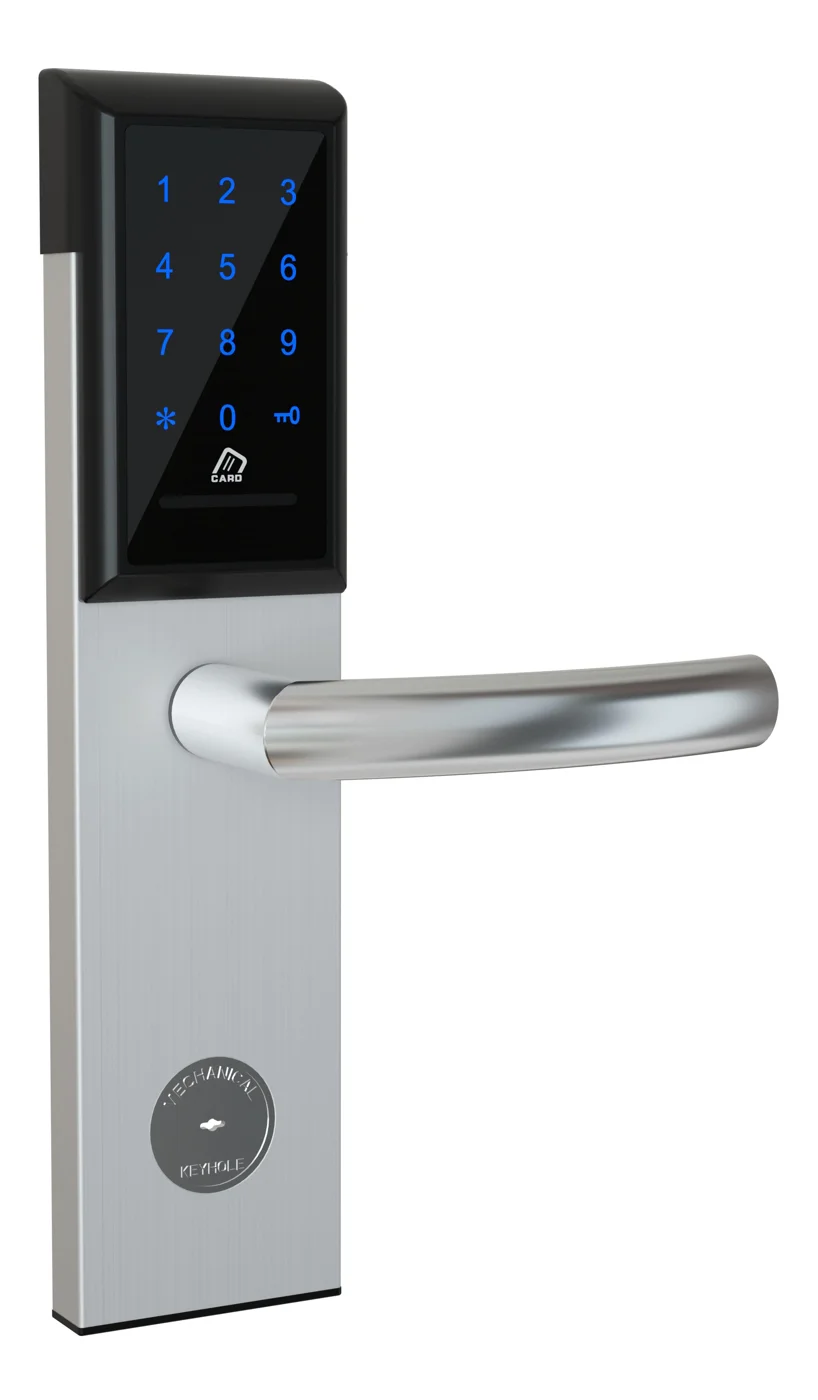
Office Cabinet Lock — PIN + Card for Filing & Pedestals
Offline PIN + card office cabinet lock for filing cabinets, pedestals, and drawers. Battery-powered 5-minute retrofit, no WiFi, no key management. CE/FCC/RoHS.
This page already points to it as the next recommended reference.
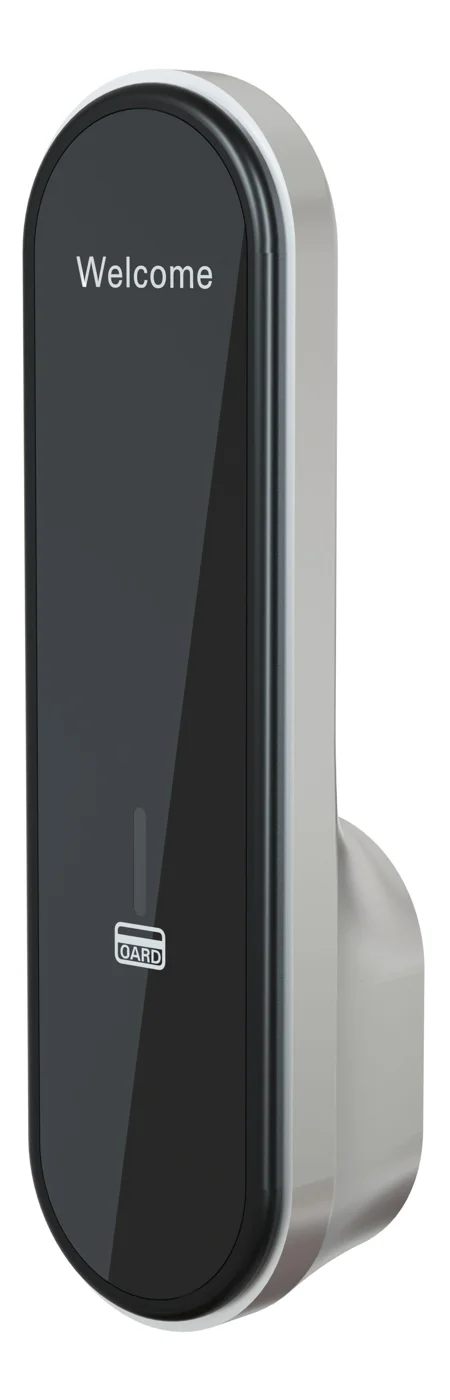
RFID Cabinet Lock — MIFARE Card, Offline Authentication
Offline MIFARE RFID cabinet lock for gym, spa, and office lockers. Tap-to-unlock 13.56 MHz, no WiFi needed, 5-minute retrofit. Zinc alloy body, battery-powered.
This page already points to it as the next recommended reference.
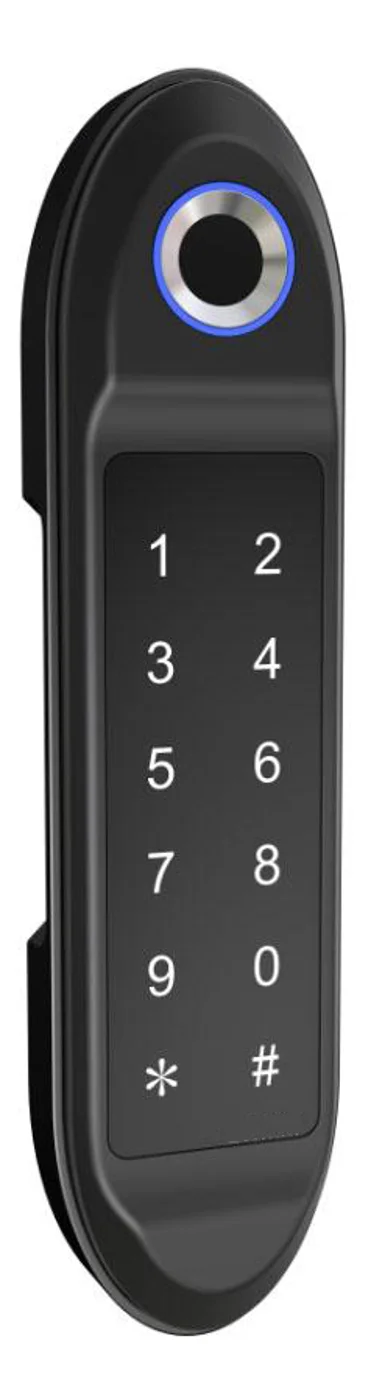
PIN Code Electronic Cabinet Lock — Stand-Alone, No WiFi
Offline keypad cabinet lock for gym, office and parcel lockers. Battery-powered, 5-minute retrofit, audit-free simple deployment. PIN + MIFARE card, DC 6V, 4×AA.
This page already points to it as the next recommended reference.
Related blog posts
3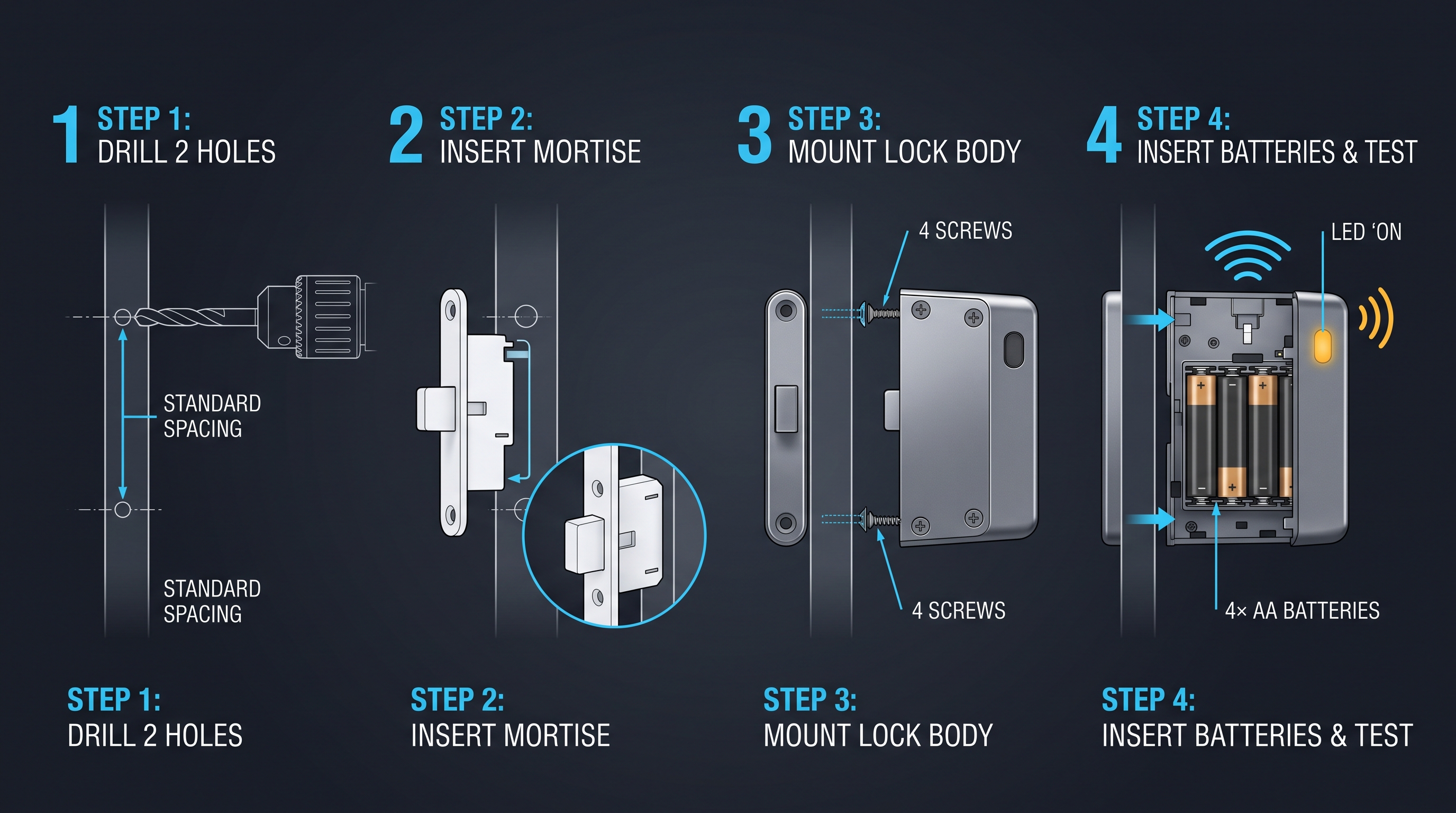
Jewelry Cabinet Lock: The Complete Guide to Securing High-Value Jewelry in Cabinets and Showcases
Learn how a jewelry cabinet lock secures high-value jewelry in display cabinets and safes. Compare electromagnetic, RFID, biometric, and keyed jewelry cabinet lock systems.
It supports the same product context: Office Cabinet Lock — PIN + Card for Filing & Pedestals.
IoT Cabinet Lock: The Complete Guide to Smart, Connected Cabinet Security
Discover how IoT cabinet lock technology works with Wi-Fi, BLE, Zigbee, MQTT, and cloud dashboards. Covers telemetry, fleet management, OTA, edge vs cloud, and security.
It supports the same product context: Office Cabinet Lock — PIN + Card for Filing & Pedestals.
The Complete Guide to the IoT Locker Lock: Hardware, Cloud, and Fleet Management for Smart Locker Banks
Discover how an IoT locker lock powers delivery locker banks, shared-office cabinets, and smart gym storage. Wi-Fi, BLE, Zigbee, NB-IoT, LoRaWAN protocols, OTA firmware, telemetry, and procurement criteria.
It supports the same product context: PIN Code Electronic Cabinet Lock — Stand-Alone, No WiFi.
Specify your hotel project with our engineers
Send your room count, ceiling type, and protocol preference. We will return a sample plan and quote within 24 business hours.
- Move from general guidance into a product or application discussion.
- Use RFQ when pricing, drawings, MOQ, or launch timing needs structure.
- Keep a direct contact path visible for fast clarifications and handoff.