Intelligent Cabinet Lock: The 2026 Guide to Smart, Connected Cabinet Security
Discover how an intelligent cabinet lock works with RFID, biometric, IoT and app-based credentials, with buying guides, specs, and use cases for smart homes and offices.
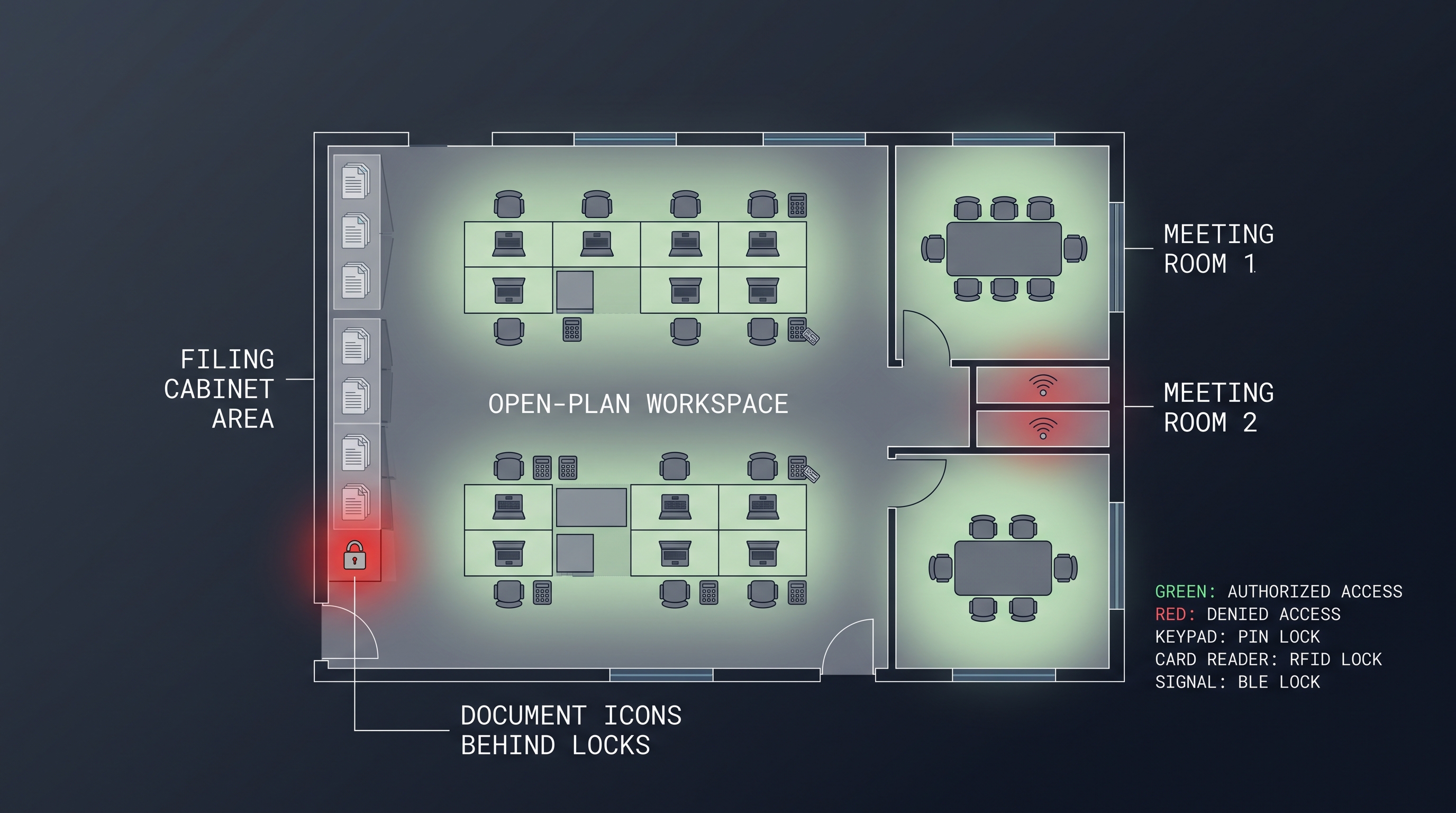
An intelligent cabinet lock is a network-connected locking device that secures cabinets, cupboards, and storage furniture using digital credentials—RFID cards, PIN codes, biometric fingerprints, or smartphone apps—while reporting status and access events to a management platform or smart-home hub over Wi-Fi, Bluetooth, Zigbee, Thread, or Matter. A typical intelligent cabinet lock combines a credential reader, a 48 MHz ARM microcontroller, a motorized latch drawing 80–250 mA during a 0.3–0.8 second unlock, and 4×AA or lithium battery power delivering 12–24 months of standby life. Unlike mechanical cabinet locks, the intelligent cabinet lock enables remote lock/unlock commands, real-time open-door alerts, time-based access schedules, event logging of 1,000–10,000 timestamped actions, and integration with building access-control or home-automation ecosystems. Deployments span residential kitchen and liquor cabinets, office supply and document cabinets, hotel room furniture, healthcare medication carts, and industrial tool storage. The intelligent cabinet lock market was estimated at $620 million in 2025 and is projected to grow at 15.3 percent CAGR through 2032, driven by smart-home adoption, hybrid-work security, and compliance requirements for accountable storage. An intelligent cabinet lock typically reduces the administrative burden of key management by 70–90 percent while providing the auditability and remote control that mechanical locks cannot offer.
What Is an Intelligent Cabinet Lock and How Does It Work
An intelligent cabinet lock is a smart lock designed specifically for cabinet doors and drawers, combining electronic credential authentication with network connectivity for remote management and status monitoring. The intelligent cabinet lock's core hardware includes a credential capture layer—RFID reader, capacitive keypad, 500 DPI fingerprint sensor, or BLE 5.0 radio—an authentication MCU with encrypted credential storage (AES-128 at rest), an actuation layer comprising a motor or solenoid and a latch with 8–12 mm throw, and a connectivity module (Wi-Fi, BLE, Zigbee, Thread, or Matter over Thread) for reporting to a hub or cloud. The intelligent cabinet lock authenticates a credential against a local whitelist in 100–500 ms, drives the actuator to unlock, and transmits the event to the management platform. Standby current of 15–40 µA sustains the credential reader polling loop; Wi-Fi-connected intelligent cabinet lock models consume 100–200 µA during periodic keepalives, reducing battery life to 6–12 months unless using a battery-saving duty cycle. Remote commands operate over the network: an administrator can lock or unlock any cabinet in the fleet, provision or revoke credentials, and configure access schedules from a dashboard or app. The intelligent cabinet lock's distinguishing feature is its integration capability—it does not exist in isolation but participates in a larger security fabric, whether that is a smart-home ecosystem (Apple Home, Google Home, Samsung SmartThings) or an enterprise access-control platform (Salto, Dormakaba, or a custom API integration).
Core Architecture of an Intelligent Cabinet Lock
| Component | Function | Typical Specification |
|---|---|---|
| Credential reader | Capture RFID/PIN/fingerprint/BLE | 13.56 MHz / 500 DPI / BLE 5.0 |
| Microcontroller | Authenticate, control actuation, manage connectivity | ARM Cortex-M4 at 48–100 MHz |
| Actuator | Retract latch on valid credential | Motor 80–250 mA, 0.3–0.8 s |
| Latch | Secure cabinet door | Steel, 8–12 mm throw |
| Connectivity module | Report status, receive remote commands | Wi-Fi / BLE / Zigbee / Thread |
| Power | Standalone or battery operation | 4×AA 12–24 mo, or rechargeable |
| Event memory | Store audit records | 1,000–10,000 events in EEPROM |
The Intelligent Cabinet Lock Authentication Flow
When a user presents a credential, the intelligent cabinet lock captures it (50–200 ms), compares it against the whitelist (100–500 ms), and on match energizes the actuator to unlock within 0.3–0.8 seconds. The event—credential ID, timestamp from a ±20 ppm real-time clock, door state—is stored in non-volatile memory and queued for transmission to the platform over the connectivity module. If the network is unavailable, the intelligent cabinet lock buffers events (1,000–10,000) and uploads them when connectivity resumes. Remote commands flow in the reverse direction: the platform pushes a lock/unlock command, a credential update, or a schedule change, and the intelligent cabinet lock acknowledges and executes. End-to-end latency for a remote command is 0.5–3 seconds on Wi-Fi or 1–5 seconds on Thread/Matter networks.
Types of Intelligent Cabinet Lock by Credential and Connectivity
An intelligent cabinet lock is classified by two axes—credential technology and connectivity protocol—and the combination determines cost, battery life, security, and ecosystem integration. Credential types include RFID cards (MIFARE DESFire EV3 with AES-128 for cloning resistance), PIN keypads (4–8 digit codes, scramble-pad anti-shoulder-surfing), biometric fingerprints (capacitive 500 DPI with liveness detection), and smartphone apps (BLE 5.0 encrypted rolling codes). Connectivity options include Wi-Fi (2.4 GHz, direct-to-cloud, 6–12 month battery life), Bluetooth Low Energy (app control within 10–30 meters, 12–24 month battery life), Zigbee 3.0 (mesh, hub-required, 12–18 month battery life), Thread over Matter (mesh, low power, smart-home interoperability, expected cabinet-lock support by 2027), and proprietary RF. The intelligent cabinet lock market splits roughly 35 percent RFID, 25 percent PIN, 20 percent app/BLE, and 20 percent biometric, with Zigbee/Thread-connected models growing fastest as smart-home protocols mature. The choice of credential and connectivity should reflect the environment: an enterprise office favors RFID with existing badges; a smart home favors app + Matter for ecosystem integration; a healthcare cart favors biometric non-repudiation; a hotel favors PIN with remote reset. Every intelligent cabinet lock type trades security, convenience, cost, and battery life differently, and the right selection depends on the facility's identity infrastructure and management workflows.
Connectivity Protocol Comparison
| Protocol | Network | Battery life | Range | Hub required | Best fit |
|---|---|---|---|---|---|
| Wi-Fi | Direct to cloud | 6–12 months | 100 m indoor | No | Enterprise, single-site |
| BLE 5.0 | Phone direct | 12–24 months | 10–30 m | No | Home, small office |
| Zigbee 3.0 | Mesh | 12–18 months | 10–100 m | Yes | Smart buildings |
| Thread/Matter | Mesh | 12–24 months | 10–100 m | Border router | Smart homes, new builds |
Credential Technology Comparison
| Credential | Security | Convenience | Cost impact | Best fit |
|---|---|---|---|---|
| RFID (DESFire EV3) | High | Tap and go | Low | Offices with badges |
| PIN keypad | Medium | Code entry | Low | Hotels, gyms |
| Fingerprint | Very high | Touch and open | Medium | Healthcare, homes |
| Smartphone app | High | Phone as key | Medium | Smart homes, offices |
Intelligent Cabinet Lock vs Mechanical Cabinet Lock: A Comparison
An intelligent cabinet lock fundamentally upgrades cabinet security when compared with the mechanical cam locks and padlocks it replaces, delivering remote control, auditability, and credential flexibility that mechanical hardware cannot match. A mechanical cabinet cam lock costs $5–15 and can be picked in 30–120 seconds, bumped in under 10 seconds, or pried open with a screwdriver applied to the latch. An intelligent cabinet lock costs $40–120 and eliminates the keyway—there are no pins to pick or bump, and forced-entry attempts trigger tamper alarms and log events. The intelligent cabinet lock adds remote and scheduled access: an administrator can unlock a supply cabinet at 2 a.m. for a nurse on a night shift, then revoke access at 6 a.m., a capability no mechanical lock provides. The audit trail—1,000–10,000 timestamped events per intelligent cabinet lock—satisfies compliance requirements in healthcare, finance, and government. Operational labor drops sharply: issuing and tracking physical keys costs $18–35 per incident across a 100-cabinet facility; the intelligent cabinet lock reduces this to near zero with digital credential provisioning and revocation. The intelligent cabinet lock's drawbacks—higher unit cost, battery dependency, and network dependency for remote features—are offset by its security and lifecycle benefits. For any facility with more than 10 cabinets or compliance requirements, the intelligent cabinet lock delivers superior security and lower total cost of ownership within 18–30 months.
Head-to-Head Comparison
| Dimension | Mechanical cam lock | Intelligent cabinet lock |
|---|---|---|
| Unit cost | $5–15 | $40–120 |
| Attack surface | Keyway (pick, bump, force) | No mechanical keyway |
| Remote control | None | Lock/unlock from app/dashboard |
| Access scheduling | None | Time-window policies |
| Audit trail | None | 1,000–10,000 events per lock |
| Credential management | Key distribution/tracking | Digital provisioning/revocation |
| Tamper alert | None | Alarm + event logging |
| Battery/power | None | 4×AA, 12–24 months |
| Network dependency | None | Wi-Fi/BLE/Zigbee for remote features |
| Lifecycle TCO | High with key labor | Lower within 18–30 months |
Applications of the Intelligent Cabinet Lock Across Use Cases
The intelligent cabinet lock serves residential and commercial settings where cabinet-level security, remote control, and access accountability are valuable. In smart homes, an intelligent cabinet lock secures liquor cabinets, gun safes, medication cabinets, cleaning-supply cupboards, and home offices, integrating with Apple Home, Google Home, or Samsung SmartThings so users control cabinets from their phones or voice assistants—with scene automation such as "guest mode" that locks sensitive cabinets during dinner parties. In offices, the intelligent cabinet lock secures supply cabinets, confidential document storage, server and network equipment cabinets, and kitchen areas, with per-employee access schedules and audit trails that deter internal theft. In healthcare, the intelligent cabinet lock secures medication carts, controlled-substance drawers, and supply cabinets, meeting Joint Commission and DEA accountability standards with biometrically authenticated, timestamped access. In hotels and hospitality, an intelligent cabinet lock secures in-room minibars, guest valuables drawers, and housekeeping supply cabinets, with remote reset between guest stays. In industrial and retail settings, the intelligent cabinet lock secures tools, parts, and merchandise cabinets, with access restricted to authorized personnel and usage tracked for inventory reconciliation. Across every use case, the intelligent cabinet lock's defining value is that a facility manager can provision, revoke, schedule, monitor, and audit access to dozens or hundreds of cabinets without visiting a single door.
Smart Home Cabinets
In a smart home, the intelligent cabinet lock is a building block of home-security and lifestyle automation. A smart-home intelligent cabinet lock on a liquor or gun cabinet integrates with occupancy sensors and the home hub: if a child's room sensor triggers while the cabinet is open, the system alerts the homeowner. Scene automation locks sensitive cabinets when "away" or "guest mode" is activated. The homeowner grants temporary app credentials to a babysitter for the medicine cabinet, then revokes them automatically at schedule end. The intelligent cabinet lock's open-door notifications—sent the moment a cabinet is opened—provide immediate awareness that mechanical locks never deliver.
Office and Commercial Cabinets
The office intelligent cabinet lock transforms cabinet management from a physical to a software task. Supply cabinets open only for employees in authorized cost centers; document cabinets restrict access to specific legal or HR teams; network and server cabinets allow access only to IT personnel, with the audit trail used in incident investigations. Integration with the corporate identity provider (Okta, Azure AD) means a departing employee loses cabinet access the instant their account is deactivated. The intelligent cabinet lock's dashboard shows which cabinets are open, who opened them last, and battery status across the entire fleet.
Healthcare Medication and Supply Cabinets
The healthcare intelligent cabinet lock secures medications and supplies with auditability that satisfies regulators. Medication carts equipped with an intelligent cabinet lock authenticate the administering nurse biometrically or by badge, log the access timestamp, and feed the hospital's medication-administration record. Controlled-substance drawers use dual-credential intelligent cabinet lock mode (fingerprint + PIN) to enforce the two-person rule, and the audit trail is admissible in diversion investigations. Supply cabinets with an intelligent cabinet lock reduce the ~20 percent of hospital inventory shrinkage attributed to unaccounted access.
Hotel and Hospitality Cabinets
The hotel intelligent cabinet lock secures minibars, guest-safe drawers, and housekeeping supply cabinets. In-room minibar cabinets lock automatically after restocking and unlock only with guest or staff credentials, preventing unrecorded consumption and disputes at checkout. Housekeeping carts carry intelligent cabinet lock-secured linen and amenity compartments, with access attributed to the assigned housekeeper. Between guest stays, the intelligent cabinet lock's templates and codes are reset remotely in under a second.
How to Choose the Right Intelligent Cabinet Lock: Buying Criteria
Selecting the right intelligent cabinet lock requires evaluating credential type, connectivity, form factor, power strategy, management features, and security certifications against the cabinet's environment and security tier. The first decision is the credential set: RFID for facilities with existing badges, PIN for tokenless simplicity, fingerprint for non-repudiation and hygiene-sensitive settings, or app-based for smart-home integration. The second is connectivity: the intelligent cabinet lock must join the facility's ecosystem—Wi-Fi for standalone enterprise deployments, Zigbee or Thread/Matter for mesh smart buildings, BLE for phone-only control. The third is form factor: the intelligent cabinet lock must fit the cabinet door's construction (surface-mount for retrofit, mortise for new furniture) and the door material (metal, wood, glass). The fourth is power: AA alkaline for 12–24 month intervals, rechargeable lithium for wireless charging integration, or wired 12 V DC for permanent installations. The fifth is management software: consumer intelligent cabinet lock models pair with phone apps; commercial models require management platforms with user groups, schedules, audit export, and identity-provider integration. The sixth is security: AES-128 encrypted credential storage, TLS 1.3 for network communication, tamper sensors, and lockout policies after failed attempts. Certifications to verify include FCC/CE/RoHS for the electronics and, for smart-home intelligent cabinet locks, Matter certification for cross-ecosystem interoperability. Finally, consider the vendor's firmware update path—an intelligent cabinet lock with stale firmware is a security liability—and require OTA updates as a standard feature.
Selection Decision Matrix
| Environment | Recommended credential | Recommended connectivity |
|---|---|---|
| Smart home | App + Matter | Thread/Matter or Wi-Fi |
| Enterprise office | RFID (existing badges) | Wi-Fi or Zigbee |
| Healthcare cart | Fingerprint + PIN | Wi-Fi (for integration) |
| Hotel in-room | PIN or RFID | BLE or Zigbee |
| Industrial tool cabinet | RFID or PIN | Zigbee or Wi-Fi |
| Retail display | App or PIN | BLE |
Management Feature Requirements
Commercial intelligent cabinet lock deployments should verify the management platform provides user groups, access schedules, audit export (CSV, Syslog), identity-provider integration (SCIM), fleet health dashboards (battery, connectivity, open-door state), and remote lock/unlock. The platform should expose REST APIs for integration with facility systems, and the intelligent cabinet lock should support staged OTA firmware updates to reduce regression risk. Consumer deployments require a polished phone app with enrollment, scheduling, notifications, and guest-credential management.
Installation Guide for an Intelligent Cabinet Lock
Installing an intelligent cabinet lock retrofits existing cabinet doors or integrates into new furniture, with install times ranging from 15 minutes for a surface-mount retrofit to 45 minutes for a concealed mortise body. The installation begins with an audit of the cabinet: door material (wood, metal, glass), door thickness (12–30 mm), the existing lock hole if retrofitting, and interior clearance for the lock body and battery compartment. Surface-mount intelligent cabinet lock models attach to the cabinet interior with four screws and a 6–8 mm cable pass-through hole, with the reader exposed on the door exterior. Concealed mortise intelligent cabinet lock bodies require routing a cavity in wooden doors or welding a bracket in metal doors, with the reader mounted flush. After mechanical mounting, the intelligent cabinet lock is configured: batteries are inserted, the lock is paired to the network (Wi-Fi SSID, Zigbee hub, or Thread border router), credentials are enrolled, and access schedules are set via the app or management platform. The lock's real-time clock syncs to the network (NTP or hub reference), and a functional test—valid credential unlock, invalid credential denial, remote lock/unlock command, and open-door notification—verifies the installation before the cabinet returns to service. For smart-home intelligent cabinet locks, the final step is Matter pairing to the user's ecosystem (Apple Home, Google Home, Samsung SmartThings), which establishes the encrypted commissioning certificate and enables scene automation.
Installation Steps
- Audit cabinet: door material, thickness, existing hole, interior clearance
- Select mount: surface-mount retrofit or concealed mortise
- Mount lock body and reader per template (2–3 Nm screw torque)
- Route cables through 6–8 mm pass-through hole
- Insert batteries, close compartment, power on
- Pair to network (Wi-Fi, Zigbee, Thread) and sync clock
- Enroll credentials (cards, PINs, fingerprints, app users)
- Configure access schedules and notifications
- Test: valid unlock, denied attempt, remote command, open alert
- For smart-home: Matter-pair to ecosystem, test scenes
Network Commissioning
The intelligent cabinet lock's network commissioning must validate reachability from the cabinet's physical location. Wi-Fi intelligent cabinet locks require -65 dBm RSSI at the cabinet and the lock's MAC address whitelisting on enterprise networks with WPA2/WPA3-Enterprise. Zigbee intelligent cabinet locks join the coordinator's network with a 128-bit install code; the coordinator must be within 10–30 meters or reachable via a routed mesh. Thread/Matter intelligent cabinet locks use the Thread network's credential sharing; a border router (e.g., Apple TV, Google Nest Hub) must be within mesh range. Commissioning failures are typically RSSI/range issues or install-code mismatches, both diagnosable from the platform's log.
Security Considerations for the Intelligent Cabinet Lock
Security for an intelligent cabinet lock is a layered problem spanning physical tamper resistance, credential cryptography, network transport, and platform security, and each layer has specific implementation requirements. Physically, the intelligent cabinet lock uses a hardened steel latch with 8–12 mm throw resisting 50–80 N of prying force, tamper switches that log forced-entry attempts, and interior mounting that keeps fasteners inaccessible from outside. Credential security depends on type: MIFARE DESFire EV3 with AES-128 mutual authentication for RFID, encrypted template storage (AES-128/256 with hardware-unique-key binding) for biometrics, and hashed PINs with brute-force lockout for keypads. Network security requires TLS 1.3 (or at minimum TLS 1.2) for Wi-Fi/cloud communication, AES-CCM or AES-GCM for Zigbee/Thread payload encryption, and Matter's distributed-compliance ledger and certificate-based authentication for Matter-enabled intelligent cabinet locks. Platform security requires multi-factor authentication for administrators, role-based access control, audit logging of admin actions, and regular vulnerability scanning and patching. The intelligent cabinet lock's firmware must be updateable—OTA updates closed vulnerabilities are the reason smart locks are not static targets. A procurement checklist should verify the vendor's encryption standards, update process, penetration-test history, and adherence to applicable certifications (FCC, CE, UL 294 for access control, Matter certification). The intelligent cabinet lock is only as strong as the weakest layer, and a disciplined deployment secures all layers rather than relying on any single one.
Security Layer Checklist
| Layer | Requirement | Verification |
|---|---|---|
| Physical latch | 8–12 mm steel throw, tamper switch | Pull test, tamper trigger test |
| RFID credential | DESFire EV3, AES-128 mutual auth | Vendor spec, card test |
| Biometric template | AES-128 at rest, liveness detection | Vendor spec, spoof test |
| Network transport | TLS 1.3 (Wi-Fi), AES-CCM (Zigbee) | Packet capture, spec |
| Platform | MFA, RBAC, admin audit | Configuration review |
| Firmware | OTA updates, CVE response SLAs | Vendor policy review |
Top Intelligent Cabinet Lock Brands and Models in 2026
The intelligent cabinet lock market spans consumer smart-lock brands and commercial access-control vendors. In the consumer segment, August, Yale, and Schlage—best known for smart door locks—have extended app-controlled intelligent cabinet lock lines for home cabinets; Schlage's home cabinet lock integrates with Google Home and Amazon Alexa. Smart-home-native brands including eufy Security, Philips, and Samsung SmartThings offer Matter-compatible intelligent cabinet locks with fingerprint and app credentials for kitchen, liquor, and gun cabinets. In the commercial segment, Salto Systems and Dormakaba provide intelligent cabinet lock solutions within their access-control ecosystems, unifying cabinet access with building doors under one credential and management platform. Digilock's cabinet locks serve healthcare and public settings with ruggedized construction and dual-credential options. Chinese manufacturers—ZKTeco, Make Technology, and Giga Tms—supply cost-competitive intelligent cabinet locks with RFID/fingerprint credentials at 30–50 percent below Western pricing, serving hotel, gym, and retail deployments. The intelligent cabinet lock buyer should prioritize the management platform and ecosystem fit over hardware alone: an intelligent cabinet lock is only as valuable as the software that provisions credentials, schedules access, and reports events. Reference calls with current customers in the same vertical and a pilot deployment of 5–10 locks are strongly recommended before scale-up.
Brand Model Comparison
| Brand | Flagship | Credential | Connectivity | Price | Best fit |
|---|---|---|---|---|---|
| Schlage | Home Cabinet Lock | App, PIN, RFID | Wi-Fi, Matter | $80–140 | Smart home |
| eufy Security | Cabinet Lock | Fingerprint, app | Wi-Fi | $70–120 | Smart home, family |
| Salto | XS4 Cabinet | RFID, app | Zigbee, Wi-Fi | $150–250 | Enterprise, hotel |
| Dormakaba | Cattron Cabinet | RFID, app | Zigbee | $120–220 | Corporate, campus |
| Digilock | Cabinet Lock | RFID, PIN, fingerprint | BLE, Wi-Fi | $90–180 | Healthcare, gym |
| ZKTeco | Cabinet Lock | RFID, fingerprint | BLE, Wi-Fi | $50–90 | Hotel, retail, budget |
Maintenance and Troubleshooting for the Intelligent Cabinet Lock
Maintaining an intelligent cabinet lock fleet requires attention to battery health, credential hygiene, network connectivity, and mechanical condition, and the intelligent cabinet lock's own telemetry makes maintenance data-driven rather than calendar-driven. The intelligent cabinet lock reports battery voltage to the platform; alerts below 2.6 V per AA cell trigger replacement scheduling with 4–8 weeks of remaining operation. Wi-Fi-connected intelligent cabinet locks report connectivity health; locks that drop offline for 3 consecutive poll cycles trigger a technician dispatch. Credential hygiene is critical in shared environments: departed users' credentials must be revoked via the platform, which propagates the deletion to all affected intelligent cabinet locks within seconds. Mechanical inspection, performed annually, checks latch engagement, door alignment, and screw torque (2–3 Nm), since misaligned doors cause false-lock failures and premature battery drain from repeated actuation attempts. Sensor maintenance differs by credential type: fingerprint readers need weekly dry-cloth and monthly alcohol cleaning; keypads need periodic cleaning of gaps; RFID readers need a clean antenna surface. Firmware updates should be applied on a staged schedule—pilot on 10 percent of locks, then fleet-wide after a 2-week soak. Common faults and remediation: battery drain faster than expected indicates the lock is reconnecting to Wi-Fi repeatedly (move the lock, improve RSSI) or a faulty cell; intermittent credential rejection indicates a dirty reader (clean, re-enroll); remote commands fail indicates network issue (check RSSI, hub, cloud status); latch does not retract despite valid credential indicates mechanical binding or actuator failure (inspect, replace unit). A documented runbook reduces mean-time-to-repair from hours to minutes.
Maintenance Schedule
| Interval | Task | Tooling |
|---|---|---|
| Monthly | Review battery and connectivity dashboard | Management platform |
| Quarterly | Clean credential readers | Dry cloth, 70% IPA |
| Annually | Mechanical inspection, latch alignment | Visual, pull test |
| Annually | Replace AA batteries proactively | 4×AA alkaline |
| Per departure | Revoke departed-user credentials | Platform, propagate |
| Quarterly | Apply staged firmware updates | OTA, 10% pilot |
Future Trends in Intelligent Cabinet Lock Technology
The intelligent cabinet lock is evolving toward deeper ecosystem integration, energy efficiency, and AI-driven access intelligence. Matter standardization—expected to encompass cabinet and locker locks by 2027—will make the intelligent cabinet lock a first-class smart-home device, interoperable across Apple Home, Google Home, and Samsung SmartThings without proprietary bridges, with commission-time certificate-based authentication replacing vulnerable pairing flows. Energy harvesting will reduce battery dependency: kinetic energy from cabinet door opening and closing, ambient photovoltaic cells on cabinet faces, and RF harvesting from nearby Wi-Fi or Zigbee signals will power low-duty-cycle intelligent cabinet locks indefinitely, eliminating the 12–24 month battery swap. AI-driven access intelligence will analyze patterns in intelligent cabinet lock usage—who opens which cabinets, at what times, in what sequences—to detect anomalies (a nurse accessing a medication cabinet at 3 a.m., an employee opening a server cabinet without a work order) and flag them for security review. Predictive maintenance models will forecast battery exhaustion and actuator wear from telemetry, scheduling service before failure. The intelligent cabinet lock will also converge with inventory management: a supply cabinet that detects which items were removed when opened will feed ERP and inventory systems automatically. As sensor and radio costs fall and Matter matures, the intelligent cabinet lock will migrate from an aftermarket upgrade to standard equipment in new furniture and building construction, becoming a default layer of physical security in the smart-building fabric.
Frequently Asked Questions About the Intelligent Cabinet Lock
The intelligent cabinet lock generates recurring questions about functionality, power, security, and compatibility, and precise answers support informed purchase and deployment decisions. This FAQ addresses the most common intelligent cabinet lock inquiries.
Can an intelligent cabinet lock be controlled remotely?
Yes. An intelligent cabinet lock with Wi-Fi, Zigbee, or Thread connectivity supports remote lock/unlock commands from a phone app or management dashboard. Remote commands execute in 0.5–3 seconds on Wi-Fi and 1–5 seconds on Thread/Matter. The intelligent cabinet lock also reports status—open, closed, locked, unlocked, battery level, tamper alerts—to the platform in real time.
What is the battery life of an intelligent cabinet lock?
Standby-optimized intelligent cabinet lock models deliver 12–24 months on four AA alkaline batteries at 15–40 µA standby. Wi-Fi-connected models consuming 100–200 µA during keepalives achieve 6–12 months. The intelligent cabinet lock reports battery voltage to the platform, with a low-battery alert at 2.6 V per cell and 4–8 weeks of remaining operation. Lithium packs extend intervals to 3–5 years.
Can an intelligent cabinet lock work offline?
Yes. The intelligent cabinet lock authenticates credentials against a locally cached whitelist (up to 20,000 IDs), so users can unlock during network outages. Events buffer in non-volatile memory (1,000–10,000) and upload when connectivity resumes. Remote control, schedule changes, and notifications require connectivity, but basic credential authentication does not.
Does an intelligent cabinet lock require a hub?
It depends on the connectivity protocol. Wi-Fi and BLE intelligent cabinet locks connect directly to the router or phone with no hub. Zigbee and Thread/Matter intelligent cabinet locks require a coordinator or border router—a smart-home hub like Apple TV, Google Nest Hub, or a Zigbee coordinator—to join the network.
Can an intelligent cabinet lock secure a glass cabinet door?
Yes, with the correct mounting hardware. Glass-door intelligent cabinet lock installations use clamp-style brackets and surface-mounted readers that do not require drilling through glass. Confirm the door thickness (typically 4–8 mm for glass) and choose a model with adjustable latch depth for glass door gaps.
Is an intelligent cabinet lock secure against hacking?
A properly secured intelligent cabinet lock uses encrypted credential storage (AES-128), TLS 1.3 for network transport, and regular OTA firmware updates to patch vulnerabilities. Matter-certified intelligent cabinet locks use certificate-based authentication and the Distributed Compliance Ledger. As with any IoT device, the intelligent cabinet lock's security depends on the vendor's update discipline and the facility's network hygiene.
Frequently Asked Questions About the Intelligent Cabinet Lock
The intelligent cabinet lock generates recurring questions about functionality, power, security, and compatibility, and precise answers support informed purchase and deployment decisions. This FAQ section addresses the most common intelligent cabinet lock inquiries that buyers and facility managers raise during evaluation.
Can an intelligent cabinet lock be controlled remotely?
Yes. An intelligent cabinet lock with Wi-Fi, Zigbee, or Thread connectivity supports remote lock/unlock commands from a phone app or management dashboard. Remote commands execute in 0.5–3 seconds on Wi-Fi and 1–5 seconds on Thread/Matter. The intelligent cabinet lock also reports status—open, closed, locked, unlocked, battery level, tamper alerts—to the platform in real time, enabling proactive monitoring across a fleet of cabinets.
What is the battery life of an intelligent cabinet lock?
Standby-optimized intelligent cabinet lock models deliver 12–24 months on four AA alkaline batteries at 15–40 µA standby. Wi-Fi-connected models consuming 100–200 µA during keepalives achieve 6–12 months. The intelligent cabinet lock reports battery voltage to the platform, with a low-battery alert at 2.6 V per cell and 4–8 weeks of remaining operation. Lithium packs extend intervals to 3–5 years for hard-to-service cabinets.
Can an intelligent cabinet lock work offline?
Yes. The intelligent cabinet lock authenticates credentials against a locally cached whitelist (up to 20,000 IDs), so users can unlock during network outages. Events buffer in non-volatile memory (1,000–10,000) and upload when connectivity resumes. Remote control, schedule changes, and notifications require connectivity, but basic credential authentication does not.
Does an intelligent cabinet lock require a hub?
It depends on the connectivity protocol. Wi-Fi and BLE intelligent cabinet locks connect directly to the router or phone with no hub. Zigbee and Thread/Matter intelligent cabinet locks require a coordinator or border router—a smart-home hub like Apple TV, Google Nest Hub, or a Zigbee coordinator—to join the network. The intelligent cabinet lock's hub requirement should be checked against the facility's existing smart-building infrastructure.
Can an intelligent cabinet lock secure a glass cabinet door?
Yes, with the correct mounting hardware. Glass-door intelligent cabinet lock installations use clamp-style brackets and surface-mounted readers that do not require drilling through glass. Confirm the door thickness (typically 4–8 mm for glass) and choose a model with adjustable latch depth for glass door gaps. The intelligent cabinet lock's clamp hardware must accommodate the glass thickness and door frame geometry.
Is an intelligent cabinet lock secure against hacking?
A properly secured intelligent cabinet lock uses encrypted credential storage (AES-128), TLS 1.3 for network transport, and regular OTA firmware updates to patch vulnerabilities. Matter-certified intelligent cabinet locks use certificate-based authentication and the Distributed Compliance Ledger. As with any IoT device, the intelligent cabinet lock's security depends on the vendor's update discipline and the facility's network hygiene, including segmented VLANs and firewall rules.
Conclusion: Unlocking the Full Value of an Intelligent Cabinet Lock
The intelligent cabinet lock moves cabinet security from the mechanical key era into the connected-access era, and the decision framework in this guide helps buyers match the right intelligent cabinet lock to their cabinets, ecosystems, and security requirements. For smart homes, a Matter-certified intelligent cabinet lock with app and fingerprint credentials integrates with the homeowner's ecosystem and automates access. For offices and commercial facilities, an intelligent cabinet lock with RFID credentials, access schedules, and audit trails integrates with the identity provider and deters internal theft. For healthcare, a dual-credential intelligent cabinet lock satisfies compliance requirements for controlled-substance and medication storage. Installation retrofits existing cabinets in 15–45 minutes, battery life spans 6–24 months, and the management platform delivers remote control, notifications, and auditability that no mechanical lock can approach. As Matter matures and energy harvesting reduces battery dependency, the intelligent cabinet lock will become a standard building subsystem. Facilities and homeowners that adopt a standards-based, API-rich intelligent cabinet lock today will capture the security, operational, and compliance benefits earliest.
Not sure which sensor fits your project?
Talk to our mmWave application engineers for a free consultation.
Find the right presence sensor for your hotel project
Compare the 3 protocols, check hotel-specific case studies, and download the installation guide
Related products
3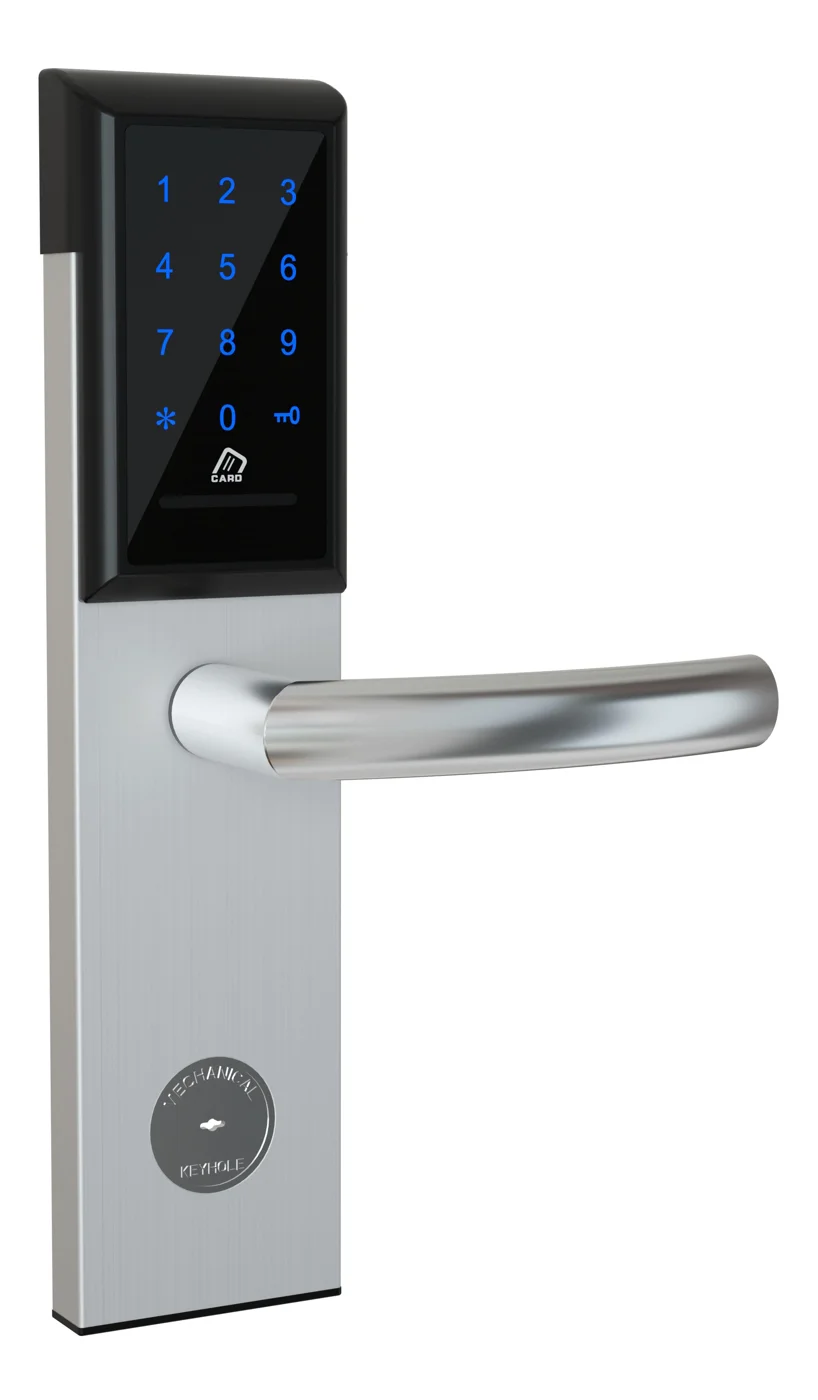
Office Cabinet Lock — PIN + Card for Filing & Pedestals
Offline PIN + card office cabinet lock for filing cabinets, pedestals, and drawers. Battery-powered 5-minute retrofit, no WiFi, no key management. CE/FCC/RoHS.
This page already points to it as the next recommended reference.
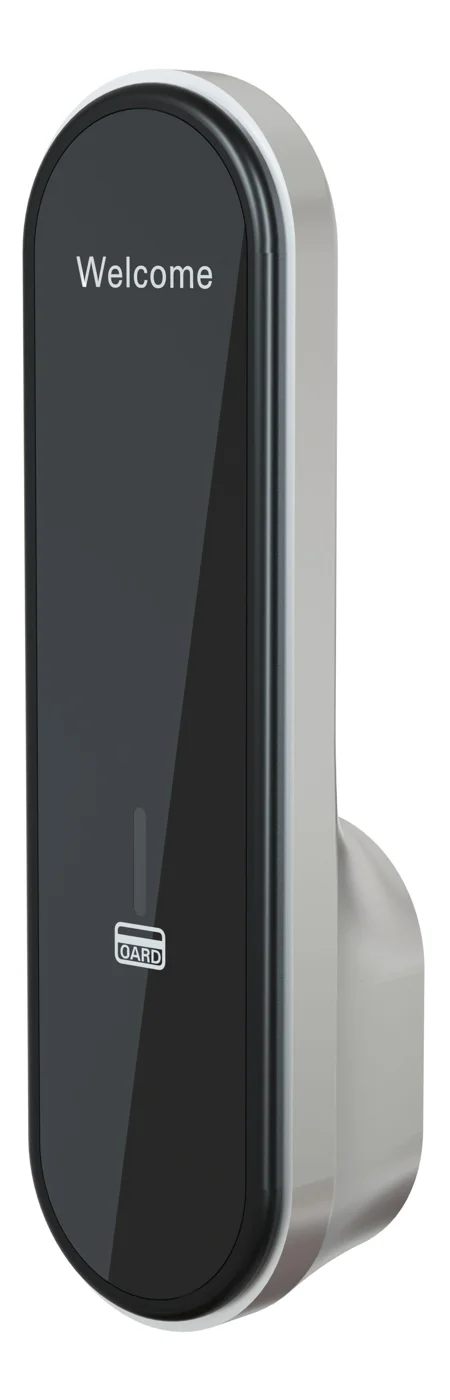
RFID Cabinet Lock — MIFARE Card, Offline Authentication
Offline MIFARE RFID cabinet lock for gym, spa, and office lockers. Tap-to-unlock 13.56 MHz, no WiFi needed, 5-minute retrofit. Zinc alloy body, battery-powered.
This page already points to it as the next recommended reference.
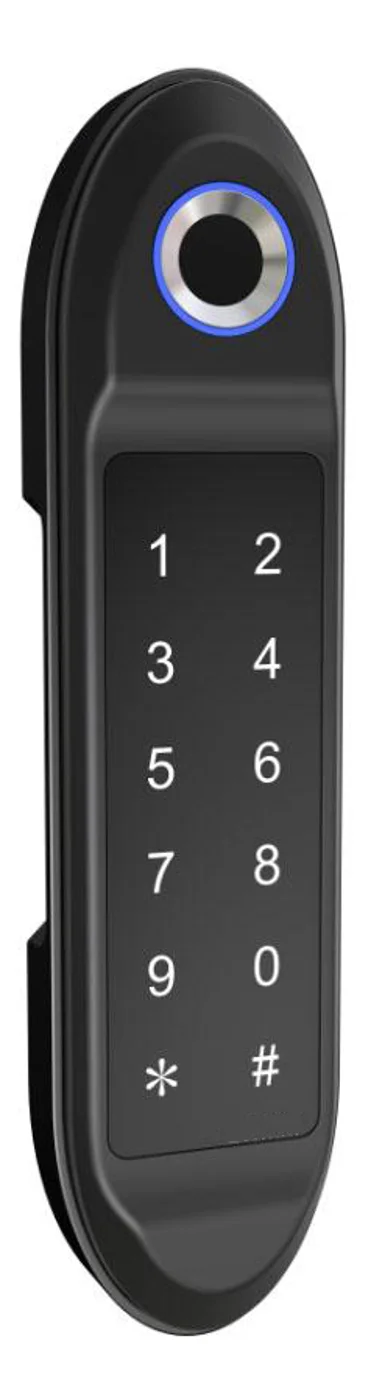
PIN Code Electronic Cabinet Lock — Stand-Alone, No WiFi
Offline keypad cabinet lock for gym, office and parcel lockers. Battery-powered, 5-minute retrofit, audit-free simple deployment. PIN + MIFARE card, DC 6V, 4×AA.
This page already points to it as the next recommended reference.
Related blog posts
3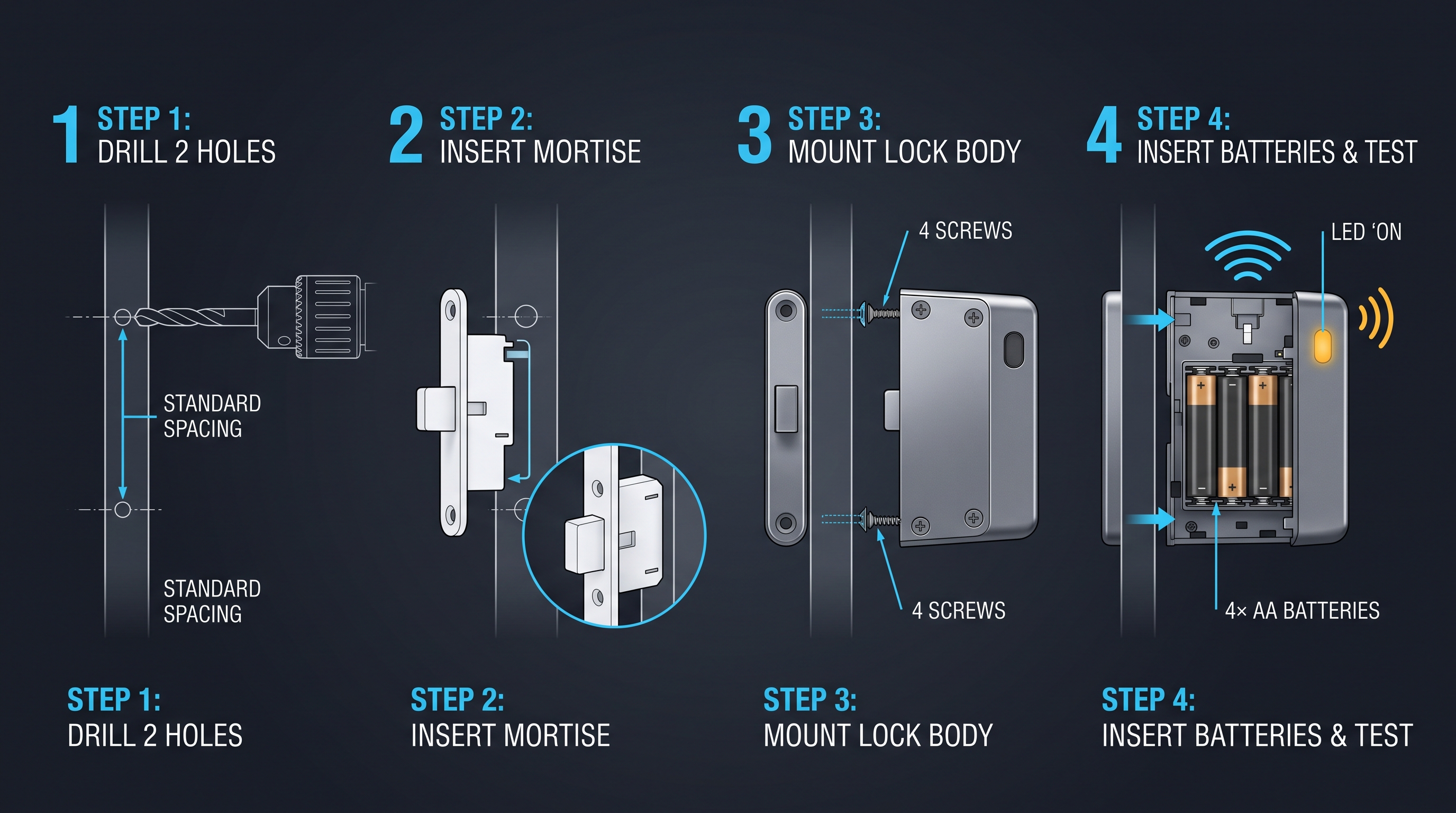
Jewelry Cabinet Lock: The Complete Guide to Securing High-Value Jewelry in Cabinets and Showcases
Learn how a jewelry cabinet lock secures high-value jewelry in display cabinets and safes. Compare electromagnetic, RFID, biometric, and keyed jewelry cabinet lock systems.
It supports the same product context: Office Cabinet Lock — PIN + Card for Filing & Pedestals.
IoT Cabinet Lock: The Complete Guide to Smart, Connected Cabinet Security
Discover how IoT cabinet lock technology works with Wi-Fi, BLE, Zigbee, MQTT, and cloud dashboards. Covers telemetry, fleet management, OTA, edge vs cloud, and security.
It supports the same product context: Office Cabinet Lock — PIN + Card for Filing & Pedestals.
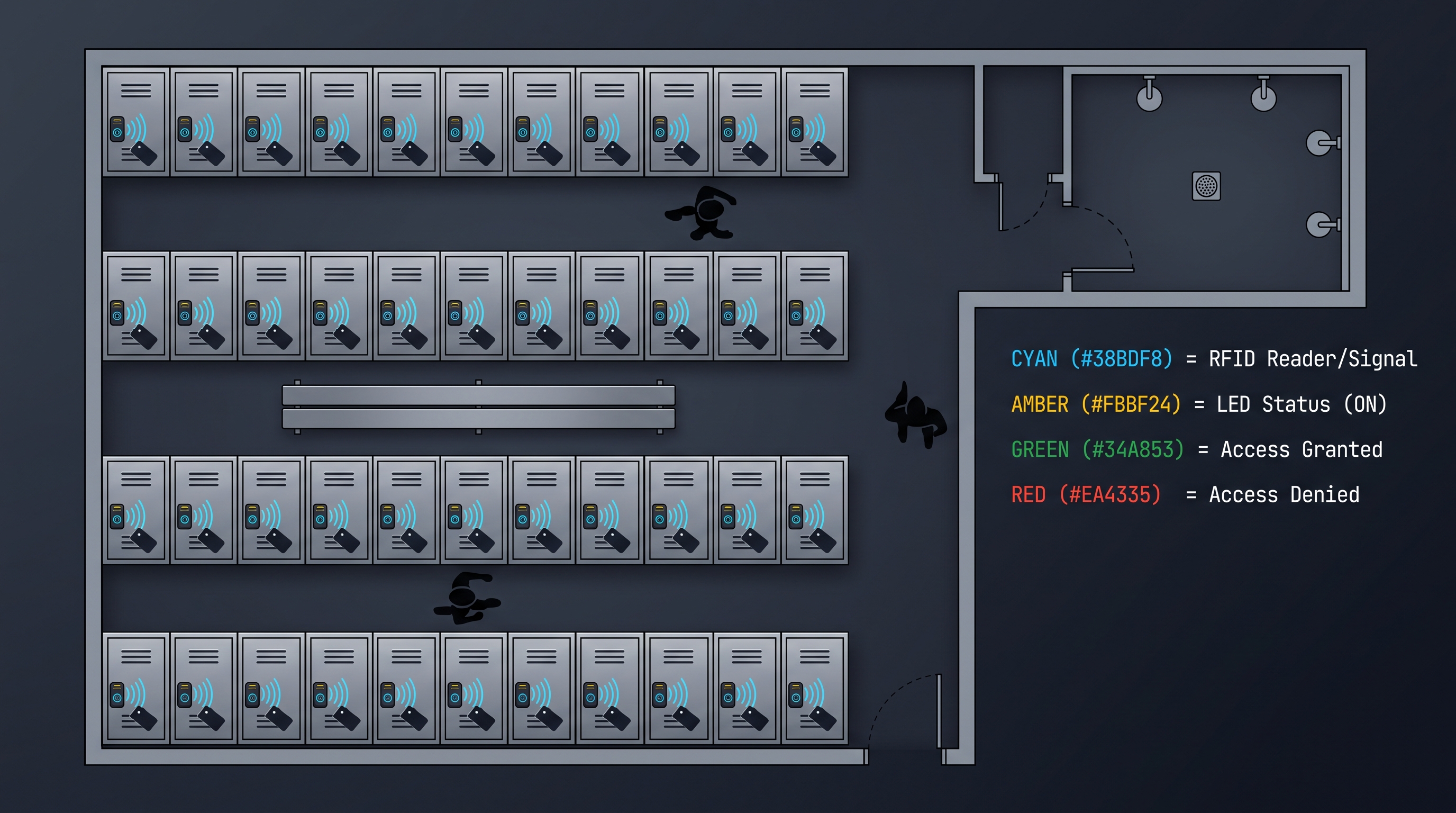
The Complete Guide to the IoT Locker Lock: Hardware, Cloud, and Fleet Management for Smart Locker Banks
Discover how an IoT locker lock powers delivery locker banks, shared-office cabinets, and smart gym storage. Wi-Fi, BLE, Zigbee, NB-IoT, LoRaWAN protocols, OTA firmware, telemetry, and procurement criteria.
It supports the same product context: PIN Code Electronic Cabinet Lock — Stand-Alone, No WiFi.
Specify your hotel project with our engineers
Send your room count, ceiling type, and protocol preference. We will return a sample plan and quote within 24 business hours.
- Move from general guidance into a product or application discussion.
- Use RFQ when pricing, drawings, MOQ, or launch timing needs structure.
- Keep a direct contact path visible for fast clarifications and handoff.