Cabinet Digital Lock: Complete Technical Guide for 2026 Buyers and Integrators
Comprehensive guide to cabinet digital lock systems covering types, working principles, installation, pricing, and buying criteria for commercial and residential applications.
A cabinet digital lock is a microprocessor-controlled electronic locking mechanism that secures cabinets, lockers, and storage enclosures through digital authentication methods rather than mechanical keys. A cabinet digital lock replaces the traditional cam lock and key with credential-based access control that supports PIN codes, RFID cards, biometric fingerprints, and smartphone-based unlocking. Operating at 4.5 to 12 V DC with standby current below 30 microamps, a cabinet digital lock achieves 1 to 3 years of battery life on standard alkaline or lithium cells while providing 8,000 to 15,000 unlock cycles per battery set. Cabinet digital lock systems are deployed across corporate offices, healthcare facilities, hospitality properties, educational institutions, and smart homes where the precision of digital access control, audit trail logging, and centralized credential management replace the inefficiency of physical key management. The adoption of cabinet digital lock technology is accelerating as organizations prioritize security, compliance, and operational efficiency in their physical access infrastructure.
Cabinet Digital Lock Types and Classifications
A cabinet digital lock is classified by its authentication method, actuation mechanism, and communication architecture, with the three primary authentication types being keypad PIN, RFID card, and biometric fingerprint. Keypad-based cabinet digital lock models accept 4 to 8 digit PIN codes, supporting 1 to 9 user codes with battery life of 8,000 to 12,000 cycles on four AA alkaline batteries. RFID cabinet digital lock units read 13.56 MHz (ISO 14443) or 125 kHz credentials in under 50 milliseconds, supporting 100 to 10,000 unique card entries with advanced encryption for high-security applications. Biometric cabinet digital lock systems use capacitive fingerprint sensors capturing 500 dpi resolution patterns, matching against stored templates in 0.3 to 0.5 seconds with false acceptance rates below 0.0001 percent. Actuation in a cabinet digital lock is achieved through either solenoid (3 to 5 N, 0.2 to 0.5 seconds, audible click) or motor-driven bolt (5 to 8 N, 0.5 to 0.8 seconds, silent operation). Communication architectures for a cabinet digital lock include standalone (no external connectivity), RS-485 networked (32 locks per segment, 1,200 m range), TCP/IP (PoE or local power), and wireless (Zigbee 3.0, BLE 5.2, Wi-Fi).
Keypad Cabinet Digital Lock
The keypad cabinet digital lock is the most widely deployed digital lock variant, valued for its simplicity, low cost, and independence from physical credentials. A keypad cabinet digital lock features a numeric keypad with 0 to 9 digits plus optional function keys mounted on or near the lock body, with the microcontroller comparing entered PINs against a hash table stored in non-volatile memory. The keypad cabinet digital lock typically supports 1 to 9 unique user codes plus a master code for programming functions, with each code stored as a SHA-256 hash to prevent plaintext extraction. Battery life for a keypad cabinet digital lock averages 8,000 to 12,000 unlock cycles on four AAA alkaline cells, with a low-battery audible and visual alert threshold at 4.2 V. The keypad cabinet digital lock is ideal for environments where users change frequently, credential management is simple, and physical credential cost is a concern.
RFID Cabinet Digital Lock
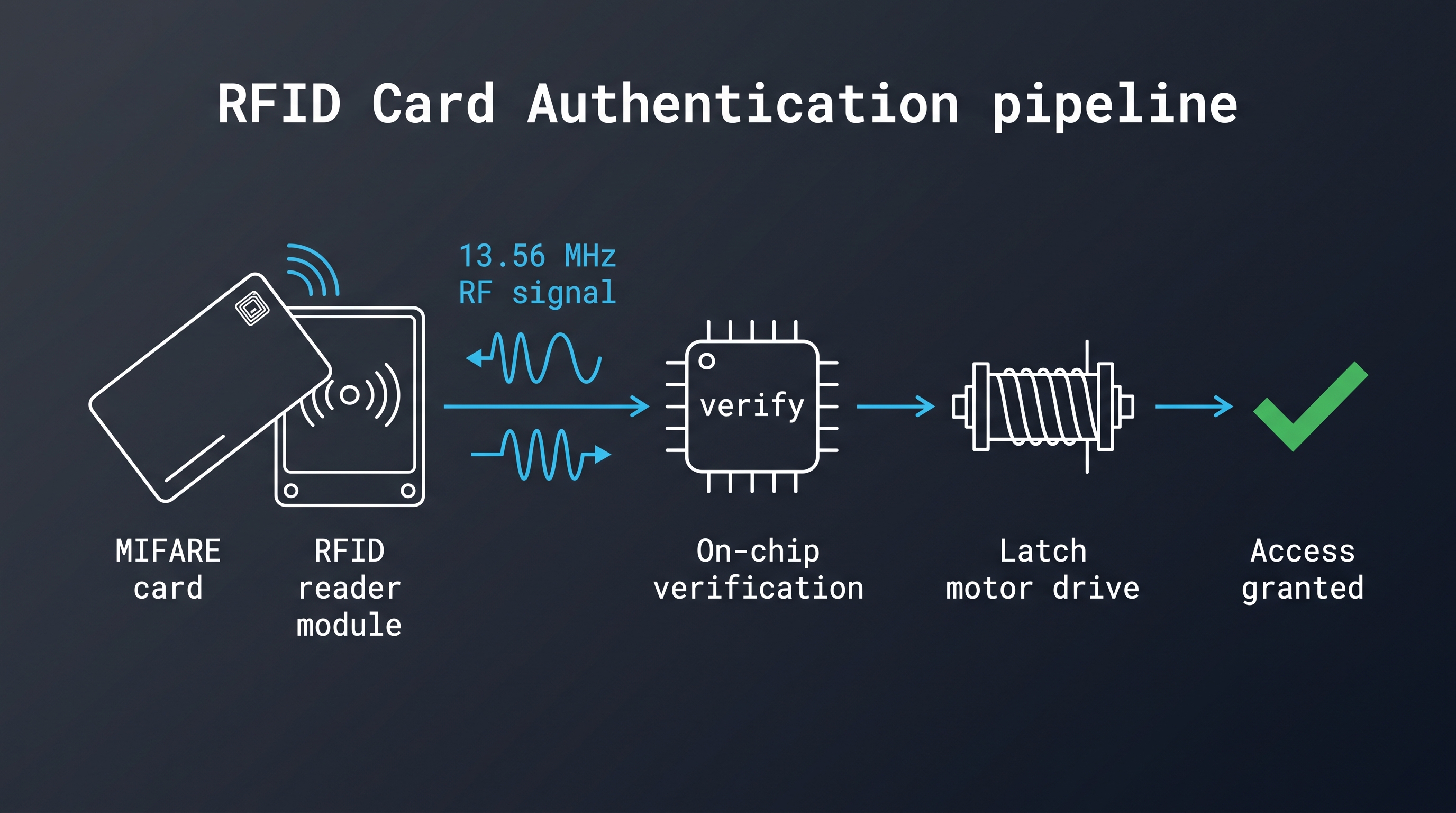
The RFID cabinet digital lock uses radio-frequency identification to authenticate users via contactless cards, fobs, or wristbands. An RFID cabinet digital lock operating at 13.56 MHz supports MIFARE Classic, MIFARE DESFire, and NTAG credential types with AES or 3DES encryption, while 125 kHz models support EM410x and HID Prox legacy formats. The RFID cabinet digital lock reads a credential UID in 30 to 80 milliseconds and performs a lookup in locally stored EEPROM or flash memory for access decision. High-end RFID cabinet digital lock models support read-write sectors for bi-directional data exchange, enabling time-windowed access, anti-passback logic, and credential revocation. The RFID cabinet digital lock is dominant in hospitality and corporate environments where users already carry compatible RFID badges that serve double duty as cabinet access credentials.
Biometric Cabinet Digital Lock
The biometric cabinet digital lock integrates a fingerprint sensor to authenticate users based on unique physiological characteristics. The capacitive fingerprint sensor in a biometric cabinet digital lock captures ridge and valley patterns at 500 dpi, extracting 40 to 80 minutiae points per template and storing them in encrypted memory. A biometric cabinet digital lock matches a presented fingerprint against stored templates in 0.3 to 0.5 seconds with a false acceptance rate (FAR) below 0.0001 percent and a false rejection rate (FRR) below 1 percent. Template storage in a biometric cabinet digital lock ranges from 50 to 500 fingerprints depending on the microcontroller's memory capacity, with each template consuming 300 to 500 bytes. The biometric cabinet digital lock provides the highest level of user accountability since fingerprints cannot be shared, borrowed, or lost, making it the preferred choice for healthcare, laboratories, and high-security corporate environments.
Hidden Cabinet Digital Lock
A hidden cabinet digital lock is concealed entirely behind the cabinet door panel, with no externally visible lock barrel, keypad, or reader. The hidden cabinet digital lock is triggered by an internal RFID antenna, an invisible capacitive touch sensor, or a Bluetooth signal from an authorized smartphone. Installation of a hidden cabinet digital lock requires a mortise cavity of approximately 18 by 42 by 12 mm routed into the door edge, with a minimum panel thickness of 16 mm. The hidden cabinet digital lock preserves the aesthetic integrity of high-end furniture, display cases, and designer interiors while providing the full security of digital access control. A hidden cabinet digital lock is popular in residential, retail, and museum settings where visible security hardware is undesirable.
Networked Cabinet Digital Lock
A networked cabinet digital lock connects to a central management system via RS-485, TCP/IP, or wireless protocol, enabling centralized credential management, real-time monitoring, and audit trail aggregation. An RS-485 networked cabinet digital lock supports up to 32 lock units per bus segment at distances up to 1,200 meters using 22 to 24 AWG 4-conductor cable. A TCP/IP networked cabinet digital lock uses Cat5e or Cat6 Ethernet with PoE or local 12 V power, providing higher bandwidth for real-time event streaming and remote firmware updates. A wireless networked cabinet digital lock uses Zigbee 3.0 (2.4 GHz, 250 kbps), BLE 5.2 (2.4 GHz, 2 Mbps), or Wi-Fi 802.11 b/g/n (2.4 GHz) for communication, eliminating cabling at the cost of battery drain from radio transmissions. The networked cabinet digital lock is essential for deployments exceeding 20 locks where per-lock management becomes impractical.
Cabinet Digital Lock Working Principles and Mechanisms
A cabinet digital lock operates by converting a digital authentication signal into mechanical bolt displacement through an actuator system controlled by a microprocessor. When a user presents a credential to a cabinet digital lock, the reader module captures the input and transmits it to the microcontroller via a serial interface (UART, I2C, or SPI) at 9600 to 115200 baud. The microcontroller in a cabinet digital lock, typically an ARM Cortex-M0 or M3 running at 48 to 80 MHz, performs credential verification by comparing the input against a stored template in flash or EEPROM memory. Upon successful authentication, the cabinet digital lock microcontroller sends a pulse-width modulated (PWM) signal to the actuator driver circuit, which energizes a solenoid or motor to retract the bolt for a configurable duration of 0.2 to 0.8 seconds. The cabinet digital lock simultaneously records the event to an audit log in non-volatile memory, including timestamp, credential identifier, and action type. The entire cabinet digital lock authentication and actuation sequence completes in 200 to 500 milliseconds, providing a seamless user experience comparable to a mechanical key turn.
Microcontroller and Firmware Architecture of Cabinet Digital Lock
The microcontroller in a cabinet digital lock serves as the central processing unit for credential management, actuator control, and communication. A modern cabinet digital lock uses a low-power microcontroller such as the STM32L4, Nordic nRF52, or Espressif ESP32, combining an ARM Cortex-M core with integrated flash memory, SRAM, and peripheral interfaces. The cabinet digital lock firmware is structured as a real-time operating system (RTOS) with prioritized tasks for credential reading (highest priority), actuator control, communication, and battery monitoring (lowest priority). Security features in the cabinet digital lock firmware include secure boot with signed firmware verification, hardware-accelerated AES-128/256 encryption, and a true random number generator (TRNG) for cryptographic key generation. The cabinet digital lock firmware is designed for ultra-low-power operation, spending 99.97 percent of time in deep sleep mode at 5 to 30 microamps and waking only on external interrupt from the credential reader.
Authentication Pipeline in Cabinet Digital Lock
The authentication pipeline in a cabinet digital lock processes credentials through capture, extraction, matching, and decision stages. For PIN-based cabinet digital lock authentication, the entered digits are hashed using SHA-256 with a per-lock salt and compared against the stored hash table, with a match granting access. For RFID cabinet digital lock authentication, the reader sends an interrogating signal at 13.56 MHz, receives the card UID, and performs a binary search in the access control list stored in flash memory. For biometric cabinet digital lock authentication, the fingerprint sensor captures a raw image, the algorithm extracts minutiae points, and a matching score is calculated using Hamming distance or correlation methods, with access granted if the score exceeds a configurable threshold. The cabinet digital lock authentication decision is made locally on the lock within 100 to 300 milliseconds for PIN and RFID, and 300 to 500 milliseconds for biometric.
Actuator Systems in Cabinet Digital Lock
The actuator in a cabinet digital lock converts the electrical authentication signal into mechanical bolt movement. A solenoid-based cabinet digital lock actuator uses an electromagnetic coil that, when energized at 6 to 12 V DC, pulls a ferrous plunger against a spring to retract the bolt, producing an audible click and developing 3 to 5 N of force. A motor-driven cabinet digital lock actuator uses a 6 V DC micro-gearmotor (typically 6 mm diameter) coupled to a multi-stage planetary gear reduction train that converts rotational motion to linear bolt travel, delivering 5 to 8 N of force with near-silent operation. The motor-driven cabinet digital lock supports soft-start and soft-stop motion profiles, reducing mechanical stress and extending actuator life beyond 250,000 cycles. The cabinet digital lock actuator choice involves a trade-off between cost, noise, and holding force, with solenoids preferred for budget applications and motors for premium environments.
Power Management in Cabinet Digital Lock
Power management is a defining engineering challenge for a cabinet digital lock, as most models are battery-powered and must operate for 1 to 3 years on a single battery set. A cabinet digital lock uses a multi-stage power architecture: a battery input stage with reverse-polarity protection, a low-dropout regulator or buck converter providing 3.3 V or 1.8 V for the microcontroller, and a boost converter generating 6 to 12 V for the actuator. The cabinet digital lock power management unit implements aggressive power gating, disconnecting power to all peripherals except the credential reader wake-up circuit during sleep. Battery voltage monitoring in a cabinet digital lock uses a 12-bit ADC sampling at 0.1 Hz during sleep and 1 kHz during actuation, with a low-battery warning threshold at 4.2 V for a 6 V nominal system. Hardwired cabinet digital lock models powered by 12 V DC or PoE eliminate battery management entirely but require installation of power cabling.
Audit Logging and Data Storage in Cabinet Digital Lock
The audit log in a cabinet digital lock records every operational event with timestamp, credential identifier, event type, and outcome. A cabinet digital lock audit log is stored in non-volatile flash memory, ensuring event retention even during complete power loss. The audit log capacity of a cabinet digital lock ranges from 1,000 entries on budget models to 100,000 entries on enterprise-grade units, with each entry consuming 16 to 32 bytes of storage. Audit log retrieval from a cabinet digital lock is performed via USB cable, RS-485 network download, Wi-Fi sync, or BLE app export, with CSV and JSON format options. The cabinet digital lock audit log is the primary compliance artifact for regulated industries, providing the who, when, and what of every cabinet access event.
Cabinet Digital Lock Features Comparison
The feature set of a cabinet digital lock determines its suitability for specific applications, with key differentiators including authentication method, user capacity, audit trail depth, communication protocol, and physical security specifications. A modern cabinet digital lock supports multi-modal authentication, allowing users to choose between PIN, RFID, fingerprint, and smartphone credentials based on convenience and security requirements. The cabinet digital lock user capacity ranges from 9 codes on a basic keypad model to 100,000 users on an enterprise networked system. Audit trail depth in a cabinet digital lock varies from 1,000 events on standalone units to 100,000 events on enterprise models. Communication protocols for a cabinet digital lock include standalone (no connectivity), RS-485 (32 locks per segment, 1,200 m), TCP/IP (direct cloud integration), BLE 5.2 (smartphone access), Zigbee 3.0 (mesh networking), and Wi-Fi 802.11 b/g/n (cloud connectivity without hub). Physical security of a cabinet digital lock is quantified by bolt projection (15 to 25 mm), bolt diameter (8 to 12 mm), bolt material (hardened steel), and tamper resistance features.
| Feature | Keypad Cabinet Digital Lock | RFID Cabinet Digital Lock | Biometric Cabinet Digital Lock | Hidden Cabinet Digital Lock |
|---|---|---|---|---|
| Authentication | 4 to 8 digit PIN | 13.56 MHz / 125 kHz card | Fingerprint template | RFID / Bluetooth |
| User capacity | 1 to 9 codes | 100 to 10,000 cards | 50 to 500 templates | 100 to 1,000 credentials |
| Battery life | 8,000 to 12,000 cycles | 10,000 to 15,000 cycles | 5,000 to 8,000 cycles | 6,000 to 10,000 cycles |
| Audit trail | 1,000 to 3,000 entries | 3,000 to 10,000 entries | 5,000 to 50,000 entries | 3,000 to 10,000 entries |
| Communication | Standalone | RS-485 / TCP/IP | RS-485 / Wi-Fi | Zigbee / BLE 5.2 |
| Operating voltage | 4.5 to 6 V DC | 6 V DC | 6 to 12 V DC | 6 V DC |
| Locking force | 3 to 5 N | 5 to 8 N | 5 to 8 N | 3 to 5 N |
| Response time | 0.3 to 0.5 s | 0.2 to 0.3 s | 0.3 to 0.5 s | 0.3 to 0.8 s |
| IP rating | IP54 | IP54 to IP65 | IP54 | IP42 |
| Price range | $15 to $60 | $25 to $120 | $40 to $250 | $30 to $150 |
Authentication Modes of Cabinet Digital Lock
A cabinet digital lock supports one or more authentication modes, with multi-modal locks providing the greatest flexibility. Single-mode cabinet digital lock models authenticate via one method only, typically PIN or RFID, optimizing for simplicity and cost. Multi-modal cabinet digital lock systems support two or more authentication methods simultaneously, allowing users to choose their preferred credential type. Dual-factor cabinet digital lock configurations require two different authentication factors, such as PIN plus RFID card, for high-security applications where single-factor authentication is insufficient. The cabinet digital lock authentication mode selection should be based on the security posture required, the existing credential infrastructure, and user convenience preferences.
Programmable Access Management of Cabinet Digital Lock
The access management capabilities of a cabinet digital lock determine how credentials are enrolled, modified, scheduled, and revoked. A standalone cabinet digital lock manages access locally through a programming menu accessed via master code, with the administrator physically present at each lock. A networked cabinet digital lock centralizes access management through a software platform, enabling bulk credential operations, time-based access schedules, and role-based permissions. Enterprise cabinet digital lock systems integrate with identity providers via SCIM, LDAP, or REST APIs, automatically provisioning access when employees join and revoking it when they depart. The cabinet digital lock access management architecture should be scaled to the deployment size, with standalone management acceptable for under 10 locks and networked management essential for 50 or more.
Audit Trail and Event Logging in Cabinet Digital Lock
The audit trail of a cabinet digital lock provides a tamper-evident record of every lock and unlock event. A cabinet digital lock audit entry includes a UTC timestamp synchronized via NTP or manual setting, a credential identifier (anonymized or named), the event type (lock, unlock, tamper, low battery, error), and the outcome (success or failure). The cabinet digital lock stores audit entries in a circular buffer that overwrites the oldest entries when capacity is reached, with configurable allocation of storage between audit log and credential database. Export of a cabinet digital lock audit trail supports CSV for spreadsheet analysis and JSON for programmatic processing, with some models supporting syslog forwarding for SIEM integration. The cabinet digital lock audit trail is the primary source of truth for access investigations and regulatory compliance audits.
Integration Capabilities of Cabinet Digital Lock
Integration capabilities differentiate a basic cabinet digital lock from an enterprise-grade system. A cabinet digital lock with REST API support enables custom application integration for automated provisioning, event streaming, and status monitoring. MQTT support in a cabinet digital lock enables lightweight publish-subscribe messaging for IoT platforms and building management systems. Webhook functionality in a cabinet digital lock pushes real-time events to third-party services such as Slack, Microsoft Teams, or custom alerting pipelines. A cabinet digital lock with SDK availability enables custom firmware development, specialized credential format support, and integration with proprietary access control protocols. These integration capabilities transform a cabinet digital lock from a standalone security device into a node in the broader digital access ecosystem.
Durability and Environmental Ratings of Cabinet Digital Lock
The durability of a cabinet digital lock is measured by cycle life, ingress protection rating, and operating temperature range. A cabinet digital lock rated for 250,000 cycles provides 10 years of service at 70 cycles per day, suitable for high-traffic commercial applications. Ingress protection for a cabinet digital lock ranges from IP42 (protected against dripping water) for indoor residential use to IP65 (dust-tight and protected against water jets) for industrial and outdoor applications. The operating temperature range of a cabinet digital lock spans from minus 20 to plus 60 degrees Celsius for standard models, with extended-temperature variants using lithium batteries for operation in minus 30 to plus 70 degrees Celsius environments. A cabinet digital lock with high durability ratings reduces total cost of ownership through lower failure rates and extended service life.
Cabinet Digital Lock Applications and Use Cases
The cabinet digital lock serves a wide range of applications across industries, with each sector imposing unique requirements for authentication, audit, compliance, and integration. In corporate environments, the cabinet digital lock secures file cabinets, supply closets, and personal storage, with identity provider integration enabling automated provisioning and deprovisioning. Healthcare facilities deploy the cabinet digital lock for medication cabinets, controlled substance storage, and patient belongings lockers, requiring HIPAA and DEA compliance with dual-authentication and detailed audit trails. Hospitality properties use the cabinet digital lock on in-room safes, minibar cabinets, and staff lockers, integrating with property management systems for guest credential linking. Educational institutions deploy the cabinet digital lock on student lockers, laboratory equipment cabinets, and faculty storage, with semester-based credential scheduling. Residential users adopt the cabinet digital lock for home office filing, gun safes, medication cabinets, and wine storage, with smartphone-based access and family sharing.
Corporate Office Cabinet Digital Lock Deployments
The corporate office cabinet digital lock market is driven by the need for secure, auditable access to sensitive documents, equipment, and personal storage across hundreds of cabinets. A corporate cabinet digital lock integrates with Microsoft Entra ID, Google Workspace, or Okta, automatically provisioning access to cabinets based on employee role, department, and employment status. The corporate cabinet digital lock supports role-based access where marketing, finance, and engineering each access their department-specific cabinets without individual credential enrollment. Meeting room cabinets secured by a cabinet digital lock grant temporary access to all meeting attendees during scheduled sessions and automatically revoke access when the meeting ends. The corporate cabinet digital lock provides facilities management with occupancy analytics, identifying underutilized cabinets for consolidation and over-utilized cabinets requiring expansion.
Healthcare Cabinet Digital Lock Systems
Healthcare facilities represent the most regulated and demanding deployment environment for a cabinet digital lock. Medication cabinets secured by a cabinet digital lock must comply with DEA regulations for controlled substances, requiring dual-authentication where two authorized healthcare professionals verify each access. The healthcare cabinet digital lock maintains audit trails showing who accessed which medication, at what time, in what quantity, and for which patient, with data retained for 3 to 7 years per regulatory requirements. Integration of a cabinet digital lock with electronic health records and pharmacy information systems verifies that medication access aligns with active prescriptions and documented administration. The healthcare cabinet digital lock must withstand frequent cleaning with hospital-grade disinfectants, requiring chemically resistant housing materials and IP54 or higher sealing.
Hospitality Cabinet Digital Lock Deployments
Hotels, resorts, and cruise ships deploy the cabinet digital lock on in-room safes, minibar cabinets, and staff-only storage. The hospitality cabinet digital lock integrates with property management systems such as Opera, Mews, or StayNTouch, linking guest room keys to cabinet access for the duration of the stay. A hospitality cabinet digital lock must withstand 50,000 to 100,000 open/close cycles per year across peak seasons, with 99.9 percent reliability required to avoid guest service incidents. The hospitality cabinet digital lock typically uses RFID credentials compatible with the hotel's existing key card infrastructure, avoiding the cost and complexity of additional credential issuance. A connected hospitality cabinet digital lock generates alerts when a safe is left locked by a checked-out guest, enabling timely recovery and reducing lost-and-found claims.
Educational Institution Cabinet Digital Lock Deployments
Schools and universities deploy the cabinet digital lock on student lockers, laboratory equipment cabinets, chemical storage, and faculty offices. An educational cabinet digital lock supports mass credential provisioning at semester start and automatic deactivation at semester end, with seamless integration with the student information system. The lab cabinet digital lock restricts access to expensive or hazardous equipment to students who have completed safety training, with access permissions linked to training records in the learning management system. An educational cabinet digital lock must withstand heavy daily use by students, requiring reinforced construction, tamper detection, and a duty cycle rating of 500,000 cycles. The educational cabinet digital lock typically uses student ID cards with RFID chips as credentials, eliminating the cost of separate credential distribution.
Residential Cabinet Digital Lock Applications
The residential cabinet digital lock market is growing as homeowners seek to secure valuables, medications, firearms, and sensitive documents. A home office cabinet digital lock secures tax records, passports, and financial documents with smartphone-based access that eliminates the need for physical keys. A gun safe cabinet digital lock provides rapid firearm access for authorized adults while preventing child access, with biometric or PIN authentication. A medication cabinet digital lock prevents accidental ingestion by children or confused elderly residents while providing convenient access for authorized caregivers. The residential cabinet digital lock is typically installed by the homeowner, with retrofit models that replace existing cam locks in under 15 minutes without drilling.
Industrial and Warehouse Cabinet Digital Lock Applications
Manufacturing facilities and warehouses deploy the cabinet digital lock on tool cribs, maintenance parts cabinets, and hazardous material storage. An industrial cabinet digital lock integrates with inventory management and ERP systems, tracking tool checkout by employee and triggering automatic reorder when consumable stock reaches minimum levels. The industrial cabinet digital lock must operate in challenging environments with temperature extremes, dust, vibration, and chemical exposure, requiring hardened enclosures and conformal-coated circuit boards. A cabinet digital lock in industrial settings typically uses RS-485 networking for reliability in electrically noisy environments, with ruggedized connectors.
Cabinet Digital Lock Installation and Setup Guide
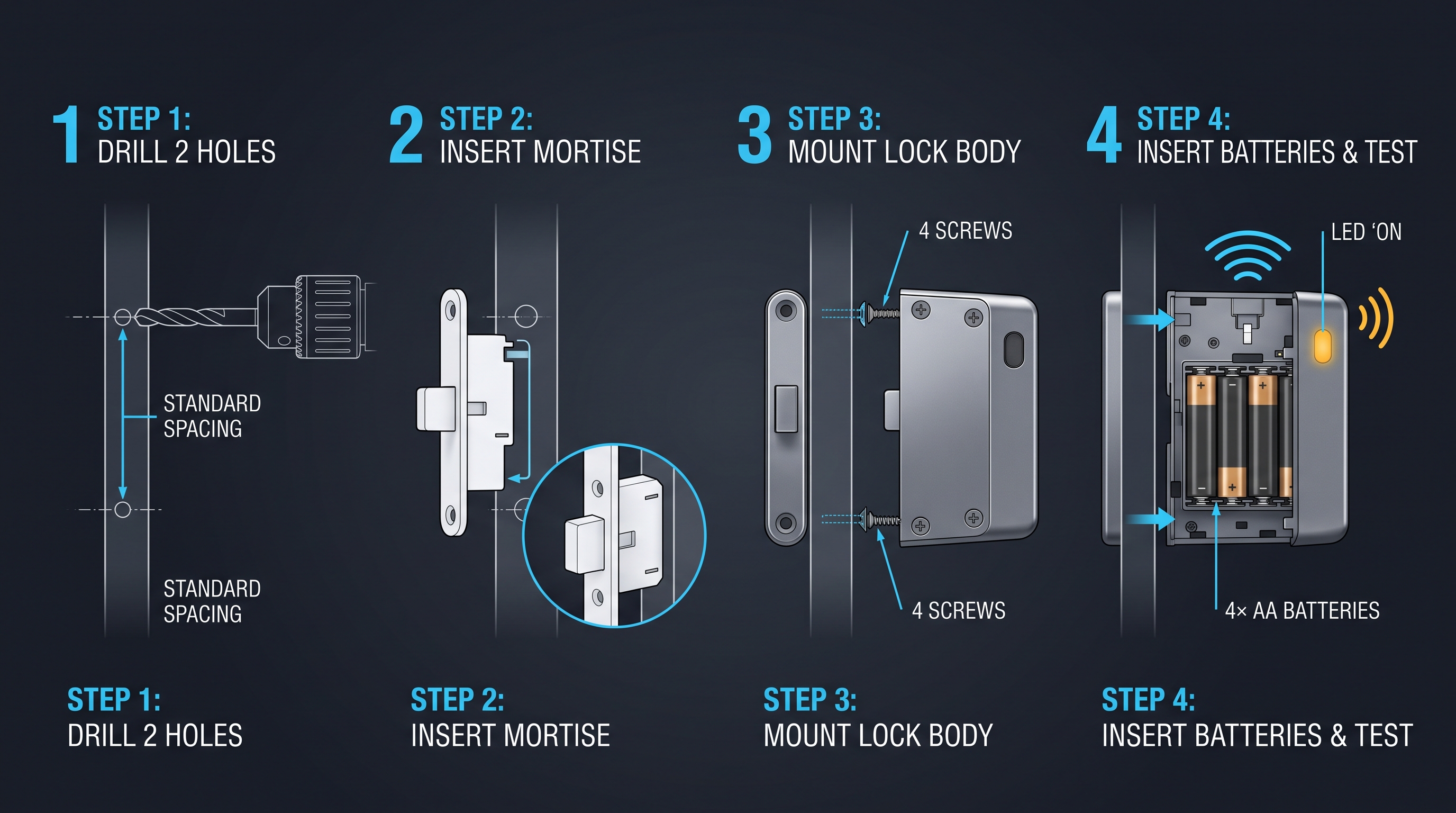
Installing a cabinet digital lock requires mechanical preparation of the cabinet door, electrical wiring if applicable, and software configuration for credential enrollment and operational parameters. The mechanical installation of a cabinet digital lock begins with the manufacturer's template for hole and mounting locations, with a 19 to 22 mm hole saw used for the lock cylinder through-hole and smaller pilot holes for mounting screws. Surface-mount cabinet digital lock models attach to the interior cabinet surface with four to six screws, while mortise cabinet digital lock designs require routing a rectangular cavity of 18 by 42 by 12 mm into the door edge. Hardwired cabinet digital lock installations require routing low-voltage cable from a central power supply or PoE switch to each lock location. Wireless cabinet digital lock models simplify installation to battery insertion and app-based pairing. Software configuration of a cabinet digital lock enrolls the first admin credential, sets the clock, and configures operational parameters including auto-relock delay, alarm thresholds, and wrong-try lockout limits.
Mechanical Installation of Cabinet Digital Lock
The mechanical installation of a cabinet digital lock demands precision to ensure reliable bolt engagement and long-term durability. The installer positions the paper template provided with the cabinet digital lock against the door interior, aligning it with the door edge, and marks drill centers with a center punch. The through-hole for a cabinet digital lock cylinder is drilled with a 19 mm or 22 mm hole saw, starting from the interior side with a backer board to prevent tear-out on the exterior surface. Surface-mount cabinet digital lock bodies are secured with machine screws and nylon-insert lock nuts for vibration resistance, or wood screws with pilot holes for wood cabinets. The strike plate for a cabinet digital lock is mounted on the cabinet frame or adjacent door, precisely aligned so the bolt enters the strike opening with 1 to 2 mm of clearance on all sides. Proper alignment of a cabinet digital lock is critical: misalignment causes bolt binding, accelerated wear, and potential lock failure.
Electrical Wiring for Cabinet Digital Lock
Hardwired cabinet digital lock installations require planning the cable routing, power budget, and network topology. An RS-485 cabinet digital lock network uses 4-conductor cable with 22 to 24 AWG conductors, supporting cable runs up to 1,200 meters and up to 32 lock units per bus segment. A TCP/IP cabinet digital lock uses Cat5e or Cat6 Ethernet cable with RJ45 termination, limited to 100 meters per segment without a repeater, and powered by PoE (802.3af) or local 12 V DC. The power budget for a cabinet digital lock installation must account for peak current draw during actuation, with a 12-lock segment typically requiring a 2 A, 12 V DC power supply. All cabinet digital lock wiring must comply with local electrical codes, with plenum-rated cable required for above-ceiling installations and proper strain relief at each lock body.
Wireless Cabinet Digital Lock Setup
Wireless cabinet digital lock installation is the simplest deployment method, requiring only battery insertion and over-the-air pairing. The installer inserts the specified batteries (typically 4 AA alkaline or lithium, or CR123A lithium cells) into the cabinet digital lock, observing correct polarity. A Zigbee cabinet digital lock is paired by placing the coordinator in permit-join mode and pressing the enrollment button on the lock for 3 to 5 seconds until the LED indicates successful joining. A BLE cabinet digital lock is paired through the smartphone app, which scans for nearby locks and initiates pairing with a factory-default PIN printed on the lock or packaging. A Wi-Fi cabinet digital lock receives its network credentials via BLE from the smartphone app during initial setup, then connects directly to the Wi-Fi network. Signal strength at each wireless cabinet digital lock location should be verified with RSSI above minus 65 dBm for reliable operation.
Software Configuration for Cabinet Digital Lock
After physical installation, a cabinet digital lock requires software configuration to establish the operational parameter set. The first configuration step for a cabinet digital lock is enrolling the administrator credential, which provides unrestricted access to all programming functions. The cabinet digital lock clock is set to current UTC time, either manually or via NTP synchronization for networked models. Auto-relock delay on a cabinet digital lock is configured between 3 and 30 seconds, determining how long the bolt remains retracted before automatically extending. Additional cabinet digital lock parameters include wrong-try lockout threshold (3 to 10 failed attempts), alarm duration (30 to 180 seconds), and low-battery warning threshold. The configured cabinet digital lock parameters should be documented in the installation record for future maintenance and troubleshooting reference.
Integration Testing for Cabinet Digital Lock
After installation and configuration, a cabinet digital lock must undergo integration testing to verify correct operation. The cabinet digital lock integration test verifies each credential type works correctly, including admin credentials, user credentials, and emergency override keys. The cabinet digital lock audit trail is tested by performing several access events and verifying they appear correctly in the management software or export file. Network connectivity for a cabinet digital lock is tested by pinging from the management server, verifying latency below 100 ms and zero packet loss. The cabinet digital lock integration test also verifies that automated functions such as scheduled lock/unlock, auto-relock, and tamper alerts operate correctly. A cabinet digital lock that passes integration testing is ready for production use.
Cabinet Digital Lock Pricing and Total Cost of Ownership
The total cost of ownership for a cabinet digital lock spans hardware acquisition, installation labor, batteries or power, software licensing, maintenance, and eventual replacement over a 5 to 10 year lifecycle. A basic keypad cabinet digital lock retails for $15 to $60 per unit, while enterprise-grade networked biometric cabinet digital lock systems range from $200 to $350 per lock. Installation labor for a cabinet digital lock averages $25 to $75 for wireless models and $50 to $150 for wired models, with the labor differential driven by cabling complexity. Annual operating costs for a cabinet digital lock include battery replacement ($5 to $15 per lock per year) and optional software licensing ($5 to $25 per lock per year for cloud-based platforms). The 5-year TCO for a 100-lock cabinet digital lock deployment ranges from $12,000 for standalone keypad models to $85,000 for fully networked biometric systems with cloud management.
| Cost Component | Keypad Cabinet Digital Lock | RFID Cabinet Digital Lock | Biometric Cabinet Digital Lock | Hidden Cabinet Digital Lock |
|---|---|---|---|---|
| Unit hardware | $15 to $60 | $25 to $120 | $40 to $250 | $30 to $150 |
| Installation labor | $25 to $75 | $50 to $100 | $50 to $125 | $75 to $150 |
| Annual batteries | $5 to $10 | $5 to $12 | $8 to $15 | $5 to $10 |
| Software license/yr | $0 | $5 to $15 | $10 to $25 | $5 to $10 |
| 5-year TCO per lock | $40 to $115 | $100 to $310 | $175 to $570 | $110 to $310 |
| Credential cost each | $0 (PIN) | $1 to $5 | $0 (biometric) | $0 to $2 |
Budget Cabinet Digital Lock Options
Budget cabinet digital lock models, primarily standalone keypad units priced under $50, provide basic digital access control at minimal cost. A budget cabinet digital lock supports 1 to 9 PIN codes with a simple audit trail of 1,000 to 3,000 events stored locally. The budget cabinet digital lock lacks networking capability, requiring physical proximity for all programming and audit log retrieval. A budget cabinet digital lock is suitable for low-security applications in small offices, residential settings, and businesses with fewer than 20 cabinets. Despite the low price, a budget cabinet digital lock should carry CE, FCC, and RoHS certifications to ensure basic quality and safety compliance.
Mid-Range Cabinet Digital Lock Solutions
Mid-range cabinet digital lock solutions, priced from $50 to $150 per lock, add RFID credential support, larger audit trails, and optional networking. A mid-range cabinet digital lock supports 100 to 1,000 users, 10,000 to 50,000 audit events, and RS-485 or BLE connectivity. The mid-range cabinet digital lock offers the best value for most commercial deployments, providing enterprise features at a per-lock cost that scales economically to 200 to 500 locks. A mid-range cabinet digital lock often includes basic management software at no additional license cost, reducing ongoing operational expenses.
Enterprise Cabinet Digital Lock Platforms
Enterprise cabinet digital lock platforms, priced from $150 to $350 per lock, deliver full networking, biometric support, identity provider integration, cloud management, and advanced analytics. An enterprise cabinet digital lock supports 10,000 to 100,000 users, 100,000 audit events, and multi-modal credentials. The enterprise cabinet digital lock integrates with Active Directory, LDAP, SCIM, and REST APIs for automated user lifecycle management. An enterprise cabinet digital lock platform includes real-time monitoring dashboards, anomaly detection, and compliance reporting modules that satisfy SOC 2, HIPAA, and PCI DSS audit requirements.
ROI Calculation for Cabinet Digital Lock
The return on investment for a cabinet digital lock deployment includes quantifiable savings from key management elimination, reduced security incidents, and operational efficiency gains. A cabinet digital lock eliminates key cutting costs ($5 to $30 per key), rekeying costs when keys are lost ($50 to $150 per service call), and key management labor. The cabinet digital lock audit trail reduces investigation time for access incidents from hours to seconds. Centralized management of a cabinet digital lock eliminates the travel time to each physical cabinet for credential changes, saving an estimated 2 to 5 hours per administrative task across 100 locks. A cabinet digital lock ROI is typically achieved within 12 to 18 months for deployments of 50 or more locks, driven by operational efficiency gains.
Cabinet Digital Lock Security and Compliance Considerations
The security architecture of a cabinet digital lock spans physical tamper resistance, credential encryption, communication security, and audit integrity. A cabinet digital lock is only as secure as its weakest link, and attack vectors include physical attacks on the lock body, electronic attacks on the credential reader, communication interception, and firmware exploitation. Physical defenses in a cabinet digital lock include hardened steel bolts, die-cast zinc alloy housings, tamper detection switches, and anti-drill plates. Electronic defenses in a cabinet digital lock include salted credential hashing, AES-128/256 encrypted storage, TLS 1.3 encrypted communication, and signed firmware packages. A security-hardened cabinet digital lock implements defense-in-depth with multiple overlapping countermeasures validated by independent penetration testing. Regulatory compliance for a cabinet digital lock includes UL 1034, EN 14450, FCC Part 15, CE, and industry-specific standards such as HIPAA and DEA.
Credential Security in Cabinet Digital Lock
Credential security in a cabinet digital lock protects user authentication data from extraction, replay, and unauthorized use. PIN codes stored in a cabinet digital lock are hashed using SHA-256 with a per-lock salt, preventing recovery of plaintext codes even if the flash memory is extracted. RFID card data stored in a cabinet digital lock is encrypted using AES-128 with keys derived from a hardware root of trust, protecting card UIDs and sector data. Biometric templates in a cabinet digital lock are stored as irreversible hash representations, not as raw fingerprint images, preventing reconstruction of the original biometric data. The cabinet digital lock credential security architecture ensures that even if the lock memory is physically extracted, credentials cannot be used to gain unauthorized access.
Communication Security in Cabinet Digital Lock
Communication security in a cabinet digital lock protects data in transit between the lock, management system, and cloud. Wired RS-485 communication in a cabinet digital lock uses AES-128 encryption for data packets, preventing eavesdropping on the bus cable. TCP/IP communication in a cabinet digital lock uses TLS 1.3 with mutual authentication, ensuring both the lock and server are verified before data exchange. BLE communication in a cabinet digital lock uses LE Secure Connections with ECDH key exchange and AES-128 CCM encryption. Zigbee communication in a cabinet digital lock uses network-layer AES-128 CCM encryption with rotating network keys. Each cabinet digital lock communication protocol implements encryption appropriate to its bandwidth and power constraints.
Physical Security of Cabinet Digital Lock
Physical security is the foundation of a cabinet digital lock, as the lock body must resist forced entry attempts. The cabinet digital lock bolt is fabricated from hardened steel with a minimum diameter of 10 mm and projection of 20 mm, providing resistance to prying, sawing, and impact attacks. The cabinet digital lock housing is constructed from die-cast zinc alloy, stainless steel, or reinforced engineering polymer, with tamper detection switches that trigger alarms if the housing is removed. Anti-drill plates in a cabinet digital lock protect the cylinder and actuator from drill attacks, with hardened steel inserts at critical points. High-security cabinet digital lock models are certified to EN 14450 S1 or S2 burglary resistance grades, validated by independent testing laboratories.
Regulatory Compliance for Cabinet Digital Lock
A cabinet digital lock deployed in regulated industries must comply with applicable standards and regulations. Healthcare cabinet digital lock installations must satisfy HIPAA physical safeguard requirements (45 CFR 164.310) and DEA 21 CFR Part 1301 for controlled substance storage. Financial services cabinet digital lock deployments must meet FFIEC physical security guidelines and PCI DSS requirement 9.1 for physical access controls. UL 1034 certification for a cabinet digital lock validates electrical safety, fire resistance, and endurance testing of 250,000 cycles. FCC Part 15 compliance is mandatory for any cabinet digital lock with radio transmitters in the United States. CE marking for a cabinet digital lock encompasses EMC (EN 55032), safety (EN 62368-1), and radio (EN 300 328) compliance for the European market.
Data Privacy Compliance for Cabinet Digital Lock
A cabinet digital lock that collects, stores, or transmits personal data or biometric information must comply with privacy regulations. GDPR compliance for a cabinet digital lock requires data processing transparency, lawful basis for processing, data minimization, and support for data subject access and erasure requests. CCPA compliance for a cabinet digital lock requires disclosure of data categories collected and the business purpose of collection. Biometric data stored in a cabinet digital lock should be processed on-device whenever possible, with cloud storage requiring separate explicit consent. The cabinet digital lock manufacturer should provide a data processing agreement specifying data flows, retention periods, encryption standards, and sub-processor relationships.
Cabinet Digital Lock Maintenance and Troubleshooting
A structured maintenance program for a cabinet digital lock extends service life, prevents unplanned failures, and ensures consistent security. The maintenance schedule for a cabinet digital lock includes scheduled battery replacement, bolt and strike plate inspection and lubrication, firmware updates, connectivity health checks, and audit log review. A cabinet digital lock maintenance log documents each service event with date, technician identifier, serial number, actions performed, and firmware version. Proactive maintenance of a cabinet digital lock reduces the rate of unexpected failures by 60 to 80 percent compared to reactive maintenance, according to field service data from lock manufacturers. Troubleshooting a cabinet digital lock follows a systematic diagnostic approach: verify power, check credentials, inspect mechanical alignment, test communication, and review event logs.
Battery Management for Cabinet Digital Lock
The battery is the most common failure point in a cabinet digital lock and the leading cause of service calls. A cabinet digital lock provides battery level reporting via LED indicators, audible beeps, or networked alerts, with a low-battery warning at 20 percent remaining capacity. Lithium AA batteries are the preferred power source for a cabinet digital lock due to their flat discharge curve, 10-year shelf life, and superior performance across temperature extremes. Battery replacement in a cabinet digital lock should be scheduled every 12 months for alkaline and 24 months for lithium, regardless of reported capacity. A cabinet digital lock must retain all credentials, configuration, and audit data during battery replacement, using non-volatile memory or a supercapacitor backup.
Mechanical Maintenance of Cabinet Digital Lock
Mechanical maintenance of a cabinet digital lock focuses on the bolt, strike plate, and hinge alignment. The cabinet digital lock bolt should be cleaned with isopropyl alcohol and lubricated with dry PTFE or graphite lubricant annually, avoiding wet lubricants that attract dust and cause gumming. The cabinet digital lock strike plate alignment should be checked every 6 months, as cabinet doors settle over time, causing bolt-to-strike interference. The cabinet door hinges affect cabinet digital lock alignment and should be tightened if the door has sagged, causing rubbing between the bolt and strike plate. A motor-driven cabinet digital lock requires less mechanical maintenance than a solenoid design due to lower impact forces during operation.
Firmware Updates for Cabinet Digital Lock
Firmware updates for a cabinet digital lock address security vulnerabilities, add features, and improve performance. A cabinet digital lock should be checked for firmware updates at least quarterly, with critical security patches applied within 30 days of release. Standalone cabinet digital lock units require a physical connection for firmware update via USB or programming tool, while networked cabinet digital lock models receive firmware-over-the-air (FOTA) updates. The cabinet digital lock firmware update package is digitally signed by the manufacturer, with the bootloader verifying the signature before applying. After a cabinet digital lock firmware update, the lock should be tested with an admin credential to verify correct operation.
| Maintenance Task | Frequency | Estimated Time | Details |
|---|---|---|---|
| Battery check | Monthly | 1 minute per lock | Verify capacity via LED or app |
| Battery replacement | 12 to 18 months | 5 minutes per lock | Use lithium AA batteries |
| Bolt lubrication | 12 months | 3 minutes per lock | Dry PTFE or graphite lubricant |
| Strike plate check | 6 months | 2 minutes per lock | Verify alignment and tightness |
| Firmware update | Quarterly | 5 minutes per lock | Via OTA or programming tool |
| Connectivity test | Monthly | 1 minute per lock | Verify network or BLE connectivity |
| Audit log review | Monthly | Varies | Check for anomalies |
| Tamper check | Quarterly | 2 minutes per lock | Inspect housing integrity |
Common Cabinet Digital Lock Issues and Solutions
The most frequent cabinet digital lock issues have well-documented solutions. A cabinet digital lock that fails to respond to any credential typically has depleted batteries, resolved by battery replacement and verification of clean battery contacts. Intermittent credential rejection by a cabinet digital lock often indicates a dirty reader surface, cleaned with a microfiber cloth and isopropyl alcohol. A cabinet digital lock that unlocks but immediately relocks before the door can be opened has an auto-relock delay set too short, requiring adjustment to 5 to 10 seconds. A cabinet digital lock with slow bolt operation indicates either low battery or mechanical binding, addressed by battery replacement and bolt lubrication. A cabinet digital lock that is offline in the management software indicates a network connectivity issue, requiring verification of cable connections, gateway status, and IP configuration.
| Symptom | Likely Cause | Resolution |
|---|---|---|
| No response to any credential | Dead batteries | Replace batteries; check connections |
| Slow bolt movement | Low battery or binding | Replace batteries; lubricate bolt |
| Intermittent credential failure | Dirty reader or low battery | Clean reader; replace batteries |
| Continuous beeping | Low battery alarm | Replace batteries immediately |
| Bolt binding | Misaligned strike plate | Adjust strike plate position |
| Network offline | Gateway or wiring fault | Check gateway; verify connections |
| All credentials rejected | Corrupted configuration | Factory reset; reload credentials |
Emergency Access for Cabinet Digital Lock
Every cabinet digital lock deployment must include documented emergency access procedures for situations where normal credential methods fail. The primary emergency access method for a cabinet digital lock is a mechanical override key that directly retracts the bolt, bypassing all electronic controls. The mechanical override key for a cabinet digital lock should be stored in a sealed envelope within a key management system, with access logged and audited. Secondary emergency access for a cabinet digital lock involves applying external power to emergency terminals using a 9 V battery and entering a factory master code. A networked cabinet digital lock may support remote emergency unlock via the management platform, provided network connectivity is functional. The cabinet digital lock emergency access procedure must be tested during commissioning and annually thereafter.
Cabinet Digital Lock Technology Trends and Future Outlook
The cabinet digital lock market is evolving rapidly, driven by advances in IoT connectivity, edge artificial intelligence, biometric sensing, and sustainable design. The next generation of cabinet digital lock products will feature cross-platform interoperability through Matter 1.4 and Thread protocols, eliminating ecosystem fragmentation. AI-powered cabinet digital lock systems will use on-device machine learning to detect anomalous access patterns in real time, reducing reliance on cloud connectivity for security analytics. Energy harvesting cabinet digital lock designs will eliminate battery replacement by drawing power from RFID field energy, indoor solar cells, and piezoelectric door motion. Biometric cabinet digital lock sensors will evolve beyond fingerprint to include palm vein, iris, and 3D facial recognition modalities. The cabinet digital lock form factor will continue to shrink through system-in-package integration, with complete electronics fitting into modules under 20 by 20 by 8 mm.
Protocol Standardization for Cabinet Digital Lock
The cabinet digital lock protocol landscape is converging on Matter as the cross-platform standard, with Matter 1.3 and 1.4 adding lock-specific features. A Matter cabinet digital lock supports multi-admin operation, allowing the same lock to be managed from Apple Home, Google Home, Amazon Alexa, and Samsung SmartThings simultaneously. Matter's data model for cabinet digital lock devices defines standardized clusters for lock operations, user management, and event logging. The Matter cabinet digital lock commissioning process uses a QR code or numeric code, with PASE for secure onboarding and CASE for ongoing communication. Thread-based cabinet digital lock networks provide mesh routing and self-healing, ensuring reliable communication even in large deployments.
Edge AI and Machine Learning in Cabinet Digital Lock
Edge AI is transforming the cabinet digital lock from a reactive access device into a proactive security sensor. An edge AI cabinet digital lock runs a compact neural network of 50 to 200 KB on the lock microcontroller, analyzing access patterns locally without cloud dependency. The edge AI cabinet digital lock learns the normal access cadence for each user, flagging deviations such as unusual time-of-day access, multiple rapid lock/unlock cycles, or access from credentials not typically used together. When the cabinet digital lock AI model identifies a suspicious pattern, it can require secondary authentication, trigger a silent alarm, or temporarily lock down the cabinet. Federated learning enables cabinet digital lock fleets to share anonymized threat intelligence, improving detection accuracy without centralizing sensitive user data.
Energy Harvesting for Battery-Free Cabinet Digital Lock
Energy harvesting technology promises to eliminate the battery as a maintenance item in a cabinet digital lock. RFID-powered cabinet digital lock designs harvest energy from the 13.56 MHz reader field during credential presentation, generating 5 to 10 milliwatts for capacitor charging. Indoor solar cells integrated into the cabinet digital lock housing generate 10 to 50 microwatts under typical office lighting, sufficient to maintain the lock in sleep mode indefinitely. Piezoelectric harvesters on the cabinet door hinge generate a pulse during door opening and closing, providing supplemental energy to the cabinet digital lock storage capacitor. A battery-free cabinet digital lock dramatically reduces total cost of ownership by eliminating battery procurement, replacement labor, and disposal costs over the product lifecycle.
Biometric Evolution in Cabinet Digital Lock
The biometric cabinet digital lock is advancing beyond fingerprint to include modalities with higher accuracy and greater convenience. Palm vein recognition uses near-infrared light at 850 nm to image vascular patterns beneath the skin, achieving false acceptance rates below 0.00001 percent with contactless operation. Iris scanning cabinet digital lock modules use a compact near-infrared camera to capture iris patterns at 10 to 30 cm distance, enabling hands-free authentication. 3D facial recognition cabinet digital lock systems use structured-light or time-of-flight sensors to create depth maps, resistant to photo and video spoofing attacks. These advanced biometric modalities are being miniaturized to fit within the power and dimensional constraints of a standard cabinet digital lock form factor, with some prototypes demonstrating 50 mW continuous power consumption.
Sustainability in Cabinet Digital Lock Manufacturing
Sustainability is becoming a key consideration in cabinet digital lock design and manufacturing. Modular cabinet digital lock architectures enable field replacement of individual components such as batteries, motors, sensors, and circuit boards, extending product life. Recycled materials are increasingly used in cabinet digital lock housings, with post-consumer recycled ABS achieving equivalent strength and durability to virgin materials. Firmware updates extend the functional life of a cabinet digital lock by 3 to 5 years, reducing electronic waste. Manufacturer take-back programs for cabinet digital lock products recover materials including rare earth magnets, precious metals from circuit boards, and recyclable plastics at end of life.
Market Forecast for Cabinet Digital Lock
The global cabinet digital lock market is projected to grow from $1.1 billion in 2025 to $2.7 billion by 2032, representing a compound annual growth rate of 13.5 percent. Market growth is driven by smart building adoption, regulatory mandates for audit-trail access control in healthcare and finance, and the ongoing replacement cycle of legacy mechanical cabinet locks. The Asia-Pacific region is experiencing the fastest growth at 17 percent CAGR, fueled by commercial construction, smart city initiatives, and manufacturing digitization. North America remains the largest cabinet digital lock market by revenue, with enterprise-grade networked systems accounting for 50 percent of spending. The residential cabinet digital lock segment is projected to grow at 20 percent CAGR, driven by smart home adoption and DIY-friendly installation.
Cabinet Digital Lock Buying Guide and Selection Criteria
Selecting the right cabinet digital lock requires systematic evaluation of authentication requirements, user capacity, connectivity needs, security levels, and total cost of ownership. The buying process for a cabinet digital lock begins with documenting the deployment requirements: number of cabinets, user count, credential preferences, environmental conditions, and compliance obligations. A cabinet digital lock selection matrix weights each criterion by importance and scores candidate models against the requirements. Buyers should request evaluation samples of the cabinet digital lock for testing in the actual deployment environment before committing to large orders. The cabinet digital lock vendor should provide technical documentation, API references, warranty terms, and references from deployments of similar scale and industry.
| Selection Criterion | Keypad Cabinet Digital Lock | RFID Cabinet Digital Lock | Biometric Cabinet Digital Lock | Hidden Cabinet Digital Lock |
|---|---|---|---|---|
| User capacity | 1 to 9 | 100 to 10,000 | 50 to 500 | 100 to 1,000 |
| Best for | Small deployments | Medium to large | High security | Aesthetics first |
| Credential cost | $0 | $1 to $5 each | $0 | $0 to $2 |
| Management effort | High (per-lock) | Low (centralized) | Medium | Low (app-based) |
| Installation complexity | Low | Medium | Medium | High |
| Ongoing cost | Batteries only | Batteries, software | Batteries, software | Batteries |
| Security level | Basic | Medium | High | Medium |
Needs Assessment for Cabinet Digital Lock
A thorough needs assessment is the first step in selecting a cabinet digital lock. Document the total number of cabinets requiring digital locks, noting cabinet types, door materials, and mounting space available. Count the users who will access each cabinet digital lock, categorizing by access pattern: individual assigned, shared team, role-based, or temporary. Identify existing credential infrastructure that a cabinet digital lock can leverage, such as employee RFID badges, student ID cards, or biometric enrollment systems. Measure environmental conditions at each cabinet digital lock location including temperature range, humidity, dust exposure, and chemical exposure from cleaning. Document all regulatory compliance requirements applicable to the cabinet digital lock deployment, including HIPAA, DEA, GDPR, or PCI DSS. This needs assessment forms the basis for the cabinet digital lock selection criteria and evaluation process.
Vendor Evaluation for Cabinet Digital Lock
Cabinet digital lock vendors should be evaluated across product quality, software maturity, technical support, and long-term viability. Request detailed specifications, security white papers, penetration test reports, and compliance certificates from each cabinet digital lock vendor. Evaluate the cabinet digital lock management software for usability, API completeness, and integration with existing systems. Contact at least three cabinet digital lock vendor references who deployed similar-scale installations at least 6 months ago, inquiring about reliability, battery life, software stability, and support responsiveness. The cabinet digital lock vendor should provide a warranty of 2 to 5 years, with extended warranty, advance replacement, and on-site service options for enterprise deployments.
Pilot Testing for Cabinet Digital Lock
A production pilot is essential before committing to a bulk cabinet digital lock purchase. Install 5 to 10 cabinet digital lock evaluation units in the actual deployment environment, spanning the variety of cabinet types, user profiles, and environmental conditions. Operate the pilot cabinet digital lock deployment for 30 to 60 days, measuring battery consumption, credential reliability, and user satisfaction. Test the cabinet digital lock across edge cases: low battery, network outage, rapid sequential access, extreme temperatures, and emergency override. Use pilot results to finalize the cabinet digital lock selection, configuration standards, and installation procedures before production rollout.
Deployment and Procurement Planning for Cabinet Digital Lock
The cabinet digital lock procurement plan should account for lead times, spare units, installation scheduling, and user training. Order 5 to 10 percent extra cabinet digital lock units as spares to cover installation damage, future expansion, and rapid replacement of failed units. Schedule cabinet digital lock installation during low-activity periods, allowing 30 to 60 minutes per lock for wired installations and 15 to 30 minutes per lock for wireless models. Train facility staff and department super-users on cabinet digital lock management tasks including credential enrollment, battery replacement, and audit log retrieval. Document the cabinet digital lock deployment with serial numbers, locations, configurations, and photographs for ongoing maintenance reference.
Long-Term Support Planning for Cabinet Digital Lock
A cabinet digital lock deployment requires a long-term support plan covering maintenance, upgrades, and eventual replacement. Establish a maintenance contract with the cabinet digital lock vendor or a qualified third-party service provider, with defined response times for critical and non-critical issues. Plan for cabinet digital lock technology refresh every 7 to 10 years, accounting for firmware end-of-life, protocol evolution, and security standard updates. Maintain a spare parts inventory for the cabinet digital lock deployment including batteries, strike plates, and complete lock units. Budget for ongoing cabinet digital lock costs including batteries, software licenses, and periodic maintenance labor in the annual facilities budget.
Part of this article content is generated by AI and optimized for professional accuracy and readability.
Not sure which sensor fits your project?
Talk to our mmWave application engineers for a free consultation.
Find the right presence sensor for your hotel project
Compare the 3 protocols, check hotel-specific case studies, and download the installation guide
Related products
3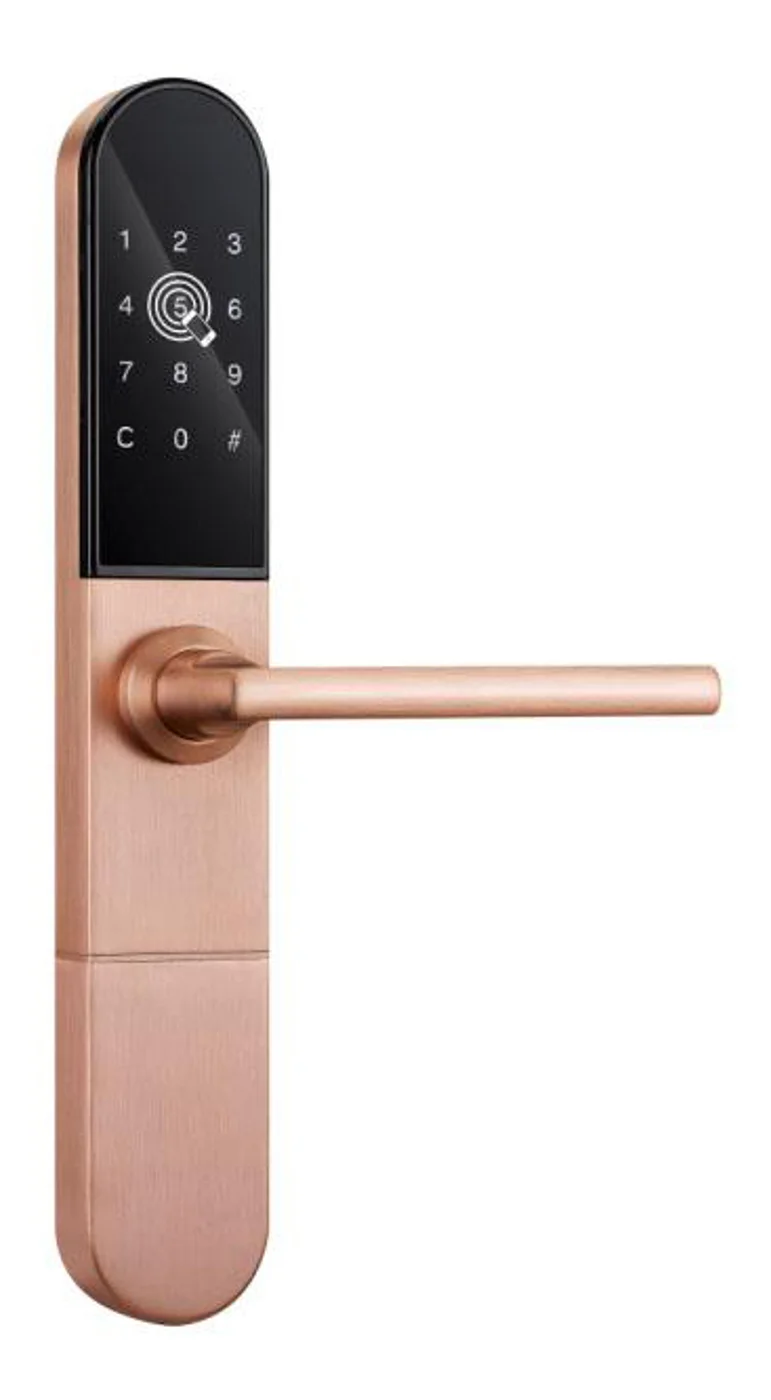
Smart Cabinet Lock — App-Managed, Multi-Site Dashboard
App-managed smart cabinet lock for office, parcel, and multi-site fleets. BLE app dashboard, audit trail, remote unlock, no per-lock server. Higher-tier chassis.
This page already points to it as the next recommended reference.
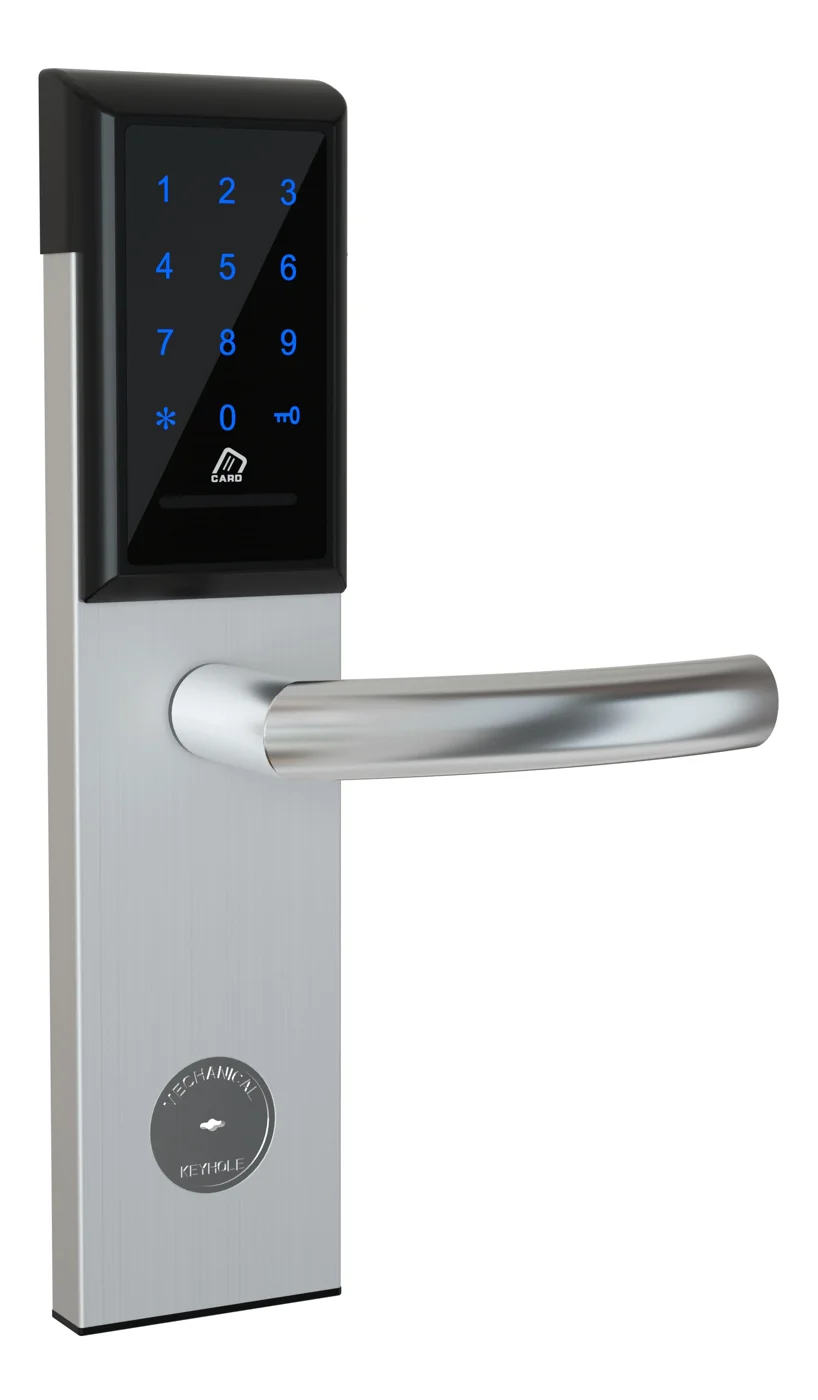
Office Cabinet Lock — PIN + Card for Filing & Pedestals
Offline PIN + card office cabinet lock for filing cabinets, pedestals, and drawers. Battery-powered 5-minute retrofit, no WiFi, no key management. CE/FCC/RoHS.
This page already points to it as the next recommended reference.
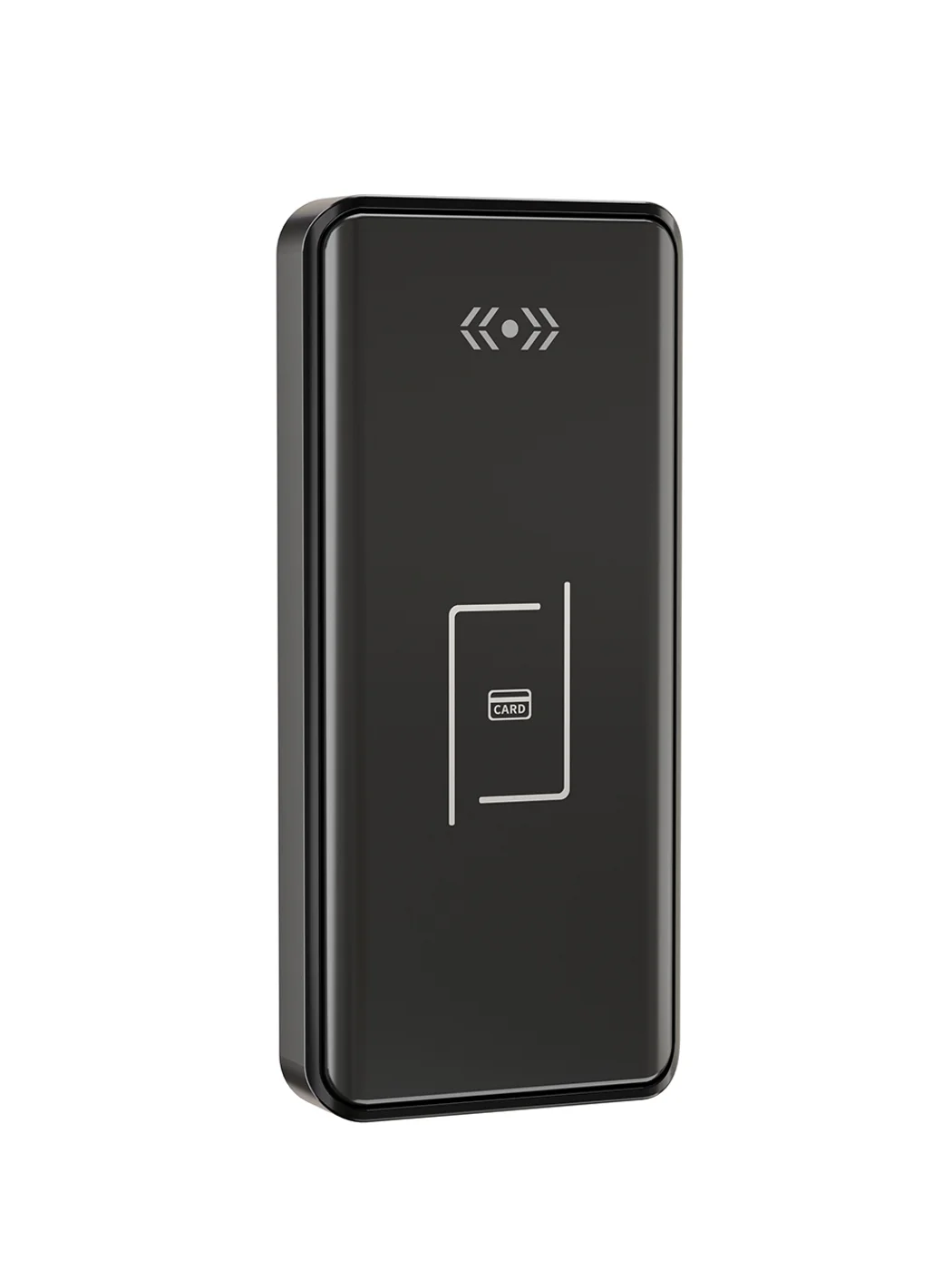
Gym Locker Lock — Offline Card, No WiFi Required
Offline card gym locker lock for fitness and pool lockers. MIFARE card, battery-powered 5-minute retrofit, no WiFi or server. Zinc alloy body, CE/FCC/RoHS.
This page already points to it as the next recommended reference.
Related blog posts
3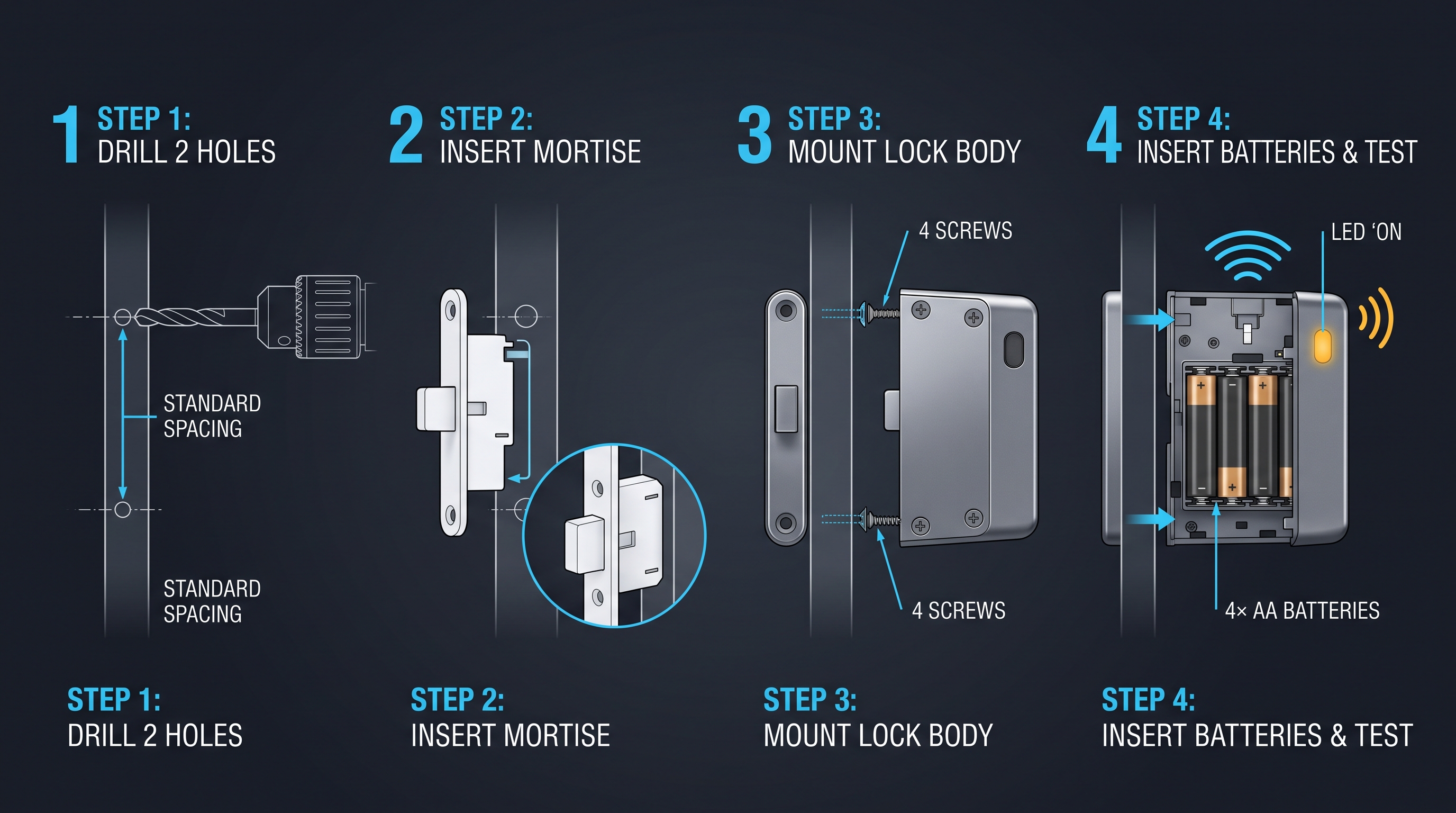
Cabinet Lock Electronic: Complete Technical Guide for 2026 Buyers and Integrators
Comprehensive guide to cabinet lock electronic systems covering types, working principles, installation, pricing, and buying criteria for commercial applications.
It supports the same product context: Smart Cabinet Lock — App-Managed, Multi-Site Dashboard, Office Cabinet Lock — PIN + Card for Filing & Pedestals, Gym Locker Lock — Offline Card, No WiFi Required.
cabinet latch electronic: The Complete Guide to Electronic Latches for Cabinets, Furniture, and Enclosures
Learn what a cabinet latch electronic is, how solenoid, motor, electromagnetic strike, and push-to-open electronic latches work, plus 12V/24V wiring, fail-secure vs fail-safe, relay and app control, use cases, installation, pricing, and troubleshooting.
It supports the same product context: Smart Cabinet Lock — App-Managed, Multi-Site Dashboard, Office Cabinet Lock — PIN + Card for Filing & Pedestals, Gym Locker Lock — Offline Card, No WiFi Required.
Cabinet Cam Lock Electronic: Keyless Electronic Cam Locks Explained
A cabinet cam lock electronic is a keyless, motor-driven replacement for mechanical cam locks that fits standard 22.5 mm and 24 mm bores in metal cabinets.
It supports the same product context: Smart Cabinet Lock — App-Managed, Multi-Site Dashboard.
Specify your hotel project with our engineers
Send your room count, ceiling type, and protocol preference. We will return a sample plan and quote within 24 business hours.
- Move from general guidance into a product or application discussion.
- Use RFQ when pricing, drawings, MOQ, or launch timing needs structure.
- Keep a direct contact path visible for fast clarifications and handoff.