Smart Cabinet Lock: The Complete Guide to Intelligent Storage Security in 2026
A comprehensive guide to smart cabinet locks covering RFID, biometric, WiFi, and Bluetooth access control technologies for residential, commercial, and institutional storage security.
A smart cabinet lock is an electronic locking device designed to secure cabinets, drawers, lockers, and storage compartments through keyless authentication methods including RFID cards, PIN codes, biometric fingerprints, and Bluetooth smartphone apps. Unlike conventional mechanical locks that rely on physical keys, a smart cabinet lock integrates a microcontroller, an authentication sensor, an electronic actuator or solenoid, and often a wireless communication module to verify credentials, log access events, and grant or deny entry. CabinetLock's smart cabinet lock runs offline on its own chip and pairs with a BLE app for remote credential management and audit export — it does not depend on building WiFi or a cloud server, so a cabinet keeps working through any network outage. This architecture turns passive storage furniture into auditable security endpoints that a facility can monitor and control from a phone, without the IT burden of a fully networked IoT deployment. The technology has matured rapidly through 2026, driven by falling component costs and improved battery efficiency, making smart cabinet lock systems viable for applications ranging from residential kitchen cabinets to hospital medication carts, hotel guest safes, and shared office locker banks.
What Is a Smart Cabinet Lock and How Does It Work
A smart cabinet lock is an electronic locking device that authenticates users through digital credentials and actuates a latch mechanism without physical keys. At its core, the smart cabinet lock integrates a credential reader, an embedded microcontroller, a database of authorized identities, and an electronic actuator, typically a solenoid or motor-driven cam that retracts the bolt when a valid credential is presented. When a user presents an RFID card, enters a PIN, or authorizes via smartphone app, the smart cabinet lock controller verifies the credential on its own chip, then energizes the actuator momentarily — no cloud server required. The smart cabinet lock records every access event, denied attempt, and tamper alert with a timestamp and user identifier; CabinetLock stores this audit trail on-device and exports it through the BLE app dashboard for compliance. CabinetLock's smart cabinet lock uses Bluetooth LE for remote credential management and firmware updates, keeping the lock itself offline so it survives network outages. This combination of on-chip cryptographic authentication, electronic actuation, auditability, and app-based remote administration defines the modern smart cabinet lock.
Core Components and Hardware Architecture
The hardware architecture of a smart cabinet lock centers on four functional blocks: the credential input subsystem, the processing and decision module, the electromechanical actuation assembly, and the power supply. The credential input subsystem varies by smart cabinet lock type but typically includes an RFID antenna and transceiver for contactless cards or fobs, a capacitive or optical fingerprint sensor for biometric models, a tactile or capacitive keypad for PIN entry, or a Bluetooth Low Energy radio for smartphone-based unlocking. High-end smart cabinet lock products may combine several of these inputs to support multi-factor authentication. The processing module of a smart cabinet lock is usually an ARM Cortex-M class microcontroller running embedded firmware that handles credential parsing, cryptographic verification, audit logging, and communication with external management systems. This smart cabinet lock controller interfaces with non-volatile memory where authorized credentials, encryption keys, and event logs are stored, often using AES-128 or AES-256 encryption to protect sensitive data at rest.
The actuation assembly converts the controller decision into physical movement. Most smart cabinet lock designs use either a solenoid that retracts a spring-loaded bolt when energized or a small geared motor that drives a cam to rotate a hook or deadbolt. Solenoid-based smart cabinet lock designs are faster and simpler but draw high peak current, while motor-driven smart cabinet lock mechanisms offer lower power consumption and better mechanical holding force, making them preferable for battery-powered installations. The power supply of a smart cabinet lock is critical because many cabinets lack nearby mains wiring. Battery-powered smart cabinet lock units typically use four to eight AA alkaline cells or a rechargeable lithium pack, with design lifetimes ranging from six months to two years depending on usage frequency and communication duty cycle. Some commercial smart cabinet lock models support external 5V or 12V DC power, and a growing number include a low-voltage cutoff that forces the smart cabinet lock into a fail-secure or fail-safe state before battery exhaustion. Additional hardware such as door position sensors, tamper detection switches, LED status indicators, and buzzer feedback complete the smart cabinet lock architecture, giving the smart cabinet lock the ability to report not only who accessed the cabinet but also when the door was opened, how long it remained open, and whether any tampering occurred.
Authentication Methods Compared (with comparison table)
Selecting the right authentication method is one of the most consequential decisions when deploying a smart cabinet lock, because it directly affects security strength, user convenience, deployment cost, and ongoing management overhead. RFID is the most widely deployed method in commercial smart cabinet lock systems because contactless cards are inexpensive, durable, and fast to present, but RFID alone offers only single-factor credential possession and is vulnerable to lost or cloned cards if encryption is not enforced. PIN codes add a knowledge factor and cost nothing to issue, but they can be observed, shared, or guessed, and they require periodic rotation to remain secure. Biometric fingerprint authentication provides strong identity assurance because the credential cannot be transferred or forgotten, yet it adds sensor cost, may struggle with wet or damaged fingers, and raises privacy considerations around biometric data storage. Bluetooth smartphone unlocking leverages devices users already carry, supports rich app-based authorization workflows, and enables temporary digital keys, but it depends on users keeping their phones charged and the app updated. WiFi-connected smart cabinet lock models extend these methods with remote unlock capability and real-time cloud logging, at the cost of higher power consumption and network dependency. The table below summarizes the trade-offs across the most common authentication technologies used in modern smart cabinet lock deployments.
| Authentication Method | Security Level | User Convenience | Deployment Cost | Best Use Case | Key Limitation |
|---|---|---|---|---|---|
| RFID card or fob | Medium | High | Low | Offices, gyms, hotels | Card can be lost or cloned |
| PIN code | Medium | Medium | Very low | Low-security storage | Can be shared or observed |
| Biometric fingerprint | High | Medium | High | Pharmacies, server rooms | Sensor affected by moisture |
| Bluetooth smartphone | Medium-High | High | Medium | Coworking, residential | Phone battery dependency |
| WiFi remote unlock | High | High | High | Enterprise, multi-site | Network dependency |
| Multi-factor (card+PIN) | Very high | Low | High | High-security vaults | Slower access workflow |
A balanced smart cabinet lock strategy often combines methods, for example issuing RFID cards for daily convenience while requiring a PIN or biometric confirmation on high-value cabinets. Multi-factor configurations are increasingly common in healthcare and financial settings where regulators expect layered controls. When evaluating vendors, administrators should confirm that the chosen authentication method is supported end to end, from the credential reader hardware through the management software, and that credentials can be revoked centrally without requiring physical access to each smart cabinet lock.
Key Benefits of Installing a Smart Cabinet Lock
A smart cabinet lock eliminates the physical key as a single point of compromise, replacing it with digitally managed credentials issued and revoked instantly from any central console. When a key goes missing or an employee departs, administrators revoke the compromised credential in seconds, and the smart cabinet lock denies access fleet-wide without rekeying. Every smart cabinet lock generates a complete, timestamped audit trail of open, close, and denied-attempt events tied to specific user identities, providing forensic evidence for investigations and regulatory audits. The smart cabinet lock also supports time-limited access windows and temporary guest credentials, so storage resources are governed by policy rather than reliance on a custodian. Network-connected smart cabinet lock models report door states, battery levels, and tamper events in real time, enabling predictive maintenance. For end users, the smart cabinet lock removes keychain friction and delivers self-service entry, while facility managers gain centralized visibility and control over every cabinet.
Security Advantages Over Traditional Locks
Traditional mechanical locks present a well-documented set of weaknesses that a smart cabinet lock directly addresses. Physical keys can be duplicated at any hardware store, lost without detection, borrowed and copied, or stolen from unattended jackets and desks. The smart cabinet lock replaces static keys with cryptographically protected digital credentials, each bound to a specific user identity and revocable in seconds. When an employee departs or a card is reported missing, the administrator revokes that credential centrally, and the smart cabinet lock immediately refuses access across every unit in the fleet. This is a qualitative improvement over rekeying a mechanical lock, which requires a locksmith visit, new cylinders, and new keys for every affected cabinet. The smart cabinet lock also resists picking, bumping, and drilling far better than consumer-grade cam locks because there is no mechanical keyway to manipulate; attacks must target the smart cabinet lock's electronic interface, which is hardened by encryption, tamper detection, and automatic lockout after repeated failed attempts.
Another decisive security advantage is visibility. A mechanical lock tells you nothing about who opened it, when it was opened, or whether someone attempted to force it. A smart cabinet lock records every open, every failed authentication, and every tamper event, with timestamps and user identifiers stored locally and replicated to the management platform. In a theft or unauthorized access investigation, this smart cabinet lock audit trail transforms an ambiguous situation into a documented sequence of events that can be correlated with video footage and personnel schedules. The smart cabinet lock also enables enforcement of time-based policy, so a cabinet containing medication or cash can be configured to allow access only during authorized shifts, automatically denying entry outside approved windows even if the user holds a valid credential. Additionally, many smart cabinet lock systems support a duress PIN that silently opens the smart cabinet lock while broadcasting an alarm to security personnel, and integrated tamper switches that trigger audible alerts or cloud notifications the moment the smart cabinet lock is pried, shaken, or dislodged. These layered defenses make the smart cabinet lock a fundamentally stronger boundary control than the keyed lock it replaces.
Operational Efficiency in Commercial Settings
Commercial environments benefit from the smart cabinet lock not only as a security device but as an operational tool that eliminates wasteful key-management workflows. In a large office, hotel, clinic, or warehouse, the administrative cost of tracking physical keys is substantial: key registers must be maintained, keys must be signed out and returned, lost keys trigger rekeying projects, and lockouts cause delays and emergency technician calls. A smart cabinet lock removes these costs by making credential management a self-service, software-driven task. HR can onboard a new employee by provisioning a single badge or smartphone credential that grants access to the exact cabinets the role requires, and can deprovision that credential automatically on termination day. No key cutting, no master-key hierarchy rework, and no emergency rekeying. Facility managers can review smart cabinet lock usage analytics to understand which cabinets are underutilized and reallocate space accordingly, improving asset utilization across the estate.
The smart cabinet lock also accelerates daily operations by enabling unattended, on-demand access. Contractors, delivery personnel, and shift workers can be issued temporary credentials valid only for specific hours, eliminating the need for staff escorts and the bottleneck of a single key custodian. In retail and hospitality, the smart cabinet lock supports transaction-oriented access: a cash room or supply closet can be configured so that access is granted, logged, and reported automatically, reducing shrinkage and improving reconciliation. Maintenance and inventory teams receive real-time notifications when a smart cabinet lock is opened or when a door is left ajar, preventing loss from careless closure. Because the smart cabinet lock integrates with broader access control platforms, HR, IT, and facilities teams manage a single identity directory instead of maintaining separate lock and key records. The net effect is a measurable reduction in administrative labor, response times, and shrinkage, typically delivering a return on investment within months for fleets larger than a dozen cabinets, which explains why the smart cabinet lock has become standard equipment in modern commercial facilities.
Smart Cabinet Lock Types and Technology Categories
The smart cabinet lock market in 2026 spans form factors ranging from retrofit cam-lock replacements to surface-mounted RFID units, electronic padlocks, and fully integrated wireless locks designed into original cabinet stock. Each smart cabinet lock type fits a distinct physical and operational profile. Standalone smart cabinet lock units manage credentials internally and operate independently, while hub-based models connect to a local controller that centralizes authorization for clusters of smart cabinet lock devices, and fully networked smart cabinet lock products communicate directly with cloud platforms over WiFi, cellular bridges, or wired RS-485. The locking mechanism itself varies: spring-loaded cam latches retrofit into standard cabinet holes, deadbolt-and-strike assemblies secure high-value enclosures, hook latches accommodate sliding doors, and electronic padlocks serve portable or freestanding storage. Commercial buyers typically prioritize central management and tight access control integration, while residential buyers favor simplicity and smartphone operation. The following sections map the smart cabinet lock landscape by physical form factor and by communication protocol to guide selection.
Lock Form Factors and Mounting Options (with table)
Understanding smart cabinet lock form factors is essential because the physical cabinet determines which mounting approach is possible. The most popular form factor is the retrofit smart cabinet lock cam lock, which replaces the mechanical cam cylinder in the same round mounting hole, preserving the cabinet face and enabling installation in minutes with a single screw. Retrofit smart cabinet lock units are available in 16mm, 20mm, and 25mm body sizes to match standard cabinet prep, and they are well suited to existing desks, lateral files, and pharmaceutical cabinets. Surface-mounted RFID smart cabinet lock units mount over the existing latch point on the cabinet exterior and communicate with a receiver inside, requiring no hole in the door but adding bulk and requiring the cabinet to remain in its original position. Push-button and keypad smart cabinet lock units integrate the credential entry directly into the latch body and are favored where users expect simple, physical interaction. Electronic padlocks offer a portable smart cabinet lock option for lockers, gates, and mobile storage where the enclosure itself is not fixed. Each smart cabinet lock form factor supports different use cases, and the table below compares the primary mounting options.
| Form Factor | Installation Effort | Cabinet Compatibility | Typical Power Source | Best-Fit Application |
|---|---|---|---|---|
| Retrofit cam lock | Very low (one screw) | Existing 16-25mm cam holes | 4x AA batteries | Desks, lateral files, pharmacy cabinets |
| Surface-mounted RFID lock | Low | Any wood or metal cabinet | Internal battery pack | Lockers, storage closets, server racks |
| Push-button keypad lock | Low | Standard cabinet faces | AA or lithium cells | Offices, schools, residential |
| Deadbolt electronic lock | Medium | Doors with strike plate prep | AA or hardwired DC | High-value tool and gun cabinets |
| Electronic padlock | Very low (none) | Portable or freestanding storage | Built-in rechargeable | Gym lockers, gates, trailer storage |
| Full cabinet controller lock | Medium-high | Designed-in cabinet stock | Hardwired or PoE | Enterprise, healthcare, industrial |
The mounting decision also affects security certification and fire ratings, since a smart cabinet lock retrofit must preserve the enclosure integrity of fire-rated cabinets. Administrators should verify that any surface-mounted or replacement smart cabinet lock unit maintains the cabinet's compliance posture, particularly in hospitals and data centers where enclosure certifications matter. Whether a facility standardizes on retrofit smart cabinet lock units for existing furniture or commissions cabinets with integrated smart cabinet lock hardware, the chosen form factor determines battery access, spare-part availability, and the ease with which smart cabinet lock units can be moved when furniture is relocated.
Communication Protocols and IoT Integration (with protocol comparison table)
The communication protocol determines how the smart cabinet lock connects to management software, how data flows to the cloud, and how scalable the deployment becomes. The dominant wireless options are Bluetooth Low Energy, WiFi, Zigbee, and Thread over Matter, with wired RS-485 and Power over Ethernet used in institutional settings where reliability and security are paramount. A Bluetooth smart cabinet lock is typically low cost and battery-friendly but requires a gateway or a nearby smartphone to relay commands, making it ideal for small residential and home-office deployments. WiFi-connected smart cabinet lock units connect directly to the facility network, enabling remote unlock, real-time event streaming, and over-the-air firmware updates without extra hardware, though WiFi increases power draw and requires careful battery engineering in a smart cabinet lock. Zigbee and Matter-based smart cabinet lock devices participate in larger mesh networks, giving enterprises a unified IoT fabric in which smart cabinet lock units, sensors, and controllers operate on one infrastructure. Wired RS-485 and Power over Ethernet smart cabinet lock models are used where continuous power, deterministic latency, and high tamper resistance matter more than installation convenience. The protocol comparison below summarizes the trade-offs.
| Protocol | Range | Power Efficiency | Infrastructure Needed | Cloud Connectivity | Typical Deployment |
|---|---|---|---|---|---|
| Bluetooth LE | 10-30m | Very high | Smartphone or gateway | Via app/gateway | Residential, small office |
| WiFi (2.4GHz) | 30-60m | Moderate | Existing WiFi network | Direct | Multi-locker, remote management |
| Zigbee 3.0 | 10-100m mesh | High | Zigbee coordinator/gateway | Via coordinator | Home and office mesh IoT |
| Thread/Matter | 10-100m mesh | High | Thread border router | Via border router | Smart building ecosystems |
| RS-485 wired | Up to 1200m | N/A (powered) | Wiring to controller | Via panel | Hospitals, industrial plants |
| PoE wired | Cable run limit | N/A (powered) | PoE switch | Direct | Enterprises, government, data centers |
IoT integration is the capability that turns a smart cabinet lock from a standalone electronic lock into a managed security endpoint. Modern smart cabinet lock platforms expose APIs and webhooks that connect to identity providers, workforce management systems, and building management platforms, so a user's access rights flow automatically from their HR record to every smart cabinet lock they are authorized to use. This integration reduces provisioning errors and makes the smart cabinet lock a natural extension of the organization's existing physical security investment rather than a separate silo. When evaluating smart cabinet lock platforms, buyers should confirm the depth of the API, the supported identity standards, and the platform's ability to scale to thousands of smart cabinet lock units without performance degradation.
Smart Cabinet Lock Applications Across Industries
Smart cabinet lock technology has moved from novelty to operational infrastructure across every industry that manages sensitive, valuable, or compliance-governed storage. The core value proposition is universal: a smart cabinet lock answers who accessed the contents, when, and whether that access was authorized, while enabling remote credential management and audit logging that mechanical locks cannot provide. Healthcare deploys the smart cabinet lock on medication carts, controlled-substance cabinets, and specimen storage to satisfy regulatory traceability requirements. Hospitality relies on the smart cabinet lock for guest minibars, room safes, and staff supply closets with temporary credentials that align with booking stays. Offices and coworking spaces secure lockers, IT cabinets, and mail rooms with smart cabinet lock systems that eliminate key custodians. Industrial facilities fit smart cabinet lock hardware to tool cribs, and education and government sectors use the smart cabinet lock to secure assets in publicly accessible buildings. In every case, software-defined access control, auditable logging, and remote administration replace the burden of physical key management.
Healthcare and Pharmaceutical Storage
In healthcare environments, the smart cabinet lock has become a compliance instrument as much as a security device. Regulations governing controlled substances require organizations to demonstrate that medication access is restricted to authorized personnel, that every access is documented, and that the custody chain is verifiable. A smart cabinet lock equipped with RFID or biometric authentication provides exactly this traceability: each nurse or pharmacist presents a unique credential, the smart cabinet lock verifies authorization against the user directory, and the smart cabinet lock platform records the event with user identity, timestamp, and cabinet location. When a joint commission or pharmacy board audit occurs, the facility exports a complete smart cabinet lock access history rather than reconciling paper logs. The smart cabinet lock also supports dual-person or witness requirements, where two authorized credentials must be presented before a high-risk smart cabinet lock opens, and it enforces shift-based access windows so that medication is only retrievable when pharmacy staff are present.
Beyond regulatory compliance, the smart cabinet lock protects against diversion, which remains a chronic risk in pharmaceutical storage. The audit trail generated by each smart cabinet lock gives investigators a documented timeline when discrepancies are found in stock counts, and the tamper detection built into the smart cabinet lock alerts security when a cabinet is forced. Smart cabinet lock systems for healthcare also integrate with the facility's electronic medical record or pharmacy information system, so that smart cabinet lock access is automatically reconciled against dispensation records. Battery reliability is a special concern in clinical settings, because a dead smart cabinet lock can block a nurse during a time-critical medication pass. Leading hospital deployments therefore choose smart cabinet lock models with extended battery life, low-battery cloud alerts, and fail-open emergency override mechanisms approved by facility engineering, ensuring that patient care is never interrupted by a smart cabinet lock failure.
Hospitality and Guest Room Security
Hospitality was among the earliest adopters of electronic locking, and the smart cabinet lock extends that tradition from guest room doors to the smaller storage points inside the room and behind the scenes. In guest rooms, a smart cabinet lock on the minibar or the in-room safe delivers auditability and control that improve revenue protection and guest experience alike. When a guest checks out, the front desk system automatically invalidates the guest's minibar and safe credentials through the smart cabinet lock platform, eliminating the liability of an active credential left behind after departure. Housekeeping staff receive time-limited credentials that grant access only during their scheduled shift and only to the cabinets their assignment requires, and the smart cabinet lock records the exact moment each room cabinet was opened, deterring opportunistic theft and enabling rapid investigation when items go missing.
Behind the scenes, the smart cabinet lock secures liquor stores, linen closets, and cash handling areas where multiple staff members need access at different times. Instead of distributing physical keys that are rarely returned, the front office provisions digital credentials that can be revoked instantly when an employee leaves or when a suspicion arises. The smart cabinet lock also supports integration with property management systems, so access events are correlated with room status, guest stays, and staff schedules. For boutique and extended-stay properties, guest-facing smartphone access is a differentiator: a guest can unlock the room safe or amenity cabinet with the hotel's mobile app, and the smart cabinet lock logs the interaction for guest-service records. The result is a hospitality operation where every storage interaction is controlled, audited, and remotely manageable, protecting both guests and staff while reducing the operational drag of key management.
Office, Coworking, and Flexible Workspace Storage
Office and coworking environments pose a distinctive challenge for storage security because the workforce is transient, space is shared, and nobody wants to act as the permanent key custodian. A smart cabinet lock resolves this by tying storage access to the same identity system that governs building entry. When a member checks in at a coworking space, the membership platform provisions their badge or smartphone with smart cabinet lock entitlements for their assigned locker, mail slot, or storage bay. When the membership lapses, the credential is automatically revoked, and the smart cabinet lock denies access immediately, even if the member retained a physical card. This automated lifecycle is the primary reason flexible workspace operators standardize on smart cabinet lock hardware rather than padlocks or keyed lockers.
For dedicated offices, the smart cabinet lock secures IT equipment, toner and consumables, sample inventory, and confidential document cabinets. IT teams grant technician credentials for server and networking cabinets and receive notifications when those smart cabinet lock units are opened outside maintenance windows, detecting insider risk early. Hot-desking and agile seating mean that no single person owns a cabinet, so the smart cabinet lock platform's ability to reassign a locker from one employee to the next in seconds is operationally valuable. Flexible workspaces also benefit from usage analytics: the smart cabinet lock reporting shows which storage resources are utilized and which sit idle, guiding space planning. Because the smart cabinet lock integrates with the building access control system, employees experience a single credential for doors and storage, and the facilities team administers both from one platform, which reduces cost and complexity across the entire office estate.
How to Choose the Right Smart Cabinet Lock
Choosing the right smart cabinet lock means balancing physical compatibility, security posture, integration depth, and total cost of ownership against the realities of the cabinet stock and the user community. The first filter is physical fit: a retrofit smart cabinet lock must match the existing cam-lock hole, while new cabinetry can accommodate a designed-in smart cabinet lock form factor. The second filter is security: a residential pantry may need only a PIN-based smart cabinet lock, while a controlled-substance cabinet demands biometric authentication and tamper detection. The third filter is management scope: a single household can manage a standalone smart cabinet lock from a phone app, but a hospital needs a networked smart cabinet lock platform with centralized provisioning, revocation, and audit reporting. The fourth filter is sustainability: battery life, firmware update cadence, and spare-part availability determine whether the smart cabinet lock remains serviceable across its full deployment horizon. Buyers should also evaluate certifications, vendor data practices, and support availability before committing.
Authentication Technology Decision Matrix (with table)
The authentication technology is the heart of the smart cabinet lock because it determines both the security boundary and the user workflow. A structured decision matrix helps administrators align the smart cabinet lock's authentication capability with the risk profile of the contents and the operational realities of the users who will interact with it daily. For low-risk residential or back-office storage, a single-factor RFID card or PIN provides adequate protection with minimal friction. For mid-risk environments such as shared office lockers or hospitality storage, Bluetooth smartphone unlocking adds convenience and temporary credential support without excessive cost. For high-risk environments such as pharmacy cabinets, server rooms, or cash handling, biometric authentication or multi-factor combinations deliver the assurance that regulators and auditors expect. The matrix below summarizes the recommended authentication approach by risk tier and operational context.
| Risk Tier | Recommended Authentication | Credential Type | Management Overhead | Compliance Fit |
|---|---|---|---|---|
| Low (residential) | PIN or RFID | Card or code | Very low | Not regulated |
| Low-medium (back office) | RFID card | Issued badge | Low | Internal policy |
| Medium (shared workspace) | Bluetooth smartphone | App credential | Medium | Internal policy |
| Medium-high (hospitality) | RFID with temporary codes | Mobile or card | Medium | Hotel regulations |
| High (pharmacy, controlled substance) | Biometric or dual-person | Fingerprint + card | High | DEA, joint commission |
| Very high (cash, weapons, evidence) | Multi-factor + audit | Biometric + PIN + card | Very high | Law enforcement, federal |
When applying this matrix, administrators should also consider whether the smart cabinet lock will be used by visitors, contractors, or rotating staff who may not have a permanent credential. In those cases, the smart cabinet lock platform's ability to issue time-limited credentials and to revoke them automatically is as important as the authentication method itself. A well-chosen smart cabinet lock matches the authentication strength to the risk, but the management platform must support the credential workflows that the operational reality demands.
Power and Connectivity Considerations
Power and connectivity are the two engineering factors that most often determine whether a smart cabinet lock deployment succeeds or frustrates its users. Because most cabinets are not wired for power, the smart cabinet lock must operate on batteries for months or years between service visits, and the communication protocol must deliver the required functionality within that energy budget. Bluetooth Low Energy is the most power-efficient wireless option, drawing microamps during standby, but it requires a gateway or smartphone to reach the cloud. WiFi offers direct cloud connectivity at the cost of higher standby current and frequent association overhead, which is why WiFi smart cabinet lock products use aggressive duty cycling and keep-alive strategies to preserve battery life. Zigbee and Thread strike a balance, offering mesh networking with low power consumption, but they require a coordinator or border router that itself needs power and configuration.
Administrators should evaluate the smart cabinet lock on three power metrics: expected battery life at a realistic access frequency, low-battery warning lead time, and fail-safe behavior when batteries are exhausted. A smart cabinet lock that fails closed on low battery creates lockout risk, while one that fails open creates security risk, so the chosen behavior must align with the contents. For high-availability environments, hardwired power with battery backup is preferable, and Power over Ethernet smart cabinet lock models combine power and data on a single cable, simplifying installation in new construction. Connectivity planning should also account for network segmentation, firewall rules, and cloud platform reliability: a smart cabinet lock that cannot reach its management server during an outage should cache credentials locally and queue audit events for later sync. Buyers should confirm the vendor's offline behavior, the maximum local credential capacity, and the supported firmware update mechanism, because a smart cabinet lock that becomes unmanageable during a network disruption is a liability, not an asset.
Smart Cabinet Lock Installation and Setup Guide
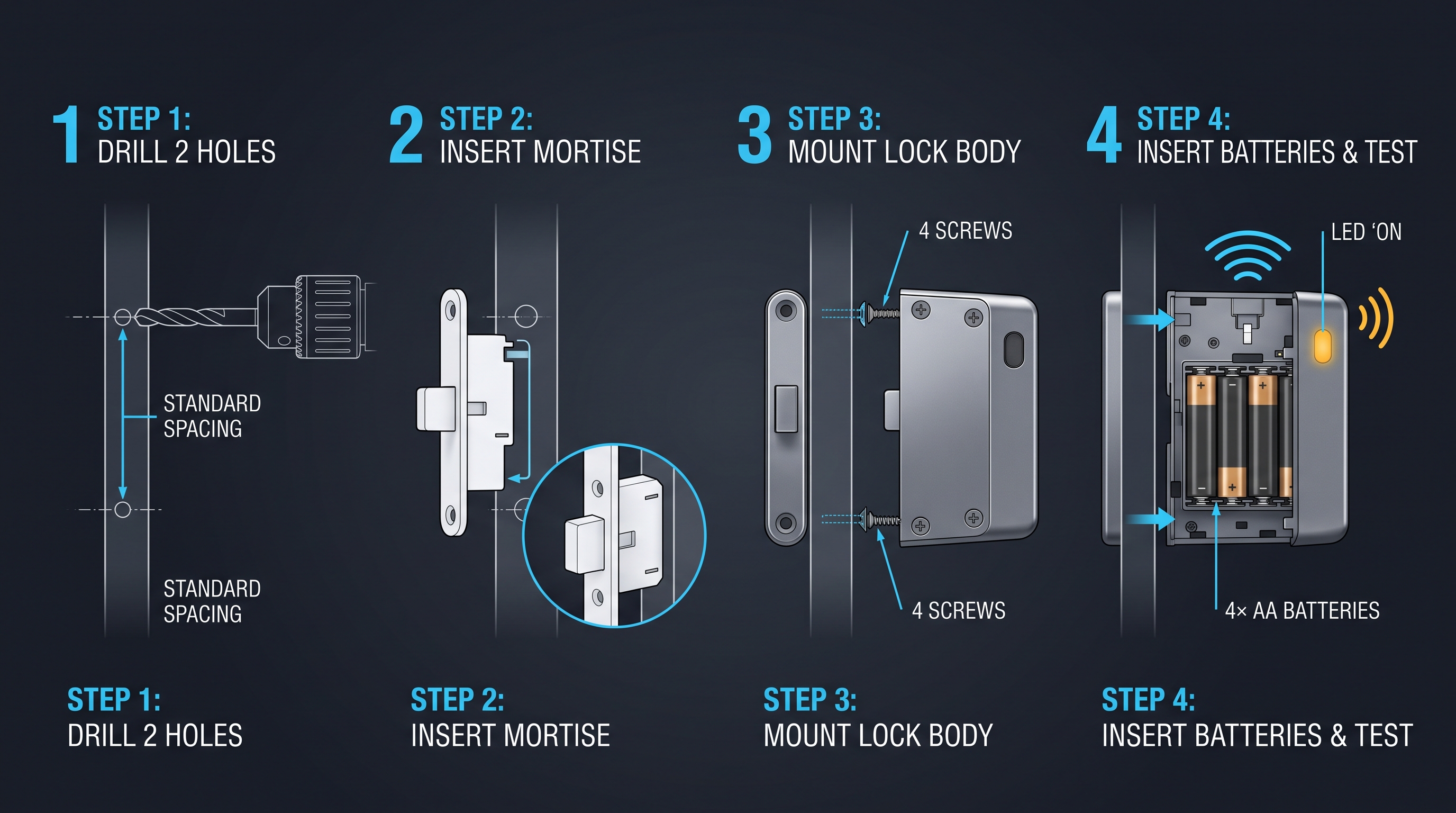
Installing a smart cabinet lock correctly requires disciplined preparation and methodical validation. The installation planning phase catalogs the target cabinets, confirms that the chosen smart cabinet lock form factor matches existing hardware dimensions, and maps the power and connectivity environment. Retrofit smart cabinet lock installations can take minutes per cabinet, while hardwired smart cabinet lock deployments demand coordination between cabinet manufacturers, electricians, and access control integrators. The installation sequence is consistent regardless of scope: remove the existing lock, prepare the mounting surface, install the smart cabinet lock body and strike, connect power and communication, pair the smart cabinet lock to the management platform, provision initial credentials, and validate the full access cycle including denied-access and tamper tests. The most common failure mode is skipping validation, producing a smart cabinet lock that appears functional but silently fails to record events or report tamper alerts. The walkthrough below provides the step-by-step detail needed for a clean smart cabinet lock deployment.
Step-by-Step Installation Walkthrough
A disciplined smart cabinet lock installation begins with inventory and preparation. Confirm that the smart cabinet lock kit contains the lock body, strike plate, mounting hardware, batteries, and any required wiring harnesses, and verify that the cabinet face matches the smart cabinet lock's mounting specification. For a retrofit cam-lock replacement, remove the existing cam lock by unscrewing the retaining nut, withdraw the cylinder, and clean the mounting hole of debris. Insert the smart cabinet lock body through the existing hole, secure it with the provided nut, and attach the cam or hook latch to the back of the smart cabinet lock, orienting it so the latch engages the cabinet frame when the door closes. For a surface-mounted RFID smart cabinet lock, position the smart cabinet lock body on the cabinet exterior, mark the mounting holes and the latch opening, drill the pilot holes, and secure the smart cabinet lock with the provided screws, then install the strike plate on the cabinet frame opposite the latch.
After the mechanical installation, insert the batteries or connect the power supply and observe the smart cabinet lock's initialization sequence, which typically involves a LED color cycle and an audible beep pattern. Pair the smart cabinet lock to the management platform using the vendor's enrollment procedure, which may involve scanning a QR code on the smart cabinet lock, pressing a programming button, or entering the smart cabinet lock's serial number into the admin console. Once paired, the smart cabinet lock platform should display the smart cabinet lock as online and report its battery level and firmware version. Provision at least one administrator credential, then test the full smart cabinet lock access cycle: present the credential, confirm the latch retracts, open and close the door, and verify that the smart cabinet lock platform logs the open and close events with accurate timestamps. Test a denied access by presenting an unauthorized credential and confirm the smart cabinet lock remains engaged and logs the denial. Finally, test the tamper sensor by gently jostling the smart cabinet lock and confirm the platform receives the tamper event. Document the smart cabinet lock's serial number, mounting location, and paired credentials in the facility's asset register before moving to the next smart cabinet lock unit.
Common Installation Mistakes and How to Avoid Them
Even experienced technicians make predictable errors when installing a smart cabinet lock, and recognizing them in advance prevents the operational headaches that follow. The first common mistake is misaligning the lock body and strike plate, which causes the latch to bind or fail to engage when the door closes. A smart cabinet lock that appears to lock but whose latch does not fully enter the strike provides no security, and the misalignment often goes unnoticed because the LED indicates a successful lock cycle. The remedy is to test the latch engagement with the door closed and to confirm that the deadbolt or cam fully seats in the strike before declaring the installation complete. The second common mistake is overtightening the mounting screws, which can warp the lock body, bind the internal mechanism, and cause intermittent failures that are difficult to diagnose. Installers should follow the manufacturer's torque specification and verify smooth latch operation after tightening.
A third frequent error is neglecting to pair the smart cabinet lock to the management platform before completing the installation. A smart cabinet lock that is mechanically installed but not enrolled cannot report events, cannot be remotely managed, and effectively operates as a standalone electronic lock, defeating the purpose of the smart cabinet lock investment. The fourth mistake is provisioning a single shared credential for all users, which destroys the smart cabinet lock audit trail's ability to attribute access to individuals and undermines the compliance case for the smart cabinet lock in the first place. Each user must receive a unique credential, and shared credentials should be prohibited by policy. The fifth mistake is failing to test the low-battery and tamper behavior during commissioning, so that the first time the facility learns of a weak smart cabinet lock battery is when a user is locked out. A proper smart cabinet lock commissioning checklist includes triggering a low-battery simulation, a tamper event, and a network disconnection, confirming the smart cabinet lock behaves correctly in each degraded condition. Avoiding these five mistakes transforms a smart cabinet lock installation from a mechanical task into a verified security control.
Integration With Access Control Systems
Integrating the smart cabinet lock with the organization's broader access control system is what unlocks the operational value of the deployment. A standalone smart cabinet lock secures a single cabinet, but an integrated smart cabinet lock becomes one node in a unified security fabric where building doors, elevators, parking gates, and storage cabinets all respond to the same identity and policy engine. Integration typically follows one of three patterns: a proprietary protocol that binds the smart cabinet lock to the vendor's own controller and software, an open API that lets the organization's identity provider push entitlements to the smart cabinet lock platform, or a standards-based integration through protocols such as ONVIF, OSDP, or the emerging Matter device specification. The proprietary pattern offers the tightest feature integration but creates vendor lock-in, while the API pattern provides flexibility but requires development effort. The standards-based pattern is becoming the preferred enterprise approach because it allows best-of-breed selection of smart cabinet lock units and controllers.
A well-integrated smart cabinet lock inherits the organization's role-based access policies, so a new hire automatically receives the right smart cabinet lock entitlements based on their job role, and a departing employee's access is revoked across every smart cabinet lock the moment their HR record is deactivated. The smart cabinet lock platform's audit events feed into the organization's security information and event management system, where they are correlated with door access, video analytics, and alarm data to detect anomalies such as a smart cabinet lock opening outside business hours or a credential being used in two locations simultaneously. Integration also enables orchestration: a duress PIN on a smart cabinet lock can trigger a building lockdown, and a fire alarm can release fail-safe smart cabinet lock units to allow evacuation. When planning integration, administrators should confirm the smart cabinet lock platform's API capabilities, its support for standard identity protocols such as SCIM for user provisioning, and its ability to export events in a format the SIEM can ingest, because these capabilities determine whether the smart cabinet lock becomes a strategic security asset or an isolated gadget.
Smart Cabinet Lock Maintenance and Troubleshooting
A smart cabinet lock is an electromechanical device requiring ongoing maintenance to deliver reliable service across its multi-year lifespan. A disciplined maintenance program prevents the small degradations that compound into lockouts and security gaps. Preventive maintenance for a smart cabinet lock includes scheduled battery replacement before the low-battery threshold, mechanical inspection of the latch and strike for wear or misalignment, cleaning of credential readers to maintain reliable RFID and biometric performance, and verification that firmware is current and audit logs flow to the management platform. Reactive troubleshooting addresses the inevitable failures: a smart cabinet lock that stops responding, a credential that is intermittently rejected, a door reporting ajar when closed, or a tamper alert that fires without cause. Security patching closes vulnerabilities disclosed by the vendor or discovered through penetration testing, ensuring the smart cabinet lock resists evolving attack techniques. The sections below cover firmware discipline and provide a troubleshooting reference.
Firmware Updates and Security Patching
Firmware is the software that runs on the smart cabinet lock's embedded microcontroller, and like any networked software it requires regular updates to address security vulnerabilities, fix bugs, and deliver new features. A disciplined smart cabinet lock patching program begins with vendor notification: administrators should subscribe to the smart cabinet lock vendor's security advisory feed and review each release note to assess the relevance and urgency of the update. Critical security patches should be tested in a staging environment and then deployed to the production smart cabinet lock fleet within the vendor's recommended window, while feature updates can follow a more leisurely cadence. The smart cabinet lock management platform should support over-the-air firmware distribution with scheduling, staged rollout, and automatic rollback if an update fails, because a bricked smart cabinet lock is worse than a vulnerable one. Administrators should maintain a firmware inventory that records the current version of every smart cabinet lock in the fleet, identify smart cabinet lock units that fail to update, and schedule manual intervention for those that cannot be updated remotely.
Security patching extends beyond the smart cabinet lock firmware to include the management platform, the mobile applications used for Bluetooth unlocking, and any gateways or border routers in the network. A vulnerability in the smartphone app can compromise the smart cabinet lock just as surely as a flaw in the smart cabinet lock itself, so app updates should be pushed to users and their installation verified. Administrators should also review the cryptographic posture of the smart cabinet lock fleet periodically: confirm that AES keys have been rotated according to policy, that default credentials installed at the factory have been changed, and that any certificates used for cloud communication remain valid and trusted. A smart cabinet lock that has not been patched in a year is a soft target, and in regulated environments an unpatched smart cabinet lock may fail audit. By treating the smart cabinet lock as a managed endpoint with a patching lifecycle equivalent to a laptop or server, the organization maintains the security posture that justified the smart cabinet lock investment in the first place.
Common Issues and Solutions (with troubleshooting table)
Even a well-maintained smart cabinet lock encounters operational issues, and a structured troubleshooting reference accelerates resolution and reduces dependence on vendor support. The table below catalogs the most frequent smart cabinet lock problems, their likely causes, and the recommended remediation. Facility teams should treat this as a starting point and document site-specific patterns as they accumulate operational experience with their smart cabinet lock fleet.
| Symptom | Likely Cause | Recommended Solution |
|---|---|---|
| Lock does not respond to credential | Dead or weak batteries | Replace batteries; verify low-battery alerts are configured |
| Credential intermittently rejected | Dirty RFID antenna or worn fingerprint sensor | Clean reader surface; re-enroll fingerprint |
| Door reports ajar when closed | Strike misalignment or door position sensor fault | Realign strike; inspect sensor wiring |
| Lock unlocks but latch does not retract | Mechanical binding or cam wear | Inspect and lubricate cam; replace worn component |
| Tamper alert fires repeatedly | Loose mounting or vibration | Tighten mounting; add vibration dampening |
| Lock offline in management platform | Gateway failure or WiFi connectivity loss | Check gateway and network; verify lock association |
| Audit events missing from platform | Buffer overflow during network outage | Sync local cache; increase event buffer size |
| Firmware update fails repeatedly | Low battery or unstable connection | Charge or replace batteries; retry from closer gateway |
| PIN accepted but access denied in policy | Time-based access window restriction | Verify user's schedule in management platform |
| Lock drains batteries rapidly | Excessive communication retries or tamper loop | Review gateway placement; inspect tamper circuit |
A proactive approach to smart cabinet lock troubleshooting combines this reference with the smart cabinet lock management platform's monitoring capabilities. Administrators should configure alerts for low battery, repeated denied access, tamper events, and offline status, so that smart cabinet lock issues are detected before users report them. Periodic smart cabinet lock fleet health reviews, conducted monthly for large deployments, surface patterns such as a particular smart cabinet lock model draining batteries faster than expected or a specific location reporting disproportionate tamper alerts, guiding targeted interventions that keep the entire smart cabinet lock estate operating reliably.
Smart Cabinet Lock Security Features Deep Dive
The security value of a smart cabinet lock flows from layered cryptographic protection, policy-driven access enforcement, physical tamper resistance, and an auditable, tamper-evident event trail. A modern smart cabinet lock encrypts credentials at rest using AES-128 or AES-256, transmits management commands and events over TLS-encrypted channels, and stores encryption keys in a hardware trust anchor rather than in general-purpose flash memory. Biometric templates, when used, are stored as irreversible mathematical hashes that cannot be reverse-engineered into fingerprint images. The smart cabinet lock enforces role-based and attribute-based access policies, restricting cabinet openings not only by user identity but by time of day, shift schedule, and content classification. Tamper switches and door-position sensors provide the smart cabinet lock with physical intrusion awareness, triggering real-time alerts and logging events that survive network outages. These layered defenses together make the smart cabinet lock a cryptographically grounded, policy-governed, and physically resilient security control.
Encryption Standards and Data Protection
Encryption is the foundation of smart cabinet lock security because the smart cabinet lock stores and transmits credentials, audit logs, and management commands that an attacker could exploit if they were accessible in plaintext. A reputable smart cabinet lock uses AES-128 or AES-256 encryption to protect credentials stored in the smart cabinet lock's non-volatile memory, so that a physically extracted memory chip yields no usable credential data. Communication between the smart cabinet lock and the management platform should be encrypted with TLS 1.2 or higher, with certificate validation to prevent man-in-the-middle attacks, and proprietary radio protocols should employ their own encryption layer since Bluetooth, Zigbee, and Thread each have documented vulnerabilities when encryption is misconfigured or disabled. RFID credentials deserve special attention: legacy unencrypted RFID cards such as Mifare Classic can be cloned in seconds, so a security-conscious smart cabinet lock deployment should require encrypted RFID such as Mifare DESFire or iCLASS SE, which use mutual authentication and per-session keys to defeat cloning.
Data protection extends beyond encryption to include key management, secure boot, and privacy controls. The smart cabinet lock's encryption keys should be stored in a secure element or hardware trust anchor rather than in general-purpose flash memory, and the smart cabinet lock's firmware should verify a cryptographic signature at boot to prevent the installation of malicious firmware. Biometric data, when used by a smart cabinet lock, should be stored as a mathematical template rather than as a raw fingerprint image, and the template should never leave the smart cabinet lock unless encrypted and explicitly authorized by policy. The smart cabinet lock management platform should enforce role-based access to audit logs so that only authorized administrators can review smart cabinet lock access history, and it should support data retention policies that automatically purge logs after a defined period to comply with privacy regulations. When evaluating a smart cabinet lock vendor, administrators should request documentation of the encryption standards, the key management process, and any third-party security audits or penetration test reports, because a vendor that cannot substantiate its security claims is a vendor whose smart cabinet lock should not secure anything of value.
Access Control and Permission Management Models
The access control model determines how the smart cabinet lock translates organizational policy into concrete allow and deny decisions, and the sophistication of this model often differentiates a true enterprise smart cabinet lock from a consumer device. The simplest model is a flat allowlist: each smart cabinet lock stores a list of authorized credential identifiers, and any presented credential on the list is granted access. This model works for small smart cabinet lock deployments but does not scale, because adding or revoking a user requires updating every smart cabinet lock individually. The next level is role-based access control, in which users are assigned to roles and roles are granted access to groups of cabinets, so that a single role change propagates to every smart cabinet lock in the group. The most sophisticated smart cabinet lock platforms support attribute-based access control, in which the smart cabinet lock's access decisions consider contextual attributes such as time of day, location, the user's current shift, the cabinet's content classification, and whether a dual-person witness is present, enabling policies that reflect the real complexity of operational security.
Permission management also encompasses the lifecycle of credentials and the delegation of administrative authority. A well-designed smart cabinet lock platform supports self-service credential issuance within policy boundaries, so that a department manager can grant a contractor temporary access to specific smart cabinet lock units without involving the central security team, while the central team retains visibility and override authority. Temporary credentials should expire automatically, and the smart cabinet lock platform should enforce maximum validity periods to prevent temporary access from becoming permanent through neglect. Administrative roles should follow least-privilege principles: a helpdesk technician may be authorized to reset a smart cabinet lock or provision a replacement credential but not to export smart cabinet lock audit logs or modify access policies, and a security analyst may read smart cabinet lock audit logs but not unlock cabinets remotely. The smart cabinet lock platform should also support break-glass procedures for emergency access, such as a sealed administrative credential or a vendor emergency smart cabinet lock unlock code, with all such access prominently flagged in the smart cabinet lock audit trail for post-incident review. A permission model that combines role-based structure, attribute-based context, lifecycle automation, and least-privilege administration is what enables a smart cabinet lock fleet to scale securely across a large organization without becoming unmanageable.
Future Trends in Smart Cabinet Lock Technology
The smart cabinet lock market is entering a period of rapid technological convergence as artificial intelligence, distributed ledger integrity, and sustainable engineering reshape the capabilities and expectations of electronic storage security. AI and machine learning are embedding into smart cabinet lock platforms to detect anomalous access patterns, predict battery depletion and mechanical wear before failures occur, and continuously refine threat models from fleet-wide telemetry. Blockchain and distributed ledger architectures are being explored to create smart cabinet lock audit trails that remain tamper-evident even if the central management database is compromised. Sustainability pressures are driving energy-harvesting smart cabinet lock designs, modular serviceable hardware, and firmware improvements that extend battery life from months to years. The broader IoT industry's adoption of the Matter standard also promises to simplify cross-vendor smart cabinet lock integration, reducing the lock-in that has historically constrained enterprise deployments. The sections below examine each of these trends in the context of multi-year smart cabinet lock investment planning.
AI and Machine Learning in Access Control
Artificial intelligence and machine learning are transforming the smart cabinet lock from a binary gatekeeper into an intelligent security sensor that understands normal behavior and flags anomalies in real time. A conventional smart cabinet lock records every access event but relies on a human analyst to review the smart cabinet lock logs and identify suspicious patterns, a task that does not scale across thousands of smart cabinet lock units. An AI-enabled smart cabinet lock platform ingests the full stream of access events and learns the baseline behavior for each smart cabinet lock, each user, and each time window, then applies anomaly detection to flag deviations that warrant investigation. A credential used at an unusual hour, a smart cabinet lock opened far more frequently than its historical pattern, a user accessing smart cabinet lock units outside their normal territory, or a sequence of denied access attempts followed by a successful one are all patterns that machine learning models can detect and alert on automatically, often before a theft is discovered through inventory reconciliation.
Predictive maintenance is the second AI application gaining traction in the smart cabinet lock market. By analyzing battery voltage trends, communication retry counts, latch cycle counts, and environmental data, machine learning models can predict when a smart cabinet lock is likely to fail and recommend preventive service before the smart cabinet lock failure occurs. A model might detect that a particular smart cabinet lock's battery voltage is declining faster than its peers and schedule a battery replacement, or that a smart cabinet lock latch mechanism is exhibiting increasing cycle times indicative of wear and recommend a mechanical service visit. These predictive capabilities reduce the operational disruption of unexpected smart cabinet lock lockouts and extend the useful life of the smart cabinet lock fleet, improving total cost of ownership. As AI models mature and as vendors accumulate larger datasets of smart cabinet lock telemetry, the intelligence embedded in the smart cabinet lock platform will increasingly shift from reactive alerting to proactive optimization, making the smart cabinet lock not just a security device but a contributor to facility operational analytics.
Blockchain for Audit Trail Integrity
The integrity of the audit trail is a foundational assumption in smart cabinet lock security, because the entire compliance and investigation value of the smart cabinet lock depends on the trustworthiness of the access log. A conventional smart cabinet lock platform stores audit events in a central database, and while access to that database is restricted, a sufficiently privileged attacker or a compromised administrator could alter or delete smart cabinet lock records to cover their tracks. Blockchain and distributed ledger technologies address this vulnerability by making the smart cabinet lock audit trail append-only and tamper-evident, so that any modification to a historical smart cabinet lock record is immediately detectable. In a blockchain-backed smart cabinet lock deployment, each access event is cryptographically hashed and added to a ledger that is replicated across multiple nodes, and the hash chain ensures that altering any past smart cabinet lock event would require recomputing every subsequent hash, an operation that is computationally infeasible.
The practical application of blockchain to smart cabinet lock audit trails is still emerging, and several architectures are under exploration. A private permissioned ledger, in which the organization and the smart cabinet lock vendor each operate validating nodes, provides tamper-evidence without the energy overhead of a public blockchain. A public ledger, while more transparent, introduces privacy concerns because smart cabinet lock access events could reveal operational patterns, so public-ledger implementations typically store only a hash of the smart cabinet lock event on-chain while keeping the event details in a conventional database. Hybrid architectures, in which a daily merkle root of the day's smart cabinet lock audit events is anchored to a public blockchain, offer a balance of tamper-evidence, privacy, and cost. For regulated environments such as pharmaceutical controlled substance storage or law enforcement evidence handling, where smart cabinet lock audit trail integrity is scrutinized by inspectors, a blockchain-backed smart cabinet lock provides a defensible answer to the question of whether the access history can be trusted, and this capability is likely to become a competitive differentiator as the technology matures.
Sustainability and Eco-Friendly Design in Electronic Locks
Sustainability has moved from a peripheral concern to a central design criterion for the smart cabinet lock, driven by corporate environmental commitments, regulatory pressure on electronic waste, and the operational cost of battery replacement across large smart cabinet lock fleets. The environmental footprint of a smart cabinet lock has three main components: the materials and energy consumed in manufacturing, the batteries consumed over the smart cabinet lock's operational life, and the electronic waste generated at end of life. Each component is being addressed by forward-thinking smart cabinet lock vendors. Energy harvesting smart cabinet lock designs, which use a small solar cell on the cabinet face or a kinetic harvester that captures energy from the door's opening motion, can extend battery life indefinitely in well-lit environments and eliminate the battery waste stream entirely in favorable installations. Improved smart cabinet lock firmware efficiency, through aggressive sleep modes, event-driven communication, and optimized cryptographic routines, reduces the average power draw of the smart cabinet lock and extends battery life from months to years.
Material selection and end-of-life management are the other sustainability frontiers. A smart cabinet lock designed for disassembly, with replaceable battery packs, modular sensor modules, and standardized fasteners, can be serviced and upgraded rather than discarded when a single smart cabinet lock component fails, extending the device's useful life and reducing electronic waste. Smart cabinet lock vendors are increasingly publishing environmental product declarations that disclose the recycled content of the smart cabinet lock's housing, the energy consumed in manufacturing, and the recyclability of the smart cabinet lock device at end of life, allowing buyers to compare smart cabinet lock products on environmental merit alongside security and cost. For organizations with science-based emissions targets or electronic waste reduction commitments, the sustainability profile of the smart cabinet lock fleet is a measurable contributor, and choosing energy-efficient, serviceable, and recyclable smart cabinet lock products supports both the environmental goals and the operational budget. As the market matures through the late 2020s, sustainability is likely to converge with security and cost as a third pillar of smart cabinet lock evaluation, and the vendors that lead on all three will define the next generation of intelligent storage security.
CabinetLock's Smart Cabinet Lock: Offline by Design
The smart cabinet lock category spans everything from cloud-connected WiFi locks to fully offline BLE units. CabinetLock's own smart cabinet lock is the offline-managed tier: it authenticates on-chip (no building WiFi, no cloud account to provision) and pairs with a BLE app dashboard for issuing credentials, granting time-limited passes, and exporting the audit trail. That keeps a managed fleet's remote features without the IT overhead and outage risk of a networked IoT deployment — the lock itself keeps working through any network drop. If your project requires hardwired or WiFi-connected central management, tell us in your inquiry so we can scope the right architecture.
Part of this article content is generated by AI and optimized for professional accuracy and readability.
Not sure which sensor fits your project?
Talk to our mmWave application engineers for a free consultation.
Find the right presence sensor for your hotel project
Compare the 3 protocols, check hotel-specific case studies, and download the installation guide
Related products
2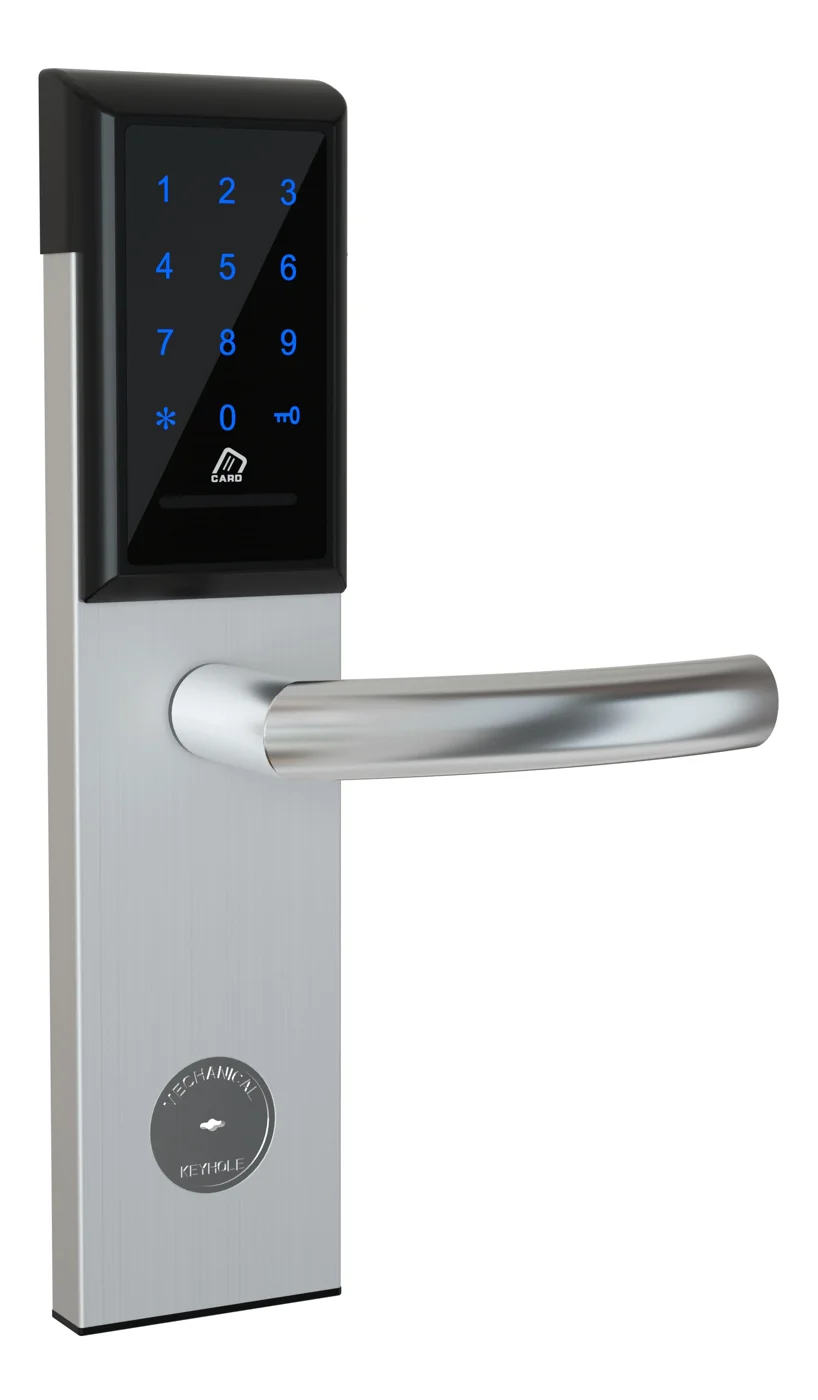
Office Cabinet Lock — PIN + Card for Filing & Pedestals
Offline PIN + card office cabinet lock for filing cabinets, pedestals, and drawers. Battery-powered 5-minute retrofit, no WiFi, no key management. CE/FCC/RoHS.
This page already points to it as the next recommended reference.
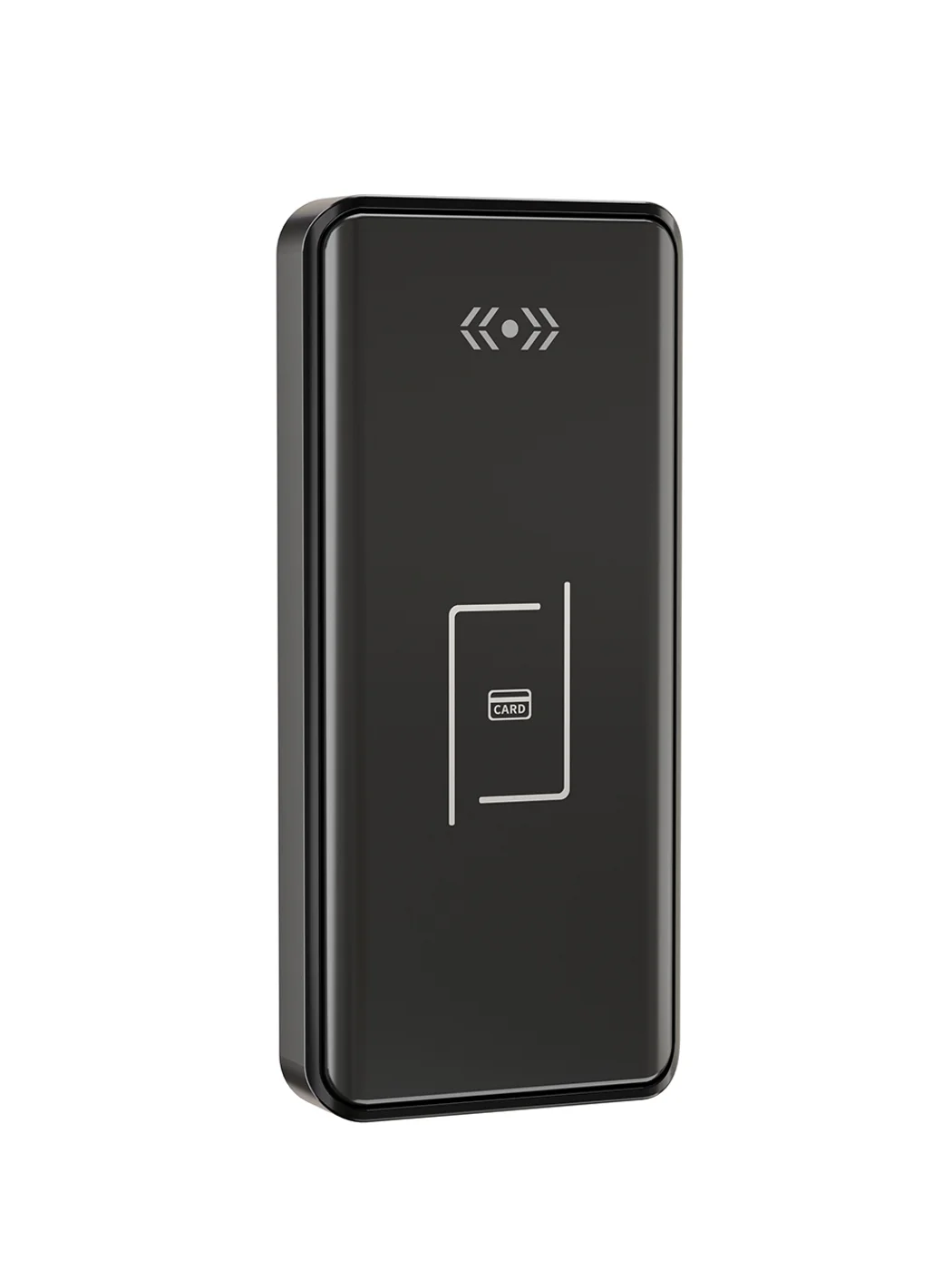
Gym Locker Lock — Offline Card, No WiFi Required
Offline card gym locker lock for fitness and pool lockers. MIFARE card, battery-powered 5-minute retrofit, no WiFi or server. Zinc alloy body, CE/FCC/RoHS.
This page already points to it as the next recommended reference.
Related blog posts
3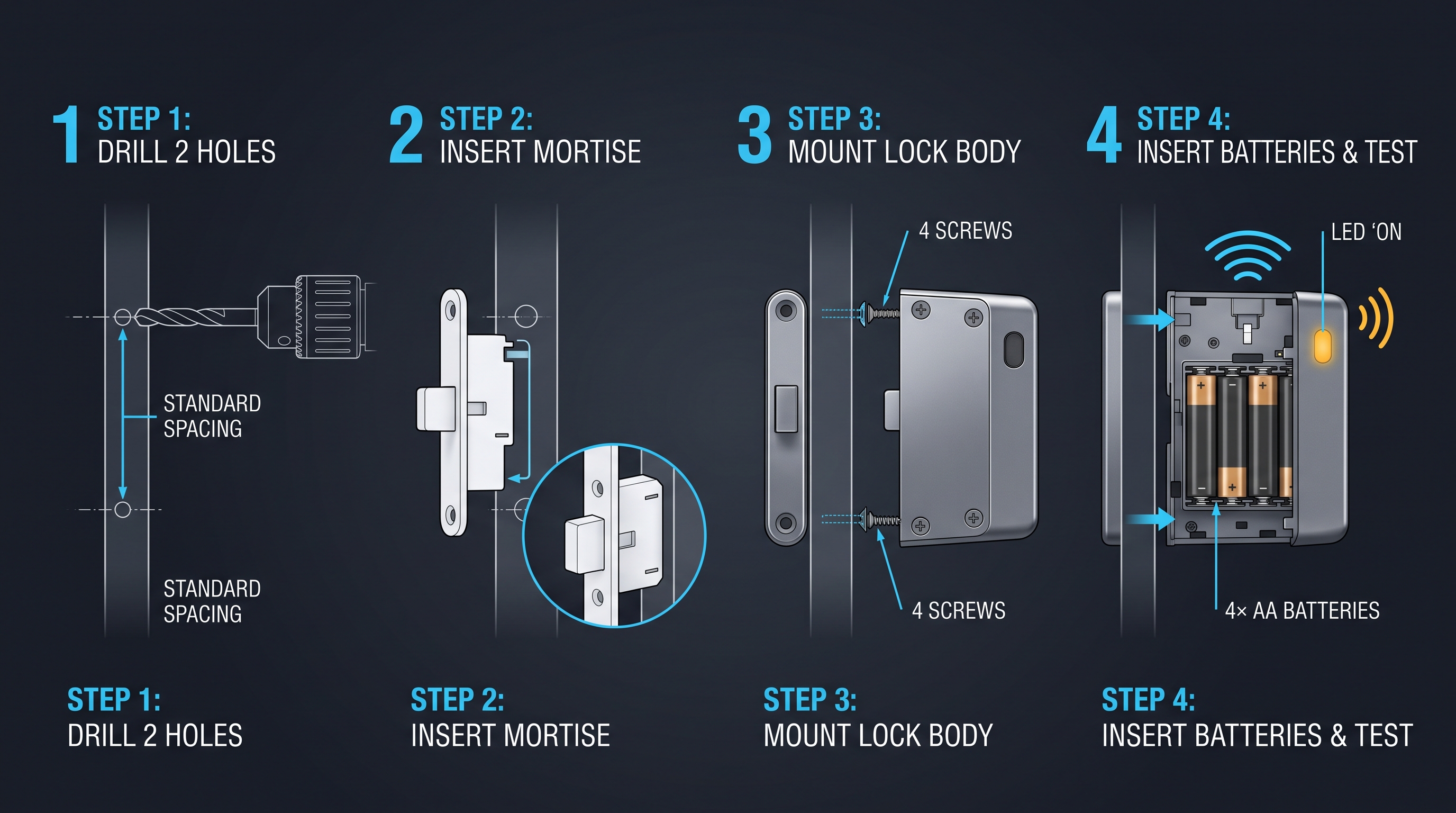
Electronic Cabinet Access: The Complete Guide to Digital Cabinet Entry
Electronic cabinet access replaces keyed locks with digital credentials, generating an access record and letting admins add or revoke users without touching hardware; this guide covers keypad, RFID, biometric, and connected electronic cabinet access methods.
It supports the same product context: Smart Cabinet Lock — App-Managed, Multi-Site Dashboard, Office Cabinet Lock — PIN + Card for Filing & Pedestals, Gym Locker Lock — Offline Card, No WiFi Required.
Display Cabinet Lock: The Complete Guide to Securing Glass Showcases and Retail Display Cabinets
Learn how a display cabinet lock secures glass showcases and retail displays. Compare electromagnetic, RFID, and keyed display cabinet lock types for any application.
It supports the same product context: Smart Cabinet Lock — App-Managed, Multi-Site Dashboard, Office Cabinet Lock — PIN + Card for Filing & Pedestals, Gym Locker Lock — Offline Card, No WiFi Required.
Electronic Access Cabinet: The Complete Guide to Smart Locking Enclosures
Explore electronic access cabinet systems with RFID, Bluetooth, PIN, and biometric control. Learn about powered enclosures for IT, healthcare, and evidence management.
It supports the same product context: Smart Cabinet Lock — App-Managed, Multi-Site Dashboard, Office Cabinet Lock — PIN + Card for Filing & Pedestals, Gym Locker Lock — Offline Card, No WiFi Required.
Specify your hotel project with our engineers
Send your room count, ceiling type, and protocol preference. We will return a sample plan and quote within 24 business hours.
- Move from general guidance into a product or application discussion.
- Use RFQ when pricing, drawings, MOQ, or launch timing needs structure.
- Keep a direct contact path visible for fast clarifications and handoff.