OEM cabinet lock manufacturing explained: a complete buyer guide to design, tooling, MOQ, QC and partner selection
OEM cabinet lock manufacturing guide covering OEM vs ODM, tooling, BOM control, MOQ, lead time, QC, certification and IP protection for buyers.
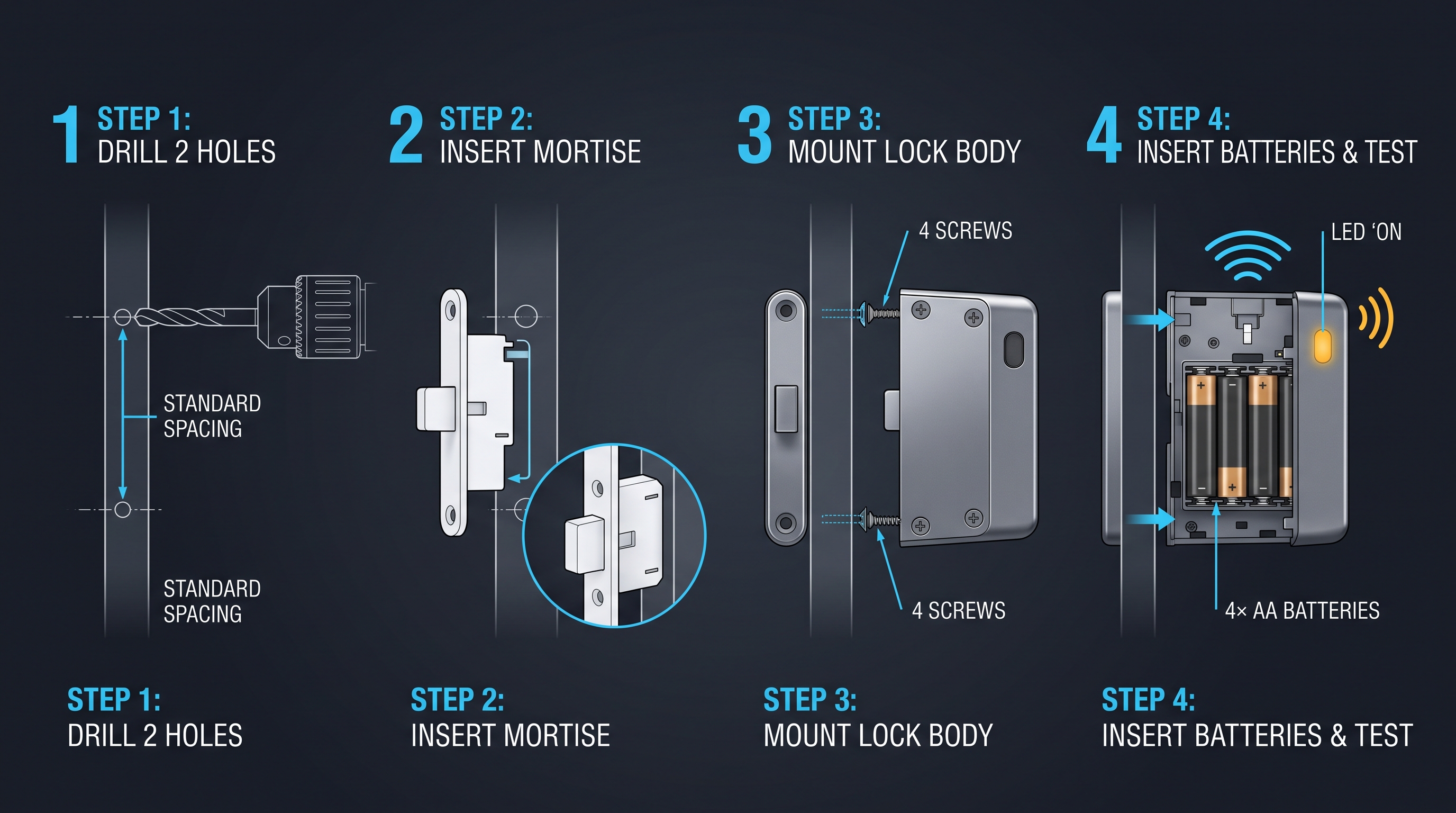
OEM cabinet lock definition: what it is and why the term matters in modern sourcing
An OEM cabinet lock is a locking device produced by a contract factory to the buyer's proprietary design, specification, performance criteria and brand language, with the factory retaining no intellectual property once tooling is paid off and the design is transferred. In an OEM cabinet lock program the buyer owns the 2D drawing or 3D CAD, the bill of materials, the finish standard, the cycle target (100,000 to 500,000 cycles for a Grade-2 cabinet lock), the electrical interface (standby 30 to 80 mA at 12 V DC, peak 1 to 2 A), the FCC Part 15B, CE-RED, UL 10C, EN 1627 or RCM certification scope, and the brand label. The OEM cabinet lock factory supplies presses, zinc-alloy CNC lines, salt-spray chambers, packaging and a program manager. This split defines every OEM cabinet lock engagement: the OEM supplier is contractually a manufacturer, not a co-designer, so change control and end-of-life decisions stay with the buyer long after the OEM cabinet lock has shipped in volume.
An OEM cabinet lock program commands a higher gross margin than a comparable ODM SKU, but it demands greater up-front investment in drawings, tooling, PPAP and certification. When the buyer controls the OEM cabinet lock design, the buyer controls the lock interface with the cabinet, the electrical wiring diagram, the firmware behaviour on power loss and the security rating at the cabinet hinge. Those control points accumulate over multiple OEM cabinet lock SKUs into a systems-level advantage that no ODM platform can match. An OEM cabinet lock buyer who understands this trade-off wins the category; an OEM cabinet lock buyer who treats it like a commodity price negotiation loses it. The term itself signals technical seriousness to distributors and specifiers who read it on a datasheet as proof the design is bespoke and the tooling is funded, which is why the OEM cabinet lock label matters as a market signal beyond the legal agreement. An OEM cabinet lock buyer should also track three leading indicators of program health: the supplier's on-time PPAP submission rate, the PPM defect rate and the average corrective-action closure time. An OEM cabinet lock program that maintains a PPAP on-time rate above 90 percent, a PPM below 500 and a corrective-action closure time below 30 days is a healthy OEM cabinet lock program. An OEM cabinet lock program that sees any of these three indicators trend in the wrong direction over two consecutive quarters is a program that needs an escalation.
How the OEM cabinet lock model differs from ODM and pure contract manufacturing
The OEM cabinet lock model is one of three common outsourcing routes, and confusing them is expensive. In an OEM cabinet lock engagement the design origin sits with the buyer; the factory executes to print. In an ODM engagement the factory proposes an existing platform, the buyer rebrands it, and the design origin stays with the factory under a 12 to 36 month exclusivity window. In contract manufacturing the factory supplies capacity on a toll basis with no design input. OEM cabinet lock buyers carry the engineering cost but own the design freedom, patent positions, tooling, brand language and the right to switch factories. ODM buyers pay less up front but accept the platform may be sold to a competitor. The OEM cabinet lock route is the only option for a buyer wanting a unique feature set no ODM catalog platform carries. The OEM cabinet lock buyer must vet the supplier's engineering culture as rigorously as the price sheet.
Warranty and liability also differ between the three models. When a failure occurs in an OEM cabinet lock SKU built to the buyer's design, the warranty analysis goes back to the buyer's engineering team, building institutional knowledge for the next revision. When a failure occurs in an ODM SKU, the analysis stays with the factory because the factory owns the design. An OEM cabinet lock buyer with a strong engineering team prefers design ownership because the analysis builds knowledge; an OEM cabinet lock buyer with a weak team pays for factory ownership in lost control. The most common OEM cabinet lock error is starting the program with a factory that is structurally an ODM shop, because the scope creep, NRE disputes and IP friction end up costing more than the original OEM cabinet lock tooling would have. An OEM cabinet lock buyer who plans to launch multiple SKUs over several years should choose the OEM cabinet lock route from the start, because each new OEM cabinet lock SKU can build on the design files, the approved-vendor list and the certification base of the OEM cabinet lock SKU that came before it. The OEM cabinet lock buyer who starts with an ODM platform for speed and then tries to convert to an OEM cabinet lock model later will pay for the design transfer twice.
Inside the OEM cabinet lock design-transfer and tooling workflow
A disciplined OEM cabinet lock project starts with a design-transfer package, not a sketch. The buyer issues a controlled drawing set (12 to 35 sheets per SKU), a CAD master in STEP or IGES, a critical-dimension list with GD and T callouts, a special-characteristic matrix, a process FMEA, a packaging spec, a regulatory matrix (FCC ID, RED, UKCA, RCM, KC, SRRC), a colour approval (Pantone or RAL), a finish spec (satin nickel per AAMA 2604 with 1,000-hour salt-spray) and a target piece price. The OEM cabinet lock factory responds with a DFM report, a tooling plan (zinc die-cast dies cost 8,000 to 35,000 USD per cavity; progressive stamping dies run 4,000 to 18,000 USD per station; injection molds run 6,000 to 40,000 USD per cavity; CNC fixturing adds 2,000 to 12,000 USD), a capacity model, a PPAP level, an APQP timeline and an open-issue list. An OEM cabinet lock buyer who receives fewer than 12 DFM items should treat the report as incomplete.
T0 samples arrive in 10 to 18 days for machined and stamped parts, 25 to 45 days for cast parts. T1 triggers dimensional reports, salt-spray tests, mechanical cycle tests, electrical verification (lock-state output, motor current draw, quiescent below 50 microamp for a battery-powered OEM cabinet lock) and EMC pre-scans. T2 freezes the design, PPAP is signed and SOP follows. The OEM cabinet lock supplier should also issue a tool-life study and a process-capability study with Cpk for each special characteristic. A year of OEM cabinet lock tooling investment can be wasted by one missed gate, so experienced OEM cabinet lock buyers treat the APQP schedule as a contract obligation. Every OEM cabinet lock drawing must carry a revision letter, an issue date and an ECO number, and every change after T1 must be signed by the OEM cabinet lock supplier. Drawings shared by email without revision blocks are the most common root cause of an OEM cabinet lock program derailing at T2. The OEM cabinet lock buyer should also require an inspection fixture for each critical dimension before SOP, because benchtop gauging during production is only as reliable as the fixture. A well-designed OEM cabinet lock program invests 5 to 10 percent of the tooling budget in inspection fixtures that let the line leader check critical dimensions in under 30 seconds per part, which is the difference between catching a die-cavity drift at part 50 and catching it at part 5,000.
BOM control and component sourcing in an OEM cabinet lock program
BOM control is where OEM cabinet lock programs are won or lost, because most field failures trace back to a substituted component. A controlled BOM has three columns policed quarterly: the buyer-approved part number, the qualified supplier, and the second source. For an OEM cabinet lock the BOM covers the lock body (zinc alloy ZAMAK 3 or ZAMAK 5, brass C36000), the cam or shackle (S45C through-hardened to HRC 42 to 48, or 304/316 stainless), the latch (SUS 304 or POM), the cylinder pins (brass C36000), the spring (music wire SWP-B or SUS 304), the electronics (MCU such as STM32L0 or NXP K22, motor driver DRV8870 or TB6612, Hall sensor or reed switch), the cable assembly, the surface finish (nickel, chrome, powder coat, PVD brass) and the packaging. Every single line item on the OEM cabinet lock BOM is a potential failure point.
A disciplined OEM cabinet lock supplier will not substitute any component without a written deviation approved by the buyer's engineering team. Two cents per unit over a 100,000-unit OEM cabinet lock run is 2,000 USD the factory keeps if the substitution is not detected. The buyer's defence is an unannounced quarterly BOM audit, incoming-quality tests including plating thickness by XRF, spring force at working length and cable insulation resistance greater than 100 megohm at 500 V DC, plus a financial penalty for unapproved substitutions. The OEM cabinet lock buyer should also maintain a controlled AVL with one primary and one second source per critical part. An OEM cabinet lock program surviving a 12-week semiconductor shortage is a program with an AVL that was built, not assumed. The OEM cabinet lock sample archive of every sourced part with date, lot code and qualification date is the only definitive answer to "did this part change?" The OEM cabinet lock buyer should review the BOM quarterly against supplier end-of-life notices and keep a lifecycle-status column per line item. A mature OEM cabinet lock BOM is a living document, not a PDF frozen at the PPAP gate. The OEM cabinet lock buyer should also request a material declaration per ISO 9001 from each component supplier, recording the exact alloy, the plating stack, the plastic resin grade and the lubricant. Over time, the OEM cabinet lock material declaration database becomes the primary evidence for RoHS, REACH and PFAS compliance audits, and the OEM cabinet lock buyer who builds it during qualification will not scramble for compliance certificates during a customer audit.
MOQ, lead time, tooling amortization and the unit economics of an OEM cabinet lock
The economic backbone of an OEM cabinet lock program is the MOQ and tooling amortization curve. Most Asian OEM cabinet lock factories will not start a new SKU below MOQ 1,000 to 3,000 for a simple cam lock, MOQ 3,000 to 5,000 for an electronic lock with PCB and motor, and MOQ 500 to 1,000 for a stainless-steel mechanical lock. Tooling (NRE) is amortized over the first 5,000 to 50,000 units or paid up front. Lead time from PO to first article is 30 to 60 days for an existing OEM cabinet lock SKU, 60 to 120 days for a new mechanical SKU and 90 to 180 days for a new electronic OEM cabinet lock requiring CE-RED or FCC Part 15B testing, with repeats shipping 21 to 45 days after PO. The table below shows how these parameters interact for a typical OEM cabinet lock buyer's planning model.
| Program type | Typical MOQ | Tooling / NRE | Tooling lead time | First article lead time | Repeat order lead time |
|---|---|---|---|---|---|
| Mechanical cam, existing platform | 1,000-3,000 pcs | 0 USD | 0 days | 15-30 days | 21-30 days |
| Mechanical lock, new die-cast housing | 3,000-5,000 pcs | 8,000-35,000 USD | 25-45 days | 45-75 days | 30-45 days |
| Mechanical lock, progressive-stamped parts | 5,000-10,000 pcs | 12,000-60,000 USD | 30-60 days | 60-90 days | 30-45 days |
| Electronic cabinet lock, motor + PCB | 3,000-5,000 pcs | 15,000-80,000 USD (incl. test fixtures) | 35-60 days | 75-150 days | 45-75 days |
| Electromagnetic with certifications | 2,000-5,000 pcs | 25,000-120,000 USD | 45-90 days | 120-180 days | 60-90 days |
The numbers above are industry typical, not quotes. A buyer evaluating any OEM cabinet lock supplier should demand a written, dated response to each row before signing. The hidden cost in any OEM cabinet lock unit-economics model is freight, duty and inventory carrying cost: a sea shipment from Shenzhen to Los Angeles takes 18 to 28 days, an LCL runs 350 to 900 USD per cubic metre, and inventory carrying cost at 8 percent per year on a 60-day OEM cabinet lock pipeline is significant. A serious OEM cabinet lock buyer builds a landed-cost model before the first PO.
A mature OEM cabinet lock program generates 3 to 7 percent year-on-year cost-down through design-for-value reviews, second-source qualification and freight optimization. An OEM cabinet lock supplier that refuses to share cost-down data is transactional, not strategic. A transactional OEM cabinet lock relationship works for a one-off SKU but fails for a brand launching multiple OEM cabinet lock SKUs, because each new OEM cabinet lock program starts at the bottom of the learning curve. The OEM cabinet lock buyer should also negotiate a volume rebate structure that tiers pricing at 10,000 units, 25,000 units and 50,000 units, with the rebate paid as a credit against the next PO rather than as a cash refund. The volume rebate aligns the OEM cabinet lock supplier's incentive with the OEM cabinet lock buyer's growth plan, and it prevents the OEM cabinet lock supplier from treating a growing OEM cabinet lock program as a windfall rather than a partnership.
Quality control, inspection cadence and certification in an OEM cabinet lock line
Quality in an OEM cabinet lock program is a layered system from incoming material to dock audit. Incoming control checks the zinc alloy certificate, steel hardness, plating thickness (XRF target 8 to 25 microns for nickel plus chrome), salt-spray rating (48 to 96 hours for indoor Grade-2, 240 to 1,000 hours for outdoor), cable insulation resistance (greater than 100 megohm at 500 V DC) and RoHS, REACH and PFAS compliance. In-process control monitors die-cast shot weight, stamping burr height, spring force at working length, cam engagement torque (0.4 to 1.2 Nm for a drawer cam lock), motor no-load current (60 to 200 mA for a 12 V OEM cabinet lock actuator), Hall-sensor latch-state debounce and standby quiescent current less than 50 microamp for a battery-powered smart cabinet lock. Final inspection covers cycle testing (50,000 to 200,000 mechanical cycles), pull strength (50 to 150 kgf before yield), drop test (ISTA 1A or 3A), vibration (ASTM D4169 truck profile), EMC pre-compliance and packaging audit.
Certification scope for a serious OEM cabinet lock line includes ISO 9001 and IATF 16949 for the factory, ISO 14001, UL 10C or EN 1627 for fire-rated cabinets, CE-RED, FCC Part 15B, UKCA, RCM and SRRC for electronic variants, and RoHS, REACH, California Proposition 65 and PFAS disclosure for chemical compliance. A supplier without current third-party audited certificates should be removed from the OEM cabinet lock shortlist on day one. The OEM cabinet lock buyer should verify the ISO scope includes lock and hardware manufacturing.
The OEM cabinet lock inspection cadence must be documented in a quality plan naming the AQL level per characteristic (AQL 0.65 for critical, 1.0 for major, 2.5 for minor under ISO 2859-1), the sample size per lot and the lot-disposition rules. A quarterly OEM cabinet lock supplier quality scorecard shared with the supplier's executive team shows PPM defect rates, on-time delivery, lead time variance and corrective-action closure time. The scorecard turns OEM cabinet lock quality from a vibes-based judgment into a data-based management tool. A mature OEM cabinet lock program also runs an annual layout audit with the buyer on the factory floor for two to five days, checking gauges, calibration stickers and interviewing line leaders. The OEM cabinet lock buyer should also request a process capability report for each special characteristic at the PPAP gate and at each annual layout audit, because a Cpk that drifts from 1.67 to 1.33 over two years is a signal that the OEM cabinet lock supplier's process is degrading even though no single part has failed the specification limit yet. The OEM cabinet lock buyer who monitors Cpk trends catches process drift at the signal stage, not the failure stage.
IP protection, tooling ownership and contractual safeguards in an OEM cabinet lock project
Intellectual property is the most fragile asset in any OEM cabinet lock program because the buyer is handing the design to a third party with the equipment and labour to copy it. The defensive toolkit has four layers. Layer one is a written NDA with a five-year survival clause, executed before any drawing is shared. Layer two is a tooling-ownership clause naming the buyer as the legal owner of every die, mold, fixture, gauge and program-specific test rig, with the factory holding them in trust. Layer three is a design-owned clause confirming the design, brand, trade dress, firmware, brand mark and certification filings belong to the buyer, with the factory granted a non-exclusive licence to manufacture for the buyer only. Layer four is a non-compete clause restricting the factory from selling the same or substantially similar cabinet-lock SKU to a named competitor list for the program duration plus 12 to 24 months. A five-layer IP defence is the minimum viable structure for an OEM cabinet lock program.
Geographic audit rights, mandatory destruction of design files at end of life, source code escrow for firmware and a liquidated-damages clause for IP breach are additional protections that experienced OEM cabinet lock buyers always insist on. A factory that resists these clauses almost always plans to monetize the design once volume scales. The resistance shows up as "we will come back to that clause" or "this is our standard template." An OEM cabinet lock buyer who signs a template agreement without legal counsel review of the IP clause has accepted, by default, that the factory may produce and sell the OEM cabinet lock design after the exclusivity period expires. Tooling location is another safeguard: the OEM cabinet lock buyer's tooling should be physically marked with the buyer's asset tag, stored in a designated area and covered by a tool-list appendix reconciled quarterly. Tooling that disappears during a factory ownership change is a real and recurring OEM cabinet lock risk, and the only mitigation is paperwork naming the tool as the buyer's asset under every restructuring scenario. An OEM cabinet lock buyer should also insist on a step-in right clause that allows the buyer to take over production directly if the factory breaches the IP clause, the non-compete clause or the tooling-ownership clause. The step-in right gives the OEM cabinet lock buyer a practical remedy beyond damages, because damages for a stolen OEM cabinet lock design are hard to prove and harder to collect in a foreign jurisdiction. An OEM cabinet lock buyer who ships to North America should also register the design patent and the trade dress in China and in the factory's home jurisdiction, because a patent registered only in the buyer's home market is unenforceable against a factory that manufactures and sells exclusively in its home market. The OEM cabinet lock buyer who invests in international patent registration early closes a loophole that many OEM cabinet lock buyers discover only after the first unauthorized OEM cabinet lock copy appears on a trade show floor.
How to choose the right OEM cabinet lock partner for your brand or product line
Selecting an OEM cabinet lock partner is a multi-criteria decision, not a price decision, and a structured scorecard saves months of pain. The first filter is capability fit: does the factory run zinc die casting, CNC machining, stamping, PCB assembly and salt-spray testing in-house? The second filter is certification: are the ISO 9001, IATF 16949, ISO 14001, UL, CE-RED and FCC certificates current? The third filter is engineering depth: is there a written DFM review, a change-control procedure and a calibrated metrology lab? The fourth filter is commercial stability: how long has the factory been in cabinet locks and what is the turnover? The fifth filter is logistics fit: can they ship FOB and support DDP? The sixth filter is communication: is the program manager reachable in the buyer's time zone? A scorecard weighting capability at 25 percent, certification at 15 percent, engineering at 20 percent, commercial stability at 15 percent, logistics at 15 percent and communication at 10 percent surfaces the right OEM cabinet lock partner.
The scorecard should be applied at three points: after the capability questionnaire, after the factory audit and after the paid pilot run. The pilot is the most important gate because it reveals the OEM cabinet lock supplier's true operational behaviour under real volume pressure with real change requests and real inspection failures. A factory assigning a dedicated OEM cabinet lock account manager is structurally different from one routing all OEM cabinet lock inquiries through a generic sales desk, and the dedicated structure correlates strongly with higher OEM cabinet lock program success rates. The OEM cabinet lock buyer should also evaluate the supplier's proposed program management cadence: weekly calls during tooling, biweekly during ramp and monthly during steady state. A factory that cannot describe this cadence in writing has not thought about OEM cabinet lock program management beyond the first order. The OEM cabinet lock buyer should also visit the factory during the pilot run, not just during the audit. A factory floor visit during a live OEM cabinet lock pilot reveals how the team handles a real production constraint, a real quality reject and a real shipment deadline, all of which are invisible in a scheduled audit where the factory has prepared the line and the documentation for the buyer's visit. An OEM cabinet lock buyer who visits during the pilot learns more in one shift than in two days of audited presentation.
Common pitfalls buyers face when sourcing an OEM cabinet lock and how to avoid them
The most common OEM cabinet lock sourcing failures fall into seven patterns, each with a known mitigation. Pitfall one is choosing on unit price alone; mitigation is total-cost-of-ownership modelling covering tooling, freight, duty, warranty and IP risk. Pitfall two is skipping the DFM review; mitigation is a written DFM with 12-plus actionable items before tooling. Pitfall three is paying tooling in full before T1 samples; mitigation is milestone payments tied to T0, T1, T2 and PPAP gates. Pitfall four is accepting sample parts without a dimensional report; mitigation is a CMM report on every critical dimension. Pitfall five is allowing component substitution without written deviation; mitigation is a controlled-BOM clause with quarterly audits. Pitfall six is treating certification as the factory's problem; mitigation is joint ownership of the test plan. Pitfall seven is a contract with no exit clause; mitigation is a wind-down clause with 90 days' notice. Every OEM cabinet lock buyer has a story rooted in one of these seven pitfalls.
A second tier of OEM cabinet lock pitfalls sits at program-management level: treating the OEM cabinet lock program as a one-time purchase rather than a multi-year engagement, failing to assign an internal program owner with real authority, never sending a resident engineer to the factory and assuming the OEM cabinet lock factory that excels at one SKU will excel at the next. The cost shows up gradually as margin compression, warranty creep and slower time-to-market. The mitigation is the same across both tiers: define success up front, measure quarterly, escalate early and document every red flag. The OEM cabinet lock supplier who refuses to put a metric in writing will dispute it when it goes wrong. The OEM cabinet lock buyer who refuses to put a clause in writing will absorb the cost when the dispute arrives. An OEM cabinet lock buyer can also mitigate program risk by running a quarterly business review with the supplier where the buyer presents the scorecard and the supplier presents the cost-down roadap, the quality roadmap and the capacity roadmap. The quarterly business review turns the OEM cabinet lock program from a buyer-vendor transaction into a buyer-supplier partnership, and it is the single most effective tool an OEM cabinet lock buyer has to prevent the slow drift from strategic to transactional that kills most OEM cabinet lock programs by year three.
Certification matrix, regulatory scope and testing sequence for an OEM cabinet lock program
The certification scope of an OEM cabinet lock program is often underestimated in planning and overperformed in execution. A mechanical OEM cabinet lock for a fire-rated cabinet requires UL 10C or EN 1627 testing that runs 4 to 10 weeks and costs 8,000 to 30,000 USD. An electronic OEM cabinet lock for EU retail requires CE-RED testing at 6 to 12 weeks and 12,000 to 40,000 USD. An OEM cabinet lock for US retail requires FCC Part 15B at 4 to 8 weeks and 8,000 to 25,000 USD. An OEM cabinet lock for Australia requires RCM at 4 to 6 weeks and 3,000 to 15,000 USD. An OEM cabinet lock for China requires SRRC at 8 to 12 weeks and 5,000 to 50,000 USD. The sequence matters: FCC and CE-RED should start before tooling completes to avoid delays. An OEM cabinet lock buyer who discovers at month nine that a 12-week certification cycle is needed will miss the fiscal quarter.
| Region | Standard | Typical timeline | Typical cost | Repeat testing frequency |
|---|---|---|---|---|
| USA | UL 10C (fire), FCC Part 15B | 4-10 weeks | 8,000-30,000 USD | Per model change |
| European Union | EN 1627, CE-RED (radio) | 6-12 weeks | 12,000-40,000 USD | Per model change + annual |
| United Kingdom | UKCA | 4-8 weeks | 8,000-25,000 USD | Per model change |
| Australia / NZ | RCM | 4-6 weeks | 3,000-15,000 USD | Per model change |
| China | SRRC (radio), CCC (safety) | 8-12 weeks | 5,000-50,000 USD | Per model change |
| South Korea | KC | 8-12 weeks | 5,000-25,000 USD | Per model change |
| Global (chemical) | RoHS, REACH, PFAS, Prop 65 | Ongoing | 2,000-10,000 USD initial | Annual update |
The OEM cabinet lock buyer should include certification cost and timeline in the project plan from month one, not treat it as a pre-production step. Planning certification as a parallel track alongside tooling and PPAP lets the OEM cabinet lock buyer ship faster at lower total cost. A mature OEM cabinet lock program treats certification as a recurring line item with annual surveillance audits and periodic re-testing on design changes. The OEM cabinet lock buyer should hold one set of pre-production samples for each certification body and archive the test reports in a shared folder. An OEM cabinet lock buyer who ships to multiple regions should also budget for a certification gap analysis before the first article is produced, because the differences between EU and US radio standards, between EU and UK chemical reporting rules, and between China and Korea battery safety requirements can force a redesign if they are discovered after the tooling is cut. The OEM cabinet lock buyer who invests in a pre-tooling certification gap analysis saves 8 to 16 weeks of project time compared to the OEM cabinet lock buyer who discovers the gap at the PPAP stage.
The future of OEM cabinet lock manufacturing: electronics, firmware and supply-chain regionalization
The OEM cabinet lock industry is entering a structural shift that buyers should plan for now. Three forces are converging. First, electronics and firmware are migrating from optional to mandatory, with battery-powered smart cabinet locks shipping in volume at 6 V DC from four AA cells, with peak motor currents of 1 to 2 A, with BLE 5.x or Zigbee 3.0 radios and OTA firmware update capability. Second, cybersecurity and data-privacy compliance (GDPR, CCPA, the EU Cyber Resilience Act, the US Cyber Trust Mark, UK PSTI) are now baseline requirements, with buyers maintaining a software bill of materials, a vulnerability-disclosure policy and a 5-year support window for any connected OEM cabinet lock SKU. Third, supply-chain regionalization is accelerating, with brand owners in North America and Europe qualifying second-source OEM cabinet lock factories in Mexico, Vietnam, India and Eastern Europe. An OEM cabinet lock buyer who ignores these forces will find the supply base increasingly unable to serve the market.
A buyer who plans for this triad — qualifying a second factory within 18 months, budgeting firmware maintenance from day one, treating cybersecurity as a deliverable rather than a feature — will run a more resilient OEM cabinet lock program. The OEM cabinet lock supplier investing in firmware talent, cybersecurity process and regional capacity will capture the next decade of OEM cabinet lock demand. The OEM cabinet lock buyer should evaluate each supplier's firmware capability with the same rigour as die-casting capability, because firmware bugs in the field are more expensive to fix than die-cast defects caught at the factory. An OEM cabinet lock buyer should also require a firmware development plan with a documented testing protocol, a version-control system and a field-update mechanism from any supplier offering a connected OEM cabinet lock. The OEM cabinet lock buyer who accepts a connected OEM cabinet lock without a firmware development plan is accepting an unlimited warranty liability for software defects.
The same forces apply to mechanical-only OEM cabinet lock SKUs. Even a Grade-2 mechanical cabinet lock in 2026 supports anti-pry certification to EN 1627 Grade 3, ships with documented recycled-content percentage for ESG reporting and arrives in a fully recyclable master carton. The OEM cabinet lock factory delivering all three earns the premium. The OEM cabinet lock factory delivering only the lock body is relegated to commodity tiers. The OEM cabinet lock buyer's strategic question is not whether to upgrade the spec but how fast to upgrade without breaking the cost-down curve. The most successful OEM cabinet lock buyers of the next decade will treat each OEM cabinet lock SKU as a platform evolving over multiple generations, each building on the design control, tooling investment and certification base of the OEM cabinet lock generation that preceded it. An OEM cabinet lock buyer who starts planning for the second-generation OEM cabinet lock SKU on the day the first-generation OEM cabinet lock SKU ships will have a 12 to 18 month head start on the OEM cabinet lock buyer who waits until the first-generation OEM cabinet lock SKU needs a replacement.
Not sure which sensor fits your project?
Talk to our mmWave application engineers for a free consultation.
Find the right presence sensor for your hotel project
Compare the 3 protocols, check hotel-specific case studies, and download the installation guide
Related products
3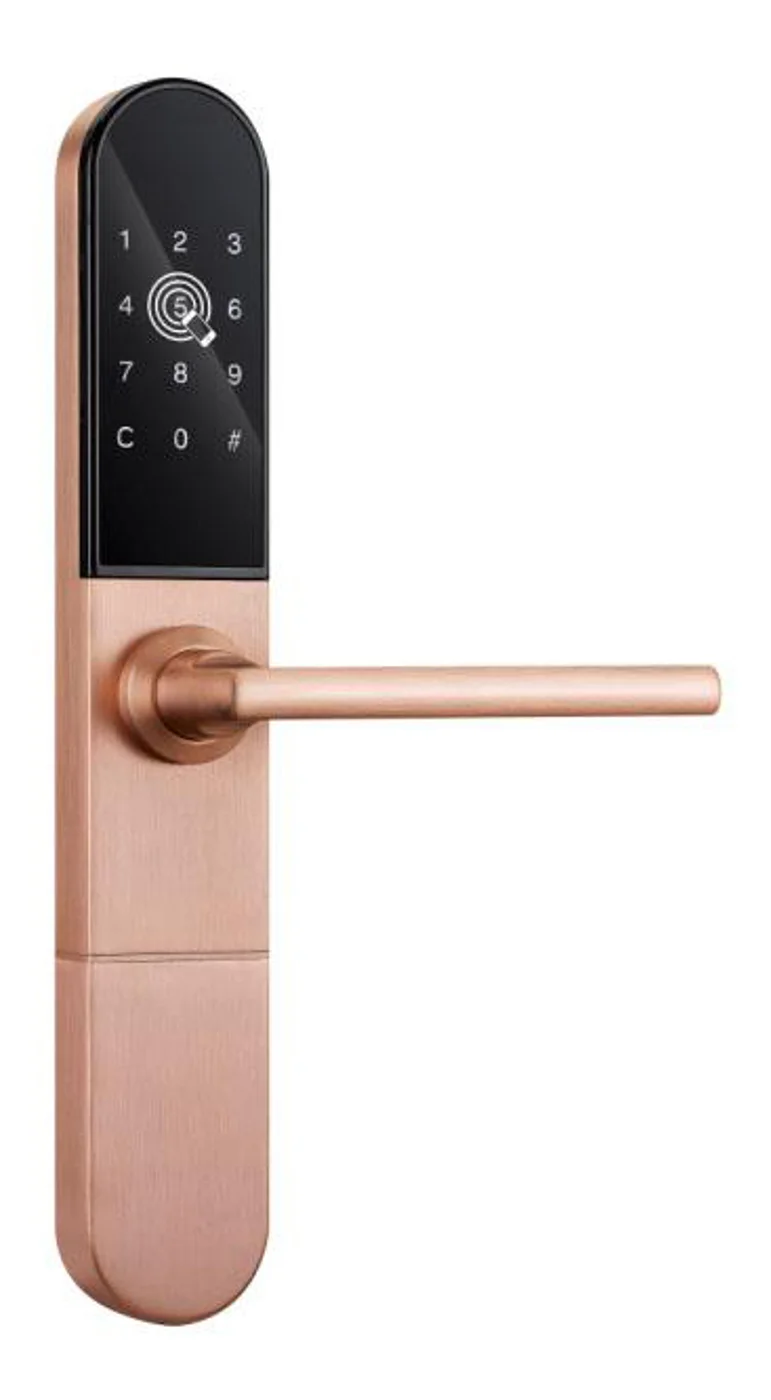
Smart Cabinet Lock — App-Managed, Multi-Site Dashboard
App-managed smart cabinet lock for office, parcel, and multi-site fleets. BLE app dashboard, audit trail, remote unlock, no per-lock server. Higher-tier chassis.
This page already points to it as the next recommended reference.
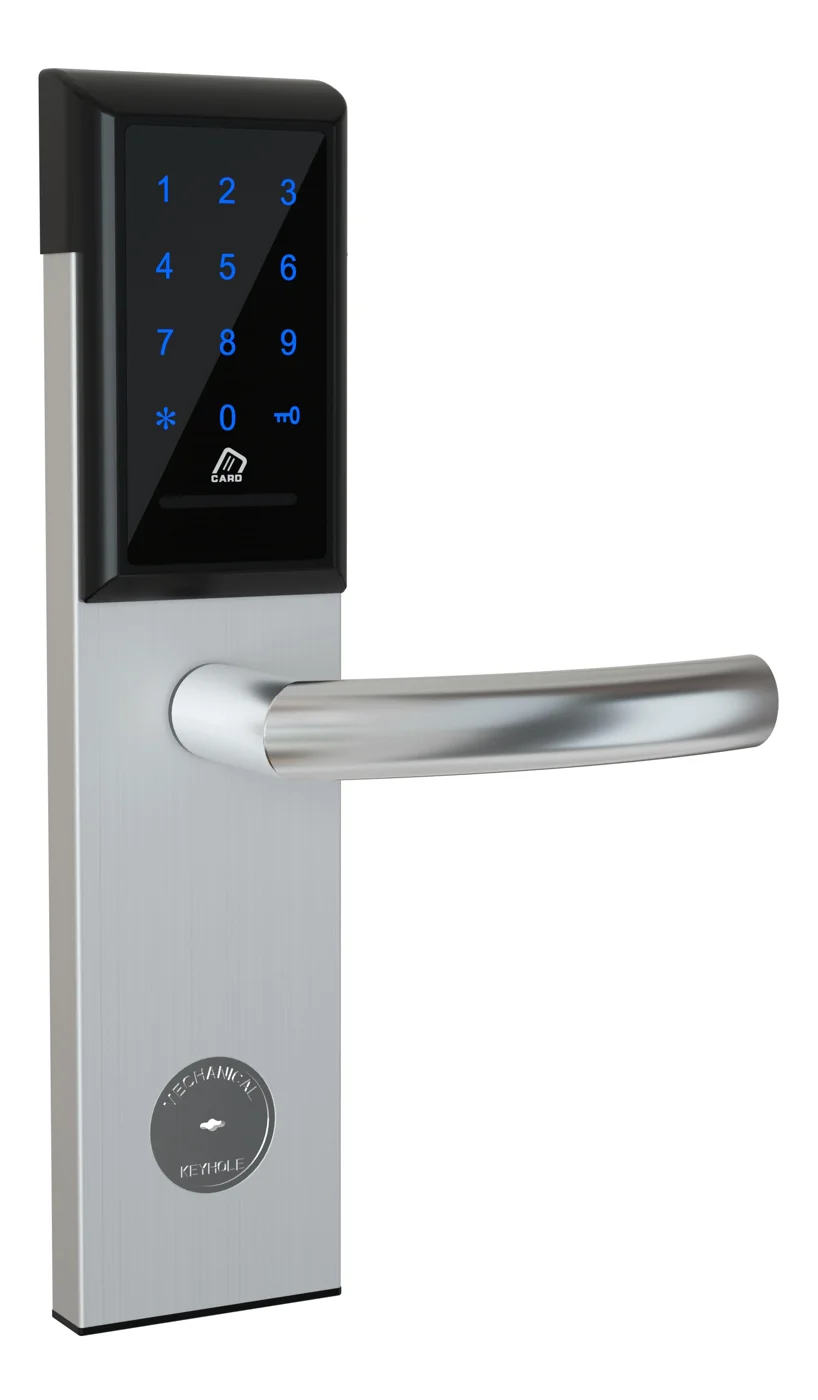
Office Cabinet Lock — PIN + Card for Filing & Pedestals
Offline PIN + card office cabinet lock for filing cabinets, pedestals, and drawers. Battery-powered 5-minute retrofit, no WiFi, no key management. CE/FCC/RoHS.
This page already points to it as the next recommended reference.
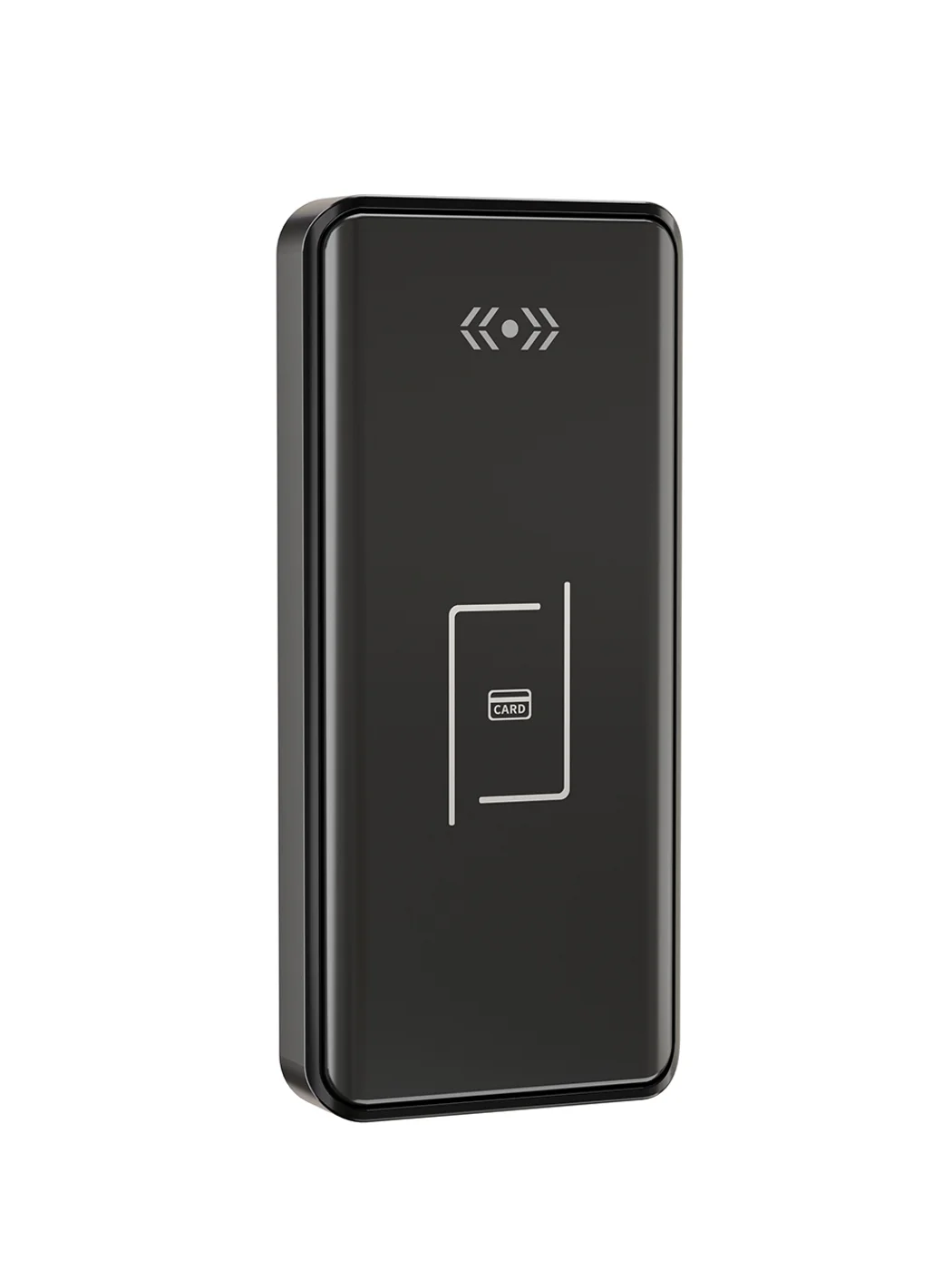
Gym Locker Lock — Offline Card, No WiFi Required
Offline card gym locker lock for fitness and pool lockers. MIFARE card, battery-powered 5-minute retrofit, no WiFi or server. Zinc alloy body, CE/FCC/RoHS.
This page already points to it as the next recommended reference.
Related blog posts
3
Electronic Cabinet Access: The Complete Guide to Digital Cabinet Entry
Electronic cabinet access replaces keyed locks with digital credentials, generating an access record and letting admins add or revoke users without touching hardware; this guide covers keypad, RFID, biometric, and connected electronic cabinet access methods.
It supports the same product context: Smart Cabinet Lock — App-Managed, Multi-Site Dashboard, Office Cabinet Lock — PIN + Card for Filing & Pedestals, Gym Locker Lock — Offline Card, No WiFi Required.
Display Cabinet Lock: The Complete Guide to Securing Glass Showcases and Retail Display Cabinets
Learn how a display cabinet lock secures glass showcases and retail displays. Compare electromagnetic, RFID, and keyed display cabinet lock types for any application.
It supports the same product context: Smart Cabinet Lock — App-Managed, Multi-Site Dashboard, Office Cabinet Lock — PIN + Card for Filing & Pedestals, Gym Locker Lock — Offline Card, No WiFi Required.
Electronic Access Cabinet: The Complete Guide to Smart Locking Enclosures
Explore electronic access cabinet systems with RFID, Bluetooth, PIN, and biometric control. Learn about powered enclosures for IT, healthcare, and evidence management.
It supports the same product context: Smart Cabinet Lock — App-Managed, Multi-Site Dashboard, Office Cabinet Lock — PIN + Card for Filing & Pedestals, Gym Locker Lock — Offline Card, No WiFi Required.
Specify your hotel project with our engineers
Send your room count, ceiling type, and protocol preference. We will return a sample plan and quote within 24 business hours.
- Move from general guidance into a product or application discussion.
- Use RFQ when pricing, drawings, MOQ, or launch timing needs structure.
- Keep a direct contact path visible for fast clarifications and handoff.