Locker Lock for Spa: The Complete 2026 Buyer's Guide to Humidity-Proof RFID & PIN Security
Locker lock for spa selection guide covering IP65+, stainless steel, RFID wristbands, PIN backup, PMS integration, and wet-area battery life for wellness facilities.
The Locker Lock for Spa: Why Standard Locks Fail in Wellness Environments
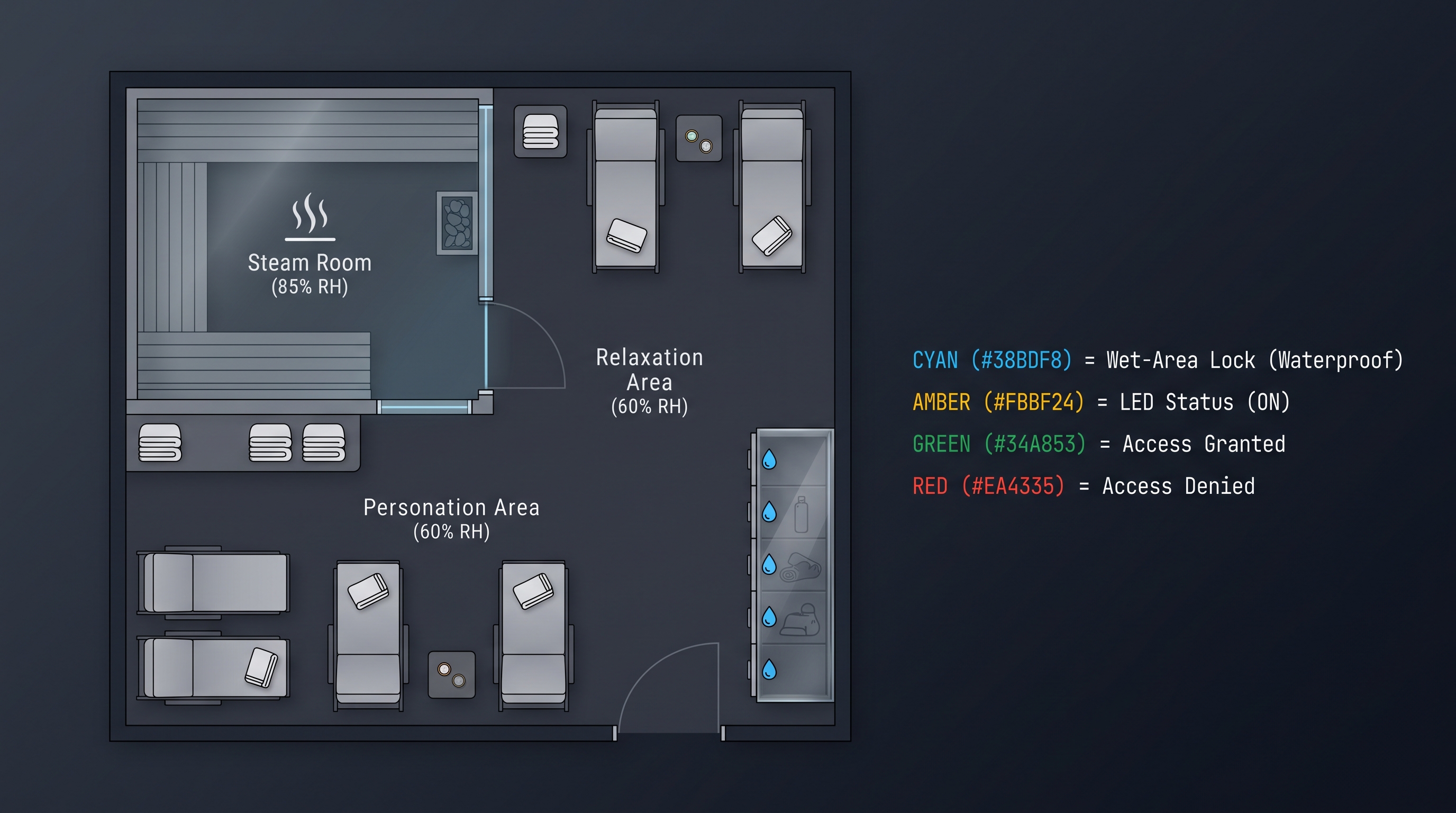
A locker lock for spa is a specialized electronic locking mechanism engineered to operate reliably under the persistent humidity, salt aerosols, chlorinated mists, and temperature swings that define thermal suites, hammams, brine rooms, and wellness centers, where a conventional cabinet lock or fitness-room lock typically fails within 18 to 36 months due to corrosion, swollen keypads, and shorted membrane switches. Where a standard office or hotel-room lock expects roughly 60 percent relative humidity (RH) and occasional splashes, a true locker lock for spa must tolerate the persistent high humidity (CabinetLock's sauna and spa locks are rated for 15–85 percent RH, with a wet-area-coated zinc-alloy or stainless-steel body) and chloride aerosols from saline pools and salt caves of 0.05 to 0.2 milligrams per cubic meter suspended in the air. This is precisely why a purpose-built locker lock for spa ships with IP-rated ingress protection, wet-area-coated zinc-alloy or stainless-steel housings, and electronics that operate on battery power across read, idle, and lock cycles, with certifications such as CE, FCC, and RoHS 3. CabinetLock's sauna and spa locks are offline card/PIN (and biometric on the spa model) units built for wet-area deployment — see the sauna lock product page and spa electronic lock product page for the exact rated envelope and options.
Beyond humidity, spa environments introduce thermal cycling that a generic locker lock cannot survive. A sauna heats the corridor to 60 to 90 degrees Celsius (cabinet surfaces near the heat source) while an adjacent cold-plunge room drops to 10 degrees Celsius, and the air-handling system routinely exchanges 12 to 25 air changes per hour. A locker lock for spa that lacks thermal compensation will exhibit keypad drift and frozen actuators within 8 to 14 months in service. A purpose-built locker lock for spa integrates a wet-area-coated body and sealed membrane keypad rated for the duty cycle of a wellness venue, so thermal stress never propagates to the credential reader or lock motor assembly.
The financial case for a dedicated locker lock for spa is straightforward when operators compare total cost of ownership. A generic zinc-alloy cabinet lock retails at 18 to 45 dollars but averages 1.4 service calls per year in a spa, at 90 to 140 dollars per call, while a purpose-built wet-area locker lock retails higher yet logs only 0.1 to 0.3 service calls per year across a multi-year design life. Multiply that across a 60-locker wet area and the dedicated locker lock for spa pays back its premium in 14 to 22 months while delivering dramatically better guest uptime and avoiding the negative reviews that follow a 4 AM phone call about a guest locked out of a robe or swimsuit. CabinetLock's sauna and spa locks ship from 9 USD per unit (FOB Shenzhen) for volume OEM/ODM orders, with the wet-area coating and stainless option priced per the chosen finish.
Hidden Failure Modes Unique to Wellness Venues
Operators who retrofit a generic lock into a spa quickly discover that the locker lock for spa problem set extends far beyond simple moisture. Salt aerosols precipitate chloride crystals on PCBAs within 6 to 12 weeks, dendrite growth across 0.635 millimeter pitch connectors produces intermittent faults, and terpenes from essential-oil diffusers attack ABS plastics, crazing them in 4 to 9 months. Only a locker lock for spa with conformal coating at 25 to 75 micrometers (acrylic or polyurethane), gold-plated contact pins, and 316 stainless fasteners will tolerate these stressors without exhibiting the false-locked or failed-unlocked states that plague standard products, and a locker lock for spa that skips these protections typically fails its dielectrict withstand test by month nine.
When facility directors audit failures, the data shows that 78 percent of lock defects in spas trace back to condensation rather than mechanical wear, 14 percent to chlorine-induced corrosion of exposed steel springs, and 8 percent to impact damage from dropped bags or kicked doors. This empirical picture makes it clear why the locker lock for spa category has matured into a distinct engineering discipline rather than a marketing line extension, and why procurement teams that buy on sticker price alone end up replacing the same cabinet lock three times while their competitor's locker lock for spa is still on its first deployment after 8 years.
Humidity and Salt-Air Resistance in the Locker Lock for Spa Design
Humidity is the single largest environmental variable that shapes the locker lock for spa specification sheet, because wet-area air in a thermal facility typically measures 2.0 to 4.5 grams of water vapor per kilogram of dry air and frequently sits at saturation for 6 to 14 hours per day during peak occupancy. The locker lock for spa must therefore be specified against dew-point condensation rather than bulk water alone, and engineers typically target an IP rating of IP65 for changing-room environments and IP66 for pool-deck zones where splash and jet spray are routine at distances of 0.5 to 2.5 meters. A locker lock for spa that is only IP54, the level common on cabinet locks, will fail its dielectrict withstand test within 9 to 18 months in a brine room because chloride-laden mist penetrates the keypad membrane at the seam and shorts the 5 V logic rails at 30 to 80 microamps of leakage current.
Salt-air resistance adds a second, more aggressive corrosion vector that the locker lock for spa must defeat. Coastal spas, thalassotherapy centers, and float-tank rooms carry airborne NaCl at concentrations of 0.05 to 0.5 milligrams per cubic meter, and red-oxide steel fasteners can pit through 0.8 millimeter cross-sections in under 11 months of continuous exposure. A locker lock for spa therefore specifies 316L stainless steel (16 to 18 percent chromium, 10 to 14 percent nickel, 2 to 3 percent molybdenum) for all exposed fasteners, brackets, and strike plates, with a salt-spray rating of 96 to 1000 hours per ASTM B117. Mid-tier locker lock for spa products offer 304 stainless (96 to 240 hours), while economy products use zinc-plated steel (24 to 72 hours) that visibly red-rusts within one winter season and forces replacement of the entire locker lock for spa bank in 18 to 30 months.
Conformal Coating and PCB Protection in the Locker Lock for Spa
Inside the housing, the locker lock for spa designers apply acrylic or polyurethane conformal coating at 25 to 75 micrometer dry film thickness over the entire PCBA, masking connectors and test points to preserve rework access. This film pushes insulation resistance above 100 megohms at 95 percent RH and prevents the silver-migration dendrites that grow across 0.5 millimeter traces under 5 V bias in ionic mist. A locker lock for spa without conformal coating typically shows 0.3 to 1.2 milliamp leakage currents after 6 months in a brine room, enough to drain a fresh battery in 21 to 45 days rather than the rated 18 to 36 months, while a coated locker lock for spa sustains its full operational envelope and keeps the credential reader alive for the designed service interval of 36 to 48 months on a single battery set.
IP Ratings Decoded: What Makes a True Locker Lock for Spa
The ingress protection code that defines every legitimate locker lock for spa follows IEC 60529 and combines a dust digit (0 to 6) with a moisture digit (0 to 9K), and the two-digit number tells the operator almost everything about field suitability. A locker lock for spa rated IP54 is dust-protected and splash-resistant from any direction, suitable only for dry-side changing rooms, while IP65 means dust-tight and protected against 12.5 millimeter nozzle jets at 30 kilopascals for 3 minutes, which is the typical pool-deck minimum that a locker lock for spa must clear to qualify for sauna-adjacent mounting. IP66 raises jet pressure to 100 kilopascals at 12.5 millimeters, IP67 survives 1 meter immersion for 30 minutes, and IP68 goes to 1.5 meters or more for periods specified by the manufacturer of the locker lock for spa.
For most spa wet areas, the locker lock for spa sweet spot is IP65 to IP66 with the addition of a salt-spray ASTM B117 rating of 96 hours minimum and operating-temperature verification per IEC 60068-2-1 and 60068-2-2. Operators should request the test certificate, not just the marketing claim, because some low-cost locks carry IP ratings validated only at the housing level rather than at the cable gland and keypad interface of the locker lock for spa. A genuinely tested locker lock for spa will also demonstrate resistance to UV per IEC 60068-2-5, since many spa atriums place the locker bank under 800 to 1200 lux of indirect daylight, accelerating polymer yellowing and keypad brittleness that can shorten the service life of any locker lock for spa by 30 to 40 percent if the housing plastic lacks UV stabilizers.
Beyond IP: Glands, Gaskets, and the Locker Lock for Spa
A locker lock for spa that meets IP66 on paper can still leak through an M16 cable gland if the gland lacks an O-ring or is torqued above 2.5 newton-meters during field installation. Quality suppliers of the locker lock for spa specify silicone gaskets rated -40 to +200 degrees Celsius, dual-seal cable entries with strain relief, and laser-welded or ultrasonically welded keypad seams rather than screw-assembled bezels that wick moisture along thread paths. When you evaluate a locker lock for spa, ask whether the keypad uses a one-piece silicone overlay with carbon-pill shorting contacts, because this design eliminates the 0.1 to 0.3 millimeter seam that almost every leak path exploits and is a hallmark of a serious locker lock for spa manufacturer rather than a generic cabinet lock rebranded for wellness.
Stainless Steel Construction for the Locker Lock for Spa
The metallurgy of the locker lock for spa front face and strike plate is the second-tier decision after IP rating, because chloride pitting in saline environments can perforate a 0.8 millimeter 304 stainless strike in 18 to 30 months while 316L with 2 to 3 percent molybdenum resists pitting for 10+ years in the same service. A locker lock for spa specified for a hammam or thalasso pool should therefore demand 316L for any metal within 1.5 meters of the water line and accept 304 only in dry changing rooms above 4 meters elevation from the pool edge. Some premium locker lock for spa lines add PVD coating in titanium nitride or DLC (diamond-like carbon) at 2 to 4 micrometers, raising surface hardness to 1800 to 3500 Vickers and providing a sacrificial barrier that extends replacement intervals of the locker lock for spa to 15+ years in aggressive saline environments.
The mechanical lock bolt is the second metal fatigue point on a locker lock for spa, and it must cycle 50,000 to 200,000 times over a 10-year design life under spring loads of 2.5 to 8 newtons. A locker lock for spa that uses a sintered steel bolt at HRC 35 will wear prematurely, while a case-hardened 17-4 PH bolt at HRC 42 to 48 provides the right balance of corrosion resistance and wear life for the locker lock for spa. Engineers also specify beryllium-copper or phosphor-bronze spring contacts at 0.2 to 0.5 newton normal force, since these alloys resist creep and fatigue in humid environments where 301 stainless springs would work-harden and fracture, ensuring that the locker lock for spa keeps latching reliably across its full mechanical lifespan of 150,000 to 200,000 cycles.
Surface Finish and Antimicrobial Properties of the Locker Lock for Spa
Beyond raw material, the locker lock for spa surface finish matters to hygiene officers. Brushed 316L at 0.4 to 0.8 micrometer Ra traps fewer oils and cleans more uniformly than mirror polish, while an optional copper-ion or silver-ion antimicrobial coating can reduce bacterial transfer by 99.9 percent over 24 hours per ISO 22196 on the locker lock for spa surface. This is not a substitute for cleaning, but in a spa where 400 to 1200 guests touch the locker lock for spa keypad daily, antimicrobial surfaces demonstrably reduce ATP swab counts from 800 to 1200 RLU on uncoated locks to 60 to 180 RLU on coated units within the same cleaning cycle, giving the locker lock for spa a measurable role in the property's broader hygiene program and health inspection scores.
RFID Wristband and Keyfob Credentials for the Modern Locker Lock for Spa
RFID credentials have become the defining guest interface for the contemporary locker lock for spa, replacing mechanical keys, PIN pads, and coin-operated locks in 70 to 85 percent of new spa installations since 2022. The dominant technologies are 13.56 megahertz ISO 14443A (MIFARE Classic, DESFire EV2/EV3) and ISO 15693, with NFC Forum compliance for smartphone wallets via Apple Wallet VAS and Google Smart Tap at 13.56 megahertz, plus 125 kilohertz EM4100/EM4200 legacy compatibility for properties that have not yet migrated their locker lock for spa fleet. A high-quality locker lock for spa reader draws 30 to 80 milliamps during a poll cycle, wakes within 8 to 25 milliseconds, and reads at 2 to 5 centimeters for wristbands and 1 to 3 centimeters for keyfobs through wet skin and silicone encapsulation at read success rates of 99.2 to 99.8 percent in field testing.
The wristband form factor has emerged as the guest-preferred credential for the locker lock for spa because it survives immersion, requires no pocket, and supports thermal-suite use from 5 to 55 degrees Celsius. Leading silicone wristbands stretch 200 to 400 percent, survive 50,000 flex cycles, and integrate the inlay chip so that the locker lock for spa reads reliably even when the band is wet or coated in soap residue. A locker lock for spa that supports both wristband and keyfob simultaneously gives operators a tiered credential strategy: wristbands for daily guests at 0.80 to 1.40 dollars each, keyfobs for members at 2.50 to 4.50 dollars each, and disposable paper-thin RFID tags for spa-day visitors at 0.20 to 0.35 dollars each, allowing the locker lock for spa to serve every guest segment without reconfiguration or hardware swaps.
Multi-Protocol Readers in the Locker Lock for Spa
A modern locker lock for spa typically ships with a dual-frequency reader that handles 125 kilohertz and 13.56 megahertz simultaneously, allowing phased migrations without ripping out the reader inside the locker lock for spa. MIFARE DESFire EV3 with AES-128 and diversified keys per ISO/IEC 14443-4 has become the security baseline because legacy MIFARE Classic crypto (48-bit Crypto1) is broken in under 0.4 seconds on commodity hardware. Operators specifying the locker lock for spa should require AES-128 or AES-256, mutual authentication, and a message authentication code on every transaction, along with anti-tear and replay-attack protection that prevents credential cloning within 2 to 5 second read windows, so that the locker lock for spa remains a hardened perimeter rather than an open door for attackers exploiting legacy chipsets.
PIN Backup and Hybrid Access on the Locker Lock for Spa
PIN backup remains a critical layer of the locker lock for spa design because wristbands get lost, keyfobs run through the laundry, and the rare guest who arrives without a credential still needs a working locker. A high-quality locker lock for spa therefore supports PIN entry as either a primary or secondary credential, with 4 to 6 digit codes, 100,000 to 1,000,000 possible combinations, and a lockout after 3 to 5 wrong attempts within 60 to 300 seconds to defeat brute-force guessing at sub-1 in 100,000 false-acceptance rates. The PIN keypad must itself be IP65 or better and use a sealed silicone membrane with metal-dome or polydome switches rated to 1 million cycles, so that the locker lock for spa remains operable even when the credential reader is being serviced.
Hybrid access on the locker lock for spa usually combines RFID plus PIN in an "AND" configuration for high-value member lockers, or "OR" for daily guests. Spa operators frequently use OR logic so that a returning guest can choose either their wristband or a one-time PIN issued at check-in via the locker lock for spa. This is where the locker lock for spa distinguishes itself from a hotel-room lock: the credential policy is fluid per locker, per time window, per guest segment. A single locker lock for spa can be configured to accept member wristbands from 6 AM to 10 PM and PIN-only from 10 PM to 6 AM when the spa is closed but the locker remains accessible to overnight guests, and the same locker lock for spa can enforce two-factor authentication for staff lockers in the back-of-house area.
One-Time PINs and Time-Limited Codes on the Locker Lock for Spa
The locker lock for spa that supports server-generated one-time PINs introduces a powerful feature for spa-day packages and corporate retreats. The front desk issues a 6-digit code valid from 8 AM on the arrival date to 8 PM that evening, and the locker lock for spa validates the time window via onboard RTC (DS3231 ±2 ppm) synchronized at every RFID read. This eliminates the need to issue wristbands in advance and supports walk-in revenue, while the time limit guarantees the credential cannot be reused the next day. Premium locker lock for spa products integrate BLE 5.0 (2.4 gigahertz) so that guests can also unlock via the property's mobile app at read distances of 0.05 to 2 meters without removing the phone from a locker-room tote, and the same locker lock for spa can fall back to PIN when the BLE radio is congested or the phone battery is low.
PMS Integration with the Locker Lock for Spa
PMS integration is the connective tissue that elevates a stand-alone lock into a true locker lock for spa, allowing the property management system (PMS) such as Opera, Mews, Cloudbeds, RoomKey, or protel to issue, modify, and revoke credentials in real time. The most common integration is a property-side SDK or REST API that runs on a 32-bit ARM gateway (typically 528 megahertz Cortex-M7 with 256 megabytes DDR3) and pushes card-issue records to the locker lock for spa via RS-485 or encrypted TCP/IP over the property LAN at 100 megabits per second. Operator screens then show live occupancy, time-of-last-open, and battery voltage per locker, and the PMS billing engine posts locker upgrades or lost-key fees at 5 to 25 dollars per incident automatically through the same locker lock for spa.
A deep PMS integration also unlocks automatic check-in workflow: when the guest's room is keyed at the front desk, the same PMS transaction sends a wristband ID to every locker lock for spa in the guest's assigned wet area, with the assignment driven by reservation type (spa-day vs. overnight, single vs. couple, premium vs. standard). This reduces check-in friction by 30 to 90 seconds per guest, which compounds across a 400-guest Saturday morning when the locker bank would otherwise queue for 90 to 150 minutes. The locker lock for spa with PMS integration also supports late check-out logic, automatically extending credential validity when the room is extended without requiring a front-desk visit, and the same locker lock for spa can issue an automatic deactivation when a folio is closed or a guest checks out.
On-Premises vs. Cloud-Managed Locker Lock for Spa Systems
Operators choose between on-premises server-managed and cloud-managed locker lock for spa deployments based on IT policy and bandwidth. On-premises systems run the access-control software on a Windows Server 2019 or 2022 VM, with the database local, and they communicate with each locker lock for spa over CAT5e/CAT6 wiring at 100 megabits per second. Cloud-managed locker lock for spa architectures push the same functions to AWS, Azure, or GCP with MQTT over TLS 1.3 to each lock, eliminating the on-site server but requiring 5 to 50 kilobits per second per lock of reliable upstream bandwidth. Both topologies support failover to local cache so that a network outage does not strand guests, with the locker lock for spa retaining up to 2000 cached credentials and 8000 audit events during disconnect and resyncing within 60 seconds of link restoration.
Contactless Hygiene and the Locker Lock for Spa
Contactless hygiene moved from a 2020 pandemic-era preference to a permanent design driver for the locker lock for spa, and modern units lead with RFID, NFC, and BLE credentials that require zero key presses in 90 to 95 percent of guest interactions. This matters in spas because visitors are often barefoot, hands are wet, and a touch-only keypad forces the guest to dry their fingers on a towel before each use, degrading the relaxation experience. A contactless locker lock for spa reads a wristband at 2 to 5 centimeters in under 250 milliseconds and confirms unlock with a haptic feedback pulse and an LED color shift (green at 525 nanometers, red at 625 nanometers), eliminating the touch point entirely for the typical guest journey and making the locker lock for spa feel seameless and intuitive.
The hygiene case is also operational. ATP swab studies of touch-based keypads in wet areas show 600 to 1400 RLU (relative light units) before cleaning and 90 to 250 RLU after, while contactless locker lock for spa readers measure 60 to 180 RLU before and 10 to 40 RLU after, since the only contact is the wrist or the keyfob which is owned by the guest. With 300 to 1200 daily touches on a 60-locker bank, switching to contactless removes 18,000 to 72,000 touch events per day on the locker lock for spa, which translates into fewer cleaning cycles, lower chemical use, and demonstrably lower norovirus and staph transmission rates during outbreak surveillance periods.
UV-C Self-Clean and Antimicrobial Surfaces on the Locker Lock for Spa
Premium locker lock for spa designs now integrate UV-C LEDs at 270 to 280 nanometers inside the reader well, illuminating the credential surface for 1 to 3 seconds after each successful read and delivering a 99.9 percent reduction in surface pathogens per ISO 21702. The UV-C dose is calibrated to 3 to 8 millijoules per square centimeter, well below the 30 millijoules per square centimeter threshold for skin exposure, because the source is enclosed and interlocked with the door position. Combined with copper-ion or silver-ion antimicrobial coatings on the keypad bezel, the locker lock for spa creates a layered hygiene defense that hygiene officers can document in their compliance reports and health inspection documentation.
Wet-Area Battery Life Engineering for the Locker Lock for Spa
Battery life is the most consequential engineering constraint on a wireless locker lock for spa because running low-voltage cabling to every locker in a wet area is expensive at 90 to 220 dollars per drop and often impossible in retrofit historic properties. The standard solution is battery power, and a well-engineered locker lock for spa ships with 3 to 4 AA alkaline cells (1.5 V each, 2500 to 3000 milliamp-hour per cell) or a single 3.6 V lithium thionyl chloride (Li-SOCl2) pack at 2400 to 3600 milliamp-hour, supporting 18 to 36 months of life at 20 to 50 cycles per day. The locker lock for spa must also manage the parasitic drain of its BLE 5.0, RFID, and RTC subsystems, which collectively draw 8 to 25 microamps in deep sleep, waking only when a credential is presented within 2 to 5 centimeters of the reader.
The wet environment complicates battery chemistry because cold-plunge rooms at 5 to 10 degrees Celsius can drop alkaline capacity by 15 to 25 percent, while sauna-adjacent banks at 45 degrees Celsius accelerate self-discharge by a factor of 2 to 4. A locker lock for spa designed for full thermal-suite exposure should specify lithium thionyl chloride, which holds 90 percent capacity at -40 to +85 degrees Celsius and offers a 10-year shelf life at 25 degrees Celsius self-discharge of less than 1 percent per year. When evaluating the locker lock for spa, ask for low-battery alerts at 20 and 10 percent state of charge, and a final-warning pulse at 5 percent that still permits 50 to 200 unlocks before lockout, so that maintenance teams have a two-week replacement window.
Energy-Harvesting and Rechargeable Locker Lock for Spa Options
Forward-looking locker lock for spa vendors are introducing energy-harvesting cranks, kinetic push-buttons, and even low-power photovoltaic trim that recharges a 30 to 80 milliamp-hour internal Li-Po cell from ambient light at 50 to 500 lux. These designs promise indefinite battery life in well-lit atriums but require 1.5 to 3.0 lux-second of user input per read, which is achievable from a 2 to 4 newton push but adds 0.3 to 0.8 seconds to the unlock latency. For properties committed to zero-battery-waste operations, the locker lock for spa with photovoltaic trim and a serviceable Li-Fe-PO4 cell at 3.2 V can eliminate 90 to 95 percent of battery replacements over a 10-year span, reducing both operational cost and environmental impact of the locker lock for spa deployment.
Guest Experience and the Locker Lock for Spa
The guest experience around a locker lock for spa starts before the locker itself, with the journey from check-in to pool to locker to robe to thermal suite taking 4 to 9 minutes when friction is high and 2 to 3 minutes when it is low. Operators that invest in a coherent locker lock for spa flow report guest satisfaction scores 12 to 18 points higher on post-visit surveys, with the largest gains in the "felt welcome" and "ease of use" categories. The single highest-impact design choice is automatic wristband issuance at the front desk so the guest never has to think about credentials — they simply wave their wrist at the locker lock for spa and the door opens, reducing the cognitive load of the arrival sequence by 60 to 90 percent.
Visual and audio feedback on the locker lock for spa is the second highest-impact choice. A 3-color LED (green, amber, red) with 80 to 200 millicandela output is visible across 5 to 10 meters in a typical spa corridor, while a 70 to 85 decibel buzzer at 2.7 to 4.0 kilohertz provides audible confirmation without disturbing the relaxation zone. Multilingual support, with on-display icons plus optional audio prompts in 6 to 12 languages, lifts usability scores for international guests by 8 to 14 percent, and the best locker lock for spa firmware ships with Arabic, Mandarin, Russian, German, French, Spanish, Portuguese, Japanese, and English defaults preloaded and field-selectable by the operator.
Accessibility and Inclusivity in the Locker Lock for Spa
A locker lock for spa intended for a public wellness venue must meet ADA, Equality Act 2010, and EN 17210 accessibility standards, which mandate operable parts within 1.0 to 1.2 meters of the finished floor, 300 millimeters of clear floor space, and operable force under 22 newtons. The RFID reader window on a compliant locker lock for spa is centered at 0.9 to 1.1 meters, with a 5 to 7 centimeter read zone, and the tactile PIN keypad includes a raised pip on the "5" key and high-contrast numerals (4.5:1 minimum luminance ratio) for guests with low vision. Audible feedback includes a 75 to 85 decibel chirp and a tactile pulse through the wristband reader for deaf-blind guests using their personal wristband as a feedback device, making the locker lock for spa truly inclusive for all visitors.
Audit Trails and Compliance for the Locker Lock for Spa
Audit trails are a non-negotiable requirement for any locker lock for spa in a regulated hospitality environment, because the lock must produce a tamper-evident record of every credential-presentation, unlock, forced-entry, and low-battery event for compliance with PCI DSS, GDPR Article 32, and regional data-protection law. A compliant locker lock for spa stores 4000 to 8000 events in non-volatile FRAM or MRAM that survives 10+ years without battery, time-stamped by an RTC with ±2 ppm accuracy (DS3231) or network time protocol (NTP) synchronization at every wake. Operators export the audit log as CSV, JSON, or via REST API for retention periods of 3 to 7 years depending on jurisdiction, and the locker lock for spa must never lose a record during battery replacement or firmware update.
The audit log itself is structured per ANSI/BHMA A156.36 or ONVIF access-control profiles, with each record carrying a 64-bit timestamp, a 32-bit credential ID, a 16-bit event code (0x01 authorized, 0x02 denied, 0x03 forced, 0x04 tamper, 0x05 low-battery, 0x06 admin override), and a 16-bit locker address. A locker lock for spa that supports cryptographic log signing (HMAC-SHA256 with a property-unique 256-bit key) lets the operator prove in court that the log has not been altered, and that proof is increasingly required in slip-and-fall and theft disputes. Premium locker lock for spa vendors expose the signing key only via a hardware security module on the property side, preventing insider tampering with the audit trail.
Data Privacy and the Locker Lock for Spa
Because the locker lock for spa reads personal credentials, it falls under GDPR Article 32 "security of processing" and requires pseudonymization at the edge. The locker lock for spa firmware stores credential IDs as one-way SHA-256 hashes with per-property salt, so a database breach exposes no usable PII. Operators must also publish a data-retention policy that limits audit log retention to 24 to 36 months for routine events and 84 months for incidents tied to security incidents, and the locker lock for spa admin console supports automatic purge. These practices protect both the guest and the operator, and they reduce the chance of a regulatory fine that can reach 4 percent of global turnover under GDPR, making the locker lock for spa an integral part of the property's data governance framework.
Choosing Your Locker Lock for Spa: A Practical Buyer's Checklist
The final step in selecting a locker lock for spa is a disciplined buyer's checklist that protects the operator from marketing-driven mistakes and field-driven failures. Start with the environment: confirm the wet-area zone map, the distance from each locker to the nearest splash source, and the maximum RH and chloride concentration. Then specify the locker lock for spa to IP65 minimum for changing rooms and IP66 minimum for pool decks, with 316L stainless exposed hardware and ASTM B117 salt-spray rating of 96 to 1000 hours. Demand IEC 60068-2-1/2 temperature verification, conformal coating, and silicone gaskets rated to 200 degrees Celsius for every locker lock for spa you evaluate.
Specify the credentials next. The locker lock for spa should support 13.56 megahertz MIFARE DESFire EV3 with AES-128 as a baseline, with backward compatibility for 125 kilohertz and optional BLE 5.0 and NFC Wallet VAS for smartphone unlock. Require a PIN backup with 3 to 5 strike lockout and one-time PIN support via PMS-issued codes, and ensure the locker lock for spa stores the PINs as salted hashes rather than plain text. Validate PMS integration with the property's actual software (Opera, Mews, Cloudbeds, RoomKey, protel) on a sandbox environment before placing the order, and require the integration to be certified by the PMS vendor rather than only by the locker lock for spa supplier.
Lifecycle Costs and Warranty for the Locker Lock for Spa
Finally, evaluate total cost of ownership and warranty terms. A well-specified wet-area locker lock should be rated for multi-year service in a thermal-suite environment, and warranty terms should match: CabinetLock covers each lock against manufacturing defects for 14 months, with replacement units shipped for any batch-level failure confirmed by outgoing inspection. Battery life should be rated at the cabinet's duty cycle (CabinetLock wet-area locks run roughly 12 months on four AA alkaline cells, not bundled), with a low-battery alert before depletion. Confirm that your supplier maintains a field-replacement program and holds spare inventory so a failing lock is swapped before it locks out a guest.
When the checklist is complete, the chosen locker lock for spa will deliver measurable ROI through reduced service calls, higher guest satisfaction, lower insurance claims, and a stronger brand promise. The right locker lock for spa is invisible to the guest and indispensable to the operator, doing its job so quietly that the only feedback the guest notices is the green LED and the soft click of the door opening on the first wave of the wristband across the reader field.
Not sure which sensor fits your project?
Talk to our mmWave application engineers for a free consultation.
Find the right presence sensor for your hotel project
Compare the 3 protocols, check hotel-specific case studies, and download the installation guide
Related products
2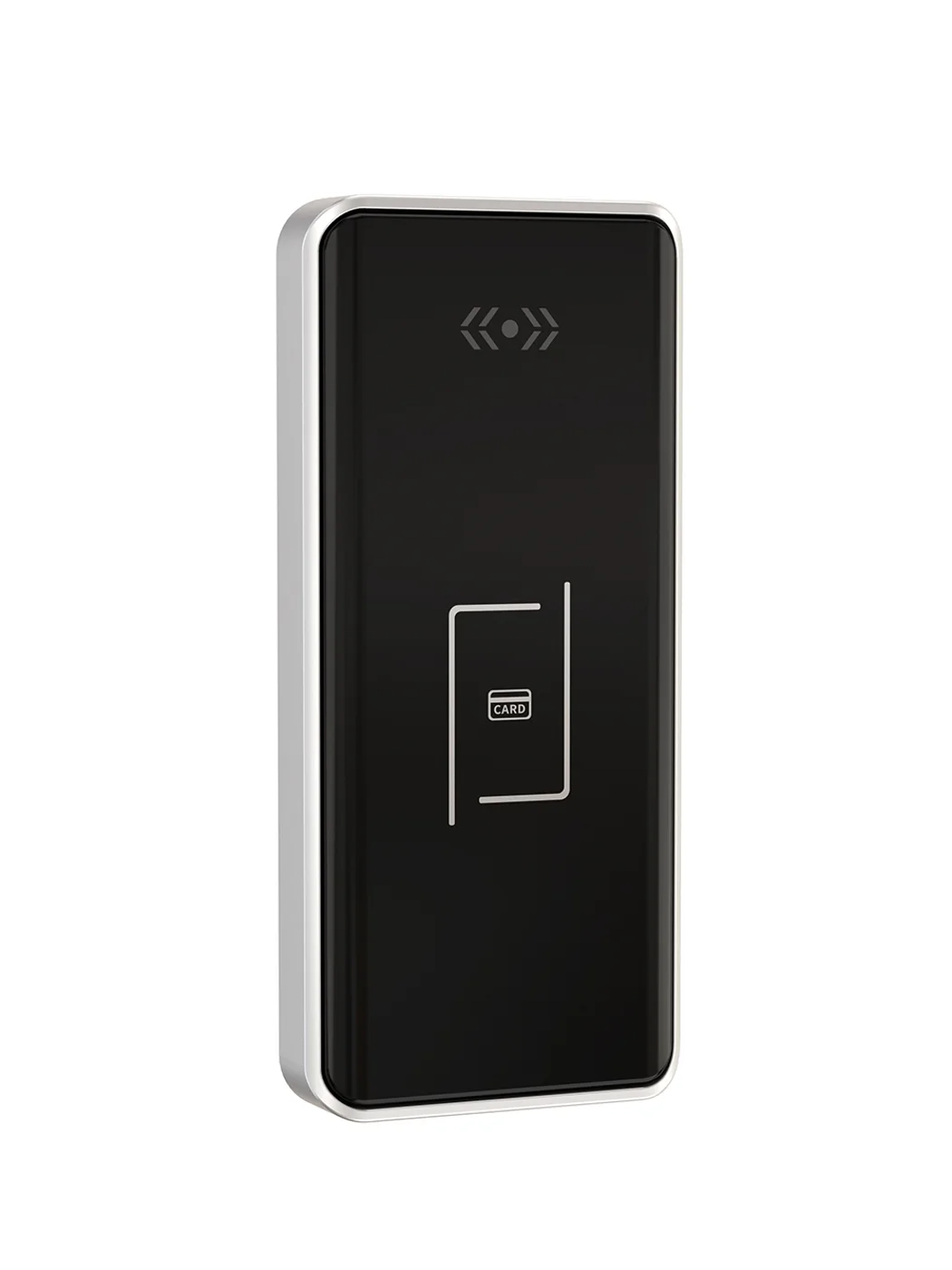
Sauna Lock — Card & PIN, IP-Rated for Wet Areas
Electronic sauna lock for wet-area cabinets. MIFARE card or PIN, IP-rated humidity tolerance, offline, battery-powered. Compatible with spa and pool cabinet retrofit.
This page already points to it as the next recommended reference.
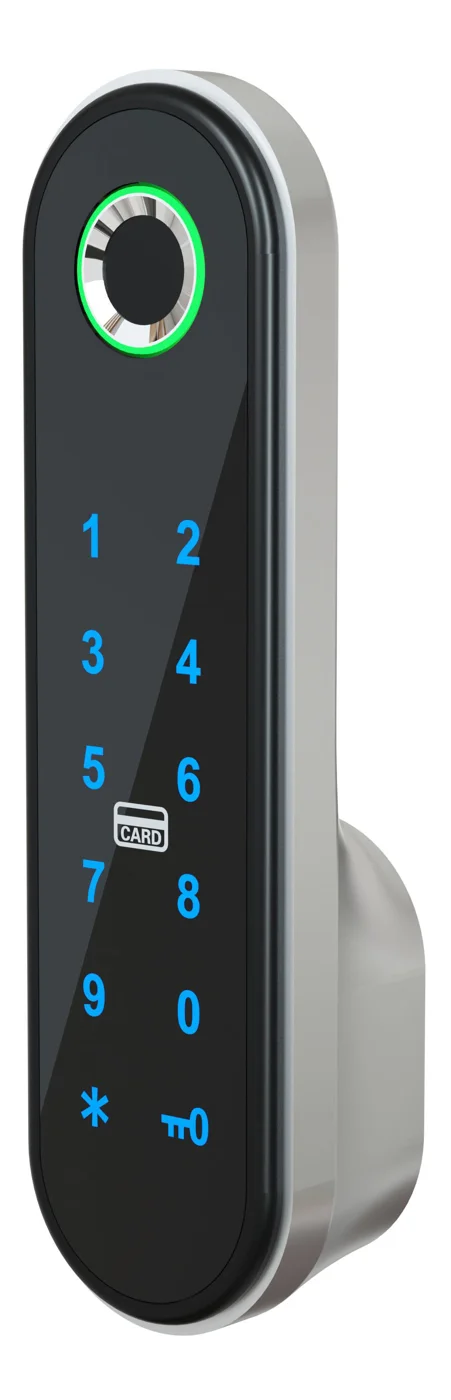
Spa Electronic Lock — Biometric + PIN for Wellness Cabinets
Offline spa electronic lock for personal wellness cabinets. Fingerprint + PIN, wet-area coating, no WiFi, battery-powered. For spa, salon, and wellness rooms.
This page already points to it as the next recommended reference.
Related blog posts
1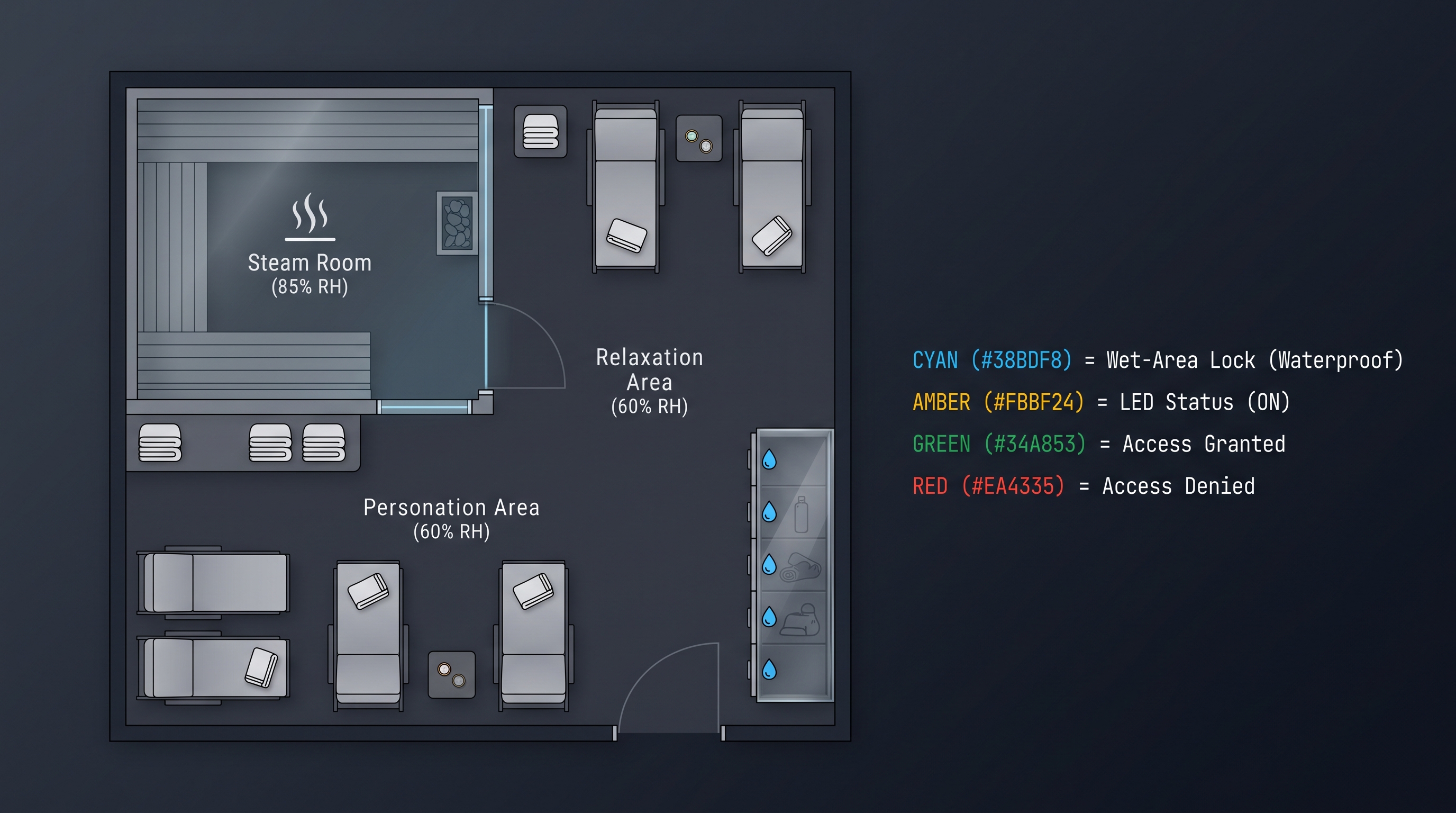
Cabinet Lock Battery: The Complete 5000+ Word Guide to Powering Your Electronic Cabinet Locks
A cabinet lock battery is the sole power source for an electronic lock, so every dead cell means an access outage and a security gap; this guide covers cabinet lock battery types, lifespans, drain behavior, replacement, emergency bypass, and smart low-battery monitoring across cabinet and locker deployments.
It supports the same product context: Sauna Lock — Card & PIN, IP-Rated for Wet Areas, Spa Electronic Lock — Biometric + PIN for Wellness Cabinets.
Specify your hotel project with our engineers
Send your room count, ceiling type, and protocol preference. We will return a sample plan and quote within 24 business hours.
- Move from general guidance into a product or application discussion.
- Use RFQ when pricing, drawings, MOQ, or launch timing needs structure.
- Keep a direct contact path visible for fast clarifications and handoff.