Locker Lock for Gym: Complete Buying Guide and Technology Overview
Comprehensive guide to choosing the best locker lock for gym facilities, covering types, features, pricing, installation, and future trends for fitness centers.
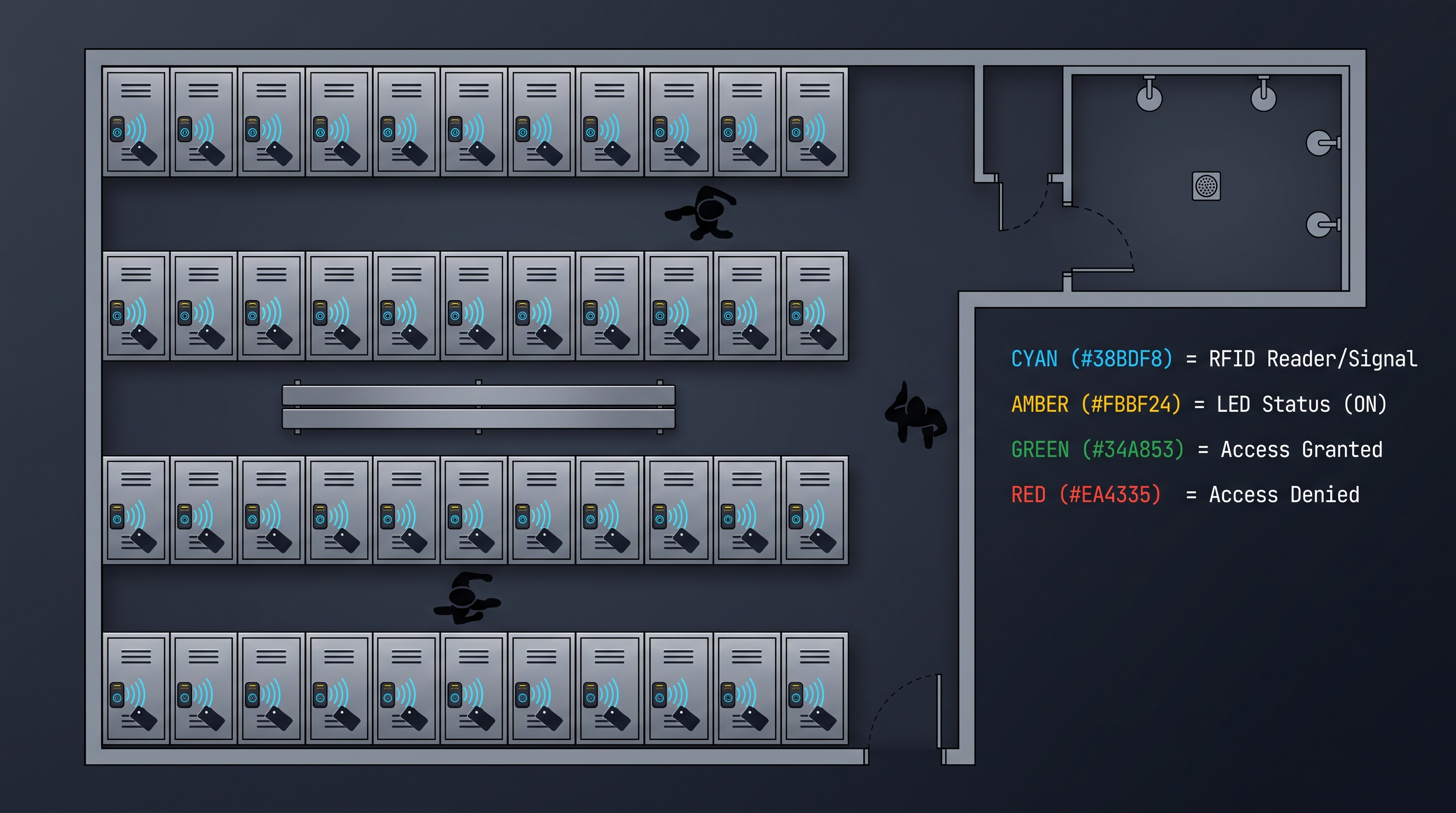
A locker lock for gym is a security device designed to secure personal storage compartments in fitness facilities, combining durability against sweat, humidity, and high-frequency use with authentication methods that range from traditional keys and combination dials to RFID wristbands, keypad codes, and smartphone Bluetooth unlocking. Unlike residential padlocks, a purpose-built locker lock for gym is engineered for 50,000 to 200,000 open-close cycles, carries an IP54 or higher ingress rating to resist moisture from showers and pools, and uses corrosion-resistant materials such as 304 or 316 stainless steel, zinc alloy with chrome plating, or reinforced ABS. Modern electronic variants operate on 3.7V lithium or 4x AA batteries with 12 to 18 month life, support 13.56 MHz NFC or 2.4 GHz BLE credentials, and integrate with gym management software via REST APIs. Selecting the right locker lock for gym depends on facility type, member turnover, budget, and desired contactless experience.
What Is a Locker Lock for Gym: Introduction to Fitness Storage Security
A locker lock for gym is a purpose-engineered locking mechanism that secures personal belongings inside fitness facility storage compartments, built to withstand the environmental and operational stresses unique to gyms including persistent humidity, sweat exposure, chlorine from pools, repeated daily cycling by hundreds of members, and occasional rough handling. The locker lock for gym category spans mechanical designs such as keyed cam locks, combination dials, and coin-operated mechanisms alongside electronic designs incorporating keypad entry, RFID or NFC credential readers, Bluetooth smartphone unlocking, and biometric fingerprint sensors. A well-specified locker lock for gym typically achieves a tested cycle life exceeding 100,000 operations, uses 304 or 316 grade stainless steel components for corrosion resistance in pool and shower adjacent areas, and meets IP54 or higher ingress protection standards. Premium electronic models communicate over 13.56 MHz NFC (ISO 14443), 2.4 GHz Bluetooth Low Energy, or 802.11 b/g/n WiFi, drawing power from 3.7V lithium or 4x AA alkaline batteries delivering 12 to 24 months of service. Facility operators select a locker lock for gym based on member volume, amenity tier, integration with membership management platforms, and total cost of ownership across the lock lifecycle.
The fitness industry has undergone significant transformation in how locker security is approached. A decade ago, the dominant locker lock for gym was a simple keyed cam lock or a mechanical combination dial, and members either brought their own padlocks or borrowed keys from the front desk. Today, the landscape includes sophisticated electronic systems that integrate with membership databases, enable contactless entry via wristbands or smartphones, and provide facility managers with real-time occupancy data. The locker lock for gym market has expanded because gym operators recognize that locker security directly impacts member satisfaction, retention, and liability exposure.
When a member chooses a gym, the quality of the locker experience factors into their overall perception of the facility. A locker lock for gym that jams, fails to recognize credentials, or feels flimsy undermines confidence. Conversely, a smooth, modern locker lock for gym that opens instantly with a tap of a wristband reinforces a premium brand image. This article examines every dimension of selecting, deploying, and maintaining a locker lock for gym, from mechanical fundamentals to cutting-edge IoT integration.
How a Locker Lock for Gym Works: Mechanisms and Authentication
A locker lock for gym operates through an interplay of authentication, actuation, and mechanical securing elements. The authentication layer verifies that the person requesting access is authorized, while the actuation layer physically moves the locking bolt or cam to release or secure the locker door. Understanding how a locker lock for gym functions at this level helps facility managers evaluate durability, security, and maintenance requirements across the lock lifecycle.
Mechanical Locker Lock for Gym Operation
A mechanical locker lock for gym relies on physical credential verification. In a keyed cam lock design, the user inserts a key whose bitting pattern aligns internal pin tumblers or wafer tumblers, allowing the cylinder to rotate. Rotation transfers motion through a spindle to a cam, which swings behind the locker frame to secure the door. A combination-based locker lock for gym uses a dial or a series of push buttons to align internal gate discs; when all gates align, a fence drops and permits the lock to open. These mechanical designs contain between 5 and 30 moving parts, with cycle life determined by material hardness, lubrication, and tolerance quality.
Mechanical locks share a common vulnerability: they depend on physical components that wear. A keyed locker lock for gym in a busy commercial facility may see 200 to 400 cycles per day, and pin tumblers fatigue, springs lose tension, and cams bend under repeated stress. Combination mechanisms suffer from disc wear and number memorization by observant members. Despite these limitations, mechanical options remain popular because they require no power, no software, and no network infrastructure.
Electronic Locker Lock for Gym Operation
An electronic locker lock for gym adds a digital authentication layer and a motorized or solenoid-based actuation layer. When a member presents a credential, a credential reader transmits the encoded data to a microcontroller. The microcontroller checks the credential against a stored access list, either locally on the lock or remotely via a networked gateway and cloud platform. If authorized, the microcontroller energizes a solenoid or small gear motor for 100 to 500 milliseconds, retracting the bolt or rotating the cam to release the door.
The power budget for an electronic locker lock for gym is carefully managed. A typical solenoid draw is 200 to 500 mA at 6V or 12V for the brief actuation pulse, while the standby current for the microcontroller and credential reader is 10 to 50 microamps. With 4x AA alkaline batteries providing approximately 2,000 to 2,500 mAh, a locker lock for gym can sustain 10,000 to 15,000 unlock cycles before battery replacement, translating to 12 to 18 months in a typical gym setting. Some models use rechargeable 3.7V lithium-ion cells with USB-C charging, offering 6 to 12 months per charge.
RFID and NFC Locker Lock for Gym Communication
When a locker lock for gym uses RFID or NFC technology, the credential is a passive tag embedded in a wristband, key fob, or card. The lock contains a reader antenna that generates a 13.56 MHz electromagnetic field (for NFC, ISO 14443 compliant) or a 125 kHz field (for older RFID). When the tag enters the field, the induced current powers the tag chip, which transmits its unique identifier back to the reader. The lock microcontroller compares this identifier against its access list. The entire transaction completes in under 100 milliseconds, providing the near-instantaneous tap-to-unlock experience that members expect from a modern locker lock for gym.
Bluetooth Locker Lock for Gym Communication
A Bluetooth-enabled locker lock for gym uses Bluetooth Low Energy at 2.4 GHz to communicate with a member smartphone. The smartphone app generates a rolling encrypted credential that the lock validates. Some implementations require the member to tap a button in the app, while others use proximity-based auto-unlock when the phone comes within 1 to 2 meters of the locker. Bluetooth locker lock for gym deployments offer the advantage of no physical credential to distribute, but they depend on members having charged smartphones and installed the gym app.
Types of Locker Lock for Gym Facilities
A locker lock for gym is available in several distinct types, each suited to different facility models, budgets, and member experiences. The choice between mechanical and electronic, between shared and assigned, and between bring-your-own-lock and facility-provided systems defines the locker experience. Below is a detailed examination of each locker lock for gym type.
Keyed Cam Locker Lock for Gym
The keyed cam lock is the most traditional locker lock for gym. A brass or zinc alloy cylinder is mounted through the locker door, with a cam on the interior that swings to secure or release. Each locker has a unique key, and the facility retains a master key for emergency access. The keyed locker lock for gym costs between 3 and 15 USD per unit, making it the most budget-friendly option. However, key management is a significant operational burden: members lose keys, front desks must manage key deposits, and rekeying after lost master keys is expensive. This locker lock for gym type is common in community recreation centers, school gyms, and budget fitness facilities.
Combination Dial Locker Lock for Gym
A combination dial locker lock for gym uses a rotary dial with 0 to 39 or 0 to 60 numbering. The user turns the dial in a specific sequence (typically three numbers with directional changes) to align internal gates and open the lock. This type eliminates key management but introduces the problem of forgotten combinations. Built-in combination locks, where the dial is integrated into the locker door, are common in school and university gyms. A quality combination locker lock for gym costs 8 to 25 USD and offers 100,000 cycle life. Master keying is possible on built-in models for emergency override.
Padlock-Style Locker Lock for Gym
Many gyms operate on a bring-your-own-padlock model, where members supply their own locker lock for gym use. This shifts the cost and responsibility to the member. The facility provides hasps on the locker doors. While this minimizes facility investment, it sacrifices control: the facility cannot audit locker usage, cannot provide emergency access without cutting the lock, and cannot prevent members from using inferior locks that fail or are easily picked. Some gyms offer padlock vending machines or sell branded padlocks at the front desk as a compromise.
Electronic Keypad Locker Lock for Gym
An electronic keypad locker lock for gym features a numeric keypad (typically 0 to 9 plus function keys) on the locker door. Members enter a PIN code, typically 4 to 8 digits, to unlock. This type supports multi-level code hierarchies: a user code for the member, a master code for facility staff, and a super master code for management. Advanced models support time-limited codes (e.g., a code valid only for 3 hours of gym use) and one-time codes. The electronic keypad locker lock for gym costs 30 to 80 USD per unit and operates on 4x AA batteries. This type is popular in mid-tier commercial gyms and corporate fitness centers.
RFID and NFC Wristband Locker Lock for Gym
An RFID or NFC wristband locker lock for gym is the dominant choice for premium fitness facilities, aquatic centers, and resort gyms. Members receive a waterproof wristband containing a 13.56 MHz NFC chip (MIFARE Classic, MIFARE DESFire, or NTAG). Tapping the wristband against the locker reader unlocks the door. This locker lock for gym type integrates seamlessly with electronic access control for facility entry, vending machines, and point-of-sale, creating a cashless member experience. Per-unit cost ranges from 50 to 150 USD. The wristband locker lock for gym is ideal for facilities with pools, spas, or saunas where members cannot carry keys or phones.
Bluetooth Smartphone Locker Lock for Gym
A Bluetooth smartphone locker lock for gym allows members to unlock their assigned locker using a gym mobile app. The app communicates with the lock via Bluetooth Low Energy at 2.4 GHz. This type appeals to tech-forward gyms and younger demographics. Advantages include no physical credential to manage and the ability to integrate locker reservations and notifications into the app. Disadvantages include reliance on member smartphones (battery, app installation, OS compatibility) and higher per-unit costs of 80 to 200 USD. The Bluetooth locker lock for gym is growing in boutique studios and premium health clubs.
Coin-Operated Locker Lock for Gym
A coin-operated locker lock for gym accepts a coin or token (typically 0.25 USD, 0.50 USD, or 1 USD, or a custom token) to release the key or unlock the door. Upon return, the coin or token is refunded or retained depending on the model. This type is common in public swimming pools, transportation-adjacent gyms, and municipal recreation centers. The coin-operated locker lock for gym provides a revenue mechanism and requires no member registration. However, it requires regular coin collection and is vulnerable to mechanical jamming.
Key Features of a Good Locker Lock for Gym
A high-quality locker lock for gym must satisfy a matrix of functional, environmental, and operational requirements. The following features distinguish a locker lock for gym that delivers reliable service from one that generates complaints and maintenance tickets.
Corrosion Resistance and Material Quality
Gym environments are corrosive. Sweat contains sodium chloride, lactic acid, and urea. Pool areas add chlorine and chloramine exposure. Shower humidity persists at 70 to 90 percent relative humidity. A locker lock for gym must use materials that resist these agents. 304 stainless steel (18 percent chromium, 8 percent nickel) provides good general corrosion resistance for dry gym areas. 316 stainless steel (with 2 to 3 percent molybdenum) is specified for pool-adjacent and marine environments. Zinc alloy components should have chrome or nickel electroplating of at least 8 micrometers thickness. Internal springs should be stainless steel, not carbon steel, to prevent rust-induced failure.
Ingress Protection Rating
The IP rating quantifies a locker lock for gym resistance to dust and water ingress. IP40 offers no water protection and is suitable only for dry office-adjacent gyms. IP54 resists splashing water and dust, adequate for most gym locker rooms. IP65 withstands water jets, suitable for pool decks. IP67 allows temporary immersion, relevant for facilities that pressure-wash locker areas. A locker lock for gym specified for aquatic environments should carry IP54 minimum, with IP65 preferred for direct splash zones.
Cycle Life and Mechanical Durability
Cycle life is the number of open-close operations a locker lock for gym can perform before failure. Entry-level mechanical locks are rated at 10,000 to 30,000 cycles. Mid-range locks achieve 50,000 to 100,000 cycles. Premium locks, tested under standards such as EN 14846 or ANSI/BHMA A156.25, exceed 200,000 cycles. A busy commercial gym with 500 members and 200 lockers may generate 400 to 800 cycles per day across the locker bank, meaning a 50,000-cycle lock lasts 2 to 4 months, while a 200,000-cycle lock lasts 8 to 16 months. Selecting a locker lock for gym with inadequate cycle life creates a constant replacement burden.
Authentication Security
A locker lock for gym must resist credential cloning and unauthorized access. Mechanical key locks should use restricted or patented keyways to prevent unauthorized key duplication. Combination locks should have at least 1,000 possible combinations (4-digit dial) and ideally 10,000 or more. RFID systems should use encrypted credentials such as MIFARE DESFire EV2 or EV3 with AES-128 encryption, not older MIFARE Classic which has been cryptographically broken. Bluetooth systems should use secure pairing and rolling codes to prevent replay attacks. A locker lock for gym that uses unencrypted 125 kHz RFID or static Bluetooth codes is vulnerable to cheap cloning devices.
Battery Life and Power Management
For electronic locker lock for gym models, battery life determines maintenance frequency. A lock that requires battery changes every 3 months in a 200-locker facility generates 800 battery changes per year. A lock lasting 18 months reduces this to 133 changes per year. Quality electronic locks specify 10,000 to 15,000 unlock cycles on a single set of 4x AA batteries. Low-battery indicators, either LED on the lock or alerts in the management dashboard, allow proactive replacement before failure. Some models include emergency power contacts (a 9V battery applied externally) or USB-C ports to unlock when internal batteries are dead.
Audit Trail and Logging
An electronic locker lock for gym with audit trail capability records each unlock event with a timestamp, credential ID, and lock ID. This data is invaluable for resolving theft complaints, investigating unauthorized access, and monitoring member usage patterns. Audit trails are stored locally on the lock and synced to the cloud management platform when connectivity is available. A locker lock for gym with audit capability typically retains the last 1,000 to 4,000 events locally. Facility managers can query the platform for any locker event history over months or years.
Master Key and Emergency Override
Every locker lock for gym deployment must have an emergency access plan. Mechanical locks use a master key system. Electronic locks use a mechanical override cylinder (typically a pin tumbler or tubular key), a master RFID card or PIN code, or a remote unlock command from the management platform. The override mechanism must be secure against unauthorized use: master keys should be stored in a controlled access location with a sign-out log, and master PINs should be changed periodically. A locker lock for gym without a reliable override creates liability when members leave belongings in lockers after hours or when locks malfunction.
Integration with Gym Management Software
Modern fitness facilities operate membership management platforms such as Mindbody, ClubReady, Zen Planner, ABC Fitness Solutions, or custom systems. A networked locker lock for gym should integrate with these platforms via REST APIs or webhooks. Integration enables automatic locker assignment when a member checks in, automatic revocation when membership lapses, and usage reporting tied to member identity. A locker lock for gym that operates in isolation from the membership system requires manual locker administration, which is labor-intensive and error-prone at scale.
Locker Lock for Gym Comparison: Types and Tradeoffs
Selecting the optimal locker lock for gym requires comparing types across cost, security, convenience, maintenance, and integration dimensions. The following table provides a side-by-side comparison.
| Feature | Keyed Cam Lock | Combination Dial | Electronic Keypad | RFID Wristband | Bluetooth App | Coin-Operated |
|---|---|---|---|---|---|---|
| Cost per unit (USD) | 3-15 | 8-25 | 30-80 | 50-150 | 80-200 | 40-100 |
| Cycle life | 30,000-50,000 | 50,000-100,000 | 100,000-150,000 | 100,000-200,000 | 100,000-200,000 | 30,000-80,000 |
| IP rating typical | IP40 | IP40 | IP54 | IP54-IP65 | IP54 | IP44 |
| Authentication | Physical key | Mechanical combo | PIN code | 13.56 MHz NFC | 2.4 GHz BLE | Coin or token |
| Key management burden | High | Low | Low | Low | None | Medium |
| Member convenience | Low | Medium | High | Very high | Very high | Medium |
| Audit trail | No | No | Yes (local) | Yes (networked) | Yes (cloud) | No |
| Software integration | None | None | Limited | Full | Full | None |
| Battery required | No | No | Yes (4x AA) | Yes (4x AA or Li-ion) | Yes (4x AA or Li-ion) | No |
| Emergency override | Master key | Master key | Master PIN or key | Master card or remote | Remote unlock or key | Master key |
| Best for | Budget gyms, schools | Schools, community centers | Mid-tier commercial gyms | Premium gyms, pools, resorts | Tech-forward gyms, boutiques | Public pools, transit gyms |
| Maintenance frequency | High (keys, rekeying) | Medium (mechanical wear) | Medium (battery 12-18 mo) | Medium (battery 12-18 mo) | Medium (battery 6-18 mo) | High (coin jams) |
Cost of Ownership Analysis
The upfront per-unit cost is only one component of total cost of ownership for a locker lock for gym. A keyed cam lock at 5 USD per unit may seem economical, but when factoring in key management labor (estimated 2 to 5 minutes per key transaction at the front desk), rekeying costs after lost master keys (500 to 2,000 USD for a 200-locker facility), and replacement of failed locks at 30,000 cycles, the three-year cost may exceed 25 USD per locker. An RFID wristband locker lock for gym at 100 USD per unit, with 18-month battery life and cloud-based management that eliminates front desk key transactions, may have a three-year cost of 130 to 160 USD per locker but delivers superior member experience and operational efficiency.
Applications: Locker Lock for Gym Solutions Across Facility Types
A locker lock for gym is deployed across a spectrum of facility types, each with distinct requirements. Matching the lock type to the facility model is essential for member satisfaction and operational efficiency.
Commercial Health Clubs and Chain Gyms
Large commercial gyms such as Anytime Fitness, Planet Fitness, LA Fitness, and Equinox serve hundreds to thousands of members daily. These facilities need a locker lock for gym that supports high throughput, minimal staff intervention, and brand-aligned member experience. Mid-tier chains typically deploy electronic keypad or RFID locker lock for gym systems. Premium chains like Equinox favor RFID wristband or Bluetooth smartphone unlocking. The locker lock for gym in these settings must integrate with membership databases for automatic assignment and revocation, and must support audit trails for theft incident investigation.
Boutique Fitness Studios
Boutique studios such as Orangetheory, Barry Bootcamp, SoulCycle, and F45 Training have smaller member bases per class (20 to 40 participants) and shorter session durations (45 to 60 minutes). The locker lock for gym in these settings emphasizes aesthetic appeal, compact size, and premium feel. Bluetooth smartphone unlocking is popular because it aligns with the tech-forward, app-centric member experience these studios cultivate. Cycle life requirements are lower (30 to 60 cycles per day per locker), but visual design and finish quality are critical.
Aquatic Centers and Swimming Pool Facilities
Pool-adjacent locker rooms present the most demanding environment for a locker lock for gym. Chlorine, chloramine, constant humidity, and direct water splash require 316 stainless steel construction and IP65 or higher ratings. RFID wristband locker lock for gym systems dominate this segment because members cannot carry keys or phones while swimming. Wristbands are waterproof, can be worn in the pool, and serve double duty as facility access and payment credentials. A locker lock for gym in an aquatic center must also resist biofilm buildup and support periodic chemical cleaning without finish degradation.
Hotel and Resort Gyms
Hotel fitness centers serve transient guests who stay 1 to 5 nights. The locker lock for gym in these settings must work with hotel room key cards (typically 13.56 MHz RFID or magnetic stripe) for seamless guest experience. Many hotels use the same RFID credential for room entry, gym access, elevator control, and locker operation. This requires the locker lock for gym to read the hotel key card format (often MIFARE,LEGIC, or proprietary). Integration with the property management system (PMS) such as Opera or Mews enables automatic locker assignment at check-in and revocation at check-out.
Corporate and Office Gyms
Corporate fitness centers serve employees and may be unstaffed. A locker lock for gym in this setting often uses employee ID badges ( HID iCLASS, MIFARE DESFire, or 125 kHz proximity) for authentication. Integration with the corporate access control system enables centralized credential management. Assigned lockers for regular gym users and shared day-use lockers for occasional users may coexist, requiring a locker lock for gym that supports both assignment modes. Audit trails are important for HR and security investigations.
University and School Gyms
Educational institution gyms serve student populations with high turnover and seasonal usage peaks. A locker lock for gym in universities often uses student ID cards (magnetic stripe or RFID) for authentication. Combination dial built-in locks remain common in physical education locker rooms due to their durability and zero power requirement. The locker lock for gym must handle peak loads during intramural seasons and summer camp programs, and must support bulk locker reassignment between semesters.
YMCA and Community Recreation Centers
Community centers serve diverse populations including children, seniors, and families. The locker lock for gym in these facilities must be accessible (ADA compliant lever operation, low force to actuate), affordable, and simple to operate. Coin-operated locks are still found in some municipal pools, while RFID systems are increasingly adopted for cashless operation. A locker lock for gym in a community center must accommodate users who may not be comfortable with smartphone-based unlocking.
CrossFit Boxes and Functional Training Gyms
CrossFit and functional training facilities often have minimal locker infrastructure, with open cubbies or small day-use lockers. A locker lock for gym in these settings is typically a simple padlock brought by the member or a basic electronic keypad lock. The emphasis is on durability against chalk dust (a significant ingress challenge) and simplicity. IP54 rating is important to keep chalk and dust out of internal mechanisms.
Installation and Deployment Guide for Locker Lock for Gym
Installing a locker lock for gym correctly determines long-term reliability and member satisfaction. Installation varies significantly between mechanical and electronic types, and between new construction and retrofit scenarios.
Pre-Installation Assessment
Before purchasing a locker lock for gym, assess the existing locker construction. Measure the lock hole diameter (typically 19 mm or 20 mm for cam locks, 25 mm for some electronic locks), the door thickness (typically 0.7 mm to 1.2 mm for metal lockers, 18 mm for wood), and the cam length needed (50 mm to 90 mm depending on door-to-frame gap). Verify that electronic lock battery compartments will fit within the locker door cavity without obstructing the shelf. For networked electronic locks, plan gateway placement: a single gateway typically covers 32 to 64 lockers within 15 to 30 meters line-of-sight. Confirm power availability at gateway locations.
Mechanical Locker Lock for Gym Installation
Installing a mechanical cam locker lock for gym involves the following steps. First, remove the existing lock by unscrewing the retaining nut on the interior and sliding the cylinder out. Clean the lock hole of debris and corrosion. Insert the new lock cylinder through the door, ensuring the keyway orientation is correct. Secure with the retaining nut, tightened to 2 to 3 Nm. Attach the cam to the spindle at the correct orientation for the door swing. Test operation with the key 10 to 20 times to confirm smooth action. For combination locks, follow the manufacturer reset procedure to set the combination and verify it engages correctly.
Electronic Locker Lock for Gym Installation
Electronic locker lock for gym installation is more complex. Begin by mounting the lock body to the locker door using the provided template. Drill holes for the lock cylinder, credential reader, and any cable pass-throughs. For surface-mounted electronic locks, use the provided mounting plate and secure with rivets or screws. Connect internal wiring: power leads to the battery compartment, sensor leads to the door position switch, and communication leads to the network module if applicable. Insert batteries and verify the lock powers on. Pair the lock with the management platform via the installation app or gateway. Test credential enrollment and unlock operation. Configure the lock parameters: unlock duration, auto-relock timeout, low-battery threshold, and audit logging.
Networked System Deployment
For RFID or Bluetooth locker lock for gym systems that require network connectivity, deploy gateways first. Mount gateways at ceiling or wall locations with line-of-sight to the locker bank. Connect each gateway to power and to the facility network via Ethernet or WiFi. Configure gateways in the management platform with their location and assigned locker range. Enroll each locker lock for gym in the platform by scanning its QR code or entering its MAC address. Verify that each lock reports status (locked, unlocked, battery level, tamper alert) to the platform. Conduct a commissioning test: assign a test credential to each locker, unlock and relock each one, and confirm the platform logs each event.
Member Communication and Onboarding
A new locker lock for gym system requires member communication. Post signage explaining the new system. For RFID wristband systems, distribute wristbands at check-in with brief instructions. For Bluetooth app systems, send email and in-app notifications with download links and setup tutorials. Staff the front desk with trained personnel for the first two weeks to assist members. Collect feedback and track issue rates to identify hardware or software problems early.
Pricing and Buying Guide for Locker Lock for Gym
The locker lock for gym market spans a wide price range, from 3 USD mechanical cam locks to 300 USD networked Bluetooth smart locks. Understanding the cost structure and value proposition of each tier enables informed procurement decisions.
Price Tiers
| Tier | Price Range (USD per unit) | Lock Types | Typical Facilities |
|---|---|---|---|
| Budget | 3-15 | Keyed cam lock, basic padlock | Schools, community centers, budget gyms |
| Economy | 15-40 | Combination dial, electronic keypad (basic) | Community centers, small gyms, schools |
| Mid-range | 40-100 | Electronic keypad (premium), RFID (standalone) | Commercial gyms, corporate fitness, hotels |
| Premium | 100-200 | RFID (networked), Bluetooth app, biometric | Premium health clubs, resorts, aquatic centers |
| Enterprise | 200-350 | Fully integrated smart lock with IoT platform | Luxury fitness, flagship corporate gyms |
Bulk Pricing and Volume Discounts
Locker lock for gym manufacturers typically offer volume discounts. A 50-unit order may receive 5 to 10 percent discount, a 200-unit order 10 to 20 percent, and a 500-unit order 15 to 25 percent. Request quotes from multiple manufacturers and compare not only unit price but also warranty terms (typically 1 to 3 years for electronic, 5 to 10 years for mechanical), technical support availability, and software licensing costs for networked systems.
Total Cost of Ownership Components
When evaluating a locker lock for gym, calculate total cost of ownership over a 5-year horizon:
- Hardware cost per unit
- Installation labor (30 to 60 minutes per electronic lock, 10 to 15 minutes per mechanical)
- Battery replacement cost (4x AA per lock per 12 to 18 months, at approximately 1 USD per set)
- Software licensing (for networked systems: 2 to 10 USD per locker per month for cloud platform)
- Maintenance labor (estimated 15 minutes per lock per year for inspection and cleaning)
- Replacement budget (5 to 10 percent annual failure rate for electronic, 2 to 5 percent for mechanical)
- Wristband or credential cost (2 to 5 USD per RFID wristband, replaced every 1 to 3 years)
Vendor Selection Criteria
Choose a locker lock for gym vendor based on: product specifications meeting your environmental requirements, demonstrated installations in similar facilities, software platform maturity and API documentation, warranty and support terms, lead time for initial order and replacements, and references from other facility operators. Request product samples for evaluation before committing to a large order. Test samples in your actual environment (pool-adjacent, chalk dust, etc.) for 30 to 60 days.
Troubleshooting Common Locker Lock for Gym Problems
Even a high-quality locker lock for gym encounters operational issues. Rapid diagnosis and resolution minimizes member dissatisfaction and staff burden.
Mechanical Lock Issues
A mechanical locker lock for gym may experience key jamming, combination dial stiffness, or cam misalignment. Key jamming is typically caused by debris in the keyway or worn pin tumblers. Clean with compressed air and apply graphite lubricant (never oil, which attracts dirt). If the key still jams, the cylinder may need replacement. Combination dial stiffness indicates internal disc wear or insufficient lubrication; a light application of dry lubricant to the dial mechanism may help, but severe cases require lock replacement. Cam misalignment, where the lock turns but the door does not secure, indicates a bent cam or loose retaining nut. Tighten the retaining nut and replace bent cams.
Electronic Lock Battery Failure
The most common electronic locker lock for gym issue is battery depletion. Symptoms include slow unlock response, dim LED indicators, or complete lock failure. Most locks provide 2 to 4 weeks of low-battery warning before complete failure. When a lock is completely dead, use the emergency override (mechanical key cylinder, master RFID card, or external 9V battery contact) to open the locker. Replace batteries immediately and verify the lock resumes normal operation. To prevent recurrence, monitor battery levels through the management platform and schedule proactive replacement when levels reach 20 percent.
RFID Credential Not Reading
When an RFID wristband or card fails to unlock a locker lock for gym, the issue may be the credential, the reader, or the access list. First, test the credential on another lock: if it works, the original lock reader may be dirty or damaged. Clean the reader surface with a microfiber cloth. If the credential does not work on any lock, it may be damaged or deactivated. Check the management platform for the credential status. If the credential is active but not reading, the chip may be damaged; issue a replacement wristband. If no credentials work on a specific lock, the reader antenna may be faulty and the lock needs service.
Bluetooth App Connectivity Issues
Bluetooth locker lock for gym systems may experience pairing failures, app crashes, or unlock delays. First, ensure the member smartphone supports the required Bluetooth version (BLE 4.0 or later) and that Bluetooth is enabled. Verify the app is updated to the latest version. If the app cannot find the lock, move within 2 meters of the locker and retry. If the lock is unresponsive, it may be in sleep mode; some locks require a tap on the lock surface or a button press to wake. Persistent connectivity issues may indicate a lock firmware bug; check with the vendor for firmware updates.
Network Gateway Connectivity Loss
Networked locker lock for gym systems depend on gateways to relay commands and status to the cloud. If a gateway loses connectivity (due to network outage, power failure, or hardware fault), locks in its coverage area operate in offline mode: they still authenticate credentials from their local access list and log events locally, but remote unlock and real-time monitoring are unavailable. When gateway connectivity is restored, locks sync their offline event logs to the cloud. To diagnose, check the gateway status in the management platform, verify network connectivity at the gateway location, and power-cycle the gateway if needed.
Locker Door Mechanical Interference
Sometimes a locker lock for gym functions correctly but the door cannot open due to mechanical interference. The locker frame may be bent, the door may be warped, or an item inside may be obstructing the door. Inspect the door alignment and frame for damage. If the lock releases but the door does not open, gently push and pull the door while the lock is released to overcome friction. If the door is obstructed by contents, the member must access the locker from an adjacent open locker (if the partition allows) or the locker may need to be opened from the back panel by maintenance.
Tamper and Forced Entry Response
A quality electronic locker lock for gym includes tamper detection: a sensor that triggers when the lock body is struck, pried, or removed. When tamper is detected, the lock sounds an alarm, locks down (refusing further credential attempts for a cooldown period), and sends an alert to the management platform. Investigate tamper alerts promptly: inspect the locker for pry marks, check the audit trail for preceding access attempts, and review facility security camera footage. If forced entry occurred, file a police report and preserve the lock and audit data as evidence.
Future Trends in Locker Lock for Gym Technology
The locker lock for gym market is evolving rapidly, driven by advances in IoT, mobile technology, biometrics, and changing member expectations. Several trends will shape the next generation of locker lock for gym products.
Biometric Locker Lock for Gym
Fingerprint and facial recognition technology is becoming affordable and reliable enough for gym locker applications. A biometric locker lock for gym eliminates the need for physical credentials entirely: the member simply places a finger on the sensor or looks at a camera, and the locker opens. Capacitive fingerprint sensors achieve false acceptance rates below 0.001 percent and false rejection rates below 1 percent, making them suitable for gym use. Facial recognition, powered by embedded AI chips, can identify members in under 500 milliseconds even in varying lighting conditions. The biometric locker lock for gym is particularly attractive for premium facilities seeking a frictionless, credential-free experience.
Ultra-Wideband Proximity Unlocking
Ultra-Wideband (UWB) technology, operating at 6.5 to 8 GHz with centimeter-level positioning accuracy, enables a locker lock for gym to detect a member smartphone approach and automatically unlock the assigned locker as the member walks down the aisle. Unlike Bluetooth, which has 1 to 3 meter accuracy and can trigger premature unlocks, UWB precisely determines when the member is within 0.5 meters of their locker. Apple U1 and U2 chips and Android UWB support are making this technology available on mainstream smartphones. The UWB locker lock for gym will deliver a truly hands-free experience.
Energy Harvesting and Battery-Free Locks
Battery maintenance is a significant operational cost for electronic locker lock for gym fleets. Energy harvesting technology, which captures energy from the locker door opening motion, member touch, or ambient light, can power low-energy electronic locks without batteries. Piezoelectric harvesters in the door hinge generate 5 to 20 millijoules per open-close cycle, sufficient to power an NFC credential read and solenoid pulse. Small solar cells on the lock exterior can supplement power in well-lit locker rooms. While still emerging, battery-free locker lock for gym designs will reduce maintenance and environmental waste.
AI-Driven Locker Utilization Optimization
Cloud-connected locker lock for gym systems generate rich usage data: which lockers are most used, peak usage times, average dwell time, and no-show patterns. AI analytics platforms can process this data to optimize locker allocation, predict maintenance needs, and identify underutilized locker banks. For example, if data shows 30 percent of assigned lockers in a corporate gym are never used, the facility can convert them to day-use lockers. Predictive maintenance algorithms can identify locks with degrading cycle times or increasing error rates before they fail, enabling scheduled replacement.
Integration with Wearable Fitness Devices
As members adopt fitness wearables such as Apple Watch, Garmin, Fitbit, and WHOOP, the locker lock for gym may integrate with these devices for unlocking. An Apple Watch with NFC can already emulate a contactless card; extending this to gym locker credentials eliminates the need for a separate wristband. The locker lock for gym ecosystem will increasingly support multiple wearable platforms, and gyms will offer digital wallet pass distribution that loads locker credentials onto whatever device the member prefers.
Contactless and Hygiene-Conscious Design
Post-pandemic, members expect touch-free interactions. A locker lock for gym that requires no surface contact (UWB auto-unlock, proximity Bluetooth) reduces surface transmission risk. Antimicrobial coatings on lock surfaces, using silver ion or copper-based additives, inhibit bacterial growth. Locker lock for gym designs are incorporating sloped surfaces that shed contaminants and are easy to wipe down. These hygiene features will become standard expectations rather than premium differentiators.
Sustainability and Circular Economy
The fitness industry is increasingly focused on sustainability. A locker lock for gym designed for disassembly, with replaceable batteries, repairable components, and recyclable materials, aligns with circular economy principles. Manufacturers are beginning to offer take-back programs for end-of-life locks, recycling metals and electronics. Modular designs that allow upgrading the electronic module while retaining the mechanical lock body reduce waste. The sustainable locker lock for gym will appeal to environmentally conscious facilities and members.
Standardized Interoperability
The current locker lock for gym market is fragmented, with proprietary platforms, credential formats, and APIs. Industry standardization efforts, analogous to the Matter standard in smart home, will enable interoperability between locks, gateways, and management software from different vendors. This will give facility operators flexibility to mix and match components, avoid vendor lock-in, and future-proof their investments. The standardized locker lock for gym ecosystem is several years away but represents the direction of the industry.
Conclusion
A well-chosen locker lock for gym is a critical investment that balances security, durability, member experience, and operational efficiency. From budget mechanical cam locks at 3 USD to premium networked Bluetooth smart locks at 300 USD, the locker lock for gym market offers solutions for every facility type and budget. The key to successful deployment is matching the lock type to the facility model: keyed and combination locks for budget and institutional settings, electronic keypads for mid-tier commercial gyms, RFID wristbands for premium and aquatic facilities, and Bluetooth smartphone unlocking for tech-forward boutiques.
Facility operators must look beyond upfront cost to total cost of ownership, factoring in battery maintenance, software licensing, key management labor, and replacement cycles. A locker lock for gym that costs 100 USD but operates for 5 years with minimal maintenance may be more economical than a 10 USD lock that fails annually and requires constant front desk intervention. As the industry moves toward biometric authentication, UWB proximity unlocking, energy harvesting, and AI-driven optimization, the locker lock for gym will continue to evolve from a simple mechanical device into an intelligent IoT endpoint that enhances the member experience and provides facility operators with actionable data.
Part of this article content is generated by AI and optimized for professional accuracy and readability.
Not sure which sensor fits your project?
Talk to our mmWave application engineers for a free consultation.
Find the right presence sensor for your hotel project
Compare the 3 protocols, check hotel-specific case studies, and download the installation guide
Related products
3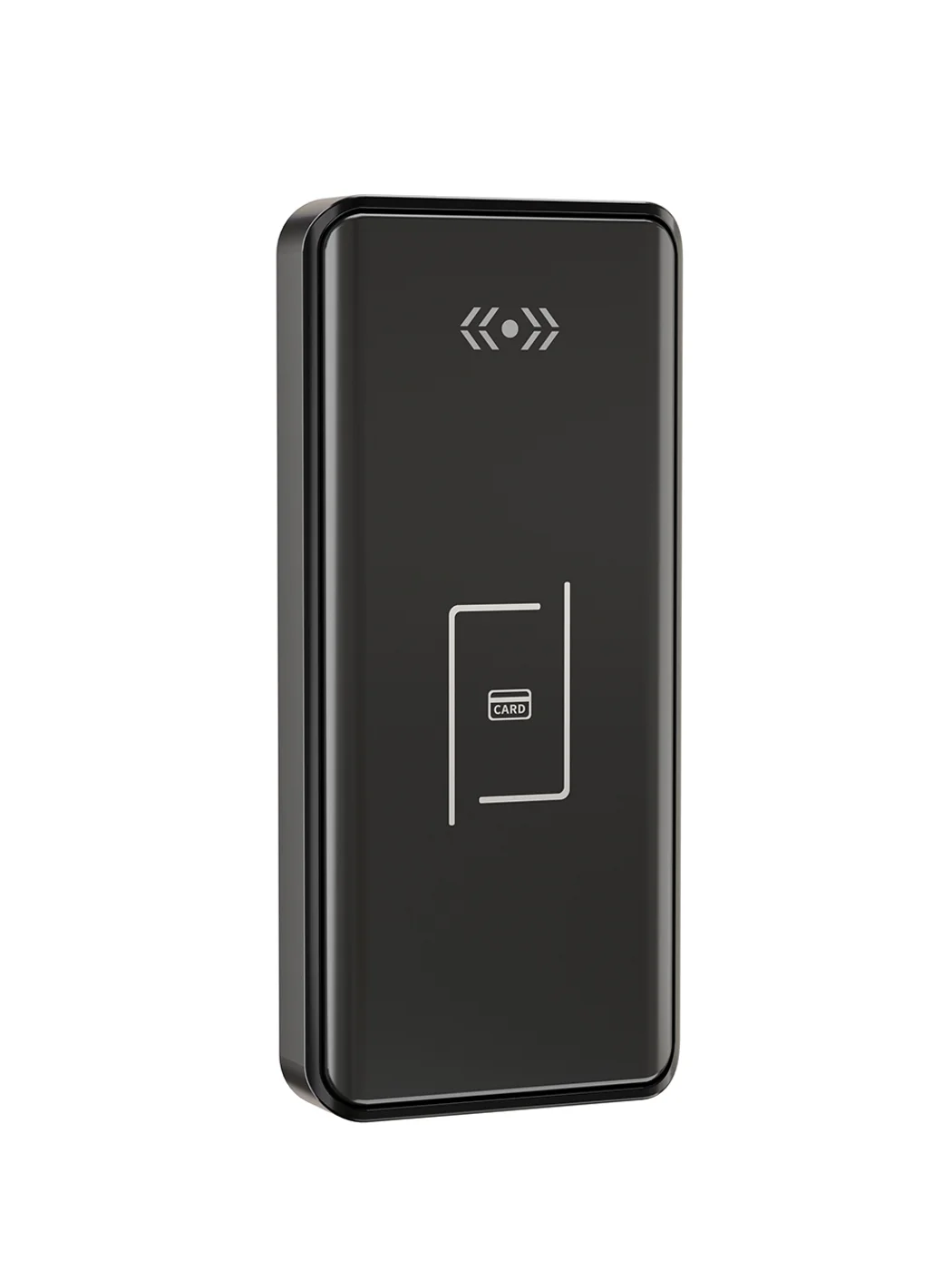
Gym Locker Lock — Offline Card, No WiFi Required
Offline card gym locker lock for fitness and pool lockers. MIFARE card, battery-powered 5-minute retrofit, no WiFi or server. Zinc alloy body, CE/FCC/RoHS.
This page already points to it as the next recommended reference.
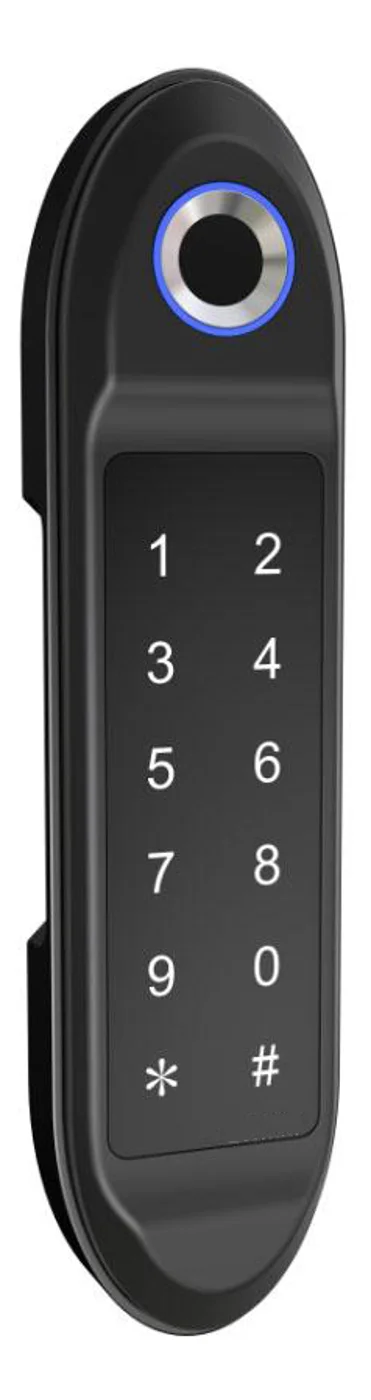
PIN Code Electronic Cabinet Lock — Stand-Alone, No WiFi
Offline keypad cabinet lock for gym, office and parcel lockers. Battery-powered, 5-minute retrofit, audit-free simple deployment. PIN + MIFARE card, DC 6V, 4×AA.
This page already points to it as the next recommended reference.
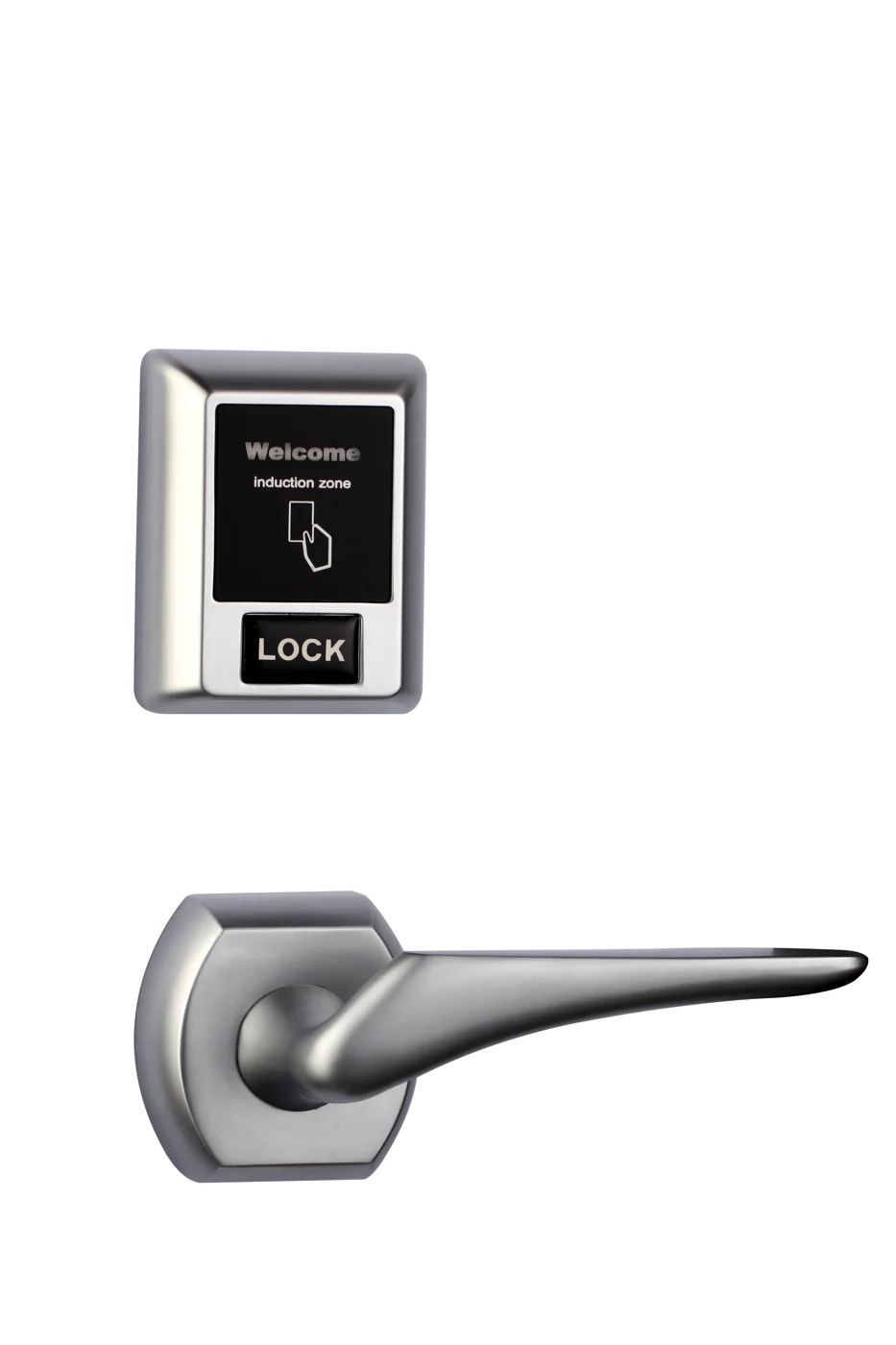
Bluetooth Cabinet Lock — App + PIN + Card, Managed Fleet
Offline BLE app cabinet lock for parcel, office, and managed locker fleets. App + PIN + MIFARE card, remote credential management, no server dependency, battery-powered retrofit.
This page already points to it as the next recommended reference.
Related blog posts
3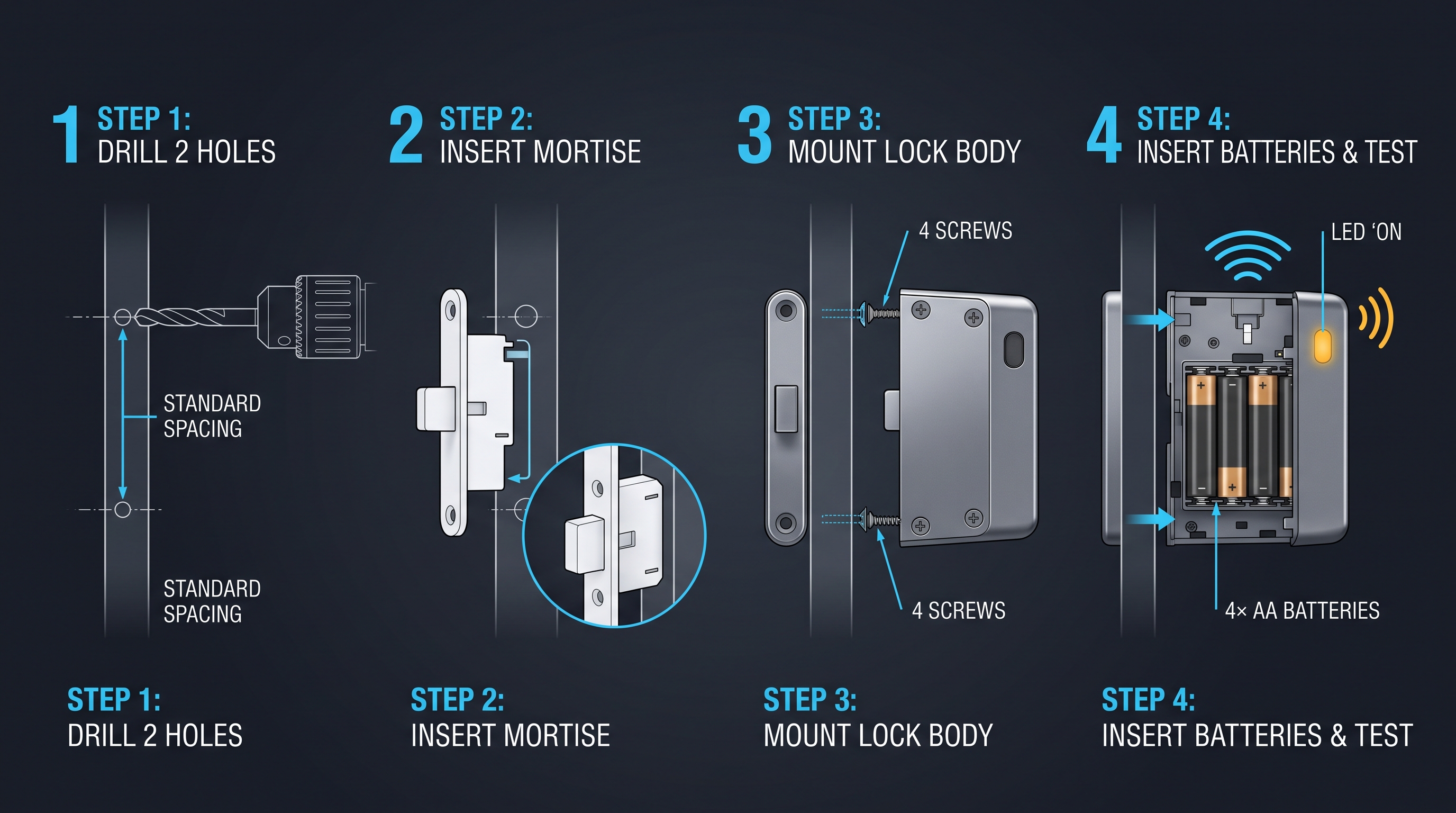
Electronic Cabinet Access: The Complete Guide to Digital Cabinet Entry
Electronic cabinet access replaces keyed locks with digital credentials, generating an access record and letting admins add or revoke users without touching hardware; this guide covers keypad, RFID, biometric, and connected electronic cabinet access methods.
It supports the same product context: Gym Locker Lock — Offline Card, No WiFi Required.
Display Cabinet Lock: The Complete Guide to Securing Glass Showcases and Retail Display Cabinets
Learn how a display cabinet lock secures glass showcases and retail displays. Compare electromagnetic, RFID, and keyed display cabinet lock types for any application.
It supports the same product context: Gym Locker Lock — Offline Card, No WiFi Required.
Electronic Access Cabinet: The Complete Guide to Smart Locking Enclosures
Explore electronic access cabinet systems with RFID, Bluetooth, PIN, and biometric control. Learn about powered enclosures for IT, healthcare, and evidence management.
It supports the same product context: Gym Locker Lock — Offline Card, No WiFi Required.
Specify your hotel project with our engineers
Send your room count, ceiling type, and protocol preference. We will return a sample plan and quote within 24 business hours.
- Move from general guidance into a product or application discussion.
- Use RFQ when pricing, drawings, MOQ, or launch timing needs structure.
- Keep a direct contact path visible for fast clarifications and handoff.