Fingerprint Drawer Lock: The Complete 2026 Guide to Biometric Drawer Security
Explore fingerprint drawer lock technology with detailed specs, types, installation guides, and use cases for home, office, and healthcare drawer security.
A fingerprint drawer lock is a biometric access-control device that secures a cabinet or desk drawer by authenticating the user's fingerprint—typically using a capacitive sensor at 500 DPI resolution with a false rejection rate (FRR) below 1 percent and a false acceptance rate (FAR) below 0.001 percent—before retracting a motorized or solenoid latch. Unlike keyed drawer locks that require a physical key susceptible to loss, duplication, or bumping, a fingerprint drawer lock stores 10–100 fingerprint templates in encrypted onboard memory and unlocks within 0.3–1.0 seconds of a recognized touch. Power is supplied by 3–4 AA alkaline batteries (12–24 months) or a rechargeable lithium pack (3–6 months between charges), with a standby current draw of 15–40 µA. A fingerprint drawer lock is deployed in home offices protecting sensitive documents, healthcare facilities securing patient records and controlled substances, corporate desks safeguarding confidential materials, and hotel in-room drawers securing guest valuables. The fingerprint drawer lock market has grown at an estimated 18 percent CAGR since 2020, driven by the intersection of falling biometric sensor costs (under $10 per module in volume), consumer familiarity with phone fingerprint readers, and demand for keyless, auditable storage in both residential and regulated environments.
What Is a Fingerprint Drawer Lock and How Does It Work
A fingerprint drawer lock is a self-contained biometric security unit that replaces a standard drawer cam lock with a motorized assembly integrating a capacitive, optical, or ultrasonic fingerprint sensor, a microcontroller running at 48–100 MHz, a latching mechanism, and a battery compartment. When a user enrolls a finger by pressing it 3–5 times on the sensor, the fingerprint drawer lock's algorithm extracts minutiae points (50–100 ridge-ending and bifurcation markers), creates a mathematical template rather than storing a finger image, and saves the template in encrypted EEPROM or flash memory with AES-128 protection. During authentication, the sensor captures a 192×192 to 256×360 pixel grayscale image, the fingerprint drawer lock's MCU compares the template within 100–500 ms using a 1:N matching algorithm (where N is the enrolled template count), and on a match, the microcontroller energizes the actuator—a 3–6 V motor drawing 80–250 mA for the 0.3–0.8 second unlock cycle, or a solenoid drawing 150–400 mA. The fingerprint drawer lock's FRR and FAR trade off via a tunable security threshold, defaulting to a balance point that rejects approximately one legitimate attempt per 100–1,000 and accepts approximately one impostor per 100,000–1,000,000. Capacitive sensors, which measure the electrical conductivity difference between fingerprint ridges and valleys, dominate the fingerprint drawer lock market because they incorporate liveness detection—conductivity measurement that distinguishes live skin from gelatin or silicone replicas—at a sensor cost under $8 per unit. The fingerprint drawer lock fundamentally eliminates the key management burden and provides non-repudiation: every unlock can be linked to a specific enrolled finger, which no PIN or RFID lock can guarantee.
Core Components of a Fingerprint Drawer Lock
| Component | Function | Typical Specification |
|---|---|---|
| Fingerprint sensor | Capture and match fingerprint | 500 DPI capacitive, 192×192 px |
| Microcontroller | Template storage, matching, actuation | ARM Cortex-M4 at 100 MHz |
| Actuator | Retract latch on match | Motor 80–250 mA or solenoid 150–400 mA |
| Latch mechanism | Secure drawer in closed position | Zinc alloy or steel, 8–12 mm throw |
| Power source | Battery for standalone operation | 3–4×AA alkaline, 12–24 months |
| LED indicator | Visual status feedback | Red/green/blue, configurable |
| Enrollment button | Initiate fingerprint enrollment | Interior, accessible with drawer open |
| Emergency power | Dead-battery unlock | External DC pads, 6–9 V |
The Authentication Sequence
The fingerprint drawer lock executes a deterministic sequence on each touch. A finger placed on the sensor wakes the lock from standby (15–40 µA) to full operation (3–8 mA during capture). The sensor captures a grayscale image in 50–200 ms and extracts minutiae. The algorithm compares the template against stored templates (1:N search). On a match within the FRR/FAR threshold, the fingerprint drawer lock illuminates a green LED, energizes the actuator for the preconfigured 0.3–0.8 second, and retracts the latch, allowing the drawer to open. On failure, the lock illuminates red, logs a deny event, and after a configurable 3–5 failed attempts, enters a lockout of 60–180 seconds. The fingerprint drawer lock then returns to standby, with the entire unlock cycle drawing under 60 mAs of total energy—less than a hundredth of a mAh per unlock.
Types of Fingerprint Drawer Lock by Sensor Technology
A fingerprint drawer lock is categorized by the sensor technology it employs, and the sensor type determines the lock's security level, durability, power consumption, and resistance to spoof attacks. Three sensor technologies dominate the fingerprint drawer lock market: capacitive sensors are the most common, using a grid of microscopic capacitor cells to measure the distance to the skin surface, producing a 192×192 to 256×360 pixel image with 500 DPI resolution, and incorporating liveness detection via skin conductivity measurement. Optical sensors use an LED and a CMOS camera behind a glass prism to capture the fingerprint image at 500–700 DPI; they are more durable than capacitive sensors (resistant to scratches and ESD) but lack liveness detection, making them spoofable with lifted fingerprint images or gelatin replicas unless supplemented with machine-vision liveness algorithms. Ultrasonic sensors, using a piezoelectric transducer emitting high-frequency sound pulses (typically 25 MHz) that reflect differently from ridges and valleys, create a 3D depth map with sub-epidermal detail, achieving liveness detection superior to capacitive; they operate through contaminants (water, oil, lotion) and screen protectors, but consume 2–3 times the power of capacitive sensors and cost $15–25 per sensor versus $5–8 for capacitive. For a fingerprint drawer lock securing home-office documents, a capacitive sensor provides sufficient security at the lowest cost. For a healthcare fingerprint drawer lock protecting controlled substances, an ultrasonic sensor's superior liveness detection justifies the price premium. The fingerprint drawer lock buyer should match sensor technology to the drawer's security tier and the level of spoofing threat the deployment faces.
Sensor Technology Comparison
| Technology | Resolution | Liveness detection | Spoof resistance | Power | Sensor cost | Best fit |
|---|---|---|---|---|---|---|
| Capacitive | 500 DPI | Conductivity-based | High | Low | $5–8 | Home, office, general |
| Optical | 500–700 DPI | None (image-only) | Low–medium | Medium | $4–7 | Budget, low-threat |
| Ultrasonic | 500+ DPI (3D) | Sub-epidermal imaging | Very high | High (2–3× capacitive) | $15–25 | Healthcare, high-security |
Capacitive Fingerprint Drawer Lock Architecture
The capacitive fingerprint drawer lock's sensor is a CMOS ASIC with approximately 10,000 capacitor plates arranged in a grid. When a finger touches the sensor surface, the capacitance at each plate varies with the distance to the skin surface: ridges (closer) produce higher capacitance, valleys produce lower. The resulting capacitance map is digitized into a grayscale image. A fingerprint drawer lock using capacitive technology adds liveness detection by measuring the finger's bulk conductivity and complex impedance at multiple frequencies (typically 1–100 kHz), which differ between live skin (tissue with blood perfusion) and inert spoof materials (gelatin, silicone, wood glue, photocopies). The capacitive fingerprint drawer lock is the volume leader because it balances security, cost, and power at a sweet spot for 90 percent of residential and commercial drawer applications.
Ultrasonic Fingerprint Drawer Lock: High-Security Drawers
The ultrasonic fingerprint drawer lock transmits 25 MHz sound pulses through the sensor surface and captures the reflected echoes from ridge and valley surfaces and sub-surface structures. Because the acoustic impedance mismatch between the sensor surface, air gap (valleys), and skin (ridges) produces distinct echo signatures at different depths, the ultrasonic fingerprint drawer lock builds a 3D depth map that penetrates surface contaminants and dry skin—conditions that degrade capacitive sensor accuracy. The sub-epidermal imaging detects the dermis-epidermis junction, a structure absent in fake fingers, providing the fingerprint drawer lock's most robust liveness detection. For hospital pharmacy narcotic drawers, evidence lockers, and executive suites, the ultrasonic fingerprint drawer lock delivers security that capacitive and optical alternatives cannot match.
Fingerprint Drawer Lock vs Keyed Drawer Lock: A Detailed Comparison
A fingerprint drawer lock redefines drawer security economics by replacing physical keys with biometric authentication that eliminates key duplication, loss management, and forced-entry vulnerability. A standard keyed drawer lock costs $5–15 and uses a 4–6 pin tumbler cylinder that can be bumped open with a $3 tool in under 10 seconds, picked with a tension wrench and pick in 30–120 seconds, or forced with a screwdriver prying the latch from its strike. A mid-range fingerprint drawer lock costs $30–60 and eliminates the keyway—there is nothing to pick, bump, or force open with a key manipulation tool. The fingerprint drawer lock provides multi-user access (10–100 enrolled fingers) with per-user audit attribution, whereas a keyed drawer lock's key can be duplicated at a hardware store for $3–5 with no record of the duplication. Key management labor for a 200-drawer office—issuing, logging, collecting, and re-keying—costs $35–75 per drawer per incident; a fingerprint drawer lock reduces this to near zero because access is revoked by deleting a template from the lock's memory, taking under 5 seconds. The fingerprint drawer lock's primary limitations are power dependency (dead battery means auxiliary power or mechanical override needed) and environmental sensitivity (wet, dirty, or cut fingers reduce read accuracy temporarily). The total cost of ownership crossover for a fingerprint drawer lock versus keyed lock occurs at approximately 3–5 keyed-lock incidents (lost key, re-keying, or forced entry) per drawer over a 5-year period. For any multi-user, regulated, or frequently accessed drawer, the fingerprint drawer lock's lifecycle cost is lower.
Security and Economics Comparison
| Dimension | Keyed drawer lock | Fingerprint drawer lock |
|---|---|---|
| Unit cost | $5–15 | $30–60 |
| Attack surface | Keyway (pick, bump, force) | No mechanical keyway |
| Bump resistance | None (3 s with bump key) | N/A (no pins to bump) |
| Key duplication | $3–5, no record | Template encrypted, non-duplicable |
| Audit trail | None | Enrolled finger identified per unlock |
| User management | Physical key distribution | Template enrollment/deletion |
| Lost credential cost | $35–75 (re-key + labor) | $0 (delete template) |
| Power dependency | None | 3–4 AA batteries, 12–24 months |
| Multi-user access | Key copies only | 10–100 enrolled fingers |
| Wet/dirty finger tolerance | N/A | Reduced, correctable with enrollment |
Installation Guide for a Fingerprint Drawer Lock
Installing a fingerprint drawer lock is a 15–45 minute DIY project that retrofits an existing drawer cam lock hole, provided the drawer thickness and lock form factor are compatible. The fingerprint drawer lock replaces a standard 16–19 mm cam lock with a motorized body that typically requires the existing cam-lock hole to be 16–20 mm in diameter and the drawer face thickness to be 12–25 mm. The installation process begins by removing the existing drawer lock or handle, measuring the hole diameter and drawer face thickness, and confirming the new fingerprint drawer lock's backset and latch dimensions match. The fingerprint drawer lock body inserts through the hole from the drawer face exterior, and a mounting plate secures it from the interior side with a threaded locking nut torqued to 2–3 Nm. The latch or bolt is attached to the lock body's rotating cam via a set screw, and its throw (8–12 mm) is adjusted to engage the drawer frame's strike or retaining lip. Batteries are inserted (3–4 AA or a rechargeable pack), and the fingerprint drawer lock powers on, entering enrollment mode. The first enrolled finger is automatically designated the administrator; subsequent fingers are enrolled by the admin or through the admin menu. A functional test—enroll two fingers, lock the drawer, authenticate with each, and verify correct latching—completes the installation. The fingerprint drawer lock's installer must ensure the battery compartment is accessible for replacement, that the interior latch does not interfere with drawer contents when retracted, and that the lock body's clearance inside the drawer accommodates hanging-file folders or stored items.
Pre-Installation Checklist
- Existing lock hole diameter: 16–20 mm required; measure with calipers
- Drawer face thickness: 12–25 mm; must match lock's backset range
- Drawer gap: measure the gap between drawer front and frame for latch engagement
- Interior clearance: ensure lock body + battery compartment fit behind the drawer face
- Latch position: mark the strike/lip point for latch alignment
- Tools: Phillips #1 screwdriver, 18 mm spanner, calipers, drill (if hole needs enlargement)
Step-by-Step Installation
- Remove existing drawer lock or handle
- Confirm hole diameter (16–20 mm) and drawer thickness (12–25 mm)
- Insert fingerprint drawer lock body through hole from the exterior
- Secure interior mounting plate with threaded locking nut (2–3 Nm torque)
- Attach latch to rotating cam with set screw
- Adjust latch throw (8–12 mm) to engage drawer frame
- Insert batteries (3–4 AA) and close battery door
- Power on, enroll admin fingerprint (3–5 presses)
- Enroll additional user fingerprints
- Test: lock drawer, authenticate, verify latch engagement
Troubleshooting Common Installation Issues
If the fingerprint drawer lock does not power on, verify battery polarity and that the battery door is fully closed, completing the circuit. If the latch does not engage the drawer frame, the latch throw or position needs adjustment—loosen the set screw, reposition the latch, and retighten. If the fingerprint drawer lock reads fingerprints inconsistently, clean the sensor with isopropyl alcohol and re-enroll fingers, pressing with consistent pressure and angle. If the lock binds on unlocking, the interior body is interfering with drawer contents or the frame; verify clearance inside the drawer and that no material obstructs the latch's arc of travel.
Key Applications of the Fingerprint Drawer Lock
A fingerprint drawer lock serves diverse environments where drawer-level security, user attribution, and key management elimination are operationally valuable. In home offices, a fingerprint drawer lock secures tax documents, passports, wills, and financial records against unauthorized household access—children, visitors, domestic staff—without requiring the homeowner to hide or carry a key. In corporate offices, a fingerprint drawer lock secures confidential HR files, executive documents, and IT equipment drawers, with per-user audit trails supporting compliance with data-protection regulations. In healthcare settings, the fingerprint drawer lock addresses the most demanding application: securing controlled-substance drawers, patient records, and surgical-instrument cabinets. The DEA mandates dual-credential access for Schedule II narcotics; a fingerprint drawer lock combined with a PIN or RFID badge satisfies this by adding biometric authentication to the credential chain. In hospitality, a fingerprint drawer lock secures in-room guest drawers for passports, jewelry, and electronics, replacing low-security mechanical drawer locks with personalized, button-free security. In educational and laboratory settings, a fingerprint drawer lock secures hazardous-material storage, test instruments, and student project lockers, providing differentiated access by user role without issuing physical keys. Across all applications, the fingerprint drawer lock's common benefit is the elimination of key management—no keys to lose, distribute, track, recover, or reissue—and the addition of an audit record that attributes every access to a specific person.
Healthcare and Pharmacy Drawers
The healthcare fingerprint drawer lock is a compliance-critical device. DEA regulation 21 CFR 1301.72 requires controlled substances to be stored in a substantially constructed locked cabinet. The Joint Commission standard MM.01.01.03 requires secure storage of medications. A fingerprint drawer lock on a narcotics drawer logs every access—pharmacist identity, timestamp, drawer ID—feeding the hospital's inventory reconciliation system and replacing error-prone paper narcotic logs. Dual-credential mode (fingerprint + PIN or badge) satisfies the two-person-rule requirements common in hospital policies. The fingerprint drawer lock's audit trail is admissible in diversion investigations and state pharmacy board inspections.
Home Office and Personal Security
The home-office fingerprint drawer lock secures sensitive documents against a threat model that differs from commercial settings: unauthorized access by household members, visitors, domestic staff, or burglars who have bypassed perimeter security. By replacing a flimsy cam lock with the fingerprint drawer lock, the homeowner removes the key-as-single-point-of-failure—there is no key to be found in a desk drawer or under a keyboard. Multi-user enrollment lets spouses share access while excluding children or staff. The fingerprint drawer lock's low standby power means battery replacement is an annual errand, comparable to a smoke detector.
Corporate Confidential Drawers
In a corporate setting, the fingerprint drawer lock secures HR personnel files, legal documents, merger-and-acquisition materials, and IT device storage. The audit trail attributes each access to an enrolled finger, providing forensic evidence if a confidential document leaks. When an employee leaves, their fingerprint template is deleted from the fingerprint drawer lock in seconds—there is no key to recover and no need to re-key the drawer. This is particularly valuable in regulated industries (finance, legal, defense) where drawer access must be logged and attributable.
Hospitality In-Room Drawer Security
Hotels deploy the fingerprint drawer lock in guest-room desks and wardrobes as a premium-security amenity. A guest enrolls a finger at check-in or through the in-room tablet, and the fingerprint drawer lock secures their valuables for the stay duration. At checkout, the lock is remotely reset, and all templates are purged. The fingerprint drawer lock provides personalized security without requiring the guest to remember a safe combination or carry a key—a frictionless upgrade that differentiates luxury properties.
How to Choose the Right Fingerprint Drawer Lock: Buying Criteria
Choosing the right fingerprint drawer lock requires evaluating sensor technology, template capacity, power strategy, form factor, and management features against the specific drawer and its security tier. The first decision is sensor technology: capacitive for general home and office use at $5–8 sensor cost, ultrasonic for healthcare or high-security drawers at $15–25. The second criterion is template capacity: the fingerprint drawer lock must store enough templates for all authorized users—10–20 for residential, 50–100 for an office or pharmacy drawer. The third is form factor compatibility: the fingerprint drawer lock's body must fit the drawer's existing cam-lock hole (16–20 mm diameter) and the drawer face thickness (12–25 mm), with a backset and latch throw that match the drawer frame. The fourth is power strategy: AA alkaline for annual battery changes, rechargeable lithium for more frequent charging but no disposable waste, or 12 V wired for permanent installations where a drawer is fixed. The fifth criterion is management features: independent fingerprint drawer lock models with basic admin-led enrollment suffice for home use, while networked models with USB or Bluetooth configuration and management software suit offices with 20+ drawers. The sixth is security certification: the fingerprint drawer lock should hold FCC, CE, and RoHS, and for healthcare deployments, the lock should support dual-credential modes and produce auditable event logs. Finally, consider the mechanical override: a concealed backup key cylinder provides dead-battery recovery; ensure the override key is stored in a secure, known location separate from the drawer.
Sensor Selection Matrix
| Use case | Recommended sensor | Rationale |
|---|---|---|
| Home office drawer | Capacitive | Best cost-security-power balance |
| Executive desk drawer | Ultrasonic or capacitive | Ultrasonic for high-threat execs |
| Pharmacy narcotic drawer | Ultrasonic | Superior liveness, DEA-appropriate |
| Laboratory equipment drawer | Capacitive | Glove-compatible enrollment |
| Hotel guest drawer | Capacitive | Frequent enrollment, cost-sensitive |
| School/office drawer bank | Capacitive | Multi-user, frequent access |
Form Factor and Compatibility Check
The fingerprint drawer lock must physically fit the drawer's existing hardware cutout and interior cavity. Measure the existing lock hole diameter (standard cam lock holes are 16–22 mm) and confirm the new lock fits. Measure drawer face thickness—most fingerprint drawer lock bodies accommodate 12–25 mm. Measure the interior depth behind the face—the lock body and battery compartment typically require 50–80 mm depth. Verify the latch throw engages the frame securely and that the latch does not interfere with drawer contents. For metal file cabinets, choose a fingerprint drawer lock rated for metal door mounting with a compatible cam and strike plate.
Battery Life and Power Management for the Fingerprint Drawer Lock
The fingerprint drawer lock's battery life is its primary operational constraint, and understanding the power budget enables realistic expectations and maintenance scheduling. A well-engineered fingerprint drawer lock with a capacitive sensor delivers 12–24 months on 3–4 AA alkaline batteries at 2,500–3,000 mAh per cell, assuming 10–15 daily unlocks. The power budget comprises standby current (15–40 µA for the sensor polling loop and real-time clock), capture current (3–8 mA for the 50–200 ms image acquisition), matching current (the MCU at full power consuming 5–15 mA for 100–500 ms of 1:N template search), and actuation current (80–250 mA for the motor or 150–400 mA for the solenoid during the 0.3–0.8 second unlock). Standby dominates the annual budget at approximately 260–700 mAh per year. An ultrasonic fingerprint drawer lock consumes 2–3 times the capture and matching energy of a capacitive model, reducing battery life to 6–12 months. The fingerprint drawer lock's low-battery indicator—a blinking red LED or audible tone—activates at 2.6 V per AA cell, providing 4–8 weeks of declining but functional operation. Dead-battery recovery is essential: a fingerprint drawer lock includes external DC power terminals (accepting 6–9 V from a handheld booster) on the lock face or underside, or a concealed mechanical override key cylinder. For multi-drawer healthcare or office deployments, a battery-management calendar and a policy of replacing batteries preemptively at 12-month intervals for AA models or 6-month intervals for ultrasonic models prevent in-service failures.
Power Budget per Unlock Cycle
| Phase | Current draw | Duration | Energy per event |
|---|---|---|---|
| Sensor capture (capacitive) | 3–8 mA | 50–200 ms | 0.00004–0.00044 mAh |
| Template matching (MCU) | 5–15 mA | 100–500 ms | 0.00014–0.0021 mAh |
| Motor actuation | 80–250 mA | 0.3–0.8 s | 0.0067–0.056 mAh |
| Solenoid actuation | 150–400 mA | 0.3–0.8 s | 0.0125–0.089 mAh |
| LED + optional buzzer | 10–20 mA | 1–3 s | 0.0028–0.017 mAh |
Extending Battery Life
Facility managers extend the fingerprint drawer lock's battery life through configuration choices. Disabling the audible beep and reducing LED brightness to a dim-visible level saves 2–5 mAh per month. Choosing a motorized actuator over a solenoid reduces peak current by roughly 40 percent. Setting a faster unlock duration (0.3–0.4 s instead of 0.8 s) halves the actuation energy per cycle. For office deployments with predictable 9-to-5 access, a fingerprint drawer lock that enters deeper sleep during off-hours reduces standby current to 5–10 µA during those periods, cutting annual standby consumption by 30–50 percent.
Security Features of the Fingerprint Drawer Lock
The fingerprint drawer lock's security architecture combines biometric specificity, template encryption, liveness detection, lockout policies, and tamper alerts into a layered defense that addresses the unique vulnerabilities of drawer-level storage. Biometric security begins with the sensor's discrimination: a 500 DPI capacitive fingerprint drawer lock with a 192×192 pixel sensor captures 36,864 distinct capacitance measurements, from which the algorithm extracts 50–100 minutiae points, and the matching threshold is tuned to produce an FAR of 0.0001–0.001 percent. Template storage in the fingerprint drawer lock is encrypted at rest using AES-128 or AES-256, with the encryption key derived from a hardware unique key (HUK) burned into the MCU during fabrication, preventing template extraction even if the flash memory is read with a debug probe. Liveness detection—a mandatory feature in any fingerprint drawer lock securing valuables—distinguishes live skin from replicas: capacitive sensors measure impedance at 1–100 kHz, while ultrasonic sensors image sub-epidermal structures. The fingerprint drawer lock's brute-force defense imposes an escalating lockout: 3–5 failed attempts trigger a 60–180 second penalty, and after 10–15 accumulated failures, the lock may require admin re-authentication to reset. Tamper switches detect prying or forced removal, triggering a local alarm and logging the event. Unlike a PIN or RFID drawer lock, the fingerprint drawer lock provides inherent non-repudiation: a credential (finger) cannot be shared, and every unlock is attributable to a specific enrolled person. For healthcare and forensic applications, this non-repudiation satisfies chain-of-custody requirements that PIN or card locks cannot meet.
Security Layer Comparison: Fingerprint vs Alternative Drawer Locks
| Security layer | Fingerprint drawer lock | PIN keypad drawer lock | RFID card drawer lock |
|---|---|---|---|
| Credential sharability | Cannot be shared (biometric) | Can be shared (PIN told) | Can be shared (card loaned) |
| Lost-credential risk | None (finger always present) | PIN forgotten | Card lost or stolen |
| Non-repudiation | Strong (finger-linked) | Weak (code-linked, not person) | Weak (card-linked, not person) |
| Attack resistance | Spoof (liveness-defended) | Shoulder-surfing | Cloning (crypto-dependent) |
| Audit attribution | Specific finger | PIN only, not person | Card ID only, not person |
Top Fingerprint Drawer Lock Brands and Models in 2026
The fingerprint drawer lock market in 2026 spans consumer and commercial segments, with price points from $25 to $200+. In the value segment ($25–50), Chinese manufacturers including ZKTeco, Make Technology, and eLinkSmart produce capacitive fingerprint drawer locks with 10–100 template capacity, AA battery operation, and basic enrollment via an interior button. The mid-market ($50–100), represented by Digilock's biometric series, Locinox, and Gadinan with higher-quality capacitives sensors and 50–200 template capacity, adds USB configuration and management software for multi-drawer deployments. The premium segment ($100–200+), led by ekey biometric systems, ievo, and Salto, serves healthcare and forensic applications with ultrasonic or multi-spectral sensors, multi-credential modes (fingerprint + RFID + PIN), networked management, and audit exports compatible with hospital HIS and pharmacy inventory systems. The fingerprint drawer lock buyer should evaluate not only the hardware sensor quality but the template-management experience: how intuitively are users enrolled, and how easily are templates deleted or overwritten on departure? A fingerprint drawer lock with a difficult enrollment process will see low user compliance, reducing its security value. Reference the manufacturer's published FRR and FAR data, and where possible, validate these with a hands-on test using representative finger conditions—dry office skin, post-gym hands, lotion residue—to confirm real-world performance.
Model Comparison
| Brand | Model | Sensor | Template capacity | Price | Best fit |
|---|---|---|---|---|---|
| ZKTeco | DL-30B | Capacitive 500 DPI | 100 | $30–45 | Home office, budget |
| Make Technology | MK-FPL | Capacitive 500 DPI | 50 | $25–40 | Schools, light office |
| Digilock | Bio Elite | Capacitive 500 DPI | 200 | $70–100 | Office, gym drawers |
| Gadinan | Biometric Cam | Capacitive 500 DPI | 10 | $30–50 | Residential drawer |
| ekey | biometric controller | Capacitive/ultrasonic | 1,000+ | $150–250 | Healthcare, pharmacy |
| Salto | XS4 Bio | Capacitive 500 DPI | 1,000 | $180–250 | Corporate, regulated |
Maintenance and Troubleshooting for the Fingerprint Drawer Lock
Maintaining a fingerprint drawer lock fleet across a facility requires structured attention to sensor cleanliness, battery replacement, template hygiene, and mechanical inspection. The fingerprint drawer lock's sensor surface collects oil, lotion, dust, and dead skin with every touch, degrading read accuracy over weeks. Clean the sensor weekly with a dry microfiber cloth and monthly with 70 percent isopropyl alcohol on a lint-free wipe, avoiding abrasives that scratch the sensor coating and degrade capacitance measurement. Battery replacement follows the low-battery indicator; replace all cells simultaneously and verify polarity, as a reversed cell can damage the lock's power-regulator circuit. Template hygiene is an often-overlooked maintenance item: when an authorized user leaves the organization or changes roles, their template must be deleted from all fingerprint drawer locks they accessed. In larger deployments, template management software simplifies this by pushing deletion commands to all affected locks. Mechanical inspection, performed quarterly, checks latch engagement, strike-plate tightness, and drawer alignment—a sagging drawer misaligns the latch, causing the fingerprint drawer lock to report locked while the drawer can be pulled open. Common faults and their remediation: inconsistent reads indicate a dirty sensor or outdated templates (clean and re-enroll); no response on touch indicates dead batteries (apply emergency power, replace batteries); latch does not retract despite green LED indicates actuator failure or mechanical binding (inspect latch, motor, and interior clearance); repeated false low-battery warnings indicate battery-compartment contact corrosion (clean terminals with contact cleaner). A fingerprint drawer lock that cannot be field-repaired is swapped as a unit and sent to the manufacturer for bench diagnosis.
Maintenance Schedule
| Interval | Task | Tooling |
|---|---|---|
| Weekly | Wipe sensor with dry microfiber | Microfiber cloth |
| Monthly | Clean sensor with 70% IPA | Lint-free wipe, IPA |
| Monthly | Review battery indicator on all locks | Visual, management dashboard |
| Annually | Replace AA batteries proactively | 3–4×AA alkaline |
| Quarterly | Inspect latch engagement, drawer alignment | Visual, pull test |
| As needed | Delete departed-user templates | Management software or manual |
| Biennially | Full functional test (enroll + unlock) | Two test fingers per lock |
Future Trends in Fingerprint Drawer Lock Technology
The fingerprint drawer lock is advancing along three vectors: sensor miniaturization and cost reduction, AI-enhanced matching accuracy, and integration into IoT and smart-building ecosystems. Sensor cost has fallen from $15–20 per capacitive module in 2018 to $5–8 in 2026, and the trajectory toward sub-$3 sensors will make the fingerprint drawer lock the default drawer lock for new furniture manufacture rather than an aftermarket upgrade. AI-enhanced matching algorithms running on-device (TensorFlow Lite or equivalent on an MCU with a neural-processing accelerator) improve accuracy on degraded finger conditions—wet, dry, aging—reducing FRR without raising FAR, and enabling the fingerprint drawer lock to authenticate users it would have rejected three years ago. IoT integration will connect the fingerprint drawer lock to building management systems via Thread, Zigbee, or Matter (expected locker/drawer lock support by 2027), enabling remote status monitoring, template enrollment from a mobile app, and integration with access-control platforms that unify doors, lockers, and drawers under one identity. Energy harvesting—kinetic from drawer motion and photovoltaic from ambient light—will extend battery life toward batteryless operation for light-access drawers, reducing maintenance to near zero. Sustainability will push the fingerprint drawer lock toward rechargeable lithium cells with wireless charging, eliminating millions of disposable AA cells from landfill. The fingerprint drawer lock of 2030 will be smaller, smarter, networked, and self-powered, embedding biometric security into furniture as seamlessly as a mechanical cam lock does today.
Frequently Asked Questions About the Fingerprint Drawer Lock
The fingerprint drawer lock generates recurring questions about reliability, security, power, and compatibility, and answering them precisely helps buyers and users set appropriate expectations. This FAQ addresses the most common fingerprint drawer lock inquiries.
Can a fingerprint drawer lock be fooled by a lifted fingerprint?
A capacitive fingerprint drawer lock with liveness detection measures the finger's electrical impedance at 1–100 kHz, which differs between live perfused tissue and inert replicas (gelatin, silicone, photocopies). This defeats standard lifted-print attacks. Ultrasonic sensors add sub-epidermal imaging that spoof materials cannot replicate. The fingerprint drawer lock with liveness detection is resistant to practical spoofing; without liveness, optical sensors are vulnerable to lifted prints and gelatin molds.
How many fingerprints can a fingerprint drawer lock store?
Consumer fingerprint drawer lock models store 10–100 templates. Commercial models store 100–1,000+, adequate for multi-user office or healthcare drawers where a team of nurses or legal assistants share a drawer. The fingerprint drawer lock's memory uses 256–512 bytes per template; a 256 KB flash chip can store hundreds.
What happens when the battery dies in a fingerprint drawer lock?
Every fingerprint drawer lock provides a dead-battery recovery mechanism: external DC power terminals (accepting 6–9 V from a handheld booster to power the lock for a single unlock), a concealed mechanical override key cylinder behind a removable cover, or—on commercial models—remote unlock via the management platform when the lock is networked. Always store the backup key or booster in a secure, known location separate from the drawer.
Is a fingerprint drawer lock suitable for use with gloves?
Standard capacitive and ultrasonic fingerprint drawer lock sensors require direct skin contact and will not authenticate through most gloves. Medical exam gloves (nitrile, latex) are thin but still attenuate the signal. For laboratory or cold-storage environments where gloves are mandatory, a fingerprint drawer lock is not appropriate—consider RFID-card drawer locks with glove-compatible readers instead.
How does a fingerprint drawer lock compare to a smart drawer lock with PIN or RFID?
The fingerprint drawer lock provides non-repudiation: the credential is a body part and cannot be shared, lost, or forgotten. A PIN drawer lock's code can be shoulder-surfed or shared; an RFID drawer lock's card can be stolen or cloned (unless using encrypted DESFire). The fingerprint drawer lock's tradeoffs are higher cost and reduced performance on wet or damaged fingers. For attribution-critical applications—healthcare, evidence, legal—the fingerprint drawer lock is the only appropriate choice.
Can I install a fingerprint drawer lock on an existing drawer?
Yes, if the drawer's existing cam lock hole is 16–20 mm in diameter and the drawer face is 12–25 mm thick. The fingerprint drawer lock retrofits the existing hole; no drilling is needed unless the hole is undersized. Metal file cabinets and wooden desk drawers are compatible. Always measure the hole, drawer thickness, and interior clearance before ordering.
Conclusion: Securing Drawers with Confidence Using a Fingerprint Drawer Lock
The fingerprint drawer lock delivers a step-change in drawer security compared with mechanical cam locks, and the decision framework in this guide enables buyers to match the right fingerprint drawer lock to their specific drawers and threat models. For home offices, a capacitive fingerprint drawer lock at $30–50 eliminates key management and provides sufficient security against casual household access. For corporate confidential drawers, a fingerprint drawer lock with 50–100 template capacity and per-user audit attributability supports compliance and departure workflows. For healthcare controlled-substance cabinets, an ultrasonic fingerprint drawer lock with dual-credential mode satisfies DEA requirements and Joint Commission audit standards. Installation retrofits existing drawer hardware holes in 15–45 minutes with minimal tools, and the 12–24 month battery life requires only an annual maintenance task. As sensor costs continue to fall and AI matching accuracy improves, the fingerprint drawer lock will become the standard drawer security device for new furniture, embedding biometric authentication as effortlessly as drawer slides embed smooth motion today.
Not sure which sensor fits your project?
Talk to our mmWave application engineers for a free consultation.
Find the right presence sensor for your hotel project
Compare the 3 protocols, check hotel-specific case studies, and download the installation guide
Related products
3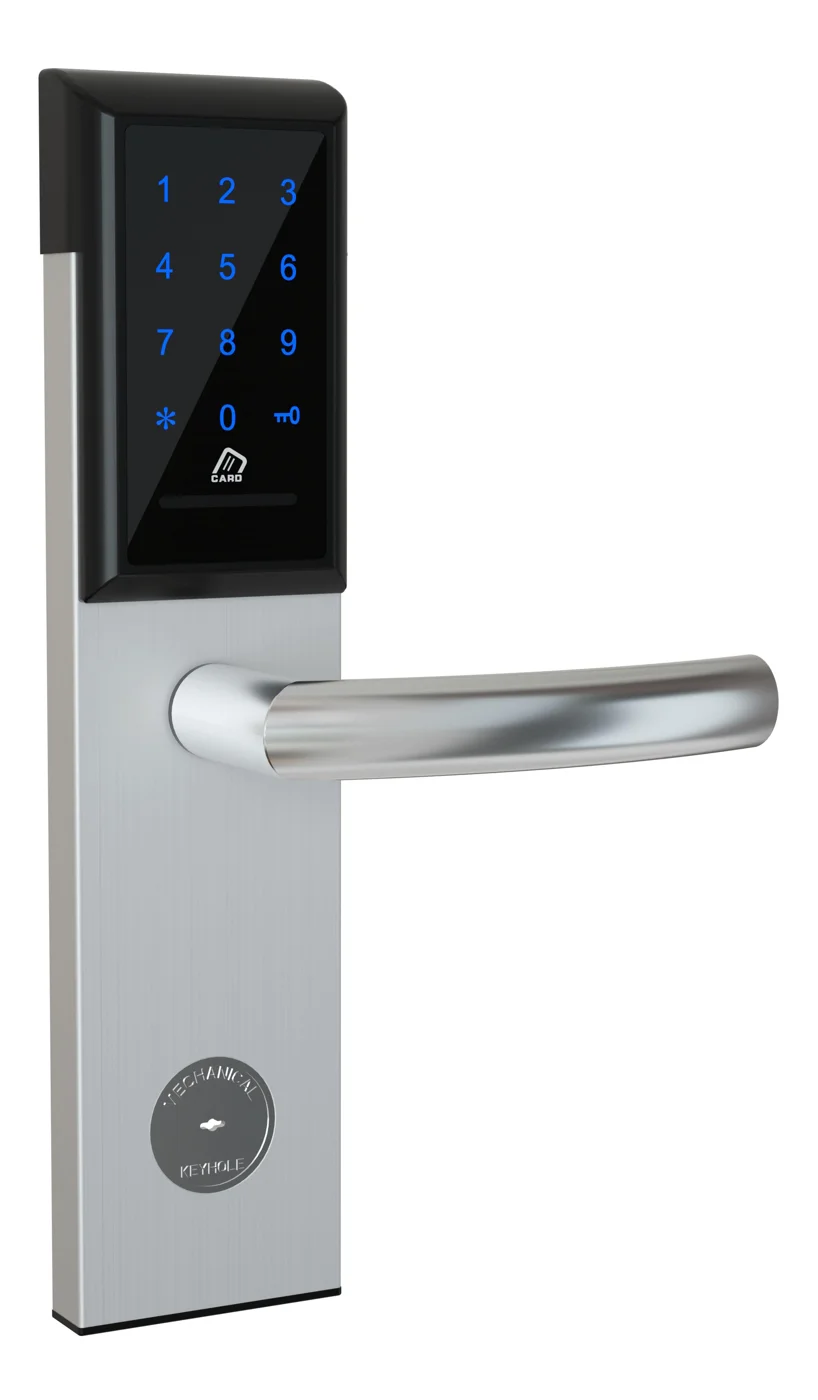
Office Cabinet Lock — PIN + Card for Filing & Pedestals
Offline PIN + card office cabinet lock for filing cabinets, pedestals, and drawers. Battery-powered 5-minute retrofit, no WiFi, no key management. CE/FCC/RoHS.
This page already points to it as the next recommended reference.
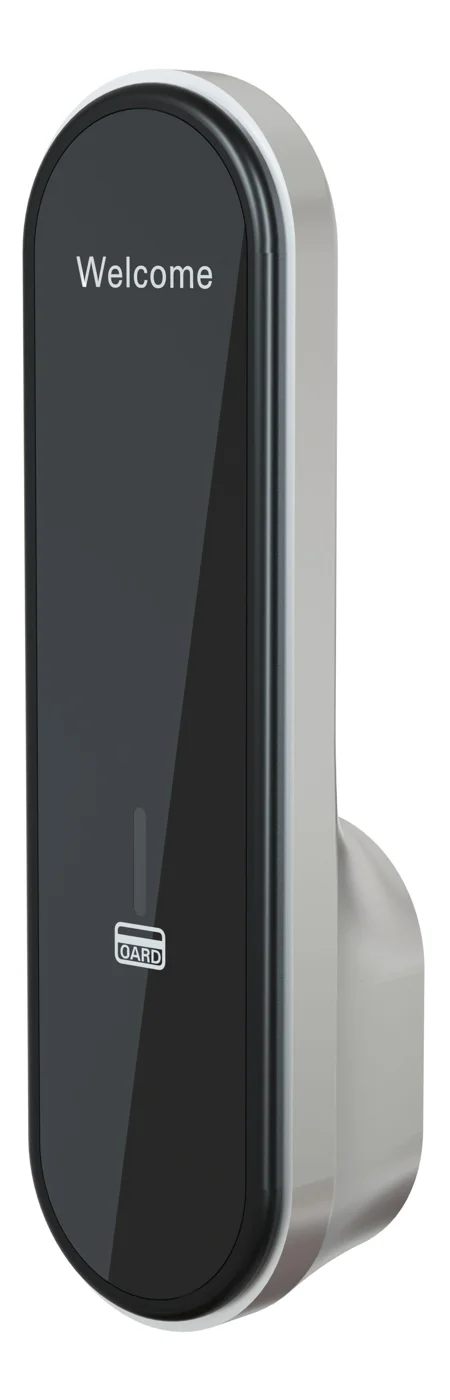
RFID Cabinet Lock — MIFARE Card, Offline Authentication
Offline MIFARE RFID cabinet lock for gym, spa, and office lockers. Tap-to-unlock 13.56 MHz, no WiFi needed, 5-minute retrofit. Zinc alloy body, battery-powered.
This page already points to it as the next recommended reference.
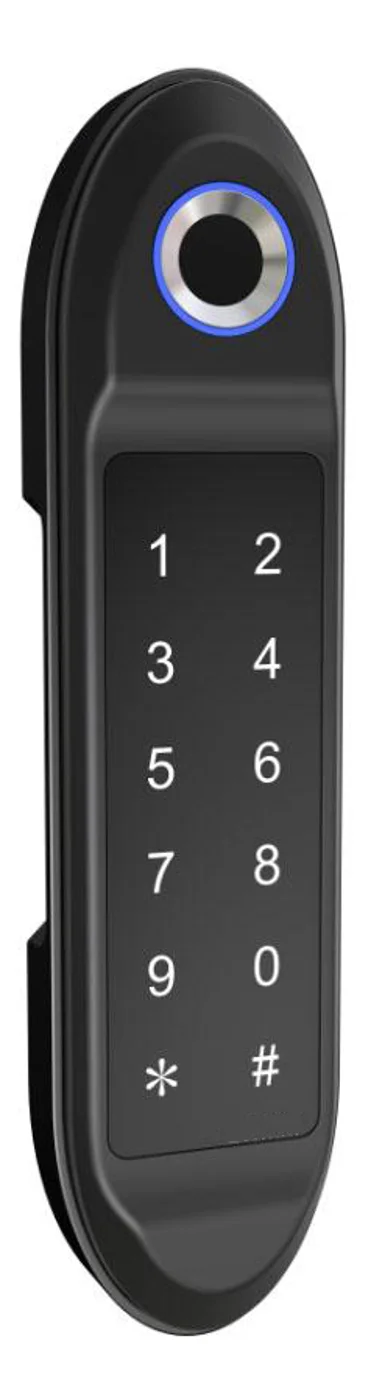
PIN Code Electronic Cabinet Lock — Stand-Alone, No WiFi
Offline keypad cabinet lock for gym, office and parcel lockers. Battery-powered, 5-minute retrofit, audit-free simple deployment. PIN + MIFARE card, DC 6V, 4×AA.
This page already points to it as the next recommended reference.
Related blog posts
3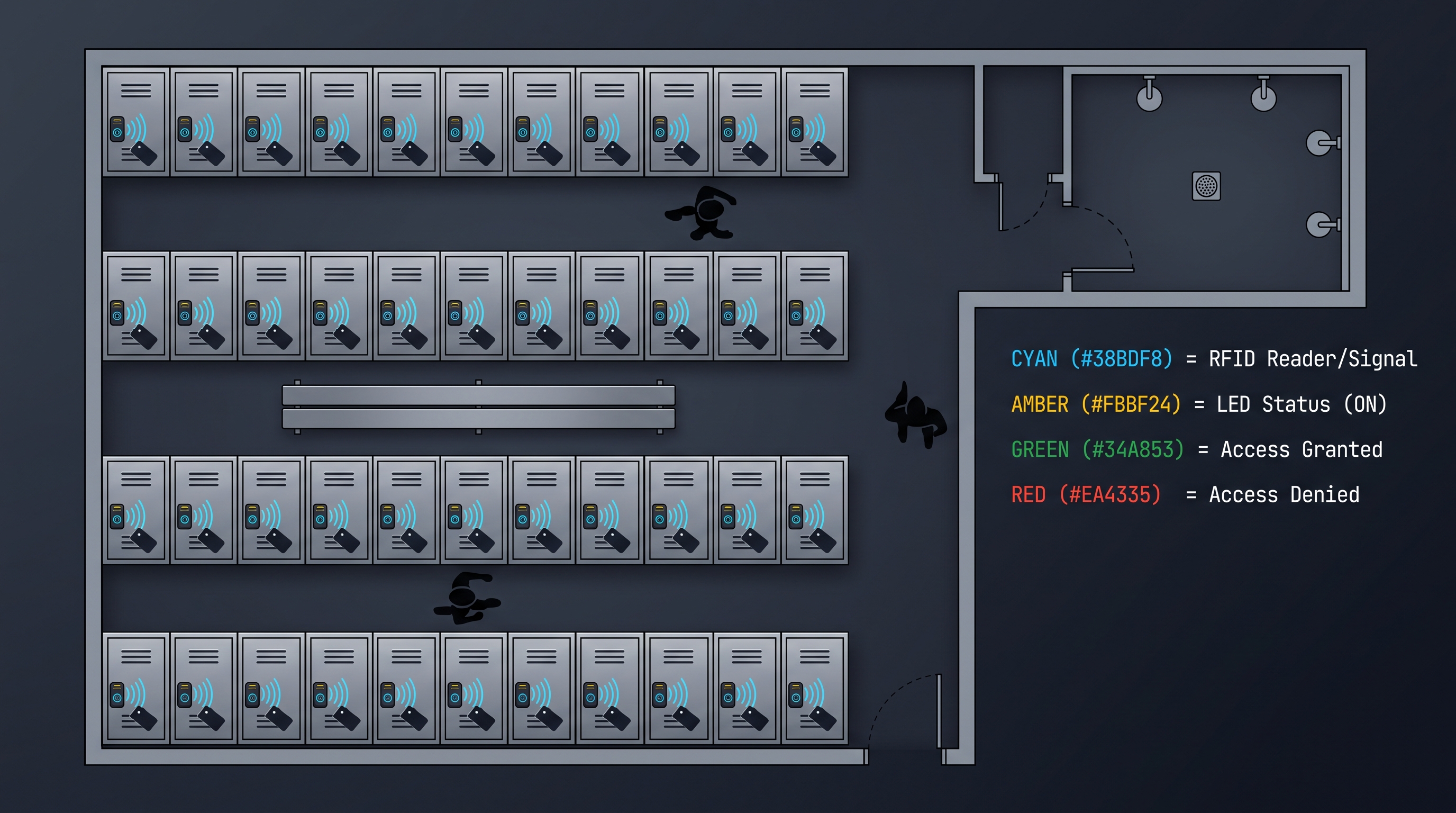
Fingerprint Locker Lock: The Complete Guide to Biometric Locker Security in 2026
Learn how a fingerprint locker lock upgrades gym, school, and workplace locker security with biometric access control. Compare models, features, and installation options.
It supports the same product context: PIN Code Electronic Cabinet Lock — Stand-Alone, No WiFi.
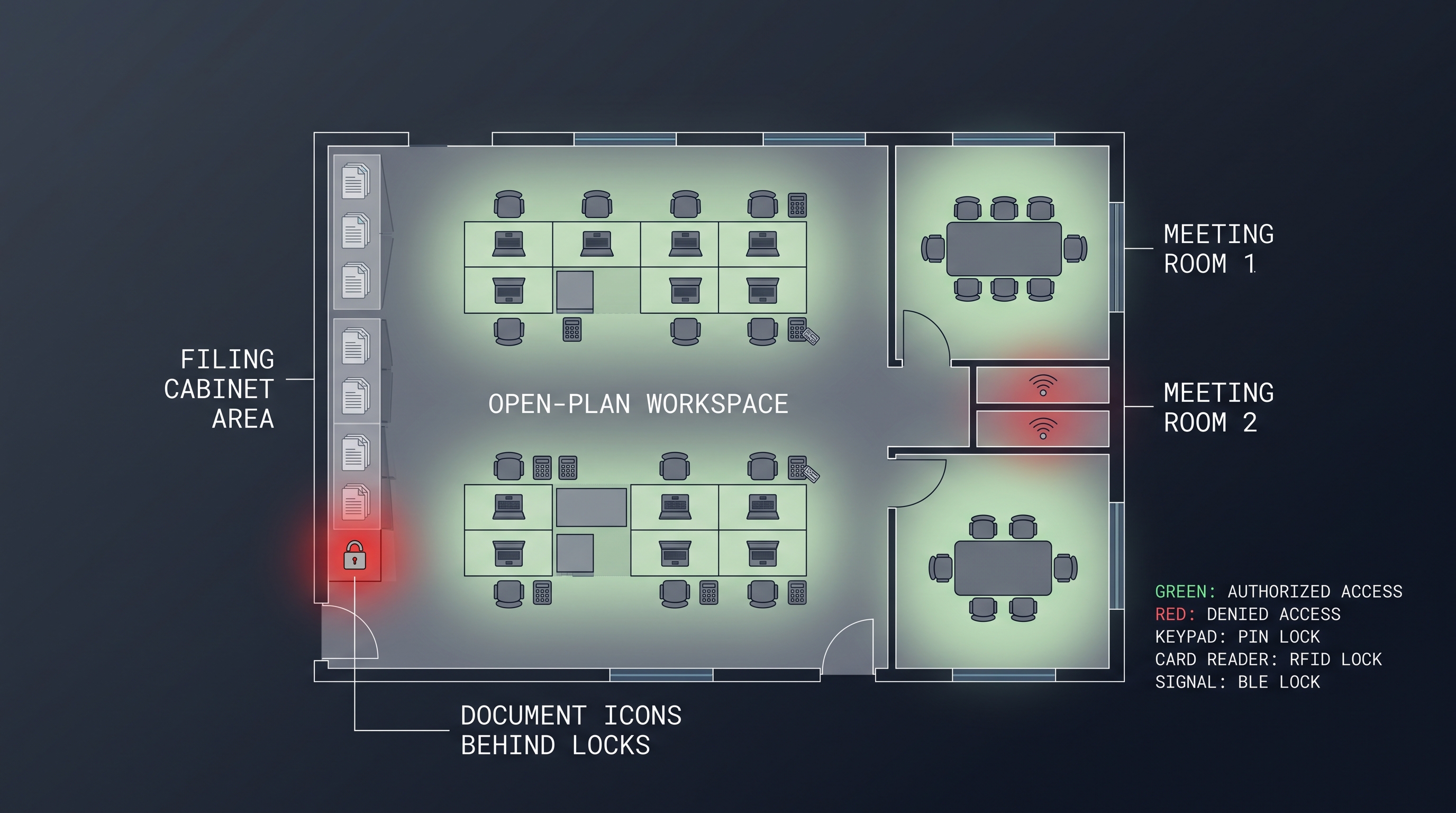
The Complete Guide to Choosing a File Cabinet Lock Electronic System for Compliance-Driven Retrofit
Discover how a file cabinet lock electronic retrofit delivers HIPAA/SOX audit trails, multi-drawer access hierarchy, and fail-secure compliance. Compare solenoid vs motor, RFID vs PIN vs app, no-drill vs drill-mount kits, and battery life specs.
It supports the same product context: Office Cabinet Lock — PIN + Card for Filing & Pedestals, RFID Cabinet Lock — MIFARE Card, Offline Authentication, PIN Code Electronic Cabinet Lock — Stand-Alone, No WiFi.
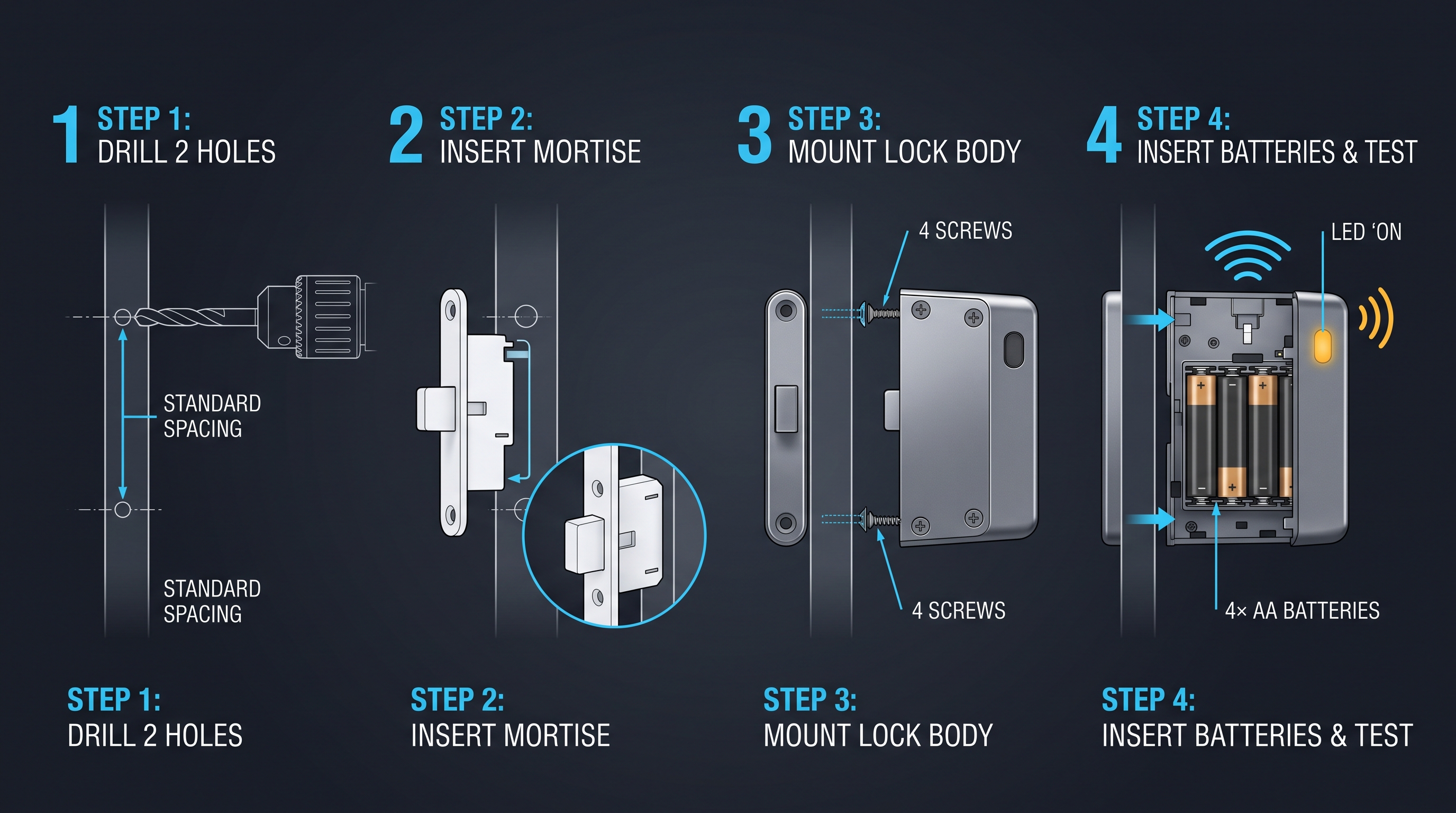
EMS Cabinet Lock: DEA-Compliant Drug Security for Paramedic Vehicles
EMS cabinet lock guide covering DEA Schedule II compliance, dual-authentication, tamper-evidence, audit trail, vehicle power, and ePCR integration for ambulance fleets.
It supports the same product context: Office Cabinet Lock — PIN + Card for Filing & Pedestals.
Specify your hotel project with our engineers
Send your room count, ceiling type, and protocol preference. We will return a sample plan and quote within 24 business hours.
- Move from general guidance into a product or application discussion.
- Use RFQ when pricing, drawings, MOQ, or launch timing needs structure.
- Keep a direct contact path visible for fast clarifications and handoff.