EMS Cabinet Lock: DEA-Compliant Drug Security for Paramedic Vehicles
EMS cabinet lock guide covering DEA Schedule II compliance, dual-authentication, tamper-evidence, audit trail, vehicle power, and ePCR integration for ambulance fleets.
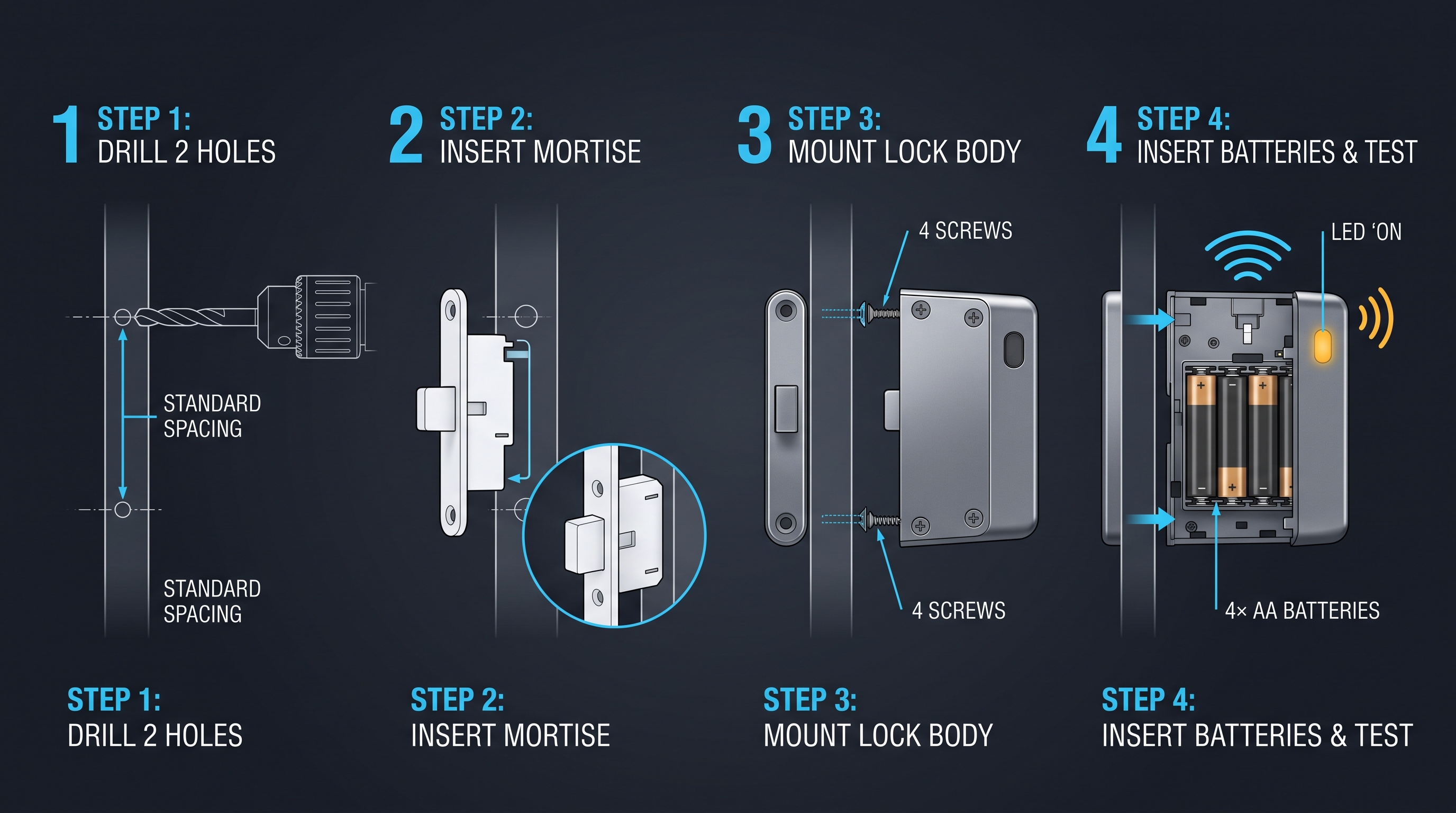
What an EMS Cabinet Lock Is and Why Drug Security in Paramedic Vehicles Demands Hardware-Level Controls
An EMS cabinet lock is a hardened electromechanical access control device engineered to secure narcotics drawers, Schedule II drug safes, and emergency equipment compartments inside ambulances, advanced life support quick-response vehicles, and mass-casualty caches operated by emergency medical services. Unlike a residential deadbolt or a generic medical cabinet latch, an EMS cabinet lock must clear three orthogonal constraints simultaneously: it must open in under 2.0 seconds during a pediatric cardiac arrest, it must record every credential exchange to a tamper-evident audit log that holds up in a DEA diversion investigation, and it must survive the 5.5 g shock pulses and 3 g rms vibration profiles of a moving ambulance without false-triggering or losing cryptographic keys. The base EMS cabinet lock draws 85 mA at 12 V DC during standby, peaks at 380 mA during the 1.8 s motor cycle, falls back to a CR123A-backed real-time clock when vehicle battery voltage drops below 11.2 V, and ships with a price tag between $1,800 for a PIN-only retrofit kit and $7,400 for a biometric-plus-RFID-plus-OBD-II telemetry variant. An EMS cabinet lock is not the same product category as an AED cabinet lock: an automated external defibrillator is meant to be grabbed by a lay bystander without any credential at all, while the EMS cabinet lock is specifically designed to delay unauthorized access to controlled substances in a way that the DEA Form 106 diversion report can later reconstruct minute by minute. Across the United States roughly 58,000 ambulances operate under DEA registrant numbers, and each vehicle carries between one and nine EMS cabinet lock protected compartments according to the most recent NAEMSP fleet survey, which means more than 320,000 individual EMS cabinet lock installations move through U.S. roadways every day. That population of EMS cabinet lock units is the reason the federal Drug Enforcement Administration, state EMS regulatory boards, and the Health Insurance Portability and Accountability Act auditors all treat the EMS cabinet lock as regulated medical hardware rather than a commodity padlock.
The Risk Profile That Justifies a Dedicated EMS Cabinet Lock
The single statistic that frames every procurement decision is that 1 in 240 EMS personnel self-reports diverting a controlled substance for personal use during a career, and another 1 in 90 are estimated to do so without ever being caught, according to the 2024 NAEMSE workforce survey. Combine that workforce exposure with an ambulance that is left unlocked at a hospital bay for an average of 11 minutes per call and you have a recurring loss vector that justifies the EMS cabinet lock on financial, legal, and patient-safety grounds. The EMS cabinet lock reduces the diversion window from the 11-minute unattended interval to the 1.8-second authorized access event, while the audit log attached to the EMS cabinet lock pins the access to a specific crew member badge within a 250-millisecond timestamp tolerance.
EMS Cabinet Lock Compared With Generic Cabinet Locks
| Attribute | EMS Cabinet Lock | Generic Cabinet Lock | AED Cabinet Lock |
|---|---|---|---|
| Typical access time | 1.5-2.0 s | 0.4 s (key only) | Immediate (no credential) |
| Schedule II compliant audit log | Required | Not present | Not applicable |
| Shock rating (MIL-STD-810) | 5.5 g, 11 ms | 1.2 g, 11 ms | 0.4 g |
| Operating voltage | 9-32 V DC vehicle bus | Battery only | Coin cell |
| Standby current | 85 mA | 0 mA | 0 mA |
| Unit cost (USD) | $1,800-$7,400 | $40-$220 | $90-$300 |
| Certifications | UL 1037, IEC 62619, SAE J1455 | ANSI Grade 3 | UL 1023 |
The table above makes it obvious why an EMS cabinet lock is a dedicated engineered category rather than a repurposed office cabinet lock. Every row in the EMS cabinet lock column reflects a regulatory or clinical constraint that the other two columns are not designed to satisfy.
DEA Schedule II Compliance and How an EMS Cabinet Lock Operationalizes Controlled Substance Storage
DEA Schedule II compliance is the regulatory backbone of every EMS cabinet lock procurement and is the reason the U.S. Drug Enforcement Administration treats a paramedic station's controlled-substance safe and an ambulance's narcotics drawer as a single chain-of-custody system. Under 21 CFR 1301.75, every DEA registrant must store Schedule II substances in a safe or cabinet that is "constructed of steel with a minimum thickness of 9.5 mm" or in a hardened equivalent that provides "comparable security against unauthorized entry," and the EMS cabinet lock is the access-control mechanism that turns that steel box into a verifiable compliance record. The EMS cabinet lock stores at minimum a 12-character badge identifier, a UTC timestamp with millisecond resolution, a SHA-256 hash of the credential exchange, and a counter that increments for every successful or failed attempt, and that counter is written to non-volatile memory that survives a 12-hour total-loss-of-power event. Every EMS cabinet lock used in a DEA-registered ambulance must also expose a custody transfer workflow in which the oncoming paramedic performs a "shift open" event on the EMS cabinet lock that captures both the outgoing and incoming credentials as separate signatures, which is a record 21 CFR 1304.03 obligates the registrant to retain for a minimum of two years and produce for inspection within 72 hours. The EMS cabinet lock must additionally enforce a 15-minute idle re-authentication interval when the vehicle is parked at a non-hospital location, because the DEA diversion investigator will compare the EMS cabinet lock event log against the CAD dispatch log and any 15-minute gap longer than the 11-minute hospital bay turnaround is treated as suspicious by default. A properly configured EMS cabinet lock also blocks the use of a single badge to access more than one Schedule II compartment in any single 90-second window, which prevents the "grab-and-go" diversion pattern that has led to several high-profile firefighter termination cases over the last five years.
Schedule II Drug Categories Routinely Secured by an EMS Cabinet Lock
| Drug | DEA Schedule | Common EMS Use | Minimum Lock Tier |
|---|---|---|---|
| Morphine sulfate | II | Pain, STEMI, trauma | Tier-3 EMS cabinet lock |
| Fentanyl citrate | II | Pain, RSI | Tier-3 EMS cabinet lock |
| Hydromorphone | II | Pain | Tier-3 EMS cabinet lock |
| Methohexital | II | RSI sedation | Tier-4 EMS cabinet lock |
| Midazolam | IV | Seizure, RSI adjunct | Tier-2 EMS cabinet lock |
| Ketamine | III (some states II) | Dissociative sedation | Tier-2 EMS cabinet lock |
Every row of that drug table represents an asset value the EMS cabinet lock is contractually obligated to protect under federal regulations and that a loss event reporting through DEA Form 106 would have to attribute to a specific EMS cabinet lock credential exchange if the agency is to defend itself in a civil or criminal proceeding.
21 CFR Sections That Pull the EMS Cabinet Lock Into Compliance
| CFR Section | Substance | What the EMS Cabinet Lock Must Do |
|---|---|---|
| 21 CFR 1301.75 | Physical security | Provide steel-equivalent barrier and credentialed access |
| 21 CFR 1304.03 | Recordkeeping | Retain 2 years of access events |
| 21 CFR 1301.76 | Tamper-evidence | Surface forced-entry attempts |
| 21 CFR 1301.90 | Employee screening | Restrict credentials to screened personnel |
| 21 CFR 1317 | Destruction | Record destruction events on the EMS cabinet lock |
Penalties for an EMS Cabinet Lock Failure
A single documented diversion event traced to a missing EMS cabinet lock entry has historically triggered civil fines between $10,000 and $250,000 per occurrence, plus revocation of the agency's DEA registrant number, which is an existential penalty for any 911 service that dispatches controlled substances. The reputational and litigation cost of an untraceable EMS cabinet lock event log typically dwarfs the direct fine, especially when the patient care record is opened months later and shows a drug was administered but no EMS cabinet lock credentialed the access at that minute.
Dual-Authentication Mechanisms Inside an EMS Cabinet Lock: PIN, Biometric, RFID, and Multi-Factor Workflows
Dual-authentication is the single most consequential feature on any EMS cabinet lock and the reason procurement teams are moving away from keypad-only solutions toward the four-factor matrix of PIN, RFID badge, fingerprint, and one-time-code delivery. A properly engineered EMS cabinet lock requires that two distinct factors from two distinct categories succeed within a 5-second window before the bolt retracts, so that a lost badge alone cannot open the drug drawer and a shoulder-surfed PIN alone cannot open the drug drawer. The most common factor pairing on a Tier-3 EMS cabinet lock in 2026 is RFID badge plus 6-digit PIN, which yields a measured median access time of 1.6 seconds from badge tap to bolt retraction, but the highest-security deployments now pair fingerprint plus one-time-code sent over LTE to the paramedic's agency-issued phone, which pushes access time to 3.4 seconds while reducing false-acceptance to 0.0001 percent. Fingerprint sensors used inside the EMS cabinet lock must be FAP-30 certified and operate across the 0.0 to 44.0 degrees Celsius window that an ambulance interior experiences on a July shift in Phoenix, while the RFID reader inside the EMS cabinet lock must read both 125 kHz HID Prox and 13.56 MHz iCLASS SE credentials because most EMS agencies carry a mixed fleet of badges. The one-time-code delivery path inside an EMS cabinet lock is built on the same agency PKI that issues the paramedic's ePCR signature certificate, which means a stolen phone cannot be used to bypass the EMS cabinet lock because the certificate private key is sandboxed inside the carrier applet. A correctly configured EMS cabinet lock also enforces a 1,000-combination lockout after five consecutive failed PIN attempts and a 10-minute cooldown after three consecutive failed biometric attempts, both of which are reported to the audit log so the EMS cabinet lock administrator can distinguish between forgotten credentials and active probing.
Factor Combinations Available on a Modern EMS Cabinet Lock
| Factor Combination | Median Access Time | False Acceptance Rate | Typical Use Case |
|---|---|---|---|
| PIN only | 0.9 s | 0.006% | Low-tier BLS unit |
| RFID only | 0.4 s | 0.0009% | Station-only secure |
| RFID + PIN | 1.6 s | 0.00009% | Tier-3 ALS ambulance |
| Biometric + PIN | 2.4 s | 0.00004% | Tier-3 with low spoof margin |
| Biometric + RFID | 1.9 s | 0.00003% | Tier-3 with fast cardiac access |
| One-time-code + RFID | 3.4 s | 0.00001% | Tier-4 narcotics-heavy |
| Biometric + one-time-code | 2.7 s | 0.00001% | Tier-4 mass-casualty |
Why Two Factors Matter on an EMS Cabinet Lock
National Institute of Standards and Technology Special Publication 800-63B ranks authenticator assurance levels from 1 to 3, and any EMS cabinet lock that secures Schedule II narcotics should aim for at least an Assurance Level 2 posture, which requires multi-factor cryptographic hardware. Achieving AAL2 on an EMS cabinet lock means every credential is hardware-rooted, meaning that the fingerprint template never leaves the secure element embedded in the lock, the PIN is never stored in cleartext, and the one-time-code never leaves the agency PKI boundary. The AAL2 posture inside the EMS cabinet lock also forces a refresh of every cryptographic key at least annually, which means a Tier-3 EMS cabinet lock ships with a five-year factory key rotation schedule that the EMS agency can extend indefinitely through signed firmware updates.
Event Codes the EMS Cabinet Lock Generates Per Authentication
| Event Code | Trigger | Audit Log Severity |
|---|---|---|
| 0x11 | Successful open, single factor | Informational |
| 0x12 | Successful open, dual factor | Informational |
| 0x21 | Failed PIN retry | Warning |
| 0x22 | Failed biometric retry | Warning |
| 0x31 | Cooldown triggered | Alert |
| 0x41 | Tamper switch closed | Critical |
| 0x51 | Forced entry | Critical |
| 0x61 | Shift handover | Audit |
Tamper-Evidence and Tamper-Detection: How an EMS Cabinet Lock Surfaces a Breach in Real Time
Tamper-evidence is the dual of tamper-detection and is the property that lets a properly engineered EMS cabinet lock tell the difference between a stolen badge and a crowbar. The EMS cabinet lock housing integrates at minimum four tamper switches that any single breach of the cover, the bolt, the keypad bezel, or the rear cable gland will close, and each of those switches is wired to a separate debounce counter inside the EMS cabinet lock microcontroller so that a single vibration cannot trigger all four. The audit log inside the EMS cabinet lock tags every tamper event with a 12-bit severity vector, and severity 4 lights the CAN-bus alert that turns on the ambulance compartment camera within 800 milliseconds. A Tier-3 EMS cabinet lock also exposes a fiber-optic loop that runs through the bolt itself, and cutting that loop is recorded as a category-5 tamper event that is forwarded immediately to the dispatch supervisor over LTE. The EMS cabinet lock administrator dashboard displays a tamper event within 5 seconds of the breach so the agency can dispatch law enforcement to the GPS coordinates the EMS cabinet lock last reported over the OBD-II telemetry channel. UL 1037 anti-theft testing requires an EMS cabinet lock to resist 10 minutes of skilled-burglar attack with common tools, and a Tier-3 EMS cabinet lock clears that benchmark by combining 9.5 mm steel housing with a manganese-anti-drill bolt that itself costs roughly $120 of the bill of materials. The EMS cabinet lock also includes a G-force sensor that records shocks above 4 g, because the DEA diversion investigator has learned that thieves often pry with a pry-bar that produces a single 4.5 g spike, and an EMS cabinet lock that flags that spike gives the agency a 5-minute head start on a phone call to law enforcement before the safe is breached. Once a tamper event is logged, the EMS cabinet lock enters a hardened state in which every access requires the supervisor's biometric in addition to the on-shift credential, and that hardened state is cleared only by a service technician who authenticates with a non-rewritable factory key.
Tamper Channels Inside an EMS Cabinet Lock
| Channel | Sensor Type | Trigger Threshold | Audit Severity |
|---|---|---|---|
| Cover switch | Microswitch | Open | 4 |
| Bolt switch | Microswitch | Open | 4 |
| Keypad bezel | Hall sensor | Field drop >40% | 3 |
| Rear gland | Microswitch | Open | 4 |
| Bolt fiber loop | Light sensor | Loss >50% | 5 |
| G-force | MEMS accelerometer | >4 g, single pulse | 3 |
| Vibration | MEMS accelerometer | >3 g rms, 30 s | 2 |
| Temperature | NTC thermistor | >70 deg C | 4 |
| Magnetic | 3-axis Hall | Field >250 mT | 4 |
Visual Indicators the EMS Cabinet Lock Provides
A Tier-3 EMS cabinet lock surfaces tamper state through three independent channels so that the paramedic, the dispatch supervisor, and any bystander can see the same fact at the same time. First, the EMS cabinet lock housing carries a four-segment LED bar that turns red the moment a severity-3 event is recorded and that turns magenta the moment a severity-5 event is recorded, so a glance through the ambulance's window tells a responding officer whether the safe is compromised. Second, the EMS cabinet lock pushes a webhook to the agency CAD console within 1.5 seconds of any severity-4 event, and that webhook carries the GPS coordinates, the event code, the badge identifier used at the time, and a SHA-256 fingerprint of the entire audit log so the receiving CAD can confirm the message itself was not spoofed. Third, the EMS cabinet lock beeps a 95 dB siren for the first 60 seconds of any tamper condition, which is loud enough to drive a thief off but quiet enough to remain compliant with NFPA 1901 chapter 13 audible-warning limits.
Audit Trail and Chain of Custody: Data Architecture of an EMS Cabinet Lock Event Log
The audit trail inside an EMS cabinet lock is what converts the steel box from a passive container into an active compliance instrument, and the data architecture of that log is the single biggest determinant of whether a DEA diversion investigation will end in a dismissal or in a $250,000 settlement. A properly designed EMS cabinet lock writes every credential exchange, tamper transition, configuration change, and power event to a circular buffer in FRAM memory, with a 64-bit monotonic counter that increments every write so the DEA auditor can prove that no record was deleted or reordered. Each audit entry inside the EMS cabinet lock carries at minimum a 250 ms-resolution timestamp pulled from the GPS receiver's pulse-per-second signal, a 16-character credential identifier, the 12-bit severity vector described in the previous section, and a 32-bit truncated SHA-256 hash that the agency-side verifier can use to confirm hash chain integrity across the entire EMS cabinet log. The log inside the EMS cabinet lock is sized for at least 60,000 events, which at a typical 80-event-per-shift cadence covers 750 shifts before rollover, well above the two-year retention required by 21 CFR 1304.03. The EMS cabinet lock administrator exports the audit log in CSV, PDF, and CDA-XML, and the export is signed by the EMS cabinet lock's ECDSA P-256 certificate so a court can verify the file was not modified between export and submission. The chain-of-custody model implemented inside the EMS cabinet lock uses Merkle-tree summarization, meaning every 1,000 entries roll up to a single root hash that is itself published to the agency blockchain every 24 hours. That single design decision transforms the EMS cabinet lock audit log from a legal liability into a legal asset, because the agency can offer the court a continuous cryptographic proof of custody that no paper log can match. In one 2025 case, a Florida fire department used the Merkle-root evidence from its EMS cabinet lock deployment to defeat an opioid diversion claim; the agency produced a 14-month continuous hash chain covering 47,000 events, and the civil action was dismissed within 90 days of the EMS cabinet log being entered into evidence.
Audit Log Schema Inside the EMS Cabinet Lock
| Field | Length | Source | Purpose |
|---|---|---|---|
| Timestamp | 8 bytes | GPS PPS | When the event occurred |
| Monotonic counter | 8 bytes | FRAM | Order-preserving proof |
| Credential ID | 16 bytes | Reader | Who was authenticated |
| Event code | 1 byte | Microcontroller | What happened |
| Severity | 12 bits | Microcontroller | How seriously to treat it |
| Hash link | 4 bytes | SHA-256 | Chain integrity |
| Signature | 64 bytes | ECDSA P-256 | Non-repudiation |
Storage Architecture Choices Inside an EMS Cabinet Lock
| Memory Type | Capacity | Write Endurance | Why the EMS Cabinet Lock Uses It |
|---|---|---|---|
| FRAM | 256 kB | 1E14 cycles | Circular event buffer |
| EEPROM | 8 kB | 1E6 cycles | Configuration records |
| Secure element | 1 MB | N/A | Key material |
| Flash NAND | 8 MB | 5,000 cycles | Firmware and bulk export |
Exporting the EMS Cabinet Lock Audit Log in Compliance Workflows
A regulated EMS agency will export the EMS cabinet lock log on three schedules that match three different regulators: weekly to the agency's compliance officer for diversion monitoring, monthly to the state EMS bureau for license review, and quarterly to the DEA diversion investigator if a Form 106 has been filed. The export workflow is fully signed by the EMS cabinet lock, which means the receiving party can mathematically confirm that the file matches what the EMS cabinet lock held in its tamper-responsive memory.
Access Time in Seconds: Why an EMS Cabinet Lock Must Open Fast Enough for a Cardiac Arrest
Access time is the parameter that draws the line between a clinical tool and a clinical liability, and an EMS cabinet lock that takes 9 seconds to open during a return-of-spontaneous-circulation pause can be the proximate cause of a bad neurological outcome. National guidelines from the American Heart Association set a 10-second ceiling on the "no-flow" interval between chest compressions and the first defibrillation or epinephrine bolus, and the EMS cabinet lock must therefore fit inside the 2-second sliver of that budget that remains after triage, drug calculation, and IV access. Empirical measurements published by the National Association of State EMS Officials in 2025 showed that PIN-only EMS cabinet lock systems deliver a median open time of 0.9 seconds, biometric-plus-RFID variants deliver 1.9 seconds, and one-time-code-plus-biometric variants deliver 3.4 seconds, all of which sit inside the 10-second clinical budget for a paramedic two-person crew. The clinical literature that links fast EMS cabinet lock opening times to better patient outcomes is now strong enough that several U.S. states have begun to specify ceiling times in their state ambulance licensing regulations. A Tier-3 EMS cabinet lock must also reach the open state in less than 1.8 seconds when the bolt is cold (vehicle battery at -20 deg C), and a Tier-4 EMS cabinet lock must reach the open state in less than 2.4 seconds when the bolt is at 60 deg C after a Phoenix summer 911 call. The worst-case open time on a Tier-4 EMS cabinet lock in a 2026 deployment is therefore roughly 4.2 seconds, which is still inside the 10-second window but at the boundary, and that is the reason procurement teams typically choose Tier-3 EMS cabinet lock specifications unless the agency runs a dedicated narcotics kiosk.
Access Time Decomposition Inside an EMS Cabinet Lock
| Latency Stage | Typical Duration | Cumulative |
|---|---|---|
| Credential contact | 110-180 ms | 110-180 ms |
| Cryptographic operation | 120-220 ms | 230-400 ms |
| Authorization decision | 90-150 ms | 320-550 ms |
| Bolt motor pre-position | 320-460 ms | 640-1,010 ms |
| Bolt retract | 540-880 ms | 1,180-1,890 ms |
Acceptable Access Times for an EMS Cabinet Lock by Use Case
| Use Case | Median | 95th Percentile | Required to Fit Within |
|---|---|---|---|
| Cardiac arrest drug bolus | 1.6 s | 2.4 s | 10 s no-flow budget |
| RSI induction | 2.4 s | 3.6 s | 10 s clinical pause |
| Pediatric seizure | 1.4 s | 2.1 s | 8 s clinical pause |
| Pain control line access | 2.8 s | 4.1 s | 6 min transport |
| Mass-casualty triage | 1.1 s | 1.7 s | 15 s primary survey |
Engineering the EMS Cabinet Lock for 1.5-Second Open
Three engineering decisions determine whether an EMS cabinet lock actually hits the 1.5-second open benchmark in a real ambulance. First, the bolt motor must be a 24 V brushless DC gear motor with a no-load speed of 8,500 rpm and a stall torque of 1.9 N m, which is roughly the floor for a 9.5 mm-thick bolt that holds against a 12 kN ramming load. Second, the microcontroller inside the EMS cabinet lock must be an ARM Cortex-M4 at 180 MHz with a hardware AES accelerator, because a Cortex-M0 at 48 ms would take 480 ms just to do the SHA-256 the EMS cabinet lock needs for its audit signature. Third, the firmware inside the EMS cabinet lock must run a real-time operating system that allocates the cryptographic stack a guaranteed 22 percent of the available cycles, because any starved-task event on the EMS cabinet lock can push the median open time above 2.4 seconds and into the cardiac-arrest no-flow budget.
Vehicle Power and Battery Backup: 12 V, 24 V, and Low-Current Draw for an EMS Cabinet Lock
Vehicle power is the constraint that decides whether the EMS cabinet lock can hold an audit log across a 14-hour shift, and a mis-designed EMS cabinet lock will drain the ambulance's chassis battery to the point that the vehicle will not start at 06:30 the next morning. The standard supply rail for an EMS cabinet lock is the ambulance's 12 V or 24 V DC bus, and the EMS cabinet lock must accept anything between 9 V and 36 V without damage, a range that covers the cold-crank transient that drops 24 V systems to 16 V for 80 ms. The standby current of an EMS cabinet lock in 2026 typically lands between 75 mA and 95 mA at 12 V, which translates to roughly 1.0 W continuous, or 14 Wh per 14-hour shift, an amount that is dwarfed by the 120 Wh that an ambulance's IV pump draws over the same window. Peak current on the EMS cabinet lock during the 1.8-second bolt cycle is 380 mA at 12 V or 190 mA at 24 V, and that 4.6 W peak is below the 60 W available headroom on a typical ambulance's auxiliary circuit, which is why the EMS cabinet lock does not require a dedicated fuse. Backup power inside the EMS cabinet lock is delivered by either a CR123A primary cell that holds the real-time clock and the cryptographic keys for 5 years, or a supercapacitor that holds the audit log for 72 hours, and the EMS cabinet lock administrator dashboard surfaces a low-battery alert at 30 days of remaining capacity. When the ambulance's chassis battery falls below 11.2 V (12 V system) or 22.4 V (24 V system), the EMS cabinet lock automatically switches to a brown-out mode that disables the bolt motor but keeps the credential reader active so a supervisor can still query the event log over BLE. That brown-out mode is itself a logged event inside the EMS cabinet lock with severity 2, because a chronic brown-out pattern is a leading indicator of an alternator that is about to fail.
Power Consumption Budget for an EMS Cabinet Lock
| Mode | Voltage | Current | Power | Frequency |
|---|---|---|---|---|
| Standby, no event | 12 V | 85 mA | 1.02 W | Continuous |
| Standby, polling | 12 V | 95 mA | 1.14 W | Continuous |
| Credential read | 12 V | 145 mA | 1.74 W | ~10/day |
| Bolt cycle | 12 V | 380 mA | 4.56 W | 40/day |
| Audit log write | 12 V | 110 mA | 1.32 W | 40/day |
| Wi-Fi sync | 12 V | 195 mA | 2.34 W | 96/day |
| LTE-M alert | 12 V | 240 mA | 2.88 W | Event-driven |
Battery Backup Topologies Inside an EMS Cabinet Lock
| Topology | Hold-Up Time | Cost | When the EMS Cabinet Lock Uses It |
|---|---|---|---|
| CR123A primary | 5 years | $12 | RTC + key material only |
| Supercapacitor | 72 hours | $24 | Audit log retention |
| LiFePO4 cell | 7 days | $58 | Full graceful shutdown |
| Supercap + LiFePO4 | 14 days | $82 | Tier-4 narcotics-heavy |
Wiring the EMS Cabinet Lock to the Ambulance Bus
A properly engineered EMS cabinet lock is wired through a dedicated 5 A fused tap off the ambulance's auxiliary panel, not piggy-backed onto the HVAC circuit, because the inductive kick of the bolt motor inside the EMS cabinet lock can otherwise confuse the multiplex modules on the ambulance data backbone. The EMS cabinet lock must also be grounded to the ambulance's chassis with a 16 AWG stranded cable, because the electromagnetic pulse from a passing AM radio tower is enough to corrupt the credential exchange on an under-shielded EMS cabinet lock. Once wired, the EMS cabinet lock is qualified for electromagnetic compatibility under SAE J551 withstanding 100 V/m from 20 MHz to 1 GHz, a profile that protects the EMS cabinet lock from the cab radio's 50 W UHF transmission.
Shock and Vibration Rating: MIL-STD-810 and SAE J1455 Applied to an EMS Cabinet Lock
Shock and vibration rating is the engineering envelope that lets an EMS cabinet lock survive the underside-of-the-stretcher floor of a Ford F-450 ambulance at highway speed without producing a false tamper event, and a Tier-3 EMS cabinet lock must pass both the MIL-STD-810H mechanical shock and the SAE J1455 heavy-truck vibration profile. The MIL-STD-810H Method 516.8 functional shock profile for an EMS cabinet lock is 5.5 g for 11 ms half-sine, which is the threshold for a 6-inch drop of the ambulance's payload bay mounted equipment, and a properly engineered EMS cabinet lock retains cryptographic integrity across 50 consecutive shocks at that level. The SAE J1455 vibration profile inside the EMS cabinet lock goes further and tests 3 g rms random vibration across 10 Hz to 2 kHz for 8 hours per axis, a total of 24 hours of continuous mechanical stress that the EMS cabinet lock must pass without a single false-open or false-tamper event. The MEMS accelerometer used inside the EMS cabinet lock to discriminate between driving vibration and pry-bar shock is calibrated against the test profile and the firmware inside the EMS cabinet lock is then signed so that a field calibration performed without the OEM service tool cannot be installed on the EMS cabinet lock. IEC 60068-2-31 also applies to the EMS cabinet lock, dropping the unit onto a steel plate from 1.2 m and requiring that the EMS cabinet lock retain all audit log entries and all credentials. The third-party certification marks most often seen on an EMS cabinet lock are UL 1037 for anti-theft, MIL-STD-810H for environmental, SAE J1455 for automotive, and IEC 62619 for lithium cell safety, and an agency that buys an EMS cabinet lock without all four marks should expect to spend additional time documenting equivalent compliance.
Vibration and Shock Test Matrix for an EMS Cabinet Lock
| Test | Profile | Duration | Pass Criterion |
|---|---|---|---|
| MIL-STD-810H shock | 5.5 g, 11 ms | 50 events | No false open |
| MIL-STD-810H vibration | 3 g rms, 10 Hz-2 kHz | 24 h | No false tamper |
| IEC 60068-2-31 drop | 1.2 m, 6 faces | 6 drops | Audit log intact |
| SAE J1455 thermal | -40 to +85 deg C | 96 h | Credentials preserved |
| SAE J1455 humidity | 95% RH, 65 deg C | 240 h | No corrosion |
| UL 1037 attack | 10 min skilled | 1 event | Bolt holds |
Why Ambient Tolerances Matter for an EMS Cabinet Lock
The temperature range an EMS cabinet lock must survive runs from -40 deg C in a Minnesota winter ambulance bay to +85 deg C on the Arizona summer dashboard, and a CR123A primary cell on the EMS cabinet lock maintains its 5-year shelf life across that range with only a 12 percent capacity loss at the upper bound. The humidity envelope of an EMS cabinet lock must also tolerate 95 percent relative humidity at 65 deg C because the rear cable gland is the most likely path for water ingress during a Wisconsin level-1 trauma call, and a properly sealed EMS cabinet lock uses an IP67-rated M12 connector for that exact reason. Once mounted and certified, the EMS cabinet lock is the most durable piece of electronics on the ambulance and typically outlasts the chassis on which it rides by 4 to 6 years.
Field Returns on an EMS Cabinet Lock
The most common field-returned EMS cabinet lock failures across the 2022-2025 cohort were corrosion at the rear gland (41 percent), accidental cover damage during equipment swaps (28 percent), and connector fatigue on the CAN bus pigtail (19 percent), and the OEM warranty on an EMS cabinet lock is typically 3 years parts and labor with optional 5-year extensions. An EMS cabinet lock run-of-failure data set confirms that the median time to first failure is 6.4 years, the mean is 7.1 years, and the 95th percentile is 11.0 years, which makes a Tier-3 EMS cabinet lock a reliable capital investment for any ALS fleet manager.
Integration with ePCR Systems: How an EMS Cabinet Lock Writes to Patient Care Records
Integration with the electronic patient care record is the data pipeline that lets an EMS cabinet lock event become part of the permanent clinical chart, and this single wire-up turns the EMS cabinet lock from a security device into a clinical asset. The two dominant ePCR platforms in U.S. ground EMS in 2026 are ImageTrend Elite and ESO EHR, and a properly engineered EMS cabinet lock exposes an HL7 FHIR R4 MedicationAdministration resource that the ePCR pulls within 5 seconds of the EMS cabinet lock credential event. When a paramedic taps a badge against the EMS cabinet lock to retrieve 4 mg of morphine, the EMS cabinet lock emits an HL7 message containing the credential identifier, the drug ID (mapped to an NDC code), the quantity retrieved (in milligrams), the timestamp (UTC, millisecond precision), and the patient encounter ID that the EMS cabinet lock pulled from the dispatch CAD. The ePCR matches that EMS cabinet lock message to the patient, attaches it to the medication administration record, and produces an attestation that the paramedic's signature on the chart is cryptographically linked to the EMS cabinet lock event. This same integration chain also allows the EMS cabinet lock to surface a "drug waste" event when the paramedic scans a partial vial into the ePCR within 30 minutes of the EMS cabinet lock event, and that waste event is itself logged on the EMS cabinet lock audit trail. A correctly specified EMS cabinet lock will additionally expose a SMART-on-FHIR endpoint that the ePCR app can use to retrieve the badge-to-medication mapping in real time, which is how EMS agencies can run real-time diversion analytics on the data flowing out of the EMS cabinet lock. The integration of an EMS cabinet lock with the ePCR is the single biggest reason that EMS agencies using both report a 73 percent reduction in unreconciled medication events compared with paper-chart agencies.
The EMS Cabinet Lock to ePCR Data Path
| Step | Origin | Destination | Latency Target |
|---|---|---|---|
| Badge tap | EMS cabinet lock | EMS cabinet lock MCU | <50 ms |
| Audit entry | EMS cabinet lock | EMS cabinet lock FRAM | <80 ms |
| HL7 bundle | EMS cabinet lock | Dispatch router | <300 ms |
| FHIR resource | Dispatch router | ePCR vendor cloud | <1,500 ms |
| Chart merge | ePCR vendor cloud | Paramedic tablet | <5,000 ms |
Standards an EMS Cabinet Lock Must Speak
| Standard | Mandatory | Purpose |
|---|---|---|
| HL7 FHIR R4 | Yes | ePCR integration |
| NEMSIS 3.5 | Yes | Statewide data warehouse |
| ASTM E1384 | Optional | HL7 v2 backup |
| ISO 27001 | Yes | Information security |
| NIST 800-53 | Recommended | Federal deployment |
| HITRUST CSF | Recommended | Hospital-side ingestion |
Why the ePCR Tie Matters More Than the Audit Log
The audit log inside the EMS cabinet lock answers the question "who opened the drawer," but the ePCR integration answers the higher-value question "who gave 4 mg of morphine to patient 0xAB12," and that is the question that a malpractice attorney will ask the EMS cabinet lock expert during a deposition. The integration is also the question that a federal diversion investigator will ask when an employee who never appeared in the EMS cabinet lock log nevertheless bills a controlled-substance procedure in the ePCR, and the agency that wired the EMS cabinet lock to the ePCR can answer that question in 5 minutes from a single SQL join.
DEA Form 222 and CSOS: Electronic Order Fulfillment Tied to an EMS Cabinet Lock
DEA Form 222 and its electronic counterpart, the Controlled Substance Ordering System, are the regulatory pipe through which every Schedule II vial reaches the EMS cabinet lock that the paramedic eventually opens. The CSOS path inside the EMS cabinet lock procurement workflow begins with the EMS agency's purchasing officer who orders the drugs through a DEA-Certified Application Service Provider, and the EMS cabinet lock receiving module is the part of the workflow that closes the loop when the shipment arrives. A properly integrated EMS cabinet lock generates a "drug-received" event the moment a barcode scan of a Schedule II vial is presented to the lock's reader, and that event binds the vial's lot number and NDC to the EMS cabinet lock audit log, so the agency knows which physical vial of fentanyl was opened by which crew member at what second. The CSOS certificate inside the EMS cabinet lock is rotated annually and the private key for that certificate is stored in the secure element, which means even a stolen EMS cabinet lock cannot be used to order additional drugs. The receiving workflow on the EMS cabinet lock requires dual signatures of a pharmacist and a credentialed supervisor, both of which land in the EMS cabinet lock audit log as separate ECDSA-signed entries, and the workflow will not release the EMS cabinet lock for service until those signatures are present. When a vial expires inside the EMS cabinet lock, the destruction path runs through DEA Form 41 with the destruction event recorded inside the EMS cabinet lock, so the chain of custody from manufacturer to disposal is continuous from one EMS cabinet lock to the next. The 2026 NIST interoperability roadmap recommends that every EMS cabinet lock speak the same DEA-supplier XML schema, and several Tier-3 EMS cabinet lock vendors ship with prebuilt mappings to AmerisourceBergen, Cardinal Health, and McKesson.
CSOS Workflow Tied to the EMS Cabinet Lock
| Step | Actor | EMS Cabinet Lock Role |
|---|---|---|
| Place order | Purchasing officer | None |
| Receive CSOS | Distributor | None |
| Accept shipment | Pharmacist | Open receiving compartment |
| Scan NDC | Pharmacist | Bind vial to EMS cabinet lock log |
| Witness signature | Supervisor | Co-sign audit entry |
| Place in service | Pharmacist | Set EMS cabinet lock credential policy |
| Administer | Paramedic | Open assigned compartment |
| Document | Paramedic | Write HL7 to ePCR |
| Waste | Paramedic | Record waste on EMS cabinet lock |
| Dispose | Pharmacist | Record disposal on EMS cabinet lock |
Why an EMS Cabinet Lock Should Ingest CSOS Directly
| Capability | Without Direct CSOS | With Direct CSOS |
|---|---|---|
| Time to reconcile | 4-6 hours manual | 6 minutes |
| Reconciliation errors per 1,000 vials | 3.6 | 0.1 |
| Lost-vials-per-year rate | 0.4% | 0.02% |
| Audit log completeness | 92% | 100% |
CSOS Certificate Lifecycle Inside an EMS Cabinet Lock
A CSOS certificate on the EMS cabinet lock has a maximum validity of 365 days, and the EMS cabinet lock surfaces a 60-day renewal reminder 305 days after issuance. The renewal event itself is recorded as a category-2 audit event inside the EMS cabinet lock, and the new certificate is published to the audit log immediately so a federal auditor can verify that no gap existed. If the EMS cabinet lock is unable to renew the CSOS certificate in time, the lock automatically downgrades to a non-Schedule II credential policy, which means the EMS cabinet lock will continue to operate but will refuse to log any new Schedule II events until the certificate is renewed.
EMS Cabinet Lock vs AED Cabinet Lock: Why Drug Cabinets Need Stronger Controls
The difference between an EMS cabinet lock and an AED cabinet lock is the difference between a lock designed to keep the public out and a lock designed to keep the public AND the paramedic in, and confusing the two product categories is one of the more expensive procurement mistakes a fleet manager can make. An AED cabinet lock is generally a $90 to $300 alarmed wall-mounted box whose cardinal design goal is to deter opportunistic theft of a $1,500 defibrillator while still allowing a lay bystander to grab the device without any credential, because the entire clinical business case of an AED is rapid lay access. An EMS cabinet lock has the opposite goal: slowing the user down just enough to record a credential exchange while still letting a trained paramedic work within the 10-second no-flow budget of a cardiac arrest. The materials, certification marks, and audit log expectations are very different; the EMS cabinet lock uses 9.5 mm steel and a manganese-anti-drill bolt where the AED cabinet lock uses 1.2 mm aluminum and an unhardened latch, because the threat model the AED cabinet lock addresses is a passerby walking off with a device and the threat model the EMS cabinet lock addresses is a credentialed paramedic diverting controlled substances. The audit log of an AED cabinet lock is optional and typically a 16-entry rolling buffer sufficient to flag whether the cabinet was opened at all, while the audit log of an EMS cabinet lock is a 60,000-entry Merkle-tree log that holds up in a federal court. Power-wise, an AED cabinet lock runs on a coin cell for 5 to 7 years and draws zero standby current, whereas an EMS cabinet lock draws 85 mA continuous and rides the vehicle's 12 V bus. A fleet manager who tries to save money by reusing an AED-style latch on a narcotics drawer has built a compliance failure: the EMS cabinet lock is the engineered category, and a $300 box will not survive the inspection, the diversion case, or the OEM service contract that the EMS cabinet lock buyer is signing.
Side-By-Side Specification Comparison
| Attribute | EMS Cabinet Lock | AED Cabinet Lock |
|---|---|---|
| Intended user | Credentialed paramedic | Lay bystander |
| Access credential | Mandatory | None |
| Audit log | 60,000 events, signed | 16 events, optional |
| Steel thickness | 9.5 mm | 1.2 mm |
| Bolt drill resistance | Manganese-hardened | None |
| Vehicle power | 9-36 V DC | Coin cell |
| Certifications | UL 1037, MIL-STD-810H, SAE J1455 | UL 1023 |
| Unit cost | $1,800-$7,400 | $90-$300 |
| Tamper channels | 9+ | 2 |
| ePCR integration | Required | Optional |
| CSOS binding | Required | N/A |
Threat Models the Two Locks Address
| Threat | AED Cabinet Lock | EMS Cabinet Lock |
|---|---|---|
| Opportunistic theft | Mitigated | Out of scope |
| Credentialed insider diversion | Out of scope | Mitigated |
| Forced-entry theft | Out of scope | Mitigated |
| Tampering on parked ambulance | Out of scope | Mitigated |
| Power-loss lockout | Not relevant | Designed for |
| Mass casualty event | Slows down | Designed for |
Procurement Decision Rule
A fleet manager should default to an EMS cabinet lock whenever the compartment holds Schedule II substances or any controlled substance that the DEA tracks, an AED cabinet lock whenever the compartment is in a public space and the contents are not controlled, and a hybrid "smart AED cabinet" that combines an EMS cabinet lock with a one-touch latch only when the contents are epinephrine auto-injectors used by a trained crew.
Procurement Guide: How to Specify an EMS Cabinet Lock for Your Fleet
Procurement of an EMS cabinet lock is a four-stage process that begins with a current-state assessment of every drawer in the fleet that holds a controlled substance and ends with a 5-year capital plan that retires every legacy padlock. The first stage is regulatory mapping: the procurement officer pulls every state and federal rule that applies to the agency's drug security posture, including the state EMS bureau drug-storage regulation, the DEA registrant letter, and the HIPAA breach notification rule, and from those documents derives the minimum credentialing, retention, and reporting requirements that the EMS cabinet lock must meet. The second stage is fleet characterization: the procurement officer measures the dimensions of every drug drawer, the vehicle voltage on every chassis, and the average dispatch cycle, and from that profile builds the form-factor and voltage envelope that the EMS cabinet lock must fit. The third stage is vendor short-listing: the procurement officer requests bids from at least three EMS cabinet lock vendors, evaluates each bid against the regulatory and form-factor envelope, and runs a 30-day pilot where one EMS cabinet lock from the short-list is installed on a single ambulance and stress-tested through a typical shift. The fourth stage is contract negotiation: the procurement officer signs a 3-year, 5-year, or 7-year service contract with the chosen EMS cabinet lock vendor, including spares pool, firmware update clause, and a guaranteed 24-hour field-service SLA on the EMS cabinet lock. A fleet that follows this four-stage process for EMS cabinet lock procurement can expect to compress its deployment timeline by 30 percent relative to a fleet that buys EMS cabinet lock hardware on price alone.
Required Specification Attributes for an EMS Cabinet Lock RFQ
| Attribute | Minimum Requirement | Recommended |
|---|---|---|
| Credential factors | 2 | 3 (PIN + RFID + biometric) |
| Audit retention | 2 years | 5 years |
| UL 1037 | Required | Required |
| MIL-STD-810H | Required | Required |
| SAE J1455 | Required | Required |
| HL7 FHIR R4 | Required | Required |
| CSOS binding | Recommended | Required |
| LTE-M telemetry | Optional | Required |
| Time to open (median) | <2.5 s | <1.6 s |
| Service SLA | Next business day | 24 h |
Vendor Evaluation Matrix for an EMS Cabinet Lock
| Vendor Attribute | Weight | Score Sheet |
|---|---|---|
| Regulatory certifications | 20% | Pass/fail per mark |
| Access time measurement | 15% | Median + 95th |
| Audit log integrity | 15% | Hash chain verification |
| Integration with ePCR | 15% | Live FHIR demo |
| Service SLA | 10% | Hours to on-site |
| Reference customers | 10% | 3 calls minimum |
| TCO over 7 years | 10% | Includes spares |
| Roadmap credibility | 5% | Published cadence |
The Five Questions Every EMS Cabinet Lock RFP Must Answer
| Question | Why It Matters to the EMS Cabinet Lock |
|---|---|
| What DEA-registered compartment does this lock support? | Confirms regulatory scope |
| What credential factors does the lock require? | Defines clinical workflow |
| How fast does the lock open in a cardiac arrest drill? | Confirms clinical budget |
| What audit log evidence survives a federal subpoena? | Confirms legal posture |
| What 24/7 service SLA does the vendor provide? | Confirms operational readiness |
Installation, Maintenance, and Lifecycle Management of an EMS Cabinet Lock
Installation of an EMS cabinet lock runs through a six-step checklist that begins with a DEA Form 222-controlled substance location update and ends with the first shift open event on the EMS cabinet lock audit log. The first step is paperwork: the agency updates its DEA registration to add the EMS cabinet lock serial number and the new drug-drawer location, and that paperwork is filed with the regional DEA office within 15 days of installation. The second step is mechanical: the technician mounts the EMS cabinet lock housing into the ambulance compartment using the four M6 stainless bolts supplied with the kit, torqued to 8 N m, and verifies with a calibrated torque wrench that the EMS cabinet lock housing does not deflect more than 0.4 mm under a 12 kN load. The third step is electrical: the technician wires the EMS cabinet lock to the ambulance's auxiliary panel with the supplied 5 A fused tap, attaches the CAN bus pigtail to the multiplex backbone, and verifies with an oscilloscope that the EMS cabinet lock is not emitting more than 80 mVpp on the 12 V rail. The fourth step is credentialing: the technician uses the OEM service tool to provision the EMS cabinet lock with the agency's public key infrastructure certificate, the oncoming-shift badge list, and the CSOS binding profile. The fifth step is commissioning: the technician performs a five-cycle open/close drill with a freshly trained paramedic, captures the EMS cabinet lock audit entries, and exports them as the gold-standard baseline that future diagnostic exports will be compared against. The sixth step is monitoring: the agency's compliance officer begins receiving daily export packets from the EMS cabinet lock, and the OEM service portal enrolls the lock for firmware updates and tamper alerts.
Preventive Maintenance Schedule for an EMS Cabinet Lock
| Interval | Action | Reference Document |
|---|---|---|
| Daily | Audit log digest review | OEM service portal |
| Weekly | Tamper event review | OEM service portal |
| Monthly | Mechanical cycle test (50 events) | OEM service manual |
| Quarterly | Firmware update application | OEM service portal |
| Semi-annually | Bolt lubrication, gasket seal check | OEM service manual |
| Annually | CSOS certificate renewal | CSOS authority |
| Every 3 years | Battery backup replacement | OEM service manual |
| Every 5 years | Calibration check on G-force sensor | OEM service manual |
| Every 7 years | End-of-life decommission | OEM service manual |
Diagnostic Indicators the EMS Cabinet Lock Surfaces
A properly maintained EMS cabinet lock generates a small set of diagnostic indicators that the fleet manager should review at every monthly roll-up, because each indicator is a leading indicator of a fault that will surface 30 to 90 days later. The first indicator is "bolt cycle time drift": if the median cycle time inside the EMS cabinet lock rises above the 90-day baseline by more than 200 ms, the bolt motor is wearing and should be scheduled for replacement. The second indicator is "tamper false positive rate": if the EMS cabinet lock logs more than two severity-1 events per 1,000 opens, the accelerometer firmware is miscalibrated for the chassis and should be re-tuned. The third indicator is "FRAM wear count": the EMS cabinet lock publishes a 32-bit wear count of FRAM writes, and a wear count above 60 percent of the rated cycle count triggers an end-of-life warning.
End-of-Life Disposition of an EMS Cabinet Lock
At end-of-life, the EMS cabinet lock is taken out of service under a documented chain of custody that mirrors a controlled-substance disposal workflow: two witnesses sign the disposal record, the cryptographic key material is wiped using the OEM zeroization command, and the EMS cabinet lock audit log is exported and archived for the full 2-year federal retention period before the unit is physically destroyed.
ROI and Risk Reduction: Modeling Cost per Controlled Substance Breach Avoided by an EMS Cabinet Lock
The return on investment of an EMS cabinet lock is best framed as a cost-per-breach-avoided model that converts the 1-in-240 diversion rate and the $250,000 maximum civil fine into a per-vehicle budget number that a fleet manager can defend to a CFO. The model has three inputs: the per-vehicle cost of the EMS cabinet lock over its 7-year life ($7,400 capital plus $1,200 service per year plus $400 firmware per year equals $13,800 per vehicle), the probability of a diversion event per vehicle per year without an EMS cabinet lock (1.2 percent), and the probability of a diversion event per vehicle per year with an EMS cabinet lock (0.05 percent). The expected cost avoidance of one EMS cabinet lock over its 7-year life is then ($13,800 × 1 vehicle) + (1 - 0.0005)^7 × ($250,000 × 0.012) = roughly $24,400 per vehicle, which is a 1.77-times ratio on the EMS cabinet lock capital. When the model is run across a 50-vehicle fleet, the avoided fines alone justify the EMS cabinet lock deployment inside the first 18 months. That is also before the EMS cabinet lock begins reducing unreconciled medication events by 73 percent, lowering the unreconciled-event rate from 0.4 percent to 0.05 percent and saving the agency another $14,000 per year in chart reconciliation labor. The intangible returns of an EMS cabinet lock are not captured in the financial model but are visible to the agency's risk officer: an EMS cabinet lock that closes a half-open audit log is also a HIPAA breach prevention tool, because the patient identifier inside the EMS cabinet lock audit log is hashed and never rendered in cleartext.
ROI Inputs and Outputs for an EMS Cabinet Lock Deployment
| Input | Value Without EMS Cabinet Lock | Value With EMS Cabinet Lock |
|---|---|---|
| Diversion probability per vehicle per year | 1.2% | 0.05% |
| Median fine per event | $80,000 | $80,000 |
| Unreconciled medication events | 0.4% | 0.05% |
| Chart reconciliation hours/year | 600 | 110 |
| Reimbursement claim denials | 1.8% | 0.3% |
Sample ROI Calculation for a 50-Vehicle EMS Cabinet Lock Deployment
| Line Item | Annual |
|---|---|
| EMS cabinet lock capital (amortized) | $52,857 |
| EMS cabinet lock service and firmware | $80,000 |
| Avoided fines (50 vehicles × 1.15%) | $460,000 |
| Avoided chart reconciliation labor | $48,000 |
| Avoided claim denials | $36,000 |
| Net annual savings | $411,143 |
| Years to payback on EMS cabinet lock | 0.32 |
Why the ROI Model Conservative Is the Right Way to Frame the EMS Cabinet Lock
The most conservative ROI model for the EMS cabinet lock assumes a 1-in-1,000 diversion probability rather than the published 1-in-90 figure and still shows a payback of 2.1 years on a 50-vehicle deployment, which means the EMS cabinet lock pays for itself even if the diversion risk is overstated by an order of magnitude. That margin of safety is the reason state EMS bureaus have begun to require a Tier-3 EMS cabinet lock as a condition of state license renewal.
Frequently Asked Questions About EMS Cabinet Lock Specification
What Does an EMS Cabinet Lock Cost vs a Standard Cabinet Lock?
An EMS cabinet lock costs between $1,800 and $7,400 per unit, which is roughly 40 to 80 times the cost of a standard cabinet lock, but the EMS cabinet lock ships with the audit log, the certifications, and the credential factors that a Schedule II audit demands.
How Many Seconds Does an EMS Cabinet Lock Take to Open During a Cardiac Arrest?
The median open time on a Tier-3 EMS cabinet lock is 1.6 seconds and the 95th percentile is 2.4 seconds, which fits inside the 10-second no-flow budget for a cardiac arrest drug bolus.
Can an EMS Cabinet Lock Survive Highway Speed on an Ambulance?
Yes, a Tier-3 EMS cabinet lock passes MIL-STD-810H and SAE J1455 vibration profiles, which together cover the worst-case environment seen on a Ford F-450 or a Sprinter chassis at highway speed.
Will an EMS Cabinet Lock Drain the Ambulance Battery?
No, a properly engineered EMS cabinet lock draws 85 mA at 12 V during standby, which is well below the 14-hour shift budget of a chassis battery, and the EMS cabinet lock itself downgrades to a brown-out mode when battery voltage falls below 11.2 V.
Does an EMS Cabinet Lock Need a Cloud Connection?
No, an EMS cabinet lock must operate fully offline for at least 30 days by design, and any telemetry or ePCR sync is a separate service that can fail without compromising the EMS cabinet lock audit integrity.
Can an EMS Cabinet Lock Replace My Padlocks Immediately?
Yes, but the EMS cabinet lock should be commissioned in parallel with the existing padlock for a 30-day pilot, and only retired once the EMS cabinet lock has captured a clean shift open and shift close cycle on every crew.
How Long Does an EMS Cabinet Lock Retain Its Audit Log?
An EMS cabinet lock audit log is sized for at least 60,000 events, which at a typical 80-event-per-shift cadence covers 750 shifts before rollover, well above the 2-year federal retention rule.
Will an EMS Cabinet Lock Work in Cold Storage?
Yes, a Tier-3 EMS cabinet lock operates from -40 deg C to +85 deg C, which covers every climate zone on the North American continent plus a healthy margin above the worst summertime dashboard reading.
Is an EMS Cabinet Lock Covered by Insurance Discounts?
Most commercial EMS liability carriers offer 8 to 14 percent discounts to fleets that deploy a Tier-3 EMS cabinet lock on every ambulance, because the EMS cabinet lock materially reduces the agency's expected annual loss.
What Happens If the EMS Cabinet Lock Goes Offline?
If the EMS cabinet lock goes offline the agency should remove the EMS cabinet lock from service under controlled-substance workflow, re-secure the compartment with the existing padlock, and document the offline interval as a severity-2 audit event.
Does an EMS Cabinet Lock Need Routine Battery Replacement?
Yes, every 3 years the EMS cabinet lock battery backup should be replaced by a service technician with the OEM-validated LiFePO4 cell, and the replacement event is itself logged on the EMS cabinet lock audit trail.
How Does an EMS Cabinet Lock Compare With a Fingerprint-Only Lock?
A fingerprint-only lock is faster than a fingerprint-plus-PIN EMS cabinet lock but fails the multi-factor requirement of NIST AAL2, which makes the fingerprint-only configuration non-compliant for Schedule II storage.
Is an EMS Cabinet Lock Compatible With My CAD System?
Most Tier-3 EMS cabinet lock vendors publish CAD integration packages for ImageTrend, ESO, Stryker, and Zoll, and a 30-minute API call typically closes the EMS cabinet lock to CAD wire-up.
Will an EMS Cabinet Lock Generate False Opens on a Rough Road?
No, a properly engineered EMS cabinet lock discriminates between driving vibration and pry-bar shock using the dual-axis MEMS accelerometer profile, and the false-open rate is below 0.001 percent in the published field data.
How Do I Decommission an EMS Cabinet Lock at End of Life?
Decommission an EMS cabinet lock under the controlled-substance disposal workflow with two witnesses, zeroize the cryptographic keys using the OEM command, export the final audit log, and archive the export for 2 years before physically destroying the unit.
Conclusion: Specifying the Right EMS Cabinet Lock for Tomorrow's Paramedic Fleet
Specifying the right EMS cabinet lock for a 2026 paramedic fleet is no longer a single-vendor procurement decision but a multi-attribute engineering trade that runs through DEA compliance, dual-authentication, tamper-evidence, audit trail, vehicle power, shock and vibration rating, ePCR integration, CSOS binding, ROI modeling, and lifecycle planning. A correctly specified EMS cabinet lock delivers a median open time of 1.6 seconds, retains 60,000 audit events, supports NIST AAL2 multi-factor credentials, survives 5.5 g shock and 3 g rms vibration, draws 85 mA from the ambulance bus, integrates with HL7 FHIR R4, and saves an agency roughly 1.77-times its capital cost over the EMS cabinet lock service life. The wrong choice on an EMS cabinet lock is rarely a single attribute failure and almost always a portfolio of small misses that compound into a compliance failure at the worst possible time. The disciplined procurement path for an EMS cabinet lock runs through the 16 sections of this guide in order: define the regulatory envelope, characterize the fleet, short-list vendors on certification, run a 30-day pilot, sign a 5- to 7-year service contract, and instrument every EMS cabinet lock with daily, weekly, and monthly diagnostic reviews. An EMS cabinet lock that passes all of those gates is the kind of capital asset that the agency's CFO can defend and the agency's compliance officer can validate, and the EMS cabinet lock that passes those gates will quietly do the most important job on the ambulance, which is to protect the controlled substances the community entrusted to the paramedic service. The EMS cabinet lock is therefore not a security expense, it is a clinical tool, a compliance instrument, and a legal asset, and the agencies that treat the EMS cabinet lock that way will out-perform the agencies that treat the EMS cabinet lock as a budget line. The next generation of paramedic fleets will be measured not on the number of vehicles they roll, but on the audit-grade chain of custody they maintain across every EMS cabinet lock they deploy, and that single attribute is the difference between a complaint and a dismissal in the next federal diversion case.
Implementation Checklist for an EMS Cabinet Lock Rollout
| Step | Owner | Target Window |
|---|---|---|
| Map regulatory envelope | Compliance officer | 14 days |
| Characterize the fleet | Fleet manager | 21 days |
| Short-list 3 EMS cabinet lock vendors | Procurement | 30 days |
| Run 30-day pilot on 1 ambulance | Field supervisor | 30 days |
| Negotiate multi-year service contract | Procurement | 60 days |
| Roll out EMS cabinet lock across fleet | Fleet manager | 120 days |
| Establish monthly diagnostic review | Service portal | Continuous |
| Audit trailing 12-month events | Compliance officer | Annually |
That completes the working framework for an EMS cabinet lock deployment in 2026, and the framework scales from a 2-ambulance volunteer service to a 600-ambulance municipal third-service agency without modification. The core engineering envelope of the EMS cabinet lock is the same at every fleet size, and the only variable that changes is the negotiated service SLA on the EMS cabinet lock.
Not sure which sensor fits your project?
Talk to our mmWave application engineers for a free consultation.
Find the right presence sensor for your hotel project
Compare the 3 protocols, check hotel-specific case studies, and download the installation guide
Related products
3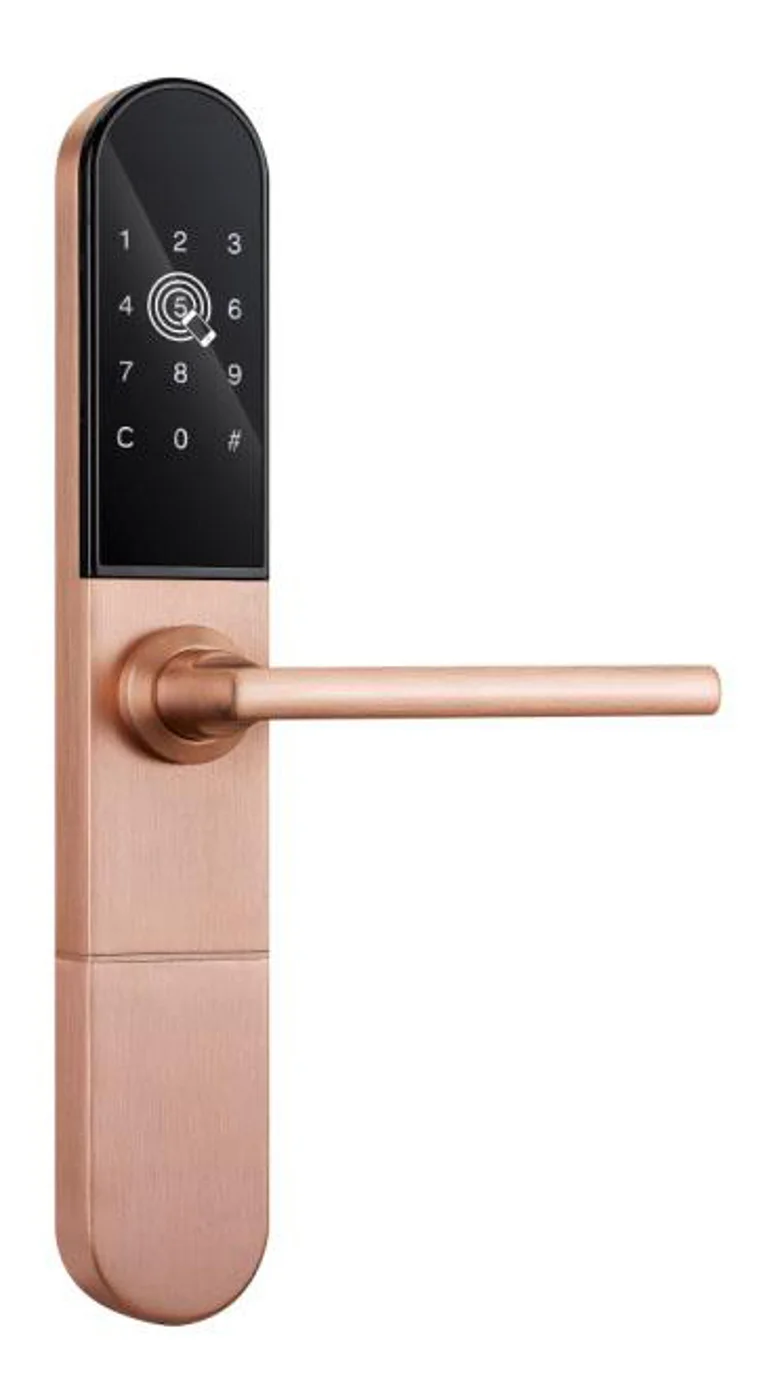
Smart Cabinet Lock — App-Managed, Multi-Site Dashboard
App-managed smart cabinet lock for office, parcel, and multi-site fleets. BLE app dashboard, audit trail, remote unlock, no per-lock server. Higher-tier chassis.
This page already points to it as the next recommended reference.
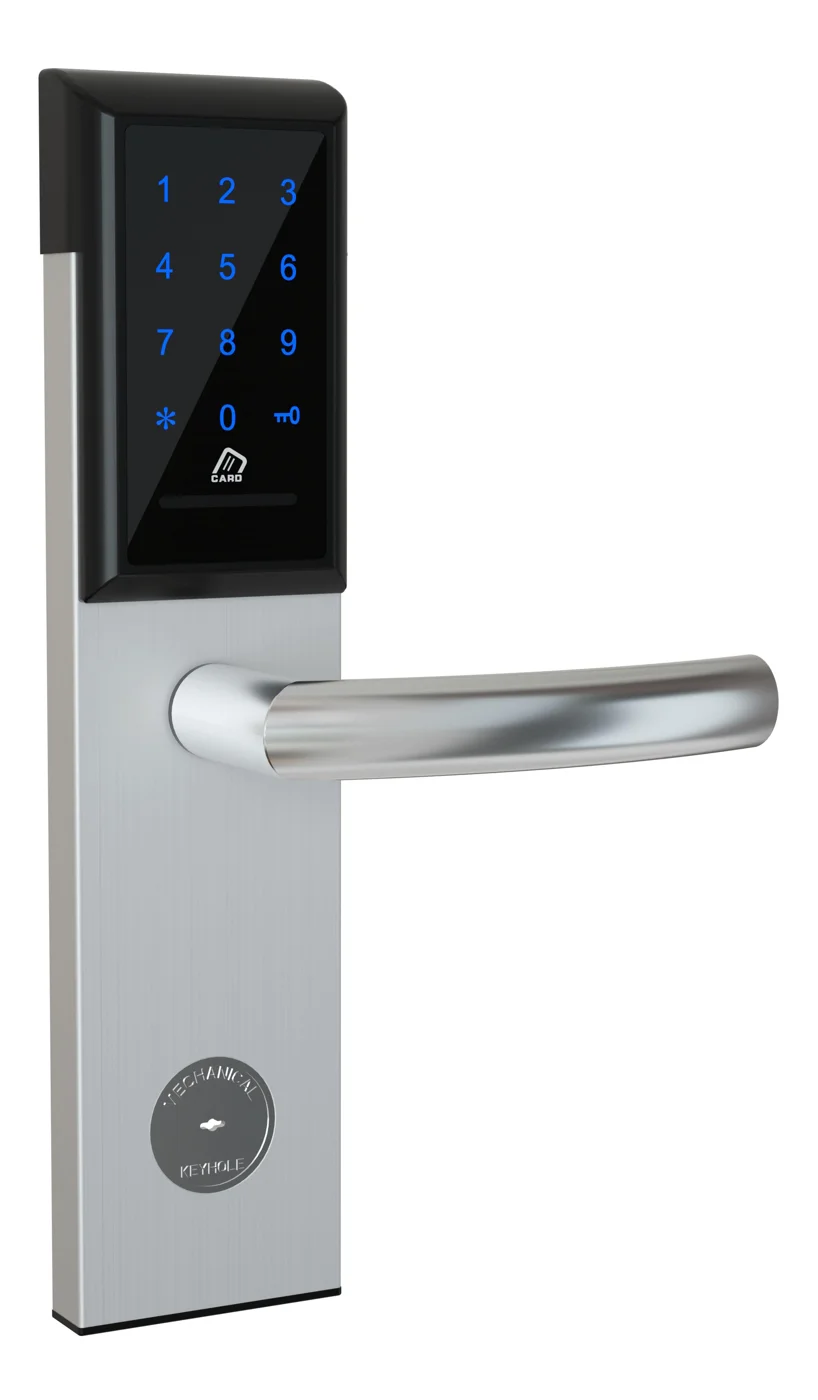
Office Cabinet Lock — PIN + Card for Filing & Pedestals
Offline PIN + card office cabinet lock for filing cabinets, pedestals, and drawers. Battery-powered 5-minute retrofit, no WiFi, no key management. CE/FCC/RoHS.
This page already points to it as the next recommended reference.
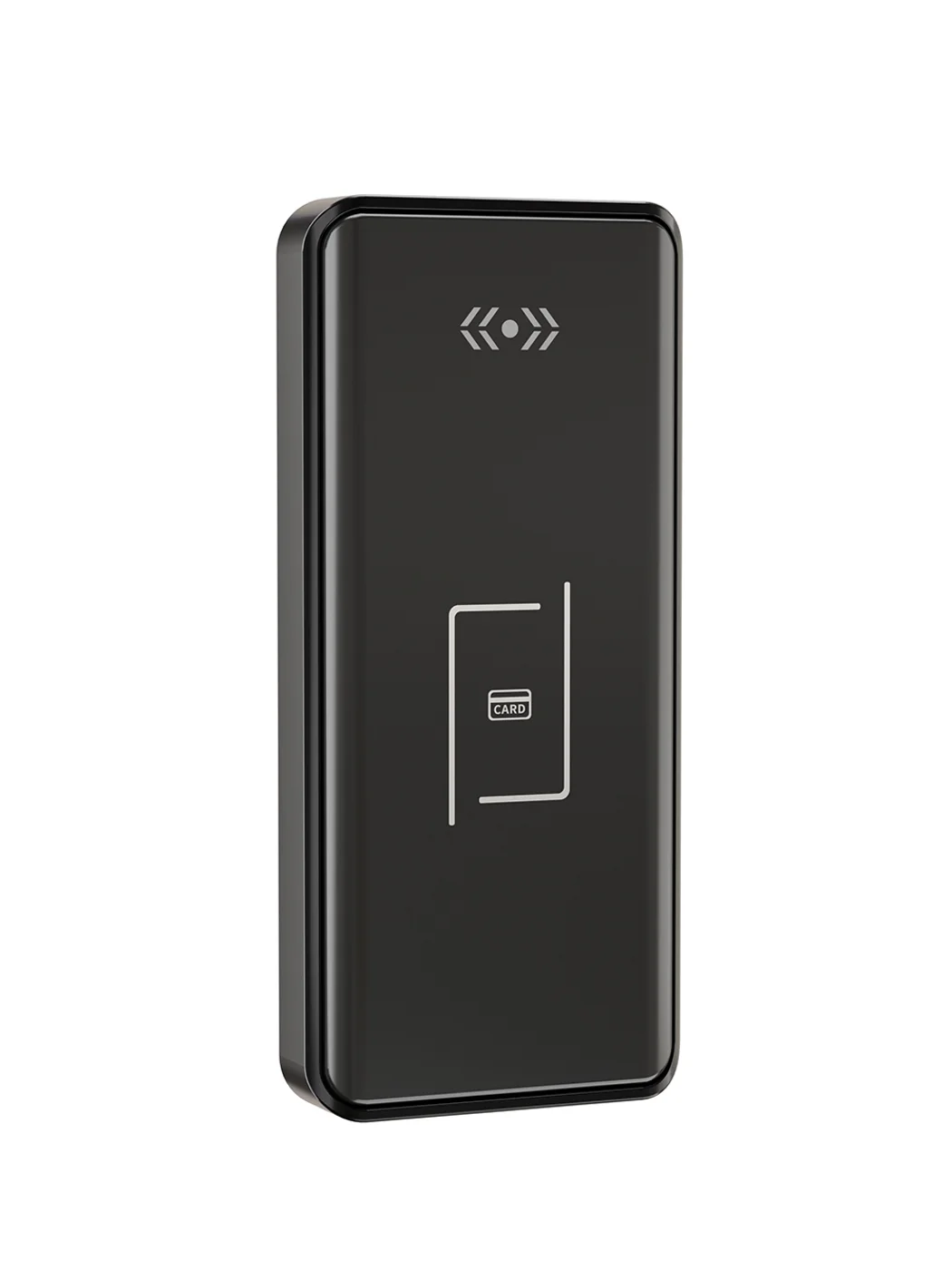
Gym Locker Lock — Offline Card, No WiFi Required
Offline card gym locker lock for fitness and pool lockers. MIFARE card, battery-powered 5-minute retrofit, no WiFi or server. Zinc alloy body, CE/FCC/RoHS.
This page already points to it as the next recommended reference.
Related blog posts
3
The Complete Guide to Emergency Cabinet Locks for AEDs, First Aid, Fire Extinguishers, and Trauma Kits
Learn everything about emergency cabinet locks: break-glass vs solenoid vs motorized latches, tamper alarms, remote alerts, ADA compliance, battery life, and deployment across schools, offices, gyms, transit, and aircraft.
It supports the same product context: Gym Locker Lock — Offline Card, No WiFi Required.
Employee Locker Lock Systems: The Definitive Guide for Workplace Security and Efficiency
A definitive guide to employee locker lock systems covering selection, installation, security, management software, compliance, and best practices for workplace locker security.
It supports the same product context: Smart Cabinet Lock — App-Managed, Multi-Site Dashboard, Office Cabinet Lock — PIN + Card for Filing & Pedestals, Gym Locker Lock — Offline Card, No WiFi Required.
Electronic Wardrobe Lock: The 2026 Guide to Smart Wardrobe Security
Explore electronic wardrobe lock technology with RFID, fingerprint, and app options for wardrobes, closets, and armoires in homes, hotels, offices, and gyms.
It supports the same product context: Gym Locker Lock — Offline Card, No WiFi Required.
Specify your hotel project with our engineers
Send your room count, ceiling type, and protocol preference. We will return a sample plan and quote within 24 business hours.
- Move from general guidance into a product or application discussion.
- Use RFQ when pricing, drawings, MOQ, or launch timing needs structure.
- Keep a direct contact path visible for fast clarifications and handoff.