Electronic Storage Lock: The 2026 Guide to Keyless Storage Security
Explore electronic storage lock technology covering RFID, biometric, and smart locks for self-storage, warehouses, cabinets, and personal storage with buying guides and use cases.
An electronic storage lock is a battery-powered or wired access-control device that secures storage units, cabinets, lockers, and containers using digital credentials—RFID cards, PIN codes, Bluetooth smartphones, or biometric data—rather than mechanical keys or combination dials. A typical electronic storage lock authenticates a credential in 0.3–1.0 seconds, actuates a motorized or solenoid latch drawing 80–250 mA, and logs the access event with a timestamp. Powered by 4×AA alkaline batteries (12–24 months) or wired 12 V DC, the electronic storage lock draws 15–40 µA in standby. It stores 10–20,000 authorized credentials in encrypted flash memory and records 1,000–10,000 audit events per lock. Deployed across self-storage facilities, warehouse cabinets, shipping containers, file rooms, and personal storage chests, the electronic storage lock eliminates physical key management, enables remote access control, and provides audit trails for compliance. The electronic storage lock reduces operational costs by 60–90 percent compared to keyed storage management by removing key distribution, recovery, and re-keying labor. The global electronic storage lock market, a subset of the $2.3 billion smart locker and storage lock sector, is expanding at an estimated 11–14 percent CAGR through 2032, driven by self-storage automation, retail loss prevention, and corporate asset-management compliance requirements.
What Is an Electronic Storage Lock and How Does It Work
An electronic storage lock is a digital access-control lock designed for storage applications—self-storage unit doors, warehouse cabinets, file rooms, shipping containers, and personal storage chests—that authenticates users by electronic credential and retracts a latch to grant access. The electronic storage lock's core components include a credential reader (RFID antenna at 13.56 MHz or 125 kHz, capacitive keypad, BLE 5.0 radio, or 500 DPI fingerprint sensor), an ARM Cortex-M0+ microcontroller at 48 MHz with 128–256 KB flash for credential and event storage, an actuator (motor or solenoid, 80–250 mA, 0.3–0.8 second unlock), a latch (steel, 12 mm throw), and a power source (4×AA alkaline or lithium thionyl chloride pack). When a user presents a credential, the electronic storage lock captures and validates it against a locally stored whitelist in 100–500 ms, energizes the actuator, and logs the event with a timestamp from a ±20 ppm real-time clock. The electronic storage lock reports events to a controller or cloud platform over RS-485, Wi-Fi, Zigbee, or LoRaWAN. Standby current of 15–40 µA enables 12–24 month battery life on AA cells. The electronic storage lock's distinguishing feature from a general electronic door lock is its optimization for storage-specific workflows: long-term assignment of storage compartments, integration with facility management software for tenant management, gate-access correlation, and payment-tracking integration in self-storage contexts.
Core Components of an Electronic Storage Lock
| Component | Function | Typical Specification |
|---|---|---|
| Credential reader | Capture RFID/PIN/fingerprint/BLE | 13.56 MHz / 500 DPI / BLE 5.0 |
| Microcontroller | Authenticate, actuate, log | ARM Cortex-M0+ at 48 MHz |
| Actuator | Retract latch | Motor 80–250 mA, 0.3–0.8 s |
| Latch | Secure storage door/container | Steel, 12 mm throw |
| Power | Standalone or battery | 4×AA 12–24 mo, or wired 12 V |
| Communication | Event and status reporting | RS-485, Wi-Fi, Zigbee, LoRaWAN |
| Event memory | Audit storage | 1,000–10,000 events |
The Authentication and Management Flow
The electronic storage lock operates on a credentials-provisioned-in-software model: an administrator enrolls tenants, employees, or authorized users via the management platform, assigning them storage compartments and access windows. When a user presents a credential at the storage unit, the electronic storage lock authenticates locally, unlocks, and logs the event. The log is transmitted to the platform, which updates the occupancy dashboard, checks for policy compliance, and gates payment status—an unpaid tenant's electronic storage lock can be set to deny access while preserving legal right-of-entry processes. Credentials can be revoked instantly from the platform, and the electronic storage lock blocks them on next authentication or via a push. This software-defined model gives the electronic storage lock operational capabilities—payment-status-based access, time-windowed access, zone-restricted access, and comprehensive audit—that mechanical storage locks cannot deliver.
Types of Electronic Storage Lock by Credential and Form Factor
An electronic storage lock is categorized by its credential technology and physical form factor, and the combination determines its suitability for specific storage environments. Credential types divide into RFID (13.56 MHz MIFARE DESFire EV3 for secure, clone-resistant cards, or 125 kHz EM4100 for legacy compatibility), PIN keypad (4–8 digit codes with scramble-pad options), biometric fingerprint (capacitive 500 DPI with liveness detection, FAR <0.001%), and Bluetooth smartphone (BLE 5.0 with encrypted rolling codes). Form factors include padlock-style electronic storage locks (self-contained, portable, shackled to a hasp), cam-lock electronic storage locks (replacing standard cam locks on cabinets and drawers), deadbolt electronic storage locks (for self-storage unit doors with a vertical or horizontal bolt throw of 15–25 mm), and hasp-cover electronic storage locks (enclosing and electrifying a standard padlock hasp for retrofit). RFID padlock-style electronic storage locks suit self-storage facilities where tenants already possess RFID access cards for gate entry. PIN keypad electronic storage locks suit public storage access where tenants set their own codes and no card issuance is required. Biometric electronic storage locks serve high-security storage—evidence rooms, pharmaceutical stock, data-center equipment cabinets—where non-repudiation is mandatory. Bluetooth electronic storage locks suit corporate storage rooms and file cabinets where employees use phones as credentials. The electronic storage lock's form factor must physically fit the door, cabinet, or container it secures, and the latch type (spring latch, deadbolt, shackle) must match the door's construction and security requirements.
Credential Technology Comparison
| Credential | Security | Convenience | Battery impact | Best storage fit |
|---|---|---|---|---|
| RFID (DESFire EV3) | High | Tap card/fob | Low | Self-storage, warehouse |
| PIN keypad | Medium | Memorize code | Low | Public storage, student lockers |
| Fingerprint | Very high | Touch sensor | Medium | Evidence, pharmacy, data center |
| BLE smartphone | High | Phone as key | Medium–high | Corporate, file rooms |
| EM4100 (legacy) | Low | Tap card | Low | Budget, low-security |
Form Factor Comparison
| Form factor | Mounting | Retrofit ease | Best fit |
|---|---|---|---|
| Padlock-style | Shackle to hasp | No installation needed | Self-storage, containers |
| Cam-lock | Replaces cam lock hole | 15–30 min retrofit | Cabinets, drawers |
| Deadbolt | Mounted in door edge | 30–60 min | Self-storage unit doors |
| Hasp-cover | Encloses existing hasp | 10–15 min | Retrofit self-storage |
Electronic Storage Lock vs Keyed and Combination Storage Locks
An electronic storage lock delivers superior security, auditability, and operational efficiency compared with keyed and combination storage locks across multi-tenant storage facilities, corporate storage rooms, and regulated storage environments. A keyed storage lock (padlock, cam lock, deadbolt) costs $5–20 but imposes $18–35 in key-management costs per lost key, can be picked or bumped in seconds, and provides no audit trail. A combination disc lock eliminates keys but is vulnerable to brute-force attacks (10,000 combinations at 4 digits) and decoding, with a 2023 study by the Lockpicking Bar showing 22 percent of common disc locks decodable within 30 seconds. An electronic storage lock at $30–120 per unit eliminates keyways and static combinations—there are no pins to pick or tumblers to decode—and its encrypted digital credentials resist practical cloning. The electronic storage lock adds central credential management: tenant onboarding and offboarding are software operations, not physical key exchanges. Time-windowed access restricts storage access to facility hours or tenant-contracted periods. The audit trail identifies who accessed which unit and when, supporting incident investigations and insurance claims. Integration with facility management software enables payment-status-based access control—a capability critical for self-storage operators. The electronic storage lock's drawbacks—battery dependency, higher unit cost—are offset within 12–24 months by reduced key management labor, fewer lock-replacement incidents, and lower staff time per tenant changeover.
Comparison Table
| Dimension | Keyed storage lock | Combination disc lock | Electronic storage lock |
|---|---|---|---|
| Unit cost | $5–20 | $8–25 | $30–120 |
| Credential | Physical key | Fixed combination | RFID / PIN / biometric / app |
| Pick/bump resistance | Very low | Bypass tools exist | No keyway, no pins |
| Brute-force resistance | N/A | 10,000 tries (4-digit) | Lockout after 3–5 failures |
| Audit trail | None | None | 1,000–10,000 events per lock |
| Credential management | Key distribution | Code distribution | Digital provisioning |
| Tenant changeover | Re-key ($35–75) | Change combination | Software operation (<1 s) |
| Battery/power | None | None | 4×AA 12–24 mo |
| Payment integration | Not possible | Not possible | API-enabled |
Applications of the Electronic Storage Lock Across Verticals
The electronic storage lock serves storage environments where credential management, audit trails, and access control at scale are operationally critical. In self-storage facilities, the electronic storage lock replaces padlocks on hundreds or thousands of units, integrating with the facility's gate-access and tenant-management software so a single RFID badge or smartphone app opens the gate, the building, and the tenant's storage unit. In corporate storage rooms, the electronic storage lock secures file rooms, archive cabinets, and IT equipment storage with employee-badge access and audit trails that satisfy data-protection regulations. In healthcare, the electronic storage lock secures medical-record storage rooms, pharmaceutical stockrooms, and linen and supply cabinets with audited access satisfying Joint Commission audit requirements. In warehouse and logistics, the electronic storage lock secures tool cribs, parts storage, and high-value inventory cages, with zone-based access restricting employees to authorized areas. In evidence rooms for law enforcement, the electronic storage lock provides biometric dual-credential access, an unbroken chain-of-custody audit, and tamper alerts. In educational storage—university archives, lab chemical storage, equipment rooms—the electronic storage lock enforces role-based access and time schedules. Across all applications, the electronic storage lock's platform is the force multiplier: one administrator manages credentials, schedules, and audits for an entire storage estate from a single dashboard.
Self-Storage Facilities
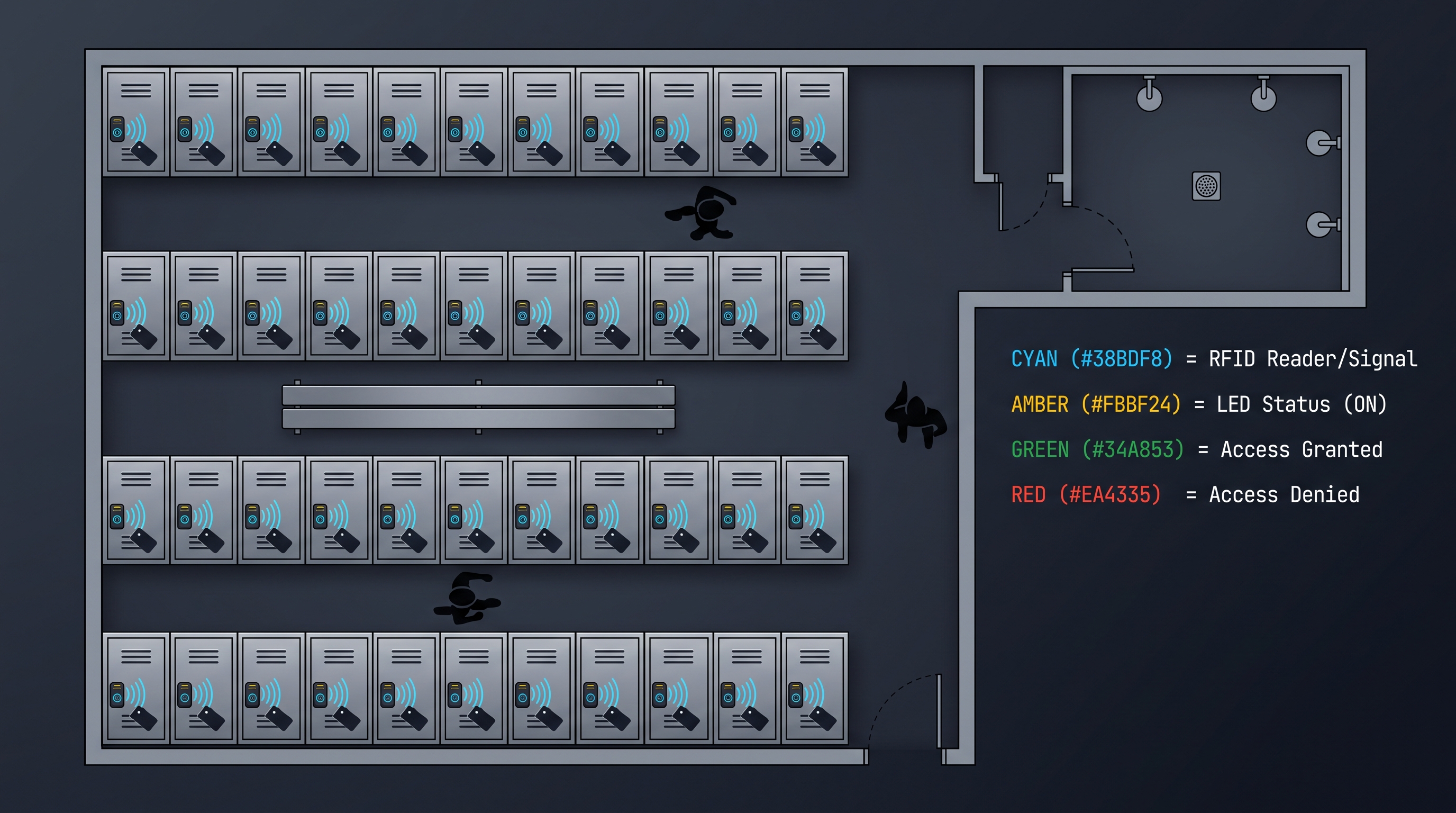
The self-storage electronic storage lock transforms tenant management from a physical exchange to a software workflow. A new tenant's RFID card or PIN is assigned via the facility software and loaded onto the assigned electronic storage lock within seconds. The same credential opens the gate and the unit. If payment becomes delinquent, the electronic storage lock denies access automatically—substituting revenue-protecting enforcement for the manual overlocking process. At move-out, credential revocation is instantaneous. The audit trail documents every access, supporting lien proceedings and insurance claims.
Corporate File and Equipment Storage
The corporate electronic storage lock secures file rooms, archive cabinets, and IT equipment storage with the same employee badges used for building access. Access is restricted by department, role, or project team via the management platform, and every file-room entry is logged for compliance with GDPR, HIPAA, or FINRA recordkeeping requirements. When an employee departs, all storage access is revoked in a single operation. The electronic storage lock's remote monitoring enables security to detect a file-room door left open and respond immediately.
Healthcare Record and Supply Storage
The healthcare electronic storage lock secures medical-record archives, pharmaceutical stockrooms, and supply cages. HIPAA requires that access to patient records be limited to authorized personnel; the electronic storage lock's audit trail attributes each archive-room entry to a badge, satisfying compliance audits. Pharmaceutical stockroom access uses biometric dual-credential mode for controlled substances, with the electronic storage lock's logs feeding inventory reconciliation and diversion investigation.
Warehouse and Logistics Tool Cribs
The warehouse electronic storage lock controls access to tool cribs, parts storage, and high-value inventory. Employees authenticate using their RFID badge, and the electronic storage lock restricts access to authorized zones. The audit trail supports inventory reconciliation by recording who accessed which storage area and when, narrowing the scope of shrinkage investigations. Time-scheduled access restricts crib access to operating shifts.
How to Choose the Right Electronic Storage Lock: Buying Criteria
Choosing an electronic storage lock requires evaluating seven dimensions against the storage environment's specific requirements: credential technology, form factor, connectivity, power, capacity, management software, and security certifications. The first dimension—credential type—must align with the facility's existing identity infrastructure: an RFID electronic storage lock for a self-storage facility with gate RFID, a PIN electronic storage lock for public-access storage, a biometric electronic storage lock for evidence and narcotics storage, or a BLE electronic storage lock for phone-first corporate environments. The second dimension—form factor—must physically fit the storage door: padlock-style for hasps, deadbolt for self-storage unit doors, cam-lock for cabinets. The third dimension—connectivity—determines management topology: RS-485 for reliable wired networks, Wi-Fi for wireless retrofit, LoRaWAN for outdoor and dispersed storage. The fourth dimension—power—dictates maintenance intervals: AA batteries for 12–24 months, lithium thionyl chloride for 5-year outdoor intervals, wired 12 V DC for permanent sites. The fifth dimension—capacity—must accommodate the number of authorized users (tenants, employees, departments): 100 for small deployment, 4,000–20,000 for large facilities. The sixth dimension—management software—must provide credential provisioning, access schedules, audit export, payment-status integration, and identity-provider integration. The seventh dimension—security—requires AES-128 encrypted credential storage, TLS 1.3 transport, tamper sensors, lockout policies, and OTA firmware updates. An electronic storage lock should also carry relevant certifications: FCC/CE/RoHS, IP54+ for outdoor units, and for applicable environments, UL 1034 or equivalent. Vendor viability—years in market, references, support SLAs, and spare-parts availability—completes the evaluation. A pilot of 10–20 units is recommended before large-scale deployment.
Selection Decision Matrix
| Storage environment | Recommended credential | Recommended form factor | Recommended connectivity |
|---|---|---|---|
| Self-storage facility | RFID integrated with gate | Deadbolt or padlock | RS-485 or LoRaWAN |
| Corporate file room | RFID badge or BLE | Deadbolt or cam-lock | Wi-Fi or RS-485 |
| Evidence room | Fingerprint + PIN (dual) | Deadbolt | Wi-Fi |
| Pharmacy stockroom | Fingerprint | Deadbolt or cam-lock | Wi-Fi |
| Warehouse tool crib | RFID badge | Padlock or deadbolt | RS-485 |
| Outdoor container | RFID or PIN | Padlock | LoRaWAN or battery |
Management Software Requirements
The electronic storage lock platform should provide tenant and user management, group and zone-based access policies, time-window and payment-status-based access enforcement, audit log export (CSV, Syslog), identity-provider integration (LDAP, SCIM), fleet health dashboards (battery, connectivity, occupancy), remote lock/unlock, and staged OTA firmware updates. For self-storage facilities, the platform must integrate with gate-access and tenant-management software (e.g., SiteLink, storEDGE, Yardi) via API. A sandbox API environment accelerates integration development.
Installation and Onboarding for the Electronic Storage Lock
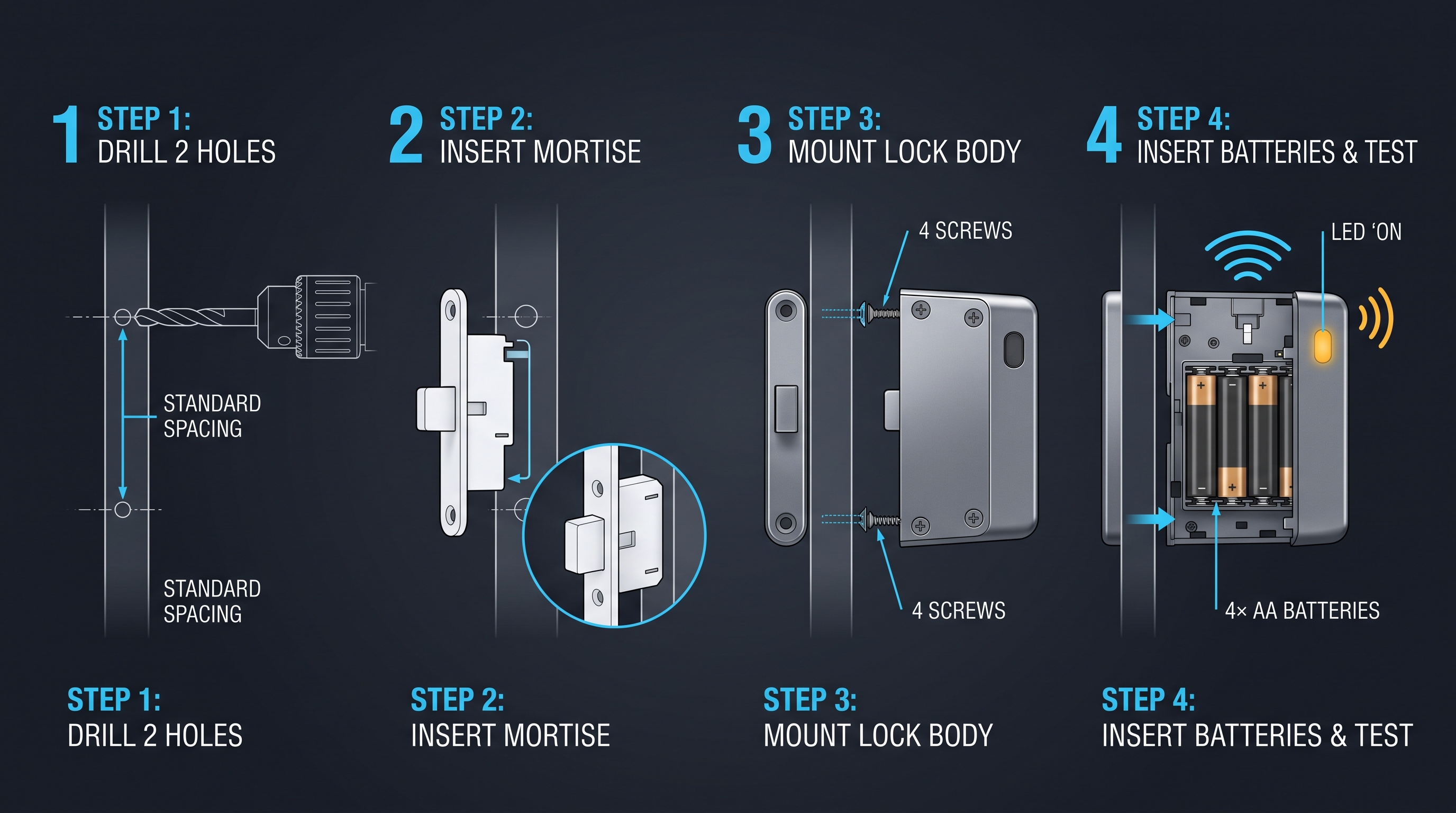
Installing an electronic storage lock across a storage facility follows a phased methodology tailored to the lock's form factor and the facility's door construction. Padlock-style electronic storage locks require no installation—they latch onto an existing hasp staple. Deadbolt electronic storage locks replace existing deadbolts or lock cylinders in self-storage unit doors, requiring measurement of the backset (60–70 mm standard), faceplate dimensions, and door thickness (1.2–2.0 mm steel). Installation takes 30–60 minutes per door: remove the old lock, install the electronic storage lock body, route cables through the door, and secure the exterior reader. Cam-lock electronic storage locks for cabinets retrofit into the existing 16–20 mm cam-lock hole in 15–30 minutes. For networked systems, RS-485 cabling or Wi-Fi coverage must reach every storage door. After physical installation, each electronic storage lock is commissioned: lock ID assignment, controller registration, credential enrollment, optional network pairing, and real-time clock synchronization to NTP. The management platform maps locks to storage units, tenants to locks, and access schedules to both. A 50-cycle credential test per lock verifies reliability before tenant use. Staff and tenant training completes the deployment, with a phased rollout preferred—staff first, then a pilot floor, then fleet-wide.
Installation Phases (100-Unit Self-Storage Facility)
| Phase | Duration | Activities |
|---|---|---|
| Pre-audit | 1 day | Measure doors, gauge network coverage |
| Network pre-wire | 1–2 days | RS-485 trunk or Wi-Fi survey |
| Lock installation | 2–3 days | 30–40 locks/day, test every 10 |
| Commissioning | 1 day | ID, registration, credentials |
| Platform setup | 1 day | Tenant mapping, schedules, gate integration |
| Load test | 0.5 day | 50-cycle credential test per lock |
| Staff/tenant training | 2 days | Credential use, troubleshooting |
Power Management and Battery Life for the Electronic Storage Lock
The electronic storage lock's power budget defines its maintenance interval, and selecting the right power strategy for the environment prevents operational failures. A well-engineered electronic storage lock with a capacitive reader draws 15–40 µA in standby and 80–250 mA during the 0.3–0.8 second unlock. On four AA alkaline cells (3,000 mAh at 1.5 V), the standby current alone consumes 263–700 mAh per year, leaving approximately 2,300–2,700 mAh for unlock cycles. At 25 daily unlocks consuming 0.02 mAh each, annual unlock energy is roughly 183 mAh, placing total annual consumption at 450–900 mAh and yielding a battery life of 3–6 years for the AA pack in light-use scenarios. Real-world deployments in active self-storage facilities (10–20 daily unlocks) see 18–36 month battery life on AA alkaline. The electronic storage lock reports battery voltage to the platform, with a low-battery alert at 2.6 V per cell providing 4–8 weeks of declining operation. For outdoor or hard-to-service electronic storage locks, lithium thionyl chloride packs rated at 13,000–19,000 mAh extend service intervals to 5–7 years. Wired 12 V DC eliminates battery changes entirely but requires conduit to each door. Dead-battery recovery uses external DC power terminals (6–9 V) on the lock face, a concealed mechanical override key, or remote unlock on networked models. A proactive replacement policy—annual swap for AA in indoor high-traffic, 4-year swap for lithium outdoor—eliminates in-service failures.
Power Budget Breakdown
| State | Current | Duration per event | Energy per event |
|---|---|---|---|
| Standby | 15–40 µA | Continuous | 263–700 mAh / year |
| Credential capture | 3–8 mA | 50–200 ms | 0.00004–0.00044 mAh |
| Matching (MCU) | 5–15 mA | 100–500 ms | 0.00014–0.0021 mAh |
| Actuation (motor) | 80–250 mA | 0.3–0.8 s | 0.0067–0.056 mAh |
| LED + buzzer | 10–20 mA | 1–3 s | 0.0028–0.017 mAh |
Security for the Electronic Storage Lock: A Layered Approach
The electronic storage lock's security architecture combines credential cryptography, physical hardening, network security, and platform protection into a layered defense. Credential security depends on type: MIFARE DESFire EV3 with AES-128 mutual authentication defeats cloning attacks; fingerprint templates are stored AES-128 encrypted and bound to a hardware unique key (HUK); PINs are hashed with a configurable retry limit (3–5 attempts) followed by lockout (60–180 seconds). Physical security centers on a hardened steel latch with 12–25 mm throw (deadbolt models), recessed mounting preventing wrench attacks, tamper switches that log and alarm on forced entry, and all fasteners accessible only from inside the storage unit. Network security requires TLS 1.3 for Wi-Fi or cloud communication and AES-CCM encryption for Zigbee and LoRaWAN payloads. Platform security requires MFA for administrators, role-based access control, admin-action audit logging, and a documented vulnerability-management and patch process. Firmware updates must be delivered OTA and applied in staged rollouts (10 percent pilot, then fleet-wide) to reduce regression risk. Non-repudiation is a critical value of the electronic storage lock for evidence rooms and pharmaceutical storage: the credential is attributed to a specific person, not a key that can be loaned or copied, and the audit trail is admissible in chain-of-custody proceedings. A procurement security review should verify the vendor's encryption standards, update cadence, and penetration-test history.
Security Layer Checklist
| Layer | Requirement |
|---|---|
| Physical | Hardened steel latch, tamper switch, interior fasteners |
| RFID credential | MIFARE DESFire EV3, AES-128 mutual auth |
| Biometric | Template AES-128, liveness detection |
| PIN | Hashed, lockout after 3–5 failures |
| Network | TLS 1.3 (Wi-Fi), AES-CCM (Zigbee/LoRaWAN) |
| Platform | MFA, RBAC, admin audit, SIEM integration |
| Firmware | OTA updates, staged rollout, CVE SLA |
Top Electronic Storage Lock Brands and Models in 2026
The electronic storage lock market is served by access-control vendors, self-storage specialists, and general smart-lock manufacturers. In self-storage, Nokego, PTI Security Systems, and QuikStor lead with electronic storage lock solutions integrated into self-storage management platforms (SiteLink, storEDGE), offering RFID padlocks and deadbolt electronic storage locks that reuse gate-access credentials. Janus International, the dominant supplier of self-storage doors and building components, includes electronic storage lock integration in its Nokego smart-entry product line. In corporate and healthcare, Salto Systems and Dormakaba provide electronic storage lock solutions within their unified access-control ecosystems. Forware and Abloy offer hardened electronic storage locks for high-security storage—government archives, evidence rooms, and weapons storage—with anti-drill plates and biometric dual-credential modes. Chinese manufacturers—ZKTeco, Make Technology, and Vanma—supply cost-competitive electronic storage locks for self-storage, warehouse, and retail storage at 30–50 percent below Western pricing. The electronic storage lock buyer should evaluate vendor viability through existing installations in the same vertical, reference calls, and the vendor's software roadmap, because the lock's value is realized through integration with facility management and payment systems.
Brand Model Comparison
| Brand | Flagship | Credential | Form factor | Price tier | Best fit |
|---|---|---|---|---|---|
| Nokego (Janus) | Smart Entry Lock | RFID, app | Deadbolt | Mid–high | Self-storage |
| PTI Security | StorGuard Lock | RFID | Deadbolt, padlock | High | Self-storage, gate integrated |
| Salto | XS4 Storage | RFID | Deadbolt, cam-lock | Premium | Corporate, healthcare |
| Dormakaba | Cattron Storage | RFID, app | Deadbolt | Premium | Corporate, university |
| Forware | High-Security Lock | RFID, fingerprint | Deadbolt | Premium | Government, evidence |
| ZKTeco | Storage Lock | RFID, fingerprint | Padlock, deadbolt | Budget | Budget self-storage |
Maintenance and Fleet Management for the Electronic Storage Lock
An electronic storage lock fleet's operational reliability over its 7–10 year service life depends on proactive maintenance driven by the telemetry the locks generate, not on calendar-based schedules. The management platform monitors battery voltage, connectivity status, door state, and tamper events across all locks. Battery replacement should be scheduled when voltage drops below 2.8 V (pre-warning) rather than waiting for the 2.6 V critical alert; this converts urgent reactive dispatch into planned maintenance. Batching locks by controller or building zone reduces technician travel. Credential hygiene requires deleting departed tenants' and employees' credentials fleet-wide immediately via the platform. Mechanical inspection, performed annually, checks latch engagement, door alignment, and screw torque (2–3 Nm); misaligned storage doors cause false-lock failures and accelerated battery drain from repeated actuation attempts. Reader surfaces require quarterly cleaning with 70 percent isopropyl alcohol on a lint-free wipe—fingerprint sensors, keypads, and RFID reader faces accumulate skin oil, dust, and moisture that degrade read reliability. Firmware updates are applied in staged rollouts—pilot on 10 percent, soak for 2 weeks, fleet-wide—to ensure a regression does not affect all tenant units simultaneously. Common faults: rapid battery drain (check for door misalignment causing repeated re-lock attempts, or a Wi-Fi lock with poor RSSI causing constant reconnection); credential rejected intermittently (clean reader, re-enroll); latch not retracting despite valid credential (inspect for binding, actuator failure, or debris); phantom tamper alerts (environmental vibration—adjust sensitivity or replace switch). A documented runbook and a small stock of spare electronic storage lock units reduce mean-time-to-repair from hours to under an hour.
Maintenance Schedule
| Interval | Task | Tooling |
|---|---|---|
| Monthly | Review battery and health dashboard | Management platform |
| Quarterly | Clean credential readers | Dry cloth, 70% IPA |
| Annually | Mechanical inspection | Visual, pull test |
| Annually (AA) | Replace batteries proactively | 4×AA alkaline |
| Per tenant/staff change | Revoke credentials fleet-wide | Platform propagation |
| Quarterly | Apply staged firmware updates | OTA, 10% pilot |
Future Trends in Electronic Storage Lock Technology
The electronic storage lock is evolving toward API-driven management, AI-optimized operations, energy independence, and integration into broader IoT and smart-building platforms. The self-storage industry's move to unmanned facilities—operating with no full-time staff—depends on the electronic storage lock as the tenant-management interface, with the lock responding to online rental, payment, and move-out commands from a cloud platform that also manages gate access, unit lighting, and surveillance. AI-driven predictive maintenance will forecast battery exhaustion and actuator wear from voltage curves and unlock frequency telemetry, scheduling service before failure. AI-based anomaly detection will flag unusual access patterns—a unit accessed at 3 a.m. by a tenant who normally visits at noon, or a spike in denied attempts indicating a probing attack—triggering security review. Energy harvesting—kinetic from door motion, photovoltaic from overhead lighting, RF from ambient signals—will extend battery life toward batteryless operation for low-traffic storage units. Digital-twin integration will feed electronic storage lock occupancy and access data into facility analytics for space allocation, pricing optimization, and energy management. Matter standardization, expected to encompass storage locks by 2027, will bring the electronic storage lock into residential smart-home ecosystems, enabling homeowners to manage garage storage cabinets and shed locks through Apple Home or Google Home. The electronic storage lock of 2030 will be a software-defined, cloud-connected, self-powered access endpoint, embedded into storage furniture and building systems from the factory.
Frequently Asked Questions About the Electronic Storage Lock
The electronic storage lock raises recurring questions from self-storage operators, facility managers, and IT teams about functionality, reliability, and security. This FAQ addresses the most common electronic storage lock inquiries with technical specificity.
How much does an electronic storage lock cost per door?
An electronic storage lock costs $30–120 per lock for hardware, plus $10–30 per door for controllers and installation in a networked deployment. Premium biometric deadbolt models range $150–250 per door. Annual cloud platform fees of $2–5 per lock cover management software, credential provisioning, and audit storage.
What happens to an electronic storage lock during a power or network outage?
The electronic storage lock authenticates credentials against a locally cached whitelist (up to 20,000 IDs), so unlock functionality continues during network outages. Events buffer in non-volatile memory (1,000–10,000) and upload on reconnection. Battery operation means power outages do not affect the lock. Remote features require connectivity.
Can a tenant's access be turned off for non-payment?
Yes. The electronic storage lock's management platform integrates with payment systems or receives delinquency status via API. When a tenant's payment is overdue, the platform sends a deny command to their assigned electronic storage lock. Tenant access resumes automatically when payment is processed. This replaces the manual overlocking process and maintains legal access provisions.
How does the electronic storage lock integrate with gate access?
The electronic storage lock management platform integrates with self-storage gate controllers and tenant-management software (SiteLink, storEDGE, Yardi) via API. A single RFID card or smartphone credential opens the gate, the building door, and the tenant's assigned storage unit. The platform synchronizes tenant status, credential mapping, and access policies across all subsystems.
Is the electronic storage lock weather-resistant for outdoor units?
An outdoor-rated electronic storage lock carries IP54 or higher ingress protection, uses corrosion-resistant stainless steel hardware, and operates on lithium thionyl chloride batteries rated for -20 to +60 °C. LoRaWAN connectivity eliminates outdoor cabling.
Can an electronic storage lock be installed on existing storage unit doors?
Yes. Deadbolt electronic storage locks replace the existing lock cylinder in standard 60–70 mm backset doors. Padlock-style electronic storage locks require no installation—they latch onto an existing hasp staple. Cam-lock electronic storage locks retrofit into the existing 16–20 mm cam-lock hole in cabinets. The electronic storage lock is designed for retrofit installation on standard storage hardware.
How does an electronic storage lock handle tamper events?
The electronic storage lock's tamper switch detects prying, drilling, or forced removal and triggers an immediate response. On a networked model, the electronic storage lock transmits a tamper alert to the management platform, which alarms the dashboard and notifies security. The event is logged with timestamp, lock ID, and credential context for forensic review. On standalone models, the electronic storage lock may illuminate an alarm LED, sound a buzzer, or enter a lockout state. Tamper events are differentiated from credential denials in the audit log, allowing administrators to distinguish attempted break-ins from forgotten codes. For high-security storage (evidence, pharmaceuticals), the electronic storage lock's tamper alert may also trigger a camera snapshot or a security dispatch through integration with the facility's security operations center.
What is the warranty on an electronic storage lock?
Most commercial electronic storage lock manufacturers offer a 2–5 year warranty covering manufacturing defects, actuator failure, and electronic component failure under normal use. The warranty typically excludes battery depletion, damage from forced entry or vandalism, water damage (for indoor-rated units exposed to moisture), and unauthorized modifications. A premium electronic storage lock may carry a 5–7 year extended warranty. Facility buyers should evaluate warranty terms alongside the vendor's stated spare-parts availability commitment—typically 7–10 years from product discontinuation—and ensure that service contracts include defined response-time SLAs for critical storage applications.
Can an electronic storage lock support multi-site management?
Yes. A cloud-connected electronic storage lock platform manages locks across multiple facilities from a single dashboard. Each electronic storage lock reports to the cloud via the site's network, and the platform aggregates events, battery status, and occupancy across all locations. Multi-site self-storage operators use this capability to manage tenant access uniformly across 5–100+ properties, with central credential provisioning and consolidated audit reporting. The electronic storage lock platform's role-based access control enables regional managers to administer their sites while corporate security retains fleet-wide visibility. API integrations with corporate property management and accounting systems automate tenant access status based on payment records across all sites.
What environmental factors affect electronic storage lock performance?
The electronic storage lock's reliability depends on environmental conditions. Temperature: lithium thionyl chloride batteries operate from -20 to +60 °C; alkaline AA cells degrade below -10 °C. Outdoor electronic storage locks require IP54+ sealing and stainless steel hardware to resist corrosion from rain, salt, and humidity. Dust and debris accumulate on reader surfaces, degrading RFID read reliability and fingerprint sensor accuracy—clean quarterly with isopropyl alcohol. Moisture condensation on electronics can short circuits; the electronic storage lock's gasketed enclosure must be intact. RF interference from nearby radios (cellular towers, industrial equipment) can disrupt Wi-Fi and Zigbee communication; a site survey validates signal integrity. For warehouse and industrial deployments, the electronic storage lock should specify an operating temperature range and ingress protection appropriate to the environment.
Conclusion: Unlocking Storage Efficiency with an Electronic Storage Lock
The electronic storage lock transforms storage security from a labor-intensive, key-dependent operation into a software-managed service, and the decision framework in this guide equips facilities to select and deploy the right electronic storage lock for their storage estate. For self-storage operators, an RFID electronic storage lock with gate integration reduces tenant changeover to a software operation and protects against unpaid access. For corporate storage rooms, a BLE or RFID electronic storage lock with identity-provider integration secures files and equipment while enforcing role-based access. For healthcare evidence and pharmacy storage, a biometric dual-credential electronic storage lock provides non-repudiation and compliance-grade audit trails. The electronic storage lock pays back its investment within 12–24 months through labor savings, reduced lock replacement, and improved tenant and staff experience. As AI-driven management, energy harvesting, and digital-twin integration advance, the electronic storage lock will become standard equipment in new storage construction, and early adopters of a standards-based, API-rich electronic storage lock platform will compound their operational advantages.
Not sure which sensor fits your project?
Talk to our mmWave application engineers for a free consultation.
Find the right presence sensor for your hotel project
Compare the 3 protocols, check hotel-specific case studies, and download the installation guide
Related products
3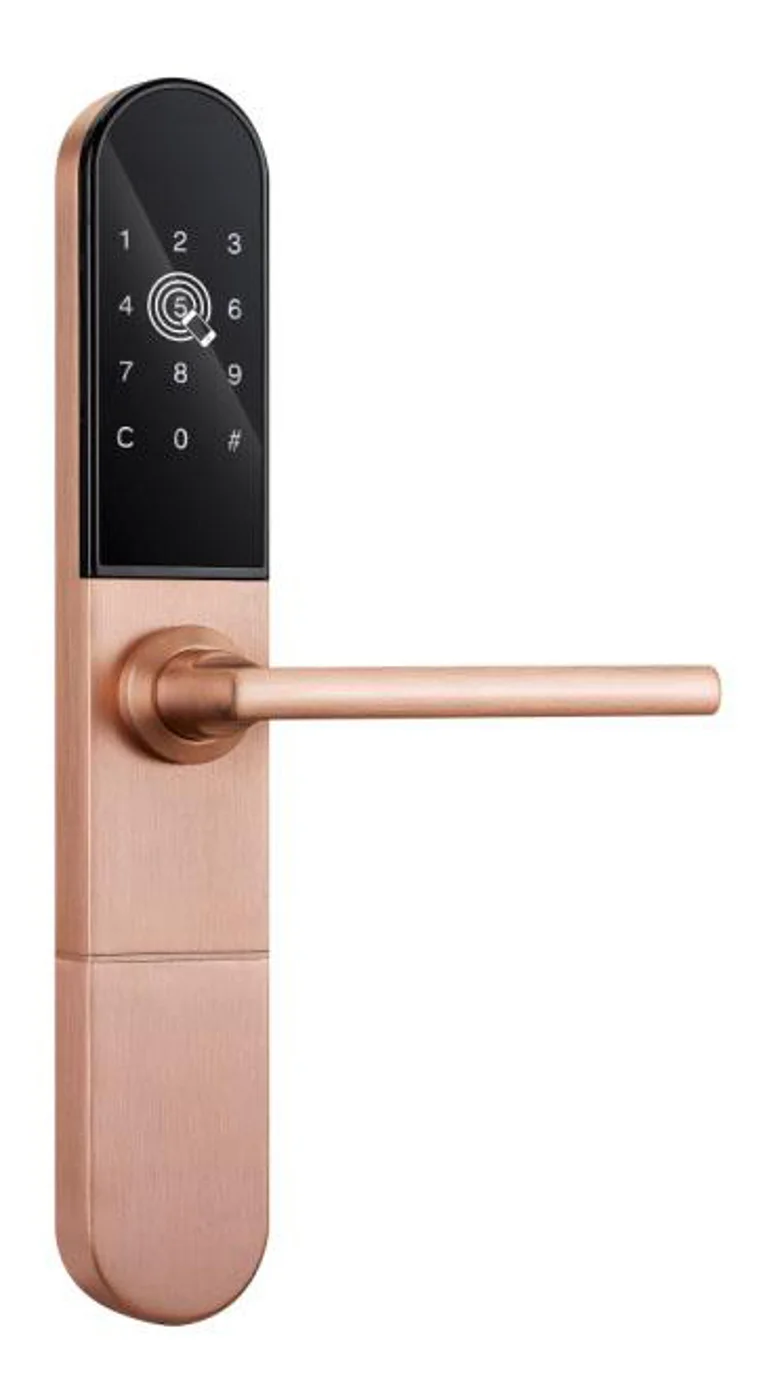
Smart Cabinet Lock — App-Managed, Multi-Site Dashboard
App-managed smart cabinet lock for office, parcel, and multi-site fleets. BLE app dashboard, audit trail, remote unlock, no per-lock server. Higher-tier chassis.
This page already points to it as the next recommended reference.
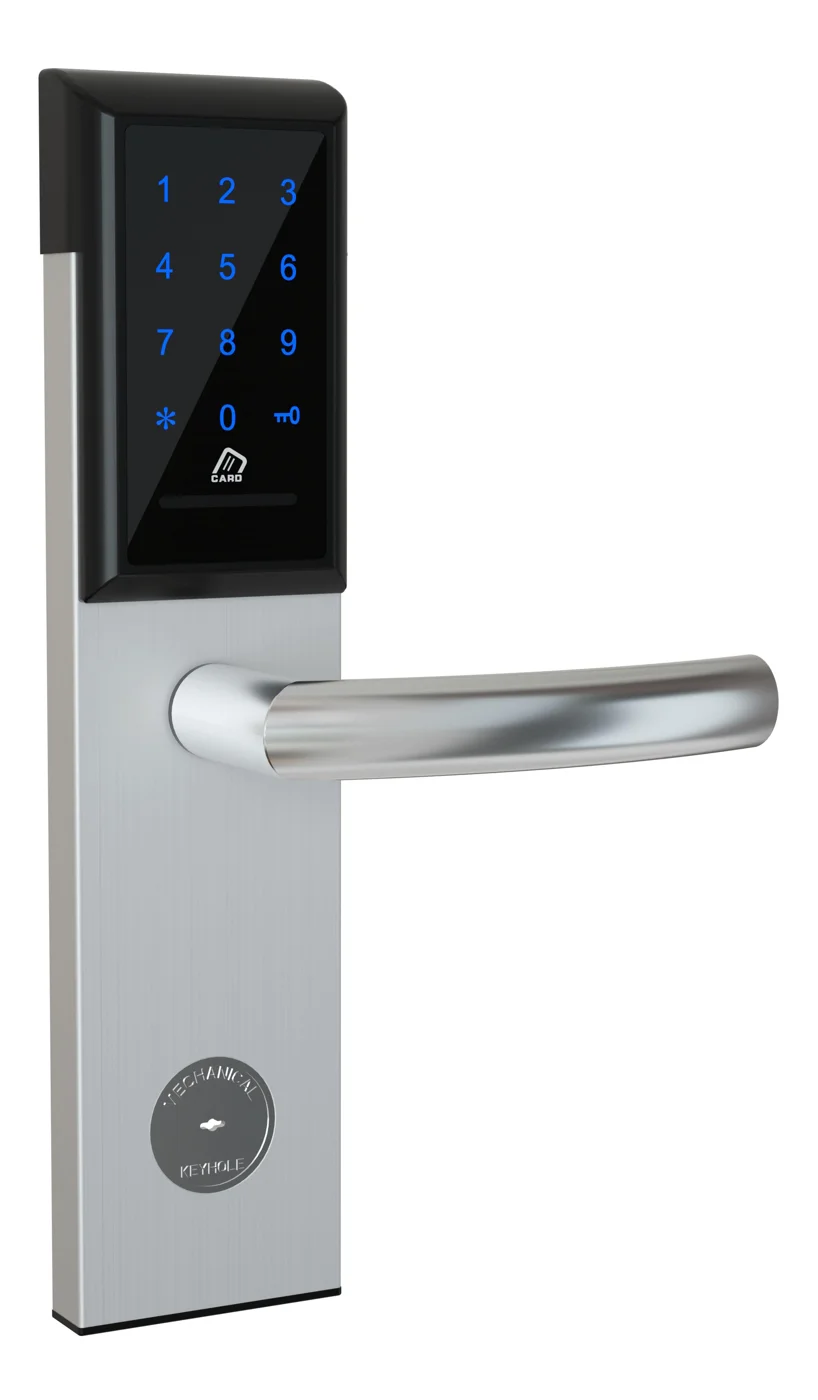
Office Cabinet Lock — PIN + Card for Filing & Pedestals
Offline PIN + card office cabinet lock for filing cabinets, pedestals, and drawers. Battery-powered 5-minute retrofit, no WiFi, no key management. CE/FCC/RoHS.
This page already points to it as the next recommended reference.
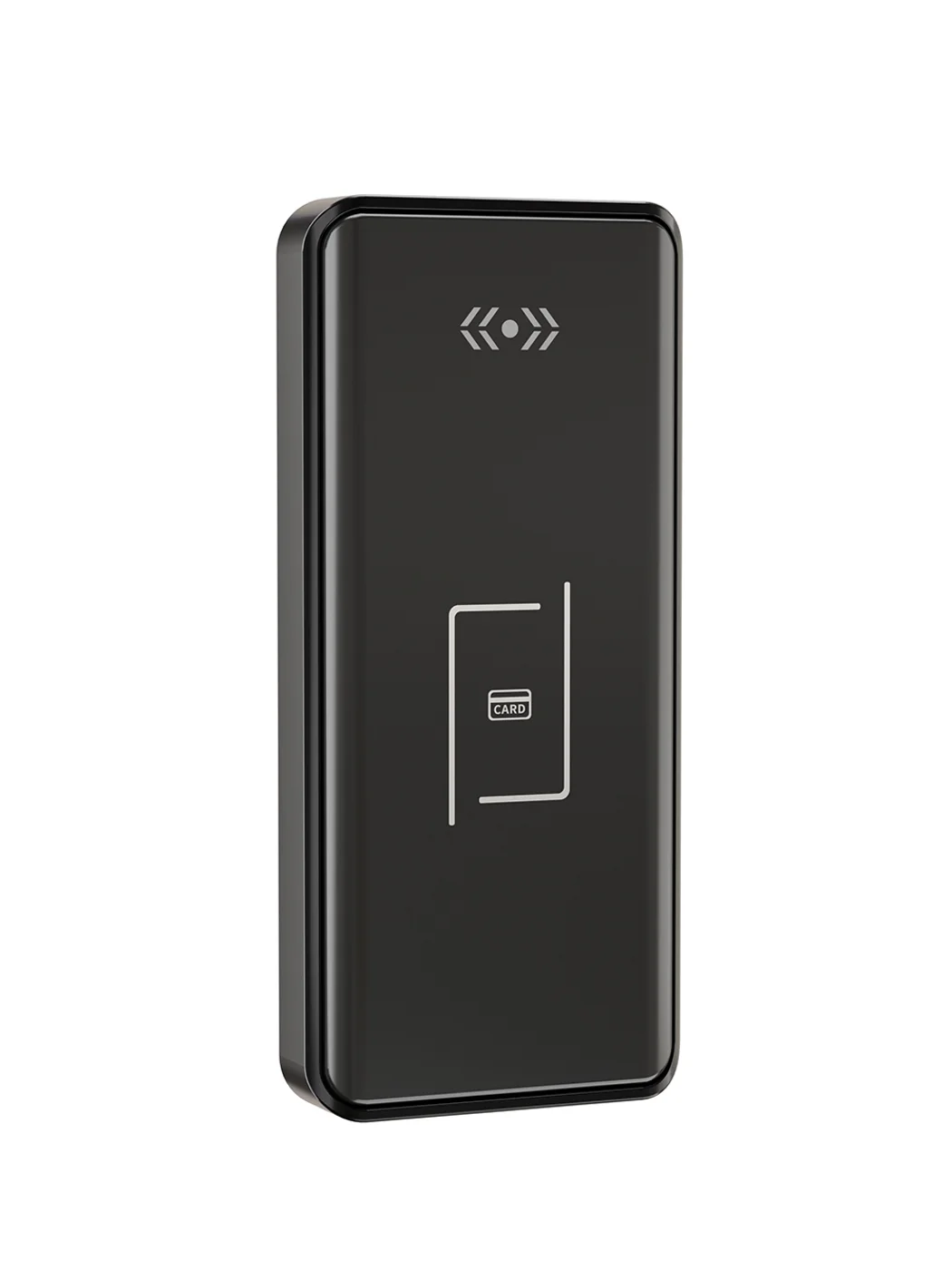
Gym Locker Lock — Offline Card, No WiFi Required
Offline card gym locker lock for fitness and pool lockers. MIFARE card, battery-powered 5-minute retrofit, no WiFi or server. Zinc alloy body, CE/FCC/RoHS.
This page already points to it as the next recommended reference.
Related blog posts
3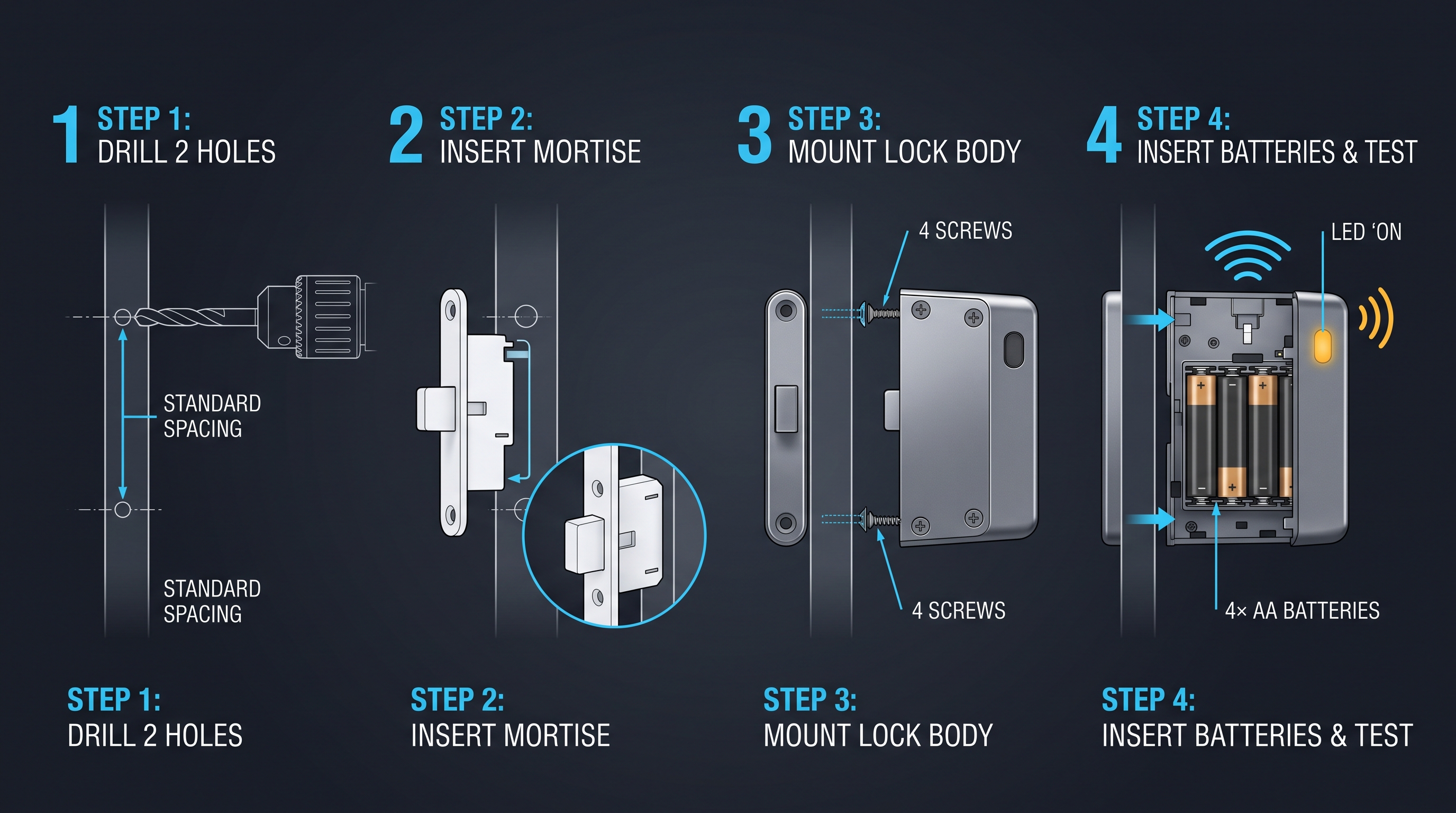
EMS Cabinet Lock: DEA-Compliant Drug Security for Paramedic Vehicles
EMS cabinet lock guide covering DEA Schedule II compliance, dual-authentication, tamper-evidence, audit trail, vehicle power, and ePCR integration for ambulance fleets.
It supports the same product context: Smart Cabinet Lock — App-Managed, Multi-Site Dashboard, Office Cabinet Lock — PIN + Card for Filing & Pedestals, Gym Locker Lock — Offline Card, No WiFi Required.
The Complete Guide to Emergency Cabinet Locks for AEDs, First Aid, Fire Extinguishers, and Trauma Kits
Learn everything about emergency cabinet locks: break-glass vs solenoid vs motorized latches, tamper alarms, remote alerts, ADA compliance, battery life, and deployment across schools, offices, gyms, transit, and aircraft.
It supports the same product context: Gym Locker Lock — Offline Card, No WiFi Required.
Employee Locker Lock Systems: The Definitive Guide for Workplace Security and Efficiency
A definitive guide to employee locker lock systems covering selection, installation, security, management software, compliance, and best practices for workplace locker security.
It supports the same product context: Smart Cabinet Lock — App-Managed, Multi-Site Dashboard, Office Cabinet Lock — PIN + Card for Filing & Pedestals, Gym Locker Lock — Offline Card, No WiFi Required.
Specify your hotel project with our engineers
Send your room count, ceiling type, and protocol preference. We will return a sample plan and quote within 24 business hours.
- Move from general guidance into a product or application discussion.
- Use RFQ when pricing, drawings, MOQ, or launch timing needs structure.
- Keep a direct contact path visible for fast clarifications and handoff.