Electronic Locker System: The Definitive 2026 Deployment and Technology Guide
A comprehensive guide to electronic locker systems covering architecture, credential types, network topologies, and deployment across gyms, offices, and campuses.
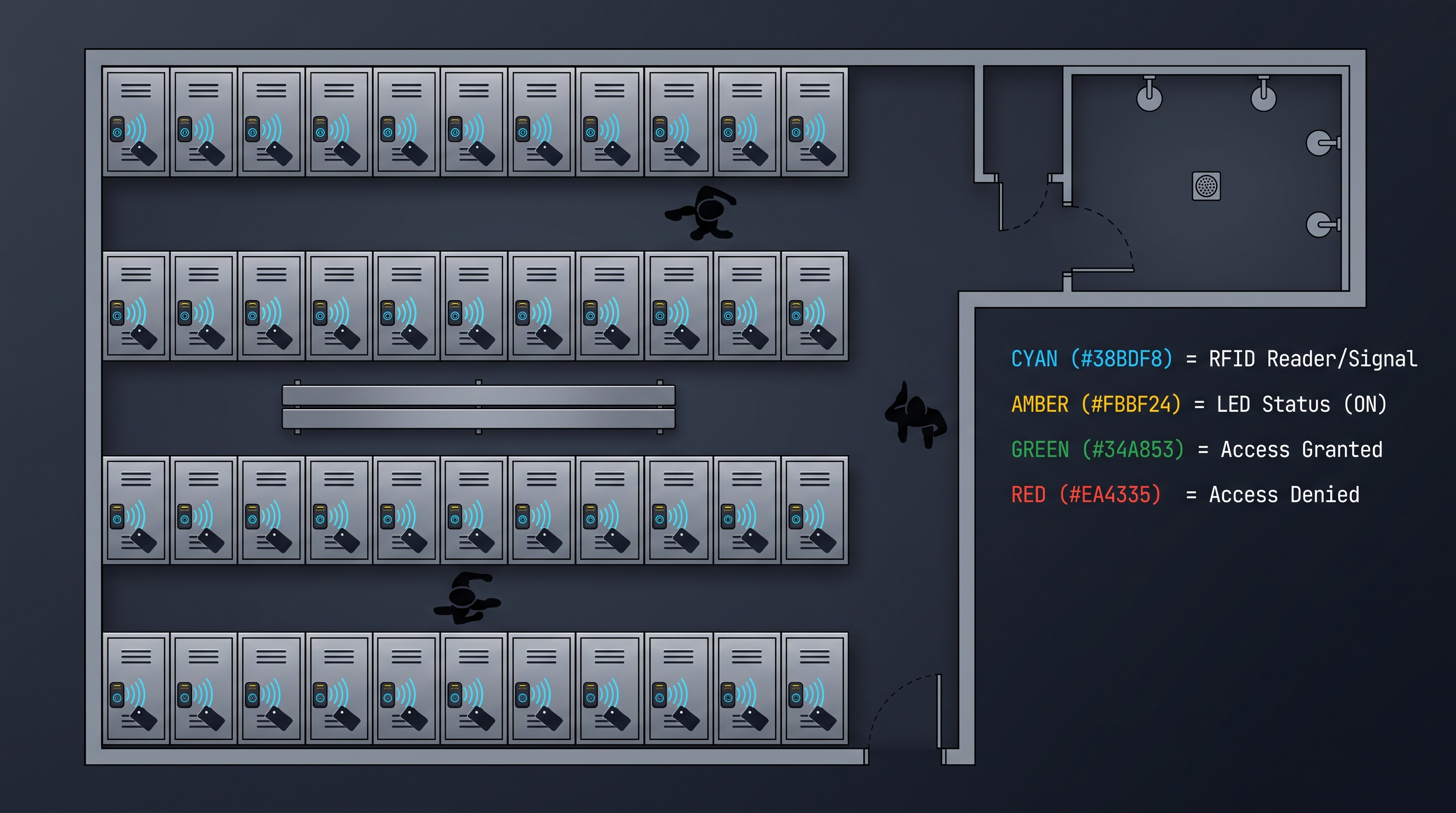
An electronic locker system is a networked or standalone access-control infrastructure that secures multiple locker compartments using digital credentials—RFID cards, PIN codes, Bluetooth smartphones, or biometric fingerprints—managed through centralized software. A typical electronic locker system comprises 50–5,000 locker door locks, one or more controllers each addressing 128–256 doors via RS-485 at 9,600–115,200 bps, a server running locker management software, and optionally a cloud gateway for multi-site administration. The electronic locker system replaces padlocks and mechanical key cabinets with an architecture that enables remote credential provisioning, real-time occupancy status, time-scheduled access windows, battery-health monitoring, and audit trails of up to 10,000 events per lock with timestamps accurate to ±20 ppm. Deployed in gym chains, corporate offices, universities, hospitals, transit hubs, and parcel logistics, an electronic locker system reduces operational labor by 60–90 percent compared to mechanical locker management. The global electronic locker system market was estimated at $2.1 billion in 2025 and is projected to grow at a 12.4 percent CAGR through 2032, driven by hybrid-work hot-desking, smart-parcel adoption, and health-regulation demand for touchless access.
What Is an Electronic Locker System and How Does It Work
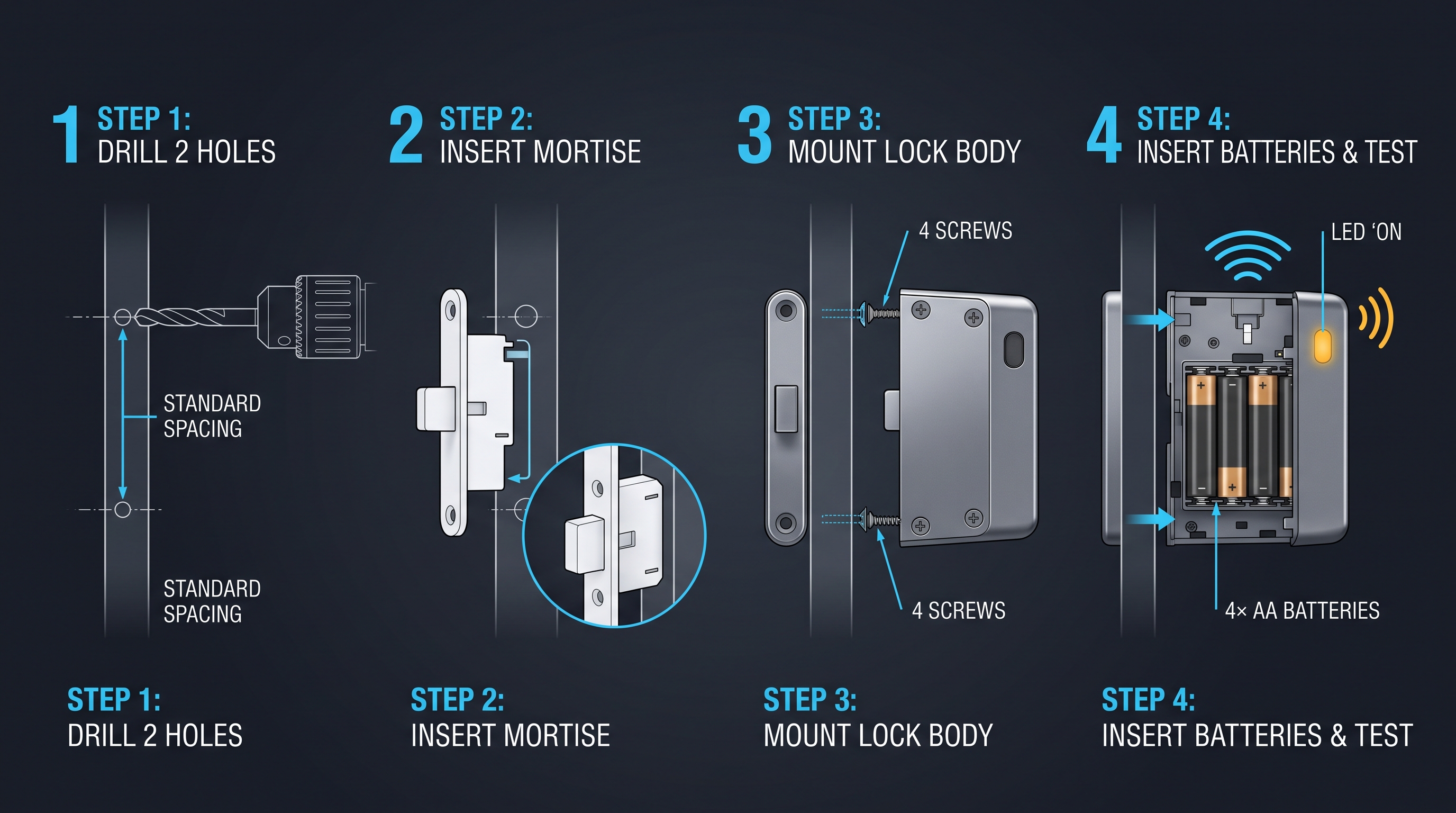
An electronic locker system is a multi-door access control solution where each locker door is fitted with a credential-authenticating lock that communicates to a central controller or directly to a cloud platform for credential management, occupancy tracking, and event logging. The electronic locker system's architecture follows a three-tier model: the edge tier (the lock itself—RFID reader, keypad, BLE radio, or biometric sensor with an onboard microcontroller at 48 MHz and 256 KB flash), the control tier (a gateway controller managing 128–256 locks via RS-485 or Wi-Fi mesh, buffering events and bridging to the LAN), and the application tier (on-premise or cloud software handling credential provisioning, access schedules, occupancy dashboards, and audit-export functions). Each electronic locker system lock draws 15–40 µA in standby and 80–250 mA during the 0.3–0.8-second unlock actuation, powered by 4×AA alkaline cells delivering 12–24 months or 3.6 V lithium thionyl chloride packs for 5-year intervals. The controller polls each lock at a configurable interval (1–60 seconds) for status, battery voltage, and tamper events, aggregating this telemetry for dashboard reporting and alerting. Unlike a collection of standalone padlocks, an electronic locker system operates as a unified fabric: an administrator revokes a single credential and every lock in the electronic locker system simultaneously blocks that credential within seconds, a capability that mechanical locking fundamentally lacks.
Core Architecture of an Electronic Locker System
The electronic locker system's three-tier architecture separates concerns cleanly. The edge locks handle credential capture and latch actuation. The control tier handles communication aggregation, time synchronization, and local credential caching. The application tier handles identity integration, policy management, and analytics.
| Tier | Component | Function |
|---|---|---|
| Edge | Lock unit (reader, MCU, actuator) | Credential capture, latch control, event logging |
| Control | Gateway controller (per 128–256 locks) | RS-485 polling, credential cache, LAN bridge |
| Application | Management software (server/cloud) | Identity sync, scheduling, dashboards, audit export |
| Power | Battery or wired 12 V DC | Sustains edge and control tiers |
| Network | RS-485, Wi-Fi, Ethernet, LoRaWAN | Tier-to-tier communication |
The System Communication Flow
When a user presents a credential to any lock in the electronic locker system, the lock's microcontroller compares the credential against its locally cached whitelist (up to 20,000 IDs, synchronized from the controller during provisioning) and actuates the latch on match within 0.3–0.8 seconds. Simultaneously, the lock transmits the event—credential ID, timestamp, action (unlock/lock/deny), and lock status—to the controller via RS-485 or Wi-Fi. The controller logs the event and forwards it to the management server. The server updates the dashboard, checks for policy violations, and triggers alerts. This flow completes in under 2 seconds end-to-end, ensuring the user experiences a seamless unlock while the electronic locker system captures a complete audit record.
Types of Electronic Locker System by Credential Technology
An electronic locker system is defined not only by its network topology but primarily by the credential technology it authenticates, and the choice shapes every aspect of deployment, cost, user behavior, and security posture. The electronic locker system market segments into five credential tracks: RFID-based systems operating at 13.56 MHz (MIFARE DESFire/Classic, NTAG) or 125 kHz (EM4100), PIN-keypad systems using capacitive or membrane touchpads supporting 4–8 digit codes, Bluetooth Low Energy 5.0 systems where smartphones serve as the credential with proximity unlock at 1–2 meter range, biometric systems using 500 DPI capacitive fingerprint sensors with FRR below 1 percent and FAR below 0.001 percent, and multi-factor hybrid systems combining two or more of the above. RFID electronic locker systems command roughly 45 percent market share due to their balance of speed, cost, and card-reuse with existing building-access badges. PIN electronic locker systems hold 25 percent, favored where tokenless simplicity matters. BLE smartphone electronic locker systems are fastest-growing at 20 percent, driven by corporate hot-desking and user preference for phone-as-key. Biometric electronic locker systems at 10 percent serve high-security niches—pharmacies, evidence rooms, executive suites. The electronic locker system buyer in 2026 must select a credential type and ensure the system's management software integrates with the facility's identity provider to automate credential lifecycle management.
RFID-Based Electronic Locker System
An RFID electronic locker system enables a user to tap a pre-issued card, fob, or wristband on the lock's reader to unlock within 0.5 seconds. MIFARE DESFire EV3 employs AES-128 mutual authentication with 112-bit effective key strength, making card cloning computationally infeasible in practice. The electronic locker system's management software imports card IDs from the facility's access-control platform, maps them to locker access policies, and pushes the whitelist to controllers. RFID excels where users already carry RFID badges—corporate offices, universities, hospital staff—because the locker credential is a secondary use of an existing token.
PIN-Keypad Electronic Locker System
A PIN electronic locker system requires no physical token, reducing logistics to zero. The user sets a 4–8 digit PIN on first use or is assigned one; the electronic locker system stores the PIN hashed in non-volatile memory. Consumer-grade PIN locks hold 100–300 user PINs; commercial PIN systems scale to 4,000+ per door. Scramble-pad overlays randomize digit positions to defeat shoulder-surfing, and one-time PINs issued via SMS or app eliminate replay attacks. PIN systems suit schools, public gyms with high user turnover, and any venue where issuing and managing physical tokens is operationally undesirable.
Bluetooth Smartphone Electronic Locker System
The BLE electronic locker system leverages the smartphone's ubiquity, using the BLE 5.0 radio with encrypted rolling-code communication. Three unlock modes are standard: tap-to-open (user proactively taps phone to the lock), proximity auto-unlock (the electronic locker system unlocks the door when the authenticated phone is within 1–2 meters), and remote unlock via the facility app or web dashboard. BLE locks consume 30–60 µA standby, reducing battery life to 10–14 months versus 12–24 for RFID. The BLE electronic locker system integrates with MDM (Mobile Device Management) platforms so corporate IT can push locker-access credentials to employee phones automatically.
Biometric Electronic Locker System
A biometric electronic locker system stores 100–3,000 fingerprint templates per lock, enrolling users in 3–5 presses with template-matching latency under 500 ms. Capacitive sensors incorporate liveness detection—conductivity measurement distinguishing live skin from silicone replicas—at a FAR of 0.0001–0.001 percent. Biometric electronic locker systems are mandated in DEA-regulated pharmaceutical storage and preferred in forensic-evidence lockers, executive suites, and other environments where credential non-repudiation and non-transferability are paramount.
Multi-Factor and Hybrid Electronic Locker System
A multi-factor electronic locker system requires two or more credentials—typically RFID badge plus PIN, or fingerprint plus PIN—before unlocking. Dual-credential mode satisfies compliance mandates for controlled substances and high-value storage. Hybrid electronic locker systems also offer fallback credentials: biometric primary, PIN secondary for the periodic finger-injury case. The electronic locker system's management software configures authentication policies per door, per time window, and per user group, enabling a granular security posture unachievable with single-factor locks.
Network Topologies for the Electronic Locker System
The electronic locker system's network topology determines scalability, installation cost, power consumption, and real-time visibility. Three dominant topologies serve different deployment scales: wired RS-485 bus networks supporting 128–256 locks per controller with up to 1,200-meter cable runs, Wi-Fi mesh topologies where each lock connects directly to the facility's WLAN with coverage requirements of -65 dBm or better at each locker door, and LPWAN topologies (LoRaWAN, NB-IoT, LTE-M) for outdoor or geographically dispersed locker fleets where running cable is impractical. The RS-485 electronic locker system is the workhorse topology, using 4-conductor shielded twisted-pair wire (2 data, 2 power) daisy-chained between locks with 120-ohm termination resistors at each bus end. Wi-Fi electronic locker systems eliminate cabling entirely but require power at each door—either battery or wired 12 V—and consume 2–4 times the standby current of RS-485 models due to the Wi-Fi radio. LoRaWAN electronic locker systems suit outdoor parcel lockers, transit station lockers, and campus-scale deployments, operating at 868/915 MHz with 10–15 km range and 1–5 percent duty cycle, reporting battery and status every 60–300 seconds rather than continuously. The electronic locker system architect must choose a topology and validate that the facility's radio or cable environment supports the required reliability of 99.5 percent uptime or better, since a lock that cannot report its state is an operational blind spot.
RS-485 Wired Bus Topology
| Parameter | Specification |
|---|---|
| Lock per controller | 128–256 |
| Cable type | 4-conductor shielded twisted pair |
| Max cable run | 1,200 m |
| Data rate | 9,600–115,200 bps |
| Termination | 120 ohm at each bus end |
| Power delivery | 12–24 V DC on 2 conductors |
| Poll interval | 1–60 s per lock, configurable |
| Reliability advantage | Immune to RF interference, no battery drain from radio |
The RS-485 electronic locker system polls each lock sequentially, reading battery voltage, lock state, and the last event's user ID and timestamp. The controller buffers events in volatile RAM with battery-backed EEPROM backup, reporting to the management server via Ethernet or Wi-Fi. The wired nature yields the lowest standby power and highest polling frequency of any electronic locker system topology.
Wi-Fi Mesh Topology
The Wi-Fi electronic locker system uses 2.4 GHz Wi-Fi 4 or dual-band chipsets with WPA3-Enterprise security. Each lock joins the facility's SSID, requiring -65 dBm RSSI at the locker location—validated by a site survey before deployment. The Wi-Fi electronic locker system reports events directly to the cloud or on-premise server without an intermediate controller, simplifying architecture at the cost of higher per-lock power consumption and the need for rigorous RF coverage planning.
LoRaWAN and LPWAN Topologies
The LoRaWAN electronic locker system operates at 868 MHz (EU) or 915 MHz (US), using spreading factors 7–12 to trade data rate (0.3–50 kbps) for range (1–15 km). A single LoRaWAN gateway covers a 10–15 km radius in rural areas and 1–3 km in urban canyons, managing thousands of electronic locker system locks. The duty-cycle limitation (1 percent in EU, unlimited in US 915 MHz) constrains report frequency to every 60–600 seconds, which is sufficient for battery and occupancy monitoring but not for real-time dashboarding. The LoRaWAN electronic locker system excels for outdoor parcel lockers, campus bike lockers, and beach-resort lockers where running any cable is prohibitive.
Electronic Locker System vs Standalone Locks: The Integration Advantage
An electronic locker system fundamentally outperforms a fleet of standalone electronic locks by unifying management, credential lifecycle, monitoring, and audit into a single pane of glass. A standalone electronic lock requires a technician to visit each door for credential programming, battery check, and clock synchronization—tasks that consume 15–30 minutes per lock per service cycle. An electronic locker system performs all three tasks centrally: the management server pushes credential whitelists to all locks simultaneously, polls battery voltage every 60 seconds, and synchronizes real-time clocks automatically. At a 500-locker gym, the electronic locker system saves 125–250 labor hours per service cycle compared to standalone programming. The electronic locker system also enables capabilities unavailable to standalone locks: group-based access policies where a trainer's credential opens only gym floor lockers, time-scheduled access limiting locker use to facility hours, real-time occupancy maps displayed on a lobby kiosk or app, and instant credential revocation across the entire fleet. Security-wise, the electronic locker system's aggregated audit trail detects patterns invisible at the single-lock level—credential use at impossible travel speeds, an unusual burst of denied attempts across multiple doors indicating a coordinated probe, or a lock whose battery drains faster than its cohort signaling a hardware fault. The electronic locker system transforms locker management from a physical-security domain into an IT-managed service with the monitoring, automation, and analytics that modern facility operations require.
Capability Comparison
| Capability | Standalone electronic locks | Electronic locker system |
|---|---|---|
| Credential programming | Per-door, USB/NFC | Central push, all doors |
| Battery monitoring | Manual, per-door | Automated 60 s polling, alerts |
| Time sync | Manual, per-door | Automatic, NTP-referenced |
| Credential revocation | Per-door | Instant, fleet-wide |
| Group-based access | Not supported | Per-user, per-group, per-schedule |
| Occupancy dashboard | Not supported | Real-time lobby display, API |
| Audit aggregation | Per-door, manual export | Central, SIEM-integrated |
| Multi-site management | Separate per site | Single cloud dashboard |
| Firmware updates | Per-door, USB | OTA, staged rollout |
ROI Analysis for a 500-Locker Deployment
A 500-locker gym deploying an electronic locker system spends $25,000–40,000 on hardware (500 locks at $50–80 each) plus $5,000–10,000 on controllers, cabling, and installation, totaling $30,000–50,000 upfront. Annual savings include $18,000–25,000 in staff labor (eliminated key/combination management), $3,000–5,000 in lost-key replacement costs, and $2,000–4,000 in reduced member-service calls. The electronic locker system pays back its investment in 18–24 months and delivers net savings of $50,000–100,000 over a 7-year lifecycle.
Deployment Scenarios for the Electronic Locker System
An electronic locker system adapts its architecture to the operational rhythms of each vertical market, and successful deployments follow industry-specific patterns that maximize ROI. In fitness chains, the electronic locker system integrates with membership-management software so the membership RFID card doubles as the locker credential, and day-use lockers auto-release at end-of-day with occupancy data feeding housekeeping workflows. In corporate hot-desking offices, the electronic locker system connects to desk-booking software and the identity provider (Okta, Azure AD), dynamically assigning lockers to employees for the day and revoking access at checkout. University electronic locker systems tie to the campus card and library reservation systems, enabling students to book study lockers and research carrels semester-long or hourly. Hospital electronic locker systems bridge to the staff-badge system and pharmacy inventory software, with dual-credential biometric access for controlled-substance cabinets satisfying DEA chain-of-custody requirements. Transit and parcel electronic locker systems operate at massive scale—10,000+ doors per deployment—using barcode/QR credentials generated at kiosks, with the electronic locker system feeding pickup notifications via SMS and email to recipients. Across all verticals, the electronic locker system's core value is the software layer that makes locker access a programmatic, auditable service rather than a physical process requiring human intervention.
Gym and Fitness Chain Deployment
The electronic locker system in a fitness chain addresses four pain points: locker-front labor, membership-card management, lost-key replacement, and after-hours theft investigation. The electronic locker system's management software imports credentials from the membership database, authorizing members to use any available day-use locker with their membership RFID card. Occupancy feeds to a lobby kiosk showing available lockers, reducing member frustration. A nightly auto-release clears overnight occupants, enabling housekeeping. The audit trail accelerates theft investigations by narrowing the suspect pool.
Corporate Hot-Desking Office Deployment
In a hybrid-work office with 1,000 employees and 300 desks, the electronic locker system provides the anchor personal-storage solution for itinerant workers. Employees book a locker via the same app used to reserve a desk; the electronic locker system assigns a locker number and pushes the employee's mobile credential to that lock for the booked duration. At end-of-day, the locker auto-releases, and the electronic locker system logs the vacancy for next-day assignment. Integration with the identity provider means departing employees' locker access terminates the instant their corporate account is deactivated.
University and Library Deployment
A university electronic locker system spans academic buildings, libraries, and recreation centers, unified under the campus card credential. In libraries, the electronic locker system integrates with the reservation platform to assign study carrels. In science buildings, it secures lab equipment lockers with per-course access schedules. In recreation centers, it provides day-use gym lockers. The unified electronic locker system gives campus security a single audit dashboard spanning all locker activity.
Hospital and Healthcare Deployment
The hospital electronic locker system segments into three security tiers: staff personal lockers (RFID with the existing badge), equipment and supply lockers (PIN or BLE for nursing-station access), and controlled-substance cabinets (biometric with dual-credential mode). Every access to a controlled-substance cabinet is logged with user identity, timestamp, door, and credential type, satisfying the Joint Commission and DEA audit requirements. The electronic locker system's tamper alerts notify security immediately.
Transit Hub and Parcel Logistic Deployment
The transit electronic locker system operates at extreme scale: 5,000–10,000 doors per station, 200–400 transactions per hour during peak periods, 24/7 operation with no staff present. Users pay at a kiosk or app, receive a one-time barcode or QR credential, and the electronic locker system opens the assigned door. The barcode credential expires after pickup or after a configurable time window (24–72 hours). The electronic locker system's API integrations with e-commerce platforms (Amazon Hub, Shopify, carrier APIs) automate the assignment, notification, and pickup lifecycle entirely.
Electronic Locker System Buying Guide: Evaluation Criteria
Selecting an electronic locker system for a facility with 200–10,000 lockers requires evaluating the system across ten dimensions, weighted by the facility's operational priorities. The first dimension is credential compatibility: can the electronic locker system use the facility's existing RFID badges, smartphone apps, or biometric systems, or does it require issuing separate locker-only tokens? The second is capacity and scalability: the electronic locker system must scale from today's locker count to projected expansion (plus 20–30 percent headroom) without a forklift controller upgrade. The third is network topology and infrastructure: RS-485 cabling may be feasible in new construction but prohibitive in retrofit; Wi-Fi mesh shifts the install burden to RF site survey and coverage engineering. The fourth is power architecture: battery versus wired 12 V DC, with rechargeable lithium packs emerging as a third option. The fifth is management software functionality: cloud vs on-premise, identity-provider integrations, dashboard granularity, API availability, and mobile admin app. The sixth is security certification: MIFARE DESFire EV3 for RFID, WPA3-Enterprise for Wi-Fi, IP54 or higher for outdoor installations, and UL 1034 for North American life-safety compliance. The seventh is vendor viability: years in market, installed base references, firmware update cadence, and spare-parts availability commitment of 7–10 years. The eighth is total cost of ownership: hardware, installation, software licensing, ongoing battery and maintenance labor, and replacement cycle costs. The ninth is installation and support: the electronic locker system vendor's installer certification program, training depth, and support SLAs. The tenth is future-readiness: the electronic locker system's migration path to Matter, support for emerging credential types, and cloud architecture that receives feature updates without hardware swaps. A weighted scorecard across these ten dimensions produces a vendor shortlist matched to the facility's specific priorities.
Evaluation Scorecard
| Criterion | Weight | Key questions |
|---|---|---|
| Credential compatibility | High | Reuses existing badges/apps? |
| Capacity and scalability | High | Max locks per controller, expansion path? |
| Network topology | High | New cabling vs Wi-Fi retrofit? |
| Power architecture | Medium | Battery life, wired option, rechargeable? |
| Management software | High | Cloud/on-prem, IdP integration, API? |
| Security certification | High | DESFire EV3, WPA3, IP54, UL 1034? |
| Vendor viability | Medium | Market tenure, support, firmware cadence? |
| Total cost of ownership | High | 5-year TCO per door including labor? |
| Installation and support | Medium | Certified installers, training, SLA? |
| Future-readiness | Medium | Matter roadmap, OTA, emerging credentials? |
Installation and Commissioning Best Practices for the Electronic Locker System
Deploying an electronic locker system across hundreds of doors demands a phased, test-validated installation methodology because a failed lock in production is visible to every user. The electronic locker system installation process begins with a pre-deployment audit: measuring every door's thickness (0.8–2.0 mm for steel, 18–25 mm for wood), latch engagement distance, door gap, and interior cavity dimensions, and documenting these in a spreadsheet mapped to locker IDs. The second phase is the network pre-wire: for RS-485 electronic locker systems, running 4-conductor shielded cable along locker banks, homerun or daisy-chain, with 120-ohm terminators, and validating continuity with a time-domain reflectometer. For Wi-Fi electronic locker systems, conducting a site survey confirming -65 dBm RSSI or better at every locker door location. The third phase is the controller and server stand-up: installing controllers in network closets or lockable enclosures, connecting to LAN, deploying the management server (VM or cloud instance), and verifying health from controller to server. The fourth phase—the riskiest—is the lock installation sprint: mounting 50–100 locks per day, each following the template for hole drilling and bolt torque of 2–3 Nm, with a pairwise test after every 20 locks to catch defects early. The fifth phase is the load-test and verification: each lock undergoes a 50-cycle credential test, battery-voltage read, clock-sync verification, and tamper-sensor trigger test. The final phase is user onboarding: the electronic locker system's management software imports user credentials, and a phased rollout (staff first, members a week later) surfaces usability issues before full-scale deployment. A disciplined electronic locker system installation with these six phases achieves a first-pass yield above 98 percent, meaning fewer than 2 percent of locks require rework.
Pre-Deployment Audit Checklist
- Door material and thickness per locker, with photos
- Latch strike measurement: gap, depth, alignment
- Interior cavity dimensions: will lock body and battery pack fit?
- Locker bank layout: optimal controller and cable routing
- Network infrastructure: LAN drops near controllers, Wi-Fi signal at farthest door
- Power infrastructure: wired 12 V DC availability, if applicable
- Integration touchpoints: identity provider, membership system, booking platform
Phased Installation Schedule
| Phase | Duration (500-locker system) | Activities |
|---|---|---|
| Pre-deployment audit | 2–3 days | Measurement, documentation, photos |
| Network pre-wire | 3–5 days | Cable run, termination, site survey |
| Controller and server setup | 1–2 days | Hardware rack, IP config, software deploy |
| Lock installation | 5–10 days | 50–100 locks/day, visual QC |
| Load-test and verification | 2–3 days | 50-cycle test per lock, clock, tamper |
| User onboarding | 3–5 days | Credential import, phased rollout |
Maintenance, Monitoring, and Lifecycle Management for the Electronic Locker System
An electronic locker system's operational reliability over its 7–10 year service life depends on proactive maintenance driven by the monitoring data the system generates. The electronic locker system's management dashboard should be configured with automated alerts for four critical conditions: battery voltage below 2.6 V per cell (triggering 4-week replacement scheduling), tamper events (triggering immediate security review), offline locks (no poll response for 3 consecutive cycles, triggering technician dispatch), and credential-rejection spikes (more than 10 rejections in 60 minutes on a single door, indicating a potential attack or reader fault). Battery replacement is the dominant maintenance task, and the electronic locker system enables predictive scheduling: by tracking each lock's voltage curve and unlock count, the system forecasts replacement windows and batches doors on the same controller into single technician visits, reducing field dispatches by 30–50 percent compared to calendar-based swaps. Beyond batteries, the electronic locker system requires quarterly reader cleaning (RFID antenna surface and keypad with 70 percent isopropyl alcohol), annual mechanical inspection (latch engagement, door alignment, bolt torque at 2–3 Nm), and biennial firmware updates applied via staged OTA rollout to 10 percent of locks before fleet-wide deployment. The electronic locker system's lifecycle concludes with a managed end-of-life plan: replacing locks and controllers on a 7–10 year cycle, with a 6-month overlap where new and old systems run in parallel on separate doors, and migrating user credentials and access policies to the replacement electronic locker system with zero user-perceptible disruption.
Automated Alert Configuration
| Alert condition | Threshold | Response |
|---|---|---|
| Low battery | Voltage < 2.6 V per AA cell | Schedule replacement within 4 weeks |
| Tamper event | Any tamper switch trigger | Immediate security review, door offline |
| Offline lock | No poll response for 3 cycles (180 s) | Technician dispatch within 4 hours |
| Rejection spike | >10 denies in 60 min on one door | Investigate attack or reader fault |
| Clock drift | >30 seconds from NTP | Automatic resync or tech note |
| Door-open-too-long | >300 seconds after unlock | Alert housekeeping/security |
Future Trends: The Electronic Locker System in 2030
The electronic locker system of 2030 will be defined by four converging technology trends that transform it from a lock-management tool into a smart-building sensor fabric and identity-orchestration platform. First, AI-driven operations will replace reactive monitoring with predictive and prescriptive models: the electronic locker system will autonomously schedule battery swaps, pre-heat or pre-cool HVAC zones based on locker-occupancy forecasts, and detect anomalous access patterns that precede theft events. Second, the Matter smart-home standard, which added door locks in version 1.2 and is expected to encompass locker-type locks by 2027, will enable an electronic locker system in residential buildings, co-working spaces, and boutique gyms to interoperate with Apple Home, Google Home, and Samsung SmartThings, giving consumers a unified smart-space experience. Third, AI-optimized energy harvesting will challenge the battery paradigm: the electronic locker system lock will harvest energy from the kinetic motion of locker-door opening and closing, from ambient 2.4 GHz and cellular RF, and from photovoltaic cells on locker-bank exteriors, powering the lock indefinitely without battery swaps. Fourth, digital-twin integration will let facilities managers simulate the electronic locker system's entire lifecycle—deployment layout, traffic modeling, credential-migration timing, and failure-mode response—before purchasing a single lock, reducing deployment risk and optimizing cabling and controller placement. These trends together will make the electronic locker system a standard building subsystem, as essential as lighting controls and HVAC, and its data streams will feed the building's digital twin for occupancy analytics, space utilization, and energy optimization.
Frequently Asked Questions About the Electronic Locker System
The electronic locker system generates recurring questions from facilities directors, IT managers, and security officers responsible for procurement and operation. This section addresses the most common electronic locker system questions with technical specificity to aid decision-making.
What is the difference between an electronic locker system and a standalone electronic lock?
An electronic locker system centrally manages credential provisioning, battery monitoring, audit logging, and access policies across all locks from a single dashboard, while standalone electronic locks require per-door manual programming. The electronic locker system scales to thousands of doors with unified management; standalone locks become operationally burdensome beyond 50 doors.
How much does an electronic locker system cost per door?
A mid-range electronic locker system costs $50–80 per lock hardware, plus $10–20 per door for cabling, controllers, and installation labor, totaling $60–100 per door for a 500-locker deployment. Premium biometric or multi-credential electronic locker system locks range $120–200 per door. Annual software licensing adds $2–5 per door for cloud-hosted platforms.
Can an electronic locker system integrate with our existing building access control?
Yes, a properly architected electronic locker system integrates with leading identity providers (Okta, Azure AD, Active Directory) and access-control platforms (Lenel, Genetec, CCure) via REST API, LDAP, or SCIM. The integration allows a single employee badge or smartphone credential to open both the building door and the locker.
How long does an electronic locker system last?
An electronic locker system's locks have a rated mechanical lifetime of 100,000–200,000 unlock cycles, equating to 7–10 years in typical daily-use environments. Controllers and management software have indefinite lifetimes with periodic upgrades. The electronic locker system is typically replaced on a 7–10 year cycle, coinciding with locker-room renovations.
What happens if the network goes down?
The electronic locker system caches credential whitelists (up to 20,000 IDs) in each lock's non-volatile memory, so individual locks continue to authenticate and unlock during network outages. Events queue locally (1,000–10,000 per lock) and upload when connectivity resumes. The electronic locker system does not depend on real-time server communication for basic unlock functionality.
Is an electronic locker system secure against cyber attacks?
A properly secured electronic locker system uses MIFARE DESFire EV3 (AES-128) for RFID, WPA3-Enterprise for Wi-Fi, TLS 1.3 for server communication, and regular firmware updates to address CVEs. The electronic locker system's management server should be subject to the same patching, access-control, and penetration-testing regimen as other IT infrastructure. Multi-factor admin authentication and role-based access control prevent unauthorized changes to locker policies.
Conclusion: Building a Future-Ready Electronic Locker System
The electronic locker system represents a convergence of physical security, IT infrastructure, and user-experience design, and selecting the right electronic locker system for a facility is a decision with 7–10 year operational consequences. This guide has established the decision framework: match credential technology to user population and existing identity infrastructure, choose network topology aligned with facility wiring and coverage realities, budget on total cost of ownership rather than hardware price, and select a vendor with a credible software roadmap and 7-year support commitment. The electronic locker system's value compounds over its lifespan as the audit data informs operations, the monitoring prevents service failures, and the identity integrations reduce administrative burdens. Facilities that deploy an electronic locker system with a disciplined installation, predictive maintenance, and lifecycle-renewal plan will achieve superior security, lower operational costs, and a better user experience compared to any mechanical or standalone-electronic alternative. The electronic locker system is not just a lock replacement—it is a strategic investment in facility intelligence.
Not sure which sensor fits your project?
Talk to our mmWave application engineers for a free consultation.
Find the right presence sensor for your hotel project
Compare the 3 protocols, check hotel-specific case studies, and download the installation guide
Related products
3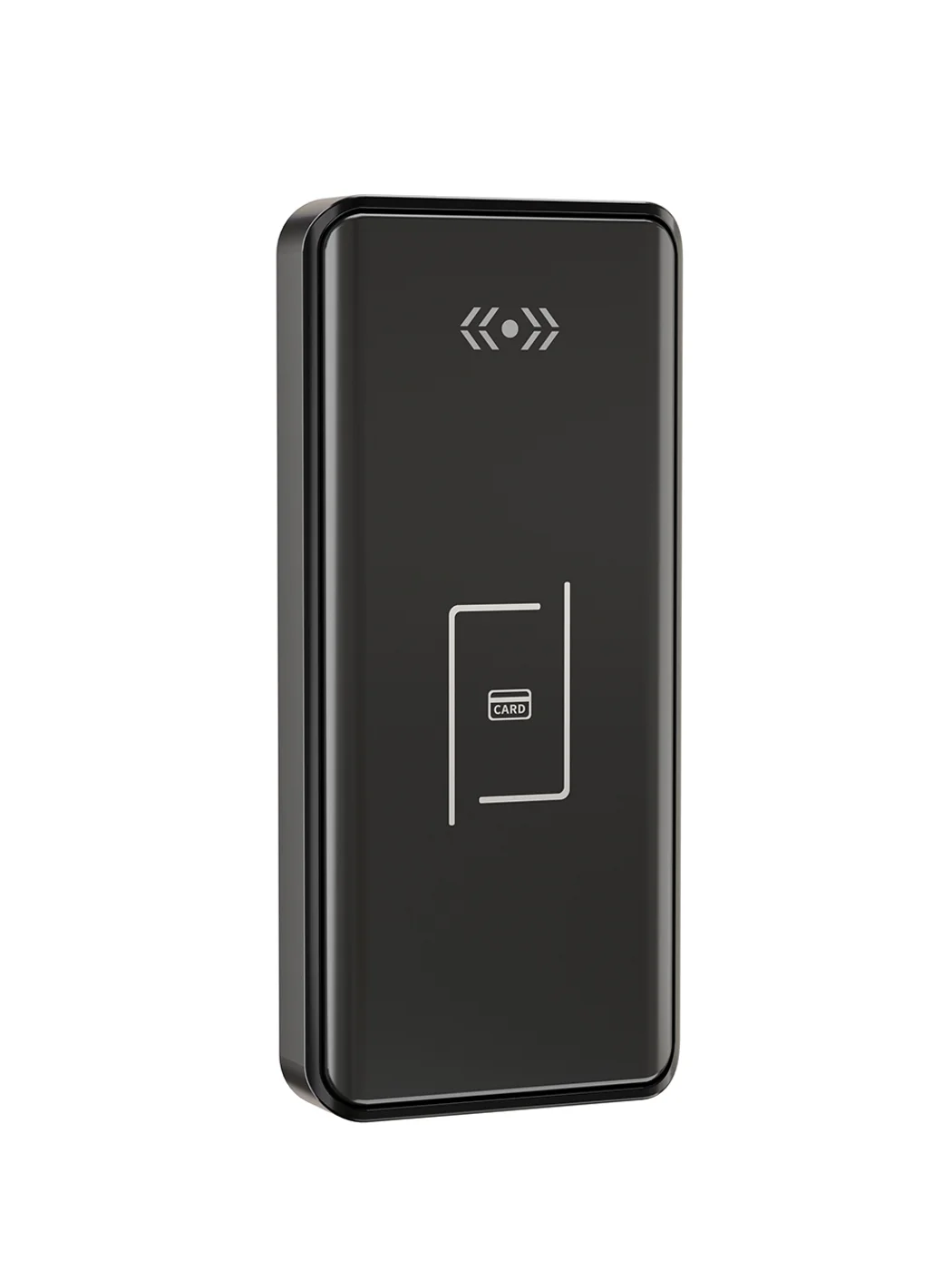
Gym Locker Lock — Offline Card, No WiFi Required
Offline card gym locker lock for fitness and pool lockers. MIFARE card, battery-powered 5-minute retrofit, no WiFi or server. Zinc alloy body, CE/FCC/RoHS.
This page already points to it as the next recommended reference.
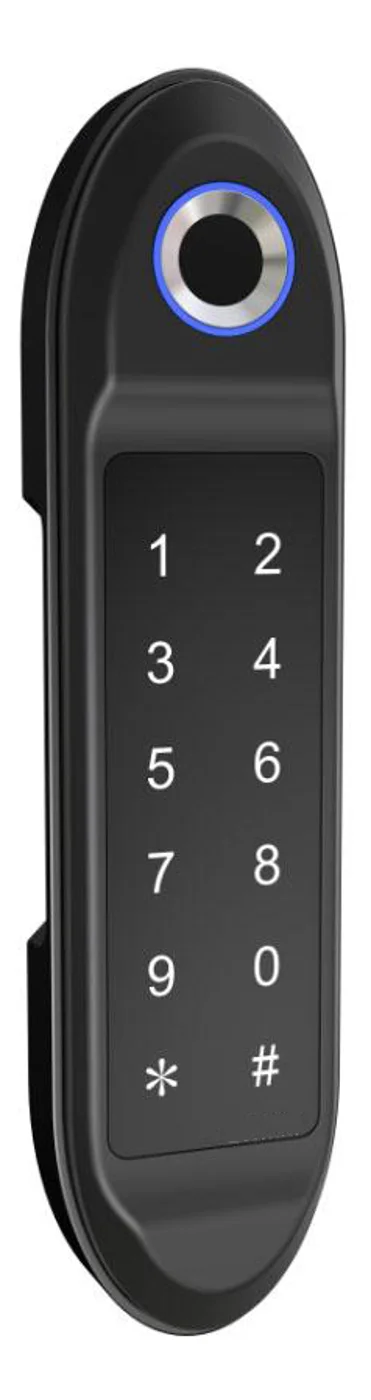
PIN Code Electronic Cabinet Lock — Stand-Alone, No WiFi
Offline keypad cabinet lock for gym, office and parcel lockers. Battery-powered, 5-minute retrofit, audit-free simple deployment. PIN + MIFARE card, DC 6V, 4×AA.
This page already points to it as the next recommended reference.
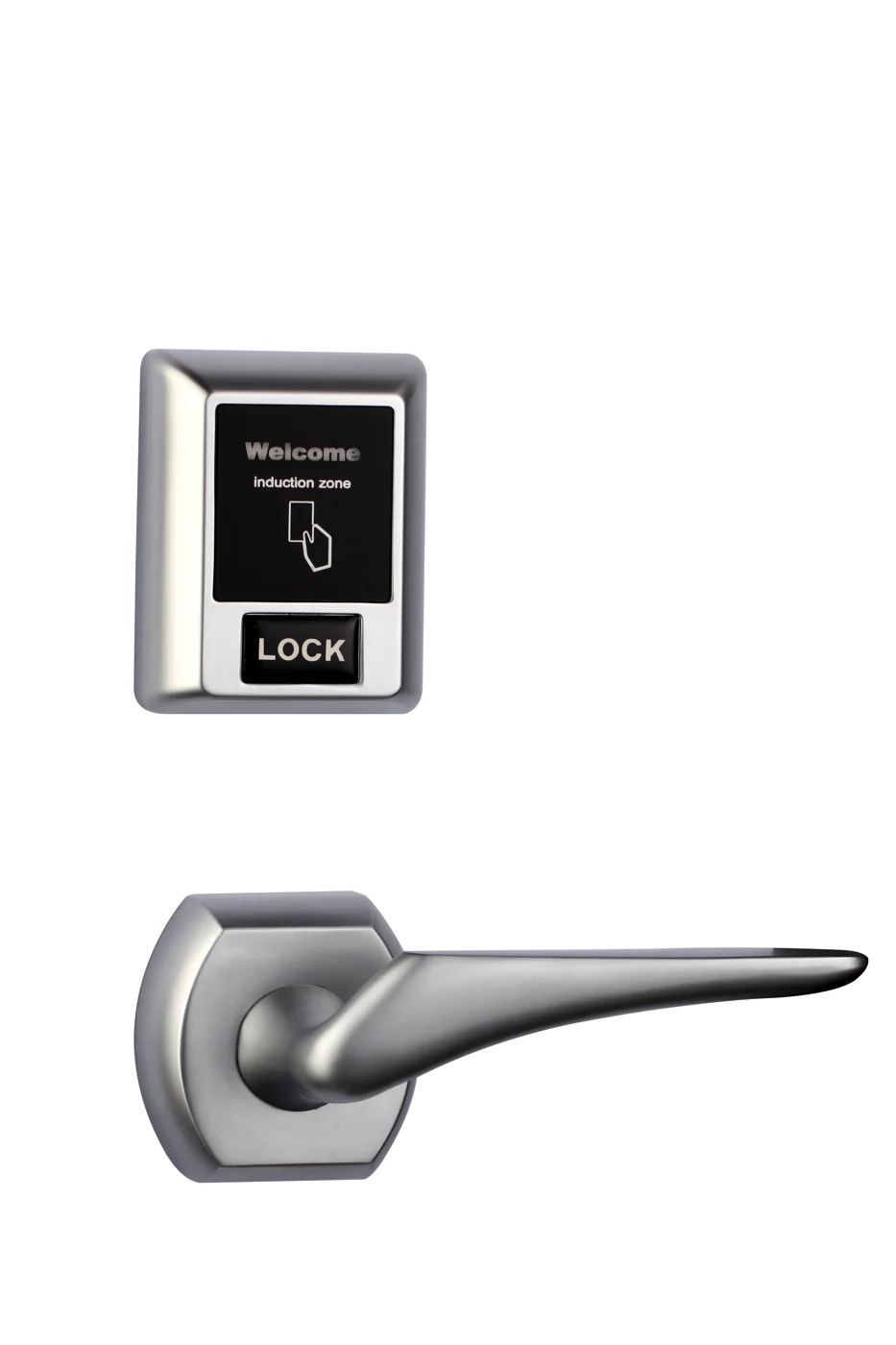
Bluetooth Cabinet Lock — App + PIN + Card, Managed Fleet
Offline BLE app cabinet lock for parcel, office, and managed locker fleets. App + PIN + MIFARE card, remote credential management, no server dependency, battery-powered retrofit.
This page already points to it as the next recommended reference.
Related blog posts
3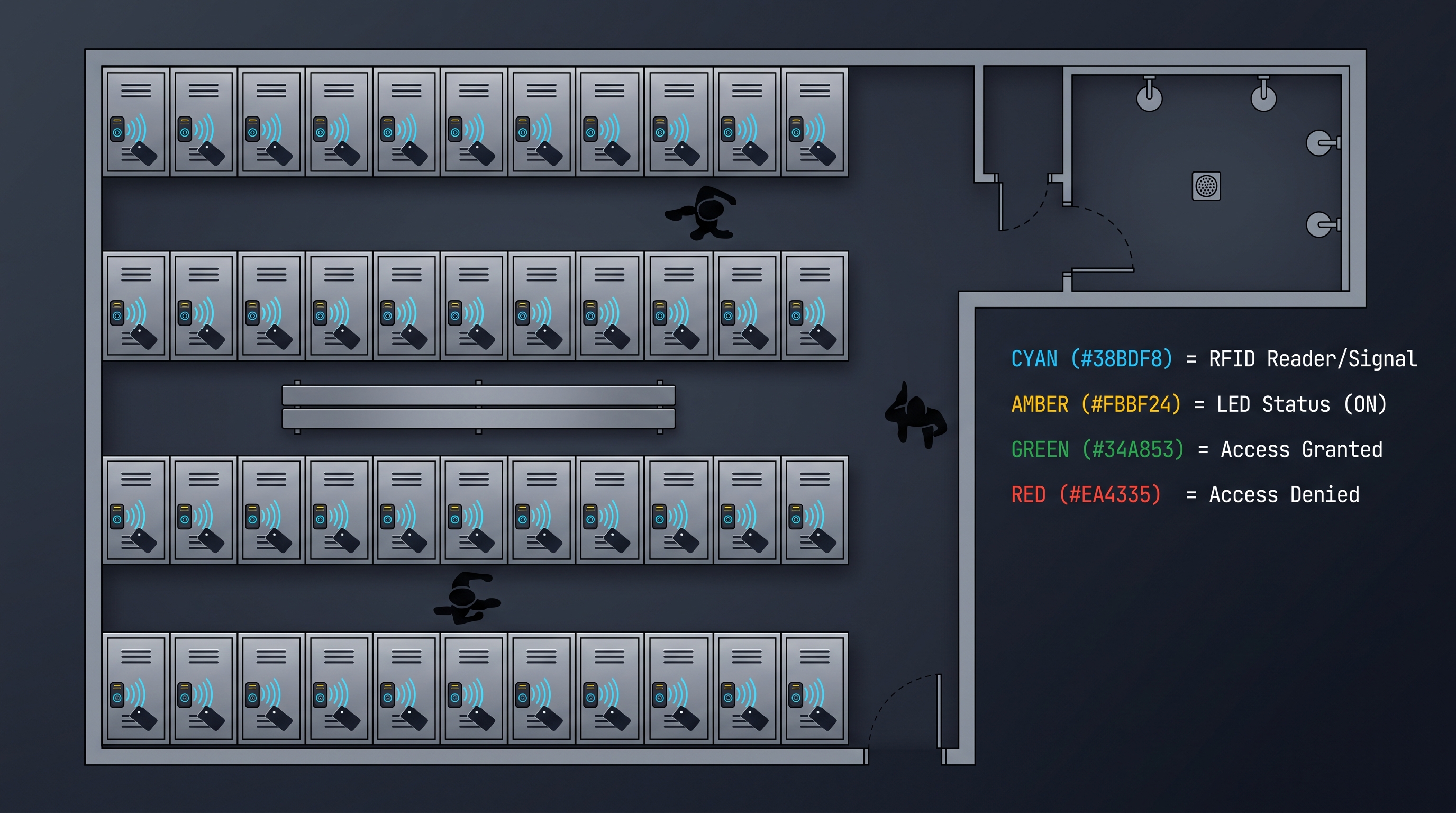
The Complete Guide to Electronic Locker Management System Software and Hardware Integration
Explore electronic locker management system platforms: real-time occupancy, credential assignment, remote unlock, API/SIEM integration, on-prem vs SaaS deployment, and enterprise security for gyms, schools, hotels, and offices.
It supports the same product context: Gym Locker Lock — Offline Card, No WiFi Required, PIN Code Electronic Cabinet Lock — Stand-Alone, No WiFi, Bluetooth Cabinet Lock — App + PIN + Card, Managed Fleet.
Electronic Locker Lock Price: Complete Guide to Cost Factors, Tiers, and Vendor Negotiation
Understand what drives an electronic locker lock price — from credential types and materials to volume discounts, NRE tooling, shipping, and 5-year TCO. Full pricing guide with tables.
It supports the same product context: Gym Locker Lock — Offline Card, No WiFi Required.
Electronic Locker Lock: The Complete 2026 Guide to Keyless Locker Security
Discover how an electronic locker lock works, from RFID to biometric models, with buying tips, specs, and comparisons for gyms, offices, and schools.
It supports the same product context: Gym Locker Lock — Offline Card, No WiFi Required, PIN Code Electronic Cabinet Lock — Stand-Alone, No WiFi, Bluetooth Cabinet Lock — App + PIN + Card, Managed Fleet.
Specify your hotel project with our engineers
Send your room count, ceiling type, and protocol preference. We will return a sample plan and quote within 24 business hours.
- Move from general guidance into a product or application discussion.
- Use RFQ when pricing, drawings, MOQ, or launch timing needs structure.
- Keep a direct contact path visible for fast clarifications and handoff.