Electronic Locker Lock Price: Complete Guide to Cost Factors, Tiers, and Vendor Negotiation
Understand what drives an electronic locker lock price — from credential types and materials to volume discounts, NRE tooling, shipping, and 5-year TCO. Full pricing guide with tables.
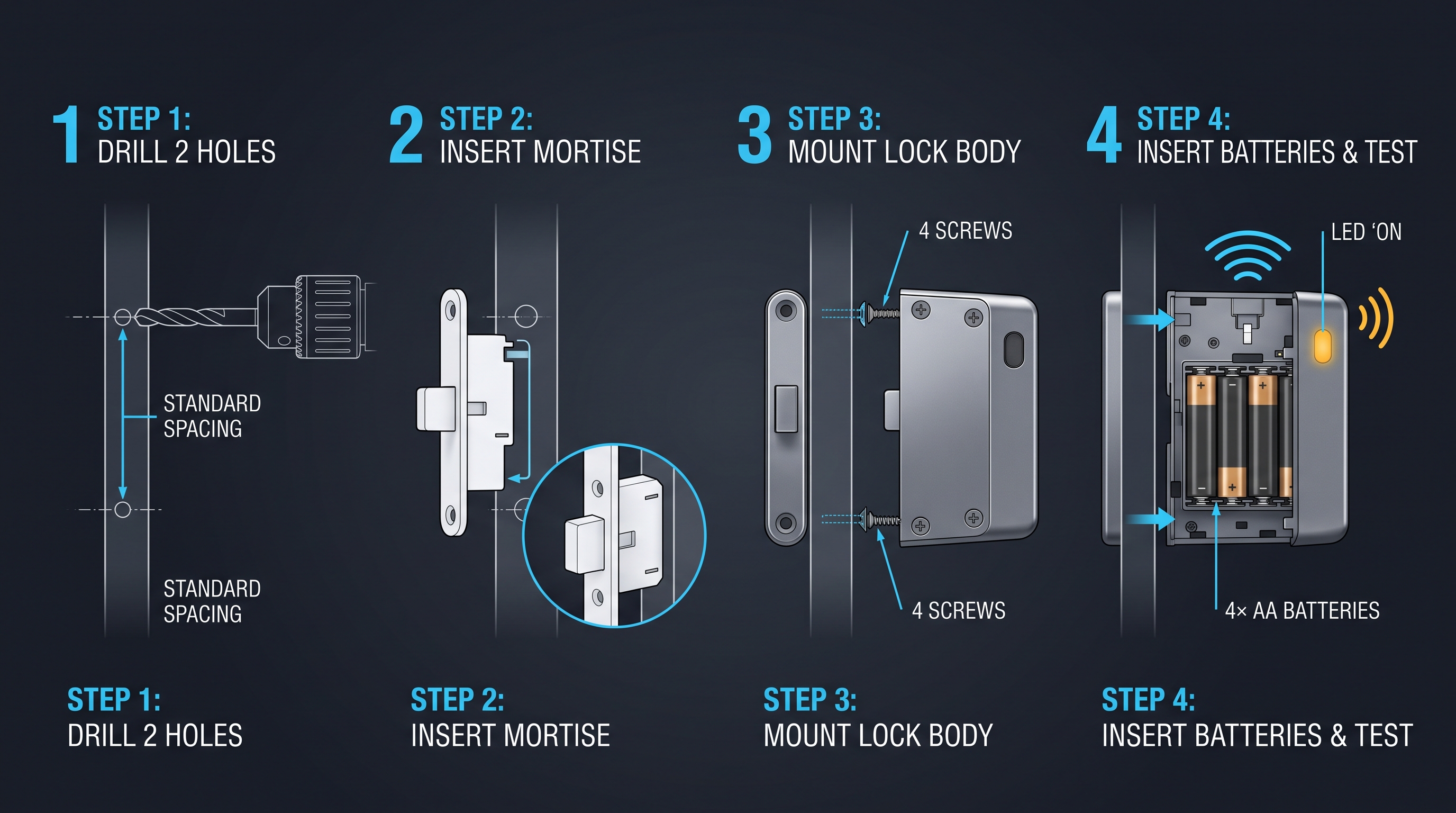
What Drives the Electronic Locker Lock Price: A Complete Cost Breakdown
The electronic locker lock price is the single most important factor when sourcing locking hardware for any locker deployment — whether you are equipping a 50-locker gym, a 5,000-locker corporate office, a university campus with 20,000 student lockers, or a hospital with 1,500 staff lockers. Unlike mechanical locks that cost $3 to $12 per unit, electronic locker locks range from $15 to over $300 per unit, and the price spread is driven by a complex set of engineering decisions, material choices, credential technologies, and supply chain factors. Understanding every component of the electronic locker lock price is essential for procurement managers, facility directors, and operations teams who need to budget accurately, avoid hidden costs, and negotiate effectively with manufacturers. This guide breaks down the electronic locker lock price into its fundamental drivers — credential type, actuator mechanism, audit trail capability, ingress protection rating, enclosure material, communication protocol, and power architecture — and then examines pricing tiers, volume discounts, non-recurring engineering (NRE) costs, shipping and tariff considerations, total cost of ownership over five years, and practical strategies for reading vendor quotations and negotiating with factories. By the end, you will know exactly how to evaluate any electronic locker lock price quote and determine whether you are paying a fair market price.
How Credential Type Affects the Electronic Locker Lock Price
The credential type — the method by which a user authenticates to the lock — is the single largest variable in the electronic locker lock price calculation. Each credential technology carries a different bill-of-materials cost, licensing burden, and integration complexity, and these costs cascade directly into the final unit price. A basic RFID-only electronic locker lock price starts at $15 to $25 per unit at volume, while a full biometric lock with Bluetooth and app control can exceed $120 per unit. Understanding the cost contribution of each credential type is the first step in making an informed sourcing decision.
RFID-only (125 kHz or 13.56 MHz): This is the lowest-cost credential type. A 125 kHz RFID reader module costs $0.80 to $1.50 in volume, while a 13.56 MHz Mifare-compatible reader costs $1.50 to $3.00. The lock controller firmware is simpler because RFID read events are straightforward — no encryption negotiation, no app handshake, no secure element. The typical electronic locker lock price for an RFID-only lock is $15 to $35, with the RFID module representing roughly 5% to 10% of the total BOM. Mifare DESFire (13.56 MHz with AES-128 encryption) adds $0.50 to $1.00 to the reader cost and is increasingly required for security-sensitive deployments like government buildings and healthcare facilities.
Keypad-only (PIN code): A membrane keypad with a 3x4 or 4x4 matrix adds $0.60 to $1.20 to the BOM, but the real cost is in the user interface logic and power management. Keypad locks need to wake from deep sleep when a key is pressed, process debounce, and manage a backlight (optional). The electronic locker lock price for a keypad-only lock ranges from $18 to $35, with the keypad representing roughly 3% to 5% of the BOM. Keypad locks are popular in environments where card issuance is impractical — swimming pools, water parks, and temporary event lockers — but they suffer from the limitation that users must remember a code, which increases support calls.
RFID + Keypad (dual credential): Combining RFID and keypad adds roughly $1.50 to $3.00 to the BOM versus RFID-only, primarily for the keypad membrane and the dual-input firmware logic. The electronic locker lock price for a dual-credential lock typically falls between $25 and $50. Dual-credential locks are the most common configuration in the market because they offer flexibility: users can tap a card or enter a PIN, and facility managers can fall back to a master PIN or override card if one credential type fails. The extra cost is modest relative to the operational flexibility gained.
Bluetooth Low Energy (BLE) + App: BLE adds a Bluetooth module (Nordic nRF52832 or similar) costing $2.50 to $4.50, plus a mobile app development cost that is typically amortized into the unit price as a licensing fee of $0.50 to $2.00 per lock per year. The electronic locker lock price for a BLE-enabled lock ranges from $35 to $80. The BLE credential is advantageous for facilities that want to eliminate physical credential issuance entirely — users download an app, register, and receive a digital key. However, BLE locks require a gateway or hub for remote management, which adds $100 to $500 per gateway depending on coverage area.
Wi-Fi (802.11 b/g/n): A Wi-Fi module (ESP32, RTL8720, or similar) costs $2.00 to $5.00, but the certification cost (FCC, CE, IC) adds $30,000 to $80,000 in NRE, which is amortized across the production volume. The electronic locker lock price for a Wi-Fi lock is $45 to $95. Wi-Fi locks can connect directly to the facility network without a dedicated gateway, which reduces infrastructure cost but increases per-unit cost. They are best suited for smaller deployments (10 to 200 lockers) where the gateway cost of a BLE system would be prohibitive.
Biometric (fingerprint): A capacitive fingerprint sensor (FPC102x or similar) costs $3.00 to $8.00, and the secure element for storing biometric templates adds another $1.00 to $2.00. The electronic locker lock price for a biometric lock is $70 to $150. Biometric locks are primarily used in high-security environments — military bases, laboratories, pharmaceutical storage — where the convenience of PIN-less access justifies the premium. The false acceptance rate (FAR) and false rejection rate (FRR) are critical specifications; a lock with FAR < 0.001% and FRR < 1% will cost more than a consumer-grade sensor.
Multi-credential (RFID + Keypad + BLE + Biometric): The most feature-rich locks combine all credential types in a single unit. The electronic locker lock price for a multi-credential lock ranges from $90 to $200. The BOM is additive across all credential modules, and the firmware complexity increases exponentially because the lock must manage credential priority, simultaneous authentication attempts, and power budgeting across all modules. These locks are typically deployed in enterprise environments where different user groups require different credential types.
| Credential Type | BOM Cost Add | Typical Electronic Locker Lock Price | Key Components |
|---|---|---|---|
| RFID-only (125 kHz) | $0.80 - $1.50 | $15 - $35 | EM4100 / TK4100 reader, basic MCU |
| RFID-only (13.56 MHz) | $1.50 - $3.00 | $20 - $40 | Mifare S50 / DESFire reader, crypto |
| Keypad-only (PIN) | $0.60 - $1.20 | $18 - $35 | Membrane keypad, power management |
| RFID + Keypad | $2.50 - $4.50 | $25 - $50 | Dual-input FW, combined module |
| BLE + App | $3.50 - $6.50 | $35 - $80 | nRF52 / DA14531, mobile SDK |
| Wi-Fi | $2.00 - $5.00 | $45 - $95 | ESP32 / RTL8720, FCC/CE cert |
| Biometric (fingerprint) | $4.00 - $10.00 | $70 - $150 | Capacitive sensor, secure element |
| Multi-credential | $8.00 - $18.00 | $90 - $200 | All modules, complex FW, power mgmt |
How Actuator Mechanism Shapes the Electronic Locker Lock Price
The actuator is the mechanical component that physically locks and unlocks the latch or bolt. It is the heart of the lock mechanism, and its quality, torque, cycle life, and noise level directly determine both the electronic locker lock price and the lock's reliability over time. There are three primary actuator types: solenoid, motor-gearbox, and motor-cam, each with a distinct cost structure and performance envelope.
Solenoid actuator: A solenoid is an electromagnetic coil that pulls or pushes a plunger to release the locking mechanism. The cost of a solenoid varies from $0.80 to $2.50 depending on stroke length, holding force, and duty cycle rating. The electronic locker lock price for a solenoid-based lock is $15 to $35, making it the most affordable actuator option. Solenoids are simple, fast (reaction time under 100 ms), and consume relatively low power during the pulse (200 to 500 mA at 3.7 V for 50 to 200 ms). However, solenoids are inherently noisy — the characteristic "click" is audible from several meters away — and they have a limited cycle life of 50,000 to 200,000 cycles due to plunger wear and spring fatigue. Solenoid-based locks are suitable for low-traffic environments like office lockers and classroom storage, where cycle count rarely exceeds 10 to 20 operations per day.
Motor-gearbox actuator: A DC motor with a planetary or spur gear train drives a bolt or latch mechanism. The motor and gearbox assembly costs $1.50 to $4.00, substantially more than a solenoid. The electronic locker lock price for a motor-gearbox lock is $30 to $70. The gearbox provides mechanical advantage, allowing a small motor to generate 5 to 15 N of linear force at the bolt, which is sufficient for most locker applications. Motor-gearbox actuators are quieter than solenoids (35 to 45 dB versus 55 to 70 dB for a solenoid), and they offer a longer cycle life of 200,000 to 500,000 cycles. The motor-gearbox is the most common actuator in mid-range locks because it balances cost, noise, and durability well.
Motor-cam actuator: A motor directly drives a cam profile that pushes or retracts the latch. This design eliminates the gearbox, reducing cost slightly ($1.20 to $2.50 for the motor and cam) but requiring more precise motor control (position sensing, stall detection). The electronic locker lock price for a motor-cam lock is $35 to $55. Motor-cam actuators are quieter still (30 to 40 dB) and can achieve 300,000 to 600,000 cycles. They are popular in gym lockers where noise is a customer satisfaction issue — no one wants to hear a loud click every time someone opens a locker.
Linear actuator (screw-driven): A stepper motor turns a lead screw that linearly advances a nut attached to the locking bolt. This is the most expensive actuator, costing $3.00 to $6.00 per assembly. The electronic locker lock price for a linear-actuator lock is $50 to $120. Linear actuators offer the highest force (10 to 20 N), the longest cycle life (500,000 to 1,000,000 cycles), and the quietest operation (under 30 dB). They are used in enterprise-grade locks for high-traffic environments like university locker rooms, transit stations, and theme park changing areas.
Dual-actuator (solenoid + motor): Some locks use a solenoid for quick release and a motor for mechanical locking/unlocking. This is the most expensive actuator configuration, at $4.00 to $8.00 per lock. The electronic locker lock price for a dual-actuator lock is $60 to $150. Dual-actuator designs are used in fail-secure applications where the lock must remain locked during a power outage — the solenoid provides the electronic release, but the motor ensures the latch is physically retracted only when commanded.
| Actuator Type | BOM Cost | Cycle Life | Noise Level | Typical Electronic Locker Lock Price |
|---|---|---|---|---|
| Solenoid | $0.80 - $2.50 | 50k - 200k | 55 - 70 dB | $15 - $35 |
| Motor-gearbox | $1.50 - $4.00 | 200k - 500k | 35 - 45 dB | $30 - $70 |
| Motor-cam | $1.20 - $2.50 | 300k - 600k | 30 - 40 dB | $35 - $55 |
| Linear (screw) | $3.00 - $6.00 | 500k - 1M | < 30 dB | $50 - $120 |
| Dual-actuator | $4.00 - $8.00 | 200k - 500k | 40 - 55 dB | $60 - $150 |
How Audit Trail Capability Influences the Electronic Locker Lock Price
Audit trail capability — the lock's ability to record and report who accessed which locker at what time — is a feature that is increasingly demanded in corporate, educational, and healthcare environments. The audit trail turns a simple access control device into a data source for security investigations, usage analytics, and compliance reporting. The presence and depth of audit trail functionality directly affects the electronic locker lock price.
No audit trail (basic lock): The simplest locks have no memory or logging capability. When a credential is presented, the lock either opens or does not — no record is kept. The electronic locker lock price for a no-audit lock is $15 to $30. These locks are adequate for environments where access tracking is not required, such as short-term rental lockers, day-use gym lockers, or temporary event lockers. The absence of audit trail reduces the MCU requirements (no need for an RTC, no flash storage for logs, no communication buffer) and eliminates the need for a communication interface.
On-board audit trail (local storage): These locks store event logs in flash memory — typically 1,000 to 10,000 events — and the logs are retrieved via a physical connection (USB-C, UART debug port) or a short-range wireless connection (NFC, BLE). The electronic locker lock price for an on-board audit lock is $25 to $55. The added cost comes from a larger MCU (at least 64 KB of flash), a real-time clock crystal ($0.15 to $0.30), and a communication interface (USB UART IC at $0.40 to $0.80, or an NFC tag at $0.20 to $0.50). On-board audit is suitable for deployments where audit data is retrieved periodically (daily, weekly, or monthly) by a maintenance technician.
Networked audit trail (real-time): These locks transmit audit events in real time over BLE, Wi-Fi, or Zigbee to a central server. The electronic locker lock price for a networked audit lock is $40 to $120. The cost premium covers the wireless module, the communication protocol stack license, and the cloud infrastructure cost (typically passed through as a subscription fee of $1 to $5 per lock per year). Real-time audit is essential for compliance-driven environments like healthcare (HIPAA), finance (SOX), and government (FISMA), where access records must be available within minutes of a request.
Advanced audit with analytics: Some enterprise locks process audit data on the lock itself, generating usage statistics, occupancy reports, and anomaly alerts. The electronic locker lock price for an advanced audit lock is $80 to $200. These locks use a more powerful MCU (ARM Cortex-M4 or M7, 256 KB+ flash, 64 KB+ SRAM) that can run lightweight analytics algorithms. The edge processing reduces cloud dependency and bandwidth requirements, but it increases the unit cost by $5 to $15 in BOM alone.
| Audit Capability | Storage | Retrieval | Typical Electronic Locker Lock Price |
|---|---|---|---|
| None | 0 events | N/A | $15 - $30 |
| On-board | 1,000 - 10,000 events | USB / NFC / BLE | $25 - $55 |
| Networked (real-time) | Cloud | BLE / Wi-Fi / Zigbee | $40 - $120 |
| Advanced (edge analytics) | 10,000+ events | Cloud + edge | $80 - $200 |
How Ingress Protection (IP) Rating Affects the Electronic Locker Lock Price
The Ingress Protection (IP) rating of an electronic locker lock determines its resistance to dust and water ingress. This rating is critical for locks deployed in outdoor environments, swimming pools, water parks, washrooms, and industrial settings. The electronic locker lock price increases substantially with higher IP ratings because of the design changes, material upgrades, and testing certification required.
IP40 (indoor only): IP40 locks offer protection against solid objects larger than 1 mm (tools, wires) but no water protection. The electronic locker lock price for an IP40 lock is $15 to $35. These locks use a simple enclosure with a foam gasket on the backplate and no sealing around the credential interface. They are suitable for indoor environments with controlled humidity and no splash risk, such as office lockers, school classrooms, and retail employee lockers.
IP54 (splash-resistant): IP54 locks offer protection against dust ingress (limited) and water splashes from any direction. The electronic locker lock price for an IP54 lock is $25 to $55. Achieving IP54 requires a silicone gasket around the entire enclosure perimeter, a sealed keypad membrane (if applicable), and a drainage channel for the RFID reader window. The gasket and sealing add $0.50 to $1.50 to the BOM, and the tooling for a sealed enclosure costs $3,000 to $8,000 more than a standard enclosure. IP54 is the minimum rating for gym locker rooms, pool changing rooms, and outdoor covered lockers.
IP65 (water-jet resistant): IP65 locks can withstand low-pressure water jets from any direction. The electronic locker lock price for an IP65 lock is $40 to $80. The enclosure must be a fully sealed design with a captive silicone gasket, threaded inserts with O-rings, and a sealed cable entry. The BOM premium is $1.50 to $3.00 over an IP54 design, and the tooling cost is $5,000 to $15,000 higher. IP65 is required for outdoor lockers exposed to rain, pool deck lockers, and washroom lockers that are cleaned with pressure washers.
IP67 (temporary immersion): IP67 locks can be submerged in 1 meter of water for up to 30 minutes. The electronic locker lock price for an IP67 lock is $55 to $120. The enclosure must be overmolded or potted, the electronics must be conformally coated, and all connectors must be IP67-rated. The BOM premium is $3.00 to $6.00 over IP65, and the enclosure tooling cost is $10,000 to $25,000 higher. IP67 is necessary for pools, water parks, beachside lockers, and marine environments.
IP68 (continuous immersion): IP68 locks are rated for continuous immersion beyond 1 meter (depth specified by the manufacturer). The electronic locker lock price for an IP68 lock is $80 to $200. These locks are rare in the locker market because the cost is prohibitive for most applications — the enclosure must be a sealed metal casting, all electronics must be fully potted, and the battery compartment must be hermetically sealed with a screw-down cap and O-ring. IP68 is used only in specialized marine, offshore, and industrial applications.
| IP Rating | Protection Level | BOM Premium | Tooling Premium | Typical Electronic Locker Lock Price |
|---|---|---|---|---|
| IP40 | Indoor only | $0 | $0 | $15 - $35 |
| IP54 | Splash-resistant | $0.50 - $1.50 | $3k - $8k | $25 - $55 |
| IP65 | Water-jet resistant | $1.50 - $3.00 | $5k - $15k | $40 - $80 |
| IP67 | Temporary immersion | $3.00 - $6.00 | $10k - $25k | $55 - $120 |
| IP68 | Continuous immersion | $6.00 - $12.00 | $20k - $40k | $80 - $200 |
How Enclosure Material Determines the Electronic Locker Lock Price
The material used for the lock enclosure and exposed components has a significant impact on the electronic locker lock price, as it affects manufacturing cost, tooling investment, durability, and aesthetic perception. The enclosure is the user's primary physical interface with the lock, and the material choice signals quality and robustness.
ABS plastic (standard): Standard ABS plastic is the most common enclosure material for entry-level locks. The tooling cost for an ABS enclosure is $3,000 to $8,000, and the per-unit material cost is $0.30 to $0.80. The electronic locker lock price for an ABS lock is $15 to $35. ABS is adequate for indoor use but degrades under UV exposure (yellowing, embrittlement) and is susceptible to impact cracking if dropped or struck. ABS enclosures are typically used in budget gym lockers, school lockers, and temporary event lockers.
ABS + PC blend (UV-stabilized): An ABS-polycarbonate blend with UV stabilizers costs $0.50 to $1.20 per unit and offers better impact resistance and UV stability. The tooling cost is similar to standard ABS ($3,000 to $8,000). The electronic locker lock price for an ABS+PC lock is $20 to $45. The PC blend adds impact resistance (Izod impact strength of 30 to 50 kJ/m² versus 15 to 25 kJ/m² for standard ABS) and retains its appearance longer under UV exposure. This is the standard material for mid-range locks.
Zinc alloy (die-cast): Zinc alloy die-cast enclosures offer a premium feel, high durability, and corrosion resistance. The tooling cost for a die-cast zinc enclosure is $8,000 to $25,000, and the per-unit material and process cost is $1.50 to $4.00. The electronic locker lock price for a zinc alloy lock is $35 to $80. Zinc alloy is used in mid-range and enterprise locks where the lock face is visible and must convey quality. The die-cast process produces a smooth, consistent surface that accepts paint or plating well.
Stainless steel (304 or 316): Stainless steel enclosures are used in the most demanding environments — marine, food processing, pharmaceutical, and high-corrosion settings. The tooling cost for a stainless steel enclosure (stamped or machined) is $5,000 to $20,000, and the per-unit material cost is $2.00 to $6.00. The electronic locker lock price for a stainless steel lock is $60 to $150. Grade 304 stainless steel is suitable for most environments, while grade 316 (with molybdenum) is required for marine and chemical environments. Stainless steel locks are the most expensive but offer the longest service life in harsh conditions.
Aluminum (extruded or machined): Aluminum enclosures offer a balance of lightness, strength, and corrosion resistance. The tooling cost for an extruded aluminum enclosure is $5,000 to $15,000, and the per-unit cost is $1.00 to $3.00. The electronic locker lock price for an aluminum lock is $30 to $70. Anodized aluminum (Type II or Type III) provides a hard, wear-resistant surface that is resistant to scratching and corrosion. Aluminum locks are popular in premium gym lockers and corporate settings.
| Enclosure Material | Tooling Cost | Per-Unit Cost | Typical Electronic Locker Lock Price | Best For |
|---|---|---|---|---|
| ABS plastic | $3k - $8k | $0.30 - $0.80 | $15 - $35 | Budget indoor |
| ABS + PC blend | $3k - $8k | $0.50 - $1.20 | $20 - $45 | Standard indoor |
| Zinc alloy (die-cast) | $8k - $25k | $1.50 - $4.00 | $35 - $80 | Premium indoor |
| Stainless steel (304/316) | $5k - $20k | $2.00 - $6.00 | $60 - $150 | Harsh environments |
| Aluminum (extruded) | $5k - $15k | $1.00 - $3.00 | $30 - $70 | Premium gym/corporate |
How Communication Protocol Impacts the Electronic Locker Lock Price
The communication protocol used by the lock to receive commands, transmit audit data, and receive firmware updates is a major determinant of the electronic locker lock price, because each protocol requires different hardware, certification, and infrastructure.
Standalone (no communication): The lock operates entirely offline. Credentials are stored locally, and no external communication is possible. The electronic locker lock price for a standalone lock is $15 to $30. These locks are the simplest and cheapest, but they require physical access to each lock for configuration changes, credential updates, and audit retrieval. Standalone locks are suitable for deployments of 10 to 100 lockers where management overhead is acceptable.
BLE (Bluetooth Low Energy): BLE 4.2 or 5.0-enabled locks communicate with a mobile app or a BLE gateway. The BLE module costs $2.00 to $4.50, and BLE certification (FCC, CE, Bluetooth SIG) costs $15,000 to $40,000 for the initial qualification. The electronic locker lock price for a BLE lock is $30 to $75. BLE offers low power consumption (5 to 15 mA during transmission, 1 to 3 uA in sleep), a range of 10 to 50 meters, and the ability to update firmware over the air (OTA). BLE is the most popular wireless protocol for electronic locker locks in 2026.
Zigbee (802.15.4): Zigbee locks connect to a Zigbee mesh network and require a Zigbee coordinator or gateway. The Zigbee module costs $2.50 to $5.00, and Zigbee certification costs $8,000 to $20,000. The electronic locker lock price for a Zigbee lock is $35 to $80. Zigbee offers a self-healing mesh network that can cover large areas (thousands of lockers) without a single point of failure, and it is the preferred protocol for enterprise deployments with 500+ lockers.
Wi-Fi (802.11 b/g/n): Wi-Fi locks connect directly to the facility's existing Wi-Fi network. The module costs $2.00 to $5.00, but Wi-Fi certification (FCC, CE, Wi-Fi Alliance) adds $30,000 to $80,000. The electronic locker lock price for a Wi-Fi lock is $45 to $95. Wi-Fi eliminates the need for a dedicated gateway, but the per-unit cost is higher due to the certification amortization and the higher power consumption (80 to 200 mA during transmission, which requires a larger battery or more frequent charging).
LoRaWAN: LoRaWAN locks use long-range, low-power radio technology that can reach 2 to 15 km in open environments. The LoRaWAN module costs $3.00 to $6.00, and LoRaWAN certification costs $5,000 to $15,000. The electronic locker lock price for a LoRaWAN lock is $50 to $110. LoRaWAN is ideal for very large deployments (campus-wide, city-wide) where the lockers are spread over a wide area and the cost of a mesh network or Wi-Fi infrastructure would be prohibitive.
RS-485 / Wiegand (wired): Wired locks communicate over RS-485 or Wiegand protocols using a physical cable. The RS-485 transceiver costs $0.40 to $1.20, and the cabling and installation cost is $5 to $20 per lock. The electronic locker lock price for a wired lock is $40 to $80, but the total installed cost (including cabling, conduit, and labor) is $60 to $150 per lock. Wired locks are used in high-security environments where wireless reliability is insufficient, or in new construction where cabling can be installed during the build phase.
| Protocol | Module Cost | Certification Cost | Power Consumption | Typical Electronic Locker Lock Price |
|---|---|---|---|---|
| None (standalone) | $0 | $0 | Ultra-low | $15 - $30 |
| BLE 4.2 / 5.0 | $2.00 - $4.50 | $15k - $40k | 5 - 15 mA TX | $30 - $75 |
| Zigbee | $2.50 - $5.00 | $8k - $20k | 10 - 30 mA TX | $35 - $80 |
| Wi-Fi | $2.00 - $5.00 | $30k - $80k | 80 - 200 mA TX | $45 - $95 |
| LoRaWAN | $3.00 - $6.00 | $5k - $15k | 20 - 50 mA TX | $50 - $110 |
| RS-485 / Wired | $0.40 - $1.20 | $0 | N/A (wired) | $40 - $80 (lock only) |
Electronic Locker Lock Price Tiers: Entry, Mid-Range, and Enterprise
The electronic locker lock price market segments into three broad tiers based on feature set, build quality, reliability, and support level. Each tier serves a different customer profile and deployment scenario, and understanding the tier boundaries helps buyers match their requirements to the appropriate price point.
Entry tier ($15 to $40): Locks in this tier use a solenoid actuator, ABS plastic enclosure, and a single credential type (RFID-only or keypad-only). They have no audit trail or minimal on-board storage (1,000 events or fewer), no communication capability (standalone), and an IP40 rating. The battery is typically 4 x AAA alkaline cells (1.5 V, 600 to 1,000 mAh each) providing 12 to 18 months of life. The typical electronic locker lock price at this tier is $15 to $40, with the sweet spot at $18 to $28 for volume orders of 500+ units. Entry-tier locks are supplied by Chinese OEMs such as Shenzhen KaiLong, YongTai, and YLI Electronic. The minimum order quantity (MOQ) is typically 100 to 500 units, and lead time is 15 to 30 days. These locks are suitable for budget-conscious deployments in schools, basic gyms, and temporary event lockers. The failure rate is 2% to 5% within the first year, and manufacturers typically offer a 1-year warranty.
Mid-range tier ($40 to $120): Locks in this tier use a motor-gearbox or motor-cam actuator, an ABS+PC or zinc alloy enclosure, and dual credential types (RFID + keypad, or RFID + BLE). They offer on-board audit trail (5,000 to 10,000 events), BLE or Zigbee communication, and an IP54 or IP65 rating. The battery is typically a rechargeable lithium-ion or lithium-polymer cell (3.7 V, 1,500 to 3,000 mAh) with a USB-C charging port, providing 3 to 6 months of life between charges. The typical electronic locker lock price at this tier is $40 to $120, with the sweet spot at $45 to $75 for volume orders of 200+ units. Mid-range suppliers include Hangzhou Hikvision, Dahua Technology, Zhuhai Gotech, and Vians. The MOQ is typically 50 to 200 units, and lead time is 20 to 40 days. These locks are suitable for corporate offices, university recreation centers, hospitals, and mid-tier fitness chains. The failure rate is 1% to 3% within the first year, and manufacturers typically offer a 2-year warranty.
Enterprise tier ($120 to $300): Locks in this tier use a linear actuator or dual-actuator, a stainless steel or zinc alloy enclosure, and multi-credential support (RFID + keypad + BLE + biometric). They offer networked real-time audit trail, Wi-Fi or Zigbee communication, and an IP65 or IP67 rating. The battery is typically a high-capacity rechargeable lithium-ion cell (3.7 V, 3,000 to 5,000 mAh) with a charging dock or Power-over-Ethernet (PoE) option, providing 2 to 4 months of life between charges. The typical electronic locker lock price at this tier is $120 to $300, with the sweet spot at $130 to $180 for volume orders of 100+ units. Enterprise suppliers include dormakaba, ASSA ABLOY, Allegion (Schlage), and Hafele. The MOQ is typically 10 to 100 units, and lead time is 30 to 60 days. These locks are suitable for airports, transit stations, government buildings, corporate headquarters, luxury fitness clubs, and theme parks. The failure rate is under 1% within the first year, and manufacturers typically offer a 3 to 5-year warranty.
| Tier | Price Range | Actuator | Enclosure | Credential | Audit | IP Rating | Warranty |
|---|---|---|---|---|---|---|---|
| Entry | $15 - $40 | Solenoid | ABS | RFID-only / Keypad | None or 1k events | IP40 | 1 year |
| Mid-range | $40 - $120 | Motor-gearbox / Motor-cam | ABS+PC / Zinc alloy | RFID + Keypad / RFID + BLE | 5k - 10k events, on-board | IP54 - IP65 | 2 years |
| Enterprise | $120 - $300 | Linear / Dual-actuator | Stainless steel / Zinc alloy | Multi-credential incl. biometric | Real-time networked | IP65 - IP67 | 3 - 5 years |
Volume Discounts and MOQ Impact on Electronic Locker Lock Price
The electronic locker lock price is highly sensitive to order volume. Manufacturers offer significant discounts as volume increases because the fixed costs of tooling, setup, and testing are spread across more units, and the production line becomes more efficient with longer runs. Understanding the volume discount curve is essential for budget planning and negotiation.
Sample quantities (1 to 10 units): Prices are at retail levels, typically 1.5x to 3x the volume price. The electronic locker lock price for a sample unit of a mid-range lock that costs $55 at 500 units might be $85 to $120 at 1 unit. Manufacturers charge a premium for samples because they break the production flow, require manual handling, and often need expedited shipping. Many suppliers offer free samples to qualified buyers (with the buyer paying shipping), but this is uncommon for electronic locker locks due to the unit value.
Small batch (50 to 200 units): This is the first volume tier. The electronic locker lock price drops by 10% to 20% from sample pricing. For a lock with a base price of $55 at 1,000 units, the price at 100 units would be approximately $65 to $75. The MOQ for most Chinese OEMs is 50 to 100 units for standard models, though some require 200 to 500 units for customized models.
Medium volume (200 to 1,000 units): This is the most common volume range for mid-size deployments. The electronic locker lock price drops by an additional 10% to 15% from the small batch price. For a lock that is $65 at 100 units, the price at 500 units would be approximately $50 to $58. Manufacturers begin to offer some customization options at this volume — custom logo printing, custom packaging, and minor firmware modifications.
High volume (1,000 to 10,000 units): The electronic locker lock price reaches its baseline level at this volume. The discount from medium volume is 10% to 20%. For a lock that is $55 at 500 units, the price at 5,000 units would be approximately $42 to $48. At this volume, manufacturers are willing to offer significant customization — custom enclosure colors, custom RFID antenna tuning, custom firmware with specific credential formats, and custom audit data formats.
Ultra-high volume (10,000+ units): The electronic locker lock price at this volume approaches the manufacturer's marginal cost plus a small margin. Discounts from high volume are 5% to 15%. For a lock that is $45 at 5,000 units, the price at 50,000 units would be approximately $35 to $40. At this volume, the buyer can negotiate exclusive designs, dedicated production lines, and just-in-time inventory arrangements.
| Volume | Discount from 1k Baseline | Typical Electronic Locker Lock Price (Mid-Range Lock) | MOQ Notes |
|---|---|---|---|
| 1 - 10 (samples) | +50% to +200% | $85 - $165 | Buyer pays shipping |
| 50 - 200 | +18% to +35% | $65 - $75 | Standard MOQ for OEM |
| 200 - 1,000 | +5% to +15% | $50 - $58 | Some customization included |
| 1,000 - 10,000 | Baseline | $42 - $48 | Full customization available |
| 10,000+ | -5% to -15% | $35 - $40 | Exclusive design options |
NRE and Tooling Costs in the Electronic Locker Lock Price
Non-recurring engineering (NRE) and tooling costs are one-time charges that cover the design, engineering, and manufacturing setup required to produce a lock. These costs are amortized into the unit price over the production volume, but it is important to understand them separately because they affect the total cost of the first order and the per-unit price at different volumes.
Enclosure tooling: The mold for an ABS or ABS+PC enclosure costs $3,000 to $8,000 for a two-cavity mold (producing two parts per shot). A zinc alloy die-cast mold costs $8,000 to $25,000. A stainless steel stamping die costs $5,000 to $15,000. The electronic locker lock price includes a portion of the tooling cost amortized across the order quantity. If the tooling cost is $10,000 and the order is for 1,000 units, the amortization adds $10 per unit. If the order is for 10,000 units, the amortization adds $1 per unit.
PCB tooling and stencil: The PCB (printed circuit board) tooling cost is $200 to $800 for a 2-layer board and $500 to $2,000 for a 4-layer board. The solder stencil costs $50 to $200. These costs are typically included in the unit price by the PCB assembler and are not charged separately.
Firmware development: Custom firmware development costs $5,000 to $50,000 depending on the complexity of the feature set. A basic RFID-only lock with on-board audit requires $5,000 to $15,000 in firmware NRE. A multi-credential lock with BLE, OTA updates, and networked audit requires $20,000 to $50,000. The electronic locker lock price for a lock with custom firmware must include the amortized NRE cost, which can add $1 to $10 per unit depending on volume.
Certification costs: Certification costs are a significant NRE item. FCC and CE certification for an electronic locker lock costs $15,000 to $40,000 per lock model. If the lock includes Wi-Fi, the certification cost increases to $30,000 to $80,000. Bluetooth SIG certification adds $5,000 to $15,000. The amortized certification cost can add $1 to $5 per unit at 5,000 to 10,000 units. The electronic locker lock price for a Wi-Fi lock is higher than a BLE lock partly because of the higher certification cost.
Mobile app development: If the lock is controlled via a mobile app, the app development cost is $20,000 to $100,000 for iOS and Android apps. Some manufacturers spread this cost across all their customers by charging an annual per-lock licensing fee of $0.50 to $2.00, while others charge a one-time NRE fee. The electronic locker lock price may or may not include app development costs depending on the supplier's business model.
| NRE / Tooling Item | Cost Range | Amortized Impact on Electronic Locker Lock Price |
|---|---|---|
| Enclosure mold (plastic) | $3k - $8k | $0.30 - $8.00 per unit |
| Enclosure mold (zinc die-cast) | $8k - $25k | $0.80 - $25.00 per unit |
| Enclosure die (stainless steel) | $5k - $20k | $0.50 - $20.00 per unit |
| PCB tooling | $200 - $2,000 | $0.02 - $2.00 per unit |
| Firmware development | $5k - $50k | $0.50 - $50.00 per unit |
| FCC / CE certification | $15k - $80k | $1.50 - $80.00 per unit |
| Bluetooth SIG certification | $5k - $15k | $0.50 - $15.00 per unit |
| Mobile app development | $20k - $100k | $2.00 - $100.00 per unit |
FOB, EXW, and DDP: How Incoterms Affect the Electronic Locker Lock Price
The Incoterm (International Commercial Term) used in a quotation determines which party bears the cost and risk of shipping, insurance, customs clearance, and import duties. The electronic locker lock price quoted by a supplier is meaningless without knowing the Incoterm, because the total landed cost can be 15% to 40% higher than the quoted unit price depending on the Incoterm chosen.
EXW (Ex Works): The electronic locker lock price quoted as EXW includes only the cost of the goods at the factory. The buyer is responsible for all transportation, export customs clearance, insurance, freight, import customs clearance, duties, and inland delivery. The EXW price is the lowest quoted price, but the total landed cost is the highest for the buyer. EXW is typically used by experienced importers who have their own freight forwarder and customs broker.
FOB (Free On Board): The electronic locker lock price quoted as FOB includes the cost of the goods, inland transportation to the port of export, and loading onto the vessel. The buyer is responsible for ocean freight, insurance, import customs clearance, duties, and inland delivery. FOB Shenzhen (the most common port for electronic locker lock exports) is the standard Incoterm for Chinese OEM quotations. The FOB price is typically 3% to 8% higher than the EXW price. The total landed cost for a FOB-quoted lock is approximately 15% to 25% higher than the FOB price, depending on the shipping route, container rates, and import duty rates.
CIF (Cost, Insurance, and Freight): The electronic locker lock price quoted as CIF includes the cost of the goods, insurance, and freight to the destination port. The buyer is responsible for import customs clearance, duties, and inland delivery. CIF is common for sea freight shipments, and the CIF price is typically 5% to 15% higher than the FOB price. CIF is convenient for buyers who want a single point of responsibility for the main shipping leg, but the buyer still handles customs clearance.
DDP (Delivered Duty Paid): The electronic locker lock price quoted as DDP includes everything — the cost of the goods, export customs clearance, freight, insurance, import customs clearance, duties, and delivery to the buyer's specified address. The DDP price is the highest quoted price, typically 15% to 40% higher than the FOB price, but it is the true total cost — the buyer pays nothing beyond the quoted price. DDP is ideal for first-time importers and for buyers who want to avoid the complexity of customs clearance and duty calculation. DDP is becoming more common for electronic locker lock shipments because many facility managers and procurement teams prefer the simplicity of a delivered price.
| Incoterm | Included in Electronic Locker Lock Price | Buyer's Additional Cost | Typical Price Difference from FOB |
|---|---|---|---|
| EXW | Goods only | All transport, customs, duties, insurance | -3% to -8% |
| FOB (Shenzhen) | Goods + inland transport + loading | Ocean freight, insurance, import customs, duties | Baseline |
| CIF | Goods + freight + insurance to destination port | Import customs, duties, inland delivery | +5% to +15% |
| DDP | Everything delivered to buyer's address | Nothing | +15% to +40% |
Shipping and Tariff Impact on Electronic Locker Lock Price
Shipping and tariff costs are significant components of the total landed cost for imported electronic locker locks. These costs vary by shipping method, origin, destination, and the applicable tariff classification (HS code). Understanding these costs is essential for calculating the true electronic locker lock price delivered to your facility.
Sea freight (LCL - Less than Container Load): For shipments of 1 to 5 cubic meters (approximately 500 to 3,000 locker locks), LCL sea freight is the most economical option. The cost is $50 to $150 per cubic meter from Shenzhen to Los Angeles, $80 to $200 per cubic meter to Rotterdam, and $60 to $180 per cubic meter to Dubai. The LCL freight cost adds $0.10 to $0.50 per lock to the electronic locker lock price.
Sea freight (FCL - Full Container Load): For shipments of 5,000 to 20,000 locker locks, a full 20-foot container is more economical. A 20-foot container from Shenzhen to Los Angeles costs $1,500 to $3,500, which adds $0.08 to $0.35 per lock. A 40-foot container costs $2,000 to $5,000, adding $0.05 to $0.25 per lock. The electronic locker lock price per unit decreases significantly when shipping FCL versus LCL.
Air freight: For urgent shipments or sample orders, air freight costs $3.00 to $6.00 per kilogram. A mid-range lock weighs approximately 150 to 250 grams, so air freight adds $0.45 to $1.50 per lock. The electronic locker lock price for an air-shipped order is substantially higher than for sea-shipped orders. Air freight is only recommended for sample quantities and emergency replenishment.
Import duties: The HS code for electronic locker locks is typically 8301.40 (locks, not of a kind used for motor vehicles) or 8537.10 (electric control or distribution panels). The duty rate varies by destination country. The United States imposes a duty of 2.5% to 5.7% on electronic locker locks under HS 8301.40. The European Union imposes 2.7% to 3.7%. Canada imposes 0% to 8% depending on the specific classification. The Section 301 tariffs on Chinese goods (List 4A, 25% additional duty) apply to many electronic locker locks imported into the United States, increasing the total duty to 27.5% to 30.7%. The electronic locker lock price for a US-bound shipment must include this tariff cost.
Total landed cost calculation: The total landed cost of an electronic locker lock is calculated as follows: FOB price + ocean freight per unit + insurance per unit + import duty per unit + customs brokerage fee per unit + inland delivery per unit. For a lock with a FOB price of $50, the total landed cost DDP to a US warehouse might be $62 to $75, depending on the tariff rate and shipping method.
| Cost Component | Cost Range | Impact on Electronic Locker Lock Price ($50 FOB Lock) |
|---|---|---|
| LCL sea freight (Shenzhen to LA) | $50 - $150 / m³ | $0.15 - $0.50 |
| FCL sea freight (20 ft, Shenzhen to LA) | $1,500 - $3,500 | $0.08 - $0.35 |
| Air freight ($3 - $6 / kg) | $0.45 - $1.50 / unit | $0.45 - $1.50 |
| US import duty (base) | 2.5% - 5.7% of FOB | $1.25 - $2.85 |
| US Section 301 tariff (if applicable) | 25% additional | $12.50 |
| EU import duty | 2.7% - 3.7% of FOB | $1.35 - $1.85 |
| Canada import duty | 0% - 8% of FOB | $0 - $4.00 |
| Customs brokerage | $50 - $200 per shipment | $0.01 - $0.20 |
| Inland delivery | $50 - $300 per shipment | $0.01 - $0.30 |
5-Year Total Cost of Ownership (TCO) for an Electronic Locker Lock
The electronic locker lock price is only part of the total cost of ownership. Battery replacement, maintenance, and lock replacement over a 5-year period can add 30% to 100% to the initial purchase cost. A proper TCO analysis is essential for comparing lock options and making a budget-accurate procurement decision.
Battery cost: Entry-level locks using 4 x AAA alkaline cells consume $0.50 to $1.00 in batteries every 12 to 18 months. Over 5 years, that is $2.00 to $5.00 in battery costs per lock. Mid-range locks with rechargeable lithium-ion batteries have a battery replacement cost of $3.00 to $8.00 every 2 to 3 years (battery degradation), adding $5.00 to $15.00 over 5 years. Enterprise locks with high-capacity rechargeable batteries cost $6.00 to $15.00 to replace every 2 to 3 years, adding $10.00 to $30.00 over 5 years. The labor cost for battery replacement is $2.00 to $5.00 per lock per replacement event, assuming a maintenance technician visits each locker.
Maintenance cost: Entry-level locks with solenoid actuators and ABS enclosures have a higher failure rate and require more frequent maintenance. The expected maintenance cost over 5 years is $5.00 to $15.00 per lock, including labor for lock replacement and troubleshooting. Mid-range locks have a lower failure rate and a maintenance cost of $3.00 to $8.00 per lock over 5 years. Enterprise locks have the lowest maintenance cost at $1.00 to $4.00 per lock over 5 years, mostly for firmware updates and credential management.
Replacement cost: If a lock fails outside the warranty period, the replacement cost is the full purchase price plus installation labor. Entry-level locks have a 2% to 5% annual failure rate, meaning 10% to 25% of locks may need replacement over 5 years. The replacement cost adds $1.50 to $10.00 per lock to the TCO. Mid-range locks have a 1% to 3% annual failure rate, adding $2.00 to $18.00 per lock over 5 years. Enterprise locks have a failure rate under 1% annually, adding $6.00 to $15.00 per lock over 5 years.
5-Year TCO comparison: For an entry-level lock with an initial price of $25, the 5-year TCO is $33 to $55. For a mid-range lock with an initial price of $60, the 5-year TCO is $70 to $98. For an enterprise lock with an initial price of $150, the 5-year TCO is $165 to $195. The enterprise lock, despite its higher initial price, has a TCO that is only 2.5x to 3.5x the entry-level lock's TCO, while offering significantly better features, reliability, and user experience.
| TCO Component | Entry Tier ($25 Lock) | Mid-Range Tier ($60 Lock) | Enterprise Tier ($150 Lock) |
|---|---|---|---|
| Initial purchase price | $25.00 | $60.00 | $150.00 |
| Battery cost (5 years) | $2.00 - $5.00 | $5.00 - $15.00 | $10.00 - $30.00 |
| Battery labor (5 years) | $4.00 - $10.00 | $4.00 - $10.00 | $4.00 - $10.00 |
| Maintenance (5 years) | $5.00 - $15.00 | $3.00 - $8.00 | $1.00 - $4.00 |
| Replacement cost (5 years) | $1.50 - $10.00 | $2.00 - $18.00 | $6.00 - $15.00 |
| Total 5-Year TCO | $33.50 - $55.00 | $70.00 - $98.00 | $165.00 - $195.00 |
| TCO per lock per year | $6.70 - $11.00 | $14.00 - $19.60 | $33.00 - $39.00 |
How to Read an Electronic Locker Lock Price Quotation
A formal quotation for electronic locker locks contains multiple line items that collectively determine the total cost. Understanding each line item is essential for accurate budget planning and for comparing quotes from different suppliers. The electronic locker lock price quoted on the first page of a quotation is rarely the final unit cost.
Unit price: The quoted unit price should specify the lock model, configuration (credential types, color, finish), and the Incoterm (FOB, EXW, CIF, or DDP). The electronic locker lock price may be quoted in USD, EUR, or CNY, and the currency exchange rate should be noted. A quotation that says "Unit price: $55.00 FOB Shenzhen" means $55.00 per lock, including all costs to deliver the goods to the vessel in Shenzhen.
Tooling / NRE: If the lock requires custom tooling, the quotation should list the tooling cost separately. A quotation for a custom enclosure color might include "Mold modification fee: $3,500.00" or "Logo silk-screen tooling: $200.00." The electronic locker lock price does not include tooling costs unless the quotation explicitly states that tooling is included.
Packaging: The quotation should specify the packaging type and cost. Standard packaging is a polybag and foam insert in a brown box, costing $0.30 to $0.80 per lock. Retail packaging (full-color box, custom insert) costs $1.00 to $3.00 per lock. The electronic locker lock price may or may not include packaging — check the quotation details.
Sample cost: If the quotation includes sample units, the sample cost is typically higher than the volume price. A quotation might say "Sample unit: $85.00 (deductible from first order)." This means the sample cost is $85.00 per unit, but the amount is credited against the first volume order.
MOQ (Minimum Order Quantity): The quotation should specify the MOQ for the lock. The MOQ is typically 50 to 500 units for standard models and 500 to 2,000 units for custom models. The electronic locker lock price is valid only for orders at or above the MOQ. Orders below the MOQ may incur a small-batch surcharge of 10% to 30%.
Validity period: The quotation should specify a validity period, typically 15 to 30 days. The electronic locker lock price is subject to change after the validity period expires. Raw material prices, exchange rates, and component availability can all affect the price.
Payment terms: The quotation should specify the payment terms. Standard terms for Chinese OEMs are 30% deposit with order and 70% balance before shipment (T/T). For established relationships, terms may be 30% down and 70% against a copy of the bill of lading. For enterprise-tier suppliers (dormakaba, ASSA ABLOY), terms are typically net 30 or net 60.
Lead time: The quotation should specify the production lead time, typically 15 to 45 days from the date of the deposit. The electronic locker lock price is based on the lead time stated in the quotation; expedited production may incur a surcharge.
| Quotation Line Item | What to Look For | Typical Range |
|---|---|---|
| Unit price (FOB) | Lock model, configuration, currency | $15 - $300 |
| Incoterm | EXW, FOB, CIF, or DDP | FOB Shenzhen is standard |
| Tooling / NRE | Custom mold, FW, logo, certification | $0 - $50,000 |
| Packaging | Standard vs. retail | $0.30 - $3.00 per lock |
| Sample cost | Deductible or not | $40 - $200 per lock |
| MOQ | Minimum order quantity | 50 - 2,000 units |
| Validity period | Price lock duration | 15 - 30 days |
| Payment terms | Deposit and balance | 30% / 70% T/T |
| Lead time | Production time | 15 - 45 days |
Where to Source Electronic Locker Lock Price Quotes
The electronic locker lock price can vary significantly between suppliers, and knowing where to source quotes is critical for finding the best value. The sourcing landscape divides into four main channels, each with different advantages and trade-offs.
Alibaba and Global Sources: These B2B platforms are the primary source for electronic locker lock price quotes from Chinese OEMs. Search for "electronic locker lock" or "smart locker lock" and filter by supplier verification (Gold Supplier, Assessed Supplier). The typical electronic locker lock price on Alibaba is $15 to $80 for entry-level and mid-range models. Request quotes from at least 5 to 10 suppliers to establish a price baseline. Be aware that the prices listed on Alibaba are often the starting point for negotiation, and volume discounts are not reflected in the listed prices. Verified suppliers on Alibaba have undergone on-site inspection and are more reliable than unverified ones.
Trade shows: The Canton Fair (Guangzhou, April and October), ISC West (Las Vegas, April), and IFSEC (London, May) are major trade shows where electronic locker lock manufacturers exhibit. Attending a trade show allows you to see and handle the locks, compare multiple suppliers in one location, and negotiate face-to-face. The electronic locker lock price quoted at a trade show is usually 5% to 15% lower than the online price because the supplier knows you are a serious buyer. Trade shows also provide an opportunity to assess the supplier's product quality, engineering capability, and professionalism.
Direct factory visits: Visiting a factory in Shenzhen, Dongguan, or Wenzhou (the major manufacturing hubs for electronic locker locks) is the most effective way to source high-quality locks and negotiate the best electronic locker lock price. A factory visit allows you to inspect the production line, quality control processes, and testing equipment. You can also negotiate face-to-face, which typically results in a 10% to 20% better price than online negotiation. Most Chinese OEMs welcome factory visits and will arrange airport pickup and accommodation for serious buyers.
Enterprise-tier distributors: For enterprise-tier locks (dormakaba, ASSA ABLOY, Allegion, Hafele), prices are obtained through authorized distributors and system integrators. The electronic locker lock price from these channels is $120 to $300, but the price includes local support, warranty, certification, and integration services. These distributors are listed on the manufacturer's website or can be found through industry associations such as the Door and Hardware Institute (DHI) or the Security Industry Association (SIA). Enterprise-tier locks are not typically sold on Alibaba or other open B2B platforms.
| Sourcing Channel | Typical Electronic Locker Lock Price | MOQ | Best For |
|---|---|---|---|
| Alibaba / Global Sources | $15 - $80 | 50 - 500 units | Entry and mid-range, small to medium volumes |
| Trade shows (Canton Fair, ISC West) | $15 - $100 | 50 - 200 units | Comparing suppliers, face-to-face negotiation |
| Direct factory visit (China) | $15 - $80 | 100 - 1,000 units | Best price, quality assessment |
| Enterprise distributors | $120 - $300 | 10 - 100 units | Enterprise tier, local support, certifications |
Negotiating the Electronic Locker Lock Price with Factories
Negotiation is an expected part of the procurement process for electronic locker locks, especially when dealing with Chinese OEMs. The quoted electronic locker lock price is almost never the final price, and skilled negotiators can achieve 10% to 25% reductions through a combination of volume commitment, payment terms, and relationship building.
Understand the cost structure: The factory's cost structure includes raw materials (40% to 55%), labor (8% to 15%), overhead (10% to 15%), and profit margin (15% to 30%). The electronic locker lock price is the sum of these costs plus the Incoterm charges. Knowing the approximate cost structure allows you to negotiate from an informed position. If the quoted price is $50 and the raw material cost is approximately $22, labor $5, overhead $6, and Incoterm charges $3, the factory's profit is $14 (28% margin). A target price of $44 would still leave the factory with a 16% margin, which is reasonable.
Use volume as leverage: The most effective negotiation leverage is order volume. A commitment to a larger volume (even if the actual orders are placed incrementally) can reduce the electronic locker lock price by 10% to 20%. For example, committing to 5,000 units over 12 months (with an initial order of 1,000 units) is more effective than negotiating for a single order of 1,000 units. The factory values the visibility of future orders because it helps them plan production capacity and raw material procurement.
Negotiate NRE separately: NRE and tooling costs are often negotiable. The factory may be willing to absorb some or all of the tooling cost in exchange for a volume commitment or a higher unit price. For example, instead of paying $10,000 for tooling, you could negotiate a $2.00 premium on the electronic locker lock price for the first 5,000 units, which is the same total cost but spreads the payment over time and reduces the upfront investment.
Compare multiple quotes: Always get quotes from at least three suppliers. The electronic locker lock price from the lowest bidder is typically 15% to 30% lower than the highest bidder, but the lowest bidder may have quality issues or hidden costs. Use the quotes as leverage — show the lowest quote to the other suppliers and ask if they can match or beat it. This is standard practice in the industry and is not considered offensive.
Negotiate payment terms: The standard payment terms (30% deposit, 70% before shipment) tie up the buyer's capital. Negotiating for 30% deposit, 30% on shipment, and 40% on delivery (30/30/40) or 30% deposit and 70% against a copy of the bill of lading (B/L) reduces the buyer's financial risk. The electronic locker lock price is often negotiable in exchange for more favorable payment terms for the factory — for example, a 5% discount for a 50% deposit and 50% on shipment.
Build a relationship: Chinese OEMs value long-term relationships over short-term profit. A buyer who demonstrates commitment to a long-term partnership, visits the factory, communicates respectfully, and pays on time will receive better pricing over time. The electronic locker lock price for a repeat customer is typically 5% to 15% lower than for a first-time buyer, and the factory is more willing to accommodate customization requests and rush orders.
| Negotiation Tactic | Expected Price Reduction | Best Used When |
|---|---|---|
| Volume commitment (5,000+ units) | 15% - 25% | Medium to large deployments |
| Multiple supplier quotes | 10% - 20% | Initial price discovery |
| Absorbing NRE into unit price | 5% - 10% | Custom tooling required |
| Flexible payment terms | 3% - 8% | Cash flow is tight |
| Repeat business / relationship | 5% - 15% | Long-term partnership |
| Factory visit (face-to-face) | 10% - 20% | Serious buyer, large order |
Summary: Making Sense of the Electronic Locker Lock Price
The electronic locker lock price is the product of a complex interplay of component choices, manufacturing decisions, and supply chain variables. A $25 lock and a $250 lock may look similar in a product photo, but the differences in credential type, actuator quality, enclosure material, ingress protection, audit trail capability, and communication protocol are substantial and directly impact the lock's performance, reliability, and total cost of ownership over a 5-year deployment.
For most buyers, the optimal electronic locker lock price is in the mid-range tier ($40 to $120), where the lock offers a motor-gearbox or motor-cam actuator, ABS+PC or zinc alloy enclosure, dual credential types (RFID + keypad or RFID + BLE), on-board audit trail, and IP54 or IP65 protection. The mid-range electronic locker lock price typically delivers the best balance of upfront cost, reliability, and user experience. For deployments of 500+ lockers, the volume-discounted price at $45 to $75 per lock, combined with a 5-year TCO of $70 to $98, represents a sound investment.
The electronic locker lock price is never the final cost — the total landed cost (including shipping, duties, tariffs, and customs brokerage) can add 15% to 40% to the quoted FOB price, and the 5-year TCO (including batteries, maintenance, and replacements) can add another 30% to 100% to the initial purchase price. A thorough evaluation of all cost components, combined with skillful negotiation and a clear understanding of the supplier's cost structure, will ensure that you pay a fair electronic locker lock price for the quality and features you need.
Not sure which sensor fits your project?
Talk to our mmWave application engineers for a free consultation.
Find the right presence sensor for your hotel project
Compare the 3 protocols, check hotel-specific case studies, and download the installation guide
Related products
3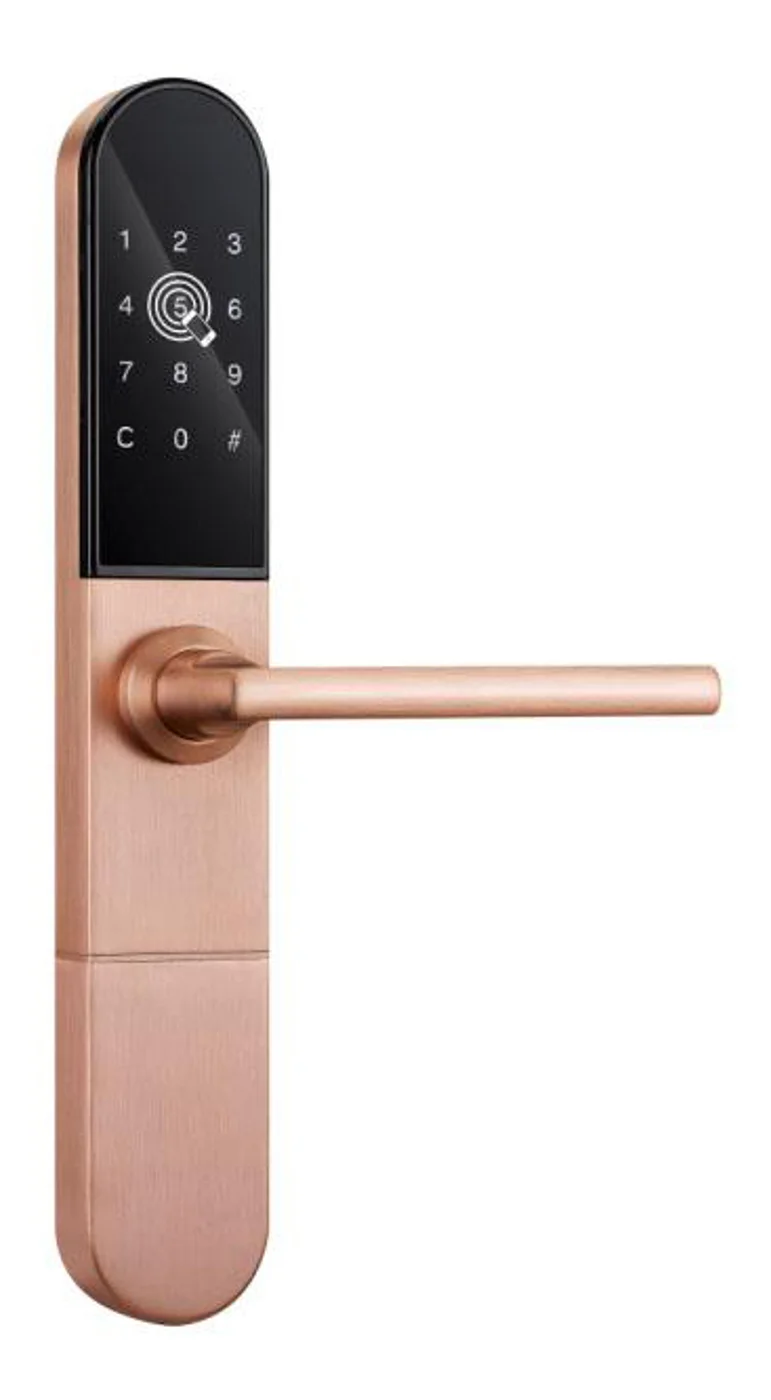
Smart Cabinet Lock — App-Managed, Multi-Site Dashboard
App-managed smart cabinet lock for office, parcel, and multi-site fleets. BLE app dashboard, audit trail, remote unlock, no per-lock server. Higher-tier chassis.
This page already points to it as the next recommended reference.
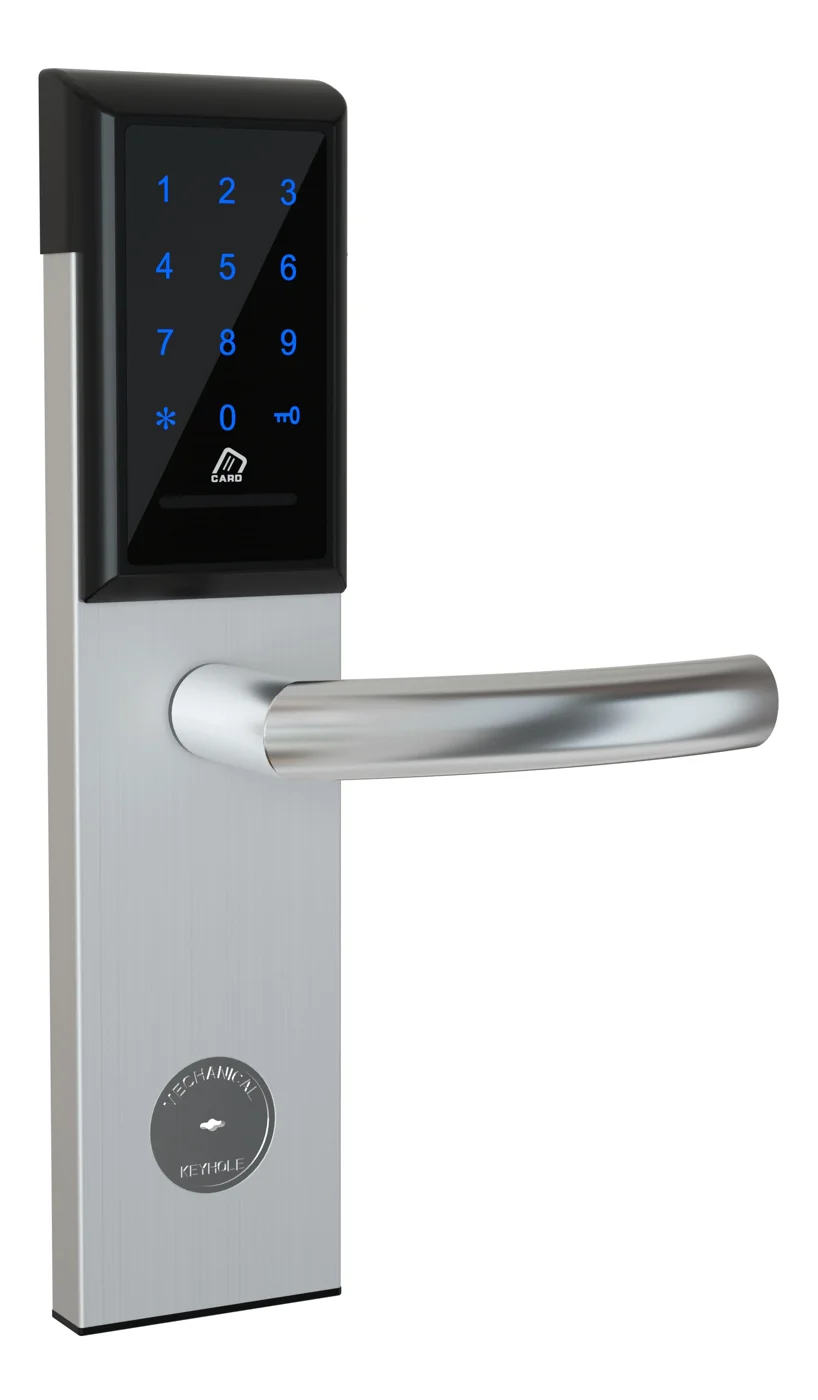
Office Cabinet Lock — PIN + Card for Filing & Pedestals
Offline PIN + card office cabinet lock for filing cabinets, pedestals, and drawers. Battery-powered 5-minute retrofit, no WiFi, no key management. CE/FCC/RoHS.
This page already points to it as the next recommended reference.
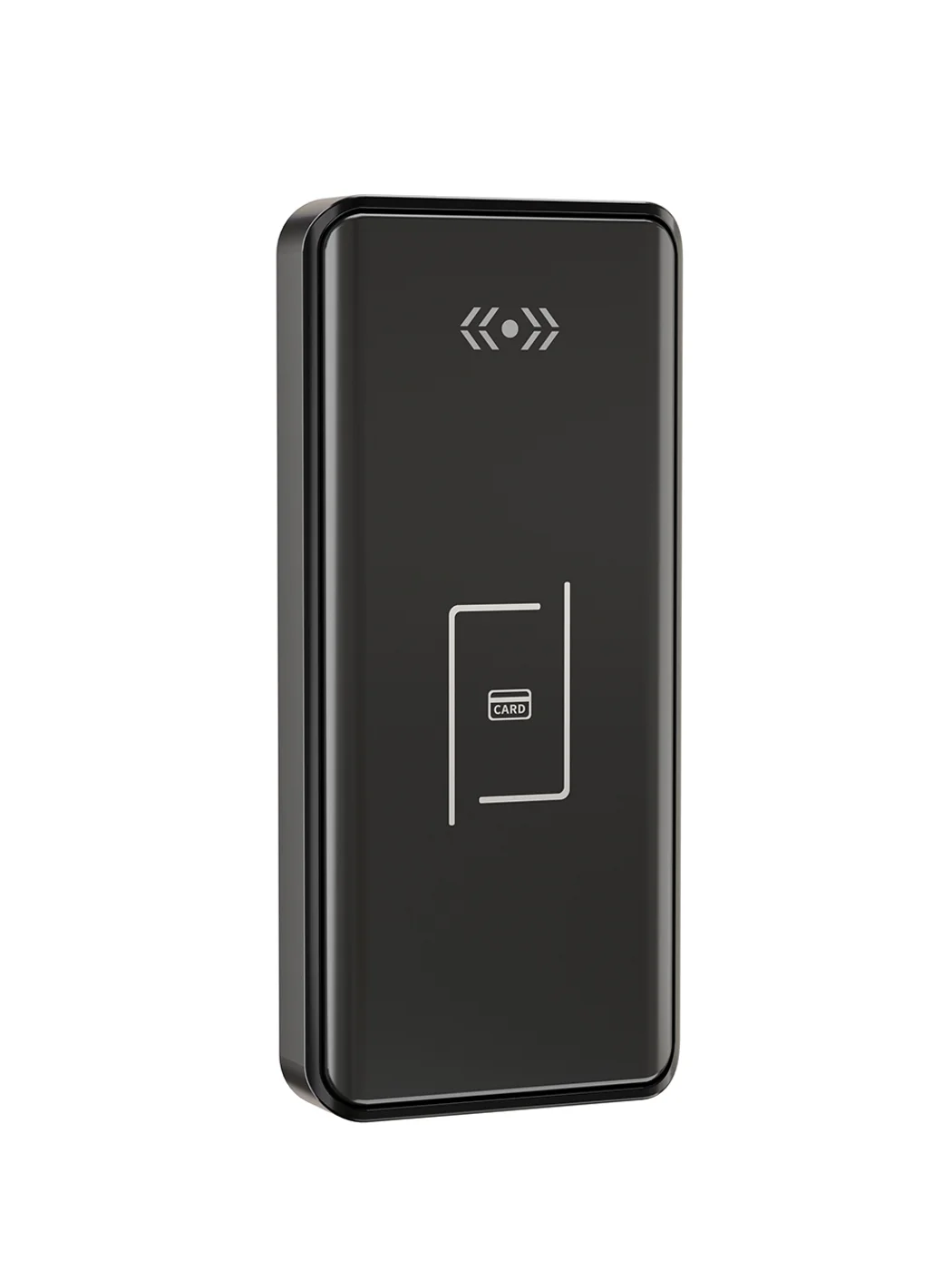
Gym Locker Lock — Offline Card, No WiFi Required
Offline card gym locker lock for fitness and pool lockers. MIFARE card, battery-powered 5-minute retrofit, no WiFi or server. Zinc alloy body, CE/FCC/RoHS.
This page already points to it as the next recommended reference.
Related blog posts
3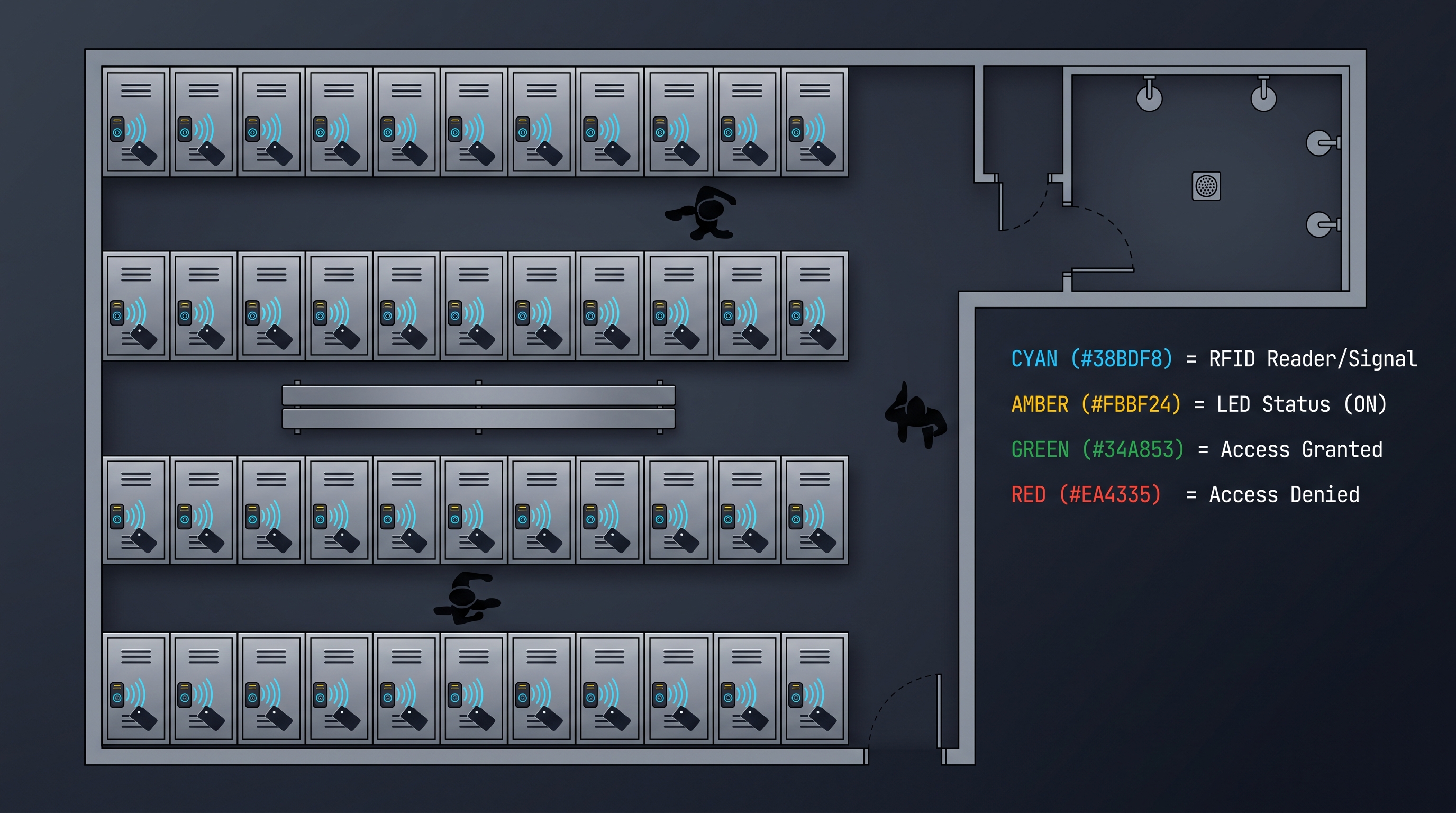
Electronic Locker Lock: The Complete 2026 Guide to Keyless Locker Security
Discover how an electronic locker lock works, from RFID to biometric models, with buying tips, specs, and comparisons for gyms, offices, and schools.
It supports the same product context: Gym Locker Lock — Offline Card, No WiFi Required.
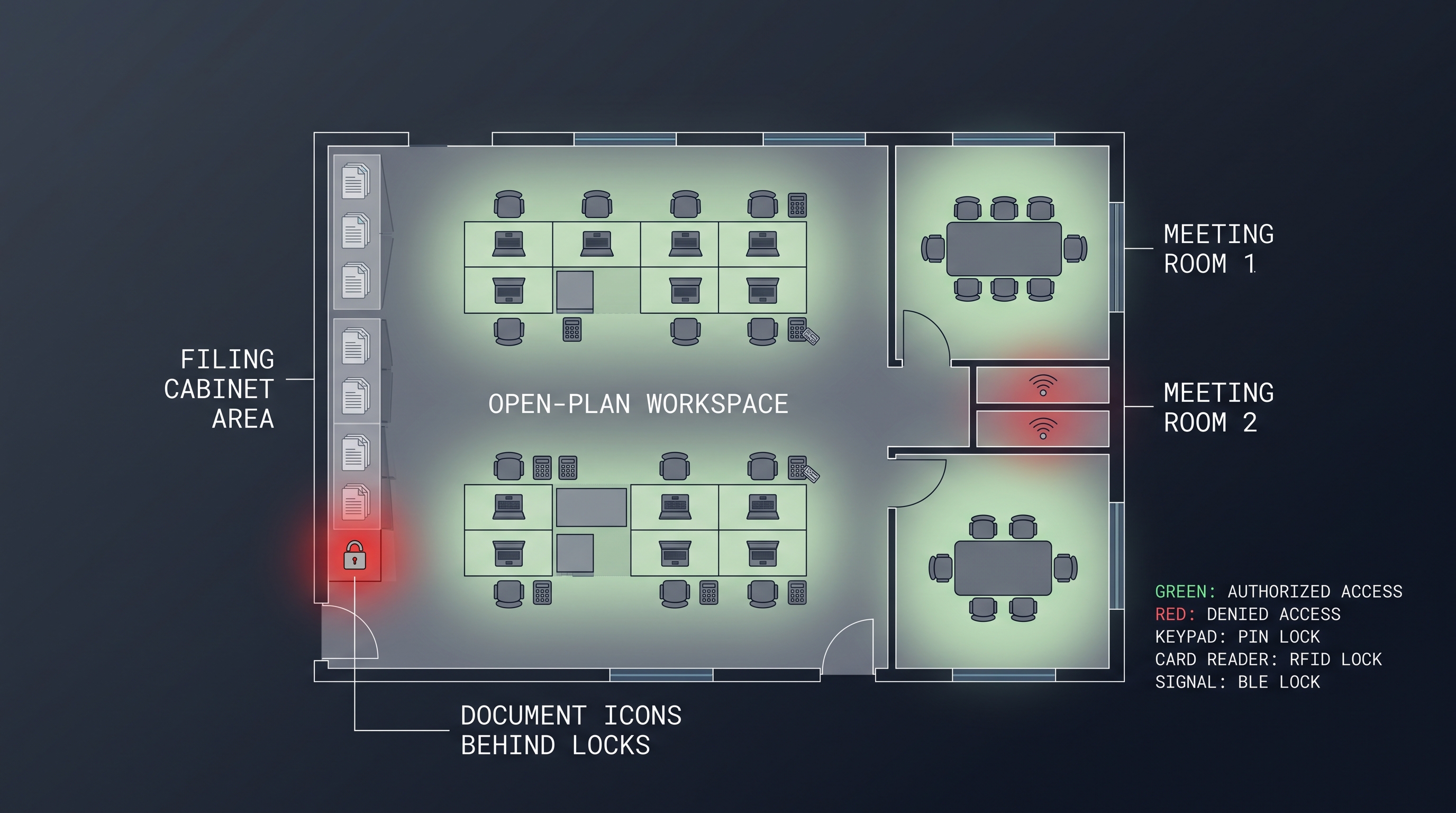
Electronic Furniture Lock: The Complete Guide to Powered Cabinet Security
Electronic furniture lock secures cabinets, drawers, and casegoods with RFID, BLE, PIN, or biometric credentials, replacing keys with auditable, managed access. Full guide.
It supports the same product context: Office Cabinet Lock — PIN + Card for Filing & Pedestals.
The Complete Guide to Electronic Drawer Lock Technology, Installation, and Deployment
Learn everything about electronic drawer lock technology: solenoid mechanisms, RFID/PIN/biometric credentials, fail-safe vs fail-secure, battery vs hardwired, audit, retrofitting, and office/healthcare/retail deployment.
It supports the same product context: Office Cabinet Lock — PIN + Card for Filing & Pedestals.
Specify your hotel project with our engineers
Send your room count, ceiling type, and protocol preference. We will return a sample plan and quote within 24 business hours.
- Move from general guidance into a product or application discussion.
- Use RFQ when pricing, drawings, MOQ, or launch timing needs structure.
- Keep a direct contact path visible for fast clarifications and handoff.