Electronic Furniture Lock: The Complete Guide to Powered Cabinet Security
Electronic furniture lock secures cabinets, drawers, and casegoods with RFID, BLE, PIN, or biometric credentials, replacing keys with auditable, managed access. Full guide.
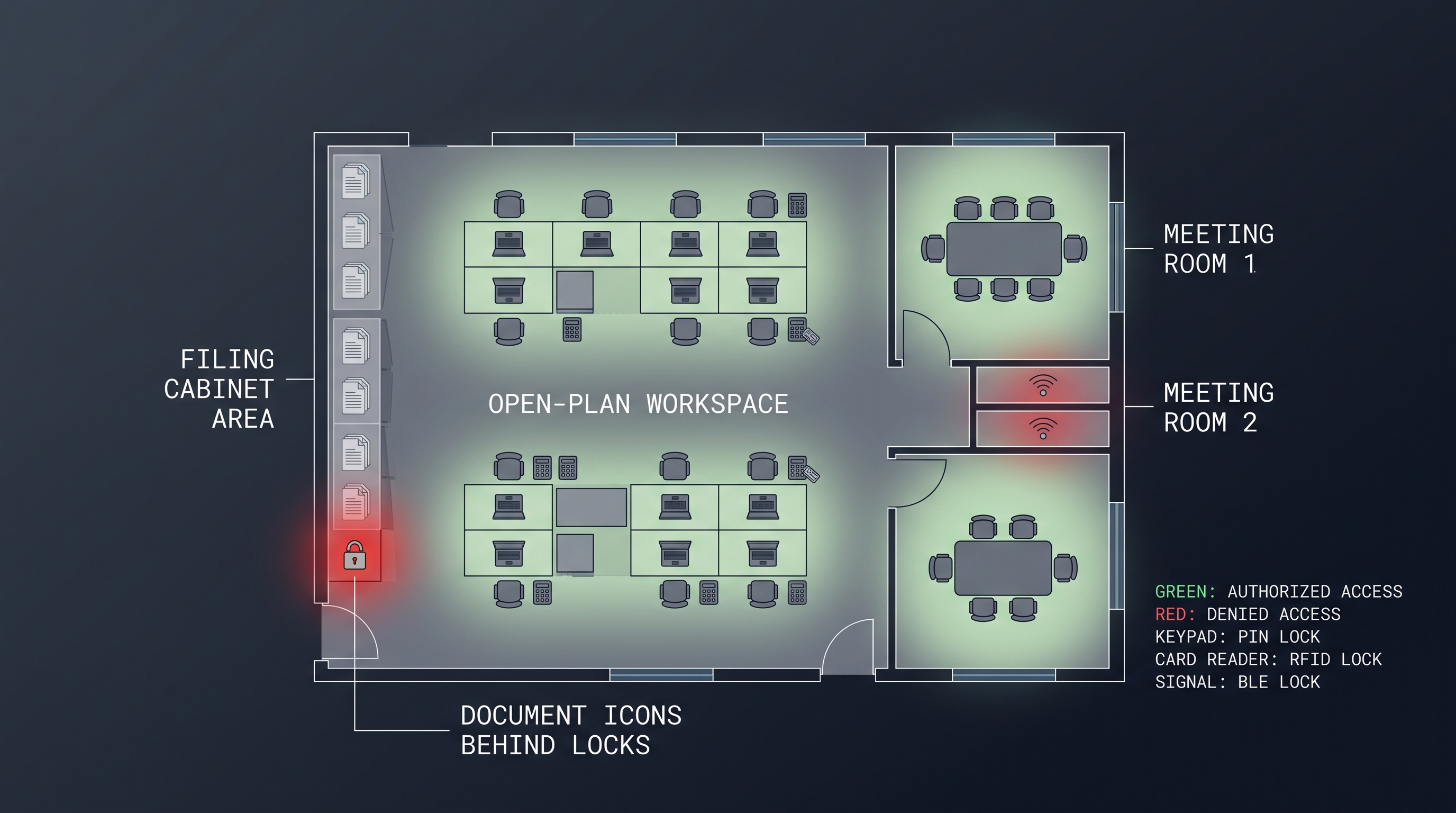
An electronic furniture lock is a powered locking device integrated into cabinets, drawers, casegoods, and other furniture that replaces a mechanical key with an electronic credential such as an RFID badge operating at 13.56 MHz, a Bluetooth Low Energy 5.0 signal from a smartphone, a PIN code entered on a capacitive keypad, or a fingerprint biometric, and records every access event in a tamper-resistant audit log. Typical models use a motored cam or solenoid to retract a steel bolt, draw power from two to four AA batteries lasting 12 to 24 months, and support 100 to 1,000 individual credentials with offline caching of authorizations. The electronic furniture lock communicates over BLE, WiFi at 2.4 GHz, Zigbee, or Z-Wave with a management server or cloud platform that provides role-based access control, real-time revocation, and compliance reporting. The lock body dimensions are typically 40 by 60 by 20 millimeters, the actuator cycle rating is 100,000 to 200,000 operations, and the credential exchange is encrypted with AES-128 or AES-256. An electronic furniture lock is specified for office pedestals, lateral filing cabinets, medical record carts, hotel minibars, retail display fixtures, and library archive drawers where controlled, auditable access is required.
What Is an Electronic Furniture Lock?
An electronic furniture lock is a category of lock purpose-built for furniture, deriving its locking authority from a battery-powered or wired electronic actuator rather than a mechanical key. The term "furniture" here encompasses not just residential pieces but the full range of commercial casegoods: filing cabinets, desk pedestals, credenzas, medical carts, hotel minibars, display cases, and storage cabinets of all types. The electronic furniture lock is designed to retrofit into the same mounting holes as mechanical cam locks, or to be built into new furniture at the factory, so it fits the 16 to 25 millimeter cylinder bore that is standard in the cabinet hardware industry. The lock faceplate presents the credential reader — an antenna for RFID, a capacitive pad for PIN, or a touch zone for smartphone BLE — flush with the cabinet surface.
The electronic furniture lock category has expanded rapidly because it addresses a fundamental limitation of mechanical furniture locks: the key. A mechanical furniture lock requires a physical key for every user, and every lost key forces a cylinder replacement or a rekey that costs 30 to 100 USD plus labor. The electronic furniture lock eliminates the physical key entirely, replacing it with a digital credential that is provisioned, revoked, and scheduled from a software platform. The credential list can be updated in seconds across an entire fleet, the audit trail is comprehensive, and the lock integrates with building access, HR, and compliance systems. For organizations with more than a handful of drawers to secure, the electronic furniture lock is operationally transformative.
The technical scope of the electronic furniture lock spans several engineering disciplines. The mechanical side must deliver a compact, low-power actuator that bolts a drawer reliably for hundreds of thousands of cycles, using a cam that engages the cabinet body with only a few millimeters of overlap. The electronic side must support multiple credential formats, encrypt every exchange, store a credential database in flash, and manage a battery that needs to last a year or more. The software side must provide a management platform that scales from one lock to thousands, with APIs that plug into the organization's existing identity infrastructure. The best electronic furniture lock products integrate all three disciplines into a coherent system that is easy for the installer, comfortable for the user, and secure for the administrator.
The difference between an electronic furniture lock and a building door lock is often underappreciated. A door lock is typically bigger, heavier, mains-powered, and designed for lower-frequency use by fewer people. The electronic furniture lock is smaller, battery-powered, and built for high-frequency, short-duration use by many different users in a single day. A nurse may open a medication cart drawer 80 times in a shift; an office worker may open their desk pedestal 15 times a day. The electronic furniture lock is engineered for that rhythm with lightweight motors, quick-cycling solenoids, and aggressive power management that puts the lock into a microamp sleep state between operations.
Core Architecture of an Electronic Furniture Lock
| Subsystem | Key Components | Role in the Electronic Furniture Lock |
|---|---|---|
| Reader | RFID antenna, BLE radio, keypad, fingerprint sensor | Captures the user credential |
| Controller | ARM Cortex-M MCU, flash, RAM | Validates credential, manages state |
| Actuator | DC motor or solenoid, gear train, bolt | Physically locks and unlocks |
| Power | AA cells or Li-ion pack, regulator | Provides energy to all circuits |
| Radio | BLE, WiFi, Zigbee, Z-Wave module | Connects to management platform |
| Interface | LED, buzzer, reset button | Gives user feedback and recovery |
How an Electronic Furniture Lock Works
The electronic furniture lock operates on a cycle that begins with credential presentation and ends with a logged open event. When a user presents an RFID badge, a BLE phone signal, or a PIN sequence on the lock's keypad, the reader captures the credential and passes a digitized payload to the microcontroller. The controller checks the credential against a locally stored authorization list, and if the time schedule allows access, the controller energizes the actuator for a brief pulse — typically 100 to 300 milliseconds for a solenoid or 500 to 1,500 milliseconds for a motor drive. The actuator retracts the bolt or cam, freeing the drawer or door to open. The controller increments a non-volatile event log entry with the credential ID, timestamp, and result, and the open state is held for a programmable dwell time of 3 to 10 seconds before the bolt re-extends automatically.
The credential validation path depends on the connectivity model of the electronic furniture lock. In offline mode, the controller consults a local database that was previously loaded by the administrator. In online mode, the lock sends the credential to a hub or cloud server and awaits an authorization decision. In hybrid mode, the lock checks local data first and defers to the server for complex decisions such as dual-authentication or site-wide revocation. The hybrid model is the standard for enterprise deployments because it combines the speed of local processing with the global awareness of a server. The electronic furniture lock must authenticate the server as well, using mutual TLS or a similar protocol, to prevent a rogue server from commanding unlocks.
Power management is the defining engineering challenge for the electronic furniture lock, because users expect a year or more of battery life from something they will not remember to service. The lock spends more than 99.9 percent of its life in a sleep state drawing single-digit microamps. It wakes on an interrupt from the reader or radio, processes the transaction as quickly as possible, and returns to sleep. The actuator pulse, radio transmission, and LED flash are the only significant energy events, and firmware is tuned to minimize each. Advanced models incorporate accelerometers to detect a cabinet move or vibration and trigger a tamper alert, and these sensors are also duty-cycled to conserve power. The engineering result is a battery life that is long enough to forget — which is the benchmark of good design in this category.
The bolt mechanism in the electronic furniture lock is typically a cam, not a deadbolt. The cam rotates into a slot in the cabinet frame, overlapping by 4 to 10 millimeters, and is held in the locked position by the motor back-drive torque or by a mechanical detent. This design is compact enough to fit the thin steel door of a filing cabinet and light enough that a small motor can drive it. The tradeoff is that the electronic furniture lock has less brute-force resistance than a heavy deadbolt, and it relies on tamper detection, alerting, and credential control for its overall security posture rather than on sheer physical strength. In a layered security design, the electronic furniture lock is one layer, and the room door, the alarm system, and the surveillance camera are the others.
Operating Cycle of an Electronic Furniture Lock
- Credential presented: RFID tap, BLE unlock, PIN entry, or fingerprint scan.
- Reader digitizes and passes the payload to the controller.
- Controller checks local authorization list and schedule constraints.
- If authorized, actuator energizes for a brief pulse and retracts bolt/cam.
- Drawer or door opens; event is logged with timestamp and credential ID.
- After dwell timeout or drawer close, bolt re-extends and lock re-arms.
Electronic Furniture Lock Credential Technologies
The credential is the user's interface to the electronic furniture lock, and the choice of credential technology determines the user experience, the security posture, and the integration complexity. RFID at 13.56 MHz is the most common choice for enterprise deployments because it reuses the existing corporate badge. Bluetooth Low Energy is the fastest-growing credential because it turns the user's smartphone into a key, enabling remote unlock, proximity auto-unlock, and phone-based credential management. PIN codes are the simplest and cheapest credential, requiring no hardware distribution, and they serve well as a backup or visitor credential. Fingerprint biometrics add a third factor for the highest-security environments, though they require enrollment and may be affected by dirt and skin condition.
The electronic furniture lock can support multiple credential types simultaneously, and this multi-credential capability is a practical advantage in diverse workplaces. A full-time employee might use their RFID badge for speed, a temporary contractor might use a time-limited PIN, and a remote administrator might use a BLE unlock from their phone. The lock's controller stores all credential types in its local database and applies the same security policies to each. The management platform should allow an administrator to define which credential types are accepted on which locks, creating zones where a high-security drawer requires dual-authentication while an adjacent supply drawer accepts a single badge.
NFC virtual cards are an emerging credential type that bridges physical and digital. A smartphone emulates a contactless card using the NFC controller and a virtual card stored in the phone's secure element. The electronic furniture lock reads the phone exactly as it reads a plastic card, with the same AES encryption and mutual authentication. The advantage is that the user receives their card credential over the air, provisioning takes seconds, and when the employee leaves, the virtual card is revoked from the device management platform simultaneously with the email account and building access. The electronic furniture lock that supports NFC virtual cards is positioned for the long term, as physical plastic cards gradually give way to phone-based identities.
Credential Comparison for Electronic Furniture Lock Deployment
| Credential Type | Reader Hardware | User Needs | Security Level | Deploy Effort |
|---|---|---|---|---|
| RFID (13.56 MHz) | Coil antenna, 10-50 mm range | Physical badge | AES-128, mutual auth | Reuse existing badges |
| BLE smartphone | BLE 5.0 chip, 1-10 m range | Company phone, app | AES-128, device binding | App deployment |
| PIN code | Capacitive or membrane keypad | Remember a code | Length-dependent | Zero user hardware |
| Fingerprint | Capacitive sensor | Enrolled finger | Biometric, liveness | Enrollment per user |
| NFC virtual card | NFC antenna, 10-40 mm | Phone with wallet | AES-128, SE-backed | OTA provisioning |
Electronic Furniture Lock Management Platform
The management platform is the brain of the electronic furniture lock system. From a browser or application, the administrator creates users, provisions credentials, assigns access to specific locks on specific schedules, monitors lock health, reviews audit logs, and generates compliance reports. The platform should support role-based access control so that a facility manager can view battery levels but cannot change credentials, while a security officer can do both. Multi-factor authentication for administrator accounts is essential, because compromise of the management platform compromises every lock. The platform should also expose a REST API with documented endpoints so that HR systems can automate the provisioning and revocation of credentials based on employee lifecycle events.
Audit is the feature that compliance officers buy. Every electronic furniture lock event — grant, deny, open, close, tamper, low battery, firmware update — is recorded with the credential ID, lock ID, timestamp, and result, and the events are aggregated in the platform for searching, filtering, and export. The logs should be stored immutably so that even a superuser cannot delete or modify entries. Export formats should include CSV and JSON for external analysis and PDF for audit submissions. Log retention should be configurable to match regulatory requirements, typically one to seven years. An electronic furniture lock without a credible audit trail is omitted from any compliance conversation.
Firmware and fleet management are the operational backbone of the platform. The administrator should be able to push firmware updates to all locks, or to a test group, and confirm successful deployment. Battery telemetry from each lock should be aggregated so that replacement can be batched by building and floor. Anomalies — a lock that has not reported in 24 hours, a lock with a sudden spike in denied attempts, a lock that is not responding to commands — should be surfaced in a dashboard widget that gets the right person's attention. The electronic furniture lock platform is essentially a fleet management system for physical access, and it needs the same operational rigor as any fleet management tool.
When evaluating platforms for the electronic furniture lock, ask about data residency, uptime SLAs, SOC 2 compliance, and the vendor's incident response plan. The platform is the carrier of your access governance, and the vendor's security is your security. A lock from a hardware vendor with a weak software platform is an operational risk, because the value of the electronic furniture lock is realized through the platform, not through the lock alone. The vendor's commitment to security patching, API stability, and data privacy is as important as the lock's physical specifications.
Management Platform Evaluation Criteria
| Criterion | Minimum Acceptable | Enterprise-Grade |
|---|---|---|
| Role-based access | Admin and viewer roles | Custom roles with granular permissions |
| Audit export | CSV | Immutable logs, PDF, JSON, API |
| API for provisioning | REST, documented | SAML, SCIM, HR system integration |
| Firmware updates | Manual, lock-by-lock | Scheduled OTA with test group |
| Battery telemetry | Per-lock voltage | Fleet aggregate, predictive replacement |
| Data residency | Vendor default | Selectable region, DPA available |
| Uptime SLA | 99.5% | 99.9% with penalty clause |
Electronic Furniture Lock for Office Furniture
The electronic furniture lock is most heavily deployed in the office furniture vertical, specifically in filing cabinets, desk pedestals, credenzas, and wall unit storage in corporate, legal, accounting, and consulting firms. The volume of confidential documents — HR files, pay stubs, contracts, client legal briefs, tax records — that flows through an office ensures that most offices will be cited for at least some cabinets that require locking. The traditional keyed cylinder costs 5 to 15 USD per cabinet, but key management across a 200-employee office costs thousands of dollars annually in rekey events, locksmith visits, and staff time. The electronic furniture lock turns that cost into a software operation: provision a new credential when someone is hired, revoke it when they leave, and schedule access so the cleaning crew can open supply cabinets but not HR cabinets.
Office furniture OEMs are integrating the electronic furniture lock into new product lines at the factory. Steelcase, Herman Miller, Haworth, and others now offer electronic locking on pedestal drawers and lateral file cabinets as a factory option, using an electronic furniture lock that fits into the standard cam lock cutout. The factory integration ensures the lock body and wiring are fully concealed and the drawer alignment is correct, and the lock is delivered pre-enrolled to the facility's management platform. This OEM channel is the fastest-growing distribution model for the electronic furniture lock, because it eliminates the retrofit installation cost and ensures compatibility.
The user experience in an office context is critical. An employee who opens their desk pedestal 15 times a day needs a fast, reliable, and simple interaction. The electronic furniture lock delivers this with a badge tap that takes under half a second, or a BLE auto-unlock that fires as the employee sits down, or a PIN code on a small keypad. The lock must not add friction to the workday, because if it does, users will prop the drawer open or leave it unlocked, defeating the security purpose. The best electronic furniture lock products are tuned for speed and reliability, with a mean time to unlock well under one second and a false-reject rate below 1 percent.
Office Furniture Deployment Patterns
| Furniture Type | Typical Electronic Furniture Lock Application | Access Model |
|---|---|---|
| Desk pedestal | Personal file drawer, laptop storage | Single user, BLE auto-unlock |
| Lateral file | Department shared files | Multiple users, RFID badge |
| Credenza | Office supplies, server equipment | Staff, schedule-gated |
| Wall storage | Archive boxes, supplies | Facility staff, PIN |
| Meeting room cabinet | AV equipment, HDMI cables | Room booking integrated |
Electronic Furniture Lock in Healthcare Furniture
Healthcare furniture is a demanding application for the electronic furniture lock because the environments are busy, the cleaning protocols are aggressive, and the regulatory compliance requirements are exacting. Medication carts, nursing station cabinets, exam room cabinets, and supply rooms in hospitals and clinics all use electronic furniture lock technology to secure controlled substances, patient records, and expensive supplies. The lock must withstand multiple daily cleanings with quaternary ammonium disinfectants, operate reliably for 50 to 100 cycles per day per drawer, and provide an audit trail that satisfies DEA, Joint Commission, and HIPAA requirements.
Infection control is a specific concern for the electronic furniture lock in healthcare. The lock faceplate must be sealed to prevent liquid ingress during spray-and-wipe cleaning, and the faceplate material must resist the corrosive effects of hospital-grade disinfectants. Stainless steel faceplates with IP65 sealing are the preferred specification, and they are cleaned with the same protocol as the rest of the furniture. The credential reader should work through the cleaning chemical residue, which can form a hazy film after repeated cleaning. An IP65-rated electronic furniture lock with a stainless faceplate and a chemically resistant capacitive touch sensor is the reference design for healthcare furniture.
Medication security is the highest-stakes application. The electronic furniture lock on a medication cart drawer must secure Schedule II through Schedule V controlled substances according to DEA regulations, which require a physical lock plus an audit trail and, for Schedule II drugs, additional physical security measures. The electronic furniture lock provides the lock and the audit trail, and dual-authentication modes — badge plus PIN, or badge plus biometric — provide the additional control that high-risk medications require. When a medication cart is prepared for a shift, the nurse's credentials are provisioned during the medication loading process, and the credentials expire at the end of the shift, preventing stale access from accumulating.
Healthcare Furniture Security Requirements
| Application | Security Requirement | Electronic Furniture Lock Configuration |
|---|---|---|
| Medication cart | DEA controlled substance lock and audit | Dual-auth, AES-256, immutable log |
| Patient record cabinet | HIPAA access control and audit | Role-based access, schedule window |
| Supply room cabinet | Access restricted to authorized staff | PIN or badge, no schedule restriction |
| Crash cart | Quick access, locked until needed | Break-glass seal with simultaneous unlock |
| Lab specimen cabinet | Chain of custody | Biometric, log every access |
Electronic Furniture Lock in Hospitality
Hotels, resorts, and cruise ships deploy the electronic furniture lock in guest room casegoods — minibars, safes, desk drawers, and closet cabinets — and in back-of-house areas such as housekeeping supply rooms and maintenance cabinets. The guest-accessible electronic furniture lock integrates with the property management system so that the guest's room keycard also unlocks the in-room minibar and safe. This single-credential convenience eliminates the separate safe code and the separate minibar key that hotel guests historically lost or forgot, and it allows the hotel to charge or comp minibar access at check-in with a property management system flag.
The revenue implications matter to the hotel operator. A minibar secured with an electronic furniture lock that is unlocked by the guest's room key can be automatically authorized on check-in (for VIP guests), restricted on check-in (for cash bookings), or priced as an add-on. The audit trail records every access, so billing disputes can be resolved with data rather than argument. The electronic furniture lock on a minibar also supports a cleaning mode: when housekeeping knocks on the door, their badge unlocks the minibar for a 30-minute restocking window, and the minibar access is logged to the housekeeping account, not the guest account. This separation of access streams is impossible with a keyed minibar lock.
Back-of-house hotel applications include the electronic furniture lock on housekeeping carts and supply closets. A housekeeping cart that carries linens, amenities, and cleaning chemicals is itself a valuable asset, and the electronic furniture lock secures the cart drawers when the cart is left unattended in a corridor. The housekeeper's badge unlocks the cart drawer during cleaning rounds, and the event log records who accessed the cart and when, providing data for loss prevention and time-motion studies. Similarly, the linen closet at the end of the hall can be secured with an electronic furniture lock that accepts housekeeping badges but not guest badges, ensuring only authorized staff access the linens and supplies.
Hospitality Deployment Matrix
| Furniture Type | Electronic Furniture Lock Purpose | Integration |
|---|---|---|
| Minibar | Chargeable guest access, restocking | PMS, POS, billing |
| In-room safe | Guest keycard access, no code to forget | PMS, guest key system |
| Desk drawer | Secure corpotate traveler laptop storage | PMS, guest key system |
| Housekeeping cart | Secure supplies during rounds | Staff badge system |
| Linen closet | Restrict access to authorized staff | Staff badge system |
| Maintenance cabinet | Secure tools and parts | Engineering badge system |
Selecting an Electronic Furniture Lock
Selecting the right electronic furniture lock requires matching the lock's specifications to the furniture it will secure, the users it will serve, and the environment it will occupy. Begin with the furniture type: a filing cabinet, a pedestal drawer, an overhead cabinet, a display case, a cart, or a locker. Measure the existing cylinder bore or the available mounting area, the cam length and offset, the drawer thickness, and the cabinet frame geometry. An electronic furniture lock that does not fit mechanically cannot be made to work, so this step is non-negotiable.
Next, define the access model. How many users will access the lock, how frequently, and with what kind of credential? If the building already has an RFID badge system, specify an electronic furniture lock that reads the same badge type. If users will not carry badges, specify BLE smartphone credentials or PIN codes. If the deployment is in a regulated industry, specify the audit trail format, the encryption level, and the credential security features that the regulator expects. These decisions bind the hardware choice and cannot be changed later without replacing the locks.
Finally, evaluate the management platform and the total cost of ownership. The platform must integrate with the organization's identity, HR, and security systems, and it must provide the compliance reports and audit exports that the organization requires. The total cost of ownership includes hardware, batteries, platform licensing, installation labor, and training, projected over five years. An electronic furniture lock that costs twice as much in hardware but saves five times its hardware cost in key management labor over five years is the better investment. Run the TCO numbers before buying; the initial hardware cost is a fraction of the lifecycle cost.
Electronic Furniture Lock Selection Checklist
- Furniture type and mechanical fit: bore diameter, cam length, door thickness.
- Credential strategy: RFID badge type, BLE smartphone, PIN, or multi.
- User count and access frequency: local storage capacity, actuator duty cycle.
- Environment: indoor, outdoor, healthcare (disinfectants), temperature range.
- Regulatory compliance: audit immutability, encryption standard, log retention.
- Management platform: RBAC, API, firmware OTA, SOC 2, data residency.
- Total cost: hardware, batteries, licensing, labor, projected over five years.
Electronic Furniture Lock Installation Best Practices
Installing an electronic furniture lock is a retrofit job that an in-house facilities team can typically handle, but it requires precision and thorough testing. The mechanical installation replaces the existing cylinder with the electronic unit, using the same bore and screw pattern. The installer removes the old cylinder, slides the electronic furniture lock into the bore, secures it with the supplied hardware, adjusts the cam to match the cabinet frame, and tests the lock action. The electronic installation involves inserting batteries, pairing the lock with the hub or gateway, enrolling an administrator credential, and testing a full unlock-lock cycle. Most installations take 20 to 40 minutes per drawer.
Surface preparation is important for a clean installation. The cabinet surface around the bore should be clean and flat, and any burrs from the old cylinder should be filed smooth. The lock faceplate must sit flush against the cabinet surface, and the mounting screws must be tightened to the manufacturer's torque specification to avoid distorting the lock body. If the lock uses a gasket for dust or water sealing, the gasket must be seated correctly and compressed evenly. These small details determine how the lock looks from outside and how well it resists environmental ingress.
Commissioning and testing close the installation. The installer should test the lock with every credential type that will be used, verify that the lock communicates with the management platform, confirm that events are appearing in the audit log, and run the lock through at least 20 unlock-lock cycles to check for binding or inconsistent actuation. The emergency key override should be tested, and the emergency key should be stored in a secure, documented location. The installer should also confirm that the lock's battery level is being reported in the platform and that the low-battery alert threshold is set correctly. A thorough commissioning catches problems before the lock goes into production use, where a failure could block access to a drawer and require a service call.
Installation Procedure for Retrofit
- Remove the old cylinder, measure the bore and cam dimensions.
- File any burrs around the bore to create a flat mounting surface.
- Assemble the electronic furniture lock with the correct cam for the cabinet.
- Slide the lock body into the bore and secure with the supplied screws.
- Adjust cam length and offset so the cam engages the frame with the drawer closed.
- Insert batteries, pair the lock with the hub or gateway.
- Enroll administrator and user credentials; test each credential type.
- Verify platform connectivity, audit logging, and battery telemetry.
- Test the emergency key override and document the key location.
- Run a 20-cycle burn-in test and confirm zero failures.
Electronic Furniture Lock Maintenance and Lifecycle
Maintenance for the electronic furniture lock is light but not zero. The primary maintenance tasks are battery replacement, firmware updates, mechanical inspection, and credential hygiene. Batteries should be replaced on the schedule indicated by the platform's telemetry, not a fixed calendar, because battery life varies with usage frequency, radio duty cycle, and temperature. Firmware should be updated within 30 days of release to close security vulnerabilities. Mechanical inspection should verify cam engagement, bolt travel, and absence of binding, and should be done annually. Credential hygiene means reviewing the active credential list periodically, revoking credentials for former users, and confirming that schedule restrictions are still appropriate.
Troubleshooting common problems with the electronic furniture lock follows a logical sequence. If the lock does not respond at all, check battery voltage first — dead batteries are the most common failure mode. If the lock responds but a valid credential is denied, check that the credential is still in the authorization list and that schedule restrictions are not blocking access. If the lock unlocks but the drawer does not open, the cam is likely misaligned or the drawer is binding. If the lock is not reporting to the platform, check the radio link and the hub or gateway. If the lock shows signs of physical attack, review the audit log for tamper events and investigate the physical evidence.
Decommissioning an electronic furniture lock requires deliberate steps to prevent the lock from becoming a security liability in its next life. Factory-reset the lock to erase the credential database and the network configuration. Remove the lock from the management platform so that it stops appearing in fleet dashboards. Physically remove the lock from the furniture and inspect the mounting area for damage. If the lock is being transferred to another application, re-enroll it as a new device with a clean credential database. If the lock is being disposed of, follow the applicable e-waste regulations for batteries and electronics. A decommissioned electronic furniture lock that still holds active credentials is a dormant security risk that can surface when the furniture is reused or sold.
Annual Maintenance Checklist
- Replace batteries on all locks showing voltage below platform threshold.
- Update firmware fleet-wide, starting with a test group of 10 percent.
- Inspect cam engagement and bolt travel on a sample of 10 percent of locks.
- Apply dry lubricant to the cam and striker contact surfaces.
- Review the active credential list and revoke any unused or former-user credentials.
- Test the emergency key override on a sample of locks.
- Export and archive the annual audit log for compliance retention.
Electronic Furniture Lock Frequently Asked Questions
An electronic furniture lock is a powered cabinet locking device that replaces a mechanical key with a digital credential, providing auditable, managed access to drawers, cabinets, and casegoods in office, healthcare, hospitality, and institutional environments. The most common questions come from facility managers, security officers, and furniture specifiers who need to understand the capabilities, limitations, and costs of the technology before procurement and deployment.
How long does the electronic furniture lock battery last?
Battery life on four AA alkaline cells is 12 to 24 months under typical usage of 20 to 50 operations per day, with the management radio traffic accounted for. Higher-frequency drawers, colder environments, and aggressively polled radios shorten battery life. Lithium AA cells extend life to 24 to 36 months. The management platform reports battery voltage and alerts when capacity drops below a configurable threshold, usually 20 percent.
Can the electronic furniture lock work if the network is down?
Yes. Most electronic furniture lock models cache credential authorizations locally, so users continue to open drawers with their existing credentials. Remote management, credential revocation, and live audit updates are queued and synchronize when connectivity resumes. The lock will operate normally for the cached authorization period, which can be indefinite if the database does not need to change.
Does the electronic furniture lock require special cabinet preparation?
In retrofit applications, the electronic furniture lock fits the same 16 to 25 millimeter cylinder bore as the mechanical lock it replaces. No additional drilling or cabinet modification is needed. In OEM applications, the lock is factory-installed in a cutout prepared by the furniture manufacturer. The only compatibility check is the cam length and offset, which must match the cabinet frame.
What happens if a user loses their credential for the electronic furniture lock?
If the user loses an RFID badge, the credential is revoked in the management platform, and the lock rejects that badge from that point forward. A new badge is provisioned for the user. If the user loses a PIN, a new PIN is assigned. Because credentials are digital, the cost of a lost badge is the replacement badge, not a cylinder rekey. The audit trail shows the badge was revoked and replaced, creating a clear chain of custody.
Is the electronic furniture lock weather-resistant?
Electronic furniture lock models are available with IP ratings from IP54 to IP65, suitable for outdoor furniture, unconditioned storage, and wet environments. Standard office-grade models are IP41 or IP42, suitable for indoor use with no significant exposure to moisture or dust. For outdoor or marine applications, specify an electronic furniture lock with a stainless steel body and an IP rating of at least IP65.
Can the electronic furniture lock be integrated with my building access control system?
Most enterprise-grade electronic furniture lock platforms offer a REST API that allows integration with building access control, HR, and identity management systems. Integration scope varies by vendor: some offer direct access control system plugs (Lenel, Genetec, SALTO), while others provide a generic API that the integrator must code against. Confirm integration scope and API documentation during the evaluation.
Part of this article content is generated by AI and optimized for professional accuracy and readability.
Not sure which sensor fits your project?
Talk to our mmWave application engineers for a free consultation.
Find the right presence sensor for your hotel project
Compare the 3 protocols, check hotel-specific case studies, and download the installation guide
Related products
3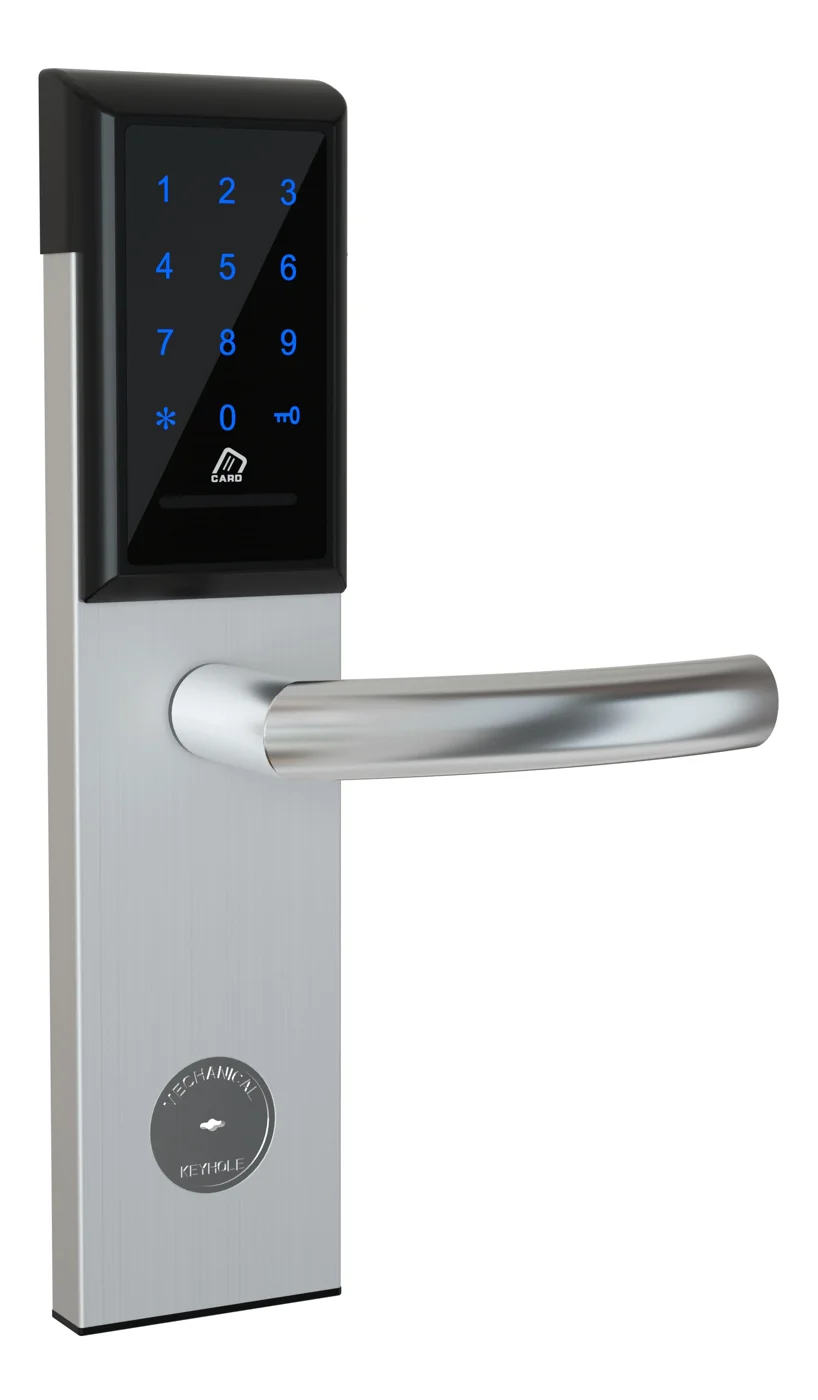
Office Cabinet Lock — PIN + Card for Filing & Pedestals
Offline PIN + card office cabinet lock for filing cabinets, pedestals, and drawers. Battery-powered 5-minute retrofit, no WiFi, no key management. CE/FCC/RoHS.
This page already points to it as the next recommended reference.
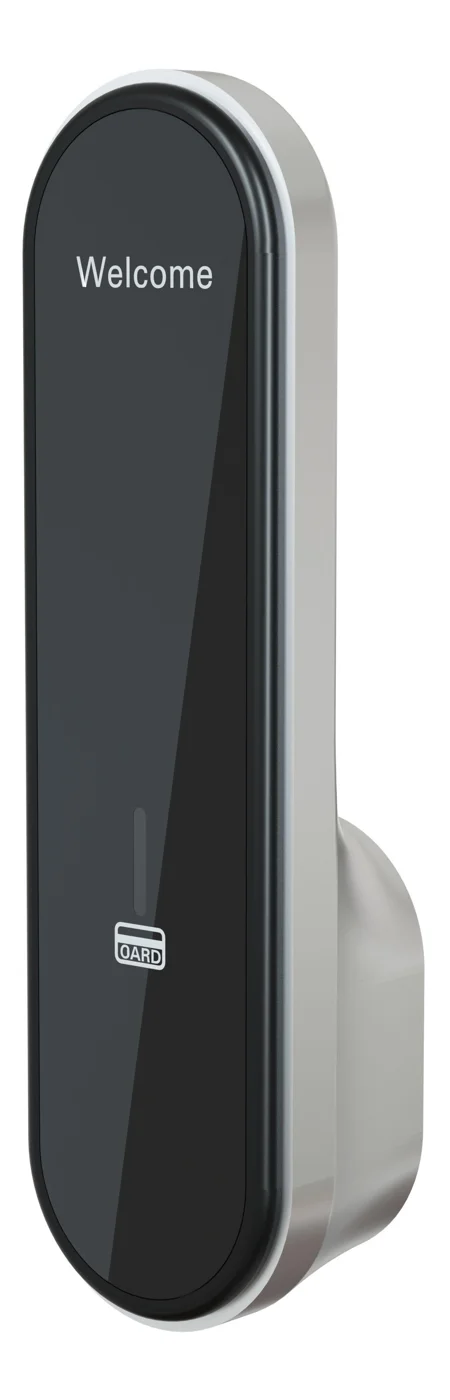
RFID Cabinet Lock — MIFARE Card, Offline Authentication
Offline MIFARE RFID cabinet lock for gym, spa, and office lockers. Tap-to-unlock 13.56 MHz, no WiFi needed, 5-minute retrofit. Zinc alloy body, battery-powered.
This page already points to it as the next recommended reference.
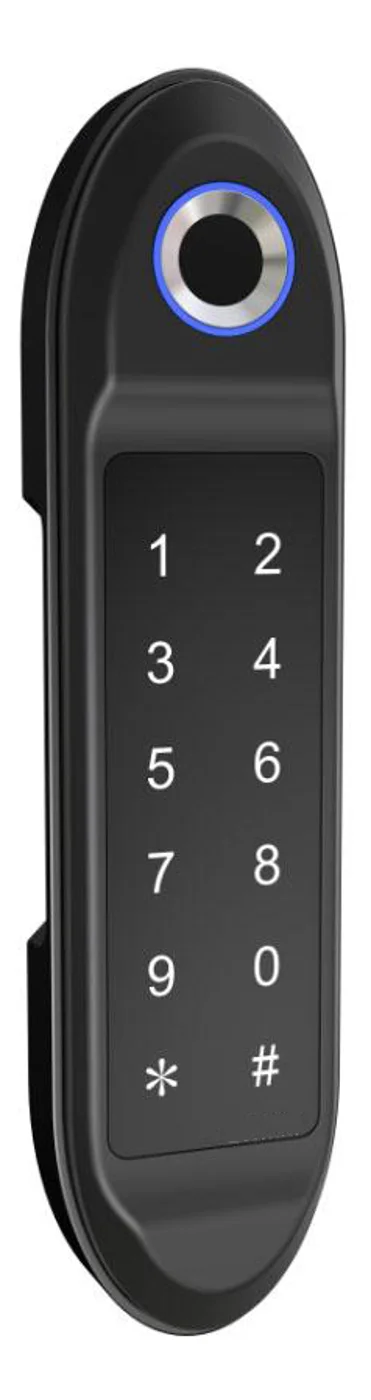
PIN Code Electronic Cabinet Lock — Stand-Alone, No WiFi
Offline keypad cabinet lock for gym, office and parcel lockers. Battery-powered, 5-minute retrofit, audit-free simple deployment. PIN + MIFARE card, DC 6V, 4×AA.
This page already points to it as the next recommended reference.
Related blog posts
3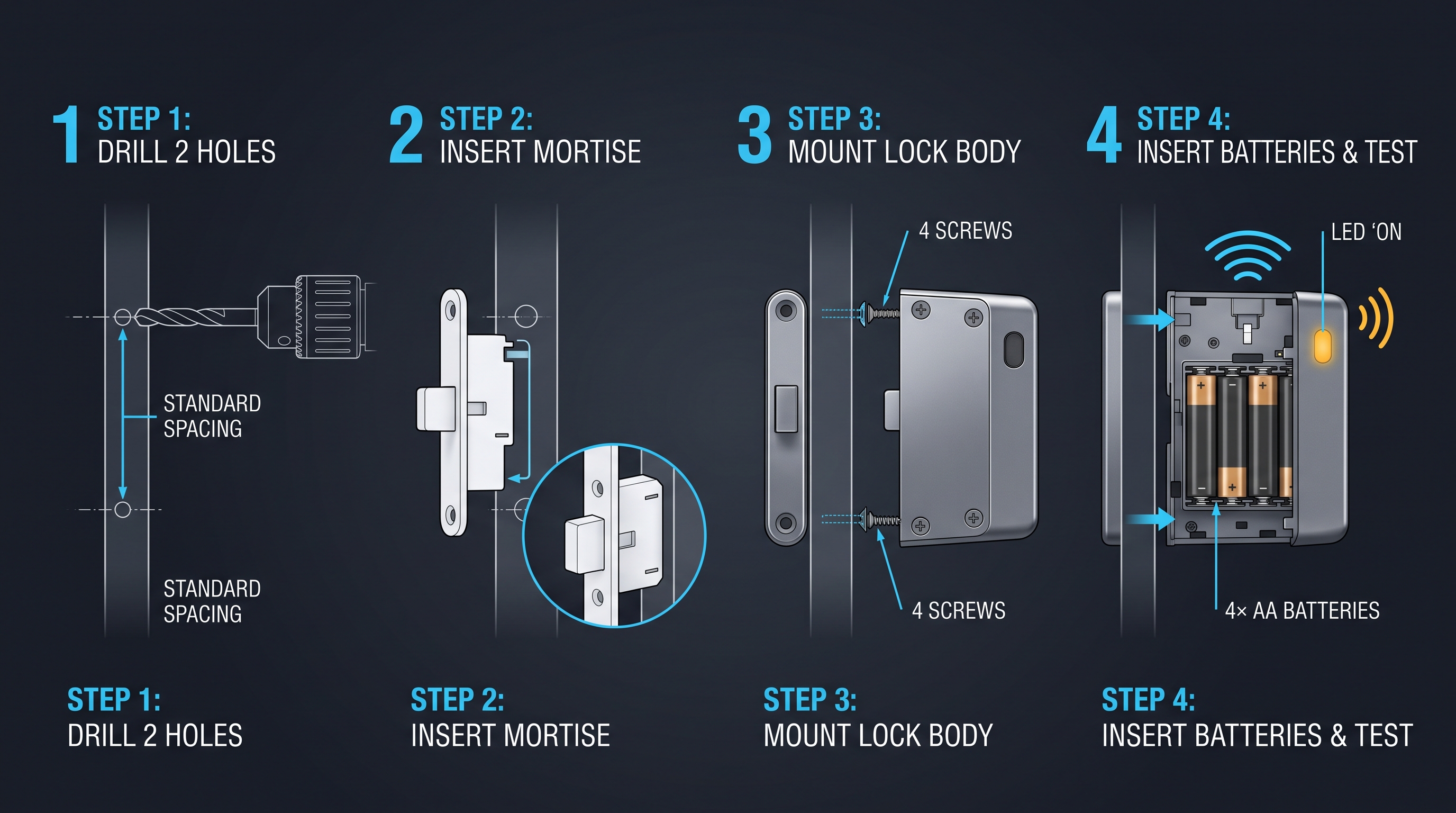
Electronic Locker Lock Price: Complete Guide to Cost Factors, Tiers, and Vendor Negotiation
Understand what drives an electronic locker lock price — from credential types and materials to volume discounts, NRE tooling, shipping, and 5-year TCO. Full pricing guide with tables.
It supports the same product context: Office Cabinet Lock — PIN + Card for Filing & Pedestals.
Electronic Locker Lock: The Complete 2026 Guide to Keyless Locker Security
Discover how an electronic locker lock works, from RFID to biometric models, with buying tips, specs, and comparisons for gyms, offices, and schools.
It supports the same product context: PIN Code Electronic Cabinet Lock — Stand-Alone, No WiFi.
The Complete Guide to Electronic Drawer Lock Technology, Installation, and Deployment
Learn everything about electronic drawer lock technology: solenoid mechanisms, RFID/PIN/biometric credentials, fail-safe vs fail-secure, battery vs hardwired, audit, retrofitting, and office/healthcare/retail deployment.
It supports the same product context: Office Cabinet Lock — PIN + Card for Filing & Pedestals, RFID Cabinet Lock — MIFARE Card, Offline Authentication, PIN Code Electronic Cabinet Lock — Stand-Alone, No WiFi.
Specify your hotel project with our engineers
Send your room count, ceiling type, and protocol preference. We will return a sample plan and quote within 24 business hours.
- Move from general guidance into a product or application discussion.
- Use RFQ when pricing, drawings, MOQ, or launch timing needs structure.
- Keep a direct contact path visible for fast clarifications and handoff.