Digital Cabinet Lock: The Complete 2026 Guide to Electronic Cabinet Security
A digital cabinet lock replaces keyed cylinders with PIN, RFID, Bluetooth, or biometric access. Compare types, installation, security, and buying tips for 2026.
A digital cabinet lock is an electronic locking device designed for cabinets, drawers, lockers, wardrobes, and storage units that replaces a mechanical key with digital authentication methods including PIN codes, RFID cards, Bluetooth smartphone apps, biometric fingerprints, or a combination of these credentials. Unlike a keyed cylinder that can be picked, bumped, or duplicated at any hardware store, a digital cabinet lock validates a credential against an internal database before energizing a motorized cam, solenoid bolt, or electromagnetic latch, completing the unlock cycle in 200 to 800 milliseconds. Modern units store 20 to 2,000 individual credentials, log 500 to 10,000 audit events with timestamps, and operate for 8 to 24 months on AA or CR2 batteries. The digital cabinet lock category spans cam-lock replacements fitting standard 19 to 25 mm holes, surface-mount deadbolts, drawer latches, and cable locks, accommodating door thicknesses from 12 to 35 mm. Key applications include office filing cabinets, home medicine cabinets, gym lockers, hotel minibars, retail display cases, gun safes, laboratory chemical storage, and RV or marine cabinetry, with most quality products carrying CE, FCC, and RoHS certifications.
What Is a Digital Cabinet Lock
A digital cabinet lock is a self-contained electronic access control device mounted on or inside a cabinet door, drawer, locker, or wardrobe that grants entry only after verifying a digital credential such as a PIN code entered on a keypad, an RFID card or fob presented to a reader, a Bluetooth signal from a paired smartphone, a fingerprint scanned by a biometric sensor, or a combination of these authentication factors. Every digital cabinet lock integrates a microcontroller that runs embedded firmware, a credential input interface, a motorized or solenoid-driven locking actuator, a battery power source, and an audit log storage medium, packaging what was once a building-scale access control system into a device small enough to fit inside a single cabinet door. The digital cabinet lock differs from a traditional mechanical cam lock in that it eliminates the physical keyway entirely, removing the attack surface for picking, bumping, and key duplication while adding digital attack surfaces that require encryption, tamper detection, and secure firmware to defend.
The digital cabinet lock market has grown rapidly since 2020 as component costs fell and consumer awareness of electronic security options increased. A functional digital cabinet lock that once cost over 80 dollars in 2018 now retails under 30 dollars for a basic keypad model, while premium models with Bluetooth, biometric, and cloud connectivity occupy the 60 to 150 dollar range. This price compression has moved the digital cabinet lock from a specialty commercial product to a mainstream consumer category available in hardware stores, online marketplaces, and smart home catalogs. The digital cabinet lock now appears in homes, offices, gyms, hotels, hospitals, schools, and government facilities, adapting its authentication method and feature set to the security requirements and user population of each environment.
The architectural distinction between a digital cabinet lock and a simple electromagnetic latch lies in the credential management layer. A basic electric strike or magnetic lock simply releases when power is applied, requiring an external access controller to decide who is authorized. A digital cabinet lock by contrast carries the entire access control pipeline inside the lock body: it reads the credential, validates it against a stored list, applies time and schedule restrictions, actuates the bolt, and logs the event, all without any external controller or wiring. This self-contained architecture is what makes the digital cabinet lock practical for retrofit installation on existing cabinets where running network cabling or power wiring is impractical, and it is the reason the digital cabinet lock has displaced traditional electromechanical cabinet security in most new office and institutional construction.
How a Digital Cabinet Lock Differs from a Mechanical Lock
The fundamental difference between a digital cabinet lock and a mechanical lock is the authentication mechanism. A mechanical lock relies on the physical geometry of a key and pin tumbler or wafer mechanism, where the correct key aligns internal components to allow the cylinder to rotate. A digital cabinet lock replaces this physical interaction with an electronic credential check, where a microcontroller compares the presented credential against stored authorization data and commands an actuator to retract the bolt. This shift eliminates the keyway as an attack surface, removes the risk of key loss or duplication, and enables features impossible with mechanical locks including multi-user access, time-based scheduling, audit trails, and remote management. However, the digital cabinet lock introduces new considerations including battery dependency, electronic attack surfaces, firmware vulnerabilities, and the need for emergency access methods when power fails.
| Feature | Mechanical Cam Lock | Digital Cabinet Lock |
|---|---|---|
| Authentication | Physical key | PIN, RFID, Bluetooth, biometric |
| Key duplication risk | High (any hardware store) | None (no physical key) |
| Picking resistance | Moderate (5-15 min by expert) | N/A (no keyway) |
| Multi-user support | No (one key per lock) | Yes (20-2,000 users) |
| Audit trail | No | Yes (500-10,000 events) |
| Time-based access | No | Yes (schedules, expiring credentials) |
| Remote management | No | Yes (Bluetooth, Wi-Fi, cloud) |
| Battery dependency | None | 8-24 months per set |
| Emergency override | Spare key | USB power, mechanical key, master PIN |
| Cost range | 5-30 dollars | 20-150 dollars |
Core Components of a Digital Cabinet Lock
Every digital cabinet lock shares a common hardware architecture consisting of five core subsystems. The credential input interface is the component the user interacts with, whether a capacitive touch keypad, an RFID antenna coil, a Bluetooth Low Energy radio module, a fingerprint sensor, or a combination of these. The microcontroller unit, typically an ARM Cortex-M0 or M4 processor clocked at 48 to 96 MHz, executes the lock's firmware, manages cryptographic operations for credential validation, and coordinates communication between subsystems. The locking actuator, usually a brushed or brushless DC gear motor driving a cam or bolt, or a solenoid with spring return, physically secures and releases the cabinet door, drawing 80 to 300 milliamps during the 200 to 500 millisecond actuation window. The power management subsystem, centered on a battery holder for AA or CR2 cells plus a low-dropout voltage regulator and sleep-mode control circuitry, provides stable power while minimizing consumption to 5 to 20 microamps during idle periods. The storage subsystem, combining flash memory for firmware and credential databases plus EEPROM or FRAM for audit log events, retains all configuration and access history even when batteries are removed for replacement.
How a Digital Cabinet Lock Works
A digital cabinet lock operates through a multi-stage authentication and actuation pipeline that begins when a user presents a credential and ends with the locking bolt retracting to allow cabinet access, with the entire sequence completing in 200 to 800 milliseconds depending on the authentication method and lock hardware. The process starts when the lock's microcontroller wakes from its low-power sleep state, triggered either by a capacitive touch on the keypad or sensor surface, by an RFID tag entering the reader field, by a Bluetooth connection request from a paired smartphone, or by a mechanical wake button. Once awake, the digital cabinet lock powers up the relevant credential input interface, captures the credential data, and compares it against the authorization database stored in flash memory. If the credential matches an authorized entry and any applicable time or schedule restrictions are satisfied, the microcontroller sends a drive signal to the actuator, which retracts the bolt or rotates the cam to unlock the cabinet. The lock then logs the event with timestamp, user identity, and authentication method before returning to sleep.
The authentication latency varies significantly across credential types, directly affecting the user experience of the digital cabinet lock. A PIN code entered on a keypad typically validates in 100 to 300 milliseconds after the final digit is pressed, since the comparison is a simple database lookup. An RFID card presentation takes 150 to 400 milliseconds including the anti-collision and UID reading protocol overhead. A Bluetooth unlock from a smartphone app requires 200 to 500 milliseconds for the encrypted command exchange, plus additional latency if the phone must wake from background state. A biometric fingerprint scan takes 300 to 800 milliseconds including image capture, feature extraction, and template matching. The digital cabinet lock manufacturer tunes each authentication path to minimize perceived delay, because a lock that hesitates erodes user confidence and drives workarounds like propping the cabinet open. A well-engineered digital cabinet lock completes the full authentication and actuation sequence fast enough that the user perceives the digital cabinet lock as instantaneous, which is critical for adoption in high-traffic environments where even a one-second delay on the digital cabinet lock would cause user frustration.
Authentication Methods in a Digital Cabinet Lock
The digital cabinet lock supports multiple authentication methods, each with distinct trade-offs in security, convenience, cost, and power consumption. Understanding these trade-offs is essential for selecting the right digital cabinet lock for a specific application.
| Authentication Method | Latency | Security Level | User Convenience | Power per Unlock | Cost Impact |
|---|---|---|---|---|---|
| PIN keypad | 100-300ms | Moderate | Good | 60-90 mA·s | Low |
| RFID card | 150-400ms | Moderate-High | Very Good | 70-110 mA·s | Low-Moderate |
| Bluetooth app | 200-500ms | High (AES-256) | Excellent | 80-120 mA·s | Moderate |
| Fingerprint | 300-800ms | Very High | Excellent | 87 mA·s | High |
| Facial recognition | 400-800ms | Very High | Excellent | 120 mA·s | Very High |
| Multi-factor (PIN+RFID) | 300-600ms | Very High | Moderate | 130 mA·s | Moderate-High |
A PIN-based digital cabinet lock is the most common and most affordable variant, using a capacitive or membrane keypad with 4 to 12 digit codes. The strength of a PIN digital cabinet lock lies in its simplicity: no cards to lose, no phones to pair, no biometric sensors to maintain, and the PIN can be changed instantly without physical hardware changes. The weakness is that PINs can be observed, guessed, or shared, limiting the security level to the strength of the PIN policy enforced by the lock firmware. A quality digital cabinet lock enforces minimum PIN length, blocks sequential or repeated digits, and implements a three-to-five strike lockout that disables the keypad for 60 seconds after repeated failed attempts. The keypad itself is typically rated for 100,000 to 1,000,000 presses, with capacitive touch keypads offering better moisture resistance and aesthetic appeal than membrane keypads, though at higher cost and power consumption. Choosing a PIN-based digital cabinet lock makes the most sense in environments where users rotate frequently and issuing physical credentials would create an administrative burden, because a PIN-based digital cabinet lock can be reprogrammed in seconds without needing to order, program, and distribute new cards or fobs.
An RFID digital cabinet lock reads contactless credentials at 125 kHz or 13.56 MHz, accepting cards, fobs, wristbands, or NFC-enabled smartphones. The RFID digital cabinet lock is favored in corporate and institutional environments where employees already carry access badges for building entry, because the same badge can be enrolled on the cabinet lock at no additional per-user cost. The security of an RFID digital cabinet lock depends on the credential technology: 125 kHz proximity cards (EM4100, HID Prox) use static UIDs that can be cloned with inexpensive hardware, while 13.56 MHz smart cards (MIFARE DESFire EV2/EV3, HID iCLASS SE) support AES-128 encrypted mutual authentication that resists cloning. A security-conscious digital cabinet lock deployment should specify DESFire or iCLASS credentials and configure the lock to perform sector-based authentication rather than simple UID comparison. The RFID digital cabinet lock is also the natural choice when a facility already uses badge-based access control for its doors, since extending the same credential to an RFID digital cabinet lock creates a unified access experience that reduces user friction and training overhead.
A Bluetooth digital cabinet lock pairs with a smartphone application over Bluetooth Low Energy 4.2 or 5.0, enabling the phone to serve as the credential while also providing a management interface for enrollment, scheduling, and audit log review. The Bluetooth digital cabinet lock offers the richest user experience, supporting proximity-based auto-unlock that triggers when an authorized phone approaches within a configurable distance, remote unlock from a few meters away, temporary credential sharing via the app, and push notifications for access events. The trade-off is increased complexity and power consumption: the BLE radio must maintain periodic advertising or connection intervals, increasing standby current to 20 to 50 microamps and reducing battery life to 6 to 12 months compared to 12 to 24 months for non-BLE models. Despite this trade-off, the Bluetooth digital cabinet lock has become the fastest-growing segment of the cabinet lock market because the companion app transforms what was previously a standalone device into a managed security endpoint with capabilities that rival enterprise access control systems at a fraction of the cost.
A biometric digital cabinet lock adds a fingerprint sensor, and in some premium models a facial recognition camera, to authenticate users by their physiological characteristics rather than by something they know or carry. The biometric digital cabinet lock provides the highest security level because a fingerprint cannot be shared, observed, or forgotten, and modern capacitive sensors with liveness detection resist spoofing by silicone replicas or lifted prints. The biometric digital cabinet lock is preferred for high-security applications including gun cabinets, medication storage, and controlled substance cabinets, where the combination of strong authentication and individual accountability is essential. The trade-offs are higher cost, dependency on sensor cleanliness and finger condition, and the need to manage enrollment for each authorized user. For applications where the digital cabinet lock must provide both maximum security and indisputable personal accountability, the biometric digital cabinet lock is the only form factor that inherently ties every access event to a specific human identity rather than to a credential that could be shared or stolen.
The Actuation Mechanism Inside a Digital Cabinet Lock
The locking actuator is the component that physically secures and releases the cabinet door, and its design directly affects the digital cabinet lock's reliability, battery life, noise level, and resistance to forced entry. Three actuator types dominate the digital cabinet lock market, each with distinct characteristics.
A brushed DC gear motor is the most common actuator in digital cabinet lock products priced under 50 dollars, using a small electric motor with an integrated gearbox that reduces the 5,000 to 8,000 RPM motor speed to 30 to 60 RPM at the output shaft while multiplying torque to 2 to 8 kilogram-centimeters. The gear motor drives a cam arm that rotates 90 or 180 degrees from locked to unlocked position, or a rack-and-pinion mechanism that extends and retracts a deadbolt. Brushed gear motors are inexpensive, reliable for 50,000 to 80,000 cycles, and provide adequate torque for most cabinet applications. The primary failure mode is brush wear, which gradually increases resistance and eventually causes intermittent operation. Most budget and mid-range digital cabinet lock products rely on this motor type because it delivers the best balance of cost, torque, and lifespan for typical cabinet applications where the digital cabinet lock is activated 5 to 20 times per day.
A brushless DC gear motor eliminates the brush wear failure mode by using electronic commutation with Hall effect sensors, extending operational life to over 100,000 cycles while reducing electrical noise that could interfere with the fingerprint sensor or RFID reader. Brushless motors are 15 to 25 percent more energy efficient than brushed equivalents, extending battery life by a measurable margin. The digital cabinet lock market has seen brushless motors migrate from premium products to mid-range models as component costs have fallen, and a quality digital cabinet lock in the 50 to 80 dollar range increasingly specifies brushless actuation as a differentiating feature. For any digital cabinet lock expected to operate for more than 50,000 cycles over its service life, the brushless motor upgrade delivers both longer mechanical life and more consistent low-battery performance.
A solenoid actuator uses an electromagnetic coil that pulls a ferromagnetic plunger when energized, providing extremely fast actuation at 50 to 100 milliseconds but with higher peak current of 300 to 500 milliamps. Solenoid-based digital cabinet lock designs are inherently fail-locked, since a spring returns the plunger to the locked position when power is removed, ensuring the cabinet remains secured during battery failure. The simple construction with one moving part gives solenoids exceptional cycle life exceeding 500,000 operations, but the linear motion limits solenoid-based designs to deadbolt or latch configurations rather than cam-lock replacements that require rotational motion. The fail-locked characteristic makes the solenoid digital cabinet lock particularly suitable for applications where failure must not result in an unlocked cabinet, such as firearm storage, controlled substance cabinets, and evidence lockers.
Power Management in a Digital Cabinet Lock
Power management is one of the most critical engineering challenges in digital cabinet lock design, directly impacting device reliability, maintenance requirements, and total cost of ownership. Most digital cabinet lock products operate from batteries to avoid the cost and complexity of hardwired installation, making battery life a primary user satisfaction metric. A digital cabinet lock in its idle sleep state draws 5 to 20 microamps, essentially the quiescent current of the voltage regulator and the watchdog timer that periodically wakes the microcontroller to check for credential input. When a credential is presented, the digital cabinet lock powers up the input interface, processes the authentication, drives the actuator, logs the event, and returns to sleep, with the entire active period lasting 1 to 3 seconds and drawing 60 to 130 milliamp-seconds per unlock cycle.
A set of four AA alkaline batteries provides approximately 4,800 milliamp-hours of capacity, translating to a theoretical 130,000 to 200,000 unlock cycles. In practice, battery self-discharge of 2 to 3 percent per month, sleep current consumption, and occasional extended operations like enrollment and firmware updates reduce real-world battery life to 3,000 to 12,000 unlock cycles or 8 to 24 months of typical use depending on the authentication method and usage frequency. A digital cabinet lock with Bluetooth connectivity typically achieves the shorter end of this range due to the additional radio power consumption, while a PIN-only or RFID-only model achieves the longer end.
Low-battery handling in a quality digital cabinet lock follows a tiered warning protocol. When battery voltage drops below approximately 4.5 volts for a 6-volt system, the lock emits a specific LED flash pattern after each unlock indicating 20 to 30 percent remaining capacity. Below 4.2 volts, the warning escalates to an audible buzzer in addition to the LED pattern. Below 3.8 volts, the digital cabinet lock enters a protection mode that may disable the motor to prevent the bolt from entering an indeterminate state, at which point the emergency backup power input must be used. Most digital cabinet lock products provide emergency power through a USB-C or micro-USB port on the lock face, allowing a power bank to wake the lock for battery replacement. Premium models add a mechanical key override concealed behind a snap-off cover, providing the ultimate insurance against battery-related lockout.
Types of Digital Cabinet Lock by Form Factor
A digital cabinet lock is available in multiple mechanical form factors, each designed for specific cabinet styles, door thicknesses, and security requirements. The choice of form factor determines installation complexity, compatible cabinet range, physical security level, and whether the installation is reversible or permanent. The digital cabinet lock market segments primarily into four form factors: cam-lock replacements, surface-mount deadbolts, drawer-mounted latches, and cable locks, with each type addressing distinct use cases from single-occupancy vanity drawers to multi-user commercial filing systems.
Cam-Lock Replacement Digital Cabinet Lock
A cam-lock replacement digital cabinet lock is a cylindrical lock body that inserts through a standard 19, 22, or 25 millimeter round hole and secures with a threaded nut from behind, with a rotating cam on the back that engages a slot in the cabinet frame. The entire mechanism, including the motor, credential reader, battery compartment, and control board, fits within a cylinder measuring 25 to 35 millimeters in external diameter and 45 to 70 millimeters in overall length behind the mounting surface. The cam-lock digital cabinet lock is designed to replace existing keyed cam locks in filing cabinets, office furniture, RV cabinets, and tool chests without any modification to the cabinet, making it the dominant form factor in the retrofit market with approximately 55 percent of units sold. Installation takes 5 to 15 minutes and requires only a screwdriver, with the digital cabinet lock cylinder sliding into the existing hole and the retaining nut tightening from behind. The cam-lock replacement digital cabinet lock is so popular because the vast majority of filing cabinets and office furniture already feature a standard-sized cam lock hole, making the digital cabinet lock a drop-in replacement that requires no drilling and no permanent modification to the furniture.
Surface-Mount Deadbolt Digital Cabinet Lock
A surface-mount deadbolt digital cabinet lock uses a solid steel or zinc alloy bolt that extends 12 to 20 millimeters from the lock body into a reinforced strike plate on the cabinet frame, providing dramatically higher resistance to prying attacks than a cam lock. The bolt is driven by a motorized rack-and-pinion mechanism or a solenoid with spring return, both capable of overcoming moderate door misalignment. The deadbolt digital cabinet lock typically mounts to the inside face of the cabinet door with screws, with only the credential reader plate visible from the outside, connected via a thin ribbon cable through a small hole drilled in the door. This configuration hides the main lock body, battery compartment, and motor inside the cabinet, preserving the exterior appearance and protecting the mechanism from tampering. The deadbolt digital cabinet lock is preferred for gun cabinets, controlled-substance storage, high-value retail displays, and any application where physical attack resistance is paramount. When a deadbolt digital cabinet lock is selected over a cam-lock digital cabinet lock, the installer gains significantly higher forced-entry resistance because the deadbolt mechanism transfers prying force directly to the cabinet frame rather than relying on the shear strength of a thin cam arm.
Drawer-Mounted Latch Digital Cabinet Lock
Drawer-mounted latch digital cabinet lock is designed for drawers that close into a cabinet frame, where a cam lock or deadbolt is impractical because the locking point is underneath the countertop. These locks install on the inside face of the drawer front, with a motorized latch that extends upward or sideways to engage a catch bracket on the underside of the countertop or cabinet frame. When the drawer is closed and the credential is authenticated, the latch retracts to allow opening, with an auto-relock timer typically configurable from 3 to 30 seconds that automatically extends the latch after the drawer is re-closed. The drawer-mounted digital cabinet lock requires precise alignment between the latch on the moving drawer and the catch on the stationary frame, with misalignment of even 1.5 millimeters potentially preventing proper engagement. These locks are the preferred solution for office desk drawers, kitchen utensil drawers, jewelry drawers, and cash register drawers.
Cable-Style Digital Cabinet Lock
A cable-style digital cabinet lock consists of a lock body that sits on the cabinet exterior and a retractable steel cable that passes through multiple cabinet doors or storage compartments. The cable, typically 3 to 5 millimeter diameter braided steel with a protective nylon jacket, threads through pre-drilled holes or around cabinet handles, and the locking head inserts into the lock body which releases only upon successful authentication. The cable digital cabinet lock provides a non-destructive installation option for cabinets that cannot be drilled, making it popular with renters, for securing shared lockers in gyms and schools, and for travel applications. The security level is lower than hard-mounted deadbolts since bolt cutters can defeat a 3 millimeter cable, but the cable digital cabinet lock provides effective casual deterrence and privacy protection, accounting for approximately 10 percent of digital cabinet lock sales volume. The cable digital cabinet lock is also the only form factor that can secure multiple cabinets simultaneously with a single lock, making the cable digital cabinet lock an economical choice for environments where several adjacent cabinets need protection but individual digital cabinet lock units would be cost-prohibitive.
| Form Factor | Installation Time | Door Thickness | Security Level | Reversible | Best For |
|---|---|---|---|---|---|
| Cam-lock replacement | 5-15 min | 12-30mm | Moderate | Yes | Filing cabinets, office furniture |
| Surface-mount deadbolt | 20-40 min | 14-35mm | High | Yes (fills holes) | Gun cabinets, medical storage |
| Drawer-mounted latch | 30-60 min | 12-25mm | Moderate-High | Yes | Desk drawers, kitchen cabinets |
| Cable lock | 2-5 min | Any | Low-Moderate | Yes | Renters, travel, multi-cabinet |
Digital Cabinet Lock Installation Guide
Installing a digital cabinet lock varies significantly depending on the cabinet door material, thickness, existing hardware, and the specific lock form factor selected. Wood cabinets, metal filing cabinets, glass-front display cases, and MDF or particleboard furniture each present distinct challenges that influence the locking mechanism choice, tools required, and security ultimately achieved. A methodical digital cabinet lock installation follows a sequence of compatibility verification, old lock removal, new lock mounting, credential enrollment, and comprehensive testing, with typical installation times ranging from 5 minutes for a simple cam-lock replacement to 60 minutes for a drawer-mounted latch requiring new hole drilling.
Pre-Installation Compatibility Assessment
Before purchasing any digital cabinet lock, comprehensive compatibility assessment ensures successful deployment without costly surprises. The most fundamental consideration is the physical mounting configuration of the target cabinet, specifically the diameter and shape of the existing lock mounting hole, the thickness of the cabinet door material, and the clearance between the door edge and the cabinet frame where the locking bolt engages. Most digital cabinet lock models designed for retrofit applications accommodate standard 18 to 22 millimeter round mounting holes and door thicknesses from 12 to 28 millimeters, but specialized cabinets may feature non-standard dimensions requiring adapter plates or custom mounting solutions.
| Measurement | Tool | Cam Lock Range | Deadbolt Range | Cable Lock Range |
|---|---|---|---|---|
| Door thickness | Caliper | 12-30mm | 14-35mm | Any |
| Existing hole diameter | Caliper | 19-25mm | N/A | N/A |
| Door-to-frame gap | Feeler gauge | 1-3mm | 2-5mm | N/A |
| Front clearance | Ruler | 8mm min | 5mm min | 15mm min |
| Interior clearance | Ruler | 55mm min | 40mm min | N/A |
| Door material | Visual | Wood, metal, MDF | Wood, metal | Any |
The door thickness measurement is particularly critical for cam-lock digital cabinet lock products because the lock cylinder has a fixed or adjustable-length body that must extend through the door while leaving enough thread engagement for the rear retaining nut. Cam lock bodies are available in multiple length variants from 20 to 40 millimeters, with some models offering adjustable-length bodies. If the lock body is too short, the retaining nut will not engage, and if too long, the lock body protrudes excessively inside the cabinet. Interior clearance, the available space behind the cabinet door inside the cabinet, is often overlooked but critically important for cam-lock products where the lock cylinder body, battery compartment, and wiring extend 45 to 70 millimeters behind the door face. In shallow cabinets like medicine cabinets or wall-mounted key cabinets, the lock body may collide with the back panel, preventing the door from closing.
Step-by-Step Digital Cabinet Lock Installation
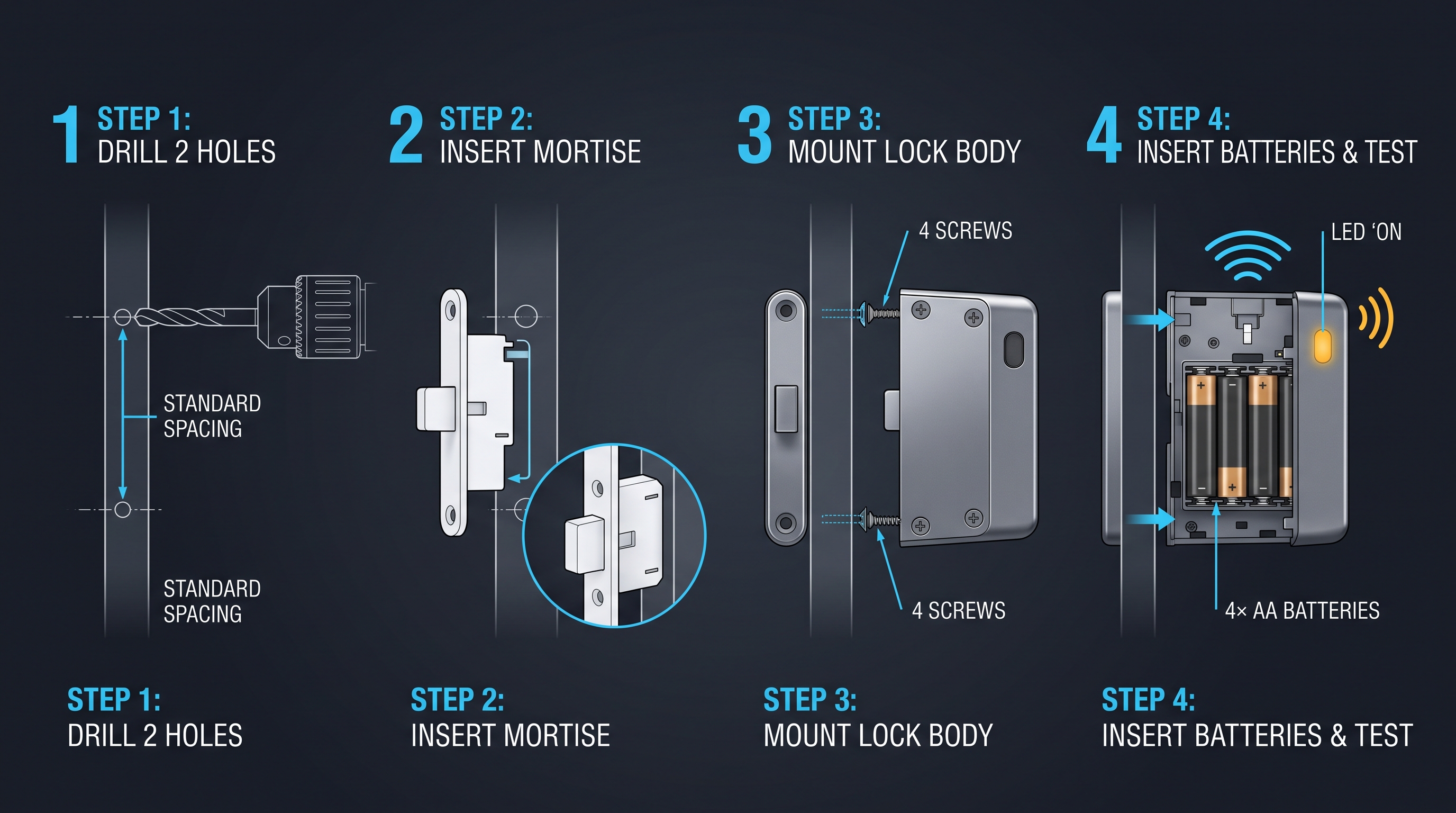
The installation procedure for a digital cabinet lock follows a logical sequence that, when executed methodically, typically requires 15 to 45 minutes per cabinet. Begin the digital cabinet lock installation by gathering all necessary tools including the appropriate screwdriver types, a measuring tape or caliper for verifying hole dimensions, a level for ensuring proper alignment, and any specialized tools referenced in the manufacturer's installation guide. Remove the existing lock mechanism carefully, preserving any mounting hardware that may be reused, and thoroughly clean the mounting area to remove debris, old lubricant residue, or corrosion that could interfere with the digital cabinet lock seating.
Insert the lock body through the mounting hole from the outside of the cabinet door, ensuring the external escutcheon sits flush against the door surface and that any gaskets or weather seals are properly positioned. For cam-lock digital cabinet lock installations, tighten the retaining nut from behind the door, taking care not to overtighten which can crack plastic lock bodies or distort thin metal doors. For surface-mount deadbolt installations, align the lock body on the inside of the cabinet door and secure with the provided screws, then mount the strike plate on the cabinet frame at the precise position where the bolt engages when the door is closed. Verify that the bolt travels freely into the strike area without binding or excessive play, adjusting the strike plate position as needed.
After physical installation, install the batteries and verify that the digital cabinet lock powers up correctly, indicated by an LED flash, beep, or motor movement. Enter the default administrator PIN or present the master card to access the enrollment menu, then enroll user credentials according to the manufacturer's instructions. Test each enrolled credential to confirm reliable unlocking, and verify that the lock re-engages properly when the cabinet door is closed. For digital cabinet lock models with Bluetooth or Wi-Fi connectivity, download the companion application, create an account, and follow the in-app guided pairing workflow to establish the encrypted communication channel between the lock and the smartphone.
Calibration and Testing After Digital Cabinet Lock Installation
Comprehensive post-installation testing validates that the digital cabinet lock operates correctly across all intended access scenarios before the cabinet is placed into active service. The calibration sequence begins with verifying the locking bolt travel, ensuring the bolt fully extends into the strike area when locked and fully retracts when access is granted, with no binding, scraping, or incomplete movement. Test the digital cabinet lock across all configured authentication methods, confirming that each method reliably triggers bolt retraction within the expected latency window. For installations with remote management capabilities, verify that the administrative dashboard correctly displays lock status, processes access requests, and logs entry events with accurate timestamps.
Test the digital cabinet lock under failure conditions as well. Remove one battery to simulate low power and verify that the low-battery warning activates correctly. Test the emergency power input with a USB power bank to confirm it can wake the lock when batteries are dead. If the digital cabinet lock includes a mechanical key override, test it to ensure it operates smoothly. Test the tamper detection by attempting to pry the lock body, confirming that the alarm triggers and the event is logged. Only after all these tests pass should the digital cabinet lock installation be considered complete and the cabinet placed into active service.
Digital Cabinet Lock Security Analysis
The security architecture of a digital cabinet lock must defend against a threat landscape spanning physical attacks on the lock mechanism, electronic attacks on the communication channels, and cyber attacks targeting the management infrastructure, all while maintaining the usability that prevents users from developing workarounds. Physical security in a digital cabinet lock begins with the mechanical design of the lock body and bolt mechanism, which must resist forced entry using common tools. A security-grade digital cabinet lock incorporates hardened steel bolts with minimum throw distances of 12 to 15 millimeters, anti-drill plates protecting electronic components, and tamper-detection switches that trigger alerts when the housing experiences impact, prying force, or unauthorized disassembly.
Encryption and Data Protection
Cryptographic protection of data in transit and at rest forms the foundation of digital cabinet lock security. Modern implementations employ AES-256 encryption for data at rest within the lock's onboard storage, protecting stored credential databases, configuration parameters, and locally cached access logs from extraction if the physical device is stolen. The TLS 1.3 protocol secures communications between the digital cabinet lock and cloud management servers, providing forward secrecy and protection against downgrade attacks. For Bluetooth-connected models, BLE LE Secure Connections with Numeric Comparison or Passkey Entry association models protect against man-in-the-middle attacks during pairing and ongoing communication. A digital cabinet lock that skips these cryptographic protections, common in budget models under 25 dollars, is vulnerable to credential interception and replay attacks that can defeat the lock without any physical force. Every digital cabinet lock intended for commercial or institutional deployment should carry documentation specifying which encryption standards are implemented and how the digital cabinet lock manages cryptographic keys over its operational lifespan.
Anti-Tampering and Physical Attack Resistance
Physical attack resistance in a digital cabinet lock requires defense-in-depth strategies layering multiple protective measures. The lock housing for a security-grade digital cabinet lock is constructed from zinc alloy or stainless steel rather than plastic, providing structural integrity that resists deformation under prying force. Internal tamper-detection circuits monitor housing integrity through mechanical switches or accelerometers, voltage levels on security-critical signal lines, and the presence of the main control board within its mounting position, triggering immediate alerts and potentially initiating lock-down states when anomalies are detected. The digital cabinet lock should also implement a brute-force lockout that disables the credential input after repeated failed attempts, typically three to five failures triggering a 60-second lockout, with escalating lockout periods for continued failures. This anti-tampering architecture is what separates a security-grade digital cabinet lock from a consumer-grade product, and any digital cabinet lock intended for securing valuable or sensitive contents should specify tamper detection as a non-negotiable requirement.
Audit Trail and Compliance Reporting
Comprehensive audit trail functionality transforms a digital cabinet lock from a simple access control device into a powerful compliance tool. Each access event recorded by the digital cabinet lock captures a rich dataset including the precise timestamp, the identity of the user who accessed the cabinet, the authentication method employed, whether access was granted or denied with denial reason codes, and the cabinet identifier. The digital cabinet lock audit trail system timestamps cabinet closure events, enabling administrators to calculate access duration and identify instances where cabinets were left open beyond acceptable thresholds. For regulated environments including healthcare pharmacies, financial document storage, and government facilities, the digital cabinet lock audit trail supports compliance with HIPAA, Sarbanes-Oxley, DEA controlled substance regulations, and NIST security standards. When selecting a digital cabinet lock for a compliance-sensitive environment, the audit log capacity must be sufficient to store the full retention period of access data required by the applicable regulation, and the digital cabinet lock should support export of audit data in a format that can be accepted by compliance management systems.
| Security Feature | Protection Against | Implementation Complexity | User Impact |
|---|---|---|---|
| AES-256 encryption | Data theft, credential extraction | Moderate | None (transparent) |
| TLS 1.3 communications | Man-in-the-middle attacks | Low-Moderate | None (transparent) |
| Anti-tamper detection | Physical attacks, disassembly | Moderate | None until triggered |
| Brute-force lockout | PIN guessing, credential stuffing | Low | Potential inconvenience |
| Secure boot / firmware signing | Malware, firmware tampering | High | None (transparent) |
| Encrypted audit logs | Log tampering, evidence spoliation | Moderate | None (transparent) |
| Two-factor authentication | Credential theft, unauthorized use | Low | Additional auth step |
Digital Cabinet Lock Applications Across Industries
Digital cabinet lock technology has transcended its initial positioning as a consumer convenience product to become an essential security infrastructure component across diverse commercial, institutional, and industrial sectors. The fundamental value proposition of a digital cabinet lock, providing auditable, manageable, and credential-flexible access control, addresses universal security challenges spanning industries from healthcare to hospitality, education to enterprise, and retail to government. Each industry imposes unique requirements on the digital cabinet lock in terms of regulatory compliance, user population size, environmental conditions, and integration with existing systems, driving specialization in lock features and deployment models.
Healthcare and Medical Facilities
Healthcare environments present some of the most demanding requirements for digital cabinet lock technology, combining stringent regulatory compliance obligations, diverse user populations, and life-safety implications. Medication storage cabinets equipped with a digital cabinet lock system in hospital nursing units enable nurses to access prescribed medications efficiently while maintaining complete chain-of-custody records satisfying DEA requirements for controlled substance accountability. The digital cabinet lock logs each access event with user identity, timestamp, and cabinet identifier, creating an immutable audit trail that pharmacy managers and compliance officers can review to detect anomalies and demonstrate regulatory compliance during inspections. Operating room supply cabinets secured by digital cabinet lock technology ensure surgical instruments and implantable devices are accessible only to authorized perioperative staff, reducing inventory shrinkage while maintaining the rapid access required during emergency procedures. A properly specified digital cabinet lock for healthcare must support the multi-factor authentication protocols mandated by DEA regulations, log every access attempt regardless of outcome, and provide an exportable audit trail suitable for submission to regulatory auditors during compliance reviews.
Educational Institutions
Schools, colleges, and universities deploy digital cabinet lock solutions to address unique access control challenges presented by environments where thousands of users move through hundreds of spaces daily with rapidly changing authorization requirements. Laboratory equipment cabinets in university science buildings represent a compelling digital cabinet lock application, containing expensive and potentially hazardous materials requiring controlled access while simultaneously needing to be available to authorized researchers during extended hours. A digital cabinet lock on laboratory storage enables principal investigators to grant time-limited access credentials to graduate students, with access automatically expiring at the end of the academic term without requiring physical key collection. Athletic locker rooms equipped with digital cabinet lock systems provide students with secure personal storage while eliminating the key management burden that traditionally consumed administrative staff time. The digital cabinet lock has proven particularly valuable in university research environments where the same cabinet may need to be accessed by multiple graduate students, post-doctoral researchers, and faculty members whose enrollment status changes frequently throughout the academic year.
Enterprise and Corporate Offices
Corporate environments deploy digital cabinet lock systems to secure sensitive documents, IT equipment, and executive office contents while supporting flexible workplace policies. IT equipment cabinets in server rooms represent a critical digital cabinet lock application, where unauthorized physical access to networking hardware could enable devastating security breaches through device tampering or direct network intrusion. A digital cabinet lock integrated with the organization's existing identity management infrastructure enables IT security teams to enforce the same role-based access controls on physical server cabinets that they apply to digital systems. Shared desk cabinets in hot-desking office environments use digital cabinet lock technology to assign temporary storage to employees on a daily or weekly basis, with credentials automatically cleared when the desk reservation expires. The digital cabinet lock has become particularly valuable in the post-pandemic hybrid workplace, where the same cabinet may be used by different employees on different days, requiring a digital cabinet lock that can dynamically update access permissions without physical intervention by facilities staff.
Retail and Hospitality
Retail and hospitality businesses leverage digital cabinet lock technology to secure high-value inventory, cash handling areas, and guest amenities while supporting high-turnover staffing models. Display case cabinets in jewelry stores equipped with digital cabinet lock systems enable sales associates to access merchandise for customer presentations while maintaining time-stamped records of every case opening, creating accountability that deters internal theft. Hotel minibar cabinets secured by digital cabinet lock technology represent an innovative hospitality application, where guests access refreshments using their room key card while the system automatically tracks consumption and posts charges to the guest folio without manual inventory checking. Back-of-house storage cabinets in restaurants and bars use digital cabinet lock systems to secure liquor, high-value ingredients, and cash, with manager-level credentials required for override access. In each of these environments, the digital cabinet lock reduces shrinkage and improves operational accountability, and the investment in a digital cabinet lock is quickly recovered through reduced inventory losses that typically dwarf the lock's acquisition cost.
Government and Military
Government agencies and military organizations impose the most rigorous security requirements on digital cabinet lock deployments, necessitating certifications and operational protocols exceeding commercial specifications. Classified document storage cabinets demand digital cabinet lock systems that have undergone formal security evaluation, validating resistance to tampering, side-channel attacks, and electromagnetic emanations analysis. A digital cabinet lock deployed in these environments must support multi-factor authentication combining something the user knows, something the user possesses, and something the user is, meeting authentication assurance levels specified in NIST Special Publication 800-63. Evidence storage lockers in law enforcement facilities use digital cabinet lock systems to maintain chain of custody for evidence, with each access event logged and timestamped to support courtroom admissibility requirements. Any digital cabinet lock recommended for government or military deployment must carry the relevant FIPS or Common Criteria certifications, and the digital cabinet lock must demonstrate compliance with the specific security policies that govern the classification level of the materials being secured.
| Industry | Primary Use Cases | Key Requirements | Typical Authentication |
|---|---|---|---|
| Healthcare | Medication, supplies, records | HIPAA, audit trails, 24/7 access | Biometric + PIN, RFID badge |
| Education | Lab equipment, IT assets, lockers | Time-limited access, high turnover | Mobile app, PIN, student ID |
| Corporate | IT equipment, documents, hot desks | AD/LDAP integration, remote manage | Badge, mobile app, biometric |
| Retail/Hospitality | Inventory, cash, guest amenities | Theft prevention, staff turnover | PIN, manager override |
| Government/Military | Classified docs, weapons, evidence | FIPS 140-2, multi-factor, certified | CAC/PIV, biometric + PIN |
Digital Cabinet Lock vs Other Lock Types
Choosing between a digital cabinet lock and alternative locking technologies requires understanding the strengths and limitations of each option across security, convenience, cost, and manageability dimensions. The digital cabinet lock occupies a middle ground between traditional mechanical locks and full building access control systems, offering many of the management features of enterprise access control at a fraction of the cost and complexity.
Digital Cabinet Lock vs Mechanical Key Lock
The most common comparison is between a digital cabinet lock and a traditional mechanical cam lock. The mechanical lock wins on simplicity, independence from power sources, and upfront cost, with a quality mechanical cam lock available for 5 to 15 dollars requiring no batteries, no setup, and no maintenance beyond occasional lubrication. The digital cabinet lock wins on every management dimension: multi-user access without key duplication, audit trails for accountability, time-based access scheduling, remote credential management, and the elimination of key loss risk. For any cabinet accessed by more than one person, or where access accountability matters, the digital cabinet lock is the superior choice despite its higher upfront cost and battery dependency. For a rarely-accessed personal cabinet where simplicity is paramount, a mechanical lock may suffice. In practice, the break-even point for choosing a digital cabinet lock over a mechanical lock occurs when the cabinet needs to be accessed by more than two people or when any form of access auditing is required, because the cost of rekeying a mechanical lock just once can exceed the price premium of an entry-level digital cabinet lock.
| Dimension | Mechanical Key Lock | Digital Cabinet Lock |
|---|---|---|
| Upfront cost | 5-15 dollars | 20-150 dollars |
| Ongoing cost | Key duplication, rekeying | Battery replacement (8-24 months) |
| Multi-user | No (key per user) | Yes (20-2,000 users) |
| Audit trail | No | Yes |
| Key loss risk | High | None (no physical key) |
| Power dependency | None | Battery or wired |
| Remote management | No | Yes (Bluetooth, Wi-Fi) |
| Picking resistance | Moderate | N/A (no keyway) |
| Forced entry resistance | Moderate | Moderate-High |
| Lifespan | 20+ years | 5-10 years (electronics) |
Digital Cabinet Lock vs Smart Home Lock
A smart home lock is designed for entry doors rather than cabinets, with larger form factors, higher power consumption, and features oriented toward exterior door applications including weatherproofing, deadbolt throw distances exceeding 25 millimeters, and integration with doorbell camera systems. A digital cabinet lock is optimized for interior cabinet applications with compact form factors fitting standard cam lock holes, lower power consumption, and credential management suited to multi-user cabinet access rather than single-family residential entry. While some smart home platforms support cabinet locks through Matter or proprietary integrations, the digital cabinet lock typically operates as a standalone device or through manufacturer-specific management platforms rather than the broad smart home ecosystem. The choice between the two depends on the application: exterior doors require smart home locks, interior cabinets require digital cabinet locks, and the two product categories serve fundamentally different use cases. A digital cabinet lock is purpose-built for the cabinet environment, meaning the digital cabinet lock's form factor, power budget, and feature set are all optimized for the specific constraints of securing interior furniture rather than exterior entryways.
Digital Cabinet Lock vs Full Access Control System
A full building access control system provides centralized management of multiple doors through wired infrastructure, dedicated access control panels, and server-based management software, typically costing 500 to 2,000 dollars per door including hardware, wiring, and installation. A digital cabinet lock provides self-contained access control at 20 to 150 dollars per cabinet with no wiring and no central infrastructure, making it practical for applications where the cost and complexity of a full access control system are not justified. The trade-off is that a digital cabinet lock operates autonomously, with credential management and audit log storage local to each lock, while a full access control system provides real-time centralized management, instant facility-wide credential revocation, and integrated alarm monitoring. For facilities with more than 50 secured cabinets or doors, the centralized management of a full access control system typically justifies the higher cost, while smaller deployments benefit from the simplicity and lower cost of digital cabinet lock products. The digital cabinet lock fills the gap between unmanaged mechanical locks and the enterprise access control systems that are overkill for protecting a handful of cabinets.
Buying Guide: Choosing the Right Digital Cabinet Lock
Selecting the right digital cabinet lock for a specific application requires evaluating multiple factors including the security requirements, user population, cabinet compatibility, budget, and desired feature set. A systematic evaluation process ensures the chosen digital cabinet lock meets the current needs while providing headroom for future requirements, avoiding the costly replacement of a lock that proves inadequate after deployment.
Key Buying Criteria for a Digital Cabinet Lock
The first criterion is the authentication method, which should match the security requirements and user population of the application. A PIN-only digital cabinet lock suits personal or small-office use with up to 10 users where simplicity is valued. An RFID digital cabinet lock suits corporate environments where employees already carry access badges. A Bluetooth digital cabinet lock suits tech-savvy users who want app-based management and remote capabilities. A biometric digital cabinet lock suits high-security applications requiring strong individual authentication. Many premium digital cabinet lock products support multiple authentication methods, providing flexibility to choose the method appropriate to each user and situation. The best digital cabinet lock for any given application is the one that matches the credential method to the user population while providing sufficient security for the contents being protected, so the buyer should evaluate each digital cabinet lock option against both current needs and anticipated future requirements before committing to a purchase.
| Criterion | Budget (under 30 dollars) | Mid-Range (30-80 dollars) | Premium (80+ dollars) |
|---|---|---|---|
| Authentication | PIN only | PIN + RFID | PIN + RFID + Bluetooth + Biometric |
| User capacity | 5-20 | 50-200 | 200-2,000 |
| Audit log | None or small | 500-2,000 events | 3,000-10,000 events |
| Connectivity | None | Bluetooth | Bluetooth + Wi-Fi + Cloud |
| Power source | AAA batteries | AA batteries + USB backup | AA + USB + mechanical key |
| Material | Plastic housing | Zinc alloy | Stainless steel |
| Tamper detection | No | Basic (pry switch) | Full (accelerometer, multiple sensors) |
| Warranty | 1 year | 1-2 years | 2-3 years |
The second criterion is cabinet compatibility, verified through the pre-installation assessment of hole diameter, door thickness, interior clearance, and material. The third criterion is the user population size, which determines the required credential storage capacity. The fourth criterion is the audit and compliance requirement, which determines whether audit logging and export capabilities are needed. The fifth criterion is the management model, whether standalone, smartphone-managed, or cloud-managed, which determines the ongoing administrative effort. The sixth criterion is the environmental conditions, with outdoor or humid environments requiring IP65 or higher ratings and conformal-coated electronics. The seventh criterion is the budget, balancing upfront cost against feature set and expected lifespan.
Price Tiers and Value Assessment
The digital cabinet lock market segments into three price tiers, each offering a distinct value proposition. The budget tier, under 30 dollars, includes basic PIN-only or simple RFID models with plastic housings, limited user capacity, and minimal or no audit logging. These digital cabinet lock products suit personal use, low-security applications, and situations where the lock provides privacy rather than true security. The mid-range tier, 30 to 80 dollars, includes models with metal housings, multiple authentication methods, audit logging, and Bluetooth connectivity. This tier represents the best value for most small business and serious home applications, offering robust security and management features at a reasonable cost. The premium tier, 80 dollars and above, includes biometric models, cloud-connected enterprise locks, and products with certifications for regulated environments. The premium digital cabinet lock is justified for high-security commercial applications, regulated industries, and environments where the cost of a security breach far exceeds the lock cost. When comparing tiers, remember that the total cost of ownership for a digital cabinet lock includes not just the purchase price but also battery replacement costs, management software subscriptions if applicable, and the staff time required to manage users and review audit logs.
Top Digital Cabinet Lock Brands and Models
The digital cabinet lock market includes both established security hardware manufacturers and newer smart home brands, each bringing different strengths to the category. Established brands including Master Lock, Digilock, and Southco offer commercial-grade digital cabinet lock products with proven reliability, comprehensive certifications, and enterprise management platforms, typically priced in the mid-range to premium tier. Smart home brands including Yale, August, and Schlage offer digital cabinet lock products integrated with popular smart home platforms, emphasizing user experience and app-based management. Chinese manufacturers including TIGERLOCK, Be-Tech, and ZKTeco offer budget and mid-range digital cabinet lock products through online marketplaces, providing aggressive pricing and feature sets that have driven the overall market price compression. When evaluating a specific digital cabinet lock brand, consider the warranty period, firmware update track record, availability of replacement parts, and responsiveness of customer support, as these factors significantly impact the total cost of ownership over the lock's lifespan. A reputable digital cabinet lock manufacturer should provide at least a one-year warranty, publish firmware update release notes, and offer responsive support channels. The long-term reliability of a digital cabinet lock depends heavily on the manufacturer's commitment to ongoing firmware support, so the buyer should verify that the digital cabinet lock they select has an active development community and a track record of security patches.
Digital Cabinet Lock Maintenance and Troubleshooting
Proper maintenance of a digital cabinet lock ensures reliable operation throughout the product's lifespan and prevents the security gaps that occur when a malfunctioning lock prompts users to prop cabinets open or bypass security procedures. A well-maintained digital cabinet lock provides 5 to 10 years of reliable service, with the most common failure modes being battery depletion, mechanical wear of the actuator, and sensor degradation, all of which are preventable or predictable with appropriate maintenance practices.
Routine Maintenance for a Digital Cabinet Lock
Routine digital cabinet lock maintenance is minimal compared to mechanical locks, which require periodic lubrication and keyway cleaning. The primary maintenance task is battery replacement, which should be performed proactively when the low-battery indicator first appears rather than waiting for complete depletion. For a digital cabinet lock used daily, scheduling battery replacement every 12 months as a preventive measure, regardless of low-battery status, prevents unexpected lockouts. Use quality alkaline batteries rather than cheap zinc-carbon cells, as the consistent voltage output of alkaline cells prevents the brownout reset events that can corrupt the lock's configuration. Avoid rechargeable NiMH batteries in digital cabinet lock products not specifically designed for them, as the lower nominal voltage of 1.2 volts per cell versus 1.5 volts for alkaline can cause the low-battery detection to trigger prematurely. Following a simple maintenance schedule for the digital cabinet lock prevents nearly all premature failures and ensures the digital cabinet lock provides reliable service throughout its rated lifespan.
Following a simple maintenance schedule for the digital cabinet lock prevents nearly all premature failures and ensures the digital cabinet lock provides reliable service throughout its rated lifespan.
The credential input interface also requires periodic attention. For keypad digital cabinet lock products, clean the keypad surface monthly with a soft cloth dampened with isopropyl alcohol to remove oil and debris that can degrade capacitive touch sensitivity and obscure wear patterns on frequently-used digits that could reveal PIN combinations. For RFID digital cabinet lock products, wipe the reader face periodically to remove dust that can attenuate the RF field. For biometric digital cabinet lock products, clean the fingerprint sensor weekly with a microfiber cloth, and re-enroll fingerprints annually to account for gradual changes in finger condition due to aging, occupation, or seasonal skin dryness. The time invested in maintaining a digital cabinet lock is minimal compared to the time and cost of replacing a digital cabinet lock that has failed prematurely due to neglect.
Common Digital Cabinet Lock Problems and Solutions
| Problem | Likely Cause | Diagnostic Step | Solution |
|---|---|---|---|
| Lock does not respond (no LED, no motor) | Dead batteries or contact failure | Test battery voltage with multimeter (1.4V+ per cell) | Replace batteries, clean contacts if corroded |
| LED lights but motor does not actuate | Low voltage insufficient for motor | Test voltage under load during unlock attempt | Replace batteries even if LED still lights |
| Credential accepted but bolt does not fully retract | Mechanical binding, misalignment | Observe bolt movement during unlock | Adjust alignment, lubricate bolt path |
| PIN frequently rejected | Keypad contamination or wear | Clean keypad, test alternate enrolled PIN | Clean keypad, re-enroll PIN if problem persists |
| RFID reads inconsistently | Reader contamination or interference | Clean reader face, test with different card | Clean reader, verify no metal obstruction |
| Bluetooth connection fails | BLE module not advertising, phone too far | Move phone within 2 meters, toggle Bluetooth | Re-pair phone, check for firmware update |
| Battery drains fast (under 1 month) | Lock not entering sleep, high quiescent current | Measure sleep current (should be under 20 microamps) | Factory reset, replace if hardware defect |
| Lock unlocks spontaneously | Cam not engaging, door gap too large | Attempt to pull door open without authenticating | Adjust cam length, add shim, replace lock if internal failure |
The most common user-reported issue with digital cabinet lock products is gradual recognition degradation, where a lock that worked perfectly for months starts intermittently rejecting valid credentials. This is typically caused by credential input contamination, battery voltage decline, or mechanical wear introducing friction in the actuator that the motor cannot overcome at reduced voltage. The systematic troubleshooting approach is to first replace the batteries, then clean the credential input interface, then inspect the mechanical mechanism for binding or wear. If the problem persists after these steps, the digital cabinet lock may have a firmware bug or hardware defect requiring factory reset or replacement. Most digital cabinet lock issues are resolved by battery replacement or interface cleaning, and buying a digital cabinet lock from a manufacturer with responsive customer support helps ensure that the rare hardware defect case is resolved quickly.
Firmware Updates for a Digital Cabinet Lock
Digital cabinet lock products with Bluetooth or Wi-Fi connectivity typically support firmware updates through the companion app, allowing the manufacturer to fix bugs, improve algorithms, and patch security vulnerabilities. The firmware update mechanism itself introduces a security consideration, as the update process must be authenticated and integrity-verified to prevent an attacker from loading malicious firmware. The best firmware update implementations use digitally signed firmware images verified by the lock's bootloader before installation, encrypted transfer over BLE Secure Connections, a protected fallback image for recovery if an update fails, and user-visible release notes enabling informed consent. For digital cabinet lock products without connectivity, firmware cannot be updated in the field, making the manufacturer's track record of quality and the product's maturity important selection criteria for security-critical applications.
Future Trends in Digital Cabinet Lock Technology
The digital cabinet lock market stands at an inflection point in 2026, transitioning from standalone electronic devices to connected ecosystem components that integrate with broader smart home, building management, and access control systems. This transition is driven by converging technology trends including the mainstreaming of Matter and Thread protocols for IoT interoperability, advances in ultra-low-power edge AI processing, and growing regulatory requirements for audit trails in shared commercial spaces.
Matter and Thread Integration
Matter, the connectivity standard backed by Apple, Google, Amazon, and Samsung, defines a common application layer for smart home devices, theoretically allowing a Matter-certified digital cabinet lock to be controlled from any Matter-compatible platform without proprietary hubs. While Matter 1.0 focused on smart door locks, the specification has expanded to include cabinet and furniture locks as a recognized device type. A Matter-compatible digital cabinet lock would appear in the smart home ecosystem alongside door locks, lights, and sensors, capable of triggering automations, receiving firmware updates, and generating access events that feed into home security monitoring. Thread, the mesh networking protocol designed as the transport layer under Matter, offers specific advantages for the digital cabinet lock form factor, with its mesh topology enabling each Thread device to relay packets for neighbors and its low power consumption matching the battery-powered cabinet lock use case.
Edge AI and Enhanced Biometrics
Edge AI processing, running machine learning models directly on the lock's microcontroller rather than in the cloud, is the trend that most directly improves the core authentication function. For biometric digital cabinet lock products, deep learning-based fingerprint recognition models achieve significantly higher accuracy across challenging finger conditions than traditional minutiae-based algorithms, with false reject rates dropping from 5 percent to below 1 percent for wet and dry fingers. Advances in model compression, including quantization, pruning, and knowledge distillation, have reduced the computational requirements by an order of magnitude, enabling on-device neural network inference on ARM Cortex-M4 processors with modest memory and power budgets. This capability is currently found in premium digital cabinet lock products and is expected to trickle down to mid-range models by 2028.
Cloud-Native Digital Cabinet Lock Management
Cloud-native management platforms are transforming how digital cabinet lock fleets are administered in commercial environments. A cloud-connected digital cabinet lock reports status, access events, and alerts to a centralized dashboard accessible from any web browser, enabling facility managers to monitor hundreds of locks across multiple sites from a single interface. Cloud management enables features impractical with standalone locks including automatic credential provisioning from HR systems, facility-wide access policy changes deployed simultaneously to all locks, predictive maintenance alerts based on actuator current trends, and compliance report generation for regulatory audits. The trade-off is the ongoing subscription cost of cloud platforms, typically 2 to 10 dollars per lock per month, and the dependency on internet connectivity for real-time management, with most cloud-connected digital cabinet lock products falling back to offline mode with cached credentials and local logging when connectivity is lost.
Price Trends and Market Growth
The digital cabinet lock market has experienced sustained price compression driven by component commoditization, MCU integration, and manufacturing scale. The entry price for a functional digital cabinet lock has fallen from approximately 60 dollars in 2019 to under 25 dollars in 2026, while the median price for a quality multi-credential model has fallen from 120 dollars to 55 dollars over the same period. This price trajectory is expected to continue, with sub-20 dollar RFID digital cabinet lock products and sub-40 dollar biometric models reaching the market by 2028. The market growth rate of approximately 15 to 20 percent compound annual growth from 2022 to 2026 reflects both organic demand growth and substitution effects as digital cabinet lock products replace traditional mechanical lock purchases. The total addressable market includes all cabinets that currently have locks plus the larger segment of cabinets that would benefit from locks but currently go unlocked because traditional keys are inconvenient for multi-user access, representing the largest growth opportunity for the digital cabinet lock category. The digital cabinet lock has reached the price point where replacing a mechanical lock with a digital cabinet lock is a defensible capital expense for virtually every cabinet in a commercial facility.
Part of this article content is generated by AI and optimized for professional accuracy and readability.
Digital Cabinet Lock Security Architecture and Threat Mitigation
A digital cabinet lock employs a multi-layered security architecture that protects against physical tampering, electronic bypass, and code-based attacks through hardened hardware design, encrypted firmware, and intelligent access control algorithms. The digital cabinet lock housing is constructed from reinforced zinc alloy or stainless steel with a minimum 1.5 mm wall thickness, providing structural integrity that resists prying, drilling, and impact attacks that would compromise a lower-grade mechanical lock. Inside the digital cabinet lock, an anti-tamper microswitch detects any attempt to open the housing or remove the digital cabinet lock from its mounting surface, triggering an immediate alert through the onboard buzzer and, for connected models, a notification to the management platform. The digital cabinet lock secures its firmware through a cryptographic signature verification process, where the bootloader validates the ECDSA signature of the application firmware before execution, preventing attackers from loading malicious code that could bypass the authentication mechanism of the digital cabinet lock. Code-based attacks on a digital cabinet lock are mitigated through multiple defense mechanisms including automatic lockout after a configurable number of consecutive incorrect PIN entries (typically 3-5 attempts), with lockout duration escalating from 30 seconds to 30 minutes for repeated failures, effectively rendering brute-force guessing of the digital cabinet lock code impractical within any reasonable timeframe.
The digital cabinet lock anti-shoulder-surfing features address the vulnerability of stationary keypads where an observer can memorize the PIN sequence by watching finger movements. Advanced digital cabinet lock models implement randomized digit display where the position of numbers on the touchscreen changes with each authentication attempt, ensuring that an observer who sees the physical sequence of button presses gains no useful information because the digit mapping changes with each interaction. A digital cabinet lock with a privacy visor or angled keypad housing physically restricts the viewing angle of the keypad to the user standing directly in front of the digital cabinet lock, preventing observation from either side or from a distance. Some digital cabinet lock products support scramble code entry where the user intersperses random digits before and after the actual PIN code, with the digital cabinet lock recognizing the valid PIN sequence within the longer digit string -- an observer sees 8-12 digits being entered while only a 4-6 digit subsequence represents the actual access code.
The digital cabinet lock man-in-the-middle protection addresses scenarios where an attacker attempts to insert a device between the keypad and the lock controller to capture or replay authentication codes. A properly designed digital cabinet lock implements wired communication between the keypad and controller using encrypted serial protocols rather than simple open-collector signaling, preventing an attacker from tapping into the keypad cable to capture PIN codes in transit. When the digital cabinet lock uses wireless communication between a remote keypad or smartphone and the lock controller, the connection employs AES-128-CCM encryption with per-session keys derived from a pre-shared secret established during initial pairing. A digital cabinet lock supporting rolling code technology generates a unique code for each unlock event, ensuring that even if an attacker captures the wireless transmission of one authentication event, the captured code cannot be replayed to unlock the digital cabinet lock on a subsequent attempt.
Power analysis resistance in a digital cabinet lock prevents side-channel attacks where an attacker monitors the lock power consumption during authentication to infer the correct PIN code from the timing and magnitude of current draw during code comparison operations. A digital cabinet lock engineered for high-security applications implements constant-time code comparison algorithms where the comparison of each digit takes exactly the same amount of time and draws the same current regardless of whether the digit matches or not, eliminating the timing side-channel that could enable an attacker to determine correct digits one at a time. The digital cabinet lock microcontroller should include hardware-based power analysis countermeasures, such as random noise injection on the power rail and clock jitter, that obscure the correlation between authentication operations and power consumption.
The digital cabinet lock physical key override, present on most models as a backup access method, represents a potential security vulnerability that must be carefully managed. A digital cabinet lock with a mechanical key override should use a high-security cylinder with at least six pins and security pins (spool and serrated) to resist picking, and the override keyway should be concealed behind a tamper-evident cover to detect attempted exploitation. The digital cabinet lock audit trail should log every use of the mechanical override key, and the management platform should generate alerts when the mechanical override is used outside of scheduled maintenance windows. For maximum security, a digital cabinet lock can be specified without any mechanical key override, relying instead on an emergency power input port that allows a 9V battery to be connected to power the digital cabinet lock for authentication when the internal batteries are completely depleted.
Digital Cabinet Lock Standards, Certifications, and Regulatory Compliance
A digital cabinet lock deployed in regulated environments must comply with applicable standards covering electrical safety, electromagnetic compatibility, fire resistance, and accessibility, with the specific certification requirements varying by industry, geography, and application. A digital cabinet lock intended for the European market must carry CE marking demonstrating compliance with the Electromagnetic Compatibility Directive 2014/30/EU, the Radio Equipment Directive 2014/53/EU (for wireless models), and the Restriction of Hazardous Substances Directive 2011/65/EU. A digital cabinet lock sold in North America should carry UL listing (UL 1037 for antitheft alarms and devices or UL 294 for access control system units) and FCC Part 15 certification for wireless communication modules. The digital cabinet lock manufacturer should provide declarations of conformity and test reports demonstrating compliance, and these documents should be retained as part of the deployment documentation for regulatory audit purposes.
Fire safety considerations for a digital cabinet lock are particularly important in commercial and institutional deployments where building codes require fire-rated assemblies. A digital cabinet lock installed on a fire-rated cabinet must not compromise the fire rating of the assembly, and the digital cabinet lock manufacturer should provide documentation confirming that the product has been tested in accordance with relevant fire test standards such as UL 10C or EN 1634-1. The digital cabinet lock should be constructed with materials that maintain structural integrity at elevated temperatures, and the locking bolt should remain engaged during a fire event to prevent the cabinet door from opening and exposing contents to flame. Some digital cabinet lock models incorporate intumescent components that expand when exposed to heat, sealing gaps around the lock body and maintaining the fire barrier integrity of the cabinet assembly.
Accessibility compliance for a digital cabinet lock ensures that individuals with disabilities can independently operate the lock. A digital cabinet lock deployed in facilities subject to the Americans with Disabilities Act (ADA) or equivalent accessibility regulations should feature operable parts that can be operated with one hand without tight grasping, pinching, or twisting of the wrist, and with a maximum operating force of 5 pounds (22.2 Newtons). The digital cabinet lock keypad should be mounted at a height between 48 inches (1220 mm) and 54 inches (1370 mm) above the finished floor for forward reach accessibility, and the digital cabinet lock should provide audible and visual feedback for each keypress and authentication outcome to support users with visual or hearing impairments. A digital cabinet lock with a capacitive touchscreen keypad should offer tactile feedback through vibration or audible clicks to confirm each keypress, as smooth touchscreens without tactile differentiation can be difficult for users with visual impairments to navigate.
Environmental sustainability certifications for a digital cabinet lock support organizational ESG goals and green building certification programs including LEED, BREEAM, and WELL. A digital cabinet lock manufacturer committed to sustainability should provide Environmental Product Declarations (EPDs) quantifying the lifecycle environmental impact of the digital cabinet lock, including embodied carbon, water consumption, and waste generation across raw material extraction, manufacturing, distribution, use, and end-of-life phases. A digital cabinet lock designed for circular economy principles uses modular construction with standardized fasteners rather than adhesives or welds, enabling easy disassembly for repair and material recovery at end of life. The digital cabinet lock packaging should use recycled and recyclable materials with minimal plastic content, and the manufacturer should offer a take-back program for end-of-life digital cabinet lock units to ensure responsible recycling of electronic components and metal housings.
Part of this article content is generated by AI and optimized for professional accuracy and readability.
Not sure which sensor fits your project?
Talk to our mmWave application engineers for a free consultation.
Find the right presence sensor for your hotel project
Compare the 3 protocols, check hotel-specific case studies, and download the installation guide
Related products
3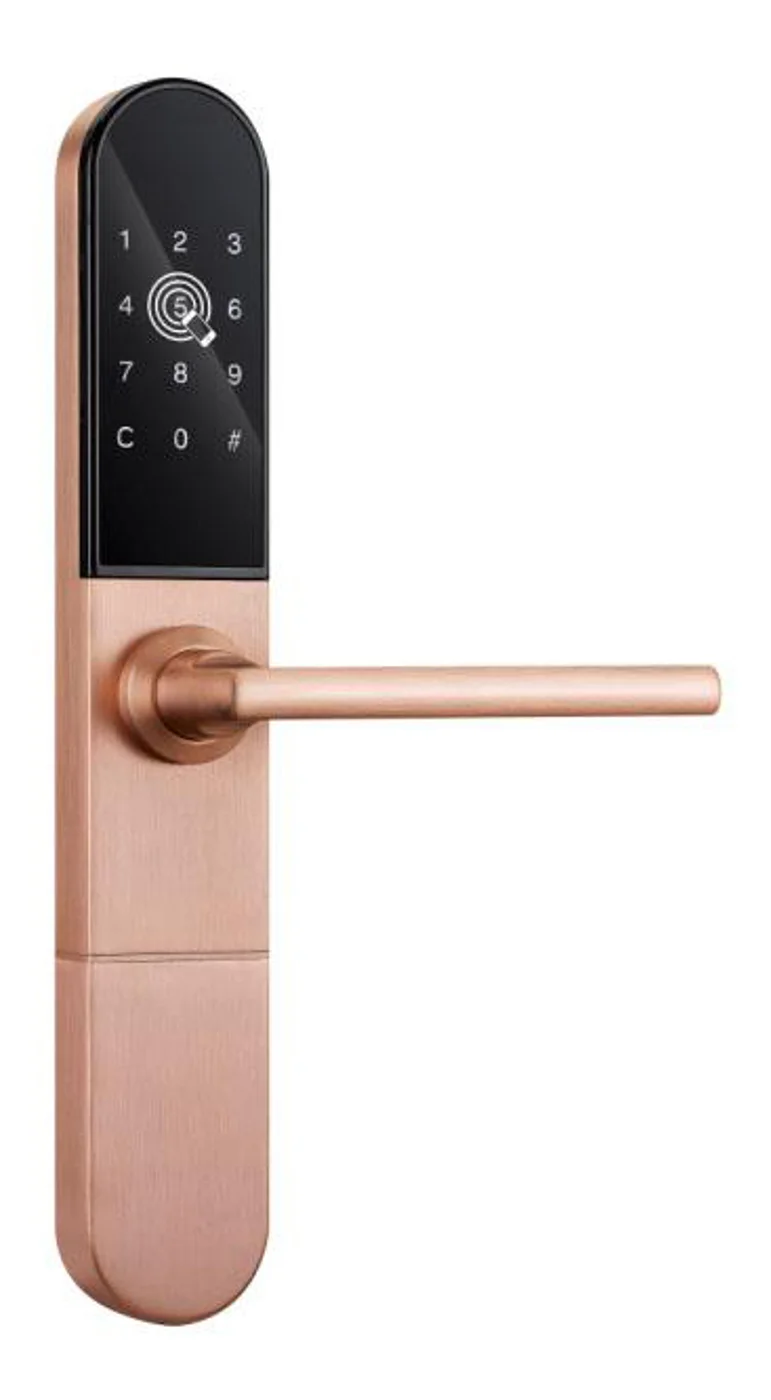
Smart Cabinet Lock — App-Managed, Multi-Site Dashboard
App-managed smart cabinet lock for office, parcel, and multi-site fleets. BLE app dashboard, audit trail, remote unlock, no per-lock server. Higher-tier chassis.
This page already points to it as the next recommended reference.
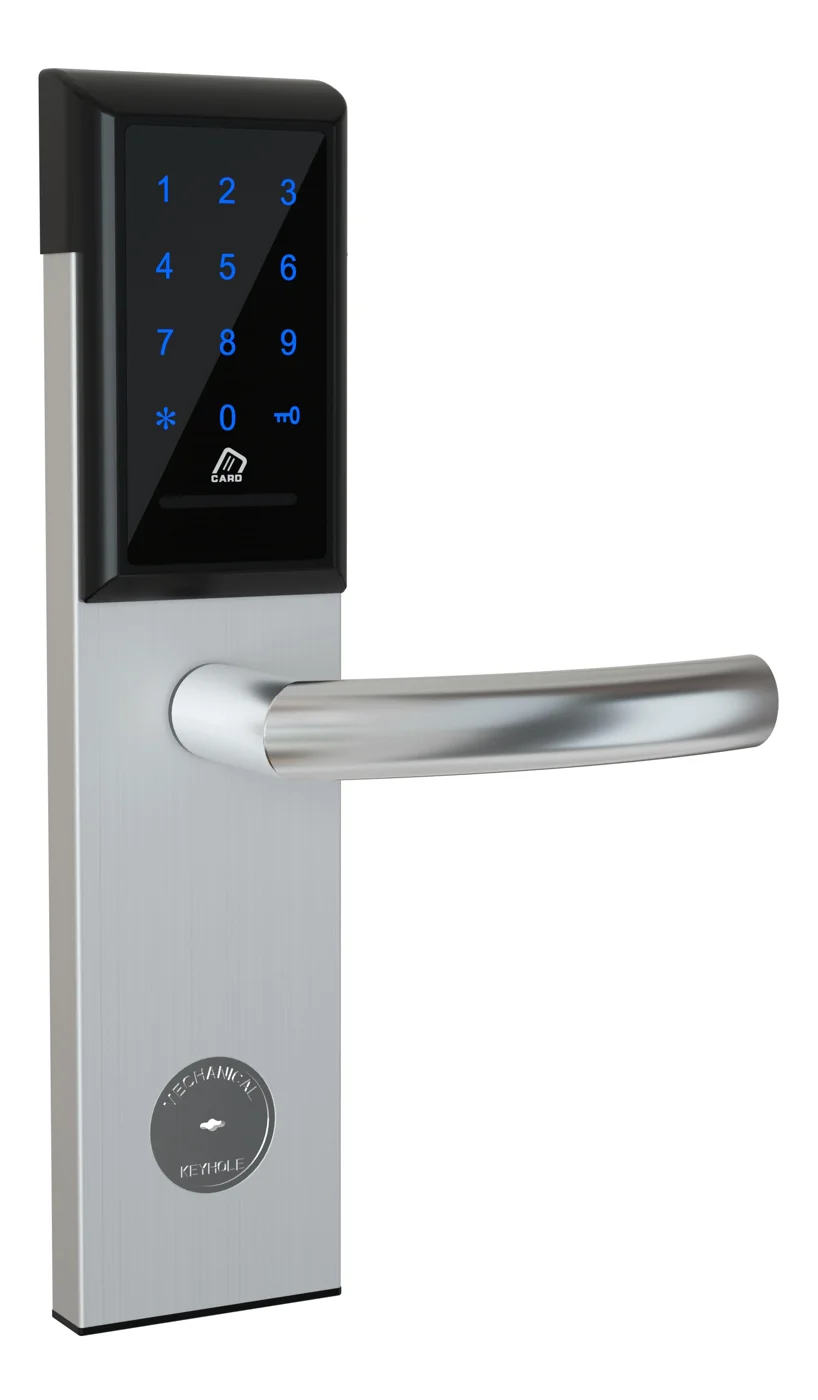
Office Cabinet Lock — PIN + Card for Filing & Pedestals
Offline PIN + card office cabinet lock for filing cabinets, pedestals, and drawers. Battery-powered 5-minute retrofit, no WiFi, no key management. CE/FCC/RoHS.
This page already points to it as the next recommended reference.
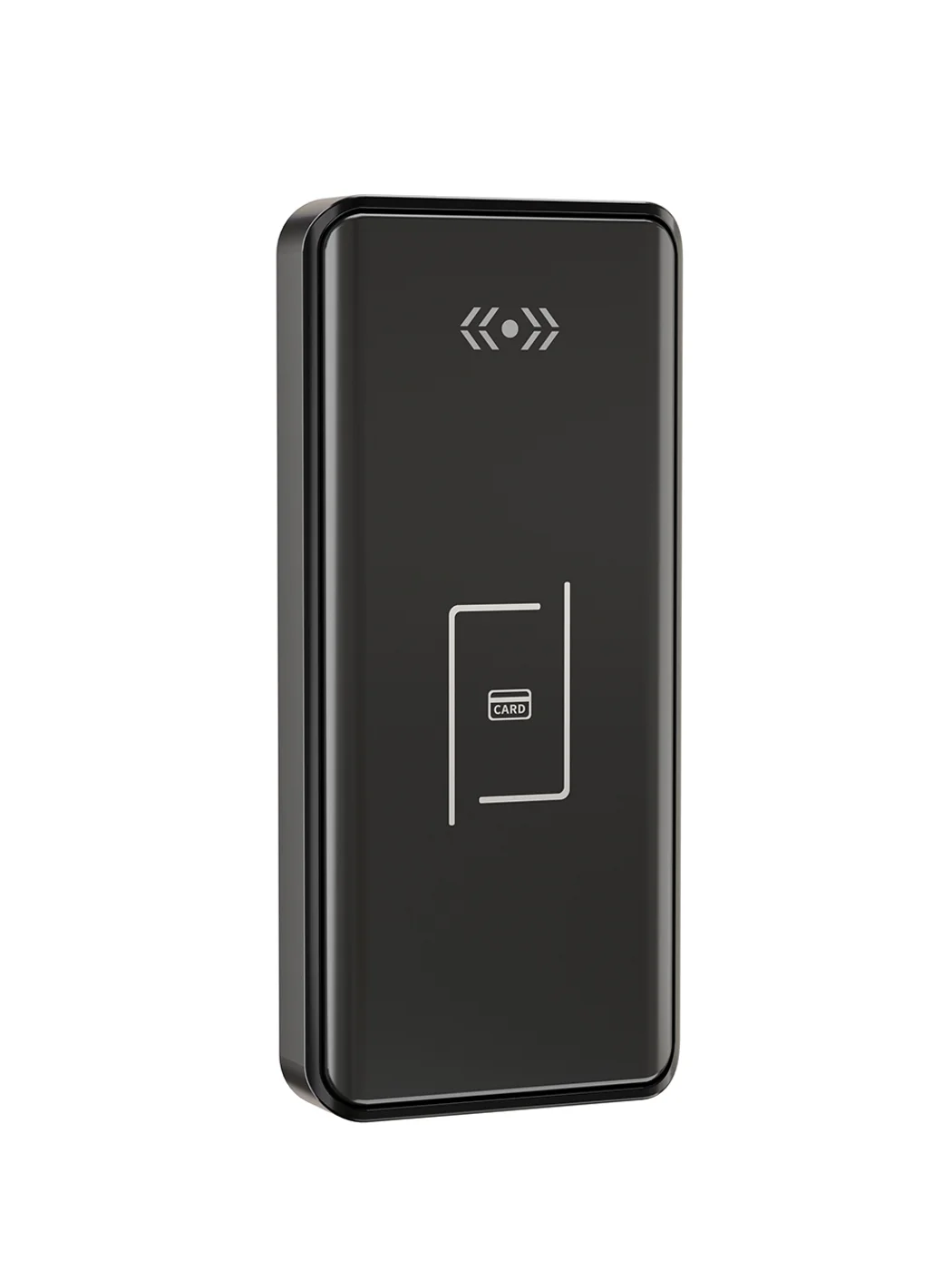
Gym Locker Lock — Offline Card, No WiFi Required
Offline card gym locker lock for fitness and pool lockers. MIFARE card, battery-powered 5-minute retrofit, no WiFi or server. Zinc alloy body, CE/FCC/RoHS.
This page already points to it as the next recommended reference.
Related blog posts
3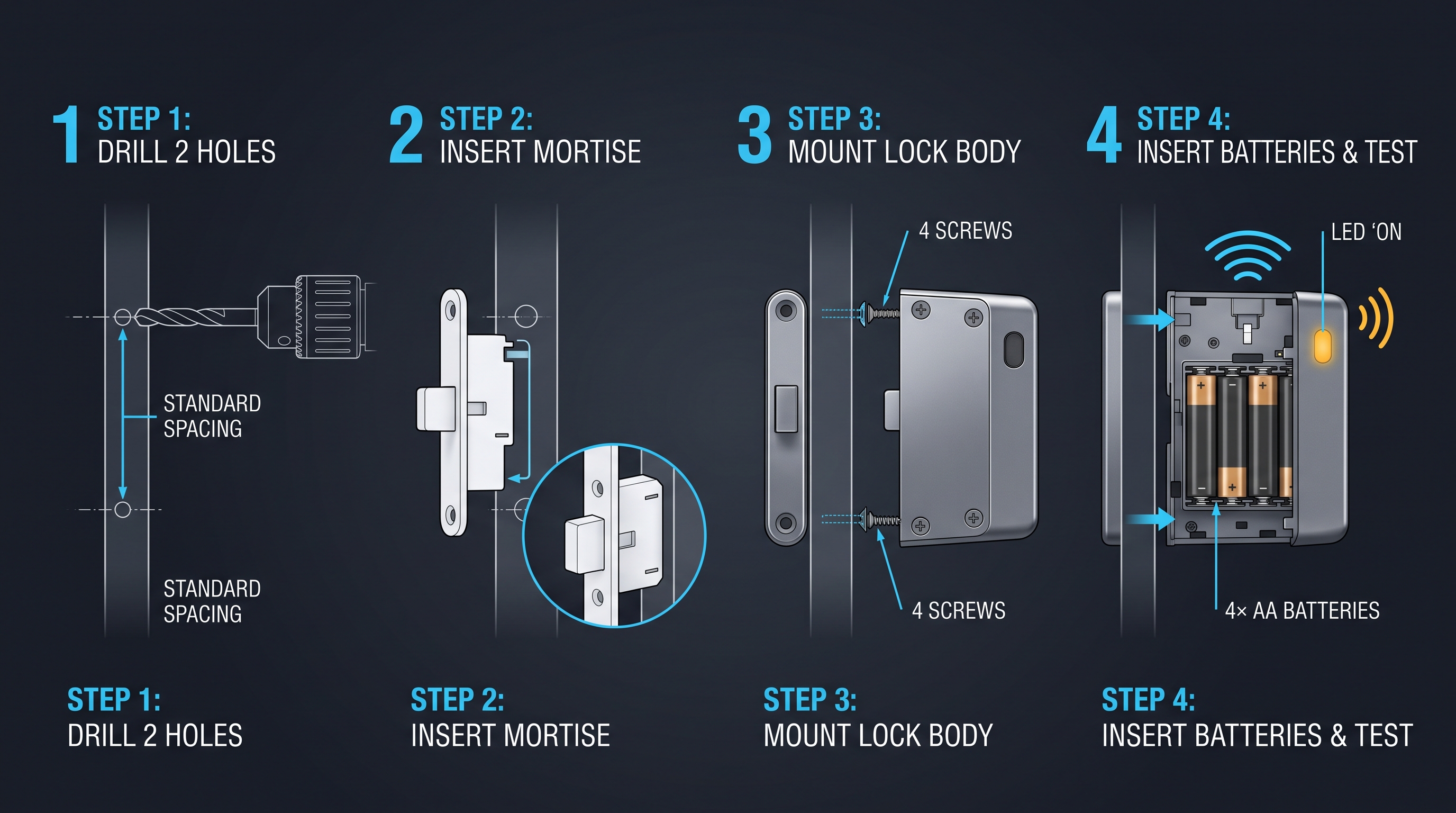
Electronic Cabinet Access: The Complete Guide to Digital Cabinet Entry
Electronic cabinet access replaces keyed locks with digital credentials, generating an access record and letting admins add or revoke users without touching hardware; this guide covers keypad, RFID, biometric, and connected electronic cabinet access methods.
It supports the same product context: Smart Cabinet Lock — App-Managed, Multi-Site Dashboard, Office Cabinet Lock — PIN + Card for Filing & Pedestals, Gym Locker Lock — Offline Card, No WiFi Required.
Display Cabinet Lock: The Complete Guide to Securing Glass Showcases and Retail Display Cabinets
Learn how a display cabinet lock secures glass showcases and retail displays. Compare electromagnetic, RFID, and keyed display cabinet lock types for any application.
It supports the same product context: Smart Cabinet Lock — App-Managed, Multi-Site Dashboard, Office Cabinet Lock — PIN + Card for Filing & Pedestals, Gym Locker Lock — Offline Card, No WiFi Required.
Electronic Access Cabinet: The Complete Guide to Smart Locking Enclosures
Explore electronic access cabinet systems with RFID, Bluetooth, PIN, and biometric control. Learn about powered enclosures for IT, healthcare, and evidence management.
It supports the same product context: Smart Cabinet Lock — App-Managed, Multi-Site Dashboard, Office Cabinet Lock — PIN + Card for Filing & Pedestals, Gym Locker Lock — Offline Card, No WiFi Required.
Specify your hotel project with our engineers
Send your room count, ceiling type, and protocol preference. We will return a sample plan and quote within 24 business hours.
- Move from general guidance into a product or application discussion.
- Use RFQ when pricing, drawings, MOQ, or launch timing needs structure.
- Keep a direct contact path visible for fast clarifications and handoff.