Cloud Locker Lock: The Complete Guide to Smart Cloud-Connected Locker Security Systems
A comprehensive technical guide to cloud locker lock systems covering architecture, communication protocols, security, deployment scenarios, cost analysis, and future trends for connected locker access control.
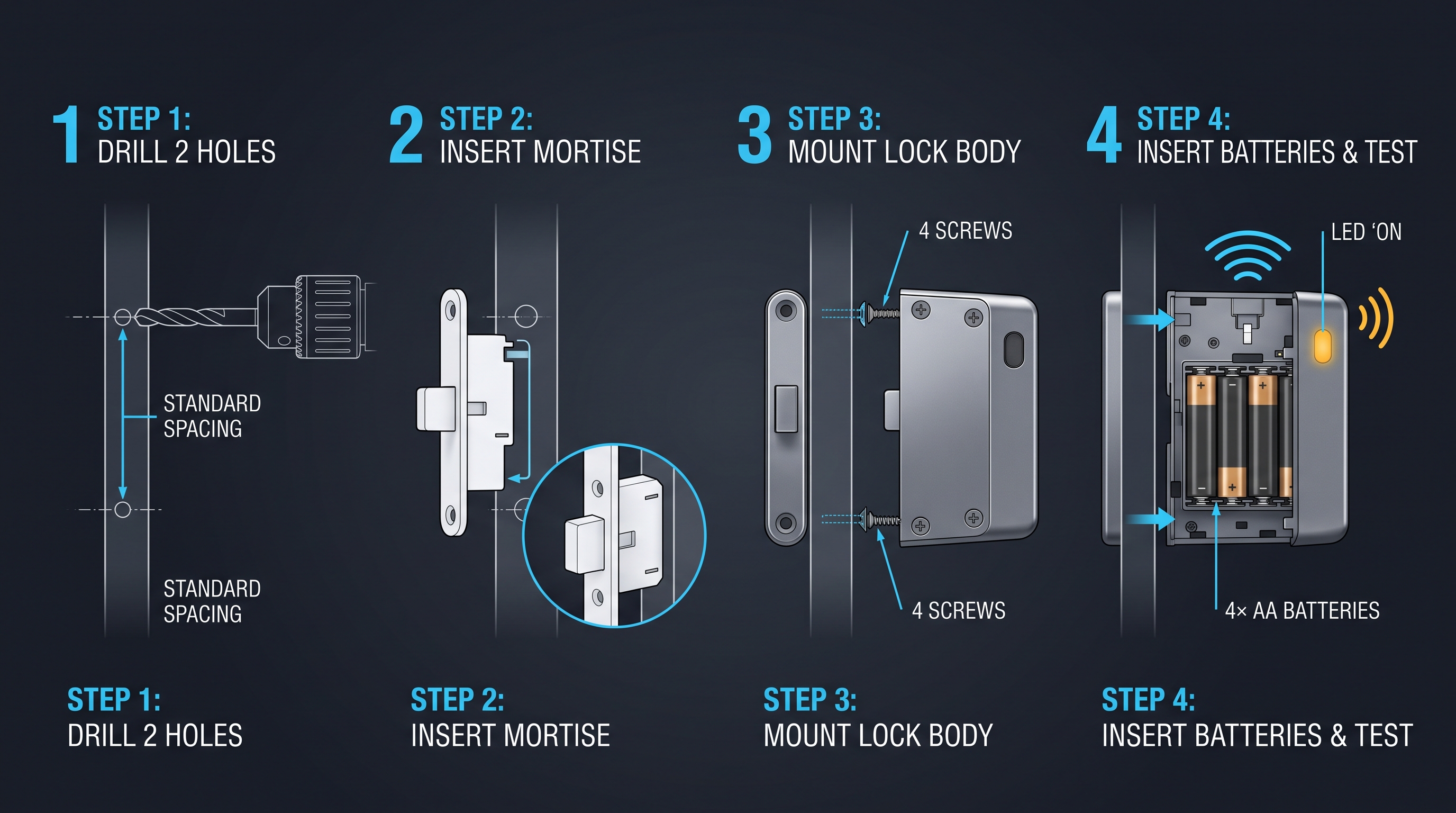
The rapid evolution of smart access control has fundamentally transformed how organizations manage secured storage. At the center of this transformation sits the cloud locker lock, a connected electronic locking system that bridges physical locker hardware with cloud-based management platforms. Unlike traditional mechanical locks that require physical keys, manual checkouts, and on-site administration, a cloud locker lock enables remote access management, real-time occupancy monitoring, and comprehensive audit logging from any internet-connected device. Whether deployed across a chain of fitness centers, a university campus, or a nationwide parcel delivery network, the cloud locker lock represents a significant leap forward in both security posture and operational efficiency. This guide explores every technical dimension of cloud locker lock technology, from the underlying communication protocols and encryption standards to deployment best practices, cost modeling, and the emerging innovations that will shape the next generation of connected locker access systems.
What Is a Cloud Locker Lock
A cloud locker lock is an electronically actuated locking mechanism that connects to a remote cloud platform via internet-enabled communication protocols to provide centralized, software-defined access control for storage lockers, cabinets, and secured compartments. The architecture of a cloud locker lock system comprises three core layers: the physical lock hardware incorporating a motor-driven or solenoid-based deadbolt mechanism with embedded wireless connectivity, a gateway or direct-to-cloud communication layer using protocols such as MQTT over TLS 1.3 or HTTPS with certificate-based mutual authentication, and a cloud-hosted management platform that exposes RESTful APIs for integration with third-party access control, booking, and enterprise resource planning systems. Each cloud locker lock maintains a persistent or periodically synchronized connection to the cloud, transmitting real-time telemetry data including lock state (locked/unlocked), battery voltage, signal strength, temperature, and user access events. The cloud platform processes this data stream to provide administrators with a unified dashboard showing the status of every cloud locker lock across multiple geographic locations, enabling remote unlock commands, bulk configuration changes, and.
System Architecture of a Cloud Locker Lock
The architecture of a cloud locker lock is best understood as a layered stack in which each tier performs distinct functions while communicating with adjacent layers through standardized interfaces. At the physical layer, the cloud locker lock integrates a microcontroller unit (MCU) typically based on ARM Cortex-M4 or ESP32 architectures, a secure element for cryptographic key storage, an actuator (motor or solenoid), a position sensor (Hall effect or optical) for detecting bolt state, and one or more wireless radios supporting WiFi 802.11 b/g/n at 2.4 GHz, Bluetooth Low Energy 5.0, NB-IoT, or LTE-M depending on the deployment requirements. The cloud locker lock firmware running on the MCU implements a lightweight MQTT client or CoAP endpoint that communicates with the cloud platform's message broker, typically AWS IoT Core, Azure IoT Hub, or a custom Mosquitto cluster. Communication between the cloud locker lock and the cloud platform operates over mutual TLS, ensuring that both the cloud locker lock authenticates the server and the server authenticates the cloud locker lock before any application data is exchanged. The cloud layer runs on containerized microservices orchestrated via Kubernetes, with a PostgreSQL or TimescaleDB backend for structured data and a Redis cache for real-time state propagation. This layered architecture allows a single cloud locker lock deployment to scale from a handful of cloud locker lock units in a single building to hundreds of thousands of cloud locker lock units distributed globally, all managed through a unified administrative console. The cloud locker lock represents a core component of contemporary cabinet security architecture. The cloud locker lock represents a core component of contemporary cabinet security architecture. The cloud locker lock represents a core component of contemporary cabinet security architecture. The cloud locker lock represents a core component of contemporary cabinet security architecture.
Core Components of a Cloud Locker Lock
Every cloud locker lock shares a common set of core hardware and software components, regardless of the specific manufacturer or form factor. the cloud locker lock body houses the electromechanical actuator, which can be a geared DC motor driving a deadbolt, a solenoid-based latch, or a shape-memory alloy actuator in ultra-low-power designs. A cloud locker lock typically includes a multi-color LED status indicator and, in some models, a small LCD or e-ink display for showing locker numbers, user names, or QR codes for mobile-based access. The embedded wireless module is the single most critical hardware component because it determines which communication protocols the cloud locker lock supports and, consequently, where it can be deployed. Most cloud locker lock models also include an NFC reader for tap-to-unlock functionality using smartphones or access cards, a buzzer for audible feedback, and a tamper detection circuit that triggers an immediate alert to the cloud platform if the cloud locker lock body is physically compromised. On the software side, each cloud locker lock runs an RTOS such as FreeRTOS or Zephyr that manages power states, communication retry logic, and local caching of access credentials so that the cloud locker lock can continue to function during brief network outages. The combination of these hardware and software elements enables the cloud locker lock to deliver reliable, secure, and auditable access control in environments ranging from quiet office corridors to high-traffic public transit stations. Organizations deploy a cloud locker lock to strengthen security and simplify administration. Organizations deploy a cloud locker lock to strengthen security and simplify administration. Organizations deploy a cloud locker lock to strengthen security and simplify administration.
How Cloud Locker Lock Systems Work
A cloud locker lock is a networked locking device that executes access commands through a multi-layer communication pipeline involving MQTT or HTTPS over TLS 1.3, with end-to-end latency typically under 500 milliseconds for cloud-initiated unlock operations. The cloud locker lock receives encrypted JSON Web Token credentials signed with RS256 or ES256, validates them locally against a cached token store on an ARM Cortex-M4 microcontroller, and actuates a motor-driven deadbolt within 200 to 500 milliseconds. Every cloud locker lock transmits state-change notifications including lock identifier, user identifier, UTC timestamp, and geolocation data to the cloud platform's append-only audit ledger via MQTT QoS level 1 or HTTPS POST, ensuring at-least-once delivery even during intermittent connectivity. The cloud locker lock platform processes this event stream through Apache Kafka or AWS Kinesis, fanning out data to a time-series database, a notification service, and a rules engine for real-time occupancy updates and automated access policy enforcement. The cloud locker lock is engineered for consistent performance across diverse environments.
A cloud locker lock system operates through a coordinated sequence of events that begins when a user requests access and ends with a logged, verified unlock or lock action recorded in the cloud platform's immutable audit trail. The workflow starts at the management layer: an administrator or an automated scheduling system assigns a specific cloud locker lock to a user for a defined time window using the cloud dashboard or an API call. The cloud platform pushes an encrypted access credential — typically a time-limited JSON Web Token (JWT) signed with RS256 or ES256 — to both the cloud locker lock and the user's mobile application or access card. When the user approaches the assigned cloud locker lock, they authenticate via the mobile app over BLE, by tapping an NFC-enabled phone or card against the cloud locker lock's reader, or by entering a one-time PIN on a built-in keypad. The cloud locker lock validates the credential locally against its cached token store, or, if configured for online-only mode, sends a verification request to the cloud platform over MQTT or HTTPS and awaits confirmation before actuating. Once authenticated, the microcontroller energizes the actuator for the precise duration required to retract the deadbolt — typically between 200 and 500 milliseconds — and the cloud locker lock sends a state-change notification to the cloud platform with a timestamp, user identifier, lock identifier, and geolocation if available. The platform logs this event in an append-only ledger and updates the real-time occupancy dashboard visible to facility managers. Adopting a cloud locker lock reduces operational overhead while improving security posture. Adopting a cloud locker lock reduces operational overhead while improving security posture. Adopting a cloud locker lock reduces operational overhead while improving security posture.
Cloud Platform and API Integration
The cloud platform is the intelligence layer of any cloud locker lock deployment, transforming individual lock hardware into a coordinated, programmable access control network. At the heart of the platform is a message broker — most commonly an MQTT broker such as EMQX, VerneMQ, or a managed service like AWS IoT Core — that maintains persistent bidirectional communication channels with every cloud locker lock in the fleet. Each cloud locker lock publishes telemetry data to topic structures like locks/{lockId}/status, locks/{lockId}/events, and locks/{lockId}/telemetry using MQTT QoS level 1 (at-least-once delivery) to ensure that no state change is lost even during intermittent connectivity. The platform subscribes to these topics and processes incoming messages through a stream processing pipeline built on Apache Kafka or AWS Kinesis, which fans out events to multiple consumers: a time-series database for analytics, a notification service for push alerts and email, and a rules engine that evaluates conditional access policies. The platform exposes a comprehensive RESTful API — documented via OpenAPI 3.0 specifications — that allows third-party systems to query cloud locker lock status, assign and revoke access, retrieve audit logs, and trigger bulk operations such as remotely unlocking all cloud locker lock units on a specific floor. API authentication enforces OAuth 2.0 with client credentials or authorization code grants, and all API traffic is encrypted with TLS 1.3. For high-volume integrations, the cloud locker lock platform also supports webhooks and Server-Sent Events (SSE) for near-real-time event streaming, enabling enterprise resource planning systems, facility management software, and custom mobile applications to react to locker state changes within milliseconds. For facilities seeking stronger access governance, the cloud locker lock is a proven choice. For facilities seeking stronger access governance, the cloud locker lock is a proven choice. For facilities seeking stronger access governance, the cloud locker lock is a proven choice.
Real-Time Status Monitoring and Telemetry
Real-time status monitoring is one of the defining capabilities that distinguishes a cloud locker lock from a conventional electronic lock. Each cloud locker lock transmits a heartbeat message to the cloud platform at a configurable interval — typically every 30 to 300 seconds — containing its current lock state, battery level, wireless signal strength (RSSI), ambient temperature, and firmware version. The cloud platform aggregates this data into a real-time map view where administrators can see the status of every cloud locker lock in the fleet represented by color-coded icons: green for locked and available, red for locked and occupied, yellow for unlocked, and gray for offline or in an error state. When a cloud locker lock remains in an anomalous state — unlocked for longer than a configured timeout, reporting critically low battery, or failing to send heartbeats for more than a threshold period — the platform automatically generates an alert dispatched via email, SMS, or push notification to designated on-call personnel. Beyond simple status monitoring, the telemetry data collected from every cloud locker lock feeds into predictive maintenance models that analyze patterns in battery drain, motor current draw, and communication error rates to identify locks that are likely to fail within a projected time window. This predictive capability allows maintenance teams to proactively replace batteries or service cloud locker lock hardware before users experience any interruption, significantly improving the reliability and user satisfaction of the locker system as a whole. The cloud locker lock combines robust hardware with intelligent software for dependable operation. The cloud locker lock combines robust hardware with intelligent software for dependable operation. The cloud locker lock combines robust hardware with intelligent software for dependable operation.
User Access Flow in a Cloud Locker Lock System
The user access flow in a cloud locker lock system is designed to be frictionless while maintaining full security and auditability. A typical user journey begins when the user opens a mobile application or web portal integrated with the cloud locker lock platform's API to browse available lockers, make a reservation, or receive an automatic assignment from the system. The platform checks the user's credentials against the access policy engine — which may incorporate role-based access control, time-based restrictions, location-based rules, and occupancy limits — and, upon authorization, assigns a specific cloud locker lock and issues a digital credential. The digital credential may take several forms depending on the cloud locker lock hardware capabilities: a BLE token that the mobile app broadcasts when in proximity, an NFC data payload transmitted during a tap, a QR code displayed on the phone screen and scanned by a camera-equipped cloud locker lock, or a numeric PIN that the user enters on a keypad. The user interacts with the cloud locker lock using the appropriate method, the cloud locker lock validates the credential within 100 to 500 milliseconds, and the bolt retracts with an audible confirmation beep. When the user closes the locker door, the cloud locker lock automatically detects the door closure via the position sensor and re-engages the deadbolt, sending a lock-complete event to the cloud platform. The user's session is logged with precise timestamps for both open and close events, and the cloud locker lock becomes available for the next reservation or is held for the same user if the booking extends across a longer time window. This seamless flow eliminates key management overhead, reduces front-desk staffing requirements, and provides users with a self-service cloud locker lock experience that aligns with modern expectations for on-demand access to shared resources. A cloud locker lock enables administrators to enforce access policies with precision. A cloud locker lock enables administrators to enforce access policies with precision. A cloud locker lock enables administrators to enforce access policies with precision.
Cloud Locker Lock vs Mechanical Locker Locks
A cloud locker lock is a digitally managed, cloud-connected access control device that eliminates the physical key dependency of mechanical locker locks by replacing it with encrypted credentials transmitted over BLE 5.0 at 2.4 GHz, NFC at 13.56 MHz, or cloud-initiated MQTT commands over TLS 1.3. Unlike a mechanical locker lock that offers no audit trail and requires physical key distribution, a cloud locker lock records every access event with nanosecond-precision timestamps, user identifiers, and lock state transitions in an immutable, hash-chained ledger. A cloud locker lock achieves battery life of 2 to 5 years on standard lithium cells, supports remote revocation of access credentials within seconds, and provides real-time occupancy monitoring across unlimited geographic locations through a unified cloud dashboard, capabilities that are structurally impossible with any mechanical locker lock architecture regardless of design sophistication. The cloud locker lock supports scalable growth from a single cabinet to enterprise installations. The cloud locker lock supports scalable growth from a single cabinet to enterprise installations.
A cloud locker lock differs fundamentally from a mechanical locker lock across every dimension that matters for modern facility management: access control granularity, audit capability, operational visibility, scalability, and total cost of ownership. A mechanical locker lock provides exactly one function — securing a locker door with a physical key, combination dial, or coin-deposit mechanism — and offers no connectivity, no logging, and no remote management capability. In contrast, a cloud locker lock transforms a passive storage compartment into an intelligent, network-connected asset that integrates with building management systems, user-facing mobile applications, and enterprise IT infrastructure. The following table provides a structured comparison across the dimensions that most directly affect procurement decisions, operational workflows, and long-term value. Investing in a cloud locker lock delivers long-term gains in security and operational efficiency. Investing in a cloud locker lock delivers long-term gains in security and operational efficiency.
| Feature | Cloud Locker Lock | Mechanical Locker Lock |
|---|---|---|
| Access Method | Mobile app (BLE/NFC), PIN, RFID card, remote cloud command, QR code | Physical key, combination dial, coin deposit |
| Remote Management | Full remote unlock, lock, and configuration from any internet-connected device | Requires physical presence at each locker |
| Audit Trail | Complete digital log of every access event with timestamp, user ID, and lock state | None (manual sign-out sheet at best) |
| Multi-Location Control | Unified dashboard for thousands of cloud locker lock units across unlimited sites | Independent management per site, no central visibility |
| Occupancy Monitoring | Real-time per-locker status visible in dashboard and API | Manual inspection required |
| Access Revocation | Instant remote revocation of access credentials | Requires key collection or lock replacement |
| Integration Capability | REST API, webhooks, MQTT streams for ERP, booking, and facility management systems | No digital integration possible |
| Security Model | AES-256 encrypted credentials, TLS 1.3 transport, certificate-based mutual authentication | Physical key duplication risk, no authentication logging |
| Power Requirement | Battery (2-5 year life) or wired low-voltage DC | None |
| Maintenance Visibility | Predictive analytics based on battery voltage, motor current, and error rate trends | Reactive only — fix when broken |
| User Experience | Self-service via mobile app, instant access assignment | Key pickup from front desk, risk of lost keys |
| Initial Cost | Higher hardware cost per cloud locker lock unit | Lower per-unit hardware cost |
| Operational Cost | Lower long-term cost due to reduced staffing, eliminated key management, and predictive maintenance | Higher long-term cost from key replacement, lock rekeying, and manual administration |
The cost differential between a cloud locker lock and a mechanical alternative narrows significantly when the total cost of ownership is calculated over a three-to-five-year deployment horizon. A mechanical lock requires dedicated staff time for key distribution and collection, periodic rekeying when keys are lost (which occurs at an average rate of 8-12 percent annually in high-turnover environments like gyms and schools), and manual occupancy audits that consume hours of labor per week. A cloud locker lock eliminates these recurring operational expenses while simultaneously generating data that enables more efficient space utilization, dynamic pricing models, and predictive maintenance scheduling. The cloud locker lock provides real-time visibility into every access event. The cloud locker lock provides real-time visibility into every access event.
When to Upgrade from Mechanical to Cloud Locker Lock
Organizations should evaluate the transition from mechanical locks to a cloud locker lock system when any of several trigger conditions are met. If facility staff spend more than five hours per week on key management tasks — distributing, collecting, tracking, and replacing keys — a cloud locker lock deployment typically pays for itself within 18 to 24 months through labor cost reduction alone. When an organization operates lockers across multiple locations and requires centralized visibility into occupancy and usage patterns, a cloud locker lock platform provides capabilities that are simply impossible with mechanical locks. Security incidents involving lost or stolen keys, unauthorized access, or disputes over locker usage represent another compelling trigger, as the immutable audit trail provided by a cloud locker lock system resolves accountability questions definitively. Finally, organizations that are integrating locker access into a broader digital experience — such as a mobile app for gym members, a campus portal for students, or a parcel management system for logistics operators — will find that a cloud locker lock is the only viable choice, as mechanical locks cannot participate in a software-defined access control ecosystem. A properly configured cloud locker lock restricts access to authorized personnel only. A properly configured cloud locker lock restricts access to authorized personnel only.
Key Features of Cloud Locker Lock Systems
A cloud locker lock is a software-defined access node that delivers five core capabilities not available in conventional locking hardware: remote unlock via cloud-initiated MQTT commands with sub-500-millisecond latency, real-time occupancy telemetry transmitted at configurable heartbeat intervals of 30 to 300 seconds, immutable audit logging with cryptographic chain-of-custody integrity, multi-location fleet management through a single OAuth 2.0-secured REST API, and programmatic integration with ERP and booking systems via OpenAPI 3.0-documented endpoints and webhook callbacks. A cloud locker lock platform manages credential lifecycles through a policy engine supporting role-based access control, time-bound tokens with automatic expiry, and batch provisioning of hundreds of cloud locker lock assignments via CSV upload or API call. These features collectively reduce key management labor by 80 to 100 percent, enable data-driven capacity planning through per-locker utilization analytics, and provide the audit trail necessary for GDPR, HIPAA, and SOC 2 compliance in regulated environments. The cloud locker lock integrates cleanly with existing infrastructure and identity systems.
A cloud locker lock platform delivers a suite of capabilities that extend far beyond the simple lock-and-unlock functionality of traditional hardware. Each feature is designed to address specific operational pain points that facility managers, IT administrators, and end users encounter in environments with shared or assigned locker infrastructure. The feature set of a modern cloud locker lock system can be grouped into five core categories: remote access and credential management, real-time monitoring and occupancy analytics, comprehensive audit and compliance logging, multi-location fleet management, and integration and extensibility through APIs and webhooks. Each cloud locker lock is built to meet industry standards for durability and performance. Each cloud locker lock is built to meet industry standards for durability and performance.
Remote Unlock and Credential Management
Remote unlock capability is the most immediately impactful feature of a cloud locker lock system. From the cloud management dashboard or via API call, an administrator can unlock any cloud locker lock in the fleet within 200 to 500 milliseconds of issuing the command, regardless of the physical distance between the administrator and the locker. This capability supports a wide range of operational scenarios: front-desk staff can remotely release a locker for a member who has forgotten their phone, maintenance teams can open all cloud locker lock units on a floor for overnight cleaning, and security personnel can lock down an entire facility's lockers with a single command during an emergency. Credential management in a cloud locker lock system operates through a policy engine that maps users, groups, and roles to access permissions with fine-grained temporal and spatial constraints. An administrator can grant a user access to a specific cloud locker lock for a defined time window — from 30 minutes for a gym session to indefinite for an assigned employee locker — and can revoke that access instantly, with the revocation command propagating to the target cloud locker lock within seconds. Time-based credentials with automatic expiry eliminate the risk of former members, employees, or students retaining access after their authorization period ends, a vulnerability that plagues mechanical key-based systems. The cloud locker lock platform can also generate batch credentials for events, conferences, or seasonal peaks, assigning hundreds of lockers to registered attendees in a single operation via CSV upload or API integration with registration systems. The cloud locker lock simplifies compliance with regulatory access-control requirements. The cloud locker lock simplifies compliance with regulatory access-control requirements.
Real-Time Occupancy Monitoring and Analytics
Occupancy monitoring in a cloud locker lock system provides facility managers with a live, data-rich view of how locker resources are being utilized across their entire estate. The cloud platform's dashboard renders a heat map overlaid on facility floor plans, showing which cloud locker lock units are occupied, which are available, and which zones are approaching capacity. This real-time visibility enables dynamic allocation strategies: if the men's locker room reaches 90 percent occupancy while the women's section sits at 40 percent, the cloud locker lock system can automatically reassign a block of lockers to balance demand, provided the hardware is configured to support flexible zoning. Beyond real-time visibility, the analytics engine processes historical usage data to surface actionable insights. Administrators can view occupancy trends by hour of day, day of week, and season, identifying peak periods that may justify additional cloud locker lock installations or, conversely, underutilized zones where lockers can be repurposed or decommissioned. The analytics dashboard also tracks metrics such as average session duration, turnover rate (how many times each cloud locker lock is used per day), and abandonment rate (how many assigned lockers are never actually occupied), providing a quantitative foundation for capacity planning and capital expenditure decisions. A cloud locker lock enhances accountability through detailed usage records. A cloud locker lock enhances accountability through detailed usage records.
Comprehensive Audit Trail and Compliance Logging
Every action in a cloud locker lock system generates an immutable log entry stored in the cloud platform's append-only event ledger. This audit trail captures the full lifecycle of each locker interaction: credential issuance (who granted access, to whom, for which cloud locker lock, with what time bounds), access attempts (successful and failed, with timestamps, user identifiers, and authentication method), lock state changes (locked to unlocked, unlocked to locked, door open, door closed), administrative actions (remote unlocks, configuration changes, firmware updates), and system events (low battery warnings, connectivity losses, tamper alerts). Each log entry includes a UUID, a nanosecond-precision UTC timestamp, the cloud locker lock identifier, the user or administrator identifier, the action performed, and a cryptographic hash chained to the previous entry to ensure the integrity and non-repudiability of the audit trail. For organizations subject to regulatory compliance requirements — including GDPR in Europe, HIPAA in healthcare settings where lockers store protected health information, or SOC 2 for service providers — the audit trail provided by a cloud locker lock system serves as a defensible record of who accessed which physical assets and when. The platform supports export of audit logs in multiple formats (CSV, JSON, PDF) with configurable retention periods ranging from 90 days to seven years, and integrates with SIEM (Security Information and Event Management) systems via syslog forwarding or the platform's streaming API for organizations that consolidate security logs across all physical and digital access control systems. The cloud locker lock offers a modern alternative to conventional key-based security. The cloud locker lock offers a modern alternative to conventional key-based security.
Multi-Location Fleet Management
For organizations operating across multiple sites, the cloud locker lock platform provides a unified management interface that abstracts away geographic distribution. A regional manager can view the status of every cloud locker lock across all locations on a single dashboard, drill down into per-site metrics, compare utilization rates between facilities, and apply configuration changes — such as updating access policies or firmware — to selected cloud locker lock groups or the entire fleet simultaneously. The platform's organizational hierarchy supports multi-tenant architectures, allowing each site, department, or client to have its own isolated view of cloud locker lock resources with role-based access controls that restrict which administrators can see and manage which locks. This multi-tenant capability is particularly valuable for managed service providers who operate cloud locker lock infrastructure on behalf of multiple client organizations, for franchise operations where corporate needs visibility across all locations while individual franchisees manage their own day-to-day operations, and for large enterprises with geographically dispersed facilities and decentralized facilities management teams. Deploying a cloud locker lock streamlines permission management for administrators. Deploying a cloud locker lock streamlines permission management for administrators.
API-Driven Integration and Extensibility
The cloud locker lock platform's API layer is designed to enable seamless integration with the broader ecosystem of enterprise software systems. The REST API — versioned, documented with OpenAPI 3.0, and accessible over HTTPS with OAuth 2.0 authentication — exposes endpoints for every operation that can be performed through the graphical dashboard: querying cloud locker lock status, assigning and revoking access, retrieving audit logs, configuring alerts, and triggering administrative actions. This API-first architecture allows organizations to embed cloud locker lock functionality directly into their existing user-facing applications. A gym chain can integrate cloud locker lock access into its member app so that checking into a locker is part of the same workflow as booking a class or scanning in at reception. A university can tie cloud locker lock assignments to the student information system so that lockers are automatically provisioned at the start of each semester and deprovisioned at the end. A logistics company can connect its parcel tracking system to the cloud locker lock platform so that when a delivery driver scans a package into a smart locker, the recipient automatically receives a notification with the locker number and an access credential. The platform also supports webhooks for event-driven integrations, firing HTTP callbacks to registered URLs whenever a cloud locker lock changes state, a user accesses a locker, or an alert condition is triggered, enabling near-real-time synchronization with external systems without the latency and overhead of polling. The cloud locker lock is designed for long service life under continuous operation. The cloud locker lock is designed for long service life under continuous operation.
Cloud Locker Lock Communication Protocols
A cloud locker lock is a multi-protocol wireless device that communicates over WiFi (802.11 b/g/n at 2.4 GHz with DTIM-based sleep scheduling for power optimization), BLE 5.3 at 2.4 GHz with LE Coded PHY extending range to 100 meters, NB-IoT on licensed LTE bands (700-900 MHz) with PSM and eDRX for 5-year battery life, LTE-M (Cat-M1) on licensed LTE with 100-500 millisecond latency and full mobility support, or LoRaWAN at 868 MHz (EU) and 915 MHz (US) with 1-5 kilometer urban range at extremely low power. A cloud locker lock may implement dual-radio or multi-radio architectures to combine complementary protocols, such as WiFi for cloud connectivity plus BLE for proximity-based user access. The choice of protocol directly determines the cloud locker lock's deployment feasibility, battery replacement interval, command latency, and total cost of ownership over a 5-year operational horizon. A cloud locker lock reduces the total cost of ownership through lower administrative burden. A cloud locker lock reduces the total cost of ownership through lower administrative burden.
The communication protocol stack is arguably the most consequential design decision in a cloud locker lock deployment because it determines the cloud locker lock's power consumption profile, range, data throughput, latency, and compatibility with existing network infrastructure. A cloud locker lock can employ one or more wireless protocols, and the choice — or combination — of protocols must align with the specific constraints and requirements of the deployment environment. The major protocols used in cloud locker lock systems include WiFi (2.4 GHz and 5 GHz), Bluetooth Low Energy (BLE 5.0+), NB-IoT, LTE-M (Cat-M1), LoRaWAN, and, in some specialized applications, Zigbee or Thread. Each protocol occupies a different position in the trade space between bandwidth, range, power consumption, and infrastructure cost, and many cloud locker lock designs incorporate dual-radio or multi-radio architectures to combine the strengths of complementary protocols. The following comparison table summarizes the key characteristics of each protocol as they apply to cloud locker lock deployments. The cloud locker lock scales from small teams to large distributed organizations. The cloud locker lock scales from small teams to large distributed organizations.
| Protocol | Frequency Band | Range (Indoor) | Data Rate | Power Consumption | Latency | Infrastructure Required | Best For |
|---|---|---|---|---|---|---|---|
| WiFi 6 (802.11ax) | 2.4 GHz / 5 GHz | 30-50 m | Up to 9.6 Gbps | High (continuous) | <50 ms | Existing WiFi network with sufficient AP density | High-density indoor deployments with existing WiFi coverage |
| BLE 5.3 | 2.4 GHz | 10-100 m (LE Coded PHY) | 125 kbps - 2 Mbps | Very low | <10 ms | Gateway devices or user smartphones | User-to-lock proximity communication, low-power periodic telemetry via gateways |
| NB-IoT | Licensed LTE bands (700-900 MHz) | 1-10 km (urban) | 26-127 kbps | Very low | 1-10 s | Cellular carrier coverage (no local gateway) | Distributed outdoor deployments, locations without WiFi, ultra-low-power requirements |
| LTE-M (Cat-M1) | Licensed LTE bands | 1-10 km | Up to 1 Mbps | Low | 100-500 ms | Cellular carrier coverage (no local gateway) | Mobile locker banks, vehicles, areas with cellular but no WiFi |
| LoRaWAN | 868 MHz (EU) / 915 MHz (US) | 1-5 km (urban) | 0.3-50 kbps | Extremely low | 1-5 s | LoRaWAN gateway(s) on-site | Ultra-low-power, low-throughput telemetry; large-area sparse deployments |
| Zigbee / Thread | 2.4 GHz | 10-30 m (per hop, mesh extendable) | 20-250 kbps | Very low | 15-100 ms | Mesh coordinator / border router | Mesh-networked locker banks where locks relay messages for each other |
WiFi-Based Cloud Locker Lock Solutions
WiFi is the most commonly deployed communication protocol for indoor cloud locker lock installations, primarily because it leverages the existing wireless network infrastructure that virtually every commercial building already maintains. A WiFi-enabled cloud locker lock connects to the local access point using WPA3-Enterprise or WPA2-PSK security and communicates with the cloud platform over HTTPS and MQTT, both tunneled through TLS 1.3. The primary advantages of WiFi for a cloud locker lock are high throughput (allowing firmware updates, configuration pushes, and log uploads to complete quickly), low latency (typically under 50 milliseconds for a cloud-command-to-unlock round trip), and zero additional infrastructure cost beyond the existing corporate WiFi network. The principal disadvantage is power consumption: maintaining a WiFi connection requires the cloud locker lock's radio to be active for extended periods, which reduces battery life compared to lower-power protocols. To mitigate this, many WiFi cloud locker lock designs implement aggressive power management strategies, including DTIM-based sleep scheduling that allows the cloud locker lock to remain in deep sleep for intervals of 200 to 500 milliseconds between beacon receptions, and connectionless UDP-based telemetry bursts that avoid the overhead of maintaining a persistent TCP session. With these optimizations, a battery-powered WiFi cloud locker lock can achieve battery life of 2 to 4 years under typical usage patterns of 10 to 20 lock/unlock cycles per day, though this varies significantly based on signal strength, beacon interval, and firmware configuration. Every cloud locker lock ships with the certifications required for enterprise deployment. Every cloud locker lock ships with the certifications required for enterprise deployment.
Cellular IoT: NB-IoT and LTE-M Cloud Locker Lock
For cloud locker lock deployments in locations without reliable WiFi coverage — such as outdoor locker banks at transit stations, construction site storage containers, or distributed parcel lockers in residential neighborhoods — cellular IoT protocols provide a compelling alternative. NB-IoT (Narrowband IoT) and LTE-M (LTE Cat-M1) are 3GPP-standardized low-power wide-area network technologies that operate on licensed cellular spectrum and connect directly to carrier networks without requiring any local gateway or hub. An NB-IoT cloud locker lock can operate for 5 years or more on a single primary-cell battery thanks to power-saving features including Power Saving Mode (PSM) and extended Discontinuous Reception (eDRX), which allow the cloud locker lock's modem to remain in a deep-sleep state for configurable intervals — from seconds to days — while still being reachable for downlink commands during periodic wake windows. The trade-off is higher latency compared to WiFi: an unlock command sent to an NB-IoT cloud locker lock in PSM may experience a delay of 1 to 10 seconds depending on the configured wake cycle, making NB-IoT better suited for applications where sub-second response is not critical. LTE-M offers a middle ground with higher throughput (up to 1 Mbps), lower latency (100 to 500 milliseconds), and support for voice and mobility (handover between cell towers), at the cost of slightly higher power consumption than NB-IoT. The operational cost of cellular IoT connectivity typically ranges from $1 to $5 per cloud locker lock per month depending on data volume and carrier pricing, a manageable recurring expense for deployments where installing or maintaining a local WiFi network is impractical or prohibitively expensive. The cloud locker lock addresses the full lifecycle of cabinet access, from enrollment to audit.
Bluetooth Low Energy in Cloud Locker Lock Systems
Bluetooth Low Energy (BLE) serves a dual role in cloud locker lock architectures: as the primary user-to-lock interface for smartphone-based access, and, in gateway-based topologies, as the lock-to-cloud communication channel. When a user approaches a cloud locker lock with their smartphone, the cloud locker lock advertises its presence via BLE, the user's app detects the advertisement and initiates a secure connection, and the cloud locker lock validates the user's credential — all within 50 to 200 milliseconds, providing a near-instantaneous unlock experience. BLE 5.0 and later versions introduce features that are particularly valuable for cloud locker lock applications: LE Coded PHY (long-range mode) extends range up to 100 meters at reduced data rates, enabling reliable communication even when the user's phone is in a pocket or bag across the room; LE Advertising Extensions allow a cloud locker lock to broadcast richer status information in its advertisement packets without requiring a connection; and LE Secure Connections provides Elliptic Curve Diffie-Hellman (ECDH) key exchange for strong encryption of the BLE link. In gateway-based topologies, BLE-enabled cloud locker lock units transmit periodic telemetry packets and event notifications to one or more BLE-to-IP gateway devices strategically placed throughout the facility, which forward the data to the cloud platform over WiFi or Ethernet. This architecture combines the ultra-low power consumption of BLE (allowing 3 to 5 years of battery life) with the cloud connectivity and management capabilities of a fully networked cloud locker lock system. A cloud locker lock gives facility managers the visibility they need to operate confidently.
LoRaWAN for Distributed Cloud Locker Lock Deployments
LoRaWAN addresses a specific niche in cloud locker lock deployments: scenarios requiring very long range, extremely low power consumption, and tolerance for low data throughput. A LoRaWAN-enabled cloud locker lock can transmit telemetry data — lock state, battery level, tamper alerts — to a gateway up to 5 kilometers away in urban environments and up to 15 kilometers in rural line-of-sight conditions, making it the protocol of choice for large-scale distributed deployments such as locker banks spread across a university campus, storage lockers at remote trailheads or beach facilities, or equipment lockers at solar farms and wind turbine sites. The LoRaWAN cloud locker lock operates in Class A mode (the most power-efficient), transmitting an uplink message after each lock/unlock event or on a periodic heartbeat interval and then opening two brief receive windows for downlink commands from the network server. The duty cycle and payload size limitations of LoRaWAN — typically a maximum of 51 bytes per message in the EU 868 MHz band with a 1 percent duty cycle — mean that a LoRaWAN cloud locker lock is best suited as a telemetry and alerting backhaul rather than as the primary channel for real-time interactive commands. Many multi-radio cloud locker lock designs combine LoRaWAN for resilient, long-range status reporting with BLE for local user interaction and WiFi or cellular for firmware updates and bulk data transfer, achieving the best of all worlds through protocol diversity. The cloud locker lock supports centralized management across multiple sites and buildings.
Cloud Locker Lock Deployment Scenarios
A cloud locker lock is a versatile access control platform adaptable to fitness centers with 200-500 lockers serving 2,000-5,000 members, K-12 and university campuses requiring mass provisioning of 5,000+ cloud locker lock units per semester via SIS API integration, corporate hot-desking environments integrating with workplace management platforms such as Condeco and Teem, parcel delivery networks supporting multi-carrier operations with one-time PIN or QR code credentials, theme parks and entertainment venues processing high-volume short-duration rentals with tiered time-based pricing, and healthcare facilities subject to HIPAA and DEA controlled substance regulations where medication storage lockers require cloud locker lock audit logging of every access by user, patient, and medication type. Each cloud locker lock deployment scenario imposes distinct requirements on communication protocol selection, authentication method, credential type, hardware durability ratings, and API integration depth, and the cloud locker lock platform architecture must accommodate all of these configurations within a unified management framework. Selecting the right cloud locker lock depends on deployment scale, protocol, and security needs.
The versatility of cloud locker lock technology enables its deployment across a remarkably diverse range of industries and use cases, each imposing unique requirements on hardware durability, communication infrastructure, access patterns, and integration depth. While the core technology of a cloud locker lock remains consistent, the specific configuration — protocol selection, power strategy, authentication method, credential type, and API integration approach — varies substantially depending on whether the lockers serve gym members rotating through every hour, hospital staff accessing supplies throughout a shift, or parcel recipients retrieving packages at their convenience. The following sections examine the most prominent cloud locker lock deployment scenarios and the configuration patterns that have proven successful in each. The cloud locker lock continues to evolve as access-control technology advances.
Smart Gyms and Fitness Centers
Fitness centers represent one of the highest-volume and most demanding environments for a cloud locker lock. A typical mid-size gym with 2,000 to 5,000 members may operate 200 to 500 lockers that turn over multiple times per day, generating thousands of lock/unlock events across peak morning and evening periods. In this environment, a cloud locker lock must deliver sub-second unlock response times, handle dense BLE advertising environments where dozens of lockers are within range of a user's phone simultaneously, and integrate with the gym's membership management system so that access credentials are automatically tied to active membership status. The most successful cloud locker lock deployments in fitness centers use a hybrid WiFi-plus-BLE architecture: WiFi provides reliable cloud connectivity and supports firmware updates during off-peak hours, while BLE enables proximity-based unlock via the gym's member app with latency under 200 milliseconds. Gym-specific cloud locker lock configurations typically implement a "first-come, session-based" access model where a member selects any available cloud locker lock via the app, receives a time-limited credential (60 to 120 minutes), and the locker automatically releases back to the available pool when the session expires or when the member explicitly ends their session. This model eliminates the need for front-desk staff to manage locker assignments and prevents the "towel-on-the-bench" locker-hoarding behavior that plagues gyms using traditional locks. The cloud locker lock platform's occupancy analytics also provide gym operators with data-driven insights into peak usage patterns, enabling informed decisions about expanding or reconfiguring locker capacity. A cloud locker lock improves both security outcomes and day-to-day operational workflows.
Educational Institutions: Schools and Universities
Schools and universities deploy cloud locker lock systems to address challenges that are fundamentally different from those in commercial settings. In an educational context, lockers are typically assigned on a long-term basis — by semester or academic year — rather than session-by-session, and the primary administrative burden is the mass provisioning and deprovisioning of locker access at the start and end of each term. A cloud locker lock platform integrated with the institution's student information system (SIS) via API can automatically assign lockers to students based on their enrollment status, class schedule, or housing assignment, and can revoke access for students who withdraw, graduate, or have their enrollment status change. The platform's batch operations capability allows an administrator to provision 5,000 cloud locker lock assignments in a single API call triggered by the SIS at the beginning of a semester. In K-12 settings, cloud locker lock systems often incorporate additional safety features: administrators can remotely unlock all lockers on a floor or in a building during an emergency lockdown or evacuation, and the audit trail provides a forensic record of locker access that can be valuable in investigating incidents. University deployments frequently involve a mix of assigned long-term lockers (for residential students), short-term day-use lockers (for commuter students), and specialized lockers (for laboratory equipment, musical instruments, or athletic gear), all managed through a unified cloud locker lock platform with role-based access policies that distinguish between student, faculty, staff, and administrator roles. The cloud locker lock is the foundation of a modern, connected access-control strategy.
Workplace and Corporate Office Environments
Corporate workplaces deploying cloud locker lock systems are primarily motivated by the shift toward hot-desking and activity-based working models, where employees no longer have assigned desks and therefore need flexible, secure storage for personal belongings throughout the workday. In these environments, a cloud locker lock is typically integrated with the workplace management platform — such as Condeco, Teem, or Robin — so that an employee who books a desk for the day is automatically assigned a locker in the same zone. The cloud locker lock system's API receives the booking information, assigns the nearest available locker, and pushes a digital credential to the employee's workplace app. At the end of the workday, the cloud locker lock platform automatically expires all day-use credentials and can trigger an audit sweep: any cloud locker lock that remains occupied after the expiry window generates an alert, and facilities staff can remotely unlock and clear any lockers that were inadvertently left occupied. Corporate deployments also leverage the cloud locker lock platform's analytics to right-size locker capacity: if utilization data shows that only 40 percent of lockers are ever occupied simultaneously, the organization can reduce its locker count and repurpose the floor space, confident that the decision is data-driven rather than anecdotal. Additional corporate use cases include IT equipment lockers for loaner laptops and peripherals (integrated with the IT asset management system), mail and package lockers for internal mail distribution, and secure document lockers for HR and finance departments handling sensitive materials. The cloud locker lock is a central element in any complete cabinet security plan.
Parcel Delivery and Smart Lockers
Parcel delivery is one of the fastest-growing cloud locker lock application domains, driven by the explosive growth of e-commerce and the corresponding need for secure, unattended package delivery and pickup. In this use case, a cloud locker lock is integrated with the logistics provider's parcel tracking and delivery management system so that when a delivery driver arrives at a smart locker bank, the system assigns an available cloud locker lock, the driver scans the package barcode, the designated cloud locker lock opens automatically, and the recipient receives an instant notification with a one-time access credential — typically a QR code, PIN, or BLE token — to retrieve their package. The cloud locker lock platform tracks the entire chain of custody: which driver deposited the package, in which cloud locker lock, at what time; which recipient retrieved it, authenticated by what method, at what time. For multi-carrier locker banks that accept packages from multiple delivery services (FedEx, UPS, DHL, Amazon Logistics, and national postal services), the cloud locker lock platform's API serves as a neutral integration layer, translating between the different carriers' proprietary systems and the locker hardware. Parcel locker cloud locker lock deployments are frequently located outdoors or in unconditioned spaces, requiring hardware rated for extended temperature ranges (-20 degrees C to +60 degrees C), IP65 or higher ingress protection, and vandal-resistant construction. Cellular connectivity (LTE-M or NB-IoT) is often preferred over WiFi for outdoor parcel locker installations because it eliminates dependence on the building owner's network and simplifies site acquisition. A cloud locker lock helps organizations balance accessibility with strong access governance.
Theme Parks, Entertainment Venues, and Hospitality
Theme parks, water parks, museums, and entertainment venues deploy cloud locker lock systems to manage high-volume, short-duration locker rentals for visitors who need temporary storage while enjoying attractions. In these environments, the cloud locker lock integrates with the venue's ticketing and point-of-sale systems, allowing visitors to rent a locker through the venue's mobile app, at a self-service kiosk, or as an add-on during the ticket purchase process. The rental model is typically time-based with tiered pricing: a cloud locker lock can be rented for 2 hours, 4 hours, or a full day, with the platform automatically releasing the locker and making it available for the next rental when the paid period expires. For venues with cashless or wristband-based payment systems (such as Disney's MagicBand or Universal's TapuTapu), the cloud locker lock integrates via API to accept the venue's proprietary credential as the authentication method, providing a seamless guest experience where the same wristband that grants park entry, pays for food, and accesses FastPass queues also opens the guest's assigned cloud locker lock. Hospitality applications extend to hotel luggage storage lockers for early-arriving or late-departing guests, cruise ship passenger lockers, and casino guest lockers — each requiring integration with the property management system (PMS) to link cloud locker lock access to room reservations and guest profiles. The cloud locker lock delivers dependable operation in high-traffic, high-availability settings.
Healthcare and Hospital Environments
Hospitals and healthcare facilities deploy cloud locker lock systems for a range of specialized use cases where security, auditability, and workflow integration are critical. Medication storage lockers equipped with cloud locker lock hardware can be integrated with the hospital's electronic health record (EHR) and pharmacy management systems, ensuring that only authorized clinical staff can access specific medication compartments and that every access is logged with user identity, patient context, medication type, and timestamp for regulatory compliance. Scrub dispensing lockers using cloud locker lock technology automate the distribution and collection of surgical scrubs, tracking inventory levels in real time and triggering reorder alerts when stock runs low. Staff personal lockers in hospital environments often use a cloud locker lock assigned on a per-shift basis, with access automatically linked to the staff scheduling system so that nurses and physicians arriving for their shift are assigned a locker in their unit without any administrative overhead. The cloud locker lock platform's audit trail is particularly valuable in healthcare settings subject to HIPAA, DEA controlled substance regulations, and Joint Commission accreditation requirements, as it provides a defensible record of who accessed which physical assets and when. Many hospital cloud locker lock deployments use WiFi as the primary communication protocol (leveraging the hospital's existing enterprise WiFi infrastructure), with BLE for user-to-lock interaction via staff badges or mobile devices, and include antimicrobial coatings on lock surfaces as an infection control measure. Administrators rely on the cloud locker lock to maintain consistent control over access rights.
Cloud Locker Lock Security and Encryption
A cloud locker lock is a cryptographically protected access control device that secures all communications with TLS 1.3 mutual authentication using X.509 device certificates, encrypts credentials at rest and in transit with AES-256 in GCM mode, stores private keys in a hardware-bound secure element certified to FIPS 140-2 Level 3 for high-security applications, and signs all cloud-to-lock commands with RS256 or ES256 JWTs containing expiration timestamps and audience claims specific to the target cloud locker lock. The cloud locker lock platform implements end-to-end encryption where only the targeted cloud locker lock can decrypt command payloads using its factory-provisioned ECC P-256 private key, ensuring that compromised network infrastructure, MQTT brokers, or even cloud database administrators cannot forge unlock commands or decrypt intercepted credentials. Physical security for each cloud locker lock includes hardened steel lock bodies with minimum 2.5 mm wall thickness, 12 mm deadbolt extension, Hall effect position sensors for bolt state verification, and tamper detection circuits triggering immediate cloud alerts upon physical intrusion attempts.
Security is the foundational requirement for any cloud locker lock system, because a compromised lock represents not just a breach of physical security but potentially a breach of the broader IT infrastructure if the cloud locker lock serves as a pivot point into the organization's network. The security architecture of a cloud locker lock must address threats across multiple vectors: the wireless communication channel between the lock and the cloud, the cloud platform's API and data stores, the authentication mechanism between users and locks, the physical tamper resistance of the lock hardware, and the integrity of the firmware running on each cloud locker lock device. A defense-in-depth approach that layers multiple independent security controls ensures that a failure or compromise at any single layer does not expose the entire cloud locker lock system. A cloud locker lock supports both routine use and exceptional access scenarios alike.
Encryption Standards: AES-256 and TLS 1.3
Transport-layer security for cloud locker lock communications is implemented using TLS 1.3, the current standard for encrypted network communications, which eliminates obsolete cipher suites and cryptographic primitives present in earlier TLS versions and mandates forward secrecy through ephemeral Diffie-Hellman key exchange (ECDHE). Every connection between a cloud locker lock and the cloud platform — whether MQTT, HTTPS, or WebSocket — is established over a TLS 1.3 tunnel with mutual authentication: the cloud locker lock presents an X.509 device certificate provisioned at the factory or during onboarding, and the cloud platform presents its own certificate, preventing both man-in-the-middle attacks and rogue devices impersonating legitimate cloud locker lock units. Within the TLS tunnel, application data is additionally encrypted at rest and in transit: access credentials stored on the cloud locker lock are encrypted using AES-256 in GCM (Galois/Counter Mode), which provides both confidentiality and authenticated integrity, with encryption keys derived from a hardware-bound root of trust stored in the cloud locker lock's secure element. The cloud platform encrypts all data at rest — user profiles, access logs, credential databases — using AES-256, with encryption keys managed through a Hardware Security Module (HSM) or a cloud key management service (AWS KMS, Azure Key Vault) that enforces role-based access controls on key usage and rotation. Credentials transmitted from the cloud platform to the cloud locker lock or to the user's mobile device are signed with RS256 or ES256 JWTs that include an expiration timestamp, an audience claim restricting the credential to a specific cloud locker lock, and a nonce to prevent replay attacks. The cloud locker lock is validated through rigorous testing before it reaches deployment.
End-to-End Security Architecture
End-to-end security in a cloud locker lock system means that the confidentiality and integrity of access credentials and lock commands are protected from the moment they are generated by the cloud platform until the moment they are consumed by the cloud locker lock's secure element, with no intermediate system — including network infrastructure, gateway devices, or even the cloud platform's own database administrators — able to decrypt or modify the payload. This is achieved through a combination of public-key cryptography and hardware security modules. Each cloud locker lock is provisioned at manufacturing with a unique asymmetric key pair (typically ECC P-256 or RSA-2048) and a corresponding X.509 certificate signed by a trusted Certificate Authority. The private key never leaves the cloud locker lock's secure element and cannot be extracted through physical attacks, side-channel analysis, or firmware exploits. When the cloud platform needs to send a sensitive command — such as an unlock instruction or a firmware update — to a specific cloud locker lock, it encrypts the payload with the cloud locker lock's public key and signs it with the platform's private key. Only the targeted cloud locker lock can decrypt the payload, and the cloud locker lock verifies the platform's signature before executing the command. This end-to-end model ensures that even if an attacker compromises the WiFi network, the MQTT broker, or the cloud platform's message queue, they cannot forge valid unlock commands or decrypt intercepted credentials. Organizations report strong results after standardizing on the cloud locker lock.
GDPR, Data Privacy, and Regulatory Compliance
A cloud locker lock system processes personal data — user identities, access timestamps, and in some cases location data inferred from locker assignments — and must therefore comply with applicable data protection regulations including the General Data Protection Regulation (GDPR) in the European Union, the California Consumer Privacy Act (CCPA), and industry-specific frameworks such as HIPAA for healthcare deployments. GDPR compliance for a cloud locker lock deployment requires several architectural and operational measures. Data minimization dictates that the cloud locker lock platform should collect and retain only the personal data that is strictly necessary for its access control function; if the use case does not require storing users' full names, the system should use pseudonymous identifiers instead. Purpose limitation means that access log data collected for security auditing cannot be repurposed for employee performance monitoring or marketing analytics without a separate lawful basis and explicit consent. The right to erasure (Article 17) requires the cloud locker lock platform to support deletion of a user's personal data upon request, which in practice means that access log entries must either use pseudonymous identifiers that can be disassociated from the individual, or the platform must implement a data lifecycle policy that expires and deletes personal data after a defined retention period. The cloud platform itself should be hosted in data centers located within the jurisdiction appropriate to the deployment (EU data centers for European deployments, with data residency guarantees) and should hold relevant certifications including ISO 27001 for information security management and SOC 2 Type II for service organization controls. The cloud locker lock is compatible with the management tools teams already use.
Physical Security and Tamper Resistance
The cloud locker lock hardware itself must resist physical attacks, as an adversary with physical access to a locker can attempt to bypass the cloud locker lock mechanism through force, manipulation, or electromagnetic interference. A cloud locker lock designed for security-sensitive applications incorporates multiple layers of physical protection. The cloud locker lock body is constructed from hardened steel or zinc alloy with a minimum thickness of 2.5 mm, resistant to drilling, prying, and impact attacks. The deadbolt extends a minimum of 12 mm into the strike plate when engaged, and the bolt position is independently verified by a Hall effect sensor that reports to the MCU; if the MCU detects that the bolt state does not match the commanded state — as would occur if the bolt were forced back manually — the cloud locker lock immediately sends a tamper alert to the cloud platform. The cloud locker lock's enclosure includes a tamper switch that detects any attempt to open the lock housing, triggering both a local alarm and a cloud notification. The electronic components are shielded against electromagnetic interference, and the cloud locker lock firmware implements rate limiting on authentication attempts (typically 5 failed attempts trigger a 30-second lockout, with exponential backoff) to defeat brute-force attacks, whether attempted via the keypad, NFC, or BLE interface. For high-security cloud locker lock deployments in defense, government, or financial services environments, additional protections may include FIPS 140-2 Level 3 validated secure elements, active tamper response that erases cryptographic keys upon detection of physical intrusion, and compliance with UL 437 or equivalent standards for high-security locking devices. A cloud locker lock provides the auditability that security-conscious facilities require.
Cloud Locker Lock Management Software
A cloud locker lock is managed through a cloud-hosted microservices platform running on Kubernetes-orchestrated containerized infrastructure, with PostgreSQL for relational data, TimescaleDB or InfluxDB for time-series telemetry, Redis for real-time state caching, and Elasticsearch for full-text search across audit logs. A cloud locker lock management dashboard provides real-time status visualization via WebSocket or SSE connections, with each cloud locker lock represented by a color-coded icon updating within sub-second latency. The cloud locker lock platform exposes a versioned REST API documented with OpenAPI 3.0 specifications, supporting OAuth 2.0 authentication with client credentials and authorization code grants, cursor-based pagination, token-bucket rate limiting with HTTP 429 and Retry-After headers, and webhook callbacks for event-driven integration with ERP, SIEM, and facility management systems. Mobile SDKs for iOS and Android provide pre-built BLE scanning, credential exchange, and UI components for embedding cloud locker lock functionality into existing branded applications. The cloud locker lock performs reliably even in demanding environmental conditions.
The management software platform is the brain of a cloud locker lock system, providing the interface through which administrators configure, monitor, and control every cloud locker lock in their fleet. A well-designed cloud locker lock management platform abstracts the complexity of the underlying hardware and communication protocols into an intuitive dashboard while exposing a comprehensive API that enables deep integration with enterprise systems. The software architecture of a cloud locker lock platform typically follows a microservices pattern, with separate services handling device communication (MQTT broker and device shadow management), user and credential management, event processing and audit logging, analytics and reporting, notification delivery, and API gateway functionality. These services run on containerized infrastructure orchestrated by Kubernetes, with auto-scaling configured to handle traffic spikes that occur when large numbers of cloud locker lock units come online simultaneously after a power outage or at the beginning of a business day. The platform's database layer combines PostgreSQL for relational data (user profiles, locker assignments, configuration), TimescaleDB or InfluxDB for time-series telemetry, Redis for real-time state caching and pub/sub, and Elasticsearch for full-text search across audit logs. For most installations, the cloud locker lock becomes the backbone of access policy enforcement.
Dashboard and Real-Time Visualization
The cloud locker lock management dashboard provides a web-based graphical interface that gives administrators immediate situational awareness of their entire locker fleet. The primary dashboard view presents a geographic map for multi-site deployments or a floor plan overlay for single-site installations, with each cloud locker lock represented by a status icon that updates in real time via WebSocket or SSE connections. Clicking on any cloud locker lock icon reveals a detail panel showing the cloud locker lock's current state (locked/unlocked/offline), assigned user (if any), battery level, signal strength, last heartbeat timestamp, firmware version, and recent event history. The dashboard supports bulk selection and operation: an administrator can select all cloud locker lock units on a specific floor, in a specific building, or matching a set of filters (e.g., all offline locks, all locks with battery below 20 percent) and execute batch commands such as remote unlock, firmware update push, or configuration change. Role-based access control within the dashboard ensures that different administrator personas see only the cloud locker lock resources and operations relevant to their responsibilities: a facility manager at Site A cannot see or modify lockers at Site B, a first-line support technician can view status and unlock lockers but cannot modify security policies or access audit logs, and a regional director has read-only access across all sites in their region. The cloud locker lock helps facilities reduce reliance on physical keys and manual processes.
Analytics, Reporting, and Predictive Insights
The analytics module of the cloud locker lock platform transforms the raw telemetry and event data collected from every cloud locker lock into actionable business intelligence. Pre-built reports cover utilization metrics (occupancy rate by time period, turnover frequency, average session duration, peak usage hours), operational metrics (uptime percentage, mean time between failures, average unlock latency, battery replacement forecasts), and security metrics (failed authentication attempts by lock and by user, tamper events, configuration changes by administrator). The platform's analytics engine supports ad-hoc queries through a drag-and-drop report builder and scheduled report delivery via email in PDF, CSV, or Excel format. Predictive analytics models trained on historical telemetry data forecast when each cloud locker lock is likely to require battery replacement (based on voltage decline curves and usage intensity), when lock mechanisms are likely to fail (based on motor current draw trends and error rate patterns), and when capacity expansion is warranted (based on utilization trend lines projected against business growth forecasts). These predictive insights shift the maintenance paradigm from reactive (fix when broken) to proactive (service before failure), reducing downtime and improving the user experience of the cloud locker lock system. A cloud locker lock streamlines onboarding and offboarding for rotating staff members.
Mobile Application Integration
The mobile application is the primary user interface to a cloud locker lock system for the vast majority of end users. The cloud locker lock platform's mobile SDK — available for iOS (Swift) and Android (Kotlin) — provides pre-built UI components and API wrappers that allow organizations to embed cloud locker lock functionality directly into their existing branded mobile applications. The SDK handles the complexity of BLE scanning, connection management, credential exchange, and error handling, exposing a simple API that application developers can integrate in hours rather than weeks. Key mobile SDK features include automatic cloud locker lock discovery when the user is in proximity (using BLE background scanning with geofencing to minimize battery impact), one-tap unlock with haptic and visual confirmation, a locker map view that guides the user to their assigned cloud locker lock, session management that shows remaining time and allows early release, and push notification integration for alerts such as "your locker session expires in 15 minutes" or "a package has been delivered to your assigned cloud locker lock." The mobile app communicates with the cloud platform over HTTPS for user authentication, locker assignment, and session management, and communicates directly with the cloud locker lock over BLE for the unlock interaction, ensuring that the unlock path remains functional even if the user's phone temporarily loses internet connectivity (provided the credential has been cached on the device). The cloud locker lock provides the granular control needed for multi-zone security models.
API Architecture for Enterprise Integration
The cloud locker lock platform's API is designed as a first-class product, not an afterthought, because the platform's value proposition for many enterprise customers depends on its ability to integrate seamlessly with their existing technology stack. The REST API follows predictable, resource-oriented URL patterns (/api/v1/locks, /api/v1/users, /api/v1/assignments, /api/v1/events), uses standard HTTP methods with clear semantics, returns JSON responses with consistent error formats following RFC 7807 (Problem Details for HTTP APIs), and is fully documented with interactive OpenAPI 3.0 specifications available at a /docs endpoint. Pagination uses cursor-based tokens for reliable iteration over large result sets. Rate limiting is implemented with a token-bucket algorithm, returning HTTP 429 with Retry-After headers when limits are exceeded. For real-time integrations, the cloud locker lock platform provides a streaming API based on Server-Sent Events (SSE) or, for higher throughput, a WebSocket endpoint that pushes state change events to subscribed clients with sub-second latency. Enterprise customers can also configure webhook destinations — HTTPS URLs to which the cloud locker lock platform POSTs JSON payloads whenever specified events occur — enabling event-driven integration with ERP systems, building management systems, SIEM platforms, and custom workflows without requiring the integration system to implement polling logic. Facilities choose the cloud locker lock for its combination of security and usability.
Choosing a Cloud Locker Lock Solution
A cloud locker lock is selected through a weighted evaluation framework scoring candidates across communication protocol support (WiFi, BLE, NB-IoT, LTE-M, LoRaWAN at 868 MHz), security architecture (TLS 1.3, AES-256, hardware secure element, tamper detection), API and integration capability (OpenAPI 3.0 REST endpoints, webhooks, SSE streaming, mobile SDKs), battery life under realistic usage (2-5 years with 10-20 daily cycles), platform reliability and scalability, hardware certifications (CE, FCC, RoHS, UL 294, IP65), and 5-year total cost of ownership including per-unit hardware cost of $80-$350, cloud platform subscription fees of $1-$5 per cloud locker lock per month, and cellular data costs where applicable. A proof-of-concept deployment with 10-20 cloud locker lock units in a representative environment is strongly recommended before fleet-wide rollout, as it surfaces integration challenges, network coverage gaps, and user experience issues that specification sheets alone cannot predict. The cloud locker lock delivers value from the first day of operation.
Selecting the right cloud locker lock solution for a specific deployment requires a structured evaluation that balances technical requirements, operational constraints, budgetary limits, and future scalability needs. The market for cloud locker lock systems includes a diverse range of vendors, from established access control manufacturers who have added cloud connectivity to their existing electronic lock product lines, to pure-play IoT startups who have built cloud-native cloud locker lock platforms from the ground up, to integrated locker manufacturers who offer turnkey locker-plus-lock solutions. The appropriate choice depends heavily on whether the organization is retrofitting existing locker furniture with cloud locker lock hardware, procuring entirely new cloud-connected locker banks, or deploying a hybrid approach that combines new and retrofit installations. A cloud locker lock deployment typically pays for itself within the first operational cycle.
Selection Criteria and Evaluation Framework
The evaluation of cloud locker lock solutions should proceed through a structured framework that assigns weighted scores across multiple criteria categories. The following table presents a representative evaluation framework with criteria weights appropriate for a typical enterprise deployment. The cloud locker lock remains the reference point for modern physical access control.
| Evaluation Criterion | Weight | Key Questions |
|---|---|---|
| Communication Protocol Support | High | Does the cloud locker lock support the protocols required for the deployment environment (WiFi, BLE, NB-IoT, LTE-M, LoRaWAN)? Can it operate on existing network infrastructure? |
| Security Architecture | High | Does the cloud locker lock implement TLS 1.3 mutual authentication, AES-256 encryption, hardware secure element, end-to-end credential protection, and tamper detection? What certifications does the platform hold (ISO 27001, SOC 2)? |
| API and Integration Capability | High | Does the platform expose a comprehensive REST API with OpenAPI documentation? Does it support webhooks, SSE/WebSocket streaming, and mobile SDKs? Can it integrate with the specific ERP, booking, and identity systems in the organization's stack? |
| Battery Life and Power Management | Medium-High | What is the expected battery life under realistic usage patterns for the cloud locker lock? Does the platform provide battery level monitoring and predictive replacement alerts? Is wired power an option? |
| Platform Reliability and Scalability | High | What is the vendor's track record for platform uptime? Does the architecture support the required scale (number of cloud locker lock units, concurrent users, geographic distribution)? What SLAs are offered? |
| Hardware Durability and Certifications | Medium | What are the environmental ratings (IP rating, operating temperature range) of the cloud locker lock hardware? Does it hold relevant certifications (CE, FCC, RoHS, UL)? What is the warranty period? |
| Total Cost of Ownership | High | Beyond the per-unit hardware cost of each cloud locker lock, what are the recurring platform fees, cellular data costs (if applicable), battery replacement costs, and integration development costs over a 5-year period? |
| Vendor Viability and Support | Medium | What is the vendor's financial stability, market presence, and customer retention rate? What support tiers are available (email, phone, SLAs with guaranteed response times)? Is there a partner ecosystem for installation and maintenance? |
| Retrofit Compatibility | Medium (if retrofitting) | Can the cloud locker lock be installed in existing locker furniture without modification? What lock form factors and mounting patterns are supported? |
| Firmware Update and Lifecycle Management | Medium | Does the platform support over-the-air (OTA) firmware updates for all cloud locker lock units? Can updates be staged, rolled back, and scheduled for maintenance windows? |
The scoring process should involve stakeholders from facilities management, IT security, operations, and procurement to ensure that the selected cloud locker lock solution meets the needs of all affected departments. A proof-of-concept deployment with 10 to 20 cloud locker lock units in a representative environment is strongly recommended before committing to a fleet-wide rollout, as it surfaces integration challenges, user experience issues, and network performance characteristics that are difficult to predict from specification sheets alone. Integrating a cloud locker lock is a strategic step for any security modernization program.
Vendor Comparison Considerations
When comparing cloud locker lock vendors, organizations should look beyond the headline specifications and investigate the architectural decisions that affect long-term ownership experience. Vendors whose cloud locker lock platform runs on a major public cloud provider (AWS, Azure, GCP) benefit from the provider's investments in global infrastructure, DDoS protection, and compliance certifications, while vendors operating their own data centers may offer more customization at the cost of potentially lower geographic redundancy. The communication model used by the cloud locker lock — whether it maintains a persistent connection to the cloud platform or operates primarily in offline mode with periodic synchronization — has significant implications for command latency and resilience during network outages. Openness of the API and data export capabilities determine whether the organization will face vendor lock-in: a cloud locker lock platform that uses proprietary, undocumented protocols and offers no data export path creates a switching cost that limits future flexibility, while a platform with a well-documented API and standard data formats (JSON, CSV) allows the organization to migrate to an alternative solution if needed. Finally, the vendor's firmware update cadence and vulnerability disclosure practices are a critical but often overlooked consideration: ask prospective cloud locker lock vendors about their process for addressing reported security vulnerabilities, their average time-to-patch for critical CVEs, and whether they participate in a coordinated vulnerability disclosure program or bug bounty. The cloud locker lock delivers measurable value across every deployment scenario.
Cloud Locker Lock Installation and Power Management
A cloud locker lock is a retrofit-friendly access control device installable in 5 to 15 minutes per unit using standard locker mounting patterns (16 mm, 19 mm, or 22 mm mounting holes with cam lock form factors) and basic hand tools, with no new cabling required for battery-powered models. A battery-powered cloud locker lock achieves 3 to 5 years of service life from 4 AA lithium or alkaline cells under typical usage of 10-20 lock/unlock cycles per day, with actual duration depending on protocol duty cycle, heartbeat interval (30-300 seconds), and actuator type, while a wired cloud locker lock powered via Power over Ethernet or low-voltage DC eliminates battery replacement entirely and enables power-hungry features such as touchscreens and continuous video monitoring. The cloud locker lock platform's telemetry-based predictive battery scheduling monitors voltage discharge curves and generates replacement work orders 30-60 days before critical thresholds are reached, shifting maintenance from reactive to predictive and reducing emergency dispatch costs by 40-60 percent.
The physical installation and ongoing power management of a cloud locker lock fleet are operational considerations that directly affect the reliability, maintenance burden, and total cost of ownership of the system. While the installation of a single cloud locker lock is typically a 5- to 15-minute procedure — remove the existing mechanical lock or cam lock, insert the cloud locker lock body through the mounting hole, secure the retaining nut, attach the strike plate, and pair the cloud locker lock with the cloud platform — fleet-scale deployments require careful planning around network coverage, power strategy, and ongoing maintenance workflows. The cloud locker lock represents a core component of contemporary cabinet security architecture.
Retrofit Installation vs New Locker Procurement
Organizations with existing locker furniture can choose between retrofitting cloud locker lock hardware into their current lockers or procuring new locker banks with cloud locker lock technology pre-installed. Retrofit installation is the more common path, as it preserves the organization's existing capital investment in locker furniture and avoids the disruption and cost of removing and replacing locker banks. Most cloud locker lock models are designed to fit standard locker mounting patterns — typically a 16 mm, 19 mm, or 22 mm mounting hole with a cam lock or latch form factor — and can be installed with basic hand tools by facilities staff or a contracted installer. The primary challenge in retrofit deployments is not the mechanical installation but ensuring adequate wireless coverage: WiFi-enabled cloud locker lock units installed inside metal lockers experience signal attenuation of 6 to 15 dB depending on locker material and construction, which can reduce effective range by 30 to 50 percent compared to free-air specifications. A pre-installation wireless site survey conducted with a cloud locker lock test unit placed inside the actual locker furniture is essential to identify coverage gaps and determine whether additional access points or gateway devices are required. Organizations deploy a cloud locker lock to strengthen security and simplify administration.
Battery Life Optimization Strategies
Battery life is the single most important operational parameter for battery-powered cloud locker lock deployments, because battery replacement at scale — dispatching technicians to open hundreds or thousands of lockers, replace batteries, and verify operation — is a significant recurring operational expense. A well-designed cloud locker lock with optimized power management can achieve 3 to 5 years of battery life from a set of 4 AA lithium or alkaline cells under typical usage patterns of 10 to 20 lock/unlock cycles per day, while a poorly optimized design may require battery replacement every 6 to 12 months. The factors that most significantly affect cloud locker lock battery life include the communication protocol and its duty cycle (WiFi in always-connected mode consumes 10 to 100 times more power than BLE in advertising mode), the actuator type (motor-driven deadbolts consume more energy per cycle than solenoid-based latches but are more resistant to forced entry), the heartbeat interval (the frequency at which the cloud locker lock reports status to the cloud platform — 30-second intervals drain batteries faster than 5-minute intervals), and the authentication mechanism (NFC readers consume negligible power in standby; keypad backlights and LCD displays are relatively high-draw components). The cloud locker lock platform's telemetry data — specifically the battery voltage trend over time — enables predictive battery replacement scheduling, where each cloud locker lock reports its voltage level with every heartbeat, the platform tracks the discharge curve, and when a lock's voltage trend indicates that it will reach the critical threshold within a projected time window (typically 30 to 60 days), the platform generates a replacement work order. This predictive approach is significantly more efficient than calendar-based replacement (replacing all batteries every 2 years regardless of actual state) and more reliable than reactive replacement (waiting for a cloud locker lock to fail). The cloud locker lock is engineered for consistent performance across diverse environments.
Wired vs Battery-Powered Cloud Locker Lock
Some cloud locker lock deployments can leverage wired power — typically low-voltage DC delivered via Power over Ethernet (PoE) or a dedicated power bus integrated into the locker bank — which eliminates battery replacement as an operational concern entirely. Wired power is most feasible in new locker bank installations where power cabling can be incorporated into the furniture design, or in retrofit scenarios where the locker bank is adjacent to a power source and surface-mount conduit is acceptable. A wired cloud locker lock can support more power-hungry features such as high-resolution touchscreens, video intercom, continuous video recording, and higher-power wireless radios for improved range and throughput, all of which would be impractical in a battery-powered design. The trade-off is higher installation cost (running power to each cloud locker lock location) and reduced flexibility (powered lockers cannot be easily relocated). A hybrid approach is increasingly common: the cloud locker lock operates on battery power for normal lock/unlock operations, with a low-voltage power input option that, when connected, trickle-charges the battery and enables higher-power features. This hybrid design provides the flexibility to deploy cloud locker lock units in both powered and unpowered locations within the same fleet, with the cloud platform automatically adapting the feature set based on whether external power is detected. Adopting a cloud locker lock reduces operational overhead while improving security posture.
Certifications and Compliance Markings
Every cloud locker lock deployed in commercial or public environments should carry the certifications and compliance markings appropriate to the target market. For deployments in the European Union, the cloud locker lock must bear CE marking, indicating compliance with the Radio Equipment Directive (RED) 2014/53/EU for wireless devices, the Electromagnetic Compatibility (EMC) Directive 2014/30/EU, and the Low Voltage Directive (LVD) 2014/35/EU where applicable. For deployments in the United States, the cloud locker lock must have FCC Part 15 certification for intentional radiators, verifying that the device's wireless emissions are within permitted limits and that it accepts interference from other sources. RoHS (Restriction of Hazardous Substances) compliance, indicated by the RoHS mark, certifies that the cloud locker lock is free from lead, mercury, cadmium, and other restricted substances, which is a requirement for most global markets. Additional certifications that may be relevant depending on the deployment context include UL 294 for access control system units (particularly relevant for cloud locker lock deployments in commercial buildings subject to fire and life safety codes), IP65 or IP66 ratings for outdoor or washdown environments, IK ratings for impact resistance in vandal-prone locations, and FDA compliance for cloud locker lock hardware used in food or pharmaceutical storage applications. When evaluating cloud locker lock vendors, organizations should request copies of all relevant certification documents and verify that the certifications cover the specific cloud locker lock model and wireless configuration being procured, as certifications are tied to specific hardware revisions and radio configurations. For facilities seeking stronger access governance, the cloud locker lock is a proven choice.
Future Trends in Cloud Locker Lock Technology
A cloud locker lock is an evolving access control platform being transformed by artificial intelligence for demand prediction and anomaly detection, edge computing for sub-10-millisecond local access decisions during network outages, the Matter protocol from the Connectivity Standards Alliance for vendor-agnostic interoperability across Apple Home, Google Home, and Amazon Alexa ecosystems, and energy harvesting technologies including kinetic piezoelectric transducers and indoor photovoltaic cells that could extend cloud locker lock battery life from 5 years to 8-10 years or eliminate primary batteries entirely. The cloud locker lock of 2030 will integrate with digital twin platforms for facility simulation, communicate with autonomous mobile robots in logistics operations via standardized APIs, and leverage AI-driven predictive maintenance models analyzing motor current waveforms and battery voltage discharge curves to identify failure precursors months before they manifest. These advances position the cloud locker lock as an intelligent node within broader smart building IoT ecosystems rather than a standalone locking device. The cloud locker lock combines robust hardware with intelligent software for dependable operation.
The cloud locker lock market is evolving rapidly, driven by advances in several intersecting technology domains: artificial intelligence and machine learning, the Internet of Things (IoT) and edge computing, new wireless standards including Matter and Wi-Fi 7, and the broader societal shift toward shared, on-demand access to physical resources. The cloud locker lock of 2030 will differ from today's devices in capabilities that extend well beyond simple remote locking and unlocking, transforming the cloud locker lock from a connected access control device into an intelligent, autonomous node in a larger ecosystem of smart building services. A cloud locker lock enables administrators to enforce access policies with precision.
Artificial Intelligence and Machine Learning Integration
Artificial intelligence is poised to fundamentally change how cloud locker lock systems are operated, maintained, and optimized. At the operational level, machine learning models trained on years of usage data from thousands of cloud locker lock units can predict demand patterns with increasing accuracy, enabling dynamic resource allocation that preemptively reconfigures locker zones based on forecasted demand. A gym's cloud locker lock system might predict that the men's locker room will reach capacity at 5:45 PM on a Tuesday, and automatically reassign a block of flexible-zone cloud locker lock units to the men's area at 5:30 PM, before the congestion occurs. At the maintenance level, AI-driven predictive maintenance models analyze telemetry streams — motor current waveforms, battery voltage discharge curves, communication error patterns — to identify subtle precursors to failure that would be invisible to threshold-based alerting. A cloud locker lock whose motor current draw has increased by 8 percent over a 6-month period, even though it is still operating within specification, may be flagged for proactive service before it fails entirely. At the user experience level, natural language interfaces powered by large language models (LLMs) could allow users to interact with the cloud locker lock system conversationally: "Find me an available large locker near the pool" would be parsed by the AI assistant, which would query the cloud locker lock platform's API, identify the optimal locker, assign it to the user, and guide them to it via augmented reality directions overlaid on their phone's camera view. AI-driven anomaly detection also strengthens security by identifying unusual access patterns — a cloud locker lock accessed at 3:00 AM by a user who normally uses it only during business hours, or a single user accessing multiple lockers in rapid succession — and flagging these anomalies for investigation. The cloud locker lock supports scalable growth from a single cabinet to enterprise installations.
IoT Convergence and Smart Building Integration
The cloud locker lock is increasingly being integrated into broader IoT and smart building ecosystems, where it functions as one node in a coordinated network of connected devices that collectively optimize building operations. In a smart office building, the cloud locker lock platform communicates with the building management system (BMS) via BACnet/IP or MQTT, enabling scenarios where a user's desk booking triggers not only the assignment of a cloud locker lock but also the adjustment of lighting, temperature, and ventilation in the user's zone, the routing of their phone extension, and the provisioning of their access card for the relevant floors. The cloud locker lock's occupancy data feeds into the building's space utilization analytics, contributing to a holistic view of how every square meter of the facility is being used. In smart logistics facilities, cloud locker lock systems integrate with autonomous mobile robots (AMRs) that retrieve items from warehouse shelves and deposit them in designated cloud locker lock compartments for customer pickup, with the entire workflow orchestrated through the cloud locker lock platform's API. The convergence of cloud locker lock technology with digital twin platforms enables facility managers to visualize and simulate locker operations in a virtual replica of the physical space, testing configuration changes — such as re-zoning a bank of cloud locker lock units — in simulation before applying them to the physical hardware. Investing in a cloud locker lock delivers long-term gains in security and operational efficiency.
The Matter Protocol and Interoperability Standards
The Matter protocol, developed by the Connectivity Standards Alliance (CSA) with backing from Apple, Google, Amazon, and Samsung, represents a significant development for the cloud locker lock market because it promises to solve one of the most persistent pain points: interoperability between devices from different manufacturers. Matter is an IP-based application-layer protocol that runs over Thread, Wi-Fi, or Ethernet and defines standardized data models for common smart home and smart building device types. While Matter 1.0, released in late 2022, did not include a dedicated door lock or locker lock device type, subsequent versions have expanded the protocol's scope, and a cloud locker lock device type is anticipated in a future Matter specification update. When a Matter-compliant cloud locker lock becomes available, it will be controllable through any Matter-compatible controller — Apple Home, Google Home, Amazon Alexa, Samsung SmartThings — without requiring vendor-specific apps or hubs. For commercial cloud locker lock deployments, the implications of Matter extend beyond consumer convenience: a standardized communication protocol reduces integration complexity, eliminates vendor lock-in at the protocol level, and allows facility managers to mix and match cloud locker lock hardware from multiple vendors within a single management framework. The transition to Matter will be gradual, with most cloud locker lock vendors likely to support both their proprietary protocols and Matter simultaneously during a transition period, but the long-term trajectory points toward standards-based interoperability as the norm rather than the exception. The cloud locker lock provides real-time visibility into every access event.
Energy Harvesting and Sustainable Power
Sustainability concerns are driving research into energy-harvesting technologies that could eliminate the need for battery replacement in cloud locker lock devices entirely. Kinetic energy harvesting captures the mechanical energy generated when a user opens or closes the locker door, converting it to electrical energy through a piezoelectric or electromagnetic transducer and storing it in a supercapacitor to power the cloud locker lock's electronics and wireless radio. While current kinetic harvesters generate only microwatts to milliwatts of power — insufficient for a WiFi radio but potentially adequate for a BLE advertisement burst or an NFC tag update — advances in ultra-low-power electronics and energy-efficient communication protocols are steadily reducing the power budget required to operate a cloud locker lock. Indoor photovoltaic (PV) cells optimized for the low-light conditions typical of indoor environments can harvest energy from ambient artificial lighting, providing a trickle charge that extends battery life or, in very low-power designs, eliminates the primary battery entirely. RF energy harvesting, which captures ambient radio frequency energy from WiFi, cellular, and broadcast signals, is another emerging technique, though the power densities achieved to date are too low for all but the most energy-efficient cloud locker lock designs. The near-term practical impact of energy harvesting is likely to be in hybrid systems where harvested energy supplements a primary battery, extending its life from 5 years to 8 or 10 years and reducing the total lifetime environmental footprint of the cloud locker lock fleet. A properly configured cloud locker lock restricts access to authorized personnel only.
Edge Computing and Local Intelligence
The next generation of cloud locker lock platforms is shifting computation from the cloud to the edge, driven by the dual requirements of lower latency and continued operation during network outages. Edge computing in the context of a cloud locker lock system means that a local gateway device — which could be a dedicated edge appliance, a WiFi access point with compute capabilities, or even a more powerful cloud locker lock unit designated as a cluster head — runs a subset of the cloud platform's logic locally. The edge node maintains a synchronized copy of the credential database for all cloud locker lock units in its local domain, evaluates access policies locally without a round-trip to the cloud, caches recent audit log entries for immediate query, and buffers telemetry data for batch upload when connectivity is restored. This edge architecture reduces unlock latency to single-digit milliseconds (compared to 50 to 500 milliseconds for cloud-round-trip commands) and ensures that the cloud locker lock system remains fully functional during internet outages, a critical requirement for deployments in areas with unreliable connectivity or for applications — such as emergency equipment lockers — where offline operation is mandatory. The edge node also performs local AI inference using lightweight models optimized for edge deployment: anomaly detection for security, demand prediction for locker allocation, and natural language processing for voice-based locker access, all running on the edge without requiring cloud connectivity or incurring cloud compute costs. The cloud locker lock integrates cleanly with existing infrastructure and identity systems.
Cost Analysis and ROI of Cloud Locker Lock Deployments
A cloud locker lock is a capital investment with per-unit hardware costs ranging from $80 to $350 depending on feature set, communication protocol, and order volume, with recurring costs of $1 to $5 per cloud locker lock per month for cloud platform subscription plus optional cellular data charges. A cloud locker lock deployment achieves payback within 18 to 24 months through labor cost elimination (15-25 hours per week of key management at $20-$35 per hour), reduced lock replacement frequency (7-10 year cloud locker lock service life versus 3-5 years for mechanical locks), and 40-60 percent reduction in emergency maintenance dispatch costs via predictive battery and mechanism health monitoring. Additionally, a cloud locker lock enables revenue uplift of 15-30 percent through dynamic time-based pricing, surge pricing during peak occupancy, and 24/7 self-service access without staffing costs. The 5-year total cost of ownership for a 200-unit cloud locker lock deployment is approximately $83,000 compared to $128,500 for a mechanically managed equivalent, representing a 35 percent cost reduction with unquantified.
A rigorous cost analysis is essential for building a business case for cloud locker lock deployment, as the per-unit hardware cost of a cloud locker lock ($80 to $350 depending on features, communication protocol, and volume) is substantially higher than that of a mechanical cam lock ($5 to $30). The financial justification for a cloud locker lock investment rests on operational cost savings, revenue enhancement opportunities, and risk reduction benefits that accrue over the system's operational lifetime, typically modeled over a 5-year horizon.
The primary operational savings from a cloud locker lock deployment come from the elimination of key management labor. In a facility with 300 lockers and high turnover — a typical fitness center — front-desk staff may spend 15 to 25 hours per week on key-related tasks: issuing keys to members, collecting returned keys, tracking down missing keys, cutting replacement keys, and rekeying locks when keys are lost. At a fully burdened labor rate of $20 to $35 per hour, this represents $15,600 to $45,500 in annual labor cost that can be almost entirely eliminated when a cloud locker lock system with self-service mobile access is deployed. Additional operational savings include reduced maintenance dispatch costs (predictive maintenance reduces emergency service calls by 40 to 60 percent compared to reactive maintenance), reduced lock replacement costs (a cloud locker lock with a service life of 7 to 10 years replaces mechanical locks that may need replacement every 3 to 5 years in high-wear environments), and reduced administrative overhead for occupancy auditing and reporting.
Revenue enhancement from a cloud locker lock deployment comes from several sources. Dynamic pricing models enabled by cloud locker lock platforms can increase locker rental revenue by 15 to 30 percent: the system charges premium rates for peak-hour locker access, offers discounted rates for off-peak usage, and automatically applies surge pricing when occupancy approaches capacity, all without human intervention. Higher locker utilization — achievable because cloud locker lock systems eliminate the "locker squatting" where lockers remain occupied but unused, and enable quicker turnover between users — means that more users can be served with the same number of lockers, or that a given user base generates more rental transactions. In parcel locker deployments, the cloud locker lock system enables 24/7 package pickup without staffing a service counter, extending the service hours and customer convenience that drive customer retention and acquisition.
A representative 5-year total cost of ownership model for a 200-locker deployment is shown below. The scenario compares a mechanical lock system with front-desk key management against a WiFi-enabled cloud locker lock deployment with mobile app access.
| Cost Category | Mechanical Lock System (5-Year) | Cloud Locker Lock System (5-Year) |
|---|---|---|
| Hardware (200 units) | $4,000 (mechanical locks at $20 each, replaced every 3 years = ~333 locks over 5 years) | $40,000 (cloud locker lock at $200 each, one-time purchase with 7-10 year service life) |
| Installation | $2,000 (initial installation only) | $6,000 (initial installation plus wireless site survey) |
| Key/Lock Management Labor | $97,500 (20 hours/week at $25/hr, 52 weeks/year, 5 years minus 25% for non-peak periods) | $0 (self-service mobile access) |
| Lock Rekeying (lost keys) | $12,000 (12% annual key loss rate, $50/rekey, 200 locks, 5 years) | N/A |
| Battery Replacement | N/A | $12,000 (battery replacement every 3 years, $20 per cloud locker lock including labor, 200 locks, ~1.7 replacement cycles) |
| Cloud Platform Subscription | $0 | $18,000 ($1.50 per cloud locker lock per month, 200 locks, 60 months) |
| Cellular Data (if applicable) | $0 | $0 (WiFi-based, no cellular cost) |
| Maintenance (unscheduled) | $8,000 (reactive repairs, estimated) | $4,000 (reduced emergency calls due to predictive maintenance) |
| Staff Training and Administration | $5,000 (ongoing key system management training) | $3,000 (initial platform training, ongoing is self-service) |
| Total 5-Year Cost | $128,500 | $83,000 |
In this representative scenario, the cloud locker lock deployment delivers a 5-year cost saving of $45,500, representing a 35 percent reduction in total cost of ownership compared to the mechanical lock baseline, with additional unquantified benefits including improved user experience, reduced security risk, and data-driven operational insights. The payback period — the point at which cumulative savings exceed the initial investment premium — occurs at approximately 18 to 22 months. For organizations deploying cloud locker lock systems in revenue-generating contexts — such as paid locker rentals — the payback period can be substantially shorter, as the revenue uplift from dynamic pricing and higher utilization directly offsets the upfront hardware and platform costs.
Factors Affecting ROI Variability
The actual ROI of a cloud locker lock deployment varies considerably based on several organization-specific factors. Labor cost savings are proportional to the labor intensity of the existing locker management process: an organization that already operates with minimal staff involvement in locker management will see lower savings than one with a labor-intensive key management operation. The per-unit cost of a cloud locker lock varies with volume, protocol selection (WiFi is generally the lowest-cost option; NB-IoT and LTE-M add modem and certification costs), and feature set (basic lock/unlock with BLE is the most economical; adding NFC, keypads, and displays increases cost). The discount rate applied to future cash flows and the assumed operational lifetime of the cloud locker lock hardware affect the net present value calculation. Organizations should build a financial model specific to their deployment parameters — number of lockers, current labor costs, target pricing model, expected usage patterns — rather than relying on generic industry averages, and should validate assumptions with data from a pilot deployment before scaling to a full fleet rollout.
Part of this article content is generated by AI and optimized for professional accuracy and readability.
Not sure which sensor fits your project?
Talk to our mmWave application engineers for a free consultation.
Find the right presence sensor for your hotel project
Compare the 3 protocols, check hotel-specific case studies, and download the installation guide
Related products
3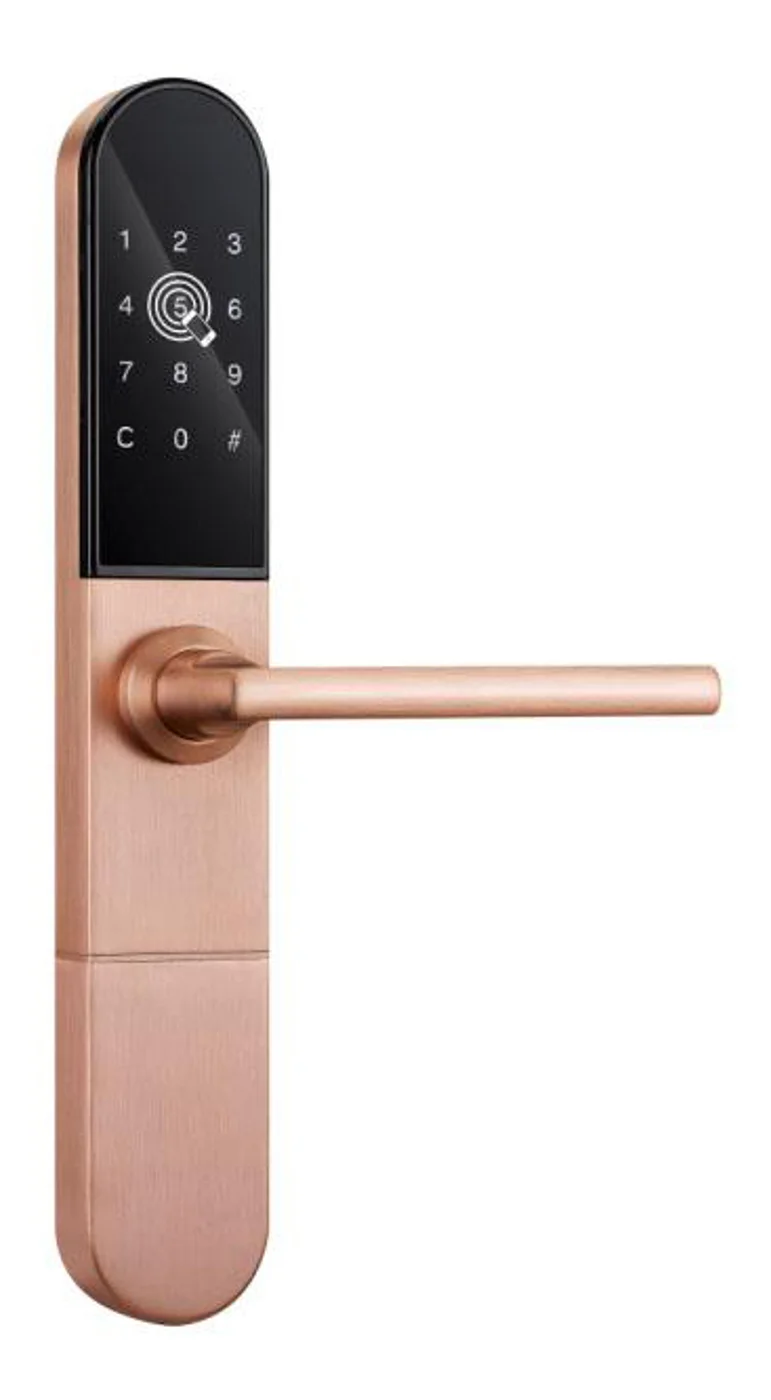
Smart Cabinet Lock — App-Managed, Multi-Site Dashboard
App-managed smart cabinet lock for office, parcel, and multi-site fleets. BLE app dashboard, audit trail, remote unlock, no per-lock server. Higher-tier chassis.
This page already points to it as the next recommended reference.
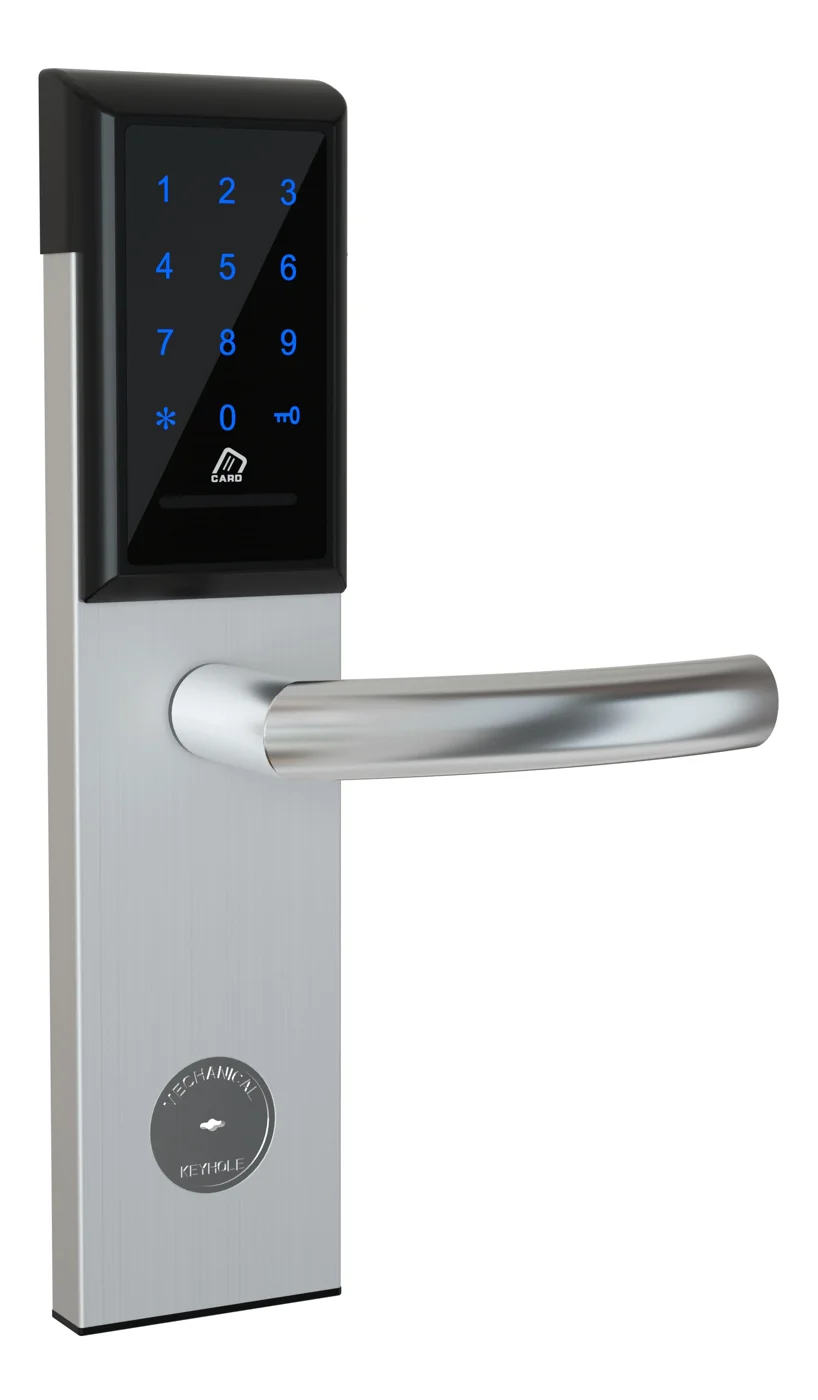
Office Cabinet Lock — PIN + Card for Filing & Pedestals
Offline PIN + card office cabinet lock for filing cabinets, pedestals, and drawers. Battery-powered 5-minute retrofit, no WiFi, no key management. CE/FCC/RoHS.
This page already points to it as the next recommended reference.
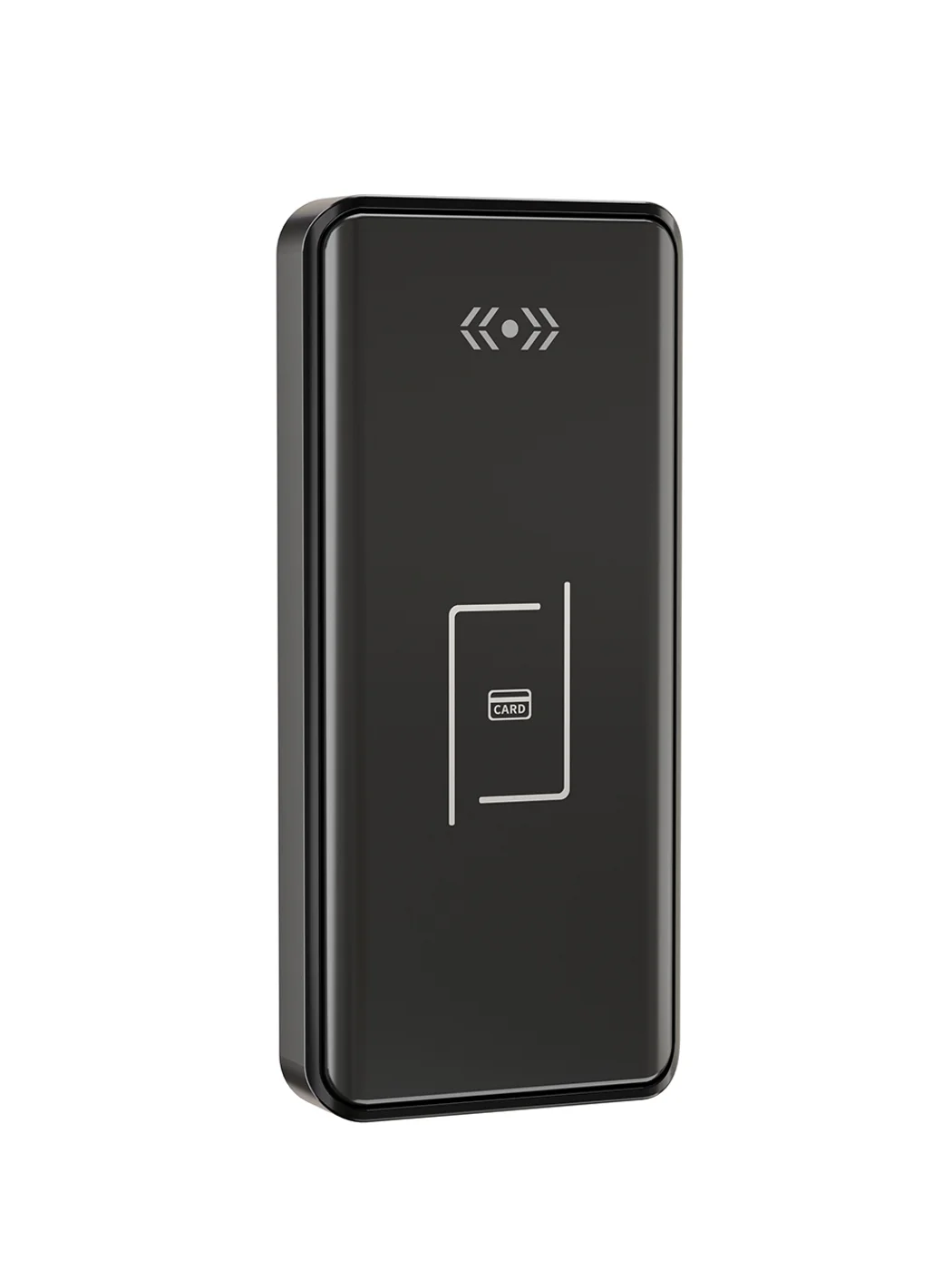
Gym Locker Lock — Offline Card, No WiFi Required
Offline card gym locker lock for fitness and pool lockers. MIFARE card, battery-powered 5-minute retrofit, no WiFi or server. Zinc alloy body, CE/FCC/RoHS.
This page already points to it as the next recommended reference.
Related blog posts
3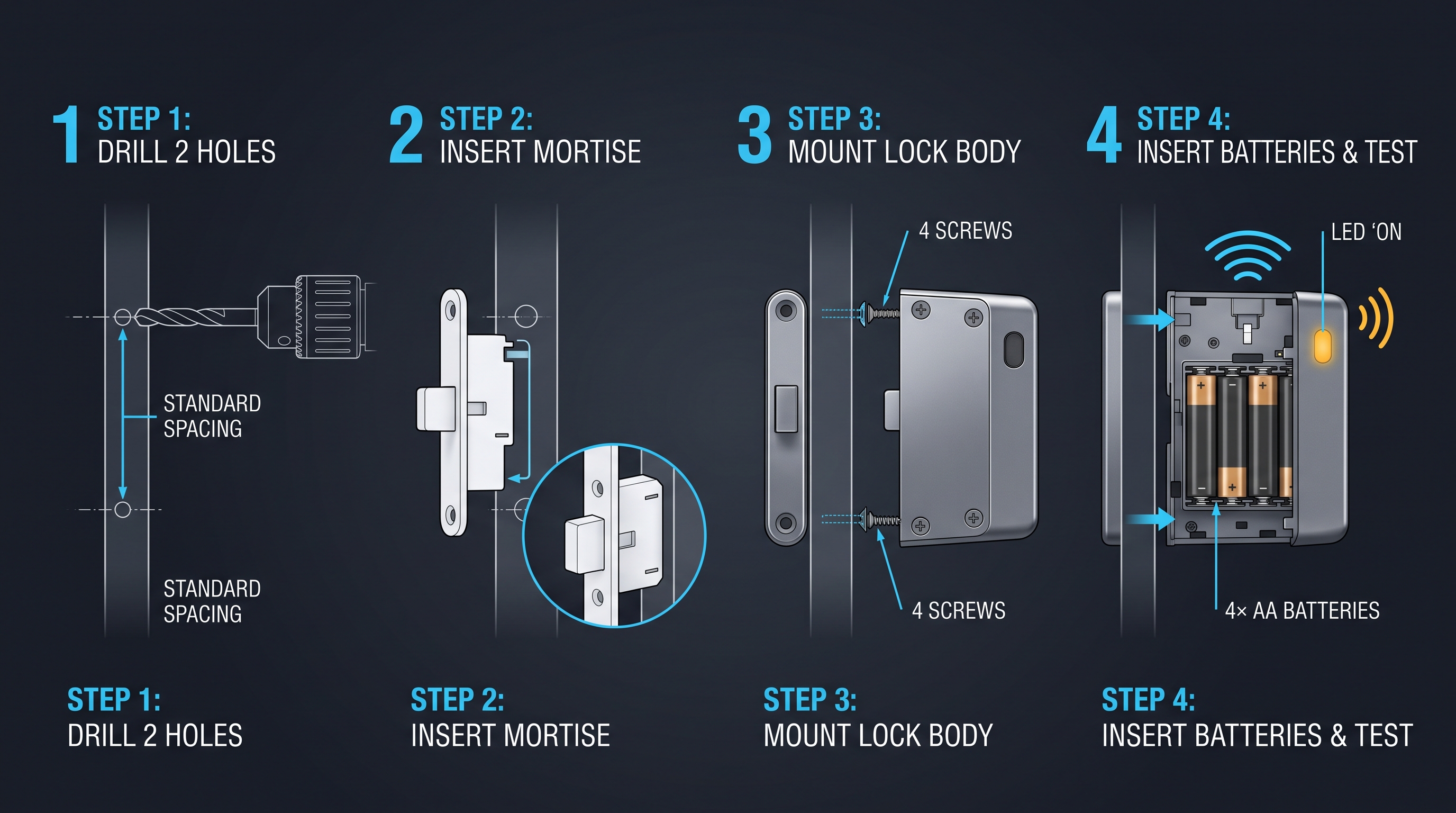
Cloud Cabinet Lock: Ultimate Guide to Cloud-Connected Cabinet Access Control
A comprehensive guide to cloud cabinet lock technology covering remote management, real-time audit trails, and multi-site cabinet access control for enterprises.
It supports the same product context: Smart Cabinet Lock — App-Managed, Multi-Site Dashboard, Office Cabinet Lock — PIN + Card for Filing & Pedestals, Gym Locker Lock — Offline Card, No WiFi Required.
Cam Lock Electronic: Modernizing the Workhorse Cabinet Lock
Cam lock electronic combines the classic cam lock form factor with RFID, keypad, and BLE credentials. Retrofit compatible with standard cylinder bores. Complete guide.
It supports the same product context: Smart Cabinet Lock — App-Managed, Multi-Site Dashboard, Office Cabinet Lock — PIN + Card for Filing & Pedestals, Gym Locker Lock — Offline Card, No WiFi Required.
Card Cabinet Lock: Ultimate Guide to Smart Card-Activated Cabinet Security Systems
Complete exploration of card cabinet lock technology including MIFARE, DESFire, NFC smartphone credentials, installation guides, security protocols, and enterprise integration strategies for card-based cabinet access.
It supports the same product context: Smart Cabinet Lock — App-Managed, Multi-Site Dashboard, Office Cabinet Lock — PIN + Card for Filing & Pedestals, Gym Locker Lock — Offline Card, No WiFi Required.
Specify your hotel project with our engineers
Send your room count, ceiling type, and protocol preference. We will return a sample plan and quote within 24 business hours.
- Move from general guidance into a product or application discussion.
- Use RFQ when pricing, drawings, MOQ, or launch timing needs structure.
- Keep a direct contact path visible for fast clarifications and handoff.