Cabinet Lock with Audit Trail: The Complete Guide to Event Logging for Compliance and Security
Explore how a cabinet lock with audit trail captures timestamps, credential IDs, and actions across 1000-100000 events. Learn about flash storage, export protocols, SIEM integration, and regulatory compliance for healthcare, firearms, evidence, and more.
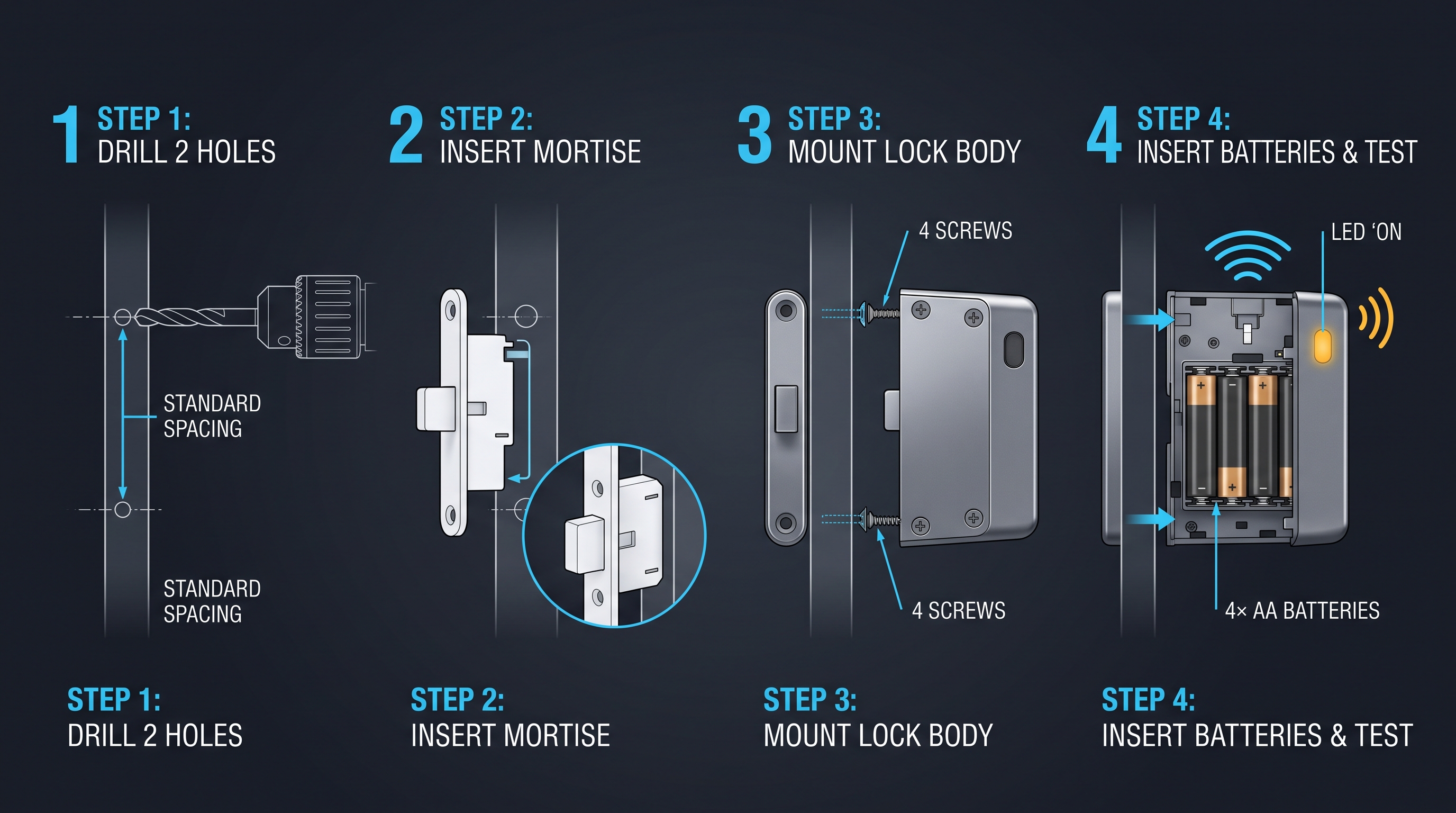
Every organization that secures controlled substances, firearms, evidence, sensitive data, or high-value assets faces the same fundamental question: who accessed the cabinet, when, and was the access authorized? A standard electronic lock can deny entry to unauthorized users, but it cannot tell you what happened after the fact. That is precisely why the cabinet lock with audit trail has become the de facto standard for regulated industries. Unlike a simple lock that only secures a door, a cabinet lock with audit trail records every access attempt with granular detail: a precise timestamp accurate to the millisecond, the unique credential identifier of the person who presented the key, the action taken (lock, unlock, forced entry, tamper event), and the result (success, denied, duress, timeout). This event log lives in onboard flash memory and can range from 1,000 to over 100,000 entries depending on the hardware configuration. The data can be exported over USB, RS-485, Wi-Fi, or Zigbee, and in enterprise deployments it feeds directly into Security Information and Event Management (SIEM) platforms for real-time alerting and compliance reporting. Whether you operate a DEA-regulated pharmacy, a HIPAA-covered healthcare facility, an FDA-tracked drug storage room, a law enforcement evidence locker, or a Sarbanes-Oxley-compliant data center, a cabinet lock with audit trail transforms a passive locking point into an active, verifiable component of your security posture. This guide explains exactly how event logging works, what storage technology underpins it, how data is exported and integrated, and how to choose the right system for your compliance requirements.
How a Cabinet Lock with Audit Trail Captures and Structures Event Logs
A cabinet lock with audit trail operates as an embedded system that combines a mechanical locking mechanism with a microcontroller, real-time clock, non-volatile flash memory, and one or more communication interfaces. When a user presents a credential — whether an RFID fob, a PIN code entered on a keypad, a biometric fingerprint scan, or a smartphone via Bluetooth or NFC — the lock's firmware evaluates the credential against its onboard access control list. Every transaction, whether successful or denied, generates a structured event record that is written to the flash log. A typical event record contains four mandatory fields: a timestamp captured from the real-time clock with millisecond resolution, a credential ID that uniquely identifies the user or token, an action describing the operation performed, and a result indicating the outcome. Common actions include Unlock, Lock, Attempt (when a credential is presented but the lock does not change state), Tamper (physical attack detected), Duress (a duress code or duress biometric was used), Timeout (credential expired or outside authorized window), and Forced Entry (door opened without valid unlock). Each record typically consumes 32 to 128 bytes of flash storage depending on the verbosity of the log format and whether auxiliary metadata such as battery voltage, firmware version, or cabinet temperature is also recorded.
The microcontroller in a cabinet lock with audit trail manages a circular buffer for the event log. When the log reaches its configured capacity — which can be factory-set anywhere from 1,000 to 100,000 records — the oldest entries are overwritten by new ones unless the administrator has enabled a "log full lock" policy that prevents further access until the log is exported. This behavior is configurable in firmware for most enterprise-grade locks. The write cycle is atomic: the lock guarantees that each event record is fully written to flash before the next access attempt is processed, preventing data corruption during power loss. The real-time clock that supplies timestamps is typically powered by a supercapacitor or coin-cell backup battery that maintains timekeeping for 30 days to 10 years depending on the model, ensuring that even if the main power source (4x AA alkaline batteries, a 3.6V lithium cell, or 12-24V DC input) is removed or depleted, the timestamps remain accurate. Drift specifications for these clocks range from ±2 parts per million (approximately 1 minute per year) in premium crystal-oscillator designs to ±20 ppm in lower-cost RC oscillator circuits. The combination of atomic write semantics, battery-backed timekeeping, and structured event fields makes the cabinet lock with audit trail a defensible source of truth for forensic investigations and compliance audits.
Flash Storage: Volatile vs Non-Volatile in a Cabinet Lock with Audit Trail
The storage medium inside a cabinet lock with audit trail directly determines whether event logs survive a power loss, how many write cycles the device can endure, and how long the log data remains readable over the product's lifespan. All serious cabinet locks use non-volatile memory for the audit trail, meaning the log persists without any power source. The two primary technologies are NOR flash and NAND flash, and a third category — FeRAM (ferroelectric RAM) — appears in premium models. The table below compares these storage types as they appear in modern electronic cabinet locks.
| Storage Type | Typical Capacity | Write Endurance | Write Speed | Power Required for Retention | Typical Lock Price Tier |
|---|---|---|---|---|---|
| NOR Flash | 64 KB - 2 MB (approx. 1,000 - 30,000 events) | 100,000 - 1,000,000 erase cycles | 1 - 10 ms per page write | None (non-volatile) | $100 - $300 |
| NAND Flash | 4 MB - 128 MB (approx. 30,000 - 1,000,000 events) | 10,000 - 100,000 erase cycles | 0.1 - 1 ms per page write | None (non-volatile) | $150 - $500 |
| FeRAM | 64 KB - 512 KB (approx. 1,000 - 8,000 events) | 10^12 - 10^16 write cycles | 50 - 100 ns per byte write | None (non-volatile) | $250 - $800 |
| Battery-Backed SRAM (legacy) | 32 KB - 256 KB | Unlimited (SRAM has no write limit) | 10 - 50 ns per byte write | Requires battery; data lost when battery dies | Discontinued / niche |
NOR flash is the most common storage type found in mid-range cabinet lock with audit trail products because it offers a good balance of endurance and cost. It supports random-access reads, which means the lock firmware can read individual event records without having to load an entire page into RAM, reducing latency during log export. NAND flash appears in higher-end locks that need to store 50,000 or more events, such as those used in large hospital pharmacies or evidence rooms that log every transaction for months without export. NAND is cheaper per megabyte than NOR but requires error correction (ECC) in the firmware because it is susceptible to bit-flip errors over time. FeRAM is a superior but more expensive technology that combines unlimited write endurance with non-volatility and extremely fast write speeds. A cabinet lock with audit trail using FeRAM can log every single keypress or RFID poll without wearing out the memory, making it ideal for high-traffic environments like narcotic dispensing cabinets in operating rooms where hundreds of access events occur per day. Battery-backed SRAM was used in older lock designs but has been largely phased out because the lithium battery that maintains memory contents has a finite lifespan (typically 5-10 years) and the entire log is irretrievably lost when the battery fails. For any compliance-sensitive deployment, the minimum acceptable storage technology is NOR flash with a verified write-endurance rating that exceeds the expected lifetime event volume.
Event Capacity: Matching Log Size to Your Compliance Horizon
The event capacity of a cabinet lock with audit trail determines how far back your access history extends before the oldest records are overwritten. Capacities range from 1,000 events in basic standalone locks to over 100,000 events in networked enterprise models. Selecting the right capacity requires understanding your facility's daily access volume and the retention period mandated by your regulatory framework. A DEA-registered pharmacy dispensing Schedule II controlled substances, for example, may generate 50 to 200 access events per day across its narcotic storage cabinets. At 100 events per day, a lock with 10,000-event capacity retains approximately 100 days of history, which comfortably exceeds the typical DEA record-keeping requirement of 2 years only if logs are exported monthly. The key principle is that event capacity and export frequency together determine the effective retention window. If your compliance regime requires 5 years of on-device log retention, you need either a very large event buffer (hundreds of thousands of events) or a networked lock that automatically offloads logs to a central server in real time.
Below is a practical capacity guide based on common deployment scenarios for a cabinet lock with audit trail.
| Deployment Scenario | Daily Access Events | Recommended Minimum Capacity | Recommended Export Interval | Typical Retention Achieved |
|---|---|---|---|---|
| Single pharmacy narcotic cabinet | 50 - 200 | 10,000 events | Weekly | 3 - 12 months |
| Hospital medication room (multi-user) | 200 - 500 | 25,000 events | Weekly | 2 - 6 months |
| Hospital central pharmacy | 500 - 2,000 | 50,000 - 100,000 events | Daily or real-time | Indefinite with SIEM |
| Law enforcement evidence locker | 10 - 50 | 5,000 events | Monthly | 3 - 12 months |
| Firearms storage (armory) | 20 - 100 | 5,000 - 10,000 events | Monthly | 12 - 24 months |
| Cash room / vault | 30 - 150 | 10,000 events | Weekly | 4 - 12 months |
| Data center server cabinet | 5 - 50 | 5,000 events | Monthly | 12 - 36 months |
| Cannabis dispensary inventory | 100 - 400 | 25,000 events | Weekly | 2 - 6 months |
When evaluating a cabinet lock with audit trail, pay close attention to whether the advertised capacity refers to the total number of events the chip can store or the number of events before the circular buffer wraps. Some manufacturers quote the raw flash capacity (for example, "2 MB of storage") without stating the per-event record size, making it difficult to calculate actual event count. Request the per-event byte size from the manufacturer. A 128-byte event record on a 2 MB NOR flash chip yields 15,625 events before wrap, while a 64-byte record on the same chip yields 31,250 events. Locks with configurable log verbosity allow you to trade metadata richness for capacity: verbose mode may store user name, credential type, firmware version, battery level, and cabinet temperature (150-200 bytes per event), while compact mode stores only the four mandatory fields (32-48 bytes per event). Choose a cabinet lock with audit trail that offers at least twice the capacity you calculate as necessary for your maximum expected retention interval, ensuring headroom for unexpected access surges and holiday periods when export may be delayed.
Export Methods: USB, RS-485, Wi-Fi, and Zigbee
The value of a cabinet lock with audit trail depends entirely on your ability to extract the event log and deliver it to the people and systems that need it for compliance and security monitoring. Modern cabinet locks support one or more export methods, each with distinct trade-offs in speed, convenience, network integration, and security. The four dominant export paths are USB (mass storage device or serial protocol), RS-485 (wired multi-drop serial), Wi-Fi (802.11 b/g/n), and Zigbee (IEEE 802.15.4 mesh networking). The table below compares these methods across the criteria that matter most for compliance deployments.
| Export Method | Data Rate | Cable / Range | Typical Export Time (10,000 events) | Real-Time Capability | Best For |
|---|---|---|---|---|---|
| USB 2.0 (as mass storage) | 480 Mbps (theoretical); ~5 MB/s real-world | Cable up to 5 meters | Less than 1 second | No (manual plug-in required) | Periodic audits, offline environments |
| USB (serial CDC) | 115,200 - 921,600 bps | Cable up to 5 meters | 5 - 60 seconds | No (manual plug-in required) | Older lock firmware, custom integrations |
| RS-485 (half-duplex) | 115,200 bps typical | Twisted pair up to 1,200 meters | 10 - 120 seconds | Yes (polled) | Large facilities, industrial, multi-drop networks |
| Wi-Fi (802.11 b/g/n) | 1 - 50 Mbps (real-world) | 30 - 100 meters (indoor) | Less than 1 second | Yes (push or poll) | Enterprise SIEM integration, cloud management |
| Zigbee (3.0 / Pro) | 250 kbps | 10 - 100 meters per hop (mesh) | 5 - 30 seconds | Yes (mesh reporting) | Battery-powered locks, smart building ecosystems |
USB export is the most straightforward method and the only option on many low-cost locks. The cabinet lock with audit trail presents itself as a USB mass storage device when connected to a computer, and the log appears as a CSV, JSON, or XML file that can be copied and archived. Some locks support USB serial CDC mode instead, which streams the log over a virtual COM port — this is slower but allows the lock to remain in a semi-operational state during export. The limitation is that USB export requires physical proximity: an administrator must walk to each lock, plug in a laptop or USB flash drive, and manually initiate the export. For facilities with hundreds of locks, this becomes a labor-intensive process that may lead to missed exports and compliance gaps.
RS-485 export solves the proximity problem by allowing multiple locks to share a single two-wire bus spanning up to 1,200 meters. A cabinet lock with audit trail with RS-485 can be polled by a central controller — typically a network gateway or building management system — that requests logs from each lock on a scheduled basis. RS-485 is highly robust in electrically noisy environments and is the standard for industrial and healthcare facilities where reliability is paramount. The trade-off is the wiring cost: running twisted-pair cable to every cabinet location can be expensive in retrofit installations. Data rate is limited to 115,200 bps in most implementations, so exporting 50,000 events from a single lock may take 30 to 60 seconds per lock.
Wi-Fi export is the most convenient option for enterprise deployments. A cabinet lock with audit trail equipped with Wi-Fi can push logs to a cloud management platform or on-premises server in real time, eliminating the need for manual export rounds. Wi-Fi locks typically support TLS-encrypted connections and can integrate directly with SIEM platforms via syslog or REST API. The primary concern with Wi-Fi is battery life: a Wi-Fi radio drawing 150-300 mA during transmission can drain alkaline batteries in 3-6 months in high-traffic environments, compared to 12-24 months for Zigbee or offline-only locks. Some Wi-Fi locks address this by keeping the radio in deep sleep (1-5 microamps) between scheduled check-ins, waking only to push logs every 15-60 minutes or when an event threshold is reached.
Zigbee export is optimized for low-power mesh networking. A cabinet lock with audit trail using Zigbee 3.0 or Zigbee Pro can route log data through neighboring Zigbee devices (other locks, sensors, or a coordinator gateway) to reach the network controller. Each Zigbee lock acts as a router in the mesh, extending range and improving reliability. Zigbee's 250 kbps data rate is adequate for log export — a typical event record of 64 bytes takes approximately 2 milliseconds to transmit — but the mesh adds latency as packets hop through multiple nodes. Zigbee is the best choice for battery-powered locks in large facilities that cannot support Wi-Fi's power budget. However, Zigbee requires a coordinator gateway (USB dongle or IP gateway) and is not directly compatible with standard Wi-Fi networks, so it adds an infrastructure component that must be planned and maintained.
SIEM Integration: Turning a Cabinet Lock with Audit Trail into a Real-Time Security Sensor
A cabinet lock with audit trail reaches its full potential when it feeds event data into a Security Information and Event Management (SIEM) platform such as Splunk, IBM QRadar, ArcSight, Microsoft Sentinel, or Elastic Security. SIEM integration transforms each cabinet access event from a passive record stored in flash memory into an actionable alert that can trigger workflows, generate compliance reports, and correlate with other security data sources. The integration architecture is straightforward: the lock (or a gateway aggregating multiple locks) sends syslog messages in CEF (Common Event Format), LEEF (Log Event Extended Format), or JSON over TCP/TLS or UDP to the SIEM collector. Each event is parsed into the SIEM's normalized schema, making it searchable alongside authentication logs, video management system events, badge reader records, and network access data.
A properly configured SIEM receiving data from a cabinet lock with audit trail enables the following compliance-critical capabilities. First, real-time alerting: if a lock registers five consecutive denied access attempts in 60 seconds, the SIEM can trigger an alert to security personnel via email, SMS, or a dashboard widget. Second, duress detection: if a user enters a duress code (a PIN that unlocks the door but silently signals coercion), the SIEM can escalate to a separate response team and correlate the event with CCTV footage from the same time window. Third, out-of-hours access monitoring: the SIEM can flag any successful unlock that occurs outside a user's defined schedule, such as a pharmacist accessing the narcotic cabinet at 3:00 AM when their shift ended at 11:00 PM. Fourth, forensic search: an investigator can query the SIEM for every event associated with a specific credential ID across all locks in the facility, reconstructing the complete movement history of a user or a controlled substance. Fifth, compliance reporting: the SIEM can generate scheduled reports showing the number of access events, denied attempts, tamper events, and export completeness for each cabinet lock with audit trail in the deployment, ready for submission to DEA, HIPAA, FDA, or SOX auditors.
The integration effort varies by lock manufacturer and SIEM platform. Most enterprise-grade locks support syslog natively, requiring only the SIEM collector IP address and port configuration on the lock or its gateway. Some cloud-managed locks offer a REST API that the SIEM can poll, or a webhook mechanism that pushes events to the SIEM's HTTP event collector. Locks that only support USB or RS-485 export can still be integrated into a SIEM workflow through an intermediate bridge: a local PC or embedded gateway runs a service that periodically polls the locks via USB or RS-485, reformats the events into syslog, and forwards them to the SIEM. This hybrid approach is common in retrofit deployments where upgrading every lock to Wi-Fi would be cost-prohibitive. When evaluating a cabinet lock with audit trail for SIEM integration, verify that the lock supports TLS-encrypted syslog (TCP 6514 or TCP 6515) rather than plaintext UDP syslog, which can be intercepted or spoofed. Also confirm that the lock or its gateway can buffer events during network outages — a lock that loses events when the SIEM is unreachable creates a compliance gap. The industry standard is a minimum of 1,000 events of local buffer beyond the main event log specifically for network transmission retry.
Regulatory Compliance: DEA Schedule II, HIPAA, FDA, and Sarbanes-Oxley
The primary driver for deploying a cabinet lock with audit trail is regulatory compliance. Four major regulatory frameworks in the United States explicitly or implicitly require auditable access controls for physical storage of sensitive items: the Drug Enforcement Administration (DEA) regulations for Schedule II controlled substances, the Health Insurance Portability and Accountability Act (HIPAA) Security Rule for protected health information, the Food and Drug Administration (FDA) regulations for drug storage and tracking under the Drug Supply Chain Security Act (DSCSA), and the Sarbanes-Oxley Act (SOX) for financial record controls. Each framework imposes specific requirements on access logging, record retention, and auditability that a cabinet lock with audit trail can satisfy.
| Regulation | Controlled Items | Audit Requirement | Minimum Retention | Tamper / Duress Required | Log Format Accepted |
|---|---|---|---|---|---|
| DEA Schedule II (21 CFR 1300) | Controlled substances, narcotics | Perpetual inventory + access log | 2 years (federal); state may exceed | Yes (tamper evident) | Printed or electronic with signature |
| HIPAA Security Rule (45 CFR 164.312) | PHI, medication records, patient data | Access controls + audit controls | 6 years | Yes (integrity controls) | Electronic with audit trail |
| FDA / DSCSA (21 CFR 205.50) | Prescription drugs, temperature-sensitive | Transaction history + access log | 3 years (wholesale); 1 year (dispensing) | Yes (tamper evident seal) | Electronic interoperable format |
| Sarbanes-Oxley (SOX, 15 USC 7201) | Financial records, material non-public info | Internal controls over physical access | 7 years | Recommended | Electronic with audit trail |
| HIPAA HITECH (42 USC 17932) | ePHI access logs | Accounting of disclosures | 6 years | Yes (integrity) | Electronic with access report |
DEA Schedule II compliance is the most stringent and specific requirement for a cabinet lock with audit trail. The DEA requires that controlled substances be stored in a "securely locked, substantially constructed cabinet" and that each access be logged with the date, time, identity of the person accessing, and the specific drug and quantity removed. While the DEA does not mandate electronic logging, the practical reality of Schedule II inventory reconciliation — which must be performed every two years at minimum and often monthly in high-volume pharmacies — makes manual logbooks impractical and error-prone. A cabinet lock with audit trail satisfies the spirit of the regulation by providing a tamper-evident, immutable access record that can be cross-referenced with dispensing records. The lock must meet DEA's physical security requirements: the cabinet itself must be substantially constructed (typically 16-gauge steel or thicker), the lock mechanism must resist forced entry for at least 5 minutes (ANSI/BHMA Grade 1 equivalent), and the audit log must be protected against unauthorized modification. Many DEA field inspectors now specifically ask whether the facility uses electronic audit trail locks during investigations, and a positive answer significantly streamlines the inspection process.
HIPAA compliance under the Security Rule requires "implementing hardware, software, and/or procedural mechanisms that record and examine access and other activity in information systems that contain or use electronic protected health information (ePHI)." While the text refers to "information systems," the physical access controls that protect the servers, workstations, and paper records containing ePHI fall under the same administrative and physical safeguards. A cabinet lock with audit trail on a server room door, a medical records storage cabinet, or a medication dispensing cabinet provides documented evidence of the "access control" and "audit control" standards. The HIPAA Safe Harbor provision (45 CFR 164.314) also recognizes that covered entities that implement auditable physical access controls may receive reduced penalties in the event of a breach investigation. The 6-year retention requirement matches the statute of limitations for HIPAA violations, so the lock's export and archiving process must ensure that logs covering this window are preserved in a separate, immutable storage system (typically a SIEM or document management platform).
FDA compliance under the Drug Supply Chain Security Act and 21 CFR 205.50 requires that wholesale drug distributors and dispensers maintain "complete and accurate records of each transaction" including the date of transaction, drug name, quantity, and the identities of the parties. While DSCSA focuses on transactional data rather than cabinet-level access logs, a cabinet lock with audit trail provides the physical layer of accountability that supports the chain of custody. When an FDA investigator traces a specific bottle of medication from manufacturer to patient, the cabinet audit log is the documentary evidence that the medication was stored in a secure, access-controlled environment at each step. Temperature monitoring is often integrated into these cabinets as well, and some cabinet lock with audit trail models include temperature and humidity sensors that log environmental conditions alongside access events, satisfying both DSCSA and USP <795>/<797> compounding standards.
Sarbanes-Oxley compliance for publicly traded companies requires "internal controls over financial reporting" (Section 404) that include physical access controls over assets that could materially affect financial statements. This extends to data centers, server rooms, and any physical location where financial data is stored or processed. A cabinet lock with audit trail on data center cabinets and server racks provides the auditable evidence that only authorized personnel had physical access to systems that process financial transactions. SOX auditors increasingly request physical access logs during Section 404 assessments, and a clean, complete audit trail from an electronic lock is far more defensible than signed paper log sheets that can be lost, forged, or filled out retrospectively.
Tamper Logging and Duress Detection in a Cabinet Lock with Audit Trail
Two specialized event types elevate a basic electronic lock to a cabinet lock with audit trail suitable for high-security and compliance environments: tamper logging and duress detection. Tamper events are generated when the lock detects a physical attack or an attempt to bypass the locking mechanism. Duress events are generated when a user authenticates successfully but under coercion, using a special credential or code that signals "I am being forced to open this cabinet" without alerting the coercing party. Both capabilities are essential for DEA Schedule II compliance, law enforcement evidence management, and any deployment where the person guarding the asset could be compromised.
Tamper logging works through a combination of hardware sensors embedded in the cabinet lock with audit trail. A typical tamper-detecting lock includes one or more of the following: a door position sensor (magnetic reed switch or Hall-effect sensor) that detects whether the cabinet door is open or closed independent of the lock bolt position, a shock sensor or accelerometer that detects impacts, drilling, or prying attempts, a voltage tamper sensor that detects attempts to short-circuit or over-voltage the lock electronics, and a cut-loop sensor that detects if the lock's mounting screws or wiring are cut. When any of these sensors triggers, the lock immediately writes a Tamper event to the audit log with the specific sensor ID and a timestamp. Many locks also sound an audible alarm (85-110 dB) and, if networked, transmit an immediate alert to the SIEM or monitoring station. The critical compliance feature is that the tamper event is non-resettable by the user: even after the alarm is silenced and the door is secured, the tamper record remains in the audit log and cannot be deleted or overwritten except through a manufacturer-level firmware reset that itself is logged.
Duress detection is a feature mandated by DEA regulations for any electronic access control system used in controlled substance storage. A cabinet lock with audit trail with duress capability supports at least one of these mechanisms: a duress PIN (a secondary code that unlocks the door but appends a duress flag to the audit record), a duress fingerprint (a specific finger enrolled as the duress finger, typically the index finger, while the thumb is the normal finger), a duress RFID credential (a secondary fob or card carried specifically for coercion situations), or a duress mobile credential (a specific tap pattern or button on a smartphone app). When the duress mechanism is used, the lock performs the requested action normally — the door unlocks, the coercing party sees nothing unusual — but the audit trail records the event as a Duress type. If the lock is networked, it can silently send an alert to a preconfigured response team or SIEM without any visible indication at the cabinet. The duress credential is typically enrolled in a separate list from normal credentials and may be subject to additional controls such as mandatory re-enrollment every 90 days or a limit of one duress credential per user.
Time-sync requirements directly affect the reliability of both tamper and duress logging. A cabinet lock with audit trail must maintain accurate time to ensure that tamper and duress events are chronologically defensible in court or during an investigation. Locks that are networked (Wi-Fi, Zigbee, or RS-485 to a gateway) can synchronize with an NTP server or the building management system's time source daily or on every event. Offline locks that rely on battery-backed real-time clocks should be synchronized manually during each export visit. The acceptable time drift for compliance purposes is typically ±30 seconds relative to a trusted time source (NIST atomic clock, GPS, or organizational NTP server). Locks that drift beyond this threshold risk having their logs challenged during litigation or regulatory action. Premium cabinet lock with audit trail models include automatic time-sync logging: every time synchronization event is itself recorded in the audit log with the old timestamp, new timestamp, and the source of the sync (NTP server IP, manual entry, USB command). This creates a chain of custody for the time reference that is itself auditable.
Who Needs a Cabinet Lock with Audit Trail: Industry Use Cases
The cabinet lock with audit trail is not a general-purpose lock for every storage cabinet in a building. It is a specialized security device for environments where access must be documented, verified, and defensible. The following use cases represent the industries and applications where the audit trail is not optional — it is a compliance or operational necessity.
Hospital and retail pharmacy — This is the largest market for cabinet lock with audit trail products. Hospital pharmacies manage hundreds of Schedule II through Schedule V controlled substances across multiple nursing units, operating rooms, emergency departments, and outpatient pharmacies. The DEA requires that each access to a controlled substance be logged with the user identity, drug, quantity, time, and date. A cabinet lock with audit trail on each medication storage cabinet or automated dispensing cabinet (ADC) provides the access component of this record. In a 300-bed hospital, the central pharmacy and 15 nursing unit medication rooms may collectively generate 2,000 to 5,000 access events per day. Networked locks with Wi-Fi or RS-485 export that feed into the hospital's SIEM or ADC management platform are standard. The Joint Commission (TJC) surveys specifically review physical access logs during accreditation visits, and a documented audit trail from a cabinet lock with audit trail is one of the easiest ways to satisfy TJC's medication management standards.
Law enforcement evidence management — Police departments, sheriff's offices, and federal law enforcement agencies store firearms, drugs, cash, DNA samples, and digital evidence in locked evidence rooms. Chain of custody is the legal foundation of evidence admissibility: every person who handled the evidence must be documented with timestamps. A cabinet lock with audit trail on each evidence locker or cabinet provides the physical access layer of the chain of custody, complementing the digital evidence management system. When a defense attorney challenges the chain of custody, the lock's audit log showing who accessed the evidence cabinet and when is compelling documentary evidence. Tamper logging is especially critical in evidence environments: any tamper event on an evidence cabinet can trigger an internal affairs investigation and may require notification to the prosecutor and defense counsel. Evidence room locks typically require 25,000-50,000 event capacity to cover the months-long retention between court-ordered discovery requests.
Firearms storage and armories — Military armories, police stations, gun ranges, and commercial firearms dealers are required by the Bureau of Alcohol, Tobacco, Firearms and Explosives (ATF) to secure firearms in a "secure gun storage facility." A cabinet lock with audit trail satisfies the ATF's expectation that access is controlled and logged. For commercial firearms dealers (FFLs), the ATF requires a bound book that records every firearm acquisition and disposition, but the physical security of the inventory is equally important. An audit-trail lock on the gun cabinet provides documented evidence that only authorized personnel had access during business hours and that after-hours access was specifically logged and authorized. Many FFLs use a cabinet lock with audit trail with biometric fingerprint authentication to eliminate shared PINs or lost keys while maintaining a complete access log for ATF compliance inspections.
Cash management and vaults — Casinos, retail banks, armored car services, and high-volume cash businesses need to track who accessed cash storage areas and when. A cabinet lock with audit trail on a cash vault door, a teller cash drawer, or an ATM cassette storage cabinet provides the access documentation required for internal audit and SOX compliance. Cash environments are high-frequency access zones: a casino cage may see 500-1,000 cash transactions per shift, each requiring a lock operation. The cabinet lock with audit trail must support at least 50,000 events and preferably FeRAM storage to handle the write endurance requirements. Duress detection is particularly important in cash environments where employees may be coerced by external threats or internal collusion. Cash rooms typically use locks with both duress PIN and duress biometric options.
Data center and server room — Data centers managed by cloud providers, financial institutions, healthcare organizations, and government agencies require auditable physical access controls to satisfy SOC 2, ISO 27001, FedRAMP, and SOX compliance frameworks. A cabinet lock with audit trail on individual server racks, network cabinets, and cable management enclosures provides per-rack access logging that complements the facility-level badge reader system. This is known as "logical-to-physical correlation": when a security incident involves a specific server, the data center operator can correlate the SIEM's logical access logs (who logged into the server remotely) with the cabinet lock with audit trail logs (who opened the server rack physically). If an intrusion is detected at 2:14 AM and only one person's badge was used to enter the server room at 2:13 AM, and that same person's credential opened the rack cabinet at 2:14 AM, the correlation is immediate and actionable. Data center locks often require the highest event capacities (100,000+ events) because racks may be accessed dozens of times per day by different teams and the retention requirement for SOC 2 reports is typically 12 months.
Cannabis dispensaries and cultivation facilities — State-licensed cannabis operators are subject to seed-to-sale tracking requirements that mandate documentation of every transfer of cannabis inventory between storage locations. While the seed-to-sale software tracks the inventory transaction, the cabinet lock with audit trail provides the physical access verification that the inventory was moved by an authorized person at the recorded time. State regulators in California, Colorado, Washington, Oregon, Michigan, and Illinois have all cited inadequate physical access controls as a common violation during compliance inspections. A cabinet lock with audit trail with at least 25,000-event capacity, Wi-Fi export for integration with the seed-to-sale platform, and tamper logging is the minimum recommended configuration for cannabis inventory storage.
Higher education and research laboratories — Universities and research institutions that handle DEA-controlled substances (research chemicals), select agents (CDC/USDA regulated pathogens), radioactive materials (NRC licensed), or controlled unclassified information (CUI, DoD/DHS) must maintain auditable access logs for each storage location. A cabinet lock with audit trail on laboratory chemical storage cabinets, biosafety cabinet enclosures, and radioactive material safes satisfies the physical access control requirements of the various regulatory bodies. Research labs typically have lower access frequency (10-50 events per day) but longer retention requirements (3-7 years depending on the grant funding agency). A lock with 10,000-event capacity and quarterly export is usually sufficient.
Choosing the Right Cabinet Lock with Audit Trail: Selection Framework
Selecting the correct cabinet lock with audit trail for your organization requires evaluating five dimensions: compliance requirements, access volume and retention, network infrastructure, credential types, and budget. The following framework guides you through each dimension with concrete decision criteria.
Step 1: Identify the governing regulation. Start with the regulatory framework that applies to your operation. If you store DEA Schedule II substances, you need a cabinet lock with audit trail with tamper detection, duress support, a minimum of 10,000-event capacity, and USB or network export for monthly log retrieval. If you store ePHI under HIPAA, you need a lock with at least 5,000-event capacity, network export for SIEM integration, and FIPS 140-2 validated encryption on the communication channel if the lock is networked. If you are a publicly traded company under SOX, you need a lock with network export and SIEM-compatible log format (syslog CEF/LEEF or JSON). Write down the specific regulation and the relevant retention period before evaluating any product.
Step 2: Calculate daily access volume and required event capacity. Observe your current cabinet access patterns for two weeks. Count every lock and unlock operation. Multiply the daily average by the retention period required by your regulation (in days). Double that number for safety margin. This is your minimum event capacity. If the number exceeds 50,000, you need a lock with NAND flash or a networked lock that offloads events to a central system. If the number exceeds 100,000, you must use a networked cabinet lock with audit trail with real-time export — no onboard-only lock can retain that many events practically.
Step 3: Evaluate your network and export environment. Determine whether each cabinet location has Wi-Fi coverage, RS-485 wiring, Zigbee mesh proximity, or only manual USB access. If you have fewer than 20 locks and a technician can visit each one monthly, USB export is acceptable. If you have 20 to 100 locks, Wi-Fi is the most cost-effective export method provided the facility has adequate wireless coverage. If you have more than 100 locks or operate in a facility where Wi-Fi is unavailable or unreliable (basements, shielded rooms, industrial environments), RS-485 or Zigbee with a central gateway is the appropriate choice.
Step 4: Choose credential types. The most common credential types for a cabinet lock with audit trail are RFID (125 kHz or 13.56 MHz), PIN keypad, biometric fingerprint, Bluetooth mobile credential, and mechanical key override. RFID is the most cost-effective for multi-user environments (a single fob costs $2-$10). PIN keypad eliminates the need to issue credentials but creates shared-secret problems (users share PINs). Biometric fingerprint provides the strongest non-repudiation (the credential is the person's physical body) but adds $50-$150 per lock and requires user enrollment. Bluetooth mobile credential allows users to authenticate with their smartphone, which is convenient for environments where staff already carry company phones. Most enterprise-grade locks support at least two credential types on the same lock.
Step 5: Evaluate total cost of ownership. The upfront cost of a cabinet lock with audit trail ranges from $100 for a basic USB-export RFID lock to $800 for a Wi-Fi-enabled biometric lock with FeRAM storage and tamper detection. However, the total cost of ownership includes installation ($50-$200 per lock for retrofit, $20-$50 per lock for new construction), credential provisioning ($2-$20 per user), management software ($0 for cloud-managed locks that include the platform in the hardware price, to $5-$20 per lock per month for enterprise platforms), and ongoing maintenance (battery replacement every 6-24 months at $1-$10 per lock). A networked lock that costs $300 more upfront but eliminates monthly export labor may be cheaper over a 5-year period than a $150 lock that requires 30 minutes of technician time per month for USB export.
Conclusion: The Cabinet Lock with Audit Trail as a Compliance Foundation
The cabinet lock with audit trail has evolved from a niche security product into a foundational component of regulatory compliance and operational security for organizations that store sensitive, valuable, or controlled items. The technology is mature: millisecond-precision timestamps backed by battery-maintained real-time clocks, non-volatile flash storage that preserves event logs through power loss and tamper attempts, multiple export paths that range from manual USB retrieval to real-time SIEM integration, and specialized features like duress detection and tamper logging that address the most demanding security scenarios. The event capacity of 1,000 to 100,000 records covers everything from a single small pharmacy narcotic cabinet to a multi-rack data center with hundreds of daily accesses. The regulatory frameworks that drive adoption — DEA Schedule II, HIPAA, FDA DSCSA, and Sarbanes-Oxley — each impose specific record-keeping, retention, and auditability requirements that a cabinet lock with audit trail can satisfy with documented, defensible evidence.
The decision to deploy a cabinet lock with audit trail should be driven by the same risk assessment that governs your organization's broader security program. Calculate the daily access volume, identify the governing regulation and its retention period, evaluate your facility's network readiness, and select a lock that matches your credential management philosophy. The upfront investment — typically $100 to $800 per lock plus installation and management — is modest compared to the cost of a compliance violation, a data breach, a diversion incident, or a failed audit. A cabinet lock with audit trail is not merely a lock; it is an immutable witness that records every interaction with your most valuable and regulated assets, and it provides the documentary evidence that regulators, auditors, courts, and internal security teams rely on to answer the single most important question in any security investigation: who accessed the cabinet, when, and was it authorized.
Part of this article content is generated by AI and optimized for professional accuracy and readability.
Not sure which sensor fits your project?
Talk to our mmWave application engineers for a free consultation.
Find the right presence sensor for your hotel project
Compare the 3 protocols, check hotel-specific case studies, and download the installation guide
Related products
3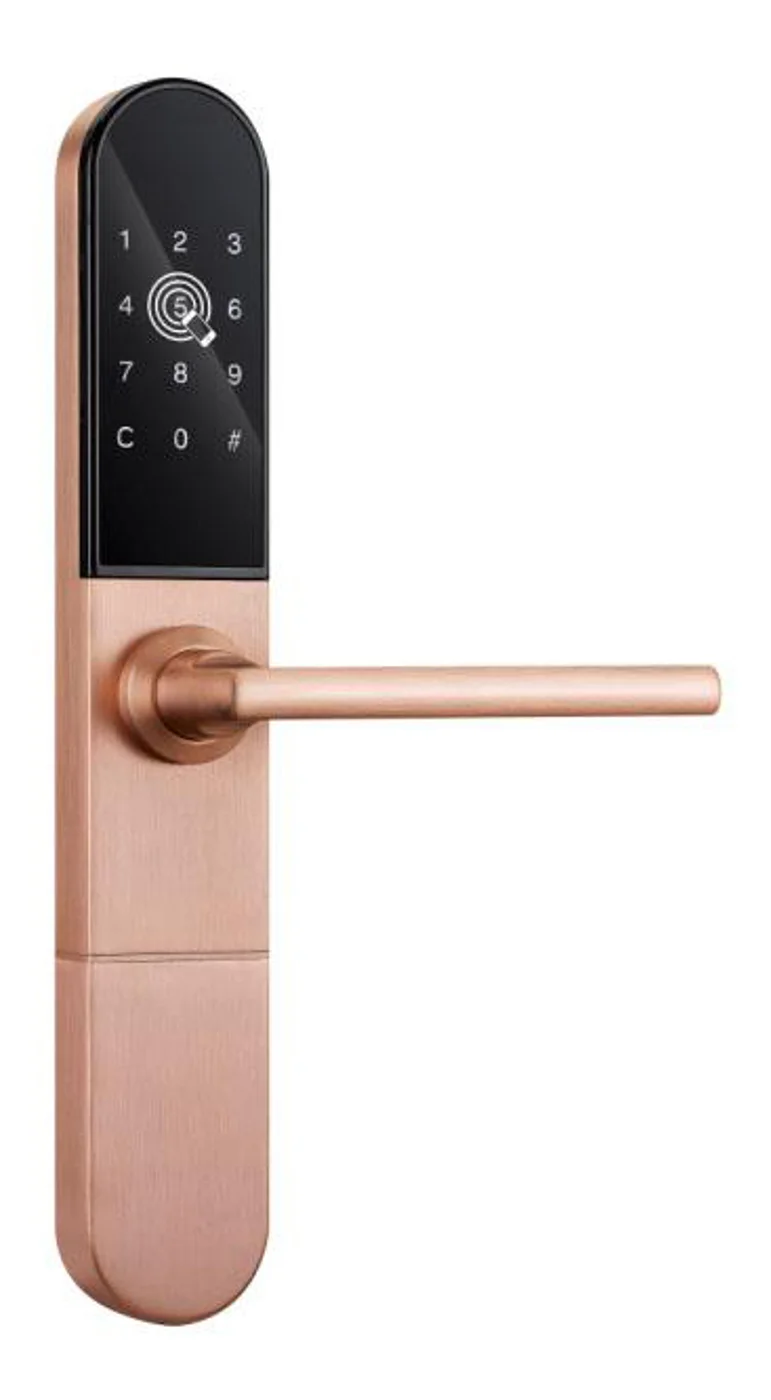
Smart Cabinet Lock — App-Managed, Multi-Site Dashboard
App-managed smart cabinet lock for office, parcel, and multi-site fleets. BLE app dashboard, audit trail, remote unlock, no per-lock server. Higher-tier chassis.
This page already points to it as the next recommended reference.
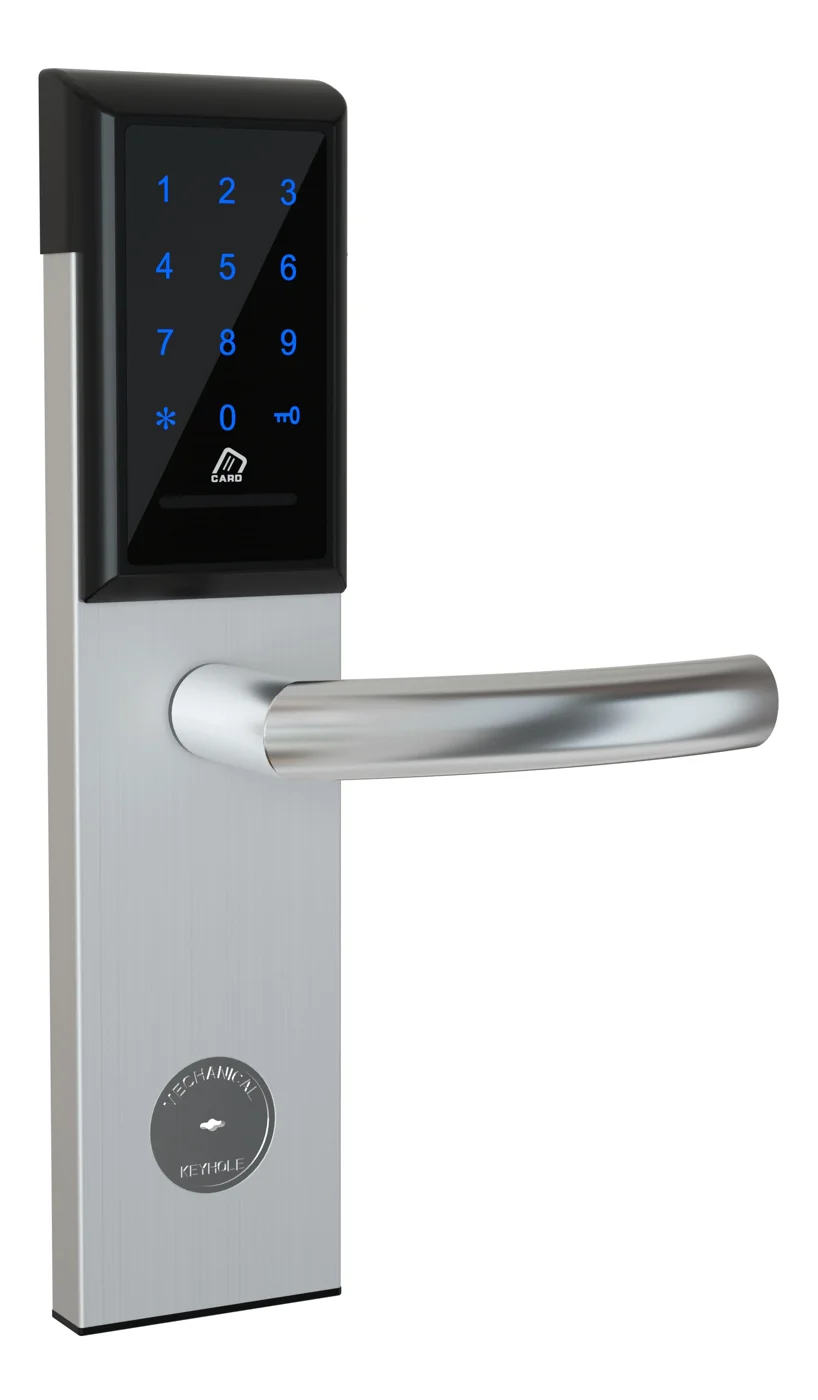
Office Cabinet Lock — PIN + Card for Filing & Pedestals
Offline PIN + card office cabinet lock for filing cabinets, pedestals, and drawers. Battery-powered 5-minute retrofit, no WiFi, no key management. CE/FCC/RoHS.
This page already points to it as the next recommended reference.
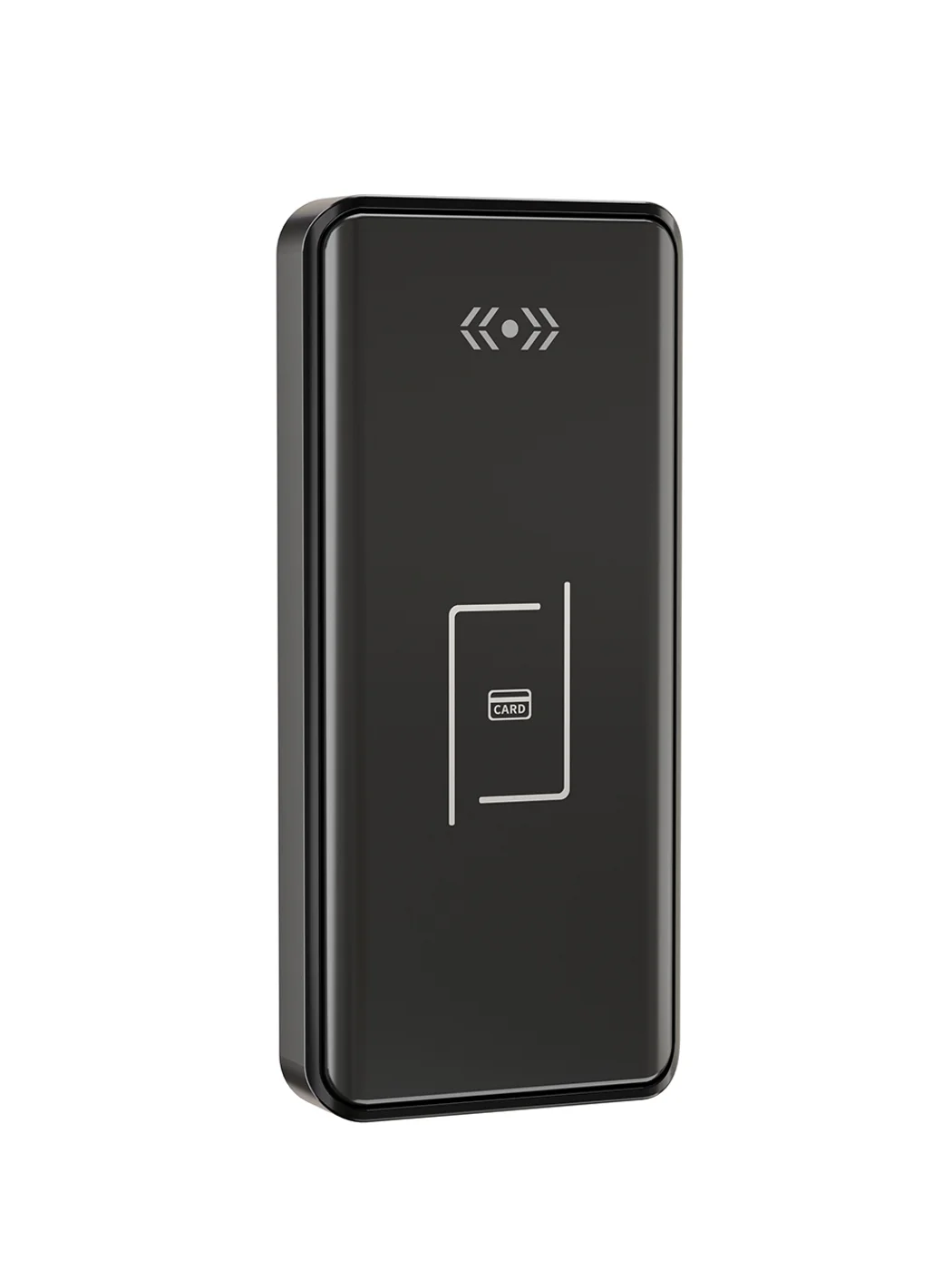
Gym Locker Lock — Offline Card, No WiFi Required
Offline card gym locker lock for fitness and pool lockers. MIFARE card, battery-powered 5-minute retrofit, no WiFi or server. Zinc alloy body, CE/FCC/RoHS.
This page already points to it as the next recommended reference.
Related blog posts
3
Cloud Cabinet Lock: Ultimate Guide to Cloud-Connected Cabinet Access Control
A comprehensive guide to cloud cabinet lock technology covering remote management, real-time audit trails, and multi-site cabinet access control for enterprises.
It supports the same product context: Smart Cabinet Lock — App-Managed, Multi-Site Dashboard, Office Cabinet Lock — PIN + Card for Filing & Pedestals, Gym Locker Lock — Offline Card, No WiFi Required.
Cam Lock Electronic: Modernizing the Workhorse Cabinet Lock
Cam lock electronic combines the classic cam lock form factor with RFID, keypad, and BLE credentials. Retrofit compatible with standard cylinder bores. Complete guide.
It supports the same product context: Smart Cabinet Lock — App-Managed, Multi-Site Dashboard, Office Cabinet Lock — PIN + Card for Filing & Pedestals, Gym Locker Lock — Offline Card, No WiFi Required.
Card Cabinet Lock: Ultimate Guide to Smart Card-Activated Cabinet Security Systems
Complete exploration of card cabinet lock technology including MIFARE, DESFire, NFC smartphone credentials, installation guides, security protocols, and enterprise integration strategies for card-based cabinet access.
It supports the same product context: Smart Cabinet Lock — App-Managed, Multi-Site Dashboard, Office Cabinet Lock — PIN + Card for Filing & Pedestals, Gym Locker Lock — Offline Card, No WiFi Required.
Specify your hotel project with our engineers
Send your room count, ceiling type, and protocol preference. We will return a sample plan and quote within 24 business hours.
- Move from general guidance into a product or application discussion.
- Use RFQ when pricing, drawings, MOQ, or launch timing needs structure.
- Keep a direct contact path visible for fast clarifications and handoff.