The Best Locker Lock Buying Guide for 2026: Padlock, Built-In, and Electronic Options
Comprehensive guide to choosing the best locker lock covering padlock, built-in combination, keyed, and electronic locker locks with security ratings, durability tests, and top recommendations for gym, school, and workplace lockers.
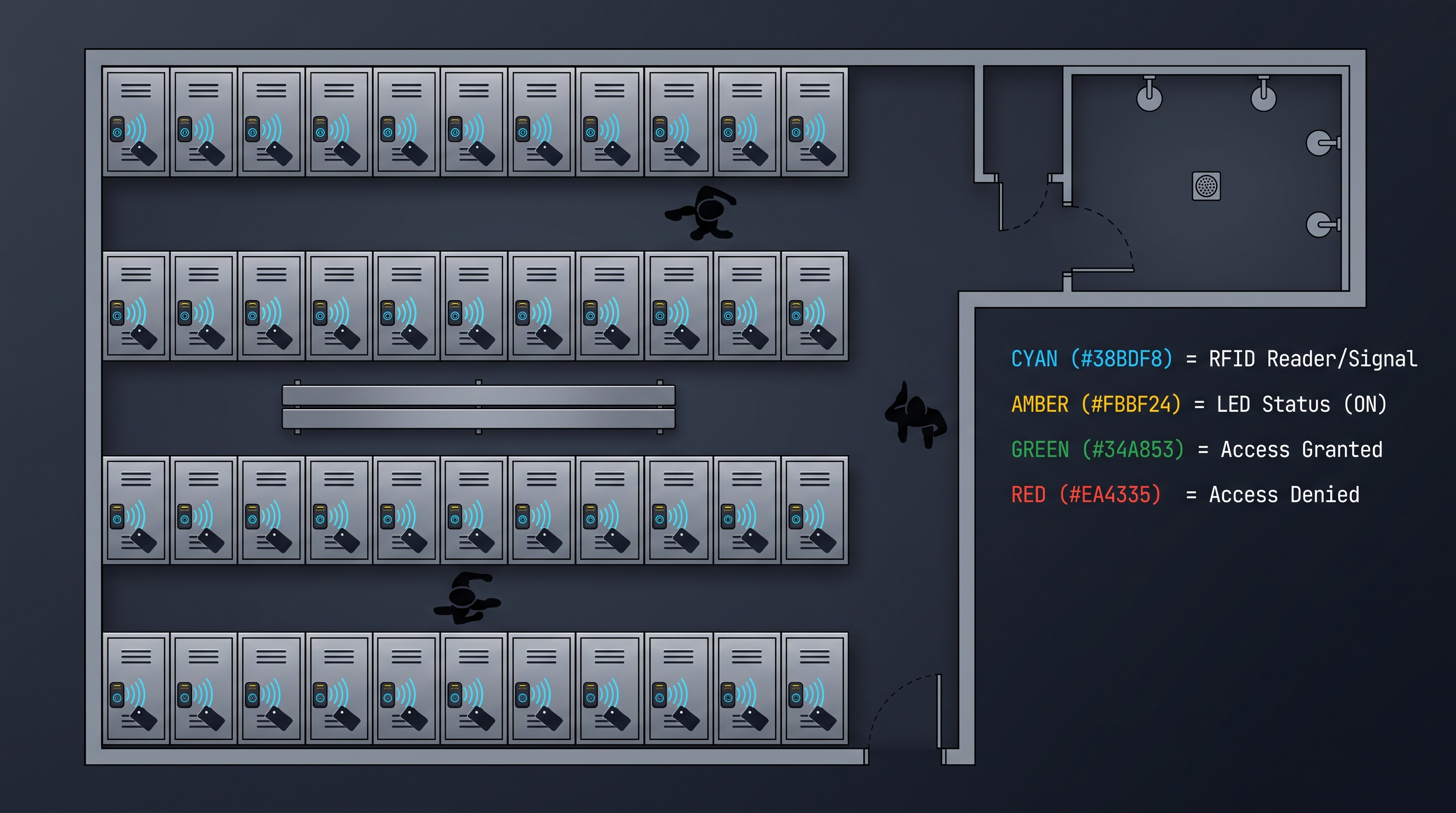
Locker theft in gyms, schools, and workplaces causes an estimated $350 million in annual losses across North America according to 2025 physical security industry data, with the majority of incidents traced to inadequate locker lock choices rather than forced entry — a finding that underscores why selecting the best locker lock is not merely a convenience decision but a frontline security investment. The locker lock market spans a wide performance spectrum from $5 basic combination padlocks that can be decoded in under 30 seconds to $150+ electronic smart locker locks with Bluetooth app control, biometric verification, and cloud-based audit trails, and the best locker lock for any given application depends on the threat environment, user demographics, facility policies, and budget constraints. This guide evaluates the best locker lock options across four primary categories — padlocks, built-in combination locks, keyed locker locks, and electronic locker locks — using security testing data, durability benchmarks, and real-world deployment feedback from facility managers overseeing locker banks in fitness centers, K-12 schools, universities, corporate wellness facilities, water parks, and industrial changing rooms. Whether you need the best locker lock for a high school hallway locker, a gym locker that endures daily sweat and impact, an employee locker with master-key override, or a smart locker system for a premium fitness club, the detailed comparison data and selection framework in this guide will help you choose with confidence.
What Defines the Best Locker Lock in 2026
The best locker lock is a security device specifically engineered for the constraints of locker environments — limited shackle clearance (typically 15-35 mm), exposure to moisture and cleaning chemicals, frequent cycling (5-20 lock/unlock operations per day in high-traffic gyms, accumulating to 1,800-7,300 cycles annually), and diverse user demographics that include children, seniors, and individuals with dexterity limitations — and its performance is measured across six key dimensions: security resistance (tensile strength of the locking mechanism measured in kN, with the best locker lock achieving 8-15 kN shackle resistance versus 2-4 kN for budget models), weather and corrosion resistance (ASTM B117 salt spray test survival of 96-500+ hours, with marine-grade stainless steel or coated hardened steel shackles being the benchmark), ease of use (measured by lock/unlock time and error rate across user age groups — the best locker lock achieves under 3 seconds unlock time and below 2% error rate for first-time users), durability under impact and vibration (tested to MIL-STD-810G for shock resistance where applicable, with lockers subject to door slam impacts of 50-200N in daily use), key management or credential flexibility (the ability to reset combinations without tools, issue temporary credentials, or integrate with existing RFID badge systems), and regulatory compliance (ASTM F883 for padlocks, ADA accessibility considerations for lock operation, and fire code egress requirements for locker room doors). The best locker lock balances these dimensions for its intended use case — a gym locker lock prioritizes corrosion resistance and quick operation, a school locker lock prioritizes cost-effectiveness and combination reset capability, and a workplace locker lock prioritizes master-key access and audit capability.
The locker lock market has undergone significant evolution since 2020, driven by three converging trends: the proliferation of electronic access control into previously mechanical-only segments (with electronic locker lock unit sales growing at 28% CAGR from 2022 to 2026 according to market research data), the post-pandemic emphasis on touchless and personal-credential-based access in shared facilities (accelerating adoption of RFID and Bluetooth locker locks that eliminate shared touch surfaces), and the growing expectation among fitness consumers that locker room technology should match the premium experience of the facility (mirroring the broader consumer electronics integration trend in hospitality and wellness). The best locker lock in 2026 is increasingly an electronic device with wireless connectivity, but mechanical padlocks and combination locks still command over 70% of unit volume due to their cost advantage and familiarity — and the best locker lock in any technology category is the one that best fits the specific deployment context.
| Evaluation Factor | What to Measure | Benchmark for the Best Locker Lock | Why It Matters |
|---|---|---|---|
| Shackle Strength | Tensile pull force (kN) | 8-15 kN for high-security; 3-5 kN for standard use | Resists bolt-cutter and leverage attacks |
| Corrosion Resistance | ASTM B117 salt spray hours | 200+ hours for indoor gym; 500+ hours for outdoor/pool | Prevents rust seizure and premature failure |
| Cycling Durability | Lock/unlock cycles to failure | 10,000+ cycles for mechanical; 50,000+ for electronic | Ensures multi-year service life in high-traffic lockers |
| Combination/Credential Flexibility | Resettable without tools, credential types supported | Tool-free reset; RFID + PIN + app for electronic | Reduces lock replacement cost from lost credentials |
| Tamper Resistance | Time to defeat using common attack methods | 2+ minutes for standard; 5+ minutes for high-security | Deters opportunistic theft |
| User Accessibility | Unlock time and error rate across age groups | Under 3 seconds; under 2% error rate | Ensures adoption and minimizes locker room congestion |
Best Locker Lock: Padlock Category Deep Dive
A padlock is the most versatile form factor for locker security — a self-contained, portable locking device with a hardened steel shackle (typically 5-10 mm diameter, with the best locker lock in this category achieving a shackle diameter of 8-10 mm in boron-carbide-hardened steel with a tensile strength rating of 8-15 kN, capable of resisting 24-36 inch bolt cutters) that passes through the locker's integrated hasp or a retrofit hasp kit, a lock body (laminated steel, solid brass, zinc die-cast, or aluminum — with solid-body construction providing superior drill resistance compared to laminated bodies that can be split at the lamination seams), and a locking mechanism (keyed cylinder with 4-6 pin tumblers, 3-4 wheel combination, or electronic with motorized shackle release). The best locker lock among padlocks for gym and school use consistently features a shrouded shackle design (where the lock body extends up around the shackle, leaving only the top curve exposed, dramatically reducing the attack surface for bolt cutters — a standard exposed shackle can be cut in 3-8 seconds, while a shrouded shackle resists bolt cutters entirely and forces an attacker to use an angle grinder, which produces noise, sparks, and takes 30-90 seconds), a keyway with anti-pick features (spool pins, serrated pins, and a paracentric keyway profile that frustrates raking and single-pin picking — the best locker lock achieves a pick resistance time of 5+ minutes against skilled attackers), and a weather-resistant construction (marine-grade 316 stainless steel or multi-layer chrome plating over hardened steel, with EPDM or silicone O-ring seals at the shackle holes and keyway cover to prevent water ingress that causes internal corrosion and freeze-up in unheated locker rooms).
The padlock form factor gives users the ability to move the best locker lock between lockers, take it home for cleaning or maintenance, and retain personal control over the key or combination without facility staff involvement — advantages that make padlocks the preferred choice for gym-goers, students, and temporary locker users. However, the same portability creates management challenges for facilities: lost keys and forgotten combinations generate an average of 3-7 lock cut-off incidents per 100 lockers per month in high-traffic gyms according to facility management surveys, costing $15-$35 in locksmith or maintenance labor per incident and creating user frustration. The best locker lock for facility-managed deployments increasingly incorporates a management key override (allowing staff to open the padlock with a master key when the user's key is lost) or an electronic unlock mechanism that can be remotely triggered via a facility management app, blending the convenience of personal padlock ownership with the operational necessity of emergency access.
| Padlock Type | Shackle Material | Shackle Diameter | Cut Resistance | Pick Resistance | Best Use Case | Price Range |
|---|---|---|---|---|---|---|
| Standard Combination | Hardened steel, chrome-plated | 5-7 mm | Low (2-3 seconds with small bolt cutters) | Not applicable (dial manipulation) | School lockers, low-risk gym lockers | $5-$15 |
| High-Security Combination | Boron-carbide steel | 8-9 mm | Medium (resists small cutters; 15+ seconds with large) | Not applicable | Mid-range gyms, university lockers | $15-$35 |
| Standard Keyed | Hardened steel, chrome-plated | 5-7 mm | Low-Medium | Low (standard pins) | School lockers with master-key requirements | $8-$20 |
| High-Security Keyed | Boron-carbide steel, shrouded shackle | 9-10 mm | High (resists bolt cutters; requires grinder) | High (spool/serrated pins, paracentric keyway) | Premium gyms, workplace lockers | $25-$60 |
| Electronic (Bluetooth) | Hardened steel, shrouded | 7-9 mm | Medium-High | Not applicable (no physical keyway) | Premium gyms, smart locker installations | $50-$150 |
| Electronic (Fingerprint) | Hardened steel, shrouded | 7-9 mm | Medium-High | Not applicable (biometric) | Executive wellness, medical staff lockers | $60-$180 |
Best Locker Lock: Built-In Combination Locks for Institutional Lockers
A built-in combination lock is a permanently installed locker security device where the lock mechanism — comprising a dial (typically 2-3 inches in diameter, marked with 0-39 or 0-49 digits), three or four internal combination wheels (each with a gate that must align with the locking fence at the correct digit), a spring-loaded locking dog or bolt, and a mounting plate — is integrated into the locker door during manufacturing or retrofitted into a standard mounting pattern (the most common being the Master Lock vertical 3-hole pattern with 1-1/4 inch screw spacing). The best locker lock in the built-in combination category is the Master Lock 1600 series and its equivalents from American Lock and other manufacturers, which have been deployed in over 100 million school and gym lockers since their introduction, achieving a mean time between failures of 8-12 years under normal use conditions with proper maintenance (annual lubrication with dry graphite and inspection of the mounting screws for loosening). Unlike padlocks, built-in combination locks offer several inherent advantages: the lock cannot be removed from the locker and lost or stolen, the facility retains control over combination management (typically through a master combination or a control key that allows the lock to be opened and the combination to be reset without knowing the user's combination), the lock body is protected inside the locker door where it is inaccessible to direct physical attack (bolt cutters cannot access the internal locking mechanism), and the integrated design eliminates the rattling and alignment issues that can occur with a padlock and hasp combination when the locker door flexes.
Selecting the best locker lock among built-in combination models requires evaluating the combination mechanism type, the resettability feature, and the physical durability of the lock body. Built-in combination locks are available in three combination mechanism types: single-dial (one dial, typically 3-digit, where the user dials the combination sequentially — the most common type, with 1,000 possible combinations, and a decode time of 30-90 seconds for experienced attackers using the "feel for the gates" method), multi-dial (multiple independent dials, typically 4-digit, where each dial is set independently — faster to open but with fewer effective combinations because the order of digits does not matter), and push-button (a series of buttons that are pressed in sequence — popular in European locker installations, offering faster operation than dials but with a smaller combination space). The best locker lock for environments requiring frequent combination changes (schools with semester-based locker assignments, gyms with daily-use rental lockers) features tool-free combination reset capability — a control key or reset button that allows facility staff to set a new combination in under 30 seconds without removing the lock from the door.
| Built-In Lock Model Series | Combination Type | Resettable | Material | Cycle Rating | Master Access | Typical Application |
|---|---|---|---|---|---|---|
| Master Lock 1600/1700 series | 3-digit single dial | Yes (control key) | Zinc die-cast body, steel bolt | 20,000+ cycles | Master combination + control key | K-12 school lockers, basic gym lockers |
| American Lock A100 series | 3-digit single dial | Yes (control key) | Solid brass body, stainless steel bolt | 25,000+ cycles | Master combination + control key | University lockers, mid-range gym lockers |
| Master Lock 1654 built-in | 4-digit single dial | Yes (control key) | Zinc die-cast, hardened bolt | 20,000+ cycles | Master combination + control key | High-security school lockers, premium gym lockers |
| European multi-dial | 4-digit independent dials | Yes (manual reset) | Zamak body, steel bolt | 15,000+ cycles | Master code + physical override key | European school/gym lockers, hostel lockers |
| Push-button mechanical | 5-10 button sequence | Yes (rear panel access) | Steel body, steel bolt | 30,000+ cycles | Master code + override key | Hospital staff lockers, clean-room lockers |
Best Locker Lock: Keyed Locker Locks for Controlled Access Environments
Keyed locker locks — available as integrated locker handle assemblies (where the lock cylinder, latch mechanism, and door handle are combined into a single unit mounted to the locker door) or as retrofit keyed cam locks (installed into a 19 mm or 3/4-inch standard mounting hole in metal locker doors) — provide the highest level of facility-side access control among mechanical locker lock options, supporting master-key systems, key tracking, and rapid rekeying between user assignments. The best locker lock in the keyed category uses a 6-pin or 7-pin tumbler cylinder (providing 50,000-250,000 theoretical key differs versus 4,000-10,000 for 4-5 pin cylinders, dramatically reducing the risk of cross-keying in large locker installations), a restricted keyway (where key blanks are patent-protected and only available through authorized channels, preventing unauthorized key duplication by users — standard "SC1" or "KW1" keyways have blanks available at any hardware store for $2-$5 and can be duplicated without authorization, while restricted keyways like Medeco, ASSA, or Mul-T-Lock require a signed authorization card and a registered locksmith), and a durable latch mechanism that withstands the high cycling frequency of workplace locker rooms (500-1,000 lock/unlock operations per locker per year in industrial settings, requiring a hardened steel latch bolt and a reinforced strike plate to prevent wear-induced failure).
The primary advantage of keyed systems for facility managers selecting the best locker lock is centralized key control. Unlike combination locks where users can share combinations verbally with non-authorized individuals, or padlocks where users can simply replace the facility-provided lock with their own, a keyed locker lock system ensures that only issued keys can access assigned lockers and that every key is tracked in the facility's key management system. When a user reports a lost key or an employee separates from the organization, a keyed system allows the facility to rekey the locker lock without replacing the entire lock assembly — using a removable core (small-format interchangeable core or SFIC, a figure-8 shaped core housing 6-7 pin chambers that can be extracted with a control key in under 15 seconds and replaced with a new core using a different key bitting, at a cost of $8-$15 per core change versus $25-$60 for full lock replacement). The best locker lock for workplaces with collective bargaining agreements or strict personal privacy policies often includes a dual-control feature: the locker can be locked and unlocked by the assigned user's key for routine access, but a master key held by security or management opens all lockers in the bank for emergency access, inventory inspection, or contraband searches, with each master-key usage logged in the access control system.
Keyed locker handle assemblies are the most common form factor in workplace locker rooms because they combine the locking function, the door pull handle, and often a nameplate holder or badge slot into a single integrated component that is installed into a standardized cutout in the locker door. Replacing a failed keyed locker handle with the best locker lock available requires matching the cutout dimensions (typically a rectangular opening measuring 3-5 inches wide by 4-7 inches tall, with screw holes at specific positions) and the door thickness (standard locker doors are 18-22 gauge steel, approximately 1.2-1.6 mm thick, and the lock assembly must clamp to this thin material without deforming it). For metal locker doors, the best locker lock in the keyed category includes a reinforcing plate or uses a mounting design that distributes clamping force across a wide area to prevent the thin door metal from oil-canning (flexing in and out) during lock operation.
| Keyed Locker Lock Type | Cylinder Type | Key Control Level | Door Compatibility | Rekeying Method | Typical Cost |
|---|---|---|---|---|---|
| Standard keyed handle assembly | 5-pin tumbler (KW1 or SC1 keyway) | Low (blanks widely available) | Factory cutout or surface mount | Replace entire lock assembly | $15-$35 |
| High-security keyed handle | 6-7 pin tumbler, restricted keyway | High (patented blanks, dealer-only) | Factory cutout or standard pattern | Remove and replace SFIC core | $35-$80 |
| Keyed cam lock (retrofit) | 4-5 wafer tumbler (standard keyway) | Low-Medium | 19 mm (3/4 inch) round hole | Replace entire cam lock | $8-$20 |
| High-security cam lock | 7-pin or disc-detainer | High (restricted keyway) | 19 mm (3/4 inch) round hole | Replace entire cylinder assembly | $20-$45 |
| Keyed padlock (facility-provided) | 5-6 pin tumbler | Medium (standard or restricted) | Locker hasp (8-12 mm hasp hole) | Replace padlock or repin cylinder | $10-$40 |
Best Locker Lock: Electronic Locker Locks for Smart Facilities
An electronic locker lock replaces mechanical key or combination-based access with digital authentication — RFID/NFC (13.56 MHz MIFARE, 125 kHz EM/HID, supporting ISO/IEC 14443 Type A/B and ISO 15693 standards, with credential storage for 100-10,000 users depending on onboard memory capacity), PIN keypad (4-12 digit codes, 20-500 user slots, with anti-tamper lockout after 3-5 consecutive incorrect attempts that escalates from 30-second timeout to permanent lockout requiring administrator reset), Bluetooth Low Energy (BLE 5.0+ smartphone app control with AES-128-CCM encrypted communication, time-limited digital key sharing for guest or temporary users, and integration with fitness club member management systems via REST API), or biometric verification (capacitive fingerprint sensors at 508 DPI with live-finger detection, FAR below 0.0001%, FRR below 1%, supporting 20-100 fingerprint templates stored locally or authenticated against a central server) — and operates on battery power (4x AA alkaline cells providing 8,000-30,000 unlock cycles over 12-36 months, or 2x CR123A lithium cells providing 5,000-15,000 cycles over 8-18 months, with low-battery audible/visual warning activating at approximately 15% remaining capacity). The best locker lock in the electronic category integrates wireless audit trail logging (time-stamped records of every lock and unlock event, stored locally in a 10,000-100,000 event circular buffer or transmitted in real-time to a cloud dashboard via a WiFi or LoRa gateway), remote lock/unlock capability (enabling facility staff to open any locker from a management console for emergency access, cleaning, or abandoned item retrieval without physical key management), and credential lifecycle management (automatic expiration of temporary credentials, bulk enrollment of new user credentials via CSV import or API integration with HR or membership systems, and instant revocation of lost or compromised credentials across all locks in the facility).
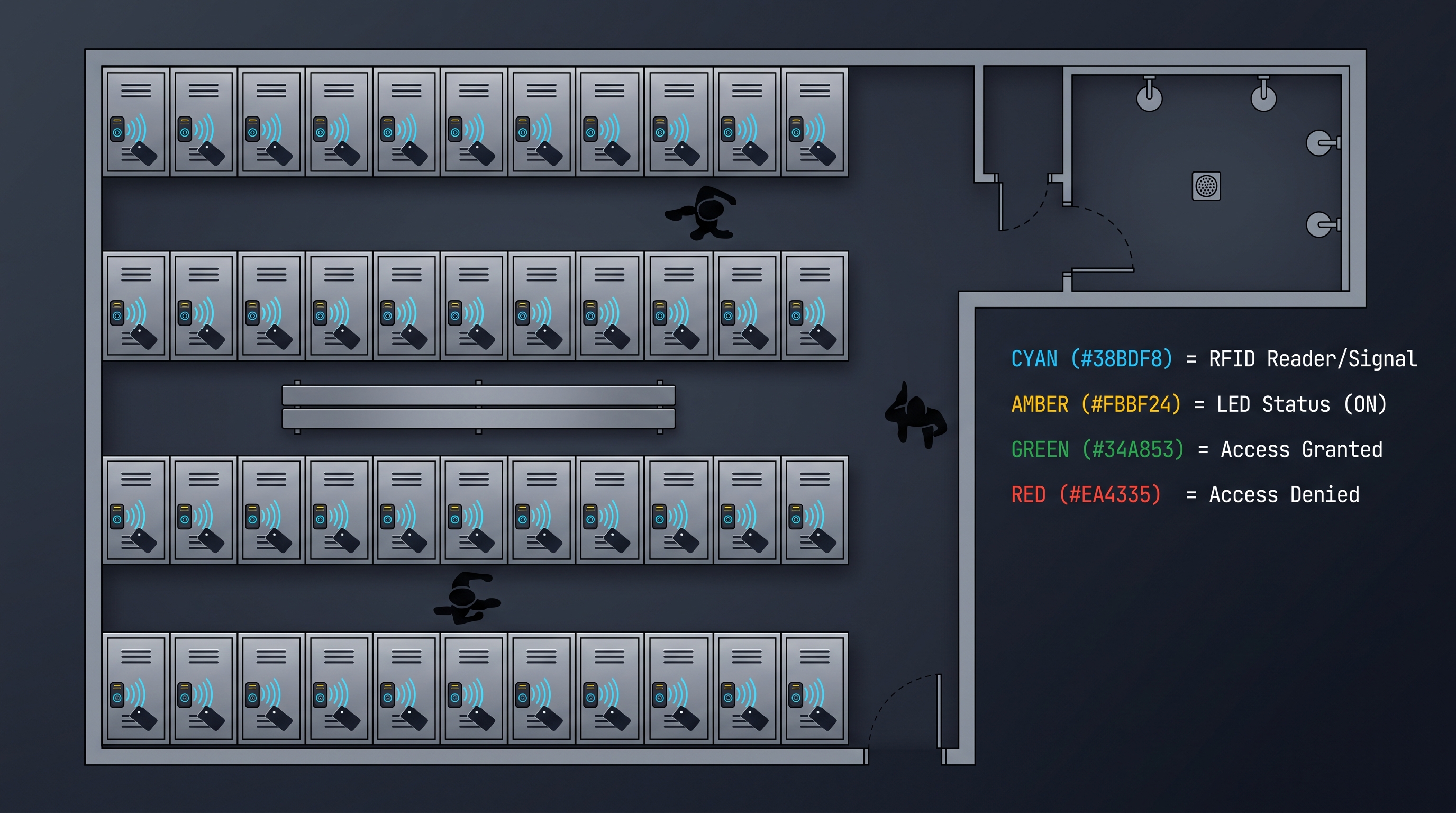
The best locker lock for premium fitness facilities and corporate wellness centers is increasingly an RFID-based electronic locker lock that integrates with the facility's existing membership card or employee badge system. Members and employees already carry an RFID credential (a gym membership card operating at 13.56 MHz MIFARE Classic or DESFire, or an employee badge using HID iCLASS or Seos technology) for building access, and extending that same credential to locker access eliminates the need for users to remember combinations, carry separate locker keys, or interact with a shared touch surface. When a member scans their RFID card at the locker, the best locker lock reads the card's unique identifier (UID) or secured sector data, verifies it against the authorized credential list (either locally on the lock's onboard database or via a real-time query to the facility's access control server through a gateway device), and activates the solenoid-driven latch — an operation that completes in under 0.5 seconds from card presentation to latch release. The same system architecture supports time-limited locker assignments (a member's card grants access to a specific locker for the duration of their visit, after which the locker automatically releases and becomes available for the next user), usage analytics (peak locker utilization hours, average session duration, locker turnover rates — data that informs facility expansion and staffing decisions), and automated billing (integrating with the club's POS system to charge locker rental fees to the member's account based on actual usage).
| Electronic Lock Type | Access Technology | Power Source | Connectivity | User Capacity | Price Per Lock |
|---|---|---|---|---|---|
| RFID Standalone | 125 kHz EM/HID or 13.56 MHz MIFARE | 4x AA (18-36 months) | None (programmed via admin card) | 50-500 cards | $35-$75 |
| RFID Networked | 13.56 MHz MIFARE DESFire EV2/EV3 | 4x AA or 12V DC wired | WiFi/LoRa gateway | 10,000+ (server-based) | $60-$150 |
| PIN Keypad | 4-12 digit codes | 4x AA or 4x AAA (12-24 months) | None or Bluetooth for programming | 20-200 user codes | $25-$60 |
| Bluetooth (BLE) | BLE 5.0+ smartphone app | 2x CR123A (8-18 months) | Bluetooth to phone, optional WiFi gateway | 100-500 users (app-based) | $50-$120 |
| Fingerprint Biometric | Capacitive 508 DPI sensor | 4x AA or built-in Li-ion (12-24 months) | Bluetooth for enrollment/audit | 20-100 fingerprints | $60-$180 |
Best Locker Lock: Material Science and Durability Factors
The best locker lock distinguishes itself from commodity alternatives primarily through material selection — the specific alloys, coatings, and seal designs that determine whether a lock survives five years of daily use in a chlorinated pool locker room environment or fails within six months due to corrosion-induced seizure. Locker environments present a uniquely aggressive corrosion profile: chlorinated water vapor in pool locker rooms (chlorine concentration of 1-3 ppm in pool water translates to 0.5-1.5 ppm in the surrounding air, sufficient to pit and corrode standard zinc-plated steel within 3-6 months of exposure), ammonia and urea compounds from human sweat in gym locker rooms (which create a mildly acidic microclimate with pH 4.5-6.0 on locker surfaces that are touched by sweaty hands, accelerating corrosion of copper and brass alloys through dezincification), alkaline cleaning chemicals used in janitorial locker room maintenance (quaternary ammonium compounds and sodium hypochlorite solutions at pH 9-11 that degrade polymer seals and attack aluminum lock bodies), and wide temperature cycling (unheated locker rooms in northern climates experiencing -20 degrees C to +30 degrees C annual swings, with condensation forming on metal lock components during rapid temperature transitions).
The best locker lock for corrosive environments uses materials and treatments specifically engineered to resist these degradation mechanisms: shackles made from marine-grade 316 stainless steel (with 16-18% chromium, 10-14% nickel, and 2-3% molybdenum content, providing pitting resistance equivalent number, or PREN, of 24-28 versus 17-20 for 304 stainless and 10-15 for chrome-plated carbon steel — the best locker lock achieves a PREN above 25), lock bodies of solid brass (an alloy of copper and zinc that forms a protective patina rather than flaking rust, though brass is susceptible to dezincification in acidic conditions and requires a protective clear-coat for pool environments) or investment-cast 316 stainless, internal springs and pins of 302 or 316 stainless steel (non-magnetic, corrosion-resistant, with a fatigue life of 50,000+ cycles), and elastomeric seals of EPDM (ethylene propylene diene monomer, chosen for its excellent resistance to chlorine, ozone, and UV degradation — superior to nitrile/NBR seals in pool environments) or silicone (for extreme temperature range applications, rated -50 degrees C to +200 degrees C). When these materials are combined with a double-ball locking mechanism (where two hardened steel ball bearings engage the shackle notch, providing symmetrical locking force and eliminating the single-point failure of a spring-loaded pawl) and a keyway cover (a spring-loaded shutter or rotating dust cover that prevents water and debris from entering the keyway), the result is the best locker lock from a durability standpoint — one that delivers 10+ years of reliable service in the harshest locker environments.
| Material | Corrosion Resistance | Hardness | Best Application | Limitations | Relative Cost |
|---|---|---|---|---|---|
| 316 Stainless Steel | Excellent (PREN 24-28) | 70-90 HRB | Pool lockers, marine environments, outdoor lockers | Higher cost; can gall without proper lubrication | High |
| 304 Stainless Steel | Good (PREN 17-20) | 70-90 HRB | Indoor gym lockers, school lockers | Insufficient for chloride-rich pool air; will pit over time | Medium-High |
| Solid Brass | Very Good (patina-forming) | 55-80 HRB | General indoor gym/school lockers | Dezincification in acidic conditions; softer than steel | Medium |
| Hardened Steel (Boron-Carbide) | Moderate (requires chrome/ zinc plating) | 55-63 HRC | High-security gym lockers, workplace lockers | Plating can wear or chip; underlying steel will rust if exposed | Medium-Low |
| Zinc Die-Cast (Zamak) | Low-Medium | 65-75 HRB | Budget lock bodies, built-in lock housings | Brittle; can crack under impact; poor corrosion resistance | Low |
| Aluminum (Anodized) | Good (with anodizing) | 30-60 HRB | Lightweight padlock bodies, electronic lock enclosures | Soft; anodized layer can be scratched, exposing raw aluminum | Medium |
Best Locker Lock: Combination Security and Anti-Tamper Features
The security of a locker lock against deliberate attack is measured not by whether it can be defeated — given enough time, tools, and determination, any lock can be bypassed — but by how long and how conspicuously an attacker must work to defeat it, because locker rooms, while often less monitored than other facility areas, are occupied spaces where prolonged, noisy attack attempts attract attention. The best locker lock from a security standpoint incorporates a layered set of anti-tamper features that collectively increase the time-to-defeat (TTD) well beyond the threshold at which an opportunistic thief would abandon the attempt (approximately 30-60 seconds for a locker room environment where other users may enter at any moment). The primary attack vectors against locker locks are: bolt cutter attack (applied to the shackle of a padlock — the best locker lock resists this through a minimum shackle diameter of 8 mm in boron-carbide-hardened steel, achieving a cut resistance of 15+ kN, and a shrouded shackle design that leaves insufficient exposed shackle for bolt cutter jaws to grip), prying and leverage attacks (inserting a crowbar or screwdriver between the lock body and the locker door — resisted by tight shackle-to-body clearance of under 0.5 mm, which prevents insertion of a prying tool, and by reinforced mounting of built-in locks to the locker door with steel backing plates), picking and manipulation (attacking the lock cylinder with pick tools or decoding a combination lock by feel — the best locker lock resists picking through the use of spool pins, serrated pins, and paracentric keyways that create false binding states and limit pick access, and resists combination decoding through the use of false gates on the combination wheels that produce a false "click" sensation, misleading the attacker about which gate position is correct), and destructive entry (drilling the lock cylinder or cutting a hole in the locker door adjacent to the lock — the best locker lock resists drilling through hardened steel anti-drill pins embedded in the lock face and a free-spinning hardened steel plate at the front of the cylinder that deflects drill bits, while the overall security architecture acknowledges that if an attacker is willing to cut through the locker door itself, no lock can prevent entry).
Electronic locker locks introduce a different attack surface — the digital interface — and the best locker lock in this category implements specific countermeasures against known electronic attacks. Bluetooth Low Energy locker locks are susceptible to relay attacks (where an attacker's device captures and replays the BLE unlock command), and the best locker lock mitigates this through encrypted challenge-response authentication (the lock sends a random challenge number, the authorized device signs it with a stored cryptographic key, and the lock verifies the signature before unlocking — a replay of a previous unlock command will fail because the challenge number has changed) and time-of-flight distance bounding (measuring the signal round-trip time to detect relay devices that introduce latency). RFID locker locks are susceptible to skimming (reading a user's credential from a distance) and cloning (creating a duplicate card from skimmed data), and the best locker lock uses MIFARE DESFire EV2 or EV3 credentials with AES-128 encryption and mutual authentication (where both the lock and the credential verify each other's identity before data exchange), making credential cloning practically infeasible compared to unencrypted 125 kHz EM/HID credentials that can be cloned with a $15 handheld reader/writer available on consumer electronics websites.
| Attack Vector | Target Lock Type | Best Locker Lock Countermeasure | Time-to-Defeat Without Countermeasure | Time-to-Defeat With Countermeasure |
|---|---|---|---|---|
| Bolt cutters (24-36 inch) | Padlock shackle (5-9 mm) | Boron-carbide steel, 9+ mm, shrouded shackle | 3-8 seconds | 30-90 seconds (requires angle grinder) |
| Pry bar / leverage | Padlock body / built-in lock | Tight shackle clearance (under 0.5 mm), steel backing plate | 5-15 seconds | 30-60 seconds (extreme force, visible damage) |
| Lock picking (rake and SPP) | Keyed cylinder (standard) | Spool/serrated pins, paracentric keyway | 10-30 seconds (rake), 1-3 min (SPP) | 2-5+ minutes (SPP), rake ineffective |
| Combination decoding | Mechanical combination dial | False gates on wheels, tight manufacturing tolerances | 30-90 seconds (experienced) | 3-5 minutes (unreliable, high skill required) |
| Drilling | Lock cylinder / lock body | Hardened anti-drill pins, free-spinning face plate | 30-60 seconds (standard bit) | 2-5 minutes (cobalt/tungsten bit required) |
| BLE relay/replay | Electronic (Bluetooth) | Challenge-response auth, time-of-flight bounding | 5-15 seconds (relay), instant (replay) | Infeasible (with countermeasures) |
| RFID skimming/cloning | Electronic (125 kHz RFID) | MIFARE DESFire EV2/EV3 encrypted credential | 2-10 seconds (skim), instant (clone) | Infeasible (with countermeasures) |
Best Locker Lock: User Experience and Accessibility
The best locker lock from a user experience perspective minimizes the cognitive load, physical dexterity requirements, and time investment needed to operate the lock, because in a locker room context — where users are often in a hurry, carrying bags and clothing, possibly wearing corrective eyewear or having applied lotion to their hands, and operating the lock in varying lighting conditions — any friction in the lock operation directly translates to frustration, congestion at locker banks, and non-compliance (users leaving lockers unlocked because the locking procedure is too cumbersome). The user experience is measured across four dimensions: learnability (how quickly a first-time user can understand and operate the lock without instruction — the best locker lock for public-facing facilities like water parks and community centers achieves a learnability score where 95% of first-time users can successfully lock and unlock within 30 seconds of encountering the lock, without reading instructions), efficiency (the time required for an experienced user to complete the lock and unlock sequence — the best locker lock achieves under 1.5 seconds for RFID tap-to-unlock, under 3 seconds for keyed unlock, under 5 seconds for combination dial, and under 8 seconds for PIN keypad entry), error tolerance (the ability to recover from a mistake — turning a combination dial past the correct number, entering an incorrect PIN, or presenting the wrong RFID card — without penalty or excessive reset time, with the best locker lock providing clear audio/visual feedback for each step and limiting error penalties to a brief 15-30 second timeout rather than indefinite lockout), and physical accessibility (the ability for users with limited hand mobility, visual impairment, or other disabilities to operate the lock independently — the best locker lock complies with ADA and equivalent accessibility standards by offering a large, easy-to-grip operating element, tactile feedback on combination dials, audible confirmation tones on electronic locks, and an operating force below 22N, which is the maximum force specified by ADA for operable parts).
For K-12 school environments, the user experience dimension takes on additional importance because the user base includes children as young as 10-11 years old (fifth/sixth grade, when locker use typically begins) who have smaller hands, less developed fine motor skills, and shorter attention spans than adults. The best locker lock for school environments uses a combination dial with raised, easy-to-read numbers (minimum 8 mm character height, high-contrast white-on-black or black-on-silver markings), a dial diameter of at least 45 mm to accommodate smaller hands, and an operating torque below 0.5 Nm so that children can turn the dial easily. School-specific combination locks often include a "cheat sheet" mode where a temporary card with the combination printed on it is issued to students during the first week of school, after which the card is discarded and the student is expected to have memorized the combination — the best locker lock supports this workflow by allowing rapid combination changes for the small percentage of students who cannot memorize their combination or who share it with unauthorized peers.
For premium fitness facilities where the locker lock is part of the brand experience, the user experience design extends to the aesthetic and tactile quality of the lock: the best locker lock for this segment uses premium materials (brushed stainless steel, anodized aluminum, or soft-touch overmolded surfaces), haptic feedback (a satisfying tactile "click" or vibration on lock engagement), subtle LED illumination (a gentle glow indicating the lock is armed, rather than a harsh blinking light that disturbs the spa-like atmosphere), and integration with the facility's mobile app (allowing members to locate available lockers, receive a notification if their locker is tampered with, and extend their locker session from their phone rather than returning to the locker room). In this context, the best locker lock is not just a security device — it is a touch point in the customer experience journey.
| User Profile | Best Locker Lock Type | Key UX Consideration | Recommended Feature |
|---|---|---|---|
| K-12 student (age 10-14) | Built-in combination dial | Small hands, limited dexterity | 45 mm+ dial, low torque, clear number markings |
| High school student (age 14-18) | Padlock or built-in combination | Frequent use, social sharing risk | Resettable combination, master-key override for staff |
| Gym member (adult) | RFID/BLE electronic or keyed padlock | Speed, hands occupied, sweat | One-tap RFID, keyless entry, corrosion-resistant |
| Senior user (65+) | Electronic or large-dial combination | Reduced vision and dexterity | Large tactile buttons, audible feedback, low operating force |
| Industrial worker | Keyed handle or RFID | Gloves, dirty hands, durability | Oversized operating element, high cycle rating, ingress protection |
| Water park / pool user | RFID wristband or PIN keypad | Wet hands, no pockets, outdoor exposure | IP65+ rated, wristband credential, no metal key to lose |
Best Locker Lock: Cost Analysis and Total Cost of Ownership
The purchase price of a locker lock is the most visible cost but often not the largest component of total cost of ownership (TCO) over the lock's service life, particularly in commercial and institutional deployments where labor costs for lock maintenance, combination resets, lost-key lock replacements, and user support interactions dominate the TCO calculation. The best locker lock from a financial perspective is the one that minimizes TCO over a 5-10 year deployment horizon, accounting for: initial hardware cost (the per-unit purchase price of the lock, ranging from $5 for a basic combination padlock to $150+ for a networked electronic locker lock), installation labor (ranging from near-zero for user-supplied padlocks to $25-$75 per lock for professional installation of wired electronic locker locks that require low-voltage cabling, power supply mounting, and gateway configuration), ongoing maintenance labor (the staff time required to reset combinations for new users — averaging 3-5 minutes per reset at a labor rate of $18-$35 per hour, or $0.90-$2.90 per event — with the best locker lock reducing this through tool-free combination reset or self-service credential enrollment), emergency access labor (the staff time required to open a locker when a user has lost their key or forgotten their combination, involving either a master-key unlock at 1-2 minutes per incident, a lock cut-off and replacement at 10-15 minutes and $10-$30 in hardware cost, or remote electronic unlock at under 30 seconds with zero hardware cost), replacement hardware cost (the budget for replacing locks that fail, are vandalized, or are lost — averaging 5-15% of the installed base per year for padlocks and 2-5% for built-in and electronic locks), and credential management costs (the cost of purchasing, programming, issuing, and replacing access cards, key fobs, or key blanks — $1-$8 per credential per year for card-based systems, $0.50-$3 for key duplication in non-restricted systems).
When these TCO factors are aggregated over a 5-year deployment of 100 lockers, the financial comparison between lock types reveals counter-intuitive results. A $10 combination padlock with a 15% annual replacement rate and 3 emergency lock-cut incidents per locker per year has a 5-year TCO of approximately $65-$85 per locker (initial $10 + $18-$30 for 3-5 replacement padlocks + $37-$45 in staff labor for lock-cuts), while a $75 RFID electronic locker lock with a 2% annual replacement rate and zero lock-cut incidents has a 5-year TCO of approximately $95-$110 per locker (initial $75 + $7-$15 for 0-1 replacement locks + $13-$20 in battery replacement labor). The electronic lock's TCO is 15-70% higher in total dollar terms, but the value of reduced user frustration (fewer complaints about forgotten combinations, faster locker access during peak hours, elimination of lock-cut service interruptions), improved security (audit trail visibility, instant credential revocation for terminated employees), and enhanced facility image (premium technology perception) often justifies the premium in competitive fitness and corporate environments. The best locker lock for budget-constrained public school systems remains the mechanical combination or keyed lock, while the best locker lock for premium fitness and corporate wellness is increasingly the RFID electronic lock despite its higher upfront cost.
| Lock Type | Initial Cost (per lock) | Annual Replacement Rate | 5-Year TCO (per lock) | Primary TCO Driver | Best For (TCO Perspective) |
|---|---|---|---|---|---|
| Basic combination padlock ($8) | $8 | 15% | $65-$85 | High replacement and lock-cut labor | Low-budget, low-traffic lockers |
| High-security combination padlock ($25) | 8% | $55-$70 | Moderate replacement, lower lock-cut incidence | Mid-range gyms, university lockers | |
| Built-in combination lock ($20) | 5% | $50-$65 | Moderate replacement, moderate lock-cut | K-12 schools, basic gym installations | |
| Keyed padlock (restricted key) ($30) | 10% | $60-$75 | Key duplication/ replacement labor | Workplace lockers with master-key requirements | |
| RFID standalone electronic ($60) | 3% | $85-$110 | Higher initial cost offset by low maintenance | Premium gyms, corporate wellness centers | |
| RFID networked electronic ($120) | 2% | $140-$170 | Higher hardware cost, gateway infrastructure | High-end health clubs, enterprise deployments | |
| PIN keypad electronic ($40) | 5% | $65-$85 | Battery replacement, occasional programming | Mid-market gyms, community recreation centers |
Best Locker Lock: Installation and Retrofit Considerations
Installing or retrofitting the best locker lock into existing locker infrastructure requires careful assessment of locker door material and construction (metal lockers of 18-22 gauge steel, 1.2-1.6 mm thickness, with standard hasps, cutouts, or mounting hole patterns — versus wood or laminate lockers which require different mounting hardware to avoid splitting or delamination), the existing lock interface (whether the locker currently uses a padlock hasp, a built-in lock cutout, or has no locking provisions and needs a retrofit kit), and the user access pattern (whether lockers are permanently assigned to individuals, used on a first-come day-use basis, or rented on a session-by-session basis, which determines whether the lock needs a permanent credential or a temporary session-based credential). The best locker lock for retrofit applications is one that mounts into the existing locker door hardware interface without requiring metal fabrication (cutting, welding, or drilling new mounting holes), because locker door metalwork is expensive ($50-$150 per door for onsite fabrication) and risks damaging the door's structural integrity or finish.
For padlock-based locker systems, the critical retrofit decision when upgrading to the best locker lock is whether to retain the padlock form factor or transition to a built-in or electronic lock. Retaining the padlock interface — whether by providing facility-standardized padlocks to users or by specifying padlock requirements (shackle diameter, body width, and shackle clearance) that users must meet — preserves the existing locker hasps without modification and allows users to supply their own locks if the facility prefers a bring-your-own-lock policy. The best locker lock specification for a bring-your-own-lock facility is a clear set of requirements communicated through signage and membership agreements: shackle diameter of at least 7 mm, body width of 40-50 mm to fit standard locker hasps, and corrosion-resistant construction (stainless steel or chrome-plated hardened steel with a weather cover over the keyway). Transitioning from a padlock system to electronic locks typically requires installing a new lock body in the locker door (utilizing the existing hasp mounting holes or a standard mounting pattern), which is a 15-30 minute per-door retrofit that can be performed by facility maintenance staff with basic hand tools.
For built-in lock replacement in existing lockers, the primary constraint is the mounting hole pattern. As discussed in earlier sections, the North American standard is the vertical 3-hole pattern with 1-1/4 inch screw spacing (originating from the Master Lock 1600 series form factor, which has become the de facto standard across all major locker manufacturers including Penco, Lyon, Hallowell, Salsbury, and Republic). The best locker lock for retrofit into this standard pattern is any lock that uses the same 3-hole vertical pattern, which includes virtually all built-in combination locks, many keyed locker handles, and a growing number of electronic locker locks that have adopted the standard pattern for retrofit compatibility. When the existing locker's mounting hole pattern does not match the standard — typically on older lockers manufactured before the 1970s, European-import lockers using metric mounting patterns, or custom architectural lockers — the retrofit options are to source a lock that matches the non-standard pattern (difficult and expensive, often requiring custom fabrication at $100-$300 per lock), fill and re-drill the mounting holes (labor-intensive at 30-60 minutes per door), or install an adapter plate (a steel plate that mounts to the existing holes and provides the standard pattern on the front face, at a cost of $10-$25 per plate).
| Retrofit Scenario | Existing Condition | Best Locker Lock Solution | Labor per Door | Special Considerations |
|---|---|---|---|---|
| Padlock hasp to padlock upgrade | Standard hasp (8-12 mm hole) | High-security shrouded padlock | 0 min (user-provided) | Specify minimum shackle diameter and body width |
| Padlock hasp to electronic | Standard hasp mounting holes | RFID locker lock with standard mounting plate | 15-30 min | May need secondary hole for wire routing |
| Built-in combination replacement | Standard 3-hole vertical pattern | Master Lock 1600 series or electronic equivalent | 10-15 min | Verify door thickness compatibility |
| Built-in combination to electronic | Standard 3-hole vertical pattern | Electronic locker lock with 3-hole adapter plate | 15-25 min | Battery compartment must not interfere with door closure |
| Non-standard built-in replacement | Non-standard mounting pattern | Custom adapter plate + standard lock | 30-60 min | Adapter plate must be flush to avoid door interference |
| New locker with no lock | Blank locker door | Any lock type (full installation) | 15-45 min | Ensure structural support for mounting holes |
Best Locker Lock: Smart Features and Ecosystem Integration
The best locker lock for smart facilities operates not as an isolated security device but as an integrated endpoint in a broader access control, member management, and building automation ecosystem. Integration capabilities that distinguish the best locker lock from a standalone electronic lock include: REST API connectivity (a documented, versioned API that allows the facility's member management software, access control system, or custom mobile app to query lock status, assign and revoke credentials, retrieve audit logs, and trigger remote unlock — the best locker lock provides a full CRUD API with OAuth 2.0 authentication, rate limiting, and webhook notifications for security events such as forced-open alerts, low battery warnings, and credential revocation confirmations), MQTT/AMQP message bus integration (allowing the locker lock system to publish real-time status updates to a message broker that is consumed by building automation systems — for example, publishing a "locker 47 unlocked" event that triggers the HVAC system to adjust the locker room ventilation rate based on occupancy, or publishing a "locker bank 3 all secured" event that arms the locker room security alarm at facility closing time), single sign-on (SSO) and identity provider integration (the best locker lock for corporate deployments supports SAML 2.0 or OpenID Connect integration with Microsoft Entra ID, Okta, or Ping Identity, allowing employee badge RFID credentials to be automatically synchronized with the locker lock system when employees are onboarded, transferred, or terminated — eliminating the manual credential enrollment and deprovisioning process that is the largest ongoing labor cost in electronic locker lock deployments), and analytics and reporting dashboards (providing facility managers with visualized data on locker utilization rates, peak demand hours, average session duration, abandoned locker incidents, and lock performance metrics — the best locker lock analytics platform uses this data to recommend optimal locker counts, identify underperforming lock units before they fail, and quantify the ROI of the locker lock investment through member satisfaction surveys and retention correlation).
The most sophisticated locker lock ecosystems in 2026 extend integration to the member-facing mobile experience. The best locker lock for a premium fitness chain integrates with the club's mobile app to provide: a real-time locker availability map (showing members which lockers are free on a facility floor plan before they enter the locker room, reducing congestion and frustration during peak hours), one-tap locker reservation (allowing members to reserve a locker via the app 15-30 minutes before arrival, similar to reserving a studio class spot — the reservation is automatically released if the member does not arrive within a grace period, preventing "no-show" locker hoarding), automated locker assignment (upon check-in at the club's front desk or kiosk, the system auto-assigns an available locker and sends a push notification or displays the locker number and a temporary access code on the member's phone), session-based access (the member's RFID card or phone app unlocks only their assigned locker for the duration of their visit, and the locker automatically releases 15-30 minutes after the member checks out of the facility, making the locker available for cleaning and reassignment without staff intervention), and integrated billing (locker usage is tracked and billed to the member's account on a per-visit, monthly, or annual basis, with premium lockers — larger, better-located, or equipped with USB charging and vanity mirrors — commanding higher fees that are automatically charged through the membership billing system).
These integration capabilities shift the best locker lock from a cost center (an expense item in the facility maintenance budget) to a revenue generator and customer experience enhancer — a transformation that is driving the adoption of smart locker lock systems in the fitness, hospitality, and corporate real estate sectors at a 28% CAGR from 2022 to 2026.
| Integration Feature | Technology Standard | Benefit | Implementation Complexity | Best For |
|---|---|---|---|---|
| REST API for access control | HTTP/HTTPS, JSON, OAuth 2.0 | Programmatic credential management and audit | Medium | Mid-to-large fitness chains, corporate facilities |
| Identity provider SSO sync | SAML 2.0, OpenID Connect, SCIM | Automated employee credential lifecycle | High | Enterprise corporate wellness, university campuses |
| MQTT real-time event streaming | MQTT 3.1.1/5.0 over TLS | Building automation integration | Medium-High | Smart buildings, integrated facility management |
| Mobile app SDK | iOS/Android native SDK or REST API | Member-facing locker features in club app | High | Premium fitness chains with branded apps |
| POS/billing system integration | REST API, CSV import/export | Automated locker rental billing | Medium | Day-use facilities, water parks, amusement parks |
| Analytics dashboard | Web-based, HTTPS, role-based access | Utilization insights and ROI reporting | Low-Medium | All multi-locker deployments |
How to Choose the Best Locker Lock: Decision Framework
Selecting the best locker lock for a specific facility requires evaluating the deployment context across five dimensions — user profile, threat environment, environmental conditions, operational model, and budget — and applying a weighted scoring framework that prioritizes the dimensions most relevant to the facility type. The following decision framework provides a structured approach to navigate the trade-offs and arrive at the best locker lock choice.
Step 1: Characterize the user profile. Identify who will use the lockers: their age range, dexterity level, technology comfort, and expected usage frequency. A K-12 school with students aged 10-14 benefits from a built-in combination lock with a large, easy-to-read dial and low operating torque; a premium fitness club with tech-savvy adult members benefits from an RFID electronic lock that integrates with the club's mobile app; an industrial facility with workers wearing gloves benefits from a large-handled keyed locker lock or a rugged RFID reader that works through gloves. The best locker lock choice is fundamentally a user-centered design decision — a lock that users cannot or will not operate correctly provides no security regardless of its technical specifications.
Step 2: Assess the threat environment. Evaluate the realistic security threats: what is the value of items stored in lockers, what is the historical rate of locker theft at the facility or comparable facilities, and what level of security is expected by users and required by insurers. A high school locker holding textbooks and gym clothes has a low threat level and is adequately served by a standard combination lock; a gym locker where members store wallets, phones, and jewelry during workouts has a medium threat level requiring a pick-resistant and cut-resistant lock; a pharmaceutical storage locker in a hospital has a high threat level requiring biometric access, dual authentication, and a tamper-evident audit trail.
Step 3: Evaluate environmental conditions. Determine the environmental stressors the locker lock will face: indoor climate-controlled (standard lock), indoor with humidity and chemicals (corrosion-resistant lock with stainless steel and sealed construction), outdoor or poolside (marine-grade lock with PREN above 25, IP65 or higher), or industrial with dust and vibration (sealed lock with gaskets, reinforced mounting, and high cycle rating).
Step 4: Define the operational model. Clarify how lockers are assigned and managed: permanent assignment (each user has their dedicated locker — best served by built-in locks or facility-provided padlocks with permanent credentials), day-use or session-based (lockers are available on a first-come basis — best served by electronic locks with session-based credentialing that automatically releases lockers at session end), rental (lockers are rented by the hour, day, or month — best served by electronic locks with integrated billing and timed access expiration), or bring-your-own-lock (users provide their own padlocks — facility specifies minimum lock requirements through signage and policy).
Step 5: Calculate the budget and TCO. Determine the available capital budget for initial lock purchase and the operating budget for ongoing maintenance, credential management, and replacement locks. Use the TCO table in the cost analysis section to project the 5-year cost for each lock type under consideration, and compare this against the available budget. If the TCO of the best locker lock exceeds the budget, apply the prioritization from the user profile and threat assessment to identify which features are essential versus desirable, and select the lock that delivers the essential features within the budget constraint.
| Decision Factor | Weight | Key Question | Scoring Guidance |
|---|---|---|---|
| User Profile | 25% | Can users operate the lock correctly and consistently? | Score higher for locks matching user demographics (age, dexterity, tech comfort) |
| Threat Environment | 25% | Does the lock provide adequate security for stored items? | Score higher for locks exceeding minimum security requirements by 1-2 tiers |
| Environmental Conditions | 20% | Will the lock survive the environment for 5+ years? | Score higher for corrosion-resistant materials and IP-rated sealing |
| Operational Model | 20% | Does the lock support the facility's locker management workflow? | Score higher for locks enabling self-service, automation, and rapid rekeying |
| Budget and TCO | 10% | Is the lock affordable within capital and operating budgets? | Score higher for locks with lower 5-year TCO relative to alternatives |
Best Locker Lock: Top Recommendations by Facility Type
The following recommendations represent the best locker lock for each facility type based on the decision framework presented in the previous section, validated against real-world deployment data from facility managers and locker hardware distributors. These are not exhaustive rankings but rather targeted recommendations for the most common deployment scenarios.
K-12 schools: The best locker lock for middle and high school hall lockers is the built-in combination lock in the Master Lock 1600/1700 series or equivalent. These locks provide a 3-digit single-dial combination with 1,000 possible combos, tool-free combination reset by staff using a control key, a zinc die-cast body with steel bolt rated for 20,000+ cycles, and the standard vertical 3-hole mounting pattern that fits virtually all school lockers. The unit cost is $15-$25 in quantity, and the combination-based access eliminates the key management burden for teachers and administrators. For school districts that have adopted ID badge systems, the best locker lock upgrade path is an RFID electronic locker lock that reads the student's existing ID card, eliminating combination memorization while providing the same built-in form factor.
Gyms and fitness centers: The best locker lock for mid-range to premium fitness facilities is the RFID electronic locker lock operating at 13.56 MHz MIFARE, integrating with the club's membership card system. The lock eliminates shared touch surfaces (a post-pandemic priority), enables session-based locker access, and provides audit trail data for theft investigation. For budget gyms and community recreation centers, a high-security shrouded padlock with a boron-carbide shackle (8-9 mm diameter) and a resettable combination mechanism offers the best balance of security and cost, with users providing their own locks to a facility-specified standard.
Corporate and workplace locker rooms: The best locker lock for corporate environments is a keyed locker handle assembly with a restricted keyway (6-pin or 7-pin cylinder, SFIC-compatible) integrated into the facility's master-key system. This provides facility management with emergency access to all lockers, enables rapid rekeying when employees depart, and maintains a professional appearance consistent with the workplace environment. For companies with 500+ employees and an existing RFID badge system, the best locker lock upgrade is an RFID electronic lock that uses the employee badge as the locker credential, synchronized with the HR system for automatic provisioning and deprovisioning.
Water parks, pools, and outdoor recreation: The best locker lock for high-moisture, chlorine-exposed environments is an electronic locker lock with an IP65 or higher ingress protection rating, a marine-grade 316 stainless steel or fully sealed polymer enclosure, and PIN keypad or RFID wristband access (eliminating metal keys that corrode and combination dials that seize). The lock must survive 500+ hours of ASTM B117 salt spray testing without functional degradation. Several manufacturers offer purpose-built aquatic locker locks with sealed membrane keypads, ultrasonic-welded enclosures, and sacrificial anodes for galvanic corrosion protection.
Medical and healthcare facilities: The best locker lock for hospital staff lockers combines RFID access (using the staff member's existing hospital ID badge) with an audit trail that satisfies HIPAA physical security documentation requirements (recording who accessed which locker at what time, with log retention of at least 90 days), an antimicrobial surface treatment on high-touch lock components (silver-ion or copper-infused coatings that reduce bacterial colonization by 99.9% within 2 hours per ISO 22196 testing), and an emergency mechanical override accessible to security and nursing supervisors. The lock must be cleanable with hospital-grade disinfectants (quaternary ammonium, hydrogen peroxide, or sodium hypochlorite solutions) without degradation.
| Facility Type | Best Locker Lock Recommendation | Key Selection Rationale | Approximate Unit Cost |
|---|---|---|---|
| K-12 school | Built-in combination lock (Master Lock 1600 series) | Age-appropriate, no keys to lose, staff-accessible | $15-$25 |
| University / college | RFID electronic or high-security combination | Student ID integration, extended durability | $40-$75 |
| Budget gym | High-security shrouded combination padlock | Cost-effective, user-owned, good security | $20-$35 |
| Premium gym / health club | RFID electronic with mobile app integration | Premium experience, session-based access, audit trail | $75-$150 |
| Corporate workplace | Keyed SFIC handle with restricted keyway | Master-key control, rapid rekeying, professional appearance | $35-$80 |
| Tech company / co-working | Bluetooth BLE electronic with app control | Smartphone-native, flexible credential sharing | $60-$120 |
| Water park / pool | IP65+ sealed electronic with PIN or RFID wristband | Extreme corrosion resistance, keyless | $60-$150 |
| Hospital / medical | RFID electronic with antimicrobial, HIPAA audit | Regulatory compliance, badge integration, cleanable | $80-$180 |
| Industrial / manufacturing | Heavy-duty keyed handle or rugged RFID | Glove-compatible, vibration-resistant, high cycle rating | $35-$90 |
Not sure which sensor fits your project?
Talk to our mmWave application engineers for a free consultation.
Find the right presence sensor for your hotel project
Compare the 3 protocols, check hotel-specific case studies, and download the installation guide
Related products
3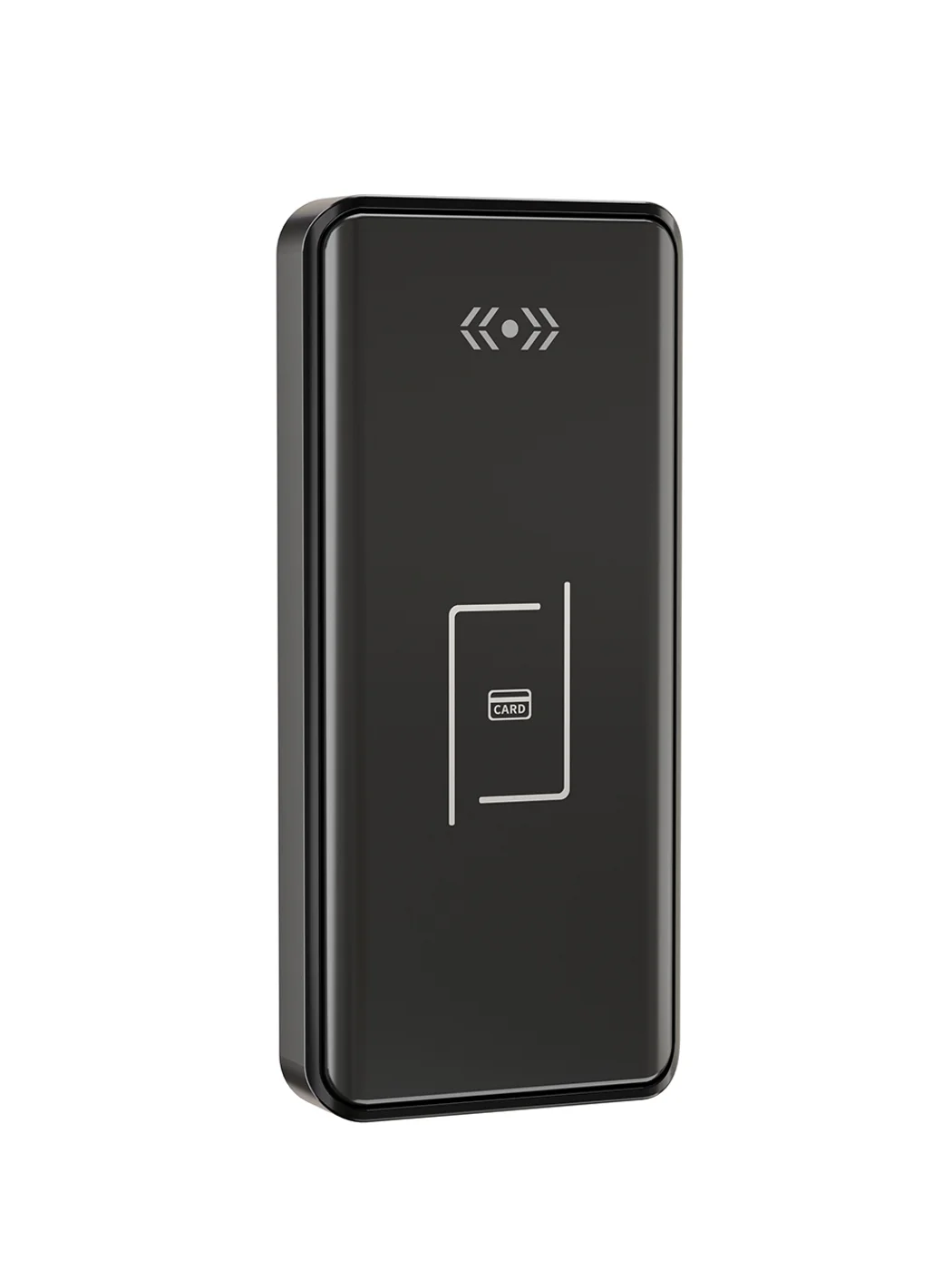
Gym Locker Lock — Offline Card, No WiFi Required
Offline card gym locker lock for fitness and pool lockers. MIFARE card, battery-powered 5-minute retrofit, no WiFi or server. Zinc alloy body, CE/FCC/RoHS.
This page already points to it as the next recommended reference.
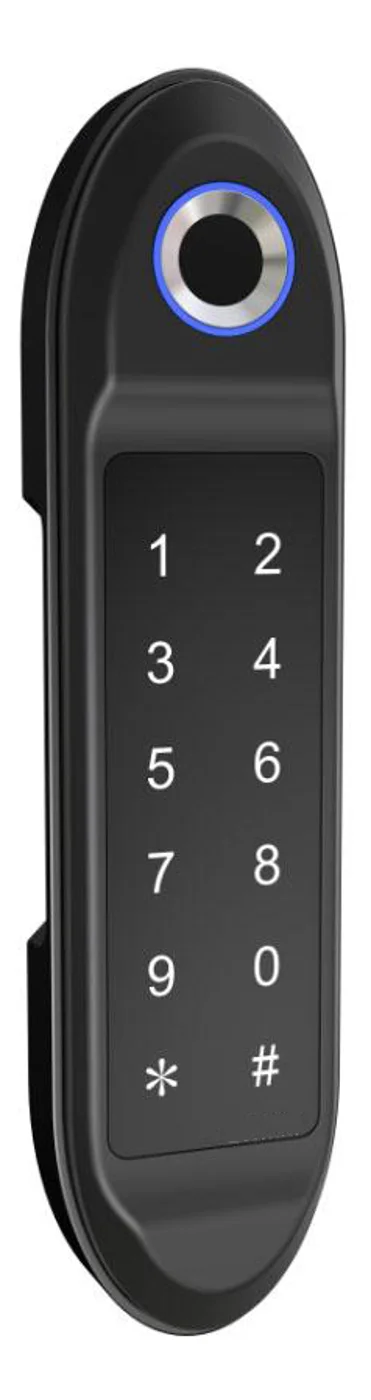
PIN Code Electronic Cabinet Lock — Stand-Alone, No WiFi
Offline keypad cabinet lock for gym, office and parcel lockers. Battery-powered, 5-minute retrofit, audit-free simple deployment. PIN + MIFARE card, DC 6V, 4×AA.
This page already points to it as the next recommended reference.
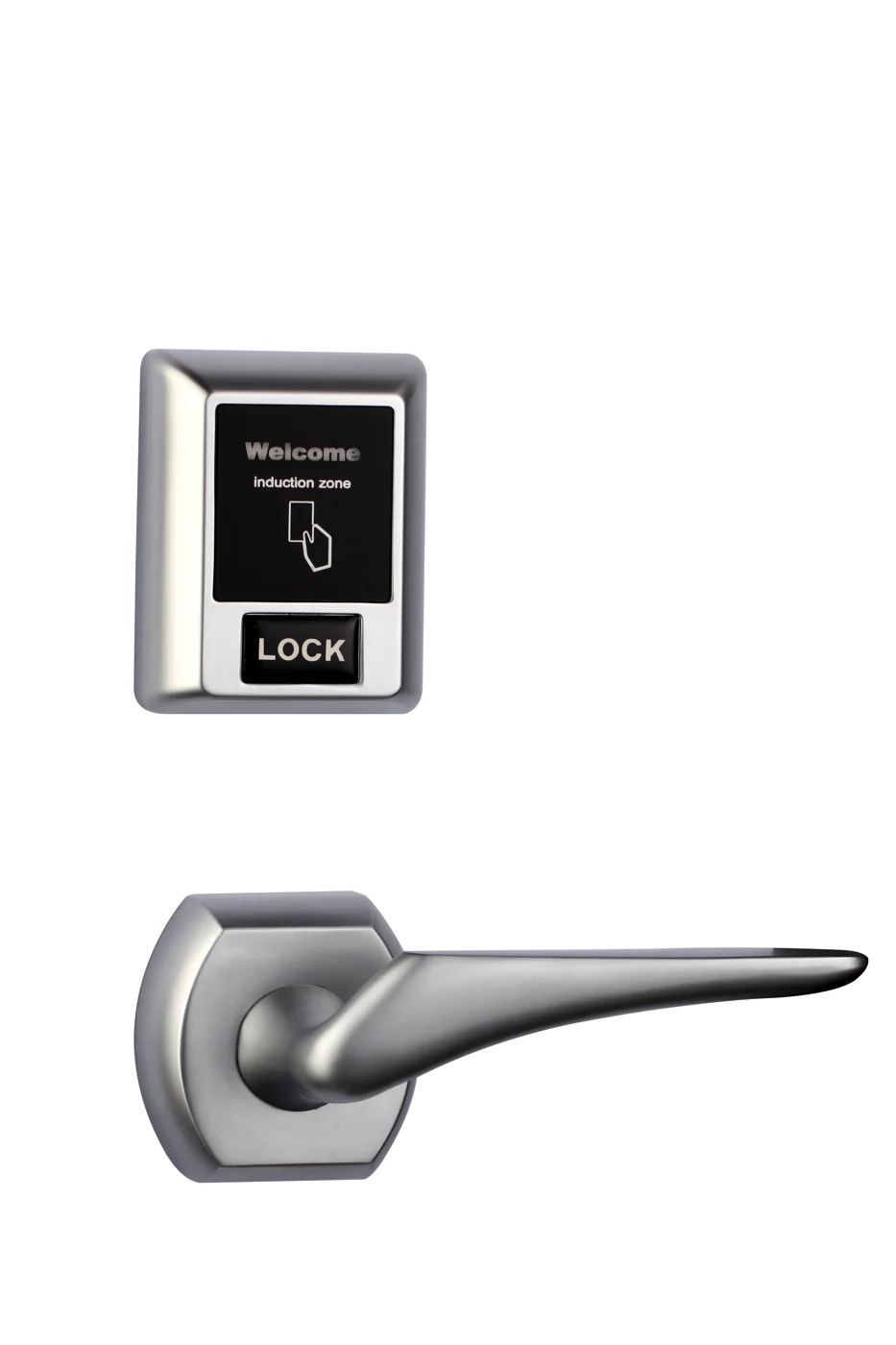
Bluetooth Cabinet Lock — App + PIN + Card, Managed Fleet
Offline BLE app cabinet lock for parcel, office, and managed locker fleets. App + PIN + MIFARE card, remote credential management, no server dependency, battery-powered retrofit.
This page already points to it as the next recommended reference.
Related blog posts
3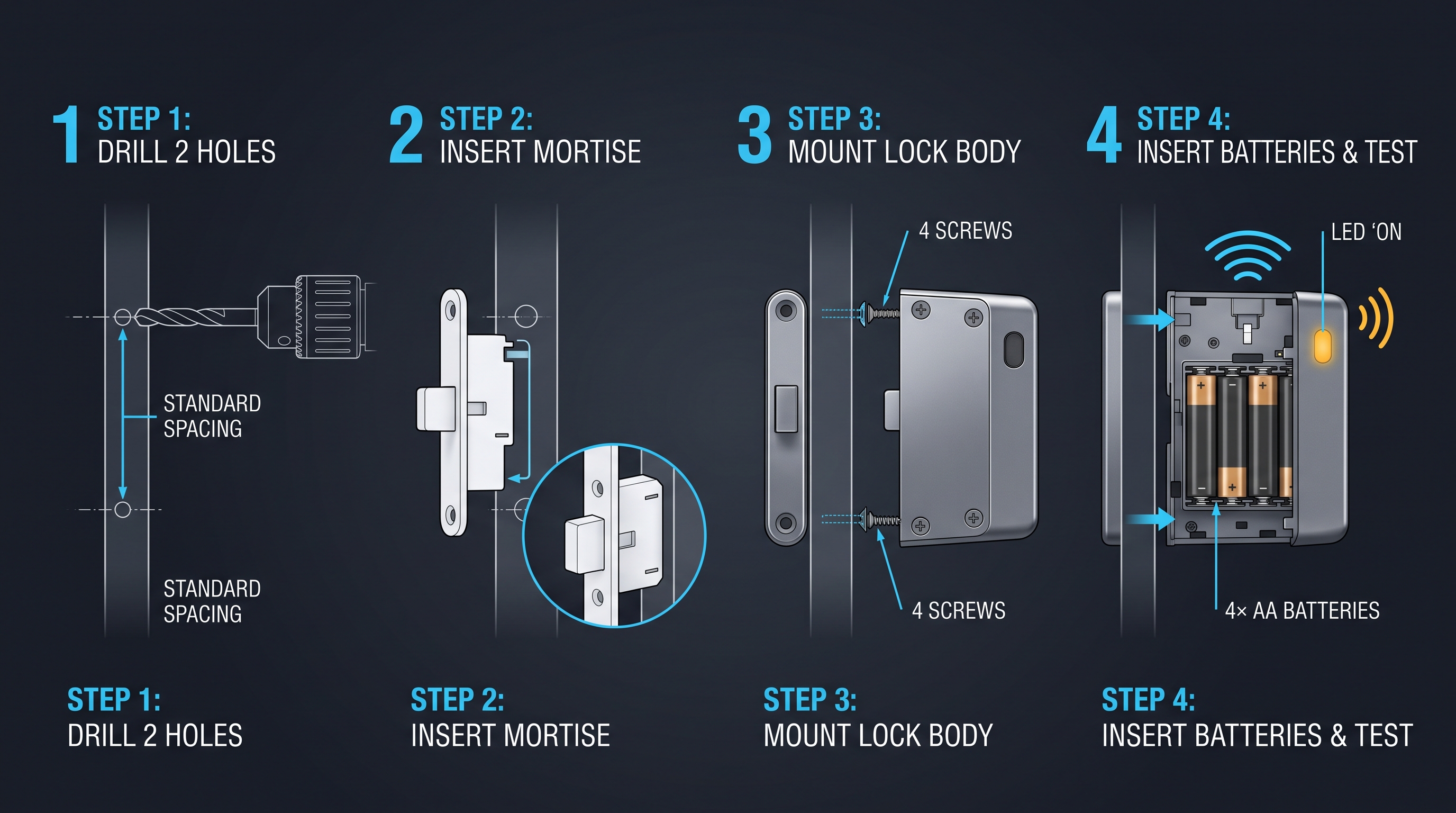
EMS Cabinet Lock: DEA-Compliant Drug Security for Paramedic Vehicles
EMS cabinet lock guide covering DEA Schedule II compliance, dual-authentication, tamper-evidence, audit trail, vehicle power, and ePCR integration for ambulance fleets.
It supports the same product context: Gym Locker Lock — Offline Card, No WiFi Required.
The Complete Guide to Emergency Cabinet Locks for AEDs, First Aid, Fire Extinguishers, and Trauma Kits
Learn everything about emergency cabinet locks: break-glass vs solenoid vs motorized latches, tamper alarms, remote alerts, ADA compliance, battery life, and deployment across schools, offices, gyms, transit, and aircraft.
It supports the same product context: Gym Locker Lock — Offline Card, No WiFi Required, PIN Code Electronic Cabinet Lock — Stand-Alone, No WiFi, Bluetooth Cabinet Lock — App + PIN + Card, Managed Fleet.
Employee Locker Lock Systems: The Definitive Guide for Workplace Security and Efficiency
A definitive guide to employee locker lock systems covering selection, installation, security, management software, compliance, and best practices for workplace locker security.
It supports the same product context: Gym Locker Lock — Offline Card, No WiFi Required.
Specify your hotel project with our engineers
Send your room count, ceiling type, and protocol preference. We will return a sample plan and quote within 24 business hours.
- Move from general guidance into a product or application discussion.
- Use RFQ when pricing, drawings, MOQ, or launch timing needs structure.
- Keep a direct contact path visible for fast clarifications and handoff.