The Best Electronic Locker Lock Guide for 2026: RFID, Keypad, Fingerprint, and Motorized Latch Solutions
Comprehensive guide to the best electronic locker lock options. Compare RFID card, PIN keypad, fingerprint biometric, and coin-operated electronic locker locks with installation guides, durability ratings, and pricing insights.
Electronic locker locks have transformed locker security from a mechanical management burden into an electronically managed access system that eliminates physical keys, provides audit trail visibility, and enables flexible user management impossible with traditional keyed or combination padlocks. The global electronic locker lock market reached an estimated $1.2 billion in 2025, growing at 12.5% annually driven by fitness facility upgrades, school security investments, and workplace locker modernization programs. Selecting the best electronic locker lock for a specific deployment — whether it is a 500-locker gym retrofit, a school locker room upgrade, a hospital employee locker system, or a corporate workplace deployment — requires navigating a diverse technology landscape spanning standalone RFID card locks, multi-protocol smart locks, biometric fingerprint locks, PIN keypad locks, and coin-operated electronic mechanisms. Each technology category brings distinct trade-offs in authentication convenience, durability in humid or outdoor environments, user management complexity, credential lifecycle cost, and total cost of ownership over the lock's 5-7 year service life. This comprehensive guide examines the best electronic locker lock options across nine evaluation dimensions, providing the technical specifications, comparison data, installation guidance, and pricing benchmarks that facility managers, procurement specialists, and security administrators need to make informed purchasing decisions in 2026.
What Makes the Best Electronic Locker Lock
An electronic locker lock is a battery-powered or hardwired locking device for gymnasium, school, workplace, healthcare, and retail lockers that uses electronic authentication — typically RFID/NFC cards or wristbands operating at 125 kHz (EM, HID Prox) or 13.56 MHz (MIFARE Classic 1K/4K with ISO/IEC 14443 Type A, MIFARE DESFire EV2/EV3 with AES-128 encryption and mutual three-pass authentication), PIN keypads with 4-12 digit code capacity supporting 20-200 unique user codes stored in non-volatile flash memory, capacitive fingerprint sensors with 508 DPI resolution and false acceptance rates below 0.0001%, or coin/token acceptors with electronic validation and programmable pricing — to actuate a motorized latch or solenoid-driven cam mechanism (6V-12V DC motor drawing 80-200 mA at stall, or solenoid drawing 300-800 mA for 200-500 ms actuation pulse) that secures the locker door. Unlike a mechanical key or combination lock, which can be shared, lost, or guessed without traceability, the best electronic locker lock provides per-user access credentials that can be individually issued, monitored, and revoked through either onboard programming (using a master card, programming keypad sequence, or USB connection to a configuration utility) or a cloud management platform (for smart models with BLE or WiFi connectivity). The best electronic locker lock for 2026 must achieve IP54 dust and water resistance minimum (with IP65 or higher for shower-adjacent or outdoor lockers), deliver 100,000+ unlock cycles at rated load before mechanical failure, provide a mechanical emergency override key for battery failure scenarios, and maintain an operating temperature range of -10 C to +50 C without display or mechanism failure. Authentication speed for the best electronic locker lock should be under 1 second from credential presentation to bolt retraction in high-traffic environments such as gym changing rooms or school corridors where queues can form during peak periods.
The electronic locker lock category is distinct from the broader smart locker lock category in an important way: electronic locker locks perform electronic authentication and actuation at the lock itself, with all logic residing on the lock's microcontroller, while smart locker locks add network connectivity (WiFi, BLE, LoRaWAN) and cloud management. Many of the best electronic locker lock models bridge both categories — operating as standalone electronic locks when offline (all credential validation and access logic performed locally) while also connecting to a cloud platform for remote management, audit trail aggregation, and credential lifecycle automation. This dual-mode operation ensures the lock remains functional during network outages while providing the management efficiency of cloud connectivity during normal operation.
| Evaluation Criterion | Best Electronic Locker Lock Requirement | Test Standard |
|---|---|---|
| Authentication Technology | RFID/NFC, keypad, fingerprint, or coin — at least one method | Vendor specification |
| Cycle Life | 100,000+ cycles at rated load | Manufacturer cycling test |
| Ingress Protection | IP54 minimum (dust-protected, splash-resistant) | IEC 60529 |
| Operating Temperature | -10 C to +50 C (indoor), -20 C to +60 C (outdoor) | IEC 60068 |
| Battery Life (AA alkaline) | 12-36 months at 20-50 cycles/day | Real-world acceleration testing |
| Authentication Speed | Under 1 second from credential to bolt retraction | Timed user testing |
| Emergency Override | Mechanical key, external battery contacts, or both | Operational verification |
| Construction Material | Zinc alloy or stainless steel housing, hardened steel cam | Material certification |
| Certifications | CE, FCC, RoHS minimum | Third-party laboratory |
Best Electronic Locker Lock: Access Technology Comparison
The best electronic locker lock selection begins with choosing the appropriate access technology for the intended user population and environment: RFID-based electronic locker locks operating at 13.56 MHz (MIFARE Classic, MIFARE DESFire EV2/EV3, ISO/IEC 14443 Type A/B, ISO/IEC 15693) or 125 kHz (EM4100/EM4200, HID Prox, Indala) are the industry standard for multi-user locker deployments in gyms, schools, and workplaces because the credential (card, wristband, keyfob) is inexpensive ($0.50-$3.00 each in bulk), durable (rated for 50,000-100,000 read cycles, 5-10 year service life, IP68-rated wristbands available for aquatic use), requires no battery, and can be read through wet or sweaty hands with 95%+ first-read reliability when the lock's RFID antenna is properly tuned and the credential is presented within the reader's sweet spot (typically 10-25 mm range). PIN keypad electronic locker locks offer the simplest deployment with zero credential management overhead — users memorize a 4-12 digit code — making them attractive for short-duration or temporary locker assignments where issuing RFID cards or wristbands would create credential recovery logistics, but keypad membrane wear in humid environments limits service life to 2-3 years before button delamination or ghost-triggering occurs, requiring a membrane replacement or lock swap. Fingerprint biometric electronic locker locks deploying capacitive sensors (508 DPI resolution, 256 x 360 pixel sensor matrix, live-finger detection rejecting silicone replicas and latent prints, FAR below 0.0001% and FRR below 1% under controlled conditions) provide the highest convenience factor — users access lockers with a simple finger press, no credential to carry, lose, or forget — and are the best electronic locker lock choice for executive offices, premium health club environments, and medical storage where hands-free credential management is valued. Coin-operated electronic locker locks combine an electronic coin validator (using inductive sensing or optical measurement to verify coin denomination and reject slugs) with a time-limited unlock mechanism — the best electronic locker lock versions support programmable coin value ($0.25-$2.00), programmable access duration (1-24 hours), and electronic audit counting of deposited coins for cash reconciliation, serving public recreation centers, transit stations, and budget fitness facilities where per-use charging is the business model.
Multi-protocol electronic locker locks that combine two or more access technologies (RFID + PIN keypad, RFID + fingerprint, or BLE + RFID) are gaining adoption as the best electronic locker lock choice for environments with diverse user populations. A gym with a mixed membership of tech-savvy young adults (who prefer phone-based BLE unlock), older members (who prefer RFID wristbands), and occasional guest pass users (who receive temporary PIN codes) can deploy a single lock model across all lockers, simplifying procurement, spare parts inventory, and staff training while accommodating varied member preferences.
| Technology | Credential Cost | Durability in Humidity | User Capacity | Read Speed | Unit Cost (Lock + Reader) | Best Application |
|---|---|---|---|---|---|---|
| RFID 125 kHz (EM, HID) | $0.50-$1.00 per card/tag | Good (encapsulated tag) | Unlimited (credential-based) | 0.2-0.3 seconds | $25-$60 | Budget gyms, schools |
| RFID 13.56 MHz (MIFARE) | $0.60-$2.00 per card/tag | Good (encapsulated tag) | Unlimited (credential-based) | Under 0.1 seconds | $30-$80 | Health clubs, corporate, healthcare |
| NFC Smartphone | $0 (user phone) | N/A (phone-dependent) | Unlimited (phone-based) | 0.3-0.5 seconds (with app) | $35-$90 | Premium gyms, co-working |
| PIN Keypad (4-12 digit) | $0 (memorized) | Moderate (membrane life) | 20-200 codes | 2-4 seconds | $15-$40 | Short-term, temporary use |
| Fingerprint (Capacitive) | $0 (biometric) | Low (wet finger failure) | 20-100 fingerprints | 0.3-0.8 seconds | $40-$100 | Executive, medical, premium |
| Coin-Operated | $0.25-$2.00 per use | Good (mechanical) | Unlimited (pay-per-use) | 3-5 seconds (coin insertion) | $25-$60 | Public rec, transit, budget gyms |
| Multi-Protocol (RFID + BLE + PIN) | $0-$2.00 (per credential type) | Good (multiple options) | Unlimited RFID, 50-200 PIN | 0.1-0.5 seconds | $60-$150 | Diverse user populations |
Fingerprint biometric electronic locker locks require special consideration for the locker room environment where they are frequently deployed. Wet fingers — from the pool, shower, or sweat — present a significant challenge: capacitive fingerprint sensors measure the capacitance difference between ridges (in direct contact with the sensor surface) and valleys (separated by an air gap), but water on the finger bridges ridges and valleys, reducing the capacitance differential and degrading the fingerprint image. The best electronic locker lock fingerprint models address this through enhanced signal processing (accounting for the dielectric constant of water at 80 vs air at 1, using frequency-domain analysis to separate the finger pattern from the water layer) and through mechanical design (hydrophobic sensor coatings that bead water away, drainage channels around the sensor area, and sensor heating elements activated below 15 C to maintain consistent finger-sensor interface). Despite these optimizations, fingerprint reliability in post-shower or post-swim scenarios remains 85-92% first-read success vs 98%+ for RFID in the same conditions — a meaningful difference in high-traffic environments. The best electronic locker lock deployments at aquatic centers therefore use RFID wristbands as the primary authentication method and fingerprints as a premium add-on for dry-area lockers.
Keypad durability testing reveals significant differences between budget and professional-tier PIN keypad electronic locker locks. Budget models using a single-layer membrane (polyester dome with screen-printed silver traces, typical of consumer electronics keypads) degrade after 500,000-1,000,000 button presses in dry conditions and as few as 100,000-200,000 presses when exposed to humidity and sweat. Professional models using a multi-layer sealed membrane with a stainless steel dome switch array achieve 2,000,000-5,000,000 press durability and withstand repeated exposure to humidity, cleaning chemicals, and the abrasive wear of sweaty or rough-skinned fingers. The best electronic locker lock keypad models incorporate an epoxied edge seal preventing moisture ingress between membrane layers and a recessed keypad design that protects the membrane edges from peeling or snagging by fingernails.
Best Electronic Locker Lock: Power Systems and Battery Management
The best electronic locker lock power system design directly determines operational reliability and maintenance cost over the lock's service life: the dominant battery configuration is 4x AA alkaline cells (providing 6V nominal, 1.5V initial open-circuit voltage per cell dropping to 0.9V end-of-life, approximately 2,000-3,000 mAh capacity per cell from quality brands) with an estimated service life of 12-24 months at 20-30 unlock cycles per day, translating to 7,200-21,900 cycles per battery set. The best electronic locker lock battery compartment is isolated from the lock electronics via a gasketed cover (O-ring or flat gasket per IP ingress rating, typically EPDM or silicone rubber) that prevents moisture migrating from the battery compartment (where condensation can form during temperature cycling) into the electronics cavity — condensation in the electronics cavity is the leading cause of premature circuit board corrosion and lock failure in humid locker room environments, accounting for an estimated 40-60% of electronic failures in field-returned locks according to manufacturer service data. Alternative battery configurations include 2x CR123A lithium cells (3V each, providing 6V nominal, 1,500 mAh capacity, extended temperature range -30 C to +60 C, lower self-discharge of under 0.5% per year vs 3% for alkaline, 2-3x the cost of 4x AA alkaline) preferred for outdoor or cold-environment installations where alkaline voltage droop at low temperatures (output voltage falls below 1.2V per cell at 0 C, triggering low-battery warnings prematurely) would cause false alarms; 4x AAA alkaline (compact size for slim-profile lock bodies in thin cabinet doors, but 40-50% shorter service life due to lower cell capacity of 1,000-1,200 mAh); and rechargeable lithium polymer packs (3.7V nominal, integrated charging via USB-C or wireless Qi charging pad, appealing for reducing battery waste but introducing the maintenance burden of ensuring locks are regularly charged and the reliability risk of lithium battery degradation after 300-500 charge cycles).
The battery management system (BMS) in the best electronic locker lock provides critical user-facing and maintenance-facing functions. For users, the lock provides escalating low-battery warnings: at 20% remaining capacity (approximately 3-6 months of remaining service in typical use), the lock emits a series of audible beeps and flashes an LED pattern with each unlock; at 10% remaining, the warning becomes more frequent and prominent; at 5% remaining, the lock may limit functionality (e.g., disabling high-power fingerprint sensor and requiring RFID or PIN instead) to extend remaining battery life for essential unlock operations. For maintenance staff, the best electronic locker lock supports remote battery monitoring (for models with BLE or WiFi connectivity, reporting battery voltage to the cloud platform where fleet-wide battery health dashboards identify locks approaching replacement threshold) and external battery contacts (two exposed contacts on the lock face that, when bridged by a 9V battery or external pack, provide emergency power for unlock when the internal batteries are fully depleted — this feature alone resolves 70-80% of member-locked-out scenarios without requiring mechanical override key access).
| Battery Type | Configuration | Nominal Voltage | Service Life (20 cycles/day) | Temp Range | Annual Cost per Lock | Best For |
|---|---|---|---|---|---|---|
| AA Alkaline (brand name) | 4x AA (6V) | 6.0V | 12-24 months | -18 C to +55 C | $0.50-$1.00 | Indoor gyms, offices, schools |
| AA Lithium (Li-FeS2) | 4x AA (6V) | 6.0V | 18-30 months | -40 C to +60 C | $2.00-$3.00 | Outdoor, cold storage, unheated facilities |
| CR123A Lithium | 2x CR123A (6V) | 6.0V | 24-36 months | -30 C to +60 C | $1.50-$3.00 | Premium, low-maintenance, outdoor |
| AAA Alkaline | 4x AAA (6V) | 6.0V | 8-15 months | -18 C to +55 C | $0.40-$0.80 | Slim-profile locks, thin doors |
| Li-Polymer Rechargeable | Built-in 3.7V (boosted) | 3.7V (boost to 6V) | 3-6 months per charge | 0 C to +45 C (charging) | $0.10-$0.30 (electricity) | Green/sustainability focus, low maintenance |
| Hardwired 12V DC | External PSU | 12V | Unlimited (powered) | PSU-dependent | $0.05-$0.15 (electricity) | IT racks, always-on cabinets |
Hardwired power (12V DC from an external power supply, typically a DIN-rail mounted unit providing 12V/5A to a bank of 10-20 locks, or Power over Ethernet via IEEE 802.3af/at for networked smart locks) eliminates battery replacement entirely and is the best electronic locker lock power solution for IT server racks, always-secured pharmaceutical cabinets, and high-security environments where battery failure is unacceptable. The trade-off is installation complexity: wiring must be routed through cable management channels, surface-mounted raceways, or within the locker construction, adding $5-$20 per lock in materials and 15-45 minutes per lock in additional installation labor. A UPS (uninterruptible power supply) must back the central power supply to maintain lock operation during power outages — critical for environments where emergency access to locker contents (medications, critical equipment) must be guaranteed regardless of grid power status.
Battery procurement practices significantly impact the best electronic locker lock reliability and total cost of ownership. Counterfeit AA and CR123A batteries are endemic on online marketplaces, with independent testing by battery manufacturers showing 30-60% of "brand name" batteries sold through third-party marketplace sellers are counterfeit — these counterfeits deliver 20-50% of rated capacity, have higher internal resistance causing voltage droop under load, and leak within 6-12 months causing corrosion damage to battery contacts and the lock interior. The best electronic locker lock maintenance programs therefore specify battery procurement only through authorized distributors (industrial supply houses, electronics distributors like Digi-Key/Mouser/Farnell, or direct from manufacturer), maintain lot traceability for warranty claims, and batch-test a sample of each battery purchase (measuring open-circuit voltage and loaded voltage under a 100 mA test load) to identify substandard lots before deployment.
Best Electronic Locker Lock: Security Features and Override Systems
The best electronic locker lock implements a multi-layered security architecture protecting against both electronic attacks (credential cloning, replay attacks, brute-force PIN attempts) and physical attacks (forced entry, lock removal, cam manipulation): RFID-based electronic locker locks using MIFARE DESFire EV2 or EV3 provide AES-128 encryption with mutual three-pass authentication — the lock generates a random challenge that the credential must correctly encrypt using its stored secret key, proving it possesses the key without ever transmitting it, and the credential challenges the lock in return, preventing rogue reader attacks that attempt to harvest credential data. The best electronic locker lock using 125 kHz EM or HID prox technology (which famously lack cryptographic authentication and transmit a fixed serial number in plain text, trivially clonable with a $10 handheld reader-writer from any electronics marketplace) mitigates this inherent vulnerability by combining the RFID read with a second factor — a memorized PIN code entered after the card is read, or a requirement that the card be presented twice within 5 seconds — raising the cloning attack complexity to the point where casual criminals are deterred even if determined attackers with equipment access are not. PIN keypad electronic locker locks protect against brute-force attacks through lockout after N consecutive incorrect attempts (3-5 attempts typically, with a 30-second to 5-minute lockout period that doubles with each additional failed attempt) and through PIN length enforcement (minimum 4 digits, maximum 12, with the lock rejecting easily guessed sequences like 0000, 1234, 1111, or the locker number itself). The best electronic locker lock keypad implements PIN entry randomization — each time the keypad is activated, the digits 0-9 are displayed in a random arrangement on a touchscreen or dynamically re-labeled keypad — preventing an observer from determining the PIN by watching finger position patterns, a technique that defeats a standard fixed-layout keypad within 2-3 observed entries.
Physical security features distinguish the best electronic locker lock from commodity alternatives. The lock body should be constructed of die-cast zinc alloy (Zamak 3 or 5, tensile strength 280 MPa) or 304/316 stainless steel rather than ABS plastic or aluminum, providing resistance to drilling, prying, and impact. The cam or latch bolt should be hardened steel (HRC 50-55 minimum), at least 3 mm thick, with anti-saw geometry (rounded edges that cause a hacksaw blade to skate rather than bite). The mounting system should use concealed screws — screws accessible only from inside the locker when the door is open — or a retaining nut design where the lock body is secured by a threaded nut tightened from inside the locker, preventing a would-be thief from simply unscrewing the lock from the outside. Tamper detection switches (microswitch or Hall effect sensor triggered when the lock body is tilted or removed from its mounting) and door position sensors (magnetic reed switch detecting whether the locker door is closed, enabling an alarm if the door is pried open while locked) are standard on professional-tier best electronic locker lock models and provide an additional layer of security for unattended locker rooms.
| Security Feature | Budget Lock | Standard Lock | Professional/Enterprise Lock |
|---|---|---|---|
| RFID Encryption | 125 kHz EM (no encryption) | MIFARE Classic (Crypto-1, weak) | MIFARE DESFire EV2/EV3 (AES-128) |
| PIN Brute-Force Protection | 3 attempts, 30-sec lockout | 5 attempts, 5-min lockout, escalating | 3 attempts, 30-min lockout, alarm notification |
| PIN Randomization | Not available | Not available | Randomized keypad layout each activation |
| Lock Body Material | ABS plastic, aluminum | Zinc alloy (Zamak 3) | Stainless steel 304/316 |
| Cam Material | Mild steel, 2 mm | Hardened steel HRC 45, 3 mm | Hardened steel HRC 55, 3.5 mm, anti-saw |
| Tamper Detection | None | None | Tilt/removal sensor, alert generation |
| Door Position Sensor | None | Optional (magnetic reed) | Standard (reed switch, alert on forced open) |
| Emergency Override | None | Mechanical key cylinder | Mechanical key + external battery contacts |
The emergency override system is a safety-critical feature in the best electronic locker lock design because battery depletion, electronic failure, or firmware corruption will inevitably affect a small percentage of locks over their service life. A mechanical override key — a physical key (typically a 6-pin or 7-pin tubular key, or a dimple key for higher security) that mechanically retracts the locking bolt independent of the electronic system — is the most reliable override because it requires no power and no electronics, working even when the lock is completely dead. The best electronic locker lock override key is a registered design (key blank not available at retail key-cutting services, blanks controlled by the lock manufacturer and distributed only to verified facility managers) to prevent unauthorized key duplication. External battery contacts — two exposed electrical contacts on the lock face, typically gold-plated for corrosion resistance, that accept a 9V battery or external power pack to briefly power the lock electronics for an unlock — provide a non-destructive override method when the lock electronics are functional but the internal batteries are depleted. The best electronic locker lock provides both override methods, recognizing that some failure modes (dead batteries) are resolved by external power while others (fried electronics, firmware crash) require mechanical override.
Master key and sub-master key hierarchies for mechanical override systems enable tiered staff access: the facility manager holds the grand master key that opens all lockers; shift supervisors hold sub-master keys that open lockers in their assigned zone (men's locker room, women's locker room, pool deck); cleaning staff hold cleaners' keys that open all lockers but only during defined hours (enforced through a key management system, not the lock itself, in standalone electronic locks). The best electronic locker lock implementations maintain an audit log of mechanical override key usage — detecting the insertion and rotation of the override key and logging it as a distinct event type — so that override key access is visible in the audit trail rather than being a blind spot that could be exploited.
Best Electronic Locker Lock: Installation and Compatibility
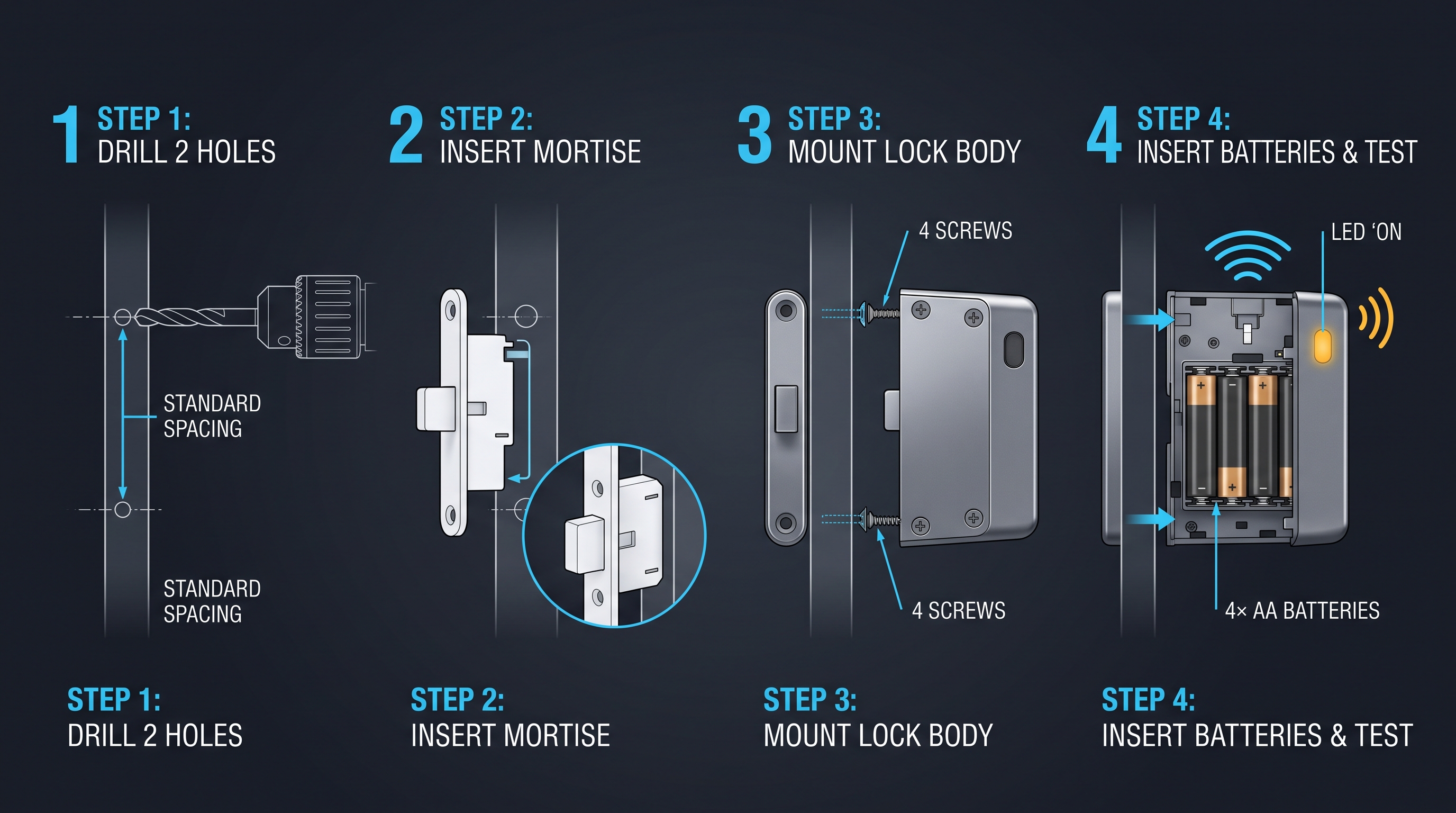
Installing the best electronic locker lock begins with measuring the existing locker preparation: the overwhelming majority of lockers worldwide use a 19 mm (3/4 inch) or 21 mm (13/16 inch) circular cutout for the lock cylinder, based on decades of cam lock standardization across furniture and locker manufacturers — the best electronic locker lock provides a lock body with a diameter matching these standard sizes (typically 18.5 mm or 20.5 mm actual diameter to fit 19 mm or 21 mm holes with clearance), an escutcheon or bezel with a diameter of 25-35 mm to cover the cutout and provide aesthetic finish, and a mounting nut or plate that secures the lock body from the inside face of the locker door with a tightening torque of 2.5-3.5 Nm. Locker door thickness ranges from 0.8 mm (thin economy metal lockers) to 25 mm (laminated wood lockers in premium facilities), requiring the best electronic locker lock to accommodate this range through a threaded lock body with 15-25 mm of clamping length and spacer rings of 1-3 mm thickness to take up the gap when the lock body is longer than the door thickness. The cam mechanism — the rotating arm that engages the locker frame's strike plate or hasp — requires adjustment in two dimensions: angle relative to the lock body (typically adjustable in 15-degree increments on a splined or slotted cam attachment, accommodating the difference in strike plate position between locker brands) and reach distance from the lock center line (typically 8-25 mm, adjusted by selecting the appropriate cam from the included assortment or sliding the cam on its mounting slot with a set screw). The best electronic locker lock kit includes an assortment of 3-5 cam lengths and configurations (straight, offset, curved for specific locker geometries), stainless steel mounting hardware (machine screws with nylon-insert lock nuts for metal lockers, wood screws for wooden lockers), and a drilling template for installations requiring a new cutout.
The installation sequence for the best electronic locker lock follows a structured workflow that minimizes rework and ensures correct operation: (1) verify the existing cutout diameter with a caliper or go/no-go gauge — do not rely on estimating or measuring with a tape measure, as a 2 mm discrepancy (19 mm vs 21 mm) will prevent proper fitment; (2) remove the existing lock assembly by unscrewing the interior retaining nut (typically 19 mm or 22 mm hex, requiring a spanner wrench or thin-wall socket) and extracting the lock body from the exterior; (3) clean the mounting surface of any corrosion, adhesive residue, or debris using isopropyl alcohol and a non-abrasive cloth; (4) install the lock body from the exterior, ensuring the cam is oriented to the correct side (right-hand or left-hand door swing) before tightening; (5) tighten the retaining nut to specified torque — under-tightening allows lock body rotation during use, over-tightening can deform the lock body or crack the escutcheon on plastic-faced lockers; (6) attach the cam in the correct rotational position using the set screw, testing that the cam engages the strike plate or hasp with 2-4 mm of engagement and does not bind during lock/unlock rotation; (7) insert batteries, observing correct polarity marked in the battery compartment, and close the battery cover ensuring the gasket is seated evenly to maintain the IP rating; (8) initialize the lock per manufacturer instructions — typically presenting the master card, pressing a recessed reset button with a paperclip for 5-10 seconds, or entering a factory default PIN code to enter programming mode; (9) enroll test user credentials (cards, codes, fingerprints) and verify lock/unlock operation 5-10 times, confirming that the cam retracts and extends fully with each cycle; (10) permanently affix an exterior label (locker number, usage instructions) if included, and record the lock serial number and locker location in the asset management system.
| Locker Type | Cutout Standard | Material Thickness | Cam Type Required | Installation Challenges |
|---|---|---|---|---|
| Metal Gym Locker | 19 mm or 21 mm | 0.8-1.6 mm steel | Straight or offset cam | Rusted existing lock, thin metal flex |
| Wooden Locker | 19 mm typical | 18-25 mm MDF/plywood | Straight cam, longer reach | Splitting when drilling, pilot holes needed |
| Laminate Locker | 19 mm or 21 mm | 12-18 mm phenolic | Straight cam, carbide drilling | Hard material for new cutouts |
| Perforated Metal Locker | 19 mm or 21 mm | 0.8-1.2 mm steel | Cam compatible with vent holes | Interference with ventilation perforations |
| Plastic/HDPE Locker | 19 mm or custom | 10-15 mm HDPE | Straight cam, anti-crush washers | Material expansion with temperature |
| Glass Door Locker | Custom bracket | 6-12 mm tempered glass | Specialized adhesive/clamp mount | No drilling possible, specialized mount |
Locker door construction material significantly impacts the installation approach for the best electronic locker lock. Metal lockers with internal dead space (hollow door construction with front and rear metal skins) require verifying that the lock body depth does not protrude into the hollow cavity unsupported — some locks require a backing plate (included in the kit for professional models) that spans the hollow cavity and provides a rigid mounting surface. Wooden and MDF lockers are prone to splitting when mounting screws are driven without pilot holes — drill pilot holes at 70-80% of the screw minor diameter to prevent splitting, and avoid over-tightening which crushes the wood fibers and loosens over time. Plastic and HDPE lockers experience thermal expansion (HDPE linear expansion coefficient approximately 130 x 10^-6 per degree C, meaning a 1-meter locker door expands 0.65 mm for a 5 C temperature change), requiring that the lock mounting account for this movement without binding — nylon washers and slightly oversized mounting holes (0.5-1 mm clearance) accommodate thermal cycling without imposing stress on the lock body.
Best Electronic Locker Lock: Price and Value Comparison
The best electronic locker lock spans a price range from approximately $15 for the most basic PIN keypad models to over $180 for enterprise-grade multi-protocol biometric smart locks, and value assessment must consider the complete lifecycle cost including hardware acquisition, installation, battery replacement, credential procurement, maintenance interventions, and expected service life: for a 200-locker deployment in a typical gym environment, budget keypad locks at $20 per lock ($4,000 hardware) appear significantly cheaper than professional RFID locks at $70 per lock ($14,000 hardware) — a $10,000 hardware cost difference. However, when lifecycle costs over 5 years are compared: keypad locks in a humid gym environment require membrane replacement after 2-3 years ($10-$15 per lock in parts plus 15 minutes labor per lock, approximately $4,000-$6,000 for 200 lockers), have a higher failure rate (estimated 5-10% annual failure vs 1-3% for professional tier), generate 3-5x more staff support calls (members forgetting codes, keypad not responding), and lack the audit trail capability that prevents theft incidents and resolves disputes. The professional RFID best electronic locker lock 5-year TCO is typically $25,000-$40,000 for 200 lockers vs $20,000-$35,000 for budget keypad locks — the smaller-than-expected gap reflecting the higher maintenance cost of budget models. When the value of audit trail capability, member experience (no forgotten codes), and reduced staff support calls are factored into the analysis, the professional-tier electronic locker lock delivers superior value for any deployment serving more than 50 users.
The market segments the best electronic locker lock into four price tiers with progressively expanding feature sets. Understanding the feature boundaries between tiers helps procurement avoid both under-specification (cheapest lock fails to meet operational requirements, requiring premature replacement) and over-specification (paying for advanced features that the deployment will never use).
| Price Tier | Hardware Cost per Lock | Technology | User Capacity | Audit Trail | Service Life | 5-Year TCO (200 locks) |
|---|---|---|---|---|---|---|
| Budget ($15-$35) | $15-$35 | PIN keypad or 125 kHz EM RFID | 20-200 codes | None or 1,000 events | 2-3 years | $12,000-$22,000 |
| Standard ($35-$70) | $35-$70 | 13.56 MHz RFID, basic PIN | Unlimited cards, 20-99 codes | 1,000-10,000 events | 3-5 years | $18,000-$30,000 |
| Professional ($70-$120) | $70-$120 | Multi-protocol RFID/BLE, fingerprint option | Unlimited cards, 100 fingerprints | 10,000-50,000 events | 5-7 years | $22,000-$38,000 |
| Enterprise ($120-$180+) | $120-$180+ | All protocols + biometric, cloud API | Unlimited with platform | 100,000+ cloud events | 7+ years | $30,000-$55,000 |
The credential cost dimension of the best electronic locker lock TCO varies significantly by technology: RFID card locks incur an initial credential cost of $1-$3 per user (for MIFARE cards or wristbands in bulk quantities) plus annual replacement cost of 5-15% of credentials (for lost, damaged, or unreturned items) — a 1,000-member gym deploying RFID wristbands spends $1,000-$3,000 on initial credentials and $50-$450 annually on replacements. PIN keypad locks have zero credential cost, but the hidden cost of PIN management (staff resetting forgotten codes, estimated 2-5 minutes per event at 10-30 events per week per 200 lockers) and reduced security (codes shared between members, guessed by observing locker usage patterns) manifests in higher theft incident rates and member dissatisfaction. Fingerprint biometric locks have zero credential cost and the highest security (fingerprint cannot be shared or stolen), but enrollment requires staff interaction (1-2 minutes per user) and the fingerprint sensor module is the most expensive component, driving the lock hardware cost above comparable RFID models. The best electronic locker lock for cost-sensitive high-volume deployments is typically the 13.56 MHz RFID card model in the standard or professional tier — the credential cost is modest, the lock hardware is priced competitively, the technology is mature and reliable, and the card can serve double-duty as the facility's membership card or access badge, reducing the effective credential cost to near zero.
Multi-year platform and service costs apply to smart connected electronic locker locks with cloud management. While these costs are zero for standalone models (where all programming is performed at the lock via master card or keypad), smart models incur platform subscription fees of $1-$5 per lock per month for management dashboards, remote monitoring, API access, and cloud audit log storage. Over a 5-year period, the platform cost for a 200-lock smart deployment ranges from $12,000-$60,000 — potentially exceeding the hardware cost. The best electronic locker lock purchasing decision for cloud-managed deployments must therefore evaluate whether the operational efficiency gains (remote management eliminating physical visits to each lock, automated credential lifecycle, integrated audit trail) justify the ongoing platform spend.
Best Electronic Locker Lock: Application Scenarios
Fitness facilities represent the largest application segment for the best electronic locker lock, with deployments ranging from 50-locker boutique studios to 500-locker full-service health clubs: the dominant configuration is 13.56 MHz MIFARE RFID wristband locks with a standalone programming architecture (programmed via master card at the lock, no network infrastructure required), serving 10-100 daily unlock cycles per locker during peak gym hours with first-read reliability above 95% even when wristbands are presented with wet or sweaty hands. The best electronic locker lock for gym applications uses a motorized cam mechanism (6V DC motor, 80-150 mA running current, 0.8-1.5 second cycle time) rather than a solenoid because motorized actuation is quieter (45-55 dB at 1 meter vs 60-75 dB for solenoid snap), more tolerant of door misalignment, and less susceptible to wear-induced failure. School and educational facility deployments of the best electronic locker lock prioritize different characteristics: student populations of 500-2,000 with locker assignments changing each semester or academic year require locks that support bulk programming at semester start and bulk deactivation at semester end, integrate with the school's existing student ID card system (typically 13.56 MHz MIFARE, the same card used for library checkout, cafeteria payment, and attendance tracking), and withstand the abuse that occurs in unsupervised corridors — IK10 impact resistance, fully sealed electronics, and anti-vandal reader faceplates with no exposed fasteners. The best electronic locker lock for educational deployments includes a "lockdown mode" — activated by staff from a master station or panic button — that locks all lockers simultaneously in emergencies, a feature increasingly specified by school district security policies following high-profile security incidents.
Healthcare and hospital employee locker deployments require the best electronic locker lock to navigate complex shift-based access requirements: nurses and medical staff work 8-12 hour shifts with shared locker assignments (different staff members use the same locker during different shifts), necessitating time-based access that automatically expires at shift end — the best electronic locker lock for healthcare integrates with the hospital's staff scheduling system (Kronos, Workday, API Healthcare) to automatically provision locker access for the duration of a staff member's scheduled shift and revoke it when the shift ends, preventing a departing staff member from retaining access to a locker assigned to the incoming shift worker. HIPAA compliance for lockers in clinical areas storing patient information or medical supplies requires the best electronic locker lock to provide unique user identification (each access traceable to a specific individual), automatic re-lock (within 30 seconds of opening), and audit trail capability for compliance reporting. Hospital-grade disinfectant resistance is an often-overlooked requirement: locker lock surfaces in clinical environments are cleaned multiple times daily with quaternary ammonium compounds, hydrogen peroxide vapor, or bleach solutions — the best electronic locker lock housings and reader surfaces must withstand this chemical exposure without crazing (stress cracking of transparent plastics), delamination (separation of bonded layers), or corrosion of metal components.
| Application | Lock Type | Key Features | Lock Count Typical | Installation Considerations |
|---|---|---|---|---|
| Fitness/Gym | 13.56 MHz RFID wristband | Motorized cam, IP54+, audit trail | 50-500 | Humidity, high cycle count, member experience |
| School/Education | 13.56 MHz RFID student ID | IK10 vandal resistance, lockdown mode | 200-2,000 | Vandal resistance, bulk programming, budget sensitivity |
| Healthcare/Hospital | 13.56 MHz RFID staff badge | Shift-based access, HIPAA compliance, disinfectant resistant | 100-500 | Shift scheduling integration, chemical resistance |
| Corporate/Workplace | RFID employee badge or BLE | Cloud management, API integration, dynamic assignment | 20-200 | Hot-desking integration, employee badge compatibility |
| Public Recreation | RFID or coin-operated | Coin validator, low cost, simple operation | 100-500 | Per-use charging, unattended operation, vandal resistance |
| Retail/Employee Storage | RFID or PIN keypad | Basic audit, staff master key, simple management | 10-50 | Retail employee badge, break room environment |
Corporate and workplace deployments of the best electronic locker lock increasingly favor cloud-managed smart models that integrate with workspace booking platforms for dynamic locker assignment in hot-desking environments. The best electronic locker lock for corporate use combines RFID (reading the employee's existing building access badge) with BLE (providing smartphone app unlock as an alternative and enabling cloud connectivity via a Bluetooth gateway) and a cloud management platform that synchronizes with the workspace booking system — when an employee books desk 42 for Tuesday via the office booking app, the pedestal locker under desk 42 is automatically assigned to the employee's credentials for Tuesday's duration. At end of day, the assignment expires and the locker is available for the next day's occupant. This model requires zero ongoing locker administration after initial setup, a dramatic improvement over the previous practice of manually assigning lockers via spreadsheet and issuing physical keys.
Public recreation centers and community facilities operate on tight municipal budgets, making the best electronic locker lock selection a cost-driven decision. Coin-operated electronic locks — where users deposit $0.25-$1.00 per use and the lock engages for a programmed duration (1-12 hours) — remain popular because they generate revenue offsetting the lock hardware cost and require minimal staff involvement. However, the combination of coin handling (daily collection, counting, banking, and the security risk of cash in unattended facilities) and the mechanical coin validator (which jams on bent or foreign coins, requiring weekly cleaning and occasional repair) creates ongoing operational costs. RFID-based electronic locks with per-use billing through a membership card or stored-value card — where users pre-load value at a kiosk or register online and the locker deducts a fee upon each use — eliminate cash handling and coin mechanism maintenance while providing the usage data and audit trail that coin-operated systems lack.
Best Electronic Locker Lock: Maintenance and Troubleshooting
Maintaining the best electronic locker lock fleet requires a structured preventive maintenance program addressing the leading causes of failure in high-traffic, high-humidity locker room environments: battery replacement is the most frequent maintenance activity, with AA alkaline batteries requiring replacement every 12 months (calendar-based schedule, not wait-until-failure) to prevent member lockout incidents — the best electronic locker lock management program schedules battery replacement during off-peak hours (overnight or during facility closure), uses only brand-name batteries from authorized distributors (Energizer Industrial, Duracell Procell, Panasonic, Varta), and maintains a log of replacement dates and battery brands per lock to identify trends (a lock requiring replacement at 6 months when others last 12 months signals a higher-than-expected current draw warranting diagnostic investigation). RFID reader surface cleaning with isopropyl alcohol (70% solution on a microfiber cloth, monthly for high-traffic gyms, quarterly for lower-traffic facilities) removes the accumulation of sweat residue, skin oils, sunscreen, and cosmetics that attenuate the RFID field and reduce read sensitivity — regular cleaning restores read range from a degraded 5-10 mm to the designed 15-25 mm, eliminating the most common cause of "lock won't read my card" complaints. Mechanical inspection of the cam mechanism, latch bolt alignment, and door strike condition (annually recommended, with a spot-check of 10% of lockers quarterly) identifies developing issues — cam play (rotational looseness indicating bushing or bearing wear), motor noise change (grinding sound indicating gear wear vs normal hum), latch bolt scoring (indicating misalignment with strike plate causing metal-on-metal contact), and strike plate deformation (indicating repeated forced opening attempts or door slamming) — before they progress to lock failure. The best electronic locker lock maintenance program includes a locker door alignment check: doors that sag on their hinges, close loosely, or require force to close impose stress on the lock mechanism, leading to premature cam and motor wear. Door hinge adjustment, latch plate repositioning, and replacement of worn hinge bushings should be performed as part of the annual locker maintenance cycle to ensure the lock operates within its designed door alignment tolerance.
Troubleshooting common issues with the best electronic locker lock draws on the accumulated experience of facility maintenance teams across thousands of deployments. The following table summarizes the most frequent issues, their root causes, and their resolution approaches, enabling facility staff to resolve 80-90% of reported issues without escalating to the lock manufacturer's technical support.
| Symptom | Primary Cause | Diagnostic Check | Resolution | Prevention |
|---|---|---|---|---|
| Card not reading | Dirty reader surface, damaged card | Clean reader; test with known-good card | Replace visibly bent, cracked, or delaminated cards | Monthly reader cleaning; card replacement program |
| Keypad unresponsive | Membrane delamination, moisture ingress | Inspect keypad for bubbling, flexing; check inside for condensation | Replace keypad assembly or lock (if sealed unit) | Upgrade to IP65 keypad; avoid pressure washing |
| Motor stalls / grinding | Debris in cam path, gear wear | Remove lock, inspect cam and gears for debris or stripped teeth | Clean cam path; replace lock if gears stripped | Annual mechanical inspection; keep locker interiors clean |
| Battery drains in under 6 months | High cycle count, counterfeit batteries, short circuit | Count daily cycles; verify battery authenticity; check for corrosion on PCB | Install lithium batteries for high-cycle lockers; replace lock if short circuit | Battery monitoring; procure batteries from authorized distributors |
| Fingerprint won't enroll | Sensor dirty, dry finger, sensor failure | Clean sensor with microfiber cloth; try enrollment with slightly moistened finger | Replace lock if sensor consistently fails enrollment | Monthly sensor cleaning; educate members on proper finger placement |
| Locker won't lock | Misaligned strike plate, bent cam | Close door slowly, observe cam-to-strike engagement | Adjust strike plate or cam position; straighten or replace bent cam | Annual door alignment check |
| Lock randomly unlocks | Firmware bug, EMI interference | Note circumstances (time, which lockers, recent events) | Factory reset and reprogram; contact manufacturer if persistent | Keep firmware updated; report patterns to manufacturer |
| External override battery doesn't work | Corroded contacts, wrong battery type | Clean gold contacts with isopropyl alcohol; verify 9V battery is fresh | Replace lock if internal electronics unresponsive to external power | Annual override contact cleaning and operational test |
Staff training on the best electronic locker lock troubleshooting procedures is as important as the lock hardware itself. Facility staff should be trained on: (1) the external battery contact override procedure (which port, which battery, which orientation) for each lock model deployed; (2) the mechanical override key procedure and key control policy (who has keys, how they are stored and signed out, the process for logging override key usage); (3) how to distinguish a lock issue requiring on-site intervention from a user error issue resolvable by coaching the member (card orientation, keypad entry speed, fingerprint placement); (4) the escalation path for issues not resolved by standard troubleshooting (manufacturer technical support contact, warranty claim process, acceptable resolution timeframes). A laminated quick-reference card posted in the facility maintenance office or equipment room, showing the five most common issues and their resolution steps with photos, reduces the time-to-resolution for routine issues from 20-30 minutes (searching for documentation, calling support) to 5-10 minutes.
Best Electronic Locker Lock: Industry Standards and Trends
The best electronic locker lock market is shaped by evolving industry standards, technology convergence, and changing user expectations: the consolidation of RFID credential standards — the migration from 125 kHz EM/HID Prox (legacy 1990s-2000s technology, unencrypted, fixed serial number) to 13.56 MHz MIFARE DESFire EV3 (current generation, AES-128 encrypted, support for multiple independent applications on a single card, Common Criteria EAL5+ certified secure element) — is accelerating, with approximately 70% of new electronic locker lock deployments in 2025-2026 specifying 13.56 MHz readers, up from 45% in 2020, driven by security concerns about credential cloning, the broader access control industry's migration to DESFire, and the availability of DESFire-compatible student ID and employee badge programs at competitive pricing. Energy efficiency standards are emerging as a purchasing criterion for the best electronic locker lock: the European Union's Ecodesign Directive (2009/125/EC) and the proposed Sustainable Products Regulation (ESPR), while not yet directly regulating electronic locks, are influencing procurement preferences toward locks with user-replaceable batteries in standardized formats (AA, AAA, CR123A rather than proprietary packs), minimal standby power consumption (below 50 uA in idle state, verified by independent testing), and manufacturer take-back programs for end-of-life recycling. Accessibility standards — particularly the Americans with Disabilities Act (ADA) in the US and EN 301 549 in the EU — are increasingly applied to the best electronic locker lock installations: lock readers and keypads should be mounted at accessible heights (48 inches / 1220 mm maximum reach height per ADA), provide audible as well as visual status indication (beeps for lock/unlock, distinct tones for error conditions), and offer alternative authentication methods for users with dexterity limitations (RFID card tap instead of keypad PIN entry, proximity-based BLE unlock instead of precise card alignment).
Universal credential convergence is perhaps the most transformative trend for the best electronic locker lock ecosystem. The smartphone is emerging as the single access credential for building entry (via NFC or BLE), elevator access, office door, parking gate, locker, printer authentication, and cafeteria payment — eliminating the need for employees, students, and gym members to carry multiple cards, fobs, or keychains. Near Field Communication (NFC) support on Apple iOS (opened to third-party developers with iOS 13 Core NFC in 2019) and Google Android (supported natively since Android 4.4) has made NFC an accessible authentication technology for mobile apps, and the NFC Forum's Type 5 Tag specification (NFC-V, based on ISO/IEC 15693) enables longer-range read (up to 1 meter) suitable for locker proximity detection. The best electronic locker lock supporting both 13.56 MHz NFC and 125 kHz RFID (dual-frequency readers) provides a migration path: facilities can deploy locks today using existing 125 kHz credentials while having the 13.56 MHz reader ready for the transition to mobile credentials when the facility's infrastructure and user readiness supports it.
| Industry Trend | Technology Driver | Timeline | Impact on Best Electronic Locker Lock |
|---|---|---|---|
| RFID Migration to DESFire | MIFARE DESFire EV3, AES-128 | 2023-2028 | 70%+ of new deployments specifying 13.56 MHz |
| Smartphone-as-Credential | NFC (Apple VAS, Google Smart Tap) | 2024-2028 | Dual-frequency readers for migration path |
| Energy Efficiency Standards | EU Ecodesign / ESPR influence | 2025-2028 | Standardized batteries, under 50 uA standby |
| Accessibility Compliance | ADA, EN 301 549 | 2025-2027 | Mounting height, audible feedback, alternative auth |
| Sustainable Design | Recyclable materials, take-back programs | 2025-2028 | Zinc alloy, stainless steel, ABS with resin codes |
| Biometric Template Protection | ISO/IEC 24745, irreversible templates | 2026-2028 | Encrypted biometric data, no raw fingerprint storage |
| Wireless Power / Energy Harvesting | NFC energy harvesting, indoor solar | 2026-2030 | Battery-free electronic lockers in well-lit areas |
Biometric template protection is emerging as a regulatory and security requirement with the proliferation of biometric privacy laws: Illinois's Biometric Information Privacy Act (BIPA, 740 ILCS 14) imposes statutory damages of $1,000 per negligent violation and $5,000 per intentional or reckless violation for unauthorized collection or disclosure of biometric data; Texas's Capture or Use of Biometric Identifier Act (Texas Business and Commerce Code 503.001); Washington State's My Health My Data Act (covering biometric data in health contexts); and GDPR's classification of biometric data as a "special category" of personal data under Article 9. The best electronic locker lock with fingerprint biometrics must store fingerprint data as irreversible templates (hashed feature vectors, per ISO/IEC 24745 biometric information protection) rather than raw fingerprint images, must encrypt templates at rest (AES-256 with device-unique key), and must process templates only within the lock's secure element or trusted execution environment — never transmitting raw biometric data off-device or storing it in cloud platforms where it would be subject to broader disclosure requirements.
Best Electronic Locker Lock: Final Recommendations
The best electronic locker lock selection process must translate the deployment's specific operational requirements into technology, durability, and management platform specifications: (1) define the user population — number of users, turnover rate (annual gym members vs daily public recreation visitors), credential preferences (wristband vs card vs phone vs PIN), and technical comfort level; (2) characterize the environment — indoor (climate-controlled vs unheated locker room), humidity level (dry gym corridor vs pool-deck with 80%+ RH), chemical exposure (chlorine, cleaning disinfectants), temperature range, and vandalism risk (supervised facility vs unattended 24-hour access); (3) determine management requirements — standalone (locks programmed individually at each locker via master card, no network needed) vs smart (cloud-managed, remote monitoring, API integration), access scheduling needs (time-restricted per user vs 24/7 access for all), audit trail retention period, and integration with existing credentials (employee badges, student IDs, membership cards); (4) establish budget — hardware cost per lock, platform subscription if smart, installation labor, credential procurement, battery replacement, and expected service life replacement cost. For the most common deployment scenario — a 200-locker gym with moderate humidity, 1,000+ members, RFID wristbands already issued for entry, and standalone management without cloud platform dependency — the best electronic locker lock recommendation is a 13.56 MHz MIFARE RFID lock in the professional tier ($60-$90 per lock, $12,000-$18,000 total hardware) with a motorized cam mechanism, IP54 or IP65 ingress protection, 100,000+ cycle life rating, and 10,000+ event audit trail memory. This configuration provides the optimal balance of member convenience (wristband tap, under 1 second unlock, works with wet hands), facility staff efficiency (no physical key management, no code reset requests, rapid member onboarding by linking wristband serial numbers to member accounts), security (DESFire AES-128 encrypted authentication prevents credential cloning, per-user audit trail enables theft investigation), and total cost of ownership ($25,000-$35,000 over 5 years including hardware, batteries, credential replacements, and maintenance labor).
Vendor evaluation for the best electronic locker lock should include a hands-on trial deployment of 5-10 locks in the actual locker room environment for 30-90 days before committing to a 200+ lock purchase. This trial period reveals real-world performance differences invisible in specification sheets: card read reliability with actual member wristbands (which may be worn, scratched, or contaminated with sunscreen), battery life under actual usage patterns (which rarely match laboratory test conditions), member acceptance and feedback (the fastest-responding lock specification means little if members find it confusing to use), and staff workflow impact (does the programming process take 30 seconds or 3 minutes per member?). The best electronic locker lock vendor will facilitate this trial by providing trial units at no cost or on a refundable basis, along with technical support during the trial period. Contact at least two existing customers with deployments of similar scale and environmental conditions, and ask about reliability (failures per 100 locks per year), battery life achieved, responsiveness of technical support, and any issues encountered during or after deployment.
| Deployment Type | User Population | Environment | Recommended Lock | Lock Cost | Management | 5-Year TCO (200 locks) |
|---|---|---|---|---|---|---|
| Gym/Fitness (200 lockers) | 1,000+ members, wristbands | Humid, moderate temp | RFID 13.56 MHz, professional, IP54+ | $60-$90 | Standalone, master card programming | $25K-$35K |
| School (500 lockers) | 1,000+ students, ID cards | Dry, moderate temp | RFID 13.56 MHz, standard, IK10 | $40-$60 | Standalone, bulk programming | $28K-$40K |
| Healthcare (200 lockers) | 500+ staff, hospital badges | Hospital environment, disinfectant | RFID 13.56 MHz, professional, chemical resistant | $80-$120 | Cloud-managed, scheduling integration | $35K-$55K |
| Corporate Office (100 lockers) | 200+ employees, access badges | Climate-controlled office | RFID 13.56 MHz + BLE, professional | $70-$110 | Cloud-managed, workspace booking API | $18K-$28K |
| Aquatic Center (200 lockers) | 500+ members, waterproof wristbands | High humidity, chlorine, splash | RFID 13.56 MHz, IP65-67, 316 SS | $90-$140 | Standalone, master card programming | $30K-$45K |
| Public Rec (300 lockers) | General public, pay-per-use | Variable, moderate vandal risk | RFID 13.56 MHz or coin-operated | $25-$70 | Basic standalone | $18K-$35K |
Not sure which sensor fits your project?
Talk to our mmWave application engineers for a free consultation.
Find the right presence sensor for your hotel project
Compare the 3 protocols, check hotel-specific case studies, and download the installation guide
Related products
3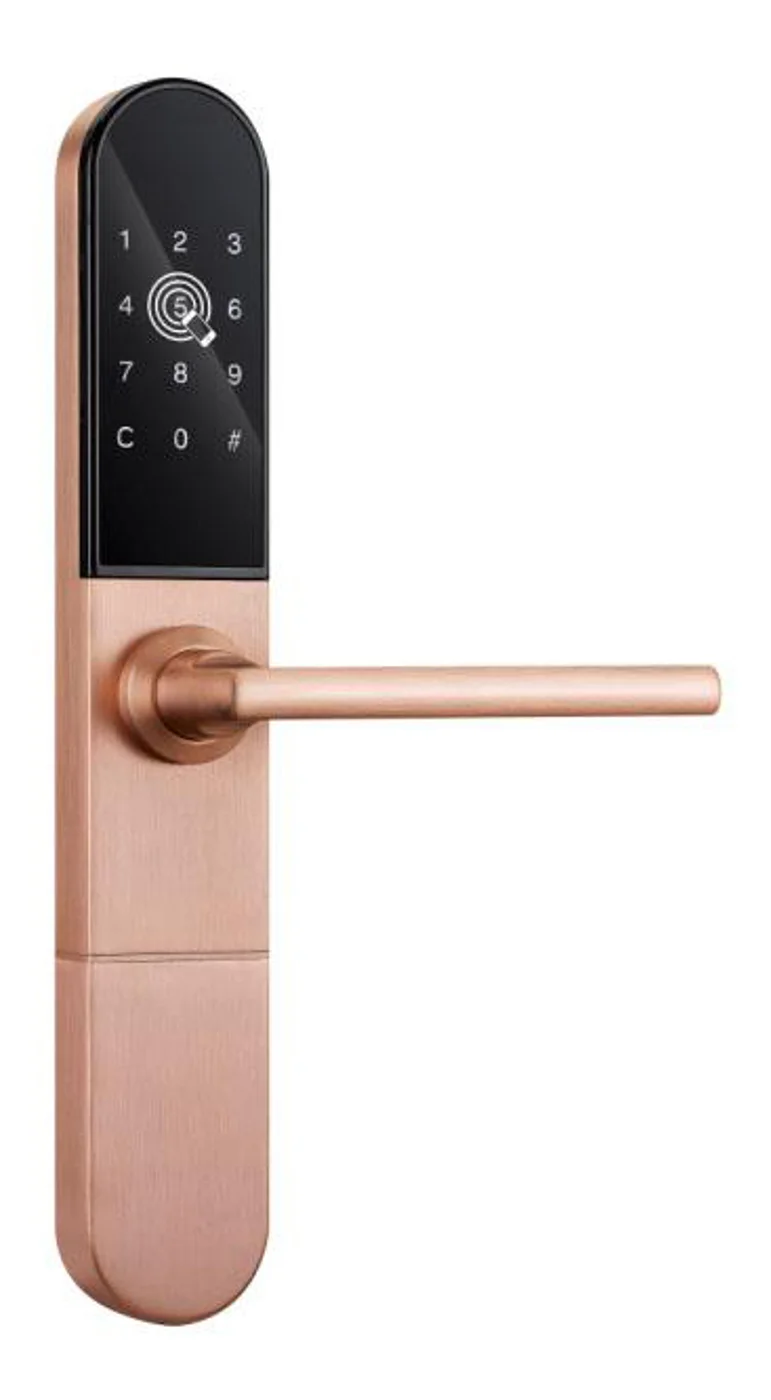
Smart Cabinet Lock — App-Managed, Multi-Site Dashboard
App-managed smart cabinet lock for office, parcel, and multi-site fleets. BLE app dashboard, audit trail, remote unlock, no per-lock server. Higher-tier chassis.
This page already points to it as the next recommended reference.
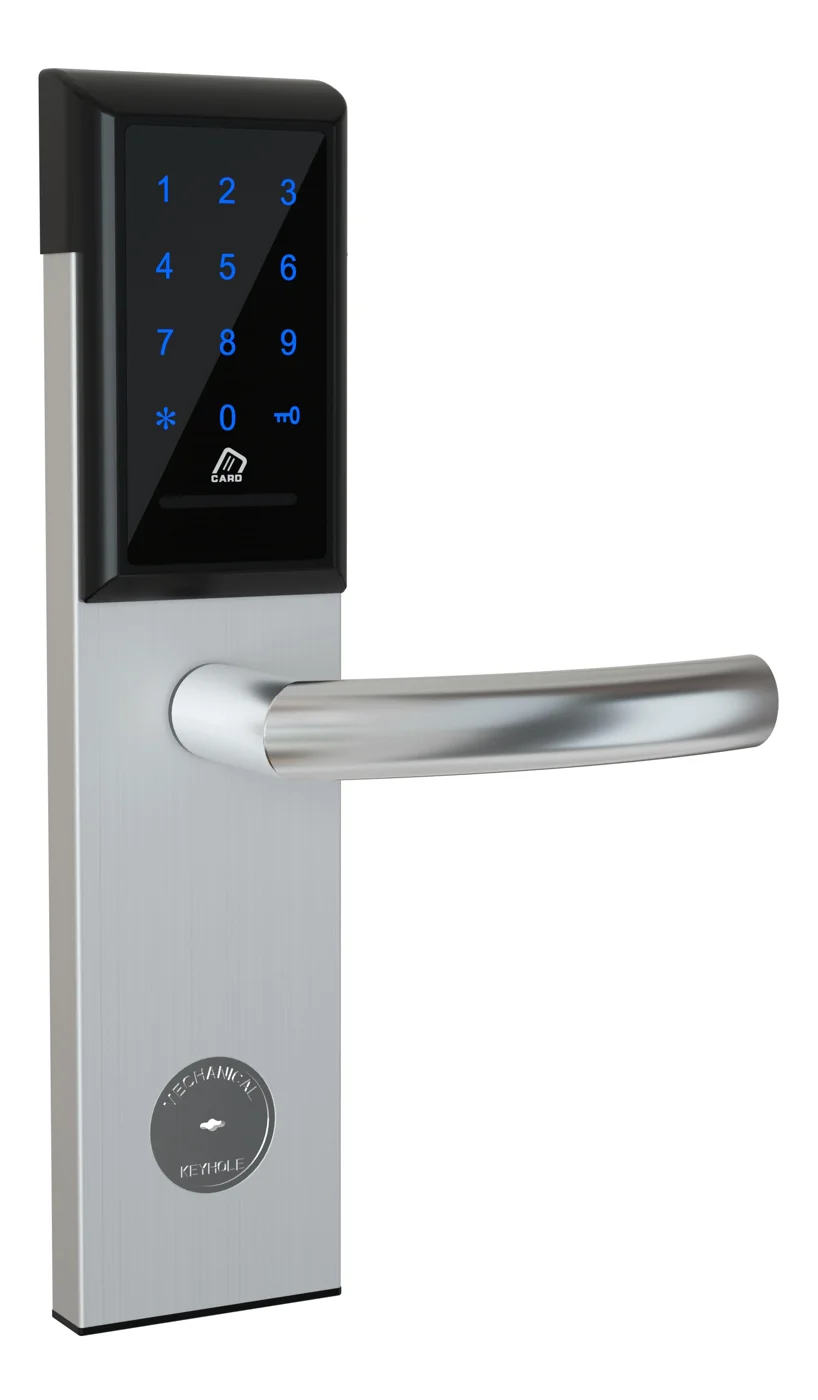
Office Cabinet Lock — PIN + Card for Filing & Pedestals
Offline PIN + card office cabinet lock for filing cabinets, pedestals, and drawers. Battery-powered 5-minute retrofit, no WiFi, no key management. CE/FCC/RoHS.
This page already points to it as the next recommended reference.
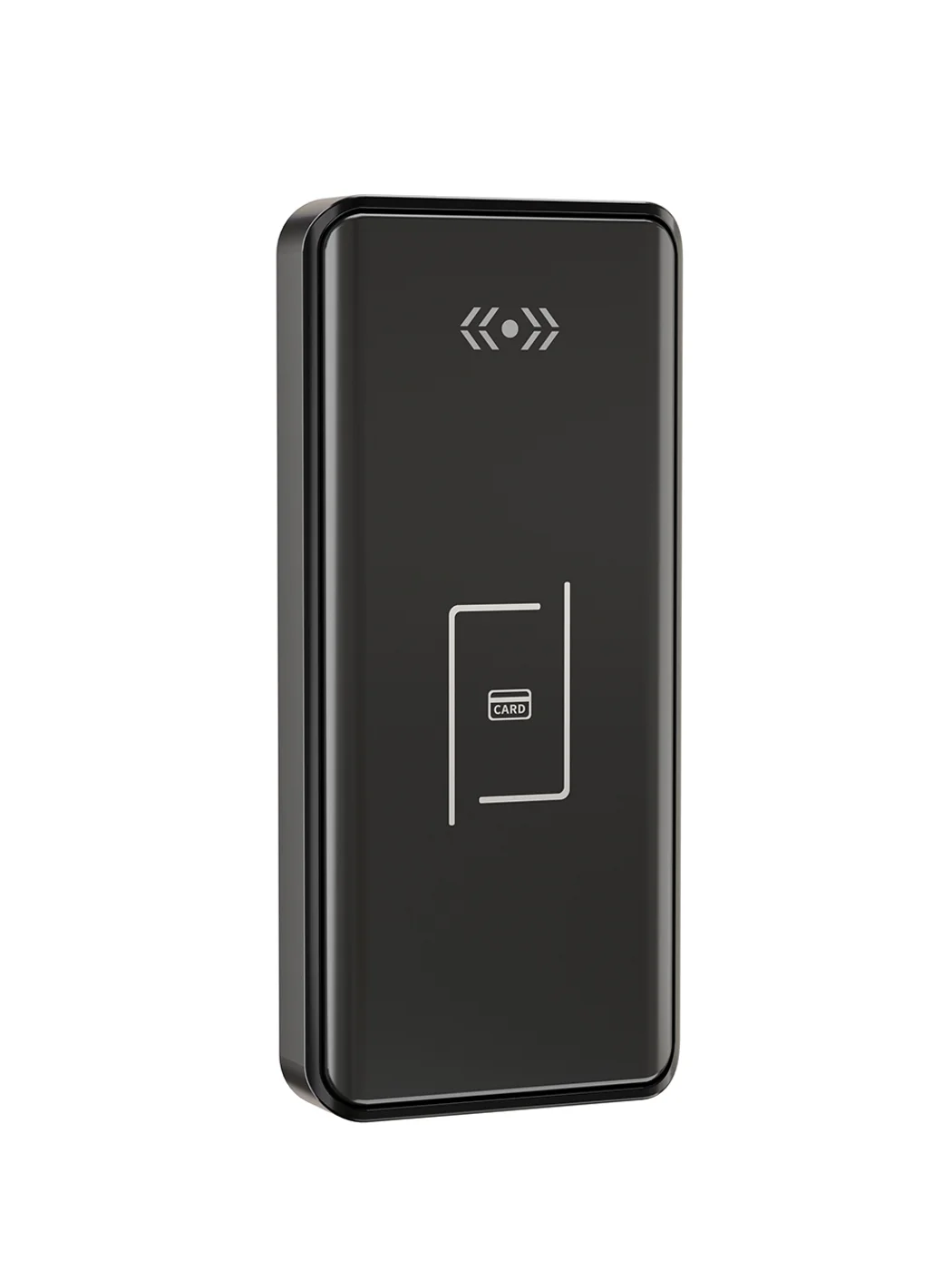
Gym Locker Lock — Offline Card, No WiFi Required
Offline card gym locker lock for fitness and pool lockers. MIFARE card, battery-powered 5-minute retrofit, no WiFi or server. Zinc alloy body, CE/FCC/RoHS.
This page already points to it as the next recommended reference.
Related blog posts
3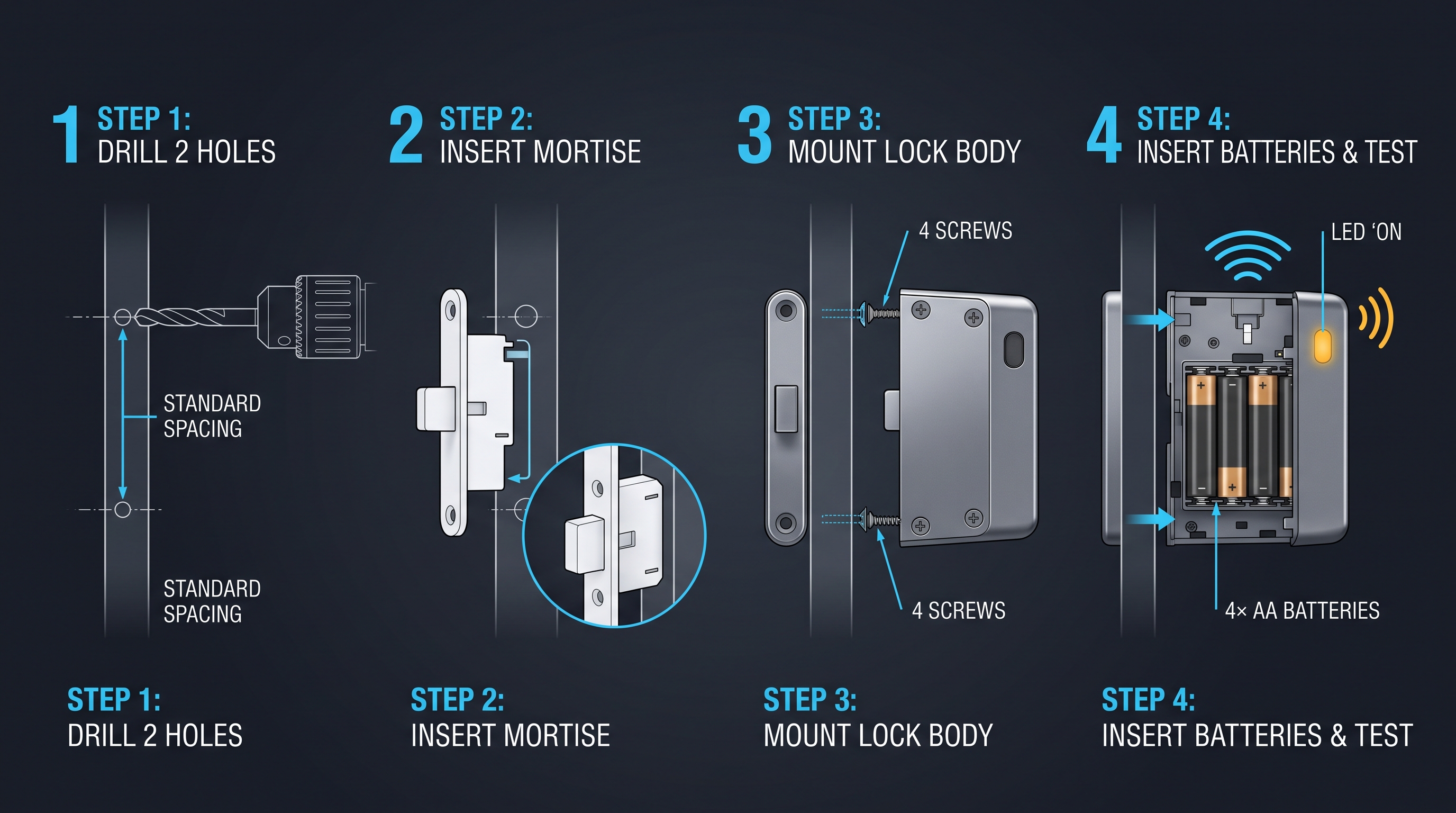
EMS Cabinet Lock: DEA-Compliant Drug Security for Paramedic Vehicles
EMS cabinet lock guide covering DEA Schedule II compliance, dual-authentication, tamper-evidence, audit trail, vehicle power, and ePCR integration for ambulance fleets.
It supports the same product context: Smart Cabinet Lock — App-Managed, Multi-Site Dashboard, Office Cabinet Lock — PIN + Card for Filing & Pedestals, Gym Locker Lock — Offline Card, No WiFi Required.
The Complete Guide to Emergency Cabinet Locks for AEDs, First Aid, Fire Extinguishers, and Trauma Kits
Learn everything about emergency cabinet locks: break-glass vs solenoid vs motorized latches, tamper alarms, remote alerts, ADA compliance, battery life, and deployment across schools, offices, gyms, transit, and aircraft.
It supports the same product context: Gym Locker Lock — Offline Card, No WiFi Required.
Employee Locker Lock Systems: The Definitive Guide for Workplace Security and Efficiency
A definitive guide to employee locker lock systems covering selection, installation, security, management software, compliance, and best practices for workplace locker security.
It supports the same product context: Smart Cabinet Lock — App-Managed, Multi-Site Dashboard, Office Cabinet Lock — PIN + Card for Filing & Pedestals, Gym Locker Lock — Offline Card, No WiFi Required.
Specify your hotel project with our engineers
Send your room count, ceiling type, and protocol preference. We will return a sample plan and quote within 24 business hours.
- Move from general guidance into a product or application discussion.
- Use RFQ when pricing, drawings, MOQ, or launch timing needs structure.
- Keep a direct contact path visible for fast clarifications and handoff.