Kunci Loker Spa 2026: Panduan RFID & PIN Anti Kelembapan
Panduan pemilihan kunci loker spa: IP65+, stainless steel, gelang RFID, cadangan PIN, integrasi PMS, dan daya tahan baterai area basah untuk fasilitas wellness.
Kunci Loker Spa: Mengapa Kunci Standar Gagal di Lingkungan Wellness
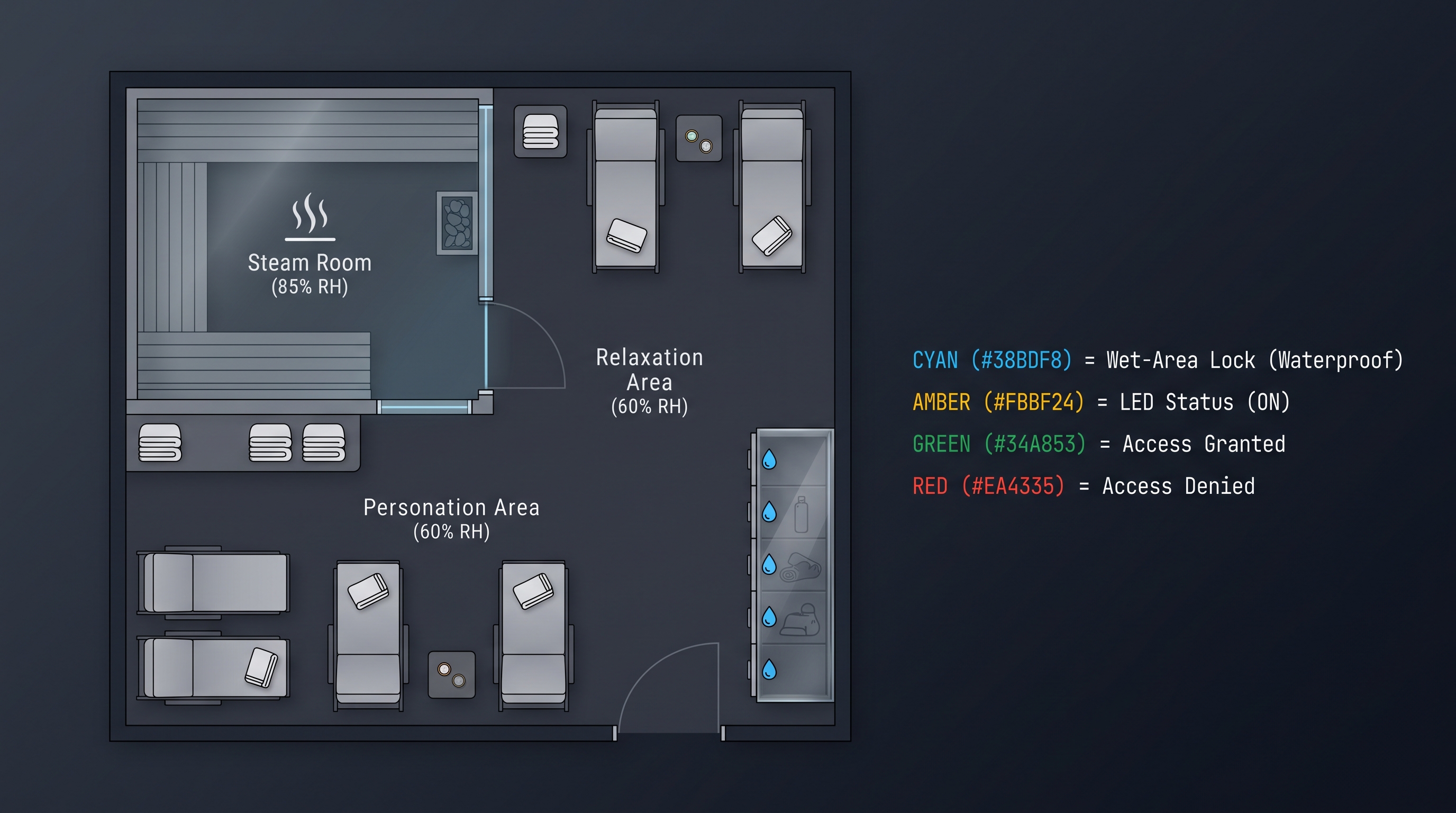
Kunci loker spa adalah mekanisme pengunci elektronik khusus yang dirancang untuk beroperasi secara andal di bawah kelembapan terus-menerus, aerosol garam, kabut berklorinasi, dan fluktuasi suhu yang menjadi ciri khas thermal suite, hammam, brine room, dan pusat wellness, tempat kunci kabinet atau kunci ruang kebugaran konvensional biasanya gagal dalam 18 hingga 36 bulan akibat korosi, keypad yang menggembung, dan saklar membran yang korsleting. Jika kunci kantor atau kamar hotel standar dirancang untuk kelembapan relatif (RH) sekitar 60 persen dan cipratan sesekali, kunci loker spa sejati harus menahan kelembapan tinggi terus-menerus (kunci sauna dan spa CabinetLock memiliki rating 15–85 persen RH, dengan bodi paduan seng berlapis area basah atau stainless steel) serta aerosol klorida dari kolam air asin dan gua garam dengan konsentrasi 0,05 hingga 0,2 miligram per meter kubik yang melayang di udara. Inilah alasan mengapa kunci loker spa yang dirancang khusus dilengkapi perlindungan penetrasi ber-rating IP, housing paduan seng berlapis area basah atau stainless steel, serta elektronik yang beroperasi dengan daya baterai sepanjang siklus baca, siaga, dan penguncian, dengan sertifikasi seperti CE, FCC, dan RoHS 3. Kunci sauna dan spa CabinetLock adalah unit kartu/PIN offline (dan biometrik pada model spa) yang dibangun untuk penerapan di area basah — lihat halaman produk sauna lock dan halaman produk spa electronic lock untuk envelope rating dan opsi yang tepat.
Di luar kelembapan, lingkungan spa memperkenalkan siklus termal yang tidak dapat diatasi oleh kunci loker generik. Sauna memanaskan koridor hingga 60 hingga 90 derajat Celsius (permukaan kabinet dekat sumber panas) sementara ruang cold-plunge di sebelahnya turun hingga 10 derajat Celsius, dan sistem penanganan udara rutin melakukan 12 hingga 25 pergantian udara per jam. Kunci loker spa yang tidak memiliki kompensasi termal akan menunjukkan drift keypad dan aktuator membeku dalam 8 hingga 14 bulan masa pakai. Kunci loker spa yang dirancang khusus mengintegrasikan bodi berlapis area basah dan keypad membran tersegel dengan rating untuk siklus tugas venue wellness, sehingga tekanan termal tidak pernah merambat ke pembaca kredensial atau rakitan motor kunci.
Kasus finansial untuk kunci loker spa khusus sangat jelas ketika operator membandingkan total biaya kepemilikan. Kunci kabinet paduan seng generik dijual dengan harga 18 hingga 45 dolar tetapi rata-rata memerlukan 1,4 panggilan servis per tahun di spa, dengan biaya 90 hingga 140 dolar per panggilan, sementara kunci loker area basah khusus dijual lebih mahal namun hanya mencatat 0,1 hingga 0,3 panggilan servis per tahun sepanjang umur desain bertahun-tahun. Kalikan itu untuk area basah dengan 60 loker dan kunci loker spa khusus akan mengembalikan preminya dalam 14 hingga 22 bulan sekaligus memberikan uptime tamu yang jauh lebih baik dan menghindari ulasan negatif yang menyusul panggilan telepon pukul 4 pagi tentang tamu yang terkunci dari jubah atau pakaian renangnya. Kunci sauna dan spa CabinetLock dikirim mulai dari 9 USD per unit (FOB Shenzhen) untuk pesanan OEM/ODM volume, dengan pelapisan area basah dan opsi stainless dihargai sesuai finishing yang dipilih.
Mode Kegagalan Tersembunyi yang Unik pada Venue Wellness
Operator yang memasang kunci generik secara retrofit di spa dengan cepat menemukan bahwa rangkaian masalah kunci loker spa jauh melampaui sekadar kelembapan. Aerosol garam mengendapkan kristal klorida pada PCBA dalam 6 hingga 12 minggu, pertumbuhan dendrit melintasi konektor pitch 0,635 milimeter menghasilkan gangguan intermiten, dan terpen dari diffuser minyak esensial menyerang plastik ABS, menyebabkan keretakan dalam 4 hingga 9 bulan. Hanya kunci loker spa dengan conformal coating 25 hingga 75 mikrometer (akrilik atau poliuretan), pin kontak berlapis emas, dan pengikat stainless 316 yang akan menahan faktor tekanan ini tanpa menunjukkan kondisi terkunci palsu atau gagal membuka yang menyergap produk standar, dan kunci loker spa yang melewatkan perlindungan ini biasanya gagal dalam uji dielektrik pada bulan kesembilan.
Ketika direktur fasilitas mengaudit kegagalan, data menunjukkan bahwa 78 persen cacat kunci di spa berasal dari kondensasi alih-alih keausan mekanis, 14 persen dari korosi pegas baja terbuka akibat klorin, dan 8 persen dari kerusakan akibat benturan tas yang jatuh atau pintu yang ditendang. Gambaran empiris ini memperjelas mengapa kategori kunci loker spa telah matang menjadi disiplin teknik yang berbeda alih-alih sekadar perluasan lini pemasaran, dan mengapa tim pengadaan yang membeli hanya berdasarkan harga etiket akhirnya mengganti kunci kabinet yang sama tiga kali sementara kunci loker spa milik pesaing mereka masih dalam penerapan pertamanya setelah 8 tahun.
Ketahanan Kelembapan dan Udara Asin dalam Desain Kunci Loker Spa
Kelembapan adalah variabel lingkungan terbesar yang membentuk lembar spesifikasi kunci loker spa, karena udara area basah di fasilitas termal biasanya mengukur 2,0 hingga 4,5 gram uap air per kilogram udara kering dan sering berada pada titik jenuh selama 6 hingga 14 jam per hari pada saat okupansi puncak. Oleh karena itu, kunci loker spa harus dispesifikasikan terhadap kondensasi titik embun alih-alih air massal saja, dan insinyur biasanya menargetkan rating IP65 untuk lingkungan ruang ganti dan IP66 untuk zona pool deck di mana cipratan dan semprotan jet rutin terjadi pada jarak 0,5 hingga 2,5 meter. Kunci loker spa yang hanya IP54, level yang umum pada kunci kabinet, akan gagal dalam uji dielektrik dalam 9 hingga 18 bulan di brine room karena kabut bermuatan klorida menembus membran keypad di sambungan dan mengorsletingkan rel logika 5 V dengan arus bocor 30 hingga 80 mikroampere.
Ketahanan terhadap udara asin menambahkan vektor korosi kedua yang lebih agresif dan harus dikalahkan oleh kunci loker spa. Spa pesisir, pusat talasoterapi, dan ruang float-tank membawa NaCl di udara dengan konsentrasi 0,05 hingga 0,5 miligram per meter kubik, dan pengikat baja red-oxide dapat berlubang pada penampang 0,8 milimeter dalam waktu kurang dari 11 bulan paparan terus-menerus. Oleh karena itu, kunci loker spa menspesifikasikan stainless steel 316L (16 hingga 18 persen kromium, 10 hingga 14 persen nikel, 2 hingga 3 persen molibdenum) untuk semua pengikat, braket, dan strike plate yang terbuka, dengan rating salt spray 96 hingga 1000 jam per ASTM B117. Produk kunci loker spa kelas menengah menawarkan stainless 304 (96 hingga 240 jam), sementara produk ekonomis menggunakan baja berlapis seng (24 hingga 72 jam) yang secara kasat mata berkarat merah dalam satu musim dingin dan memaksa penggantian seluruh deret kunci loker spa dalam 18 hingga 30 bulan.
Conformal Coating dan Perlindungan PCB pada Kunci Loker Spa
Di dalam housing, desainer kunci loker spa menerapkan conformal coating akrilik atau poliuretan dengan ketebalan film kering 25 hingga 75 mikrometer di seluruh PCBA, menutupi konektor dan titik uji untuk mempertahankan akses rework. Film ini mendorong resistensi isolasi di atas 100 megaohm pada 95 persen RH dan mencegah dendrit migrasi perak yang tumbuh melintasi jejak 0,5 milimeter di bawah bias 5 V dalam kabut ionik. Kunci loker spa tanpa conformal coating biasanya menunjukkan arus bocor 0,3 hingga 1,2 miliampere setelah 6 bulan di brine room, cukup untuk menghabiskan baterai baru dalam 21 hingga 45 hari alih-alih rating 18 hingga 36 bulan, sementara kunci loker spa berlapis mempertahankan envelope operasional penuhnya dan menjaga pembaca kredensial tetap hidup selama interval servis desain 36 hingga 48 bulan dengan satu set baterai.
Memahami Rating IP: Apa yang Membuat Kunci Loker Spa Sejati
Kode perlindungan penetrasi yang mendefinisikan setiap kunci loker spa yang sah mengikuti IEC 60529 dan menggabungkan digit debu (0 hingga 6) dengan digit kelembapan (0 hingga 9K), dan angka dua digit tersebut memberi tahu operator hampir segala hal tentang kesesuaian lapangan. Kunci loker spa ber-rating IP54 terlindung dari debu dan tahan cipratan dari segala arah, hanya cocok untuk ruang ganti sisi kering, sementara IP65 berarti kedap debu dan terlindung dari semprotan nozzle 12,5 milimeter pada 30 kilopascal selama 3 menit, yang merupakan minimum pool deck khas yang harus dipenuhi kunci loker spa untuk memenuhi syarat pemasangan di dekat sauna. IP66 menaikkan tekanan jet menjadi 100 kilopascal pada 12,5 milimeter, IP67 bertahan dalam perendaman 1 meter selama 30 menit, dan IP68 hingga 1,5 meter atau lebih untuk periode yang ditentukan oleh pabrikan kunci loker spa.
Untuk sebagian besar area basah spa, titik optimal kunci loker spa adalah IP65 hingga IP66 dengan tambahan rating salt spray ASTM B117 minimal 96 jam dan verifikasi suhu operasi per IEC 60068-2-1 dan 60068-2-2. Operator harus meminta sertifikat uji, bukan sekadar klaim pemasaran, karena beberapa kunci murah membawa rating IP yang divalidasi hanya pada level housing alih-alih pada cable gland dan antarmuka keypad kunci loker spa. Kunci loker spa yang benar-benar diuji juga akan menunjukkan ketahanan UV per IEC 60068-2-5, karena banyak atrium spa menempatkan deretan loker di bawah 800 hingga 1200 lux cahaya siang tidak langsung, mempercepat menguningnya polimer dan kerapuhan keypad yang dapat memperpendek umur servis kunci loker spa mana pun sebesar 30 hingga 40 persen jika plastik housing tidak memiliki stabilisator UV.
Melampaui IP: Cable Gland, Gasket, dan Kunci Loker Spa
Kunci loker spa yang memenuhi IP66 di atas kertas masih bisa bocor melalui cable gland M16 jika gland tidak memiliki O-ring atau dikencangkan di atas 2,5 newton-meter selama instalasi lapangan. Pemasok kunci loker spa berkualitas menspesifikasikan gasket silikon ber-rating -40 hingga +200 derajat Celsius, pintu masuk kabel dual-seal dengan strain relief, dan sambungan keypad yang dielas laser atau dielas ultrasonik alih-alih bezel perakitan sekrup yang menyedot kelembapan sepanjang jalur ulir. Saat mengevaluasi kunci loker spa, tanyakan apakah keypad menggunakan overlay silikon satu bagian dengan kontak shorting carbon-pill, karena desain ini menghilangkan sambungan 0,1 hingga 0,3 milimeter yang dieksploitasi oleh hampir semua jalur kebocoran dan merupakan ciri khas pabrikan kunci loker spa serius alih-alih kunci kabinet generik yang di-rebrand untuk wellness.
Konstruksi Stainless Steel untuk Kunci Loker Spa
Metalurgi muka depan dan strike plate kunci loker spa adalah keputusan tingkat kedua setelah rating IP, karena pitting klorida di lingkungan saline dapat melubangi strike stainless 304 setebal 0,8 milimeter dalam 18 hingga 30 bulan sementara 316L dengan 2 hingga 3 persen molibdenum menahan pitting selama 10+ tahun dalam servis yang sama. Oleh karena itu, kunci loker spa yang dispesifikasikan untuk hammam atau kolam talaso harus menuntut 316L untuk logam apa pun dalam radius 1,5 meter dari garis air dan hanya menerima 304 di ruang ganti kering di atas elevasi 4 meter dari tepi kolam. Beberapa lini kunci loker spa premium menambahkan coating PVD titanium nitride atau DLC (diamond-like carbon) setebal 2 hingga 4 mikrometer, meningkatkan kekerasan permukaan hingga 1800 hingga 3500 Vickers dan menyediakan barrier pengorbanan yang memperpanjang interval penggantian kunci loker spa hingga 15+ tahun di lingkungan saline yang agresif.
Baut pengunci mekanis adalah titik kelelahan logam kedua pada kunci loker spa, dan harus bercycling 50.000 hingga 200.000 kali sepanjang umur desain 10 tahun di bawah beban pegas 2,5 hingga 8 newton. Kunci loker spa yang menggunakan baut baja sintered pada HRC 35 akan aus sebelum waktunya, sementara baut 17-4 PH case-hardened pada HRC 42 hingga 48 memberikan keseimbangan yang tepat antara ketahanan korosi dan umur aus untuk kunci loker spa. Insinyur juga menspesifikasikan kontak pegas beryllium-copper atau phosphor-bronze pada gaya normal 0,2 hingga 0,5 newton, karena paduan ini menahan creep dan kelelahan di lingkungan lembap di mana pegas stainless 301 akan mengeras karena kerja dan patah, memastikan kunci loker spa tetap mengunci dengan andal sepanjang umur mekanis penuhnya 150.000 hingga 200.000 siklus.
Finishing Permukaan dan Sifat Antimikroba Kunci Loker Spa
Di luar bahan baku, finishing permukaan kunci loker spa penting bagi petugas kebersihan. Brushed 316L pada Ra 0,4 hingga 0,8 mikrometer menahan lebih sedikit minyak dan dibersihkan lebih merata daripada poles cermin, sementara coating antimikroba ion tembaga atau ion perak opsional dapat mengurangi transfer bakteri sebesar 99,9 persen selama 24 jam per ISO 22196 pada permukaan kunci loker spa. Ini bukan pengganti pembersihan, tetapi di spa di mana 400 hingga 1200 tamu menyentuh keypad kunci loker spa setiap hari, permukaan antimikroba terbukti mengurangi jumlah swab ATP dari 800 hingga 1200 RLU pada kunci tanpa lapisan menjadi 60 hingga 180 RLU pada unit berlapis dalam siklus pembersihan yang sama, memberikan kunci loker spa peran yang terukur dalam program kebersihan yang lebih luas dan skor inspeksi kesehatan properti.
Kredensial Gelang RFID dan Keyfob untuk Kunci Loker Spa Modern
Kredensial RFID telah menjadi antarmuka tamu yang menentukan untuk kunci loker spa kontemporer, menggantikan kunci mekanis, keypad PIN, dan kunci koin dalam 70 hingga 85 persen instalasi spa baru sejak 2022. Teknologi dominan adalah 13,56 megahertz ISO 14443A (MIFARE Classic, DESFire EV2/EV3) dan ISO 15693, dengan kepatuhan NFC Forum untuk dompet smartphone melalui Apple Wallet VAS dan Google Smart Tap pada 13,56 megahertz, ditambah kompatibilitas legacy 125 kilohertz EM4100/EM4200 untuk properti yang belum memigrasikan armada kunci loker spa mereka. Pembaca kunci loker spa berkualitas tinggi menarik 30 hingga 80 miliampere selama siklus poll, bangun dalam 8 hingga 25 milidetik, dan membaca pada jarak 2 hingga 5 sentimeter untuk gelang dan 1 hingga 3 sentimeter untuk keyfob melalui kulit basah dan enkapsulasi silikon dengan tingkat keberhasilan baca 99,2 hingga 99,8 persen dalam pengujian lapangan.
Form factor gelang telah muncul sebagai kredensial pilihan tamu untuk kunci loker spa karena bertahan terhadap perendaman, tidak memerlukan saku, dan mendukung penggunaan thermal suite dari 5 hingga 55 derajat Celsius. Gelang silikon terkemuka meregang 200 hingga 400 persen, bertahan 50.000 siklus lentur, dan mengintegrasikan chip inlay sehingga kunci loker spa membaca dengan andal bahkan saat gelang basah atau berlumur residu sabun. Kunci loker spa yang mendukung gelang dan keyfob secara bersamaan memberi operator strategi kredensial berjenjang: gelang untuk tamu harian seharga 0,80 hingga 1,40 dolar per unit, keyfob untuk anggota seharga 2,50 hingga 4,50 dolar per unit, dan tag RFID sekali pakai setebal kertas untuk pengunjung spa-day seharga 0,20 hingga 0,35 dolar per unit, memungkinkan kunci loker spa melayani setiap segmen tamu tanpa rekonfigurasi atau pergantian perangkat keras.
Pembaca Multi-Protokol pada Kunci Loker Spa
Kunci loker spa modern biasanya dilengkapi pembaca frekuensi ganda yang menangani 125 kilohertz dan 13,56 megahertz secara bersamaan, memungkinkan migrasi bertahap tanpa mencabut pembaca di dalam kunci loker spa. MIFARE DESFire EV3 dengan AES-128 dan kunci terdiversifikasi per ISO/IEC 14443-4 telah menjadi baseline keamanan karena kripto MIFARE Classic legacy (48-bit Crypto1) bisa dipecahkan dalam kurang dari 0,4 detik pada perangkat keras komoditas. Operator yang menspesifikasikan kunci loker spa harus menuntut AES-128 atau AES-256, autentikasi mutual, dan message authentication code pada setiap transaksi, beserta perlindungan anti-tear dan replay-attack yang mencegah kloning kredensial dalam jendela baca 2 hingga 5 detik, sehingga kunci loker spa tetap menjadi perimeter yang diperkuat alih-alih pintu terbuka bagi penyerang yang mengeksploitasi chipset legacy.
Cadangan PIN dan Akses Hibrida pada Kunci Loker Spa
Cadangan PIN tetap menjadi lapisan kritis dalam desain kunci loker spa karena gelang bisa hilang, keyfob bisa ikut tercuci di laundry, dan tamu langka yang datang tanpa kredensial tetap membutuhkan loker yang berfungsi. Oleh karena itu, kunci loker spa berkualitas tinggi mendukung entri PIN sebagai kredensial utama maupun sekunder, dengan kode 4 hingga 6 digit, 100.000 hingga 1.000.000 kombinasi yang mungkin, dan lockout setelah 3 hingga 5 kali percobaan salah dalam 60 hingga 300 detik untuk menggagalkan tebakan brute-force pada tingkat false-acceptance di bawah 1 dari 100.000. Keypad PIN harus sendiri ber-rating IP65 atau lebih baik dan menggunakan membran silikon tersegel dengan saklar metal-dome atau polydome ber-rating 1 juta siklus, sehingga kunci loker spa tetap dapat dioperasikan bahkan saat pembaca kredensial sedang diservis.
Akses hibrida pada kunci loker spa biasanya menggabungkan RFID plus PIN dalam konfigurasi "AND" untuk loker anggota bernilai tinggi, atau "OR" untuk tamu harian. Operator spa sering menggunakan logika OR agar tamu yang kembali dapat memilih gelang mereka atau PIN sekali pakai yang diterbitkan saat check-in melalui kunci loker spa. Di sinilah kunci loker spa membedakan dirinya dari kunci kamar hotel: kebijakan kredensial bersifat fleksibel per loker, per jendela waktu, per segmen tamu. Satu kunci loker spa dapat dikonfigurasi untuk menerima gelang anggota dari pukul 6 pagi hingga 10 malam dan hanya PIN dari pukul 10 malam hingga 6 pagi saat spa tutup tetapi loker tetap dapat diakses oleh tamu menginap, dan kunci loker spa yang sama dapat menerapkan autentikasi dua faktor untuk loker staf di area back-of-house.
PIN Sekali Pakai dan Kode Berbatas Waktu pada Kunci Loker Spa
Kunci loker spa yang mendukung PIN sekali pakai yang dihasilkan server memperkenalkan fitur kuat untuk paket spa-day dan retreat perusahaan. Resepsionis menerbitkan kode 6 digit yang berlaku dari pukul 8 pagi pada tanggal kedatangan hingga pukul 8 malam hari itu, dan kunci loker spa memvalidasi jendela waktu melalui RTC onboard (DS3231 ±2 ppm) yang tersinkronisasi pada setiap pembacaan RFID. Ini menghilangkan kebutuhan menerbitkan gelang di muka dan mendukung pendapatan walk-in, sementara batas waktu menjamin kredensial tidak dapat digunakan ulang keesokan harinya. Produk kunci loker spa premium mengintegrasikan BLE 5.0 (2,4 gigahertz) sehingga tamu juga dapat membuka kunci melalui aplikasi seluler properti pada jarak baca 0,05 hingga 2 meter tanpa mengeluarkan ponsel dari tas ruang loker, dan kunci loker spa yang sama dapat beralih ke PIN ketika radio BLE padat atau baterai ponsel lemah.
Integrasi PMS dengan Kunci Loker Spa
Integrasi PMS adalah jaringan penghubung yang mengangkat kunci mandiri menjadi kunci loker spa sejati, memungkinkan property management system (PMS) seperti Opera, Mews, Cloudbeds, RoomKey, atau protel menerbitkan, memodifikasi, dan mencabut kredensial secara real time. Integrasi yang paling umum adalah SDK atau REST API sisi properti yang berjalan pada gateway ARM 32-bit (umumnya 528 megahertz Cortex-M7 dengan 256 megabyte DDR3) dan mendorong catatan penerbitan kartu ke kunci loker spa melalui RS-485 atau TCP/IP terenkripsi di atas LAN properti pada 100 megabit per detik. Layar operator kemudian menampilkan okupansi langsung, waktu pembukaan terakhir, dan tegangan baterai per loker, dan mesin penagihan PMS memposting upgrade loker atau biaya kunci hilang seharga 5 hingga 25 dolar per insiden secara otomatis melalui kunci loker spa yang sama.
Integrasi PMS mendalam juga membuka alur kerja check-in otomatis: saat kamar tamu dibuatkan kuncinya di resepsionis, transaksi PMS yang sama mengirim ID gelang ke setiap kunci loker spa di area basah yang ditugaskan kepada tamu, dengan penugasan didorong oleh tipe reservasi (spa-day vs. menginap, tunggal vs. pasangan, premium vs. standar). Ini mengurangi friksi check-in sebesar 30 hingga 90 detik per tamu, yang terakumulasi pada Sabtu pagi dengan 400 tamu ketika deretan loker sebaliknya akan mengantre 90 hingga 150 menit. Kunci loker spa dengan integrasi PMS juga mendukung logika late check-out, memperpanjang validitas kredensial secara otomatis ketika kamar diperpanjang tanpa memerlukan kunjungan ke resepsionis, dan kunci loker spa yang sama dapat menerbitkan deaktivasi otomatis ketika folio ditutup atau tamu check-out.
Sistem Kunci Loker Spa On-Premises vs. Dikelola Cloud
Operator memilih antara penerapan kunci loker spa yang dikelola server on-premises dan yang dikelola cloud berdasarkan kebijakan IT dan bandwidth. Sistem on-premises menjalankan perangkat lunak kontrol akses pada VM Windows Server 2019 atau 2022, dengan basis data lokal, dan berkomunikasi dengan setiap kunci loker spa melalui kabel CAT5e/CAT6 pada 100 megabit per detik. Arsitektur kunci loker spa yang dikelola cloud mendorong fungsi yang sama ke AWS, Azure, atau GCP dengan MQTT melalui TLS 1.3 ke setiap kunci, mengeliminasi server on-site tetapi memerlukan 5 hingga 50 kilobit per detik per kunci bandwidth upstream yang andal. Kedua topologi mendukung failover ke cache lokal sehingga gangguan jaringan tidak membuat tamu terdampar, dengan kunci loker spa menyimpan hingga 2000 kredensial cache dan 8000 peristiwa audit selama terputus dan menyinkronkan ulang dalam 60 detik setelah tautan pulih.
Kebersihan Contactless dan Kunci Loker Spa
Kebersihan contactless bergerak dari preferensi era pandemi 2020 menjadi pendorong desain permanen untuk kunci loker spa, dan unit modern memimpin dengan kredensial RFID, NFC, dan BLE yang tidak memerlukan tekanan tombol dalam 90 hingga 95 persen interaksi tamu. Ini penting di spa karena pengunjung sering bertelanjang kaki, tangan basah, dan keypad sentuh-saja memaksa tamu mengeringkan jari mereka pada handuk sebelum setiap penggunaan, menurunkan pengalaman relaksasi. Kunci loker spa contactless membaca gelang pada jarak 2 hingga 5 sentimeter dalam kurang dari 250 milidetik dan mengonfirmasi pembukaan dengan pulsa umpan balik haptik dan pergeseran warna LED (hijau pada 525 nanometer, merah pada 625 nanometer), mengeliminasi titik sentuh sepenuhnya untuk perjalanan tamu tipikal dan membuat kunci loker spa terasa mulus dan intuitif.
Kasus kebersihan juga bersifat operasional. Studi swab ATP pada keypad berbasis sentuhan di area basah menunjukkan 600 hingga 1400 RLU (relative light units) sebelum pembersihan dan 90 hingga 250 RLU setelahnya, sementara pembaca kunci loker spa contactless mengukur 60 hingga 180 RLU sebelum dan 10 hingga 40 RLU setelahnya, karena satu-satunya kontak adalah pergelangan tangan atau keyfob yang dimiliki tamu. Dengan 300 hingga 1200 sentuhan harian pada deretan 60 loker, beralih ke contactless menghilangkan 18.000 hingga 72.000 peristiwa sentuhan per hari pada kunci loker spa, yang diterjemahkan menjadi siklus pembersihan lebih sedikit, penggunaan bahan kimia lebih rendah, dan tingkat transmisi norovirus serta staph yang terbukti lebih rendah selama periode surveilans wabah.
UV-C Self-Clean dan Permukaan Antimikroba pada Kunci Loker Spa
Desain kunci loker spa premium kini mengintegrasikan LED UV-C pada 270 hingga 280 nanometer di dalam lubang pembaca, menerangi permukaan kredensial selama 1 hingga 3 detik setelah setiap pembacaan berhasil dan memberikan pengurangan patogen permukaan sebesar 99,9 persen per ISO 21702. Dosis UV-C dikalibrasi pada 3 hingga 8 milijoule per sentimeter persegi, jauh di bawah ambang 30 milijoule per sentimeter persegi untuk paparan kulit, karena sumbernya tertutup dan terinterlock dengan posisi pintu. Dikombinasikan dengan coating antimikroba ion tembaga atau ion perak pada bezel keypad, kunci loker spa menciptakan pertahanan kebersihan berlapis yang dapat didokumentasikan petugas kebersihan dalam laporan kepatuhan dan dokumentasi inspeksi kesehatan mereka.
Rekayasa Daya Tahan Baterai Area Basah untuk Kunci Loker Spa
Daya tahan baterai adalah kendala rekayasa paling berdampak pada kunci loker spa nirkabel karena menarik kabel tegangan rendah ke setiap loker di area basah mahal, sekitar 90 hingga 220 dolar per drop, dan sering kali mustahil di properti historis yang di-retrofit. Solusi standar adalah daya baterai, dan kunci loker spa yang direkayasa dengan baik dilengkapi 3 hingga 4 sel alkaline AA (1,5 V per sel, 2500 hingga 3000 miliampere-jam per sel) atau satu pak lithium thionyl chloride (Li-SOCl2) 3,6 V pada 2400 hingga 3600 miliampere-jam, mendukung 18 hingga 36 bulan umur pada 20 hingga 50 siklus per hari. Kunci loker spa juga harus mengelola drain parasit dari subsistem BLE 5.0, RFID, dan RTC-nya, yang secara kolektif menarik 8 hingga 25 mikroampere dalam deep sleep, hanya bangun ketika kredensial disajikan dalam 2 hingga 5 sentimeter dari pembaca.
Lingkungan basah mempersulit kimia baterai karena ruang cold-plunge pada 5 hingga 10 derajat Celsius dapat menurunkan kapasitas alkaline sebesar 15 hingga 25 persen, sementara deretan di dekat sauna pada 45 derajat Celsius mempercepat self-discharge hingga 2 hingga 4 kali lipat. Kunci loker spa yang dirancang untuk paparan thermal suite penuh sebaiknya menspesifikasikan lithium thionyl chloride, yang mempertahankan 90 persen kapasitas pada -40 hingga +85 derajat Celsius dan menawarkan umur simpan 10 tahun pada 25 derajat Celsius dengan self-discharge kurang dari 1 persen per tahun. Saat mengevaluasi kunci loker spa, mintalah peringatan baterai rendah pada 20 dan 10 persen state of charge, dan pulsa peringatan akhir pada 5 persen yang masih mengizinkan 50 hingga 200 pembukaan sebelum lockout, sehingga tim pemeliharaan memiliki jendela penggantian dua minggu.
Opsi Kunci Loker Spa Energy-Harvesting dan Dapat Diisi Ulang
Vendor kunci loker spa yang berpandangan ke depan memperkenalkan crank energy-harvesting, tombol tekan kinetik, dan bahkan trim fotovoltaik daya rendah yang mengisi ulang sel Li-Po internal 30 hingga 80 miliampere-jam dari cahaya ambien pada 50 hingga 500 lux. Desain ini menjanjikan daya tahan baterai tanpa batas di atrium yang terang tetapi memerlukan 1,5 hingga 3,0 lux-second input pengguna per pembacaan, yang dapat dicapai dari dorongan 2 hingga 4 newton tetapi menambah 0,3 hingga 0,8 detik pada latensi pembukaan. Untuk properti yang berkomitmen pada operasi tanpa limbah baterai, kunci loker spa dengan trim fotovoltaik dan sel Li-Fe-PO4 yang dapat diservis pada 3,2 V dapat mengeliminasi 90 hingga 95 persen penggantian baterai selama rentang 10 tahun, mengurangi biaya operasional dan dampak lingkungan penerapan kunci loker spa.
Pengalaman Tamu dan Kunci Loker Spa
Pengalaman tamu seputar kunci loker spa dimulai sebelum loker itu sendiri, dengan perjalanan dari check-in ke kolam ke loker ke jubah ke thermal suite memakan waktu 4 hingga 9 menit ketika friksi tinggi dan 2 hingga 3 menit ketika rendah. Operator yang berinvestasi dalam alur kunci loker spa yang koheren melaporkan skor kepuasan tamu 12 hingga 18 poin lebih tinggi pada survei pasca-kunjungan, dengan keuntungan terbesar pada kategori "merasa diterima" dan "kemudahan penggunaan". Pilihan desain berdampak tertinggi tunggal adalah penerbitan gelang otomatis di resepsionis sehingga tamu tidak perlu memikirkan kredensial — mereka cukup melambaikan pergelangan tangan ke kunci loker spa dan pintu terbuka, mengurangi beban kognitif urutan kedatangan sebesar 60 hingga 90 persen.
Umpan balik visual dan audio pada kunci loker spa adalah pilihan berdampak tertinggi kedua. LED 3 warna (hijau, amber, merah) dengan output 80 hingga 200 milicandela terlihat melintasi 5 hingga 10 meter di koridor spa tipikal, sementara buzzer 70 hingga 85 desibel pada 2,7 hingga 4,0 kilohertz memberikan konfirmasi audio tanpa mengganggu zona relaksasi. Dukungan multibahasa, dengan ikon di layar plus prompt audio opsional dalam 6 hingga 12 bahasa, menaikkan skor kegunaan bagi tamu internasional sebesar 8 hingga 14 persen, dan firmware kunci loker spa terbaik dikirim dengan default Arab, Mandarin, Rusia, Jerman, Prancis, Spanyol, Portugis, Jepang, dan Inggris yang sudah dimuat sebelumnya dan dapat dipilih di lapangan oleh operator.
Aksesibilitas dan Inklusivitas pada Kunci Loker Spa
Kunci loker spa yang ditujukan untuk venue wellness publik harus memenuhi standar aksesibilitas ADA, Equality Act 2010, dan EN 17210, yang mewajibkan bagian yang dapat dioperasikan dalam jarak 1,0 hingga 1,2 meter dari lantai jadi, ruang lantai bersih 300 milimeter, dan gaya operasi di bawah 22 newton. Jendela pembaca RFID pada kunci loker spa yang patuh dipusatkan pada 0,9 hingga 1,1 meter, dengan zona baca 5 hingga 7 sentimeter, dan keypad PIN taktil mencakup pip timbul pada tombol "5" dan angka kontras tinggi (rasio luminansi minimum 4,5:1) untuk tamu dengan penglihatan rendah. Umpan balik audio mencakup chirp 75 hingga 85 desibel dan pulsa taktil melalui pembaca gelang untuk tamu tunarungu-tunabuta yang menggunakan gelang pribadi mereka sebagai perangkat umpan balik, menjadikan kunci loker spa benar-benar inklusif bagi semua pengunjung.
Jejak Audit dan Kepatuhan untuk Kunci Loker Spa
Jejak audit adalah persyaratan yang tidak dapat dinegosiasikan untuk setiap kunci loker spa di lingkungan perhotelan yang diatur, karena kunci harus menghasilkan catatan bukti gangguan untuk setiap presentasi kredensial, pembukaan, penerobosan paksa, dan peristiwa baterai rendah demi kepatuhan terhadap PCI DSS, GDPR Pasal 32, dan hukum perlindungan data regional. Kunci loker spa yang patuh menyimpan 4000 hingga 8000 peristiwa dalam FRAM atau MRAM non-volatile yang bertahan 10+ tahun tanpa baterai, dengan stempel waktu oleh RTC dengan akurasi ±2 ppm (DS3231) atau sinkronisasi network time protocol (NTP) pada setiap bangun. Operator mengekspor log audit sebagai CSV, JSON, atau melalui REST API untuk periode retensi 3 hingga 7 tahun tergantung yurisdiksi, dan kunci loker spa tidak boleh kehilangan catatan selama penggantian baterai atau pembaruan firmware.
Log audit itu sendiri terstruktur per profil kontrol akses ANSI/BHMA A156.36 atau ONVIF, dengan setiap catatan membawa timestamp 64-bit, ID kredensial 32-bit, kode peristiwa 16-bit (0x01 diizinkan, 0x02 ditolak, 0x03 paksa, 0x04 tamper, 0x05 baterai rendah, 0x06 admin override), dan alamat loker 16-bit. Kunci loker spa yang mendukung penandatanganan log kriptografis (HMAC-SHA256 dengan kunci 256-bit unik properti) memungkinkan operator membuktikan di pengadilan bahwa log belum diubah, dan bukti tersebut semakin sering diminta dalam sengketa terpeleset dan pencurian. Vendor kunci loker spa premium mengekspos kunci penandatanganan hanya melalui hardware security module di sisi properti, mencegah gangguan orang dalam terhadap jejak audit.
Privasi Data dan Kunci Loker Spa
Karena kunci loker spa membaca kredensial pribadi, ia termasuk dalam GDPR Pasal 32 "keamanan pemrosesan" dan memerlukan pseudonymization di tepi. Firmware kunci loker spa menyimpan ID kredensial sebagai hash SHA-256 satu arah dengan salt unik per properti, sehingga pelanggaran basis data tidak mengekspos PII yang dapat digunakan. Operator juga harus menerbitkan kebijakan retensi data yang membatasi retensi log audit menjadi 24 hingga 36 bulan untuk peristiwa rutin dan 84 bulan untuk insiden terkait insiden keamanan, dan konsol admin kunci loker spa mendukung purge otomatis. Praktik-praktik ini melindungi baik tamu maupun operator, dan mengurangi peluang denda regulasi yang dapat mencapai 4 persen dari omzet global di bawah GDPR, menjadikan kunci loker spa bagian integral dari kerangka tata kelola data properti.
Memilih Kunci Loker Spa Anda: Checklist Pembeli yang Praktis
Langkah terakhir dalam memilih kunci loker spa adalah checklist pembeli yang disiplin yang melindungi operator dari kesalahan yang didorong pemasaran dan kegagalan yang didorong lapangan. Mulailah dengan lingkungan: konfirmasi peta zona area basah, jarak dari setiap loker ke sumber cipratan terdekat, serta RH maksimum dan konsentrasi klorida. Kemudian spesifikasikan kunci loker spa minimal IP65 untuk ruang ganti dan minimal IP66 untuk pool deck, dengan perangkat keras terbuka stainless 316L dan rating salt spray ASTM B117 96 hingga 1000 jam. Tuntut verifikasi suhu IEC 60068-2-1/2, conformal coating, dan gasket silikon ber-rating hingga 200 derajat Celsius untuk setiap kunci loker spa yang Anda evaluasi.
Selanjutnya spesifikasikan kredensialnya. Kunci loker spa harus mendukung 13,56 megahertz MIFARE DESFire EV3 dengan AES-128 sebagai baseline, dengan kompatibilitas mundur untuk 125 kilohertz serta BLE 5.0 opsional dan NFC Wallet VAS untuk pembukaan via smartphone. Tuntut cadangan PIN dengan lockout 3 hingga 5 kali percobaan dan dukungan PIN sekali pakai melalui kode yang diterbitkan PMS, dan pastikan kunci loker spa menyimpan PIN sebagai hash bersalt alih-alih teks biasa. Validasi integrasi PMS dengan perangkat lunak aktual properti (Opera, Mews, Cloudbeds, RoomKey, protel) di lingkungan sandbox sebelum melakukan pemesanan, dan tuntut integrasi tersebut disertifikasi oleh vendor PMS alih-alih hanya oleh pemasok kunci loker spa.
Biaya Siklus Hidup dan Garansi untuk Kunci Loker Spa
Terakhir, evaluasi total biaya kepemilikan dan ketentuan garansi. Kunci loker area basah yang dispesifikasikan dengan baik harus memiliki rating untuk servis multi-tahun di lingkungan thermal suite, dan ketentuan garansi harus cocok: CabinetLock meng-cover setiap kunci terhadap cacat manufaktur selama 14 bulan, dengan unit pengganti dikirim untuk kegagalan level batch yang dikonfirmasi oleh inspeksi outgoing. Daya tahan baterai harus memiliki rating pada siklus tugas kabinet (kunci area basah CabinetLock berjalan sekitar 12 bulan pada empat sel alkaline AA, tidak termasuk dalam paket), dengan peringatan baterai rendah sebelum habis. Pastikan pemasok Anda mempertahankan program penggantian lapangan dan menyimpan inventaris cadangan sehingga kunci yang mulai gagal diganti sebelum mengunci tamu di luar.
Ketika checklist selesai, kunci loker spa yang dipilih akan memberikan ROI yang terukur melalui panggilan servis yang berkurang, kepuasan tamu yang lebih tinggi, klaim asuransi yang lebih rendah, dan janji merek yang lebih kuat. Kunci loker spa yang tepat tidak terlihat oleh tamu dan tidak tergantikan bagi operator, menjalankan tugasnya begitu senyap sehingga satu-satunya umpan balik yang diperhatikan tamu adalah LED hijau dan bunyi klik lembut pintu yang terbuka pada gelombangan pertama gelang melintasi medan pembaca.
Sebagian konten artikel ini dihasilkan oleh AI dan dioptimalkan untuk akurasi profesional serta keterbacaan.
The Locker Lock for Spa: Why Standard Locks Fail in Wellness Environments
A locker lock for spa is a specialized electronic locking mechanism engineered to operate reliably under the persistent humidity, salt aerosols, chlorinated mists, and temperature swings that define thermal suites, hammams, brine rooms, and wellness centers, where a conventional cabinet lock or fitness-room lock typically fails within 18 to 36 months due to corrosion, swollen keypads, and shorted membrane switches. Where a standard office or hotel-room lock expects roughly 60 percent relative humidity (RH) and occasional splashes, a true locker lock for spa must tolerate the persistent high humidity (CabinetLock's sauna and spa locks are rated for 15–85 percent RH, with a wet-area-coated zinc-alloy or stainless-steel body) and chloride aerosols from saline pools and salt caves of 0.05 to 0.2 milligrams per cubic meter suspended in the air. This is precisely why a purpose-built locker lock for spa ships with IP-rated ingress protection, wet-area-coated zinc-alloy or stainless-steel housings, and electronics that operate on battery power across read, idle, and lock cycles, with certifications such as CE, FCC, and RoHS 3. CabinetLock's sauna and spa locks are offline card/PIN (and biometric on the spa model) units built for wet-area deployment — see the sauna lock product page and spa electronic lock product page for the exact rated envelope and options.
Beyond humidity, spa environments introduce thermal cycling that a generic locker lock cannot survive. A sauna heats the corridor to 60 to 90 degrees Celsius (cabinet surfaces near the heat source) while an adjacent cold-plunge room drops to 10 degrees Celsius, and the air-handling system routinely exchanges 12 to 25 air changes per hour. A locker lock for spa that lacks thermal compensation will exhibit keypad drift and frozen actuators within 8 to 14 months in service. A purpose-built locker lock for spa integrates a wet-area-coated body and sealed membrane keypad rated for the duty cycle of a wellness venue, so thermal stress never propagates to the credential reader or lock motor assembly.
The financial case for a dedicated locker lock for spa is straightforward when operators compare total cost of ownership. A generic zinc-alloy cabinet lock retails at 18 to 45 dollars but averages 1.4 service calls per year in a spa, at 90 to 140 dollars per call, while a purpose-built wet-area locker lock retails higher yet logs only 0.1 to 0.3 service calls per year across a multi-year design life. Multiply that across a 60-locker wet area and the dedicated locker lock for spa pays back its premium in 14 to 22 months while delivering dramatically better guest uptime and avoiding the negative reviews that follow a 4 AM phone call about a guest locked out of a robe or swimsuit. CabinetLock's sauna and spa locks ship from 9 USD per unit (FOB Shenzhen) for volume OEM/ODM orders, with the wet-area coating and stainless option priced per the chosen finish.
Hidden Failure Modes Unique to Wellness Venues
Operators who retrofit a generic lock into a spa quickly discover that the locker lock for spa problem set extends far beyond simple moisture. Salt aerosols precipitate chloride crystals on PCBAs within 6 to 12 weeks, dendrite growth across 0.635 millimeter pitch connectors produces intermittent faults, and terpenes from essential-oil diffusers attack ABS plastics, crazing them in 4 to 9 months. Only a locker lock for spa with conformal coating at 25 to 75 micrometers (acrylic or polyurethane), gold-plated contact pins, and 316 stainless fasteners will tolerate these stressors without exhibiting the false-locked or failed-unlocked states that plague standard products, and a locker lock for spa that skips these protections typically fails its dielectrict withstand test by month nine.
When facility directors audit failures, the data shows that 78 percent of lock defects in spas trace back to condensation rather than mechanical wear, 14 percent to chlorine-induced corrosion of exposed steel springs, and 8 percent to impact damage from dropped bags or kicked doors. This empirical picture makes it clear why the locker lock for spa category has matured into a distinct engineering discipline rather than a marketing line extension, and why procurement teams that buy on sticker price alone end up replacing the same cabinet lock three times while their competitor's locker lock for spa is still on its first deployment after 8 years.
Humidity and Salt-Air Resistance in the Locker Lock for Spa Design
Humidity is the single largest environmental variable that shapes the locker lock for spa specification sheet, because wet-area air in a thermal facility typically measures 2.0 to 4.5 grams of water vapor per kilogram of dry air and frequently sits at saturation for 6 to 14 hours per day during peak occupancy. The locker lock for spa must therefore be specified against dew-point condensation rather than bulk water alone, and engineers typically target an IP rating of IP65 for changing-room environments and IP66 for pool-deck zones where splash and jet spray are routine at distances of 0.5 to 2.5 meters. A locker lock for spa that is only IP54, the level common on cabinet locks, will fail its dielectrict withstand test within 9 to 18 months in a brine room because chloride-laden mist penetrates the keypad membrane at the seam and shorts the 5 V logic rails at 30 to 80 microamps of leakage current.
Salt-air resistance adds a second, more aggressive corrosion vector that the locker lock for spa must defeat. Coastal spas, thalassotherapy centers, and float-tank rooms carry airborne NaCl at concentrations of 0.05 to 0.5 milligrams per cubic meter, and red-oxide steel fasteners can pit through 0.8 millimeter cross-sections in under 11 months of continuous exposure. A locker lock for spa therefore specifies 316L stainless steel (16 to 18 percent chromium, 10 to 14 percent nickel, 2 to 3 percent molybdenum) for all exposed fasteners, brackets, and strike plates, with a salt-spray rating of 96 to 1000 hours per ASTM B117. Mid-tier locker lock for spa products offer 304 stainless (96 to 240 hours), while economy products use zinc-plated steel (24 to 72 hours) that visibly red-rusts within one winter season and forces replacement of the entire locker lock for spa bank in 18 to 30 months.
Conformal Coating and PCB Protection in the Locker Lock for Spa
Inside the housing, the locker lock for spa designers apply acrylic or polyurethane conformal coating at 25 to 75 micrometer dry film thickness over the entire PCBA, masking connectors and test points to preserve rework access. This film pushes insulation resistance above 100 megohms at 95 percent RH and prevents the silver-migration dendrites that grow across 0.5 millimeter traces under 5 V bias in ionic mist. A locker lock for spa without conformal coating typically shows 0.3 to 1.2 milliamp leakage currents after 6 months in a brine room, enough to drain a fresh battery in 21 to 45 days rather than the rated 18 to 36 months, while a coated locker lock for spa sustains its full operational envelope and keeps the credential reader alive for the designed service interval of 36 to 48 months on a single battery set.
IP Ratings Decoded: What Makes a True Locker Lock for Spa
The ingress protection code that defines every legitimate locker lock for spa follows IEC 60529 and combines a dust digit (0 to 6) with a moisture digit (0 to 9K), and the two-digit number tells the operator almost everything about field suitability. A locker lock for spa rated IP54 is dust-protected and splash-resistant from any direction, suitable only for dry-side changing rooms, while IP65 means dust-tight and protected against 12.5 millimeter nozzle jets at 30 kilopascals for 3 minutes, which is the typical pool-deck minimum that a locker lock for spa must clear to qualify for sauna-adjacent mounting. IP66 raises jet pressure to 100 kilopascals at 12.5 millimeters, IP67 survives 1 meter immersion for 30 minutes, and IP68 goes to 1.5 meters or more for periods specified by the manufacturer of the locker lock for spa.
For most spa wet areas, the locker lock for spa sweet spot is IP65 to IP66 with the addition of a salt-spray ASTM B117 rating of 96 hours minimum and operating-temperature verification per IEC 60068-2-1 and 60068-2-2. Operators should request the test certificate, not just the marketing claim, because some low-cost locks carry IP ratings validated only at the housing level rather than at the cable gland and keypad interface of the locker lock for spa. A genuinely tested locker lock for spa will also demonstrate resistance to UV per IEC 60068-2-5, since many spa atriums place the locker bank under 800 to 1200 lux of indirect daylight, accelerating polymer yellowing and keypad brittleness that can shorten the service life of any locker lock for spa by 30 to 40 percent if the housing plastic lacks UV stabilizers.
Beyond IP: Glands, Gaskets, and the Locker Lock for Spa
A locker lock for spa that meets IP66 on paper can still leak through an M16 cable gland if the gland lacks an O-ring or is torqued above 2.5 newton-meters during field installation. Quality suppliers of the locker lock for spa specify silicone gaskets rated -40 to +200 degrees Celsius, dual-seal cable entries with strain relief, and laser-welded or ultrasonically welded keypad seams rather than screw-assembled bezels that wick moisture along thread paths. When you evaluate a locker lock for spa, ask whether the keypad uses a one-piece silicone overlay with carbon-pill shorting contacts, because this design eliminates the 0.1 to 0.3 millimeter seam that almost every leak path exploits and is a hallmark of a serious locker lock for spa manufacturer rather than a generic cabinet lock rebranded for wellness.
Stainless Steel Construction for the Locker Lock for Spa
The metallurgy of the locker lock for spa front face and strike plate is the second-tier decision after IP rating, because chloride pitting in saline environments can perforate a 0.8 millimeter 304 stainless strike in 18 to 30 months while 316L with 2 to 3 percent molybdenum resists pitting for 10+ years in the same service. A locker lock for spa specified for a hammam or thalasso pool should therefore demand 316L for any metal within 1.5 meters of the water line and accept 304 only in dry changing rooms above 4 meters elevation from the pool edge. Some premium locker lock for spa lines add PVD coating in titanium nitride or DLC (diamond-like carbon) at 2 to 4 micrometers, raising surface hardness to 1800 to 3500 Vickers and providing a sacrificial barrier that extends replacement intervals of the locker lock for spa to 15+ years in aggressive saline environments.
The mechanical lock bolt is the second metal fatigue point on a locker lock for spa, and it must cycle 50,000 to 200,000 times over a 10-year design life under spring loads of 2.5 to 8 newtons. A locker lock for spa that uses a sintered steel bolt at HRC 35 will wear prematurely, while a case-hardened 17-4 PH bolt at HRC 42 to 48 provides the right balance of corrosion resistance and wear life for the locker lock for spa. Engineers also specify beryllium-copper or phosphor-bronze spring contacts at 0.2 to 0.5 newton normal force, since these alloys resist creep and fatigue in humid environments where 301 stainless springs would work-harden and fracture, ensuring that the locker lock for spa keeps latching reliably across its full mechanical lifespan of 150,000 to 200,000 cycles.
Surface Finish and Antimicrobial Properties of the Locker Lock for Spa
Beyond raw material, the locker lock for spa surface finish matters to hygiene officers. Brushed 316L at 0.4 to 0.8 micrometer Ra traps fewer oils and cleans more uniformly than mirror polish, while an optional copper-ion or silver-ion antimicrobial coating can reduce bacterial transfer by 99.9 percent over 24 hours per ISO 22196 on the locker lock for spa surface. This is not a substitute for cleaning, but in a spa where 400 to 1200 guests touch the locker lock for spa keypad daily, antimicrobial surfaces demonstrably reduce ATP swab counts from 800 to 1200 RLU on uncoated locks to 60 to 180 RLU on coated units within the same cleaning cycle, giving the locker lock for spa a measurable role in the property's broader hygiene program and health inspection scores.
RFID Wristband and Keyfob Credentials for the Modern Locker Lock for Spa
RFID credentials have become the defining guest interface for the contemporary locker lock for spa, replacing mechanical keys, PIN pads, and coin-operated locks in 70 to 85 percent of new spa installations since 2022. The dominant technologies are 13.56 megahertz ISO 14443A (MIFARE Classic, DESFire EV2/EV3) and ISO 15693, with NFC Forum compliance for smartphone wallets via Apple Wallet VAS and Google Smart Tap at 13.56 megahertz, plus 125 kilohertz EM4100/EM4200 legacy compatibility for properties that have not yet migrated their locker lock for spa fleet. A high-quality locker lock for spa reader draws 30 to 80 milliamps during a poll cycle, wakes within 8 to 25 milliseconds, and reads at 2 to 5 centimeters for wristbands and 1 to 3 centimeters for keyfobs through wet skin and silicone encapsulation at read success rates of 99.2 to 99.8 percent in field testing.
The wristband form factor has emerged as the guest-preferred credential for the locker lock for spa because it survives immersion, requires no pocket, and supports thermal-suite use from 5 to 55 degrees Celsius. Leading silicone wristbands stretch 200 to 400 percent, survive 50,000 flex cycles, and integrate the inlay chip so that the locker lock for spa reads reliably even when the band is wet or coated in soap residue. A locker lock for spa that supports both wristband and keyfob simultaneously gives operators a tiered credential strategy: wristbands for daily guests at 0.80 to 1.40 dollars each, keyfobs for members at 2.50 to 4.50 dollars each, and disposable paper-thin RFID tags for spa-day visitors at 0.20 to 0.35 dollars each, allowing the locker lock for spa to serve every guest segment without reconfiguration or hardware swaps.
Multi-Protocol Readers in the Locker Lock for Spa
A modern locker lock for spa typically ships with a dual-frequency reader that handles 125 kilohertz and 13.56 megahertz simultaneously, allowing phased migrations without ripping out the reader inside the locker lock for spa. MIFARE DESFire EV3 with AES-128 and diversified keys per ISO/IEC 14443-4 has become the security baseline because legacy MIFARE Classic crypto (48-bit Crypto1) is broken in under 0.4 seconds on commodity hardware. Operators specifying the locker lock for spa should require AES-128 or AES-256, mutual authentication, and a message authentication code on every transaction, along with anti-tear and replay-attack protection that prevents credential cloning within 2 to 5 second read windows, so that the locker lock for spa remains a hardened perimeter rather than an open door for attackers exploiting legacy chipsets.
PIN Backup and Hybrid Access on the Locker Lock for Spa
PIN backup remains a critical layer of the locker lock for spa design because wristbands get lost, keyfobs run through the laundry, and the rare guest who arrives without a credential still needs a working locker. A high-quality locker lock for spa therefore supports PIN entry as either a primary or secondary credential, with 4 to 6 digit codes, 100,000 to 1,000,000 possible combinations, and a lockout after 3 to 5 wrong attempts within 60 to 300 seconds to defeat brute-force guessing at sub-1 in 100,000 false-acceptance rates. The PIN keypad must itself be IP65 or better and use a sealed silicone membrane with metal-dome or polydome switches rated to 1 million cycles, so that the locker lock for spa remains operable even when the credential reader is being serviced.
Hybrid access on the locker lock for spa usually combines RFID plus PIN in an "AND" configuration for high-value member lockers, or "OR" for daily guests. Spa operators frequently use OR logic so that a returning guest can choose either their wristband or a one-time PIN issued at check-in via the locker lock for spa. This is where the locker lock for spa distinguishes itself from a hotel-room lock: the credential policy is fluid per locker, per time window, per guest segment. A single locker lock for spa can be configured to accept member wristbands from 6 AM to 10 PM and PIN-only from 10 PM to 6 AM when the spa is closed but the locker remains accessible to overnight guests, and the same locker lock for spa can enforce two-factor authentication for staff lockers in the back-of-house area.
One-Time PINs and Time-Limited Codes on the Locker Lock for Spa
The locker lock for spa that supports server-generated one-time PINs introduces a powerful feature for spa-day packages and corporate retreats. The front desk issues a 6-digit code valid from 8 AM on the arrival date to 8 PM that evening, and the locker lock for spa validates the time window via onboard RTC (DS3231 ±2 ppm) synchronized at every RFID read. This eliminates the need to issue wristbands in advance and supports walk-in revenue, while the time limit guarantees the credential cannot be reused the next day. Premium locker lock for spa products integrate BLE 5.0 (2.4 gigahertz) so that guests can also unlock via the property's mobile app at read distances of 0.05 to 2 meters without removing the phone from a locker-room tote, and the same locker lock for spa can fall back to PIN when the BLE radio is congested or the phone battery is low.
PMS Integration with the Locker Lock for Spa
PMS integration is the connective tissue that elevates a stand-alone lock into a true locker lock for spa, allowing the property management system (PMS) such as Opera, Mews, Cloudbeds, RoomKey, or protel to issue, modify, and revoke credentials in real time. The most common integration is a property-side SDK or REST API that runs on a 32-bit ARM gateway (typically 528 megahertz Cortex-M7 with 256 megabytes DDR3) and pushes card-issue records to the locker lock for spa via RS-485 or encrypted TCP/IP over the property LAN at 100 megabits per second. Operator screens then show live occupancy, time-of-last-open, and battery voltage per locker, and the PMS billing engine posts locker upgrades or lost-key fees at 5 to 25 dollars per incident automatically through the same locker lock for spa.
A deep PMS integration also unlocks automatic check-in workflow: when the guest's room is keyed at the front desk, the same PMS transaction sends a wristband ID to every locker lock for spa in the guest's assigned wet area, with the assignment driven by reservation type (spa-day vs. overnight, single vs. couple, premium vs. standard). This reduces check-in friction by 30 to 90 seconds per guest, which compounds across a 400-guest Saturday morning when the locker bank would otherwise queue for 90 to 150 minutes. The locker lock for spa with PMS integration also supports late check-out logic, automatically extending credential validity when the room is extended without requiring a front-desk visit, and the same locker lock for spa can issue an automatic deactivation when a folio is closed or a guest checks out.
On-Premises vs. Cloud-Managed Locker Lock for Spa Systems
Operators choose between on-premises server-managed and cloud-managed locker lock for spa deployments based on IT policy and bandwidth. On-premises systems run the access-control software on a Windows Server 2019 or 2022 VM, with the database local, and they communicate with each locker lock for spa over CAT5e/CAT6 wiring at 100 megabits per second. Cloud-managed locker lock for spa architectures push the same functions to AWS, Azure, or GCP with MQTT over TLS 1.3 to each lock, eliminating the on-site server but requiring 5 to 50 kilobits per second per lock of reliable upstream bandwidth. Both topologies support failover to local cache so that a network outage does not strand guests, with the locker lock for spa retaining up to 2000 cached credentials and 8000 audit events during disconnect and resyncing within 60 seconds of link restoration.
Contactless Hygiene and the Locker Lock for Spa
Contactless hygiene moved from a 2020 pandemic-era preference to a permanent design driver for the locker lock for spa, and modern units lead with RFID, NFC, and BLE credentials that require zero key presses in 90 to 95 percent of guest interactions. This matters in spas because visitors are often barefoot, hands are wet, and a touch-only keypad forces the guest to dry their fingers on a towel before each use, degrading the relaxation experience. A contactless locker lock for spa reads a wristband at 2 to 5 centimeters in under 250 milliseconds and confirms unlock with a haptic feedback pulse and an LED color shift (green at 525 nanometers, red at 625 nanometers), eliminating the touch point entirely for the typical guest journey and making the locker lock for spa feel seameless and intuitive.
The hygiene case is also operational. ATP swab studies of touch-based keypads in wet areas show 600 to 1400 RLU (relative light units) before cleaning and 90 to 250 RLU after, while contactless locker lock for spa readers measure 60 to 180 RLU before and 10 to 40 RLU after, since the only contact is the wrist or the keyfob which is owned by the guest. With 300 to 1200 daily touches on a 60-locker bank, switching to contactless removes 18,000 to 72,000 touch events per day on the locker lock for spa, which translates into fewer cleaning cycles, lower chemical use, and demonstrably lower norovirus and staph transmission rates during outbreak surveillance periods.
UV-C Self-Clean and Antimicrobial Surfaces on the Locker Lock for Spa
Premium locker lock for spa designs now integrate UV-C LEDs at 270 to 280 nanometers inside the reader well, illuminating the credential surface for 1 to 3 seconds after each successful read and delivering a 99.9 percent reduction in surface pathogens per ISO 21702. The UV-C dose is calibrated to 3 to 8 millijoules per square centimeter, well below the 30 millijoules per square centimeter threshold for skin exposure, because the source is enclosed and interlocked with the door position. Combined with copper-ion or silver-ion antimicrobial coatings on the keypad bezel, the locker lock for spa creates a layered hygiene defense that hygiene officers can document in their compliance reports and health inspection documentation.
Wet-Area Battery Life Engineering for the Locker Lock for Spa
Battery life is the most consequential engineering constraint on a wireless locker lock for spa because running low-voltage cabling to every locker in a wet area is expensive at 90 to 220 dollars per drop and often impossible in retrofit historic properties. The standard solution is battery power, and a well-engineered locker lock for spa ships with 3 to 4 AA alkaline cells (1.5 V each, 2500 to 3000 milliamp-hour per cell) or a single 3.6 V lithium thionyl chloride (Li-SOCl2) pack at 2400 to 3600 milliamp-hour, supporting 18 to 36 months of life at 20 to 50 cycles per day. The locker lock for spa must also manage the parasitic drain of its BLE 5.0, RFID, and RTC subsystems, which collectively draw 8 to 25 microamps in deep sleep, waking only when a credential is presented within 2 to 5 centimeters of the reader.
The wet environment complicates battery chemistry because cold-plunge rooms at 5 to 10 degrees Celsius can drop alkaline capacity by 15 to 25 percent, while sauna-adjacent banks at 45 degrees Celsius accelerate self-discharge by a factor of 2 to 4. A locker lock for spa designed for full thermal-suite exposure should specify lithium thionyl chloride, which holds 90 percent capacity at -40 to +85 degrees Celsius and offers a 10-year shelf life at 25 degrees Celsius self-discharge of less than 1 percent per year. When evaluating the locker lock for spa, ask for low-battery alerts at 20 and 10 percent state of charge, and a final-warning pulse at 5 percent that still permits 50 to 200 unlocks before lockout, so that maintenance teams have a two-week replacement window.
Energy-Harvesting and Rechargeable Locker Lock for Spa Options
Forward-looking locker lock for spa vendors are introducing energy-harvesting cranks, kinetic push-buttons, and even low-power photovoltaic trim that recharges a 30 to 80 milliamp-hour internal Li-Po cell from ambient light at 50 to 500 lux. These designs promise indefinite battery life in well-lit atriums but require 1.5 to 3.0 lux-second of user input per read, which is achievable from a 2 to 4 newton push but adds 0.3 to 0.8 seconds to the unlock latency. For properties committed to zero-battery-waste operations, the locker lock for spa with photovoltaic trim and a serviceable Li-Fe-PO4 cell at 3.2 V can eliminate 90 to 95 percent of battery replacements over a 10-year span, reducing both operational cost and environmental impact of the locker lock for spa deployment.
Guest Experience and the Locker Lock for Spa
The guest experience around a locker lock for spa starts before the locker itself, with the journey from check-in to pool to locker to robe to thermal suite taking 4 to 9 minutes when friction is high and 2 to 3 minutes when it is low. Operators that invest in a coherent locker lock for spa flow report guest satisfaction scores 12 to 18 points higher on post-visit surveys, with the largest gains in the "felt welcome" and "ease of use" categories. The single highest-impact design choice is automatic wristband issuance at the front desk so the guest never has to think about credentials — they simply wave their wrist at the locker lock for spa and the door opens, reducing the cognitive load of the arrival sequence by 60 to 90 percent.
Visual and audio feedback on the locker lock for spa is the second highest-impact choice. A 3-color LED (green, amber, red) with 80 to 200 millicandela output is visible across 5 to 10 meters in a typical spa corridor, while a 70 to 85 decibel buzzer at 2.7 to 4.0 kilohertz provides audible confirmation without disturbing the relaxation zone. Multilingual support, with on-display icons plus optional audio prompts in 6 to 12 languages, lifts usability scores for international guests by 8 to 14 percent, and the best locker lock for spa firmware ships with Arabic, Mandarin, Russian, German, French, Spanish, Portuguese, Japanese, and English defaults preloaded and field-selectable by the operator.
Accessibility and Inclusivity in the Locker Lock for Spa
A locker lock for spa intended for a public wellness venue must meet ADA, Equality Act 2010, and EN 17210 accessibility standards, which mandate operable parts within 1.0 to 1.2 meters of the finished floor, 300 millimeters of clear floor space, and operable force under 22 newtons. The RFID reader window on a compliant locker lock for spa is centered at 0.9 to 1.1 meters, with a 5 to 7 centimeter read zone, and the tactile PIN keypad includes a raised pip on the "5" key and high-contrast numerals (4.5:1 minimum luminance ratio) for guests with low vision. Audible feedback includes a 75 to 85 decibel chirp and a tactile pulse through the wristband reader for deaf-blind guests using their personal wristband as a feedback device, making the locker lock for spa truly inclusive for all visitors.
Audit Trails and Compliance for the Locker Lock for Spa
Audit trails are a non-negotiable requirement for any locker lock for spa in a regulated hospitality environment, because the lock must produce a tamper-evident record of every credential-presentation, unlock, forced-entry, and low-battery event for compliance with PCI DSS, GDPR Article 32, and regional data-protection law. A compliant locker lock for spa stores 4000 to 8000 events in non-volatile FRAM or MRAM that survives 10+ years without battery, time-stamped by an RTC with ±2 ppm accuracy (DS3231) or network time protocol (NTP) synchronization at every wake. Operators export the audit log as CSV, JSON, or via REST API for retention periods of 3 to 7 years depending on jurisdiction, and the locker lock for spa must never lose a record during battery replacement or firmware update.
The audit log itself is structured per ANSI/BHMA A156.36 or ONVIF access-control profiles, with each record carrying a 64-bit timestamp, a 32-bit credential ID, a 16-bit event code (0x01 authorized, 0x02 denied, 0x03 forced, 0x04 tamper, 0x05 low-battery, 0x06 admin override), and a 16-bit locker address. A locker lock for spa that supports cryptographic log signing (HMAC-SHA256 with a property-unique 256-bit key) lets the operator prove in court that the log has not been altered, and that proof is increasingly required in slip-and-fall and theft disputes. Premium locker lock for spa vendors expose the signing key only via a hardware security module on the property side, preventing insider tampering with the audit trail.
Data Privacy and the Locker Lock for Spa
Because the locker lock for spa reads personal credentials, it falls under GDPR Article 32 "security of processing" and requires pseudonymization at the edge. The locker lock for spa firmware stores credential IDs as one-way SHA-256 hashes with per-property salt, so a database breach exposes no usable PII. Operators must also publish a data-retention policy that limits audit log retention to 24 to 36 months for routine events and 84 months for incidents tied to security incidents, and the locker lock for spa admin console supports automatic purge. These practices protect both the guest and the operator, and they reduce the chance of a regulatory fine that can reach 4 percent of global turnover under GDPR, making the locker lock for spa an integral part of the property's data governance framework.
Choosing Your Locker Lock for Spa: A Practical Buyer's Checklist
The final step in selecting a locker lock for spa is a disciplined buyer's checklist that protects the operator from marketing-driven mistakes and field-driven failures. Start with the environment: confirm the wet-area zone map, the distance from each locker to the nearest splash source, and the maximum RH and chloride concentration. Then specify the locker lock for spa to IP65 minimum for changing rooms and IP66 minimum for pool decks, with 316L stainless exposed hardware and ASTM B117 salt-spray rating of 96 to 1000 hours. Demand IEC 60068-2-1/2 temperature verification, conformal coating, and silicone gaskets rated to 200 degrees Celsius for every locker lock for spa you evaluate.
Specify the credentials next. The locker lock for spa should support 13.56 megahertz MIFARE DESFire EV3 with AES-128 as a baseline, with backward compatibility for 125 kilohertz and optional BLE 5.0 and NFC Wallet VAS for smartphone unlock. Require a PIN backup with 3 to 5 strike lockout and one-time PIN support via PMS-issued codes, and ensure the locker lock for spa stores the PINs as salted hashes rather than plain text. Validate PMS integration with the property's actual software (Opera, Mews, Cloudbeds, RoomKey, protel) on a sandbox environment before placing the order, and require the integration to be certified by the PMS vendor rather than only by the locker lock for spa supplier.
Lifecycle Costs and Warranty for the Locker Lock for Spa
Finally, evaluate total cost of ownership and warranty terms. A well-specified wet-area locker lock should be rated for multi-year service in a thermal-suite environment, and warranty terms should match: CabinetLock covers each lock against manufacturing defects for 14 months, with replacement units shipped for any batch-level failure confirmed by outgoing inspection. Battery life should be rated at the cabinet's duty cycle (CabinetLock wet-area locks run roughly 12 months on four AA alkaline cells, not bundled), with a low-battery alert before depletion. Confirm that your supplier maintains a field-replacement program and holds spare inventory so a failing lock is swapped before it locks out a guest.
When the checklist is complete, the chosen locker lock for spa will deliver measurable ROI through reduced service calls, higher guest satisfaction, lower insurance claims, and a stronger brand promise. The right locker lock for spa is invisible to the guest and indispensable to the operator, doing its job so quietly that the only feedback the guest notices is the green LED and the soft click of the door opening on the first wave of the wristband across the reader field.
Part of this article content is generated by AI and optimized for professional accuracy and readability.
blog.inArticleCta.title
blog.inArticleCta.description
contentGraph.title
contentGraph.description
contentGraph.sections.products
2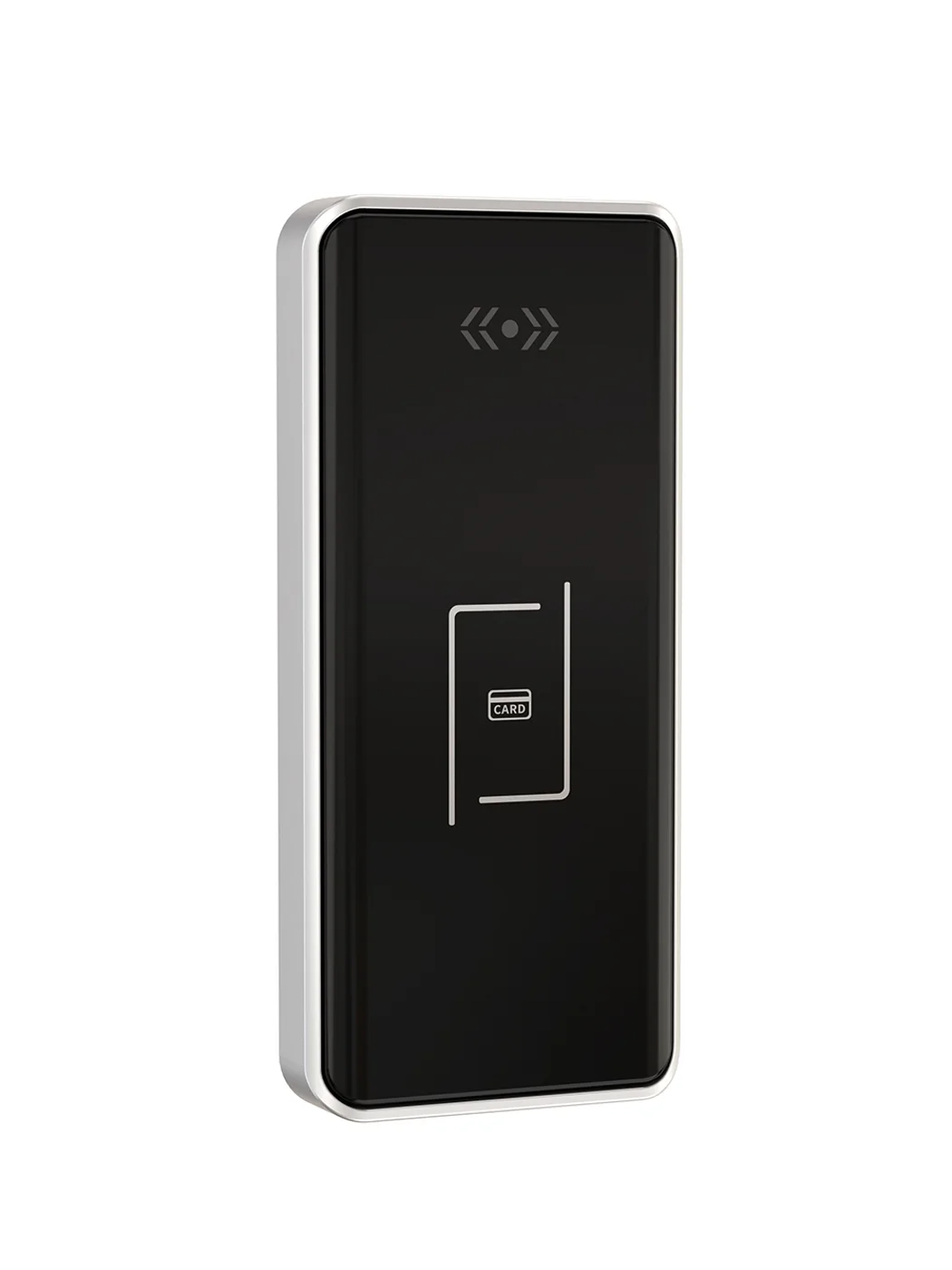
Kunci Sauna — Kartu & PIN, Tahan Lembap untuk Area Basah
Kunci sauna elektronik untuk kabinet area basah. Kartu MIFARE atau PIN, tahan lembap, offline, bertenaga baterai. Kompatibel retrofit kabinet spa dan kolam.
contentGraph.reasons.explicit
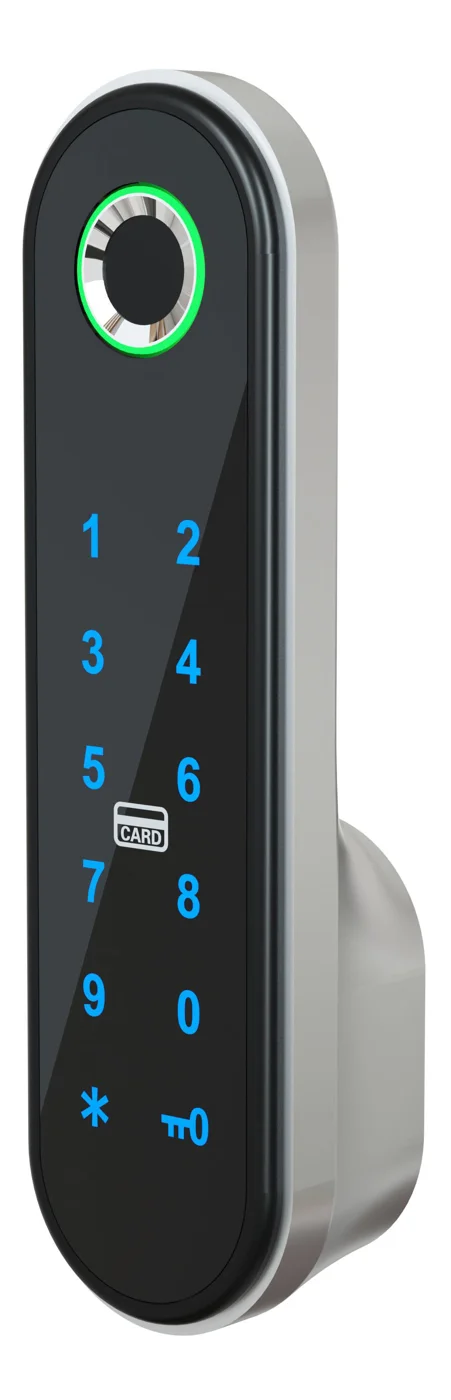
Kunci Elektronik Spa — Biometrik + PIN Lemari Wellness
Kunci elektronik spa offline untuk lemari wellness. Sidik jari + PIN, pelapis tahan lembap, tanpa WiFi, bertenaga baterai. Untuk spa, salon, ruang wellness.
contentGraph.reasons.explicit
contentGraph.sections.blog
1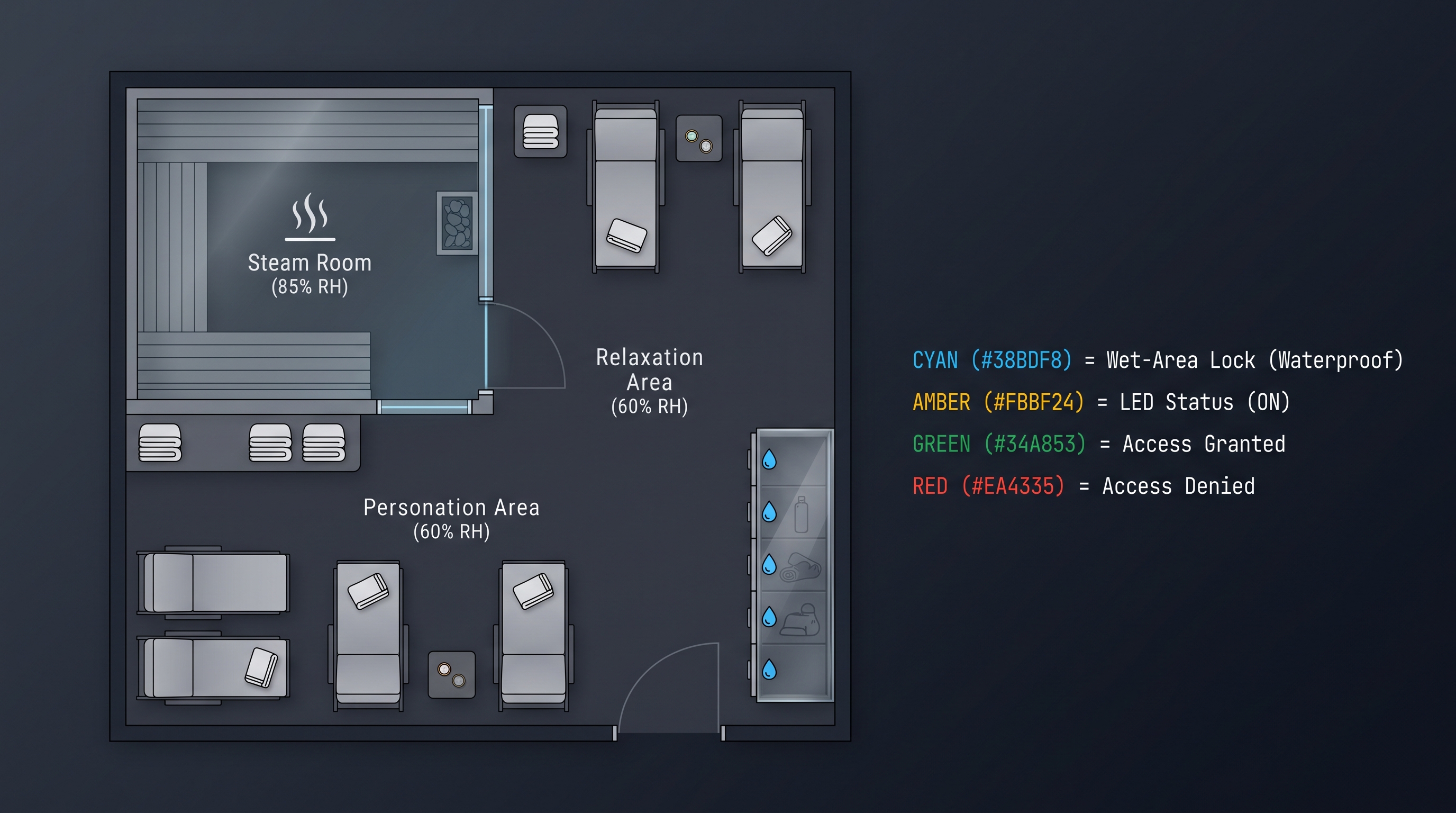
Baterai Kunci Lemari: Panduan Lengkap 5000+ Kata
Baterai kunci lemari adalah satu-satunya sumber daya kunci elektronik; panduan ini membahas jenis baterai, masa pakai, penggantian, pintas darurat, dan pemantauan baterai lemah.
contentGraph.reasons.productContext
nextStep.blog.title
nextStep.blog.description
- nextStep.blog.points.one
- nextStep.blog.points.two
- nextStep.blog.points.three