Latch Kabinet Elektronik: Panduan Lengkap untuk Kabinet
Latch kabinet elektronik membuka dan mengunci pintu kabinet via solenoid, motor, atau strike elektromagnetik 12V/24V. Panduan jenis, wiring, keamanan, harga.
Latch kabinet elektronik adalah latch yang diaktifkan secara elektris untuk membuka atau mengamankan pintu kabinet menggunakan solenoid, motor, atau strike elektromagnetik, menggantikan latch manual dengan kontrol jarak jauh, relay, keypad, atau aplikasi. Berbeda dengan cam lock yang memutar baut seperempat putaran ke dalam strike plate, latch kabinet elektronik biasanya berada dalam kondisi terbuka dan menarik striker hanya saat dialiri listrik, atau berada dalam kondisi terkunci dan melepaskan saat koil menerima 12 VDC atau 24 VDC. Latch kabinet elektronik digunakan pada kabinet dapur, furnitur, server rack, enclosure listrik, dan loker penyimpanan, serta menarik arus antara 150 mA dan 2 A tergantung resistansi koil, gaya tahan, dan duty cycle. Latch kabinet elektronik 12 VDC dan 24 VDC adalah pasangan tegangan yang paling umum, dengan model latch kabinet elektronik bertenaga baterai beroperasi dari 4,5 V hingga 9 V untuk furnitur tanpa listrik jala-jala. Latch kabinet elektronik fail-safe akan terbuka saat listrik padam, sedangkan latch kabinet elektronik fail-secure tetap terkunci, sehingga memilih latch kabinet elektronik memerlukan pertimbangan antara aturan evakuasi kebakaran dan perlindungan inventaris. Latch kabinet elektronik dinilai berdasarkan gaya strike, lintasan baut, protokol kontrol, rating IP, dan emergency release sebelum disambungkan ke relay, panel akses, atau smart hub.
Jenis dan Klasifikasi Latch Kabinet Elektronik
Latch kabinet elektronik pertama-tama diklasifikasikan berdasarkan metode aktuasi, dan lima keluarga mendominasi pasar: latch solenoid, latch motor, strike elektromagnetik, latch elektronik push-to-open, dan cam lock elektronik yang banyak dijual supplier di bawah nama latch kabinet elektronik. Keluarga solenoid menahan pintu dengan plunger berpegas dan melepaskannya dari koil berlilitan 300 hingga 600 lilitan, menghasilkan tarikan 3 hingga 5 newton, sementara keluarga motor memutar catch sejauh 90 atau 180 derajat dengan torsi 5 hingga 8 newton. Strike elektromagnetik menjaga pintu tetap tertutup dengan armature termagnetisasi dan melepaskannya ketika pulsa 12 V atau 24 V menetralkan medan, dan latch elektronik push-to-open menahan front drawer atau pintu tetap tertutup hingga koil menarik giginya.
Bentuk fisik setiap varian, termasuk strike plate, knob manual override, dan mounting bracket, menentukan apakah latch kabinet elektronik cocok untuk pintu furnitur ringan atau enclosure logam berat, sehingga jenis yang tepat dipilih sebelum pengkabelan dimulai. Klasifikasi kedua membagi latch kabinet elektronik menjadi modul surface mount dan modul inset yang terpasang rata di dalam dinding kabinet, dan klasifikasi ketiga membagi pasar berdasarkan metode komunikasi menjadi standalone, digerakkan relay, dan smart latch kabinet elektronik.
Latch Solenoid dan Latch Elektronik Push-to-Open
Latch solenoid adalah latch kabinet elektronik elektromekanis di mana arus melalui koil menarik plunger baja melawan return spring, menarik striker keluar dari pengait dan membuka pintu. Latch kabinet elektronik solenoid tipikal dirating 12 VDC dengan resistansi koil 24 hingga 48 ohm, menghasilkan arus 250 hingga 500 mA dan gaya tahan 3 hingga 5 newton, yang cukup untuk pintu kabinet dapur di bawah 2,5 kilogram. Karena gaya solenoid meluruh sebanding dengan kuadrat celah udara, strike harus dipasang dalam jarak 1 hingga 3 milimeter dari permukaan plunger agar pembukaan andal. Latch elektronik push-to-open adalah varian dari latch kabinet elektronik solenoid yang menahan pintu kabinet tertutup dengan gigi kecil dan menarik gigi itu saat pengguna menyentuh pintu atau mengirim perintah, menjadikannya latch kabinet elektronik pilihan untuk kabinet frameless dan furnitur rangka aluminium. Kedua keluarga bekerja dengan pulsa 200 hingga 500 milidetik, yang menjaga suhu koil di bawah 60 derajat Celsius dan memperpanjang duty cycle, dan keduanya dapat dibuka dengan jari, relay, atau dry contact dari keypad. Latch kabinet elektronik push-to-open sering dipadukan dengan engsel soft-close agar pintu terdorong keluar dengan lembut alih-alih berayun bebas.
Latch Motor dan Strike Elektromagnetik
Latch motor adalah latch kabinet elektronik yang menggunakan gear motor kecil 6 hingga 12 volt untuk memutar catch atau menggeser baut, menawarkan gaya lebih tinggi dan daya standby lebih rendah dibanding solenoid karena arus hanya mengalir saat motor berputar. Latch kabinet elektronik bermotor memberikan lintasan baut 8 hingga 15 milimeter dan gaya tahan 5 hingga 8 newton, menjadikannya latch kabinet elektronik yang tepat untuk server rack berat, kabinet perkakas, dan enclosure berpintu tebal. Strike elektromagnetik adalah latch kabinet elektronik yang menahan pintu tertutup dengan elektromagnet dan melepaskan armature saat listrik diputus, sehingga secara inheren fail-safe dan umum digunakan pada furnitur kantor dan kabinet clean room. Setiap gaya aktuasi ini mengubah konsumsi standby: latch kabinet elektronik solenoid dapat menarik 20 hingga 50 mA dalam desain pulsa, latch kabinet elektronik motor hampir nol saat diam, dan latch kabinet elektronik strike elektromagnetik menarik arus kontinu hanya saat terbuka. Pilihan antara latch kabinet elektronik motor dan solenoid juga bergantung pada kebisingan, karena motor mengeluarkan dengung rendah selama 150 hingga 400 milidetik sementara solenoid menghasilkan bunyi klik tajam, yang berpengaruh di kamar tidur, kantor, dan furnitur hotel.
Cam Lock Elektronik vs Latch Kabinet Elektronik
Cam lock elektronik sering tertukar dengan latch kabinet elektronik, tetapi kedua mekanisme ini melayani pintu yang berbeda. Cam lock memutar lidah cam sejauh 90 atau 180 derajat ke dalam strike plate dan digunakan pada pintu tunggal dengan lubang kunci, sedangkan latch kabinet elektronik sekadar membuka atau menahan pengait dan tidak memutar lidah pengunci ke dalam kantong dalam. Cam lock elektronik menjaga pintu tetap terkunci secara fisik bahkan saat tanpa listrik jika bertipe mechanical override, sedangkan sebagian besar model latch kabinet elektronik adalah spring latch yang mengamankan pintu dengan mengaitkan striker, sehingga dorongan paksa kadang dapat mengalahkannya. Ketika spesifikasi menuntut fungsi penguncian sejati, perancang memilih cam lock elektronik atau deadbolt; ketika kebutuhannya adalah remote release dan kenyamanan push-to-open, latch kabinet elektronik adalah jawaban yang tepat. Harganya juga berbeda, dengan latch kabinet elektronik biasanya dijual 30 hingga 60 persen lebih murah daripada cam lock elektronik pada kualitas rakitan yang sama, karena latch memiliki komponen presisi lebih sedikit dan geometri strike lebih sederhana.
Cara Kerja dan Cara Membuka Latch Kabinet Elektronik
Latch kabinet elektronik bekerja dengan mengubah energi listrik menjadi gerak linear atau rotasi yang melepas pengait, menarik striker, atau melepaskan armature, dan peristiwa pembukaan berlangsung antara 100 hingga 800 milidetik tergantung jenis aktuasi. Koil latch kabinet elektronik solenoid menciptakan medan magnet 200 hingga 400 ampere-turn pada 12 VDC, yang menggerakkan plunger 4 hingga 8 milimeter, sementara gear motor pada latch kabinet elektronik motor memutar cam keluaran pada 15 hingga 30 rpm untuk sapuan 90 derajat yang senyap. Latch kabinet elektronik push-to-open menahan pintu dengan gaya detent 2 hingga 4 newton dan melepaskan gaya itu atas perintah, sehingga pintu kemudian dibuka oleh pengguna atau oleh spring ejector. Pulsa latch kabinet elektronik tipikal berlangsung 100 hingga 500 milidetik, dan pintu kemudian terbuka secara manual oleh pengguna.
Jalur kontrol sama pentingnya: latch kabinet elektronik dapat digerakkan oleh dry contact relay sederhana, sinyal logika 3,3 V atau 5 V melalui MOSFET, controller keypad, pembaca RFID, atau modul pintar yang memakai BLE 5.2, Zigbee 3.0, WiFi 802.11 b/g/n, atau Matter. Perilaku fail pada latch kabinet elektronik ditentukan oleh apakah pegas mengembalikan latch ke posisi terkunci atau terbuka saat listrik hilang, dan satu pilihan desain ini menentukan apakah latch kabinet elektronik memenuhi syarat fail-secure atau fail-safe.
Urutan Aktuasi pada Latch Kabinet Elektronik Solenoid
Ketika pengguna memicu latch kabinet elektronik solenoid, controller memberikan 12 VDC dalam pulsa terukur, dan plunger berakselerasi selama 2 milidetik pertama sebelum menghantam striker dan menariknya bebas dari pengait. Arus tahan kemudian dikurangi atau diputus, dan return spring mendorong plunger kembali sehingga penutupan pintu berikutnya mengaitkan kembali latch. Pulsa latch kabinet elektronik yang dirancang baik adalah 150 hingga 400 milidetik, cukup pendek untuk menjaga koil di bawah 60 derajat Celsius dan cukup panjang untuk melepaskan striker dengan margin 2 hingga 3 milidetik. Profil arus latch kabinet elektronik pulsa terlihat pada osiloskop sebagai lonjakan inrush 3 hingga 5 kali arus tahan, diikuti peluruhan yang harus dijepit dengan flyback diode untuk melindungi relay atau MOSFET. Karena latch kabinet elektronik solenoid adalah perangkat open-loop, controller tidak dapat memastikan kondisi pintu, sehingga banyak sistem menambahkan micro switch atau sensor reed yang melaporkan kondisi terbuka atau tertutup kembali ke hub. Umpan balik ini mengubah latch kabinet elektronik dasar menjadi titik akses yang sadar status dan dapat memicu alert, log, atau logika interlock dalam sistem manajemen fasilitas.
Cara Latch Kabinet Elektronik Motor dan Strike Elektromagnetik Membuka
Latch kabinet elektronik motor menggunakan worm gear atau spur gear untuk mengubah rotasi motor menjadi baut geser, dan controller menghentikan motor ketika limit switch memastikan baut sudah di posisi rumah, sehingga daya hanya dikonsumsi selama gerakan 150 hingga 400 milidetik. Hal ini menjadikan latch kabinet elektronik motor pilihan paling senyap dan terbaik untuk operasi baterai, karena sepasang baterai AA dapat menggerakkan ratusan siklus sebelum diganti. Latch kabinet elektronik strike elektromagnetik menahan pintu dengan elektromagnet yang menghasilkan gaya tahan 30 hingga 60 newton, dan ketika perintah pembukaan tiba, arus diputus dan armature terangkat oleh gravitasi atau pegas. Karena latch kabinet elektronik strike gagal ke kondisi terbuka saat listrik hilang, ia menjadi latch kabinet elektronik standar untuk jalur evakuasi darurat, pintu tahan api dengan holding release, dan kabinet clean room di mana pintu terkunci dapat menjebak teknisi. Dalam setiap kasus, antarmukanya sama, tiga kabel: positif daya, negatif daya, dan satu jalur sense, ditambah kabel switch opsional, sehingga latch kabinet elektronik dapat ditukar antar merek dengan pengkabelan ulang minimal jika tegangan dan pola lubang pemasangan cocok.
Emergency Release dan Manual Override
Setiap latch kabinet elektronik yang serius dilengkapi manual override yang membuka pintu saat listrik tidak tersedia, karena latch kabinet elektronik bertenaga baterai maupun jala-jala pada akhirnya akan menghadapi pasokan yang habis. Override berbentuk thumb turn, silinder kunci, tali tarik, atau tombol dorong mekanis yang dipasang di dalam atau di luar kabinet. Latch kabinet elektronik dengan override thumb turn direkomendasikan untuk kabinet perkakas dan enclosure di mana operator yang terjebak harus selalu bisa keluar, dan kode kebakaran di banyak wilayah mewajibkan latch kabinet elektronik pada jalur evakuasi untuk terbuka secara mekanis tanpa alat. Override harus diuji dalam rutinitas perawatan, karena pegas yang macet atau striker yang bengkok akan mengalahkan latch kabinet elektronik yang sempurna dayanya sekalipun. Beberapa model smart latch kabinet elektronik menyalurkan pelepasan manual melalui micro switch tersembunyi yang juga melaporkan peristiwa buka manual ke access log, sehingga data audit tetap terjaga meski pelepasan dilakukan secara fisik. Ketika override digunakan, latch kabinet elektronik harus mengaitkan ulang secara otomatis saat pintu ditutup, sehingga siklus berdaya berikutnya mengembalikan sistem ke operasi normal.
Perbandingan Fitur dan Spesifikasi Latch Kabinet Elektronik
Latch kabinet elektronik dibandingkan berdasarkan daftar singkat spesifikasi: tegangan, arus yang ditarik, gaya tahan, lintasan baut, duty cycle, rating IP, waktu aktuasi, dan input kontrol, dan tabel di bawah menunjukkan perbandingan keluarga utama. Latch kabinet elektronik solenoid adalah yang tercepat dan termurah, latch kabinet elektronik motor adalah yang paling senyap dan paling ramah baterai, dan latch kabinet elektronik strike elektromagnetik adalah satu-satunya tipe yang inheren fail-safe. Arus standby penting untuk rancangan baterai, sehingga latch kabinet elektronik motor dengan standby mikro-ampere sering dipilih untuk furnitur, sedangkan latch kabinet elektronik solenoid dengan koil 250 hingga 500 mA dipilih untuk sistem dapur dan kantor berdaya jala-jala. Rating IP latch kabinet elektronik berkisar dari IP20 untuk furnitur dalam ruangan hingga IP54 untuk area cipratan dapur, dan latch kabinet elektronik dengan rating di bawah IP44 tidak boleh dipasang di tempat yang terkena semprotan langsung.
Waktu aktuasi latch kabinet elektronik berkisar dari 100 milidetik untuk solenoid hingga 500 milidetik untuk motor, dan latensi ini harus dipertimbangkan ketika latch dipicu oleh pembacaan kartu atau urutan interlock.
| Spesifikasi | Latch kabinet elektronik solenoid | Latch kabinet elektronik motor | Latch kabinet elektronik strike elektromagnetik | Latch kabinet elektronik push-to-open |
|---|---|---|---|---|
| Tegangan | 12 VDC / 24 VDC | 6 VDC / 12 VDC | 12 VDC / 24 VDC | 5 VDC / 12 VDC |
| Gaya tahan | 3 hingga 5 newton | 5 hingga 8 newton | 30 hingga 60 newton | 2 hingga 4 newton |
| Arus standby | 20 hingga 50 mA | kurang dari 1 mA | 0 mA saat diam | 10 hingga 20 mA |
| Waktu aktuasi | 100 hingga 250 ms | 300 hingga 500 ms | 150 hingga 400 ms | 150 hingga 300 ms |
| Kebisingan | klik tajam | dengung rendah | bunyi berat lembut | klik ringan |
| Mode fail | dapat dipilih | dapat dipilih | fail-safe | fail-safe |
| Rating IP | IP20 hingga IP54 | IP20 hingga IP54 | IP20 hingga IP54 | IP20 hingga IP40 |
| Input kontrol | relay, MOSFET, keypad | relay, keypad, BLE, Zigbee | relay, panel akses | relay, sentuh, BLE |
| Harga tipikal | 8 hingga 25 USD | 15 hingga 45 USD | 20 hingga 60 USD | 10 hingga 30 USD |
Perbandingan ini menunjukkan bahwa tidak ada satu latch kabinet elektronik yang terbaik untuk setiap pekerjaan, sehingga pemilihan didorong oleh berat pintu, ketersediaan daya, batas kebisingan, dan tingkat keamanan. Latch kabinet elektronik solenoid adalah pilihan bawaan untuk retrofit karena kecil dan murah, sedangkan latch kabinet elektronik motor adalah pilihan bawaan untuk furnitur bertenaga baterai karena idle mendekati nol. Latch kabinet elektronik strike elektromagnetik adalah pilihan bawaan untuk aplikasi evakuasi dan kebakaran, dan latch kabinet elektronik push-to-open adalah pilihan bawaan untuk kabinet dapur frameless dan furnitur aluminium. Untuk penerapan smart home, latch kabinet elektronik dengan BLE 5.2 atau Zigbee 3.0 bawaan menghilangkan kebutuhan relay terpisah dan mengekspos status terbuka dan tertutup ke hub. Sertifikasi juga membedakan produk, dengan latch kabinet elektronik membawa tanda CE, FCC, dan RoHS untuk UE dan AS, serta pengakuan UL diperlukan untuk instalasi access control yang memenuhi UL 294 di gedung komersial.
Aplikasi dan Use Case Latch Kabinet Elektronik
Latch kabinet elektronik diterapkan di mana pun pintu kabinet harus dibuka oleh sinyal alih-alih oleh tangan, dan latar paling umum adalah kabinet dapur, furnitur kantor, server rack, enclosure listrik, penyimpanan RV, dan trolley medis. Di dapur pintar, latch kabinet elektronik mengubah setiap unit bawah dan gantung menjadi titik pelepasan jarak jauh yang dapat dibuka oleh keypad, asisten suara, atau aplikasi, membantu pengguna dengan mobilitas tangan terbatas serta orang tua yang ingin mengunci perlengkapan pembersih. Di kantor, latch kabinet elektronik mengamankan meja kerja bersama, pedestal arsip, dan lemari perkakas sementara controller pusat mencatat setiap peristiwa pembukaan, dan di pusat data latch kabinet elektronik yang sama mengunci pintu rack yang harus terbuka cepat saat perawatan tetapi tetap tertutup terhadap debu dan gangguan. Untuk enclosure listrik, latch kabinet elektronik dengan gasket IP54 melindungi panel pemutus arus dari debu sementara sinyal jarak jauh membuka pintu saat servis.
Latch kabinet elektronik yang sama muncul di mini-bar hotel, trolley medis, loker, dan furnitur point-of-sale, di mana benang merahnya adalah kebutuhan untuk membuka banyak pintu dari satu controller dan mengetahui status setiap pintu.
Kabinet Dapur dan Rumah Tinggal
Dapur adalah pasar terbesar bagi latch kabinet elektronik, karena pemilik rumah ingin membuka kabinet tanpa menyentuh pegangan dan ingin mengunci isi berbahaya dengan kode. Latch kabinet elektronik push-to-open pas untuk pintu dapur frameless dengan pemasangan pada cup 32 milimeter atau bracket permukaan, dan satu lambaian tangan atau perintah suara membuka pintu sementara engsel soft-close mengatur ayunannya. Ketika tujuannya keselamatan anak, latch kabinet elektronik dapat dikabel ke keypad yang menuntut kode 4 hingga 6 digit, dan latch kabinet elektronik yang sama dapat membuka hanya kabinet berbahaya atau sekelompok kabinet sekaligus. Instalasi retrofit biasanya memakai latch kabinet elektronik solenoid 12 VDC yang ditenagai adaptor colokan tersembunyi di atas kabinet, dengan kabel dialirkan melalui bagian dalam kabinet dan transformator tegangan rendah dibatasi 1,5 A. Karena dapur memadukan kelembapan, panas, dan siklus yang sering, latch kabinet elektronik yang dipilih untuk dapur sebaiknya dirating IP44 atau lebih tinggi dan tersertifikasi CE serta RoHS. Latch kabinet elektronik bermotor lebih senyap untuk penggunaan larut malam, dan latch kabinet elektronik bertenaga baterai dengan dua sel CR123A umum di furnitur di mana adaptor dinding terlihat tidak rapi.
Server Rack, Enclosure, dan Loker
Di ruang server, latch kabinet elektronik mengubah pintu rack menjadi titik masuk terkontrol akses yang hanya terbuka ketika teknisi menunjukkan kartu atau menerima persetujuan dari sistem DCIM. Model latch kabinet elektronik rack biasanya digerakkan motor, memberikan 5 hingga 8 newton untuk menahan pintu baja berat, dan melaporkan status terbuka serta tertutup melalui RS-485 atau TCP/IP sehingga platform monitoring tahu persis kapan sebuah pintu dibuka. Enclosure listrik memakai latch kabinet elektronik dengan gasket dan mekanisme quarter-turn atau geser yang memenuhi rating IP54 atau IP65 kotaknya, dan pelepasannya sering dikabel ke maintenance key switch. Loker dan kotak pos berjalan pada latch kabinet elektronik bertenaga baterai dengan solenoid yang membuka pintu loker setelah kode atau buka lewat ponsel, dan ribuan unit latch kabinet elektronik semacam itu digandengkan pada bus RS-485 murah oleh vendor loker. Kebutuhan gaya sangat berbeda di antara use case ini: pintu loker ringan hanya butuh 3 newton, sedangkan enclosure dengan gasket kaku bisa butuh 8 newton, sehingga latch kabinet elektronik harus dicocokkan dengan resistansi seal pintu.
RV, Maritim, Kesehatan, dan Point of Sale
Kendaraan rekreasi dan kapal menggunakan latch kabinet elektronik untuk mengamankan drawer dan bin atas terhadap getaran dan gerakan, dan unit ini sering bertipe push-to-open bertenaga baterai sehingga tidak ada kabel menembus panel interior. Penggunaan kesehatan mencakup trolley obat dan kabinet persediaan di mana latch kabinet elektronik terintegrasi dengan sistem nurse call, badge RFID, atau pemindai barcode, dan di mana peristiwa akses harus dicatat untuk kepatuhan terhadap ekspektasi DEA dan HIPAA. Furnitur point-of-sale, termasuk cash drawer dan kabinet perlengkapan, memakai latch kabinet elektronik solenoid 12 VDC yang meledak saat sistem POS mengonfirmasi transaksi, dan latch kabinet elektronik yang sama umum di fixture vending dan micro-market. Di setiap vertikal ini, latch kabinet elektronik harus bertahan ribuan siklus, sehingga varian bermotor dan solenoid dirating 100.000 atau 200.000 operasi sebelum pegas atau gear memerlukan perhatian. Pemasang harus memastikan tegangan latch kabinet elektronik cocok dengan bus setempat, karena bus 24 VDC yang menyalakan latch kabinet elektronik 12 VDC akan membakar koil dalam hitungan menit.
Cara Memasang Latch Kabinet Elektronik
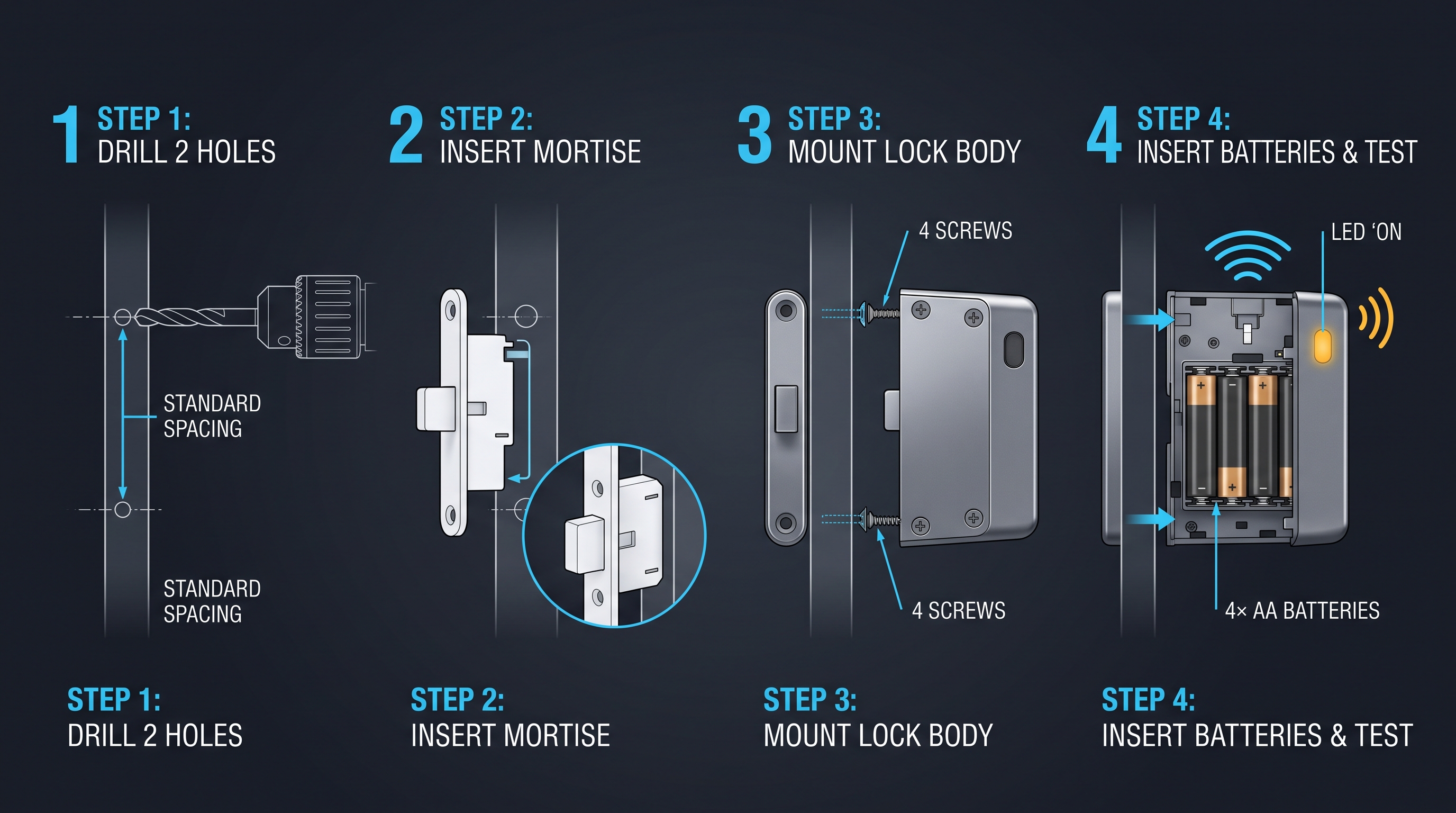
Memasang latch kabinet elektronik adalah pekerjaan mekanis dan kelistrikan yang lugas, memakan waktu 15 hingga 45 menit per pintu ketika strike dan latch sejajar dengan benar, dan kesalahan paling umum adalah kesalahan penyelarasan. Langkah pertama adalah menandai strike plate pada rangka tetap dan badan latch kabinet elektronik pada pintu, atau sebaliknya, tergantung apakah latch terpasang pada pintu atau badan kabinet. Latch kabinet elektronik solenoid biasanya terpasang pada rangka kabinet yang tetap sementara striker terpasang pada pintu, yang meminimalkan lentur kabel, sedangkan latch kabinet elektronik push-to-open biasanya terpasang di pintu itu sendiri dengan magnet kecil atau striker pada rangka. Gunakan template pemasangan yang disertakan bersama latch kabinet elektronik, bor lubang pilot, dan pastikan striker mengaitkan catch dengan pintu tertutup dan ada celah 1 hingga 3 milimeter untuk lintasan solenoid.
Kabel kemudian dialirkan melalui lubang 6 milimeter, dengan kabel tegangan rendah disambungkan ke koil dan flyback diode dipasang melintang pada koil jika controller tidak menyediakannya. Setelah daya diberikan, latch kabinet elektronik harus membuka pada setiap perintah, dan penyelarasan harus diperiksa ulang dengan pintu tertutup dan gasket termampatkan.
Pemasangan Mekanis dan Penyelarasan Strike
Pemasangan mekanis latch kabinet elektronik menentukan keandalan lebih daripada faktor lain mana pun, karena solenoid hanya melepas ketika striker berada dalam rentang lintasannya. Pasang latch kabinet elektronik pada permukaan datar dengan sumbu plunger tegak lurus terhadap muka pintu, dan gunakan shim atau pelat spacer ketika rangka tidak rata agar celah strike tetap konstan. Strike plate harus disejajarkan sehingga pintu menutup dengan striker meluncur ke dalam catch tanpa macet, dan ujung striker harus mendarat di tengah muka plunger dalam 1 milimeter. Untuk latch kabinet elektronik motor, baut harus sejajar dengan lubang keeper dengan kelonggaran 1 hingga 2 milimeter di semua sisi, dan termampatan gasket pintu tidak boleh mendorong baut ke tepi keeper. Gunakan sekrup stainless steel untuk latch kabinet elektronik di lingkungan lembap, dan oleskan threadlocker pada sekrup latch kabinet elektronik bermotor yang mengalami getaran di kendaraan atau enclosure. Setelah pemasangan, uji latch kabinet elektronik 20 hingga 30 kali dengan pintu tertutup, karena pintu yang terkait dengan tangan tetapi macet saat didorong cepat akan gagal membuka dalam kondisi yang sama.
Mengkabel Latch Kabinet Elektronik ke Daya 12V atau 24V
Instalasi kelistrikan latch kabinet elektronik dimulai dengan mengonfirmasi tegangan pasokan, karena latch kabinet elektronik 12 VDC tidak boleh pernah dihubungkan ke rel 24 VDC tanpa buck converter. Sambungkan kabel positif latch kabinet elektronik ke keluaran switch relay atau MOSFET dan kabel negatif ke ground bersama, dan tambahkan fuse inline 1 A untuk latch kabinet elektronik 12 VDC demi melindungi koil dari hubungan singkat. Gunakan kabel stranded 22 AWG hingga 18 AWG untuk lintasan hingga 10 meter, dan naik ke 16 AWG untuk lintasan di atas 20 meter agar drop tegangan tidak melemahkan tarikan solenoid. Jika board kontrol tidak memiliki flyback diode, pasang dioda 1N4007 melintang pada terminal koil, katode ke positif, sehingga lonjakan induktif saat latch kabinet elektronik kehilangan energi tidak merusak driver. Ketika beberapa unit latch kabinet elektronik digerakkan satu controller, distribusikan pada relay terpisah atau gunakan power distribution board agar arus inrush masing-masing latch kabinet elektronik tidak membuat rel bersama turun. Terakhir, labeli input daya dan tambahkan disconnect switch di dekat latch kabinet elektronik agar pintu dapat dilayani tanpa memadamkan seluruh zona.
Menghubungkan Kontrol Relay, Keypad, Aplikasi, dan Smart Hub
Latch kabinet elektronik menerima beberapa jalur kontrol, dan yang paling sederhana adalah dry contact relay yang menghubungkan tegangan pasokan ke koil latch kabinet elektronik selama durasi pulsa. Untuk kontrol level logika, gerakkan MOSFET dengan sinyal 3,3 V atau 5 V dari ESP32, Arduino, atau PLC, dan MOSFET mengalihkan rel 12 V atau 24 V ke latch kabinet elektronik. Controller keypad adalah solusi latch kabinet elektronik mandiri yang membaca kode 4 hingga 6 digit dan memberi energi pada latch selama 300 milidetik, dan banyak model menyertakan input door sense untuk pencatatan. Kontrol pintar menambahkan modul BLE 5.2, Zigbee 3.0, atau WiFi 802.11 b/g/n yang melaporkan status terbuka, tertutup, dan baterai serta menerima perintah dari aplikasi seluler atau hub. Ketika latch kabinet elektronik dikendalikan panel akses, gunakan keluaran panel yang dirating untuk beban induktif, atau buffer dengan relay, karena relay panel sering hanya dirating 30 mA. Kabel kontrol harus dijauhkan dari kabel jala-jala di kabinet yang sama, dan twisted pair berselubung direkomendasikan untuk lintasan panjang ke latch kabinet elektronik agar derau pulsa tidak merusak jalur sense.
Kriteria Pemilihan dan Pertimbangan Pembelian Latch Kabinet Elektronik
Pemilihan latch kabinet elektronik dimulai dari berat pintu dan gaya tahan yang dibutuhkan, karena pintu dapur ringan hanya butuh 3 hingga 4 newton sedangkan enclosure bergasket butuh 6 hingga 8 newton. Tegangan harus cocok dengan pasokan yang tersedia, sehingga latch kabinet elektronik 12 VDC dipilih untuk otomotif dan sistem tegangan rendah yang sudah ada, latch kabinet elektronik 24 VDC untuk rel industri dan access control, dan latch kabinet elektronik bertenaga baterai untuk furnitur tanpa kabel. Mode fail adalah keputusan berikutnya: latch kabinet elektronik fail-safe terbuka saat listrik hilang untuk jalur evakuasi dan kebakaran, sedangkan latch kabinet elektronik fail-secure terkunci saat listrik hilang untuk barang berharga dan obat-obatan. Kebisingan aktuasi, duty cycle, rating IP, dan sertifikasi latch kabinet elektronik kemudian harus diperiksa terhadap lingkungan, dengan latch kabinet elektronik IP54 untuk dapur dan latch kabinet elektronik IP20 untuk furnitur dalam ruangan kering.
Terakhir, antarmuka kontrol harus dipastikan, karena smart latch kabinet elektronik dengan Zigbee atau BLE lebih mahal tetapi menghemat relay terpisah dan menyediakan umpan balik status.
Kebutuhan Gaya, Lintasan, dan Duty Cycle
Gaya tahan latch kabinet elektronik harus melebihi gaya buka pintu, dan patokan kasarnya adalah memilih latch kabinet elektronik dengan setidaknya 1,5 kali tarikan terukur yang dibutuhkan untuk membuka pintu dari tepi latch. Ukur gaya dengan spring scale di lokasi pegangan, lalu tambahkan margin untuk termampatan gasket, suhu, dan sag tegangan baterai, sehingga pintu yang ditarik pada 3 newton paling baik dilayani latch kabinet elektronik yang dirating 5 newton. Lintasan baut harus melepaskan striker sepenuhnya, dengan latch kabinet elektronik motor melempar 8 hingga 15 milimeter dan latch kabinet elektronik solenoid hanya bergerak 4 hingga 8 milimeter, dan kedalaman strike harus mengakomodasi lintasan itu. Duty cycle latch kabinet elektronik biasanya dinyatakan sebagai persentase, misalnya 10 persen untuk latch kabinet elektronik solenoid yang harus beristirahat 9 kali lebih lama daripada pulsanya, dan model continuous duty tersedia untuk aplikasi strike hold-open. Untuk penggunaan frekuensi tinggi, pilih latch kabinet elektronik motor yang dirating 200.000 siklus, dan untuk penggunaan sesekali, latch kabinet elektronik solenoid yang dirating 100.000 siklus sudah cukup dan lebih murah.
Fail-Secure vs Fail-Safe dan Tingkat Keamanan
Perbedaan fail-secure dan fail-safe adalah keputusan keamanan terpenting dalam pemilihan latch kabinet elektronik, dan ditentukan oleh posisi kembalian pegas plunger atau baut. Latch kabinet elektronik fail-secure kembali ke posisi terkunci saat listrik hilang, sehingga pintu tetap terkunci saat mati listrik, yang melindungi barang berharga tetapi dapat menjebak pengguna dan dapat melanggar kode evakuasi pada jalur keluar. Latch kabinet elektronik fail-safe kembali ke posisi terbuka saat listrik hilang, sehingga pintu terbuka saat kebakaran atau pemadaman, yang memenuhi syarat evakuasi tetapi tidak memberi perlindungan ketika listrik padam. Untuk kepatuhan UL 294, latch kabinet elektronik yang dipakai pada pintu terkontrol akses harus terdaftar untuk mode fail yang dimaksud, dan sistem harus menyertakan sarana emergency release. Ketika kedua kebutuhan sama pentingnya, perancang menetapkan latch kabinet elektronik fail-secure dengan override thumb turn mekanis, atau latch kabinet elektronik fail-safe dengan alarm yang mengumumkan kondisi terbuka. Keamanan fisik latch kabinet elektronik itu sendiri juga relevan: latch surface mount dengan sekrup yang terlihat dapat dilepas dengan obeng, sehingga latch kabinet elektronik tahan tamper dengan pengikat keamanan lebih dipilih untuk loker dan cash drawer.
Pilihan Smart, Baterai, dan Sertifikasi
Smart latch kabinet elektronik adalah upgrade alami ketika fasilitas sudah menjalankan Zigbee, Matter, atau WiFi, karena modul melaporkan status pintu dan level baterai ke hub serta menerima perintah buka dari aplikasi. Model latch kabinet elektronik bertenaga baterai biasanya berjalan pada 2 sel AA, 2 sel CR123A, atau paket lithium isi ulang, dan latch kabinet elektronik bermotor dapat memberikan 8.000 hingga 15.000 siklus per set baterai sedangkan latch kabinet elektronik solenoid memberikan lebih sedikit karena arus diamnya. Sertifikasi harus diperiksa sebelum membeli: latch kabinet elektronik untuk pasar UE memerlukan penandaan CE dan kepatuhan RoHS, penerapan di AS memerlukan FCC Part 15B untuk pemancar tidak disengaja dan FCC Part 15C jika memiliki radio, dan aplikasi fire door memerlukan rating UL 228 atau UL 10C bila berlaku. Rating IP latch kabinet elektronik harus cocok dengan lingkungan, dengan IP44 untuk area cipratan dapur, IP54 untuk enclosure luar ruangan, dan IP20 untuk interior kering bersih. Terakhir, periksa pola pemasangan latch kabinet elektronik terhadap pintu, karena cup 32 milimeter, lubang bulat 22,5 milimeter, dan pola persegi 45 x 45 milimeter tidak saling dapat dipertukarkan antar merek.
Pertimbangan Keamanan Latch Kabinet Elektronik
Latch kabinet elektronik hanya meningkatkan keamanan ketika desain di sekitarnya menghormati kelemahannya, karena spring latch dapat di-shim, solenoid dapat dijepit, dan latch kabinet elektronik tanpa daya dapat beralih ke salah satu kondisi. Aturan pertama adalah memadukan latch kabinet elektronik dengan pemasangan tahan tamper dan pengikat keamanan, sehingga penyusup tidak bisa sekadar membuka badan latch. Aturan kedua adalah menambahkan sensor posisi pintu, karena latch kabinet elektronik yang melaporkan status terbuka dan tertutup memungkinkan sistem akses mendeteksi pintu yang tertinggal terbuka atau dipaksa dalam hitungan detik. Aturan ketiga adalah mencatat setiap peristiwa, dengan setiap aksi latch kabinet elektronik diberi stempel waktu dan dikaitkan dengan pengguna, pintu, dan hasilnya, yang mendukung audit dan tinjauan forensik. Untuk barang berharga, pilih latch kabinet elektronik fail-secure dan lindungi saluran daya dengan sirkuit tersupervisi, karena memutus pasokan justru mengunci pintu alih-alih membukanya.
Untuk jalur evakuasi, pilih latch kabinet elektronik fail-safe dengan override mekanis, karena keselamatan penghuni melebihi nilai kabinetnya.
Vektor Serangan Fisik dan Mitigasinya
Vektor serangan fisik terhadap latch kabinet elektronik adalah menyelipkan shim pada striker, mengungkit pintu, menghantam latch, dan melepas sekrup pemasangan. Menyelipkan shim bekerja pada latch kabinet elektronik berpegas mana pun karena bilah tipis dapat merambat antara pintu dan striker serta menekan plunger, sehingga rakitan keamanan tinggi memakai latch kabinet elektronik bermotor dengan baut yang masuk ke keeper dalam alih-alih plunger miring. Mengungkit pintu berhasil ketika strike plate dipegang sekrup pendek, sehingga latch kabinet elektronik harus dipasang dengan sekrup yang menembus rangka 15 hingga 25 milimeter. Menghantam latch dengan benda keras dapat melepas latch kabinet elektronik solenoid yang lemah, sehingga housing tahan benturan dan strike yang diperkuat direkomendasikan untuk loker. Pelepasan sekrup pemasangan dicegah dengan pengikat keamanan security Torx, shear screw, atau dengan memasang latch kabinet elektronik di dalam kabinet sehingga hanya striker yang terlihat pada rangka. Tidak ada latch kabinet elektronik yang menahan semua serangan, sehingga tujuannya adalah menjadikan latch kabinet elektronik titik masuk tersulit alih-alih termudah.
Keamanan Siber dan Praktik Terbaik Access Control
Smart latch kabinet elektronik menambah permukaan serangan jaringan, sehingga modul radio harus mendukung enkripsi, pembaruan firmware bertanda tangan, dan secure boot untuk mencegah penyerang lokal membuka setiap latch kabinet elektronik di sebuah fasilitas. Gunakan kredensial per perangkat dan rotasikan saat pendaftaran, dan isolasikan jaringan latch kabinet elektronik dari jaringan IT umum menggunakan VLAN atau mesh Zigbee atau BLE terpisah. Controller harus membatasi laju percobaan buka, karena penyerang yang dapat memutar ulang perintah buka BLE harus diblokir oleh session key dan proteksi replay yang tertanam dalam BLE 5.2 dan Matter. Log audit dari latch kabinet elektronik harus diekspor ke SIEM sentral atau sistem akses alih-alih hanya disimpan di perangkat, sehingga gangguan pada satu latch kabinet elektronik tidak menghapus catatan. Ketika latch kabinet elektronik menjadi bagian sistem akses berating UL 294, seluruh rantai, controller, reader, dan latch kabinet elektronik, harus terdaftar bersama, dan pembaruan firmware pada latch kabinet elektronik tidak boleh membatalkan pendaftaran itu tanpa verifikasi ulang.
Melindungi Baterai, Daya, dan Akses Darurat
Ketersediaan daya adalah batas keamanan bagi latch kabinet elektronik, karena unit bertenaga baterai yang mati pukul 4 pagi adalah pintu terkunci atau terbuka tergantung mode failnya. Supervisi saluran daya latch kabinet elektronik fail-secure dengan tamper loop agar memutus kabel memicu alarm alih-alih diam-diam mengunci kabinet. Untuk model bertenaga baterai, latch kabinet elektronik sebaiknya melaporkan baterai lemah pada sisa kapasitas 20 persen, memberi fasilitas waktu berhari-hari untuk mengganti sel sebelum latch berhenti merespons. Sediakan override mekanis pada setiap latch kabinet elektronik, dan simpan kunci override di lokasi tahan gangguan agar akses darurat dimungkinkan tanpa merusak pintu. Dalam skenario kebakaran, latch kabinet elektronik fail-safe terlepas otomatis, tetapi manual pull release harus terjangkau dari dalam kabinet, dan tali pelepas harus diuji sebagai bagian perawatan triwulanan latch kabinet elektronik. Ketentuan daya dan darurat ini mengubah latch kabinet elektronik dari perangkat kenyamanan menjadi titik kontrol akses yang andal.
Troubleshooting dan Perawatan Latch Kabinet Elektronik
Latch kabinet elektronik gagal dengan pola yang dapat diprediksi, dan sebagian besar kegagalan disebabkan tegangan rendah, kesalahan penyelarasan, striker macet, atau koil hangus, yang masing-masing didiagnosis dengan multimeter dan beberapa menit inspeksi. Jika latch kabinet elektronik sama sekali tidak merespons, ukur tegangan pada terminal koil selama pulsa pemicu, dan pastikan keluaran controller mencapai 90 persen tegangan rating di bawah beban. Jika latch kabinet elektronik berbunyi klik tetapi pintu tidak terbuka, striker kemungkinan tidak sejajar atau lintasan plunger terblokir, sehingga sejajarkan ulang strike dan periksa kotoran antara striker dan muka plunger. Jika latch kabinet elektronik panas berlebih, pulsanya terlalu panjang atau duty cycle terlampaui, sehingga pendekkan pulsa ke 200 hingga 400 milidetik dan pastikan resistansi koil cocok dengan nilai rating.
Jika smart latch kabinet elektronik kehilangan status, reboot modul, periksa baterai, dan pasangkan ulang dengan hub, karena interferensi radio dan daya rendah menghasilkan gejala yang sama. Latch kabinet elektronik yang gagal hanya di cuaca dingin biasanya memiliki pelumas menggumpal atau pegas lemah, sehingga oleskan pelumas kering yang dirating hingga minus 20 derajat Celsius.
Gejala dan Penyebab Kegagalan Umum
Kegagalan latch kabinet elektronik paling umum adalah pelepasan lemah akibat drop tegangan, yang terjadi ketika rel 12 VDC turun akibat inrush koil, sehingga ukur tegangan pada latch kabinet elektronik itu sendiri alih-alih pada power supply. Koil hangus adalah kegagalan terumum kedua, disebabkan pemberian 24 VDC pada latch kabinet elektronik 12 VDC atau koil dibiarkan berenergi melewati duty cycle-nya, sehingga pastikan label sebelum memberi energi. Latch kabinet elektronik macet terjadi ketika tepi striker tersangkut pada muka plunger karena pintu turun atau hinge longgar, dan perbaikannya adalah menggeser strike plate 1 hingga 2 milimeter. Latch kabinet elektronik yang berdengung biasanya memiliki pemasangan longgar atau pasokan AC alih-alih DC, karena AC 50 atau 60 hertz membuat plunger bergetar pada dua kali frekuensi jala-jala. Smart latch kabinet elektronik yang membuka acak atau mengabaikan perintah sering kali bermasalah pada baterai atau radio, sehingga ganti sel, dekatkan hub, dan pastikan mesh Zigbee atau BLE sehat. Ketika latch kabinet elektronik bagian dari sistem termonitor, periksa juga kabel sensor pintu, karena sense switch yang macet mencegah controller mengaktifkan latch.
Pembersihan, Pelumasan, dan Umur Siklus
Latch kabinet elektronik memerlukan perawatan minimal, tetapi bagian bergeraknya diuntungkan oleh pembersihan tahunan dan aplikasi tipis pelumas kering PTFE atau silikon pada plunger dan striker. Jangan gunakan minyak pada latch kabinet elektronik, karena minyak menarik debu yang berubah menjadi pasta gerinda dan menyumbat mekanisme dalam hitungan bulan. Bersihkan permukaan strike dan muka plunger dengan isopropil alkohol, lalu oleskan setetes pelumas kering dan operasikan latch kabinet elektronik 10 kali untuk meratakannya. Periksa sekrup pemasangan latch kabinet elektronik setiap tahun, karena getaran dari pintu dan kendaraan mengendorkan pengikat, dan kencangkan ulang dengan threadlocker. Umur siklus latch kabinet elektronik yang diharapkan adalah 100.000 hingga 200.000 operasi, dan penghitung atau access log dapat memperkirakan kapan pegas atau gear perlu diganti. Pada titik tengah, periksa return spring latch kabinet elektronik solenoid untuk kendur, karena pegas lemah gagal mengaitkan ulang pintu setelah pelepasan. Catat tanggal perawatan dan jumlah siklus setiap latch kabinet elektronik agar penggantian direncanakan alih-alih reaktif.
Kapan Mengganti Latch Kabinet Elektronik
Ganti latch kabinet elektronik ketika resistansi koil menyimpang lebih dari 10 persen, ketika plunger tidak kembali penuh, atau ketika housing menunjukkan karat atau kerusakan benturan yang mengganggu penyelarasan. Latch kabinet elektronik yang telah melampaui jumlah siklus ratingnya juga perlu diganti, meski masih berfungsi, karena keausan pegas dan gear mempercepat di akhir umur. Ganti smart latch kabinet elektronik ketika firmware-nya tidak lagi dapat diperbarui atau ketika vendor berhenti menerbitkan patch keamanan, karena latch kabinet elektronik tanpa patch adalah risiko jaringan. Saat mengganti latch kabinet elektronik, jaga tegangan, mode fail, dan pola pemasangan identik dengan yang asli agar kabel dan strike plate tidak perlu dikerjakan ulang. Simpan satu latch kabinet elektronik cadangan dalam inventaris untuk pintu kritis, dan standarkan pada satu merek dan model agar cadangan saling dapat dipertukarkan di seluruh fasilitas. Terakhir, perbarui database access control dengan ID latch kabinet elektronik yang baru dan uji pelepasan, sense switch, dan manual override sebelum menyatakan penggantian selesai.
Pendalaman Wiring dan Kontrol Latch Kabinet Elektronik
Pengkabelan latch kabinet elektronik adalah sirkuit kontrol tegangan rendah yang membawa beberapa ratus miliampere, tetapi tetap layak mendapat perencanaan cermat karena koil bersifat induktif dan jalur sense mudah terganggu. Latch kabinet elektronik solenoid dikabel dengan positif terswitch dan negatif bersama, plus flyback diode, dan sinyal kontrol berasal dari relay, MOSFET, atau modul pintar. Latch kabinet elektronik motor menambah dua jalur kontrol karena motor harus berputar maju dan mundur, atau memakai satu pulsa dengan return spring mekanis. Smart latch kabinet elektronik menambah modul radio yang berbagi rel daya yang sama, dan modul harus didekopl dengan kapasitor agar pulsa motor atau koil tidak mereset modul. Arsitektur kontrol adalah terpusat, di mana satu controller menggerakkan banyak unit latch kabinet elektronik, atau terdistribusi, di mana setiap latch kabinet elektronik membawa modulnya sendiri dan bus membawa perintah.
Untuk smart latch kabinet elektronik terdistribusi, bus-nya adalah Zigbee 3.0, BLE mesh, WiFi, atau Matter over Thread, dan setiap latch kabinet elektronik melaporkan status dan baterai ke coordinator.
Sirkuit Driver Relay dan MOSFET
Driver relay adalah sirkuit kontrol paling sederhana untuk latch kabinet elektronik: relay 12 VDC dengan koil yang dirating untuk keluaran controller mengalihkan pasokan ke koil latch kabinet elektronik, dan flyback diode melintang pada koil relay melindungi controller. Pilih relay yang dirating setidaknya 3 A pada tegangan latch kabinet elektronik, dan gunakan socket atau relay PCB agar kontak yang mengelas dapat diganti tanpa menyolder. Driver MOSFET menggantikan relay dengan MOSFET N-channel yang mengalihkan sisi rendah latch kabinet elektronik, dan gate digerakkan sinyal logika 3,3 V atau 5 V melalui resistor gate dan pulldown. Latch kabinet elektronik level logika yang digerakkan MOSFET memerlukan flyback diode melintang pada koil dan kapasitor bulk dekat MOSFET untuk menangani arus inrush. Ketika banyak unit latch kabinet elektronik digerakkan dari satu rel, gunakan freewheeling diode per latch kabinet elektronik dan bus daya bersama yang diukur untuk jumlah seluruh arus inrush. Board driver sebaiknya menyediakan tombol uji per keluaran agar teknisi dapat memicu satu latch kabinet elektronik tanpa masuk ke controller.
Integrasi Keypad, RFID, dan Panel Akses
Controller keypad menjadikan latch kabinet elektronik titik akses mandiri: pengguna memasukkan kode 4 hingga 6 digit, controller memverifikasinya, dan latch kabinet elektronik melepas selama 300 milidetik. Integrasi RFID menambahkan reader 13,56 MHz MIFARE atau 125 kHz EM di depan latch kabinet elektronik, dan reader memverifikasi kartu lalu memicu pulsa pada latch. Panel akses seperti controller dua pintu menggerakkan latch kabinet elektronik melalui keluaran relay yang dirating untuk beban induktif, dan panel mencatat peristiwa dengan ID kartu dan stempel waktu. Untuk lingkungan medis dan keamanan, latch kabinet elektronik sebaiknya dipadukan dengan sensor pintu agar panel tahu pintu tertutup dan dapat mengaktifkan kembali latch. Urutan integrasinya adalah daya, reader, latch, dan sensor: sambungkan latch kabinet elektronik ke keluaran panel, sambungkan reader ke input panel, dan sambungkan sensor pintu ke input panel yang memvalidasi penutupan. Uji keseluruhan loop dengan kartu valid, kartu tidak valid, dan pintu yang dipaksa terbuka untuk memastikan latch kabinet elektronik bereaksi benar terhadap setiap peristiwa.
Kontrol Ekosistem Smart Home dan IoT
Di smart home, latch kabinet elektronik dengan Zigbee 3.0 atau Matter bergabung ke mesh yang sama dengan pencahayaan dan sensor, dan hub mengekspos latch kabinet elektronik sebagai entitas lock dengan status terbuka, tertutup, dan baterai. Pengguna membuat otomatisasi seperti buka latch kabinet elektronik saat presence sensor dapur tidak melihat gerakan selama 10 menit, atau kunci saat alarm diaktifkan. Asisten suara dapat memicu latch kabinet elektronik melalui hub, dan hub menerapkan aturan bahwa buka lewat suara pada kabinet child-safe menuntut PIN. Melalui WiFi, latch kabinet elektronik memakai MQTT atau cloud vendor, dan API lokal memungkinkan integrasi dengan Home Assistant atau Node-RED, dengan fallback ke kunci fisik. Matter over Thread lebih disukai untuk model latch kabinet elektronik bertenaga baterai karena Thread hemat daya dan mendukung commissioning jarak jauh yang aman. Latensi smart latch kabinet elektronik adalah 200 hingga 800 milidetik, dapat diterima untuk pintu kabinet, dan hub sebaiknya mencatat setiap peristiwa latch kabinet elektronik untuk jejak audit keluarga.
Harga dan Prospek Pasar Latch Kabinet Elektronik
Latch kabinet elektronik dihargai dari 5 USD untuk modul solenoid polos hingga 80 USD untuk model smart bermotor tersertifikasi, dan harganya bergantung pada aktuasi, kualitas rakitan, komunikasi, dan sertifikasi. Latch kabinet elektronik solenoid 12 VDC dasar dengan koil dan strike dijual 5 hingga 15 USD, sedangkan latch kabinet elektronik bermotor dengan gearbox dijual 15 hingga 45 USD, dan latch kabinet elektronik strike elektromagnetik dijual 20 hingga 60 USD. Smart latch kabinet elektronik dengan BLE, Zigbee, atau WiFi menambah 10 hingga 30 USD, dan latch kabinet elektronik terdaftar UL membawa premi 20 hingga 50 persen di atas unit generik. Harga volume menggerakkan pasar latch kabinet elektronik, dengan pesanan OEM 1.000 unit memotong harga satuan 40 hingga 60 persen, dan pembeli grosir bernegosiasi langsung dengan pabrik di Tiongkok.
Pasar global kunci kabinet listrik tumbuh sekitar 8 hingga 10 persen per tahun, didorong adopsi smart home, otomasi dapur, dan permintaan kabineti bebas sentuh serta aksesibel.
Perbandingan Harga menurut Tipe dan Merek
Harga latch kabinet elektronik lebih bervariasi menurut tipe daripada menurut merek, sehingga perbandingan di bawah menampilkan harga pasar tipikal untuk setiap keluarga dalam jumlah kecil dan grosir. Model solenoid dan push-to-open adalah pintu masuk latch kabinet elektronik, model bermotor adalah kuda beban kelas menengah, dan model strike elektromagnetik adalah pilihan premium fail-safe. Smart latch kabinet elektronik dengan radio dan sensor pintu lebih mahal tetapi menghilangkan relay terpisah dan memberikan umpan balik status, yang menghemat waktu pengkabelan pada rakitan multi-pintu. Tabel mengasumsikan produk tersertifikasi CE dan RoHS dari supplier kelas menengah, dan versi terdaftar UL menambah 20 hingga 50 persen pada harga setiap latch kabinet elektronik.
| Tipe | Harga jumlah kecil (USD) | Harga grosir 1.000 unit (USD) | Sertifikasi tipikal |
|---|---|---|---|
| Latch kabinet elektronik solenoid | 5 hingga 15 | 3 hingga 8 | CE, RoHS |
| Latch kabinet elektronik push-to-open | 8 hingga 20 | 5 hingga 12 | CE, RoHS |
| Latch kabinet elektronik motor | 15 hingga 45 | 9 hingga 25 | CE, RoHS, FCC |
| Latch kabinet elektronik strike elektromagnetik | 20 hingga 60 | 12 hingga 35 | CE, FCC |
| Latch kabinet elektronik smart (BLE/Zigbee/WiFi) | 25 hingga 80 | 15 hingga 45 | CE, FCC, RoHS |
Tabel menunjukkan bahwa latch kabinet elektronik adalah komponen berbiaya rendah dalam konteks dapur atau sistem akses, dan anggaran rekayasa lebih baik dibelanjakan pada controller, power supply, dan sensor pintu daripada pada latch itu sendiri. Untuk fasilitas dengan 100 pintu, bill of materials latch kabinet elektronik pada harga grosir berkisar 300 hingga 3.500 USD tergantung tipe yang dipilih. Total biaya terpasang latch kabinet elektronik adalah 1,5 hingga 3 kali harga komponen ketika biaya pengkabelan, pemasangan, dan commissioning termasuk.
Tren Pasar dan Standar
Pasar latch kabinet elektronik bergerak ke arah desain bermotor dan pintar, karena unit bermotor memungkinkan daya baterai dan unit pintar memungkinkan monitoring jarak jauh serta otomasi. Zigbee 3.0 dan Matter mengonsolidasikan ekosistem smart latch kabinet elektronik, dan latch kabinet elektronik tersertifikasi Matter akan beroperasi bersama hub Amazon, Apple, Google, dan Samsung tanpa bridge khusus vendor. Pelepasan tanpa sentuh adalah pendorong yang terus tumbuh, karena latch kabinet elektronik dengan sensing proximity atau kontrol suara meningkatkan aksesibilitas bagi pengguna dengan mobilitas tangan terbatas. Standar juga tengah matang: UL 294 mencakup sistem access control yang menyertakan latch kabinet elektronik, UL 228 mencakup door closer dan holder, dan Radio Equipment Directive UE atau RED berlaku untuk latch kabinet elektronik apa pun dengan radio. Model latch kabinet elektronik bertenaga baterai terus membaik dengan BLE 5.2 low energy dan Thread, dan latch kabinet elektronik yang dirancang baik kini melaporkan level baterai dalam persen serta memperingatkan pemilik berminggu-minggu sebelum sel habis.
Masa Depan Latch Kabinet Elektronik
Latch kabinet elektronik masa depan akan lebih kecil, lebih senyap, dan lebih terintegrasi, dengan koil, driver, radio, dan sensor dalam satu modul yang terpasang pada cup standar 32 milimeter. Daya nirkabel dan energy harvesting akan menghilangkan baterai dari model latch kabinet elektronik bertenaga baterai, memungkinkan dorongan pintu atau sumber cahaya mengisi supercapacitor yang menyalakan pelepasan. Predictive maintenance akan memakai penghitung siklus dan tanda tangan arus latch kabinet elektronik untuk meramalkan keausan pegas dan gear, sehingga fasilitas mengganti komponen sebelum pintu macet. Smart latch kabinet elektronik juga akan berpartisipasi dalam otomasi yang lebih luas, melepas kabinet obat saat jadwal minum pasien tiba, membuka server rack ketika work order disetujui, dan melaporkan setiap peristiwa latch kabinet elektronik ke dashboard fasilitas. Seiring teknologinya matang, latch kabinet elektronik akan semakin menggantikan latch manual di furnitur, dapur, dan enclosure industri, menjadikan kunci kabinet listrik komponen standar ruang terhubung.
Sebagian isi artikel ini dihasilkan oleh AI dan dioptimalkan untuk akurasi profesional serta keterbacaan. A cabinet latch electronic is an electrically actuated latch that releases or secures a cabinet door using a solenoid, motor, or electromagnetic strike, replacing a manual latch with remote, relay, keypad, or app control. Unlike a cam lock that rotates a bolt a quarter turn into a strike plate, a cabinet latch electronic typically rests in a released state and pulls a striker only when energized, or it rests latched and fires open when the coil receives 12 VDC or 24 VDC. A cabinet latch electronic is used on kitchen cabinets, furniture, server racks, electrical enclosures, and storage lockers, and it draws between 150 mA and 2 A depending on coil resistance, holding power, and duty cycle. The 12 VDC and 24 VDC cabinet latch electronic is the most common voltage pair, with battery powered cabinet latch electronic models running from 4.5 V to 9 V for furniture without mains power. A fail-safe cabinet latch electronic unlocks during a power loss, while a fail-secure cabinet latch electronic stays locked, so selecting a cabinet latch electronic requires weighing fire egress rules against inventory protection. A cabinet latch electronic is evaluated by strike force, bolt travel, control protocol, IP rating, and emergency release before it is spliced into a relay, access panel, or smart hub.
cabinet latch electronic Types and Classifications
A cabinet latch electronic is classified first by actuation method, and five families dominate the market: solenoid latch, motor latch, electromagnetic strike, push-to-open electronic latch, and electronic cam lock that many suppliers sell under the cabinet latch electronic name. The solenoid family holds a door with a spring-loaded plunger and fires it from a coil wound at 300 to 600 turns, delivering a pull of 3 to 5 newtons, while the motor family rotates a catch through 90 or 180 degrees with a torque of 5 to 8 newtons. The electromagnetic strike keeps the door closed with a magnetized armature and releases it when a 12 V or 24 V pulse neutralizes the field, and the push-to-open electronic latch holds a drawer front or door shut until the coil withdraws a tooth.
The physical envelope of each variant, including the strike plate, the manual override knob, and the mounting bracket, decides whether a cabinet latch electronic fits a light furniture door or a heavy metal enclosure, so the correct type is selected before any wiring begins. A second classification divides the cabinet latch electronic into surface mount modules and inset modules that sit flush inside the cabinet wall, and a third splits the market by communication method into standalone, relay driven, and smart cabinet latch electronic options.
Solenoid and Push-to-Open Electronic Latch
The solenoid latch is an electromechanical cabinet latch electronic in which current through a coil draws a steel plunger against a return spring, pulling the striker out of the catch and releasing the door. A typical solenoid cabinet latch electronic is rated at 12 VDC with a coil resistance of 24 to 48 ohms, producing a current draw of 250 to 500 mA and a holding force of 3 to 5 newtons, which is sufficient for kitchen cabinet doors under 2.5 kilograms. Because the solenoid force decays as the square of the air gap, the strike must be mounted within 1 to 3 millimeters of the plunger face for reliable release. The push-to-open electronic latch is a variation of the solenoid cabinet latch electronic that keeps the cabinet door closed with a small tooth and retracts that tooth when the user touches the door or sends a command, making it the preferred cabinet latch electronic for frameless cabinets and aluminum frame furniture. Both families run on a pulse of 200 to 500 milliseconds, which keeps coil temperature below 60 degrees Celsius and extends the duty cycle, and both can be released by a finger, a relay, or a dry contact from a keypad. The push-to-open cabinet latch electronic is often paired with a soft-close hinge so that the door ejects gently rather than swinging free.
Motor Latch and Electromagnetic Strike
The motor latch is a cabinet latch electronic that uses a small 6 to 12 volt gear motor to rotate a catch or slide a bolt, offering higher force and lower standby power than a solenoid because current flows only while the motor turns. A motorized cabinet latch electronic delivers a bolt throw of 8 to 15 millimeters and a holding force of 5 to 8 newtons, making it the right cabinet latch electronic for heavy server racks, tool cabinets, and enclosures with thick doors. The electromagnetic strike is a cabinet latch electronic that holds the door shut with an electromagnet and releases the armature when power is cut, so it is inherently fail-safe and commonly used on office furniture and clean-room cabinets. Each of these actuation styles changes the standby consumption: a solenoid cabinet latch electronic can draw 20 to 50 mA in a pulsed design, a motor cabinet latch electronic draws nearly zero at rest, and an electromagnetic strike cabinet latch electronic draws continuous current only while it is released. The choice between a motor cabinet latch electronic and a solenoid cabinet latch electronic also depends on noise, since the motor emits a low hum for 150 to 400 milliseconds while the solenoid produces a sharp click, which matters in bedrooms, offices, and hotel furniture.
Electronic Cam Lock vs cabinet latch electronic
An electronic cam lock is often confused with a cabinet latch electronic, but the two mechanisms serve different doors. The cam lock rotates a cam tongue 90 or 180 degrees into a strike plate and is used on single doors with a keyhole, while a cabinet latch electronic simply releases or holds a catch and does not rotate a locking tongue into a deep pocket. A cam lock electronic keeps the door physically bolted even when unpowered if it is a mechanical override type, whereas most cabinet latch electronic models are spring latches that secure the door by engaging a striker, so a forced push can sometimes defeat them. When a spec asks for a true locking function, designers choose an electronic cam lock or a deadbolt; when the requirement is remote release and push-to-open convenience, the cabinet latch electronic is the right answer. The pricing also differs, with a cabinet latch electronic typically selling at 30 to 60 percent less than an electronic cam lock at the same build quality, because the latch has fewer precision parts and a simpler strike geometry.
How a cabinet latch electronic Works and Opens
A cabinet latch electronic works by converting electrical energy into linear or rotary motion that withdraws a catch, pulls a striker, or releases an armature, and the opening event lasts between 100 and 800 milliseconds depending on actuation. The coil of a solenoid cabinet latch electronic creates a magnetic field of 200 to 400 ampere turns at 12 VDC, which moves the plunger 4 to 8 millimeters, while the gear motor of a motor cabinet latch electronic rotates the output cam at 15 to 30 rpm for a quiet 90 degree sweep. A push-to-open cabinet latch electronic holds the door with 2 to 4 newtons of detent force and releases that force on command, so the door is then opened by the user or by a spring ejector. A typical cabinet latch electronic pulse lasts 100 to 500 milliseconds, and the door then swings open manually for the user.
The control path is equally important: a cabinet latch electronic can be driven by a simple relay dry contact, a 3.3 V or 5 V logic signal through a MOSFET, a keypad controller, an RFID reader, or a smart module using BLE 5.2, Zigbee 3.0, WiFi 802.11 b/g/n, or Matter. The fail behavior of a cabinet latch electronic is set by whether the spring returns the latch to the locked or unlocked position when power is removed, and this single design choice determines whether the cabinet latch electronic meets fail-secure or fail-safe requirements.
The Actuation Sequence in a Solenoid cabinet latch electronic
When the user triggers a solenoid cabinet latch electronic, the controller applies 12 VDC for a timed pulse, and the plunger accelerates over the first 2 milliseconds before striking the striker and pulling it clear of the catch. The holding current is then reduced or removed, and a return spring pushes the plunger back so the next closure of the door re-engages the latch. A well designed cabinet latch electronic pulse is 150 to 400 milliseconds, short enough to keep the coil below 60 degrees Celsius and long enough to clear the striker with 2 to 3 milliseconds of margin. The current profile of a pulsed cabinet latch electronic is visible on an oscilloscope as an inrush spike of 3 to 5 times the holding current, followed by a decay that should be clamped with a flyback diode to protect the relay or MOSFET. Because the solenoid cabinet latch electronic is an open-loop device, the controller cannot confirm the door state, so many systems add a micro switch or reed sensor that reports open or closed back to the hub. This feedback turns a basic cabinet latch electronic into a status-aware access point that can trigger alerts, logs, or interlock logic in a facility management system.
How a Motor cabinet latch electronic and Electromagnetic Strike Release
A motor cabinet latch electronic uses a worm gear or spur gear to translate the motor rotation into a sliding bolt, and the controller stops the motor when a limit switch confirms the bolt is home, which consumes power only during the 150 to 400 millisecond movement. This makes the motor cabinet latch electronic the quietest option and the best choice for battery operation, because a set of two AA cells can drive hundreds of cycles before replacement. The electromagnetic strike cabinet latch electronic holds the door with an electromagnet that produces 30 to 60 newtons of holding force, and when the release command arrives, the current is interrupted and the armature lifts by gravity or spring. Because the strike cabinet latch electronic fails to the unlocked state on power loss, it is the standard cabinet latch electronic for emergency egress paths, fire doors with holding release, and clean-room cabinets where a locked door could trap a technician. In each case the interface is the same three wires, power positive, power negative, and a sense line, plus optional switch wires, so a cabinet latch electronic can be swapped between brands with minimal rewiring if the voltage and mounting hole pattern match.
Emergency Release and Manual Override
Every serious cabinet latch electronic includes a manual override that opens the door when power is unavailable, because a battery powered or mains powered cabinet latch electronic will eventually face a drained supply. The override takes the form of a thumb turn, a key cylinder, a pull cord, or a mechanical push button mounted on the inside or outside of the cabinet. A thumb turn override cabinet latch electronic is recommended for tool cabinets and enclosures where a trapped operator must always exit, and fire codes in many regions require a cabinet latch electronic on an escape path to release mechanically without tools. The override must be tested in the maintenance routine, because a seized spring or a bent striker will defeat even a perfectly powered cabinet latch electronic. Some smart cabinet latch electronic models route the manual release through a hidden micro switch that also reports the manual open event to the access log, preserving audit data even when the release was physical. When the override is used, the cabinet latch electronic should re-latch automatically when the door is closed, so the next powered cycle returns the system to normal operation.
cabinet latch electronic Features and Specifications Comparison
A cabinet latch electronic is compared on a short list of specifications: voltage, current draw, holding force, bolt travel, duty cycle, IP rating, actuation time, and control input, and the table below shows how the main families stack up. The solenoid cabinet latch electronic is the fastest and cheapest, the motor cabinet latch electronic is the quietest and most battery friendly, and the electromagnetic strike cabinet latch electronic is the only type that is inherently fail-safe. Standby current matters for battery builds, so a motor cabinet latch electronic with micro amp standby is often chosen for furniture, while a solenoid cabinet latch electronic with a 250 to 500 mA coil is chosen for mains powered kitchen and office systems. The IP rating of a cabinet latch electronic ranges from IP20 for indoor furniture to IP54 for kitchen splash zones, and a cabinet latch electronic rated below IP44 should not be mounted where it can receive direct spray.
The actuation time of a cabinet latch electronic ranges from 100 milliseconds for a solenoid to 500 milliseconds for a motor, and this latency must be considered when the latch is triggered by a card read or an interlock sequence.
| Specification | Solenoid cabinet latch electronic | Motor cabinet latch electronic | Electromagnetic strike cabinet latch electronic | Push-to-open cabinet latch electronic |
|---|---|---|---|---|
| Voltage | 12 VDC / 24 VDC | 6 VDC / 12 VDC | 12 VDC / 24 VDC | 5 VDC / 12 VDC |
| Holding force | 3 to 5 newtons | 5 to 8 newtons | 30 to 60 newtons | 2 to 4 newtons |
| Standby current | 20 to 50 mA | less than 1 mA | 0 mA at rest | 10 to 20 mA |
| Actuation time | 100 to 250 ms | 300 to 500 ms | 150 to 400 ms | 150 to 300 ms |
| Noise | sharp click | low hum | soft clunk | light click |
| Fail mode | selectable | selectable | fail-safe | fail-safe |
| IP rating | IP20 to IP54 | IP20 to IP54 | IP20 to IP54 | IP20 to IP40 |
| Control input | relay, MOSFET, keypad | relay, keypad, BLE, Zigbee | relay, access panel | relay, touch, BLE |
| Typical price | 8 to 25 USD | 15 to 45 USD | 20 to 60 USD | 10 to 30 USD |
The comparison shows that no single cabinet latch electronic is best for every job, so the selection is driven by door weight, power availability, noise limits, and security level. A solenoid cabinet latch electronic is the default for retrofits because it is small and cheap, while a motor cabinet latch electronic is the default for battery powered furniture because it idles near zero. An electromagnetic strike cabinet latch electronic is the default for egress and fire applications, and a push-to-open cabinet latch electronic is the default for frameless kitchen cabinets and aluminum furniture. For a smart home deployment, a cabinet latch electronic with built-in BLE 5.2 or Zigbee 3.0 removes the need for a separate relay and exposes open and closed state to the hub. Certification also separates products, with a cabinet latch electronic carrying CE, FCC, and RoHS marks for the EU and US, and UL recognition required for UL 294 compliant access control installations in commercial buildings.
cabinet latch electronic Applications and Use Cases
A cabinet latch electronic is deployed wherever a cabinet door must be opened by a signal rather than by a hand, and the most common settings are kitchen cabinets, office furniture, server racks, electrical enclosures, RV storage, and healthcare carts. In a smart kitchen, a cabinet latch electronic turns every base and wall unit into a remote release point that a keypad, voice assistant, or app can pop open, which helps users with limited hand mobility and parents who want to lock cleaning supplies. In an office, a cabinet latch electronic secures shared desks, filing pedestals, and tool cupboards while a central controller logs every open event, and in a data center the same cabinet latch electronic locks rack doors that must open quickly during maintenance but stay closed against dust and tampering. For electrical enclosures, a cabinet latch electronic with an IP54 gasket protects the breaker panel from dust while a remote signal releases the door during service.
The same cabinet latch electronic appears in hotel mini-bars, medical carts, lockers, and point-of-sale furniture, where the common thread is a need to release many doors from one controller and to know the state of every door.
Kitchen and Residential Cabinets
The kitchen is the single largest market for a cabinet latch electronic, because homeowners want to open cabinets without touching handles and want to lock hazardous contents with a code. A push-to-open cabinet latch electronic fits frameless kitchen doors by mounting in a 32 millimeter cup or a surface bracket, and a wave of the hand or a voice command releases the door while a soft-close hinge controls the swing. When the goal is child safety, the cabinet latch electronic can be wired to a keypad that requires a 4 to 6 digit code, and the same cabinet latch electronic can unlock only the hazardous cabinet or a whole bank of cabinets at once. Retrofit installs typically use a 12 VDC solenoid cabinet latch electronic powered by a plug-in adapter hidden above the cabinets, with wiring run through the cabinet interior and a low-voltage transformer limited to 1.5 A. Because kitchens combine humidity, heat, and frequent cycling, the cabinet latch electronic chosen for a kitchen should be rated IP44 or higher and should be certified to CE and RoHS. A motorized cabinet latch electronic is quieter for late-night use, and a battery powered cabinet latch electronic with two CR123A cells is common in furniture where a wall adapter is unsightly.
Server Racks, Enclosures, and Lockers
In a server room, a cabinet latch electronic turns a rack door into an access-controlled entry point that opens only when the technician presents a card or receives an approval from the DCIM system. Rack cabinet latch electronic models are usually motor driven, delivering 5 to 8 newtons to hold a heavy steel door, and they report open and closed state over RS-485 or TCP/IP so the monitoring platform knows exactly when a door was opened. Electrical enclosures use a cabinet latch electronic with a gasket and a quarter-turn or sliding mechanism that meets the IP54 or IP65 rating of the box, and the release is often wired to a maintenance key switch. Lockers and mailboxes run on a battery powered cabinet latch electronic with a solenoid that pops the locker door after a code or a phone unlock, and thousands of such cabinet latch electronic units are ganged on a low-cost RS-485 bus by locker vendors. The force requirements differ sharply across these use cases: a lightweight locker door needs only 3 newtons, while an enclosure with a stiff gasket can need 8 newtons, so the cabinet latch electronic must be matched to the door seal resistance.
RV, Marine, Healthcare, and Point of Sale
Recreational vehicles and boats use a cabinet latch electronic to secure drawers and overhead bins against vibration and motion, and these units are often the battery powered push-to-open type so no wiring runs through the interior panels. Healthcare uses include medication carts and supply cabinets where a cabinet latch electronic integrates with a nurse call system, an RFID badge, or a barcode scanner, and where access events must be logged for compliance with DEA and HIPAA expectations. Point-of-sale furniture, including cash drawers and supplies cabinets, uses a 12 VDC solenoid cabinet latch electronic that fires when the POS system confirms a transaction, and this same cabinet latch electronic is common in vending and micro-market fixtures. In each of these verticals, the cabinet latch electronic must survive thousands of cycles, so motorized and solenoid variants are rated to 100,000 or 200,000 operations before the spring or gear needs attention. The installer should confirm that the cabinet latch electronic voltage matches the local bus, because a 24 VDC bus powering a 12 VDC cabinet latch electronic will burn the coil within minutes.
How to Install a cabinet latch electronic
Installing a cabinet latch electronic is a straightforward mechanical and electrical job that takes 15 to 45 minutes per door when the strike and latch align correctly, and the most common mistake is misalignment. The first step is to mark the strike plate on the fixed frame and the cabinet latch electronic body on the door, or vice versa, depending on whether the latch mounts on the door or the cabinet body. A solenoid cabinet latch electronic typically mounts on the fixed cabinet frame while the striker mounts on the door, which minimizes wiring flex, while a push-to-open cabinet latch electronic usually mounts in the door itself with a small magnet or striker on the frame. Use the mounting template supplied with the cabinet latch electronic, drill pilot holes, and confirm that the striker engages the catch with the door closed and that a 1 to 3 millimeter gap remains for solenoid travel.
The wiring is then routed through a 6 millimeter hole, with the low-voltage cable terminated to the coil and a flyback diode installed across the coil if the controller does not include one. After power is applied, the cabinet latch electronic should release on every command, and the alignment should be rechecked with the door closed and the gasket compressed.
Mechanical Mounting and Strike Alignment
The mechanical mounting of a cabinet latch electronic decides reliability more than any other factor, because a solenoid releases only when the striker sits within its travel range. Mount the cabinet latch electronic on a flat surface with the plunger axis perpendicular to the door face, and use shims or a spacer plate when the frame is uneven so the strike gap stays constant. The strike plate must be aligned so the door closes with the striker sliding into the catch without binding, and the striker tip should land at the center of the plunger face within 1 millimeter. For a motor cabinet latch electronic, the bolt must align with the keeper hole with 1 to 2 millimeters of clearance on all sides, and the door gasket compression must not push the bolt against the keeper edge. Use stainless steel screws for the cabinet latch electronic in humid environments, and apply threadlocker on the screws of a motorized cabinet latch electronic that sees vibration in vehicles or enclosures. After mounting, test the cabinet latch electronic 20 to 30 times with the door closed, because a door that latches by hand but binds when pushed quickly will fail to release under the same conditions.
Wiring a cabinet latch electronic to 12V or 24V Power
The electrical installation of a cabinet latch electronic begins with confirming the supply voltage, because a 12 VDC cabinet latch electronic must never be connected to a 24 VDC rail without a buck converter. Wire the positive lead of the cabinet latch electronic to the switched output of the relay or MOSFET and the negative lead to the common ground, and add an inline fuse of 1 A for a 12 VDC cabinet latch electronic to protect the coil from shorts. Use 22 AWG to 18 AWG stranded wire for runs up to 10 meters, and step up to 16 AWG for runs over 20 meters to avoid voltage drop that weakens the solenoid pull. If the control board lacks a flyback diode, install a 1N4007 diode across the coil terminals, cathode to positive, so the inductive spike when the cabinet latch electronic de-energizes does not damage the driver. When multiple cabinet latch electronic units are driven by one controller, distribute them on separate relays or use a power distribution board so the inrush current of each cabinet latch electronic does not sag the shared rail. Finally, label the power input and add a disconnect switch near the cabinet latch electronic so the door can be serviced without dropping the whole zone.
Connecting Relay, Keypad, App, and Smart Hub Control
A cabinet latch electronic accepts several control paths, and the simplest is a dry contact relay that connects the supply voltage to the cabinet latch electronic coil for the duration of the pulse. For logic-level control, drive a MOSFET with a 3.3 V or 5 V signal from an ESP32, Arduino, or PLC, and the MOSFET switches the 12 V or 24 V rail to the cabinet latch electronic. A keypad controller is a self-contained cabinet latch electronic solution that reads a 4 to 6 digit code and energizes the latch for 300 milliseconds, and many models include a door sense input for logging. Smart control adds a BLE 5.2, Zigbee 3.0, or WiFi 802.11 b/g/n module that reports open, closed, and battery state and accepts commands from a mobile app or hub. When the cabinet latch electronic is controlled by an access panel, use the panel output rated for inductive loads, or buffer it with a relay, because the panel relay is often rated for only 30 mA. The control wiring should be kept away from mains cables in the same cabinet, and shielded twisted pair is recommended for long runs to a cabinet latch electronic so pulse noise does not corrupt the sense line.
cabinet latch electronic Selection Criteria and Buying Considerations
Selecting a cabinet latch electronic starts with the door weight and the required holding force, because a lightweight kitchen door needs only 3 to 4 newtons while a gasketed enclosure needs 6 to 8 newtons. The voltage must match the available supply, so a 12 VDC cabinet latch electronic is chosen for automotive and existing low-voltage systems, a 24 VDC cabinet latch electronic for industrial and access control rails, and a battery powered cabinet latch electronic for furniture with no wiring. The fail mode is the next decision: a fail-safe cabinet latch electronic unlocks on power loss for egress and fire paths, while a fail-secure cabinet latch electronic locks on power loss for valuables and medicines. The actuation noise, duty cycle, IP rating, and certification of the cabinet latch electronic must then be checked against the environment, with an IP54 cabinet latch electronic for kitchens and an IP20 cabinet latch electronic for dry indoor furniture.
Finally, the control interface must be confirmed, because a smart cabinet latch electronic with Zigbee or BLE costs more but saves a separate relay and provides state feedback.
Force, Travel, and Duty Cycle Requirements
The holding force of a cabinet latch electronic must exceed the opening force of the door, and the rule of thumb is to select a cabinet latch electronic with at least 1.5 times the measured pull needed to open the door from the latch edge. Measure the force with a spring scale at the handle location, then add margin for gasket compression, temperature, and battery voltage sag, so a door that pulls at 3 newtons is best served by a cabinet latch electronic rated at 5 newtons. The bolt travel must clear the striker completely, with a motor cabinet latch electronic throwing 8 to 15 millimeters and a solenoid cabinet latch electronic moving only 4 to 8 millimeters, and the strike depth must accommodate that travel. The duty cycle of a cabinet latch electronic is usually stated as a percentage, such as 10 percent for a solenoid cabinet latch electronic that must rest 9 times longer than it pulses, and continuous duty models exist for strike hold-open applications. For high-frequency use, choose a motor cabinet latch electronic rated to 200,000 cycles, and for occasional use, a solenoid cabinet latch electronic rated to 100,000 cycles is sufficient and cheaper.
Fail-Secure vs Fail-Safe and Security Level
The fail-secure and fail-safe distinction is the single most important security decision in a cabinet latch electronic selection, and it is determined by the spring return position of the plunger or bolt. A fail-secure cabinet latch electronic returns to the locked position when power is removed, so the door stays locked during a blackout, which protects valuables but can trap a user and can violate egress codes on exit paths. A fail-safe cabinet latch electronic returns to the unlocked position on power loss, so the door opens during a fire or outage, which satisfies egress requirements but offers no protection when power is down. For UL 294 compliance, a cabinet latch electronic used on an access-controlled door must be listed for the intended fail mode, and the system must include a means of emergency release. When both requirements matter, designers specify a fail-secure cabinet latch electronic with a mechanical thumb turn override, or a fail-safe cabinet latch electronic with an alarm that announces the unlocked state. The physical security of the cabinet latch electronic itself is also relevant: a surface mount latch with exposed screws can be removed with a driver, so a tamper-resistant cabinet latch electronic with security fasteners is preferred for lockers and cash drawers.
Smart, Battery, and Certification Choices
A smart cabinet latch electronic is the natural upgrade when a facility already runs Zigbee, Matter, or WiFi, because the module reports door state and battery level to the hub and accepts unlock commands from the app. Battery powered cabinet latch electronic models typically run on 2 AA cells, 2 CR123A cells, or a rechargeable lithium pack, and a motorized cabinet latch electronic can deliver 8,000 to 15,000 cycles per set of batteries while a solenoid cabinet latch electronic delivers fewer because of its idle draw. Certification should be checked before purchase: a cabinet latch electronic bound for the EU market needs CE marking and RoHS compliance, a US deployment needs FCC Part 15B for unintentional radiators and FCC Part 15C if it has a radio, and a fire-door application needs UL 228 or UL 10C ratings where applicable. The IP rating of the cabinet latch electronic should match the environment, with IP44 for kitchen splash zones, IP54 for outdoor enclosures, and IP20 for clean dry interiors. Finally, check the mounting pattern of the cabinet latch electronic against the door, because a 32 millimeter cup, a round 22.5 millimeter hole, and a square 45 by 45 millimeter pattern are not interchangeable across brands.
cabinet latch electronic Security Considerations
A cabinet latch electronic improves security only when the surrounding design respects its weaknesses, because a spring latch can be shimmed, a solenoid can be jammed, and an unpowered cabinet latch electronic can default to either state. The first rule is to pair the cabinet latch electronic with a tamper-resistant mounting and security fasteners, so an intruder cannot simply unscrew the latch body. The second rule is to add a door position sensor, because a cabinet latch electronic that reports open and closed state lets the access system detect a door left ajar or forced within seconds. The third rule is to log every event, with each cabinet latch electronic action timestamped and associated with the user, the door, and the outcome, which supports audits and forensic review. For valuables, choose a fail-secure cabinet latch electronic and protect the power feed with a supervised circuit, because cutting the supply locks the door rather than opening it.
For egress paths, choose a fail-safe cabinet latch electronic with a mechanical override, because the safety of the occupant outweighs the value of the cabinet.
Physical Attack Vectors and Mitigations
The physical attack vectors against a cabinet latch electronic are shimming the striker, prying the door, striking the latch, and removing the mounting screws. Shimming works on any spring-loaded cabinet latch electronic because a thin blade can slide between the door and the striker and depress the plunger, so high security builds use a motorized cabinet latch electronic with a bolt that enters a deep keeper instead of a beveled plunger. Prying the door works when the strike plate is held by short screws, so the cabinet latch electronic should be installed with screws that penetrate the frame 15 to 25 millimeters. Striking the latch with a hard object can release a weak solenoid cabinet latch electronic, so an impact-resistant housing and a reinforced strike are recommended for lockers. Removing the mounting screws is prevented by security Torx fasteners, shear screws, or by mounting the cabinet latch electronic inside the cabinet with only the striker visible on the frame. No cabinet latch electronic resists all attacks, so the goal is to make the cabinet latch electronic the hardest point of entry rather than the easiest.
Cybersecurity and Access Control Best Practices
A smart cabinet latch electronic adds a network attack surface, so the radio module must support encryption, signed firmware updates, and secure boot to prevent a local attacker from unlocking every cabinet latch electronic in a facility. Use per-device credentials and rotate them on enrollment, and isolate the cabinet latch electronic network from the general IT network using a VLAN or a separate Zigbee or BLE mesh. The controller should rate-limit unlock attempts, because an attacker who can replay a BLE unlock command must be blocked by session keys and replay protection built into BLE 5.2 and Matter. Audit logs from the cabinet latch electronic should be exported to a central SIEM or access system rather than stored only on the device, so tampering with one cabinet latch electronic does not erase the record. When the cabinet latch electronic is part of a UL 294 rated access system, the entire chain, controller, reader, and cabinet latch electronic, must be listed together, and a firmware update on the cabinet latch electronic should not void that listing without re-verification.
Protecting Batteries, Power, and Emergency Access
Power availability is a security boundary for a cabinet latch electronic, because a battery powered unit that dies at 4 AM is a locked or an unlocked door depending on the fail mode. Supervise the power feed of a fail-secure cabinet latch electronic with a tamper loop so that cutting the wire raises an alarm instead of silently locking the cabinet. For battery powered models, the cabinet latch electronic should report low battery at 20 percent remaining capacity, giving the facility days to replace cells before the latch stops responding. Keep a mechanical override available on every cabinet latch electronic, and store override keys in a tamper-evident location so emergency access is possible without destroying the door. In a fire scenario, the fail-safe cabinet latch electronic releases automatically, but the manual pull release must be reachable from inside the cabinet, and the release cord should be tested as part of the quarterly maintenance of the cabinet latch electronic. These power and emergency provisions convert a cabinet latch electronic from a convenience device into a dependable access control point.
cabinet latch electronic Troubleshooting and Maintenance
A cabinet latch electronic fails in predictable ways, and most failures are caused by low voltage, misalignment, a jammed striker, or a burned coil, each of which is diagnosed with a multimeter and a few minutes of inspection. If the cabinet latch electronic does not respond at all, measure the voltage at the coil terminals during a trigger pulse, and confirm the controller output reaches 90 percent of the rated voltage under load. If the cabinet latch electronic clicks but the door does not open, the striker is likely misaligned or the plunger travel is blocked, so re-align the strike and check for debris between the striker and the plunger face. If the cabinet latch electronic overheats, the pulse is too long or the duty cycle is exceeded, so shorten the pulse to 200 to 400 milliseconds and verify the coil resistance matches the rated value.
If a smart cabinet latch electronic loses state, reboot the module, check the battery, and re-pair it with the hub, because radio interference and low power produce the same symptoms. A cabinet latch electronic that fails only in cold weather usually has a gummed lubricant or a weak spring, so apply a dry lubricant rated to minus 20 degrees Celsius.
Common Failure Symptoms and Causes
The most common cabinet latch electronic failure is a weak release caused by voltage drop, which happens when the 12 VDC rail sags under the inrush of the coil, so measure the voltage at the cabinet latch electronic itself rather than at the power supply. A burnt coil is the second most common failure, and it is caused by applying 24 VDC to a 12 VDC cabinet latch electronic or by leaving the coil energized past its duty cycle, so confirm the label before energizing. A jammed cabinet latch electronic occurs when the striker edge catches the plunger face because the door sags or the hinge loosens, and the fix is to adjust the strike plate by 1 to 2 millimeters. A cabinet latch electronic that buzzes usually has a loose mounting or an AC supply instead of DC, because AC at 50 or 60 hertz makes the plunger chatter at twice the line frequency. A smart cabinet latch electronic that randomly opens or ignores commands is often a battery or radio issue, so replace the cells, move the hub closer, and confirm the Zigbee or BLE mesh is healthy. When the cabinet latch electronic is part of a monitored system, check the door sensor wiring as well, because a stuck sense switch prevents the controller from arming the latch.
Cleaning, Lubrication, and Cycle Life
A cabinet latch electronic needs minimal maintenance, but the moving parts benefit from an annual cleaning and a light application of dry PTFE or silicone lubricant on the plunger and striker. Do not use oil on a cabinet latch electronic, because oil attracts dust that turns into a grinding paste and jams the mechanism within months. Clean the strike surface and the plunger face with isopropyl alcohol, then apply a single drop of dry lubricant and cycle the cabinet latch electronic 10 times to distribute it. Check the mounting screws of the cabinet latch electronic annually, because vibration from doors and vehicles loosens fasteners, and re-torque them with threadlocker. The expected cycle life of a cabinet latch electronic is 100,000 to 200,000 operations, and a counter or the access log can estimate when the spring or gear is due for replacement. At the halfway point, inspect the return spring of a solenoid cabinet latch electronic for sag, because a weak spring fails to re-latch the door after release. Record the maintenance date and cycle count for each cabinet latch electronic so replacements are planned rather than reactive.
When to Replace a cabinet latch electronic
Replace a cabinet latch electronic when the coil resistance drifts by more than 10 percent, when the plunger no longer returns fully, or when the housing shows rust or impact damage that compromises alignment. A cabinet latch electronic that has exceeded its rated cycle count is also due for replacement, even if it still works, because the spring and gear wear accelerate at the end of life. Replace a smart cabinet latch electronic when its firmware can no longer be updated or when the vendor stops issuing security patches, because an unpatched cabinet latch electronic is a network risk. When replacing a cabinet latch electronic, keep the voltage, fail mode, and mounting pattern identical to the original so the wiring and strike plate do not need rework. Take a spare cabinet latch electronic in inventory for critical doors, and standardize on one brand and model so spares are interchangeable across the facility. Finally, update the access control database with the new cabinet latch electronic ID and test the release, the sense switch, and the manual override before declaring the replacement complete.
cabinet latch electronic Wiring and Control Deep Dive
The wiring of a cabinet latch electronic is a low-voltage control circuit that carries a few hundred milliamps, but it still deserves careful planning because the coil is inductive and the sense line is easily corrupted. A solenoid cabinet latch electronic is wired with a switched positive and a common negative, plus a flyback diode, and the control signal comes from a relay, MOSFET, or smart module. A motor cabinet latch electronic adds two control lines because the motor must run forward and reverse, or it uses a single pulse with a mechanical return spring. A smart cabinet latch electronic adds a radio module that shares the same power rail, and the module must be decoupled with a capacitor so the motor or coil pulse does not reset the module. The control architecture is either centralized, where one controller drives many cabinet latch electronic units, or distributed, where each cabinet latch electronic carries its own module and the bus carries commands.
For a distributed smart cabinet latch electronic, the bus is Zigbee 3.0, BLE mesh, WiFi, or Matter over Thread, and each cabinet latch electronic reports state and battery to the coordinator.
Relay and MOSFET Driver Circuits
The relay driver is the simplest control circuit for a cabinet latch electronic: a 12 VDC relay with a coil rated for the controller output switches the supply to the cabinet latch electronic coil, and a flyback diode across the relay coil protects the controller. Choose a relay rated for at least 3 A at the cabinet latch electronic voltage, and use a socket or PCB relay so a welded contact can be replaced without soldering. The MOSFET driver replaces the relay with an N-channel MOSFET that switches the low side of the cabinet latch electronic, and the gate is driven by a 3.3 V or 5 V logic signal through a gate resistor and a pulldown. A logic-level cabinet latch electronic driven by a MOSFET needs a flyback diode across the coil and a bulk capacitor near the MOSFET to handle the inrush current. When many cabinet latch electronic units are driven from one rail, use a freewheeling diode per cabinet latch electronic and a shared power bus sized for the sum of the inrush currents. The driver board should expose a test button per output so a technician can pulse a single cabinet latch electronic without logging into the controller.
Keypad, RFID, and Access Panel Integration
A keypad controller makes a cabinet latch electronic a standalone access point: the user enters a 4 to 6 digit code, the controller verifies it, and the cabinet latch electronic releases for 300 milliseconds. RFID integration adds a 13.56 MHz MIFARE or a 125 kHz EM reader in front of the cabinet latch electronic, and the reader verifies the card and pulses the latch. An access panel like a two-door controller drives the cabinet latch electronic through a relay output rated for inductive loads, and the panel logs the event with the card ID and timestamp. For medical and security environments, the cabinet latch electronic should be paired with a door sensor so the panel knows the door closed and can re-arm the latch. The integration sequence is power, reader, latch, and sensor: connect the cabinet latch electronic to the panel output, connect the reader to the panel input, and connect the door sensor to the panel input that validates the close. Test the full loop with a valid card, an invalid card, and a forced-open door to confirm the cabinet latch electronic reacts correctly to each event.
Smart Home and IoT Ecosystem Control
In a smart home, a cabinet latch electronic with Zigbee 3.0 or Matter joins the same mesh as lighting and sensors, and the hub exposes the cabinet latch electronic as a lock entity with open, closed, and battery states. The user creates automations such as unlock the cabinet latch electronic when the kitchen presence sensor sees no motion for 10 minutes, or lock it when the alarm is armed. Voice assistants can trigger a cabinet latch electronic through the hub, and the hub enforces that a voice unlock on a child-safe cabinet requires a PIN. Over WiFi, a cabinet latch electronic uses MQTT or the vendor cloud, and the local API allows integration with Home Assistant or Node-RED, with a fallback to physical keys. Matter over Thread is preferred for battery powered cabinet latch electronic models because Thread is low power and supports secure remote commissioning. The latency of a smart cabinet latch electronic is 200 to 800 milliseconds, which is acceptable for a cabinet door, and the hub should log every cabinet latch electronic event for the family audit trail.
cabinet latch electronic Pricing and Market Outlook
A cabinet latch electronic is priced from 5 USD for a bare solenoid module to 80 USD for a certified motorized smart model, and the price depends on actuation, build quality, communication, and certification. A basic 12 VDC solenoid cabinet latch electronic with a coil and a strike sells for 5 to 15 USD, while a motorized cabinet latch electronic with a gearbox sells for 15 to 45 USD, and an electromagnetic strike cabinet latch electronic sells for 20 to 60 USD. A smart cabinet latch electronic with BLE, Zigbee, or WiFi adds 10 to 30 USD, and a UL listed cabinet latch electronic carries a premium of 20 to 50 percent over a generic unit. Volume pricing drives the cabinet latch electronic market, with OEM orders of 1,000 units cutting the unit price by 40 to 60 percent, and bulk buyers negotiating directly with factories in China.
The global market for electric cabinet latches is growing at roughly 8 to 10 percent per year, driven by smart home adoption, kitchen automation, and the demand for touchless and accessible cabinetry.
Price Comparison by Type and Brand
The price of a cabinet latch electronic varies more by type than by brand, so the comparison below shows typical street prices for each family in small and bulk quantities. Solenoid and push-to-open cabinet latch electronic models are the entry point, motorized models are the mid-range workhorse, and electromagnetic strike models are the premium fail-safe choice. A smart cabinet latch electronic with a radio and a door sensor costs more but eliminates the separate relay and provides state feedback, which saves wiring time in a multi-door build. The table assumes CE and RoHS certified products from mid-tier suppliers, and UL listed versions add 20 to 50 percent to each cabinet latch electronic price.
| Type | Small qty price (USD) | Bulk 1,000 unit price (USD) | Typical certification |
|---|---|---|---|
| Solenoid cabinet latch electronic | 5 to 15 | 3 to 8 | CE, RoHS |
| Push-to-open cabinet latch electronic | 8 to 20 | 5 to 12 | CE, RoHS |
| Motor cabinet latch electronic | 15 to 45 | 9 to 25 | CE, RoHS, FCC |
| Electromagnetic strike cabinet latch electronic | 20 to 60 | 12 to 35 | CE, FCC |
| Smart cabinet latch electronic (BLE/Zigbee/WiFi) | 25 to 80 | 15 to 45 | CE, FCC, RoHS |
The table shows that a cabinet latch electronic is a low-cost component in the context of a kitchen or an access system, and the engineering budget is better spent on the controller, the power supply, and the door sensor than on the latch itself. For a facility with 100 doors, the cabinet latch electronic bill of materials at bulk pricing ranges from 300 to 3,500 USD depending on the type chosen. The total installed cost of a cabinet latch electronic is 1.5 to 3 times the part price when wiring, mounting, and commissioning labor are included.
Market Trends and Standards
The cabinet latch electronic market is moving toward motorized and smart designs, because motorized units enable battery power and smart units enable remote monitoring and automation. Zigbee 3.0 and Matter are consolidating the smart cabinet latch electronic ecosystem, and a Matter certified cabinet latch electronic will interoperate with Amazon, Apple, Google, and Samsung hubs without vendor-specific bridges. Touchless release is a growing driver, because a cabinet latch electronic with proximity sensing or voice control improves accessibility for users with limited hand mobility. Standards are also maturing: UL 294 covers access control systems that include a cabinet latch electronic, UL 228 covers door closers and holders, and the EU Radio Equipment Directive and RED apply to any cabinet latch electronic with a radio. Battery powered cabinet latch electronic models are improving with BLE 5.2 low energy and Thread, and a well designed cabinet latch electronic now reports battery level in percent and alerts the owner weeks before the cells die.
Future of the cabinet latch electronic
The future cabinet latch electronic will be smaller, quieter, and more integrated, with the coil, driver, radio, and sensor in a single module that drops into a standard 32 millimeter cup. Wireless power and energy harvesting will remove the battery from battery powered cabinet latch electronic models, letting a door push or a light source charge a supercapacitor that powers the release. Predictive maintenance will use the cycle counter and current signature of the cabinet latch electronic to forecast spring and gear wear, so facilities replace parts before a door becomes stuck. The smart cabinet latch electronic will also participate in broader automation, releasing a medicine cabinet when the patient is due, opening a server rack when a work order is approved, and reporting every cabinet latch electronic event to the facility dashboard. As the technology matures, the cabinet latch electronic will increasingly replace manual latches in furniture, kitchens, and industrial enclosures, making the electric cabinet latch a standard component of connected spaces.
Part of this article content is generated by AI and optimized for professional accuracy and readability.
blog.inArticleCta.title
blog.inArticleCta.description
contentGraph.title
contentGraph.description
contentGraph.sections.products
3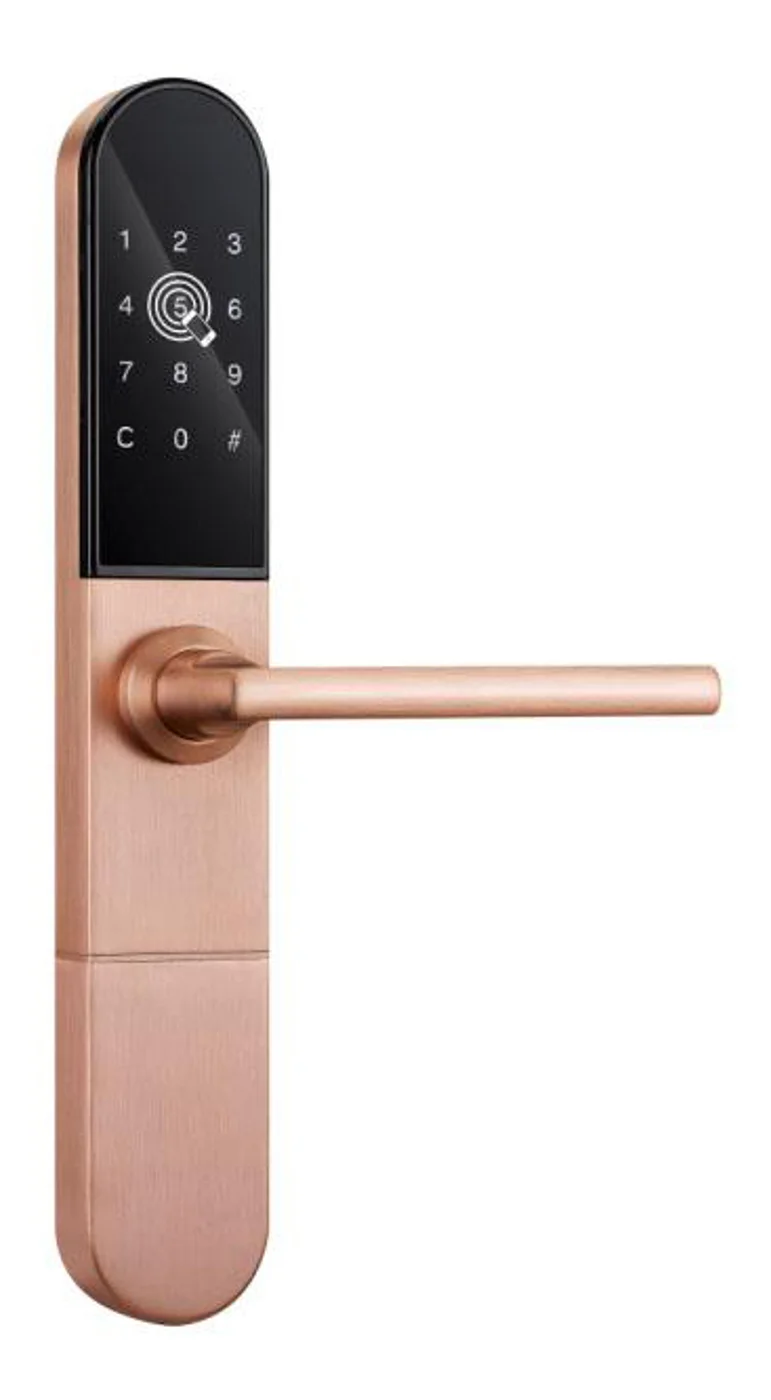
Kunci Lemari Pintar — Dikelola Aplikasi, Dasbor Multi-Lokasi
Kunci lemari pintar yang dikelola via aplikasi untuk kantor, paket, dan armada multi-lokasi. Dasbor aplikasi BLE, jejak audit, buka jarak jauh, tanpa server per kunci.
contentGraph.reasons.explicit
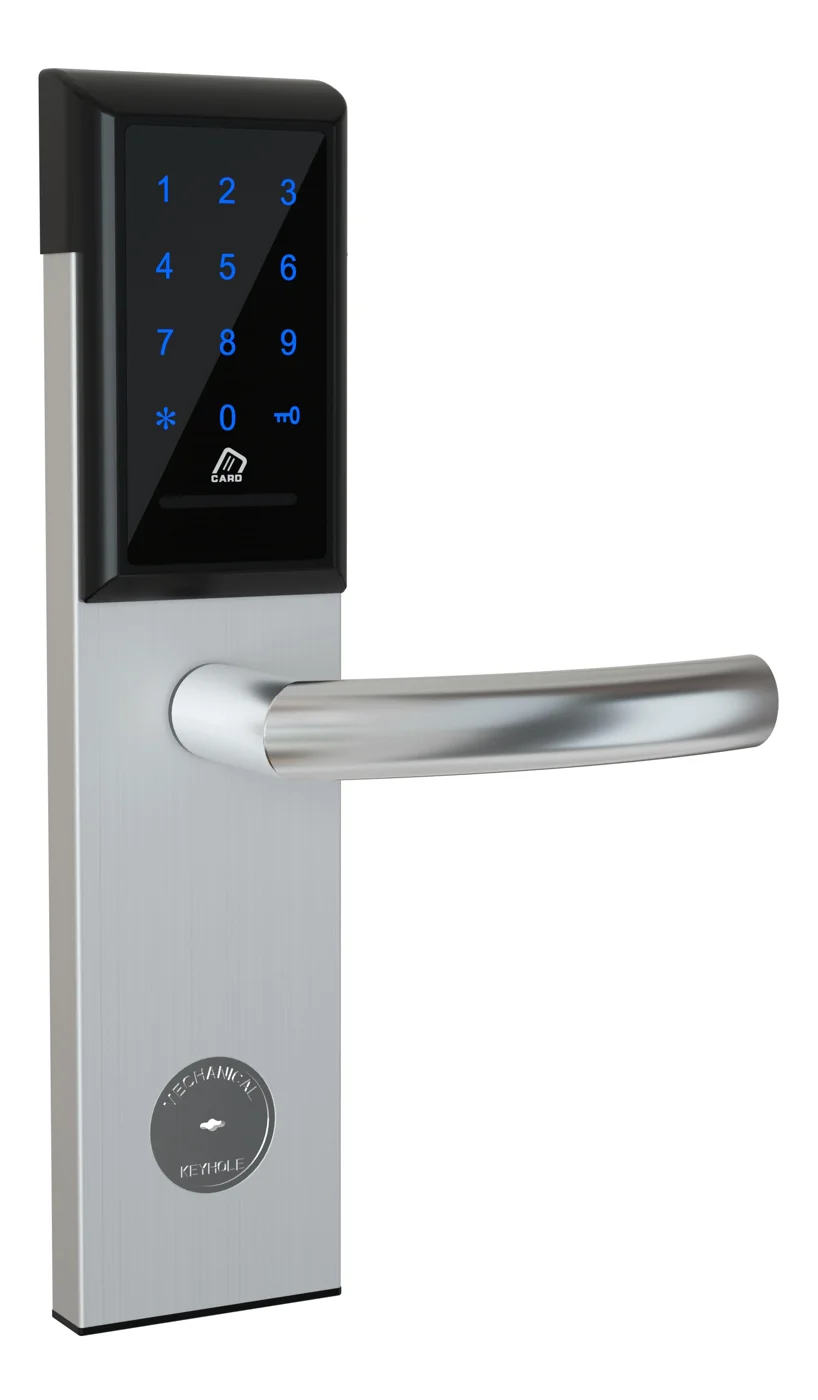
Kunci Lemari Kantor — PIN + Kartu untuk Arsip & Pedestal
Kunci lemari kantor PIN + kartu offline untuk lemari arsip, pedestal, dan laci. Retrofit baterai 5 menit, tanpa WiFi, tanpa manajemen kunci. CE/FCC/RoHS.
contentGraph.reasons.explicit
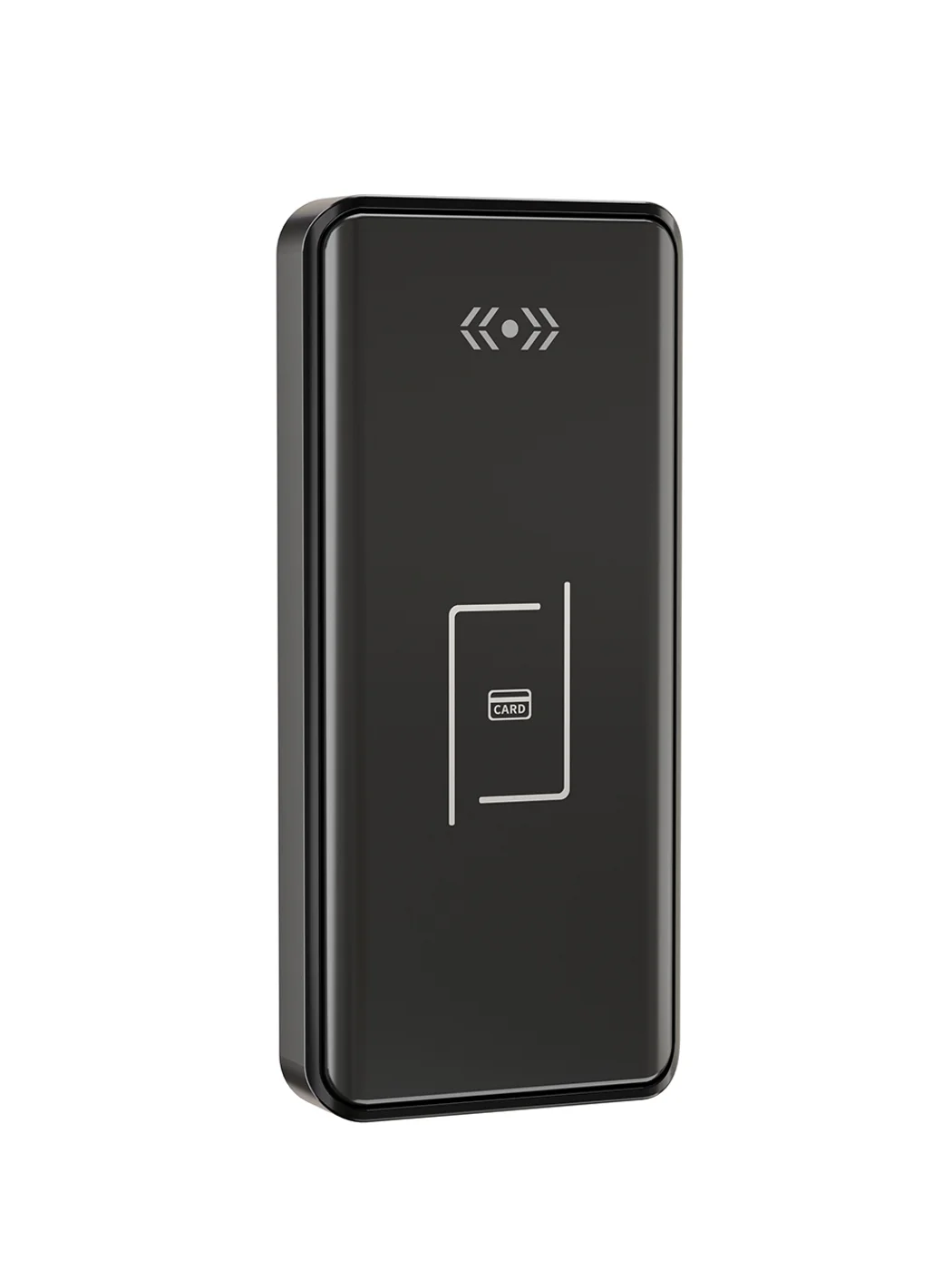
Kunci Loker Gym — Kartu Offline, Tanpa WiFi
Kunci loker gym kartu offline untuk loker fitness dan kolam. Kartu MIFARE, baterai, retrofit 5 menit, tanpa WiFi atau server. Zinc alloy, CE/FCC/RoHS.
contentGraph.reasons.explicit
contentGraph.sections.blog
3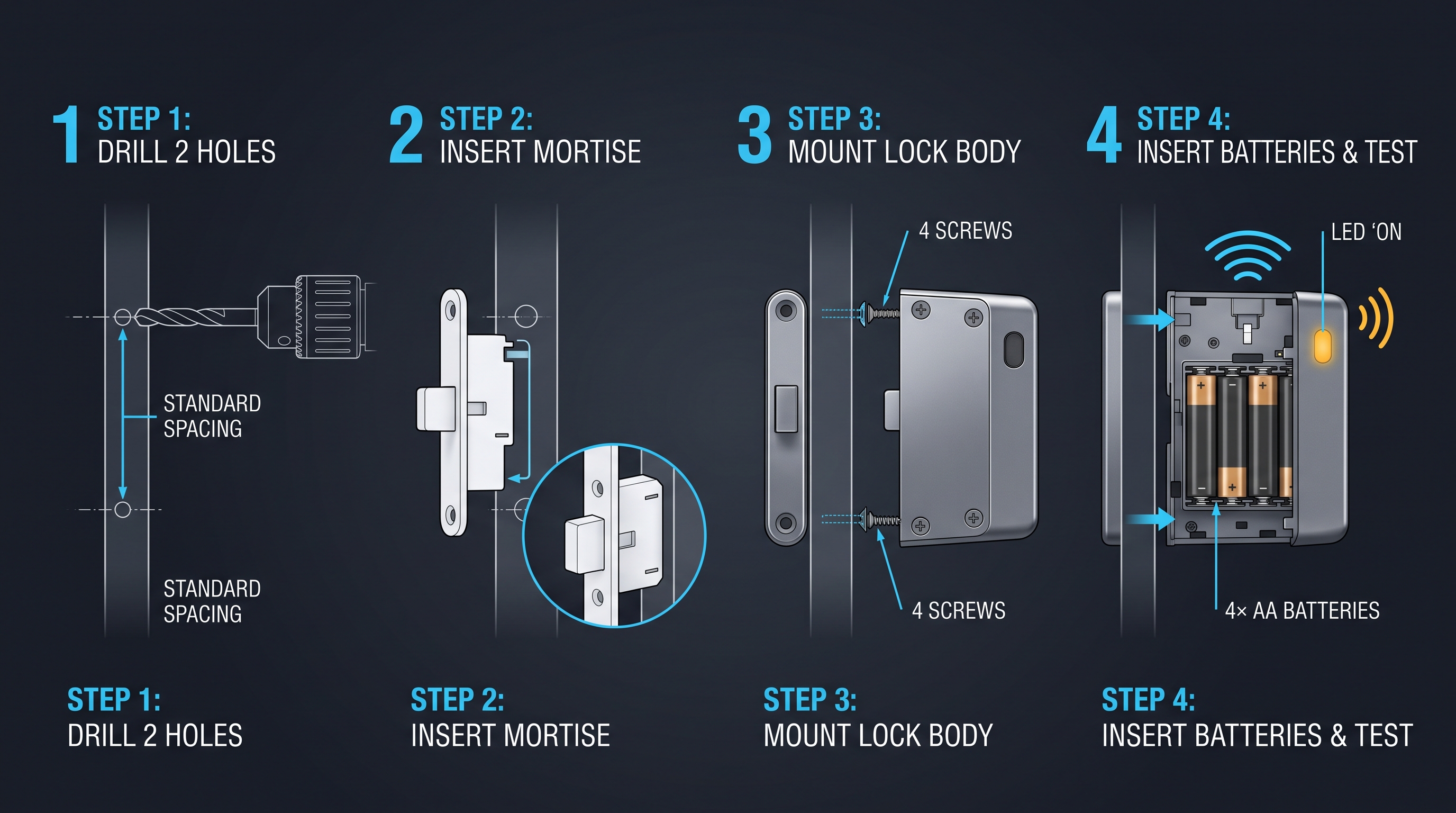
Cabinet Lock Electronic: Panduan Teknis Lengkap untuk Pembeli dan Integrator 2026
Panduan lengkap sistem cabinet lock electronic mencakup jenis, prinsip kerja, instalasi, harga, dan kriteria pembelian untuk aplikasi komersial.
contentGraph.reasons.productContext
Kunci Lemari Digital: Panduan Teknis Lengkap untuk Pembeli dan Integrator 2026
Panduan lengkap sistem kunci lemari digital mencakup jenis, prinsip kerja, instalasi, harga, dan kriteria pembelian untuk aplikasi komersial dan hunian.
contentGraph.reasons.productContext
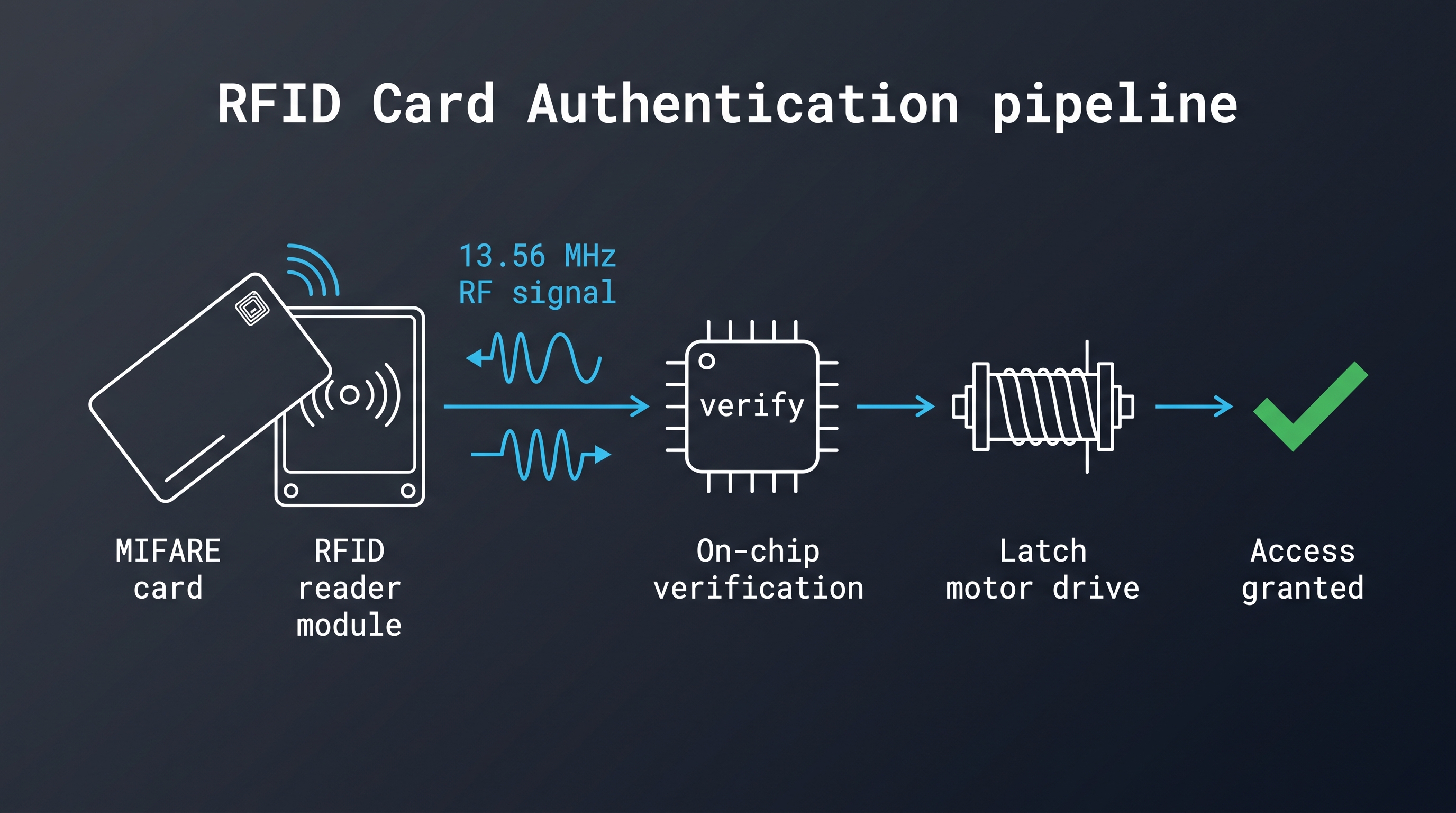
Cabinet Cam Lock Elektronik: Penjelasan Kunci Cam Elektronik Tanpa Kunci
Cabinet cam lock elektronik adalah pengganti kunci cam mekanis tanpa kunci yang digerakkan motor, untuk lubang standar 22,5 mm dan 24 mm kabinet logam.
contentGraph.reasons.productContext
nextStep.blog.title
nextStep.blog.description
- nextStep.blog.points.one
- nextStep.blog.points.two
- nextStep.blog.points.three