Electronic Cabinet Lock: Complete Technical Guide for 2026 Buyers and Integrators
Comprehensive guide to electronic cabinet locks covering types, working principles, installation, pricing, and buying criteria for commercial and residential applications.
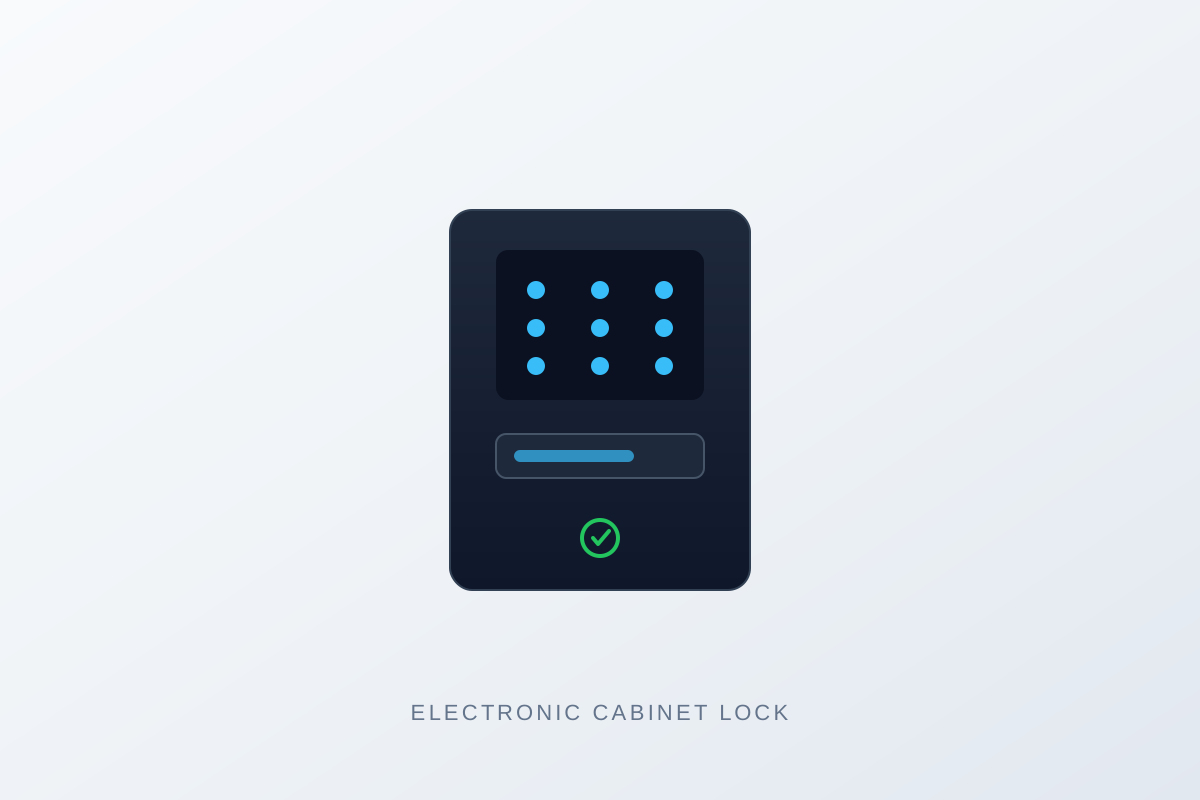
An electronic cabinet lock is a battery-powered or hardwired locking mechanism designed to secure cabinets, lockers, and storage enclosures using electrical actuation rather than a mechanical key. Unlike traditional cam locks that rely on a physical tumbler, an electronic cabinet lock uses a solenoid or motor-driven bolt controlled by a credential input such as a PIN code, RFID card, or fingerprint. Typical operating voltage ranges from 4.5 V (three AA batteries) to 12 V DC, with standby current draw below 30 microamps and an operational cycle time of 0.3 to 0.8 seconds. Electronic cabinet lock systems are deployed across hospitality, healthcare, education, and industrial environments where audit trails, multi-user access, and centralized management are required. Key selection criteria include lock type, credential modality, power source, communication protocol, and compliance certifications such as CE, FCC, and RoHS.
Electronic Cabinet Lock Types and Classifications
An electronic cabinet lock is categorized by its actuation method, credential modality, and power source, with the three dominant types being keypad PIN locks, RFID card locks, and biometric fingerprint locks. Keypad-based electronic cabinet lock models operate at 4.5–6 V DC with typical battery life of 12–18 months, while RFID variants use 13.56 MHz (ISO 14443) or 125 kHz frequency credentials and support up to 10,000 unique card entries. Motor-driven bolt mechanisms deliver 5–8 N of locking force, compared to solenoid-based designs that achieve 3–5 N but with faster response times of 0.2 seconds versus 0.5 seconds. Electronic cabinet lock classifications also extend to communication protocols, with standalone, networked (RS-485 or TCP/IP), and wireless (Zigbee 3.0, Bluetooth Low Energy 5.2, or Wi-Fi 802.11 b/g/n) configurations available. Certification requirements vary by region, with CE marking mandatory for European markets and FCC Part 15 compliance required for all radio-equipped models sold in the United States.
Keypad-Based Electronic Cabinet Lock
The keypad electronic cabinet lock remains the most widely deployed variant due to its simplicity and low cost. Users enter a 4–8 digit PIN on a numeric membrane or capacitive touch keypad, which the microcontroller compares against stored codes. Most keypad electronic cabinet lock units support 1–9 user codes, with admin codes for management override. Battery life typically spans 8,000–12,000 unlock cycles on four AAA alkaline cells. The keypad electronic cabinet lock is ideal for environments where physical credentials are impractical, such as wet or dusty industrial settings.
RFID Electronic Cabinet Lock
The RFID electronic cabinet lock uses radio-frequency identification to authenticate users via card, fob, or wristband. Operating at 13.56 MHz (MIFARE Classic, DESFire, or NTAG) or 125 kHz (EM410x), the RFID electronic cabinet lock reads a credential UID in under 50 milliseconds. High-end models support read-write sectors for bi-directional data exchange, enabling time-based access windows and anti-passback logic. The RFID electronic cabinet lock is preferred in hospitality and shared-workspace settings where users already carry compatible credentials.
Biometric Electronic Cabinet Lock
The biometric electronic cabinet lock integrates a fingerprint sensor (optical or capacitive) to grant access based on unique physiological characteristics. Capacitive sensors capture 500 dpi ridge patterns and match against stored templates in 0.3–0.5 seconds with a false acceptance rate below 0.0001%. The biometric electronic cabinet lock stores 50–500 fingerprint templates depending on memory capacity, making it suitable for multi-user cabinets in healthcare, laboratories, and secure document storage.
Hidden Electronic Cabinet Lock
A hidden electronic cabinet lock is concealed behind the cabinet panel, with no externally visible locking mechanism. Actuation is triggered by an internal RFID reader, magnetic sensor, or Bluetooth signal from a smartphone. The hidden electronic cabinet lock is popular in residential furniture, display cases, and high-end retail where aesthetic integrity is paramount. Installation requires a mortise cutout of approximately 18 × 42 mm and a minimum panel thickness of 16 mm.
Electronic Cabinet Lock Working Principles and Mechanisms
The working principle of an electronic cabinet lock centers on converting an electrical signal into mechanical bolt displacement through either a solenoid or a geared DC motor. When a valid credential is presented, the electronic cabinet lock microcontroller (typically an ARM Cortex-M0 or M3 running at 48 MHz) sends a pulse to the actuator driver circuit. In a solenoid-based electronic cabinet lock, this pulse energizes a coil, generating a magnetic field that pulls a ferrous plunger against a return spring, retracting the bolt for 0.2–0.5 seconds. In a motor-driven electronic cabinet lock, a 6 V DC micro-gearmotor rotates a cam that displaces the bolt laterally, providing higher holding force and quieter operation. The electronic cabinet lock firmware manages credential verification, audit logging, anti-tamper monitoring, and low-battery alerts. Communication between the credential reader and the lock body uses a 3-wire UART or I2C bus at 9600–115200 baud. Power management is critical: the electronic cabinet lock spends 99.97% of its duty cycle in sleep mode at 5–30 microamps, waking only on credential detection to perform a 200–500 millisecond authentication and actuation sequence.
Solenoid Actuation in Electronic Cabinet Lock
The solenoid-based electronic cabinet lock is the simplest and most cost-effective actuation method. A cylindrical coil wound around a hollow bobbin generates a magnetic field when energized at 6–12 V DC, pulling a spring-loaded plunger into the coil body. This linear motion retracts a latch bolt, allowing the cabinet door to open. The electronic cabinet lock solenoid draws 150–400 mA during its 0.2-second activation pulse, with peak force ratings of 3–5 N. Solenoid electronic cabinet lock designs are compact (typically 35 × 35 × 20 mm) but produce an audible click that may be undesirable in quiet environments.
Motor-Driven Bolt in Electronic Cabinet Lock
A motor-driven electronic cabinet lock uses a subminiature DC motor (typically 6 V, 6 mm diameter) coupled to a multi-stage gear reduction train that converts rotational motion to linear bolt travel. The electronic cabinet lock motor operates at 80–150 mA, significantly lower than a solenoid, and delivers 5–8 N of locking force through a hardened steel deadbolt. Motor-driven electronic cabinet lock units provide smoother, quieter operation and support auto-relock functionality, where the bolt extends automatically after a configurable timeout of 3–30 seconds.
Credential Authentication Logic
The electronic cabinet lock authentication pipeline begins with credential capture, followed by feature extraction, template matching, and access decision. For PIN-based electronic cabinet lock models, the microcontroller hashes the entered code using SHA-256 and compares it against a stored hash table, preventing plaintext code extraction. For RFID electronic cabinet lock systems, the reader interrogates the credential at 13.56 MHz, retrieves the UID, and performs a lookup in EEPROM or flash memory. Biometric electronic cabinet lock units extract minutiae points from the fingerprint image and perform a Hamming distance comparison against stored templates, accepting matches with a score above a configurable threshold (typically 40 out of 100).
Electronic Cabinet Lock Features Comparison
The feature set of an electronic cabinet lock determines its suitability for specific applications, with key differentiators including access management, audit trail capacity, communication protocol, power source, and physical security ratings. Modern electronic cabinet lock models increasingly integrate wireless connectivity, with Zigbee 3.0 (2.4 GHz, 250 kbps), Bluetooth Low Energy 5.2 (2.4 GHz, 2 Mbps), and Wi-Fi 802.11 b/g/n being the dominant protocols. The electronic cabinet lock audit trail depth ranges from 1,000 entries on budget models to 100,000 entries on enterprise-grade units, with each log record containing timestamp, credential ID, and action type. Advanced electronic cabinet lock features include vacation mode (temporarily disabling all user credentials), duress codes (triggering silent alarms), and remote unlock via cloud API. Physical security is quantified by bolt projection (15–25 mm), bolt diameter (8–12 mm), and anti-pry ratings tested to 500 N of lateral force. The comparison table below summarizes the electronic cabinet lock feature landscape across major categories.
| Feature | Keypad Electronic Cabinet Lock | RFID Electronic Cabinet Lock | Biometric Electronic Cabinet Lock | Hidden Electronic Cabinet Lock |
|---|---|---|---|---|
| Credential type | 4–8 digit PIN | 13.56 MHz / 125 kHz card | Fingerprint template | RFID / Bluetooth |
| User capacity | 1–9 codes | 100–10,000 cards | 50–500 templates | 100–1,000 credentials |
| Battery life | 8,000–12,000 cycles | 10,000–15,000 cycles | 5,000–8,000 cycles | 6,000–10,000 cycles |
| Audit trail | 1,000–3,000 entries | 3,000–10,000 entries | 5,000–50,000 entries | 3,000–10,000 entries |
| Communication | Standalone | RS-485 / TCP/IP | RS-485 / Wi-Fi | Zigbee / BLE 5.2 |
| Operating voltage | 4.5–6 V DC | 6 V DC | 6–12 V DC | 6 V DC |
| Locking force | 3–5 N | 5–8 N | 5–8 N | 3–5 N |
| Response time | 0.3–0.5 s | 0.2–0.3 s | 0.3–0.5 s | 0.3–0.8 s |
| IP rating | IP54 | IP54–IP65 | IP54 | IP42 |
| Price range | $15–$60 | $25–$120 | $40–$250 | $30–$150 |
Access Management Capabilities
The electronic cabinet lock access management system governs how credentials are enrolled, modified, and revoked. Standalone electronic cabinet lock units require physical proximity to the lock for management, typically using a programming code and keypad sequence. Networked electronic cabinet lock systems centralize management through a software platform accessible via web browser or mobile app, supporting bulk credential import, role-based access control, and time-scheduled access windows. Enterprise electronic cabinet lock platforms integrate with Active Directory or LDAP for single sign-on, automatically provisioning and de-provisioning access based on employee status.
Audit Trail and Logging
An electronic cabinet lock audit trail records every lock and unlock event with timestamp, credential identifier, and action result. Budget electronic cabinet lock models store 1,000–3,000 events in volatile memory that may be lost during battery failure, while enterprise models use non-volatile flash storage retaining 50,000–100,000 events even without power. The electronic cabinet lock audit trail is exported via USB, RS-485, or network download in CSV or JSON format, enabling integration with security information and event management (SIEM) systems for compliance reporting and anomaly detection.
Communication and Connectivity
Networked electronic cabinet lock connectivity options determine the system's scalability and integration depth. RS-485 bus wiring supports up to 32 electronic cabinet lock units per segment at distances up to 1,200 meters, making it cost-effective for large locker banks. TCP/IP connectivity provides higher bandwidth and direct cloud integration but requires PoE (Power over Ethernet) or local power at each electronic cabinet lock. Wireless electronic cabinet lock protocols eliminate cabling but introduce battery drain from radio transmissions, with Zigbee offering the lowest power consumption at 30 mA transmit current versus Wi-Fi at 200–350 mA.
Electronic Cabinet Lock Applications and Use Cases
The electronic cabinet lock serves diverse applications across industries, with deployment patterns shaped by user volume, security requirements, and management complexity. In hospitality, the electronic cabinet lock secures in-room minibars, personal safes, and staff storage, with RFID credentials linked to the property management system for seamless guest access. Healthcare facilities deploy the electronic cabinet lock on medication cabinets, patient belongings lockers, and controlled substance storage, requiring audit trails compliant with DEA and HIPAA regulations. Educational institutions use the electronic cabinet lock for student lockers, lab equipment cabinets, and athletic storage, with networked management enabling semester-based credential provisioning. Industrial applications include tool cribs, hazardous material storage, and maintenance parts cabinets, where the electronic cabinet lock integrates with inventory management systems to track tool checkout and return. Retail environments use the electronic cabinet lock on display cases, back-room storage, and fitting room lockers, with audit trails supporting loss prevention investigations. The electronic cabinet lock is also gaining traction in residential settings for home office cabinets, gun storage, and medication safes, where biometric and smartphone-based access provides convenience without sacrificing security.
Hospitality Electronic Cabinet Lock Deployments
Hotels and resorts deploy the electronic cabinet lock on in-room safes, minibar cabinets, and staff lockers. The hospitality electronic cabinet lock integrates with property management systems (PMS) such as Opera or Mews, linking guest room keys to cabinet access for the duration of the stay. RFID electronic cabinet lock models operating at 13.56 MHz dominate this segment, with MIFARE DESFire EV2 credentials providing mutual authentication and encrypted data transfer. The hospitality electronic cabinet lock must withstand 50,000–100,000 open/close cycles per year and operate reliably in humidity levels of 30–70%.
Healthcare Electronic Cabinet Lock Systems
Healthcare facilities require the electronic cabinet lock to meet stringent regulatory standards for controlled substance storage. DEA Schedule II drug cabinets must use an electronic cabinet lock with biometric authentication, dual-credential verification, and real-time audit trail reporting. The healthcare electronic cabinet lock integrates with automated dispensing cabinet (ADC) systems such as Pyxis or Omnicell, logging every access event with nurse ID, patient ID, and medication NDC code. HIPAA compliance requires that the electronic cabinet lock audit trail be encrypted at rest using AES-128 or AES-256 and accessible only to authorized administrators.
Educational Institution Electronic Cabinet Lock
Schools and universities deploy the electronic cabinet lock on student lockers, replacing mechanical combination locks with RFID or keypad models. The educational electronic cabinet lock supports bulk enrollment at semester start, with CSV import of student ID numbers and automatic credential assignment. Networked electronic cabinet lock systems enable remote lockdown during emergencies, instantly disabling all locker access with a single command. The educational electronic cabinet lock must withstand 15,000–30,000 annual cycles in high-traffic corridors and resist vandalism with IP54-rated keypads and anti-pry bolt designs.
Industrial Electronic Cabinet Lock Applications
Manufacturing and maintenance facilities use the electronic cabinet lock to secure tool cribs, spare parts inventory, and hazardous materials. The industrial electronic cabinet lock integrates with tool tracking software such as CREW or ToolWatch, recording which employee removed which tool and when. Industrial electronic cabinet lock models feature IP65 environmental sealing, stainless steel construction, and vibration resistance rated to 5 G at 10–500 Hz. Networked industrial electronic cabinet lock systems support automated restocking alerts when inventory falls below configurable thresholds, reducing downtime from stockouts.
Electronic Cabinet Lock Installation Guide
Installing an electronic cabinet lock requires careful preparation of the cabinet door, accurate drilling of mounting holes, and proper routing of cables between the lock body and credential reader. The electronic cabinet lock installation process begins with measuring the door thickness (typically 16–25 mm for metal cabinets, 18–35 mm for wood), confirming it falls within the lock's specified range. A standard electronic cabinet lock requires a main mortise cutout of 18 × 42 mm for the lock body, a 10 mm bolt hole, and a 12 mm hole for the cylinder or reader cable. The electronic cabinet lock is secured using two M4 or M5 machine screws from the cabinet interior, with the bolt extending through the door edge into a strike plate mounted on the cabinet frame. For surface-mounted electronic cabinet lock models, a mounting plate is adhered or screwed to the cabinet interior, requiring no mortise cutout. Cable routing between the electronic cabinet lock body and external keypad or RFID reader uses a 4-conductor ribbon cable (28 AWG, 300 mm length) passed through a 6 mm grommet hole. Power is supplied by either an internal battery pack (4 × AA or 4 × AAA alkaline cells) or an external 12 V DC adapter connected via a 2.1 mm barrel jack. After physical installation, the electronic cabinet lock is initialized by entering programming mode (typically pressing and holding a reset button for 5 seconds), setting the master code, and enrolling user credentials.
Preparation and Measurement for Electronic Cabinet Lock
Before purchasing an electronic cabinet lock, measure the cabinet door thickness, height, width, and the available interior depth behind the door. The electronic cabinet lock specification sheet lists minimum and maximum door thickness; exceeding the maximum prevents proper bolt engagement, while falling below the minimum leaves the lock body protruding into the cabinet interior. Verify that the cabinet door material (steel, aluminum, wood, or MDF) is compatible with the electronic cabinet lock mounting hardware. Metal doors may require self-tapping screws or rivet nuts, while wood doors accept standard wood screws. Check for obstructions behind the mounting location, including shelves, hinges, and existing hardware that could interfere with the electronic cabinet lock body or cable routing.
Step-by-Step Electronic Cabinet Lock Installation
Mark the mortise cutout location on the cabinet door interior using the template provided with the electronic cabinet lock. Ensure the cutout is level and positioned so the bolt aligns with the strike plate on the frame.
Drill a 10 mm pilot hole at each corner of the marked cutout, then use a jigsaw or rotary tool to remove the material between the holes, creating the 18 × 42 mm mortise opening for the electronic cabinet lock body.
Drill the 10 mm bolt hole through the door edge at the position specified by the electronic cabinet lock template, ensuring the hole is perpendicular to the door face for smooth bolt travel.
Insert the electronic cabinet lock body into the mortise, aligning the bolt with the edge hole. Secure the lock using two M4 machine screws from the interior, tightening to 1.5 Nm torque.
Mount the strike plate on the cabinet frame opposite the bolt, using the electronic cabinet lock template to position the recessed pocket that receives the extended bolt.
Route the ribbon cable from the electronic cabinet lock body to the external keypad or RFID reader location, passing through a 6 mm grommet hole drilled at a concealed position.
Connect the cable to the electronic cabinet lock reader, observing polarity: red (VCC), black (GND), yellow (TX), white (RX). Apply thread-locking compound to screw terminals to prevent loosening from vibration.
Install four AA or AAA alkaline batteries in the electronic cabinet lock battery compartment, observing correct polarity. The lock will emit a confirmation beep and flash the LED indicator.
Enter programming mode by pressing and holding the reset button for 5 seconds. Set the master code (6–8 digits), then enroll user credentials following the electronic cabinet lock instruction manual.
Test the electronic cabinet lock by presenting each enrolled credential, verifying smooth bolt retraction and extension. Confirm the door opens and closes freely without binding.
Surface-Mount Electronic Cabinet Lock Installation
Surface-mounted electronic cabinet lock models require no mortise cutout, simplifying installation on thin or fragile cabinet doors. The electronic cabinet lock body is attached to the cabinet interior using 3M VHB adhesive or included mounting screws, with the bolt extending horizontally to engage a strike plate on the door. The external reader is mounted on the cabinet exterior using the same adhesive or screw method. Surface-mount electronic cabinet lock installation takes 15–30 minutes versus 45–90 minutes for mortise models, but the visible lock body may be aesthetically undesirable in some settings.
Common Installation Mistakes with Electronic Cabinet Lock
Misaligned bolt and strike plate is the most common electronic cabinet lock installation error, causing intermittent lock failures and premature bolt wear. Always use the manufacturer's template and verify alignment with a dry-fit before final tightening. Reversed cable polarity can damage the electronic cabinet lock electronics; double-check wire colors against the documentation before applying power. Over-tightening mounting screws distorts the lock body, causing the bolt to bind; use a torque screwdriver set to the manufacturer's specification. Failing to weather-seal cable penetrations on outdoor electronic cabinet lock installations allows moisture ingress, leading to corrosion and short circuits.
Electronic Cabinet Lock Pricing and Cost Analysis
The electronic cabinet lock market spans a wide price range from $15 budget keypad models to $500 enterprise networked biometric systems. Pricing is driven by credential modality, communication protocol, build quality, and brand reputation. A basic keypad electronic cabinet lock costs $15–$60, with volume discounts reducing per-unit cost by 20–35% at quantities above 500 units. RFID electronic cabinet lock models range from $25 to $120, with MIFARE DESFire compatibility adding $15–$30 per unit. Biometric electronic cabinet lock pricing starts at $40 for consumer-grade optical sensors and reaches $250+ for capacitive sensors with 500-template capacity and networked management. Networked electronic cabinet lock systems incur additional costs for controllers ($200–$800 each, supporting 32–64 locks), software licenses ($2–$15 per lock per month), and installation labor ($50–$150 per lock). Total cost of ownership for a 100-lock electronic cabinet lock deployment ranges from $8,000 for standalone keypad models to $45,000 for fully networked biometric systems with cloud management. The cost analysis table below breaks down electronic cabinet lock pricing by category and deployment scale.
| Electronic Cabinet Lock Category | Unit Price (1–9 units) | Unit Price (500+ units) | Controller Cost | Software Cost (per lock/month) | Installation (per lock) |
|---|---|---|---|---|---|
| Keypad standalone | $15–$60 | $10–$40 | N/A | N/A | $50–$100 |
| RFID standalone | $25–$80 | $18–$55 | N/A | N/A | $50–$100 |
| RFID networked (RS-485) | $50–$120 | $35–$85 | $200–$500 | $1–$5 | $75–$150 |
| Biometric standalone | $40–$150 | $28–$100 | N/A | N/A | $75–$125 |
| Biometric networked | $100–$250 | $70–$175 | $400–$800 | $3–$15 | $100–$150 |
| Hidden RFID/BLE | $30–$150 | $20–$100 | $150–$400 (gateway) | $2–$8 | $50–$100 |
| Wi-Fi cloud-connected | $60–$200 | $40–$140 | N/A (cloud) | $3–$12 | $50–$100 |
Budget Electronic Cabinet Lock Options ($15–$50)
Budget electronic cabinet lock models prioritize basic functionality over advanced features. These units typically offer keypad-only access, 1–5 user codes, no audit trail, and mechanical key override. The budget electronic cabinet lock is suitable for residential applications, small offices, and low-security storage where convenience is the primary goal. Build quality varies significantly in this segment, with zinc alloy bodies and plastic keypads being common. Battery life on budget electronic cabinet lock models averages 6,000–8,000 cycles, shorter than premium alternatives.
Mid-Range Electronic Cabinet Lock ($50–$150)
The mid-range electronic cabinet lock adds RFID credential support, audit trail logging (1,000–3,000 events), and optional RS-485 networking. Build quality improves with stainless steel bolts, IP54 sealing, and tamper-resistant screw hardware. The mid-range electronic cabinet lock targets small to medium commercial deployments such as office cabinets, retail back-room storage, and school lockers. Warranty coverage typically extends to 2 years, with manufacturer support for firmware updates and credential management software.
Enterprise Electronic Cabinet Lock ($150–$500+)
Enterprise electronic cabinet lock systems deliver full-featured access management with biometric authentication, deep audit trails (50,000+ events), TCP/IP or cloud connectivity, and integration with enterprise identity systems. The enterprise electronic cabinet lock is built for high-cycle commercial environments, with rated lifespans of 500,000–1,000,000 cycles and IP65 environmental sealing. Enterprise electronic cabinet lock deployments include dedicated project management, custom firmware configuration, and SLA-backed maintenance contracts. Total deployment costs for a 500-lock enterprise electronic cabinet lock system can exceed $200,000 including software, controllers, installation, and first-year support.
Electronic Cabinet Lock Buying Guide
Selecting the right electronic cabinet lock requires evaluating security requirements, user volume, environmental conditions, budget, and management complexity. The buying process begins with defining the threat model: what are you protecting, from whom, and what happens if access is compromised? A residential medication cabinet has different requirements than a hospital controlled-substance cabinet or an industrial tool crib. The electronic cabinet lock credential modality should match the user base: keypads for low-volume single-user applications, RFID for multi-user environments with existing card infrastructure, and biometrics for high-security applications where credential sharing must be eliminated. Environmental factors dictate the electronic cabinet lock IP rating: IP42 suffices for indoor office cabinets, while IP65 is required for outdoor or wash-down environments. The electronic cabinet lock power source should align with the deployment scale: battery power for standalone locks (simpler installation, ongoing battery cost), hardwired 12 V DC for networked systems (no battery maintenance, requires licensed electrician). Always verify that the electronic cabinet lock carries region-appropriate certifications: CE for Europe, FCC for the United States, RoHS for restricted substances, and UL 294 for access control system units in North America.
Security Requirements Assessment
Define the electronic cabinet lock security level by identifying the assets being protected and the consequences of unauthorized access. Low-security applications (office supplies, personal belongings) can use a keypad electronic cabinet lock with 4-digit PINs. Medium-security applications (controlled documents, electronics) require an RFID electronic cabinet lock with encrypted credentials (MIFARE DESFire EV2 or EV3). High-security applications (medications, weapons, sensitive data) mandate a biometric electronic cabinet lock with dual-factor authentication (fingerprint plus PIN) and tamper alarms. The electronic cabinet lock bolt strength should exceed the forced-entry threat: 5 N suffices for casual deterrence, while 15+ N is needed for determined attack.
User Volume and Credential Management
The electronic cabinet lock user capacity must exceed the peak number of unique users with a 20% margin for growth. A keypad electronic cabinet lock supporting 9 codes is adequate for a family or small office, while a 500-employee workplace requires an RFID or biometric electronic cabinet lock with networked management. Consider credential lifecycle: how frequently are users added, removed, or reassigned? High-turnover environments benefit from networked electronic cabinet lock systems with centralized management, while stable user populations can operate effectively with standalone locks.
Environmental Considerations
The electronic cabinet lock operating environment determines the required IP rating, temperature range, and material specifications. Indoor climate-controlled environments accept standard electronic cabinet lock models with IP42–IP54 ratings. Outdoor or semi-outdoor installations require IP65–IP67 sealing, UV-resistant housings, and operating temperature ranges of -20 to +60 degrees Celsius. Wash-down environments (food processing, pharmaceutical manufacturing) need IP69K-rated electronic cabinet lock models with stainless steel construction. High-vibration environments (vehicle-mounted cabinets, industrial machinery) require electronic cabinet lock units with vibration-resistant mounting and flexible cable connections.
Protocol and Integration Compatibility
The electronic cabinet lock communication protocol must be compatible with existing or planned access control infrastructure. Standalone electronic cabinet lock units operate independently but cannot be centrally managed. RS-485 electronic cabinet lock networks integrate with on-premise access controllers but require dedicated cabling. TCP/IP electronic cabinet lock systems connect to existing network infrastructure but need PoE injectors or local power. Wireless electronic cabinet lock protocols (Zigbee, BLE, Wi-Fi) reduce installation cost but require gateways or hubs. Verify that the electronic cabinet lock supports industry-standard APIs (REST, MQTT) for integration with third-party security platforms.
Warranty and Support Evaluation
The electronic cabinet lock warranty period and support quality are indicators of manufacturer confidence and long-term cost of ownership. Budget electronic cabinet lock models typically offer 1-year warranties with email-only support. Mid-range electronic cabinet lock products provide 2–3 year warranties with phone and email support. Enterprise electronic cabinet lock systems include 3–5 year warranties with on-site service, firmware update commitments, and dedicated account managers. Evaluate the electronic cabinet lock manufacturer's track record: how long have they been in business, do they publish firmware updates, and do they provide documentation in English?
Electronic Cabinet Lock Troubleshooting and Maintenance
The electronic cabinet lock, like any electromechanical device, requires periodic maintenance and occasional troubleshooting to ensure reliable operation. Common electronic cabinet lock issues fall into four categories: power problems, credential recognition failures, mechanical binding, and communication errors. Power-related electronic cabinet lock problems manifest as complete lockout (dead batteries), intermittent operation (low battery voltage), or slow bolt response (voltage sag under load). Credential recognition failures on the electronic cabinet lock can result from corrupted templates, expired credentials, or sensor contamination. Mechanical binding in the electronic cabinet lock occurs when the bolt misaligns with the strike plate, debris obstructs the bolt path, or temperature changes cause dimensional shifts in the cabinet door. Communication errors on networked electronic cabinet lock systems stem from wiring faults, address conflicts, or protocol mismatches. A systematic electronic cabinet lock troubleshooting approach begins with the simplest explanation (dead batteries) and progresses to more complex diagnostics (firmware corruption, controller failure). Regular electronic cabinet lock maintenance includes battery replacement every 12–18 months, strike plate inspection, bolt lubrication with dry PTFE spray, and firmware updates when available. The troubleshooting table below summarizes common electronic cabinet lock problems, causes, and solutions.
| Electronic Cabinet Lock Symptom | Likely Cause | Diagnostic Step | Solution |
|---|---|---|---|
| No response to credential | Dead or low batteries | Measure battery voltage with multimeter | Replace with fresh alkaline batteries |
| Intermittent credential recognition | Sensor contamination | Clean sensor surface with isopropyl alcohol | Clean sensor; replace if damaged |
| Bolt does not retract | Mechanical binding | Check bolt alignment with strike plate | Adjust strike plate; lubricate bolt |
| Beeps continuously | Low battery warning | Check battery indicator LED | Replace batteries immediately |
| Cannot enter programming mode | Master code forgotten | Use mechanical key override | Reset to factory defaults; re-enroll |
| RFID card not recognized | Card not enrolled or damaged | Test with known-good card | Re-enroll card; replace if damaged |
| Fingerprint not recognized | Dirty or worn sensor | Clean sensor with microfiber cloth | Re-enroll fingerprint with better angle |
| Network communication failure | Wiring fault or address conflict | Check RS-485 termination resistors | Correct wiring; set unique address |
| Bolt retracts then immediately extends | Auto-relock timeout too short | Check programming settings | Increase auto-relock timeout |
| Lock drains batteries quickly | Firmware bug or short circuit | Check for water damage | Update firmware; replace lock body |
| Audible grinding noise | Motor gear wear | Inspect motor assembly | Replace motor or entire lock body |
| Credential works intermittently | Electromagnetic interference | Check for nearby RF sources | Relocate reader; use shielded cable |
Power and Battery Issues
The electronic cabinet lock battery is the most common failure point, accounting for approximately 60% of all service calls. Alkaline batteries in an electronic cabinet lock typically last 12–18 months under normal usage (10–20 cycles per day), but extreme temperatures, high humidity, and frequent use accelerate depletion. When the electronic cabinet lock battery voltage drops below 4.0 V (for 4.5 V systems), the lock may operate unreliably or emit low-battery warnings. Replace electronic cabinet lock batteries proactively at 12-month intervals rather than waiting for failure, as a dead-battery lockout can disrupt operations. Use quality alkaline batteries (Duracell, Energizer) rather than heavy-duty or rechargeable NiMH cells, which have lower voltage output (1.2 V per cell versus 1.5 V) that may not meet the electronic cabinet lock minimum voltage requirement.
Credential Recognition Failures
When the electronic cabinet lock fails to recognize a credential, systematically isolate the cause. Test multiple credentials: if all fail, the electronic cabinet lock reader may be damaged or the firmware corrupted. If only one credential fails, that specific credential may be damaged (cracked RFID card, worn fingerprint) or may have been de-enrolled accidentally. For biometric electronic cabinet lock models, re-enroll the fingerprint using multiple angles and ensure the finger is clean and dry. For RFID electronic cabinet lock systems, verify the credential frequency (13.56 MHz versus 125 kHz) matches the reader specification. Electronic cabinet lock credential enrollment corruption can occur during power transients; perform a factory reset and re-enroll all credentials if enrollment data is suspected corrupt.
Mechanical Binding and Bolt Issues
The electronic cabinet lock bolt must travel freely through its full stroke without obstruction. Mechanical binding causes the electronic cabinet lock motor or solenoid to stall, drawing excessive current and potentially damaging the driver circuit. Inspect the electronic cabinet lock bolt path for debris, paint overspray, or deformed strike plate edges. Verify that the cabinet door does not sag or shift when opened and closed, as this can misalign the bolt with the strike plate opening. Apply dry PTFE lubricant to the electronic cabinet lock bolt and strike plate annually; avoid oil-based lubricants that attract dust and debris. If the electronic cabinet lock bolt is visibly worn or bent, replace the lock body rather than attempting field repair.
Networked Electronic Cabinet Lock Communication Errors
Networked electronic cabinet lock systems using RS-485 bus topology are susceptible to wiring faults, termination issues, and address conflicts. Each electronic cabinet lock on the bus must have a unique address (typically 1–32), set via DIP switches or software configuration. RS-485 bus segments longer than 300 meters require termination resistors (120 ohms) at both ends to prevent signal reflections. Electronic cabinet lock communication errors manifest as intermittent lock status reports, delayed remote unlock commands, or complete bus failure. Use a multimeter to verify RS-485 bus voltage: the A line should read 0.5–2.5 V above the B line in idle state. For TCP/IP electronic cabinet lock systems, verify network connectivity with ping tests and check for IP address conflicts using the DHCP reservation table.
Electronic Cabinet Lock Future Trends and Innovations
The electronic cabinet lock market is evolving rapidly, driven by advances in wireless connectivity, biometric sensing, artificial intelligence, and cloud computing. The next generation of electronic cabinet lock products will feature seamless smartphone integration via Matter 1.3 and BLE 5.4 protocols, eliminating the need for proprietary hubs and credentials. AI-powered electronic cabinet lock systems will use machine learning algorithms to detect anomalous access patterns, flagging potential credential sharing or forced entry attempts in real time. Ultra-low-power electronic cabinet lock designs leveraging energy harvesting technology will eliminate battery replacement entirely, drawing power from RFID field energy or indoor solar cells. The electronic cabinet lock form factor will shrink through system-in-package (SiP) integration, with complete lock electronics fitting into a 25 × 25 × 10 mm module. Biometric electronic cabinet lock sensors will evolve beyond fingerprint to include palm vein recognition, iris scanning, and 3D facial recognition, all within the power budget of a coin-cell battery. Cloud-based electronic cabinet lock management platforms will offer predictive maintenance alerts, automated compliance reporting, and integration with building management systems via BACnet and oBIX protocols. The electronic cabinet lock industry will also see increased adoption of mobile access standards such as Aliro and CCC (Car Connectivity Consortium) Digital Key, enabling smartphones and wearables to serve as universal credentials across cabinet, door, and vehicle locking systems. Sustainability concerns will drive the electronic cabinet lock market toward recyclable materials, modular designs for field-replaceable components, and firmware-over-the-air (FOTA) updates that extend product lifespans. The convergence of these trends will transform the electronic cabinet lock from a simple access control device into an intelligent edge node in the broader smart building ecosystem.
Wireless Protocol Evolution for Electronic Cabinet Lock
The electronic cabinet lock wireless landscape is consolidating around three protocols: Matter 1.3 for smart home integration, BLE 5.4 for smartphone credentials, and Wi-Fi 6 for high-bandwidth cloud connectivity. Matter-compatible electronic cabinet lock products benefit from multi-vendor interoperability, allowing a single smart home controller to manage locks from different manufacturers. BLE 5.4 introduces Periodic Advertising with Responses (PAwR), enabling ultra-low-power electronic cabinet lock communication at 1 microamp receive current, extending battery life to 3–5 years. Wi-Fi 6 electronic cabinet lock models leverage OFDMA and target wake time (TWT) to reduce power consumption by 60% compared to Wi-Fi 4, making always-connected cloud management practical on battery power.
Artificial Intelligence in Electronic Cabinet Lock
AI-enhanced electronic cabinet lock systems use edge machine learning to analyze access patterns and detect anomalies. The electronic cabinet lock microcontroller runs a lightweight neural network (typically 50–200 KB model size) that classifies each access event as normal, suspicious, or malicious based on factors such as time of day, credential history, and inter-event timing. When the electronic cabinet lock AI model flags a suspicious event, it can require secondary authentication, trigger a silent alarm, or temporarily disable the credential. Federated learning approaches allow multiple electronic cabinet lock units to share threat intelligence without transmitting raw user data, preserving privacy while improving detection accuracy.
Energy Harvesting Electronic Cabinet Lock
Energy harvesting technology promises to eliminate the electronic cabinet lock battery as a maintenance item. RFID-powered electronic cabinet lock designs harvest energy from the 13.56 MHz credential reader field, generating 5–10 milliwatts during the 50-millisecond card presentation window. This energy charges a supercapacitor that powers the electronic cabinet lock actuator for the brief bolt retraction cycle. Indoor solar cells integrated into the electronic cabinet lock housing can generate 10–50 microwatts under typical office lighting (300–500 lux), sufficient to maintain the lock in sleep mode indefinitely. Piezoelectric energy harvesters on the cabinet door hinge generate a pulse each time the door is opened, providing supplemental charge to the electronic cabinet lock energy storage.
Biometric Advancements in Electronic Cabinet Lock
The biometric electronic cabinet lock is advancing beyond fingerprint to include modalities that are harder to spoof and more convenient to use. Palm vein recognition uses near-infrared light (850 nm) to image the vascular pattern beneath the skin surface, achieving false acceptance rates below 0.00001% with no physical contact. Iris scanning electronic cabinet lock models use a compact near-infrared camera to capture iris patterns at 15–30 cm distance, authenticating users without requiring them to touch the sensor. 3D facial recognition electronic cabinet lock units use a structured-light or time-of-flight sensor to create a depth map of the user's face, resistant to photograph and video replay attacks. All of these biometric electronic cabinet lock modalities are being miniaturized to fit within the power and space constraints of a standard cabinet lock form factor.
Sustainability and Circular Economy
The electronic cabinet lock industry is responding to sustainability pressures with modular designs that allow field replacement of individual components (battery, motor, sensor, circuit board) rather than discarding the entire lock when one part fails. Electronic cabinet lock housings are increasingly made from post-consumer recycled ABS or bioplastics, and manufacturers are publishing environmental product declarations (EPDs) documenting carbon footprint and end-of-life recyclability. Firmware-over-the-air updates extend the electronic cabinet lock functional lifespan by 3–5 years, reducing electronic waste and total cost of ownership. Some electronic cabinet lock manufacturers now offer take-back programs where end-of-life locks are disassembled and components are recovered for reuse or recycling.
Market Forecast for Electronic Cabinet Lock
The global electronic cabinet lock market is projected to grow from $1.2 billion in 2025 to $2.8 billion by 2032, representing a compound annual growth rate (CAGR) of 12.8%. Growth drivers include increasing adoption of smart building technology, regulatory mandates for audit-trail access control in healthcare and finance, and the replacement cycle for legacy mechanical cabinet locks. The Asia-Pacific region is the fastest-growing electronic cabinet lock market, driven by rapid commercial construction in China, India, and Southeast Asia. North America remains the largest electronic cabinet lock market by revenue, with enterprise-grade networked systems accounting for 55% of spending. The residential electronic cabinet lock segment is emerging as a significant growth opportunity, with smart home integration and DIY installation driving consumer adoption.
Part of this article content is generated by AI and optimized for professional accuracy and readability.
Not sure which sensor fits your project?
Talk to our mmWave application engineers for a free consultation.
Related blog posts
RFID Cabinet Lock: The Complete 2026 Guide to Contactless Smart Card Storage Security
Comprehensive guide to RFID cabinet locks covering 13.56 MHz MIFARE and 125 kHz systems, card types, reader technology, and deployment across healthcare, hospitality, and enterprise environments.
Biometric Cabinet Lock: The Ultimate Guide to Fingerprint Storage Security in 2026
Explore biometric cabinet lock technology covering capacitive fingerprint sensors, FAR and FRR metrics, liveness detection, and multi-biometric authentication for cabinets, safes, and lockers.
Bluetooth App Cabinet Lock: The Complete Guide to BLE Smartphone Cabinet Access
A comprehensive guide to Bluetooth app cabinet lock technology covering BLE protocols, security, and deployment for offices, healthcare, retail, and industrial applications.
Specify your hotel project with our engineers
Send your room count, ceiling type, and protocol preference. We will return a sample plan and quote within 24 business hours.
- Move from general guidance into a product or application discussion.
- Use RFQ when pricing, drawings, MOQ, or launch timing needs structure.
- Keep a direct contact path visible for fast clarifications and handoff.